
Study Abroad
New country, new you, new love
Students abroad discovering new places, new versions of themselves, and connections that transcend borders.
Characters
International study abroad
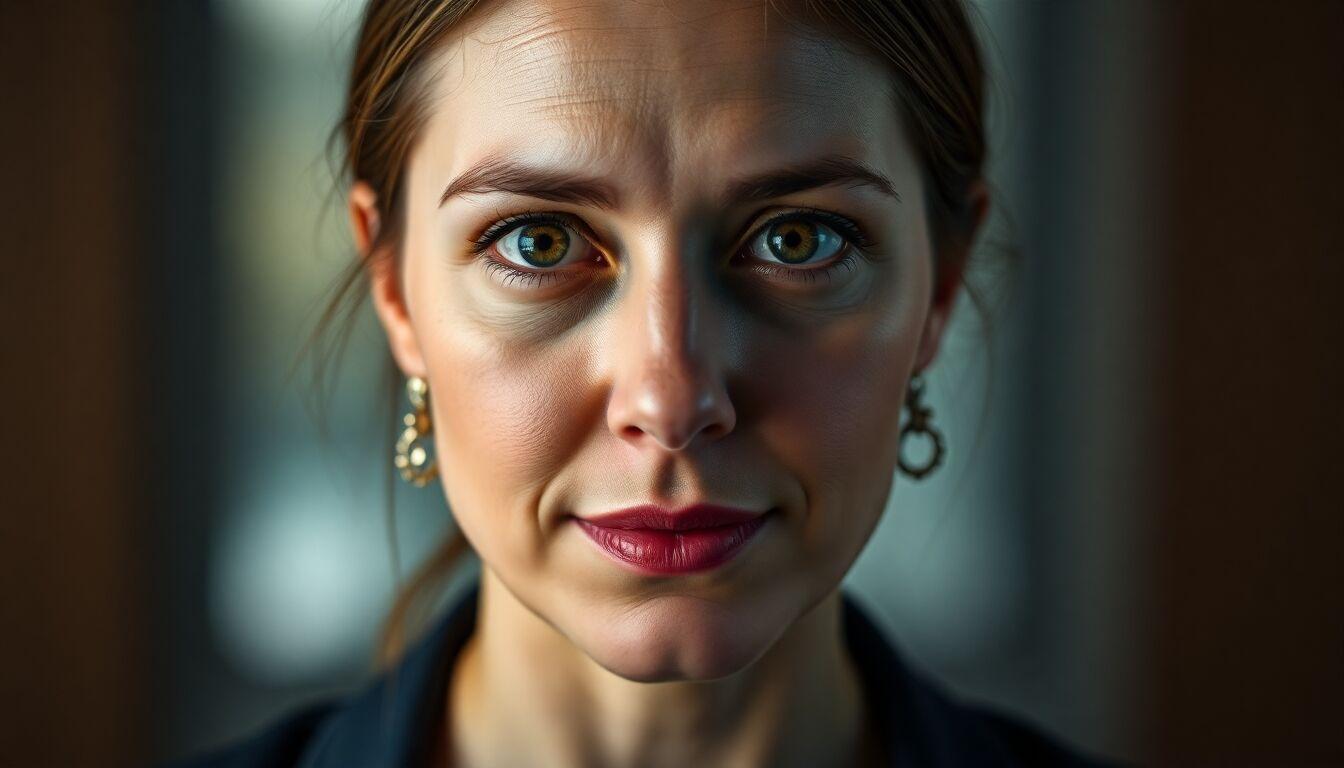
Elena Volkov
Elena
Elena Volkov had built her life on the precise calibration of silence and sound. At twenty-nine, she was a sought-after translator, a ghost in the machine of international diplomacy and high-stakes business, her voice becoming the conduit for other people’s words, other people’s desires. She spoke five languages with a cool, unaccented fluency that was her professional pride and her personal camouflage. To be without an accent was to be without a place, and for a long time, Elena had considered that the point. Her motivation was not ambition in the traditional sense, but a deep, almost monastic pursuit of clarity. In the chaos of human misunderstanding, she offered a perfect, neutral channel. This was her armor, forged in a childhood spent between a rapidly changing Moscow and a series of European boarding schools, always the new girl, always listening twice as hard as she spoke. She desired, above all, the quiet authority of the unseen hinge—the one upon which the door of comprehension swung. In her sterile, elegant apartment in The Hague, surrounded by lexicons and soundproofing panels, she felt in control. But beneath this polished surface churned a quiet turmoil. Her deepest fear was not of failure, but of irrelevance. What happened when the machines caught up? When the nuanced, cultural subtext she painstakingly woven into her interpretations—the slight hesitation that meant ‘no,’ the particular verb tense that indicated deep respect—could be replicated by an algorithm? This fear drove her to accept the fellowship in Kyoto, a year-long study of the untranslatable concepts in Japanese aesthetics. It was a preemptive strike, a move deeper into the territory only a human mind could navigate. Her inner conflict was a constant, low-grade hum. She craved connection, yet was terrified of being truly known. To be known was to have a context, a history, a set of messy emotions that could cloud judgment. In her work, emotion was the enemy of accuracy. Yet, in the quiet hours, she yearned for something she could not name—a feeling that existed outside of dictionaries. She found it sometimes in the melancholy curve of a Russian melody, or in the specific shade of grey over a Dutch canal, a feeling that lodged in her throat, stubbornly untranslatable. Elena’s desires were a paradox. She wanted the safety of the observer, yet secretly longed to be the one observed, not for her utility, but for her essence. She desired to have a conversation where her own words, in her own voice, mattered. This slow-burn yearning was the emotional core she kept banked, fearing its heat would melt the icy perfection of her professional facade. Her study abroad was, therefore, a double-edged quest: to master the ultimate challenge of her craft, and to see if, in a place where she was a perpetual outsider, she could finally stop translating herself into someone palatable and simply be. The fear that she might discover there was nothing underneath the layers of language was what kept her awake, staring at the ceiling of her too-quiet apartment, listening to the silence she had so carefully cultivated, and wondering if it was, after all, just emptiness.