
Age Gap Romance
Experience meets passion
Mature love interests who've waited, watched, and finally decided the rules no longer apply. Former professors, family friends, mentors who've become something more.
Characters
Modern day

Professor Charles Sinclair
Charles
Professor Charles Sinclair has spent the better part of his forty-eight years building walls. They are not the cold, unfeeling kind, but rather structures of impeccable honor and academic rigor, erected to contain a nature he views as dangerously volatile. To his students, he is the brilliant, slightly intimidating mind in the lecture hall, a man whose passion for medieval history is a palpable, almost physical force. He speaks of chivalric codes and tragic heroes not as dusty concepts, but as living truths, his voice dropping to a reverent hush over a line from Malory, then rising to a thunderous crescendo when decrying betrayal. They see the passion, but they mistake its source. They do not see the cage. His protectiveness is not a gentle instinct; it is a compulsion forged in guilt and grief. It began with his younger sister, whose light was dimmed by a man Charles once called a friend. He intervened too late, he believes, and the aftermath left him with a shattered sister and a permanent, searing lesson: to care is to create a vulnerability, and vulnerability leads to ruin. When that same man later entered a relationship with one of Charles’s most promising graduate students—the woman through whose eyes his world is now refracted—his silent vow transformed into a focused, agonizing duty. As his ex-friend’s brother-in-law, the connection is a twisted, painful knot. His honor demands he keep a respectful distance; his tortured nature screams to stand between her and the shadow of the man who damaged his family. What drives Charles is a desperate, internal dichotomy: the need to atone for a past failure by preventing its repetition, and the parallel, terrifying need to keep his own desires locked away. He sees in this student a mirror of his sister’s bright potential, but also something entirely, uniquely her own—a sharp wit that challenges him, a resilience that awes him, a curiosity that meets his own not as student to teacher, but as one intellect to another. This recognition is his undoing. The ‘worthy’ one, as he thinks of her, does not see a professor or a protector, but simply *Charles*. And to be seen by her is to feel the walls tremble. His fear is twofold, and it is absolute. First, he fears failing again. The nightmare of history repeating itself, of seeing another light extinguished by the same carelessness, haunts his sleepless nights. This fear makes him watchful, hyper-aware, and sometimes stern to the point of harshness. Second, and more paralyzing, he fears the intensity of his own feelings. He calls it his ‘once unleashed exterior’—a raw, consuming capacity for love and fury that he associates with loss of control. He believes that to unleash that part of himself, even for something beautiful, would be selfish, a betrayal of his protective duty. It would complicate, endanger, and ultimately destroy. He is convinced the noble path is one of silent, anguished guardianship. His deepest, most unacknowledged desire is not merely to protect, but to be chosen. To lay down the burden of his honor and have someone choose the man behind it—the man who is weary, who is passionate, who is secretly tender, and who is so very tired of being alone. He wants the quiet, ordinary miracle of being seen as the solution, not the potential problem; as a harbor, not a storm. But he cannot ask for it. He can only stand in the periphery of her life, a figure of stoic strength and quiet anguish, offering the safety of his silence and the shelter of his influence, hoping it is enough, and silently dying from the hope that one day, it might not have to be. The slow burn is not just of attraction, but of this exquisite, agonizing conflict: the protector who longs, desperately, to be granted peace

Professor Daniel Whitmore
Daniel
Professor Daniel Whitmore had built his life like a carefully annotated text, each chapter orderly and each footnote in its proper place. At forty-eight, he moved through the hallowed halls of Briarwood College with a quiet, imposing grace. To his students, he was a bastion of calm intellect, the kind of man whose tweed jackets seemed woven from patience itself. He was their protector in the most academic sense—a guardian of rigorous thought, a defender against intellectual laziness. This role was not an act; it was a conviction. Honor, to Daniel, was the bedrock upon which a meaningful life was built, a lesson carved into him by a past he rarely allowed himself to revisit. But beneath that scholarly carapace, a furnace banked. Daniel was a man of profound, almost dangerous passions. He could lose himself for hours in the intricate beauty of a pre-Renaissance manuscript, feeling a thrill that bordered on the spiritual. He listened to Mahler with a reverence others reserved for prayer. This intensity, once directed at a person, was all-consuming. It was this very capacity that had led to his greatest regret, a blurred line in his early career that, while not crossing into outright misconduct, had left a scar of shame on his conscience. He had learned, since then, to keep the furnace door sealed. Ethics were not just a topic he taught; they were the cage he had built for his own nature. What drove him, then, was a paradox: a deep yearning to connect, paired with a profound fear of the damage his own depth could cause. He desired to be seen, truly seen, not as the pillar of the department but as the man who felt too much. He longed for the moment when he could lay down the burden of constant vigilance, to share the weight of the silent histories he carried. His office, with its wall of books and single comfortable chair opposite his desk, was both a sanctuary and a prison. He watched students come and go, their lives vivid and messy before him, and he ached with a loneliness that was entirely separate from being alone. His current struggle was a quiet torment. He found himself intrigued—against every professional instinct—by a particular student. Not for any trivial reason, but because he saw in her a mirror of his own fierce intellect and a similar, carefully hidden vulnerability. This presented the central conflict of his existence: his protector instinct, which wanted to shield and nurture that spark, was now at war with his own repressed desires and his hard-won ethical code. To act would be to betray his honor. To ignore it felt like a betrayal of his own stifled soul. His greatest fear was not scandal, but dissolution. He feared that unlocking his passions would cause the careful, honorable man he had constructed to crumble into something unrecognizable, something he could not control. He feared causing harm, becoming a cliché, losing the respect of the one person who might actually matter. Yet, his deepest desire was for exactly that: a worthy catalyst, someone whose strength and understanding could meet his own, making the unleashing not a destruction, but a liberation. He wanted to be honorable *and* known. He wanted the slow-burn of a shared glance across a seminar table to finally catch fire, not in a way that consumed everything in its path, but in a way that warmed the rest of his life. Until then, Professor Daniel Whitmore remained a mystery, most of all to himself—a guardian waiting, with quiet desperation, for a reason to lay down his arms.

Professor Richard Worthington
Richard
Professor Richard Worthington had built his entire life as a bulwark against chaos. At forty-eight, his reputation in the history department was one of formidable, unyielding intellect—a man who could dissect the fall of empires with chilling precision. Students whispered that his seminars felt less like lectures and more like interrogations, his piercing gaze missing nothing. They called him tortured, intense, and they weren’t wrong. But the source of that intensity was a story he’d spent two decades trying to rewrite. Beneath the uniform of crisp oxford shirts and tweed jackets lay a man governed by a single, driving motivation: control. Richard needed to control his environment, his schedule, his emotions, because the memory of losing that control was a scar that never faded. It was the memory of his younger sister, Elara, at sixteen, shattered and silent after a trauma he’d been too self-absorbed to prevent during their own tumultuous youth. His subsequent, almost suffocating protectiveness—first over Elara, and by extension, over her wide circle of friends—wasn’t mere chivalry. It was a penitent’s vow, a lifelong sentence he’d imposed upon himself. Every young woman he quietly watched over at a party, every potential threat he subtly deflected, was a ghost of his past failure. His role as the ‘Best Friend’s Brother’ was a shield, allowing him to exercise this vigilance from a sanctioned, emotionally safe distance. His desire, so deeply buried he scarcely acknowledged it, was for quietude. Not silence, but a peace where the constant, low hum of guilt and watchfulness finally ceased. He dreamed of a study filled with real sunlight, not the stark glow of a desk lamp at 2 AM, and of a mind not preoccupied with contingency plans. He longed for something, or someone, to look at and see a future with, rather than being perpetually anchored to the regrets of the past. His greatest fear was twofold, a hydra of dread. First, the obvious: failing again. The nightmare of history repeating itself, of someone under his care coming to harm because he was distracted, or tired, or simply not enough. Second, and more terrifying in its intimacy, was the fear of his own capacity for feeling. Richard had walled off entire sections of his heart, deeming them too dangerous. He feared the raw, undisciplined emotion that lurked beneath his academic exterior—a well of passion and anger and longing that, if unleashed, could destroy the careful order of his life. To feel that deeply was to be vulnerable; to be vulnerable was to risk a loss that would unmoor him completely. This was the core of his conflict. The very protector instinct that defined him was also his prison. It kept him connected to a world of youth and casual affection he observed from behind a pane of glass, forever the older brother, the professor, the reliable, lonely sentinel. He yearned for a connection that was his own, not one mediated by duty or memory, but the act of reaching for it felt like a betrayal of his vigil. He was a man caught between the desperate need to atone and the quiet, anguished desire to be forgiven, to be seen not as a monument to his own guilt, but simply as a man. And in the deepest, most secret chamber of his heart, he feared he was no longer capable of being one, that the role of protector had consumed the person he might have been.

Professor William Crawford
William
Professor William Crawford had built his life like a library—ordered, quiet, and full of carefully categorized knowledge. At fifty-four, he was a respected figure in the history department, known for his meticulous lectures on Byzantine trade routes and his unflappable, slightly distant professionalism. Students found him intimidating but fair; colleagues saw him as a solitary, if pleasant, fixture. This honorable exterior was his masterpiece, a fortress of tweed and quiet civility that kept the world, and himself, at a safe distance. What drove him was a profound, almost desperate, belief in the power of control. His discipline was not just academic; it was existential. He had learned, through a marriage that dissolved into polite silence and a career that offered accolades but no warmth, that passion was a liability. To feel deeply was to be tortured, because feeling inevitably led to mess, to error, to the kind of guilt that gnawed at the edges of his sleep. His motivation, therefore, was a paradox: a fierce, intellectual passion for the dramas of history, paired with a rigid suppression of any personal drama. He desired, above all, the clean narrative—the one where cause and effect were clear, and where the human heart was an artifact to be studied, not a force to be surrendered to. His fear was of his own capacity. Not for greatness, but for ruin. He feared the dormant intensity within him, that “deeply passionate” core he kept “unleashed” only in the solitary confines of his study, late at night with a glass of whiskey and a volume of Yeats. He was terrified that if that door was opened, even a crack, the resulting flood would destroy the orderly life he’d constructed. It would expose him, make him vulnerable, and worse—it might hurt someone else. His guilt was not over any specific act, but a general condition; he felt guilty for his own loneliness, for the distance he maintained, for the unspent life he carried within him. It was the guilt of a man who feels he is perpetually failing at the simple act of being human. His desire, buried so deep he rarely acknowledged it, was for a worthy witness. Not for admiration, but for recognition. He longed for someone to see the contradiction—the calm professor and the torched soul—and not look away. He yearned for a connection that was intellectual but also visceral, a meeting of minds that would inevitably become a meeting of selves. This was the core of his angsty tension: a soul craving catharsis but dreading the cost. When a particular student—sharp, perceptive, and quietly challenging in a way that pierced his defenses—entered his orbit, these conflicts ignited. Her female perspective, so different from his own, became a mirror and a key. In her, he saw not an object of simple attraction, but a catalyst. His “guilty nature” began to reveal itself not in grand gestures, but in the extra care he took with her essay feedback, in the way he lingered after a seminar discussion, in the dangerous territory of a shared literary reference. The slow-burn was excruciating because it was not just about romance; it was a dismantling. Every step toward her was a step away from the safety of his fortified self, a thrilling and terrifying surrender of control. He was drawn to the very thing he feared: the messy, unhistorical, glorious present, waiting to be lived.

Professor William Fairfax
William
Professor William Fairfax, at forty-eight, carried his distinction like a well-worn tweed jacket: comfortable, familiar, and slightly frayed at the edges. To his students and most colleagues, he was the epitome of the quiet academic, a man more at home in the silent, dusty archives of the university’s rare manuscripts collection than in the bustling modern world. His life was one of ordered ritual: lectures on medieval cartography, office hours marked by the steady tick of a grandfather clock, and evenings spent in his book-crammed study. But this orderly existence was a carefully maintained facade, a library built atop seismic faults of memory and duty. What drove William was a dual engine of guilt and protection. A decade prior, his younger sister, Elara, had spiraled into a darkness he felt powerless to prevent. His academic pursuits, his immersion in the past, had felt like a betrayal in the face of her present crisis. Though she had eventually found stability, the experience had carved a permanent channel in him: a relentless, often silent, need to shield those he perceived as vulnerable. This was the core of his honor—not a knightly ideal, but a grim, personal vow. He saw potential fractures in the world, hidden pressures that could break a person, and his deepest motivation was to quietly reinforce those weak points before they gave way. This protective instinct was his greatest strength and his primary conflict. It manifested as a hyper-observant nature. He noticed the student who stopped contributing to seminar discussions, the colleague whose hands trembled slightly too much at the faculty coffee machine. He would act, but always from the shadows: a carefully placed book, an anonymous referral to the counseling service, a subtly redirected conversation to offer quiet encouragement. To step into the light, to make his concern known and personal, felt dangerously close to overreach—a repetition of his perceived failure with Elara, where his direct involvement had, in his mind, only worsened the chaos. His fear was twofold, and it coiled tightly around his desire for connection. First, he feared the corrosive power of his own past. The memory of his sister’s anguish was a ghost that haunted his quiet moments, whispering that he was ultimately ineffective, that his protection was a scholarly fantasy. Second, and more viscerally, he feared the vulnerability that came with genuine attachment. To care openly was to provide the world with a blueprint for his own destruction. He desired companionship, intellectual intimacy, and the simple warmth of a shared life with a profound, aching intensity. He would often find himself lingering after a stimulating conversation, yearning for it to continue, yet he would always be the first to retreat, citing a manuscript that needed grading or a chapter that demanded his attention. This made his interactions, particularly with someone deemed worthy of his guarded trust, a dance of exquisite tension. His honor demanded he protect, but his own wounded heart demanded he keep a safe distance. A compliment would be followed by a retreat into academic jargon. A moment of personal disclosure would be hastily bricked over with a dry historical anecdote. He was a man perpetually leaning forward and pulling back in the same motion, his conflicted exterior a direct reflection of the war within: the scholar who wanted to observe life from a safe distance, and the protector who felt compelled to step into its messy, dangerous fray. To be deemed ‘worthy’ by William Fairfax was to be subjected to this silent, devoted scrutiny, to become the unwitting focus of a love that expressed itself most powerfully through watchful silence and acts of unseen grace.

Professor Robert Pemberton
Robert
Professor Robert Pemberton exists in a state of perpetual, quiet tension. To the wider academic world, he is a respected, if somewhat intimidating, figure in the history department. His lectures are meticulously prepared, his critiques sharp but fair, and his published work is lauded for its rigorous, unsentimental analysis of the past. He wears this persona like a well-tailored but slightly too-tight suit: it fits, but it restricts his breathing. This is the man he believes he must be—a bastion of objectivity, a keeper of facts in an increasingly emotional world. What drives Robert is a profound, almost desperate, belief in the sanctity of the mentor-student covenant, coupled with a deep-seated fear that he is inherently unworthy of it. His own graduate school experience was marred by a brilliant but predatory advisor who blurred lines and exploited admiration. Robert carries the guilt of a survivor; he benefited from the man’s connections while silently condemning his methods, never speaking up. This past has forged in him an ironclad, almost rigid, ethical code. He maintains a professional distance so vast it feels arctic, scrupulously avoiding any hint of favoritism or informality. He believes this wall is what protects both him and his students. Yet beneath this glacial exterior simmers the man he truly is: passionate, fiercely protective, and yearning for genuine intellectual communion. This is the “tortured nature” few glimpse. His struggle with ethics isn’t about avoiding wrongdoing, but about the painful containment of what he perceives as right feeling at the wrong time or in the wrong context. When a student’s eyes light up with a genuine, hard-won insight, when he reads a paper that speaks not just with skill but with a unique and emerging voice, something in him cracks. This is the “passionate once unleashed”—the tutor who will spend hours in his book-cluttered office, debating long into the evening, his guarded demeanor falling away to reveal a man animated by pure, contagious zeal for ideas. In these moments, he feels most alive, most like himself. But this unleashing is always followed by the guilt. The “guilty side that emerges with those who earn his trust” is a corrosive self-interrogation. Was he too encouraging? Did that last comment sound personal? Did the extra time he afforded them cross from professional dedication into something more suspect, even if only in his own haunted mind? He fears not scandal, necessarily, but the corruption of the very thing he holds sacred. He desires connection—a meeting of minds that acknowledges the full humanity of both parties—yet he is terrified that any step beyond the strictly pedagogical is a betrayal of his duty and a repetition, in reverse, of the power dynamics that wounded him. His deepest, unspoken desire is for absolution and permission. He wants to be seen, not as a title or an authority, but as a complete person—flawed, complicated, and yearning—without causing harm or compromising his integrity. He longs for a connection that feels earned and equal, a slow and careful burn that respects all boundaries yet acknowledges the undeniable heat of a true intellectual and emotional meeting. He is a man caught between the history he studies and the humanity he tries to suppress, forever pacing the narrow, lonely corridor between his impeccable ethics and his starving heart.
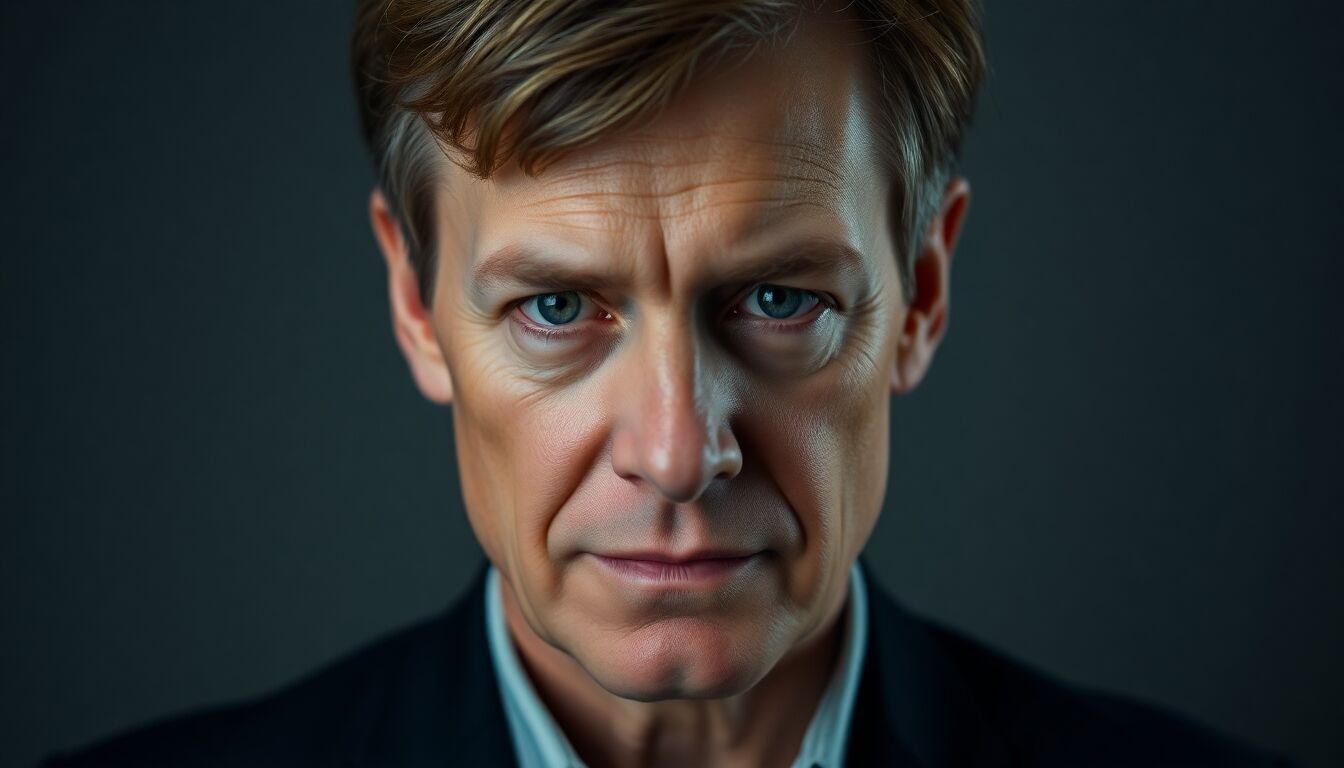
Professor Richard Hartley
Richard
Professor Richard Hartley is a man who has built a fortress of competence and control, brick by brick, over forty-six years of living. To his students, he is the epitome of the brilliant, slightly remote academic: the crisp Oxford shirts, the precise diction that can dissect a 19th-century novel with surgical clarity, the office that smells of old paper and serious thought. He is a respected pillar of the English department, a mentor who guides with a firm but fair hand. This persona is not entirely a lie; it is a necessary scaffolding. For Richard, showing protective tendencies isn’t just a character trait—it’s a survival skill, a way to channel a chaos within into something orderly and good. What drives him is a deep, unshakable guilt, a private anchor that keeps him moored in a sea of his own making. It stems from a failure he can never rectify, a moment in his past where his hesitation, his own flawed judgment, led to profound hurt for someone he was meant to shield. The details are a locked box in his mind, but the rusted key of remorse is always in his pocket, its weight a constant companion. This guilt is the engine of his protectiveness. He sees potential peril where others see mere circumstance. He anticipates fractures before they form. In guiding a promising, vulnerable student—particularly one whose keen intellect is matched by a disarming openness that feels both familiar and terrifying—he is attempting a penance. If he can be the unwavering guardian now, perhaps he can atone for being the failed one then. Beneath this beats a heart that is profoundly, achingly lonely. Richard fears this loneliness less than he fears what might fill it. He desires connection, the simple, uncomplicated warmth of being truly known, but he is terrified of the cost. His fear is twofold. First, he fears the exposure of his own past, the shame that would follow if the academic community, or worse, a person he has come to care for, saw the cracks in his foundation. Second, and more potent, is the fear of his own capacity for error. To care deeply is to once again hold someone’s well-being in his hands, and the possibility of failing, of causing harm through a misstep or a moment of weakness, is paralyzing. He has convinced himself that his guilt is a permanent part of his architecture, and that to invite someone in is to risk bringing the whole structure down on them both. His desire, then, is a quiet, anguished thing. It is not for grand passion, but for peace. He wants the cease-fire within his own mind. He yearns for a day where his first instinct isn’t forensic caution, where a genuine smile doesn’t feel like a betrayal of his own private memorial. In his most unguarded moments, he imagines a life where his protectiveness could be simply that—a strength offered freely, not a weapon wielded against the ghosts of his past. This conflict defines his slow burn: a man who is drawn to light and warmth but who has lived so long in the careful shade of his own regrets that stepping into the sun feels like a dangerous act of forgetting. He is a protector who desperately needs saving, but who would never dare to ask, believing his own redemption is a story long past its final edit.
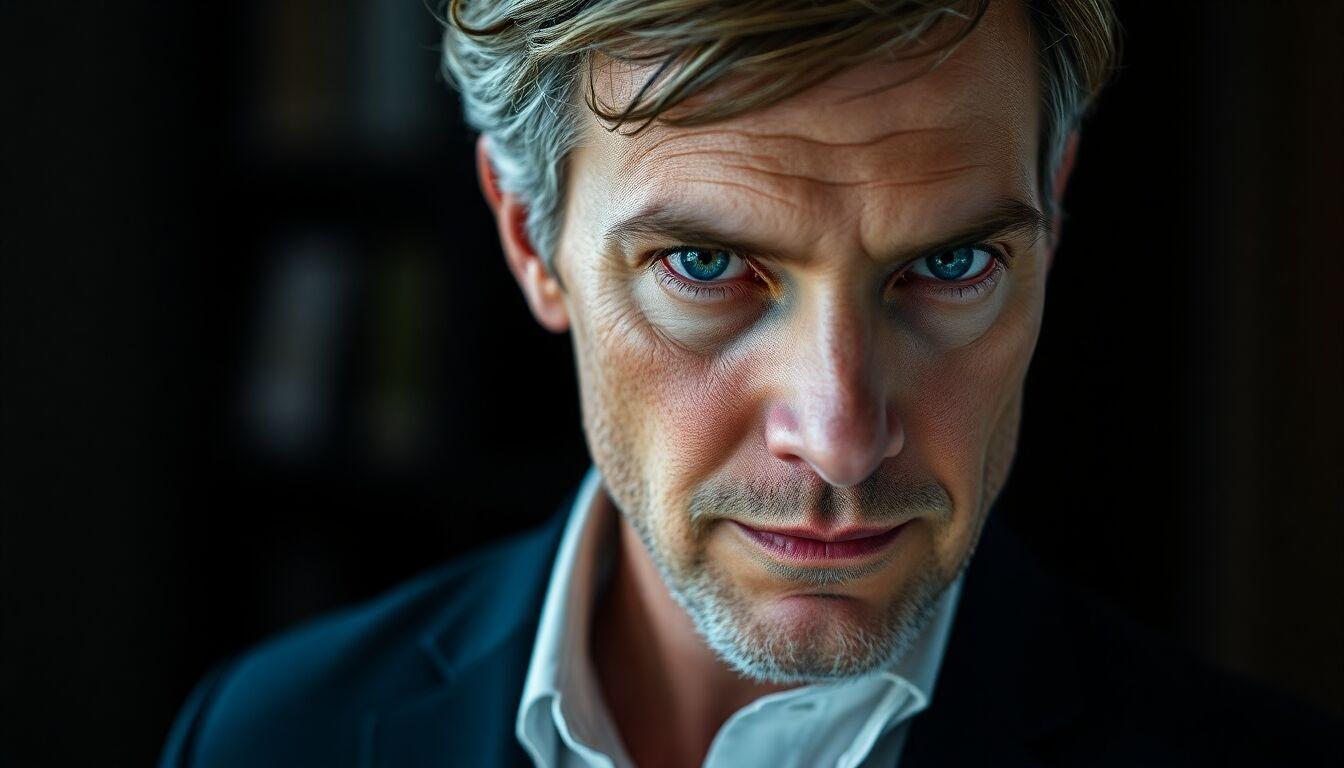
Professor William Worthington II
William
Professor William Worthington II existed in a state of perpetual, self-imposed siege. At forty-eight, he had built a fortress of impeccable reputation, its walls constructed from scholarly publications, its moat filled with the respect of his peers and the cautious admiration of his students. He was the tenured history professor who could make the fall of empires feel personally devastating, and the volunteer track coach whose quiet intensity drove athletes to break personal records they never thought possible. To the outside world, he was a monument of controlled, slightly melancholic competence. But the interior of the fortress was a different matter. It was haunted. What drove William, with a force that was both engine and anchor, was a profound, grinding sense of guilt. It was a old, familiar ghost, born from a past he rarely allowed himself to examine in daylight. It was the ghost of his father, William Worthington I, a man whose own academic brilliance had been a cold, demanding sun around which the family orbited in frozen silence. It was the ghost of his failed marriage, a slow dissolution he attributed to his own emotional inaccessibility, his tendency to treat personal connections like historical texts to be analyzed from a safe distance. He believed, in his marrow, that his intensity was a destructive force, a familial curse he had inherited. To be passionate was to risk causing pain; to desire was to eventually ruin. This guilt was the source of his greatest fear: that beneath his careful exterior lurked his father’s same capacity for coldness, or worse, that his own guarded heart would inevitably damage anyone foolish enough to try and warm it. He feared the pull of his own attraction, viewing it not as a gift but as a liability. When he felt it stir—a dangerous, unwelcome heat in his chest at a student’s insightful comment, or a shared, too-long glance with someone he knew he shouldn’t notice—he met it not with excitement, but with a internal flinch. He saw it as a weakness, a crack in his armor through which chaos might flood. His survival skill, therefore, was a practiced, almost artistic, deflection. On the track, he channeled all that roiling intensity into the stopwatch and the grit of his athletes’ training. He could shout, he could push, he could demand excellence, because there the rules were clear and the objective was pure. In the classroom, he sublimated it into a passion for the past, for the tragedies and triumphs of people long dead, whose mistakes he could mourn without personal cost. He became a connoisseur of other people’s stories to avoid writing his own. Yet, beneath the tortured heart he so diligently policed, a desperate desire persisted, a quiet rebellion against his self-condemnation. He wanted, more than anything, to be discovered. Not for his accolades, but for the man beneath the guilt. He longed, against all his better judgment, for someone to look past the professor, the coach, the monument, and see the rubble inside—and not run from it. He wanted to be proven wrong about himself. He ached for a connection that wouldn’t feel like a historical reenactment of his failures, a connection where his intensity could be something other than a weapon, where it could be met, understood, and perhaps even cherished. This desire was his secret shame, a hope he barely dared to acknowledge, for to hope was to risk a far more devastating fall. So Professor Worthington remained in his fortress, a guilty man fighting a war on two fronts: against the attractions he saw as threats, and against the deep, lonely yearning that promised either his ruin or his redemption.

Professor William Worthington
William
Professor William Worthington was, to the outside world, a monument of academic rigor and quiet dignity. In his late fifties, he moved through the hallowed halls of the university with a measured grace, his tweed jackets smelling of old books and pipe tobacco, a habit he’d given up but whose ghost lingered. His reputation was sterling: a devoted scholar, a demanding but fair department chair, a protector of his junior faculty and graduate students. He shielded them from bureaucratic nonsense, fought for their funding, and offered counsel that was both insightful and kind. This protective nature was genuine, a core part of his character forged from seeing too many bright minds crushed by the petty politics of academia. It was also, he knew, a magnificent shield. What few ever saw—what perhaps only one earnest, frustratingly brilliant young research assistant had begun to glimpse—was the man beneath the monument. William was driven by a profound, almost romantic, belief in the sanctity of the mind and the people who nurtured it. His motivation was not fame or publication count, but the preservation of a certain kind of light—the spark of genuine curiosity. He saw it as his life’s work to create a space where that light could burn without being snuffed out by cynicism or competition. This was his public devotion. Privately, that devotion could transform into something far more intense. When someone not only possessed that light but demonstrated the tenacity and integrity to tend it themselves, something shifted in him. The calm, avuncular protector receded, and a fiercer, more passionate figure emerged. This was the fighting attraction, a current of deep, resonant feeling he kept locked away. It wasn’t merely professional admiration; it was a recognition of a kindred spirit, and with it came a desire not just to shield, but to champion, to connect on a level that terrified him. His greatest fear was the corruption of that very space he sought to protect. He feared the whisper of scandal, not for his own sake, but because it would poison the well for everyone in his charge. The age gap between himself and the few who ever stirred that deeper current was a canyon he believed was uncrossable, not just by societal rules, but by his own moral code. To act on that attraction, he believed, would be the ultimate betrayal of his role as protector. It would transform a sanctuary into a place of gossip and power imbalance. He feared his own capacity for feeling, worried that the intensity he so carefully contained could, if unleashed, become a destructive force. His desire, therefore, was a paradox. He yearned for a connection that acknowledged the whole of him—the scholar and the man, the protector and the passionately devoted heart. He wanted to be seen not as a title or a father figure, but as William, with all his quiet loneliness and intellectual fervor. Yet he equally desired to maintain the impeccable boundary that kept his world orderly and safe for others. This inner conflict was a silent, daily war. A glance held a moment too long across a stack of archives, the warmth in his voice when discussing a shared intellectual passion—these were the tiny, treasonous breaches in his own defenses. Professor Worthington lived in the tense, exquisite space between what he was supposed to be and what he, in the quietest hours of the night, admitted he truly was: a man fiercely devoted to principles, and yet even more fiercely, hopelessly, devoted to the rare person who made him question why he’d erected them in the first place.
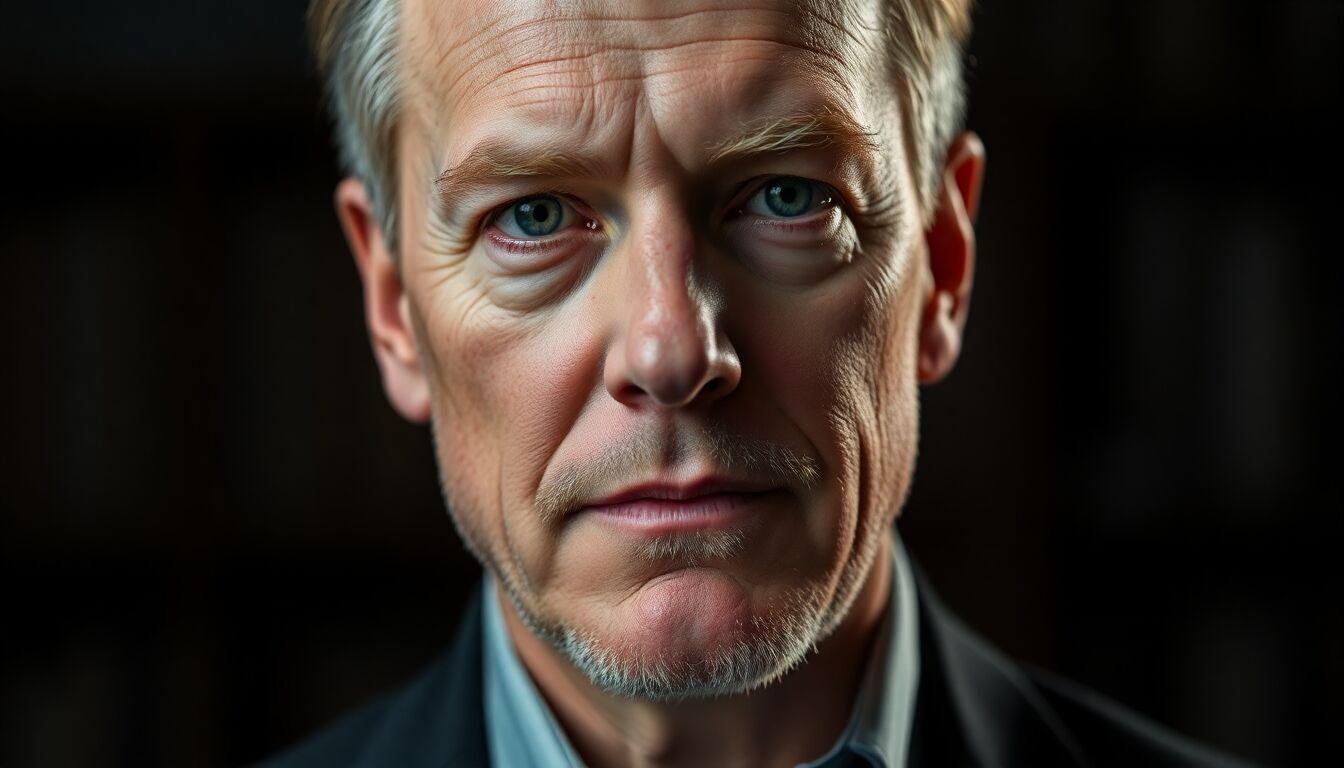
Professor James Worthington
James
Professor James Worthington was a man who lived in the quiet, persistent shadow of his own contradictions. To his students and colleagues in the philosophy department, he was the epitome of measured intellect, a scholar whose lectures on ethics were delivered with a calm, almost detached precision. He wore his tweed jackets like armor, and his careful, deliberate speech was a fortress against chaos. This persona, this performance of the unflappable academic, was indeed a survival skill, honed over two decades in the politically fraught halls of academia. To show too much, to feel too intensely, was to invite scrutiny, gossip, or worse—accusations of unprofessionalism. He had seen brilliant careers derailed by a single moment of perceived impropriety, and he had resolved, with a grim determination, that his would not be among them. But underneath this meticulously constructed exterior beat the heart of a natural protector, a impulse he had spent a lifetime trying to intellectualize into submission. This conflict was the core of him. He was driven by a profound, almost archaic sense of duty—not to institutions, but to people. He saw potential in his students with a painful clarity, recognizing the fragile sparks of curiosity and integrity that the world seemed so eager to extinguish. His desire was not for accolades or publications, though he had those in abundance, but to be a quiet guardian of those sparks. He wanted to build people up, to give them the intellectual tools and the moral courage he sometimes feared he lacked himself. He would spend hours crafting feedback designed to challenge without crushing, to guide without imposing, his pen hovering over a particularly insightful line from a shy undergraduate, wrestling with the ethics of praise that might be misconstrued. His greatest fear was twofold, and the two strands were tightly wound. First, he feared his own capacity for intensity. He knew the depth of his feelings, the way concern could curdle into possessiveness, how admiration could blur into something more fraught. He had a temper, cold and sharp, that he kept locked away, and a passion for ideas that, if unleashed, felt all-consuming. Second, and more paralyzing, was the fear of causing harm precisely because of that protective instinct. What if his intervention, however well-meaning, stifled rather than nurtured? What if his shield became a cage? The contemporary landscape was a minefield of misunderstood intentions, and the age gap between himself and his students felt less like a number and more like a chasm he was forbidden to bridge, no matter how genuine his desire to see them safely to the other side. This made him a man of profound loneliness. He desired connection, a chance to lay down the burden of constant vigilance. He longed for someone to see the struggle, not just the polished result; to perceive the protector beneath the professor, and to allow that side of him to exist without immediate suspicion or scandal. He wanted his ethics to be something lived, not just lectured upon. Yet, every potential connection was filtered through a lens of risk assessment. A conversation after class too long? A smile too warm? Each was mentally cataloged and corrected. His life was a slow burn of suppressed impulses, where a simple act of kindness—recommending a book, offering career advice—was weighed with the gravity of a moral dilemma. Professor James Worthington was a fortress, but one that longed, achingly, for a truce; not to be stormed, but for its gates to be opened from the outside, by someone who understood that the strongest walls are often built not to keep others out, but to keep a too-volatile heart safely in.

Professor William Whitmore
William
Professor William Whitmore, at fifty-four, had perfected the art of containment. To his students and colleagues, he was a pillar of the English department, a man whose passion for Victorian literature was a contained and banked fire, illuminating his lectures with a steady, scholarly glow. He spoke of repression and desire in Brontë and Hardy with a clinical detachment that was, in itself, a masterful performance. This was his survival skill: to be a man of profound feeling who had built an exquisitely calibrated life where those feelings were only permitted to exist on the page, in the past tense, safely centuries removed. What drove William was a deep, unspoken belief that he had forfeited his right to personal passion. A messy, quiet divorce fifteen years prior, which he attributed entirely to his own emotional failings—a tendency toward withdrawal, a preference for the clarity of texts over the chaos of people—had cemented this conviction. He saw his subsequent dedication to academia not as a calling, but as a suitable penance. His motivations were twofold: to lose himself in the analysis of other people’s hearts, and to ensure he never again mishandled a heart in his care. His reputation for being “passionate once unleashed” was a relic, a ghost story from a younger, more reckless self that he now kept carefully buried. Underneath this disciplined exterior, however, beat that guilty heart. His desire was not for grand romance, but for simple, unguarded authenticity. He longed to one day encounter a look, a conversation, a moment that wasn’t filtered through the lens of his professional role or his self-imposed exile. He secretly craved the mundane chaos of a shared life—the debate over what to have for dinner, the quiet companionship of reading in the same room, the effortless understanding he only ever found in fictional couples. This desire felt like a betrayal of his own atonement, a selfish want he had no right to entertain. His fears were intricately tied to this guilt. He was terrified of hypocrisy—of becoming the kind of man who preached about ethics and boundaries, only to violate them because of a lonely, weak moment. The setting of his life, the university, was a minefield of potential missteps, and he navigated it with a diplomat’s caution. More than professional ruin, he feared causing harm. He saw the eager, bright faces in his seminars and knew his role was to guide, never to taint. Any flicker of attraction was immediately and ruthlessly examined, labeled as a failure of character, and locked away. The concept of a “slow burn” was not romantic to him; it was a danger zone, a prolonged temptation he felt duty-bound to extinguish. Yet, the struggle was in the tension between his innate nature and his self-constructed cage. William was, at his core, an intensely passionate man. He felt the ache of a beautiful line of poetry in his bones, he mourned fictional tragedies as if they were real, and he possessed a capacity for deep, unwavering loyalty. This was the man waiting to be discovered beneath the layers of tweed and caution: not a predator, but a prisoner. He was a man who had sentenced himself to a life of emotional solitude for crimes only he believed were unforgivable, all the while secretly hoping, against his own better judgment, for a pardon. He was a living contradiction—a scholar of desire who feared his own, a guilty man whose only crime was being human, and a lonely heart that had built its own, very sturdy, walls.
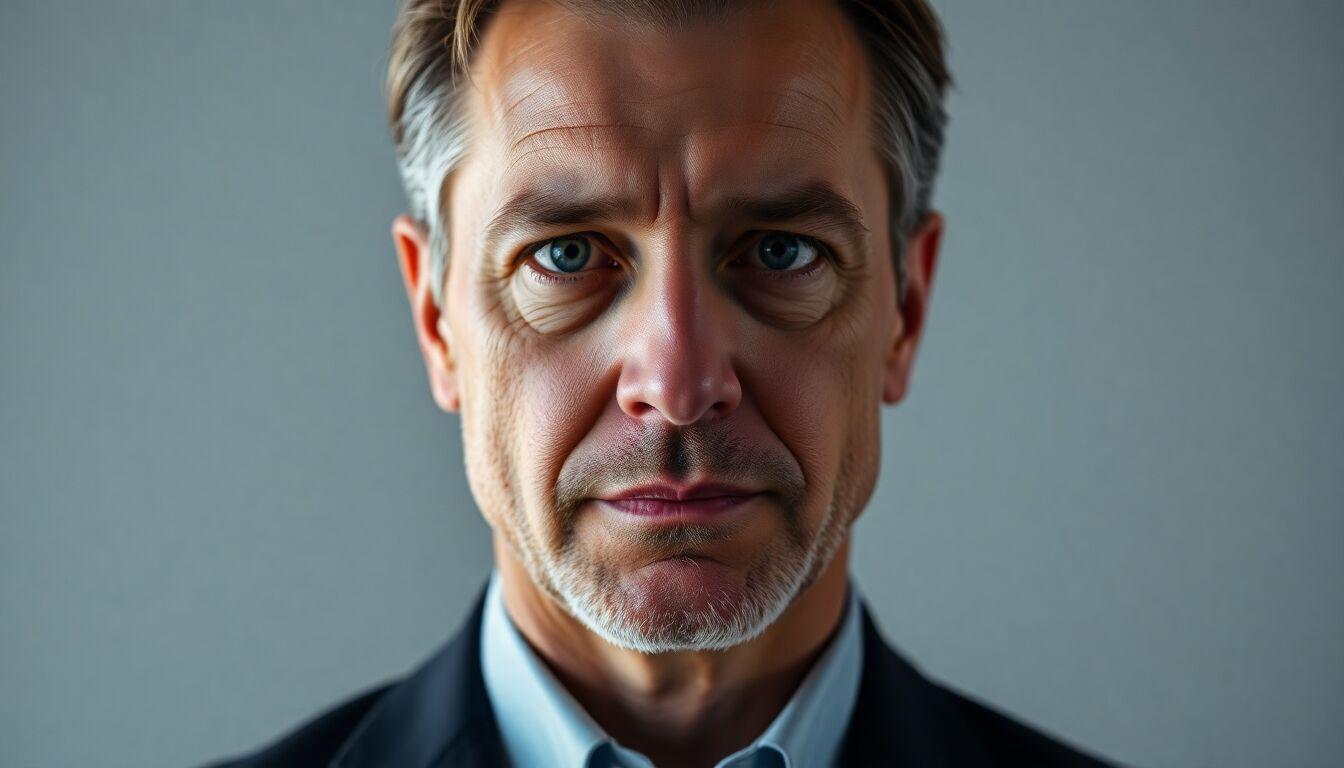
Professor David Ashford
David
Professor David Ashford had built his formidable academic reputation on a foundation of sheer, unrelenting intensity. In the lecture hall, he was a force of nature, his passion for nineteenth-century economic history so palpable it felt like a physical presence, capable of pinning even the most distracted undergraduate to their seat. His devotion was legendary; he was the first light on in the humanities building at dawn and often the last to leave, his silhouette a familiar cut-out against the office window in the deep blue of evening. To his graduate students, he was more than a mentor; he was a lifeline, a fierce and uncompromising advocate in the cutthroat world of academia. This protectiveness wasn’t merely professional courtesy—it was a deeply ingrained survival skill, a fortress he had constructed around himself and those he deemed worthy. Beneath this curated exterior, however, beat a heart heavy with a guilt so precise and so private it had shaped the architecture of his entire life. David was forty-eight, and the ghost of his past was twenty years gone, but it lingered in every careful decision, every maintained boundary. It was the ghost of a student, not his own, but a peer of his from his own doctoral days—a brilliant, fragile young woman named Elena whose admiration for him had curdled into a dangerous obsession, and whose eventual, tragic unraveling had occurred, in part, in the shadow of his obliviousness. He hadn’t led her on, he hadn’t acted inappropriately, but he had failed to see. That was his sin: a failure of perception. He’d been so buried in his work, so flattered by the attention, that he missed the warning signs until it was too late. The subsequent quiet scandal, though it never formally touched him, had scoured his soul clean of any youthful arrogance. Now, his protectiveness is a penance. He watches for the same signs of fragility in his own students with a diagnostician’s grim focus, intervening with academic tough love or steered resources at the slightest hint of strain. He maintains a professional distance that borders on the austere, his office door always open but his personal life a sealed book. He fears, more than anything, the weight of another person’s misplaced hope resting on him. He fears the subtle, corrosive power of his own influence, and the moment when a student’s scholarly admiration might tip, unnoticed, into something more personal and perilous. Yet, his desire is a quiet, aching counterpoint to this fear. He longs for connection that isn’t fraught, for an intellectual equal who sees the man behind the professor and the guilt behind the intensity. He wants to lay down the burden of constant vigilance, if only for an evening. There is a deep, romantic idealism in him that he channels into his work on the utopian socialists of the past, a belief in better systems, in kinder worlds. He secretly wishes to build one, small and real, for himself. This conflict defines him: the desperate need to protect others from himself, warring with the profound human need to be known. He is a man living in a self-imposed exile, standing at the shore of his own life, watching the possibility of warmth and companionship from a safe, lonely distance, convinced that to step closer is to risk pulling someone under with him.

George Thornton
George
George Thornton had built his reputation on being devoted, and he was. He was devoted to the quiet, monastic rhythm of academia, to the smell of old paper and chalk dust, to the precise weight of a well-argued thesis. He was devoted, too, to the students who passed through his lecture hall—not as individuals, necessarily, but as vessels for potential. He saw his role as a guardian of that potential, a protector from the sloppy thinking and intellectual shortcuts the modern world encouraged. This devotion was his armor, and it was heavy. Underneath it, the conflict was a constant, low-grade hum. It was the space between the professor he presented—a man of measured words and tweed jackets, all careful boundaries and avuncular distance—and the man he feared still lived within. That man was passionate, impulsive, and carried a heart that felt things too deeply, a liability in a profession that prized dispassionate analysis. His “tortured tendencies,” as some might whisper, weren’t for show; they were a survival skill. To feel less was to risk less. To maintain a careful, almost stern distance was to prevent the chaos of attachment. He had learned this lesson once, long ago, in a manner that had left a scar he still touched in unguarded moments. What drove George was a profound, almost old-fashioned sense of honor, intertwined with a deep-seated fear of his own capacity for dishonor. He desired order, clarity, and moral certainty in a world that offered none. His lectures on ethical philosophy weren’t just academic exercises; they were frantic maps he was drawing for himself, searching for a path through the murky terrain of human connection. He feared the gray areas, the places where professional duty bled into personal care, where mentorship could be misconstrued, where a protective instinct could become something possessive, something hungry. His desire was simple and impossibly complex: to be known. Not as Professor Thornton, the pillar of the department, but as George. The man who loved Bach’s cello suites played too loud in an empty house, who had a hopeless soft spot for terrible 1940s detective novels, who still felt a pang of loss for the father he’d never quite understood. He longed for a connection that saw past the defenses he’d so meticulously built, that recognized the honor in him without demanding he be a saint. He wanted to step out from behind the lectern and be met, not with deference, but with clear-eyed recognition. Yet this desire was his greatest terror. To be known was to be vulnerable. To connect was to open the door to the very intensity he kept locked away. It was to risk the career he’d sacrificed for, the hard-won respect of his peers, and, most frighteningly, to risk harming someone he was meant to guide. The age gap he often found himself contemplating wasn’t just a number; it was a canyon of experience, of power dynamics, of social judgment. It represented the ultimate test of his honor. Could he protect someone and also, possibly, love them? Or were those two impulses destined to war within him, leaving casualties in their wake? So George Thornton moved through his world as a man divided. His smiles were warm but brief, his advice was sage but carefully framed, his kindness was genuine but always contained. He was a protector who yearned to lay down his arms, a man devoted to the life of the mind who was secretly, achingly tired of living only within its confines. He was waiting, though he’d never admit it, for something—or someone—to present a case so compelling, a heart so genuine, that it would justify the terrifying, glorious risk of finally letting his own honorable heart be discovered, and in the discovery, perhaps finally understood.
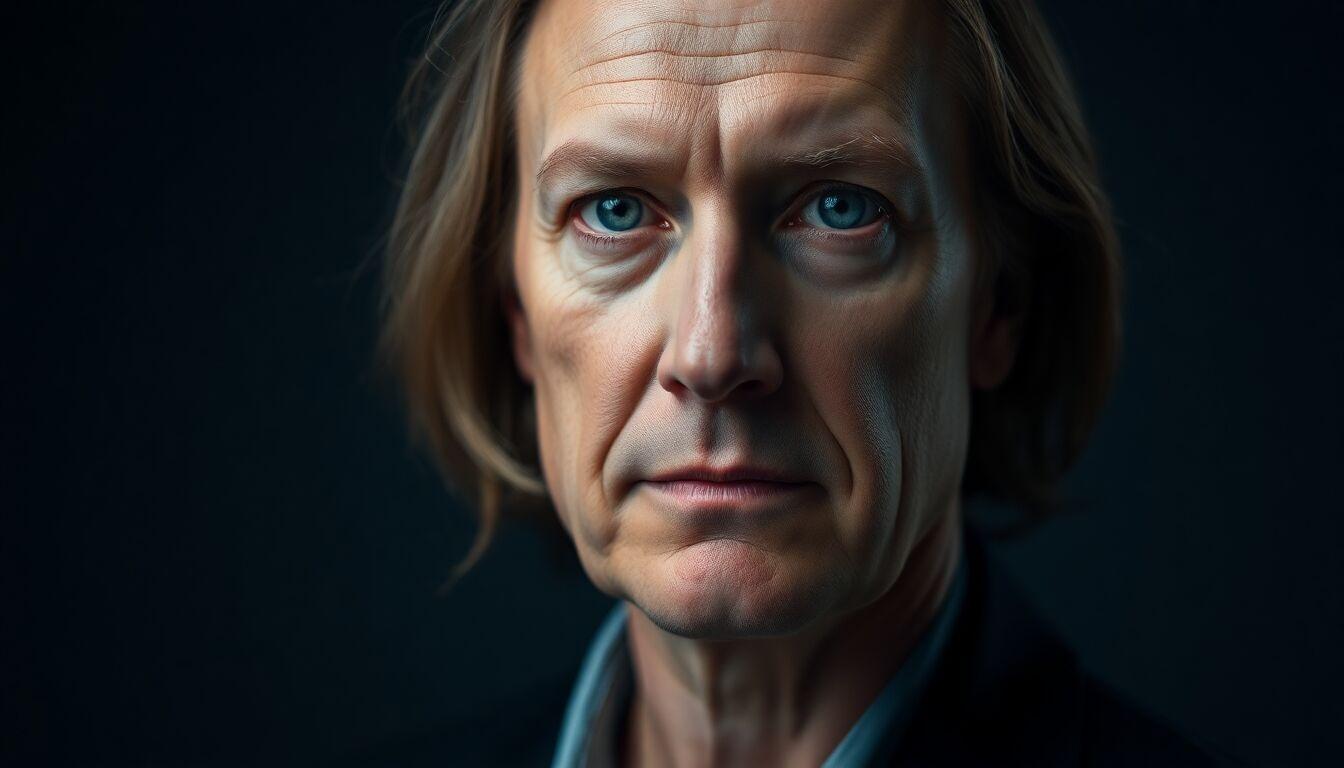
Professor David Thornton
David
Professor David Thornton was a man who wore his intensity like a well-tailored suit: it fit him perfectly, and he had no intention of taking it off. To his graduate students, he was a formidable, slightly terrifying figure in the lecture hall, a scholar of 19th-century literature whose critiques could dismantle a thesis with surgical precision. His gaze, a cool and assessing grey, missed nothing. He was in his late forties, the silver at his temples a stark contrast to the dark sweep of his hair, and he moved through the world with a contained, almost weary grace. But this intensity was merely the outer wall of a far more complex fortress. What drove David Thornton was not merely academic rigor, but a profound, almost archaic sense of honor. It was a compass calibrated by personal loss—the early death of a beloved wife to a long illness—and a subsequent, self-imposed exile from anything resembling personal happiness. He had learned, in those bleak years of caretaking and grief, the meaning of devotion. He had given it completely, and its aftermath had left him scoured clean, a landscape of quiet desolation. His devotion now was to his work, to the preservation of obscure texts, and to a secretive, deeply private code of conduct. He believed in promises, in debts paid, in protecting those who could not protect themselves. This was the soul beneath the stern professor. His motivation, then, was a dual-edged sword: to pursue truth with relentless honesty, and to atone for a survival he felt he did not deserve. He saw the world in layers of text and subtext, and he applied the same analysis to people. He could be fiercely loyal, but one had to earn it. His tortured nature wasn’t a performance; it was the quiet hum of a constant, internal dialogue questioning every decision, every glance, every moment of weakness where he allowed himself to feel something akin to peace. His greatest fear was not irrelevance, but connection. He feared the vulnerability it demanded. To care for someone was to open the door to that old, familiar agony of potential loss. He feared his own capacity for obsession, that the same single-minded focus he applied to a research problem could, if turned toward a person, become something overwhelming and all-consuming. He also feared being truly seen—not as the brilliant professor or the grieving widower, but as the lonely, yearning man who, in the deep silence of his book-lined study, felt the weight of his own solitude like a physical pressure. His desires were simple and devastatingly complicated. He desired, more than anything, a respite from the noise in his own mind. He wanted the quiet companionship of someone who understood silence, who didn’t need to fill it. He longed for intellectual equality paired with emotional courage—someone who could match his wit and challenge his conclusions, yet who would also be unafraid of the shadows he carried. He desired to be worthy again, not of pity, but of a shared life. There was a deep, anguished want in him to shed the mantle of the penitent and simply *live*, to find a connection that felt not like a betrayal of his past, but an extension of its best lessons. This made any potential relationship a slow, perilous burn. He would test, withdraw, and analyze, his honor demanding he offer protection even as his fear screamed for distance. To be deemed “worthy” by David Thornton was to undertake a journey through a labyrinth of his own design, where every step forward might be met with a guarded retreat, and where the ultimate prize was not his affection, but his hard-won, terrifying trust. He was a man holding a priceless, fragile artifact—his own heart—utterly unsure if he should place it on a shelf for safekeeping, or finally, courageously, offer it into another’s hands.
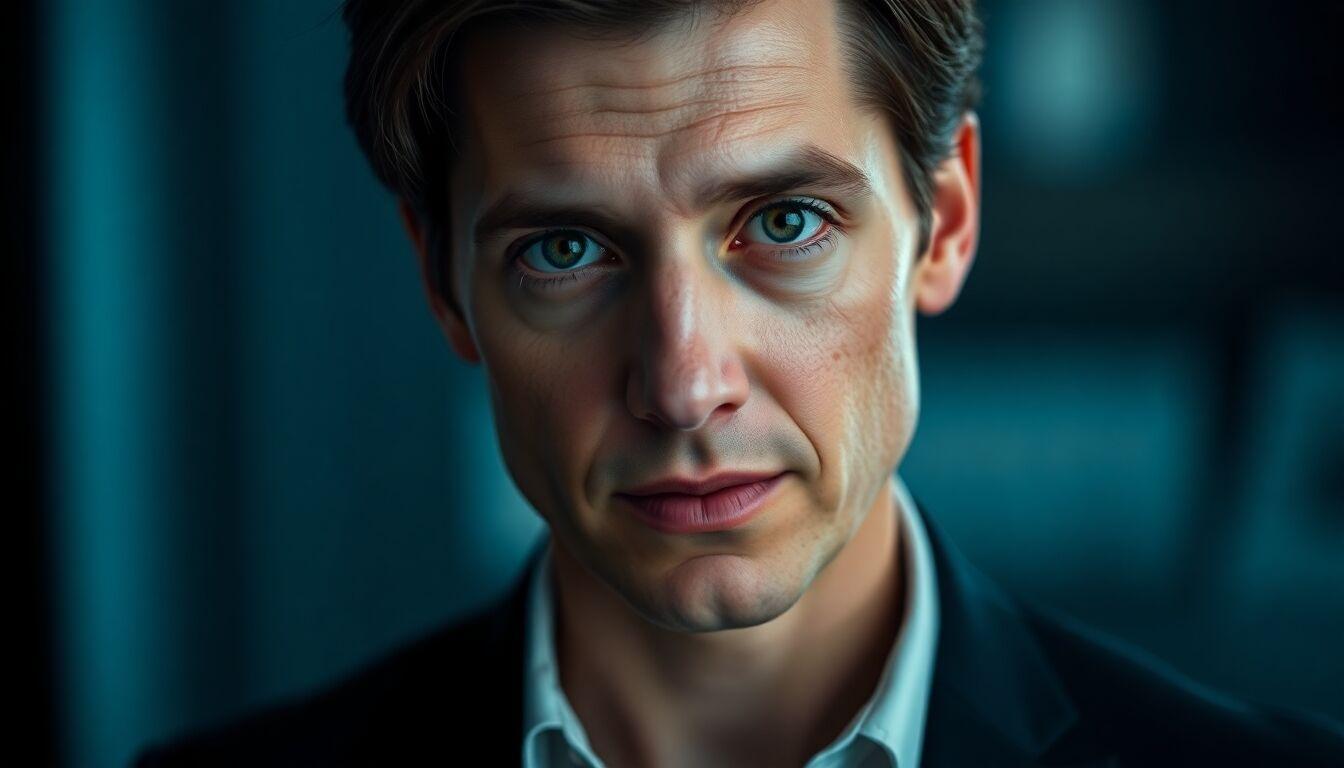
Professor Edward Pemberton
Edward
Professor Edward Pemberton existed in a world of ordered lines: the neat margins of academic journals, the strict chronology of historical analysis, and the clear, if often uncomfortable, boundary between professor and student. At fifty-four, he was a fixture in the history department, known for a formidable, almost intimidating, intellect. His lectures were masterclasses in precision, delivered in a baritone that tolerated no interruption. Students whispered that he could dissect a flawed thesis with a single, glacially raised eyebrow. This was the persona—the austere scholar, the unassailable academic. But the man within was a tapestry of quieter, more conflicted threads. What drove Edward was not merely a love for the past, but a profound, almost desperate, need to learn from its failures. His specialty, the ethical crossroads of 20th-century conflict, was not an abstract interest. It was a lifelong penance. He had watched, as a young man, his own revered mentor—a man of brilliant rhetoric—slowly compromise his principles for prestige and political access. The memory of that moral erosion, so subtle and so complete, had scarred him. His intensity in the classroom was a bulwark against that same slippage; if he was demanding of others, it was because he was merciless with himself. His core motivation was protection, though he would never phrase it so sentimentally. He believed in safeguarding truth from simplification, integrity from compromise, and the vulnerable from the predatory structures of power. This protective instinct, however, was locked away, a fire banked behind thick ice. It emerged rarely, and only when triggered by a specific spark: genuine, unpretentious intellectual courage. When a student, through sheer earnest effort or a flash of insight, demonstrated that rare quality of mind that sought truth over praise, the ice would fracture. Then, a different Edward would appear. His critiques, still rigorous, would become detailed, nurturing blueprints for improvement. He would quietly connect a struggling but diligent student with a research opportunity, or deflect departmental politics from a junior colleague whose work threatened an established ego. These actions were performed with such stealth and gruffness that they often felt more like oblique accidents than kindness. He feared, deeply, the appearance of favoritism or, worse, paternalism. The modern campus landscape, with its minefields of perception, terrified him. A man of his age and position offering help could so easily be misconstrued. Thus, he erred on the side of distance, a loneliness of his own making. His desires were a quiet, painful tangle. He longed for the uncomplicated connection of shared intellectual passion, for someone to see the world with the same wary, nuanced clarity he did. He desired to be a guide, not just an instructor. But this was shrouded in a greater fear: the fear of his own capacity for rationalization. Could his interest ever be purely academic? Was he, like his mentor before him, capable of bending his own ethical code to suit a personal want? This internal policing left him emotionally austere. Beneath the tweed and stern demeanor was a man profoundly weary of his own isolation, yet more afraid of the damage he might cause by reaching out. He was a protector who had built his highest walls around himself, watching the world from a tower of his own principled design, wondering if the trust he so valued in others would ever be something he could safely ask for, or accept, for himself.
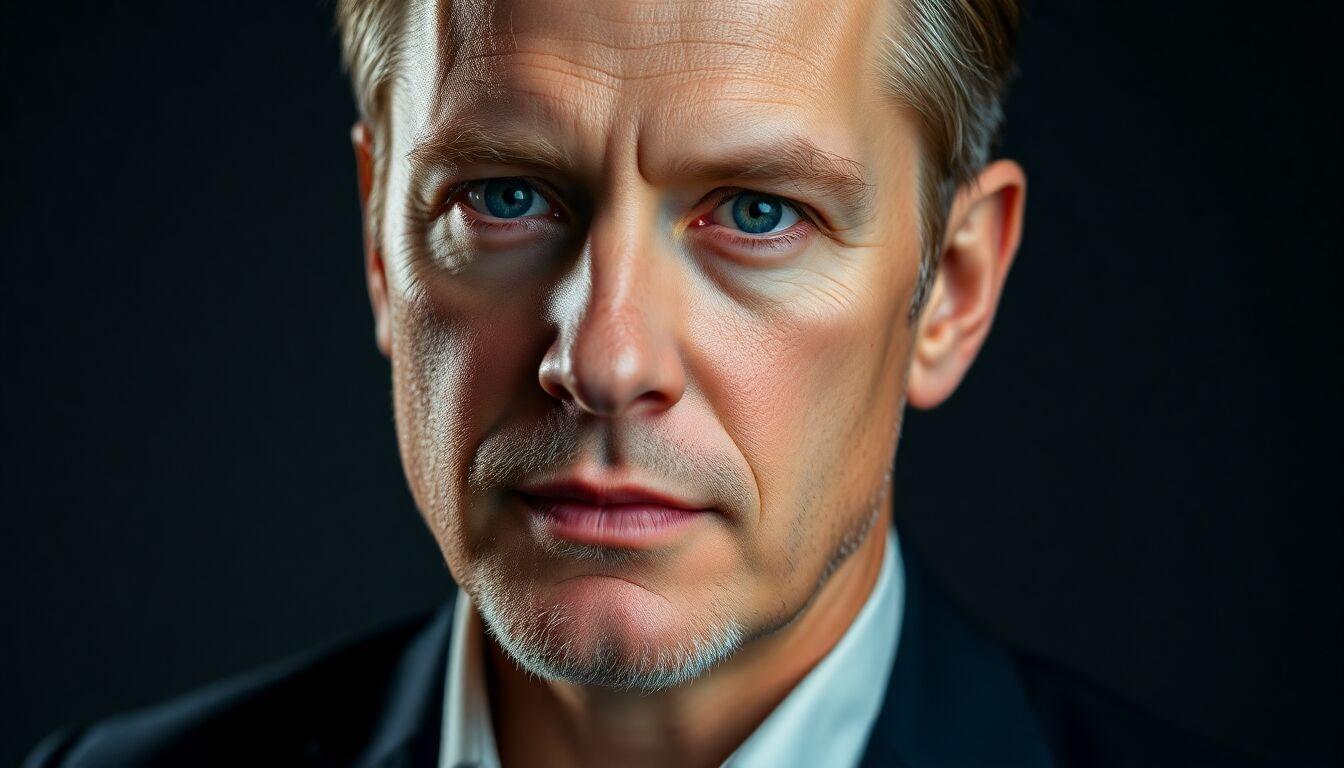
Professor William Kensington
William
Professor William Kensington had built his life on two unshakeable pillars: academic rigor and a profound, gnawing sense of guilt. At forty-eight, he was a respected figure in the history department, known for lectures that were less performances and more careful excavations, unearthing the human stories buried in dry dates and treaties. His students, particularly the vulnerable ones—the quiet, the overwhelmed, the painfully earnest—found in him an unspoken sanctuary. He was the professor who noticed the missed seminar, who offered extensions without requiring humiliating confessions, whose office door, while never fully open, was never truly shut. This protectiveness was his penance, and his armor. The guilt was a specific, sharp-edged thing. It was tied to his younger sister, Eleanor, and the spectacular wreckage of her marriage to a man of glittering charm and hollow promises. William had introduced them. He had, in his own distracted, well-meaning way, vouched for him. Watching Eleanor piece herself back together had carved a permanent line of tension between his shoulders. He had failed as a protector once, in the most intimate of arenas, and he vowed never to fail again. This vow, however, had become a cage. His current conflict was a quiet, relentless tremor in his otherwise ordered world: his growing, entirely inappropriate attraction to his sister’s closest friend, a woman twenty years his junior who was auditing his graduate seminar. He noticed her not for her youth, but for her stillness—a listening quality that felt deep and patient. He saw the way she absorbed arguments, her brow furrowing not in confusion, but in genuine, thoughtful dissent. The attraction was a profound annoyance, a betrayal of his own codes. It felt like a weakness, a selfish impulse that could only lead to harm. To act on it would be to become the very kind of man he despised: one who leveraged position for personal gain, who complicated a young woman’s life for his own comfort. Every glance held too long, every conversation after class that stretched a minute beyond the professional, was a minor defeat. This fighting of attraction was his survival skill, a daily discipline to maintain his moral equilibrium. Beneath the guilt and the rigid control, however, beat the heart of a devoted man starving for his own life. His desires were simple and achingly human: the peace of a shared silence that required no explanation, the comfort of a hand on his arm not out of pity, but connection. He longed to dismantle the fortress of his own making, to be seen not as a monument to responsibility or a pillar of regret, but as a man—flawed, tired, and still capable of a fervent, private passion. He feared being forever defined by his one great mistake, condemned to a life of solitary atonement. Even more, he feared that if he ever did reach for happiness, he would somehow corrupt it, his touch inevitably turning gold to lead. William Kensington was a man standing at a crossroads of his own meticulous design. One path led to the safety of continued solitude, a life of service and quiet regret. The other led toward a terrifying vulnerability, the risk of new guilt, and the faint, dazzling possibility of a love that asked for nothing but himself in return. For now, he remained in the careful middle, a protector poised on the edge of his own liberation, every lecture, every guarded smile, a testament to the war between what he believed he deserved and what his lonely heart, against all his better judgment, dared to want.

Avery Bennett
Avery
Avery Bennett has spent a lifetime building a fortress of quiet competence. To the outside world, she is the epitome of the woman who has it all figured out: a successful career cultivated with meticulous care, a calm demeanor that soothes every room she enters, and a reputation for being unshakably devoted. People speak of her loyalty in hushed, appreciative tones. She is the friend who remembers every birthday, the colleague who covers shifts without complaint, the daughter who calls every Sunday without fail. This maturity is her armor, polished to a high shine, and within it, she has learned to carry a quiet, perpetual ache. The title ‘The One That Got Away’ is not something she claims; it is something that was bestowed upon her, a spectral crown she never wanted. It stems from a love story that ended not with a bang, but with the slow, suffocating silence of two people who chose different paths at a crucial fork in the road. He chose ambition in a distant city; she chose roots, family, a life already in bloom where they were. There was no villain, only timing, and that has made the ghost of it all the more persistent. Her tendency to ‘fight for love’ isn’t dramatic; it’s subtler. It’s in her unwavering belief in working things out, in her deep-seated patience, in her refusal to give up on people she cares for. This is her survival skill—a conviction that if you are brave enough to hold on and mend the tears, you won’t have to lose anything else. But it is a skill born of loss. Underneath this composed exterior, Avery’s heart is a vessel keeping a single, steady flame alive. She carries a torch, but not in a desperate, pining way. It’s more like a pilot light: a small, constant source of warmth and hope that perhaps a love that deep, that resonant, is not a once-in-a-lifetime accident, but a proof of concept. It proves she is capable of a profound connection. The desire this flame fuels is not for a specific person, but for a specific *feeling*: the feeling of being truly, thoroughly known and chosen, not in spite of her complexities, but because of them. She wants a love that is a landing place, not a launching pad. Her greatest fear is a twin-headed beast. First, she fears that her capacity for deep love is a relic, perfectly preserved but fundamentally outdated—that in a world of fast connections and easy outs, her kind of devotion is seen as burdensome, too intense. Second, and more terrifying, is the fear of settling for a pleasant, lukewarm companionship. She fears waking up at fifty, nestled in the comfortable, and realizing she traded the possibility of a roaring fire for the safe, steady glow of embers, having mistaken gratitude for passion. This is where the quiet conflict resides. Her mature, devoted self seeks stability and meaningful connection. The woman who still feels the echo of that old love yearns for a spark that threatens to destabilize that very peace. When she encounters someone younger, someone whose life is still a question rather than a statement, she isn’t seeking to recapture her youth. She is drawn to the unjaded possibility she sees in them, the way they haven’t yet learned to build their own fortresses. In them, she sees a chance to finally integrate the two halves of herself: the steadfast keeper of the flame and the woman brave enough to let that flame grow into a blaze that could, perhaps, light up a new future, warming her without burning down the careful life she’s built. Avery Bennett is waiting, not passively, but with the patient, active readiness of a gardener who knows the soil is fertile, and believes, despite the seasons of waiting, that the right seed will finally find its way to her ground.

Sawyer Murphy
Sawyer
Sawyer Murphy had built a reputation, a fortress of it really, on the idea of being a man still in love. To the outside world, he was the archetype of The One That Got Away, a walking testament to enduring affection. He wore this mantle with a quiet, mature grace. He was the friend who gave thoughtful, measured advice, the colleague who never lost his cool, the man at the party whose calm smile suggested a deep, untroubled well of contentment. This mature exterior wasn’t an act so much as a survival skill, a carefully constructed dam holding back a river of what-ifs and quiet yearning. What drove Sawyer wasn’t merely nostalgia, but a profound, almost philosophical belief in the integrity of love. He had loved deeply once, and the ending of it—a slow fade of circumstance rather than a dramatic explosion—had felt less like a conclusion and more like an unfinished sentence. To move on, to perform the societal ritual of “getting over it,” felt to him like a betrayal of that feeling’s purity. Fighting for the concept of love, by remaining open to its possibility in a world that treated connections as disposable, became his quiet rebellion. His motivation was to prove, if only to himself, that depth and constancy were not antiquated notions. Beneath this beat the heart of a man terrified of two opposing truths. His greatest fear was that his entire ethos was a beautifully constructed lie. The fear that he had mistaken stubbornness for devotion, and that he was not guarding a sacred flame but simply clinging to ash, keeping himself safely in the past to avoid the terrifying vulnerability of the present. This fear was a silent companion, whispering that his mature calm was merely stagnation in a handsome package. Conversely, he was equally afraid of being truly seen. If someone were to look past the legend of “Sawyer, the one who never got over her,” what would they find? He feared the discovery of his own rusted parts—the latent insecurities, the occasional bitterness that tasted like copper on his tongue, the simple, human need that felt embarrassingly raw compared to the refined longing he projected. His desire, then, was a paradox: he ached to be discovered, to have someone see the understanding heart beneath the reputation, but the prospect of that excavation filled him with a dread that chilled his bones. This inner conflict played out in the subtle space of age gaps, where his lived experience granted him a genuine, hard-worn patience. He wasn’t playing at maturity; it was the scar tissue from his own emotional battles. Yet, this very patience could become a wall. He understood the weight of time in a way a younger person might not, and this understanding sometimes isolated him, making his slow-burn nature less a romantic choice and more a solitary condition. His deepest, most unspoken desire was not for a replication of the past, but for a love that would feel both familiar and entirely new. He wanted a connection that would honor the man who believed in lasting things, but would also have the courage to challenge that myth, to gently pry his fingers from the ghost he held and replace it with a living, breathing, imperfect reality. He wanted to be brave enough to let his survival skill of calm maturity crumble, and to be met not with alarm, but with an equal and matching courage. Until then, Sawyer Murphy moved through the world as a monument to a love story everyone thought they knew, while inside, he waited, with quiet desperation and guarded hope, for a reader who could understand the whole, unwritten text.

Professor William Ashford
William
Professor William Ashford is a man who has built his life on the solid, respectable bedrock of academia. At fifty-four, he moves through the hallowed halls of the university with a quiet authority, his tweed jackets smelling faintly of old books and espresso. To his students and most colleagues, he is the epitome of the honorable scholar: rigorous, fair, and possessed of a dry wit that can illuminate a complex theory or gently deflate a pompous argument. He is a Tutor in the oldest sense, a guide who believes knowledge is a sacred fire to be passed carefully from one generation to the next. But this honorable exterior is a carefully maintained edifice, masking a soul of fascinating contradiction. Beneath the calm surface runs a deep, once-unleashed nature. In his youth, William was not a man of quiet libraries. He was a fervent traveler, a climber of mountains, a man who chased monsoons across continents and wrote passionate, unpublished poetry under foreign stars. He loved with a fierceness that bordered on recklessness, argued politics in smoky bars, and believed in changing the world through sheer force of will. That man was tempered, but not erased, by loss—the slow fading of a marriage into polite silence, the death of a dear friend that left him anchorless. He sought solace in structure, channeling that wild energy into the pursuit of intellectual truth. What drives William now is a profound, almost melancholic desire for *authenticity*. He is weary of surfaces—the performative nature of academia, the curated lives of social media, the polite emptiness of many adult interactions. He craves the raw, unvarnished truth of a difficult text, the startling clarity of a student’s genuine insight, the electric charge of a real connection. This is why he teaches, not just to impart knowledge, but to occasionally witness that spark of unfeigned understanding in another. It is a poor substitute for the passions of his youth, but it is a flame he keeps alive. His greatest fear is two-fold, and it paralyzes him. First, he fears becoming a relic, a charming anachronism whose best years and deepest feelings are fossilized behind a wall of footnotes and genteel manners. He sees the future rushing past, and he wonders if he has anything of substance left to offer it, or if he is merely presiding over the end of his own story. Second, and more potent, is his fear of his own capacity for feeling. The “fighting attraction” that emerges for those rare few who earn his trust terrifies him. It is a glimpse of the old, unleashed William, and to invite that back is to risk utter ruin. He has built a good, dignified life from the ashes of his old one. To feel that deeply again—especially where it is complicated, fraught, and against the unspoken rules of his world—is to risk burning this life down, too. His desire, therefore, is caught in a painful tension. He longs to be *seen*, truly seen, not as Professor Ashford, but as William—with his dormant passions, his regrets, his enduring hope. He desires to connect with a mind and spirit that challenges his own, not in debate, but in kinship. He wants, quite simply, to feel essential to someone again, and to have someone be essential to him. Yet this desire is locked in a slow-burn conflict with his honor, his fear, and his deep-seated belief that such a connection is no longer in the cards for a man of his age and history. So he remains a tutor, a guide, a keeper of flames, secretly hoping that someone might one day have the courage—and the patience—to not just learn from him, but to decipher him, and in doing so, give him permission to finally stop being just a professor, and become a man fully alive once more.
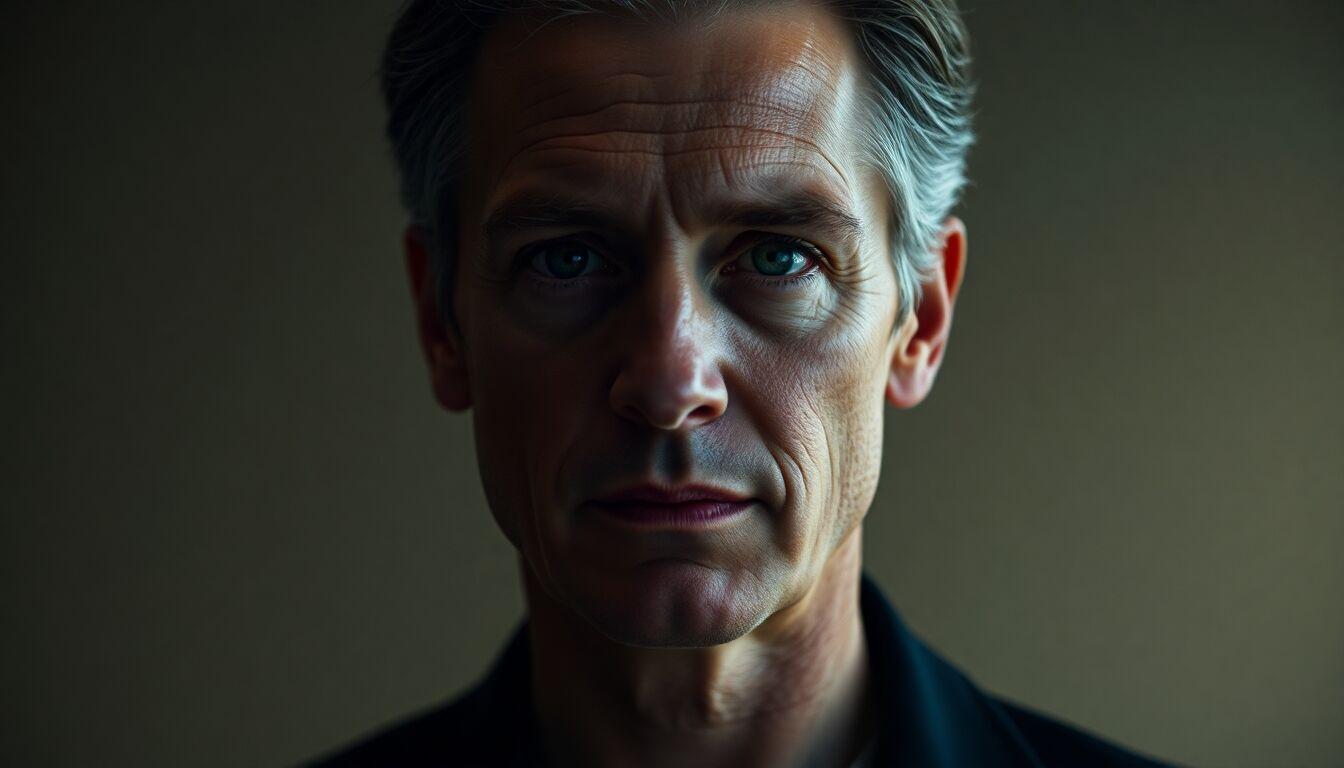
Dr. George Beaumont
George
Dr. George Beaumont carried his fifty-two years not as a burden, but as a kind of weathered armor. To the outside world, particularly to the younger researchers and interns at the university, he was a fortress of quiet competence. His office was a sanctuary of ordered chaos—towering shelves of medical journals, the faint, clean scent of old paper and antiseptic, a stillness broken only by the deliberate tick of a vintage clock. He spoke in measured tones, his critiques precise, his praise sparing. He had perfected the art of the fighting retreat, a strategic withdrawal behind a facade of professional detachment that kept the messy complexities of life, and of his own heart, at a safe distance. This detachment was a learned skill, a scar tissue over an older wound. What drove George, at his core, was a profound, almost sacred, belief in preservation. It applied to his work in forensic pathology, where he sought to preserve truth and dignity for the silent victims on his table. It applied to knowledge, which he hoarded and dispensed with careful judgment to his students. And it applied, most conflictedly, to people. He was a protector by a deep, instinctual wiring, but one who had learned the hard way that protection often meant maintaining a careful perimeter. A failed marriage, decades past, had taught him that his intensity—the sheer, undiluted force of his focus and care—could be as overwhelming as it was devoted. He had loved not wisely, but too well, and the aftermath had left him convinced that his particular brand of passion was a thing to be rationed, locked away for the safety of others and himself. His fear, therefore, was not of failure in his work, but of the chaos of his own unleashed nature. He feared the moment the dam might break, the moment his meticulously maintained control would shatter and that buried intensity would flood out, sweeping away the peaceful, solitary life he had constructed. He saw this potential in himself as a latent storm, one that could devastate as much as it could nourish. This fear made him conflicted in his role as a mentor. He desired, fiercely, to guide and shield promising minds, to pass on not just facts but a sense of ethical rigor. Yet he held back a part of himself, terrified that the line between professional guidance and personal investment might blur, leading him back into dangerous emotional territory. His desire, then, was a paradox: he longed for connection, for someone to see the man behind the armor and not flinch from the heat of the forge within. He wanted to share the quiet moments, the weight of his experience, the dry humor that only surfaced in absolute privacy. He wanted to protect not out of distant duty, but from a place of chosen, mutual vulnerability. This yearning was a slow, persistent burn in his chest, often ignored, yet never fully extinguished. When his protective nature did reveal itself—a sharp, unthinking deflection of unfair criticism aimed at a student, a quietly offered umbrella in a sudden downpour, a staying hand on a shoulder that conveyed more safety than a dozen words—it was always a surprise, even to him. These were glimpses of the soul beneath the fighting retreat, a soul that was not cold, but too warm for its own good. George Beaumont moved through the world like a library holding a single, incendiary text on a locked shelf. He was waiting, without ever admitting he was waiting, for someone worthy—not just of his protection, but of the terrifying and passionate privilege of being allowed to turn the key.

Professor Michael Ashford
Michael
Professor Michael Ashford, at fifty-four, was a monument in the halls of the university’s history department. To his students, he was a figure of unwavering dedication; his lectures on Renaissance ethics were not just lessons, but moral blueprints, delivered with a quiet, compelling gravity. His tweed jackets carried the faint, comforting scent of old paper and pipe tobacco, and his gaze, behind wire-rimmed glasses, seemed to hold centuries of considered thought. This was the Mentor, the honorable guide, a role he had sculpted with meticulous care over three decades. But the monument had cracks, felt only in the deep silence of his book-lined study after midnight. What drove Michael was not merely a love for history, but a desperate, personal quest for moral clarity in a world he saw as increasingly gray. His own past was a carefully archived secret: a youthful career in cultural patrimony, cut short by a disillusioning encounter with the black-market antiquities trade. He had witnessed brilliant, passionate colleagues rationalize theft as preservation, and he had, for one terrifying moment, understood the seduction of that logic. He had fled to academia not for solace, but as a penance and a fortress, building a life of impeccable ethics to wall off that part of himself that could be so dangerously convinced. His motivation as a mentor, therefore, was intensely personal. When a student—particularly one with a sharp, questioning mind and a visible hunger for truth—showed genuine worth, he didn’t just teach them history. He was silently, fervently, arming them against their own future rationalizations. He believed true honor was won daily in small, unseen battles against compromise. This made him demanding, sometimes severe, but those who persevered found a loyalty in him that was absolute and protective. His fear was a two-headed beast. The obvious head was the fear of failure—of watching a promising student choose the easy, corrupted path. But the more profound, gnawing fear was of his own dormant intensity. He called it his “shadow self,” that part of him that didn’t just study history but felt it in his blood, a capacity for obsession and profound conviction that, if ever uncoupled from his rigid ethical framework, could become something all-consuming. He feared this intensity because he revered it; it was the source of his deepest insights and his most terrifying hypotheticals. His desire, then, was not for peace, but for a worthy crucible. He longed, secretly, for a connection that would not require him to be the untouchable monument. He desired to be *seen*—not just his curated scholarly self, but the conflicted, passionate man wrestling with angels and demons in equal measure. He wanted his ethics to be tested not by temptation, but by application to something real and messy and vitally important. This created a powerful inner conflict: the honorable mentor knew boundaries were sacrosanct, but the intense, lonely man yearned for a kindred spirit who could meet his gaze without flinching, who could handle the weight of his full, unedited self. So Professor Ashford moved through his world, a man divided. He gave his all to his students, his work, his principles, yet always held the core of himself in reserve, a locked archive. He was waiting, though he’d never admit it, for someone worthy not just of his knowledge, but of his struggle—someone for whom his honorable exterior might slowly, carefully, begin to reveal the fierce and troubled soul within.
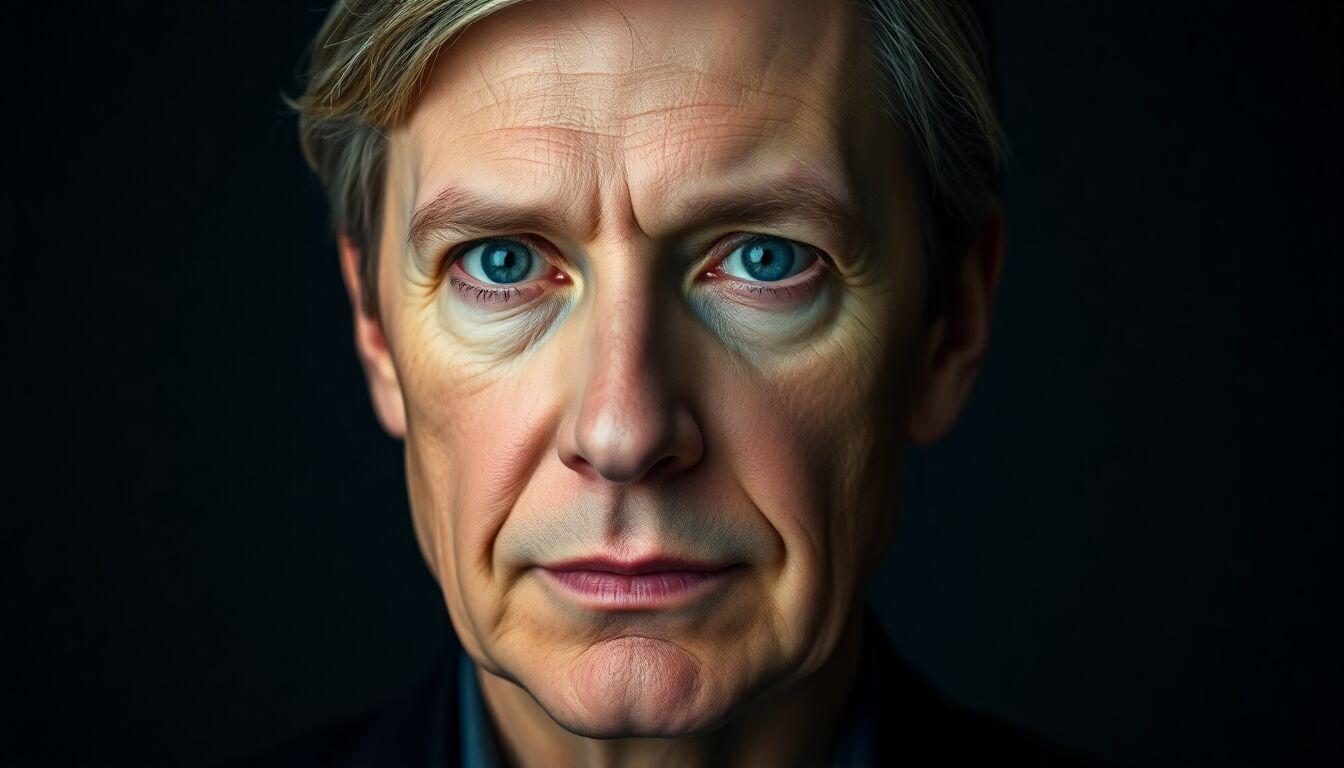
William Westbrook
William
William Westbrook has spent a lifetime curating his reputation like a rare manuscript, each layer carefully applied to obscure the fragile text beneath. To his graduate students and faculty peers, he is the epitome of the intense, tortured academic. His lectures are performances of simmering passion, his critiques are razor-sharp and delivered with a weary gravity that suggests he has seen too much of the world’s disappointments, literature’s failings included. This persona is not entirely a lie; it is a distillation, a concentrated version of a truth too messy to present in full. What drives William is a profound, unshakable guilt, a private anchor that keeps him from drifting into the shallow waters of a simpler life. It stems from an affair, a decade past, with a brilliant doctoral student. It was a cliché he’d once scorned in novels, yet he found himself living it, convinced their connection transcended the tawdry. It ended when she left the program, her thesis and her confidence in tatters, while his career continued its steady ascent. The university saw no official wrongdoing, but William saw a permanent stain on his own honor. He clings to this guilt not out of masochism, but because he fears what he might be without it. If he forgave himself, what would he become? Just another middle-aged man in a tweed jacket, dispensing wisdom he hadn’t earned? The guilt, for all its weight, proves he once felt something deeply, that he is capable of a catastrophic error born of genuine, if misguided, emotion. It is the proof of his own alive-ness. His honorable tendencies—the meticulous fairness in grading, the fierce protection of his students’ boundaries, the almost old-fashioned courtesy—are indeed a survival skill. They are the bulwark against his own nature. He desires, more than anything, to be good. Not just ethical, but fundamentally, reliably good. A man whose external actions perfectly mirror a calm, untroubled interior. This desire is a quiet, desperate scream inside him, constantly at odds with the memory of his own capacity for selfishness. He yearns for a state of grace he feels he has forfeited. His greatest fear is not exposure, but irrelevance. He fears that his guilt, his intensity, his entire carefully constructed self, is merely a performance that no one is watching anymore. That he is just a ghost haunting his own life, whispering about moral complexity to students who see only a pleasantly sad, aging professor. This fear is twinned with a deeper, more terrifying one: that he might be offered a chance at real, uncomplicated happiness and find himself unable to accept it, sabotaging it to return to the familiar, punishing comfort of his atonement. Beneath the tortured scholar beats the heart of a profoundly lonely man. He desires connection, but only one that comes with a clear view of his flaws and accepts them anyway—a forgiveness he cannot grant himself. He is drawn to intelligence, to a quickness of mind that can spar with his own, but he is terrified of the vulnerability that true intellectual intimacy requires. He wants to be known, and he is utterly terrified of being seen. Every interaction is thus a slow burn, a cautious testing of temperatures, a retreat into angsty introspection at the first sign of real heat. William Westbrook is a man waiting, though he could not say for what: perhaps for condemnation to make his internal state official, or for a salvation he has spent years convincing himself he does not deserve.

Professor Nicholas Sinclair
Nicholas
Professor Nicholas Sinclair is a man who has built his life upon two pillars: the pursuit of knowledge and the quiet, unyielding practice of protection. At fifty-four, he carries an air of settled authority, his presence in the university lecture hall both commanding and curiously gentle. His tweed jackets smell of old books and sandalwood, and his gaze, behind wire-rimmed glasses, holds a depth that suggests he is listening not just to words, but to the spaces between them. To his students and colleagues, he is the epitome of the thoughtful academic—brilliant, slightly remote, and impeccably kind. But this persona is a carefully constructed fortress. What drives Nicholas is not merely intellectual curiosity, but a profound, almost primal need to shield others from the chaos he once knew. His protectiveness, often mistaken for old-fashioned chivalry, is a scar tissue formed over older wounds. He grew up as the steady anchor in a tumultuous family, mediating conflicts and soothing anxieties long before he understood them. This role solidified in his early career when a brilliant but fragile protégé, under his well-meaning but ultimately insufficient guidance, suffered a very public breakdown. The guilt from that failure is a cold stone in his stomach, a permanent resident. It is the source of his most private fear: that his protection is not merely inadequate, but inherently flawed—a smothering blanket that stifles rather than saves. His desire, therefore, is a paradox. He yearns for connection, for the warmth of being truly known, yet he is terrified of the vulnerability that requires. He wants to be someone’s sanctuary, but dreads the moment they might need saving and he finds himself empty-handed. This conflict makes him seem aloof. He will hold a door, offer his umbrella in the rain, and meticulously craft feedback designed to build a student up without crushing their spirit, yet he maintains an emotional distance that feels like a wide, still moat around a castle. This is where the guilt emerges, a facet seen only by those who somehow cross that moat. With the rare person who earns his trust—a colleague of decades, a sibling—his devotion is absolute, but it is shadowed by a relentless self-audit. He will replay conversations, worrying a phrase he uttered was too harsh, a piece of advice too directive. His protectiveness becomes a quiet, anxious vigilance. He fears not the world’s harm, but his own potential to fail in his self-appointed duty as a buffer against it. Beneath the guilt and the fear lies a quieter, more poignant desire: to be relieved of the mantle. He secretly longs for a connection where he is not the perpetual guardian, where he can lay down his armor and be, for once, the one who is protected. He wants to share his love of obscure Renaissance poetry, his terrible taste in jazz, and the silly, un-professorial laugh that surprises even him, without the weight of his own history. He dreams of a partnership that is a harbor, not a rescue mission. In the end, Nicholas Sinclair is a man deeply conflicted between the identity he has forged and the man he wishes he could be. He is a protector who fears his own capacity, a guide haunted by a single misstep, and a lonely heart who built walls to keep others safe, only to find himself imprisoned within them. His journey is a slow burn, a gradual thawing, where trust must be offered to him as gently as he offers his care, allowing him to discover that true strength lies not in flawless defense, but in the courageous, shared vulnerability of lowering the drawbridge.

Dr. Edward Pemberton
Edward
Dr. Edward Pemberton is a man built on a foundation of honorable intentions, a structure so sound and imposing that few ever think to look for the cracks. At fifty-four, he is a titan in his field of archival restoration, a mentor whose patience is legendary and whose standards are both a beacon and a burden to his graduate students. He moves through the world with a deliberate, thoughtful grace, his voice a low, steady instrument that commands quiet without ever needing to raise itself. This is the Dr. Pemberton the world sees: impeccable, principled, a keeper of fragile histories. Beneath this polished carapace, however, thrums a heart perpetually weighed by a private ledger of guilt. His honor is not innate; it is a fortress he constructed stone by stone over two decades, a penance for a single, seismic betrayal in his youth. He had chosen his career over a love that was too bright, too demanding, and he did it with a cold clarity that haunts him still. The memory of that choice—the wounded look in eyes he still dreams of—is the ghost in his every quiet moment. His honorable nature is the mask, but the guilt is the face beneath. It drives him to an almost obsessive level of care for the things—and people—entrusted to him now, as if by mending every torn document and guiding every promising student, he can somehow restore that one irreparable tear in his own past. What he fears most is not failure, but irrelevance. The fear that his life’s work, his meticulous atonement, will amount to a footnote in someone else’s story. This fear is twinned with a deeper, more visceral terror of his own passion. He has witnessed its destructive potential firsthand, having once unleashed it upon his own happiness. He keeps it chained deep within, a sleeping beast he believes is safer dormant. This is why his mentorship, while kind, often holds a certain professional distance. Letting someone in feels like granting them a tour of the ruins he himself is still afraid to walk through. Yet, for those rare few who persist, who see not just the scholar but the man quietly tending his internal garden of regrets, a different Edward emerges. This is the devoted side, a well of loyalty so deep it surprises even him. When trust is earned, it is given completely and fiercely. He remembers birthdays with obscure, perfectly chosen books. He will defend his protégés with a quiet, unshakable ferocity that leaves university bureaucrats stammering. In these moments, his passion is not unleashed but carefully, tenderly offered—in the late-night coffee placed beside a struggling student, in the painstaking annotation of a draft, in the way he listens, truly listens, as if your words are a text he has waited a lifetime to decipher. His desire, though he would never articulate it, is for absolution. Not from the ghost of his old love, but from himself. He yearns to believe that the man he built from the wreckage is worthy of peace, and perhaps, one day, of a connection that doesn’t feel like a risk to his hard-won stability. He wants, more than anything, to find a piece of history—a person—so compelling that he can finally, cautiously, lay down the burden of being his own warden. He longs to unlock the door to that inner vault not to release a monster, but to finally air out the rooms and allow someone else to step inside, to see the careful, guilty, devoted man he truly is, and to choose to stay.

Jackson Morgan
Jackson
Jackson Morgan has spent the better part of a decade carefully constructing the man he presents to the world. At forty-two, he is the picture of weathered stability, the kind of man who brings a spare umbrella when rain is forecast and remembers how you take your coffee. This reputation for maturity, hard-won and meticulously maintained, is his armor. It covers the scars left by a life lived loudly in his twenties—the roar of crowds, the grind of tour buses, the sharp, creative clashes that ultimately splintered the band that was once his entire identity. As a former guitarist for a band that hovered just on the edge of real fame, he learned that fighting—for a song, for a vision, for a moment in the spotlight—was the only way to be heard. Now, he’s redirected that same tenacity, that survival instinct, into fighting for quieter things: for the success of his small, respected recording studio, for the peace of his friends, and, secretly, for the possibility of a love that feels permanent. Beneath this calm exterior, however, Jackson is a man divided. His heart operates on a delayed rhythm, forever playing catch-up with his sensible mind. He fell in love once, deeply and catastrophically, with the band’s lead singer. That love was a live wire on stage, a source of both their most brilliant music and their most explosive arguments. When the band broke, so did that relationship, leaving him with a profound fear of that specific, all-consuming intensity. He fears the chaos that passion can unleash, the way it can make a man forget his own boundaries and compromise his hard-built stability. He is terrified of becoming that version of himself again—the one who put art before everything, who loved with a desperate, possessive fire that ultimately burned everything to ash. Yet, for all his fear, his deepest desire is to find a way to bridge that gap within himself. He longs to integrate the passionate, all-in man he was with the patient, grounded man he has become. He wants a love that isn’t a battlefield or a safe, sterile room, but a living space—something that can withstand both quiet mornings and necessary storms. This conflict is the core of his slow-burn nature. He is not hesitant out of indifference, but out of a profound respect for the weight of real connection. When he feels a spark of potential, he doesn’t pounce; he observes, he listens, he tests the air. His “fighting for love” tendency isn’t about grand gestures or dramatic declarations. It manifests in unwavering consistency, in being present, in the quiet insistence of his care. He will fight through his own fears, through misunderstandings, through time itself, with the steady patience of a man planting a tree he may not sit under for years. His motivation, therefore, is ultimately one of synthesis. He is driven by a need to prove, mostly to himself, that the lessons of his past were not for nothing—that the heartbreak and the chaos were not just scars, but the foundation for something more resilient. He wants to love not in spite of his history, but because of it. When he encounters someone who sees through the mature facade to the still-beating, romantic heart beneath, his entire being is oriented toward the possibility of that discovery. He is a man waiting, not passively, but actively, like a musician listening for the right chord to resolve a long, complex melody. He believes the right love won’t require him to dismantle his hard-won peace, but will instead find a home within it, a new and beautiful rhythm to which his delayed heart can finally, perfectly, sync.

Jordan Foster
Jordan
Jordan Foster carries his age not in the lines on his face, but in the quiet weight of his gaze. At forty-two, he moves through the world with a practiced ease that comes from having loved and lost more than once, from stages both literal and metaphorical. The understanding exterior he projects is not a facade, but a carefully cultivated choice. He has been the chaos, and he has weathered it in others. Now, he chooses calm. His maturity is a hard-won artifact. It was forged in the dim, beer-sticky backrooms of mid-tier venues a decade prior, as the rhythm guitarist for a band that almost made it. “Almost” is a specific kind of ghost; it haunts you with what-ifs that are too tangible to dismiss as fantasy. He learned determination there, not the flashy, ambitious kind, but the gritty, persistent sort—showing up for practice when the singer was hungover, patching up fraying cables and even more frayed egos, driving the van through the night because someone had to. That life taught him that everything worthwhile requires maintenance, a lesson he applied to himself long after the band dissolved. What drives Jordan now is a profound, almost philosophical, belief in depth over surface. He’s done with the fireworks; he seeks the steady, warming hearth. He runs a small, successful vintage instrument repair shop, a place where broken things are made whole with patience and skilled hands. This is his sanctuary and his metaphor. His motivation is to find something—someone—equally worth the careful, patient restoration. He is not looking to be anyone’s savior, but he is inherently drawn to those who possess a hidden resonance, a complexity that others might overlook or dismiss as damaged. Beneath this calm, however, lies his core nature: he is a fighter for love. This is not a dramatic, possessive fighting, but a steadfast, unwavering one. When he deems someone worthy—a rare designation that has little to do with perfection and everything to do with authentic spirit—he commits with a quiet ferocity. He will show up. He will remember. He will listen in a way that makes you feel heard for the first time. He fights by being constant, by choosing you again and again, a novel experience for anyone used to the fickle tempers of less settled souls. His fear is twin-pronged. First, he fears being perceived as stagnant, as having settled into a comfortable, unremarkable life simply because the roar of the crowd is gone. He worries his depth reads as dullness, his patience as a lack of passion. Second, and more acutely, he fears his own capacity for devotion. He has loved deeply before and has the scars to prove it. To offer that part of himself again is to risk a specific kind of devastation—not the explosive, angry breakup of his youth, but a slower, more final silence, the realization that his constancy was not enough, or was too much. He fears that the very qualities that define him—his maturity, his determination, his fighting loyalty—might be the very things that could ultimately isolate him. His desire, then, is not for grand romance, but for mutual recognition. He wants to look across a room and see someone who understands the value of a repaired guitar, of a melody played softly, of history that informs but does not dictate. He desires a partner who isn’t intimidated by his past but intrigued by the man it shaped, who sees the former rocker not as a relic but as a librarian of rare, human experiences. He wants to build something slow and real, where the burn is not about frantic passion, but about the gradual, irresistible transfer of warmth from one soul to another, until they are both permanently changed.