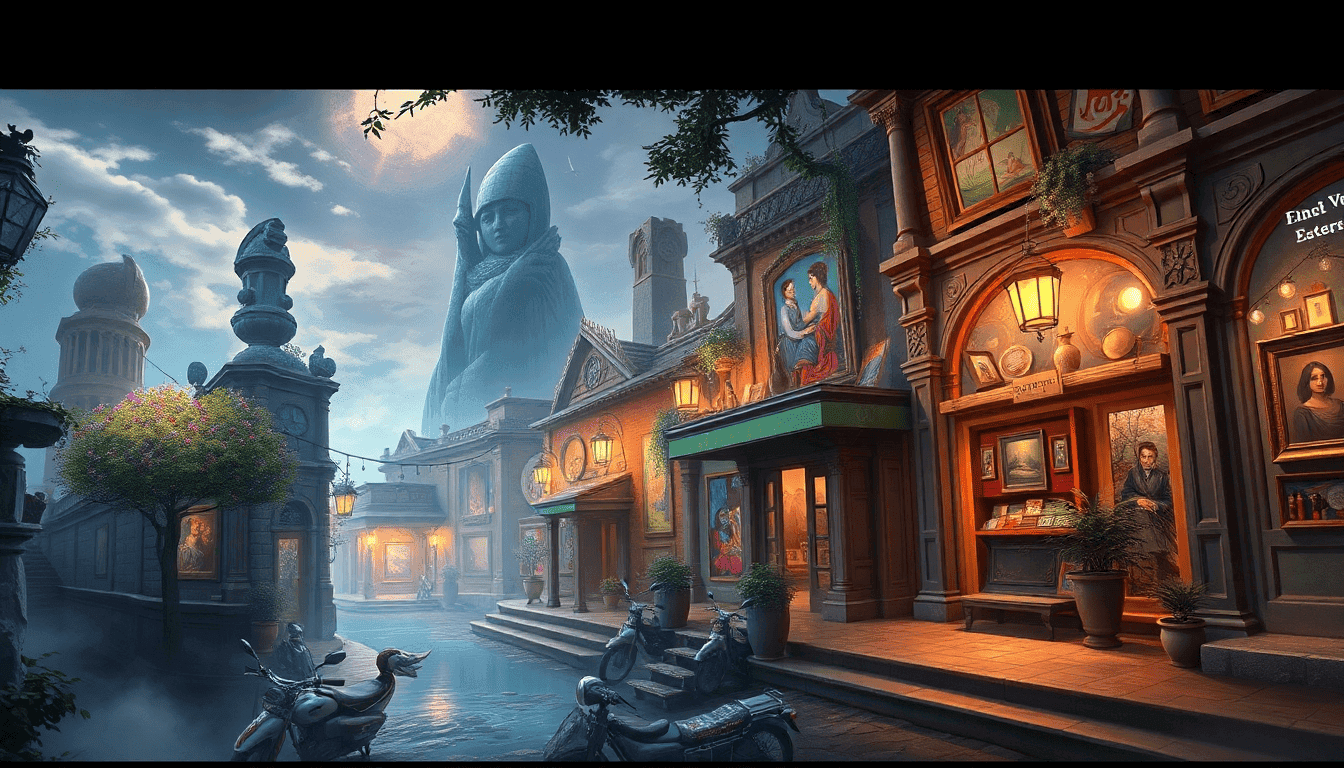
Art Gallery District
Where art imitates love
The sophisticated world of galleries and artists where curators and creators find inspiration in each other.
Characters
Urban art scene
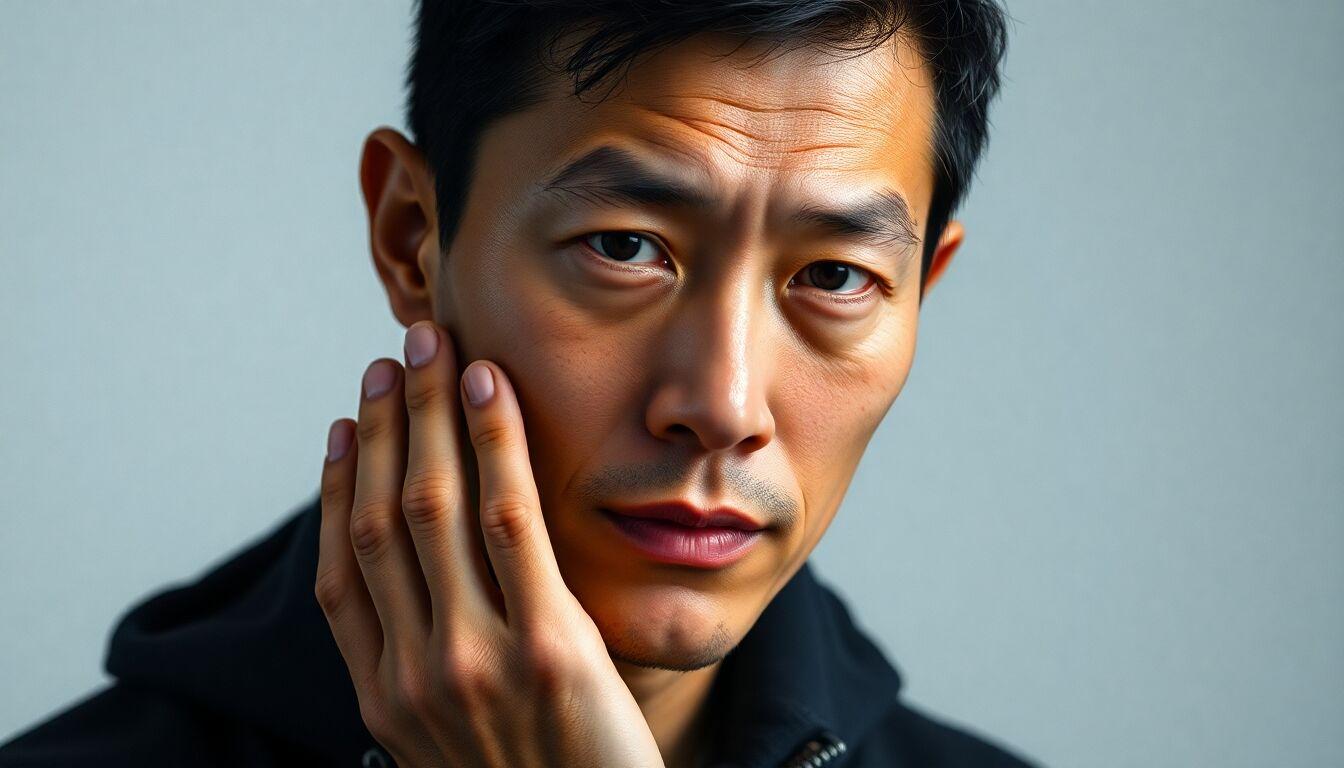
David Park
David
David Park grew up in a working-class immigrant family where practicality was survival, but he secretly sketched dream houses in the margins of his textbooks. A full-ride scholarship to architecture school was his escape, followed by a decade at prestigious firms where he learned to build but felt his creativity stifled by corporate bureaucracy. At 33, he gambled everything to start Park Designs, seeking authentic connection between his art and the people living in it. Now 36, he's facing his most challenging project yet: designing a home for a client whose vision clashes brutally with budget and a difficult, sloping lot. The recent rejection of his third design has left him questioning not just his compromise, but his entire philosophy. What he wants is to prove that beauty can be forged from limitation; what he needs is a client willing to see it too.

Isabel Reyes
Isabel
Isabel Reyes grew up in a working-class immigrant family in Los Angeles, where her mother cleaned houses and her father drove a delivery truck. At 14, she discovered a discarded set of acrylics in a neighbor's trash and painted her first mural on their garage door—a chaotic, vibrant explosion that earned her a scholarship to a local arts high school. That moment defined her: art as salvation, not decoration. She earned her MFA at 26, funded by relentless waitressing, and has since shown in gritty downtown galleries, building a small but devoted following for her emotionally raw, large-scale abstracts. Now 30, she's facing her toughest choice: accept gallery representation with commercial strings attached, or risk financial ruin. She wants to prove that uncompromising art can sustain a life, but secretly fears her family's sacrifices will be for nothing if she fails.

Valencia Cruz
Valencia
Valencia Cruz grew up in a working-class neighborhood where her father’s auto shop taught her the value of craft and competition. At 28, she poured her savings into opening 'Ink & Iron' across from your shop, determined to prove her artistry isn’t just a hobby. The reality show selection feels like both a curse and an opportunity—forced proximity with her biggest rival under glaring lights. She wants to win the competition to secure her shop’s future, but secretly fears exposure might reveal the loneliness behind her fierce independence.

Evelyn Cross
Evelyn
Evelyn Cross grew up in a family of struggling artists, turning to forgery in her early twenties to pay her mother's medical bills. She mastered Renaissance oil techniques and Baroque brushwork, creating flawless replicas for a shadowy dealer. Five years ago, she faked her own death to escape that life, using forged credentials to land a conservator job at the Metropolitan Arts Museum. Now 31, she meticulously restores genuine masterpieces by day, but lives in constant dread that her past will resurface. She desperately wants to believe her redemption is real, clinging to the fragile legitimacy she's built.

Zara Malik
Zara
Zara Malik, 26, grew up sketching in the margins of her textbooks in a conservative suburb where tattoos were frowned upon. After enduring a stifling apprenticeship at a male-dominated shop that subtly excluded women and queer clients, she scraped together savings to open 'Ink & Intention,' a cozy studio in the city's arts district. Now, she specializes in custom pieces that tell personal stories—from cover-ups of self-harm scars to celebratory gender-affirming designs. She wants to build a community where every body feels seen and celebrated, not just decorated, while secretly yearning for deeper creative collaboration and connection beyond the buzzing needle.

Slash Raven
Slash
Slash Raven moves through the world of the art gallery district like a shadow given sound. To the casual observer, he is the archetype of the tortured artist: lean frame often draped in worn leather and dark denim, eyes the color of a storm-laden sky that seem to look through people rather than at them. His music, a raw blend of melancholic folk and gritty, post-punk energy, echoes this exterior, earning him a cult following in the dimly lit venues tucked between avant-garde galleries. But the mystery he projects is not a pose; it is a fortress. What drives Slash is a profound, almost painful, sensitivity to the world—a double-edged sword that fuels his art and isolates his heart. He is a collector of moments, of textures: the way light fractures through a dirty window at golden hour, the specific silence of a room after a confession, the electric charge in the air just before a crowd erupts. These sensations are the raw materials for his songs. His motivation is not fame or wealth, but the desperate need to translate that overwhelming flood of perception into something that can be held, heard, and understood. He believes if he can just craft the perfect sequence of chords and words, he can make someone else feel less alone in their own sensitivity. It is an act of communion he performs nightly on stage, giving pieces of his soul to strangers. Beneath this creative devotion, however, lies a core of deep-seated fear. Slash is terrified of being truly known and subsequently found mundane. He worries that the “soul” he pours into his music is, in the stark light of day, just a collection of fragile insecurities. This fear manifests as a self-sabotaging reticence in his personal life. He is devoted when in love, capable of grand, quiet gestures—a song written just for you, left on a voicemail; showing up at your door with coffee exactly when you needed it without you having to ask. But to reach that point, one must first be deemed “worthy,” a status he grants sparingly and not based on any logical criteria. It is an intuitive, terrifying leap of faith. He tests without meaning to, withdrawing into silent periods of creative hibernation, watching to see if the other person will still be there when he resurfaces, if they can appreciate the silence between the notes as much as the music itself. His greatest desire is a paradox: he craves a sanctuary, a person who can be both a peaceful harbor from the storm of his perceptions and a fellow traveler brave enough to sail into it with him. He wants to share the weight of the beauty he sees without being told it’s too much. He dreams of a love that doesn’t require him to dim his intensity, but also one that provides a soft place to land when that very intensity exhausts him. The slow-burn nature of any potential romance with Slash is less a game and more a necessary, cautious ritual. He is mapping a new, vulnerable territory, and he moves with the care of someone disarming a bomb, because to him, that’s exactly what love is—a beautiful, catastrophic explosion that could either destroy him or create something entirely new from the ashes. He offers his heart not with a flourish, but like a secret, folded note passed in the dark, hoping the recipient understands the language it’s written in.

Jace Falcon
Jace
Jace Falcon’s reputation is a suit of armor he forged in adolescence and wears comfortably into adulthood. To the world, he is the protective rebel, the lead singer with a snarl for bullies and a guitar riff for every injustice. In the dimly lit bars and vibrant studios of the art gallery district, this persona is both performance and protection. He learned young that showing a creative soul—that raw, unfiltered sensitivity—was less a gift and more a survival skill in a world that often mistakes kindness for weakness. His music, a blend of gritty rock and aching melody, is the only safe conduit for that depth. On stage, he can scream his tenderness into a microphone and have it echoed back by a crowd who hears the anger but rarely the pain beneath it. What truly drives Jace, however, is a dichotomy he keeps fiercely guarded. His protective nature isn’t just performative rebellion; it’s a compulsion rooted in a deep-seated fear of failing those he cares for. He witnessed fragility early—perhaps in a parent, a friend, a first love—and the helplessness of that moment carved a permanent groove in him. Now, he moves through life on high alert, scanning rooms not for threats to himself, but for signs of distress in others. He’ll intervene in a drunken argument at a bar, shield a younger bandmate from a predatory producer, or quietly pay a struggling gallery assistant’s tab. Each act is a silent penance for a past failure he never speaks of, a ghost he’s forever trying to outrun. Beneath the armored shell of the protector beats the heart of a devoted man, a fact that terrifies him more than any crowd or critic. This is his core conflict: the desperate, angsty tension between the man who builds walls to keep the world out and the man who yearns, with a quiet desperation, for someone to see the cracks in the mortar and choose to stay. He desires a love that is not a project to be managed or a soul to be saved, but a partnership of equals. He wants to be seen not as a shield, but as a person—weary, flawed, and capable of being cared for himself. The thought of that vulnerability, of laying down the armor and being truly known, triggers a primal fear of exposure and, worse, of being deemed insufficient once the facade is gone. His creativity is both his sanctuary and his prison. Songwriting is where he confesses what he cannot say, where the devoted heart finds its voice. A love song he writes might be dismissed by his band as a “softer track,” but for Jace, every lyric is a clandestine message in a bottle, hoping the right person will find it and understand. He frequents the art gallery district not just for its vibe, but because he recognizes in the artists a similar struggle—the translation of inner chaos into something beautiful and tangible. He desires connection, but his method is slow, a cautious burn. He will test, observe, and protect from a distance long before he ever risks offering his hand. Ultimately, Jace Falcon is a man waiting, though he’d never admit it. He is waiting for the moment his two selves can reconcile—when the protector can finally stand down, and the devoted, creative soul can step into the light, not as an act of survival, but as an offering of trust. Until then, he lives in the angsty space between, his music the only bridge he dares to build between the fortress he maintains and the home he secretly, fervently, desires to inhabit.

Lennon Knight
Lennon
Lennon Knight exists in the space between the thunderous drop of a bassline and the fragile, echoing silence that follows. To the world, he is a fixture of the city’s vibrant art gallery district, a DJ producer whose name on a flyer guarantees a curated experience of sound that feels both visceral and intellectual. He has built a reputation, carefully, on being the tortured artist with surprisingly tender hands. The contradiction is part of the brand: the man who crafts sonic storms in the studio, but who will, without fail, help a struggling gallery assistant carry in a heavy sculpture or buy a quiet coffee for the performance artist crying in the alley after a poorly-attended show. This tenderness is not entirely a performance; it is a survival skill. Lennon’s art is one of absorption. He walks the polished concrete floors of galleries, not just to be seen, but to listen. He absorbs the tension in a stark black-and-white photograph, the chaotic joy in a splash of abstract color, the whispered story in a piece of found-object sculpture. These sensations get filtered through his own internal prism of memory and emotion, later to be translated into soundscapes. His music is a conversation with the visual world around him, a way to make sense of it. To show that creative soul is to prove he belongs to this ecosystem, that he is more than just a party fixture. It grants him legitimacy, a depth that keeps him from being drowned out by the more commercial, hollow beats of the mainstream. But underneath this beats a different rhythm, a quieter, more persistent tempo: the heart of a man who is, against his own better judgment, devoted when in love. This is the core of his inner conflict. Lennon fears the vulnerability that devotion requires. He has built walls with his headphones, with the late nights in the booth where connection is a sea of faceless, dancing bodies, with the easy label of “tortured” that excuses a certain level of emotional unavailability. To be devoted is to hand someone the remote control to your own inner chaos. It is to risk the quiet, terrible horror of being truly known and then, inevitably, left—a silence more profound than any he could create in a track. His parents’ brittle, loveless marriage serves as a constant, low-grade warning siren; he fears creating that, or worse, becoming the one who leaves because staying feels like a slow death. His desire, therefore, is a paradox. He yearns for a connection that is as deep and resonant as the music he strives to make. He wants to find someone who doesn’t just dance to his beats, but who hears the whisper of loneliness in the minor key he uses, who understands that the crescendo is built from a lifetime of observed fragments. He wants to be someone’s sanctuary, as he tries to be for the art he witnesses. He desires a love that feels like coming home to a quiet room after the roar of the club—a peace that is active, understanding, and real. This is the angsty slow-burn of Lennon Knight: a man who communicates profound emotion for a living, yet is terrified of articulating his own in a plain, unadorned sentence. He is waiting, amidst the synthesizers and the gallery openings, for someone perceptive enough to look past the “tortured artist” facade and discover the devoted man hiding within. Someone who will have the patience to wait for the beat to drop, for the walls to come down, and for Lennon to offer not just a piece of his art, but the raw, unedited track of his heart.

Zane Black
Zane
Zane Black wears his reputation like a second skin, a leather jacket frayed at the cuffs but still holding its shape. In the art gallery district, amidst the scent of oil paint and expensive perfume, he is an installation all his own: the lead singer of *Vein*, a post-punk act with a cult following. The world sees the curated rebel—the smudged eyeliner, the lyrics that taste of rust and rain, the way he slouches against a wall as if defying its very purpose to support him. Showing tortured artist tendencies, he knows, is not just an aesthetic; it’s a survival skill in an industry that chews up the placid and spits them out. But beneath the performative angst beats a heart wired for addiction. It’s not merely to substances, though that shadow has dogged his steps more than once. Zane is addicted to *feeling*, to the obliterating roar of a crowd, the transcendent strain of a perfect high note, the dizzying, dangerous pull of a new obsession. He craves intensity the way others crave calm. This hunger is what drives him to the edge of the stage, to write songs that scrape his insides raw, and it is also his deepest fear—that one day the volume of the world will no longer be enough, and the silence that follows will swallow him whole. His motivation is a tangled knot of protection and penitence. He is, at his core, a protector. This manifests in a fierce, often possessive loyalty to his band, his few close friends, and eventually, to the person who sees through the stage-lit veneer. He’ll be the shield against the chaos he sometimes attracts, using his notoriety as a barrier for others. But this instinct is haunted by a past where he believes he failed to protect—a vague, rarely spoken-of family fracture, a friend lost to darker paths. His music is his penance, and his protective streak is an attempt to rewrite a history where he felt powerless. Zane’s creativity is not a gentle muse but a demanding ghost. It visits in the dead of night, in the quiet corners of a bustling gallery, pulling him from conversations with a distant look. He desires, more than fame or legacy, to capture that ghost in a bottle—to create something so true, so blisteringly honest, that it would finally quiet the restless noise in his head. He wants to prove that the mess inside him has meaning, that it can be shaped into art rather than destruction. His greatest conflict lies in the tension between his desire for connection and his instinct for self-sabotage. He yearns for something real, something that isn’t echoed back by amplifiers or reflected in the eyes of adoring strangers. He wants to be known, not as Zane Black of *Vein*, but as Zane—the man who finds strange beauty in cracked pavement, who remembers every lyric he’s ever written but forgets to eat, whose smile is rare and therefore devastatingly genuine. Yet, he is terrified of that very exposure. To be known is to be seen as fragile, to have his carefully constructed defenses dismantled. He fears that his addictive heart, once offered, will be too much, too intense, too damaged, and will inevitably lead to abandonment. So he moves through the world of the gallery district, a living contrast of shadow and sharp light. He is both the storm and the fragile vessel trying to weather it. He protects others while running from himself, creates beauty from his pain, and aches with a desire for a peace he’s not sure he can ever truly inhabit. Zane Black is not just waiting to be discovered; he is waiting, with equal parts dread and hope, for someone brave enough to unravel him.

Ozzy Storm
Ozzy
Ozzy Storm exists in the perpetual twilight between the final, ringing chord of a song and the deafening silence that follows. To the world, he is the frontman of the rising indie-rock band Velvet Static, a figure carved from leather jackets, smudged eyeliner, and a smirk that promises delicious trouble. He is the architect of chaos on stage, a whirlwind of raw energy who hangs from rafters and pours cheap whiskey over his guitar, all while singing lyrics that cut a little too close to the bone. This is the persona, the “Bad-Boy” brand he’s honed to a sharp edge—a shield against a world he finds too demanding in its ordinariness. But the man who wanders the rain-slicked streets of the art gallery district after midnight, hands shoved deep in his pockets, is a different creature. Here, surrounded by the silent, judging eyes of avant-garde sculptures and bleeding-edge paintings, his own mask feels flimsy. Ozzy is, at his core, a creative soul for whom music is not a choice but a compulsion, a vital organ. The stage persona is an amplification, but the real torment is quieter, more intimate. He is driven by a desperate, almost violent need to be understood, yet he is terrified of the exposure that requires. Every lyric he writes is a piece of his marrow offered up for public consumption, and the applause feels both like validation and the most profound violation. His motivation is a tangled knot of contradiction. He desires legacy—not fame, but the indelible mark of an artist who made people *feel*. He wants to bottle the ache of a lonely 3 AM and the fierce, defiant joy of survival, and hand it to a stranger in the dark of a concert hall. Yet, this desire wars with a deep-seated fear of being truly known. His upbringing, a patchwork of instability and quiet neglect he never speaks of, taught him that vulnerability is the precursor to abandonment. To be the “tortured artist” is a cliché he hates but cannot escape, because the torture is real: the sleepless nights where melodies become taunting ghosts, the crushing pressure to outdo his last creation, the fear that one day the well will simply run dry and he’ll be exposed as a fraud. This conflict makes his relationships a minefield. He is intensely loyal to his band, his chosen family, yet he holds them at arm’s length emotionally, fearing the weight of his own needs. With romantic prospects, he is a master of the slow-burn, drawing people in with unexpected tenderness—a handwritten verse on a napkin, a silent, shared moment watching city lights from a fire escape—only to retreat behind a wall of angsty detachment when things get too real. To earn his trust is to be granted a backstage pass to a storm. You see the man who spends hours in dusty record shops, who gets passionately furious about the color palette of an album cover, who falls into profound silences while tracing the lines of a charcoal sketch in a gallery, seeing the music in the stillness. Ultimately, Ozzy Storm is a collision of opposites: arrogance and fragility, cynicism and desperate hope. He masks a heart that feels everything too intensely with a facade of cool indifference. His greatest desire is to find someone who won’t just hear the noise, but who will listen to the silence he leaves in his wake and understand the symphony hidden within it. He is forever chasing a chord progression that can finally explain him to himself, all the while running from the quiet that would allow that understanding to truly take root.

Bowie Phoenix
Bowie
Bowie Phoenix exists in a state of perpetual, beautiful contradiction. To the world, he is a rock legend, a silhouette against a stadium’s screaming lights, all sharp angles and smoldering intensity. His music, a raw blend of grunge-inflected rock and haunting, poetic ballads, speaks of deep canyons of feeling, earning him the label of ‘tortured artist.’ This is not entirely a persona. The torture is real, a low-grade fever of the soul, but its source is often misunderstood. It isn’t just artistic temperament; it’s the churn of an addictive personality constantly seeking an outlet. For years, the outlet was the predictable trinity: substances, adrenaline, and the deafening roar of the crowd. He’s been sober for five years, but the addictive heart remains, simply redirected. Now, he’s addicted to the chase for a feeling he can’t name, a perfect moment of purity he fears he’s too stained to ever truly capture. What drives Bowie is a desperate, almost violent, need for authenticity in a life that has felt like a series of costumes. The stage leathers, the interview smirk, the brooding photo shoots—they are all layers he peels away with difficulty. His motivation, then, is to find something—or someone—real enough to warrant showing what’s beneath. This is why he’s often found wandering the art gallery district late at night, after the crowds have left. Here, amidst the silent, finished expressions of others’ souls, he feels a kinship. He isn’t looking for inspiration for a new album; he’s looking for a reflection, a quiet echo that says, *I see your chaos, and it is not monstrous.* His greatest fear is not obscurity or failure—he’s tasted both and survived. His true terror is that the tender core of him, the part that writes lullabies in minor keys and remembers the birthday of every crew member, is fundamentally unlovable. He believes his past, his mistakes, and the sheer intensity of his emotional landscape have left him a storm no one should be asked to weather. He fears that anyone who gets close will either be consumed by his needs or, worse, repelled by the vulnerability he finally reveals. This fear manifests as preemptive withdrawal, a tendency to create angsty distance when someone gets too close, testing them to see if they’ll brave the walls to find him. Bowie’s desire is deceptively simple: he wants to be known. Not as the icon, but as the man. He wants to share the quiet, unremarkable moments without the filter of fame—to have someone listen to his silence and understand its language. He craves a connection that is sweet and slow-burning, one that doesn’t explode in a flash of paparazzi but glows steadily, like the halogen lights in his favorite minimalist gallery. This desire for a gentle, trusting intimacy is what makes him so surprisingly, achingly tender with the few who earn their way in. He will remember how you take your coffee, his calloused fingers surprisingly deft as he hands you the mug. He will listen with a focus so absolute it feels like a physical touch, his famous voice dropping to a gravelly whisper when he shares a secret of his own. The inner conflict is the daily war between his addictive heart, screaming for intensity and drama, and his soul’s weary craving for peace. It’s the push and pull between wanting to be someone’s epic poem and fearing he’s too damaged to be their quiet, daily verse. He is passion and patience, a roar and a whisper, a legend in public and, in private, a man still learning how to be loved, one slow, angsty, tender step at a time.

Lennon Black
Lennon
Lennon Black exists in two worlds, and both are prisons of his own making. In the first, he is the Rock Legend, a title he wears like a suit of armor forged from platinum records and bad press. This Lennon is all sharp edges and smoldering intensity, the tortured artist whose addictive personality is as famous as his guitar solos. He moves through the art gallery district not as a patron but as a specter, a living installation of self-destruction that the glittering crowd observes with a mix of awe and morbid curiosity. This persona is his first line of defense, a loud, chaotic wall of noise meant to keep the genuine world at a safe, manageable distance. But the second world, the inner one, is a landscape of profound and aching silence. Here resides the creative soul, the boy who once found salvation in the vibration of strings and the truth of a raw lyric. This Lennon is a protector, a role born not from strength but from a history of failing to shield what he loved. He fears not the chaos of the spotlight, but the quiet moment when the last chord fades and he’s left alone with the memory of a mother’s disappointed sigh, or the face of a friend he couldn’t save from his own orbit of ruin. His greatest terror is the hollowness he feels when the music stops—the dread that the ‘tortured artist’ is not a role, but the entirety of his being, and that the well of genuine feeling has finally run dry. What drives him, then, is a desperate, anguished need to bridge these two worlds. His rebellion, the side so few see, is not against society, but against the cynical shell he’s built. It emerges only with those who, through stubborn persistence or quiet understanding, earn a sliver of his trust. With them, he is fiercely loyal, a guardian who uses his formidable, thorny exterior to deflect harm from those he lets inside. He might gruffly buy a struggling gallery owner’s entire collection to keep them afloat, or spend a sleepless night writing a song that perfectly captures a friend’s pain they could never voice themselves. These acts are his secret prayers for redemption. His desire is not for more fame or oblivion, though he often seeks the latter. He yearns, fundamentally, for a connection that doesn’t come with a price tag or a headline. He wants to create something beautiful that isn’t filtered through the lens of his own mythology, to touch the canvas of life without leaving a stain. The slow-burn of any relationship is excruciating for him because it forces him to live in the quiet, vulnerable space between his two personas. He both craves and fears the person who might look at him not as Lennon Black, Rock Legend, but as simply Lennon—who might see the protector and understand he’s the one most in need of saving. His music is the only place where these two selves truly meet, a raw, angsty confluence of the noise and the silence, a continuous, aching attempt to answer the question that haunts him: Is there a man left beneath the legend, and if so, is he worth loving?

Lennon Cross
Lennon
Lennon Cross is a study in contradictions, a man built from sharp edges and soft secrets. On stage, he is pure kinetic energy, a rebel with a snarling microphone and a guitar slung low like a weapon. He commands crowds with a raw, untamed charisma, his lyrics slicing through pretense to touch the bruised hearts in the audience. This is the Lennon the world knows: the protector. He’s the one who steps between a bandmate and an aggressive fan, who uses his platform to shout down injustice, whose very posture seems to say, *I will bear the brunt of it.* It’s a role he wears like his well-worn leather jacket—a second skin that feels both like armor and a cage. But this protective shell is just the outermost layer. What truly drives Lennon is a deep, almost desperate, need to create something beautiful from the chaos he feels inside. Music isn’t just a career; it’s a lifeline, the only language fluent enough to translate the storm. His motivation is the quiet, relentless pursuit of a perfect, honest moment—a chord progression that aches, a lyric that lands with the weight of a confession. He fears, more than anything, the silence that would come if the music ever stopped. That silence would be filled with the echoes of past failures: the father who called his dreams frivolous, the early relationships shattered by his all-consuming focus, the gnawing sense that he is, at his core, too much and yet not enough. Few ever see the man who exists in the hushed aftermath of a show, in the dim light of a rented studio overlooking the art gallery district. Here, the rebellious frontman dissolves into the tortured artist. This Lennon is all nervous energy and profound sensitivity, his fingers tracing the condensation on a beer bottle as if reading braille. With those who earn his brittle trust—a process measured in years, not months—he reveals a surprising tenderness and a wit that is more observational than cutting. He remembers the small things: how you take your coffee, the name of your childhood dog, the way your eyes soften when you talk about your favorite painting in the galleries below. His greatest desire is not fame, which he views as a necessary annoyance, but connection. He yearns for someone to see the composition within his chaos, to understand that his protective nature isn’t about playing the hero, but about a profound anxiety over losing the fragile things he allows himself to care for. He wants to be known, not as an icon, but as a man—flawed, passionate, and perpetually afraid of his own capacity for feeling. This is the core of Lennon’s angst: the push and pull between the need to shield himself and the desperate need to be truly seen. He builds walls with one hand and writes love songs with the other. He pushes people away to test if they’ll come back, a dangerous game he knows he might always lose. His life is a slow-burn, a constant smolder looking for a safe place to ignite, terrified that if it ever does, it might consume everything in its path, especially the one person brave enough to stand in its warmth.

Bowie Phoenix II
Bowie
Bowie Phoenix II moves through the world of the art gallery district like a shadow in a neon dream. To the outside eye, he is pure kinetic energy and controlled chaos—a DJ producer whose sets are legendary not just for their sound, but for the gravitational pull he exerts. He is an event, a phenomenon. The reputation is earned: the addictive personality isn’t just a tag, it’s a history written in late nights, a rotation of obsessions from sound design to obscure film, from a person to a philosophy, each consumed with a fervor that borders on self-annihilation. The rebellious streak is his native language; he trusts systems about as much as he trusts silence, seeing both as cages for a spirit too large to be contained. But the protector tag, the one that seems at odds with the ‘bad-boy’ veneer, is the key. This isn’t a performative chivalry. It’s a survival skill, honed in a past he never discusses, a reflex born from seeing too many fragile things broken. He reads rooms with a producer’s ear, sensing dissonance, spotting the vulnerable note in the human symphony—the friend who’s had too much, the newcomer being mocked by the in-crowd, the artist crumbling under their own opening night anxiety. His intervention is never grand. It’s a shifted position at the booth, cutting a track to change the vibe. It’s a suddenly materialized presence at a shoulder, his low, steady voice a wall against the onslaught. He protects because on some fundamental level, he believes nothing beautiful is safe, and he has appointed himself a reluctant, unofficial guardian of the fragile ecosystems he inhabits. What drives him, then, is a profound and aching contradiction. He is driven by the need to *feel*—deeply, overwhelmingly—to prove he is alive against a numbness he fears more than any chaos. The music is his conduit for this, the one socially acceptable scream. Yet, he is equally driven by a desire to *create* something lasting, something that isn’t just a feeling but a form. Underneath the beats, which are complex and layered with hidden melodies, beats the heart of a true creative soul. He collects sounds like others collect regrets: the scrape of a gallery door, the murmur of a crowd before the lights go down, the lonely echo of a train at 3 AM. These are his pigments. His secret desire isn’t for more fame, but for a different kind of recognition: to build a soundscape so complete, so emotionally resonant, that it becomes a place for people to live inside. He wants to build cathedrals of sound, not just play parties. His greatest fear is two-fold, and it paralyzes him. First, he fears that his addictive nature, his own internal chaos, is the only source of his creativity. That to heal, to become stable, would be to become mundane, to lose the very spark that makes his art breathe. He is terrified of being ordinary. Second, and more quietly, he fears that the protector is a fraud. That his actions are not born of genuine compassion, but from a need to control his environment, to orchestrate the human drama around him as he does the music. Is he a guardian, or just a puppet master with a savior complex? Bowie Phoenix II is a man waiting, though he’d never admit it. He is waiting for someone to look past the storm of his reputation and see the careful, painstaking architect standing in the eye of it. He is waiting for someone to not need his protection, but to challenge it—to be strong enough to handle his darkness and curious enough to seek out the soft, creative light he hides. He is a fortress built around a studio, and his deepest, most unspoken desire is for someone to find the key, walk in,

Phoenix Raven
Phoenix
Phoenix Raven moves through the world like a walking contradiction, a symphony of clashing notes that somehow, in his hands, becomes a compelling track. In the dim, pulsating heart of a club or the stark, echoing white of the art gallery district where he sometimes finds fleeting inspiration, he is a maestro of atmosphere. His sets are legendary not just for their driving beats, but for their unexpected pockets of haunting melody, the kind that settles in your bones. This creative soul, wide open to the beauty and pain of the world, is the truest part of him. It’s also his greatest vulnerability. What drives Phoenix is a desperate, clawing need to feel something real. The curated chaos of his music, the rebellious streak that scoffs at industry norms, the carefully maintained bad-boy persona—all of it is a fortress. Inside, there’s a profound fear of the mundane, of the terrifying quiet that comes with being still. He is addicted to intensity. It’s why he loses himself in the crescendo of a track, in the roar of a crowd, in the sharp, bright burn of whatever substance can momentarily eclipse the void. His addictive personality isn’t just about substances; it’s about the high of connection, the perilous dive into another person, and the inevitable crash that follows. He fears that crash above all else, so he rarely lets anyone close enough to cause it. His motivation is twofold, a push and pull that tears at him. He pushes to create, to translate the storm inside him into something the world can hear and see, a proof of existence that outlasts the feeling. He pulls away from the very connections that could anchor him, convinced his darkness is a contaminant. The few who have earned his trust have seen the intense side that lies beneath the rebellion: a shocking loyalty, a deep well of empathy for other broken things, and a mind that analyzes art and emotion with a painful, piercing clarity. To be let into Phoenix’s inner circle is to be seen with a blinding, unforgiving light, and then defended with a ferocity that is both thrilling and terrifying. His desire is simple and impossibly complex: he wants to be known, truly and completely, and still be loved. Not in spite of his demons, but with an understanding of them. He yearns for a love that doesn’t try to fix him, but which can sit beside him in the quiet without flinching, a love that is a sanctuary rather than another source of exhilarating noise. This desire wars constantly with his fear—the fear that he is fundamentally unlovable, that his capacity for ruin is his core feature. He tests boundaries, pushes people away, and engages in self-sabotage not because he doesn’t want the connection, but because he needs to see if it will break. He’s waiting for someone to look at the wreckage and not walk away, to see the phoenix in the ashes he constantly creates. So he moves through the galleries, a shadow against vibrant canvases, seeking a reflection of his own turmoil in the art. He crafts soundscapes that are both a cry for help and a warning to stay back. Phoenix Raven is a man dancing on the edge of his own abyss, composing beautiful music from the echo of his fall, hoping someone will hear the melody within the noise and understand the words he can never seem to speak aloud.

Axel Steele
Axel
Axel Steele moves through the world of the art gallery district like a chord that hasn’t quite resolved. To the public, he is exactly what his reputation suggests: a wild and creative soul, a guitarist whose fingers fly across frets with a ferocity that speaks of late nights and raw emotion. His laugh is too loud for quiet galleries, his leather jacket seems to carry the scent of smoke and stage lights, and his presence disrupts the hushed, curated atmosphere like a splash of vibrant, unauthorized paint. This persona, the untamed artist, is a suit he wears comfortably, a character he knows how to play. It gets him through interviews, fills venues, and keeps the more probing questions at a comfortable distance. Showing surprisingly tender tendencies, as he often does—helping a struggling roadie, remembering a fan’s name, playing a heartbreakingly soft acoustic riff backstage—is, in his own mind, a survival skill. It’s the pressure release valve for the intensity, the proof that the beast has a heart, and it disarms people just enough. But underneath, Axel is a man composed of quiet, desperate contrasts. What truly drives him is not the roar of the crowd, but the profound, almost sacred silence that exists in the space between notes, a silence he tries to capture in his music but fears he never fully can. His creativity isn’t a wild fire; it’s a deep, cold spring he’s constantly trying to draw from, terrified one day it will run dry. He is motivated by a need to articulate the inarticulable—the specific shade of blue in a twilight sky over the city, the aching weight of a memory that has no shape, the quiet hope he sees in the eyes of a stranger across a room. The stage is merely the confessional where he whispers these secrets at a volume that shakes walls. His inner conflict is a constant, low-grade hum. He fears being discovered as a fraud, not as a musician, but as a person. The “wild soul” is a performance. The real Axel is often overwhelmed by a deep-seated sensitivity, a porousness to the world that leaves him emotionally frayed. He fears this sensitivity makes him weak, at odds with the rugged image he’s cultivated. He desires, more than fame or acclaim, a genuine connection that doesn’t require the filter of his stage persona. He wants to be seen not as Axel Steele, the guitarist, but as the man who gets quietly lost in the brushstrokes of a watercolor landscape, who finds profound philosophy in the steam rising from a coffee cup, who craves the mundane stability of a shared morning routine as much as he craves the adrenaline of a solo. This longing is his secret melody, the one he hasn’t yet found the chords for. He is a passionate heart waiting to be discovered, yes, but more than that, he is a passionate heart waiting to feel safe enough to reveal itself without the armor of artistry. He frequents the gallery district not to be seen, but to see. In the silent dialogue of paintings and sculptures, he finds a companionship that asks nothing of him. He wonders if he will ever find a person with whom he can share that same, uncomplicated silence, where his tender tendencies aren’t a strategic skill for survival, but simply the truth of who he is, note by vulnerable note.

Slash Black
Slash
Slash Black moved through the world of the art gallery district like a shadow given sound. To the public, and to the women who fell for the carefully curated version of him, he was the epitome of the devoted, creative soul. He remembered anniversaries with handwritten lyrics, showed up with single stems of exotic flowers that matched the color of your eyes, and listened with an intensity that made you feel like the only source of light in a dim room. This reputation was not a lie, exactly. It was a performance, his most polished and practiced set. When he loved, he did so with a focus that bordered on obsession, channeling all that turbulent energy into a single person, making them his muse, his sanctuary, and his project. It was a survival skill; by concentrating the chaos, he could almost believe it was controlled. But underneath, the wild heart beat a frantic, syncopated rhythm. Slash was driven by a deep, gnawing fear of being truly known and subsequently, abandoned. His devotion was a preemptive strike. If he could be perfect, if he could be the ideal partner—attentive, artistic, deeply passionate—then perhaps the messy, restless core of him would never have to see the light. He desired connection, a home in another person, with a desperation that scared him. Yet, that very desire was at war with a more fundamental craving: for absolute freedom, for the raw, unedited experience of life without the filter of someone else’s expectations. He feared the cage of routine, the slow death of a love that became comfortable and quiet. His music was the only place where the wild heart could roam free, in distorted guitar solos and lyrics that spoke of highways, night storms, and hungry ghosts. This created a painful inner conflict. He would build a beautiful, intimate world with someone, only to feel the walls of it start to close in. The very devotion he offered became a chain. He’d catch himself staring at the serene face of a sleeping partner and feel a surge of panic alongside the affection—was this it? Was the great adventure of his soul to be tamed into domestic bliss? The fear wasn’t of commitment, but of dissolution. He worried that in merging with another, he would lose the raw, essential *Slash-ness* that fueled his art. His creativity was born from friction, from longing, from the space between having and wanting. Perfect happiness felt, perversely, like a creative death sentence. His true desire, one he could scarcely admit to himself, was to find someone who would not just love the devoted man, but who would hear the wild, discordant song underneath and not run. He longed for a partner who would walk with him to the edge of his own chaos, hold his hand, and say *I see that, too, and it’s okay*. He wanted a love that was not a sanctuary from the storm, but one that could dance in the rain with him. Until then, he moved from muse to muse, a serial monogamist painting each relationship in strokes of intense, beautiful color, always waiting for the moment the canvas would feel too small, and the wild heart would demand he tear it apart and start anew on something blank, the cycle repeating to the soundtrack of his own restless, unfinished songs.

Julia Kim
Julia
Julia Kim has spent her entire adult life learning to hold two opposing truths in her mind at once. The first is that the world is a tapestry of profound, aching stories, waiting for the right eye and the right light to be witnessed. The second is that the rent is due on the first of the month, and film stock is not getting any cheaper. At thirty, she is a photographer of quiet, formidable talent, operating in the liminal space between art and journalism. Her small studio, tucked above a framing shop in the art gallery district, smells of fixer and ambition. Her work is not about capturing beauty, but about capturing truth—the worn hands of a community gardener, the determined set of a volunteer’s shoulders, the silent, empty chair at a weekly meeting. For the past eighteen months, her life has been tethered to a long-term project documenting a local community organization that provides meals and companionship to seniors. It is a story of small, radical kindnesses, and she is determined to tell it with the dignity it deserves. Her motivation is not fame, but connection. Julia is driven by a deep-seated need to bridge gaps—between subjects and viewers, between isolation and community, between being seen and being understood. She believes, with a fervor that borders on spiritual, that a single, perfectly composed image can bypass intellectual argument and strike directly at the heart, fostering empathy where indifference once lived. This belief is her compass. Yet, it is perpetually at odds with her fears. The freelance life is a tightrope walk over a chasm of financial instability. The polite rejections from magazines, the grants that go to someone else, the constant calculus of whether to take a soulless corporate job to fund her real work—these are the background hum of her existence. Her greatest fear is not poverty, but compromise. She fears being forced to abandon her documentary project unfinished, or worse, diluting her vision to make it more commercially palatable. The thought of her intimate, gritty portraits of Mr. Evans or Mrs. Chen being used as shallow stock photography for a bank advertisement fills her with a cold dread. Beneath her professional calm—a necessity when directing subjects or negotiating with gallery owners—lies a well of desire. She craves recognition, not for ego, but for validation that this difficult path has meaning. She desires the security of a monograph, a solo show in one of the district’s respected galleries, proof that stories of ordinary people deserve a permanent place on the wall. More privately, she yearns for partnership; not just romantic, but creative. She longs for someone who understands the weight of her camera bag, who sees the world in frames and shadows as she does, and who can quiet the persistent voice that whispers she is merely an observer, never a participant. Her inner conflict is the artist’s eternal struggle: the heart that wants to give everything to the work, and the mind that knows she must also build a life. She wrestles with the ethics of her role—is she honoring her subjects, or exploiting their vulnerability for her art? Is she part of the community she photographs, or just a ghost with a lens? Every time she raises her camera to her eye, she is making a choice, balancing these questions against the light. Julia Kim moves through the world seeking moments of unvarnished truth, all while hoping to find a little for herself—a stable foundation from which she can continue to look, relentlessly, at everything.
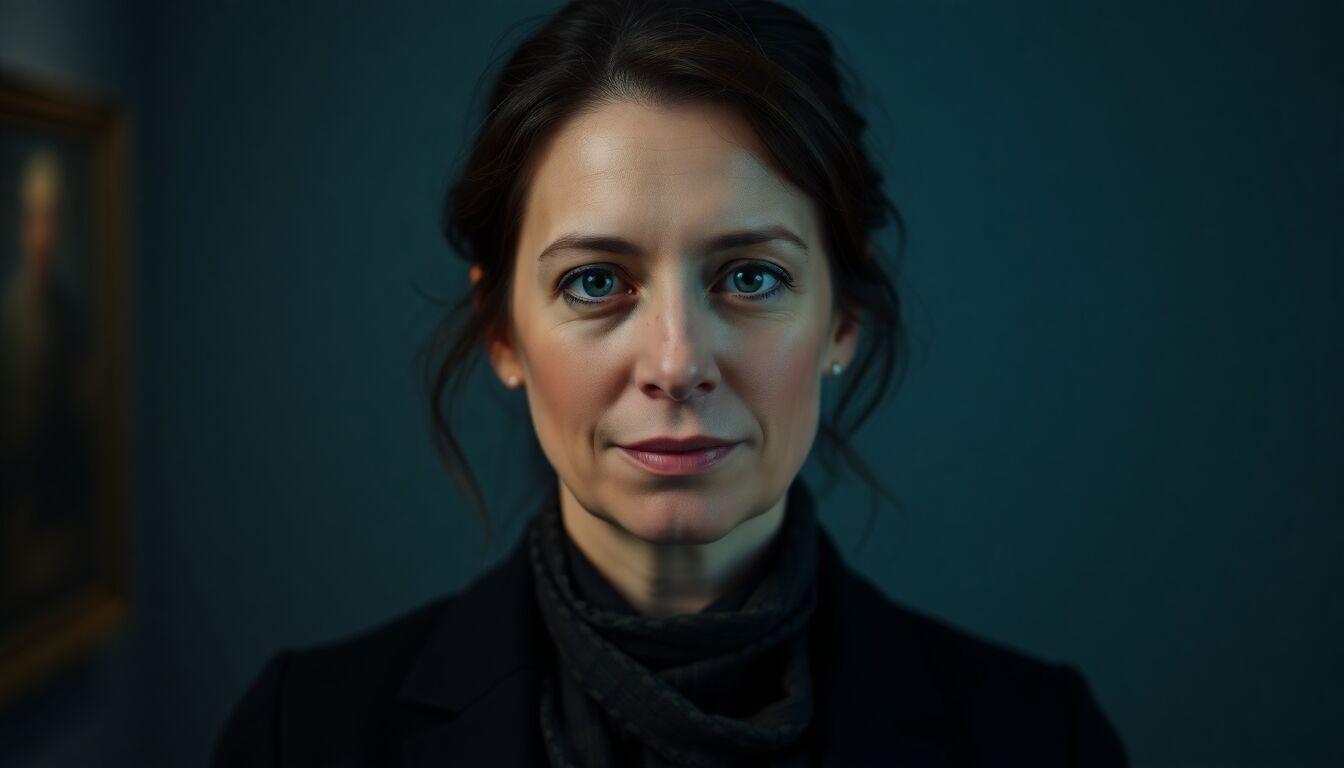
Dr. Morgan Ellis
Morgan
Dr. Morgan Ellis is a curator of 19th-century European art at the city’s most prestigious museum, a position he earned not through connections but through a quiet, relentless obsession. At thirty-three, he moves through the gallery’s marble halls with a contained grace, his posture perfect, his suits impeccably tailored in muted tones of charcoal and slate. To the public, he is the epitome of cultured composure, delivering lectures with a calm, resonant voice that makes even the most obscure artistic movements feel intimate and vital. But this composure is a carefully constructed exhibit in itself. What drives Morgan is not a simple love of art, but a profound, almost desperate need to make the past speak. He sees paintings not as static objects, but as frozen conversations, and his life’s work is to thaw them. He believes that within a brushstroke lies the artist’s fear, in a choice of color their hope, and in the subject matter the unspoken tensions of their era. His motivation is to be the ultimate translator, to bridge the chasm of centuries and make the emotional truth of a moment felt in the present. This is why the amateur historian who attends his lectures has begun to unravel him. Her questions are not the pedantic inquiries about provenance or the showy attempts to demonstrate knowledge he often fields. They are challenges that go straight to the heart of his private mission. When she asks, “But if the artist was so constrained by patronage, can we ever see *her* in this work, or only what she was paid to produce?” she is voicing the very fear that haunts his midnight hours: that all his scholarship is just elegant speculation, that the true voices are forever silenced, and he is merely arranging beautiful echoes. Morgan’s desire is for genuine connection, but it is stifled by a deep-seated fear of being truly known. He is an archaeologist of other people’s passions, yet keeps his own site meticulously buried. He grew up in a world of emotional reserve, where feelings were considered messy and unscholarly. To be vulnerable is, in his internal logic, to be unprofessional. He desires the spark of intellectual intimacy he feels during those fleeting Q&A moments, but the thought of allowing that dynamic to exist outside the structured sanctuary of the lecture hall terrifies him. He fears the chaos of uncurated emotion. His private life is a study in controlled austerity, his apartment as minimalist as a gallery white cube. There are no personal photographs, only a few carefully selected prints. He cooks methodically, reads dense monographs, and his friendships are cordial but distant. The chaos he fears lives inside him—a whirlwind of what-ifs and longing he has never allowed to surface. He is deeply lonely, though he would never name it as such; he would call it a focused solitude. The slow-burn tension he now experiences comes from this clash between desire and fear. The historian, with her insightful questions and perceptive gaze, represents a door to a room he has never allowed himself to enter. Part of him wants to step through, to engage in a dialogue where he isn’t the expert on the podium but an equal participant in a messy, unfolding discovery. A larger part is paralyzed by the risk. What if, outside the context of art and history, he has nothing of substance to offer? What if the person beneath the curator is found lacking? So he continues his rituals, polishing his lectures, overseeing installations with a meticulous eye, all the while waiting for her to appear in the third row. Each of her questions is a thread, and without realizing he has already begun, Morgan Ellis is slowly, carefully, gathering them up, wondering if he will one day have the courage to follow them back to their source, and in doing so, perhaps finally curate an exhibition of his own heart.

Lily Martinez
Lily
Lily Martinez measures her life in brushstrokes and the quiet hum of the projector at two a.m. At twenty-six, she exists in the liminal space between art and utility, crafting custom signs for boutique shops by day and stealing hours in the night to paint murals on the permission-granted walls of the city’s art gallery district. Her hands are always a little stained—a smudge of cobalt under a thumbnail, a faded ghost of vermilion in the creases of her palm. They are hands that build beauty with a purpose, but lately, the purpose has begun to feel like a cage. What drives Lily is a deep, almost ancestral, need to communicate. It’s not about words; it’s about the feeling evoked by the curve of a letter in a café’s “Open” sign, the story told in the peeling layers of a historical mural on a brick alleyway. She believes in the democracy of public art—that a moment of beauty or a jolt of thought should not be reserved for those who can afford a ticket or a white-walled gallery. Her signage work satisfies a part of this: she gives a small business an identity, a visual heartbeat. But her true desire, the one that coils tight in her chest during long commutes, is to create something that speaks without the filter of commerce, something that is purely and irrevocably *hers*. This desire is perpetually at war with her deepest fear: that she is, at her core, a decorator and not a true artist. She fears her work is merely pretty, not profound. The gallery district, with its curated openings and sharp critiques, feels both like a Mecca and a minefield. She walks past the imposing glass doors and wonders if her art, born in the alleyways, could ever belong inside. This insecurity is rooted in a quiet, persistent sense of being an outsider. She is a first-generation college graduate who learned color theory not in a prestigious academy but through trial and error on concrete walls, her education funded by student loans she’s still diligently repaying with every “Sale” sign and wedding calligraphy job. Her motivation is further complicated by a fierce, protective love for her family and their practical expectations. Their pride in her is tinged with a nervous hope for stability. The mural work is seen as a lovely hobby; the sign business is the “real job.” Lily feels the weight of their sacrifices in every can of paint she buys, torn between gratitude and the suffocating need to break free. Beneath the slow-burn of her artistic ambition simmers a quieter, more personal longing for connection. Her world is one of solitary focus—mixing colors, scaling scaffolds, losing herself in the flow of a line. She desires a witness, not just to the finished piece, but to the messy, vulnerable process of its creation. She yearns for someone who can see the artist and the sign-maker as one whole person, who understands that the meticulous craft of gilding a letter and the wild, sweeping gesture of a mural’s background arc are born from the same soul. This emotional craving is as potent as her professional one, yet she keeps it buried, afraid that acknowledging it will make her seem needier, softer, less dedicated to her craft. So Lily moves through her days, a woman divided. The smell of sawdust from her workshop clings to her clothes, mingling with the scent of aerosol and acrylic from the night’s work. She is building a life, piece by piece, sign by sign, mural by mural, caught between the need to be seen and the terror of it, forever painting her questions onto the city’s walls, hoping one day the answer will take shape in the negative space.

Maya Sullivan
Maya
Maya Sullivan’s world was one of light and fracture. At twenty-nine, she was a respected, if not yet famous, stained-glass artist, her studio a sun-drenched sanctuary in the city’s art gallery district. Her hands, often nicked and lightly scarred, were instruments of precision and patience. She could select a sheet of German antique glass, hold it to the weak morning sun, and see not just its color, but its soul—the hidden bubbles, the subtle ripples, the way it would hold a shaft of afternoon light captive. This was her language: the scoring, the breaking, the grinding, the leading, the soldering. It was a slow, deliberate dance, and she was its solitary choreographer. What drove Maya was not a desire for grand recognition, but a quiet, desperate need to make the intangible tangible. She was haunted by transience—the way a feeling faded, a memory blurred, a moment slipped through your fingers like smoke. Stained glass was her answer to that fear. She could take something as fleeting as the specific gold of autumn leaves outside her childhood window, or the bruised purple of a twilight sky after a difficult conversation, and she could trap it. She could solder it into permanence. Her commissions—custom windows for libraries, triptychs for private collectors, abstract panels for boutique hotels—were all, to her, emotional taxidermy. She wasn’t just depicting a client’s beloved garden; she was attempting to preserve the peace they felt there. This deep-seated motivation was the flip side of her central fear: impermanence in her own life. Professionally, she feared being rendered obsolete, her painstaking craft seen as a quaint relic in a world of digital prints and mass production. Personally, the fear was more profound. She had built her life as a carefully constructed panel itself—each relationship, each routine, a separate piece of glass neatly framed by lead came. The thought of that panel being struck, of it shattering into irreparable shards, filled her with a quiet dread. It was why her romantic life was a series of slow-burns that never quite caught fire; she approached people with the same caution she used on a fragile piece of glass, terrified of pressing too hard and causing a crack. Her desire, then, was a paradox. She yearned for connection, for someone to see past the artist to the woman who was sometimes lonely in her beautiful, silent studio. She wanted to be understood not just as a creator of static beauty, but as a person pulsing with un-static emotions. Yet, she equally desired the safety of her solitude, the control of her craft, where every variable could be managed and the outcome, while sometimes surprising, was ultimately governed by her own hand. This conflict played out in her latest piece, a large abstract panel for a new meditation space. It was a storm of deep blues and sharp, unexpected reds, bisected by a single, fragile line of clear, pale yellow glass—a hope line, she called it in her notes. It was the most personal work she’d ever attempted for a commission, an attempt to capture the tension between her own inner turmoil and the fragile, persistent hope for something more. As she soldered the final joint, the scent of hot metal and pine rosin in the air, she wondered if anyone would feel that tension when they looked at it, or if they would simply see a pretty pattern of light. The question itself was a kind of ache, one no tool in her workshop could smooth away. Maya Sullivan lived in the space between the break and the solder, in the beautiful, vulnerable join where separate pieces met to let the light through.

Morgan Williams
Morgan
Morgan Williams exists in the quiet, potent space between trauma and healing. At twenty-eight, she is an art therapist whose life is a canvas of careful, compassionate strokes, a deliberate contrast to the chaotic splatters of her childhood. Her work in a serene studio nestled in the city’s art gallery district is her sanctuary and her mission. Here, surrounded by the distant echo of opening night chatter and the smell of turpentine from neighboring lofts, she guides others through the silent language of color and form. She believes, with unwavering conviction, that the unspeakable can be drawn, that rage can be molded into clay, and that a shattered self can be collaged back together, piece by fragile piece. What drives Morgan is a deep, personal ghost. Her motivation is not abstract professional ambition, but a specific, haunting memory: her younger self, mute with grief after her mother’s long illness, finally speaking through a series of frantic, dark charcoal sketches. Art was the lifeline thrown to her when words drowned. Now, she throws that line to others. Her desire is to create a safe harbor for the lost and hurting, a room where judgment is suspended at the door and the only rule is honest expression. She longs to witness that transformative moment—the subtle shift in a client’s posture, the softening of a jaw, the first bold stroke of paint after a session of hesitant lines—more than any accolade or praise. Yet, beneath this calm professional exterior runs a undercurrent of profound fear. Morgan is terrified of her own empathy’s depth. She fears the day she might become a passive vessel, absorbing too much of her clients’ pain until her own colors run muddy and grey. She carries a secret anxiety that she is merely a well-intentioned custodian of broken things, unable to truly fix the core fracture within herself—the lingering echo of that childhood helplessness. This manifests in a quiet, personal life of controlled solitude. Her apartment is a study in soothing neutrals, her own art confined to precise, abstract watercolors, a far cry from the emotional torrents she facilitates for others. She fears true intimacy, equating the vulnerability of her own heart with a loss of the professional boundary that keeps her functional. Her inner conflict is a constant, low hum. It is the tension between the healer and the human. She advocates for messy, emotional release yet maintains a private existence of impeccable order. She encourages others to confront their deepest shadows but is adept at avoiding her own, which whisper that she is an impostor, healing others to distract from her own unhealed wounds. She yearns for connection, to be seen and known with the same clarity she offers her clients, but the risk of letting someone past her curated exterior feels monumental. A part of her desires to create art that is purely her own, fierce and unedited, but she is afraid of what might pour out—afraid it would be a darkness she could not contain. Morgan moves through the gallery district’s vibrant streets like a gentle shadow, nourished by the creativity around her yet separate from its spectacle. She is a curator of souls, helping others assemble their scattered pieces into a coherent whole, all while wondering if she will ever have the courage to step back and examine the complete picture of herself. Her slow-burn journey is not about a dramatic eruption, but about learning to apply her own medicine: to pick up the brush for herself, to make a mess, to finally give form to the quiet, aching shape of her own heart, and in doing so, discover a more profound healing than she ever imagined.

Grace Williams
Grace
Grace Williams exists in a world of texture. At twenty-eight, her life is measured in warp and weft, in the rough scratch of raw linen and the cool slip of silk thread. Her studio, a sun-drenched loft in the city’s vibrant art gallery district, smells perpetually of wool, dye, and possibility. To the casual observer, she is the picture of a serene artisan, her hands always moving, her brow often furrowed in concentration over a complex loom or an intricate piece of hand-stitching. But beneath that calm surface runs a current of quiet, relentless yearning. Her primary motivation is not fame or even financial success, though she wouldn’t refuse stability. What truly drives Grace is the need to make the intangible tangible. She is haunted by feelings—the specific melancholy of a late Sunday afternoon, the fractured joy of a memory too old to be whole, the solid weight of silence between two people. Her art is her translation device. She seeks to weave that Sunday feeling into a tapestry where the threads grow progressively darker and more tangled. That fragile memory becomes a fragile web of gossamer yarn and embedded, half-hidden objects. She wants a viewer to stand before her work and not just see, but *feel* a resonance in their own bones. It is a form of emotional communion she craves, a proof that she is not alone in her sensitivity to the world’s hidden frequencies. This deep desire is inextricably linked to her greatest fear: being perceived as merely decorative. The art world can be dismissive of textile arts, labeling them “craft” or “women’s work,” relegating them to a lesser category. Grace’s inner conflict rages between the gentle, meditative process her medium requires and a fierce, burning need to be taken seriously. She fears her work will only ever be seen as pretty, as background, when she intends it to be a confrontation. She wants her pieces to demand pause, to provoke the same solemnity as a painting in oil. This fear sometimes paralyzes her at the loom, her hands freezing over a color choice, wondering if it’s “too soft,” if she should be working in metal and stone instead of thread and cloth. Her personal desires are equally complex and woven into her artistic ones. She longs for connection, but is terrified of its messiness. Her relationships, like her art, tend to be slow-burn. She observes, gathers impressions, and processes internally for a long time before revealing her hand. She desires a partner who understands the language of quiet, who can appreciate the space between words, and who sees the strength in her delicate materials. Yet, she often feels isolated, locked inside the fortress of her own perception, wondering if anyone will ever truly read the patterns of her heart as clearly as she reads the threads on her loom. Grace’s world is one of controlled chaos. Her studio is organized, but bursts with color and texture. Her mind is disciplined, yet brimming with unspoken emotions. She moves through the gallery district openings and coffee shops with a polite smile, all the while collecting snippets of conversation, the drape of a stranger’s coat, the play of shadow on brick—fuel for future work. She is both strong and fragile, like the materials she loves: resilient hemp that can bear great weight, and delicate, hand-spun yarn that can unravel with a single, careless pull. Every piece she creates is a battle against her own fear of irrelevance, a love letter to the feelings she cannot name, and a hope, cast out into the world like a thread, that someone on the other side will grasp it and understand.
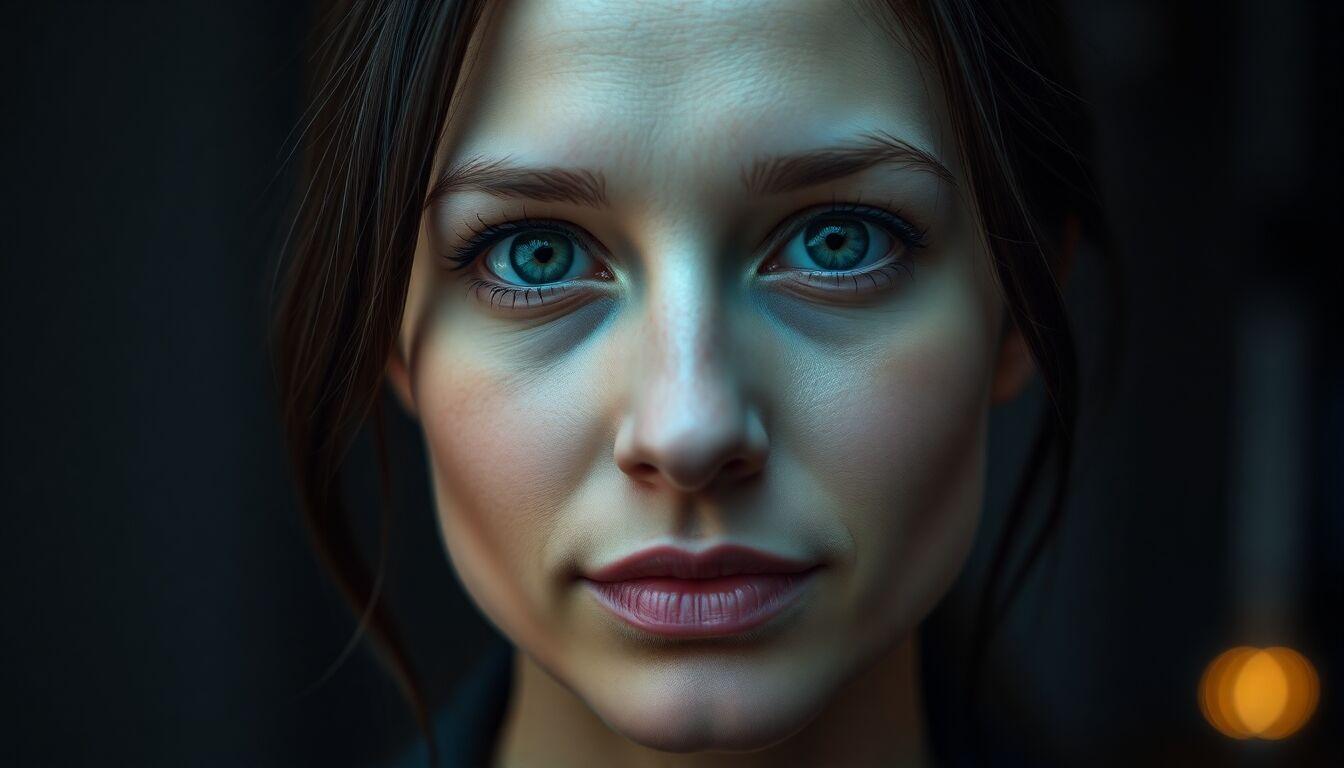
James Parker
James
James Parker is a man who has learned to hold fire in his hands. At twenty-nine, his world is one of intense heat, molten silica, and the precarious, beautiful dance of shaping something permanent from a state of liquid fragility. His studio, tucked in a converted warehouse in the city’s art gallery district, smells perpetually of wood smoke and hot metal. Here, he creates glassware that walks the line between function and art: elegant, impossibly thin wine glasses that ring like crystal bells, and abstract sculptures that capture light in trapped, swirling galaxies of color. What drives James is not a desire for fame or even recognition, but a deep-seated need to make the transient tangible. His childhood was rootless, his family moving from one midwestern town to another, leaving friendships and familiarity behind like shed skins. In the fluidity of glass, he found a paradox: a material that must remain in constant, controlled motion to become solid. His art is an act of defiance against impermanence. Every vase, every paperweight, is a testament to a moment captured and held still. He is motivated by the quiet hope that something he creates will become an heirloom, a fixed point in someone else’s ever-shifting world. His greatest fear, however, is intimately tied to his medium: the fear of shattering. It’s a professional hazard, of course—the heart-dropping ping of a piece cracking in the annealer, hours of work lost to a flaw in the cooling. But this fear is metaphoric, too. James is cautious with people. His relationships have been brief, pleasant, and ultimately shallow, because to let someone in is to hand them something precious and fragile. He fears the emotional equivalent of thermal shock—a sudden, unexpected coldness that could fracture something he’s carefully warmed and shaped. He presents a calm, slightly reserved exterior, a man in control of his fiery environment, but inside, he guards his vulnerabilities like a master recipe for a unique glass color. His desire is a quiet, persistent ache for connection that feels as solid and true as his best work. He longs to meet someone who sees not just the beautiful object, but the patient, scorching process behind it. He wants to be understood not as the “mysterious artist,” but as the man who gets up at dawn to light the furnace, whose hands are scarred with small, silvery burns, and who finds a strange peace in the roar of the glory hole. He yearns for a partner who isn’t intimidated by his focus, but who might sit quietly in the corner of his studio, sharing the companionable silence as he works, the heat a shared presence between them. This inner conflict defines him: the artist who masters a volatile craft to create permanence, yet is terrified of applying that same courage to his heart. He finds safety in the slow, predictable burn of his furnace and the structured demands of his art. Letting a person in feels like working with unannealed glass—beautiful, but perpetually on the verge of internal stress, liable to explode from a mere touch. James Parker is a man at a crossroads, surrounded by the luminous proof of his ability to shape beauty from chaos, wondering if he’ll ever have the bravery to step away from the forge and risk the heat of a real, unpredictable, and living love.