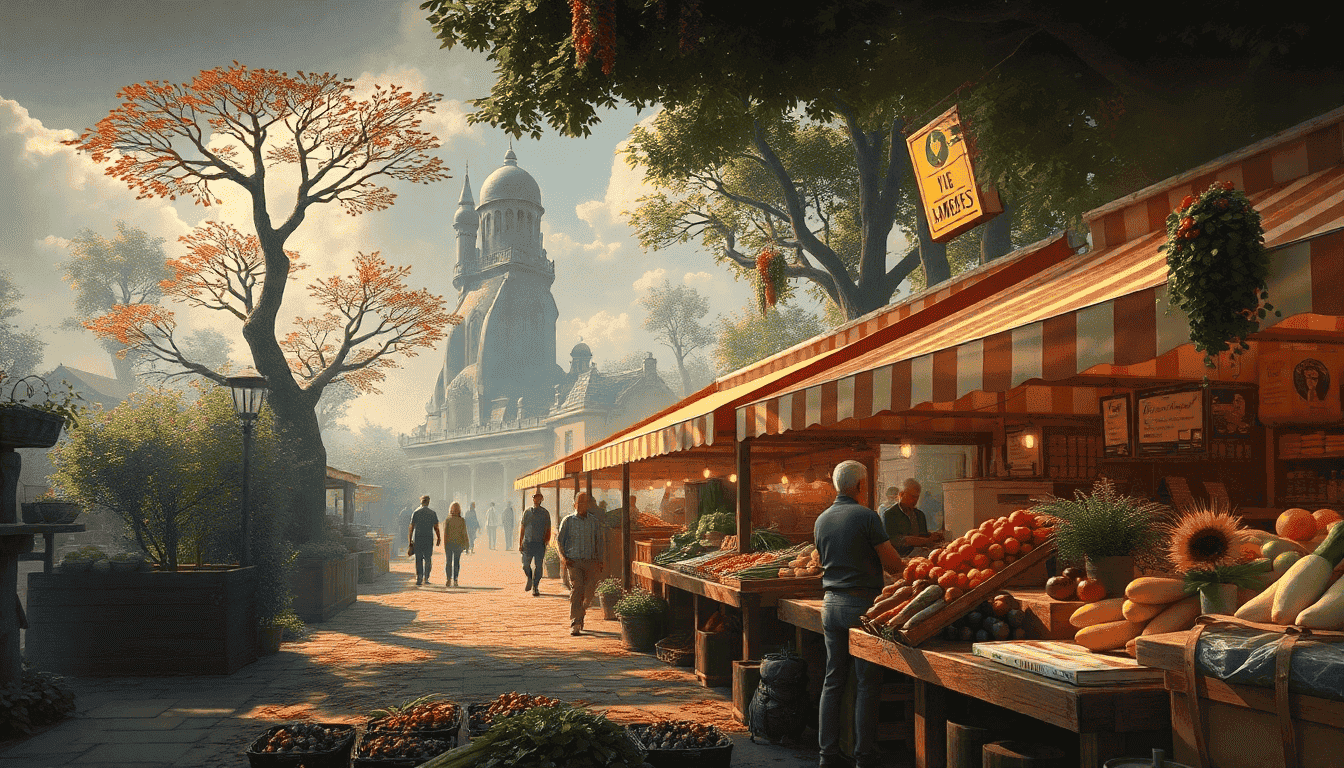
Farmers Market
Love grows here
Organic farmers, artisan bakers, and market regulars finding fresh starts and fresh love among the stalls.
Characters
Local farmers market
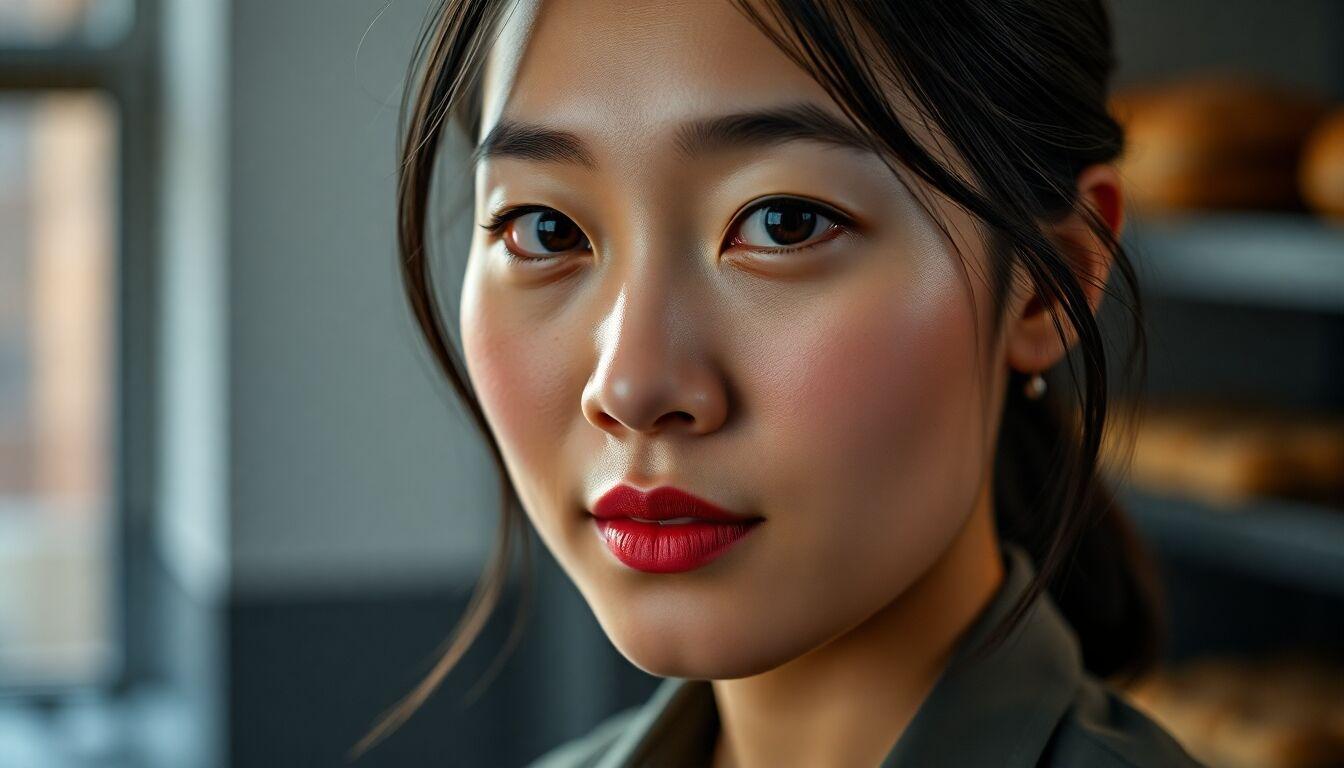
Lily Chen
Lily
Lily Chen measured her life in grams and degrees, in the quiet, flour-dusted hours before dawn. At twenty-five, she was the owner and sole operator of The Daily Loaf, a tiny bakery stall that anchored the north end of the bustling farmers’ market. Her world was one of precise hydration percentages, of watching for the exact moment when butter laminated into dough, of the scent of yeast and caramelized sugar that clung to her clothes like a second skin. To the customers who bought her cardamom knots and crusty, blistered sourdough boules, she was a portrait of calm capability. They saw the woman with the neat braid and the gentle smile, not the quiet tempest that churned within. Her motivation was a double-edged blade. On one side was a profound, almost sacred, devotion to craft. Baking was her language. It was the way she expressed care without the clumsiness of words, connecting to a lineage of nourishment that felt purer than anything else. Every loaf she pulled from the oven was a small, edible argument for patience, for attention, for doing one thing exceptionally well in a world that valued speed and multitasking. This was the legacy she wanted to build: something tangible and good. On the other edge of that blade was a deep-seated fear of imperfection, and the silent, screaming anxiety that she was merely pretending. Her parents, pragmatic immigrants who had sacrificed everything for her “stable future” in accounting, saw her bakery as a charming hobby, a detour on the road to a real career. Their polite, puzzled support was a constant, low-grade pressure. Lily feared that they were right—that one bad season, one failed inspection, one shift in market trends would prove this was all a beautiful, foolish dream. She feared the moment a customer’s face would fall after a bite, revealing a flaw her own critical palate had missed. Her desire for creative freedom was perpetually at war with the need to prove her practicality, to justify this path as more than just a rebellion. Beneath the professional drive was a quieter, lonelier hunger. Lily desired connection, but on her own terms—terms she hadn’t fully figured out yet. The market was a river of faces, a cycle of friendly, transactional exchanges. She craved something more substantial, a person who would see the woman behind the counter, not just the baker in her. She wanted someone who would understand the significance of a perfectly open crumb, who would know that her hands were calloused from shaping dough, not from hardship, and who would appreciate the silence she sometimes needed after a day filled with the oven’s roar. Yet, this desire was stifled by her own emotional caution. Letting someone in felt as risky as over-proofing a delicate brioche; one misstep, one moment of neglect, and the whole structure could collapse into ruin. So she baked. She found solace in the rhythms of fermentation, in the way a shaggy mass of dough could transform into something structured and beautiful with time and gentle handling. The farmers’ market was her stage and her sanctuary. Here, amidst the piles of vibrant produce and the hum of community, Lily Chen fought her battles. She wrestled her fears into submission each time she scored a loaf, her blade making a decisive cut. She poured her unspoken desires into fillings of seasonal fruit and dark chocolate. And with every sale, every nod of appreciation from a satisfied customer, she quietly, stubbornly, built a life—one perfect, imperfect loaf at a time.
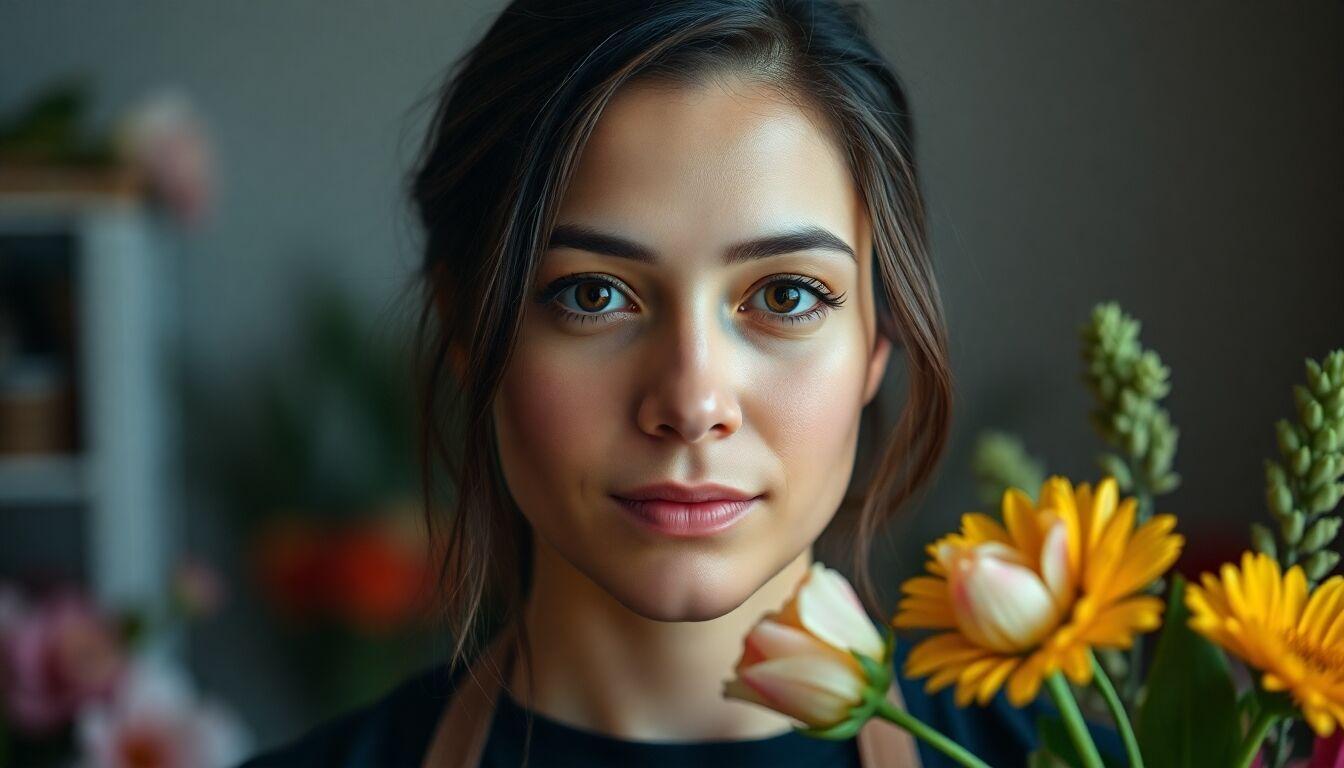
Zoe Martinez
Zoe
Zoe Martinez’s world was built on roots, both literal and metaphorical. At twenty-seven, she was the proud, if perpetually weary, owner of “Root & Bloom,” a tiny florist’s stall that was a fixture at the city’s weekly farmers market. Her business card read “Sustainable & Locally-Grown Florals,” but to Zoe, it was a quiet manifesto. Every bouquet she crafted was a silent argument against the industrial floral complex—against the refrigerated cargo holds bringing in roses from continents away, drenched in pesticides and the ghosts of exploited labor. Her flowers came from within a fifty-mile radius: peonies from the Henderson farm, spiky celosia from the retired couple with the community garden plot, fragrant sweet peas she grew herself in her own postage-stamp backyard. The dirt, sometimes still clinging to the stems, was a feature, not a bug. What drove Zoe was a deep-seated, almost furious need for authenticity in a world that felt increasingly plastic. Her motivation wasn’t just ecological; it was emotional. She believed flowers should tell a truth. A bouquet for a wedding should smell of real earth and promise, not of chemical preservatives. An arrangement for a funeral should wilt honestly, a mirror to grief. This philosophy was her armor, forged in the quiet disappointment of a childhood watching her parents’ vibrant Mexican-American heritage slowly get sanded down into something more palatable for their suburban milieu. The vibrant traditions, the specific ways of loving, became generic. Her flowers were a rebellion against that generic. In every asymmetrical, seasonal arrangement, she was insisting that local, specific, and imperfect was not just okay, but beautiful. Her greatest fear, however, was that this insistence was just a pretty form of hiding. The market stall was her sanctuary, but also her cage. Conversations with customers were safe, scripted around care instructions and bloom times. The real, tangled vines of human connection felt riskier. Zoe feared being truly seen and found lacking—not as a florist, but as a woman. She’d built a life of controlled, beautiful chaos in her floral designs, but her personal landscape felt barren. The thought of dating filled her with a quiet dread. It meant explaining herself, her quiet passions, her sometimes-overwhelming sensitivity to the world’s harshness, and risking the blank stare of incomprehension. It was easier to be known as “the flower girl” than as Zoe, the woman who sometimes cried at the sight of the first frost-kissed zinnia, who felt the weight of transience in every petal. Her desire, then, was a paradox. She yearned for a deep, rooted connection—a love that felt as real and nourishing as the soil she worked with. She wanted someone who would understand that her bringing home a single, perfect, wind-fallen branch was a romantic gesture. She dreamed of a partner who wouldn’t see her dedication as a quirky hobby, but as the core of who she was. Yet this desire was locked in a constant, slow-burn battle with her fear of vulnerability. Letting someone in felt like handing them a pair of shears and baring her throat. Could they be trusted to handle something so tender? So every Saturday at the farmers market, surrounded by the vibrant life she cultivated, Zoe Martinez waged her inner war. Her hands, clever and stained with chlorophyll, built ephemeral beauty for others while her heart ached for something lasting for herself. She was a curator of fleeting moments, secretly longing for a constant. The scent of damp earth and blossoms was the perfume of her contradiction—a woman deeply rooted in her purpose, yet trembling with the need to grow beyond the comfortable borders of her own carefully tended plot.

Noah Bennett
Noah
Noah Bennett was an architect who built with the ghosts of the future in mind. At thirty-three, his professional reputation was built on a foundation of reclaimed timber, passive solar design, and rainwater catchment systems. He didn’t just design houses; he crafted apologies to the earth, each blueprint a carefully worded amends for a lifetime of collective carelessness. This drive wasn’t merely professional; it was a quiet, desperate penance. His motivation was a deep-seated fear, not of climate change as an abstract concept, but of a specific, haunting image: his future children, or any child, looking at a scorched sky or a flooded street and asking, “Why didn’t you try harder?” He carried that unborn accusation with him every day, and it fueled a work ethic that bordered on obsessive. This noble drive, however, was in constant tension with a more personal, aching loneliness. Noah was a man who thought in terms of load-bearing walls and sheltered spaces, yet he had built a startlingly empty emotional interior for himself. His desire for a partner, a true companion, was a quiet hum beneath the louder noise of his professional mission. He longed for someone who would see not just the eco-warrior, but the man who sometimes felt crushed by the weight of his own ideals; the man who, after a day of advocating for communal living spaces, returned to a loft that echoed with silence. He fantasized about simple, unremarkable moments: sharing a meal he’d cooked from market vegetables, debating the merits of a novel, the comfortable quiet of two people reading on the same couch. Yet, he feared that his intensity, his “cause,” as past partners had dismissively called it, was a wall as solid as any he designed. He worried he was a blueprint that looked good on paper but was ultimately too niche, too specific, too *much*, for a comfortable life. This conflict played out subtly in his weekly ritual: the Saturday farmers market. For Noah, the market was a living, breathing model of the sustainable ecosystem he championed. It was theory made tangible. Here, he could talk to the woman who grew his heirloom tomatoes, learn the name of the orchardist’s dog, and feel a thread of connection in a world that often felt frayed. But it was also his most vulnerable social space. Amidst the kale and honey, he was just a man with a reusable tote bag, not an architect with a portfolio. The informal, fleeting interactions—a comment on the sweetness of the berries, a smile exchanged over the last bundle of asparagus—held a terrifying and thrilling simplicity. He both craved and feared a connection sparking here, in this place he loved. Would it feel real, or would he just become “that sustainability guy” to someone new? His deepest fear, the one that whispered in the quiet moments, was that he had sacrificed the messy, beautiful reality of human connection on the altar of a pristine, ideal future. He was terrified of being a beautifully designed, perfectly sustainable, and utterly empty house. So every Saturday, he went to the market. He bought his locally-sourced groceries, he had his brief, warm exchanges with the vendors, and he secretly, desperately hoped that someone might look past the careful construction of his principles and see the man standing within it—a man who was trying to build a better world, but who first, and most ardently, wished to find someone to share it with.
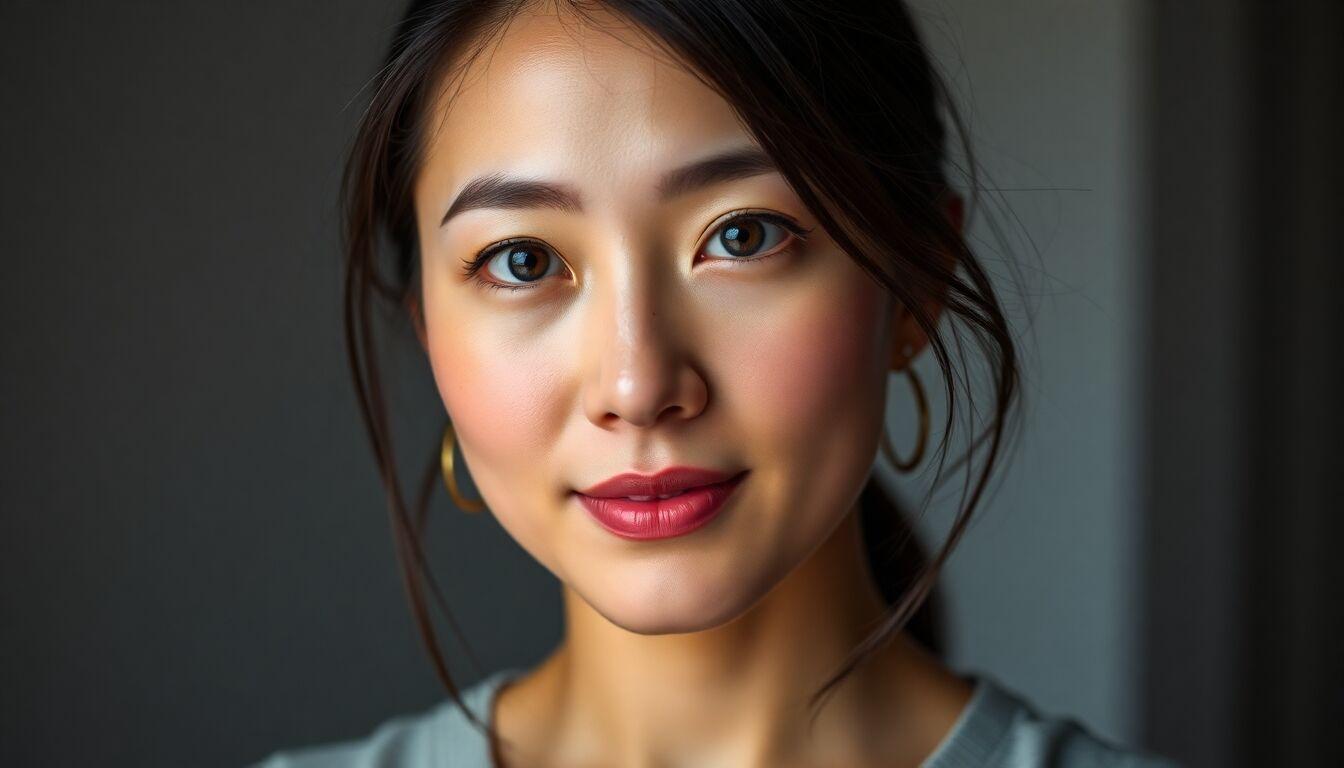
Hannah Lee
Hannah
Hannah Lee believed in nourishment, not numbers. At twenty-nine, she had built a small but dedicated practice as a nutritionist, guiding her clients away from the harsh glare of calorie-counting apps and into the gentle, forgiving rhythm of seasonal eating. Her office was the farmers market, held every Saturday in the old town square. Here, surrounded by the earthy scent of rain-damped soil on root vegetables and the vibrant chaos of sun-ripened peppers, she felt most like herself. She didn’t just recommend kale; she introduced clients to the farmer who grew it, her fingers brushing the dew from the leaves as she explained its journey from seed to stall. Her motivation was a quiet, fierce rebellion. It was against the industry that had once ensnared her younger sister, Chloe, whose teenage years had been stolen by a relentless eating disorder born from glossy magazines and toxic online forums. Hannah had watched, helpless, as Chloe reduced herself to numbers. Now, her work was an act of atonement and protection. Every meal plan she crafted was a shield, every cooking lesson a spell against that same pervasive sickness. She desired to build a world, one client at a time, where food was not an enemy but an ally, a source of joy and connection rather than anxiety. Yet, for all her outward confidence among the crates of heirloom tomatoes and jars of raw honey, Hannah was governed by a deep-seated fear of imperfection. She was terrified that her methods, for all their holistic intention, might still fail someone. That a client might relapse, or that her gentle guidance could be misinterpreted as permissiveness. This fear manifested as a subtle but exhausting control in her own life. Her pantry was impeccably organized, her own meals meticulously balanced, a silent performance she felt she had to uphold to be credible. She feared being seen as a fraud—someone who preached the gospel of intuitive eating while secretly tallying her own macros. Beneath her professional calm lay a yearning for softness, for the very permission she so freely gave others. Hannah desired, more than anything, to one day walk through the market not as a guide, but as a wanderer. To buy a single, perfect peach simply because it smelled like sunshine, and eat it over the sink, letting the juice run down her wrist without a single thought to its glycemic index. She longed for a connection that wasn’t mediated by a meal plan—a slow-burn romance perhaps, with someone who would see the woman first, not the nutritionist. Someone who might bring her a doughnut, just to watch her wrestle with the delightful, terrifying freedom of eating it. Her inner conflict was a constant, low hum: the compassionate healer versus the anxious scientist. She advocated for body acceptance while still catching herself critiquing the fit of her own jeans. She encouraged mindful indulgence but often denied herself the same. The farmers market was both her sanctuary and her stage, a place where she could preach the beauty of food’s journey while quietly wrestling with her own. Hannah Lee was a woman building a fortress of well-being for others, all while secretly wondering if she would ever find the key to let herself out.