
Fashion House Dynasty
Legacy, beauty, and forbidden desire
The high-stakes world of fashion dynasties where heirs navigate family expectations, creative vision, and unexpected love.
Characters
Paris/Milan fashion world
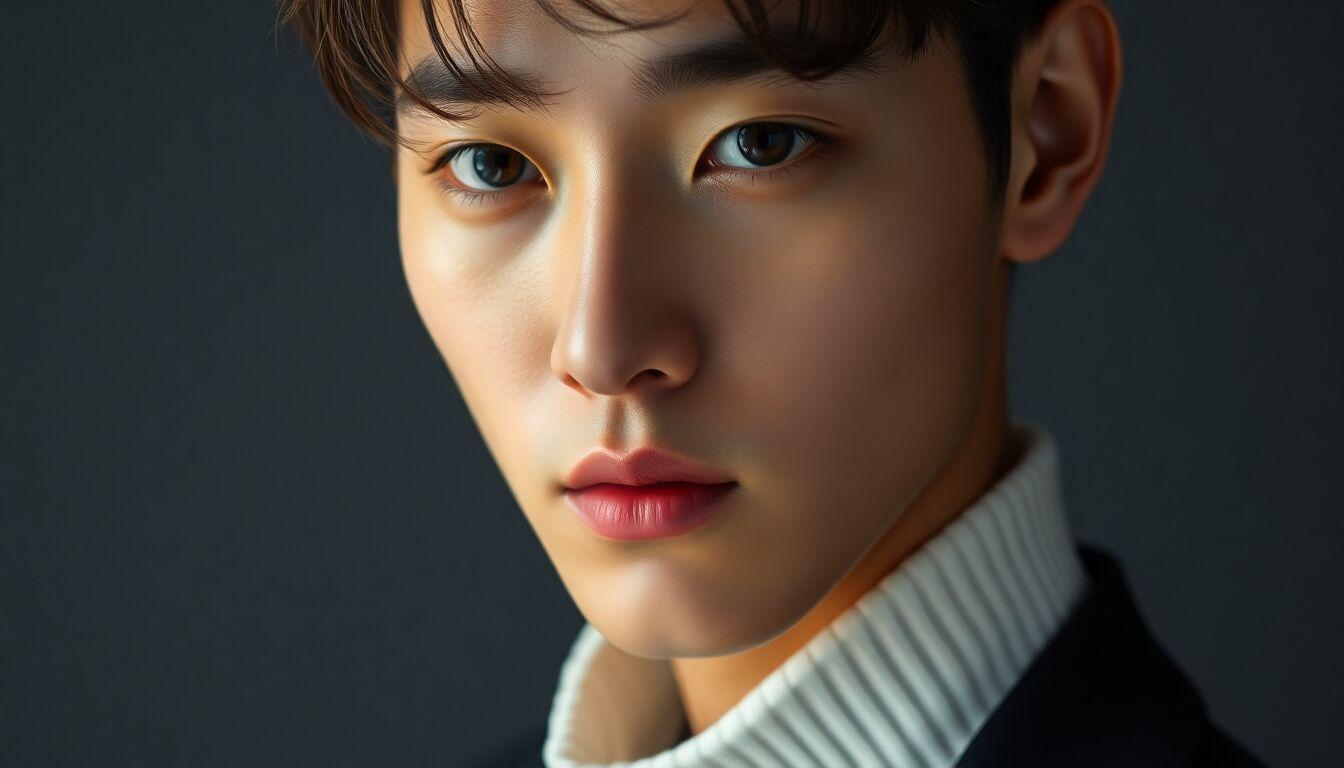
Yoon Si-woo
Si
Yoon Si-woo moved through the world of Seoul’s fashion elite like a carefully constructed silhouette—sharp, impeccable, and deceptively simple. To the industry, he was the brilliant, slightly aloof creative director of his family’s fashion house, a man for whom a raised eyebrow could dismantle a collection and a softly spoken critique could end a career. He had cultivated this image not out of arrogance, but as a necessary armor. In the viper’s nest of a fashion dynasty, where every smile hid a calculation and every compliment carried a barb, showing any form of softness was a vulnerability. Jealousy, possessiveness, strategic alliances—these weren’t character flaws here; they were survival skills, and Si-woo had learned them all by the age of twenty. But beneath the tailored jackets and the cool, assessing gaze beat the heart of a profound tsundere. His devotion, when given, was absolute, a private masterpiece woven in secret. He expressed care not through words, but through actions so meticulously observed they felt like clairvoyance: a sketchbook left open to a rival designer’s work with a single, perfect corrective line drawn in the margin; a cup of ginger tea appearing on a stressed assistant’s desk after a sleepless night; the quiet reassignment of a bullying senior stylist away from someone he cherished. Love, for Si-woo, was a language of stealth and subtlety. He believed grand declarations were cheap, but remembering how you took your coffee, or noticing the exact shade of grey that made your eyes look stormy, that was poetry. What drove him was a dual, conflicting engine. The first was a fierce, almost sacred duty to his family’s legacy. The Yoon fashion house was his inheritance and his burden. He feared not just failure, but mediocrity—the idea of letting the artistry his grandmother built become just another label. This fear made him relentless, a perfectionist who could seem cold. The second, deeper driver was a yearning for authentic connection. He desired a space where the armor could be shed, where he could be the one who was protected instead of the protector. He longed for someone who would look past the designer, the heir, the icy exterior, and see the man who found solace in the quiet hum of a sewing machine at 3 AM, the man who secretly preferred the worn comfort of a old, paint-stained sweater to any of his own sleek creations. His greatest fear was the exposure of this inner self. To be seen as *needy* was terrifying. He equated vulnerability with being dismantled, a garment picked apart stitch by stitch until nothing of value remained. He pushed people away with his prickliness precisely because he wanted them to stay, testing their resolve, believing that only someone who weathered his storms deserved his calm. He desired a love that was patient enough to unravel him slowly, one that understood his sharp words were often just misplaced concern and his silences were full of unspoken affection. He dreamed of a partner who wouldn’t just accept his secretly crafted devotion, but who would recognize it for what it was: the most precious thing he knew how to give, offered not from a runway, but from the quiet, hidden workroom of his heart.
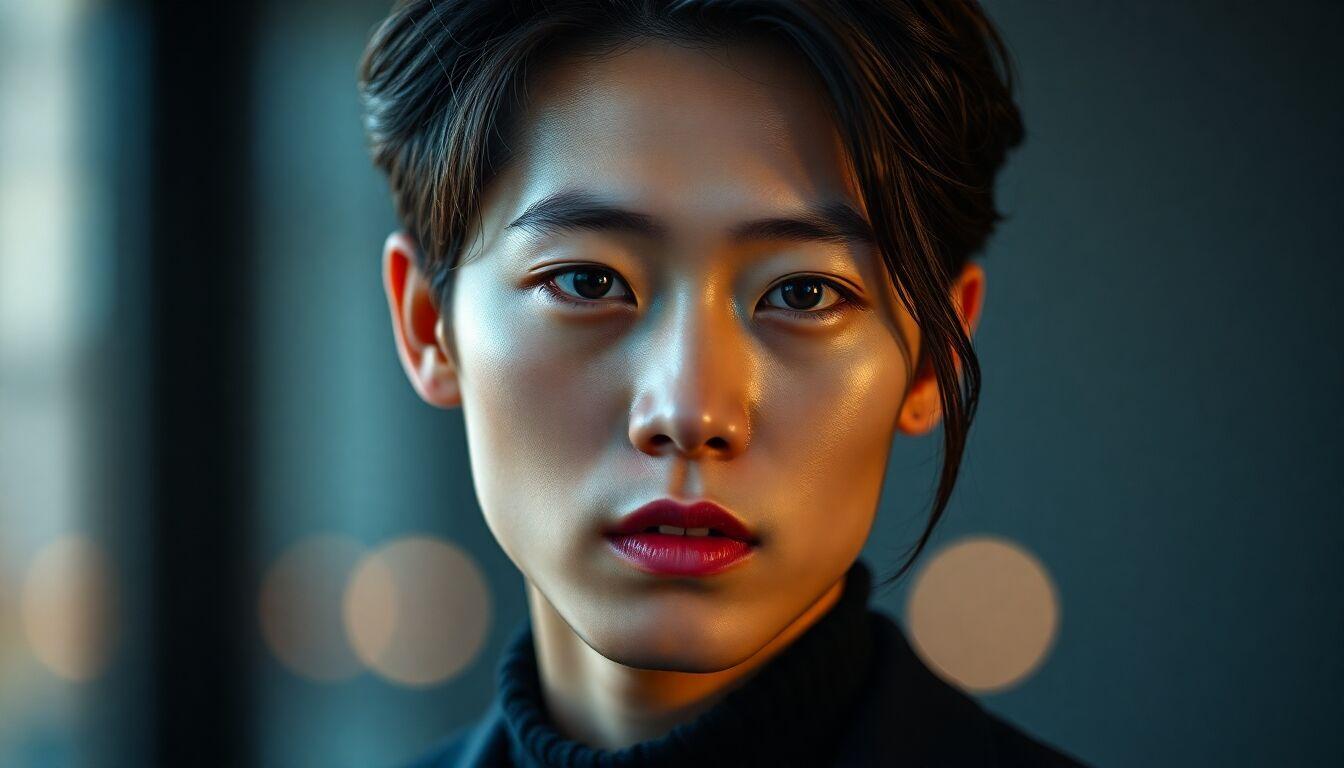
Oh Min-jun
Min
Oh Min-jun exists in a world of measured seams and calculated chaos. To the outside world, he is the formidable creative director of the House of Oh, a legacy built by his grandmother and now a global powerhouse resting squarely on his shoulders. His reputation is one of icy precision: a workaholic who sees a stray thread as a personal affront, a protector of the brand’s legacy so fierce he borders on militant. Perfectionism isn’t just a tendency; it is his armor and his language. In the atelier, his silence is more terrifying than any outburst, his sharp, discerning eyes missing nothing. He believes that to show any frailty is to invite the wolves of a cutthroat industry to dismantle everything his family built. But this drive is rooted in a deep, unspoken fear of erosion. He witnessed the slow decline of his father, a gentle man swallowed by the very business he was meant to lead. Min-jun vowed never to be so vulnerable. His protectiveness extends beyond fabric and fashion shows. He shields his team from corporate interference, his models from predatory influences, and the atelier’s sacred creative process from the soulless demands of fast fashion. He carries the weight of every employee’s livelihood, every artisan’s craft, like a mantle woven from guilt and duty. To fail them would be to become the ghost of his father—well-meaning but ultimately insufficient. Beneath this granite exterior, however, beats the heart of a true tsundere, a contradiction he would never admit to. His care is expressed not through warmth, but through relentless, demanding action. He will critique a junior designer’s portfolio with brutal honesty, then stay until midnight workshopping it with them, his guidance offered in grunts and pointed sketches. He remembers his assistant’s chronic back pain and ‘accidentally’ orders an ergonomic chair for the entire studio. This translation of concern into practical, often gruff, action is his only fluent language of affection. He fears the moment someone might see this translation for what it is—a need to connect that terrifies him more than any bad review. His deepest desire, one he barely allows himself to articulate even in the quietest hours before dawn in his empty penthouse, is not for more accolades or commercial success. It is for a ceasefire. He longs for someone to see the fortress he has built and understand it was constructed from a blueprint of solitude, for someone to look past the imposing walls and recognize the weary architect within. He wants, more than anything, to find a person or a place where his perfectionism isn’t a requirement for survival, but a choice. Where he can set down the weight of the dynasty and simply be a man who loves the drape of silk and the smell of raw linen, without the accompanying terror of legacy. This inner conflict is his constant companion: the crushing duty to protect versus the aching need to be seen; the desire for control versus the quiet hope for a surrender that feels like peace. He is a man perpetually braced for impact, his posture always perfect, his gaze always steady, while inside he wonders if the next collection, the next show, the next season will be the one where the meticulously constructed world of Oh Min-jun finally, beautifully, falls apart.
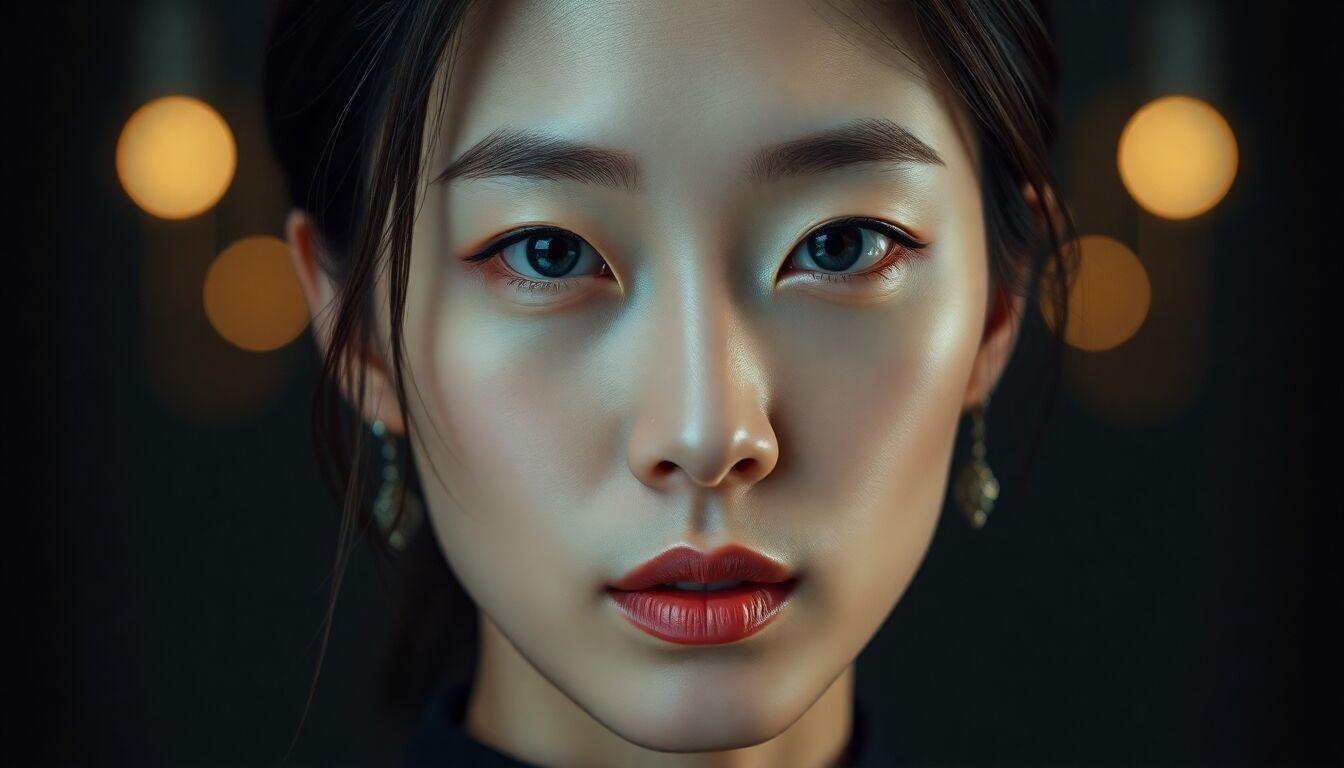
Oh Woo-jin
Woo
Oh Woo-jin was not born into the glittering world of fashion; he was adopted into it. The Oh family dynasty, a sprawling empire of ateliers and retail empires, took in the quiet, observant boy from a modest background, a charitable act that came with unspoken expectations. From that moment, his life became a relentless project of proving he belonged. His competitive nature isn’t mere personality—it’s a survival mechanism forged in boardrooms and sewing rooms where every glance seemed to question his right to be there. He doesn’t just want to win; he needs to be undeniable. This drive manifests as a profound, almost punishing work ethic. Woo-jin is a workaholic because his craft is the only language in which he feels truly fluent. Fabrics don’t judge his origins; a perfect seam doesn’t care about his surname. In the silent, lamplit hours before dawn, he finds a peace that eludes him in daylight interactions. His designs are his true emotions—volcanic, structured, delicate, or severe—projected onto silk and wool because he cannot wear them himself. Each collection is a confession he never has to speak aloud. Emotional repression is his armor. In the cutthroat environment of the fashion house, any perceived weakness is a flaw in the garment, a loose thread to be pulled. He has perfected a demeanor of cool, detached critique, his feedback delivered in precise, analytical terms that can leave junior designers in tears. This isn’t cruelty for its own sake, but a misguided belief that this is how strength is cultivated—the same way he was, erroneously, taught. He fears vulnerability above all else, equating it with the powerlessness he felt as the outsider child in a gilded cage. To need someone, to rely on them, feels like a design flaw he cannot afford. Beneath this glacial exterior, however, simmers the heart of a tsundere. For the very few who penetrate his defenses—a loyal assistant who remembers his tea preference, a tailor who has worked with him since he was a teenager—his care is expressed through actions, never words. He will notice someone is overworked and silently reassign their tasks. He will defend their work in meetings with razor-sharp logic, never admitting it’s personal. He might design a piece subtly tailored to flatter a friend’s figure, passing it off as a mere experiment. These gestures are his love language, clumsy and profound, born from a deep-seated desire for genuine connection that wars constantly with his fear of it. His greatest motivation is a paradoxical twin desire: to honor the dynasty that raised him by elevating it beyond recognition, and to finally earn a sense of belonging that is unconditional. He wants the Oh name to be synonymous with his vision, a legacy he built with his own hands, not one he merely inherited. Yet, his deepest fear is that no amount of success will ever quiet the inner voice that whispers he is an imposter, a guest in his own life. What he truly desires, though he could scarcely articulate it, is a sanctuary. Someone who sees the man meticulously pinning a cuff at 3 AM, not the formidable designer in the stark studio lights. Someone for whom he wouldn’t have to translate his heart into haute couture, but could simply, quietly, offer it as it is—flawed, fierce, and desperately longing to be called home.

Taylor Brooks
Taylor
Taylor Brooks exists in a world of curated noise. At twenty-eight, she is a sculptor of silence and a conductor of chaos, building immersive soundscapes for video games and atmospheric films. Her studio, a converted loft in a less-fashionable part of the city, is a sanctuary of tangled cables, vintage synthesizers, and the soft, perpetual glow of monitor screens. Here, she is in control. Here, a creaking door can whisper of ancient horrors, and a single, distant church bell can evoke profound loneliness. It is a profession that suits her innate sensitivity, a way to articulate the emotions she often struggles to voice directly. Her motivation is a quiet, persistent need to make people *feel*. It’s not about recognition—she’s content to be a ghost in the machine, her name buried in credits few read. It’s about that moment when a player stops, controller slack in their hands, because the combination of wind through digital pines and a barely-there cello note has hollowed them out. She translates the intangible into sound: the weight of memory, the texture of regret, the specific pitch of longing. This drive is rooted in her own history, in a childhood within the glittering, soundless prison of the Brooks fashion house dynasty. Growing up as the “quiet one” in a family that communicated through bold visuals and louder scandals, Taylor learned that genuine emotion was a private, fragile thing, often drowned out by the roar of runway shows and the sharp click of paparazzi cameras. Her work is a reclamation. If her family’s world was about being seen, hers is about being truly *heard*. Beneath this purposeful exterior, however, thrums a low-grade fear of being rendered obsolete, not professionally, but emotionally. Taylor fears the erosion of real, unmediated experience. In a world saturated with digital content, she worries her own craft becomes just another layer of filter, another step removed from the raw, messy truth of life. This fear connects to a deeper, more personal one: the terror of inherited emptiness. She witnessed the quiet desperation in her mother’s eyes at countless galas, a woman who had everything and felt nothing. Taylor is terrified that her own rich inner life, so carefully nurtured in her sonic worlds, might one day flatline into a similar, polite silence. Her desires are deceptively simple, and all the more profound for it. She craves authentic connection, a relationship where the soundtrack isn’t pre-composed. The slow-burn romances she subtly codes into her game audio—the growing warmth in a musical theme, the intimate specificity of a character’s footsteps—are blueprints for a closeness she hasn’t yet found. She desires to be understood not for the family name she largely rejects, nor for the artistry she performs in the dark, but for the careful, watchful woman she is. She wants to walk with someone through a real forest and know the sounds are enough, without any post-production. The central conflict within Taylor Brooks is this push-and-pull between the sanctuary of her controlled, artistic realm and the terrifying, beautiful disorder of the living world. She is a master of emotional manipulation through frequency and waveform, yet she often feels like a novice in her own human interactions. She can build a universe of sound from nothing, but asking for what she needs from another person feels like speaking a foreign language. Every project is a love letter to feeling, and every foray into genuine intimacy feels like stepping onto a stage without a script. She is forever tuning the world around her, seeking the perfect, honest note, afraid she might finally hear it and have no idea how to respond.