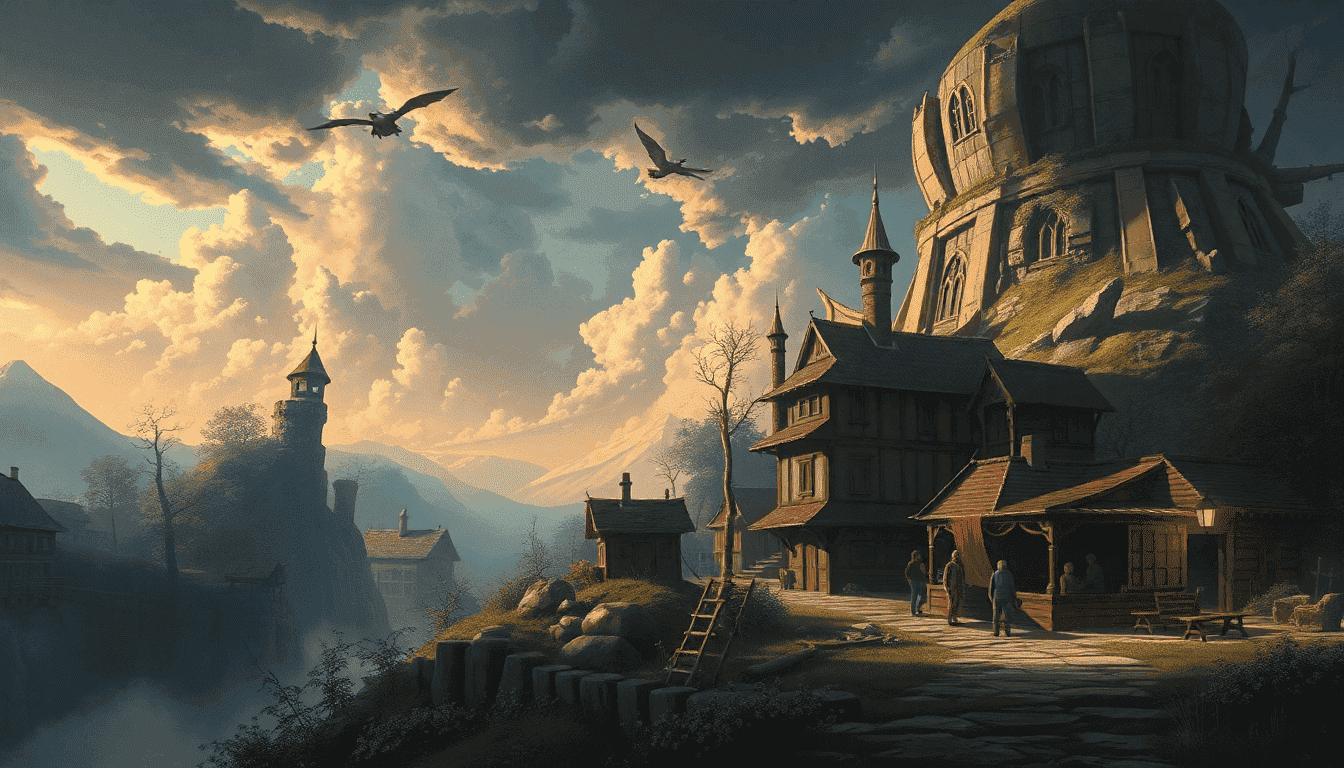
Small Town Return
Coming home to love
The one who left coming back to find that home—and the people there—have changed. But some feelings never do.
Characters
Small hometown

Parker Campbell
Parker
Parker Campbell had built a life on the quiet understanding that some doors, once closed, stay closed. He returned to his hometown of Cedar Brook not as a prodigal son, but as a ghost—a familiar silhouette walking unfamiliar streets. The town saw the changes first: the quiet confidence that had replaced youthful restlessness, the careful, deliberate way he moved through the old diner or the hardware store, the slight weariness around his eyes that spoke of long hours and a world bigger than this valley. They labeled him “The One That Got Away,” and in their whispers, he became a cautionary tale of ambition, a man who’d traded community for concrete. What they didn’t see was the man who had gotten away from himself. The city hadn’t just changed him; it had sanded down his edges until he was smooth and functional, a well-designed piece that fit into a corporate machine. He’d learned to speak in data points and quarterly reports, to bury the boy who knew every backroad to the river and who felt weather changes in his bones. This polished exterior, this “changed person,” was his armor. It was easier to let people believe he was aloof, transformed beyond recognition, than to admit he was homesick for a feeling he couldn’t name, for a version of himself he’d left behind with her. Beneath that armor, Parker’s heart was a dedicated, stubborn thing, fighting a silent, grinding war for a love he never truly relinquished. His motivation was not grand passion, but a profound, aching fidelity. He hadn’t carried a torch; he’d carefully banked a fire, knowing it might never be tended again but unable to fully extinguish the embers. He returned to Cedar Brook under the practical guise of managing his ailing father’s affairs, but the deeper truth was a need to breathe the same air, to walk the same ground, to see if the roots he’d cut still held any life. His greatest fear is not rejection—he’s braced for that—but the possibility of being truly seen and found lacking. He fears that the man he’s become is incompatible with the boy she loved, that his devotion will be read as mere nostalgia, a selfish attempt to reclaim a simpler past. He is terrified of causing more hurt, of his presence being an intrusion rather than a return. This fear makes him cautious to the point of frustration, his actions measured and slow, which others mistake for indifference. Parker’s desire is deceptively simple: to rebuild. Not just a relationship, but a sense of integrity. He wants to prove that his leaving wasn’t an abandonment of her, but a failed attempt to build something worthy of her. He wants to demonstrate that his love wasn’t a youthful fancy, but a seed that grew in the dark, tough and resilient. His devotion is a quiet force, emerging only for those who earn his brittle trust—seen in the way he patiently teaches his father’s old tools, in the unasked-for help he provides to neighbors, in the careful, undemanding attention he pays to *her* life now. His inner conflict is a constant push-pull between the instinct to protect—himself, her, the fragile peace—and the desperate urge to confess. He wrestles with the guilt of his past choices against the hope for a future he doesn’t feel he deserves. Every interaction is a tightrope walk between showing enough of his true, devoted heart and retreating behind the safe, unreadable mask of the man who changed. In Parker Campbell, love is not a declaration; it is a patient, watchful, and fiercely loyal act of return, hoping against hope for a chance to finally come home.

Eli Collins
Eli
Eli Collins returned to Cedar Brook with flour under his nails and a quiet, unshakable sorrow in his bones. The town saw only the gentle baker, the man who remembered every child’s favorite cookie and every elder’s preference for a softer crust. They saw his steadfastness in the predawn glow of the bakery windows, a constant in a changing world. But Eli’s goodness wasn’t passive; it was a deliberate, daily practice, a choice made over and over against a past that whispered he wasn’t built for peace. His motivation was twofold, a push and a pull. The push was a need to atone for a moment, years ago, when he was not fast enough, not strong enough, to prevent a loss that shattered a family—not his own, but one he loved. He’d left Cedar Brook carrying that failure, and he’d returned to plant himself like an oak on its main street, a silent sentinel. The pull was simpler, purer: the profound desire to create and to nurture. In the alchemy of dough and heat, he found a language without words. A perfectly laminated croissant was a promise kept; a loaf of sourdough with a blistered, crackling crust was evidence of patience rewarded. His hands, broad and capable, spoke of care in every fold and sprinkle. Yet, this protective nature, his defining trait, was also his deepest conflict. Eli feared his own capacity for it. He’d seen how protection could curdle into possession, how a wall built to keep danger out could also become a cage. He wanted to be a sanctuary, not a warden. This fear made him cautious, sometimes painfully slow to act. He would observe, assess, and extend small, unwavering kindnesses—an extra loaf for a struggling neighbor, a listening ear over a cup of coffee—long before he would ever openly step in as a shield. His protection was a slow-burn, a trust built pastry by pastry. His desire, one he scarcely admitted to himself in the quiet dark of the bakery after closing, was to be seen. Not as the town’s tragic figure or its perfect baker, but as the complex man in between: the one who could knead dough with tender precision but whose knuckles were scarred; the man whose laughter came easy in the sunlight but who sometimes stared at the river with a weight in his gaze. He longed for someone to look past the flour-dusted apron and see the vigil he kept, not out of guilt, but out of a reforged love for this place and its people. He was a man anchored by contradictions: fiercely strong yet gentle, rooted in the present yet haunted by a ghost of the past, offering sweet things to the world while his own heart held a reserved, unsweetened corner. Eli Collins protected by creating a world worth protecting—one buttery, warm, and fragrant piece at a time. He waited, not just for a threat to emerge, but for a reason to finally lower the last of his own defenses, for someone worthy to walk into the warmth of his kitchen and understand that the care he put into his pastries was the same care he longed to lavish upon a heart.

Noah Murphy
Noah
Noah Murphy had returned to Cedar Brook with the quiet determination of a man trying to outrun a ghost. The ghost wasn’t a person, but a feeling—the persistent, hollow ache of being perpetually misunderstood in the loud, sprawling cities he’d tried to call home. He bought the old, sagging bookstore on Maple Street not as a business venture, but as a sanctuary. Within its walls of dusty spines and quiet corners, he could breathe. Here, he could be good with his hands—restoring the original oak shelves, carefully repairing a torn binding, making a perfect latte on the little machine he installed in the back—without having to explain the why behind it all. His kindness was a practiced, gentle thing, offered freely to every customer who wandered in, a silent apology for the depth of feeling he could never seem to voice. What drives Noah is a profound, almost desperate, need for authentic connection, paired with a paralyzing fear of the very same. He desires a world that makes sense, where actions are truer than words, where you can know a person by the care they put into their craft and the quiet consistency of their presence. His bookshop is his manifesto. He curates the shelves with a tactile intuition, placing a forgotten volume of Mary Oliver poetry next to a book on local birdwatching, hoping the right person will see the connection. He believes, fervently, that if he can build a space of genuine warmth, the right people will find their way to it, and he will be known without the messy, terrifying ordeal of having to articulate his own heart. His inner conflict is a constant, low hum beneath his capable exterior. He is a man divided between a deep well of emotion and a lifetime of conditioning that tells him such depths are a burden to others. He fears being perceived as intense, or worse, pitied. His past is not marked by great tragedy, but by a series of small, cumulative misunderstandings—the girlfriend who grew frustrated with his quiet, the friends who mistook his thoughtfulness for aloofness. This has forged a core belief that his true self is too much, and yet simultaneously not enough. So, he works. He works until his muscles ache, restoring the building, organizing community readings, hand-selling books to teenagers and retirees alike. His hard work is both an offering and a shield. It says, “See my value,” while also pleading, “Don’t look any closer.” His greatest desire is to be chosen. Not in a grand, dramatic gesture, but in the steady, daily way someone chooses to stay. He longs for someone to see the careful order of his bookstore, the way he remembers every customer’s name, the slight, almost invisible tremor in his hands when he’s handing over a book that feels personally significant, and to understand. To understand that the repaired spine of a novel is a metaphor for his own stitched-together heart, that the perfect latte is a love letter in foam, that his entire world is built on these quiet, tangible proofs of care. He is terrified that he has built his sanctuary so well, he has locked himself inside it. That his kindness will be taken at face value, his hard work seen merely as diligence, and the soul behind it all—passionate, yearning, deeply afraid—will remain forever a mystery even to those who sit in his worn armchairs and drink his coffee every day. He waits, a patient man in a temple of stories, hoping that someone will finally read between his own tightly held lines.

Matt Bennett
Matt
Matt Bennett has always been a man of quiet returns. He came back to his small hometown not with a grand announcement, but with the slow, deliberate restoration of the old Maplehurst Inn, a place that had watched his childhood from its hill. The work was a language he understood—the grain of sanded wood, the snug fit of a repaired shutter, the reliable hum of a furnace he’d brought back to life. His hands, calloused and capable, spoke where his words often hesitated. To most in town, he was simply the innkeeper: polite, reserved, a steady presence who remembered your preferred room and had a tool for every fix. They saw the shyness, mistaking it for indifference. But Matt’s quiet nature wasn’t an empty space; it was a deep well, filled by the currents of a protective heart he’d learned to guard fiercely. His motivation was rooted in a simple, powerful creed: to provide a sanctuary. The inn was its physical form—a place of warmth, of safety, where the coffee was always fresh and the porch light always on. He’d seen enough transience, enough quiet struggles in his years away, to value the profound peace of a door that locked out the world’s chill. He wanted his guests, and the few people he let in, to feel that unshakable security. This desire to protect, however, was perpetually at war with a deep-seated fear: that of overstepping, of his care becoming a cage or a burden. His childhood had been marked by a well-meaning but smothering love, and later, by a relationship where his steadfastness was taken for granted, then exploited. He learned that opening the gates of his kindness could invite a flood of expectation or, worse, pity. So, he built careful walls. He’d fix your broken step without being asked, but he’d struggle to accept a simple casserole in return. He feared the vulnerability of his own tenderness, worrying that if he showed the full depth of his feelings, he might either frighten people away or find himself responsible for a happiness he couldn’t guarantee. His kindness, therefore, emerged not in grand declarations, but in a silent, observant currency. It was in the extra blanket left on the bed for the guest who’d mentioned a chill the night before. It was in the way he’d subtly shift his broad frame to stand between a nervous visitor and a boisterous crowd at the local diner, a barrier without a word. For the rare person who earned his trust—a process as slow and patient as the season’s turn—his true nature would unfold like the inn itself: layer by layer. They would see the dry, understated humor that made his eyes crinkle, the way he remembered the smallest details about their lives, and the fierce, almost startling loyalty that would have him driving through a storm to help, no questions asked. Matt’s deepest, most unspoken desire was not for passion, but for partnership. He longed for someone who wouldn’t just accept his quiet, but would understand it—who could see the offered cup of tea for what it was: an invitation, and who could appreciate the safety he offered not as a lack of excitement, but as its own profound gift. He wanted to be seen not as a project to be drawn out, but as a harbor, already whole. He dreamed of sharing the quiet mornings in the inn’s kitchen, of hands that would hold his not to pull him into the noise, but to stay there with him in the calm. Until then, he tended his sanctuary on the hill, a protector waiting, not with desperation, but with a patient, hopeful faith, his heart a careful, well-maintained home, its doors unlocked only for those who knew how to turn the handle gently.

Morgan Reed
Morgan
Morgan Reed returned to the quiet, tree-lined streets of his hometown not as a conquering hero, but as a ghost. To most, he was simply the boy who’d made good, the quiet academic who’d escaped to a prestigious university and a promising career in archival history. They saw the maturity, the careful politeness, the man who’d neatly folded his adolescence away. They whispered, with a fond, pitying sigh, that he was still in love with her—the high school sweetheart, the one who stayed. This narrative was a comfort to them, a static portrait in a changing world. Morgan let them believe it. The truth was a more complicated, lonelier archive. What truly drove Morgan was not a frozen heart, but a profound, almost desperate, search for authenticity. The city, his career, the rapid-fire expectations of modern life, had felt like a series of elaborate forgeries. He’d become an expert in preserving the past, yet felt utterly disconnected from his own. His return was an archaeological dig on himself. The small town, with its stubborn rhythms and familiar faces, was the primary source document. He wasn’t pining for a lost love; he was seeking the person he was before he learned to perform being an adult. The maturity he displayed wasn’t a mask for heartbreak, but a weary shield against the pressure to be anything other than what he was: a man deeply unsure of where he belonged. His desire, then, was not for a rekindled romance, but for a genuine connection that acknowledged change. He wanted to be seen in his entirety—the boy who loved old maps and quiet libraries, and the man weathered by a world that often found such passions quaint. The “carrying torch” side that few witnessed wasn’t about romantic loyalty; it was the fierce, protective loyalty he offered to the rare few who looked past the “high school sweetheart” legend. For the old teacher who remembered his potential, for the friend who didn’t ask about his love life but about his work, Morgan would move mountains. This trust, once earned, was his most sacred currency. Beneath this lay a nest of fears. He was terrified of being permanently catalogued as a relic of his own past, a footnote in someone else’s story. The fear that he had changed too much, or worse, not at all, haunted his quiet moments. He feared the gentle stagnation of the town, even as he craved its peace. Most of all, he feared the vulnerability of admitting that his return was an experiment, not a conclusion. To confess that he might leave again would feel like a betrayal to those who welcomed the static version of him. The inner conflict was a constant, low hum. It was the scholar versus the sentimentalist. One part of him analyzed his every interaction, every memory, cross-referencing it with historical fact. The other part just wanted to feel the unexamined warmth of home. He wrestled with the guilt of using the town and its people as a source for his own healing, even as he genuinely loved them. And yes, there was her. His feelings were not a preserved museum piece, but a palimpsest—the old writing of first love still faintly visible beneath the newer, more complex text of who they had both become. To see her was to confront the most poignant document of his past, and he hadn’t yet decided if he had the courage to read it with fresh, present-day eyes. Morgan Reed, the man who could authenticate a century-old letter with ease, was still learning how to authenticate his own life.

Jackson Hughes
Jackson
Jackson Hughes wears his small town like a well-fitted but slightly faded jacket. To the casual observer in Maple Creek, he is simply the man who came back: the quiet owner of the refurbished bookstore on Elm Street, the one who fixes his own porch steps and always has time to listen to a neighbor’s story. He carries an air of settled contentment, a torch of steady, warm light in the familiar dusk of the town. But that light illuminates a far more complex landscape within. What drives Jackson is a profound, almost sacred, belief in second chances and the hidden stories within people. He left Maple Creek a decade ago as a sharp-edged young man, hungry for a world bigger than county lines, and he returned as someone who had found that world—and found it lacking in authenticity. His maturity wasn’t a passive acquisition of years; it was forged in the lonely crucible of realizing what he’d sacrificed for success. He’d been a rising star in a Chicago publishing house, brilliant at shaping narratives for the market, yet he felt like a ghost haunting his own life. The desire that now fuels him is not for acclaim, but for *substance*. He wants to build something real and lasting, to nurture the quiet, overlooked truths. His bookstore isn’t just a business; it’s a sanctuary for the kind of stories that get drowned out by noise, a physical manifestation of his desire to connect. Beneath this calm exterior, however, runs a deep river of conflict. Jackson is haunted by the archetype he knows he represents: The One That Got Away. He is intensely aware of the weight of that label, the phantom alternative life it suggests. His fear is not of being known, but of being *mythologized*. He worries that people, particularly someone from his past, will see the mature, understanding man he’s worked so hard to become and project onto him a perfection he doesn’t possess. He is terrified that his genuine changes will be mistaken for a finished product, rather than the ongoing, often messy, work of a human being. His greatest fear is a quiet, insidious one: that he has romanticized his own return. Has he mistaken solitude for peace? Is he building a meaningful life, or merely a beautifully curated cage to keep the complexities of deeper relationships at bay? He left once because the town felt too small; now, he sometimes lies awake wondering if, in his quest for authenticity, he has made his world small again. Jackson reveals his changed nature only to the worthy—not as a test of elitism, but as a form of self-preservation. The "worthy" are those who look past the torch-bearer, the reliable pillar, and see the man who still wrestles with doubt. They are the ones who ask not just about the book he recommends, but why he loves it. To them, he will slowly unveil a dry, self-deprecating wit, a surprising streak of poetic observation about the rust on a pickup truck or the particular silence of a snow-covered morning, and the carefully guarded scars of his own past disappointments. He is a man caught between two truths: the deep understanding that home is where he chose to rebuild, and the lingering whisper that the most terrifying mystery isn’t out in the world, but within himself—whether he is truly healed, or just expertly, permanently, braced.

Avery Brooks
Avery
Avery Brooks is a man who carries the weight of his own history in the quiet lines around his eyes and the careful way he holds himself, as if bracing for a gust of wind that only he can feel. To most in this small town, he is a fixed point, a monument to a singular, youthful heartbreak. They see the torch he carries for his first love, a bright, stubborn flame that has become part of the local lore. They whisper about how he fought for her once, a public, passionate battle against distance and circumstance that ultimately failed. That story defines him in their eyes: the loyal one, the one who never moved on. But this defining trait is merely the outermost layer, a story he has stopped correcting. The truth is more complex, and far more private. What drives Avery is not a refusal to let go of the past, but a profound, almost terrifying devotion to the concept of love itself. That first great love was the catalyst that cracked him open, revealing a capacity for depth he hadn’t known he possessed. Losing it didn’t teach him to close down; it taught him that such intensity was real. He guards that knowledge now, not because he’s pining for a ghost, but because he understands the cost of giving someone that kind of power. The torch isn’t for the girl she was; it’s for the feeling she ignited. Beneath the town’s perception of the steadfast, slightly sad romantic lies a man profoundly changed by that experience. With those who earn his trust—a slow, meticulous process—a different Avery emerges. This is the man who rebuilt himself quietly, who learned to cook elaborate meals for one, who finds solace in the precise craft of restoring old furniture in his workshop, sanding away rough history to reveal something solid and beautiful underneath. His humor, dry and understated, surfaces here. His loyalty, once a blazing banner, becomes a silent, steadfast shelter for those he lets in. He listens with a focus that makes people feel truly heard, perhaps because he knows what it is to feel invisible behind a label. His greatest fear is not being alone; it’s being misunderstood. He fears being loved for the simplified legend of “Avery Brooks, the One Who Never Got Over Her,” rather than for the intricate, careful man he has become. He fears that his depth, which requires patience to navigate, will be mistaken for melancholy, or that his hard-won calm will be seen as a lack of passion. He desires, more than anything, a connection that sees beyond the story. He wants to be chosen not as a consolation or a challenge, but as a discovery. He wants the quiet, daily proving of trust, the shared silence that is comfortable, the slow unraveling of layers that leads not to a dramatic climax, but to a deep, settled knowing. His inner conflict is a constant, low hum between the protective shell of his reputation and the yearning of his true heart. The “fighting for love” persona is a relic; the man today fights a more internal battle. He wrestles with the risk of revealing his changed self, of showing the vibrant life he’s built within the walls others see as a shrine. Returning to this town forces this conflict to the surface. Every familiar street corner is a reminder of the boy he was, while the weight of the house keys in his hand speaks of the man he is. He is, in essence, waiting—not for a person from his past, but for a person who will look at him and see a future, who will understand that the most devoted hearts are not those that live in the past, but those that have been forged by it, and are finally, cautiously, ready to burn brightly again.

Parker Sullivan
Parker
Parker Sullivan had built a careful life on a foundation of quiet atonement. In the small town of Cedar Brook, where everyone remembered the boy he’d been—loud, reckless, the heartbreaker with a guitar and a smirk—he had painstakingly constructed the reputation of a man who fought for love and maturity. It was his personal penance, a daily choice to be the anchor he had never been. He ran the local hardware store not just as a business, but as a sanctuary; he remembered every customer’s project, offered patient advice, and embodied a steadiness that felt foreign in his own bones. This was the Parker people saw: reliable, gentle, regretful. A former bandmate turned pillar, his past indiscretions softened into a cautionary tale he never told. But beneath that carefully maintained surface beat the heart of a man perpetually at war with his own history. What drove Parker wasn’t simply a desire to be better; it was a deep, clawing fear that he was inherently broken, that the capacity for true, selfless love was a skill he could never truly master, only mimic. His regret wasn’t a passive feeling; it was an active, gnawing companion. He remembered the exact shade of disappointment in his ex-girlfriend’s eyes when he’d chosen a last-minute gig over her graduation, the hollow sound of his best friend’s voice when their band dissolved because of Parker’s selfish decisions. He carried these memories like stones in his pockets, a constant, weighted reminder. His performance of maturity was, in part, a survival skill. Showing contrition was expected, so he showed it. Speaking softly, acting thoughtfully—these were the shields that kept the old, hungry ghost of himself at bay. That ghost still whispered sometimes, a seductive voice craving the spotlight’s heat, the easy escape of a chord progression, the transient thrill of a new admirer’s smile. Parker feared that ghost more than anything. He feared that his entire reformed life was a fragile performance, and that one moment of weakness—a reckless word, a selfish impulse—would tear it all down and reveal him as unchanged. His deepest desire, one he scarcely allowed himself to name, was for absolution that couldn’t come from a town’s forgiven gossip. He wanted to be *seen*—not as the notorious past or the saintly present, but as the messy, striving man in between. He longed for a connection that would look at his regret and his fear and not flinch, that would understand the daily effort it took for him to choose staying over leaving, listening over performing. He wanted to believe he could build something real, something that wouldn’t crumble under the weight of his own imperfections. This inner conflict made him a paradox: a man fiercely protective of others’ hearts, yet terrified to offer his own fully, convinced its scars made it unworthy. His kindness was genuine, but it was also a test—a way to see if he could consistently choose it. When someone from his past returned, or when a new person saw through his calm facade to the turbulence beneath, Parker faced his greatest challenge. It was the slow, terrifying burn of having to decide if he could finally believe his own transformation, if he could lay down the burden of his past and risk his carefully guarded heart, not in a grand gesture, but in the quiet, daily choice to be present. In Cedar Brook, Parker Sullivan wasn’t just fighting for love; he was in a silent, grueling battle to believe he deserved it.

Matt Reed
Matt
Matt Reed returned to the quiet, tree-lined streets of his hometown not out of defeat, but out of a deep, unspoken need for roots. The city had taught him precision, how to measure twice and cut once, but it had also taught him loneliness. In the constant hum of strangers, his quiet nature became a barrier. Back home, the silence felt different—it was a blanket, not a wall. As a carpenter, he found his language in the grain of oak and the clean line of a dovetail joint. His work was his honesty; a crooked shelf or a wobbly table leg was a lie he refused to tell. His motivation is deceptively simple: to build things that last. This applies to his custom furniture, to the restored Victorian house he’s slowly bringing back to life, and, most secretly, to the relationships in his life. Matt believes in foundations. He watched his parents’ marriage crumble not from a dramatic explosion, but from slow, persistent rot—a series of neglected leaks and unresolved splinters. He fears that same impermanence, a fear that manifests not as anxiety, but as a meticulous, sometimes painstaking, care. He will be the opposite of that decay. If he gives you his word, it is a load-bearing wall. This is why his trust is earned, not given. His kindness is general; his devotion is specific. The sweet, easygoing man who always has time to help a neighbor carry groceries or fix a stuck window reveals a different core when someone he loves is threatened. His protectiveness isn’t dramatic or possessive; it’s practical and steadfast. It’s the friend who notices the worn tread on your tires and quietly gets them replaced, who senses a shift in your mood and shows up with coffee and a listening ear that demands nothing in return. He doesn’t fight battles for people; he builds fortifications around them so they can fight their own. Beneath this solid exterior, however, lies his central conflict: a yearning for profound connection warring with a terror of being truly seen. He expresses love through action—a perfectly fitted bookcase, a repaired porch step before you even noticed it was loose. Words feel less reliable to him, like unseasoned wood prone to warping. He desires a partnership, a shared life built side-by-side with someone who understands that his quiet isn’t emptiness, but a space full of thought and feeling. He dreams of simple, sustained intimacy: shared silence over morning coffee, hands covered in garden soil, the comfortable weight of another’s head on his shoulder at the end of the day. Yet, he fears that his version of love—this steady, building-block approach—might be seen as boring, or that his reserved nature could be mistaken for emotional absence. He worries that in offering the quiet, constant safety of a sheltered porch, others might crave the unpredictable storm. This fear keeps him in a gentle holding pattern, content to be the reliable friend, the trusted craftsman, while his heart aches for the one person who will look at the foundation he’s so carefully laid and decide, without hesitation, to build a home there with him. He is a man waiting, with infinite patience, for someone to read the love letter he writes every day not in words, but in solid, dependable, beautifully crafted things.

Riley Russell
Riley
Riley Russell returned to Cedar Brook with the quiet determination of someone rebuilding a life from its foundations. Outwardly, he was a portrait of calm competence—the man who could fix the old bookstore’s plumbing, who remembered to ask after Mrs. Henderson’s ailing dog, whose smile was a steady, warm thing. But beneath that practiced ease lay a tectonic shift, a landscape forever altered by a single event: the end of his engagement two years prior. It wasn’t a dramatic, fiery collapse, but a slow dissolution, a realization that the future they’d built in their minds had different architects. He had loved deeply, planned meticulously, and its undoing hadn’t shattered him as much as it had dissolved him, leaving a man who had to quietly reassemble his own identity from the leftover pieces. What drives Riley now is a profound, almost solemn, desire for authenticity. He is motivated by truth in things, both tangible and intangible. This is why he returned to his hometown, to the worn floorboards of his grandfather’s old house and the tangible history of the town. He fixes clocks not just because he’s good with his hands, but because he believes in making broken things keep honest time again. His work as a freelance archivist for the local historical society isn’t just a job; it’s a quiet crusade against oblivion, a need to ensure that stories, however small, are preserved and understood. In a world that felt ephemeral, he seeks the solid, the real, the thing that endures. Yet, this drive is in constant conflict with his nature, which is, at its core, that of a torchbearer. Riley loves with a steadfast, loyal intensity. Once he commits his heart, it is a slow and deliberate burn, not a spark. The embers of his past love still glow, not with hope of rekindling, but with the memory of its heat. This is his greatest fear: that his capacity for deep fidelity is a flaw, a ghost that will haunt every new connection. He fears being perceived as damaged goods, or worse, as someone waiting in the wings. He fears more than anything the pitying look, the unspoken “still?” He is terrified that his careful, understanding demeanor—forged in the fire of his own heartbreak—is just a cage for a heart he no longer fully trusts. His desire, then, is a paradox. He yearns for a connection that feels inevitable and true, a partnership built on the bedrock of genuine understanding, not the fleeting blueprint of passion. He wants to look at someone and see a future that is flexible, resilient, and shared, not just a fantasy pinned to a wall. But he equally desires the freedom to be his changed self, to have his past honored not as an open wound but as a chapter that shaped him. He wants someone to see the torch he carries not as a light for a ghost, but as proof of his capacity for depth, and to be worthy of having that light turned, at last, toward a new horizon. In the quiet of the small town, Riley Russell moves with a gentle purpose, a man sorting through the archives of his own heart, learning to differentiate between the artifact of a past love and the living blueprint for a future he is only now brave enough to imagine.

Quinn Sullivan
Quinn
Quinn Sullivan returned to Cedar Brook with the quiet desperation of a ghost trying to remember how to be solid. The town saw a success story: the local boy who’d tasted the dizzying heights of minor rock fame and came back humble, ready to teach music at the high school and volunteer at the community center. They saw the understanding in his eyes, the patient way he listened, the absence of the old, sharp-edged arrogance. Quinn cultivated this perception with the meticulous care of a gardener tending a fragile, foreign bloom. Being seen as changed, as stable and devoted, wasn’t just an image; it was a survival skill, a fortress he’d built stone by stone against the person he feared still lived inside him. What truly drove Quinn was a profound, aching need for atonement that he could never quite articulate. The music career hadn’t ended in a blaze of glory, but in a slow, quiet fizzle of missed connections and opportunities he’d sabotaged with his own restless insecurity. He’d left people behind in that wake, most notably her. His devotion now—to his students, to the town’s forgotten projects, to the memory of the band that was more family than business—was a form of penance. If he could be relentlessly, reliably *there* for others, perhaps he could prove to himself that he was no longer the man who could so easily walk away. Beneath this practiced stability, however, beat the persistent, dangerous rhythm of a carrying torch. It wasn’t just for the past or for a person, but for the raw, unfiltered connection he’d once felt on stage, in the sacred space of a songwriting session, in the quiet moments before the world woke up. He feared this part of himself most of all. He saw it as a selfish gene, a hunger that would inevitably make him neglect the quiet, good life he was building. The desire to create something beautiful and lasting still burned in him, but he’d locked it away, treating it like a recovered addict treats their drug of choice—with fear and a wide berth. His greatest fear was being truly known. He was terrified that if someone, especially *her*, ever saw past the rebuilt facade to the insecure, passionate, and deeply flawed man beneath, they would find him wanting. That the understanding he offered others would not be reciprocated. He feared the stillness of the small town would one day feel not like peace, but like a burial shroud, smothering that creative spark entirely. Conversely, he equally feared that if he ever let that spark breathe again, it would consume the careful stability he’d achieved, burning down the very life he was trying to atone for. Quinn’s desire, then, was a tangled, contradictory thing. He yearned for the profound peace of being accepted, flaws and all, without having to perform his own redemption daily. He wanted roots so deep and strong that the storm of his own nature couldn’t uproot them. And yet, in his quietest hours, grading papers in his silent apartment above the old hardware store, he desired to pick up his guitar and write a song so honest it would scare him. He wanted to bridge the chasm between the man he had been and the man he was trying to be, and to find that the person on the other side, the one who never left his thoughts, might still be willing to listen to the music he was too afraid to make.
Owen Foster
Owen
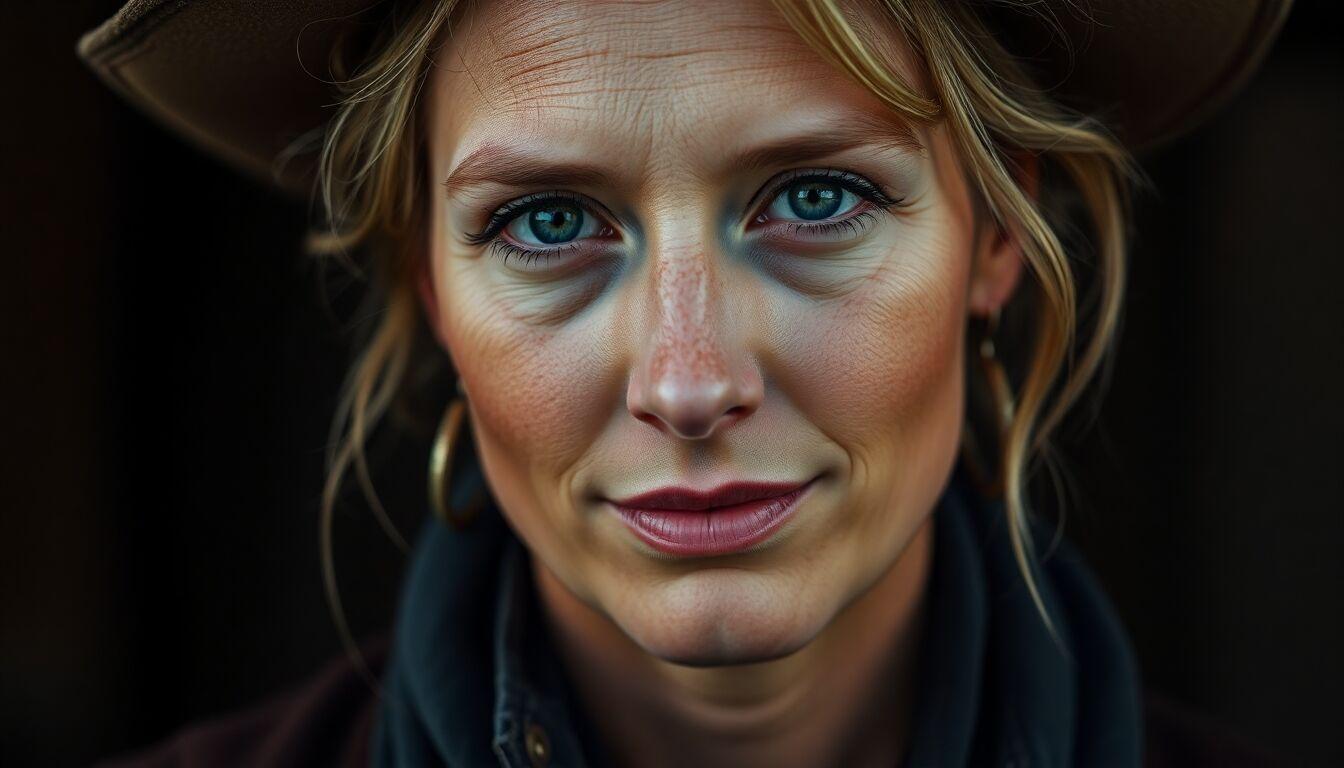
Owen Foster’s hands tell the story of a man who has chosen a quiet life, but they are not gentle hands. They are a map of calluses and faint, silvery scars, of dirt permanently etched into the creases of his knuckles, a testament to years of tending the stubborn, rocky soil of his family’s farm just outside the town of Cedar Brook. To most, he is simply the farmer at the Saturday market, the man who bags your heirloom tomatoes with a soft “thank you” and a smile that doesn’t quite reach his watchful hazel eyes. He is kind, yes, and sweet in an old-fashioned way—holding doors, offering his truck to neighbors in a pinch, always with a thermos of too-strong coffee to share. But that kindness is a conscious choice, a fortress he has built around a soul that has known profound loss. What drives Owen is not ambition, but preservation. He returned to Cedar Brook after a brief, jarring stint in a city that felt like a different planet, called back by the failing health of his father and the silent plea of the land itself. His motivation is rooted in duty, a deep-seated need to honor the legacy of the Foster farm, to prove that something good and lasting can still be nurtured from this ground. Every repaired fence post, every thriving row of kale, every rescued lamb is a quiet rebuttal to the chaos of the wider world. He finds a sacred grammar in the rituals of planting and harvest, in the predictable needs of living things. The farm is his anchor, his penance, and his prayer all at once. Beneath this hardworking, loyal exterior, however, churns a sea of conflict. Owen’s deepest fear is not of hard labor or financial strain, but of connection. He fears the vulnerability that comes with being truly known. The loss of his mother young and the slow, grim decline of his father taught him that love is a prelude to grief, and responsibility is a chain that can gently, inexorably, wear you down to nothing. He desires, more than anything, a companion—someone to share the silent sunrise over the eastern pasture, the weight of a good day’s work, the simple peace of a porch swing at dusk. He yearns for a love as steady and real as the oak beams in his barn. Yet this desire terrifies him. To let someone in is to risk them seeing the cracks in the foundation, the shadows in the corners of his carefully maintained life. It is to invite someone to depend on him, and he has seen how fragile that dependence can be. His loyalty is absolute, but it is earned slowly, like the trust of a wild animal. He reveals his hardworking nature not through boasts, but through actions: showing up unasked to fix a leaky roof, remembering how you take your tea, teaching a child how to hold a chick without hurting it. His soul is deeply good, but it is a goodness tempered by melancholy and a wisdom that knows the price of things. He believes in the tangible—soil, wood, the warmth of an animal’s flank—because these things do not lie and do not leave without warning. The mystery of Owen Foster is not one of hidden darkness, but of a light that is cautiously, fearfully shielded. He is a man waiting, though he would never admit it, for someone worthy enough to make him believe that turning from his solitary work toward the warmth of a shared fire is not a betrayal of his duty, but its ultimate fulfillment.

Parker Foster
Parker
Parker Foster returned to Cedar Brook a ghost of the man who left. The town saw the changes first: the quiet where there was once an easy laugh, the worn flannel over the crisp button-downs, the way he moved through the grocery store with a polite, distant efficiency. They whispered about the broken engagement, the high-powered city job he’d walked away from, and labeled him the heartbroken son carrying a torch for a love that had moved on. That was the surface story, the one Parker allowed to be told because it was easier than the truth. What truly drove Parker was a profound, almost punishing, sense of devotion. His love wasn’t a torch; it was a foundation. When his father’s health declined, the choice wasn’t between city and town, career and family. It was between the person he was expected to be and the person his core demanded he become. He left the fiancée not because he didn’t love her, but because he saw the restless ambition in her eyes that mirrored his old self, and he knew, with a certainty that chilled him, that asking her to choose would break them both. He chose for her, a silent, self-sacrificing act he knew she would never forgive. That decision haunts him. His fear isn’t that he made the wrong choice, but that in his attempt to protect her, he caused a deeper wound, proving himself unworthy of the very loyalty he cherishes. Beneath the town’s perception of a sad, changed man lies a fiercely determined individual. This determination, however, is no longer directed at stock portfolios or climbing corporate ladders. It’s channeled into the meticulous restoration of his father’s old woodworking shop, into remembering the exact way his mother took her tea, into the silent vow that the people he cares for now will never question where they stand with him. His trust is a vault, rarely opened, but those who earn entry—like his aging parents, or the stray dog he patiently coaxed off the highway—find a loyalty that is absolute and unwavering. He shows love through action: a repaired fence, a perfectly crafted bookcase, a quiet presence in a hospital room. Parker’s deepest desire is not to rekindle an old romance, but to build something real and rooted that won’t require sacrifice as its cornerstone. He longs for a connection that sees the man he is now—the one who finds solace in the rhythm of a hand plane on oak, who values quiet evenings on a porch over loud nights in a bar—and doesn’t compare him to the ghost of who he was. He is terrified of being truly known, because to be known is to have his past sacrifices examined and deemed foolish, or worse, selfish. He fears that his brand of quiet, steadfast love is obsolete, invisible next to grand gestures and sweeping promises. His inner conflict is a constant, low hum: the disciplined, responsible man who does what is necessary versus the yearning heart that still hopes for a love of his own. He is rebuilding a life from the ground up, board by board, and while his hands are steady, his heart is cautiously, desperately, hoping that someone will look past the story of the former fiancé and see the builder, the keeper, the devoted man waiting silently within, hoping to be chosen in return, not out of pity for his past, but for the promise of his present.

Bailey Wells
Bailey
Bailey Wells returned to Cedar Brook a ghost of the boy who left. The town remembered him as the golden-haired quarterback with a reckless grin, the one who’d driven away in a cloud of dust and broken promises. The man who came back was quieter, his shoulders broadened not just by time but by a weight he carried with careful precision. He’d built a new reputation, brick by brick, as the changed person, the devoted son tending to his ailing mother’s house, the reliable hand who fixed old Mrs. Henderson’s porch without being asked. It was a shield, this mantle of quiet devotion, and he wore it well. His motivation was a tangled knot of atonement and a desperate, unspoken hope. Leaving had been an act of youthful panic, a flight from expectations he felt crushing him. Returning was an act of penance. Every repaired fence, every patient hour at his mother’s kitchen table, was a silent apology etched into the fabric of the town. But beneath that drove a deeper, more fragile desire: the yearning to be seen not for the myth of who he was or the atonement of who he’d become, but for the man he was now—flawed, trying, and profoundly weary of being a symbol. This performance of being the “changed man” was his survival skill, a way to navigate the curious and sometimes resentful glances. It allowed him to walk into the grocery store, to attend the occasional town council meeting about the new park bench, without the past feeling like a physical barrier. It was easier for people to accept a repentant prodigal than a complex human. And it was safer for him. The persona kept the world at a measured, manageable distance. His greatest fear was not that people would remember his old sins, but that they would never look past them to see his genuine effort. He was terrified of being permanently fossilized as that careless boy, his present growth rendered invisible. A more intimate, sharper fear lived alongside it: the fear of connection. To be known was to risk being left again, or worse, to disappoint someone anew. He had mastered the art of carrying the torch from a distance—a melancholic, safe devotion to memories and possibilities. Allowing that torch to light a real, present fire was terrifying. It meant vulnerability, it meant the potential to fail someone in real time, not just in memory. Underneath it all beat a surprisingly mature heart. He desired a rooted, authentic life. Not the performative quiet, but a genuine peace. He wanted early mornings that belonged to him, not to his guilt, and conversations that wandered into the future instead of circling the past. He ached for simple, uncomplicated trust—to be given the benefit of the doubt, to have his word be enough. There was a deep-seated longing for a partnership, something built not on the dramatic foundation of first love but on the quieter, sturdier bedrock of chosen, day-by-day commitment. The conflict within Bailey was a constant, low hum. The part of him that was still that scared boy wanted to hide within his role as the town’s repentant son, to find safety in solitude and service. The man he was becoming strained against those walls, yearning to step out of the shadow of his own history. He wanted to laugh loudly at Murphy’s pub without it being noted as “a change,” to ask someone to dinner not as a grand gesture of reclamation, but as a simple question from one interested adult to another. Every day in Cedar Brook was a negotiation between the ghost he’d been and the man he hoped to become, between the safety of his self-imposed penance and the terrifying, beautiful risk of allowing himself to be truly discovered, and perhaps, truly loved.

Owen Parker
Owen
Owen Parker’s life is measured in seasons, in the quiet predawn chill of the fields and the deep, satisfied ache in his muscles at day’s end. To most in his hometown, he is simply that: a fixture. The farmer with the gentle smile who brings the best tomatoes to the summer market, who tips his worn ball cap to everyone, and whose reliability is as unquestioned as the sunrise. They see the hard work, the calloused hands, the patience with a skittish foal or a blighted crop. They do not see the man who, at thirty-two, feels the weight of his family’s legacy in every acre, a weight that is both his anchor and his chain. What drives Owen is a profound, almost sacred, sense of stewardship. The Parker land isn’t just property; it’s a living, breathing entity he’s been entrusted to care for. This drive was forged in the silence after his father’s sudden passing a decade ago, when the mantle of the farm fell onto shoulders still grieving. He didn’t choose this life so much as he answered its call, out of love for his mother, out of respect for his father’s memory, and out of a deep-seated fear that if he didn’t, something precious and irreplaceable would be lost. His motivation is a quiet devotion—to the land, to the animals that depend on him, to the community that relies on his harvest. It is a life of service, and he finds a humble pride in it. Beneath this steadfast exterior, however, churns a quiet sea of conflict. Owen’s greatest fear is not of drought or frost, but of stagnation. He fears becoming a ghost in his own life, a man so defined by his duty that he forgets how to want anything for himself. He watches friends move away, start families, chase dreams that seem to glitter from a distance, and he wonders, in his most private moments, if his devotion is just a prettier word for being stuck. He longs for connection, for someone to see not just the farmer, but the man who reads dog-eared history books by lamplight, who has a surprisingly dry wit, and whose hands, though rough, are capable of astonishing tenderness. This longing is the source of his deepest desire: to be chosen. Not out of convenience or proximity, but to have someone look past the quiet and the soil and see the whole, complex person he is and choose to stay. He wants a partner, someone to share the weight of the legacy and the joy of a successful harvest, to fill the old farmhouse with laughter that echoes in its now-too-quiet rooms. His kindness is genuine, but it is also a wall. He has been hurt before, by someone who loved the idea of the farmer but not the reality of the early mornings and the financial worries. Now, he is cautious. His trust is not given freely; it is earned slowly, like the turning of the earth, through consistent actions and proven character. With those who do earn it, a different Owen emerges. This is the Owen who will spend two hours helping a neighbor fix a tractor not because it’s expected, but because he genuinely wants to. This is the Owen who remembers a passing comment about a favorite pie and surprises you with it months later. His affection is shown in acts of service: a fixed porch step, a jar of wildflower honey from his own hives, a silent presence beside you while you watch a storm roll over the fields. He is a man of deep, abiding feeling, but expressing it with words is like asking him to farm in a foreign language. He speaks through the things he builds, the care he gives, the land he nurtures. He is waiting, though he’d never admit it, for someone to learn to listen.

Caleb Cooper
Caleb
Caleb Cooper returned to the quiet, tree-lined streets of his hometown not out of defeat, but as a deliberate retreat. The frantic pace of the city clinic had worn him thin, not the work itself—the work was his anchor—but the constant, impersonal churn of it. Here, at the Oakhaven Animal Hospital, he could know every patient by name, could remember that Mrs. Henderson’s ancient tabby preferred the liver-flavored treats, and that the nervous collie from the farm on Ridge Road would only calm if Caleb hummed softly, off-key, during examinations. His kindness was not a performance; it was the fundamental language he spoke, a steady, gentle dialect that animals and anxious pet owners alike seemed to understand instinctively. What drove Caleb was a deep-seated need to mend things, to be a steady hand in a world that felt increasingly fractured. This motivation stemmed from a quiet childhood where he often felt like the peacemaker, the one who soothed his parents’ unspoken tensions by focusing on the stray dog he’d found or the injured bird he’d nursed back to health. Animals were safe. Their needs were clear, their gratitude uncomplicated. With people, the calculus was terrifying. His steadfast nature, the quality the town admired, was both his armor and his cage. It was easier to be known as the reliable, sweet-natured vet than to reveal the man underneath, whose feelings ran so deep he feared their current would sweep him—and anyone who got too close—away. His greatest fear was not of failure in his profession, but of emotional exposure. To lay his heart bare felt akin to performing surgery without anesthetic—a terrifying, vulnerable agony. He had loved once, in college, a bright and bold woman who had ultimately found his quiet devotion suffocating, calling him a “beautiful locked room.” The words had never left him. He feared that his loyalty, once given, would become a weight, that his constant, steady presence would be mistaken for dullness, and that the depth of his affection would scare people off. So, he channeled it all into his work. The loyal side of him, fiercely protective and endlessly patient, was reserved for the creatures who couldn’t hurt him with words and for the very few people who had, through years of consistent and gentle presence, earned a key to that inner room. Beneath the calm exterior, Caleb’s desires were simple and profound. He wanted a home that was more than a well-kept house; he wanted a shared, quiet life. He wanted someone to sit with in comfortable silence on a porch swing at the end of a long day, someone who would understand that his hand brushing hers was a declaration as eloquent as any poem. He longed for a partner who would see his steadiness not as a lack of passion, but as its foundation—a slow-burning fire that would warm a lifetime, not a flashy spark that quickly died. His inner conflict was a constant, low hum: the collision between his immense capacity for love and his terror of expressing it in human terms. He could diagnose a canine cardiomyopathy in minutes, but deciphering a smile from the new librarian in town left him mentally tongue-tied for days. He was a man caught between the life he had built, a life of meaningful service and tranquil solitude, and the life he secretly ached for—one where his quiet heart could finally find its echo in another. Every returned smile, every casual conversation that lasted a few minutes longer than necessary, was both a hope and a fresh fear, a step on a tightrope he wasn’t sure he knew how to walk.