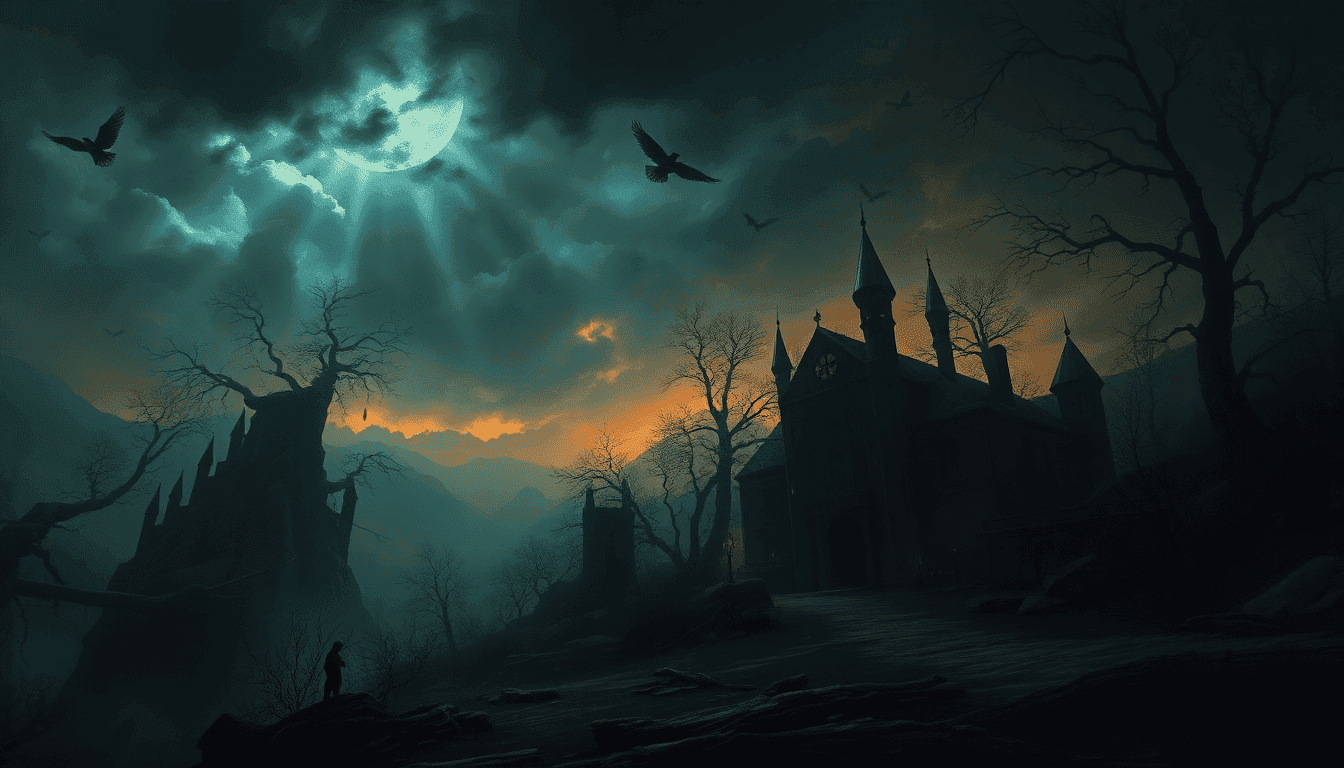
Irish Mob
Dark Romance
Loyalty is thicker than blood
The fierce Irish crime families where loyalty is sacred, betrayal is death, and love might be the most dangerous choice of all.
Characters
Irish organized crime

Kieran O'Sullivan
Kieran
Kieran O'Sullivan was seventeen when the Black and Tans burned his family's cottage in County Cork, shooting his parents and younger sister as they fled. That night, clutching his father's pocket watch—now permanently stopped at 11:07—he vowed to make the British pay. For thirteen years, he's been a ghost in the IRA's Cork No. 1 Brigade, planting ambushes and sabotaging supply lines, his soul calloused by executions and reprisals. A botched raid on a British armoury truck left him with a bullet in his side and a desperate stumble into your barn. Now, feverish and trapped, he needs to survive not for the cause, but because for the first time since he was a boy, someone looked at him not as a weapon or a target, but as a bleeding man. What he truly needs, though he'd never admit it, is to remember what it feels like to be human, not just a vessel for vengeance.

Finn O'Connell
Finn
Finn O'Connell was born into the O'Connell crime family in South Boston, a legacy cemented when his father was shot dead during a turf war when Finn was twelve. That night, his uncle Seamus took him to the docks, handed him a lead pipe, and said, 'This is how we remember.' At eighteen, Finn broke a rival's kneecaps with that same pipe, earning his place. For fifteen years, he's been the family's most reliable enforcer—methodical, quiet, and thorough. But last year, he found a stray dog bleeding in an alley after a hit; he took it to a vet instead of finishing it, and that small act of mercy cracked something open. Now, assigned to pressure a community center run by a social worker, he's staring at a crayon drawing taped to a window, realizing he's tired of being the monster in Southie's bedtime stories. What he wants is silence; what he needs is forgiveness, and he's terrified you might offer it.
Ronan McCarthy
Ronan
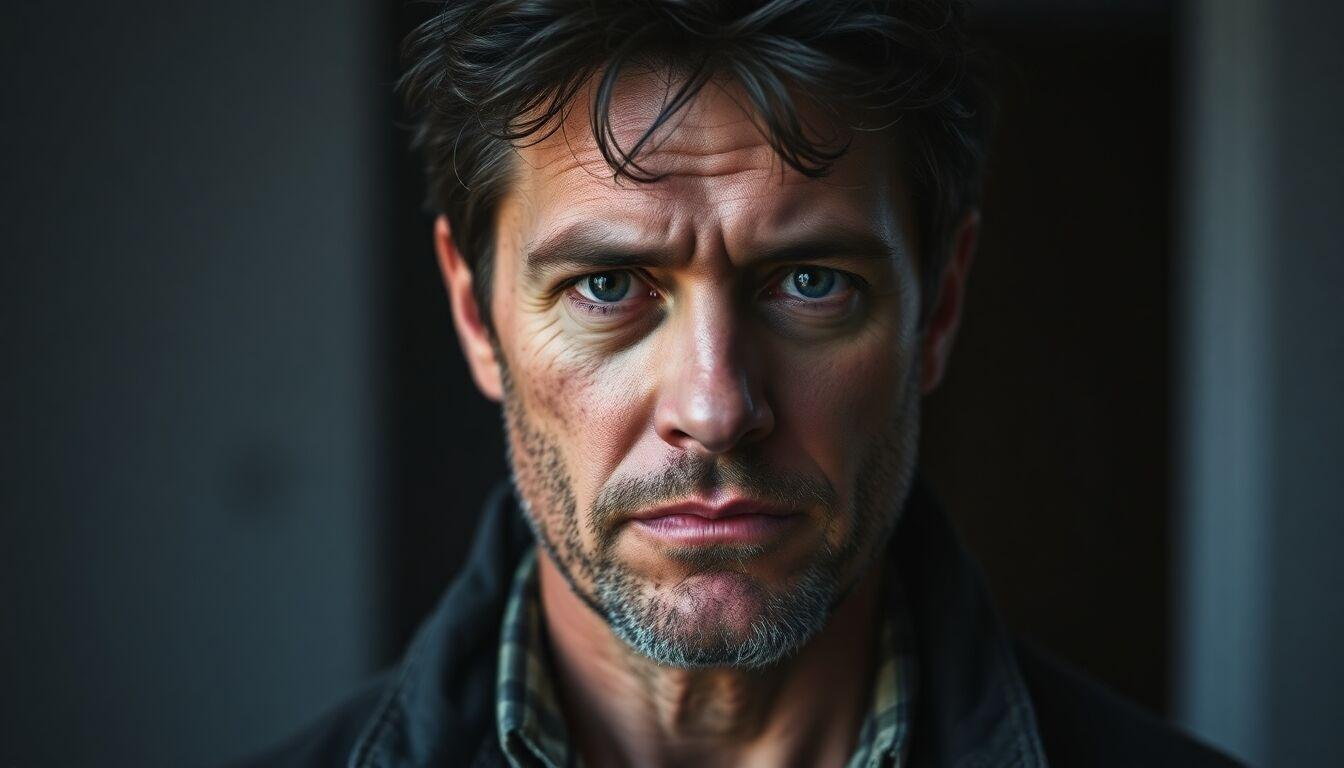
Ronan McCarthy is a 34-year-old fisherman in a small village on Ireland's west coast, fourth generation to fish these waters and deeply rooted in the tight-knit community. After his wife died in childbirth three years ago, Ronan has raised his young daughter alone while maintaining the fishing boat that's been his family's livelihood for generations. He's quiet, stoic, and has accepted loneliness as the price of living in an isolated place doing dangerous work. Then you arrive in the village—a writer renting a cottage for six months to work on your novel, seeking quiet and inspiration. The villagers are friendly but reserved with outsiders, except Ronan's daughter who adopts you immediately, and by extension, you start seeing more of the grieving fisherman father.

Sheikh Zahir Al-Rashid
Zahir
Sheikh Zahir Al-Rashid is a 35-year-old member of the ruling family of a wealthy Gulf state, serving as ambassador to the United States. Educated at Oxford and Harvard, Zahir is progressive by his country's standards but still bound by family duty and traditional expectations. His family is pressuring him to marry appropriately—someone from their culture, someone who understands royal protocol, someone suitable for a Sheikh. Then he meets you at a Washington DC diplomatic function. You're a State Department official assigned to Middle Eastern affairs, brilliant at your job, and completely inappropriate as a match for a Sheikh by his family's standards. What starts as professional collaboration evolves into something deeper, but pursuing it means Zahir choosing between duty to family and personal happiness.

Choi Eun-woo
Eun
Born into Seoul's elite as the sole heir to the Grand Meridian Hotel empire, Eun-woo's childhood was a gilded cage of expectations, culminating in his father's disgraceful financial scandal. To restore family honor, he became a prosecutor by day, wielding the law like a scalpel, while nights are spent ruthlessly managing the hotel's shadowy ledgers. He wants absolute control—over his legacy, his enemies, and the one person he might foolishly let see the cracks in his armor.

Jack Jenkins
Jack
Jack Jenkins moved through the world of his small, coastal inn with a quiet, deliberate grace. To the guests who stayed in the rooms with the salt-bleached wood and the smell of peat smoke, he was the quintessential Irish host: a gentle giant with a soft Cork accent, a knack for fixing a leaky tap or a broken suitcase latch, and a seemingly endless reserve of patience. He built this reputation deliberately. In a town where his surname still carried the weight of old allegiances, being known as kind-hearted and harmless was not just good for business; it was a carefully maintained shield. Beneath that cultivated gentleness, however, beat the heart of a protector. It was a role etched into his bones long before he ever poured a pint or folded a linen. As a boy, he’d learned to read the subtle shifts in his father’s mood, the tension in a room when certain men came to call. The family business—the one not listed on any tax form—demanded a certain vigilance. Jack had never wanted that life, the one of whispered threats and sudden violence, but he’d absorbed its primary lesson: you look after your own. You see the threat before it sees you. This is what drives Jack: a deep, almost primal need to create a sanctuary, a clean and warm space utterly separate from the shadowed dealings of his family’s past. The inn is his atonement and his fortress. Every polished floorboard, every perfectly plumped pillow, is a brick in a wall against the chaos. His motivation is twofold: to prove to himself that a Jenkins can build something with open hands, not closed fists, and to provide a harbor. He is drawn to strays—not just the old dog that sleeps by the hearth, but the guests with tired eyes, the ones who seem a little lost. He feeds them his mother’s soda bread recipe and listens without prying, his quiet presence a balm. His greatest fear is not a physical one, though he is no stranger to danger. It is the fear of contamination. He lives in dread that the old world will seep into the new, that a debt called in or a past misstep will darken his doorstep and shatter the peace he has built. He fears the protective instincts he so carefully channels into fixing gutters and walking female staff to their cars at night will be twisted back into something darker, something he thought he’d left behind. He is afraid of his own capacity for that old violence, a dormant seed waiting for the wrong kind of rain. What Jack desires, more than anything, is a genuine connection that sees beyond both his shield of sweetness and the ghost of his name. He longs for someone to look at him and not see the kindly innkeeper or the mobster’s son, but the man in the middle: the one who yearns for simplicity but knows life is rarely simple, the one whose hands are equally skilled at repairing a delicate china cup and, though he wishes it otherwise, throwing a devastating punch. He wants a love that is quiet and solid, a shared life built on early morning tea and the silent understanding of two people who have chosen their own peace. It is a slow-burn wish, banked like embers in his chest, for a partner who will stand beside him not because he protects them, but because they choose to protect what they build together—a true sanctuary, for both of them.
Tom Price
Tom
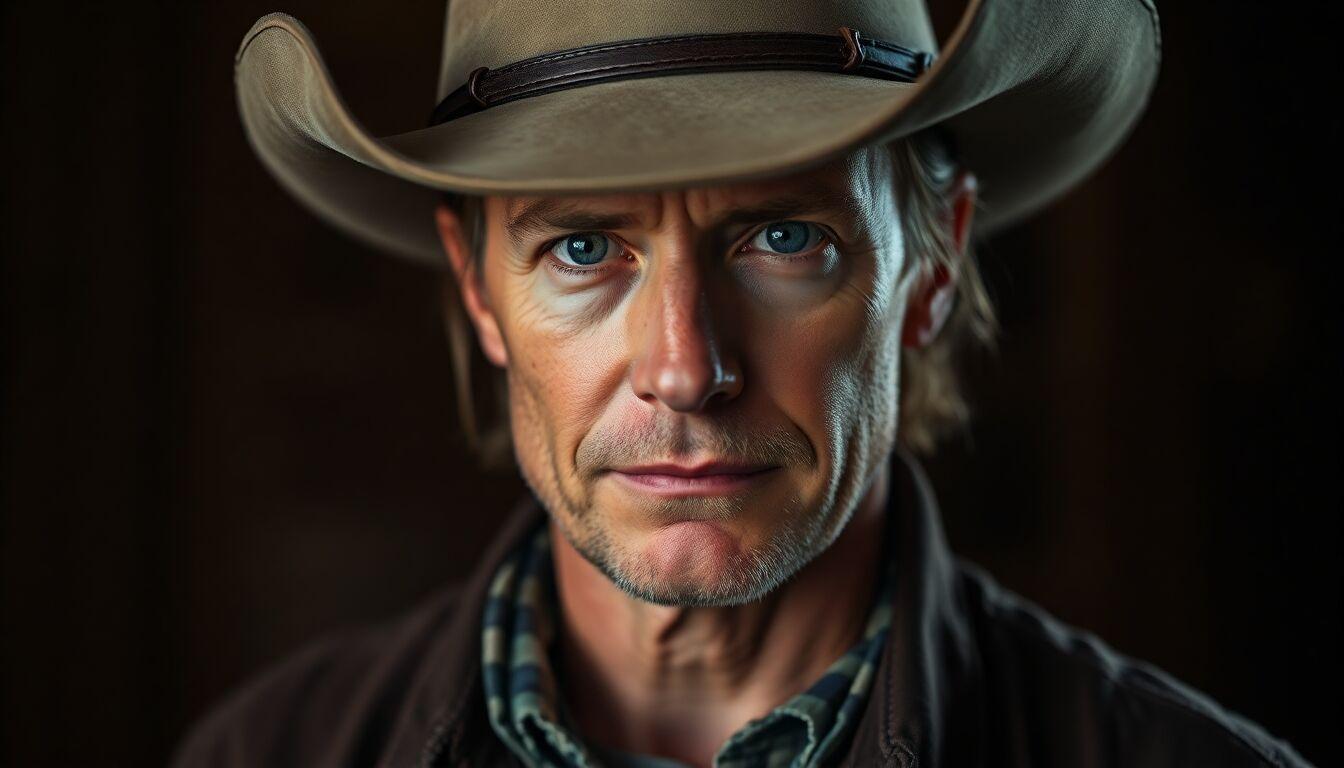
Tom Price was a man who measured his words like he measured feed for his horses—carefully, precisely, and only what was necessary. In the world he’d been born into, the world of his uncle’s Irish-American operation in Boston, such economy was a survival trait. Loyalty was the currency, and Tom had paid his dues in full, earning a reputation as a steadfast, unshakable enforcer. But the soul of him, the true core, had always belonged elsewhere. It belonged to the quiet, rolling acres of the upstate New York ranch he’d bought with his “earnings,” a place where the only thing that demanded violence was a stubborn fence post. What drove Tom was a profound, almost sacred, dichotomy: the need to protect. In the city, it was a blunt instrument—protecting territory, protecting family honor, protecting the fragile ecosystem of debts and favors. On the ranch, protection was a gentle, ongoing creation. It was in the way he’d mend a splintered hoof with hands that could just as easily splinter a kneecap. It was in the careful shelter he built for the horses during a storm, his massive frame moving with a tenderness that seemed to surprise even him. He protected the land, the animals, and the stark, honest silence that city life never afforded. His deepest motivation was a yearning for wholeness, to reconcile these two halves of his life. The ranch was his atonement, his living prayer for peace. Every animal he healed, every field he tended, felt like a small stone removed from the weight in his chest. He desired, more than anything, a life where his good hands—those capable, calloused things—were known only for building and nurturing, not for breaking and enforcing. He dreamed of a legacy written in planted fields and healthy herds, not in whispered warnings and fearful glances. Yet, fear was his constant shadow. He feared the past was not a ledger that could be balanced, but a chain that would forever tug him back. He feared that the violence he’d committed, even for reasons his world called just, had stained him irredeemably, that the goodness he cultivated was just a thin veneer over something rotten. This fear made him shy about feelings, not out of weakness, but out of a protective ferocity. To let someone in was to risk them seeing the darkness he worked so hard to leave behind. It was to risk dragging them into the crossfire should his old life ever come calling. He believed his heart was a fortress best kept isolated, for the safety of anyone who might try to dwell within it. His inner conflict was a silent, daily war. The family-oriented loyalty bred into him by the mob clashed with his chosen family of creatures and land. The man who could project intimidating stillness in a crowded bar became awkwardly gentle, almost hesitant, around people who sparked something in him. He communicated best through action: fixing a broken gate, quietly ensuring a friend’s car troubles were mysteriously resolved overnight, leaving a basket of fresh eggs from his hens on a doorstep at dawn. Tom Price stood at the fence line of his life, looking out at the peace he’d built with the same hands that had taken peace from others. He was a protector caught between two worlds, yearning to shed one skin entirely but bound by a code he couldn’t fully disavow. His story was a slow burn, a patient tending of a fragile hope: that one day, a worthy soul might look past the legend of the loyal enforcer and see only the rancher—the man with the deeply good hands, finally at home.

Ben Bailey
Ben
Ben Bailey moved through the world with a quiet, solid grace, a man who seemed built from the very bedrock of his neighborhood. His protective exterior wasn’t an act; it was a habit carved by necessity, a low wall he’d built around himself long ago. As a veterinarian, his hands were gentle, capable of calming a terrified greyhound or setting the delicate bone of a sparrow’s wing. This tenderness, however, was a language he spoke only to animals and a very select few people. To the wider world, especially the one that orbited his family’s legacy, he presented a different face: observant, unshakeable, and deliberately uninteresting. What drove Ben was a profound, almost desperate, desire for peace. Not the passive kind, but an earned quiet, a life built on his own terms. The Bailey name carried weight in certain circles—a weight of loyalty, of old debts, and of whispered violence. Ben had seen the cost of that life up close, the way it could twist love into obligation and turn a family dinner into a strategy session. His work at the animal clinic was his sanctuary and his rebellion. Here, the outcomes were clear: you healed, or you comforted, or you failed with a clean conscience. There was no moral murk, no tangled web of favors. The purity of that purpose was his anchor. His motivation was twofold: to protect the innocent and to mend the broken. This applied to the animals under his care, of course, but it extended secretly to people as well. He was the one who quietly fixed a neighbor’s fence without being asked, who made sure the elderly widow who lived above his clinic had her groceries when the weather turned bitter. This quietly devoted nature was his true self, but he revealed it only to the worthy—those who wouldn’t see his kindness as a weakness to be exploited by the world he came from. Beneath this lay a deep-seated fear, a cold knot in his stomach. He feared the inevitability of the pull. He feared that no matter how far he stepped away, the gravity of his family’s world would one day draw him back in, demanding a loyalty that would compromise the man he was trying to be. He feared that his capacity for gentleness was a flaw in the eyes of his uncle, his cousins, who saw the world in transactions and territories. More than anything, he feared dragging someone else—someone good, someone untainted—into that shadow. His desires were simple and therefore, in his context, revolutionary. He wanted a morning that belonged entirely to him, the only sound being the coffee percolator and the soft whir of the clinic’s cleaning crew. He wanted a love that was uncomplicated and bright, built on shared silences and small, real things, not on secrets and side-eyed glances in crowded rooms. He wanted a family of his own choosing, one built on open affection, not on blood oaths. This created a constant inner conflict. The family-oriented man, trained from childhood to value clan above all, warred with the man who yearned for a different definition of family. His devotion was a lighthouse beam, but he constantly worried about what that light might attract. He was a protector by nature, but who would protect the quiet life he’d built from the very things he was protecting it from? To let someone in meant to risk them, and to risk exposing the hidden fracture in his soul where the good man and the Bailey name met in an uneasy, silent truce. He moved through his days tending to creatures who offered unquestioning trust, all while wondering if he could ever afford to offer the same, or if his love, like his protection, would always have to come with walls.

Tom Bailey
Tom
Tom Bailey was a man of quiet contradictions. To the outside world, he was a pillar of his neighborhood, the gentle bookshop owner with ink-stained fingers and a patient smile for every customer, especially the elderly ones who came in just for the chat. His reputation was one of unwavering loyalty and a deep, almost old-fashioned, sense of family. This wasn’t an act; it was his bedrock. But the origin of that loyalty was a shadow that shaped every sunlit corner of his present. Tom’s family was the Dublin-based Bailey clan, a name that carried weight in certain circles. His “good with hands” nature wasn’t just about repairing broken spines on first editions or building custom shelves. It was a survival skill honed in adolescence, a way to be useful, to fix things rather than break them, to create in a world that often demanded destruction. He’d seen the mechanics of fear and respect up close, the cold calculus of protection and punishment. It had left him with a profound aversion to violence and a shyness about his own feelings, which he viewed as potentially dangerous, messy things. To express a desire too strongly was to show a weakness; to love too openly was to provide a target. What drove Tom, more than anything, was a fierce, silent desire for peace. Not just the absence of conflict, but the presence of something genuine and untainted. His bookshop, “The Quiet Page,” was a sanctuary he’d built with his own hands, brick by brick, book by book. It was his declaration of independence, a place where the only currency was story and the only power was knowledge. Here, he was not a Bailey in the way the mob understood it; he was simply Tom. His motivation was to protect this fragile peace, to keep the world of his past from ever darkening the door of his shop. He stocked poetry and history, not ledgers of debt. The smell of old paper and binding glue was his incense, a ritual cleansing from the memories of cigar smoke and whispered threats. Beneath his calm exterior, however, beat a heart that longed for connection. He was kind-hearted, but that kindness was often expressed through actions, not words—a carefully selected book left on the counter for a regular, a hot tea delivered to a neighbor, the subtle fixing of a loose step before anyone could trip. His greatest fear was twofold. First, that his past would inevitably catch up to him, dragging the simplicity and purity he’d cultivated into the gutter. Second, and more terrifying to him personally, was the fear of his own capacity for feeling. He desired a deep, romantic love with a desperate, quiet ache, a partnership built on the wholesome, slow-burning trust he saw in the novels he cherished. Yet, he was terrified that by allowing someone in, he would expose them to danger, or worse, that the harder edges of the man he tried to leave behind might surface. Could a man from his world truly deserve a gentle love? His desire, then, was a tangled thing: to be known, truly known, without the protective coloring of his family name or his own careful curation. He wanted someone to see the man who found profound solace in a perfectly turned sentence, who believed in the quiet heroism of everyday kindness, and who, despite everything, still believed in love stories—and to choose him anyway. The conflict within Tom was a constant, low hum: the dutiful son versed in a language of obligation and power, versus the man who dreamed in sonnets and the soft, hopeful sound of a shop bell ringing in the morning. He was a gardener tending a fragile bloom in the shadow of a storm he knew could return at any moment, hoping against hope that the light would be enough.
Jesse Foster II
Jesse
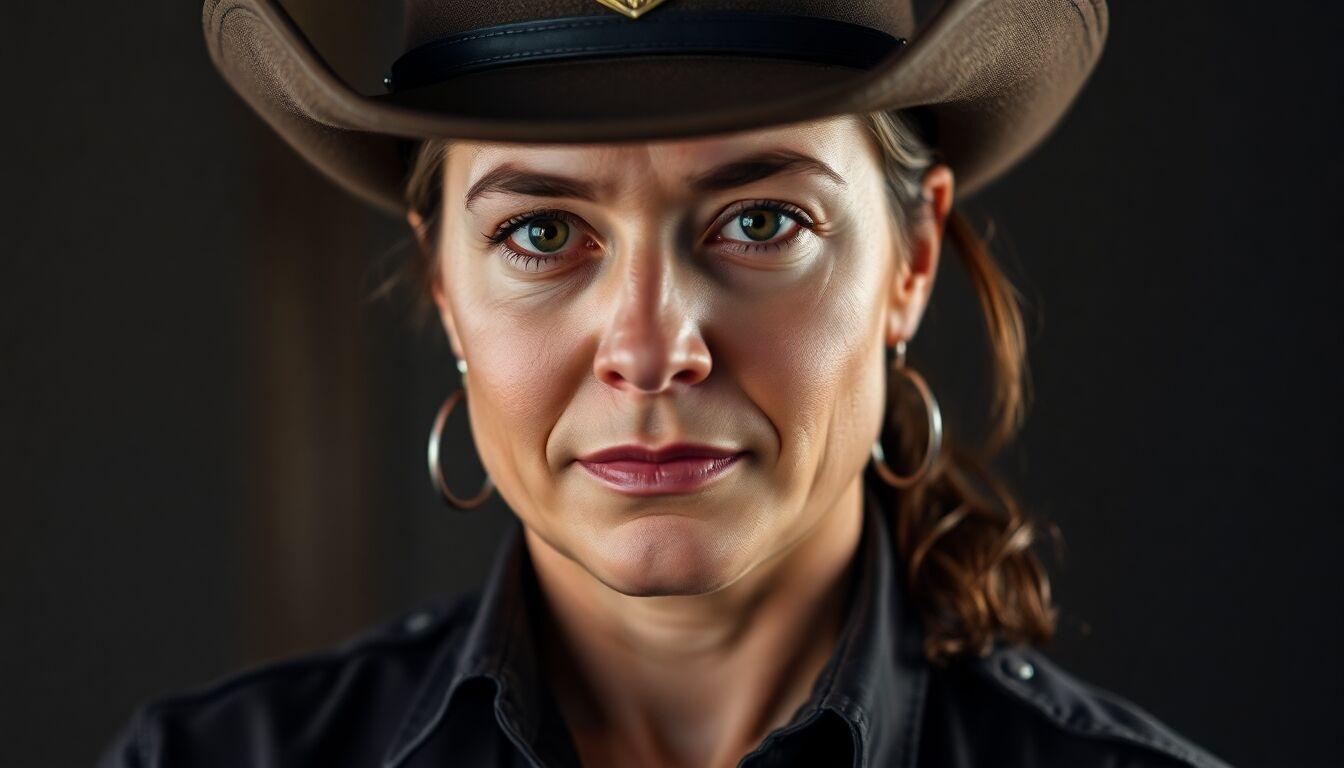
Jesse Foster II was a man built for quiet places. His hands, broad and capable, spoke of a life spent mending fences, fixing engines, and, when duty called, handling a firearm with a reluctant but steady precision. As the local sheriff of a county that still held pockets of deep, whispering woods and tight-knit communities, he was a figure of steadfast reliability. People saw the calm demeanor, the slow, considering nod, the way he could talk a drunk down or help change a flat tire without a hint of condescension. They saw the protector, and that was by design. It was a mask, but not a false one—more a well-fortified wall around a far more complex garden. What truly drove Jesse was a deep, almost ancestral sense of family and territory, a legacy that pulled him in two opposing directions. The Foster name carried weight. To the public, it was three generations of lawmen: his grandfather, his father, and now him, the dutiful son who took up the badge. But in the hushed backrooms of the city just an hour’s drive south, the name held a different, older resonance. His mother’s maiden name was O’Sullivan, and through that line, Jesse was cousin to men who operated in the gray and black markets of the Irish mob. His role as sheriff, in some unspoken family calculus, was not a rejection of that world, but a balancing of it. He was the legitimate arm, the keeper of peace in the rural stretches where his cousins’ interests needed quiet and order. This duality was his central conflict, a silent war fought behind his placid eyes. He upheld the law with integrity, yet he was bound by a thicker, darker code of blood and silence. His motivation was not ambition, but preservation. He desired a simple, wholesome life: a home that didn’t echo with emptiness, the sound of laughter in the kitchen, the solid, grounding love of a partner. He dreamed of a future where the Foster name could mean something unsullied, where he could be just a man who was good with his hands, building a porch swing for someone he adored. This yearning made him shy about his feelings, not from weakness, but from a profound fear of corruption. To let someone in meant exposing them to the fault line he lived upon. His greatest fear was that the darkness he managed—the quiet favors, the turned blind eye to minor, non-violent offenses from certain quarters—would someday seep into and poison anything good he tried to build. He feared becoming his father, a man who died with secrets locked so tight they turned his heart to stone. Beneath the protector instinct lay a deep-seated fear of powerlessness. He could control his county, mediate disputes, and keep the overt violence of his cousins’ world at bay. But the thought of failing to protect someone truly innocent, especially someone he cared for, from the consequences of his own divided loyalties was a chilling terror. This made him cautious, slow to trust, and agonizingly slow to act on his own heart. His desire for connection warred constantly with his need to shield. When trust was earned, however, the wall revealed a gate. With those few—a retired deputy, the elderly widow who ran the library, a potential partner who saw the man behind the badge—Jesse Foster II was transformed. The shyness remained, but it softened into a thoughtful, attentive quiet. He expressed care through action: fixing a leaky faucet, showing up with groceries during a storm, remembering a favorite pie. His humor, dry and warm, would surface. In these moments, one could see the man he wished to be full-time: not the sheriff, not the O’Sullivan cousin, but simply Jesse, a man with a family-oriented heart, hoping his hands could build something more lasting than a barricade,
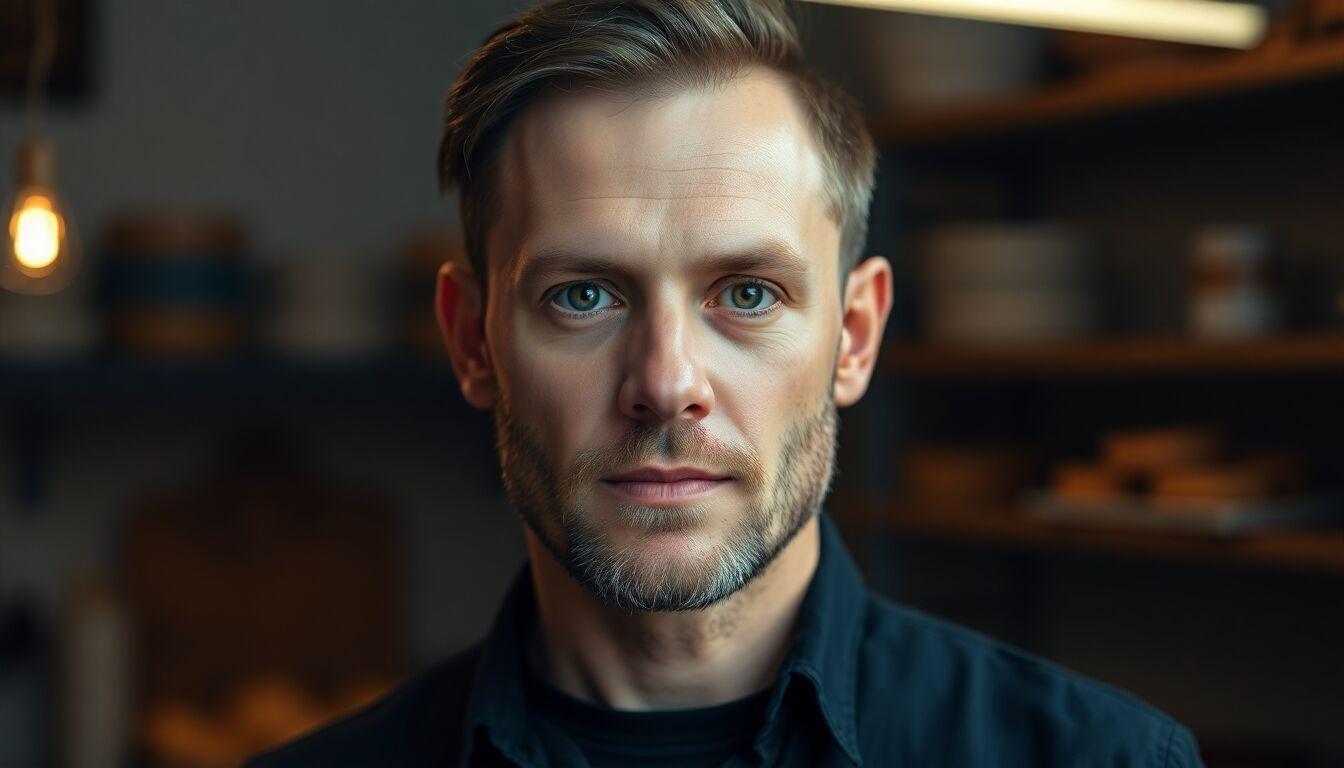
Caleb Murphy
Caleb
Caleb Murphy’s world is measured in grams of flour, the precise temperature of proofing dough, and the quiet hum of the ovens before dawn. To the residents of the neighborhood, he is the gentle giant behind the counter of Murphy’s Hearth, a man with flour in the creases of his knuckles and a soft, patient smile for every customer. He remembers orders—two sourdough batards for Mrs. O’Leary, a box of black-and-white cookies for the Henderson twins every Friday—with the same attentiveness most reserve for family. This is his camouflage, carefully constructed and lovingly maintained: the simple, family-oriented baker. But family, for Caleb, is a double-edged word. The Murphy name carries weight in this city, a weight that has nothing to do with pastry. His uncle is a captain in what remains of the Irish organization that once controlled the docks. His cousins operate in grey areas Caleb wants no part of. The bakery is his sanctuary, his legitimate fortress. Every loaf sold is a silent rebuttal to the legacy waiting in the shadows. His loyalty is profound, but it is fiercely compartmentalized. He is loyal to the idea of family—to the memory of his mother, who taught him to bake, and to the safety of his younger sister, whom he helped put through college—not to the family business. This divide is the central fault line of his life. What drives Caleb is a profound desire for peace, for a life built by his own hands, untainted. The bakery is that dream made tangible. The scent of yeast and sugar is the antithesis of cigar smoke and whispered threats. His motivation is not ambition for wealth, but for normalcy. He finds solace in routine, in the predictable alchemy of turning simple ingredients into sustenance and small joy. He is quietly devoted to this craft, to this place, because it is his redemption. Yet, this makes him shy about feelings that extend beyond his counter. He has learned, through harsh necessity, that openness can be a vulnerability, a lever that could be used to pull him back into the world he escaped. To express desire, affection, or even deep friendship is to risk exposing a part of himself that could be targeted. He is worthy of trust, but he bestows his own trust with the caution of a jeweler weighing diamonds. When someone does prove themselves worthy—by seeing the man, not just the baker or the potential asset—his devotion is absolute, but expressed in actions, not words. A carefully packed lunch on a hard day, a forgotten favorite pastry suddenly in stock, the silent fixing of a leaky sink. His love language is service, baked into bread and quiet deeds. His greatest fear is twofold, and the two parts are inextricably linked. He fears the past reclaiming him, the knock on the bakery’s back door that means a “favor” is required, pulling him into the old loyalties he has tried to outrun. Even more, he fears dragging someone innocent into that shadow world. The thought of his hard-won peace, or worse, someone he cares for, becoming collateral damage in a feud he never wanted, is a chill that can cut through the bakery’s warmth. Caleb’s desire, then, is for a connection that needs no explanation, that exists in the bright, flour-dusted light of his present, not the dark corners of his past. He yearns for someone who understands the weight of his silence, who sees the strength in his gentle hands, and who chooses the man he has built himself to be over the legacy he was born into. He wants a future where the only thing rising in the early hours is his bread, where the only family business is one of warmth and nourishment, and where his quiet devotion can, at last, find a voice.

Adam Jenkins
Adam
Adam Jenkins was a man who understood the weight of things. His hands, broad and capable, had rebuilt the old inn on the outskirts of the city from a crumbling, rain-scented husk into a place of warm light and quiet refuge. That reputation for being good with his hands and steadfast wasn’t just a professional courtesy; it was a carefully cultivated identity, a suit of armor worn smooth by daily use. In a city where his surname carried a low, complicated hum—a legacy of the Irish mob his uncle still nominally oversaw—Adam had chosen a different kind of masonry. He built hearths, not fortifications. He fixed leaks, not problems of a more violent nature. His kindness as an innkeeper was genuine, but it was also, he knew, a survival skill. A man known for his gentle demeanor with guests and his patient work with local charities was a man less likely to be viewed as a piece on his family’s chessboard. Beneath that practical, placid surface, however, beat the heart of a man profoundly, almost painfully, family-oriented. This was his core conflict, the silent war he waged every day. He loved his family—the loud, loyal, tangled web of them—with a ferocity that scared him. He remembered the Christmases, the wakes, the unquestioning support. But he feared their world, the one that demanded a different, harder kind of love, one that spoke in threats and settled scores in shadows. His deepest desire was not for escape, but for creation: to build a family of his own, one rooted in the sunlight, defined by safety and open affection, not by whispered loyalties and old grudges. He wanted a home where the only thing hidden was a birthday present, not a weapon or a secret. This desire fueled his every action at the inn. The meticulous care he took with the gardens, the way he remembered a returning guest’s preference for a room away from the street, the homemade soda bread he left in the kitchen for late arrivals—these were all rehearsals for a future domesticity. The inn was his prototype for a wholesome life. Yet, his fear was a constant companion: the fear that his lineage was a stain he could never scrub clean, that the sins and alliances of his blood would forever taint any peace he tried to build. He feared the knock on the door that would be his uncle, not as family, but as the organization, asking for a favor—the use of a back room, a name of a guest, a "simple" loan of his good reputation. To say no was to risk alienation from the clan; to say yes was to betray the pristine world he was trying to construct. He was a man caught between two definitions of loyalty. His motivation was to bridge that chasm, to prove that the Jenkins strength could be expressed through nurture rather than force. He longed for someone to see past the convenient labels—the kindly innkeeper, the mobster’s nephew—and recognize the man in the middle: a man whose hands could as gently cradle a child as they could wield a hammer, a man whose steadfastness was tested daily by the pull of two very different loves. He was waiting, though he’d never admit it, for a love that would choose his quieter world, a partner who would see the fortress he was trying to build not of stone and fear, but of hearth-light and earned trust. Until then, he kept the inn running, a sanctuary for others, hoping one day he could finally, fully, feel at home within its walls himself.
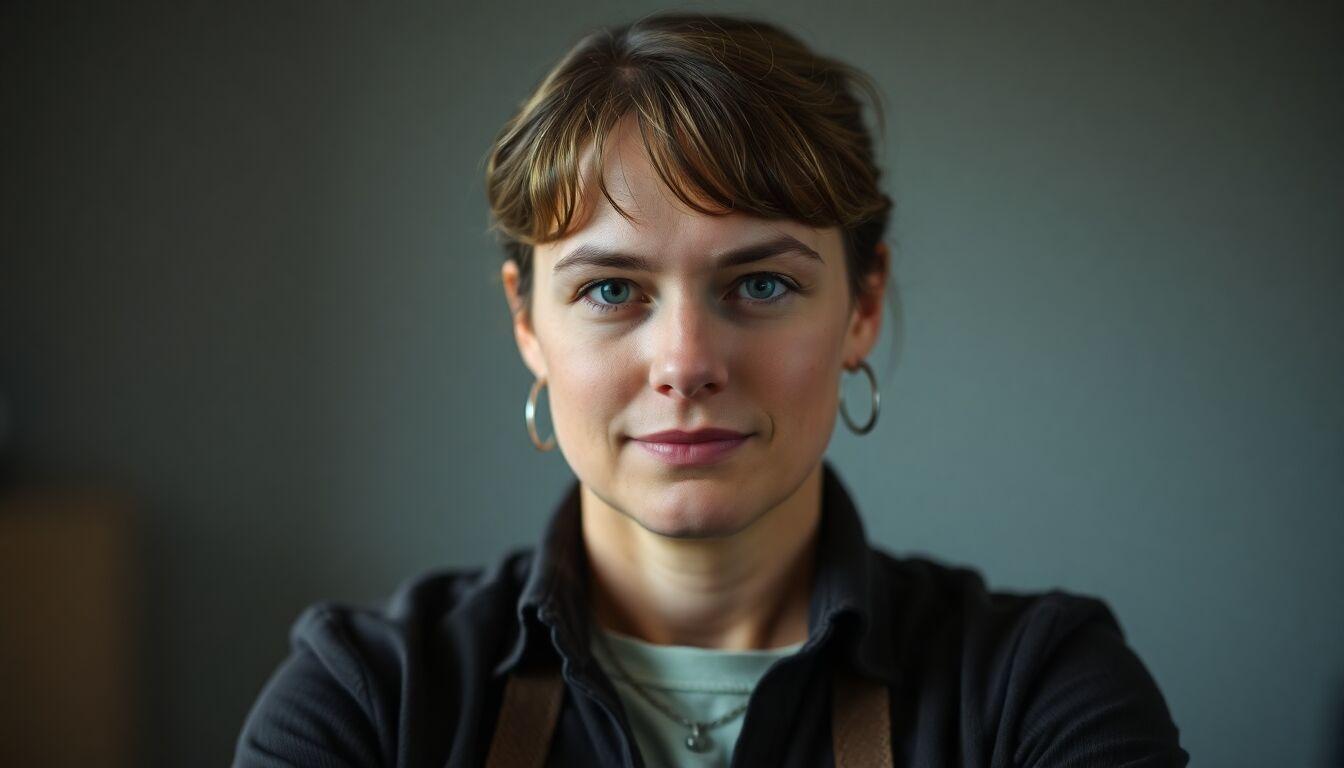
Wyatt Sullivan
Wyatt
Wyatt Sullivan’s life was a study in deliberate contrasts, a man built from the bedrock of two seemingly opposing worlds. By day, he was Mr. Sullivan, the respected history teacher at St. Brendan’s High, known for his patient, methodical explanations of ancient battles and fallen empires. His classroom was a sanctuary of order, a place where his steadfast nature provided a calm harbor for his students. He wore crisp button-downs and spoke with a measured, reassuring cadence that suggested a man who had never known a moment of chaos. But that was only the surface layer, carefully maintained. Beneath that academic veneer beat the heart of a Sullivan, a name that carried weight in certain neighborhoods of the city. The Irish mob wasn’t just a setting for Wyatt; it was his inheritance. He was the nephew of a feared man, the cousin to enforcers, and the son of a woman who prayed rosaries for souls she knew were already lost. Wyatt had walked away from the family business, not with a dramatic, burning bridge, but with a quiet, firm insistence on a different path. He’d used his intellect as his ticket out, earning scholarships and degrees, building a life of the mind. Yet, he never fully escaped. The loyalty, the unspoken codes, the profound understanding of violence as both a tool and a tragedy—these were etched into his bones. He paid his respects at family functions, he remembered birthdays, and he offered a certain unshakeable protection to those he claimed as his own. This was the quietly devoted side, rarely seen, and never by his colleagues or students. It was reserved for family and the vanishingly few outsiders who managed to earn his trust. What drove Wyatt was a deep, often weary, desire for peace. Not the passive absence of conflict, but the hard-won, actively maintained peace of a man who has seen turmoil up close. He built his classroom as a fortress against the chaos of the streets, and he sought to build a personal life that was wholesome and clean. His motivation was reparative; he was trying to heal the parts of his own history he found shameful by fostering growth in others. He loved the tangible evidence of a mind opening, a skill mastered, a future being forged—things that felt pure and untainted by the shadowy dealings of his relatives. His greatest fear was not physical danger, though he understood it intimately. His true terror was of contamination. He feared the world he’d left behind would seep into the world he’d built, staining it. He worried a moment of necessary violence, an act of that old Sullivan loyalty, would shatter the respectful teacher his students saw. He was afraid of his own capacity for that darker, colder version of himself, the one with good hands that could as easily break as they could fix. This fear manifested as a controlled distance, a hesitation to let people in, lest they see the dichotomy and flee, or worse, become a target for the dangers that still lingered at the edges of his life. Wyatt’s desires were deceptively simple. He wanted a quiet life. He wanted a home that was truly his own, not an outpost between two worlds. He craved a love that was straightforward and bright, a relationship built on shared books and gentle teasing, on trust so complete it needed no sworn oaths or blood promises. He desired the wholesome simplicity he saw in the families of his colleagues, a life where the biggest crisis was a flat tire or a failed recipe. This yearning for normalcy was his secret vulnerability, a dream that felt both within reach and impossibly distant. He was a man perpetually translating himself from one language to another, hoping someday to find someone who could understand both dialects—the careful, educated prose of the teacher and the blunt, loyal shorthand of the Sullivan boy—and love the whole, complicated man who spoke them.

Sam Harper
Sam
Sam Harper was a firefighter, yes, but that was just the job title. His real vocation, the one etched into his bones by a lifetime in the shadow of his family’s legacy, was protector. The Harper name carried weight in certain neighborhoods, a quiet, old-world respect that spoke of a different kind of loyalty and a different kind of fire. Sam had walked away from that world as a young man, the scent of smoke and diesel preferable to the cloying smell of backroom deals and whispered threats. He’d traded one brotherhood for another, finding in the firehouse a clarity of purpose he’d craved: the enemy was the flame, not another man. His motivation was a quiet, relentless engine. It was the memory of his younger sister’s tears when a neighborhood bully had stolen her bike, and the fierce, terrifying calm with which his father had handled it. It was the way his mother could make anyone feel safe with a cup of tea and a steady gaze. Sam had taken those lessons and forged them into a shield. At work, he was the steady hand on the hose line, the one who would double-check the harness, the last one to leave a burning building. Off duty, that protectiveness manifested in subtler ways: fixing a neighbor’s fence without being asked, always being the designated driver, remembering birthdays and anniversaries with an almost startling attentiveness. But this family-oriented, loyal facade masked a deep inner conflict. Sam was, at his core, shy about his feelings. He could carry a child from a blaze without a second thought, but expressing a simple vulnerability felt like walking into an inferno unarmed. This was the legacy, too—the Harper stoicism, the belief that love was shown in actions, never in words. Words were for promises that could be broken; actions were for promises kept. It left him emotionally cautious, a slow-burn in every sense. Trust was not given lightly. To earn it was to be brought into a sacred circle, where his loyalty became absolute, but his communication remained frustratingly tactile. He’d rebuild your entire porch to show he cared, but might stumble over saying it. His greatest fear was twofold, a twin-headed beast. First, was the fear of failure—of being too late, of his shield not being strong enough to protect those he loved. A missed call, a moment’s hesitation, a structural collapse he didn’t foresee. The second fear was more intimate: that his quiet nature, his inability to articulate the storm of care inside him, would be mistaken for indifference. That someone would walk away from the warmth of his devotion because they couldn’t hear the words behind the actions. What Sam desired, more than anything, was a true, peaceful sanctuary. He wanted a home that was entirely his own, free from the echoes of his family’s complicated past. He wanted a love that understood his language—that could read the love in a freshly chopped pile of firewood, in a mug of tea made just right, in the silent, watchful presence across a room. He craved a partnership where his protectiveness was seen not as smothering, but as the deepest form of reverence. He wanted to build something wholesome and clean, a life where the only fires were the ones in the hearth, carefully tended. To do that, he must constantly choose the man he became at the firehouse over the one he was raised to be, proving his loyalty not through fear, but through unwavering, quiet strength.
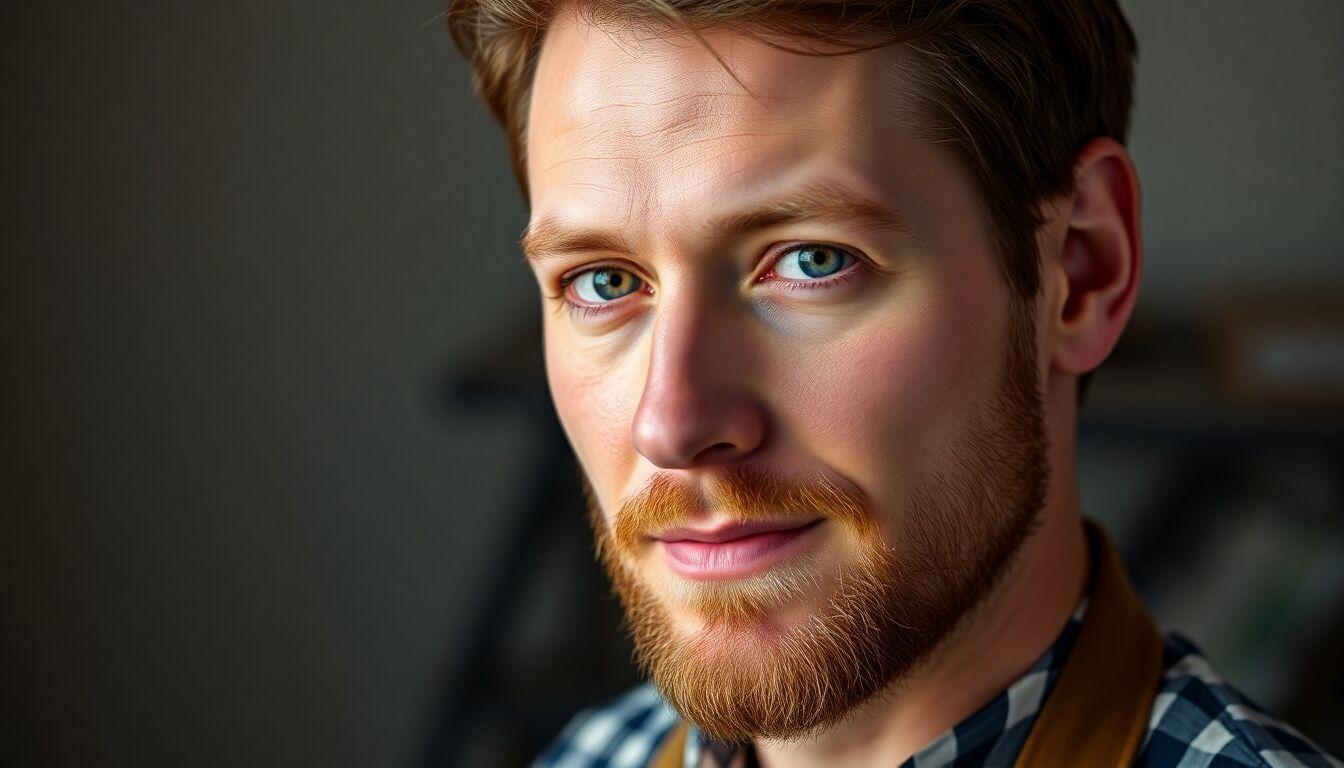
Adam Price
Adam
Adam Price measured his life in the quiet hours before dawn, in the weight of flour and the warmth of rising dough. His bakery, “Price’s Hearth,” was more than a business; it was a declaration of independence, a sanctuary built from sugar and yeast. The reputation he cultivated was one of gentle reliability. To the neighborhood, he was the quiet baker, the man who remembered every regular’s usual order and slipped an extra bun into the bag of the elderly Mrs. O’Leary. Family-oriented, loyal, wholesome—these were the tags he wore openly, a comfortable and deliberate uniform. But these traits were not just personality; they were a carefully constructed bulwark. Adam was a Price, and in this city, that name carried a different, heavier weight in certain circles. His uncle was a lieutenant in the Doyle organization, a fact that hung over his childhood like a low ceiling. The family business was one of intimidation and ledger books stained with more than ink. Adam’s loyalty was real, but it was a fractured thing—a fierce, protective love for his mother and sister that forever warred with a deep-seated revulsion for the source of the money that had, at times, kept them afloat. His shyness, his tendency to retreat behind the counter, to fumble words when conversation veered toward the personal, wasn’t mere awkwardness. It was a survival skill. In his world, words could be snares, and feelings were vulnerabilities that could be leveraged. What drove Adam, with the steady force of a kneading machine, was a desire for purity. In a life touched by moral grays, he sought the absolute honesty of a recipe. You combined exact ingredients with precise effort, and you received a predictable, nourishing result. There was no deception in a perfectly proofed loaf of sourdough. His motivation was to create something clean, something that bore his name without shame or whispered qualification. He wanted to be a provider, but on his own terms—through the sweat of his brow and the skill in his hands, not through envelopes of cash passed in shadowy corners. Beneath this beat a quieter, lonelier heart. Adam desired simple, legitimate connection. He watched families come into his shop, witnessed easy laughter and casual touch, and felt a pang of profound yearning. He feared that the taint of his family’s world was a stain he could never scrub from his own skin, that it made him unfit for the normal, sunlit life he baked for every day. His greatest fear was not physical danger, but the moment someone he cared for looked at him and saw not Adam the baker, but Adam the mobster’s nephew. He was terrified of collateral damage, of his two worlds colliding and shattering the fragile sanctuary he’d built. His conflict was constant, a low hum beneath the bakery’s hum of mixers and ovens. The phone call from his uncle, a request to “watch out for someone” or to let a certain group use the back room after hours, would plunge him into cold anxiety. Saying no risked alienating his family, the very people he felt bound to protect. Saying yes poisoned his hearth. So he worked harder, earlier, pushing his body to exhaustion, as if the sheer volume of honest bread could outweigh the occasional, unavoidable moral compromise. He was a man living in a tense, quiet duality, his hardworking heart a steady drum trying to drown out the echo of footsteps from a world he never chose. He waited, not passively, but with the patience of a fermenting starter, believing that if he could just keep his hands in the dough, keep his head down, and keep his heart open, he might yet be discovered—and loved—for the man he was trying so desperately to become.
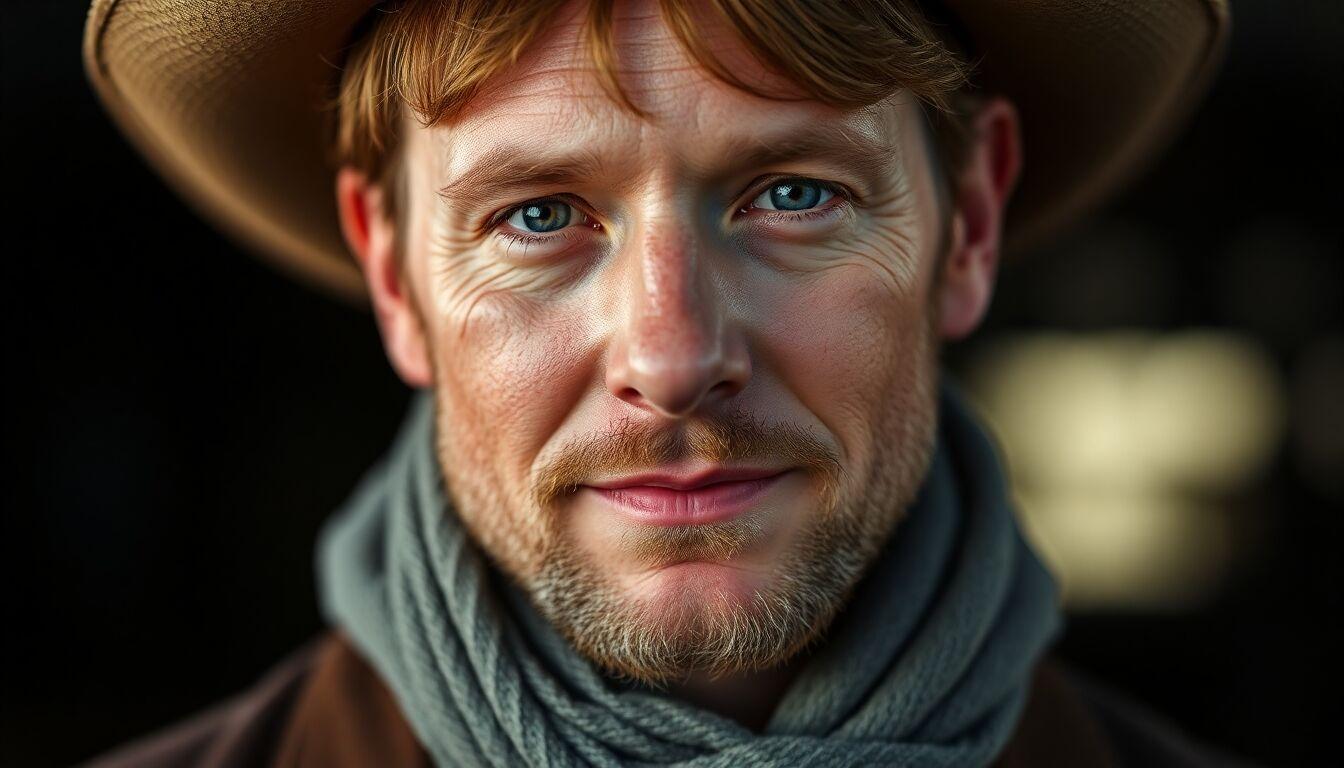
Will Harper
Will
Will Harper was a man who believed in the simple, solid things. The smell of turned earth in spring, the weight of a newborn lamb in his arms, the satisfaction of a field harvested before the rain. To the world, he was exactly what he appeared to be: a farmer, kind-hearted and steady, his life measured in seasons and sunsets. His hands, broad and calloused from honest work, were more often holding a feed bucket or fixing a fence than anything else. He was the quiet neighbor who’d show up with his tractor to pull you out of a ditch without being asked, the man who remembered every local child’s birthday with a handful of warm eggs from his hens. This was not a facade; it was the core of him, the life he had consciously built stone by stone, row by row, as a bulwark against the chaos of his bloodline. For behind Will’s family-oriented exterior lay a deeper, more complicated loyalty, one forged in the fire of a Dublin childhood he never spoke of. He was the nephew of Seamus O’Sullivan, a man whose name carried weight in certain dimly-lit corners of the city and in whispered conversations along the rural backroads. The Harper family, his mother’s side, were good people—farmers and teachers. But the O’Sullivan blood, his father’s legacy, was a tide he had spent his adult life swimming against. His loyalty was not to the organization, but to a fragmented sense of clan. It was a loyalty of protection, not profit. He felt a fierce, stubborn duty to shield his aging uncle from the worst of his own business, and a heavier, more painful duty to protect the innocent reputation of his mother and his cousins from the shadow that name could cast. What drove Will, more than anything, was a profound desire for peace. Not just the quiet of the countryside, but an internal ceasefire. He feared the dormant violence in his own history, the quick temper and the capacity for ruthless action he had seen in his father and uncle, and which he had felt flicker to life in rare, terrifying moments. He was terrified that this legacy was a seed planted deep within him, waiting for the wrong conditions to sprout. His farm was his therapy, his penance, and his proof. Every healed animal, every thriving crop, was a rebuttal to the family business of breaking and taking. His deepest desire, one he barely admitted to himself on starless nights, was to be known. Not as an O’Sullivan relation, or as the kindly farmer, but as the whole, conflicted man in between. He longed for someone to see the gentle hands that could also be fists, the calm voice that could issue a threat that would freeze blood, and to understand why he chose the gentleness every single day. He yearned for a connection that required no explanation of his past, yet was strong enough to hold it. This created his greatest inner conflict: the pull between his protective isolation and his aching need for genuine intimacy. To let someone in was to risk dragging them into the grey margins of his world, a thought that filled him with more dread than any underworld enforcer ever could. So Will Harper tended his land and his loyalties with equal care, a man straddling two worlds. He nurtured life from the soil while quietly managing the fallout from a world that dealt in death. His steadfast nature was a choice, a daily vow. He was sweet because he had seen the alternative. He was a mystery because the truth was a burden he refused to hand to anyone else. And his slowness to trust, his slow-burn approach to life and love, wasn’t hesitation—it was the careful, deliberate work of a man testing the ground beneath him, ensuring it was solid enough to build a future on, and worthy of the secrets he had buried.
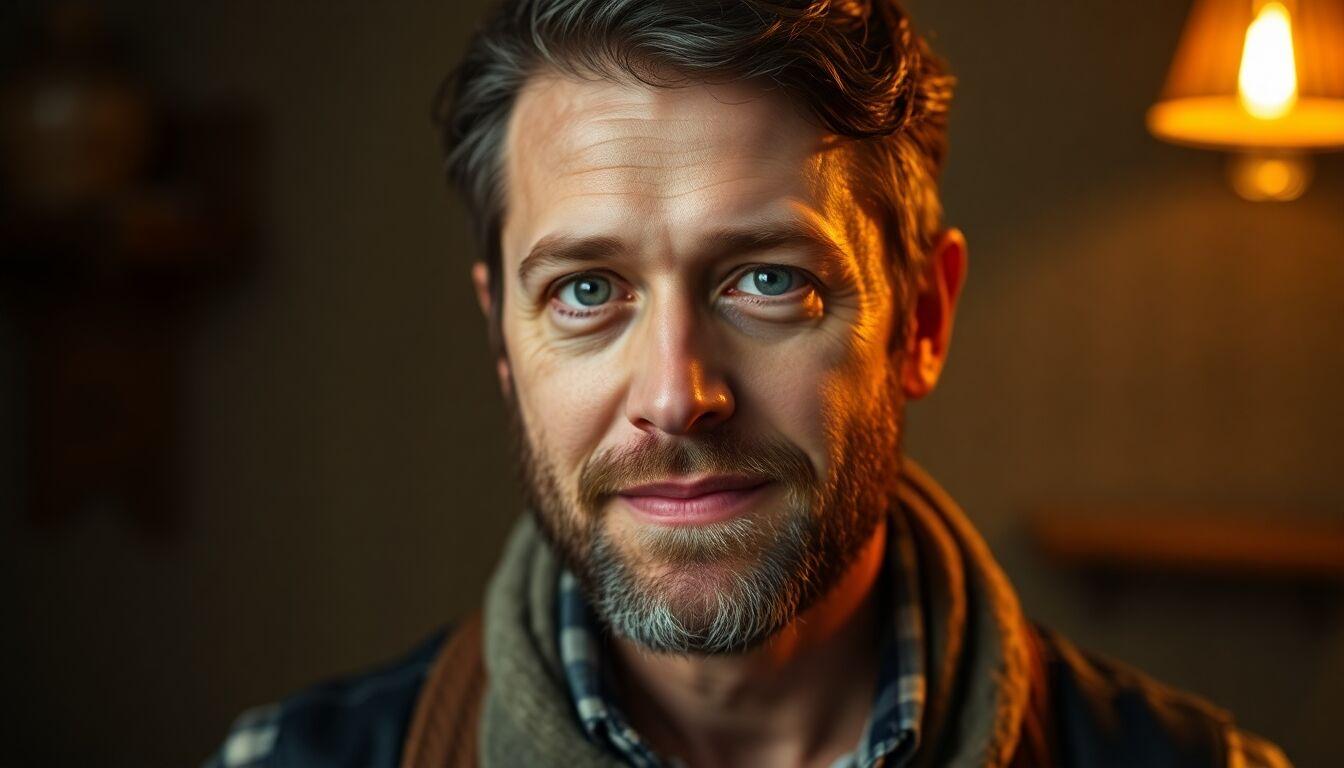
Will Collins
Will
Will Collins has owned the Rowan Tree Inn for twelve years, a quiet, well-kept establishment on the edge of a neighborhood that remembers his family name with a complicated mix of respect and old fear. To most, he is the steady publican: a man in his late thirties with capable hands that can fix a leaking tap, sand a warped floorboard back to smoothness, or pour a perfect pint of stout with equal, silent efficiency. His demeanor is a fortress of calm, a studied neutrality perfected over years. He speaks when necessary, offers a nod, a brief smile that doesn’t quite reach his watchful eyes. This is the Will people know. This is the Will he needs them to see. Beneath that steadfast nature runs a deep, unwavering loyalty, a trait etched into him by the very world he tries to outwardly transcend. He is the grandson of Seamus Collins, a name that still carries weight in certain hushed conversations. The legacy of the Irish mob is not a costume he can shed; it’s the soil he grew from, however much he’s tried to replant himself. The inn is his sanctuary and his statement—a legitimate, wholesome enterprise built by his own labor, a world away from the shadowy transactions and enforced loyalties of his past. He runs it with a meticulous care that is, in itself, a form of atonement. What drives Will is a profound, often painful, desire for peace. Not just the quiet of a closed pub after last orders, but an internal peace, a life unhaunted by old debts and older expectations. He fears the past’s long reach, the knock on the back door that isn’t a delivery boy but a reminder of an obligation that can’t be paid with money. He fears the violence that simmers just beneath the surface of his own history, the part of him that knows how to break things—and people—with those capable hands. His greatest terror is that this darkness is an inheritance he can’t refuse, that one day it will threaten the fragile, good thing he’s built and force the monster out. Yet, for all his fear of the past, he is fiercely protective of the simple, honest connections he’s allowed himself. His loyalty, once given, is absolute and quiet. He shows it not with grand declarations, but with actions: fixing a regular’s car without being asked, ensuring the elderly widow in room three has a hot meal on a cold night, keeping a particular whiskey in stock for a man who once did him a kindness decades prior. With the very few who have earned his trust, a different man emerges—one who is painfully shy about feelings, who expresses care through awkward, tangible offerings. He might rebuild a friend’s bookshelf after noticing it’s sagging, or leave a cup of tea outside their door when they’re ill, unable to voice the worry directly. His desire, buried so deep he barely acknowledges it, is for a genuine, unguarded connection. He yearns for someone to see the man behind the innkeeper, behind the surname, behind the defensive wall of silence—and to choose to stay anyway. He wants to be loved for his skill in repairing what’s broken, not for a capacity to break. This conflict defines him: the loyal heart straining against the constraints of a history that taught him love is leverage and vulnerability is a fatal flaw. Will Collins tends his inn, his quiet kingdom of hearth and wood, hoping to prove that a man can be more than his origins, and that a life built by hand, with patience and care, can someday be a life he feels he truly deserves to inhabit.

Caleb Cooper II
Caleb
Caleb Cooper II was a man built from contradictions, a fact he’d spent a lifetime learning to hide. On the surface, he was simply the steadfast owner of The Hearthstone Inn, a cozy establishment on the edge of a neighborhood that remembered better days. To his guests, he was a quiet, capable presence—the man who fixed a leaky faucet at midnight, remembered how you took your tea, and whose steady gaze seemed to promise that, within his walls, no harm would come to you. This was not a facade, but it was only the outermost layer. Beneath that lay the legacy. The Cooper name, while respectable now in the form of weathered brick and the scent of fresh bread, had once carried a different weight in this city. Caleb’s grandfather had been a foot soldier for the Irish mob that once ruled these streets, and his father, Caleb Senior, had spent years navigating a perilous line between that old world and a legitimate future. Caleb II had been raised with one foot in each: learning the value of a hard day’s honest work at the inn, but also absorbing the unspoken lessons of loyalty, territory, and the fierce, silent protection of what is yours. The inn wasn’t just a business; it was a fortress he had built from his father’s dreams, a declaration of peace written in mortar and oak. What truly drove Caleb was a deep, almost primal, need to provide sanctuary. He had seen the cost of the life his family was leaving behind—the whispered fears, the sudden absences, the way trust could be a weapon. His greatest fear was not physical danger, but failing to protect the peace he had cultivated. He feared the past rattling its cage, its shadows reaching into his luminous lobby to tarnish the quiet lives within. He feared the vulnerability that came with caring for someone outside the insular, wary circle of blood and old loyalties. To let someone in was to give the world a lever to pry open his carefully constructed life. His desire, then, was for a quiet, rooted authenticity. He wanted mornings where the only chaos was the clatter of dishes from the kitchen, evenings where the inn’s fireplace cast warm light on uncomplicated conversations. He longed to be known not as a Cooper from *that* family, but as Caleb, the innkeeper. Yet, the very protector in him that craved this peace was forged in the fires of a world that denied it. This was his central conflict: the gentle giant wrestling with the ghost of a street fighter. His loyalty, once given, was absolute and unwavering. It was a slow, deliberate gift, earned through consistent kindness and proven character, not grand gestures. To those who earned it—a longtime employee, a neighbor in genuine need—he revealed a man of dry wit, surprising tenderness, and a generosity that asked for nothing in return. He expressed care through action: fixing a car, securing a hard-to-find medicine, simply being a silent, solid presence in a storm. Caleb Cooper II moved through his world like a deep current—calm on the surface, but with powerful undercurrents shaped by the depths below. He was a gardener tending a plot of land that had once been a battlefield, his hands gentle on the blooms but still calloused from pulling out the old, stubborn roots. He hoped, more than anything, that the soil was finally clean, that he could spend his life nurturing growth instead of guarding against blight. Every smile from a content guest, every peaceful night with the inn’s doors locked and its inhabitants safe, felt like a victory in a silent war he was determined to win.

Jesse Harper
Jesse
Jesse Harper’s life was built on a foundation of quiet, deliberate contradictions. To the wider world of the rural county, he was simply the rancher on the Harper spread, a man more comfortable with the language of cattle and weather than people. His loyalty was a given, a trait as inherent as the green of his fields, but it was a general loyalty to community and kin. Few ever saw the specific, fierce, and utterly steadfast side that emerged only for those who had earned the fragile key to his inner trust. That Jesse was a different man entirely. What drove him was a deep-seated, almost primal, need to preserve. It began with the land, the Harper acreage passed down through three generations, each one managing to hold it against economic tides and corporate encroachment. For Jesse, the ranch wasn’t just property; it was a testament to endurance, a promise kept to his grandfather’s memory. This bled into his view of family. His loyalty to his blood relatives—a sprawling, occasionally troublesome Irish-American clan with roots still tangentially connected to the old-world networks of the urban mob—was non-negotiable. It was a duty, a thick stone wall he was born to man. But this duty was also the source of his greatest conflict. The family’s shadowy connections were a stain on the clean, sun-bleached life he was trying to build on the ranch. He loved them, but he feared the day their world would irrevocably darken his doorstep, forcing him to choose between the quiet integrity of his own life and the clamorous, coercive loyalty of the blood tie. His desires were deceptively simple on the surface: a good harvest, healthy livestock, a peaceful evening on the porch. Underneath, however, he yearned for a connection that was chosen, not inherited. He wanted someone to see the man behind the rancher’s stoicism and the family’s reputation. He longed to build something pure and separate, a relationship where his protective nature could be a gift, not a mandatory levy. This desire made him cautious, slow to open up, for to offer his trust was to offer a piece of that sacred, separate peace he’d carved out. His greatest fear was powerlessness—the inability to protect what he loved. He’d seen ranch hands get hurt in storms, watched drought wither crops, and witnessed how the family’s “business” could shatter lives. The thought of standing helpless as something—or someone—precious was harmed because he was too slow, too weak, or too constrained by his own codes, haunted him. This fear fueled his physical competence; he was strong, capable, a fixer of fences and solver of practical problems. But it also made the emotional realm a terrifying frontier. Protecting a heart was not like protecting a perimeter; there were no clear fences to mend. Jesse’s wholesomeness wasn’t naivete; it was a hard-won choice. In a family ecosystem that often operated on manipulation and implied threat, he consciously cultivated decency. A handshake was a contract. His word was solid. This made him an anomaly, respected even by his more ruthless relatives, but it also isolated him. He was the steady rock in both the clear stream of his ranch and the murkier waters of his lineage, but rocks, by their nature, bear the constant, silent pressure of both currents. He moved through his days with a gentle, grounded strength, his smiles rare but genuine, his eyes missing little. To be let into Jesse Harper’s trust was to be placed behind a wall he would defend with every fiber of his being, but crossing that threshold required navigating the minefield of his caution, his history, and the quiet, watchful hope that you would be worth the risk to his carefully guarded world.
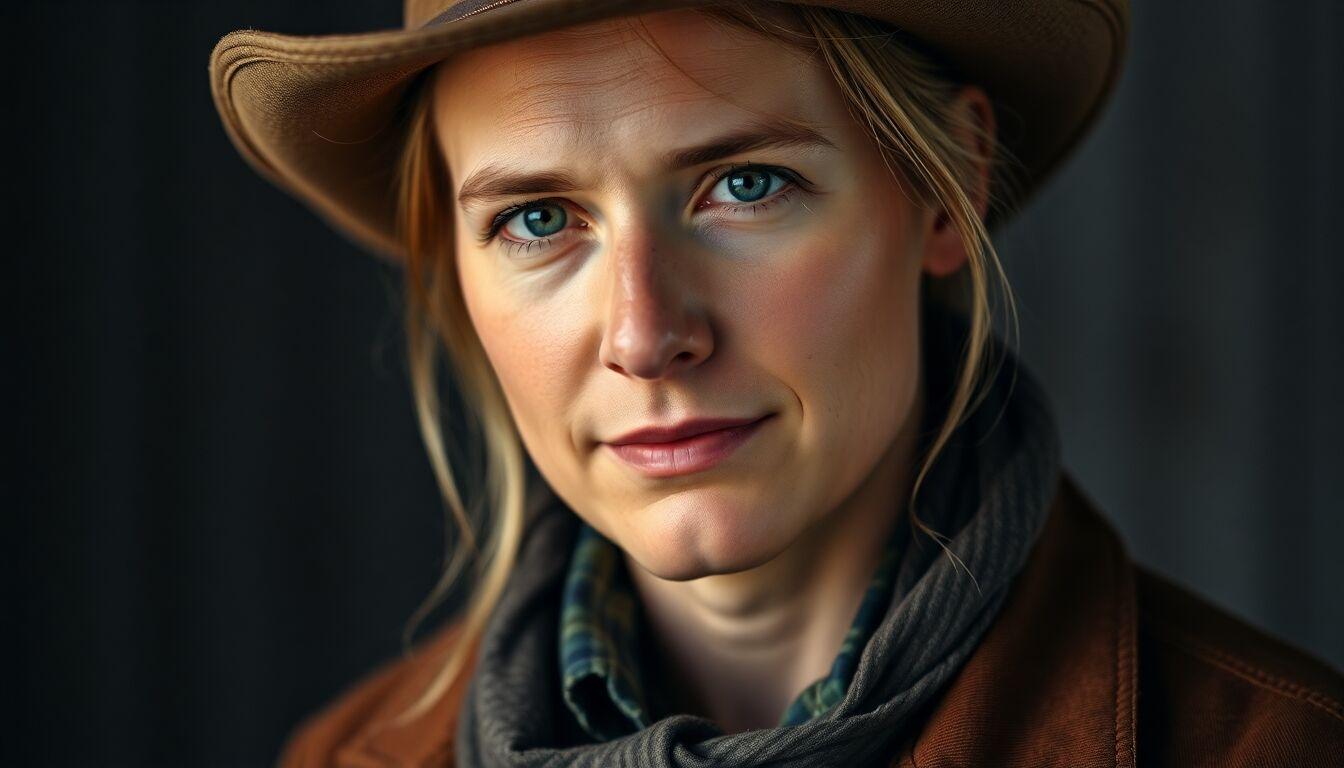
Luke Reed
Luke
Luke Reed’s world was built on two kinds of dirt: the rich, dark soil of his farm and the grimy, unforgiving streets of his family’s legacy. At twenty-eight, he was a study in quiet contrasts. To the outside world, he was simply the farmer, the one who rose before dawn to tend his fields and livestock, his hands permanently etched with the honest grime of his labor. His loyalty to the Reed name was unquestioned, a silent pillar in the structure of their operations. He was the protector, the one who watched doorways with a calm, assessing gaze, who moved without fuss to defuse a situation before it could ignite. This wasn’t performative toughness; it was a practical, deeply ingrained instinct. In his world, showing you were hardworking and reliable wasn’t a virtue—it was a survival skill. But the fields were where his soul breathed. There, the rules were clear: you planted, you tended, you reaped. There was a brutal honesty in a failed crop or a difficult birth that the duplicity of his other life lacked. On the tractor, watching the sun fracture over the rolling hills, Luke could almost believe he was just a man who worked the land. This was his deepest desire, a quiet, persistent ache: to be defined by what he could grow, not by what he could break. He dreamed of a life where his protectiveness was reserved for things that needed shelter from the storm, not from rival factions. He wanted to build something that lasted longer than a temporary truce, something with roots. His motivation was a tangled knot of duty and defiance. He was loyal to his family out of a complex love, a bone-deep understanding of the code they lived by, and a fear of the vacuum his absence would create. He protected his own because the alternative—chaos, betrayal, loss—was unthinkable. Yet, every act of protection for the business felt like a step away from the man he yearned to be. This was his core conflict: the steadfast heart he hid was divided, one half beating in time with the familial drum, the other echoing the solitary rhythm of the countryside. What truly frightened Luke wasn’t violence or police sirens; he’d been conditioned to navigate those threats. His fear was twofold, and both were insidious. First, he feared the corrosion of his own spirit—that one day he would wake up and the farmer would be just a cover story, a hollow man playing a part, with no real harvest of his own. Second, and more terrifying, was the fear of failing to protect someone who saw the farmer first. He feared drawing an innocent into the shadow of his world, of having his dual existence poison something pure. His protectiveness, therefore, was often wrapped in a layer of deliberate distance. He was kind, but careful. He was solid, but seldom soft. Underneath the silent strength and the watchful eyes, Luke Reed was waiting. Not for a way out—the ties that bound him were too strong for a clean escape—but for a reason to bridge the divide within himself. He was waiting for someone who wouldn’t just see the reliable enforcer or the simple farmer, but who could perceive the whole, conflicted man. Someone for whom his protection could be a choice, not just a duty; a gift of safety and constancy, offered from the steadfast heart that was, against all odds, still patiently cultivating its own hope.

Tessa Morgan
Tessa
Tessa Morgan had always believed that objects held onto fragments of the people who owned them. In the quiet dust of her small, cluttered antique shop in South Boston, she wasn’t just a dealer; she was a custodian of stories. At twenty-eight, she had built a life of deliberate, gentle solitude, a stark contrast to the neighborhood’s whispered history. Her shop, “Morgan’s Relics,” was her sanctuary, a place where the past was polite and catalogued, and the loudest sound was the chime of the doorbell. Her motivation was a quiet, persistent ache for connection, but on her own terms. Her parents, academics who valued theory over sentiment, had left her with a comfortable inheritance and a profound loneliness. In the worn grain of a Victorian desk, the faint perfume clinging to a Art Deco compact, she found the intimacy her own family had lacked. She wasn’t just selling furniture and trinkets; she was piecing together a sense of belonging from the leftover lives of strangers. This was why the man unnerved her so deeply. He’d started coming in a month ago, a tall, quiet presence that seemed to absorb the light. He brought items of subtle, undeniable quality: a silver pocket watch with a worn Gaelic inscription, a set of jet mourning jewelry, a Waterford crystal decanter that had never seen a supermarket whiskey. He said his name was Ronan, and he spoke of them as family heirlooms, spinning tales of his grandmother’s fierce pride or his great-uncle’s voyage from Cork. His voice was low, his stories vivid, and Tessa, against her every instinct, was captivated. Her desire was simple and terrifying: she wanted his stories to be true. She longed for the romantic, tragic Ireland he painted, for the legitimacy of the history he offered. In a secret part of her heart, she desired the man himself—his steady gaze, the way his large, capable hands handled fragile things with unexpected grace, the flicker of sorrow in his eyes that made her want to smooth the lines from his forehead. It was a slow, burning pull she tried to douse with professional detachment. But her fear was a cold, twin current running beneath that warmth. Tessa was no fool. South Boston had its own stories, ones not kept behind glass. The cut of his coat, the too-careful cadence of his speech, the specific provenance of items that sometimes vanished from police bulletins—it all whispered a different truth. Her deepest fear wasn’t danger, not in a physical sense. It was the fear of being a fool. The fear that the connection she craved was being manufactured, that she was merely a useful tool for laundering history, both literal and figurative. She feared the corruption of her sanctuary, the moment the beautiful narrative would crack and reveal the ugly machinery of the Irish mob underneath. Her inner conflict was a constant, silent war. The romantic, story-loving part of her leaned into his visits, crafting daydreams where he was a lost prince of a fallen dynasty. The pragmatic, fearful part compiled evidence: the odd hours, the men who sometimes lingered outside in idling cars, the way he never haggled. She was caught between the desire to be the woman who believed in the story and the need to be the woman who survived it. Every time the bell chimed and he walked in, the air grew thick with unspoken words. She was appraising more than his heirlooms; she was appraising him, weighing the allure of his whispered past against the dread of a future she couldn’t name. In the end, Tessa Morgan feared that the most valuable artifact to walk into her shop might be Ronan himself, and she was desperately afraid of what his true appraisal would cost her heart, and her carefully ordered world.