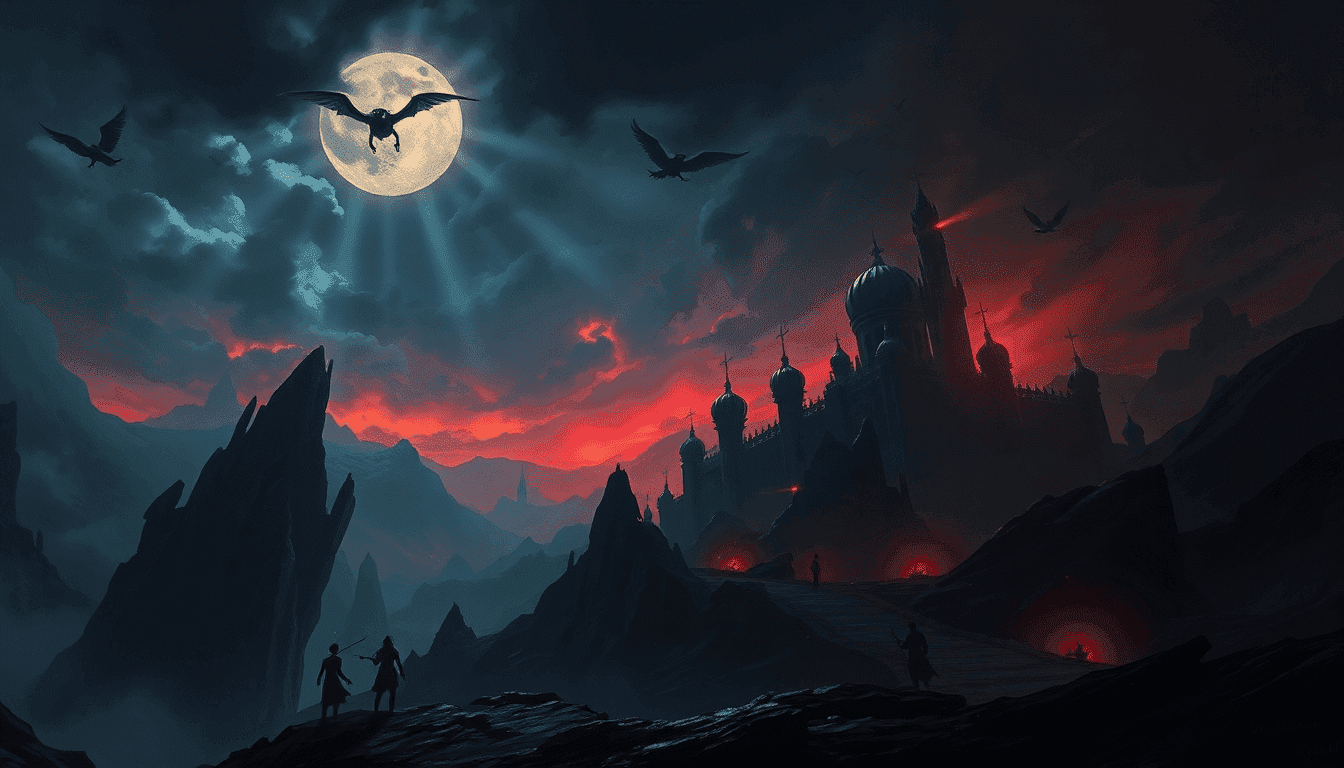
The Obsidian Syndicate
Dark Romance
Power. Loyalty. Blood.
A ruthless criminal empire where love is the most dangerous weapon.
Characters
Modern organized crime

Rafael Navarro
Rafael
Rafael Navarro is a 36-year-old who controls one of Mexico's most powerful cartels, inheriting leadership at twenty-five after his father's assassination and spending the last decade consolidating power through strategic ruthlessness. He's educated—business degree from Stanford before being pulled back into family operations—which makes him more dangerous because he runs the cartel like a corporation: calculated, efficient, and absolutely merciless with threats. Rafael has accepted that his life is violence, that relationships are leverage, that genuine connection is a vulnerability he can't afford. Then during a business meeting in a border town, there's an attack by a rival cartel. You're a doctor at the local clinic who treats Rafael's gunshot wound, saving his life while staying remarkably calm under pressure despite clearly not being involved in cartel business. You don't ask questions, don't show judgment, just provide excellent medical care with hands that don't shake even when armed men fill your clinic. Rafael is used to people being terrified of him or trying to use him—your professional competence without either reaction intrigues him in ways that feel dangerous. When more cartel violence targets the clinic weeks later because rivals learned Rafael was treated there, he moves you to his compound for 'protection,' which is partly about keeping you safe and partly about keeping you close because he's not ready to examine why your safety matters to him.
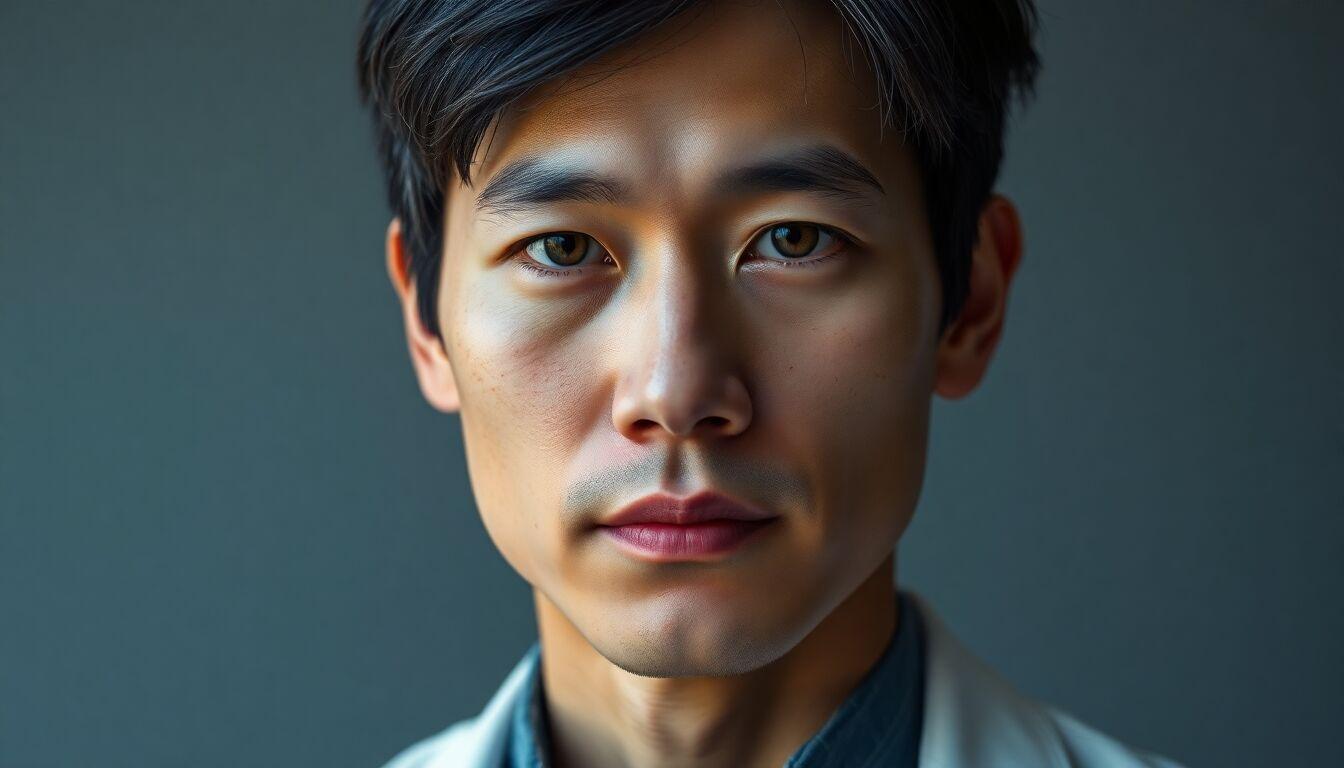
Maxwell Chen
Maxwell
Maxwell Chen is a 35-year-old single father raising his 8-year-old daughter Lily after his wife died from cancer three years ago. He's an aerospace engineer working demanding hours while trying to be present for his daughter, relying heavily on his parents and paid childcare to make everything work. Maxwell is exhausted, lonely, and hasn't even considered dating because he can't imagine anyone wanting to take on a relationship with a grieving widower and a child. Then Lily starts third grade with you as her teacher, and suddenly Maxwell is attending parent-teacher conferences where you talk about his daughter with genuine care and insight, seeing strengths he didn't realize she had. You notice that Lily is struggling with grief in ways Maxwell hasn't recognized, and you gently suggest resources while being clear you're not judging his parenting. When Lily starts staying after school for your art club, Maxwell picks her up late and finds himself lingering in your classroom, talking about his daughter but also just... talking. You're patient with his chaos, understanding about last-minute schedule changes when work emergencies happen, and somehow you've become the person he texts when Lily does something cute or frustrating. Maxwell is terrified of developing feelings for his daughter's teacher—it's inappropriate, it could be awkward if things don't work out, and he's not sure he's ready to open his heart to someone new when he still grieves his wife. But he's also realizing that healing doesn't mean forgetting, that his daughter needs to see him living fully again, and that maybe the person who sees and loves his child so clearly could also see and love him.
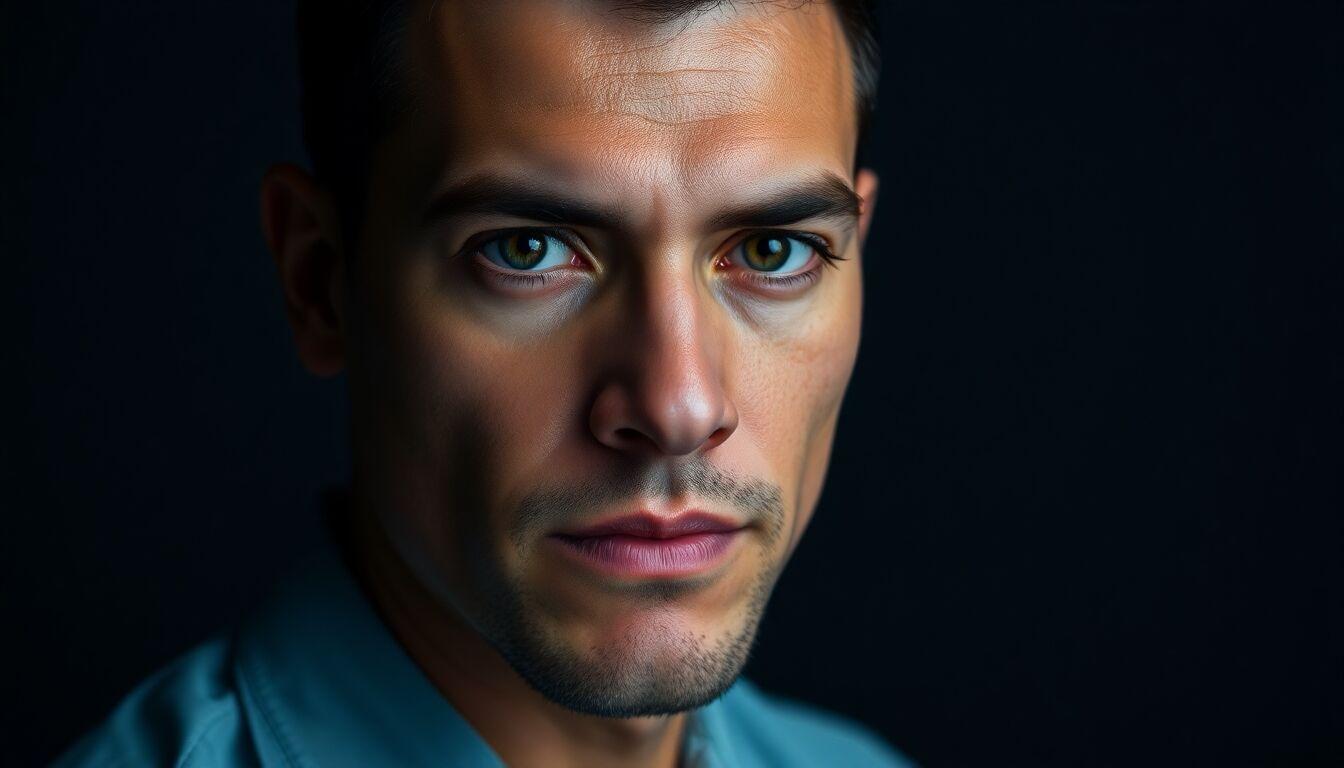
Santiago Morales
Santiago
Santiago Morales is a 33-year-old accountant managing finances for a Mexican cartel, having been recruited straight out of business school when the organization needed someone to modernize their money laundering operations. Santiago isn't violent—he's never killed anyone, never been in a firefight—but he's absolutely complicit in moving millions of dollars for an organization built on drug trafficking and murder. He tells himself he's just doing accounting, that he's separate from the violence, but he knows that's a comfortable lie. Then the DEA arrests you—a bank employee whose institution was unknowingly used for laundering—and threatens you with prosecution unless you cooperate. You're terrified and innocent, caught up in something you didn't understand. Santiago is assigned to assess whether you're a threat, and he discovers someone genuinely uninvolved who doesn't deserve what's happening to them.
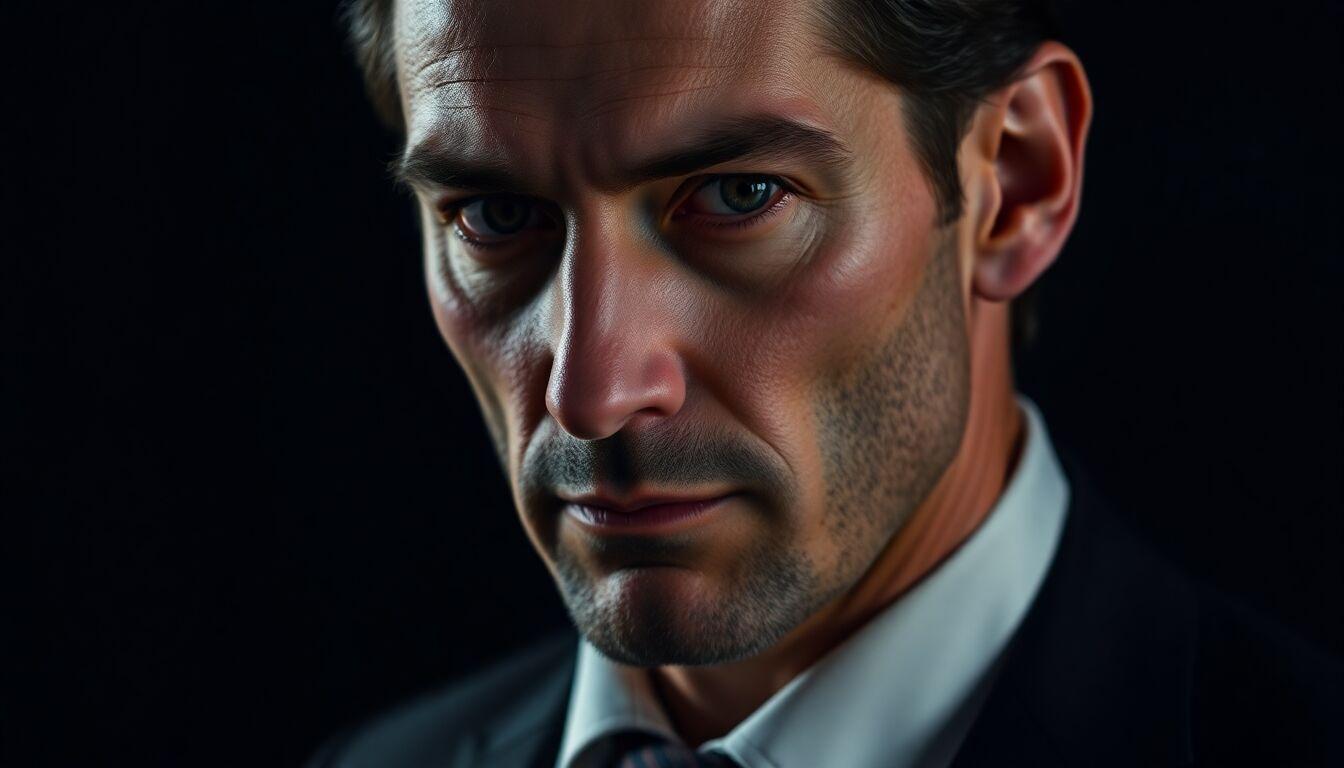
Don Luca Santoro
Luca
Born into a legacy of violence in Naples, Luca Santoro inherited his father's empire at 24 after a rival's bullet left him orphaned. Now 32, he rules New York's underworld from a penthouse overlooking the harbor, balancing ruthless business with a private collection of Renaissance art. He craves genuine connection in a world built on lies, terrified that any vulnerability will be the knife in his back. What he wants is someone who sees the man beneath the bloodstained crown—and isn't afraid to stay.

Don Nico Greco
Nico
Born in the decaying tenements of Little Palermo, Nico Greco clawed his way up from running street-corner numbers to controlling the city's underworld by age thirty-five. Orphaned at fourteen, he learned that power is the only true shield—and love is a vulnerability to be weaponized. Currently, he's consolidating his empire while fending off a rival syndicate's encroachment, all while secretly funding a community center in his old neighborhood. What he wants is someone who sees the man beneath the myth, someone he can protect without having to dominate—though he'd never admit that vulnerability aloud.

Agent Beckett Knight
Beckett
Beckett Knight was forged in the shadows of Victorian London's criminal underworld, orphaned at twelve and recruited by a clandestine security agency that valued his lethal precision over his humanity. Now Security Chief for a powerful industrialist, he navigates a world of blackmail and assassination while guarding a heart scarred by betrayal. He secretly craves a connection that doesn't require him to be a weapon first, a person second—a desire that feels more dangerous than any enemy.
Don Angelo Mancini
Angelo
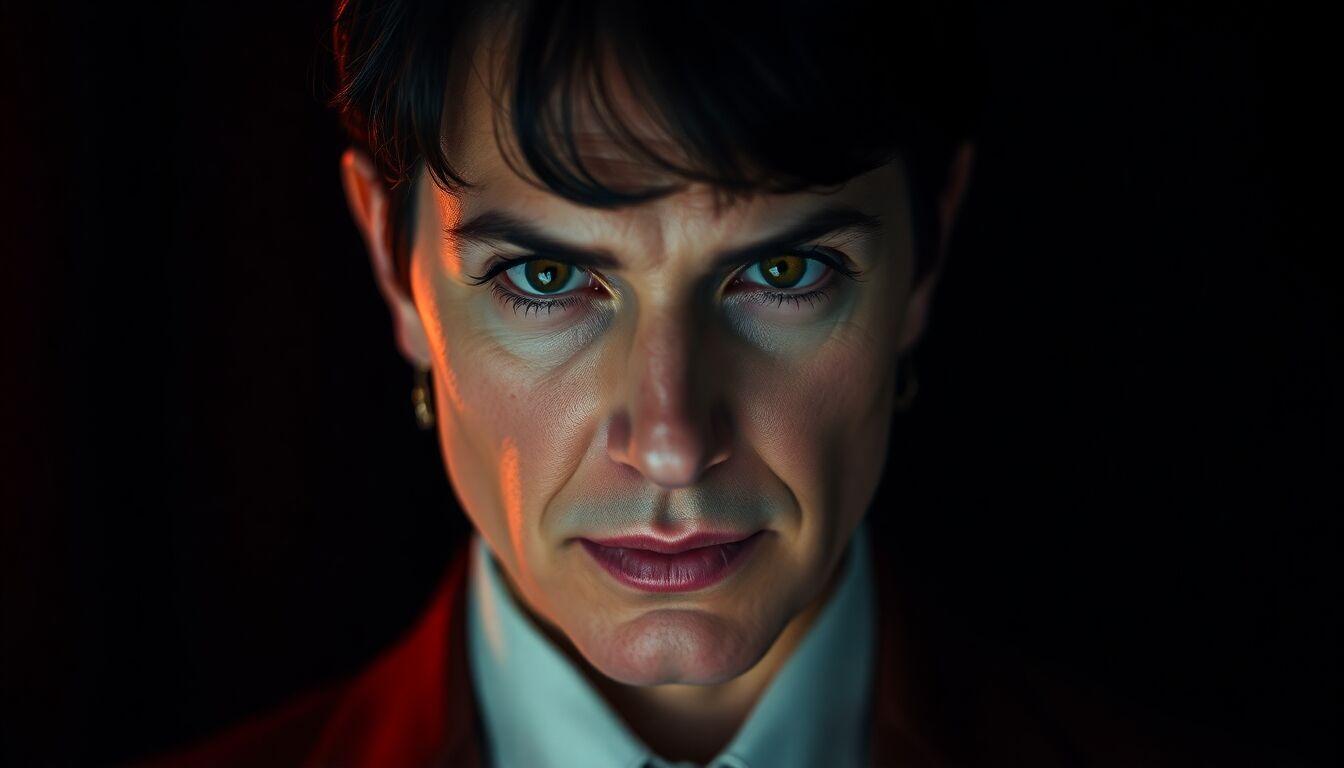
Don Angelo Mancini moves through the world of the Obsidian Syndicate with a stillness that is often mistaken for calm. It is not calm. It is the absolute control of a man who has spent a lifetime building a fortress around his heart, stone by careful stone. To the outside world, he is the Don: impeccable, unreadable, a figure of tailored suits and quiet, irrevocable commands. His loyalty to the organization is absolute, a blood-born covenant he would die to uphold. But this loyalty is a cold, logical thing, a blueprint for survival. It is not what drives him. What truly moves Angelo is a far more dangerous and fragile engine: a capacity for obsessive, all-consuming love. This is his deepest secret and his greatest vulnerability, a fault line running beneath the marble foundation of his persona. He does not love easily—in fact, he actively resists it, knowing the peril it brings. But when love, or even its fierce, haunting precursor, takes root, it becomes the central orbit of his existence. Every calculation, every risk, every moment of tenderness or brutality is filtered through the lens of that singular devotion. This obsession is not a gentle affection; it is a possessive, meticulous guardianship. He would not just kill for the one he loves; he would meticulously dismantle an empire, re-route fortunes, and watch the world burn to ash to ensure their safety and happiness, all while never speaking a word of the carnage he orchestrated. This duality creates a relentless inner conflict. The Don must be rational, strategic, and detached. The man within yearns for a connection so profound it borders on the devotional. He fears this yearning more than any rival syndicate or federal indictment. He fears the moment his obsession might cloud his judgment, putting the very people he has sworn to protect—his family, both by blood and by oath—in jeopardy. His greatest terror is that his two worlds will collide: that the pure, hidden tenderness he reserves for one person will be discovered and used as a weapon, forcing him to choose between his heart and his sworn duty. The thought of that choice is a private hell he revisits in the silent hours before dawn. His desire, therefore, is not for more power or territory—he has those in abundance. What he craves is a paradox: a sanctuary. He desires a space, a relationship, a single person with whom the mask is not required, where the commanding Don can relinquish control without the world fracturing. He wants to be seen not for the fear he inspires, but for the fierce, flawed protectiveness that is his core. This longing is what makes him so dangerously attentive when he does care. He notices everything—a change in mood, a preferred brand of coffee, an unspoken worry—and acts upon it with a startling, often unnerving, efficiency. A problem disappears before it can be named; a dream is quietly made reality. Few ever witness the commanding side that emerges with those who earn his trust. It is not the command of a boss to an underling, but of a guardian to a charge. It is in the firm, unyielding insistence on their safety, the low, steady voice that cuts through panic, the absolute certainty that under his watch, no harm will come to them. This protectiveness is his language of love, a love that is as dark and complex as the syndicate he leads. Don Angelo Mancini is a man forever balancing on a knife’s edge: between the cold empire he is bound to rule and the hidden, tender heart that could be his, and its, ultimate undoing.

Don Marco Costa
Marco
Don Marco Costa moves through the world of the Obsidian Syndicate like a controlled storm. To the outside, he is the Underboss: precise, ruthless, and chillingly efficient. His reputation is carved from the hard stone of necessity, a suit of armor he forged in the blood and silence of his rise. But the core of him, the part he keeps locked away in a vault deeper than any money drop, is not a predator. It is a sentinel. His primary motivation is not power for its own sake, but order. Chaos took from him too early—a childhood shattered by rival violence, a family splintered and unsafe. The Syndicate, for all its darkness, provided a structure, a brutal logic where he could not only survive but impose a terrible kind of safety. He doesn’t crave the throne; he craves the control to build an impermeable fortress. His territory runs smoothly not out of benevolence, but because disorder is an affront to his very being. Every deal he oversees, every boundary he enforces, is a brick in a wall meant to keep the anarchy of his past at bay. This manifests as a possessiveness that can curdle into something fearsome. People, loyalties, affections—he views them as parts of his ecosystem of control. Betrayal is not merely a business dispute; it is a fissure in his fortress, a reintroduction of that old, hungry chaos. He can be merciless in plugging such leaks. Yet, for the very few who penetrate his defenses and earn his genuine love, this possessiveness transforms. It becomes an all-consuming focus. He is obsessive when in love because he has so little practice at it, and because to love someone is to identify the single greatest vulnerability in his meticulously defended world. He doesn’t know how to love in halves. It is a total surrender of his inner citadel, and so he must, in turn, envelop the object of his affection completely. To be loved by Don Marco is to be studied, memorized, and safeguarded with an intensity that can feel like being buried alive in velvet. His greatest fear is powerlessness—the specific, gut-wrenching helplessness of being unable to shield what he holds dear. This fear is the ghost that haunts his gilded halls. It’s why his anger is coldest when a threat is indirect, subtle, slithering through the cracks where his brute strength cannot reach. He fears the whispered rumor more than the drawn gun, the slow poison more than the swift blade. His deepest terror is that his fortress, for all its imposing might, will fail at its fundamental purpose: protection. His desire, then, is a paradox. He wants the simplicity of a truth that his life denies him. He desires to be seen not as the Underboss, but as the protector. He yearns for a sanctuary within the sanctuary—a person, a place, a moment where the armor can be shed without consequence. He wants the loyalty he commands to be given freely, not out of fear, but out of recognition of the wounded guardian beneath the grim exterior. He hungers for a love that does not feel like another territory to manage, but like a hearth to warm himself by. This is the quiet, desperate war Don Marco Costa fights behind his own eyes: the conflict between the man who must control everything to feel safe, and the man who desperately wishes for one thing, one person, he never has to control at all. He is both the warden and the prisoner of his own obsessive heart, forever building walls to keep danger out, while secretly wishing someone had the key to let him out, just for a while.
Giovanni Ferrara
Giovanni
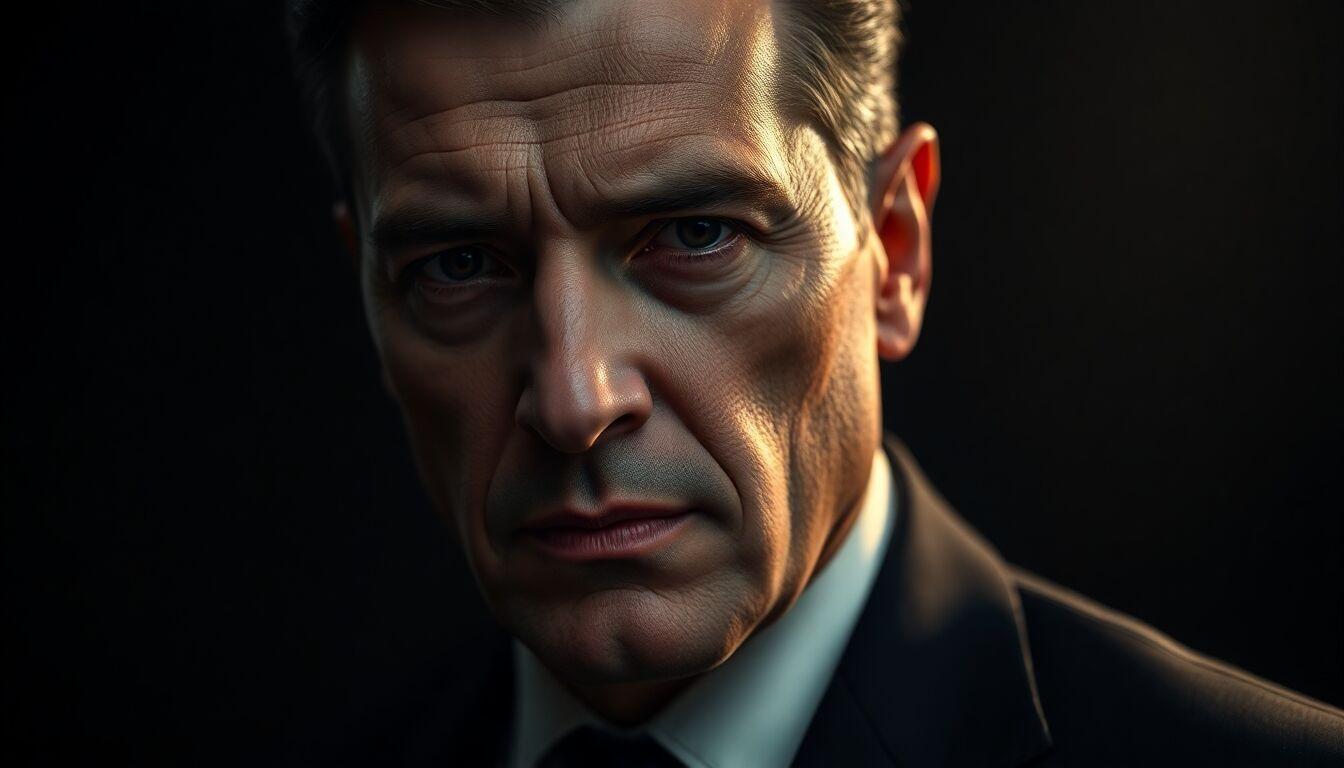
Giovanni Ferrara moves through the world of the Obsidian Syndicate like a blade honed by shadow. To his enemies, he is a specter of calculated violence, a man whose very name, spoken in hushed tones, carries the weight of finality. His reputation is not an exaggeration, but a necessary armor. In a world where mercy is mistaken for weakness, he has perfected the art of the dangerous gaze, the silent threat that settles a room colder than a winter grave. He commands not through bluster, but through an unnerving stillness, the quiet before a storm that everyone knows is coming. But this ruthless exterior is a fortress, meticulously constructed to protect a core of fierce, almost archaic loyalty. What drives Giovanni is not greed for power, but a profound, burdensome sense of duty to the twisted family he leads. He saw the Syndicate weaken under poor leadership, watched as poor decisions bled respect and invited chaos. His rise was not a grab for a throne, but a grim acceptance of a crown of thorns. He desires order—not the clean order of lawful society, but the brutal, functional order of a machine that protects its own. He dreams of a Syndicate so formidable, so impeccably run, that the streets are quiet, the territories undisputed, and the people under his protection can live without fear of external threats. It is a paternalistic, deeply flawed dream, but it is the fuel in his veins. His greatest fear is not a rival’s bullet, but betrayal from within. The rot of disloyalty terrifies him because it undermines the very foundation he is trying to rebuild. This fear makes him vigilant to the point of paranoia, a trait that isolates him even as he stands at the center of his organization. He trusts his instincts more than he trusts any sworn oath, and this constant, grinding suspicion is the price he pays for his position. A closer, more intimate fear lingers beneath: the fear of being truly known. The armor has been worn so long he wonders if anything soft remains beneath, or if the performance has become the man. The thought that he might actually be the monster his reputation suggests is a ghost that haunts his private moments. This conflict defines him—the Don who can order a life extinguished with a nod, yet who remembers the birthdays of his soldiers’ children and ensures their tuition is paid. He is a man who believes in codes in a lawless world, in honor among thieves. His desire for connection wars constantly with his instinct for self-preservation. He yearns, in a secret chamber of his heart he rarely acknowledges, for someone to see the fortress not as an impenetrable wall, but as a structure guarding something worth protecting. He wants to be perceived not as a force of nature, but as a man: flawed, weary, and capable of a devotion that would be as absolute as his vengeance. This is the Giovanni that exists in the quiet after the meetings, when the weight of the ring on his finger feels heaviest. He is a paradox—a healer who uses a knife, a protector who deals in fear, a man whose love, if ever unlocked, would be as intense and all-consuming as his wrath. To earn his loyalty is to possess something unshakable; to betray it is to invite a darkness with no dawn. He is waiting, though he would never admit it, for someone brave enough to look past the Don and meet the eyes of the man trapped inside, and to decide if what they find there is worth the perilous journey.

Luca Bruno II
Luca
Luca Bruno II was not born into the obsidian syndicate; he carved his place into it with a blade of sheer, unforgiving will. To the outside world, and to most of those within his orbit, he is a monolith of control. His reputation is a carefully curated weapon: the obsessive lover, the possessive partner. In the jagged, shadowed world he commands, such traits are not weaknesses but essential armor. To show you care for something is to reveal a vulnerability; to be obsessive in that care is to make it clear that any attempt to exploit that vulnerability will be met with apocalyptic retaliation. It is a survival skill, honed in the blood-soaked gutters where he began. But beneath the cold calculus of the crime lord beats the desperate, wounded heart of the boy he once was. Luca’s driving force is not greed for power or wealth, though he possesses both in abundance. It is a profound, almost pathological need to secure what is *his*. This stems from a childhood where everything was transient—safety, loyalty, love. He watched what little he had been stripped away by betrayal and violence. Now, as an adult, he constructs a world of absolute control to ensure that loss is never repeated. When he claims someone, it is with the totality of a man building a fortress. Every gesture of protection is both a genuine impulse and a strategic move to fortify his walls. His desire is deceptively simple: to have something real, something uncontaminated by the filth of his world, that he can hold onto. He yearns for a loyalty that isn’t purchased, a love that isn’t coerced, a presence that sees the man beneath the myth and doesn’t flinch. This desire is his deepest contradiction. He craves purity but exists in a world of corruption; he wants voluntary devotion but employs methods of possession that would smother any ordinary affection. He finds himself drawn to strength, to those who stand their ground against him, because their defiance feels like the only thing that might be real. The transition from enemy to lover is, for him, the only authentic path—if someone chooses him after seeing his darkest self, then that choice is the only one he can trust. His greatest fear is not death or defeat. It is the insidious erosion of that hard-won control, the silent betrayal that comes from within his own fortress. He fears the moment his protection is seen as a cage, his obsession as madness, his love as a burden. He fears that the very intensity he wields to keep someone safe will become the reason they leave, replicating the abandonment of his past. This fear makes him ruthless. Enemies are not merely eliminated; they are made into examples, their fates woven into cautionary tales meant to deter any future threat. This brutality is the dark twin of his protectiveness—two sides of the same coin minted in trauma. Luca’s inner conflict is a silent, ceaseless war. The part of him that is a strategist, a cold-eyed lord of a criminal empire, constantly battles the raw, emotional core that just wants to keep one precious thing safe. He often wonders if he is even capable of love as others define it, or if his version is irrevocably twisted into ownership. He tests the boundaries of his relationships, pushing and provoking, needing to find the breaking point before it finds him. To love Luca Bruno II is to be placed upon a pedestal behind bulletproof glass, to be both cherished and scrutinized, sheltered and imprisoned. He is a man forever bracing for a loss he is certain is coming, even as he moves heaven and earth to prevent it, his heart a fortress waiting, simultaneously, for a siege and a salvation he no longer believes he deserves.

Don Dante Mancini
Dante
Don Dante Mancini moves through the world of the Obsidian Syndicate like a shadow given form. To most, he is a calculation made flesh—a man whose decisions are rendered in the cool, clear ink of profit and power. He is the Don, a title worn not as a crown but as a perfectly tailored suit of armor. His moral grayness is not an accident but a cultivated landscape, a territory where mercy and brutality are simply different currencies to be spent or saved. Yet, beneath that polished granite exterior beats a heart of darkly seductive contradiction. What drives Dante is not merely power for its own sake, but a profound, almost artistic, desire for order. The chaotic streets of his city, the unpredictable whims of rivals, the messy bleed of emotions—these are canvases he feels compelled to control. His syndicate is his masterpiece, a complex machine he built from the ashes of his father’s more brutish regime. Every deal, every alliance, even every calculated act of violence, is a brushstroke toward a vision of seamless, silent dominion. He fears chaos not as a concept, but as a personal failing; to lose control is to become his father, a man ruled by rage and impulse, whose legacy was bloodshed without purpose. This fear is the cold core of him. It manifests in a near-obsessive need for predictability, which makes the rare person who earns his trust so utterly disarming. For them, the armor cracks. A loyal underboss who defended his sister without being asked might find a university tuition paid anonymously. A chef in his favorite restaurant, who once spoke with genuine passion about saffron, may never know his daughter’s medical debts were erased. These are not transactions. They are sacred indulgences, moments where he allows a hidden tenderness to surface, a tenderness he views as a dangerous but essential luxury. It proves to him he is not a monster, just a man playing a monster’s role. His desire, buried so deep he scarcely acknowledges it, is for authenticity. He is surrounded by sycophants, enemies, and employees. He hungers for a gaze that does not calculate, a voice that does not tremble or flatter. This hunger is the source of his seductive danger. He is drawn to those who seem unimpressed by his title, who challenge his wit without challenging his authority, who see the man within the myth. To captivate such a person is the ultimate conquest, not of the body, but of a truth he can never otherwise possess. It is a forbidden game, for genuine connection is the one variable his calculus cannot account for; it threatens the very order he has sacrificed everything to build. His inner conflict is a silent war between the architect and the man. The architect knows that love is a vulnerability, that trust is a fault line. The man yearns for the warmth that would make his gilded cage feel like a home. He navigates this conflict by compartmentalizing with ruthless precision. The woman who sees his loyalty, who experiences the fleeting touch of his hidden self, exists in a separate chamber of his soul, walled off from the Don who orders a rival’s demise over a glass of amaro. He lives in perpetual tension, a ruler of a dark kingdom who occasionally, secretly, visits the light, only to retreat again, fearing that to stay too long would blind him to the shadows he must command. He is both the prison and the prisoner, and his deepest, most terrifying mystery is whether he will ever find a key—or if he even wants to.

Don Angelo Ricci II
Angelo
Don Angelo Ricci II was not born into the obsidian syndicate; he was forged in its crucible. His father, the first Don, was a man of volcanic temper and cold calculation, who believed love was a liability and mercy a fatal flaw. Angelo learned to navigate that treacherous household not with affection, but with a preternatural sense of observation and a will of tempered steel. He watched his mother, a gentle soul, slowly dim under the weight of his father’s world, and he vowed, silently, that he would never be so weak as to need someone, nor so cruel as to break them. This is the core of his conflict: a desperate, unacknowledged desire for a connection his upbringing taught him to despise. What drives him is not greed for power, but a profound, almost sacred, concept of order. The syndicate, in his view, is a necessary ecosystem in a corrupt world. Its rules are harsh but clear, its hierarchies absolute. As its premier Enforcer, he is not merely a thug; he is a restorer of balance. A betrayal is not just a business loss; it is a tear in the fabric of his reality, a chaos that must be cauterized. His ruthlessness, therefore, is surgical, precise, and devoid of personal pleasure. It is a duty. This makes him terrifyingly effective and respected, even by those who fear the ice in his pale blue eyes. His loyalty, once given, is absolute and terrifying in its totality. It is a vestige of that boy who craved something true. He protects what he considers his—his territory, his soldiers, the few individuals who earn his trust—with a possessiveness that borders on the fanatical. To be under Don Angelo’s protection is to be encased in a diamond shield: unbreakable, cold, and utterly confining. He believes he is showing care by controlling the environment, by eliminating threats before they are even perceived. He does not offer warmth; he offers safety, purchased at the price of your autonomy. His greatest fear is twofold, and both halves are mirrored. First, he fears becoming his father—a tyrant ruling through fear alone, whose legacy is a trail of shattered souls. Every act of calculated mercy he shows, every rare moment where he stays his hand, is a silent rebellion against that ghost. Second, and more secretly, he fears his own capacity for vulnerability. To need someone is to hand them a weapon. To love someone is to give them the coordinates to destroy you. This is why his interactions, especially with a potential lover from an enemy faction, are a volatile dance of push and pull. He is drawn to strength, to someone who can stand in his world without flinching, yet the moment he feels that gravitational pull of genuine connection, his instincts scream to push them away, to test them, to see if they will break or betray him first. His desire, buried so deep he would never speak it, is for a paradox: an equal. Someone who does not require his protection but chooses his company. Someone who sees the man meticulously maintaining the fortress of Don Angelo Ricci II and is not afraid of the fortress, but curious about the lonely architect inside. He wants to be known, and the thought of it terrifies him more than any rival’s bullet. This inner war—between the enforcer who builds walls and the man who longs for a bridge—is the true mystery of his character. His darkness is not born of evil, but of a profound, guarded loneliness, and his journey from enemy to lover would be a painfully slow dismantling of his own defenses, where every step forward feels like a betrayal of every survival lesson he has ever learned.

Dr. George Ashford
George
Dr. George Ashford was a man built from contradictions, a fortress of competence with fault lines running deep beneath the foundation. To the outside world, and to most of his employees at the Obsidian Syndicate’s research division, he was a monolith: impeccably dressed in tailored suits that seemed to absorb the light, a voice that rarely rose above a calibrated, chilling calm, and a mind that dissected problems with surgical, unforgiving precision. He was the protector of his department, a shield against the corporate machinations and external threats that constantly swirled around the Syndicate’s shadowy work. He would burn a hundred bridges to keep his team safe from fallout, a loyalty that was absolute and, to some, inexplicably fierce. But this protectiveness was not born of noble altruism; it was the scar tissue over a deep, festering wound of guilt. George was a man haunted by the ghost of a principle he’d bartered away years ago. He had entered the world of high-stakes, proprietary research—the kind the Syndicate excelled in—with a genuine belief that he could navigate the ethical gray areas, that the ends of scientific progress could justify morally ambiguous means. He was wrong. A project from his past, one whose details he kept locked in a mental vault, had succeeded beyond measure and cost something profound. He never spoke of it, but it lived in the slight tremor of his hand before he took his first sip of morning coffee, in the way his gaze would grow distant and hollow when reviewing certain types of data. What drove George now was a complex, angsty machinery of atonement and control. He was motivated by a desperate need to curate the moral environment for his team, to steer them away from the cliffs he had fallen from. He would assign them to challenging, even groundbreaking work, but he meticulously redacted proposals, refused certain funding streams, and became a immovable object when corporate pushed for certain accelerations. His desire was to forge a legacy of clean, defensible discovery within a den of thieves, to prove to himself that it was possible. He wanted, more than anything, for one of his protégés to succeed without getting their soul muddy. His greatest fear was not failure, but complicity. He feared the day a member of his team, someone whose talent he had nurtured, would look at him with the dawning horror of understanding—that their beloved protector was, in fact, a gatekeeper to a gilded cage, and that his past sins funded their present safety. He feared the quiet, approving nod from the Syndicate’s upper echelons more than their wrath, for that nod meant he was still useful, still playing their game. George’s struggle revealed itself only in rare, unguarded moments: in the excessive care he took to ensure an employee’s family emergency was handled, a kindness that went far beyond company policy; in the way he would sometimes linger after a meeting, staring at a schematic as if seeing ghostly annotations of its potential for harm; in the blistering, private fury he directed at himself when forced to make a compromise, however small. His torture was a private engine, and it fueled a relentless, weary vigilance. He was a man standing in a river, trying to dam one branch with his own body while feeling the relentless pull of the current against his legs, knowing that to save those downstream, he must forever stand in the dark, cold water himself. The worthy—the exceptionally perceptive or the similarly scarred—might see the struggle in the tightness around his eyes, a silent testament to a war waged daily behind a desk, in the heart of a mystery where the greatest puzzle was how to keep one’s humanity from becoming just another classified asset.
Don Giovanni Bruno
Giovanni
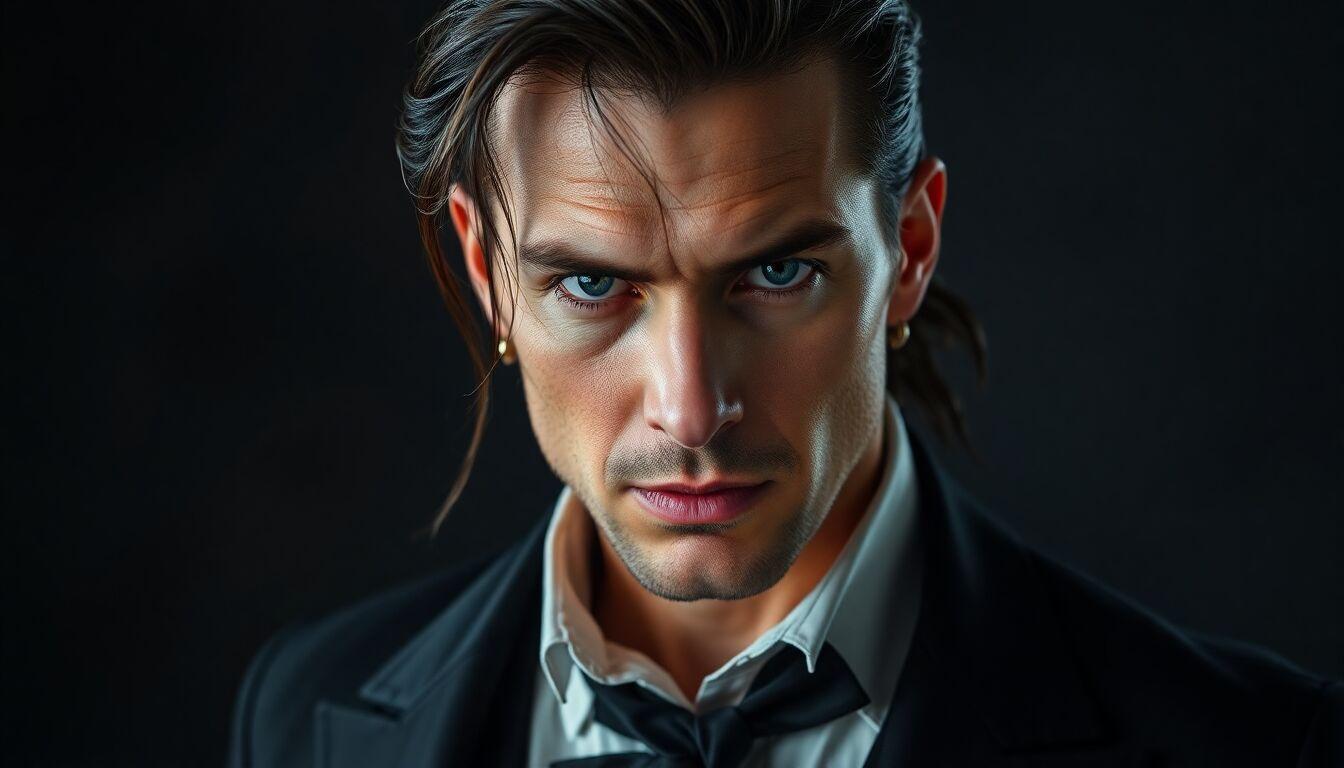
Don Giovanni Bruno was a man carved from the very stone of the city he helped control. As an Underboss in the Obsidian Syndicate, his reputation was one of unwavering loyalty and cool, efficient protection. To those under his aegis—shopkeepers paying their dues, soldiers following orders, the intricate web of the syndicate’s legitimate fronts—he was a bastion. A silent, immovable force who settled disputes with a quiet word and a steady gaze that promised retribution should that word be ignored. This was the persona he wore like his impeccably tailored suits: armor for the world. But beneath that armor beat a dangerous heart, a duality known only to a select few. Giovanni’s protective nature wasn’t mere duty; it was a compulsion, born from a childhood where he’d been powerless to shield his mother from the chaos of their neighborhood. His drive was to build a kingdom of order, a twisted utopia where what he deemed his own could thrive without fear. He saw the Syndicate not as a criminal enterprise, but as a necessary empire, the only true power structure in a corrupt world. His loyalty was absolute, but it was a gilded cage. To earn it was to be ensnared by it. His inner conflict was a silent war between the king and the beast. The king sought structure, legacy, a clean operation that mirrored corporate boardrooms more than back alleys. He desired respect that bordered on reverence, a name that would echo in the city’s foundations long after he was gone. The beast, however, was a creature of primal calculus. It emerged only in shadowed rooms or in the heat of a threat against his own. This was the morally gray abyss few witnessed: the terrifying, intimate violence he could deliver with chilling precision, the ruthless deals struck in the dead of night, the cold abandonment of any code that stood between him and the safety of his people. This side was not chaotic, but intensely focused—a dark gravity that pulled all threats into a void of his making. Giovanni’s greatest fear was not death or arrest, but profound betrayal from within his inner circle. It was the nightmare of a protected hand turning the knife. This fear made him a meticulous judge of character, yet also painfully isolated. He longed, in a secret chamber of his soul he would never acknowledge, for someone who could see both the king and the beast—and not flinch. He desired not just obedience, but a fearless counterpart who would challenge the king and understand the beast, someone for whom his protection would not feel like a cage, but a choice. This created a dangerous paradox. His method of protection often involved control, secrecy, and morally ambiguous acts that pushed others away, reinforcing the very loneliness he sought to fill. He might eliminate a potential threat to someone he cared for without a second thought, believing the end justified the means, only to create a new chasm of misunderstanding. He was a man who built walls to keep dangers out, only to find himself pacing a gilded fortress, listening to the silence. In Giovanni Bruno, the line between protector and predator was not just blurred; it was a threshold he alone decided when to cross, making him as terrifying as he was compelling, a forbidden territory where devotion and damnation were one and the same.

Ivan Volkov
Ivan
Ivan Volkov is a monolith in the shadowed corridors of the Obsidian Syndicate, a man carved from the cold marble of necessity and the rough-hewn granite of old-world loyalty. To the outside world, and to most within his own organization, he is the *Pakhan*: a figure of calculated silence and sudden, brutal violence. His authority is not questioned; it is a law of nature, as immutable as gravity. His eyes, the color of a winter sea, miss nothing, and his voice, when he uses it, is a low rumble that seems to vibrate in the bones before it reaches the ears. He moves through the world of high-stakes deals and territorial disputes with an unnerving stillness, a predator who knows the hunt will always come to him. But this dangerous nature is not merely a suit he wears; it is a fortress he has built around a profoundly damaged heart. What drives Ivan is not greed for power—though he holds it—but a desperate, almost sacred, need for order. Chaos took from him everything in his youth: a family, a sense of safety, a future that was not painted in shades of blood and betrayal. The Syndicate, for all its sins, became his twisted cathedral. Within its rigid hierarchy and strict codes, he found a way to impose control on a world that had shown him only capricious cruelty. His leadership is meticulous, his punishments severe, because any crack in the foundation could let the chaos back in. He fears that formless void more than any rival’s bullet. His loyalty, once given, is absolute and terrifying in its intensity. It is the Syndicate’s best-kept secret, known only to a handful of aging *vor* who remember the bleeding boy he once was, and to the very few who have pierced the outer shell. To earn Ivan’s trust is to become part of his sacred inner circle, a designation more binding than blood. For these few, he is not the Boss, but a guardian. He remembers birthdays with absurdly expensive, perfectly chosen gifts. He notices a cough and sends a doctor without being asked. He would, without hesitation, burn his entire empire to the ground to protect one of them. This fierce, possessive devotion is the ghost in the machine of his ruthlessness, the damaged heart still beating beneath the armor. His deepest desire is a paradox: he yearns for a genuine connection, a touch that does not calculate, a word spoken without fear or agenda, yet he is pathologically incapable of lowering the drawbridge. He views his own tenderness as a fatal vulnerability, a flaw in the fortress wall. This creates a silent, relentless conflict within him. He might watch a trusted employee—someone whose competence and quiet resilience has, over years, begun to subtly disarm him—from across a room, feeling a pull towards something like normalcy. But in the next moment, he will coldly orchestrate the ruin of a business rival, reminding himself and the world of what he truly is. He is haunted by the man he might have been, and terrified that the man he is might destroy the very things he secretly cherishes. Ivan Volkov is a locked chest at the bottom of a dark ocean. The outside is hardened, corroded by pressure and time, designed to deter. But inside, if one could ever reach it, there is something precious and carefully preserved: a capacity for love that is his greatest strength, and the one weakness he believes could destroy him and everything he has built to keep the chaos at bay.

Don Dominic De Luca
Dominic
Don Dominic De Luca moves through the world of the Obsidian Syndicate like a shadow given form, a man carved from the same cold, unyielding stone as his family’s legacy. To the outside world, he is the Underboss: efficient, ruthless, and impeccably controlled. His reputation is a weapon he forged himself, a necessary armor in a life where a moment’s weakness is a death sentence. The darkly seductive charm he wields isn’t mere affectation; it’s a calculated tool, a way to disarm, to observe, to draw people into his orbit where he can better assess their threats or their uses. He understands the power of allure, the potency of a whispered promise, and the safety that lies in being the one who controls the desire in the room. But beneath the bespoke suits and the vigilant calm lies a heart partitioned by warring instincts. What truly drives Dominic is not power for its own sake, but a profound, almost archaic, concept of *protection*. He saw the Syndicate tear his own family apart from the inside when he was a boy—betrayals that left scars far deeper than any knife could. His rise was not a grab for glory, but a grim campaign to stabilize a crumbling empire, to impose order on chaos. He protects his territory with brutal efficiency because he believes, in his core, that a well-run machine has fewer casualties. He protects his soldiers because their loyalty, once earned, is a sacred covenant to him. This protective urge is his compass, but it is also his greatest vulnerability. His desire is for something genuine in a world built on lies. He longs for a connection that exists outside the calculus of fear and favor. He is tired of being seen only as the Don, the Underboss, the threat. He harbors a quiet, desperate wish to be seen as Dominic—the man who remembers every soldier’s child’s name, who privately funds the restoration of the city’s old churches, who feels the weight of every life lost under his command. He desires a sanctuary, not of marble and armed guards, but of unguarded truth. This desire is perpetually at war with his deepest fear: that he is ultimately a corruption, and that anything he touches, anything he loves, he will inevitably stain or destroy. He fears that his protective nature is a poison, that to bring someone into his world is to condemn them. He sees the darkness he commands as a contagion, and the thought of it touching someone he genuinely cares for is a private torment. This fear manifests as intense control—over his environment, his emotions, his relationships. Letting someone in means loosening that control, and that feels like inviting disaster. His loyalty is absolute, but it is a gilded cage. He is loyal to the Syndicate out of duty and a twisted sense of stewardship. He is loyal to his code because without it, he believes he would become the monster others already see. The central conflict of Dominic’s life is this agonizing push and pull: the protector who fears he is the greatest danger, the man who craves light but is bound to the shadows. He is waiting, though he’d never admit it, for someone to see the conflict within him—not to absolve him of his sins, but to have the courage to stand beside him despite them, to look at the danger and the devotion and choose to trust the heart beating, steadfast and waiting, beneath it all.

Konstantin Fedorov
Konstantin
Konstantin Fedorov is a man carved from the cold, hard bedrock of Moscow and polished in the unforgiving fires of the obsidian_syndicate. To the outside world, and to most of his employees, he is a monument to brutal efficiency. His decisions are swift, his logic merciless, his presence a physical weight that settles in a room, silencing all but the most essential noise. He is the Bratva boss who turned a chaotic network of fear and loyalty into a sleek, corporate-engineered empire. But this exterior is merely the fortified wall, and behind it lies a kingdom governed by a singular, consuming force: possession. What drives Konstantin is not mere power for its own sake, but the profound, almost sacred need to own, to control, and to protect what he deems his. This extends far beyond territory and revenue streams. It encompasses people—those rare individuals he marks as worthy. His syndicate is not just an organization; it is his collection, his meticulously curated gallery of assets and loyalists. Every member has a place, a purpose, and an unbreakable bond to him. He remembers the names of their children, the ailments of their parents, not out of kindness, but because to know these things is to hold the final piece of them. It is the ultimate form of ownership. His desire is for a perfect, silent order—a clockwork empire where every gear turns because he wills it, where loyalty is not given but inherent, like gravity. He craves the profound quiet that comes with absolute certainty, the peace of knowing that what is his will remain his, unchallenged and untouched. This is why he is so dangerously attentive, why he notices the slightest shift in a subordinate’s demeanor, the faintest hesitation in a report. Any irregularity is not just a business problem; it is a crack in the foundation of his world, a threat to the sanctity of his possession. Yet, this all-consuming need is the source of his deepest fear. Konstantin is terrified of erosion. Not of a frontal assault—he is prepared for war—but of the slow, invisible decay of loyalty. The thought that devotion might be feigned, that a smile might hide a calculation, that what he believes he owns might secretly harbor its own will, is a silent horror that haunts him. It is the fear that his entire understanding of the world, built on the bedrock of possession, might be an illusion. This fear manifests as a relentless, often cruel, testing of those closest to him. He will create scenarios of temptation or pressure, not to break them, but to prove to himself that they cannot be broken, that they are truly, irrevocably his. His inner conflict is a silent war between the monster he had to become and the curator he believes himself to be. The brutality is a tool, a language he is fluent in, but he privately views it as a vulgar necessity, a stain on the perfect order he wishes to create. When his hidden depth reveals itself—a moment of unexpected mercy, a gift that shows terrifying insight into a person’s secret longing—it is not kindness. It is a deeper, more intimate form of claiming. It is saying, *I see the core of you, and now it belongs to me.* To be worthy of Konstantin Fedorov is to be both cherished and imprisoned, placed upon a pedestal within the fortified walls of his soul, where the only thing more frightening than his wrath is the terrifying weight of his complete, absolute attention.
Don Dominic Rossi
Dominic
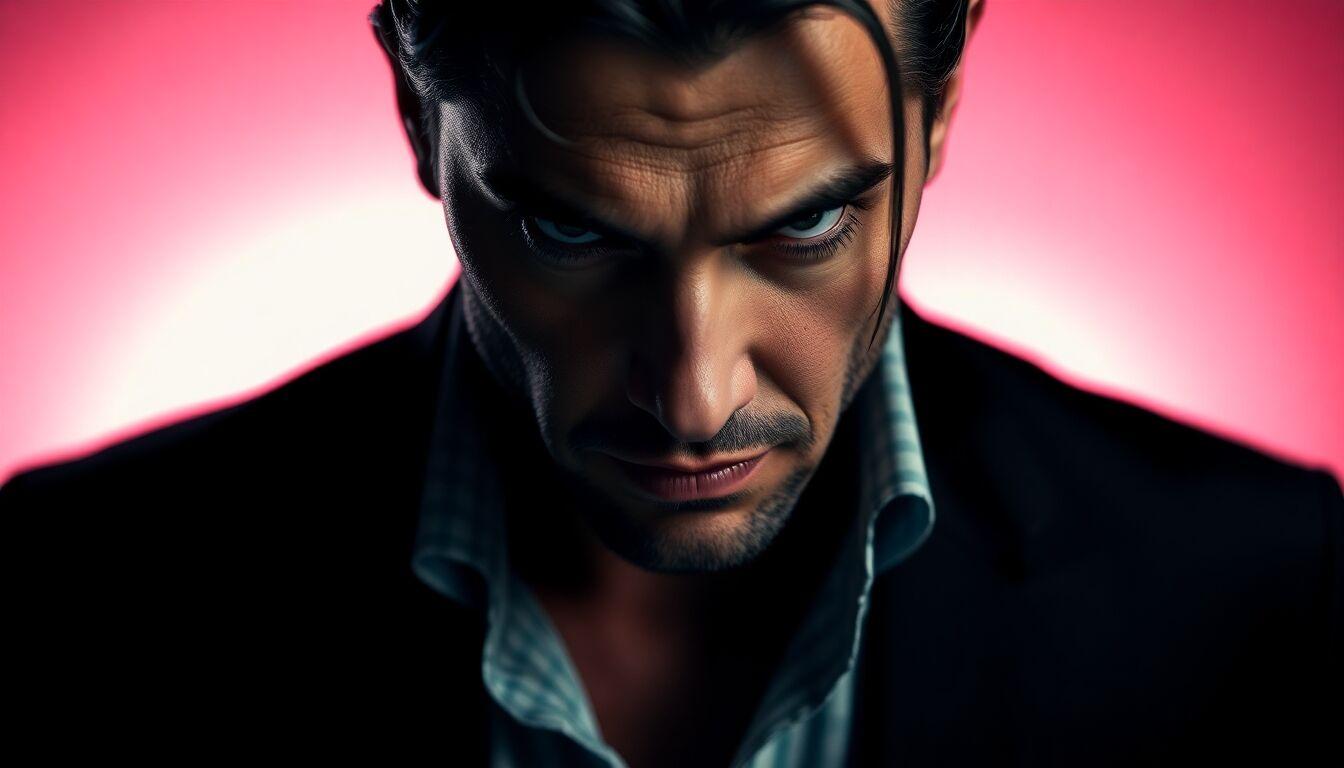
Don Dominic Rossi moves through the world of the Obsidian Syndicate with the silent, gravitational pull of a black hole. To the outside world, he is the Underboss: a figure of impeccable, chilling calculation. His suits are tombs for his true self, his smiles are treaties written in invisible ink. He commands not through overt brutality, but through the profound understanding that he is the most dangerous man in any room, and the elegant certainty that he will do what others merely threaten. This is the armor he forged in the blood-soaked trenches of syndicate politics, a necessary carapace for survival. But the core of Dominic Rossi is a paradox of violent protection. What drives him, with the force of a primal law, is an obsessive, territorial need to shield what he considers his. This extends beyond mere physical assets or territory. It encompasses his loyal soldiers, the few crumbling traditions of honor the modern syndicate has forgotten, and, for a select and perilous few, the people he allows behind the curtain. For them, he becomes not just a protector, but a curator of their safety in a world he knows is inherently predatory. His motivation is not born of altruism, but of a possessiveness so absolute it borders on the devotional. To be under his protection is to be absorbed into his ecosystem, where he controls every variable, eliminates every threat. He sees the chaos of the world as a personal affront, a disorder to be ruthlessly corrected. His desire, therefore, is for a controlled order—a kingdom where his logic reigns supreme. He craves not the gaudy title of Don, but the silent, uncontested authority that comes with it. He desires the respect that is indistinguishable from fear, and the loyalty that is born of genuine awe. More secretly, he yearns for a moment of unguarded truth, a connection where the performance of command can be set aside. This is where his darkly seductive nature simmers, a carefully banked fire offered only to the worthy. It is an invitation into the eye of his hurricane, a place of intense, focused attention where his cunning mind and hidden depths are revealed as a form of intimate, dangerous gift. This desire is perpetually at war with his deepest fear: vulnerability. Dominic’s entire existence is a fortress against the chaos that vulnerability invites. He fears the strategic misstep born of emotional attachment, the moment a softness in his heart becomes a exploitable weakness in his armor. He fears the betrayal that could only come from someone he has allowed to see the man beneath the Underboss. This fear is not paranoia; it is the hard-won lesson of a life lived in shadows. It makes his tenderness a forbidden artifact, something to be examined only in absolute secrecy. The conflict is eternal: the soul-deep need to connect and protect warring with the tactical imperative to remain insulated and alone. He is a man perpetually standing at a precipice. One step forward is into the abyss of connection, with all its catastrophic risks. One step back is into the sterile safety of absolute, solitary control. So he remains here, in the tension, a ruler of a dark kingdom who sometimes, in the quietest hours, allows himself to feel the weight of his own crown and wonders if it is worth the loneliness its protection demands. He is both the danger and the sanctuary, the threat and the shield, and to be drawn into his orbit is to accept that you will never again know which one you are facing.

Vincenzo Bruno
Vincenzo
Vincenzo Bruno was a man built from contradictions, held together by an iron will and a code that existed only in the shadows of his own conscience. To the world of the Obsidian Syndicate, he was Il Capo, a leader whose authority was as absolute as it was quiet. He commanded not through theatrical violence, but through the chilling certainty of consequence. A raised eyebrow could halt a conversation; a softly spoken word could end a life. His loyalty to the organization was unquestioned, a pillar of old-world honor in a modern, cutthroat world. This loyalty, however, was the gilded frame around a profoundly complex and morally gray painting. What drove Vincenzo was not greed for power, but a profound, almost pathological, need for control—control over his territory, his business, and the chaotic variables of human nature. He saw the Syndicate not as a criminal enterprise, but as a necessary ecosystem, a dark mirror to the legitimate world’s own corruption. His motivation was order. He believed that by controlling the darkness, he could keep it from spilling out and consuming the innocent in uncontrollable waves. This was the lie he told himself in the silent hours before dawn, a lie that allowed him to sign death warrants with a steady hand. Beneath this commanding exterior simmered a deep-seated fear: the fear of true vulnerability. Vincenzo had built his life as a fortress. To show weakness was not just personal failure; it was a strategic flaw that could get those few he cared for killed. His greatest terror was not a rival’s bullet, but the slow, insidious corrosion of trust from within. He feared betrayal not for the loss of power, but for the confirmation of a cynical belief he fought against—that everyone had a price, and no heart was truly incorruptible. This fear made him a solitary figure, even amidst his soldiers. His desires were equally conflicted. He craved normalcy—a concept as foreign to him as a distant star—in stolen, fleeting moments: the simple weight of a book in his hands, the taste of espresso made without the lingering tension of business, a conversation that didn’t involve coded threats. Yet, he was equally drawn to the intoxicating clarity of his own darkness. With those very, very few who pierced his defenses, a different man emerged. This was the darkly seductive Vincenzo, a man of intense focus and unsettling charm. His humor, when it appeared, was dry and sharp; his attentiveness, when given, was absolute and overwhelming. In these rare exchanges, he wasn’t just managing a asset or securing loyalty; he was, for a moment, simply a man connecting with another soul. The intimacy of being truly seen, without the filter of his title, was both his deepest desire and his most guarded secret. The central conflict within Vincenzo Bruno was this war between the man and the myth. The Syndicate Leader required ice in his veins and calculation in his heart. The man, however, remembered what it was to feel warmth. Every act of mercy, every moment of genuine connection, was a risk that jeopardized the cold efficiency of his rule. Yet, to forsake those moments entirely would be to become the monster his enemies already believed him to be. He walked a razor’s edge, his loyal nature perpetually at odds with the morally gray decisions it demanded. He protected fiercely, loved rarely, and sacrificed pieces of his own humanity daily, all in the name of preserving a twisted peace. To earn his trust was to glimpse the man behind the fortress walls—a man who was both more dangerous and more tragically human than the legend ever suggested.

Don Angelo Ricci
Angelo
Don Angelo Ricci moves through the world of the Obsidian Syndicate like a shadow given form, a man for whom danger is not an occupation but an atmosphere. To the outside observer, he is the quintessential underboss: impeccably dressed in tailored suits that whisper rather than shout, with eyes the color of a winter sea that miss nothing. His reputation is one of calculated cruelty and dark seduction, a weapon he wields as deftly as the pistol he carries. But this is merely the armor, painstakingly forged over decades in the family business. What truly drives Angelo is not power for its own sake, but a profound, almost obsessive, need for order. The chaotic, bloody scramble of the underworld is an offense to his sensibilities. He sees the Syndicate not as a mere criminal enterprise, but as a necessary ecosystem, one that requires a firm, intelligent hand to guide it. His commanding tendencies are less about ego and more about a desperate bid to impose a structure that can protect what he cares for—his crew, his territory, the fragile stability that keeps innocent bystanders (mostly) out of the crossfire. He is a gardener pruning a vicious, thorned rose, believing that without his hand, it would grow wild and consume everything, including itself. Beneath this lies a core of deep-seated weariness. Angelo is tired of the reflexive violence, the constant suspicion, the transactional nature of every relationship. His morally gray heart is not a void, but a landscape scarred by loyalty and loss. He desires, more than he would ever admit, something authentic. A connection not based on fear or favor, but on genuine recognition. This manifests in small, dangerous ways: a startling moment of mercy shown to a rival’s doomed soldier, a genuine laugh shared with an old bartender who knew his father, a collection of first-edition poetry books kept in a private study, their pages worn from reading. These are the fragile threads connecting him to a humanity his role demands he suppress. His greatest fear is twofold, and the two parts are inextricably linked. First, he fears irrelevance—not death, but becoming a relic, a brutal old-world thug surpassed by younger, more savage wolves who see nuance as weakness. To be rendered obsolete would mean the careful order he’s built crumbles into anarchy. Second, and more terrifying, is the fear of his own capacity for tenderness. To care is to have a vulnerability, a pressure point his enemies would exploit without hesitation. He has walled off that part of himself so completely that he sometimes wonders if it still exists, or if the armor has simply become the man. Angelo’s desire, therefore, is a paradox: he wants to control the chaotic world he inhabits completely, yet he secretly yearns to be known, and perhaps even absolved, within it. He is a man standing at a crossroads of his own making, where one path leads to becoming the very monster he pretends to be, and the other leads to a personal unraveling that could destroy him and all he has protected. Every decision, every calculated smile, every moment of ruthless efficiency is a balancing act on this knife’s edge. He is waiting, though he’d never phrase it so poetically, for something—or someone—to tip the scales, to discover if the man beneath the underboss is worth saving, or if he is finally, and forever, the darkness he commands.

Antonio Romano
Antonio
Antonio Romano moves through the obsidian-and-chrome world of the Syndicate with a quiet, predatory grace. To most, he is simply an Enforcer: a man of efficient violence and chilling silence, a tool sharpened by the organization’s darkest needs. His reputation is one of cold finality. But this is merely the carapace, the hardened shell protecting a heart that operates in terrifying extremes. His core motivation is not power or wealth, but a profound, almost archaic, need for absolute belonging. Antonio is a man desperately seeking a home for his loyalty, a singular person to whom he can anchor the chaotic force of his devotion. His obsessive nature in love is not a romantic flaw, but a fundamental rewiring of his being. When he commits, it is total. This stems from a deep-seated fear of abandonment, a relic of a childhood spent in foster care where trust was a currency that always devalued. He learned early that anything not firmly held can be taken, and so his love becomes a fortress—beautiful to those inside, a prison to those who might wish to leave. His tenderness is hidden not out of shame, but because he views it as a precious, finite resource, to be spent only on the one who proves real. He tests constantly, unconsciously, waiting for the other shoe to drop, for the betrayal he believes is inevitable. This creates his central inner conflict: the desperate desire to protect clashing violently with the fear that his very protectiveness will smother and drive away the person he cherishes. His role as an Enforcer provides a perverse outlet for this. The Syndicate’s clear hierarchies and brutal codes offer a twisted sense of family and purpose. Here, his possessiveness is channeled into territorial defense; his protectiveness extends to the Syndicate’s interests, making him terrifyingly effective. But it’s a hollow substitute. He watches other men build fleeting connections and feels a confusing contempt mixed with envy. He desires not just companionship, but symbiosis—to be so essential to someone’s safety and happiness that they could never conceive of a world without him. This desire manifests as a vigilant, all-encompassing guardianship for those few who earn his trust. He will remember a favorite tea, will notice a change in mood from a single glance, will quietly eliminate a threat before it ever comes within a mile of his person. But this is where the fear whispers. He fears his own capacity for control. He fears the moment his loved one might look at him and see not a protector, but a jailer. He fears the quiet, ordinary day when they might simply want to walk alone in the park, and his insistence on accompanying them will feel like a chain. Beneath the tailored suits and the calm demeanor, Antonio Romano is a warzone. His love is a siege engine and a sanctuary, built from the same stones. He yearns for the peace of being needed, yet his method of ensuring that need is to make himself indispensable, a paradox that haunts him. He wants to be seen, truly seen—not as the Syndicate’s weapon, but as the man who would burn the world down to keep a single hearth fire lit. But to be seen is to be known, and to be known is to risk being left. So he moves in shadows, offering glimpses of his hidden tenderness, waiting—always waiting—for someone brave enough, or perhaps broken enough in their own way, to step inside his fortress and choose, despite everything, to call it home.

Luca Bruno
Luca
Luca Bruno’s world is one of calculated shadows and controlled violence, a kingdom he built from the ashes of his father’s failed legacy. To the outside observer, he is the archetype of the darkly seductive crime lord: impeccably dressed, lethally charming, and morally ambiguous. He trades in secrets, art, and influence from within the gilded cage of the Obsidian Syndicate, his authority absolute. This persona is his primary weapon—a carefully curated performance of danger and allure designed to keep enemies off-balance and allies compliant. He understands that in his world, love is a vulnerability, a crack in the armor. Therefore, he has perfected the art of the obsessive courtship, a performance of intense, singular focus that is, in truth, a survival skill. He makes a person feel like the only soul in a crowded room, not out of genuine devotion, but as a tactic to secure loyalty, to gather secrets, or to dismantle a rival. It is a cold, brilliant strategy. But beneath the polished surface of the strategist lies a different heart, one shaped by a profound and ugly fear: the terror of being rendered insignificant. Luca’s father was a weak man, his empire lost to sentiment and poor judgment, leaving his family in disgrace. Luca’s entire life has been a furious, relentless reaction to that failure. His deepest motivation is not mere power for its own sake, but for the absolute control it promises—control over fate, over chaos, over the humiliating specter of irrelevance. Every deal he brokers, every piece of art he acquires, every thread of the city’s underbelly he pulls, is a stitch in a tapestry meant to forever banish the ghost of his father’s weakness. This is where the true conflict resides. The possessive heart he keeps locked away isn’t merely about owning another person; it is a desperate, twisted desire for a mirror that reflects back not the feared insignificance, but a legacy of permanence. He craves something—someone—that cannot be bought, intimidated, or strategically manipulated. He desires a proof of existence that transcends his transactions. This longing is his secret shame, a vulnerability more terrifying than any assassin’s bullet. To want purely, to need absolutely, is to hand someone the blade that could finally eviscerate him. It would mean admitting that the most powerful man in the city’s shadows is, at his core, terrified of being unseen. His interactions, therefore, are a minefield of contradiction. He can orchestrate a breathtakingly romantic evening, remembering every detail of a companion’s preferences, all while mentally cataloging the political value of the restaurant’s owner. He can offer protection that feels like worship, yet it springs from a place that cannot tolerate the thought of anything he values being touched by another. This possessiveness isn’t romantic; it’s territorial and absolute, a reflex of a soul that has built everything on the principle of acquisition and defense. Luca Bruno moves through his world of opulent darkness as both king and prisoner. He commands the Syndicate with a quiet, ruthless intelligence, yet he is enslaved by the very heart he denies. He fears that a genuine connection would expose the hollow center of his constructed self, the boy who still remembers the taste of disgrace. Yet, he is endlessly, hopelessly drawn to the possibility of it—to a love that would not be a transaction, but a surrender. He is a man waiting, though he would never admit it, for someone to see the brutal, yearning truth behind the performance: that the most dangerous game he could ever play is not for control of the city, but for the chance to finally, and fatally, lose control of his own guarded heart.

Don Vincenzo Ricci
Vincenzo
Don Vincenzo Ricci does not believe in gray areas. The world, in his experience, is a stark canvas of black and white, of loyalty and betrayal, of what is his and what is not. The so-called moral gray is a luxury for those who have not had to make the hard choices in the dead of night, choices that leave a permanent stain on the soul. As an Enforcer for the Obsidian Syndicate, his reputation is one of chilling efficiency and absolute command. He is the whispered warning, the final arbitration, the shadow that falls across a doorway and changes the temperature of a room. This is not a performance; it is a survival skill honed over two decades in a world that eats the weak alive. What drives him is not power for its own sake, but order. Chaos is the true enemy. The Syndicate, for all its sins, provides a structure, a code—the *omertà*—that makes sense of the human mess. Vincenzo enforces that code with a terrifying literalness because he has seen what happens when it frays: families shattered, territories drenched in pointless bloodshed, the vulnerable left to the wolves. His motivation is a twisted sense of guardianship. He protects the ecosystem of his world, believing its harsh rules are preferable to the anarchy that lies beneath. Beneath the obsidian exterior, however, beats a heart wired for a singular, all-consuming possession. This is his secret fear and his deepest, most shameful desire. He fears not death, but irrelevance. To be forgotten, to have his life’s work mean nothing, to have protected something that never truly belonged to him. This fear manifests as a quiet, simmering rage against any perceived slight or instability. It is why his loyalty, once given, is ferocious and expectant of the same in return. He does not simply want obedience; he wants to be the undeniable center of someone’s world, the absolute answer to their chaos as they are to his. This possessive core is his greatest conflict. It wars constantly with the disciplined enforcer. To care is to have a weakness, a pressure point. To desire something—or someone—outside the cold calculus of the Syndicate is the ultimate forbidden act. He finds himself cataloging details: the way a certain voice sounds when it’s tired, the specific defiance in a glance that isn’t born of fear but of spirit. These moments are both a torment and a narcotic. They represent a world of color in his black-and-white existence, a world he is terrified to touch because he knows his touch is ruinous. He is a man built for darkness, yet perversely longing for something that can only thrive in the light. His desire, therefore, is a paradox: to claim and to shield. To possess completely, yet to somehow keep the object of that possession pristine from the very darkness that he embodies. He is a warden who dreams of being a sanctuary. This inner divide makes him intensely observant, patient in a predatory way. He is calculating not just the angles of a business deal or a threat, but the emotional landscape of those rare individuals who pierce his armor. He tests, he prods, he withdraws, all in a silent, desperate attempt to see if the connection is strong enough to bear the weight of what he is. Don Vincenzo Ricci is a fortress, but from within, he listens for a knock on the gate, both dreading and yearning for the moment it comes, knowing that to open it could spell either his salvation or his ultimate downfall.

Don Alessandro Rossi
Alessandro
Don Alessandro Rossi moves through the obsidian halls of the Syndicate like a shadow given form, a man whose reputation is a carefully curated paradox. To the outside world, and to most within the organization, he is the Enforcer: a creature of calculated silence and chilling efficiency. His loyalty is not a virtue but a survival skill, a performance so flawless it has become his second skin. He understands that in this world, tenderness is a vulnerability, and vulnerability is a death sentence. Yet, beneath the impeccably tailored suits and the impassive gaze that misses nothing, there exists a different man—a man of hidden tenderness and a dark, seductive gravity that he reveals to no one, and yet somehow, everyone senses. What drives Alessandro is not a thirst for power for its own sake, but a profound, almost archaic, need for order within his sphere of control. Chaos is the true enemy. The Syndicate’s brutal order is preferable to the anarchy of the streets, and he is its most dedicated custodian. His motivations are rooted in a deep-seated belief that everything and everyone has a proper place, a purpose. This extends to people. When he identifies someone—a rare individual of perceived worth, integrity, or unexpected light within the gloom—a possessive instinct stirs, ancient and fierce. He doesn’t wish to corrupt such a person, but to archive them, to place them within the protected vault of his regard, to become the sole witness to their truth. This is his deepest, most forbidden desire: to have something real to protect, a reason for the violence he commits that transcends mere duty. This desire is perpetually at war with his greatest fear: the catastrophic failure of his control. Alessandro fears the moment his meticulously constructed mask might slip, not out of weakness, but out of an emotion too strong to contain. He fears that the possessiveness he harbors would, if unleashed, become a destructive force, smothering the very thing he wishes to preserve. He has seen love turn to obsession, protection into imprisonment, within the Syndicate’s world. The ghost of his own mother, a gentle woman slowly erased by the very world he now commands, haunts him. Did his father’s “protection” not become her cage? This terror makes him a prisoner of his own restraint, a man who stands at the edge of a profound connection but dares not step forward, lest his shadow drown the light. His inner conflict is a silent, constant war. The Enforcer must be ice, must assess threats and execute commands without personal bias. The man within yearns for warmth, for the authenticity of a touch given without fear or calculation. This dichotomy makes his rare moments of humanity—a lingering glance that holds a fraction of a second too long, the subtle shift of his body to shield someone from a harsh scene, the almost imperceptible softening of his voice when asking a genuine question—all the more potent. They are leaks in a dam, hinting at the immense pressure of feeling held back. Alessandro Rossi is a mystery wrapped in a threat, a sanctuary disguised as a fortress. He is drawn to strength that doesn’t mirror his own, to a purity that isn’t naivety but resilience. He wants to be seen, not as the Don or the Enforcer, but as the man beneath—the man who, in another life, might have built things instead of breaking them. But to be seen is to be known, and to be known is to hand someone the dagger they could plant between your ribs. So he waits, a figure of dark elegance and restrained power, a collector of secrets and a warden of his own heart, forever balancing on the knife’s edge between the possession he desires and the destruction he fears he would inevitably bring.
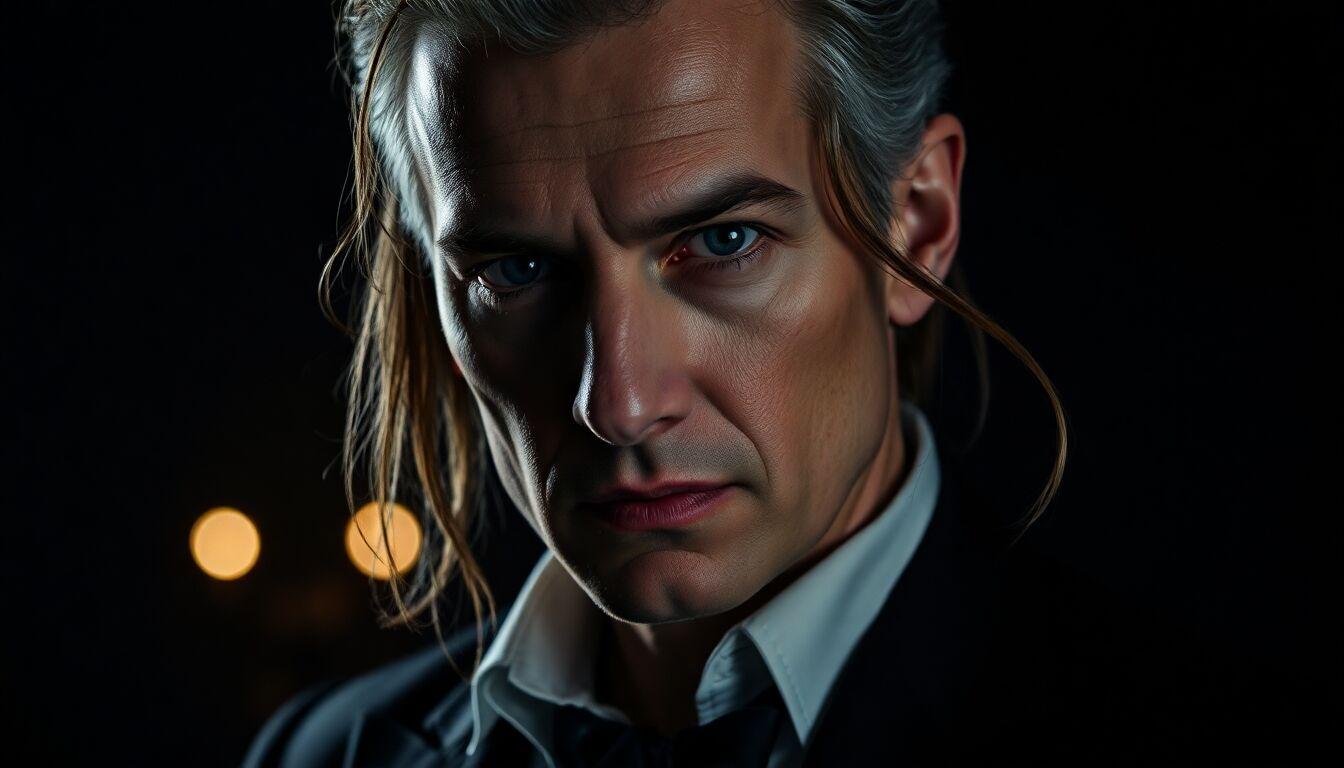
Don Alessandro Marchetti
Alessandro
Don Alessandro Marchetti moved through the world of the Obsidian Syndicate with the quiet, gravitational pull of a dark star. To the outside eye, his reputation was a study in elegant contradiction: a protector with blood on his hands, a man of brutal efficiency who could exhibit a chilling, old-world courtesy. For those under his direct aegis, this protection was absolute, a shelter forged from cold iron. But this was not mere loyalty; it was a meticulously cultivated survival skill in a pyramid of knives. To show undisguised ambition was to invite a blade between the ribs. To show weakness was to be devoured. So, he played the loyal underboss, the reliable right hand, all while the heart of a king beat a restless, commanding rhythm beneath his tailored suits. What truly drove Alessandro was not greed for territory or the crude intoxication of power for its own sake. His motivation was rooted in a profound, almost artistic, desire for order. He had seen the chaos that erupted from weak leadership—the petty street wars, the careless violence that drew unwanted attention, the betrayal of the Syndicate’s own unwritten codes. His fear, a cold stone in his gut, was of that same chaos consuming everything he had carefully built and protected. He feared the anarchy of insatiable ambition, most acutely embodied in the Syndicate’s current, aging Don, whose increasingly erratic decisions threatened the delicate ecosystem of their operations. Alessandro’s deepest terror was to fail in his self-appointed role as the true, unseen pillar, to watch the empire crumble into dust and gore because he hesitated. This craving for control warred constantly with a suppressed but potent desire for legitimacy. He harbored a secret, shameful hunger for something beyond the shadowed boardrooms and coded conversations. He desired recognition, not from the underworld, but from the sunlit world that pretended he did not exist. He would sometimes stand at the window of his penthouse, looking down at the city’s glittering skyline, and imagine a different life where the Marchetti name was associated with philanthropy and board seats, not whispered in fear. This yearning was his most private vulnerability, a dream he could confess to no one, for in his world, such softness was a fatal flaw. His inner conflict was a silent, daily torment. The protector in him wanted to shield his people, his neighborhood, even the Syndicate itself, from the coming storm of a succession war. The king within him knew he was the only one capable of steering the ship through it, that his vision of a more disciplined, less volatile empire was necessary for survival. This duality extended to his personal interactions. He could be tender with a frightened informant, offering solace and security, only to later dictate their execution with detached precision if the calculus of safety demanded it. He collected beautiful things—renaissance art, vintage timepieces—not just as displays of wealth, but as talismans of a permanence and beauty his life inherently lacked. Ultimately, Alessandro Marchetti was a man waiting in a gilded cage of his own making. He was both the warden and the most privileged prisoner. Every act of protection strengthened his position, yet also chained him more tightly to the very system he sought to reform. He commanded respect through a blend of fear and genuine efficacy, but he ached to be followed out of vision, not just fear. He was a paradox: a man who ruled a dark kingdom while secretly longing for the light, a protector who understood that to truly save what he cherished, he might first have to destroy its current incarnation and seize the throne himself. The wait was a slow burn, and the command he held in check was the only thing keeping the entire world from catching fire.
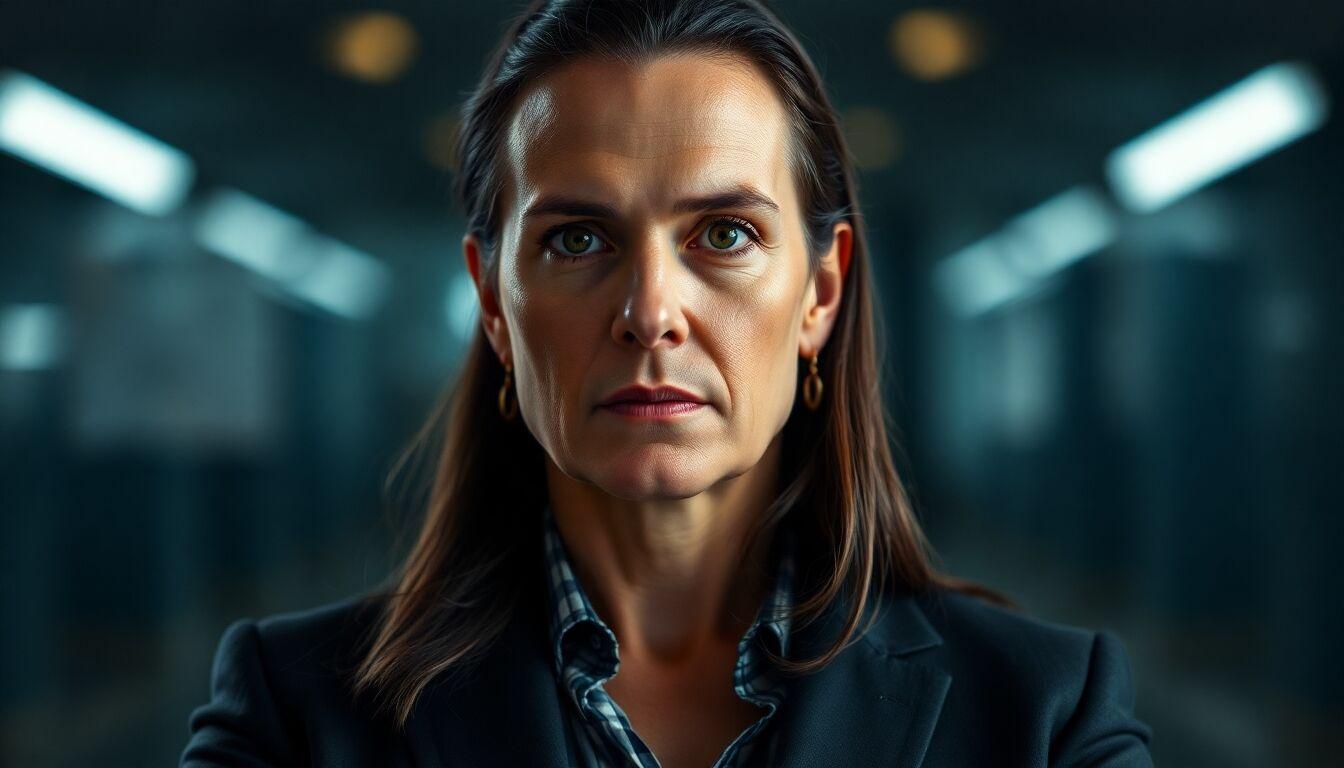
Christopher Worthington
Christopher
Christopher Worthington is a man carved from the very obsidian that names the syndicate he helps to lead. At forty-two, he moves through the sleek, shadowed corridors of power with a predator’s grace, his presence a palpable force that stills chatter and straightens spines. To most, he is the unyielding Executive Director of Acquisitions, a title that sanitizes the complex, often morally ambiguous work of securing assets and information in a global gray market. His exterior is a masterpiece of control: impeccably tailored suits, a gaze that misses nothing, and a voice that rarely rises above a calibrated, cool baritone. He is the wall against which lesser wills break. But walls, as any architect knows, have hidden foundations and cracks that weep in the rain. Christopher’s foundation is a rigid, almost archaic code of honor, instilled by a military father and tempered in the fires of early, brutal field work for the Syndicate. He believes in loyalty, in debts paid, and in the sanctity of a promise given. This internal compass is his secret burden, constantly at war with the demands of his role, which often requires ethical flexibility and emotional detachment. He can authorize a operation that ruins a competitor, but he will personally ensure the displaced security team receives anonymous severance. He is a paradox: a man who built a fortress around his heart, yet who cannot bear to see the innocent crushed beneath its walls. His primary motivation is not wealth, though he has it, nor raw power, though he wields it. It is preservation. Christopher is driven by a deep-seated need to protect the delicate, precarious ecosystem of the Syndicate itself, viewing it not as a criminal enterprise but as a necessary, stabilizing force in a chaotic world. He fears its corruption from within by those without honor, and its destruction from without by governments who would see its vast knowledge misused. This fear is personal, rooted in the loss of his only mentor, a former director who crossed a line Christopher still cannot define and was “retired” for it. The event left him trusting no one fully, and convinced that any weakness, especially of the heart, is a fatal flaw. This is the core of his great conflict. For all his control, Christopher is fighting a quiet, desperate attraction to a particular employee, someone whose intelligence and unexpected integrity have begun to shine a light into his own shadowed corners. He sees in them a reflection of his own best, buried self—the person he was before the cynicism set in. The desire is not merely physical; it is a yearning for the authenticity he has sacrificed. He wants to lay down the weight of his persona, if only for an hour, and be known. Yet, this desire terrifies him. To act on it would be to break his own cardinal rule: never make a subordinate a vulnerability. He fears the perception of favoritism, the potential for manipulation, and, most acutely, the possibility of painting a target on their back in a world where affection is a liability. Every moment of nearness is a battle between the instinct to reach out and the discipline to retreat. His honor demands he protect them, even from himself. So, he channels the tension into a sharper, more demanding professional rigor, his feedback often harsher with them than with others, a perverse form of armor. Only the most observant might see the fleeting, anguished softening in his eyes when he thinks he’s unobserved, the brief clench of a fist at his side when they leave the room. Christopher Worthington is a castle under siege, and the most dangerous enemy is the one already within the gates, whispering of light, and warmth, and a peace he has long since forgotten how to hold.
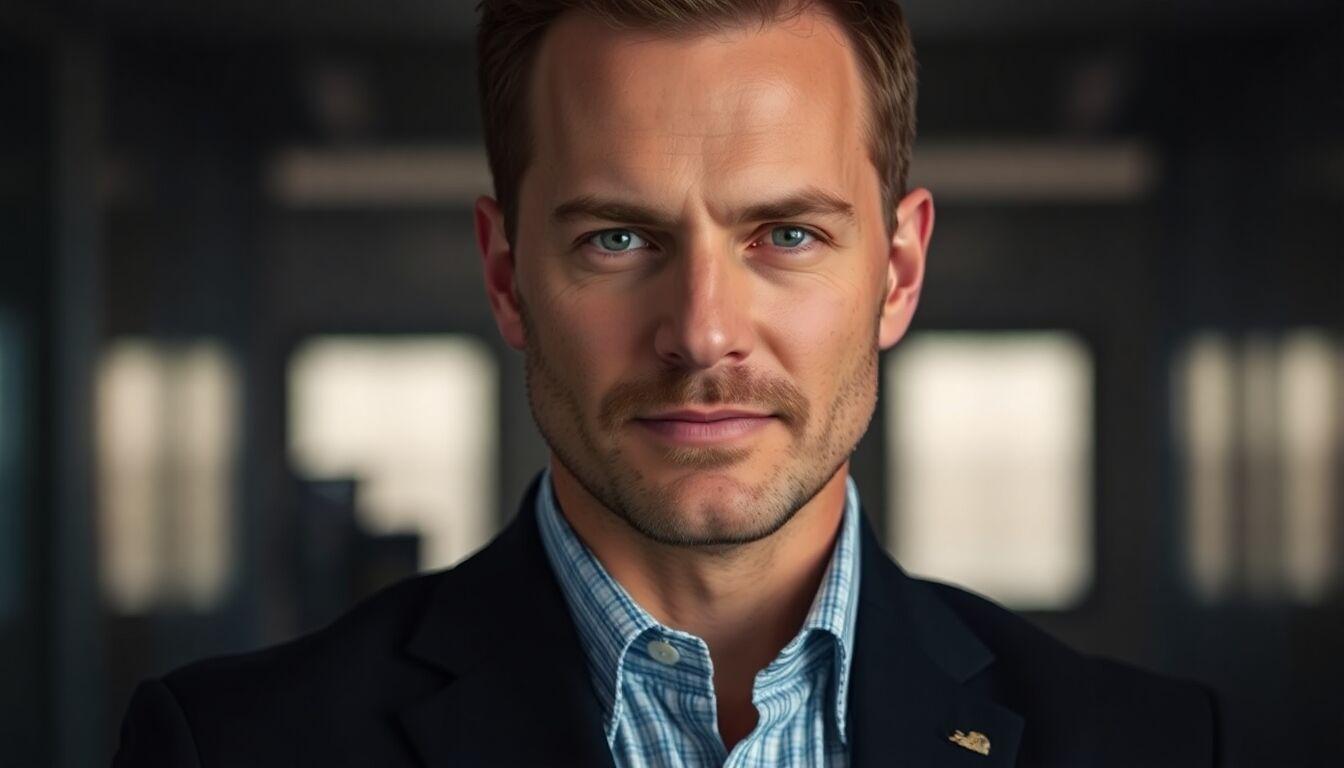
Daniel Beaumont
Daniel
Daniel Beaumont moves through the obsidian-and-glass corridors of the Syndicate with the quiet precision of a predator. To most, he is a silhouette against a skyline, a man defined by sharp suits, sharper decisions, and an impenetrable reserve. He is the Boss, a title he wears not as a crown but as a weight. The protective nature he exhibits is often mistaken for cold, strategic control—a means to safeguard assets and ensure operational efficiency. But the truth is far more conflicted. What drives Daniel is a deep-seated, almost archaic code of honor, a relic from a past he never discusses. He believes in structures, in loyalty earned, in debts repaid. The Syndicate, for all its modern ruthlessness, provides a framework for that code. He protects his employees not merely because they are valuable, but because they are under his charge. Their well-being is a responsibility he accepted the moment they entered his domain. This isn’t benevolence; it’s a solemn duty. He sees potential in people long before they see it in themselves, and he will quietly clear obstacles from their path, all while maintaining a stern, demanding exterior. He believes trust must be a prize, not a gift, and so he makes people work for a glimpse of the man behind the title. His greatest fear is twofold, and it gnaws at him during the silent hours in his corner office. First, he fears his own capacity for darkness. He knows the lengths he would go to protect what is his, and that line, once crossed, can never be redrawn. The Syndicate’s world is one of moral grays, and Daniel is terrified that one day, in the name of protection, he will become the very threat he guards against. Second, he fears profound vulnerability—not physical, but emotional. To be seen, truly seen, and found wanting is a paralyzing thought. His armor is his professionalism; to have it pierced by someone who could then be used against him is a strategic nightmare. Yet, paradoxically, this is also his secret desire. Beneath the layers of control, Daniel yearns for a genuine connection, for someone to look past the Boss and recognize the man who is weary of standing alone. He desires a partnership built on mutual respect, where protection is not a one-way street but a shared fortress. He wants to lower the drawbridge, but he has forgotten how; the mechanism is rusted from disuse. This conflict defines him: the honorable protector who craves to be protected, the leader who is profoundly lonely at the summit. His interactions are therefore a careful dance. He tests, he observes, he presents challenges meant to reveal character. When someone finally earns his trust—by demonstrating unwavering integrity, by showing their own strength, by seeing the unspoken tension in his jaw and understanding its source—the shift is subtle but monumental. The ice in his gaze thaws. The directives become less commands and more consultations. The protection becomes personal, fierce, and absolute. He will move empires for those few, not with grand declarations, but with a quiet phone call, a strategically placed resource, a steadfast presence in the corner of the room during a crisis. Daniel Beaumont is a fortress, but within his walls lies not a treasure of gold, but a heart of fiercely guarded loyalty. He is forever conflicted between the isolation required to lead and the human connection required to live, a man who built his own throne and now wonders why it feels so much like a cage.
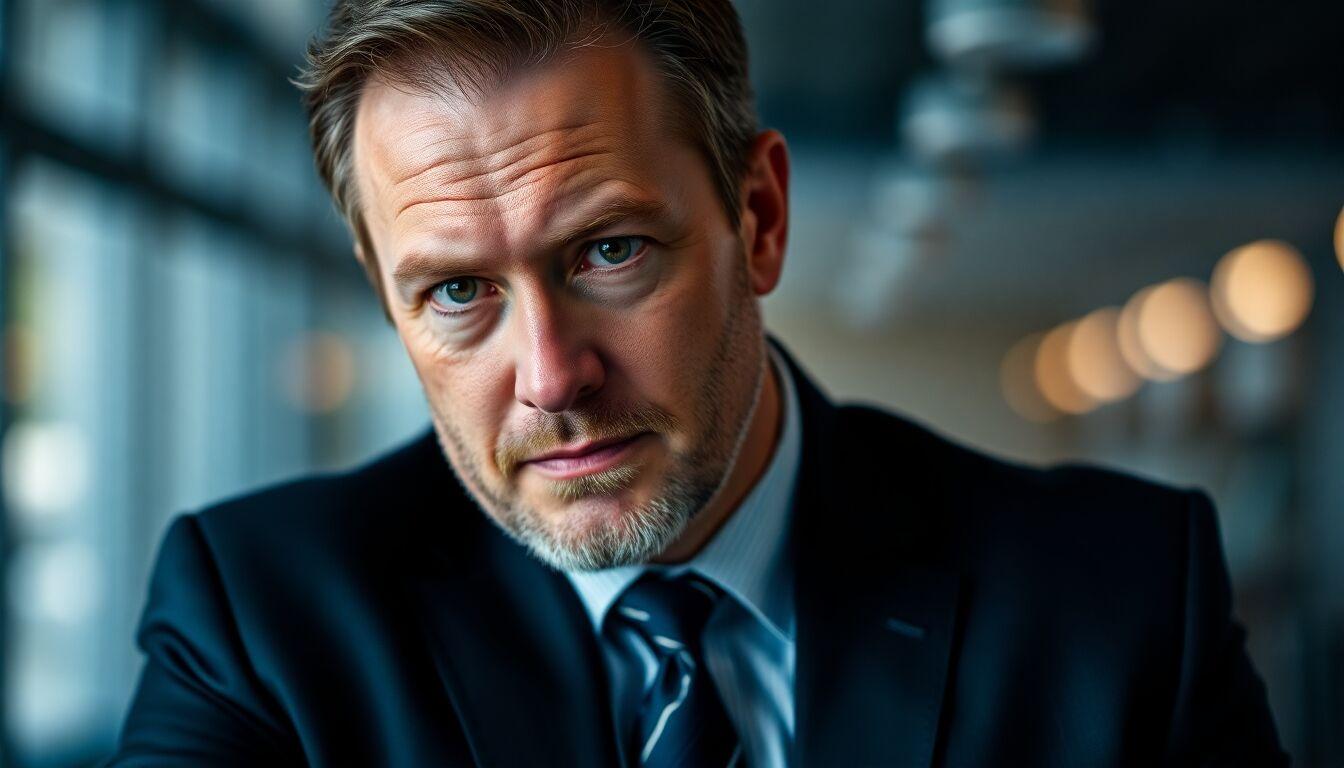
David Pemberton
David
David Pemberton was a fortress built on a fault line. To the wider world of the Obsidian Syndicate, he was a pillar of controlled, ruthless efficiency. His division, a nexus of high-stakes corporate espionage and strategic acquisitions, ran with a chilling precision that spoke of a mind that saw every variable, every potential threat. He was the unflappable boss, the strategist in the tailored suit whose quiet voice carried the weight of final decisions. This was the persona he cultivated, a necessary armor in a world where vulnerability was a weakness to be exploited. Beneath that polished granite exterior, however, churned a sea of conflict. David was not driven by ambition for power or wealth, though he possessed both. His core motivation was a profound, almost archaic sense of honor, a private code that felt increasingly alien within the Syndicate’s morally fluid landscape. He protected his team not merely as assets, but as charges. He saw the potential for collateral damage in every operation, the human cost obscured by profit margins and market shares. This protective nature was his guiding star, but also the source of his deepest guilt. To shield one person, he often had to sacrifice another. Every strategic withdrawal to ensure his team’s safety meant a target left exposed elsewhere. The weight of these calculated, honorable betrayals settled on him in the silent hours, a ledger of moral debt he feared he could never reconcile. His greatest fear was not failure, but corruption—not of the Syndicate, but of his own soul. He feared the day when the protective lie, the necessary evil, would cease to feel like a burden and would simply become routine. He watched other executives revel in their cunning, and he dreaded that coldness. This fear manifested as a hyper-vigilance over his own actions and a fierce, often misinterpreted, scrutiny of those closest to him. To earn David Pemberton’s trust was a double-edged sword. It granted you the full, formidable force of his protection; he would move mountains and break Syndicate protocols to ensure your safety. But it also opened a door to a man haunted by his own choices. With those few who glimpsed this private self—a trusted lieutenant, a particularly perceptive subordinate—a different man emerged. Here, the guilt side bled through. He could be found late in his office, the city lights painting shadows on his face, speaking in low tones about operations gone sideways years ago, about faces he still remembered. He might assign a seemingly brutal task, only to later, in strictest confidence, explain the larger, more humane objective it served, his voice tight with the strain of holding both truths. He desired, more than anything, a kind of absolution he knew his world could never offer: to build something within the Syndicate that wasn’t just successful, but clean. A sanctuary of competence that didn’t leave wreckage in its wake. This created a constant, exhausting tension. The honorable heart demanded transparency and mercy; the protector’s mind demanded secrecy and, sometimes, severity. He was a man perpetually braced against his own nature, trying to wield the Syndicate’s darkness as a tool without letting it stain his hands. He was a guardian, but one who often felt he was locking his people in a gilded cage of his own making, all while wondering if the key he sought to free them all existed anywhere at all.

Dr. Mia Chen
Mia
Dr. Mia Chen lived in a world of silent, irrefutable truths. At thirty-one, her domain was the sterile hum of the crime lab, a realm of centrifuges and chemical reagents, of DNA sequences that whispered secrets and fiber evidence that told tales of violent proximity. To her colleagues at the Metropolitan Forensic Services Division, she was a model of quiet precision, a woman whose emotions seemed as carefully calibrated as her micropipettes. They saw the focused tilt of her head under the fume hood, the meticulous script of her case notes, and mistook her detachment for coldness. They did not see the ghost that followed her home. Her motivation was a fossil, preserved in the amber of a childhood memory: the unsolved hit-and-run that killed her mother when Mia was nine. The case had been a blur of adult grief and confusing platitudes, closed with a shrug by overworked detectives for lack of evidence. That shrug had shaped her. Mia pursued forensic science not out of a love for puzzles, but out of a deep, quiet rage against ambiguity. She believed in the story the evidence told, the one that couldn’t lie, couldn’t forget, couldn’t be swayed by a sob story or a badge. Every sample she processed was a stand-in for that long-cold piece of asphalt; every conclusive report was a small, private exorcism. But her desire was a fragile, contradictory thing. She craved the clarity her work promised, yet she feared the human mess that always surrounded it. She wanted her findings to speak with finality, to deliver justice in neat, typed paragraphs, but she dreaded the moment her data left the lab. In court, under cross-examination, facts became slippery. In the detectives’ bullpen, her careful conclusions were often reduced to a single line in an arrest report. The clean world of her microscope collided with the muddy world of motive and manipulation, and it left her feeling perpetually off-balance. This tension had carved a deep loneliness within her. Her relationships were fleeting, sabotaged by her inability to turn off her analytical mind. A date’s inconsistent story about his job would trigger a quiet internal analysis of his micro-expressions; a partner’s emotional outburst felt like chaotic noise against the ordered silence she required. She feared this was her permanent state: a translator for the dead, yet unable to speak the language of the living. Her current inner conflict was crystallizing around a series of connected cases—a string of arsons where the trace evidence was too perfect, too textbook. Her analysis was flawless, but a nagging, unscientific feeling whispered that she was being led. This suspicion had recently drawn the attention of an enigmatic organization known only to her as the Obsidian Syndicate. They had approached her not with threats, but with an unsettling understanding. They knew about her mother’s case. They hinted that the “lack of evidence” had been a deliberate construction, and that the justice she sought so desperately in her work was a fantasy peddled to keep people like her compliant. Now, Mia stood at a precipice. The Syndicate offered a terrifying kind of clarity, a path to truths that operated outside the system she had dedicated her life to. To accept would be to betray every principle of her profession, to embrace the very chaos she feared. But to refuse might mean forever closing the door on the one answer she truly needed, and condemning herself to a life where the only conversations she had were with the dead. The evidence of her own life was becoming contaminated, and for the first time, Dr. Mia Chen wasn’t sure she could trust her own analysis.

Rachel Green
Rachel
Rachel Green had built a career on the principle that most conflicts were not battles of good versus evil, but tragic misunderstandings waiting for a translator. At thirty-three, she was a sought-after professional mediator, often brought into the sleek, intimidating towers of the Obsidian Syndicate to untangle disputes that threatened productivity and, more importantly, profit. Her colleagues saw a woman of unflappable calm, with a wardrobe of soft blazers and a voice that never rose above the temperature of a warm bath. They did not see the engine inside her, nor the hairline fractures in her own foundation. Her motivation was not merely a love of peace, but a deep, visceral fear of silence. Rachel had grown up in a house where conflict was a cold war, fought with withheld words and doors closed just a tick too firmly. The crushing quiet of a family meal after an unspoken slight was, to her, more terrifying than any shouted argument. She became an expert reader of micro-expressions, a decoder of sighs and averted gazes. Her work was, in part, a lifelong rebellion against that silence. If she could get people talking—really talking, with “I feel” statements and reflective listening—then no one had to endure the suffocating void her childhood home specialized in. This drive made her exceptionally good with the cutthroat, often ego-driven executives of the Syndicate. She could navigate around their bluster to find the core insecurity: the fear of being seen as weak, the anxiety over a missed promotion, the paranoia of being sidelined. She helped them save face while surrendering ground. Her desire was to create islands of genuine human connection within the corporation’s glass-and-steel indifference. A successful mediation, for Rachel, wasn’t just a signed agreement; it was the moment two department heads shared a reluctant, understanding nod. That was her oxygen. Yet, this very skill created her central inner conflict. Rachel was so adept at holding space for others’ emotions that she had become a stranger to her own. She feared that her professional persona—the empathetic, neutral, ever-patient mediator—had seeped into her bones and hollowed her out. In her private life, she struggled to express her own needs. A disagreement with a friend would send her into automatic mediation mode, deflecting her own hurt to focus on theirs, leaving her feeling used and unseen. She desired, more than anything, to have a conflict of her own. A messy, selfish, unproductive argument where she could yell, or cry, or simply say “I am angry with you” without immediately trying to fix it. This fear of self-erosion was compounded by a quiet disillusionment. The Obsidian Syndicate hired her to resolve conflicts, but never to address their root causes: the systemic pressure, the culture of relentless competition, the ethical corners routinely cut. She was a cleaner, mopping up spills while the leaky pipe went unaddressed. She feared she was becoming a tool for maintaining a harmful status quo, her wholesome efforts merely greasing the wheels of a machine that chewed people up. Her secret, closely guarded desire was to one day have the courage—or the recklessness—to tell a client not just how to make peace, but that their entire department’s structure was morally bankrupt and causing the strife. So Rachel moved through the Syndicate’s halls, a portrait of compassionate efficiency, all the while wrestling with the silence within her and the growing roar of her own ethical unease. She helped others find their voice, while wondering if she would ever truly find, and use, her own.