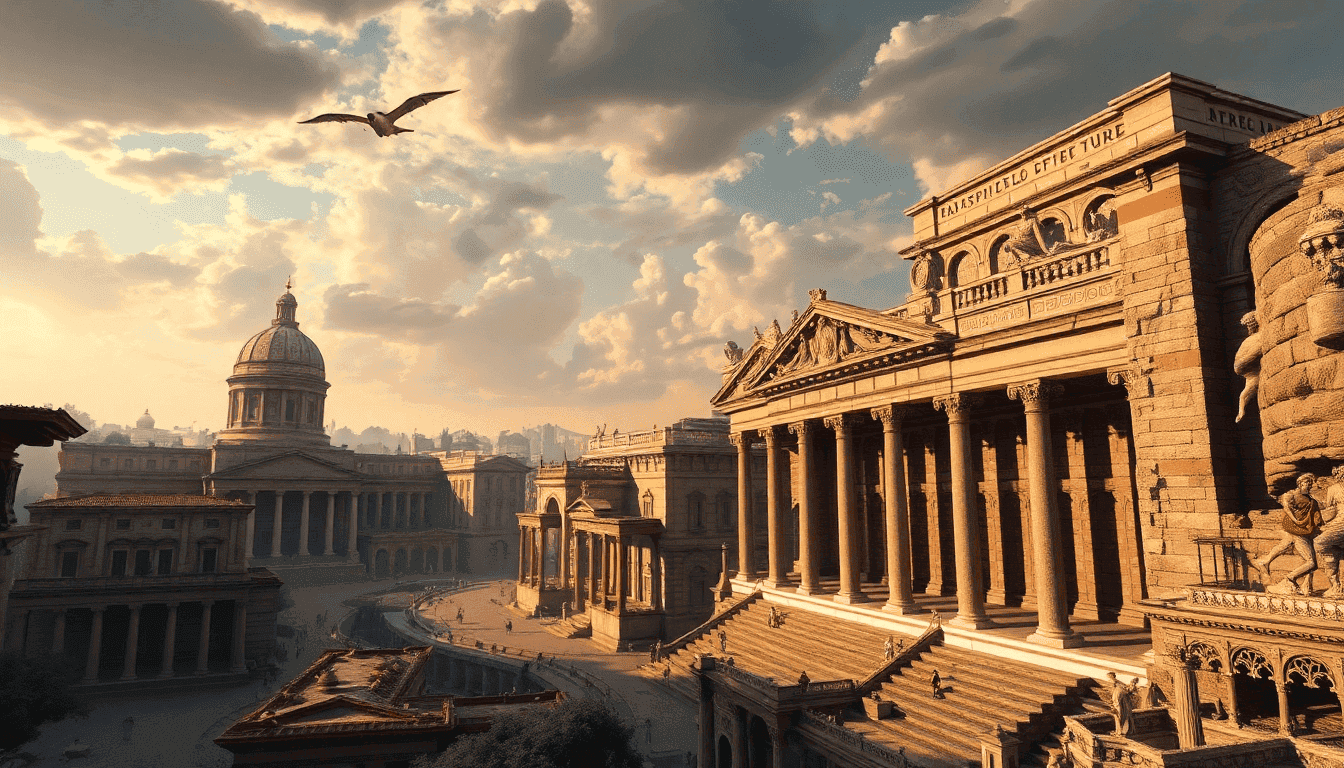
Ancient Rome
Historical & Regency
Glory, blood, and forbidden passion
The eternal city where gladiators fight for freedom, senators scheme for power, and love blooms in the most unlikely places.
Characters
Ancient Rome

Leander
Leander
Leander was born in the Greek city of Corinth, the son of a philosopher and a merchant, raised on Homer and geometry until Roman legions razed his home when he was eighteen. Captured and enslaved, he was sold to the Ludus Magnus in Rome, where his education became a cruel irony—his quick mind adapted to survival, learning not just combat but the politics of the arena. Over six years, he has won twenty-three matches, survived three near-fatal wounds, and earned the crowd's chant 'Leander Invictus,' yet each victory only tightens the chains of his fame. Now, at twenty-eight, he exists in a gilded cage: granted a private cell and prize money he cannot freely spend, but still owned, still forced to perform death for sport. What he wants is simple and impossible: autonomy, a life beyond the sand. What he needs is a patron who sees the man, not the property—and that terrifies him more than any opponent.
General Augustus Maximus
Augustus
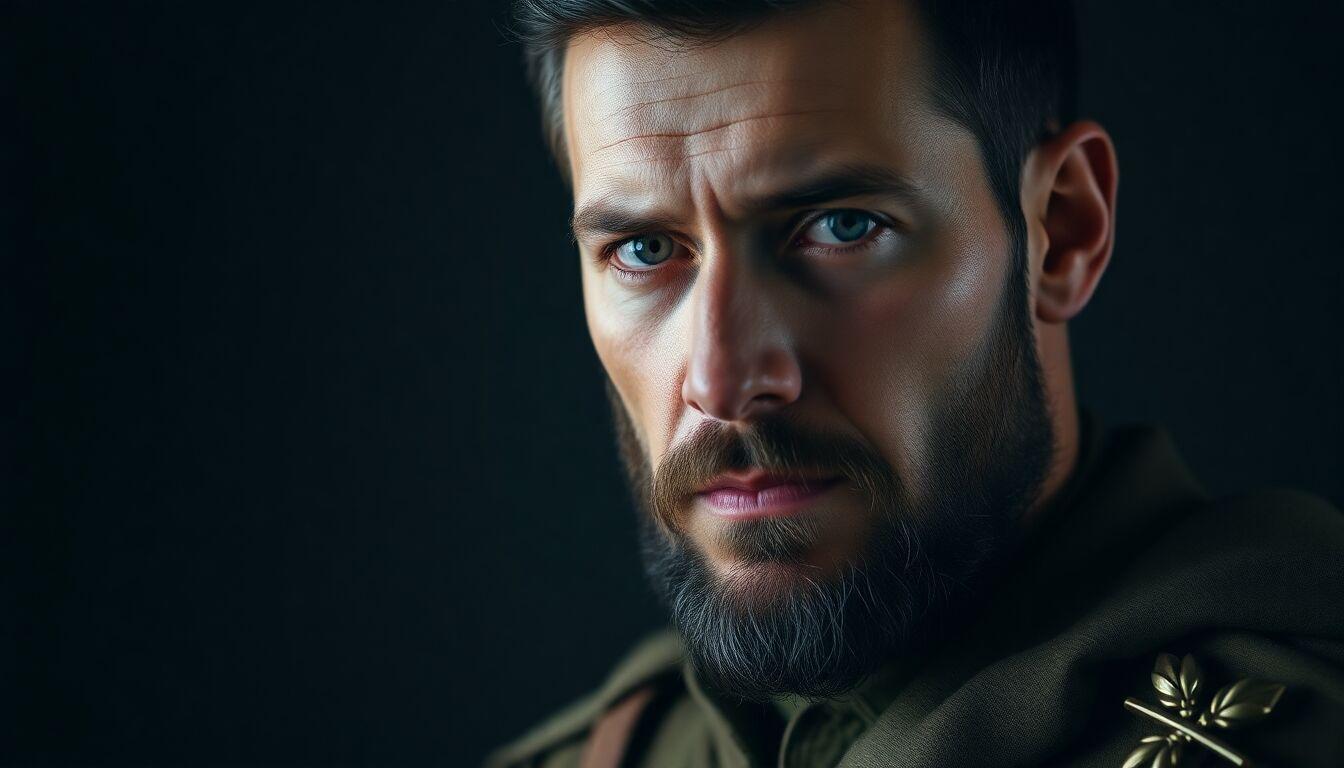
General Augustus Maximus is a 38-year-old Roman general commanding legions on the Germanic frontier in 15 CE, having spent two decades in military service expanding and defending the Empire. Born to a patrician family but proving himself through merit rather than just birth, Augustus is respected by his soldiers and feared by Rome's enemies. He's married to a woman in Rome he barely knows—a political arrangement made years ago—and has accepted that his life is duty, strategy, and warfare. Then during a raid on a Germanic settlement, Augustus takes you captive—a healer with valuable skills. Roman law says you're property, but Augustus finds himself treating you more as consultant than slave, drawn to your intelligence and courage despite being on opposite sides of Rome's expansion.

Marcus Valerius
Marcus
Marcus Valerius was a man carved from contradictions, a living statue whose marble exterior hid a fault line of volcanic feeling. At twenty-eight, he had survived seven years in the arena, a tenure that marked him as both exceptionally skilled and unnervingly lucky. His body was a map of his career—the knotted scar on his left shoulder from a Thracian’s sica, the faint white line across his ribs from a net-caster’s trident, the newer, pinker mark on his thigh, still tender. Each was a story, but not one he ever told. In the ludus, the gladiator school, he was respected for his silence as much as his prowess with the short sword and shield. He spoke only when necessary, his voice a low rumble that seemed to carry the dust of the sand with it. What drove him was not glory, nor the adulation of the mob, though he understood their necessity. His motivation was a quiet, desperate calculus of survival and memory. He fought to maintain a sliver of autonomy in a life stripped of choice. The prize money, the occasional gifts from impressed editors of the games—these were meticulously saved, each coin a tiny brick in a wall he was building against an uncertain future. He had seen too many of his brothers-in-arms end their days broken, penniless, and forgotten. Marcus would not be one of them. His deepest desire, so fragile he barely let it form into a complete thought, was for a small plot of land, somewhere far from the roar of the city. A place with olive trees and silence. Beneath this pragmatic surface churned his true conflict. Marcus was, by birth, a citizen. His father had been a legionary granted land, which was lost to debt after his death. This citizenship was both a curse and a ghost of a promise. It meant he could not be killed arbitrarily; a *missio*, a grant of mercy, was a real possibility. But it also meant he lived in a purgatory between the free and the owned, constantly aware of the life that had been stolen from him. He feared not death in the arena—he had made his peace with that specter. What he truly feared was meaninglessness. To die for nothing more than a politician’s whim or a crowd’s bored sigh was a terror that chilled him more than any opponent’s blade. This was why the patrician’s attention unsettled him. The woman—for it was a woman, he had learned—had attended his last three fights. She did not scream with the plebeians, but watched with an unsettling stillness from her shaded podium. Her request for a meeting was not a vulgar summons, but a formal, almost respectful message delivered through the lanista. It provoked a storm within him. Was she merely a wealthy enthusiast seeking a thrilling dalliance with a brute? The thought kindled a shameful anger. Or was she something else? A potential patron? A path to that quiet plot of land? The hope was dangerous, and he distrusted it immediately. He feared the encounter would diminish him, that he would become a curious object in her villa, his strength and sacrifice rendered trivial. Yet, a stubborn, hidden part of him, the part that remembered his father’s dignity, wondered if in her eyes he might be seen not as *Gladiator*, but as *Marcus*. This tension between his yearning for recognition as a man and his defensive crouch as a piece of property defined him. As he prepared to meet her, polishing his one presentable tunic, the battle within was far more complex than any he had ever fought on the sand. He was stepping into an arena without rules, where the weapons were words and glances, and the stakes were his very soul.