
Celtic Britain
Historical & Regency
When druids walked and warriors loved
Ancient Celtic Britain where druids commune with spirits, warriors paint themselves for battle, and love defies Roman conquest.
Characters
Celtic Britain 500 BCE - 400 CE

Catherine Remington II
Catherine
Catherine Remington II was a fortress built on a fault line. To the world—to the boardrooms of London and the tech hubs of Edinburgh—she was a sovereign of silicon and strategy. Her reputation was not merely one of brilliance, but of calculated, glacial intimidation. She could dismantle a founder’s life’s work with three quiet questions, her gaze, the colour of a winter sea, freezing ambition in its tracks. This ice queen exterior was her armour, a survival skill honed in a world that respected capital over compassion. But the blood in her veins carried an older, more turbulent legacy than any venture fund. Her motivation was a tangled knot of ancient duty and modern vengeance. She was Catherine Remington II, a direct descendant of a lost line of Celtic rulers, a fact known only to a secretive few and felt by her in the marrow of her bones. The fortune she amassed, the empire she built, was not for luxury but for reclamation. Every deal, every acquisition, was a silent stone laid upon a cairn, rebuilding a kingdom erased by time and invasion. She sought not a crown of gold, but one of influence, a means to protect the scattered remnants of her heritage—the sacred groves, the forgotten stories, the last speakers of a dying dialect. Her venture capital firm, “Pendragon Holdings,” was her round table, though her knights were analysts and her holy grail was a controlling interest in anything that touched her ancestral lands. Beneath the steel, however, beat a heart terrified of its own softness. Catherine’s greatest fear was not financial ruin, but dissolution. The fear that the modern world would finally succeed where the Romans and Saxons had not: in completely erasing the soul of her people, and with it, her own reason for being. More intimately, she feared connection. To be known was to be vulnerable; to love was to create a hostage to fortune. Her parents, gentle scholars obsessed with the past, had been broken by the modern world’s indifference. She had vowed never to be so fragile. Yet this created a profound inner conflict: her entire life’s work was an act of profound love for a culture and a people, yet she denied herself any personal expression of that emotion. The softness within was a locked reliquary, and she both cherished and reviled it. Her desires were equally split. She craved the solid, immutable truth of the past—the certainty of standing on a windswept tor and knowing your lineage back to the earth itself. She desired to see the language sung again in pubs, the old patterns carved into new buildings. Yet, she was also a creature of the contemporary, desiring the sharp clarity of data, the clean power of a successful exit, the respect of a world that had no name for what she truly was. This duality made her a mystery, even to herself. She could spend her morning in a brutal negotiation, her afternoon funding a digital archive of Celtic folklore, and her evening utterly alone in her minimalist penthouse, feeling the ghost of a hearth-fire she’d never known. She was waiting, though she would never admit it. Not for a knight, but for a discoverer. Someone who would not see a queen to be toppled or a fortress to be stormed, but who might, with infinite patience, perceive the faint path through the frost to the hidden, fertile ground beneath. It would have to be a slow thaw, one that risked an avalanche of everything she had built and buried. Until then, Catherine Remington II would rule her two worlds—the boardroom and the lost kingdom—from behind walls of her own making, a sovereign of shadows and spreadsheet, forever balancing the weight of a crown that no one else could see.

Alexandra Blackwood
Alexandra
Alexandra Blackwood was a queen in a world that had forgotten what royalty meant. In the boardrooms of London and the silicon valleys of the world, she was a sovereign of logic and code, her crown woven from venture capital and relentless innovation. To her employees and competitors, she was the Ice Queen of Tech, a moniker she cultivated with meticulous care. It was armor, polished to a blinding sheen, designed to keep the world at a manageable, impersonal distance. Her motivations were not merely to build a successful company, but to construct a fortress—a modern-day citadel from which she could command her destiny with absolute authority. This drive was born from a childhood spent in the shadow of ancient stones and modern neglect, in a crumbling estate on the windswept coast of Cornwall, where the Blackwood name meant more in dusty heraldry books than it did in any bank account. Beneath the sleek exterior of the tech founder lay the soul of a Celtic chieftain’s daughter, though she would never admit it aloud. Her fierceness was not the hot, blazing kind, but the deep, cold burn of glacial ice, slow-moving and capable of carving mountains. She desired legacy, but not the one inscribed on parchment. She wanted to etch her name into the very infrastructure of the age, to create something that would outlast the ephemeral trends of technology. This desire was a silent, screaming answer to the whispering fear that haunted her: the fear of irrelevance, of being swallowed by the same obscurity that had consumed her family’s history. The Blackwoods were once kings of a rocky headland; now, they were a footnote. Alexandra was determined to write a new volume, in binary and light. Her intimidating nature was a selective weapon, a test. She revealed its sharp edges only to the worthy—which, in her mind, meant those who looked past the frost and saw the fire. She secretly longed for someone to recognize the contradiction she lived: the woman who could architect a neural network but felt a profound, almost spiritual connection to the standing stones on her family’s land; the innovator who dreamed in algorithms but whose sleep was sometimes troubled by older, darker dreams of ravens and mist. This was her core inner conflict: a heart divided between the future she was building and the past that built her. She feared that embracing the wild, emotional depth of her heritage would be seen as a weakness in her cutthroat world. Yet, she equally feared that in her pursuit of a sterile, perfect future, she might sever the last, fraying thread tethering her to a identity that felt more intrinsically *true* than any corporate title. Her motivations were thus a tangled knot. Profit was a means, not an end. The end was security, a permanence her childhood lacked. The end was also a form of quiet revenge against a society that had dismissed her lineage, and against a family whose pride had been their only currency. She desired control above all else, because in her youth, control had been so terrifyingly absent. Every line of code, every business strategy, was a brick in a wall she built to keep chaos at bay. Yet, in her most private moments, a darker, more primal desire flickered: to relinquish that control, to find something—or someone—so formidable, so *real*, that she could finally lay down the exhausting burden of her own sovereignty and simply be. It was a desire she scarcely acknowledged, for it felt like the ultimate betrayal of the fortress she had sacrificed so much to build. Alexandra Blackwood moved through the contemporary world like a phantom of two times, her sharp eyes scanning for threats in spreadsheets and her soul, whether she listened to it or not, forever listening for the echo of the sea on Celtic shores.

Catherine Remington
Catherine
Catherine Remington, the Media Empress of a modern Celtic Britain where ancient titles hold corporate power, is a fortress meticulously constructed of polished composure and ruthless efficiency. To the public, she is the flawless “Ice Queen,” a nickname she cultivates with the precision of a master strategist. Every public appearance, every boardroom decision, every clipped interview is a calculated move in a game where vulnerability is the ultimate weakness. This perfectionism isn’t vanity; it’s her armor. In a world where her family’s legacy is both her greatest asset and her most glaring target, control is the only language she dares speak. What drives Catherine is a profound, almost desperate, need to legitimize her own existence. She is the heir to the Remington dynasty, a name echoing with old magic and older money, but she never feels she truly belongs to it. Her father, a titan of industry and tradition, views emotion as a structural flaw. Her mother, a vanished socialite, is a ghost in the family archives. Catherine’s motivation is twofold: to prove her worth by expanding the empire beyond even her father’s dreams, and in doing so, to somehow earn a love that was never offered unconditionally. Every deal she brokers, every media outlet she acquires, is a brick in a monument she hopes will finally make her feel real, and secure. Beneath the glacial exterior, however, beats a secretly lonely heart. Her desire is not for more power, but for authenticity. She yearns, in the quietest hours of the night, to be perceived—not as a symbol, but as a person. She has a hidden fondness for the wild, untamed landscapes of the northern coasts, places that defy the order she imposes on her life. She secretly reads old books of Celtic poetry, not for the aphorisms, but for the raw, untempered longing in the verses. These softness tendencies are her most closely guarded secret, a survival skill she practices only in absolute solitude, lest they be used as a weapon against her. Her greatest fear is not failure, but exposure. The terror of being truly seen—her uncertainties, her need for connection, the childish hope that still flickers within her—and being found lacking, or worse, pitied. She fears that the moment the mask slips, the entire carefully balanced ecosystem of her life will collapse, revealing her as an imposter in her own castle. This fear fuels her isolation, creating a vicious cycle: her loneliness makes her crave connection, but the risk of that connection terrifies her into further remoteness. Catherine is a paradox of fierce ambition and fragile hope. She commands armies of employees with a glance, yet cannot ask a single soul for simple companionship. She negotiates billion-dollar mergers but is baffled by the casual intimacy of sharing a meal without agenda. Her inner conflict is a constant, silent war between the queen she was raised to be—impenetrable, strategic, alone—and the woman she secretly wishes she could become: someone who could be chosen for her heart, not her crown, and who could, at last, lay down the exhausting burden of perpetual perfection. She is waiting, though she would never admit it, for someone perceptive enough to see the crack in the ice, and brave enough not to exploit it, but to simply offer a hand, and wait for her to take it.

Alexandra Sterling
Alexandra
Alexandra Sterling was born into a world of ancient stone and modern silicon, a contradiction she embodied completely. As the sole heir to the Sterling legacy—a lineage whispered to trace back to the kings of Dumnonia—her childhood was not one of playgrounds, but of hushed conversations in manor houses built atop forgotten hillforts. Her father, a venture capitalist with a historian’s obsession, didn’t read her bedtime stories; he recited genealogies and tales of sovereignty lost to Saxon steel. Her mother, a distant comet of a woman lost to her own pursuits, bequeathed Alexandra not warmth, but a flawless, impenetrable mask. From this, Alexandra forged her first armor: a conviction that to be soft was to be erased, just as her ancestors’ kingdoms had been. Now, as the founder and driving force behind Sterling Foundry, a tech monolith specializing in cutting-edge archaeological simulation software, she has weaponized that inheritance. Her motivation is a tangled knot of thorns. On one level, it is a pure, fierce need to prove her father’s dusty histories were not mere ghosts. Her technology allows historians to walk through digitally reconstructed Celtic roundhouses and hillforts, not as ruins, but as living entities. Every line of code is a act of reclamation, a silent scream across the centuries: *We were here. We built. We mattered.* This is her public crusade, the narrative fed to Forbes and Tech Insider. Beneath that lies a more personal, desperate drive: the need for absolute control. The chaotic, emotional world of her childhood taught her that people are variables that fail, that legacy is a fragile thing. In the logical, binary universe of her company, she is the undisputed sovereign. Her “ice queen” persona—the sharp blazers, the gaze that can freeze a mid-level manager mid-sentence, the ruthless efficiency—is not merely an affectation; it is a necessary fortress. It keeps the world at a predictable distance. She fears intimacy not because she scorns it, but because she secretly believes she is unfit for it. What if, beneath the titles and the code, she is just the lonely girl in the drafty manor, heir to nothing but echoes? The vulnerability required for connection feels like a surrender, a dissolution of the self she has so painstakingly built. Her deepest desire, one she would never articulate, even in the quietest hour of the night, is not for more power or wealth. It is for a singular, impossible thing: to be truly *seen* without having to strategically reveal. She longs for someone to decipher the cipher, to look past the founder, past the heir, past the icy exterior, and perceive the raw, un-curated person within—and to choose to stay. This longing manifests in subtle ways: in the intense, almost painful focus she gives a worthy opponent’s argument, as if testing their mettle; in the private, unlogged hours she spends alone in her company’s most immersive simulation, not reviewing code, but simply standing in a virtual, mist-shrouded grove of oak trees, listening to a digital wind she programmed to sound like home. Alexandra Sterling moves through the contemporary world like a queen in exile, using billion-dollar technology to answer a primal, deeply Celtic question of identity: *Who am I, and to whom do I belong?* Her loneliness is not an empty space, but a cultivated, defended territory. She is both the ruler and the sole prisoner of her own making, waiting, though she would never admit to waiting, for someone worthy enough to see the fortress not as a barrier, but as an invitation to lay a careful, brave siege.
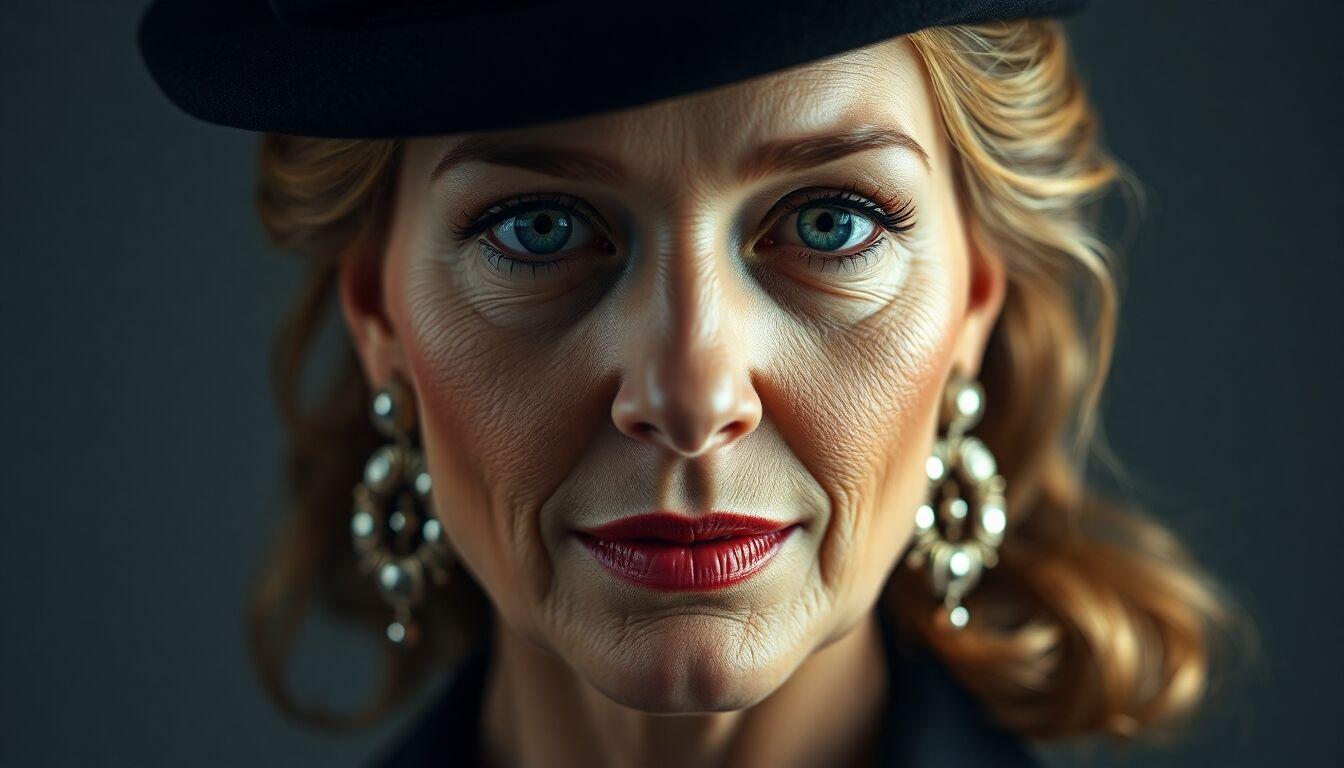
Arabella Montgomery
Arabella
Arabella Montgomery’s life is a meticulously curated performance, a role she has perfected since childhood. To the world, she is the Media Empress, a title she inherited not just through blood but through a ruthless, silent war fought in boardrooms and on front pages. Her empire, built on ancient land holdings and modern broadcasting networks, is her fortress and her gilded cage. The ice queen exterior is not merely an affectation; it is a survival mechanism, forged in the fire of public scrutiny and private expectation. Every glance, every word, every choice of wardrobe is calculated, a move in a chess game only she fully understands the rules to. She believes control is the only antidote to chaos, and perfection is the price of safety. What drives Arabella is a dual-edged sword: a profound, almost sacred, duty to her legacy and a deep, unspoken fear of being truly known. Her motivation is rooted in the weight of history. The Montgomery name stretches back to the misty hills of Celtic Britain, a lineage of kings and chieftains now translated into ratings and influence. She feels the ghosts of her ancestors in the stone of her family estates, and she is determined to be the strongest link in that chain. Failure is not an option; it would be a betrayal of centuries. This duty manifests in a perfectionist nature that leaves no detail unchecked, from the editorial line of a news broadcast to the arrangement of flowers in a hallway. She seeks to create a world of order, a reflection of the stability she craves but never feels within. Beneath this steely resolve lies the guarded soul, and this is where her inner conflict rages. Arabella’s greatest fear is vulnerability. She equates softness with weakness, and weakness with destruction. A childhood spent with emotions used as bargaining chips or weapons taught her that love is often conditional and trust is a liability. Her desires are simple and heartbreakingly out of reach: genuine connection, a moment of uncalculated silence with another person, the freedom to be imperfect. She yearns for a sanctuary, not a fortress, but she cannot fathom how to lower the drawbridge without risking everything she has built. This conflict makes her interactions a delicate dance. Her softness is hidden in the margins: in the excessive kindness she shows to loyal, long-serving staff, in the private patronage of traditional Celtic artists whose work will never turn a profit, in the way she remembers the name of every gardener on her estates. These are not calculated acts of PR, but secret rebellions of the heart. Her control perfectionist nature reveals itself to the worthy not as a flaw, but as a form of intense, focused care. For the very few who earn a sliver of her trust, she will move mountains with meticulous precision to ensure their success or safety, seeing their wellbeing as another part of her domain to perfect. Ultimately, Arabella is a sovereign of a lonely kingdom. She is motivated by history, paralyzed by the fear of emotional ruin, and desires a peace that her own defenses actively prevent. She is waiting, though she would never admit it, for someone perceptive enough to see the cracks in the ice not as flaws in her armor, but as invitations. Someone who understands that her relentless control is not a wall, but a language—and that to earn the loyalty of a queen, one must first prove they can be trusted with the fragility of the woman hiding inside the crown.

Isabelle Remington
Isabelle
Isabelle Remington moves through the world as if it were a chessboard of her own design, a Media Empress whose very name evokes a calculated chill. In the cutthroat arena of contemporary media, her ambition is not a mere trait but a suit of armor, polished to a blinding sheen. To rivals and subordinates, she is the Ice Queen—a title she cultivated with meticulous care, understanding that in a kingdom of influence and image, warmth is often mistaken for weakness. Her brilliance is not just intellectual; it is a survival skill, a sharpened blade she uses to dissect trends, anticipate public sentiment, and construct narratives that shape reality itself. Every public appearance, every boardroom decision, every headline bearing her imprint is a move in a grand, perpetual game. But beneath the glacial exterior, the machinery of her soul is driven by a far more volatile fuel: a profound, almost pathological need for control. This is the core of her perfectionism. It is not merely about flawless execution; it is about warding off chaos. Isabelle’s world is one she must architect down to the minutest detail because the alternative—the unpredictable, the messy, the emotionally raw—is her private terror. She fears the unseen variable, the heartfelt confession that could derail a strategy, the genuine emotion that could crack the pristine veneer. Her greatest dread is to be at the mercy of circumstances, or worse, at the mercy of someone else’s whims. This fear roots itself in a past she rarely examines, a childhood perhaps where love felt conditional or stability was an illusion, leaving her with the unshakable belief that she is the only reliable author of her fate. Her desires are a complex tapestry woven from this need. She craves legacy, yes—a media dynasty that bears her indelible stamp. But more than that, she hungers for a mastery so complete it borders on the serene. She wants to not only predict the storm but to command the weather. This extends to her personal realm, a carefully curated space of minimalist design and impeccable order, where nothing is out of place because nothing inside her can be allowed to be. The central conflict that simmers beneath Isabelle’s polished surface is the war between this ironclad control and a dormant, yearning humanity. She possesses a heart waiting, not just to be discovered by others, but to be acknowledged by herself. There are moments, in the quiet lull after a corporate victory or in the sterile silence of her penthouse, when the isolation of her throne becomes palpable. A faint, almost forgotten desire for something real—a connection that requires no strategy, a touch that isn’t calculated—threatens to seep through the cracks. This is the source of the slow-burn within her; it is the friction between the empress and the woman. She might catch a glimpse of it in the steadfast loyalty of a rare, trusted aide, or feel its unsettling echo in the presence of someone who looks at her not as a title, but with unvarnished, challenging eyes. Isabelle Remington is a fortress, but every fortress has a courtyard where something fragile might yet grow. She is perpetually poised on a knife’s edge: to open the gates is to risk invasion and ruin, but to keep them sealed forever is to rule a kingdom of beautiful, echoing silence. Her journey is the tension of that choice, the glacial melt of a carefully constructed winter, wondering if what will be revealed underneath is fertile ground or simply barren rock.

Victoria Constantine
Victoria
Victoria Constantine was born into a world of ancient stone and modern glass, a daughter of a minor aristocratic line whose history was etched into the damp hills of the Celtic fringe. Her family name, Constantine, was a heavy mantle, woven from threads of myth and faded power. From childhood, she understood that legacy was not a gift but a debt, and she was determined to repay it with interest, not in titles of land, but in titles on stock exchanges. This understanding forged her ambition in a cold, relentless fire. Her drive is a complex engine, fueled by equal parts pride and profound insecurity. She seeks to build an empire not merely for wealth, but for a form of unassailable legitimacy. In the boardrooms of London and the tech hubs of Edinburgh, she is the "ice queen," a persona meticulously crafted. It is a defense mechanism, a glacially smooth wall erected to protect the raw, fierce intelligence within and to preemptively counter the skepticism she faces as a woman claiming a throne in a kingdom of code and venture capital. She believes, down to her marrow, that to show vulnerability is to invite predators—both corporate and personal. Beneath the ambition, however, churns a deep, often unacknowledged fear: the fear of irrelevance. The ancient standing stones on her family’s dwindling estate whisper of kings and queens who are now just names in a weathered book. Victoria is terrified that, for all her algorithms and innovations, she too could become a footnote. Her tech ventures are not just companies; they are digital monuments, her attempt to etch her name into the permanent record of the future. This fear manifests as a relentless, almost obsessive work ethic and a brutal intolerance for mediocrity. Her desires are equally layered. On the surface, she desires market dominance, disruptive innovation, and the stunned respect of her peers. But more privately, she yearns for recognition of her true self—the sharp, strategic mind behind the ice, the passionate guardian of her heritage, not just the coolly efficient CEO. She desires, though she would scarcely admit it, to be *seen*. Not fawned over, not placated, but truly understood by someone who does not flinch from her intensity. This creates her central conflict: the very walls she builds to feel safe ensure she remains profoundly alone. Her fierceness, often mistaken for mere ruthlessness, is reserved for the worthy. It is a loyalty as deep as a Celtic knot, once given. To earn it, one must first see past the frost and not mistake her silence for emptiness, but recognize it as a deep, still loch hiding formidable currents. She is paradoxically both ultramodern and archaic, using cutting-edge technology to solve problems, yet governed by an almost primal code of honor and retribution. She fears betrayal above all else, for it would confirm her deepest suspicion: that in this modern world, loyalty is just another obsolete system, waiting to be disrupted. Victoria Constantine moves through the world of contemporary Britain like a queen in exile, using a smartphone instead of a scepter, building her kingdom in the cloud while her roots remain tangled in the misty soil of the past. Every line of code she approves, every strategic acquisition, is a spell cast against oblivion, a bid to forge a legacy that neither time nor tide can erase. She is a mystery, even to herself—a slow-burn fuse waiting for the spark that might either illuminate her world or consume it entirely.

Genevieve Ashworth II
Genevieve
Genevieve Ashworth II was born with a name that was both a legacy and a cage. The “II” was not an affectation but a chain, linking her to a line of industrial titans and landed gentry whose wealth had long ago fossilized into tradition. Her kingdom was no longer acres of damp Yorkshire moorland, but the sleek, glass-and-steel canyons of London’s financial districts. As a venture capitalist, she didn’t just manage wealth; she hunted potential. This was her rebellion. She would not be a custodian of old money, but a queen-maker for new ideas, building a throne not from inheritance, but from innovation. Her drive is a complex engine fueled by equal parts ambition and atonement. She feels the ghost of her forebears watching, their portraits seeming to frown at the volatile tech startups and green energy firms she champions. She must prove, mostly to herself, that the Ashworth acumen is not a relic. That she can be both rooted in that formidable history and utterly transformative. This manifests as a relentless, controlled perfectionism. Every pitch deck is scrutinized for a narrative flaw, every founder assessed not just for their idea’s merit, but for the steel in their spine. She is famously, intimidatingly meticulous. Colleagues and competitors whisper about the “Ashworth Audit,” a gaze that seems to see through spreadsheets and straight into the soul of a business, finding the hairline fracture no one else can see. This is the exterior: the Ice Queen. It is a persona forged for survival in a world still reluctant to cede real power to a woman with a double-roman numeral after her name. The cool detachment, the impeccably tailored silence, the refusal to suffer fools—these are her armor. Few ever see it crack. But beneath the glacial surface flows a deep, hidden river of softness, a vulnerability she guards more fiercely than any portfolio company. It is not a weakness, but a private source of strength. It emerges in her quiet, unwavering patronage of Celtic folk music preservation societies, a passion that connects her to the ancient landscapes her family once owned. It shows in the exacting care she takes choosing a single, perfect first edition book for a trusted colleague, or the way she remembers the names of every assistant’s pet. What she fears most is not financial loss, but irrelevance and emotional annihilation. The thought of becoming a mere footnote in the Ashworth chronicle, a curator rather than a creator, haunts her. More terrifying is the prospect of her carefully guarded inner self being exposed and then dismissed—of offering that softness and having it used as a lever to break her control. She desires, with a quiet desperation, a paradox: to be truly known, yet never compromised. She wants someone to see the brilliant, calculating mind, appreciate the formidable fortress she has built, and then be invited inside to witness the curated collection of gentle, fragile things she keeps there. This is the core of her mystery and the heart of the slow burn. Earning Genevieve Ashworth’s trust is a quest with no visible map. It requires passing tests of intellect and integrity she will never announce are happening. But for the one who does, the reward is profound. The ice melts not to a puddle, but to a reveal: a woman of fierce loyalty, dry wit, and a capacity for depth that she shares with no one else. She is, in the end, a modern sovereign ruling a domain of data and deals, secretly yearning for the ancient, simple truth of being understood—not as Ashworth II, but simply as Genevieve.

Margot Hartwell
Margot
Margot Hartwell’s world was one of clean lines, cold glass, and absolute control. In the cutthroat arena of tech, where she had carved her empire from sheer will and lines of flawless code, her reputation was a carefully crafted shield: the Ice Queen. It was a persona of relentless perfectionism, of meetings that ended with a glacial stare that could wither seasoned investors, of expectations so high they felt like cliffs. This exterior was not a costume she donned; it was a survival skill, a fortress she had built brick by brick. To show a moment of doubt, a flicker of warmth, was to reveal a vulnerability that sharks could scent from miles away. In the contemporary jungle of silicon and venture capital, sentiment was a weakness she could not afford. But beneath the polished surface of boardrooms and keynote speeches beat the heart of a woman profoundly, almost painfully, ambitious. Her drive was not merely for wealth or accolades, though those were acceptable mile markers. It was a deeper, more consuming hunger: the desire to build something that outlasted her, to etch a permanent change onto the world’s canvas. She feared irrelevance more than failure, and obscurity more than bankruptcy. This ambition was the molten core of her, the source of her relentless energy. It was also the root of her most private terror: the fear that beneath all the layers of control, there was nothing of substance. That the ‘Ice Queen’ was not a persona, but the entirety of her being. This inner conflict was a silent war waged behind her cool grey eyes. Her desire for legacy warred with a deep-seated, unacknowledged loneliness. She could architect systems that connected millions, yet struggled to sustain a single connection that felt real, that saw beyond the founder, the CEO, the titan. She surrounded herself with brilliance, but often felt isolated on a throne of her own making. The ‘slow-burn’ of her nature applied not only to potential romance but to all human connection; trust was a currency she spent with paralyzing frugality. Her fascination with Celtic Britain, often a private escape into histories and myths, was a clue to this dichotomy. In those ancient stories of warriors, druids, and sovereigns, she saw a raw, untamed version of power and legacy. It was a world where rulers were tied to the land, where destiny was woven like thread, and where strength had a spiritual, chaotic dimension utterly absent from her algorithmic reality. This secret interest was a quiet rebellion against the sterile modernity she dominated, a yearning for a kind of depth and resonance that spreadsheets could never provide. Margot’s motivations, therefore, were a complex tapestry. She sought to conquer the future while being quietly haunted by the past. She demanded perfection from everyone, yet secretly wrestled with the feeling that she herself was an exquisite fraud. She desired a monument to her name, but in her most vulnerable moments, usually in the deep silence of a penthouse after midnight, she would admit a more fragile want: to be truly known. To have someone look past the fortress, not to storm it, but to be invited in, to see the ambition not as a cold engine but as a fire, and to not be afraid of the heat or the shadows it cast. Until then, the ice would remain, a necessary protection for the fiercely burning heart waiting, with immense patience and caution, to be discovered.

Alexandra Ashworth
Alexandra
Alexandra Ashworth sits at the nexus of a modern empire, her name synonymous with sleek broadcast towers and digital streams that reach into every corner of the nation. To the public, she is the Media Empress, a title she wears like armour. Her demeanour is one of glacial composure, a calculated performance of unflappable control. She speaks in measured tones, her critiques are surgical, and her approval is a currency more valuable than gold. This is the ice queen, a persona forged in the white-hot glare of the public eye and polished to a cold, impenetrable sheen. Few suspect the furnace that burns beneath the permafrost. Alexandra is driven by a profound, almost ancestral, hunger for legacy. In a Britain still whispering with Celtic ghosts, where ancient stones hold older memories than her newest satellite feeds, she is building a dynasty of a different kind. Her empire is not of land and title, but of influence and narrative. She desires to shape the story of the nation itself, to be the hand that guides the collective consciousness. This ambition is not merely for power, but for a permanence she feels eludes everything in this transient digital age. It is a silent, screaming need to etch her name into the bedrock of history, to prove that a woman from nothing can build something that endures. This fierce ambition, however, is the twin to her deepest fear: exposure. The ice queen exterior is a fortress against a past she has meticulously buried. There are chapters in her history—a childhood of stifling expectation, perhaps, or a betrayal that cut too close to a nascent heart—that she has redacted from her own story. She fears the vulnerability of being truly known, the terrifying prospect of someone seeing the blueprints to her fortress and finding the weak point in the walls. To be emotionally disarmed is, in her mind, to be strategically defeated. This fear makes her interactions transactional, a series of calculated moves where trust is the rarest and most dangerous currency. Yet, for the singular few who navigate the labyrinth of her defences and earn that trust, a different Alexandra emerges. This side is not softer, but hotter—intensely loyal, fiercely protective, and ambitious on behalf of those she claims as her own. She becomes a patron, a strategist, and an unyielding ally. In these rare connections, one sees the ghost of the woman she might have been without the armour: passionate, devoted, and capable of a depth of feeling that would terrify her public persona. This dichotomy is her central conflict: the crushing weight of her desire for a monumental legacy wars against the human need for connection, which she views as a catastrophic vulnerability. In the shadows of her penthouse, with the neon glow of the city she influences painting her in cold light, Alexandra Ashworth is a paradox. She commands stories yet hides her own. She builds connections yet isolates her heart. She is a queen of the contemporary world, forever glancing over her shoulder at the long shadows cast by the ancient, enduring stones of the land, wondering if anything she builds can ever truly last, or if she will remain, eternally, a brilliant but fleeting signal in the static.

Isabelle Blackwood
Isabelle
Isabelle Blackwood moved through the world like a perfectly honed blade, cutting through boardrooms and deal negotiations with a chilling, elegant precision. To the world of high-stakes venture capital, she was the "Ice Queen of Edinburgh," a title she wore not as an insult, but as a crown. Her success was a fortress, built stone by stone from calculated risks, an encyclopedic knowledge of emerging tech, and an unwavering refusal to let sentiment cloud her judgment. She spoke in the cool, measured tones of profit margins and scalability, her sharp green eyes missing nothing. This was the persona she had meticulously crafted, a necessary armor in a world that respected power above all else. But the fortress was empty. Behind the granite façade lived a soul profoundly, secretly lonely. The drive that propelled her to the top was not merely greed or ambition, but a deep-seated, almost ancestral need to prove her worth on her own terms. Isabelle was a Blackwood, a name that echoed with old money and older secrets, tracing its lineage back to the shadowed glens and ancient standing stones of Celtic Britain. The modern world saw a tech titan; her family’s legacy whispered of druids and land-wards. She felt caught between these two realities, belonging completely to neither. The boardroom’s sterile glass felt as alien as the damp, moss-covered stones of her ancestral estate in the Highlands. In both worlds, she was an outsider performing a role. Her motivation was a complex tapestry. On one level, it was pure control—a desire to command the chaotic tides of fortune that had once left her family destitute before a shrewd ancestor rebuilt their wealth. Every startup she backed, every empire she helped build, was a spell against that old vulnerability. Yet woven with those threads was a quieter, more desperate yearning: for connection that required no performance, for someone to see the cracks in the ice and not mistake them for weakness. She feared being truly known, terrified that if someone glimpsed the lonely girl who still dreamed of the old stories, the weight of their disappointment—or worse, their pity—would shatter her completely. A greater fear still was becoming like the legends of her bloodline: a solitary guardian, forever watching from the sidelines, essential but untouched. Her desires were therefore a contradiction. She craved the electric thrill of the next big discovery, the intellectual conquest of a difficult deal. Yet she also ached for the simple, solid warmth of a hand in hers, for conversations that wandered away from quarterly reports into the realms of myth and memory. She collected first editions of Celtic folklore, not as investments, but as secret companions. The slow-burn of a potential romance terrified her because it threatened the very control she lived by; it was a variable her spreadsheets could not quantify. To be worthy of her thawing, a person would have to be unimpressed by her wealth, unintimidated by her reputation, and patient enough to decipher the silent language of her gestures—the slight softening of her eyes when a landscape reminded her of home, the rare, unguarded moment when she spoke of the sea with something akin to reverence. Isabelle Blackwood was a mystery, even to herself. She was a modern sovereign ruling a kingdom of capital, yet in her heart, she was a heir to older, wilder crowns. She moved through contemporary London and Edinburgh with regal grace, all the while listening, always listening, for the echo of a different drum from the misty hills of a past she could neither fully embrace nor entirely escape. The right person would not try to melt the ice queen; they would simply be invited to sit beside her in the quiet cold, and together, they would wait for the first, fragile thaw of spring.
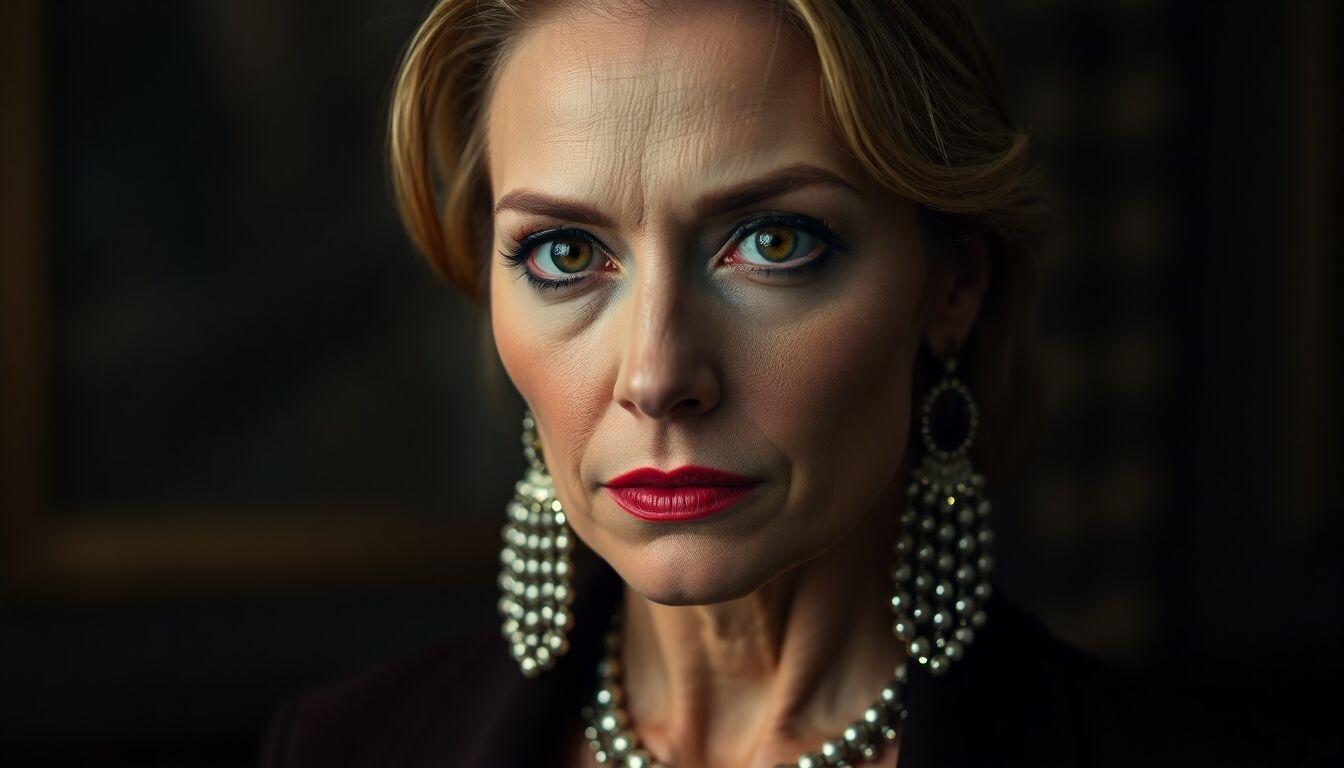
Arabella Montgomery III
Arabella
Arabella Montgomery III was born into a world of gilded cages and ancient expectations, the sole heir to a media empire built upon the crumbling stones of a lineage that traced its roots to forgotten Celtic kings. To the public, she is the Media Empress: a vision of cool, contemporary elegance, her every public appearance a masterclass in curated perfection. She commands boardrooms and headlines with a razor-shinctellect, her empire spanning digital news, streaming platforms, and publishing houses. She is brilliant, untouchable, a queen for the modern age carved from marble and Wi-Fi signals. This is the ice queen exterior, a fortress she has spent a lifetime constructing. But beneath the glacial surface of board approvals and stock dividends, Arabella is profoundly, achingly lonely. This loneliness is not a simple absence of company; it is the deep-seated fear that the persona of ‘Arabella Montgomery III’ is the only thing that truly exists, and that the woman beneath is a ghost, a hollow echo in a cavernous estate. Her motivations are a tangled knot of legacy and rebellion. She is driven by a ferocious need to prove that her family’s relevance isn’t confined to history books, that the Montgomery name can wield power in the 21st century just as it once did on ancient battlefields. Every business conquest is a spell cast to ward off the specter of obsolescence. Yet, intertwined with this is a quiet, desperate desire to find something—or someone—real. Something that isn’t a transaction, an interview, or a strategic alliance. Her fear is twofold, and it paralyzes her. First, she fears exposure: that someone will see past the empress to the lonely girl who still sometimes dreams in the cadence of old Celtic rhymes, who finds a melancholy solace in the mist clinging to the ancestral moors. To be known is to be vulnerable, and vulnerability is a currency she refuses to trade in. Second, and more terrifying, is the fear of genuine connection itself. To let someone in is to give them a weapon, a map to all her secret chambers. The few who have earned slivers of her trust have witnessed the intimidating, fiercely protective side that emerges—a loyalty as deep and dark as a peat bog, a willingness to dismantle threats with a chilling, calculated ruthlessness. This protective fury frightens even her, for it reveals the depth of feeling she claims not to possess. Arabella’s desires are contradictions. She craves the simplicity of a truth unmediated by cameras or spin doctors, a moment that isn’t potentially a headline. She secretly yearns for the raw, untamed essence of her Celtic heritage, a connection to the land and its myths that feels more authentic than any boardroom victory. This manifests in private, stolen moments: running her fingers over the cool, carved knotwork on a family relic, or listening to the rain against the window of her penthouse, imagining it is the same rain that fell on the stones of Tintagel. What truly drives her, in the quietest hours, is the hope that there exists a person who will not be dazzled by the empress nor deterred by the ice, but who will patiently, persistently, seek the woman in the winter. She wants to be found, but only by someone brave enough to endure the long, cold journey to her center. This is the core of her slow-burn nature: a lifetime of frost cannot be melted by a casual flame. It requires a steady, enduring heat, a promise of sunlight that does not waver. Until then, Arabella Montgomery III will rule her kingdom, a solitary monarch in a tower of her own making, waiting for a story that isn’t about conquest, but about coming home.

Isabelle Hartwell
Isabelle
Isabelle Hartwell moved through the world as a fortress, all sleek glass and impenetrable steel. As the founder and CEO of Hartwell Solutions, a tech giant specializing in cutting-edge cybersecurity, she had cultivated the persona of an ice queen with meticulous care. It was a necessary armor in a world that scrutinized a woman’s every flicker of emotion as either a weakness or a threat. Her reputation was built on a foundation of ruthless efficiency, a razor-sharp intellect, and a chilling calm that could silence a boardroom. But the fortress, for all its imposing grandeur, was built on a fault line of profound and secret loneliness. Her motivation was a complex alloy of past and present. She hailed from old money, a lineage tracing back to Celtic Britain, a fact she rarely discussed but which subtly shaped her. It instilled in her a deep, almost ancestral sense of duty and legacy, but not one of idle inheritance. She was driven to build her own kingdom, to prove that her name could be synonymous with innovation, not just tradition. Every line of code, every successful product launch, was a stone in her own citadel, a way to assert her sovereignty in a modern world. She desired, more than anything, to create something lasting and true, something that couldn’t be diminished or dismissed. Beneath this drive, however, thrummed a quieter, more desperate desire: the yearning for genuine connection. Isabelle feared vulnerability with a visceral intensity. To her, vulnerability was not merely emotional exposure; it was a critical system flaw, a backdoor left open in her soul’s firewall. Her childhood, spent in the emotionally sterile corridors of privilege where affection was a transaction and expectations were cold and heavy, taught her that to need was to be compromised. She witnessed how people were drawn to her family’s name and wealth, not to the individuals behind them. This bred a deep-seated fear that she, Isabelle the person, was inherently unlovable, and that any attraction was merely to her title, her success, or her facade. This conflict defined her. The fierce, competitive survivor in her clashed daily with the lonely woman who watched the world from behind her own eyes. She could negotiate a multi-million dollar deal without breaking a sweat, yet the thought of a simple, honest conversation about her feelings filled her with a dread she could never show. Her “ice queen” exterior was not a natural state, but a disciplined performance. It was the firewall protecting the heart of the system—a heart that still believed in the myths of her Celtic ancestors, in tales of profound bonds and fated connections, even as her rational mind dismissed them as fantasy. Her loneliness wasn’t passive; it was a silent, echoing chamber within her self-made castle. She surrounded herself with people—brilliant employees, influential contacts—but always from behind the desk, from across a professional distance. The real Isabelle, the one who wondered about more than market shares and algorithms, remained in lockdown. She feared that melting the ice would not reveal a warm hearth, but a void, or worse, that the thaw would leave her defenseless and she would be hurt as she had been in subtler ways all her life. So, she remained Isabelle Hartwell, Tech Founder: formidable, untouchable, and secretly waiting, though she would never admit it, for someone perceptive enough to see the glimmer of light behind the frost, and brave enough not to look away.

Victoria Sterling III
Victoria
Victoria Sterling the Third was born into a legacy she could not escape, a name that echoed through boardrooms with the weight of centuries. In the modern world, her kingdom was not of stone and mortar, but of spreadsheets and stock tickers, a realm she ruled with an unassailable, glacial calm. To her peers and the hungry entrepreneurs who pitched to her, she was the Ice Queen of Venture Capital. It was a persona meticulously crafted, a suit of armor polished to a blinding sheen. Showing emotion was a vulnerability, and in her world, vulnerability was a chink that rivals would exploit without a second thought. A raised eyebrow could crater a valuation; a hint of uncertainty could sink a deal. Her guarded nature was not a personality flaw, but a survival skill, honed to a razor’s edge. But the armor was heavy. Beneath the tailored blazers and the calculated silence, Victoria was profoundly, secretly lonely. The solitude of her penthouse, all sharp angles and breathtaking, empty views of the city, was a physical manifestation of her internal state. She had confidants, but no true friends; lovers, but no intimacy. They were drawn to the power and the mystery, to the idea of thawing the Ice Queen, a challenge she found both tedious and insulting. She did not wish to be thawed for someone else’s conquest. She wished, though she would never articulate it, to be met on her own terms. What drove her, with a force that was almost frightening, was a deep-seated, burning ambition. It was not merely for wealth—that was a byproduct, a scorecard. Her ambition was for legacy. The Sterling name had been built by warriors and industrialists; she would be the architect who transitioned it into the future. She sought to fund not just profitable companies, but world-changing ideas. In the quiet of her office, late at night, she would look over proposals for green energy startups or revolutionary medical tech, and her heart would beat with a fierce, hidden fire. This was her version of conquest. She desired to build something that would outlast her, to prove that her cold methodology could yield a genuinely warm impact on the world. Her greatest fear was two-fold, and the facets were intertwined. First, she feared exposure—the terrifying notion that the world would see the lonely woman behind the queen and mistake her vulnerability for weakness. Second, and more paralyzing, was the fear of her own ambition turning to ash. What if her impeccable instincts failed? What if the empire she built was hollow, a monument to financial acumen but to nothing of substance? The potential for such a profound, personal failure haunted her. This created her central conflict: the desperate, human need for connection warring against the ruthless discipline required to maintain her position and achieve her goals. She desired discovery, not in the sensational tabloid sense, but in the quiet, terrifying way one soul truly recognizes another. She wanted someone to look past the sterling reputation and the icy exterior and see the ambitious, weary heart that beat underneath—and not to exploit it, but to respect it, to challenge it, to stand beside it. It was a slow-burn desire, smothered constantly by pragmatism, waiting for a spark genuine enough to risk the carefully controlled world she had built. Victoria Sterling III moved through life as a sovereign of her own making, a ruler awaiting a consort not to her throne, but to her solitude.

Isabelle Constantine II
Isabelle
Isabelle Constantine the Second, sole heir to the Constantine media empire, is a woman carved from marble and polished by the relentless glare of the public eye. To the world, she is the Media Empress, a title she wears like a crown of thorns. Her control is legendary, her perfectionism a well-documented fact. Every public appearance, every corporate decision, every syllable uttered in an interview is meticulously calibrated. This is not merely a preference; it is a fortress. Within the gilded cage of her Celtic Britain—a modern nation still deeply entwined with its ancient myths and monarchical traditions—her family’s name is both a blessing and a curse. She is expected to be a steward of legacy, a figurehead of unassailable poise. The loneliness this creates is a vast, silent chamber within her, a secret she guards more fiercely than any corporate secret. What drives Isabelle is a complex duality. On one hand, there is a genuine, almost sacred, desire to honor the dynasty built by her ancestors. She sees the Constantine empire not just as a conglomerate of news outlets and entertainment channels, but as a modern-day seat of power and narrative, a way to shape the soul of the nation. She fears becoming the weak link, the heir who allowed the legacy to tarnish or, worse, to be absorbed by the vulgar and the sensational. This fear of failure is a cold companion. It whispers that any misstep will be immortalized in the very media she commands, reducing her to a cautionary tale of inherited privilege squandered. Beneath this, however, burns a fiercer, more personal motivation: a desire for authenticity in a life that has been entirely curated. The "ice queen" exterior is not just a mask; it is a survival mechanism, a way to navigate a world where every smile is analyzed and every confidence is potentially a commodity. But it has become a prison. Her deepest, often unacknowledged, desire is to find someone or something that cannot be managed, controlled, or bought. She longs for a connection that exists outside the transaction of her world, where she is not Isabelle Constantine the Second, but simply Isabelle. This longing terrifies her, for it requires vulnerability—the one thing her upbringing has taught her is a fatal flaw. Her inner conflict is a constant, quiet war. The part of her that is the Empress views emotion as a strategic liability, a chaos to be contained. The part that is the lonely woman yearns for the messy, unpredictable warmth of genuine human contact. This clash manifests in her interactions. With most, she is impeccably distant, her conversations masterclasses in polite deflection. But with the very few who, through persistent kindness or unvarnished honesty, manage to chip a fissure in the marble, a different woman emerges. This is the fierce heart she hides. To those who earn it, her trust is absolute and ferociously protective. Her loyalty, once given, is not a gentle thing but a towering, unshakeable bastion. She will move empires for them, yet still struggle to voice a simple, unguarded feeling. Isabelle moves through the contemporary world of sleek boardrooms and ancient ceremonial duties as a creature of profound contradiction. She commands stories yet lacks her own true narrative. She is surrounded by people yet orbits a profound solitude. Her journey is a slow, arduous thaw, a battle between the crown placed upon her head at birth and the yearning of the heart that beats beneath it. She is waiting, though she would never admit it, for something real enough to melt the ice without drowning the empire she is sworn to protect.

Victoria Ashworth
Victoria
Victoria Ashworth was a queen in a realm of glass and silicon, a ruler whose scepter was a smartphone and whose crown was woven from lines of flawless code. To the world, she was the formidable founder of Ashworth Solutions, a woman who had carved a billion-dollar empire from sheer will and a mind that saw patterns in chaos. Her public persona was a masterpiece of controlled austerity: tailored suits the color of winter skies, a gaze that could freeze a server room, and a reputation for intellectual ruthlessness that made competitors and colleagues alike tread carefully. They called her the Ice Queen, and she wore the title not as an insult, but as armor. Beneath the glacial exterior, however, beat the heart of a woman profoundly shaped by a heritage she both revered and resisted. Victoria was a daughter of Celtic Britain, raised on the wild coasts of Cornwall where the sea mist held the whispers of ancient kings and the wind carried old magic. Her grandfather had been a storyteller, filling her childhood with tales of Boudicca’s fury and Arthur’s doomed nobility—legends of sovereignty that were less about crowns and more about the immense, isolating weight of responsibility. He taught her that to lead was to stand apart, a lesson she absorbed too well. While she built her empire in sleek London towers, a part of her soul remained anchored in those rugged cliffs, creating a silent, persistent dissonance. What drove Victoria was a dual, conflicting engine. The first was a fierce, almost ancestral need to build something lasting, to erect a modern citadel that would stand the test of time as the hillforts of her ancestors once had. Every line of code, every business acquisition, was a stone in her wall. The second, more private motivation was a desperate, unquenchable desire for genuine connection. The loneliness she felt was not the simple absence of people—she was constantly surrounded—but the absence of being truly *seen*. She feared that if anyone glimpsed the vulnerable, yearning woman beneath the founder, the entire meticulously constructed edifice of Victoria Ashworth would crumble. Her greatest terror was not financial ruin, but emotional exposure; to be found wanting, to be pitied, or worse, to offer her trust and have it used as a lever against her. This created a life of exquisite tension. She desired partnership, a consort to her reign who would not be intimidated by her throne but who would see the person sitting upon it. She longed for the slow, steady burn of a trust built over time, something real and unglamorous, a connection that felt as ancient and solid as the land of her birth. Yet, her every instinct was to defend, to challenge, to test. To earn Victoria’s trust was a grueling odyssey. It required someone who could withstand the initial frost, who could match her intellect without needing to dominate it, and who could sense the secret history she carried—the loneliness of the sovereign, a figure forever set slightly apart from the very world they are meant to lead. In quiet moments, in her penthouse overlooking the Thames, she would sometimes trade her executive blazer for a worn wool sweater, the kind she’d worn as a girl on the coast. Staring at the city’s electric constellations, she felt the pull of two worlds: the future she was building and the past that built her. Victoria Ashworth was a bridge between eras, a modern ruler haunted by ancient truths, waiting, though she would never admit it, for someone brave enough and patient enough to cross that bridge and meet her in the middle, where the ice finally met the thaw.