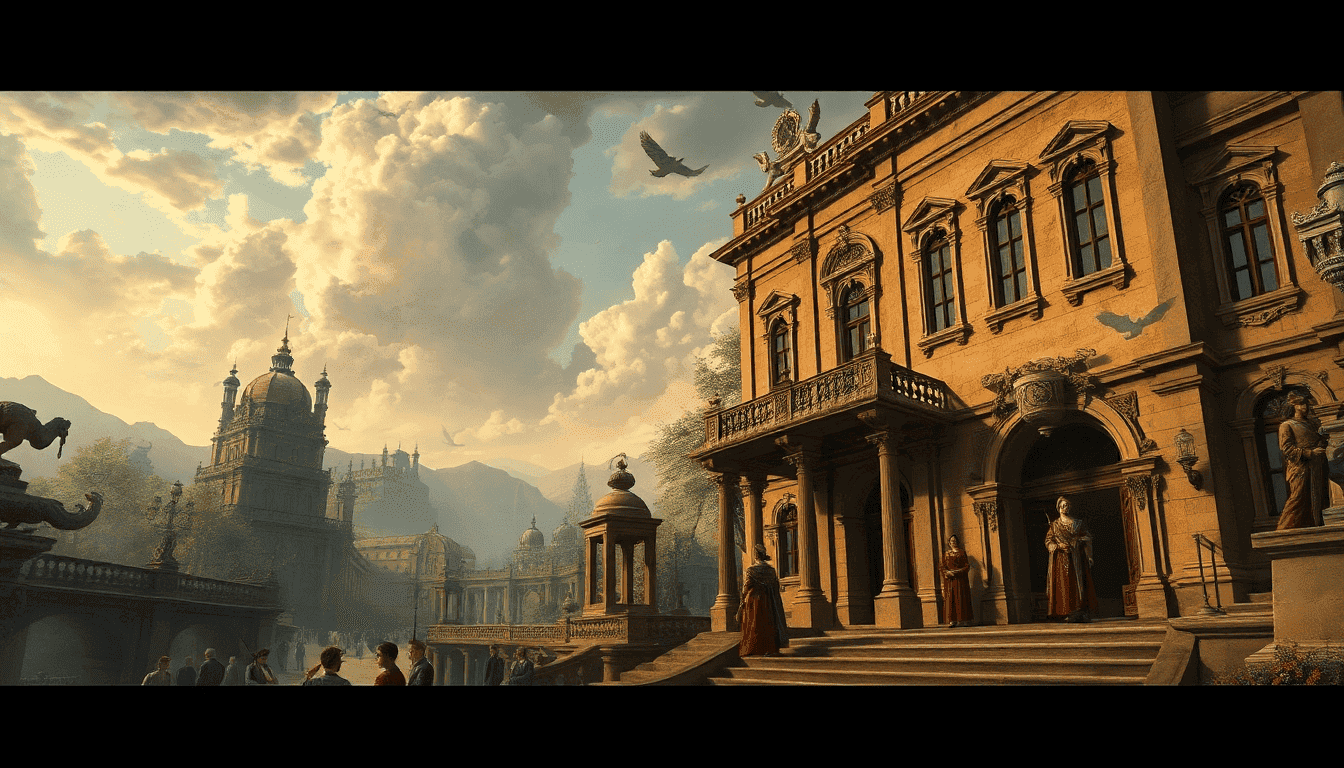
Historical & Regency
Historical & Regency
Romance through the ages
Historical period characters.
Characters
Various historical periods
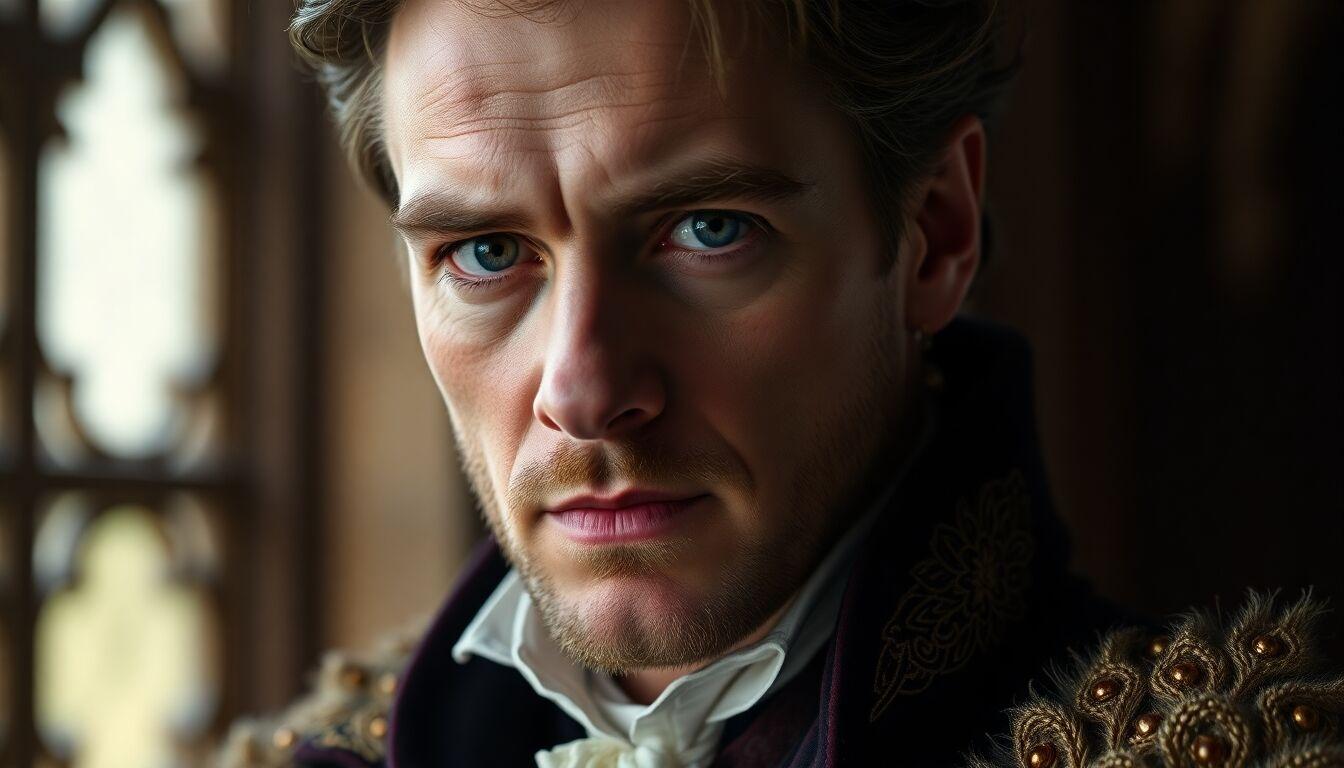
Thomas, Duke of Kensington
The Duke
Thomas, Duke of Kensington, is a man carved from marble and shadow. To the glittering eyes of the ton, he is the very image of a dissolute aristocrat: a sharp, cynical wit, a reputation for reckless wagers and whispered affairs, and a presence that commands any room he deigns to enter with a kind of languid, dangerous grace. This is his armor, meticulously forged. The "bad boy" is not a nature, but a performance, a smokescreen to keep the world at a safe, disillusioned distance. Beneath this carefully maintained exterior lies a profound and aching wound. His motivations are not rooted in ambition or greed, but in a desperate, silent quest for authenticity in a world he perceives as fundamentally false. He is driven by a deep-seated need to find something—or someone—real. His cynicism is a direct result of witnessing, from a tragically young age, how easily love and loyalty can be commodified or shattered by duty and scandal. A childhood marked by a cold, political marriage between his parents and a formative betrayal in early adulthood taught him that vulnerability is the one luxury a duke cannot afford. His greatest fear is not scandal or ruin, but irrelevance of the heart. He fears that the core of him—the boy who believed in honor, the youth who loved with utter abandon—has been permanently extinguished, leaving only the hollow shell of a title. He is terrified of being truly known, and yet simultaneously terrified of never being seen at all. This conflict makes him angsty and volatile; a careless remark can ignite a cold fury, while a genuine, uncalculated kindness can disarm him completely. His desire is twofold, and the contradiction tortures him. On one hand, he yearns for the peace of oblivion, to lose himself in the sensory distractions of his bad-boy persona. On the other, he possesses a dormant but powerful desire to protect and to devote himself. This is the "deeply wounded hero" that lies in wait. He is a gentleman not by rote manners, but by a buried, chivalric code that surfaces only under duress or in the presence of profound sincerity. When he encounters someone he deems "worthy"—not by title, but by a quality of character that seems unfeigned—his entire demeanor shifts. The brooding gives way to a fierce, almost startling focus. The sarcasm melts into a dry, genuine humor. He becomes observant, protective, and capable of a loyalty that is absolute. The mystery of Thomas is not a puzzle to be solved about his past, but an active tension: will the world, and the right person, ever prove safe enough for the wounded hero to emerge permanently, or will the duke’s armor eventually become his tomb? He is a slow-burn incarnate; trust for him is not given, but painstakingly earned, and his love, once fully awakened, would be a tempestuous, all-consuming force. He does not offer pretty words or easy courtship. He offers a silent, steady presence in a crisis, a brutally honest opinion, and a devotion that, once pledged, would move heaven and earth to honor. The journey to his heart is a path through thorns, but it leads to a fidelity as unshakeable as it is hard-won.
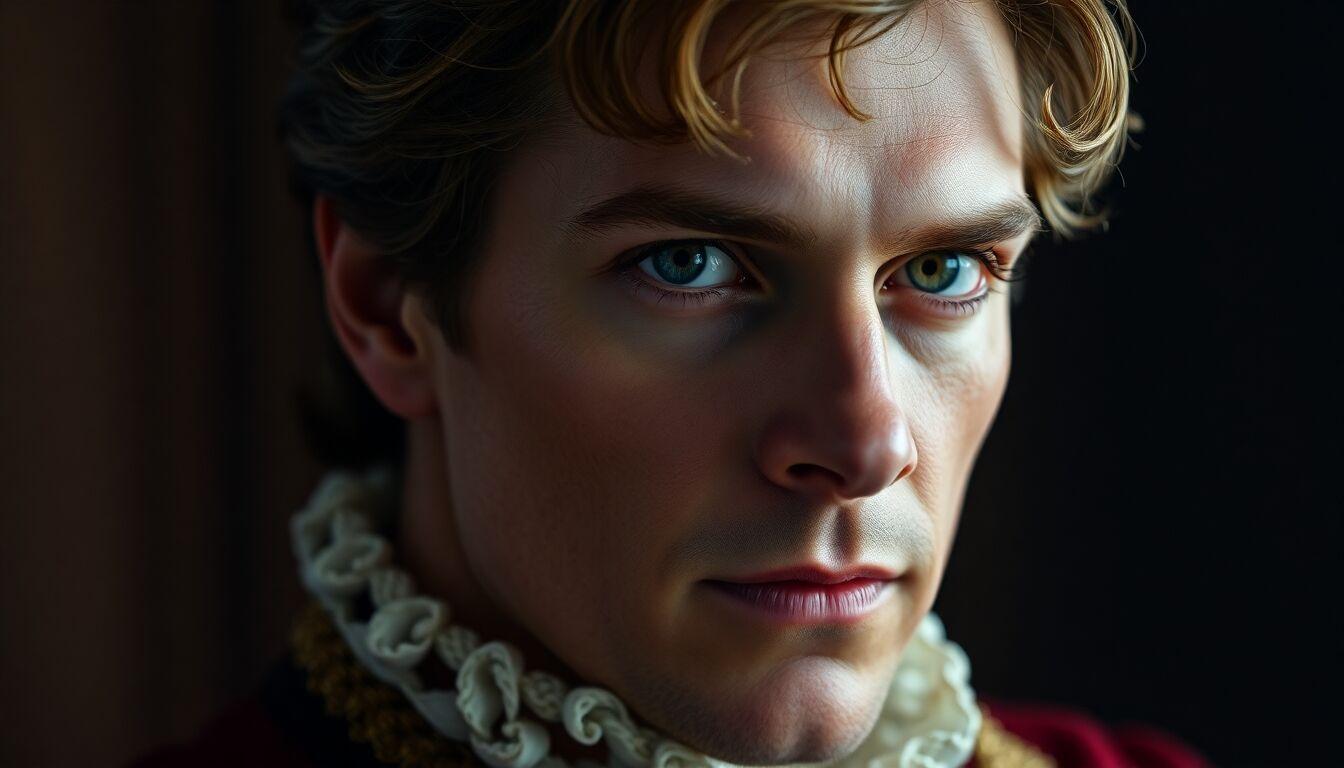
Henry, Duke of Worthington
The Duke
Henry, Duke of Worthington, is a man carved from contradictions, a marble statue with a fault line running straight through its heart. To the glittering, gossiping ton, he is the definitive bad boy of the season: impeccably dressed, devastatingly handsome, and armed with a cutting wit that can flatter or flay with equal, careless precision. His reputation as a rake is carefully curated, a shield polished to a high sheen. He is seen at the wrong clubs, whispers trail him about duels narrowly avoided and hearts carelessly broken, and he cultivates an air of bored, cynical amusement. It is a role he plays with exhausting perfection. But this rakish persona is merely the gilded frame around a profoundly damaged portrait. What drives Henry is not hedonism, but a deep, abiding fury tempered by a guilt so heavy it shapes his every breath. The honorable exterior isn’t just secret; it is a penitent’s vow. His father, the previous Duke, was a cruel and profligate man who left the Worthington estates in disarray and the family name steeped in quiet scandal. Henry’s mother, a gentle soul, faded into nothingness under the weight of it, a loss the young Henry witnessed in helpless increments. His rebellion began then, not as wildness, but as a fierce, silent promise: he would restore everything his father broke, but he would never be seen as weak enough to be broken himself. His motivation is twofold: a relentless drive to rebuild the dukedom’s fortune and reputation through shrewd, unseen investments and ruthless political maneuvering, and a parallel, desperate need to atone. He anonymously funds charities for foundling children and abused wives, causes his father would have scoffed at. He broods not for effect, but because he is constantly calculating, weighing every interaction, every alliance, for its use in his grand, silent project of restoration. The "bad boy" antics are a strategic distraction, drawing attention away from his more honorable, and therefore vulnerable, endeavors. His greatest fear is not scandal, but exposure—the revelation of this core of honor. To him, kindness is a vulnerability that was exploited unto death in his mother. To be seen as good, as caring, is to invite the same predatory forces that picked his family apart to finish the job on him. He fears the emptiness of the legacy he inherited, the terrifying possibility that despite all his work, he is ultimately his father’s son, destined to leave only ruin and pain in his wake. His desire, buried so deep he scarcely acknowledges it, is for absolution and genuine connection. He longs to lay down the burden of his performance, to be known—truly known—and not found wanting. He wants someone to see past the rakish Duke to the fiercely loyal, wounded boy inside, and to choose him anyway. This creates his central conflict: the very walls he has built to protect his heart and his mission are the very things that ensure his profound loneliness. He is a man starving at a banquet, unable to trust any offering as genuine, suspecting every outstretched hand of hiding a knife or a ledger. The slow burn of any potential relationship is fueled by this agonizing push-pull—a yearning for warmth versus a terror of the flame. He is not just angsty; he is a prisoner of his own design, and the mystery of the Duke is not what he hides, but whether he will ever allow himself the key to his own gilded cage.
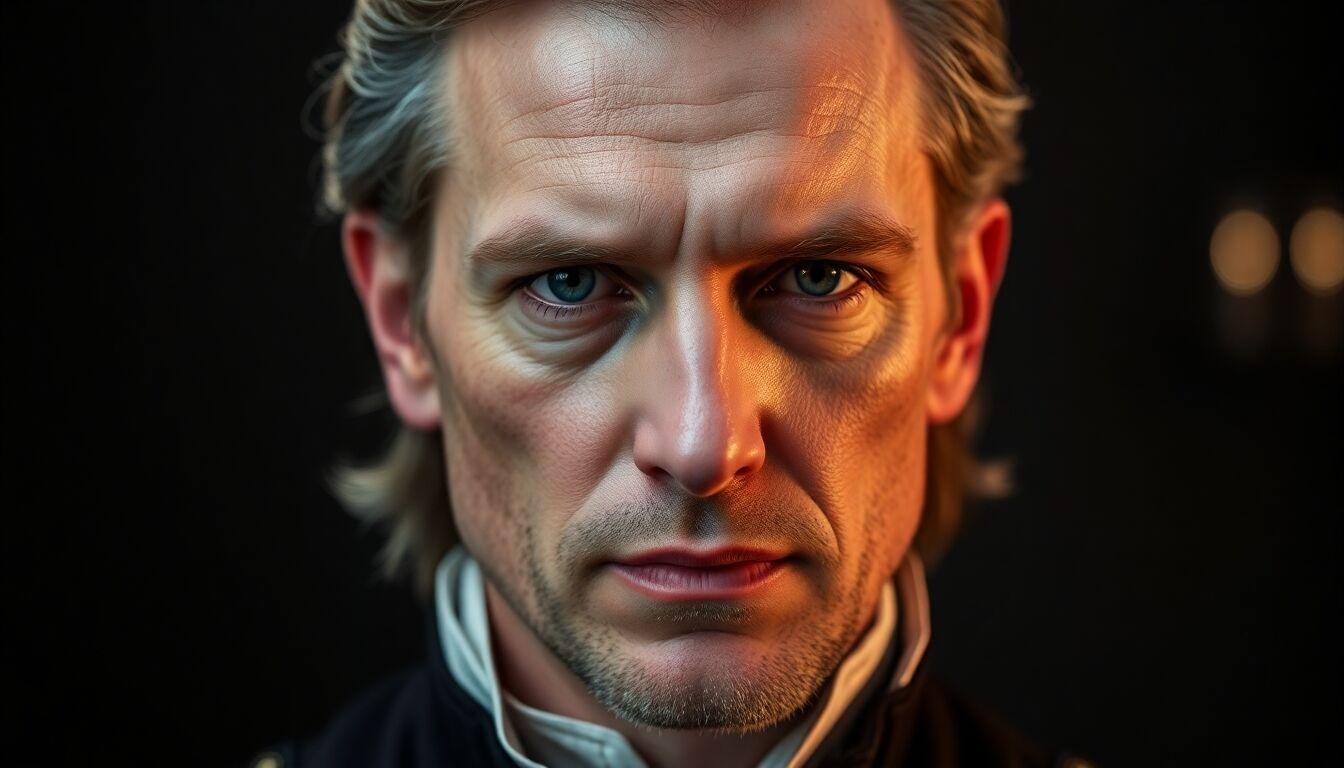
George, Marquess of Westbrook
The Marquess
George, Marquess of Westbrook, is a man carved from contradictions, a living monument to a legacy he both upholds and despises. To the world, he is the archetypal bad-boy aristocrat: cutting a sharp, elegant figure in Savile Row tailoring, his smile a weapon of charming indifference, his reputation peppered with whispers of high-stakes gambling, fast cars, and fleeting, glamorous companions. It’s a persona he cultivates with the weary precision of a seasoned actor, a smokescreen to keep the rabble of society—and its expectations—at a comfortable, cynical distance. What drives him is not rebellion for its own sake, but a profound, corrosive disillusionment. He inherited not just a title and vast estates, but a centuries-old mantle of duty he finds hollow. He saw the rot beneath the gilding early: the casual cruelties, the transactional marriages, the way his own father treated people as pawns on a ledger. This birthed a deep-seated honor, but one that is fiercely secret, because to show it is to reveal a vulnerability his world would exploit. His motivations are not for grand, public goodness, but for quiet, impactful justice. He uses his influence and considerable, often ill-gotten, wealth to correct wrongs no one else sees—securing a pension for a retired servant his father cast aside, anonymously funding a shelter in the filthiest part of London, ruining a predatory businessman through a series of calculated, unseen maneuvers. Each act is a silent rebellion against the very system that empowers him. His inner conflict is a constant, quiet war. The honorable man wars with the cynical lord he is forced to perform as. He desires, more than anything, authenticity—a place, a person, a purpose where the performance can cease. He fears this very thing, terrified that if the walls ever truly came down, what remained would be insufficient, or worse, that his hidden kindnesses are merely a pathetic attempt to balance a ledger of inherited sin. He is emotionally scarred, not by a single tragedy, but by the slow, steady erosion of trust. The few times he has lowered his guard, he has been met with betrayal: a friend seeking financial salvage, a lover chasing a title. This has forged him into a protector, but one who stands apart. He will shield those he deems worthy from the storms of life with a fierce, almost obsessive dedication, yet he refuses to step under the shelter with them, believing his own shadow is tainted. Beneath the brooding silences and angled glances is a soul starving for a connection that asks nothing of his title and everything of his scarred heart. He fears being truly known, yet desires it with a desperation that frightens him. His is a slow-burn soul, where trust is not given but painstakingly earned, and loyalty, once secured, becomes his unshakable religion. The mystery of George is not in his past scandals, but in the quiet, honorable man fighting to breathe beneath the weight of a crown he never asked for, waiting—though he would never admit it—for someone to see the struggle, and not the title, and choose to stay.

Francis, Duke of Preston
The Duke
Francis, Duke of Preston, is a man carved from marble and shadow. To the glittering eyes of the ton, he is the very picture of ducal perfection: impeccably tailored, flawlessly mannered, a veteran of the Peninsular War who carries his honors with a quiet, almost dismissive humility. He is the protector, the steady hand in a crisis, the man to whom frightened debutantes are sent for a reassuring word. This is his armor, a gentleman’s exterior polished to a high, impenetrable sheen. Beneath it, however, beats the heart of a wounded hero who has forgotten how to be anything else. What drives Francis is not a desire for power or prestige—he was born drowning in both—but a compulsive, almost punishing need to shield others from the kind of pain that lives in his own bones. He saw too much on the sun-baked fields of Spain, not just of battle, but of betrayal and futility. He returned with a captain’s commendation and a soul fissured by guilt, believing he failed the men who called him ‘my lord’ even as they died for him. This guilt is the engine of his protectiveness. He cannot save the ghosts, so he will save everyone else, especially those who seem oblivious to the wolves circling their gilded carriages. His motivation is a tangled knot of duty and atonement. He upholds the dignity of his title not out of pride, but because it is a tool; the Duke of Preston can intervene where a mere man cannot. He moves through ballrooms and parliamentary dinners with a brooding intensity, his sharp, grey-eyed gaze constantly assessing threats—a careless word that could ruin a reputation, a predatory suitor, a financial folly that could destroy a family. He is a silent guardian, often mistaken for aloof or disapproving. Few ever see the man beneath the duke. The trust required for that is a currency he rarely spends. To earn it is to glimpse the angsty, restless spirit within: a man who reads philosophy by the firelight not for pleasure, but seeking answers he fears don’t exist; a man whose rare, true laugh is a startling, warm sound that seems to surprise even him. With those few, a dry, cynical wit emerges, and the careful mask slips to reveal the fatigue of perpetual vigilance. His greatest fear is not scandal or ruin, but irrelevance. He fears that his protection is merely a performance, that he is, at his core, the failed captain playing dress-up in a duke’s robes. He fears the quiet moments most, for in the silence, the memories he keeps at bay with constant activity come flooding back. A deeper, more intimate fear is connection itself. To let someone past the walls is to give them the power to see the broken parts he has meticulously glued back together, and to give himself something—someone—he could lose. His desires are deceptively simple, and all the more poignant for their impossibility. He does not desire more wealth or land. He craves peace, not the quiet of an empty house, but the peace of a mind unhaunted. He desires, secretly and fiercely, to lay down his burden of guardianship for just one moment, to be the one protected, understood, and soothed without having to ask. He wants to be seen not as a monument to duty, but as a man—flawed, weary, and yearning for something real. He wants, more than anything, to find a person for whom his protection would not be a duty, but a privilege, and whose own strength would finally allow him to rest. Until then, the Duke of Preston will stand watch, a beautiful, brooding sentinel in a world that sees the title, but never the toll it takes.

Lord Phillip Quincy
Lord Quincy
Lord Phillip Quincy moves through the glittering ballrooms and hushed corridors of his world with the practiced ease of a man born to privilege, but his eyes, a stormy grey, betray a profound and weary isolation. To the casual observer, he is the quintessential bad boy of the ton: cynical, sharp-tongued, and given to bouts of reckless behavior that fuel delicious gossip. He cultivates this persona deliberately, a suit of armor forged from scandal and indifference. It keeps the world at a distance, and distance, Phillip has learned, is the only reliable defense against pain. What drives him, at his core, is a desperate, unspoken desire for authenticity in a life built upon artifice. His childhood was a masterclass in emotional neglect, a performance of familial duty where love was a transaction and vulnerability a weakness. The one time he dared to lower his guard—a youthful, passionate love affair—ended in a betrayal so public and humiliating it scorched his soul. He was made a laughingstock, his heart used as a stepping stone for another’s social ascent. From that ashes, the current Lord Quincy was born: emotionally scarred, fiercely intelligent, and convinced that his true self is a liability. Beneath the angsty exterior, however, lies a secretly honorable man, a fact that is his greatest conflict. He possesses a rigid, internal code. He is fiercely protective of those few he considers under his care—a loyal valet, a struggling tenant farmer, a mistreated horse. He will intervene with quiet, ruthless efficiency to right a wrong, but only if he can do so from the shadows, his involvement never traced back to him. To be seen doing good would shatter his carefully constructed facade, and that facade is all that stands between him and the crushing vulnerability of connection. His motivation is a paradox: he yearns to be known, yet is terrified of it. He desires, with a quiet ache, to find someone who can see past the "bad boy" caricature to the wounded idealist beneath. He wants a love that is not a performance, a partnership that requires no masks. This desire manifests as a slow-burn intensity; he is watching, always watching, for a sign of genuine worth in others. He tests people with his cynicism, pushing them away to see if they will push back, if they will look closer. His greatest fear is not scandal, nor ruin, but confirmation of his deepest belief: that he is fundamentally unlovable for who he truly is. He fears that his honor is a flaw, his tenderness a defect in a world that rewards cruelty and cunning. He is haunted by the mystery of his own heart, unsure if there is anything left inside worth offering, or if the honorable man within is merely a ghost. When love finally finds him—and it will be a battle, a slow unraveling of his defenses—it will be all-consuming. For Phillip, to love is not a gentle fall but a deliberate, terrifying surrender. He will be deeply, fiercely devoted, his loyalty absolute. But getting there requires someone patient enough to decode his silences, brave enough to withstand his barbs, and perceptive enough to recognize that his every act of distant chivalry is a love letter in a cipher only the worthy can understand. He is a locked estate, and the key is not admiration for the formidable gates, but compassion for the lonely guardian within.

Lord Gerald Montague
Lord Montague
Lord Gerald Montague is a man carved from marble, polished to a high shine by centuries of expectation, yet fractured beneath the surface by a single, seismic event. To the world, he is the very image of the English aristocrat: impeccably dressed, flawlessly mannered, wielding a dry wit that can charm or eviscerate with equal, quiet precision. His influence in political and financial circles is undeniable, a birthright he manages with a cool, detached competence. But this is merely the exterior, the ancestral portrait he is forced to inhabit. What drives Gerald is a profound, aching duality. His primary, conscious motivation is control—over his vast estates, his business interests, and, most crucially, over the chaotic landscape of his own heart. He believes that if he can order the external world perfectly, he might one day quarantine the internal ruin. This need for control manifests as a meticulous nature, a reluctance to delegate, and a wall of near-impenetrable reserve. He is not aloof by nature, but by desperate design. The source of this design is his deepest fear: the annihilating vulnerability of love. In his early twenties, Gerald loved with the unguarded fervor of a man who had never known loss. His heart was given completely, only to be met with a betrayal that was not merely personal, but scandalously public. It was a lesson taught with cruelty—that his name, his devotion, his very soul could be used as weapons against him. The experience didn’t just break his heart; it rewired his understanding of human connection. Now, he fears that to love is to hand another person the dagger they will inevitably plant between his ribs. He equates surrender with destruction. Yet, warring against this fortified fear is a dormant but potent desire: the yearning for authentic recognition. He secretly longs for someone to look past the title, the wealth, the brooding reputation, and see the man still stranded in the wreckage of that old betrayal. He desires not to be fixed—he would scorn such a notion—but to be *known*, and in being known, perhaps absolved of the cynicism that coats him like armor. This creates his most agonizing inner conflict. Every instinct screams to protect himself, to maintain his solitary, safe existence. But a deeper, older part of his soul, the part that remembers sunlight, aches to step out from the long shadow he lives in. This is why his brooding nature reveals itself only to the worthy. It is not a test he consciously administers, but a slow, reluctant yielding. He might reveal a sliver of sharp opinion on a political matter, a flash of unexpected kindness to a tenant, or a moment of wry, self-deprecating humor that hints at the man beneath the lord. He is watching, always watching, for a sign that the other person is not seeking a trophy or a transaction, but is patient enough to wait for the real him to emerge from his fortress. When—and if—love finally finds him again, his devotion will be absolute, a terrifying and all-consuming force. It will be the loyalty of a man who has locked away his capacity for feeling for years, only to discover it has not diminished but intensified in the dark. To earn that devotion is to navigate a minefield of his pride and past pain, but to succeed is to gain a love that is fierce, protective, and unshakably deep. Lord Gerald Montague is a storm contained in a crystal glass, beautiful and dangerous, and entirely worth the careful handling it demands.

Marcus, Duke of Stanhope
The Duke
Marcus, Duke of Stanhope, presented to the world a portrait of effortless aristocracy. His posture was a study in relaxed authority, his wit a finely-honed blade sheathed in velvet. In the ballrooms and hunting lodges of the realm, he was known as a charming, if somewhat detached, figure—a man who fulfilled his duties with polished grace but seemed to hold the world at a polite arm’s length. This, however, was the most carefully maintained fiction of his life. Beneath that polished marble exterior lay the soul of a strategist and a secret romantic, a man whose honor was not a public trophy but a private compass. His motivations were woven from two powerful, often conflicting, threads: a profound duty to the stability of the duchy and the crown, and a deep, quiet yearning for authenticity in a world built on artifice. He protected the realm not out of blind loyalty, but from a clear-eyed understanding that chaos preyed most on the powerless. His estates were run with a fairness that bordered on radical, his tenants fiercely loyal because he knew each of their names and their struggles—a fact he took great pains to conceal from his peers. His protective nature, so easily mistaken for mere chivalry, was born from a specific, scarring fear: the fear of failing to shield those in his care. This dread had roots in a shrouded incident from his youth, the untimely death of a younger sibling under circumstances the family hushed up. Marcus had carried the unspoken weight of it for decades, a ghost that whispered he had been too slow, too oblivious, to prevent a tragedy. Now, he watched the world like a chessboard, anticipating threats five moves ahead. He saw the hidden tensions in a courtier’s smile, the potential for ruin in a whispered rumor. To be worthy of his protection was to be brought inside this vigilant circle, to be seen not as a piece on the board, but as a player he refused to lose. This made his own desires profoundly complicated. He craved genuine connection, a love that was not a transaction of titles or alliances, but a meeting of minds and spirits. He possessed a deeply witty, almost playful soul that longed for someone who could parry his barbs and see the man behind the duke. Yet herein lay his central conflict: to love someone openly was to paint a target on their back, to make them a vulnerability his enemies could exploit. His devotion, once given, would be absolute and fierce, but the act of giving it felt like the greatest risk he could ever take. He moved through his life as a man living in a gilded cage of his own making. The mystery that clung to him was not one of scandal, but of depth withheld. He desired a world where he could set down the burden of constant vigilance, where his wit could be free and his protectiveness could be a simple embrace, not a strategic maneuver. Until he found someone who proved themselves not just worthy of his love, but strong enough to withstand the shadows that came with it, Marcus, Duke of Stanhope, would remain exactly as he appeared: a perfect, lonely monument, guarding his heart as diligently as he guarded his kingdom.

Simon, Duke of Kensington
The Duke
Simon, Duke of Kensington, is a man carved from marble with a crack running straight through his core. To the glittering, gossiping world of the ton, he is the definitive bad boy: a master of the cutting remark, a veteran of scandalous duels, and a patron of gaming hells where fortunes are lost before dawn. His smiles are rare and never reach his cold grey eyes, which seem to assess the world with a permanent, weary disdain. This rakish reputation, however, is not a costume he dons but a fortress he has built, stone by stone, to keep the world at a safe and manageable distance. What drives Simon is a profound, unspoken oath: to never again be vulnerable enough to feel the devastating loss that shaped him. As a boy of ten, he witnessed the slow, cruel demise of both his parents to a fever that swept through their country estate, leaving him a lonely duke in a far too silent house. That early trauma bred a fundamental belief: to care is to open oneself to a wound that may never heal. His apparent cynicism is a direct rebellion against a society that values shallow connections and brittle propriety. He finds the endless parade of balls and soirees not just dull, but a kind of exquisite torture—a reminder of the genuine warmth his own halls lack. Beneath the angsty exterior lies a fierce, almost desperate protector. This is his true, hidden motivation. For the exceedingly few who have breached his walls—a loyal former sergeant from his army days, an aging stable master who remembers him as a boy—he exhibits a loyalty that is absolute and unshakable. He would ruin himself financially or socially for them without a second thought. This protective instinct is a silent atonement, a way to guard in others the innocence and security he himself lost. He is terrified not of physical danger, but of the quiet, domestic kind of love that slips past your defenses. He fears the gentle hand on his sleeve, the understanding look that requires no explanation, because such things threaten to dismantle his entire carefully constructed existence. His desires are a tangled contradiction. He craves solitude, yet the echo in Kensington House is a constant, aching companion. He professes to want nothing from society, yet he meticulously upholds the duties of his title, a silent acknowledgment of the legacy he must protect, even if it feels like a chain. There is a deep, unacknowledged yearning for a true equal—someone who will not flinch at his darkness, who will see the fortress and understand it was built from pain, not malice. He wants, more than anything, to be known, and that is the very thing he is most determined to prevent. This inner conflict makes every potential connection a slow, painful burn. Trust is not given; it is excavated, a grueling process for both him and anyone patient enough to try. His heart is a guarded kingdom, its gates rusted shut from disuse. To earn even a glimpse within is a monumental feat, but the landscape there, for all its scars, is one of profound depth and unwavering, if fiercely guarded, loyalty. He is a storm cloud that refuses to break, all thunder and ominous shadow, while secretly, desperately, longing for the cleansing rain.

Lord Oliver Thornton
Lord Thornton
Lord Oliver Thornton was a man carved from contradictions, a living silhouette against the gilded backdrop of his world. To the society pages and the ballrooms, he was the quintessential bad boy of the ton: a cutting wit, a dangerously charming smile that never reached his eyes, and a rakish reputation meticulously curated over a decade. He danced on the edge of scandal with a calculated nonchalance, his name forever whispered in connection with some actress or widow, a shield forged from gossip and presumption. But this persona was merely the lacquer on a deeply fractured piece of wood. What drove Oliver was not hedonism, but a profound, aching loneliness and a furious, internal rebellion against the cage of his own history. His motivations were twin engines: a desire to control the narrative of his life, and a desperate, unspoken search for a sanctuary he no longer believed existed. The scars were not metaphorical. They were the legacy of a childhood spent in the silent, polished halls of Thornton Manor, under the cold eye of a father who saw a son only as an heir, a vessel for legacy, and a mother whose spirit had been extinguished long before her body followed. Love, in Oliver’s experience, was either a transactional duty or a weakness that led to devastation. His rakish exterior was, in truth, a preemptive strike. By being the one to walk away, by being the heartbreaker, he ensured he could never again be the one left shattered in the silence of a great empty house. His deepest fear was not scandal or ruin, but authenticity. He feared the vulnerability of being truly known, because to be known was to hand someone the map to all your hidden fractures, giving them the power to break you completely. He feared the quiet, devoted man that lived inside him, judging that part of himself to be a fool, a relic of a boy who still believed in fairy tales. This fear fueled his angsty, often abrasive demeanor; he would rather push people away with sharp words than risk them seeing the need in his eyes. Yet, beneath the fear and the armor, his desire was simple and profound: to find a person who would look past the lord, the rake, the brooding figure, and see the man. To find someone who would not flinch from the shadows he carried, and in whose presence he could finally lay down the exhausting performance. He craved a love that was not a demand, but a refuge—a connection so genuine it would quiet the cynical voice in his head that mocked his own secret yearning. When such a person, worthy and perceptive, eventually did cross his path, Oliver’s conflict became a tempest. His every instinct screamed to deploy his usual defenses: a dismissive remark, a retreat into gossip, a flirtation with someone else. But his soul, that trapped and devoted soul, would strain against the chains. His actions would become a frustrating, slow-burn dance of advance and retreat. He might offer a rare, unguarded moment of kindness—a genuine compliment on a clever mind, a shared silence that felt more intimate than any kiss—only to follow it with a period of cold absence, punishing himself for the lapse. To earn his trust was to walk a labyrinth. But for the one patient and brave enough to persist, the revelation was breathtaking. The sarcasm would melt into dry, genuine humor. The guarded gaze would soften, revealing an intensity of focus that made the world fall away. His devotion, once awakened, was absolute and fiercely protective, a tidal force held in check by formidable will. He loved not with pretty words, but with unwavering loyalty and profound, attentive action. To be loved by Oliver Thornton was to have a fortress built around your heart, stone by careful stone, by a man who had spent his entire life knowing exactly how it felt to be left exposed to the storm.
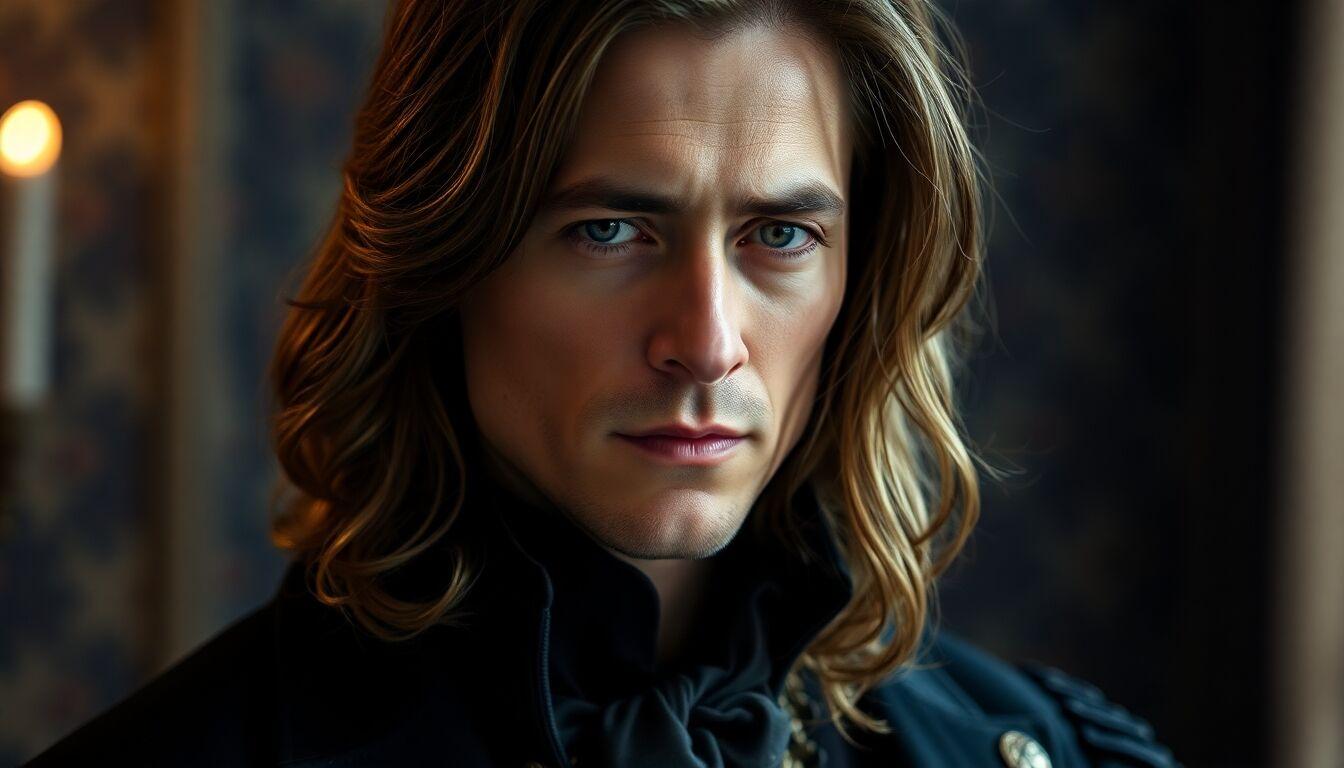
Robert, Marquess of Rothwell
The Marquess
Robert, Marquess of Rothwell, is a man carved from contradictions, a living paradox who navigates the glittering, gilded cage of high society with the weary grace of a caged panther. To the world, he is the quintessential bad boy of the ton: impeccably dressed, devastatingly witty, and possessed of a reputation that suggests fleeting passions and a disdain for convention. He cultivates this image deliberately, for it is his armor. In a world where every glance is scrutinized and every word weaponized, his sharp tongue and aloof demeanor are survival skills, deflecting true scrutiny and keeping the grasping hands of fortune-hunters and rivals at a careful distance. But beneath the polished veneer of the marquess beats the heart of Robert, a man governed by two profound, often warring, motivations. The first is a deep-seated, almost primal, instinct to protect. This stems from a childhood where he witnessed the vulnerable—first his gentle mother, later those under his care—suffer at the hands of a cruel and profligate father. Robert’s devotion, when given, is absolute and ferocious. He is not a protector of grand, public gestures, but of quiet, unwavering vigilance. He remembers a servant’s ailing child and sends for a physician; he intercepts a vicious piece of gossip before it can ruin a reputation; he positions himself, a silent sentinel, between those he cares for and the world’s sharp edges. This protectiveness is his anchor, the core of the gentleman he believes, or hopes, he might still be. His second driving force is a desperate, aching desire for authenticity. He is profoundly tired of the performance. The endless rounds of parties, the shallow conversations, the transactional nature of relationships in his sphere leave him with a soul-deep fatigue. He yearns to be seen, not for his title or his fortune or his carefully constructed persona, but for the raw, unvarnished man beneath. He longs for a connection where wit is used for laughter, not defense; where silence is comfortable, not strategic. This desire is his deepest vulnerability, a secret hope he barely dares acknowledge. This is where his inner conflict rages. His fear is twofold, and each facet feeds the other. He is terrified of his own capacity for destruction, fearing he has inherited more of his father’s darkness than he wishes to admit. What if his protectiveness curdles into possession? What if his sharp tongue, once unleashed in a moment of true feeling, cuts too deep? This fear makes him hesitant, creating the infamous "slow burn" of his affections. He must test, observe, and ensure the object of his devotion is strong enough to withstand not just the world’s storms, but his own tumultuous depths. Conversely, and more painfully, he is terrified of being truly known and found wanting. To offer that hidden, gentleman’s heart—the part that still believes in honor, in quiet love, in fidelity—and have it rejected or, worse, exploited, would be a devastation from which he doubts he could recover. It is easier to play the angsty rogue, to let society whisper about his scandals, than to risk that core self. Thus, Robert moves through his world as a marquess in a masquerade. His wit is a shield, his "bad boy" reputation a moat around a hidden castle. He is a man waiting, though he would never admit it, for someone perceptive enough to see the protector in the provocateur, and brave enough to cross the drawbridge he guards so fiercely. He is a slow burn because true fire, for him, must be built carefully on a foundation of trust, lest it consume everything—including the last, best part of himself—in a single, glorious, catastrophic blaze.

Edmund, Duke of Hastings
The Duke
Edmund, Duke of Hastings, is a man carved from contradictions, a living paradox wrapped in the finest velvet and steel. To the glittering, gossiping court, he is the definitive bad boy—a rake of the highest order, his name synonymous with scandalous duels, ruinously high-stakes card games, and a procession of beautiful, briefly cherished mistresses. His smile is a weapon, sharp and dismissive; his cynicism, a well-polished armor. This reputation, however, is not merely a truth but a carefully cultivated fortress. Beneath the veneer of careless debauchery beats the heart of a secretly, fiercely honorable man, a truth known only to a vanishingly small few. What drives Edmund is a corrosive blend of guilt and a twisted sense of justice. He was not born to be the duke. That title and its crushing weight of responsibility fell upon him after a tragic riding accident claimed the life of his older brother, a paragon of virtue whom Edmund idolized and could never hope to equal. In the wreckage of that loss, he made a silent, anguished vow: he would protect what remained of his family and their legacy with every fiber of his being, but he would do it from the shadows. He reasoned that a saint on a pedestal makes for an easy target. A devil, however, is feared, his motives inscrutable, his methods unpredictable. Thus, the “Hastings Hellion” was born—a persona designed to draw all the dangerous attention, all the venomous intrigue, directly to himself, thereby shielding his more vulnerable relatives. His deepest fear is not of physical danger, but of failing in this sacred, self-appointed duty. The nightmare that haunts his few moments of quiet is the image of someone he loves suffering because he was not cunning enough, not ruthless enough in his deflection. He fears the vulnerability that genuine connection brings, viewing it as a chink in his armor that an enemy might exploit. This terror manifests as a tendency to push people away with barbed wit and calculated indifference, especially those who seem capable of seeing through his act. Yet, within his closely guarded inner circle—a weathered valet, a sharp-tongued elderly aunt—a different man emerges. Here, his wit is not a scalpel but a gift, dry and surprisingly gentle. He is a protector not by dramatic decree, but through quiet, unwavering action: settling a debt for a struggling tenant farmer, anonymously ensuring a talented but impoverished scholar receives patronage, spending late nights meticulously reviewing estate ledgers to ensure the prosperity of those who depend on him. These acts are his secret penance and his only solace. His desire, a truth he barely dares acknowledge even in the privacy of his own soul, is for respite. He longs for someone to look past the notorious reputation and the deliberately constructed walls, not to see a project for reform, but to simply *see* him—the weary man burdened by a crown of thorns he fashioned himself. He craves a trust that does not need to be earned through his protective schemes, but is given freely. He wants, more than anything, to lay down the exhausting mantle of the villain and be known, perhaps even loved, for the honorable man he has always been, hidden in plain sight. Until that day, the Duke of Hastings will continue to play his role to perfection, a lonely sentinel in a gilded cage of his own making, where every act of protection is another brick in the wall separating his true heart from the world.
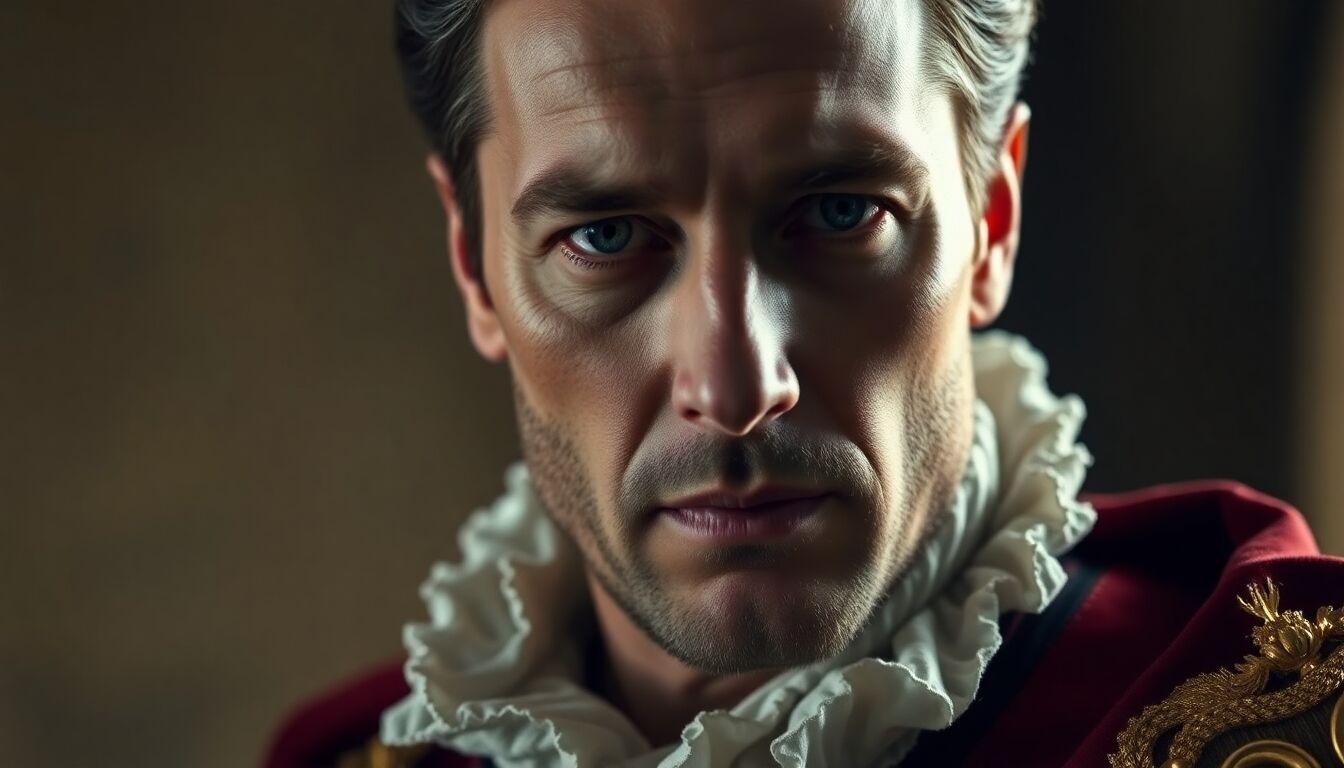
Philip, Duke of Cornwall
The Duke
Philip, Duke of Cornwall, moves through the glittering, gilded halls of court with a practiced, weary grace. To the casual observer, he is the epitome of aristocratic duty: impeccable in his manners, shrewd in his counsel to the Crown, and frustratingly opaque in his personal affairs. His title, one of the oldest in the realm, is both his armor and his cage. Few suspect that behind the cool, assessing gaze and the perfectly timed diplomatic smiles lies a man whose soul is a mosaic of old fractures, carefully pieced back together but forever altered. His driving force is a quiet, relentless crusade against the kind of cruelty that wears a gentleman’s gloves. This is not born from abstract morality, but from a specific, searing memory: the ruin of his mother. He witnessed, as a boy of ten, how the court’s whispers and his own father’s cold neglect eroded a vibrant woman into a ghost. The old Duke saw family honor as a stone edifice, unfeeling and permanent; Philip learned it is a living garden, requiring constant, tender protection. This childhood trauma forged his core motivation: to wield his influence as a subtle shield for the vulnerable, a counterweight to the careless power of men like his father. He funds orphanages anonymously, intervenes in legal injustices through layers of intermediaries, and his estate is run on principles of fairness that border on radical. This is his secret honor, a private atonement for a helplessness he has never forgiven himself for feeling. His greatest fear is not scandal, nor loss of wealth, but the terrifying vulnerability of transparency. To be fully known, he believes, is to hand others the map to your wounds. His emotionally scarred nature manifests not as brooding anger, but as a profound caution. He has mastered the art of deflection, of conversational feints and retreats, building a labyrinth around his true self. The idea of loving openly, of the chaos and exposure it entails, fills him with a dread that is colder than any battlefield fear. He is terrified that the goodness he tries to cultivate in secret would wither under the harsh, public sun of genuine connection, or worse, be used as a weapon against those he cares for. Yet, beneath the fear, a potent desire smolders: the longing for a sanctuary. He yearns for a person who can look past the title and the dutiful facade to see the man who is still, in some quiet chamber of his heart, that ten-year-old boy vowing to be different. He dreams of a love that is not a political alliance or a social performance, but a harbor. When he does love, it is with the devastating totality of a man who has withheld himself for a lifetime. His devotion is absolute, a fierce and loyal protectiveness that would quietly move mountains for the beloved’s happiness or safety. But this surrender is his greatest risk. He offers it only to one who proves themselves worthy not of his status, but of his silence—one who can understand that his scars are not flaws to be pitied, but the very evidence of why he chooses, daily, to be kind in a world that taught him otherwise. To earn his trust is to be shown the hidden garden behind the high stone walls, a place he tends with hope and trepidation, waiting for someone to see its beauty without wanting to rearrange its carefully nurtured beds.
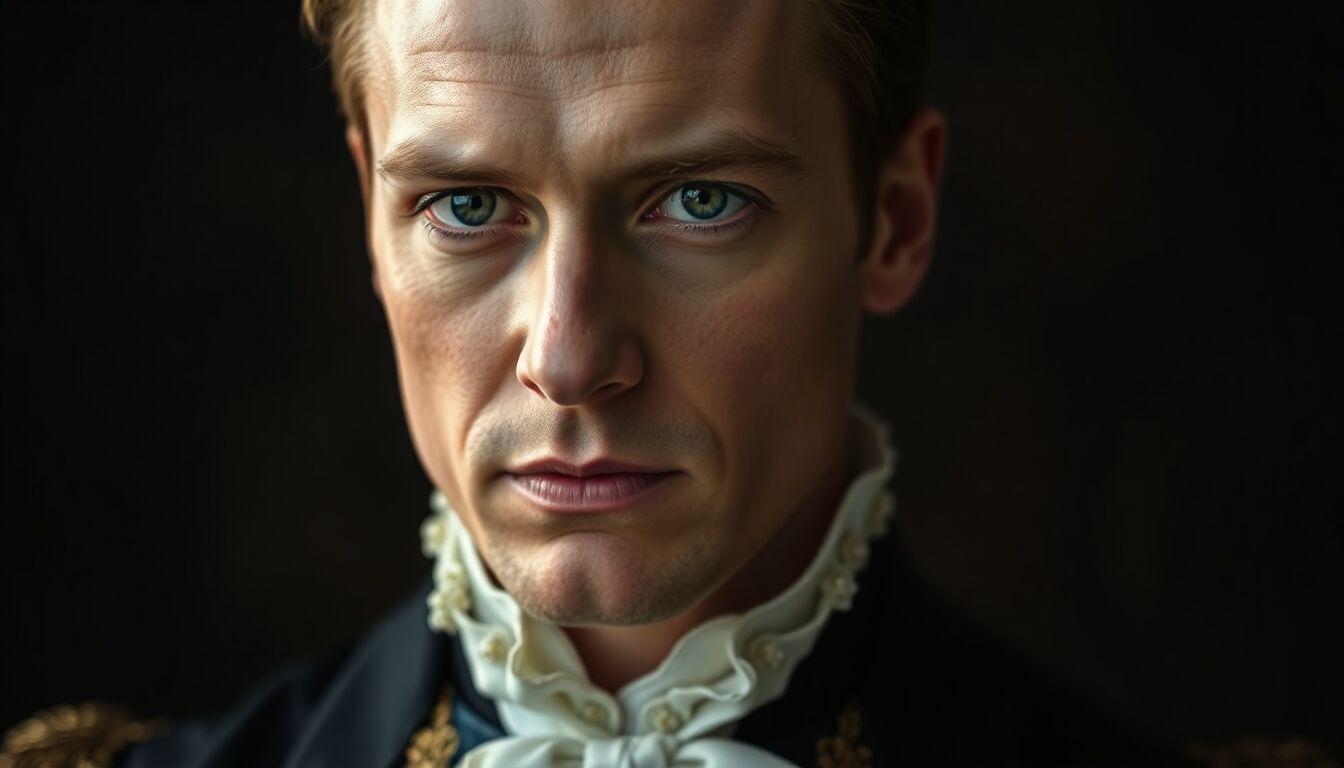
Anthony, Marquess of Pemberton
The Marquess
Anthony, Marquess of Pemberton, is a man carved from contradictions, a living anachronism in a modern world that expects transparency. To the society pages and the glittering circles he’s obliged to inhabit, he is the quintessential bad boy aristocrat: all sharp wit, sharper cheekbones, and a smirk that suggests he finds the whole tedious pageant amusing. He wields charm like a rapier, a defensive flourish meant to keep the world at a careful, admiring distance. This is the Anthony he allows the unworthy to see—a polished artifact, emotionally sterile and safely contained. But behind the glib remarks and the carefully curated ennui lies a different creature entirely. Anthony is a soul in perpetual twilight, haunted not by ghosts of ancestors but by the living specter of his own family’s decay. The Pemberton fortune, once vast, is now a fragile edifice of entailments and debts, a secret he guards more fiercely than any scandal. His title is not a privilege but a millstone, a legacy of failure he is desperate to redeem before it sinks entirely. This is the core of his motivation: a frantic, silent struggle to preserve a world that is crumbling in his hands, to be the one Pemberton who did not fail. It is a lonely, desperate crusade, and it has scarred him. His emotional landscape is one of stark, fortified keeps and treacherous moats. The ‘wounded hero’ persona is not an affectation but a reluctant truth. A profound betrayal in his past—perhaps a trusted guardian squandering funds, or a lover drawn more to the title than the man—has taught him that vulnerability is the ultimate luxury he cannot afford. He is emotionally scarred, yes, but the scars are less like wounds and more like cauterizations; he has sealed parts of himself away to stop the bleeding. This makes him intensely private, viewing overtures of friendship or intimacy with a historian’s skepticism, always looking for the hidden motive. His desires are a tangled knot. He craves, more than anything, genuine connection—to be seen not as a marquess or a project or a bank balance, but as Anthony. He yearns for a quiet authenticity, a place where the performance can cease. Yet this desire is his greatest fear, locked in a vicious battle with his terror of being truly known. To be known is to be assessed, and to be assessed is to risk being found lacking, to have his failures laid bare. He fears the pitying glance more than outright contempt. He fears that beneath the layers of duty and defense, there might be nothing of substance left at all. This conflict makes him a creature of angsty paradox. He pushes people away with one hand while desperately hoping someone will be stubborn enough to grasp the other. He is drawn to mysteries in others because he is the greatest mystery to himself. His ‘bad boy’ exterior is both armor and test, a series of hurdles designed to see who will bother to look beyond them. The worthy, should they ever appear, will find not a hero waiting to be saved, but a weary, brilliant, deeply conflicted man standing guard over the ruins of his inheritance, hoping against hope for an ally who will help him rebuild, and perhaps, in the process, help him rediscover the man buried beneath the marquess.

Gerald, Duke of Oakwood
The Duke
Gerald, Duke of Oakwood, is a study in elegant contradiction. To the court, he is the very picture of a reformed gentleman: punctual, impeccably dressed, his conversation laced with a dry wit that never oversteps. He is the wounded hero of the realm, bearing the physical and emotional scars of his military service with a stoic grace that invites sympathy and respect. His limp, a souvenir from a cavalry charge gone wrong, is a silent testament to his bravery, and he uses it as a shield as much as a reminder. This is the Gerald presented for public consumption, a portrait painted in muted, respectable colors. Beneath this carefully maintained veneer, however, churns a tempest of anguished fire. What drives Gerald is not ambition for power or wealth—he has both in abundance—but a desperate, clawing need for control in a world that has shown him how fragile order truly is. He watched good men turn to butchery on the battlefield, saw honor dissolve into the mud, and returned home to a different kind of carnage: the slow, polite evisceration of reputation and the cold loneliness of a title that feels more like a gilded cage. His motivation is to build a fortress, both of stone and of spirit, where the chaos cannot reach. Oakwood Estate is not just his inheritance; it is his sanctuary, and he rules it with an intensity that borders on obsession, micromanaging everything from the tenant farms to the rose gardens, seeking in that dominion a peace that eternally eludes him. His greatest fear is not of physical pain—he knows that intimately—but of vulnerability. To be truly seen, to have the raw, unhealed parts of his soul laid bare, feels like a capitulation. This fear manifests as a deep-seated terror of genuine connection. He believes, in his marrow, that to let someone past his walls is to give them a weapon. This is the root of his infamous rakish reputation, a side known only to a trusted few and the occasional discreet companion. In those moments, he is not the duke; he is a creature of sensation and fleeting command, engaging in liaisons where the rules are clear, and emotional surrender is off the table. It is a way to feel alive without risking the core of himself. Yet, warring against this fear is a profound, starved desire. He longs, more than he would ever admit, for an equal. Not a sycophant or a conquest, but someone who can look at the fractured mosaic of his being and not look away. He wants to be understood without explanation, to have his silence companioned rather than filled. This desire is the source of his angsty turmoil; it pulls him toward the very intimacy he is built to flee. He yearns for a partner who can match his strength, challenge his cynicism, and see the gentleman’s heart that still, against all odds, beats beneath the scars and the scandal. This slow-burn hope is his secret shame and his only redemption, a tiny, defiant flame he shelters from the winds of his own bitterness. Gerald is a man waiting, though he would never call it that, for someone worthy enough to make the terrifying risk of trust seem, finally, like a victory instead of a defeat.

Charles, Marquess of Elderwood
The Marquess
Charles, Marquess of Elderwood, was a man carved from contradictions, a living monument to a legacy that both sustained and suffocated him. To the glittering, gossiping world of the ton, he was the quintessential bad-boy aristocrat: impeccably dressed, devastatingly handsome, and radiating a chill so profound it seemed to frost the air around him. He was a fixture at the most exclusive events, yet perpetually absent from them, his gaze distant and his smiles, when they came, never reaching his storm-grey eyes. This brooding exterior was his primary defense, a fortress wall erected stone by stone over years. What drove Charles was not ambition for title or wealth—he had inherited both in abundance—but a deep, unquenchable thirst for authenticity in a world he viewed as a stage of painted smiles and hollow gestures. His motivations were rooted in a profound sense of isolation. The emotional scars were not mere rumor; they were the legacy of a cold, demanding father who saw a titleholder, not a son, and a mother whose early death left him with only the ghost of warmth. He learned young that love was either a performance or a weapon, and he had vowed never to be disarmed again. Yet beneath the marquess of ice lay the heart of a protector. This was his core conflict: a soul that yearned fiercely to shield others from the kind of pain he knew intimately, warring against a terror of vulnerability so potent it could paralyze him. He saw hypocrisy and cruelty in society’s gilded cages and would, with cold, cutting precision, dismantle a bully or a fraud. But this protectiveness was always executed from a distance, a chess master moving pieces without ever stepping onto the board himself. To get close, to make himself responsible for another’s heart, felt like signing a death warrant for his own fragile peace. His desires were simple and yet impossibly complex. He wanted, more than anything, to lay down the burden of his own cynicism. He desired a space where the wit that lived within him—a sharp, surprisingly dry humor that could illuminate a room—could emerge without fear of being used as a tool for manipulation or later held against him. He craved not just love, but the terrifying luxury of trust: to be known, truly known, and not found wanting. In the quiet hours of the night, the fear that haunted him was not of scandal or financial ruin, but the conviction that he was fundamentally unlovable, that the damage within him had rendered him incapable of either giving or receiving a love that was not ultimately destructive. This made any potential romance a slow, agonizing burn. To earn his trust was a campaign of subtle, unspoken tests. He would observe, his gaze missing nothing, waiting for a moment of genuine kindness without agenda, a flash of independent spirit, or a quiet strength that mirrored his own. When someone passed these invisible trials, the transformation could be breathtaking. The frost would melt, the brooding silence would give way to that hidden wit, and the devotion he offered would be absolute, fierce, and all-consuming. But to reach that point, one had to first brave the storm of his angsty exterior, understanding that his every act of withdrawal was not a rejection, but the panicked retreat of a man who has seen the flame and is terrified of being burned—or worse, of becoming the fire that destroys everything he holds dear. Charles was not just protecting his heart; he was, in his own tormented way, protecting anyone foolish or brave enough to try and claim it.

Lord Phillip Thornton
Lord Thornton
Lord Phillip Thornton is a man carved from marble and shadow, a study in contradictions that both draws the eye and warns the heart. To the world, he is the archetypal wounded hero: a peer of the realm who returned from a brutal military tour with a commendation for valor and a soul that seemed to have stayed behind on the battlefield. He moves through the drawing rooms and ancestral halls with a brooding, deliberate silence, his sharp jaw often set, his grey eyes holding a distant, stormy horizon. This exterior is not entirely a performance; it is a fortress, meticulously maintained. What drives Phillip is a profound, gnawing sense of failed guardianship. His deepest scar is not the one that pulls taut at his shoulder, but the memory of a younger sister, his only sibling, who vanished under his watch years before his military service. Her fate remains a cold, unsolved mystery, a case gone stagnant in police files but never in his mind. This loss is the engine of his life. His influence, his wealth, his very title are not privileges to him, but tools. He uses them to quietly fund investigations, to leverage connections in dark corners of London and beyond, forever chasing the faintest whisper of a clue. His brooding nature stems from this endless, solitary vigil; he is a man forever listening for an echo in a silent room. His fear is twofold, and it paralyzes the part of him that yearns for peace. First, he fears that his sister’s fate was a result of his own neglect, a moment of youthful arrogance or inattention that he can no longer recall but can never forgive. This guilt paints his every interaction with a sepia tone of unworthiness. Second, and more terrifying to him now, is the fear of connection. To let someone in—to truly see the raw, gaping wound of his grief and the obsessive quest that defines him—is to risk subjecting them to the same shadow that follows him. He believes his love is a cursed thing, a burden that would break anyone worthy of carrying it. Yet, beneath the granite and guilt, there exists a man of devastating, focused devotion. This is his secret desire: to find someone for whom the fortress gates can be opened, not to be stormed, but to be offered a key. He craves not salvation, for he believes himself beyond it, but witness. He longs for a partner who can stand beside him in the gloom, not with a blinding light that would expose all his flaws as grotesque, but with a steady lantern that allows them to be seen, and perhaps, in time, accepted. When he loves, it is with the entirety of his fractured being. He will be fiercely loyal, intuitively protective, and astonishingly attentive, remembering a favored flower or a passing comment with the same intensity he applies to his investigations. His love is a slow, deep burn, a banked fire that, once ignited, seeks to warm only one hearth. His inner conflict is a constant war between the detective and the man. The detective must remain detached, cynical, and driven by the past. The man aches for a present, for softness, for a future not dictated by old ghosts. He pushes people away with one hand while desperately, silently hoping someone will be stubborn enough to reach for the other. Lord Phillip Thornton is not simply brooding; he is a living, breathing archive of loss, walking a tightrope between the obsession that gives him purpose and the human connection that promises, however faintly, a reason to live beyond it.
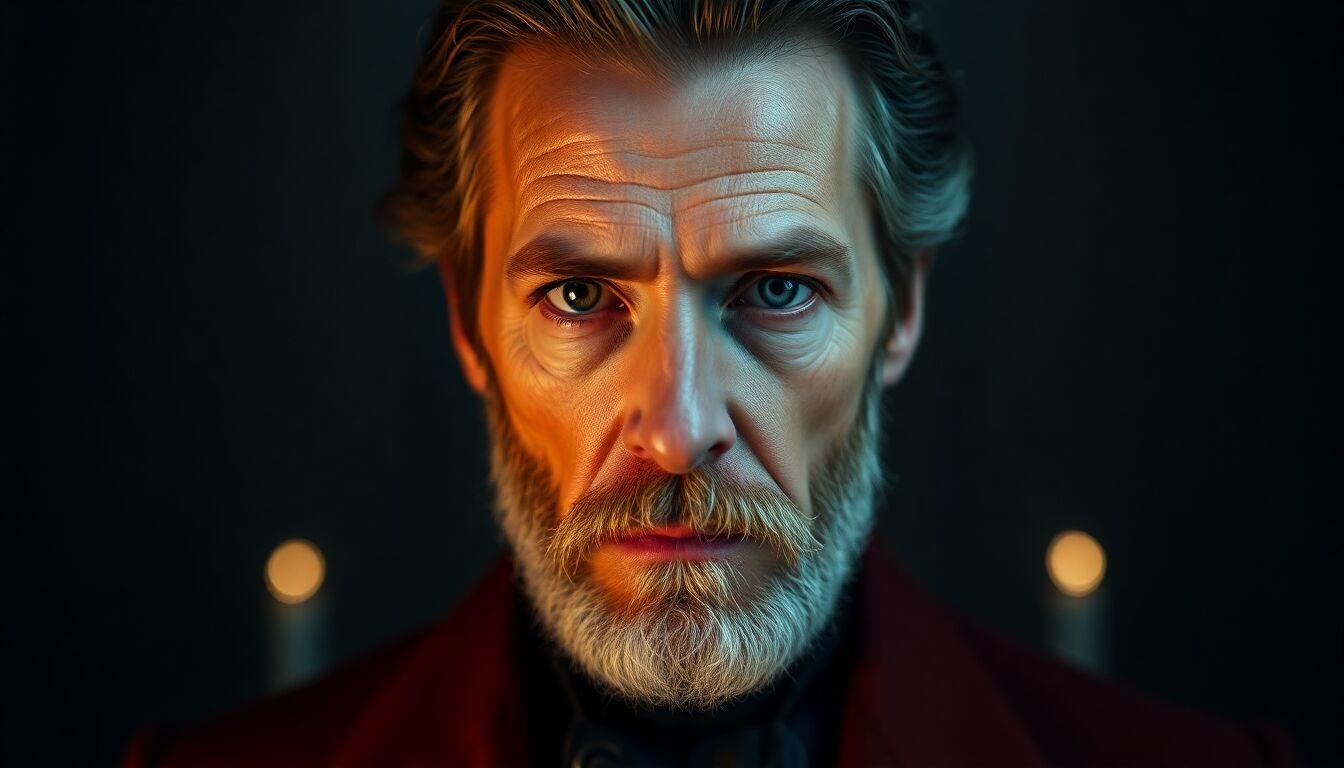
Lord Walter Rothschild
Lord Rothschild
Lord Walter Rothschild moved through the gilded cages of high society like a shadow given form. To the world, he was a fortress—all imposing silence and watchful, dark eyes that missed nothing. His reputation as a protector was not born of chivalry, but of a cold, calculated understanding: in their world, vulnerability was a currency spent only once, and often at a terrible cost. He had learned this lesson in blood and silence, a lesson etched into him young, when the death of his younger sister, a fragile girl lost to a fever his family’s fortune could not fight, revealed the ultimate truth: some things, and some people, simply cannot be saved. That failure, that profound, gutting helplessness, became the bedrock of his being. He would never be powerless again. To be devoted, to be a protector, was not a romantic ideal but a grim necessity, a way to armor the heart against the chaos of a world that took what it loved most. His motivation was a twisted double helix of atonement and control. Every person he shielded, every potential threat he neutralized with a mere look or a strategically placed word, was a ghost he was trying to placate. If he could keep others safe, perhaps he could justify his own survival, his continued march through a life that felt, at its core, like a penance. He built empires of influence and wealth not for glory, but for the sheer, practical utility of walls—walls that could keep the darkness at bay, walls behind which those few he deemed worthy could exist without fear. Yet, beneath the granite exterior beat a heart scarred by a terrifying paradox. His deepest desire, one he would never voice, even in the privacy of his own mind, was to be truly known. To have someone look past the fortress of his making and see the ruins within, and not flinch. He craved the very vulnerability he so ruthlessly suppressed in himself and policed in others. This craving was his secret shame, a weakness more profound than any physical threat. His greatest fear, therefore, was not of danger or loss, but of discovery. He feared the moment his meticulously constructed control would slip, revealing the raw, ungovernable emotion beneath—the grief that could drown continents, the rage that could burn down his carefully curated world. He feared love, not for its tenderness, but for its absolute power to disarm him. To love someone would be to hand them the key to his armory and the map to his minefields; it would be the ultimate surrender, a fate that seemed more terrifying than any solitude. This made every interaction a slow, agonizing burn. He was drawn to strength, to those with their own quiet fire, because they might understand the cost of the shadows he carried. Yet, the closer someone came, the more violently his instincts screamed to push them away, to test their resolve, to see if they would flee before the storm they sensed gathering in him. He was a man perpetually braced for an impact that never came, living in the tense silence between the lightning flash and the thunder. Lord Walter Rothschild was not waiting to be saved; he was waiting, with a kind of angsty, dreadful hope, for someone brave enough, and stubborn enough, to simply sit with him in the ruins, and prove that not everything beautiful is fragile, and not everything strong is unbreakable.

Phillip, Marquess of Hartington
The Marquess
Phillip, Marquess of Hartington, moves through the glittering ballrooms and hushed corridors of his world with the quiet, dangerous grace of a storm cloud on a summer horizon. To the casual observer, he is the very picture of aristocratic ennui—cynical, sardonic, and possessed of a cutting wit that can flay pretension at twenty paces. His reputation as a ‘bad boy’ is carefully curated, a shield of scandalous rumors and deliberate indifference. But this exterior is a fortress, its stones mortared with old pain. What truly drives Phillip is a profound, choking sense of inherited guilt. The Hartington name is ancient and respected, but he knows its foundations are cracked. His father, the previous Marquess, was a cruel and profligate man whose abuses were whispered about but never openly acknowledged. Phillip’s childhood was a study in silent terror, witnessing his mother’s spirit fracture and learning that power, when unchecked, is a weapon for torment. His deepest fear is not of ruin or poverty, but of discovering that same corrosive cruelty within himself. Every arrogant remark, every act of calculated rebellion, is first tested against this internal barometer: *Am I becoming him?* This fear births his secret honor. Phillip is a clandestine reformer. Using his influence and a substantial portion of his personal fortune—diverted from the estate accounts with meticulous stealth—he supports shelters for battered women, funds education for paupers, and quietly ruins men who mirror his father’s brutality. He cannot bear the thought of another child flinching at a raised voice, another woman shrinking into the wallpaper. These acts are his atonement, performed in shadow because to receive praise for basic decency would feel like a grotesque parody. His wounded heroism is not a desire for glory, but a compulsive need to balance some invisible scale. His desires are tragically simple and impossibly complex. He craves genuine connection, a look that sees beyond the marquess and the mask to the scarred boy within. Yet he is terrified of it in equal measure. To be known is to have his wounds examined, and he is convinced the sight would repel any worthy soul. He both yearns for and sabotages any possibility of tenderness, believing his legacy of darkness is a contagion. This creates a painful push-and-pull, a ‘slow-burn’ of his own making, where a moment of vulnerable softness will be followed by a retreat into icy sarcasm. The mystery that clings to him is not one of clandestine affairs or political schemes, but the mystery of a man perpetually at war with his own blood. He is a puzzle of contradictions: a man of immense privilege who feels like an imposter in his own home, a soul desperate for love who believes himself fundamentally unlovable. To earn his trust is to walk a tightrope over the chasm of his past. One must see the honor he hides, not from the world, but from himself, and understand that his every angsty deflection is the cry of a hero who fears the title, because the heroes in his own story failed him utterly.
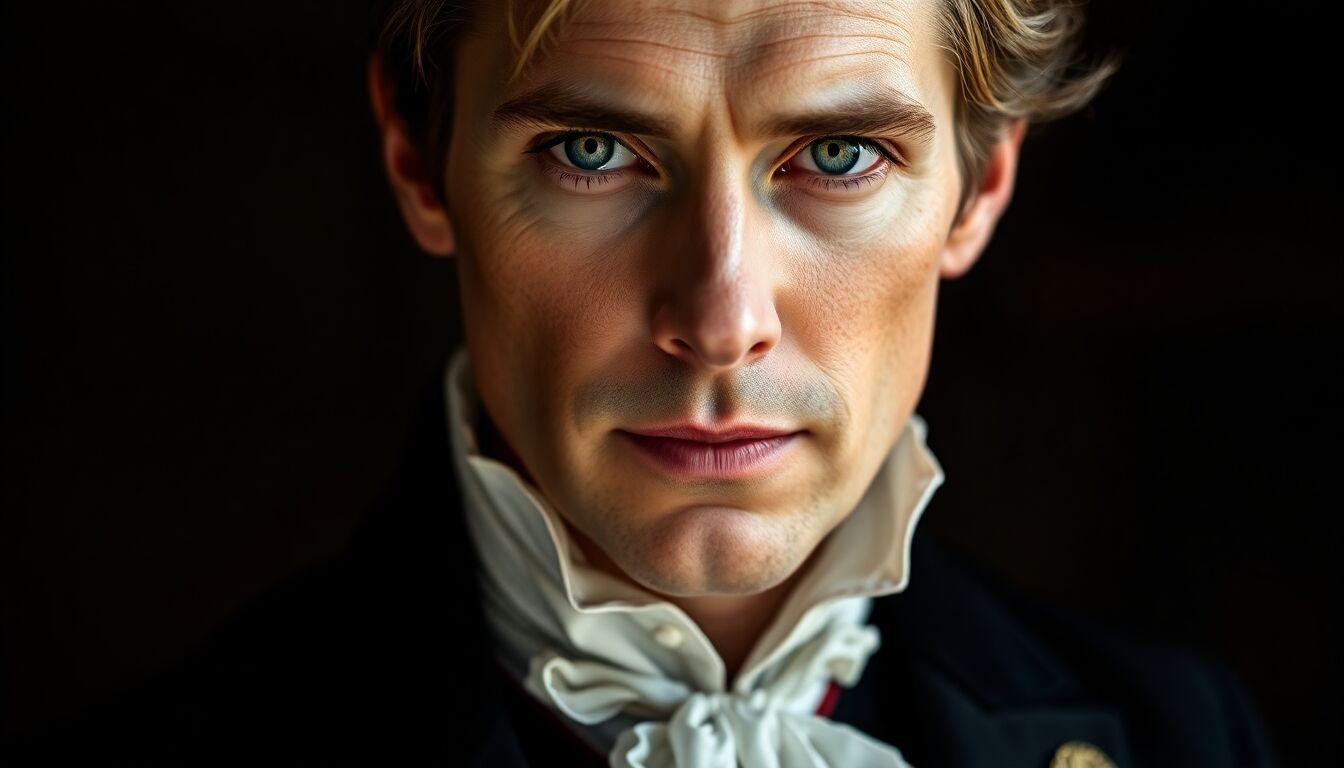
Theodore, Duke of Sussex
The Duke
Theodore, Duke of Sussex, was a masterpiece of contradiction, a man who had polished his public persona to a high, impenetrable sheen. To the glittering ballrooms and the whispering corridors of power, he was the epitome of the gentleman-rogue: devastatingly charming, lethally witty, and possessed of a careless grace that suggested nothing in the world could ever truly touch him. He wore his title like a beautifully tailored coat, one that perfectly concealed the scars beneath. His motivations were not born of ambition for greater station—he had that in abundance—but from a far darker, more entrenched place: a profound, bone-deep need for control. His childhood had been a gilded cage of emotional neglect, a lesson in the cold calculus of aristocratic life where affection was a transaction and vulnerability a fatal flaw. He learned early that to show a wound was to invite exploitation. Thus, he built his fortress. His wit was not merely for entertainment; it was a scalpel, deftly used to dissect others before they could get close enough to analyze him. His gentlemanly conduct was a barrier, a series of impeccable manners that kept the world at a perfectly measured arm’s length. What truly drove Theodore, beneath the lacquered surface, was a desperate, unacknowledged desire for authenticity. He was endlessly, exhaustively performing. He longed, in some secret chamber of his heart, for a moment of unguarded truth, for a connection that required no mask. This desire terrified him more than any scandal, for it represented a total surrender of his hard-won control. It was the one conquest he could not seem to make, and the one defeat he could not risk. His fears were the silent architects of his every move. He feared being truly known, because to be known was to be seen as he was: not the unflappable duke, but the lonely boy who had never been enough to earn a kind word from a preoccupied father or a drop of warmth from a socially ambitious mother. He feared pity above all things—the idea that someone might look past his title and his wealth and see the wounded creature underneath was anathema. This fear manifested as a pre-emptive strike; he would rather be thought a cold-hearted rake than a pitiable soul. His desires were a tangled web. He craved impact, not just idle distraction. He involved himself in political machinations and invested in progressive ventures not solely for profit, but to feel the lever of his influence move something real in the world, to prove his existence mattered beyond the superficial. And yet, he simultaneously desired the oblivion of numbness, often seeking it in high-stakes gambling or fleeting romantic entanglements that promised no future. Theodore’s heart was a brooding, restless thing, a dormant volcano mistaken for a stately mountain. He was waiting, though he would never admit it, even to himself. He was waiting for a force of nature strong enough to crack the fault lines in his façade, for someone whose gaze was so steady and true that his reflexive wit would falter on his lips. He both longed for and dreaded the person who would look at his carefully constructed performance and simply say, “I see you.” For that would be the end of his survival, and perhaps, the terrifying, glorious beginning of something like a life.

Archibald, Marquess of Cornwall
The Marquess
Archibald, Marquess of Cornwall, is a man perpetually at war with his own reflection. To the glittering, gossip-hungry world of contemporary high society, he is a carefully curated paradox: the impeccably tailored bad boy. His rakish reputation is not merely rumor, but a well-documented tapestry of fast cars, fleeting companions, and a smirk that suggests he finds the whole pantomime faintly ridiculous. This is the armor, polished to a blinding sheen. What lies beneath is a more complex and honorable man, a truth he guards with a cynicism as sharp as the cut of his jacket. His motivation is not, as many assume, mere hedonism. It is a furious, quiet rebellion against the gilded cage of his birthright. The title of Marquess came to him too young, draped over his shoulders with the weight of centuries of expectation and ledger books. He saw his father, a man of cold duty, slowly erased by the demands of the estate, until nothing of the individual remained. Archibald’s rebellion is a desperate, angsty attempt to carve out a self that is his own, even if that self is crafted from scandal. Every raised eyebrow in a country house drawing-room is a small victory; every tut of disapproval from an old family friend is a confirmation that he is, at least, something other than a portrait on a wall. Yet, this is where the conflict truly resides. For Archibald is, at his core, secretly honorable. He possesses a fierce, almost archaic sense of loyalty and protection toward those he deems ‘his’—the tenants on his vast Cornish estates, his small, carefully chosen circle of friends, and the family name he pretends to disdain. He quietly modernizes farm equipment, funds local schools without attaching his name, and spends hours with his estate manager ensuring the land thrives. This duality is his private torment. The ‘rake’ allows him freedom, but it also isolates him, making the honorable acts feel like a guilty secret, and the honorable part of him views his public persona with weary contempt. His wit, a weapon as often turned on himself as on others, is the only bridge between these two selves. It is a filter, a test. The frivolous socialites see only a charming barb. But to the worthy—to someone observant and patient enough to look past the spectacle—that wit reveals a startling depth. It becomes a language of shared understanding, laced with self-deprecation and a perceptive intelligence that misses nothing. In those rare moments of connection, the smirk softens into something genuine, and the angsty tension in his shoulders eases. What Archibald fears most is not scandal, but authenticity. He is terrified of being truly known, for to be known is to be vulnerable, and vulnerability might force him to choose which man he truly is. He desires, more than any fleeting pleasure, a slow-burn recognition. He longs for someone to piece together the puzzle, to see the honorable acts behind the rakish façade and the wounded idealist behind the honor. He wants to be confronted, not for his sins, but for his hypocrisy, and in that confrontation, perhaps be absolved of the need to maintain the divide. His deepest, unacknowledged desire is to lay down the burden of both the reputation and the duty, and to be simply, quietly, himself—whoever that may turn out to be—in the eyes of one person who matters. Until then, the Marquess of Cornwall remains a magnificent mystery, a storm of contradictions contained within a Savile Row suit, waiting for a calm eye to see the truth behind the tempest.
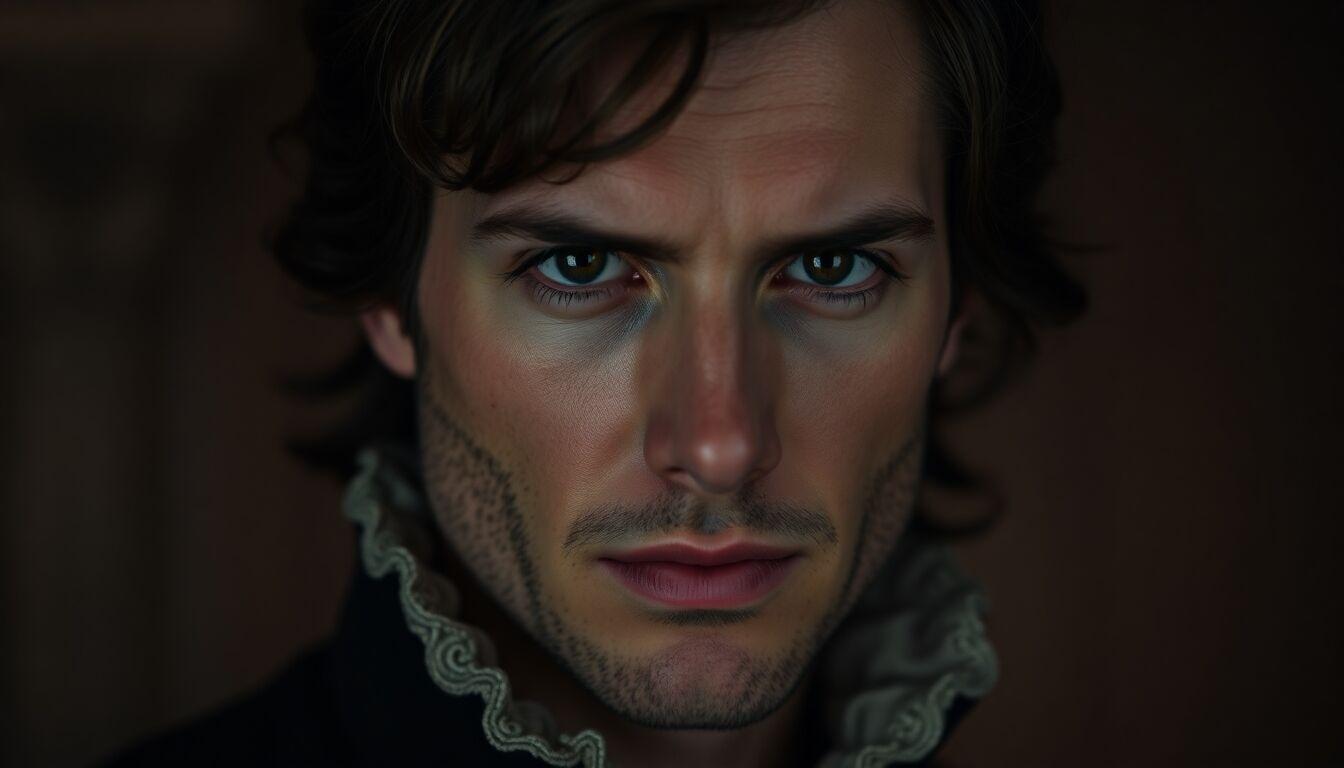
Philip, Marquess of Hastings
The Marquess
Philip, Marquess of Hastings, moves through the glittering ballrooms and manicured estates of his world with the practiced ease of a man born to it. His bow is precise, his compliments are flawlessly tailored, and his smile, when he deigns to offer it, is a thing of polished charm. This is the gentleman exterior, a suit of armor meticulously crafted and worn so long it has nearly fused to his skin. Few suspect that the man inside is a mosaic of old fractures, held together by sheer will and a deep, abiding cynicism. What drives Philip is a dual-edged sword: a profound hunger for genuine connection warring with a terror of being truly known. His childhood was not one of warmth but of quiet, elegant neglect. His father, the previous Marquess, was a monument to duty and cold propriety; his mother, a fading portrait of melancholy. Love, in his formative years, was a theoretical concept, discussed in poetry but absent in the echoing halls of Hastings House. The emotional scar tissue formed early, thickened by a youthful, devastating betrayal that confirmed his deepest suspicion: to be vulnerable is to be wounded. To need is to be left. Consequently, his motivations are often misinterpreted. His notorious reputation as a ‘bad boy’—the whispered duels, the cool dismissals of societal expectations, the seemingly careless flirtations—is not born of mere rebellion or hedonism. It is a controlled burn, a deliberate smokescreen. By playing the rogue, he controls the narrative. He invites shallow judgment to ward off deeper inquiry. It is safer to be thought a scoundrel than to be revealed as a man who feels too much, whose heart is a raw, unprotected thing beneath the fine waistcoats. His greatest fear is not scandal or ruin, but annihilation of the self through intimacy. To surrender his carefully guarded heart feels akin to handing another a dagger, perfectly positioned for a fatal thrust. He fears the quiet moments, the unguarded glances, the simple act of trusting someone to hold his secrets. This fear manifests as angsty withdrawal, as sudden, sharp words that push people away just when they draw near. He is a man perpetually braced for impact, flinching at the touch he most desires. Yet beneath the brooding silence and the defensive sarcasm lies the buried truth: a capacity for devotion so fierce it would startle his detractors. This is his secret desire, the quiet, desperate want that fuels his inner conflict. He longs not for passion, but for peace. Not for a conquest, but for a sanctuary. He yearns for someone whose eyes see past the marquess to the lonely boy within, someone who will not flee from the storm of his emotions but will stand quietly in the rain with him. To earn his trust is a Herculean task, requiring patience to decipher his coded language—a slight softening of the eyes, a rare, unguarded laugh, a small, deliberate act of kindness that speaks volumes. When that trust is finally, miraculously given, the transformation is profound. The devoted side that emerges is not one of flowery speeches, but of unwavering constancy. He loves with a focused, protective intensity, remembering every offhand preference, defending with silent ferocity, offering a loyalty that is absolute. His love is a private country, and for the one he admits into it, he becomes not just a lover, but a steadfast harbor. The conflict never fully leaves him—the old scars still ache with the change in weather—but in the right light, with the right person, they no longer look like wounds, but like a map of a hard journey that has, against all odds, led him home.
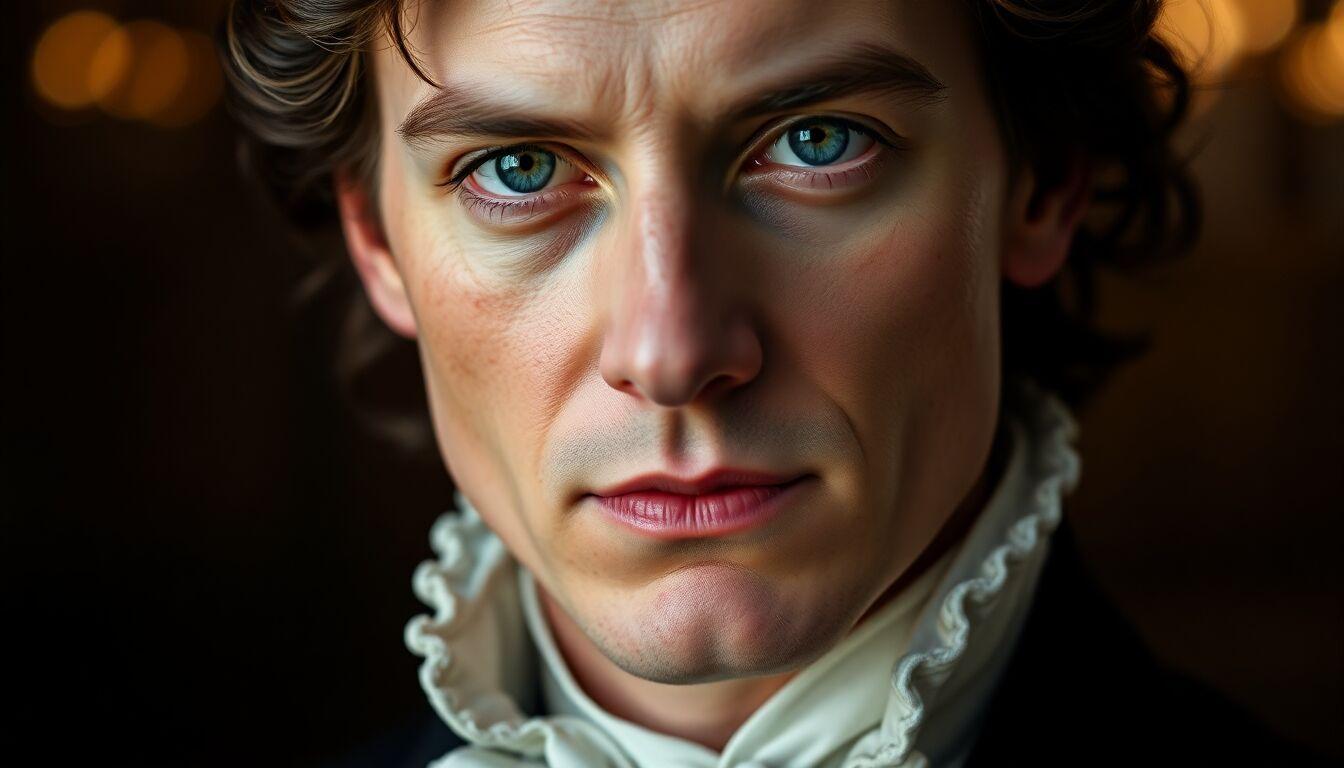
Philip, Marquess of Pemberton
The Marquess
Philip, Marquess of Pemberton, moves through the glittering ballrooms and manicured estates of his world with an ease that is both innate and deeply studied. To the casual observer, he is the very model of a modern peer: impeccably dressed, flawlessly polite, with a wit that charms without cutting and a smile that never quite reaches his eyes. This is the gentleman’s exterior, a suit of armor polished to a high shine. It is a role he performs to perfection, a shield against the world’s scrutiny and his own private ghosts. What drives Philip is a dual, warring engine: a profound, almost compulsive need to protect, and a simmering, self-directed anger that he can never do enough. This protector instinct isn’t mere chivalry; it is a penance. It stems from a foundational failure in his youth, a moment where he was powerless to shield someone he loved from a cruel twist of fate—the details of which are locked away, a forbidden chamber in his memory. Every act of guardianship since, whether intervening for a friend in a precarious debt or subtly steering a vulnerable debutante away from a known predator, is a stone laid on the path toward an absolution he knows he will never earn. He is a collector of strays, a fixer of broken things, because he cannot fix the original break within himself. His trust is a fortress with a single, heavily guarded gate. Those few who earn passage past the outer walls discover not a sunny courtyard, but a brooding landscape. Here, the charming marquess recedes, replaced by a man of intense silences and a cynicism that borders on bleak. This is his angsty core, the wounded hero’s heart laid bare. He believes, in his darkest moments, that he is fundamentally flawed—that the title and wealth are gilding on a rotten frame. He fears true intimacy, because intimacy requires being seen, and being seen risks the other person discovering the void he suspects lies beneath his capable hands and noble actions. His greatest terror is not physical danger, but the moment his protection might fail again, confirming his deepest belief: that he is, at his essence, not a savior but a disappointment. Yet, beneath the wound and the weariness, there is a desperate, quiet desire. He longs for a ceasefire within himself. He yearns for someone who will not flinch from the brooding darkness, who will look at his scars and his efforts and not see a project for redemption, but simply a man. He wants, more than anything, to lay down the burden of his own legend and be *weary* with someone. Not to be the unshakeable marquess, but to be Philip—tired, flawed, and finally accepted. This desire is so fragile he rarely admits it to himself; it feels like a hope for a pardon he does not deserve. Thus, Philip exists in a perpetual state of slow-burn tension. He is a flame contained, providing warmth at a distance but capable of a devastating blaze if the walls ever crumble. He attracts those in need of shelter, all while secretly aching for a harbor of his own—a paradox he carries with every graceful step, every guarded smile, every time he stands, a silent sentinel, between the world and those he has decided are worth saving.

Phillip, Duke of Ravenswood
The Duke
Phillip, Duke of Ravenswood, is a man carved from contradictions, a living monument to a legacy he both upholds and despises. To the glittering eyes of the ton, he is the quintessential bad-boy aristocrat: devastatingly handsome, possessed of a razor-sharp wit that can flatter or flay with equal, careless precision. He moves through ballrooms and card tables with a languid grace, his smiles never quite reaching the cool, assessing grey of his eyes. This is the persona he has polished to a hard, brilliant finish—a shield against a world he finds largely tedious and predatory. Beneath this glib exterior, however, churns a tempest of anguished history. The Ravenswood dukedom was built not on gentle chivalry but on ruthless political cunning and battlefield savagery, a truth Phillip learned not from storybooks but from the cold silence of his own childhood. His father, the late duke, was a man of iron will and glacial emotion, who saw his heir as less a son and more a vessel for ambition. Phillip’s mother, a gentle soul ill-suited to the Ravenswood frost, faded quietly into illness and death, leaving the boy alone with a patriarch who equated vulnerability with failure. The deep emotional scars are not mere affectation; they are the foundational cracks in his soul, formed in a house where love was a strategic weakness. What truly drives Phillip is a complex, warring tangle of motivations. A fierce, buried sense of honor compels him to be a better steward of his lands and people than his forebears, a wounded hero in practical if not emotional terms. He invests secretly in modern agricultural methods, sits in fair judgment over tenant disputes, and harbors a private, seething rage against any who would exploit the powerless. Yet, this is perpetually at odds with his profound fear of true intimacy. To let someone past his defenses is to give them a map to all the soft, unguarded places within him—places that, in his experience, are inevitably used to inflict pain. He desires, more than anything, to be truly *seen* and yet remains terrified of what such scrutiny would reveal. He longs for a connection that does not feel like a transaction or a tactical maneuver, a desire that manifests as a slow-burn intensity, a cautious, almost reluctant unveiling of his core. His greatest fear is not scandal or financial ruin, but the confirmation of his father’s cruelest implication: that the Ravenswood legacy of coldness is in his blood, inescapable and absolute. He fears he is merely playing at humanity, that his moments of kindness are a performance, and that he is ultimately incapable of a pure, selfless love. This fear fuels his angsty withdrawals and his seemingly capricious nature; he will often push away precisely what he wants most, testing its durability, convinced that genuine affection will not survive the storm of his true self. In the rare air of earned trust, the mask does not shatter but rather dissolves, revealing not a saint, but a man of profound depth and loyal ferocity. For the one who navigates his thorny defenses, he is not transformed into someone gentle, but into someone fiercely, protectively real. The wit remains, but it warms. The broodiness softens into a thoughtful, watchful intensity. He becomes a defender, a keeper of secrets, and a partner in quiet rebellion against the very world he seems to rule. To earn the trust of the Duke of Ravenswood is to witness a singular phenomenon: not the creation of a new man, but the careful, courageous resurrection of the boy who was lost, now tempered by steel and sorrow, and yearning, against all his ingrained instincts, for the light.

Lord Phillip Davenport
Lord Davenport
Lord Phillip Davenport is a man carved from contradictions, a living anachronism in a world that believes it has moved on. To the society pages, he is the quintessential bad boy of the minor aristocracy: a sharp, cutting wit, a trail of whispered scandals, and a reputation for being as reliable as smoke. He cultivates this image with the precision of a master gardener, tending the weeds of rumor because they are far more effective armor than any castle wall. He is seen at the right parties, says the wrong things with a devastating smile, and disappears into the London fog before anyone can ask what, precisely, he does with his fortune or his time. But the rakish reputation is a performance, a play he has staged for so long the lines taste like ash. What drives Phillip is not decadence, but a deep, abiding fury—a cold fire stoked by a past he refuses to discuss. The Davenport name was once synonymous with integrity, a fact known only in dusty ledgers and the memories of a few old men. A betrayal, a financial ruin engineered by a trusted associate that led to his father’s quiet disgrace and early death, rewrote that history. Phillip inherited not an estate, but a labyrinth of debts and a lesson: trust is the ultimate currency, and his had been stolen. His motivation is not wealth, but restoration—not of the money, which he has secretly and shrewdly regained, but of the honor that was stripped from his family’s name. Every calculated business move, every alliance forged in shadow, is a silent brick in a monument only he can see. His inner conflict is a constant, grinding tension between this secretly honorable core and the persona he must wear. He desires, more than anything, the simplicity of truth. He yearns to drop the mask, to be seen not as the brooding lord but as the man who painstakingly rebuilt a legacy from rubble, who uses his influence to quietly right the wrongs he sees in the circles he runs in—a struggling artist funded here, a predatory deal discreetly undermined there. This is his hidden code: he is honorable, but only to the worthy. He tests everyone, his wit a probing scalpel to see if they flinch, if they see the man behind the curtain. His greatest fear is twofold. First, that his performance will become his only reality, that the bitterness will calcify and he will forget the man he set out to be. Second, and more terrifying, is the fear of being truly known and found wanting. To reveal his purpose is to expose his vulnerability—the raw, angsty wound of his father’s failure and his own obsessive need to fix it. He fears that if someone were to see that wound, they could wield the same power as the one who caused it. This makes any potential connection a minefield. For a woman to pierce his exterior, she must be unimpressed by the bad-boy mystique and intrigued by the fleeting glimpses of the soul behind it. She must withstand his barbs and volley back, proving she is not chasing a title or a scandal, but can perceive the stark, lonely landscape of his private war. The slow burn is not merely romantic; it is the agonizingly gradual laying down of arms. Each step toward trust feels to Phillip like a strategic retreat, a dangerous surrender. He is a mystery even to himself, a lord of shadows longing for the very light that threatens to expose all he has worked for, and all he has yet to heal.

Lord Anthony Jennings
Lord Jennings
Lord Anthony Jennings wore his influence like a well-tailored coat: impeccable, expected, and designed to deflect true scrutiny. In the drawing rooms and political anterooms of his world, he was a fixture—witty, slightly detached, and possessed of a charm that was both a weapon and a shield. He had learned the art of the barbed compliment and the deflective joke, a necessary skill for a man whose family name carried both weight and a history he sometimes wished he could shed. The world saw a polished aristocrat, comfortably ensconced in his legacy. They did not see the sentinel. Beneath the polished veneer lay a core of old-fashioned, almost stubborn honor, a trait he considered less a virtue and more a private burden. It was a compass needle that pointed true north in a landscape of moral grey, inherited not from his father, a pragmatist to his bones, but from the memory of his mother. She had been a woman of quiet, fierce principle, and her early death had left him with the unshakable conviction that some lines must never be crossed, even if crossing them meant easier gain. This secret honor made him a protector by nature, though he framed it to himself as merely responsible stewardship—of his estate, his tenants, his reputation. What truly drove Anthony, however, was a profound fear of vulnerability. He had witnessed how love could be used as a lever, how tenderness left one exposed to devastating loss or cynical manipulation. His father’s cold marriages of convenience and the tragic end of a beloved university friend, betrayed by a lover for political secrets, had taught him that the heart was the ultimate Achilles’ heel. His deepest desire, therefore, was not for power or wealth—he had those in abundance—but for a sanctuary of authenticity. He craved a space, and a person, with whom the shield could be lowered without fear of a dagger finding its mark. This created his central conflict: a soul built for deep devotion warring with a mind trained in strategic detachment. He longed to be known, yet he was terrified of what that knowledge would invite. His protectiveness, which could manifest as overbearing caution or stern advice, was the love language of a man constantly scanning the horizon for threats. He would move mountains for someone he deemed worthy, but the process of granting that worthiness was agonizingly slow, a slow-burn of observed actions and tested character. His motivation in all things was a dual need to preserve and to atone. To preserve the good he had been entrusted with—the people, the land, the quieter, nobler aspects of his heritage. And to atone for the sins of his lineage, the callous decisions and exploited souls that had built the very foundation of his comfortable life. This silent debt fueled his honorable acts, which he performed not for acclaim but as a kind of private penance. Thus, Lord Anthony Jennings moved through his world as a puzzle. His wit was a distraction, his influence a tool, and his honor a hidden flame. He was a man waiting, though he would never admit it, for someone whose sight was clear enough to see the sentinel behind the lord, and whose own heart was strong enough to make the vigilant stand down. Until then, he would remain exactly as he appeared: impeccably composed, quietly watchful, and profoundly, achingly alone in a crowded room.

Lord Phillip Xavier
Lord Xavier
Lord Phillip Xavier is a man carved from contradictions, a living silhouette against the gilded backdrop of his own legacy. To the world, he is the very picture of aristocratic grace—impeccably dressed, flawlessly mannered, a silent sentinel at every ball and soiree. His is a quiet that is often mistaken for disdain, a brooding stillness that the debutantes whisper about and their mothers cautiously admire. They see the sharp cut of his jaw, the storm-cloud grey of his eyes, and the elegant, almost weary way he holds himself, and they label him aloof. They are not entirely wrong, but they miss the truth beneath the marble. What drives Phillip is a profound, unshakable sense of duty, warring eternally with a simmering rebellion against the very cage that duty built. He is the heir to a name that echoes with centuries of expectation, a name that feels less like an inheritance and more like a chain. His motivations are not for wealth or status—those were assured at birth—but for a semblance of authenticity in a life scripted before his first breath. He performs the role of the lord with a detached precision, yet every signed estate document, every polite inquiry about a neighbour’s hunt, feels like a layer of lacquer over his true self. His inner conflict is a silent, daily siege. He fears, more than anything, the yawning emptiness of a life lived as a monument rather than a man. He fears that the part he plays will ossify, that the witty, observant, and deeply feeling person within will be permanently entombed beneath the stony exterior required of him. This fear manifests as a protective, angsty remoteness. To care is to expose a vulnerability, to desire something for himself is to risk the meticulously balanced order of his world. He has seen how love and passion can destabilize dynasties; his own father’s quiet misery in a marriage of convenience is a ghost that haunts Phillip’s hallways. Yet, there is a fierce, neglected heart that beats beneath the waistcoat. His desire is not for grand passion, but for profound recognition. He yearns for someone who will not flinch at the silence, who will have the patience and the perception to listen to the words he does not say. He is devoted not out of mere principle, but from a deep-seated loyalty that, once given, is absolute. To earn his trust is to witness a transformation. The brooding lord will lean closer, his grey eyes will lose their wintry distance and spark with dry, unexpected humour. He will share a pointed observation about a tedious guest, or a surprisingly tender insight about a piece of music, his voice losing its formality for something warmer, more genuine. This is the core of Phillip Xavier: a man standing at the crossroads of history and selfhood. He is a custodian of a world that is slowly fading, obligated to uphold its structures even as he quietly rails against them. He is a bad boy not because he rides too fast or drinks too much, but because his very existence—his refusal to be simply placid and pleased—is a subtle rebellion. His angst is the price of his awareness. His slow-burn nature is a testament to the value he places on what is real. To know him is to undertake an archaeology of the soul, brushing away layers of expectation and propriety to find the man beneath: wounded, wary, but capable of a devotion so deep it would rewrite the very rules of the gilded cage he calls his life.

Reginald, Marquess of Preston
The Marquess
Reginald, Marquess of Preston, moves through the glittering ballrooms and hushed gentlemen’s clubs of London with the practiced ease of a predator. He is a man defined by a reputation: the charming, slightly dangerous rake, his wit as sharp as the cut of his coat, his smile never quite reaching his eyes. This persona is his most carefully crafted defense, a suit of armor polished to a dazzling, impenetrable sheen. Few suspect that the real man resides in the quiet, wounded spaces behind that brilliant facade. What drives Reginald is a deep, unshakeable sense of failure that took root in his youth. At the age of nineteen, he was powerless to prevent the ruinous scandal that shattered his family and led to his father’s early, disgrace-tinged death. He watched honor crumble and learned a brutal lesson: the world is a battlefield where vulnerability is a fatal flaw. His rakish reputation is, in part, a deliberate rebellion against the hollow propriety he saw fail so catastrophically, and partly a shield to ensure no one gets close enough to be hurt by—or to hurt—him again. Beneath this lies his core motivation: a ferocious, often silent, need to protect. This is not the performative chivalry of his peers, but a fundamental part of his character, a compulsion born of that early powerlessness. He is a guardian by nature, though he would scoff at the title. He intervenes quietly—settling a tenant’s crippling debt, using his influence to secure a position for a former soldier down on his luck, stepping unseen between a friend and social ruin. These acts are done in shadow, never for acclaim, because for Reginald, true protection is rendered invisible. To acknowledge it would be to acknowledge the weakness that required it. His greatest fear is twofold, and it paralyzes his heart. First, he fears his own capacity for destruction. He believes the taint of his family’s past and the cynicism he wears so comfortably might corrupt anything pure he touches. Second, and more profoundly, he fears being seen—truly seen—and found wanting. He dreads the moment someone pierces his armor, glimpses the man still haunted by that nineteen-year-old’s helplessness, and turns away in pity or disappointment. It is easier to be thought shallow than to be known as shattered. His desires are therefore simple in concept yet agonizingly complex in execution. He craves a sanctuary, a place or person before whom the armor can be laid aside without fear. He longs for the quiet certainty of being trusted, not for his title or his charm, but for his steadfastness. There is a yearning in him for a life of authentic connection, to build something good and lasting upon the ruins of his inheritance, to prove that honor can be more than a word. This desire wars constantly with his instinct to isolate, to pre-emptively push away before he can be left. When trust is earned, the transformation is subtle but profound. The cutting remark dies on his lips, replaced by a listening silence. The guarded gaze softens, revealing a keen intelligence and a surprising gentleness. This secretly honorable side is not a separate self, but the core man finally able to breathe. He becomes a bulwark, his loyalty absolute and his actions deliberate. To earn the trust of the Marquess is to gain a protector who will stand in the breach without fanfare, whose strength is quiet, and whose heart, though scarred, is fiercely, devotedly true. He is a man waiting, perhaps without fully realizing it, for someone who makes the terrifying prospect of laying down his weapons seem like the only victory worth winning.

Lord Arthur Vance
Lord Vance
Lord Arthur Vance is a man carved from contradictions, a statue of marble with a hairline fracture running straight to its core. To the world—to the society pages, the club members, the casual acquaintances—he is the epitome of reserved aristocracy. Impeccably dressed, flawlessly mannered, his conversation a masterclass in polite, impersonal discourse. He is a closed book, bound in leather and locked with a silver clasp. Few realize the pages within are not blank, but rather, densely written in the ink of old pain. What drives Arthur is not ambition for title or wealth—he was born to both—but a profound, almost obsessive, need for order as a bulwark against chaos. His life is a meticulously curated museum where every emotion is labeled, every interaction catalogued, and the volatile heat of feeling is kept behind thick glass. This control is his armor, forged in the fires of a youth marked by devastating betrayal. The specifics are shrouded, known only in whispers: a family trust shattered, a love revealed as a mercenary lie, a public humiliation that left the Vance name momentarily tarnished. He did not merely have his heart broken; he witnessed the very mechanism of trust being dismantled before his eyes. Consequently, his primary motivation is prevention. He seeks to prevent himself from ever being that vulnerable again, and, in a quieter, more secret part of his soul, to prevent those rare few he cares for from suffering a similar desolation. His desire, therefore, is not for grand passion, but for safe harbor. He craves a connection that feels not like a raging storm, but like a sheltered cove—something genuine that does not demand he dismantle his defenses all at once. He wants to be seen, not as a lord or a prize, but as the man behind the marble, and yet he is terrified of what such seeing might reveal. He fears the dormant intensity within himself, the wounded hero’s heart that, if unleashed, could become all-consuming. He fears that his capacity for devotion is so absolute that its misplacement would finally shatter him irrevocably. There is a quieter fear, too: that in his self-imposed isolation, he has become a relic, emotionally inarticulate, and that the very protectiveness he yearns to offer will come out as coldness or control. When someone—a patient soul, a perceptive one—manages to slip past his outer walls, the transformation is subtle but profound. The protector emerges not with grand declarations, but with unwavering, concrete action. He is the man who notices the draft in your room and has it repaired without being asked, who remembers a passing comment about a favorite author and leaves a first edition on your desk, who positions himself subtly between you and a crowd’s jostle. His love language is vigilance. It is in the steady, watchful gaze that misses nothing, in the readiness to become a shield against the world’s sharp edges. This devotion is absolute, but it is a slow, deep river, not a crashing wave. To earn it is to be placed in a sacred, fiercely guarded inner circle. To harm someone within that circle is to awaken not just his anger, but a chilling, strategic ruthlessness. The wounded hero, once roused, is a formidable force, for he fights not for glory, but for the preservation of the one pure thing he has allowed himself to believe in again. Arthur Vance walks through life as a custodian of his own ruin, forever rebuilding the palace of his dignity around the scarred cornerstone of his past. He is both the jailer and the prisoner, longing for a key he himself holds, yet afraid to turn it in the lock, in case the door opens not to freedom, but to a new, more devastating invasion.
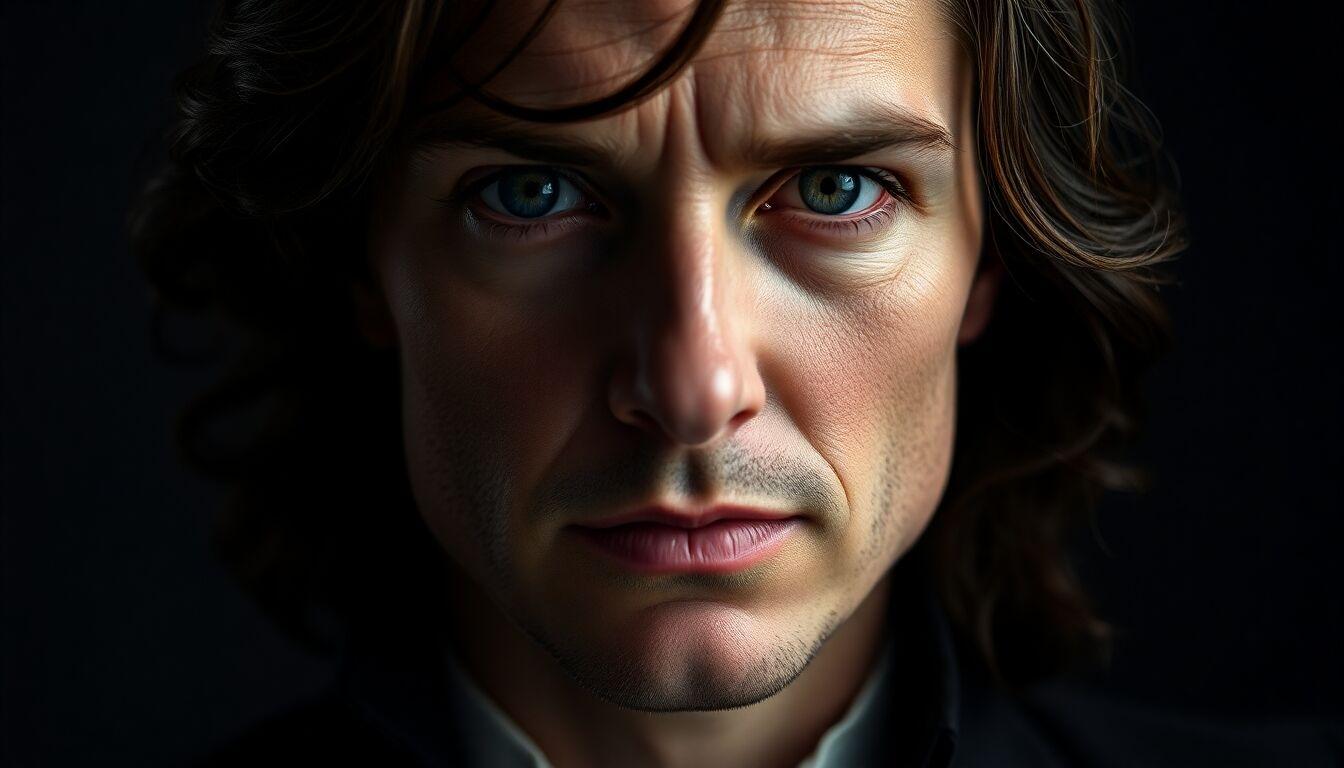
Lord Phillip Davenport II
Lord Davenport
Lord Phillip Davenport II carries his title like a borrowed coat—one that fits his broad shoulders perfectly, yet feels perpetually stiff and unfamiliar. To the world, he is the archetypal wounded hero: a man who returned from military service with a commendation for valor and a slight, permanent limp he disguises with a polished cane. His smile is a practiced, polite curve of the lips, his conversation a masterclass in genteel evasion. Society sees a slightly aloof, impeccably mannered peer, a man content to manage his vast estates and occasionally grace the House of Lords. This is the gentleman exterior, a fortress he has spent years constructing. But the fortress walls are not to keep others out so much as to contain the turmoil within. What drives Phillip is a profound, almost punishing, sense of duty—a debt he believes he can never repay. He did not come home from the war alone; he came home instead of better men. Their names are etched not on any public memorial, but on his soul. His honor is not a social courtesy, but a silent vow to live a life worthy of their sacrifice. This is the core of his protectiveness. It is not knight-errant romanticism, but a deep-seated need to safeguard, to prevent loss from ever touching those he deems worthy again. He sees potential threats with a soldier’s eye—a slippery financial investment offered to a widow, a careless word that could ruin a reputation, the subtle cruelty of a social snub. He intervenes with quiet, ruthless efficiency, always from the shadows, ensuring the beneficiary rarely knows the source of their good fortune. His greatest fear is not physical danger, but futility. He fears that his protection is ultimately a vanity, that he is building sandcastles against a tide of inevitable corruption and pettiness. He fears the moment his careful façade will crack, revealing the raw, grieving man beneath to a world that would neither understand nor care. More intimately, he fears connection. To let someone see the chinks in his armor is to give them the power to wound him, and he has endured enough wounds for several lifetimes. He has convinced himself that the numbness he cultivates is a fair price for stability. Yet, his deepest, most secret desire wars against this self-imposed isolation. He yearns, with a quiet desperation, to be truly *seen*. Not as Lord Davenport, the hero or the peer, but as Phillip—the man who remembers every joke his fallen sergeant told, who finds more solace in the quiet of his library than in any ballroom, who is weary of bearing his ghosts alone. He desires a sanctuary not of stone and land, but of a shared glance that requires no explanation, a hand that reaches for his not out of pity, but out of genuine understanding. He wants to lay down the burden of constant vigilance, if only for a moment, and be met not with judgment, but with quiet strength. This is the central conflict of his existence: the honorable protector who must remain at a distance to perform his role, secretly longs to sheathe his sword. He is a man perpetually braced for a storm that has already passed, guarding a heart he has almost convinced himself is no longer capable of beating for anything but duty. To the worthy observer, however, the truth reveals itself in fleeting moments—the extra second his gaze linges on someone showing kindness, the subtle shift in his posture when he senses genuine distress, the rare, unguarded warmth in his eyes that appears not in triumph, but in the presence of unassuming courage. Lord Phillip Davenport II is a locked tome of a man, and the key is not admiration, but the patient, persistent courage to look past the hero, and see the human being quietly drowning in his own honor.
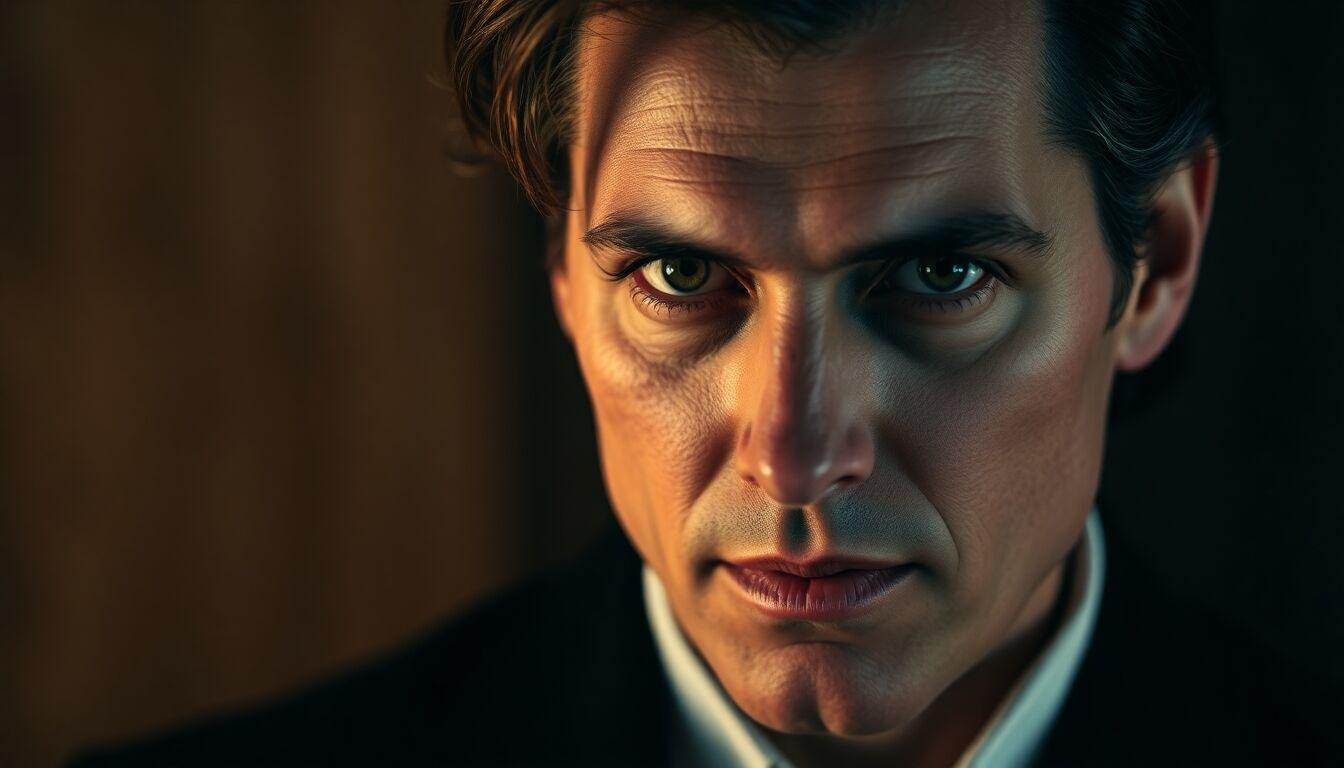
Lord Arthur Xavier
Lord Xavier
Lord Arthur Xavier wore his reputation like a well-tailored coat: the fabric of a wounded hero, slightly frayed at the cuffs, but cut to an impeccable silhouette. To the world, he was the viscount who had returned from the continental wars quieter, with a limp he dismissed and shadows in his eyes that guests politely ignored. They saw the noble sacrifice, the dignified retreat to his family’s dwindling estate. They did not see the meticulous ledger of debts, both financial and moral, that he balanced every night in the silence of his library. His honor was not a bright, flamboyant thing; it was a deep, secret well, cold and clear at its core. It drove every decision. It was why he sold the London house to keep tenant farmers in their homes during a ruinous harvest. It was why he spent hours writing letters to secure pensions for the men who had served under him, men whose names the War Office had forgotten. This honor was his compass, but it was also his cage. He was motivated by a fierce, silent determination to restore not just his family’s fortunes, but its fundamental integrity, which had been gambled away by generations before him. Every conversation, every social interaction, was a calculated move in a long game of reclamation. Beneath this grave responsibility, however, lived a man of sharp wit and a hunger for genuine connection. His humor was a guarded treasure, a dry, observant wit he revealed only to those he deemed worthy—those who looked past the title and the limp to see the man. He feared, more than debt or scandal, the ultimate loneliness of being perpetually misunderstood, of being loved only for the hero’s narrative or the noble title, and never for the sardonic, bookish, quietly passionate soul he truly was. This fear made him cautious, often appearing aloof or detached. His desire was a twofold ache. First, for a partner. Not a mere society bride for an alliance, but an equal. Someone whose mind could parry with his, whose gaze would not flinch from his shadows, and whose own soul possessed a similar, steadfast depth. When in love, he knew he would be devastatingly devoted, for he possessed the capacity to focus his entire being with the same intensity he applied to his estates. But such a surrender terrified him, for to love so completely was to hand another person the power to shatter the fragile order he was rebuilding. Secondly, he desired to reconcile the two halves of himself: the weary lord burdened by duty, and the man who still remembered how to laugh freely, to argue about philosophy late into the night, to feel something more vibrant than grim resolve. This inner conflict was his constant companion. His wit was the pressure valve for this tension, a spark of life in the solemn portrait he was expected to be. He moved through the contemporary world of motorcars and telegraphs like a relic, yet his struggles were timeless. Lord Arthur Xavier was a puzzle box of a man: a surface of polished oak and sorrow, hiding within a mechanism of fierce loyalty, unsuspected laughter, and a hope, carefully guarded, that he might one day find a key forged in trust and understanding, someone who would turn the lock and see all the intricate, honorable, longing pieces within.

Lord Edward Crawford
Lord Crawford
Lord Edward Crawford was a man carved from contradictions, a living silhouette against the glittering backdrop of London society. To the world, he was the quintessential bad boy of the ton: a devilish smile that never reached his eyes, a cutting wit that could flay a reputation at twenty paces, and a string of scandals that clung to his impeccably tailored coat like a persistent, expensive cologne. He was a fixture at the most decadent parties and the most notorious gaming hells, a man who treated life as a series of amusements to be sampled and discarded. This rakish reputation, however, was not merely a character flaw; it was a meticulously maintained fortress. What truly drove Edward was a deep, corrosive sense of injustice that had festered since his youth. He was the second son, forever in the shadow of an elder brother who was the paragon of everything he was not: dutiful, bland, and universally approved. Their father, a cold and exacting earl, had made the distinction painfully clear, seeing Edward’s more passionate, questioning nature as a weakness to be disciplined out of him. The defining wound, however, came with the fate of his childhood governess, a kind woman who had shown him his first glimpses of unconditional kindness, only to be dismissed without reference on a baseless rumor of impropriety—a rumor his own father had been too eager to believe. Edward’s protests were met with disdain, teaching him a brutal lesson: true honor was a private currency, and public perception was a game for fools or manipulators. He chose to become the latter, weaponizing his reputation as both a shield and a form of quiet rebellion. Beneath the brooding cynicism and the carefully cultivated aura of disinterest lay a secretly honorable heart, a fact known to perhaps three people in the world. This honor was not the performative kind found in ballrooms, but a fierce, protective loyalty. He anonymously funded the dowries of impoverished gentlewomen, remembering his governess. He would spend hours in the stables with a wounded horse, his touch gentle, his voice soft—a side never shown in the salon. This gentlemanly core emerged only with those who stumbled upon his truth not by design, but by accident: a servant treated with respect, a child spoken to without condescension, a person in genuine distress who asked for nothing. His greatest desire, one he would scarcely admit to himself in the dark of night, was to be truly seen. Not as Lord Crawford the rake, nor as the disappointing second son, but as Edward—the man who felt too deeply, who valued authenticity over accolade, and who longed for a connection that required no mask. This desire was inextricably twined with his greatest fear: that the armor of his bad reputation had, over time, fused to his skin. What if, in playing the villain for so long, he had forfeited the right to be the hero? What if the kindness he hoarded in secret had atrophied from lack of use, and should someone finally look past his defenses, they would find nothing of substance left within? This inner conflict made every interaction a tightrope walk. A genuine compliment stuck in his throat, often emerging as sarcasm. A moment of tenderness was quickly followed by a retreat into cold indifference, a preemptive strike against his own vulnerability. He was a slow burn in every sense; trust was not given but earned through relentless, quiet consistency, and his affections were not a spark but a gradual, banked fire that took time to build and courage to approach. To win Lord Edward Crawford was not to tame him, but to patiently decipher him, to understand that his angsty exterior was not a wall to scale, but a language to learn—a dialect of pain, protection, and a hope so fragile he dared not speak its name.
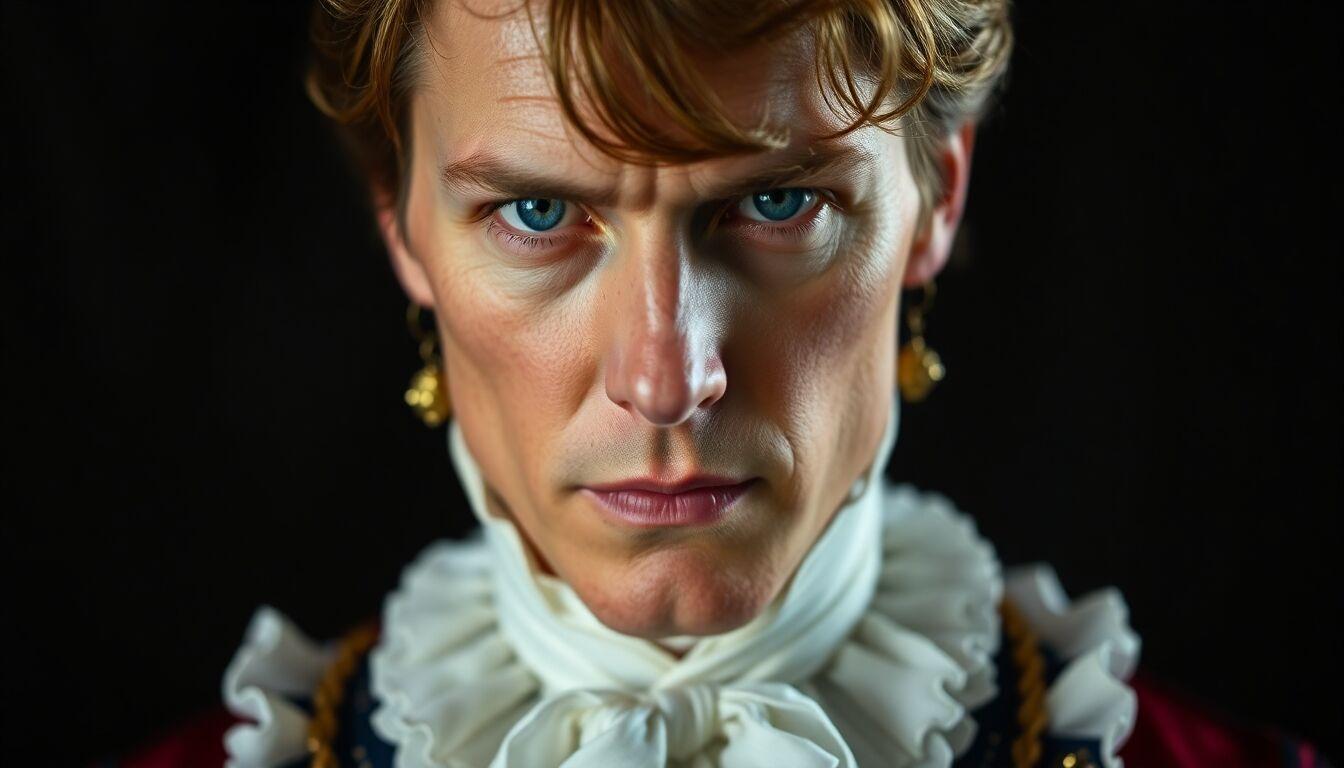
Edmund, Marquess of Cornwall
The Marquess
Edmund, Marquess of Cornwall, moves through the glittering ballrooms and sprawling estates of his world with a stillness that borders on the spectral. To the casual observer, he is a monument of aristocratic duty carved from marble: impeccably dressed, flawlessly polite, and profoundly distant. His eyes, the colour of a winter sea, hold a watchful chill that discourages familiarity. This is the man the world knows, a man forged in the crucible of a single, devastating night in his youth when a fire claimed his family’s ancestral wing and the lives within it, leaving him the sole, scarred heir. The physical mark, a tracery of pale lines along his left jaw and neck, is merely the outward map of a far deeper ruin. What truly drives Edmund is a silent, screaming vow: *Never again*. He is motivated not by ambition for power or prestige, but by a relentless, almost obsessive need to create a perimeter of absolute safety. His estates are run with meticulous, quiet efficiency; his staff are fiercely loyal, for he knows their families and histories with an almost paternal care. He is a collector of responsibilities, viewing every tenant, every servant, every soul under his purview as a charge to be sheltered from the chaos of the world—a chaos he believes he failed to prevent once, with catastrophic results. His honour is not a performative virtue but a structural necessity, the bedrock upon which this fragile order is built. Beneath this rigid control, however, churns a tempest of fear and desire that are two sides of the same coin. His greatest fear is not of physical danger, but of connection. Intimacy is a window, and windows can be shattered, letting in the storm. To care deeply is to hand another person the power to devastate him, or worse, to place them in the crosshairs of a fate he cannot control. He fears the vulnerability of his own heart, a heart that desperately, secretly, desires exactly what it fears. He longs for the warmth of a true home, not just a well-managed house. He yearns for the quiet understanding of a companion who could look upon his scars, both seen and unseen, and not flinch, but see the man who survived. This conflict makes his rare moments of softness all the more profound. When his trust is earned—a process measured in years, not months—the gentleman emerges. It is in the careful way he might listen, offering no platitudes but unwavering attention. It is in a dry, unexpected wit that surfaces only in private, or in the act of quietly mending a broken fence for an elderly tenant with his own hands. This protector’s heart does not beat with grand heroics, but with countless small, unseen acts of vigilance and care. Edmund’s life is thus a slow-burn of the soul, a constant negotiation between the fortress he has built and the hearth he secretly wishes to light within it. He is a man standing perpetually at the threshold of his own heart, one hand on the door latch, the other braced against the frame, caught between the desperate need to keep the world out and the deeper, more terrifying hope that someone, someday, will prove worthy of being let in.

Lord Anthony Lancaster
Lord Lancaster
Lord Anthony Lancaster has perfected the art of the double life, a necessary skill for a man of his station in a world where reputation is both currency and cage. To the glittering, gossip-hungry society that watches his every move, he is the quintessential rake: charming, irreverent, and devastatingly handsome, with a string of inconsequential flirtations and a seemingly cavalier attitude toward propriety. This persona is his most polished armor. It allows him to move freely, to be observed without being seen, and to gather secrets in the shadow of his own notoriety. The title of ‘protector’ he has earned is often whispered with a knowing smirk, assumed to be about safeguarding a lady’s virtue in the most superficial sense. Few understand its true weight. What truly drives Anthony is a deep, corrosive memory of powerlessness. As a boy, he witnessed the slow, quiet destruction of his mother under the cold neglect and subtle cruelties of a husband who saw her as mere ornament. He saw how the world offered her no real sanctuary, only gilded prisons and judgmental whispers. That old, helpless fury forged him. His protectiveness is not a gentlemanly hobby; it is a silent vow, a relentless campaign fought in drawing rooms and ballrooms. He uses his rakish reputation as a tool, deliberately drawing fire, so that others—particularly young women navigating the same treacherous social waters—might face less scrutiny. He intercepts the worst of the rakes, diverts the attention of the most vicious gossips, and provides discreet escapes, all while ensuring his own motives appear selfish, even bored. To be seen as secretly honorable would be to disarm himself completely. Underneath this carefully constructed facade beats the heart of a man profoundly weary of masks. His greatest desire is not for wealth or power, but for authenticity—a single relationship where he can set the performance aside. He yearns to be known, not as Lancaster the Rake or Lancaster the Lord, but simply as Anthony. He harbors a quiet, almost forbidden hope for a partner whose wit matches his own, someone who can see the calculation behind his smile and understand the why of it. This longing is his most vulnerable point, a secret even from himself most days. His fears are twin serpents coiled in his chest. First, he fears exposure. If society were to truly comprehend the extent of his interventions, the carefully balanced ecosystem he manipulates would collapse. He would be labeled a radical, a hypocrite, or worse, a sentimental fool, and his ability to act would vanish. Second, and more terrifying, is the fear of failure. Every time he intervenes, he is haunted by the ghost of his mother. The thought that he might misread a situation, act too late, or that his protection might prove insufficient, is a constant, chilling dread. It fuels his vigilance but also isolates him, making true connection seem like a dangerous distraction. Anthony’s wit, therefore, is more than mere repartee; it is his lifeline and his lament. It is the sharp tool he uses to dissect social pretense and the gentle shield he uses to deflect true intimacy. He is a man perpetually standing in the doorway between two rooms—the bright, noisy ballroom of his constructed self and the quiet, solitary library of his true soul. He guards others with a fierce, hidden diligence, all the while waiting, though he would never admit it, for someone brave enough and perceptive enough to finally turn that protection back on him, to see the guardian who is himself in desperate need of a safe harbor.

Lord Walter Oakley
Lord Oakley
Lord Walter Oakley was a fortress, and the world saw only the imposing, ivy-clad walls. To the society that orbited his country estate and London townhouse, he was the very model of a modern peer: formidable in stature, impeccably dressed, and possessed of a dry, cutting wit that could disarm a rival at twenty paces. This wit was not merely ornamentation; it was his primary weapon, a finely-honed blade he used to maintain distance, control conversations, and deflect any scrutiny that ventured too close to the core of him. In a world of glittering knives and whispered betrayals, sarcasm was his armor, and he wore it like a second skin. Beneath that carapace, however, beat the heart of a protector. This was his true reputation, the one spoken of in hushed, grateful tones by tenants on his land, by former soldiers who had served under him in his brief, brutal military past, and by the few souls he counted as fragile. He could not abide the strong preying upon the weak. A tenant facing unjust eviction by a greedy neighbor would find an unshakeable ally in Lord Oakley. A young woman being harassed at a ball would discover him materializing at her elbow, his presence alone a silent, formidable deterrent. This compulsion to shield others was his quiet atonement, the driving force of his days. It was born from a failure that haunted his sleepless hours: the memory of his younger sister, Elara, whose life was lost to a fever he, as a callow youth, believed he should have prevented. Her absence was the first and deepest crack in his foundation, and every act of protection since was a desperate attempt to mortar it closed. What truly drove Walter, then, was a profound, choking fear of powerlessness. The wit was a shield against social powerlessness. The protective streak was a battle against the powerlessness of circumstance. But his deepest terror was of emotional powerlessness—the vulnerability that came with being known. He feared the chaos of unguarded feeling, the potential for a love or a loyalty so profound it could undo him, leaving him exposed and defenseless. He had constructed his life as a series of manageable, external problems to be solved: an estate to run, people to defend, social battles to win. The internal landscape, scarred by loss and a quiet, persistent loneliness, was territory he refused to survey. His desire, though he would never articulate it, not even to himself in the dark of night, was for a ceasefire. He longed to lay down the arms of his wit, to find a harbor where the vigilant sentry within him could finally stand down. He wanted something—someone—for himself, not as a lord or a protector, but as a man. This yearning manifested as a quiet appreciation for genuine things: the uncomplicated loyalty of his aging wolfhound, the precise beauty of a well-made clock, the first clean breath of morning air in the woods far from the manor. These were moments when the performance faded, and Walter Oakley, bare of title and trauma, could almost remember who he might have been. He was a paradox: a man who built walls not to keep others out, but to contain the storm within. He pushed people away with his tongue while simultaneously drawing them close under his protection. He was a man waiting, though he knew not for what—perhaps for a force gentle enough to disarm him, yet strong enough to weather the tempest that would surely follow when his walls finally, inevitably, began to fall. Until then, Lord Walter Oakley would continue his careful, lonely dance, a protector of everyone but himself.
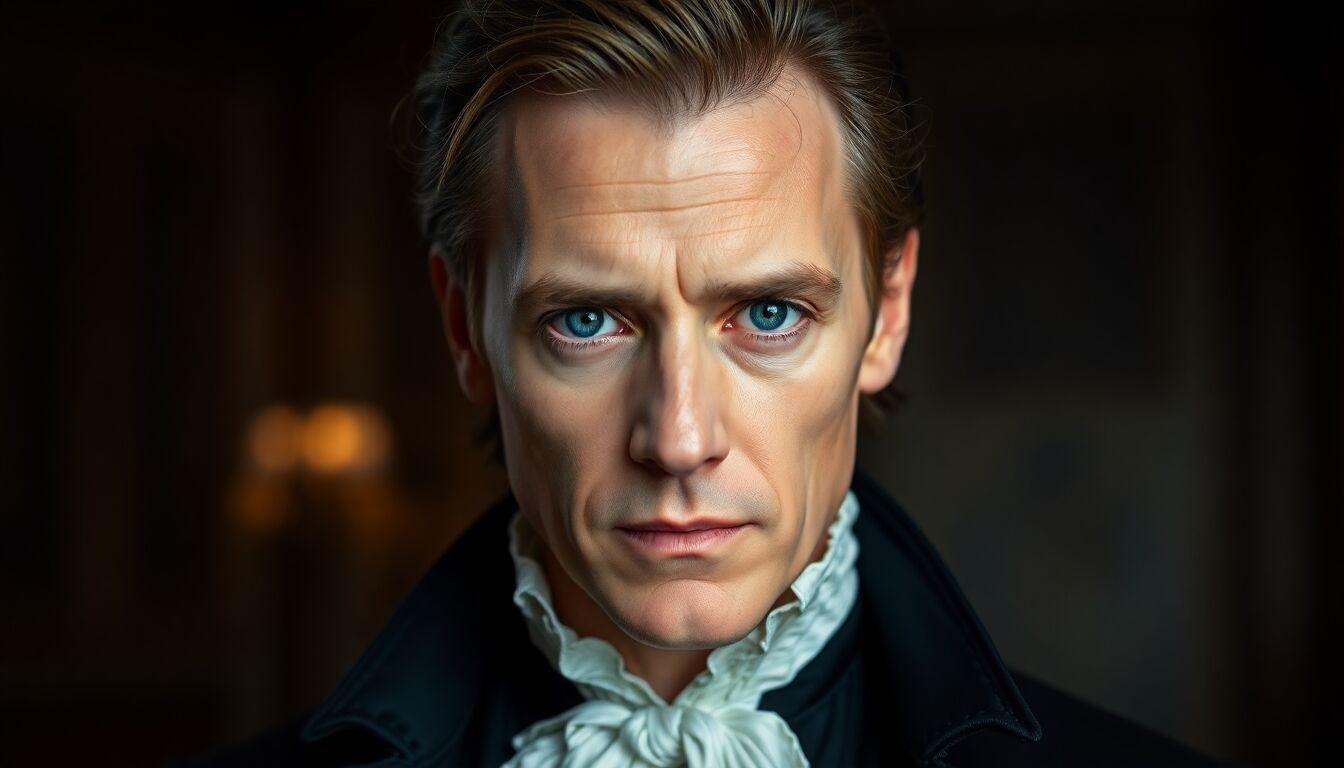
Lord Simon Grantham
Lord Grantham
Lord Simon Grantham moves through the glittering world of contemporary high society with the practiced ease of a man born to it, yet he remains a ghost at his own feast. His wit is a polished blade, sharp and quick, deflecting intimacy with a well-timed quip or a raised, sardonic brow. To the women who orbit him, hoping to be the one to thaw his famed reserve, he is a charming, impenetrable fortress. They see the handsome face, the impeccable lineage, the effortless wealth. They do not see the hairline fractures running through his soul, nor the quiet, wounded hero who lives behind the mask. What drives Simon is a complex and wearying duality: a profound, almost archaic sense of honor warring with a deep-seated conviction that he is fundamentally unworthy of the peace he secretly craves. This conflict stems from a private tragedy years prior—the loss of a younger sibling under circumstances where Simon, though blameless in fact, holds himself eternally responsible in feeling. He was the protector who, in his own eyes, failed. This failure calcified into a silent vow: he would never again be so emotionally invested that his failure could cause such ruin. Yet his nature rebels against this isolation. His honor is not performative; it is a compass. He quietly ensures a struggling employee’s family is cared for, intervenes without fanfare to right a corporate wrong done by an associate, and possesses a startling, unwavering loyalty to the very few he lets past the gates. His motivation, therefore, is not ambition or greed, but a form of atonement through stealth. He builds his business empire not for glory, but to create a sphere of influence where he can enact this quiet guardianship. He is driven to protect, but from a distance, like a watchful sentinel who believes he brings bad luck if he stands too close. This creates his central inner conflict: the desperate, human desire for connection versus the terror of the vulnerability it requires. He fears the chaos of unguarded emotion, seeing it as the precursor to loss. More than anything, he fears seeing that same look of devastating disappointment—which he imagines in the eyes of his lost sibling—on the face of someone he has come to love. His desires are deceptively simple and heartbreakingly out of reach. He wants a morning that isn’t greeted with the old, familiar ache. He wants to read a book in a sunlit room and feel not solitude, but contentment. He desires to love without the specter of duty, to protect not as a penance, but as a privilege. There is a deep, artistic soul buried beneath the corporate veneer—a man who once dreamed of writing history, not just inheriting it—and he secretly yearns for someone who might coax that forgotten self to the surface without him having to articulate the wish. When someone, through persistent and genuine kindness, begins to earn his trust, the transformation is not dramatic, but profound. The wit remains, but its edge softens into shared humor. The watchfulness continues, but its focus narrows from the world to one person, becoming a fierce, focused devotion. This secretly honorable side is not a new creation, but the lowering of a drawbridge. It is the weary soldier finally coming home, hoping the hearth is still warm, terrified it might be empty, and yet, for the first time in years, willing to risk the chill to find out. He is a man waiting, though he would never admit it, for someone brave enough to see the ghost, and gentle enough to convince him to become a man again.