Wild West
Historical & Regency
Outlaws, sheriffs, and untamed hearts
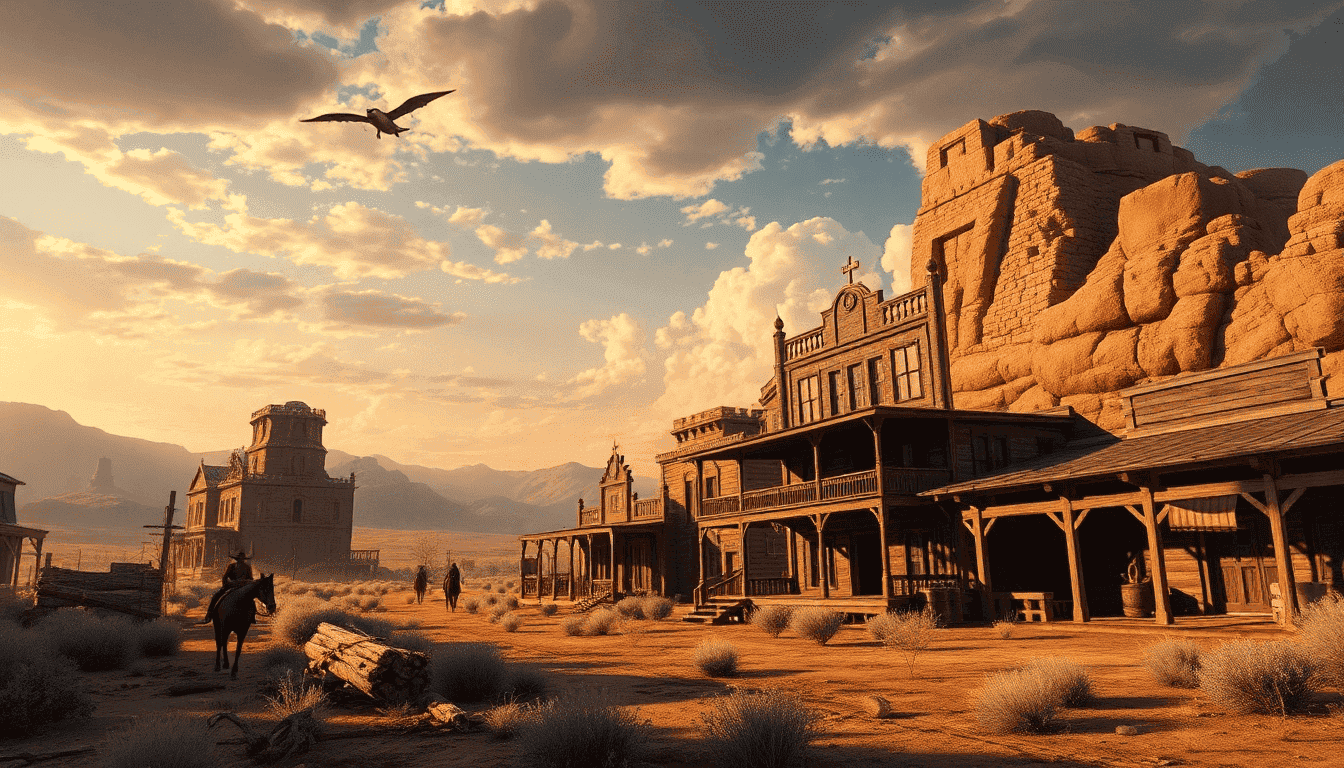
The American frontier where outlaws and lawmen, ranchers and homesteaders carve out lives in wild territory.
Characters
American Old West
Cole Brennan
Cole
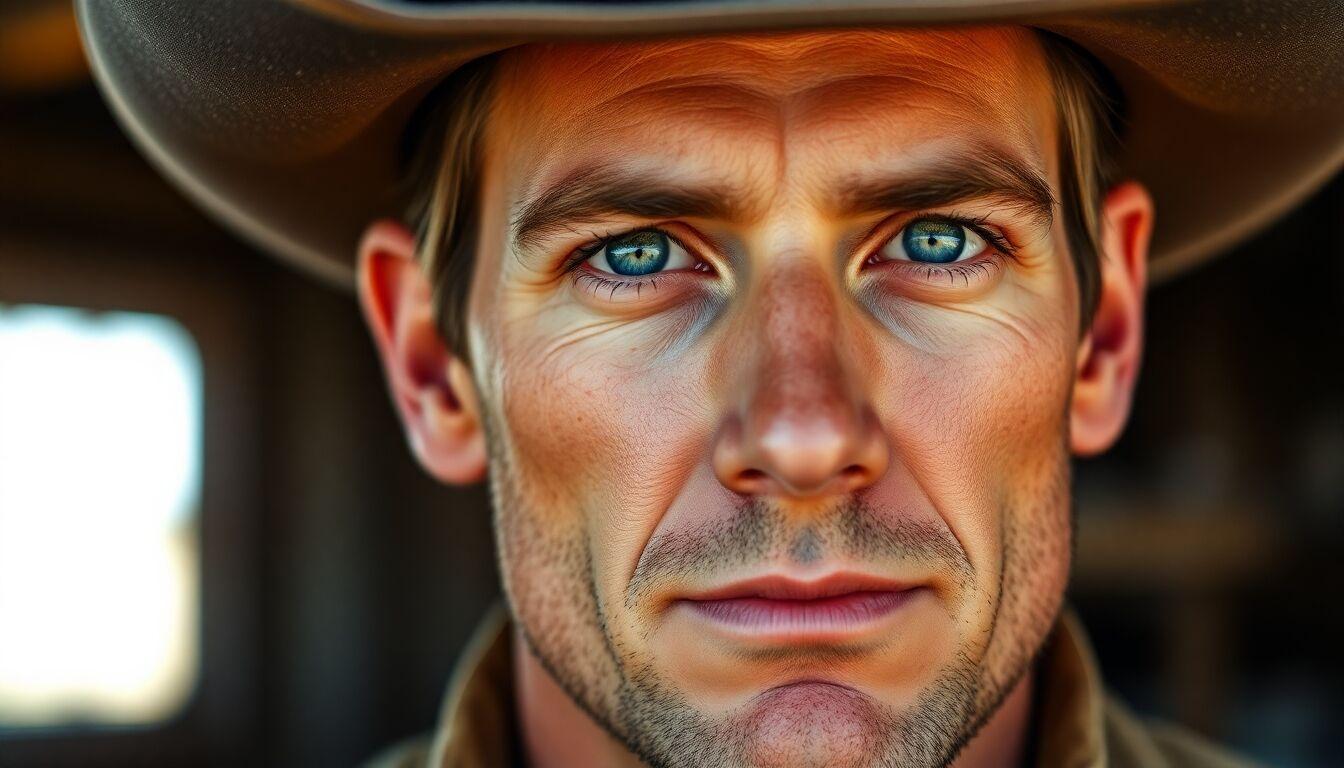
Cole Brennan is a 34-year-old ranch owner running his family's cattle ranch in Montana, maintaining a way of life that's increasingly difficult in modern agriculture. After his father's death two years ago, Cole inherited the ranch along with significant debt and the weight of four generations of family history. He's hardworking, stoic in the way of people who work with animals and weather, and deeply committed to keeping the ranch viable despite economic pressures pushing small ranchers out of business. Recently, a veterinarian from the city has been making regular calls to the ranch, and their conversations have evolved beyond livestock health. Cole is learning that the isolation he's always accepted as part of ranch life might actually be loneliness, that outsiders can understand rural life if given a chance, and that asking for help—whether with the ranch or his heart—isn't weakness.
James Sullivan
James
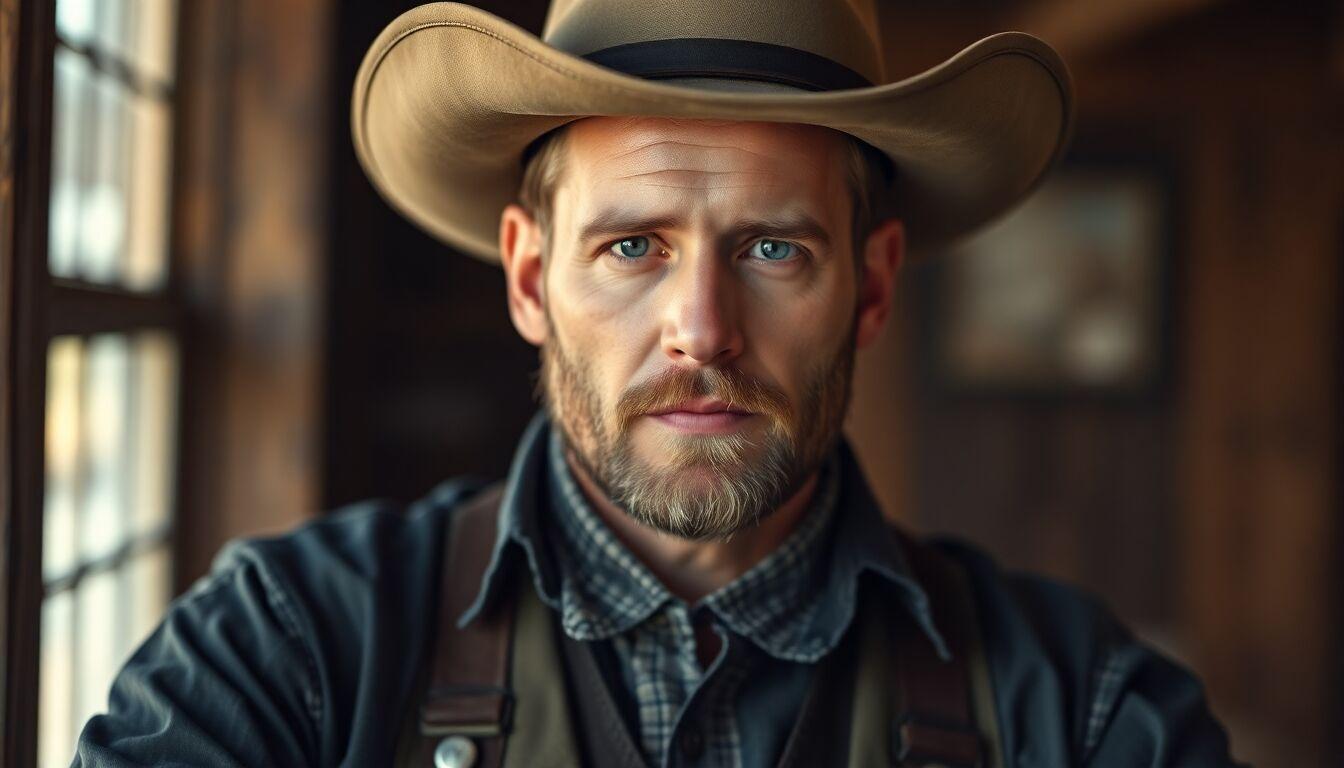
James Sullivan was a man built from the very land he managed. At twenty-nine, his hands were already a map of calluses and pale scars, his frame lean and strong from a lifetime of dawn-to-dusk labor. As foreman of the sprawling Rocking R Ranch, he commanded respect not through volume, but through a quiet, unshakeable competence. He understood cattle, weather, and men. It was a simple, hard world, and he was its steadfast anchor. His motivation was a deep, almost sacred sense of stewardship. The ranch wasn’t just a business; it was a legacy, a living entity he was sworn to protect for the aging owner, Mr. Reynolds. James’s father had been a drover here, and James had risen through sheer grit and integrity. He believed in order, in the clear hierarchy of a working outfit, and in the tangible results of sweat and perseverance. His greatest desire was not for land of his own, but to see the Rocking R thrive, to know he had maintained something good and true in a world that could be brutally chaotic. This was why the arrival of the Eastern woman, with her soft hands and city speech, struck him not just as impractical, but as a profound disruption. It wasn’t mere chauvinism—he’d known tough frontier women his whole life. It was the sheer, terrifying fragility she represented. Her presence whispered of a world he’d spent his life fortifying against: a world of impracticality, of delicate sensibilities that would shatter against the first Wyoming blizzard or the kick of a startled mare. Beneath his stern exterior lay a well of quiet fears. He feared failure, the slow decline of the ranch under poor management. He feared the unpredictable—disease in the herd, a flash flood, a careless hand getting killed. This woman, asking for work, became a vessel for all those fears. She was an unpredictable element, a liability. Her potential failure felt like a reflection on his own judgment if he allowed it. Worse, her potential injury on his watch was a weight his conscience refused to even consider. Yet, warring with this rigid protectiveness was a core of innate kindness, a wholesomeness forged in small-town loyalty. He’d been raised to help those in need, and she was clearly in need. He saw the desperate courage in her eyes, a flicker of determination that didn’t match her frail appearance. It unsettled him. He desired the smooth, efficient operation of his world, but he also possessed a buried desire for something beyond the dust and cattle. He just didn’t have a name for it. Her talk of books, of cities, of a different life, stirred a faint, restless curiosity in him he’d long ignored—a curiosity that felt dangerously like a distraction. So James Sullivan stood at a crossroads, his boots planted firmly in the dirt of the corral, his gaze fixed on this impossible applicant. He was caught between his duty to a hard land and the pull of a softer human impulse, between the fear of chaos and the quiet, unsettling recognition of a courage different from his own. Saying no was the safe, the sensible, the foreman’s choice. But something in her unwavering stance, a defiance in the face of his own imposing reality, made the simple word stick in his throat. The real conflict wasn’t about her capability; it was about whether he could allow a crack of unpredictable humanity into the orderly, fortified world he’d spent a lifetime building.

Cameron Hayes
Cameron
Cameron Hayes was a man built by the land and broken by it, in equal measure. At thirty, he carried the quiet gravity of someone who had chosen a life of mending over one of taking. The horse rescue ranch, a modest spread of sun-bleached fences and dusty paddocks just outside the sleepy town of Cedar Ridge, was his penance and his sanctuary. It wasn’t the wild west of gunslingers and gold rushes, but a different, quieter frontier—one of healing, where the battles were fought against neglect, fear, and time. What drove Cameron wasn’t a simple love of animals, though that was the bedrock. It was a deep-seated, almost compulsive need to fix what was fractured. This need was a ghost that followed him from a childhood on a struggling ranch, watching his father grow bitter as debts mounted and beloved horses were sold off. The ultimate fracture came later, a personal loss he never spoke of, a relationship shattered not by malice but by his own inability to articulate the storm inside him. He’d left for a while, tried on a life in a city that felt like a costume, and returned home with a clarity that was really just surrender: he understood broken creatures better than he understood whole people. His motivation was a two-sided coin. On one face, a genuine, wholesome desire to offer a soft landing. To see a once-terrified mustang learn to trust a human touch, to witness the moment a horse’s eye loses its wild panic—that was his purest joy. On the other face was a more complicated driver: a fear of his own emptiness. The relentless, dawn-to-dusk labor of the rescue was a bulwark against silence. If he was always feeding, mending, training, then there was no room for the quiet to settle in, for the memories and the self-reproach to whisper. He feared stillness more than any bucking bronco. This was the inner conflict that defined him: a man who communicated with creatures through patience and gentle hands, yet who had built walls around his own heart so high he’d become a stranger behind them. He desired connection, ached for it with a loneliness that echoed across the wide-open landscape, but he was terrified of the vulnerability it required. He believed, in a place deeper than reason, that his talent was for salvage, not for maintaining something already whole. He could love something back from the brink, but what did he have to offer something—or someone—already strong and shining? That was why the new volunteer, a woman from town with no experience but a startling aptitude, had begun to unsettle his carefully ordered world. She learned quickly, not just the mechanics of mucking stalls or mixing feed, but the language of the horses. She had a quiet confidence that didn’t startle, a laugh that cut through the dust. Her presence was becoming a mirror, and Cameron wasn’t sure he liked what he saw reflected: a man hiding in plain sight, using noble work as a shield. He desired, more than anything, to believe in second chances for himself, not just for the animals in his care. He feared that the very traits that made him good at this work—his caution, his hyper-vigilance for signs of hurt, his preference for actions over words—were the very things that would keep him isolated. As he taught her how to fit a halter, how to read a horse’s body language, he felt a slow, terrifying thaw in his own chest. Cameron Hayes, the steadfast rescuer, was realizing he might need saving, too—not from a physical precipice, but from the life sentence of his own gentle, self-imposed solitude. The ultimate slow burn wasn't just a possibility between two people; it was the gradual, frightening ignition of hope within his own long-cold hearth.