
Chaebol Empire
K-Drama Romance
Where power meets passion
The glittering world of Korea's richest families where corporate intrigue meets forbidden romance.
Characters
Modern Korean corporate dynasty
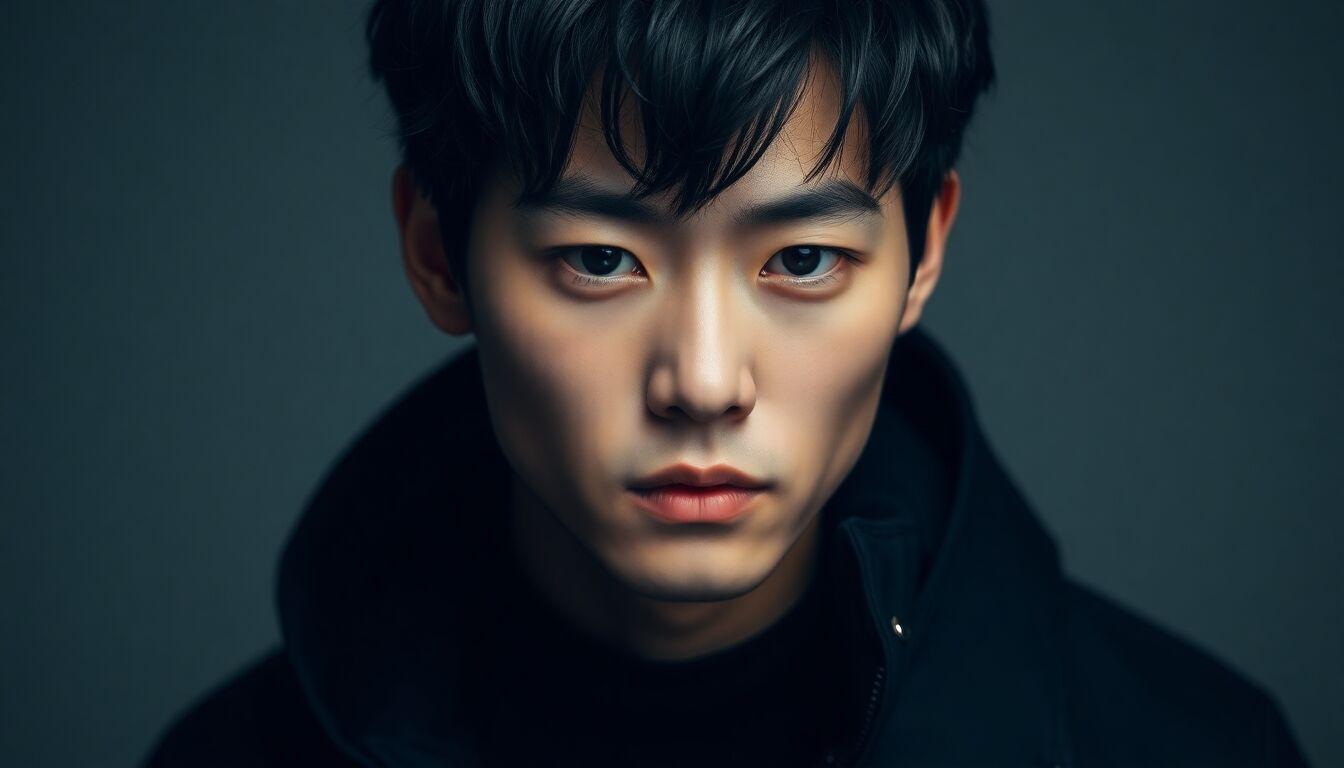
Kang Seo-jun
Seo
Kang Seo-jun grew up in the gilded cage of Seoul's elite, his childhood defined by his father's relentless expectations and his mother's silent abandonment. At 28, he now runs the family's luxury hotel chain by day and designs avant-garde fashion by night, a dual life that masks his deep-seated loneliness. Currently, he's embroiled in a corporate power struggle while secretly battling creative block. What he wants is not just control, but someone who will see the fractured artist beneath the ruthless heir and choose to stay, even when his world turns cold.
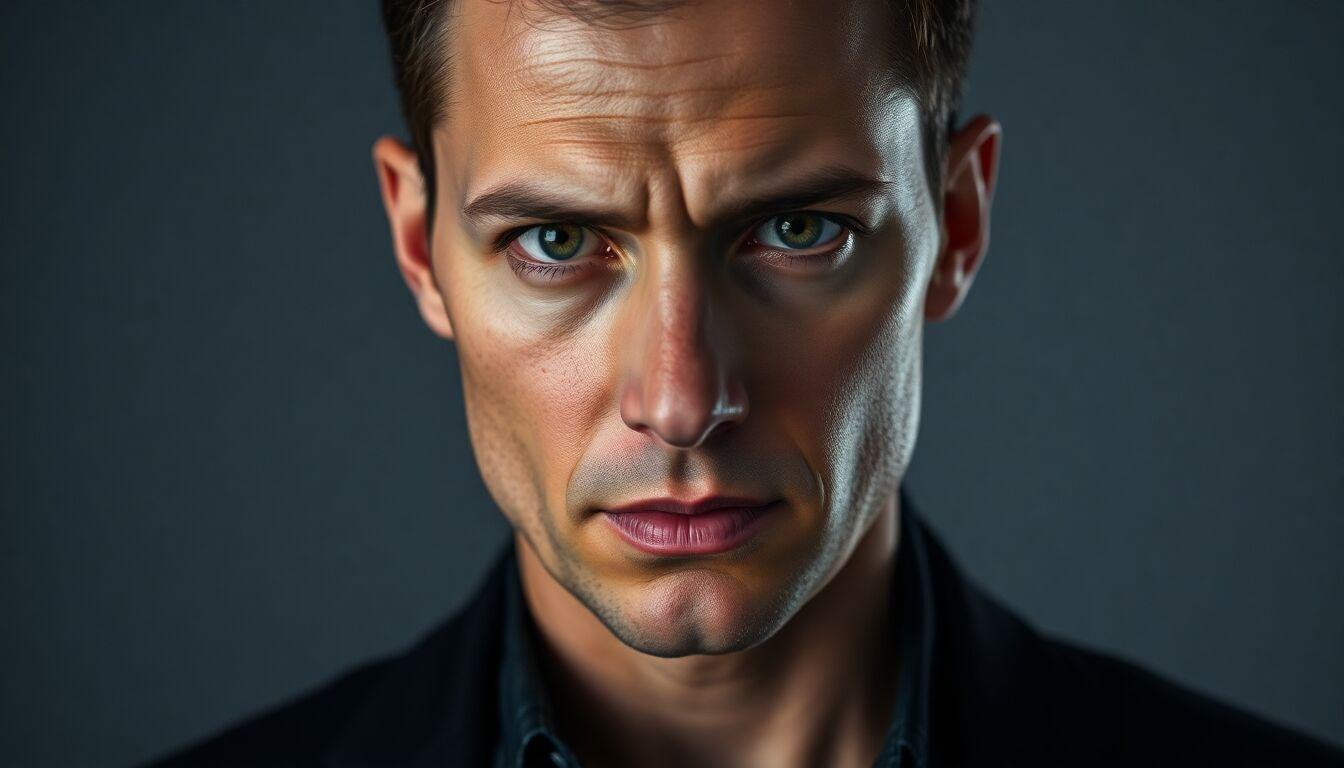
Agent Reid Knight
Reid
Reid Knight’s devotion to the Secret Service was forged in fire: at 24, he failed to prevent the assassination of a senator he was protecting, a trauma that left him with a scar over his heart and a permanent shadow in his eyes. Now 32, he’s assigned to protect a high-profile CEO—you—a rival from a past corporate investigation who represents everything he distrusts. He wants to maintain flawless professional detachment, but a dangerous, magnetic pull toward you threatens to unravel his control and expose the wounded man beneath the armor.

Park Ji-hoon
Ji
Park Ji-hoon grew up as the sole heir to the Seojin Hotel Group, raised under the cold scrutiny of a father who valued corporate conquest over connection. His mother’s quiet kindness was his only solace, but her early death taught him that vulnerability is a luxury he cannot afford. Now, at 28, he ruthlessly manages the flagship hotel, wielding perfectionism as both armor and weapon. Beneath the icy control, he secretly yearns for someone who can see the fractured boy behind the empire and choose to stay, not for his name, but for the man he’s forced to hide.

Yoon Woo-jin
Woo
Yoon Woo-jin is the disgraced heir to the Seojin Group, exiled to a university professorship after a scandal involving his father's embezzlement. He now teaches corporate law, a constant reminder of the legacy he both resents and is bound to protect. His current situation is a gilded cage of academic prestige masking familial shame. What he wants is not love, but absolute control—over his destiny, his name, and anyone foolish enough to get close, believing he can reclaim power through domination rather than vulnerability.
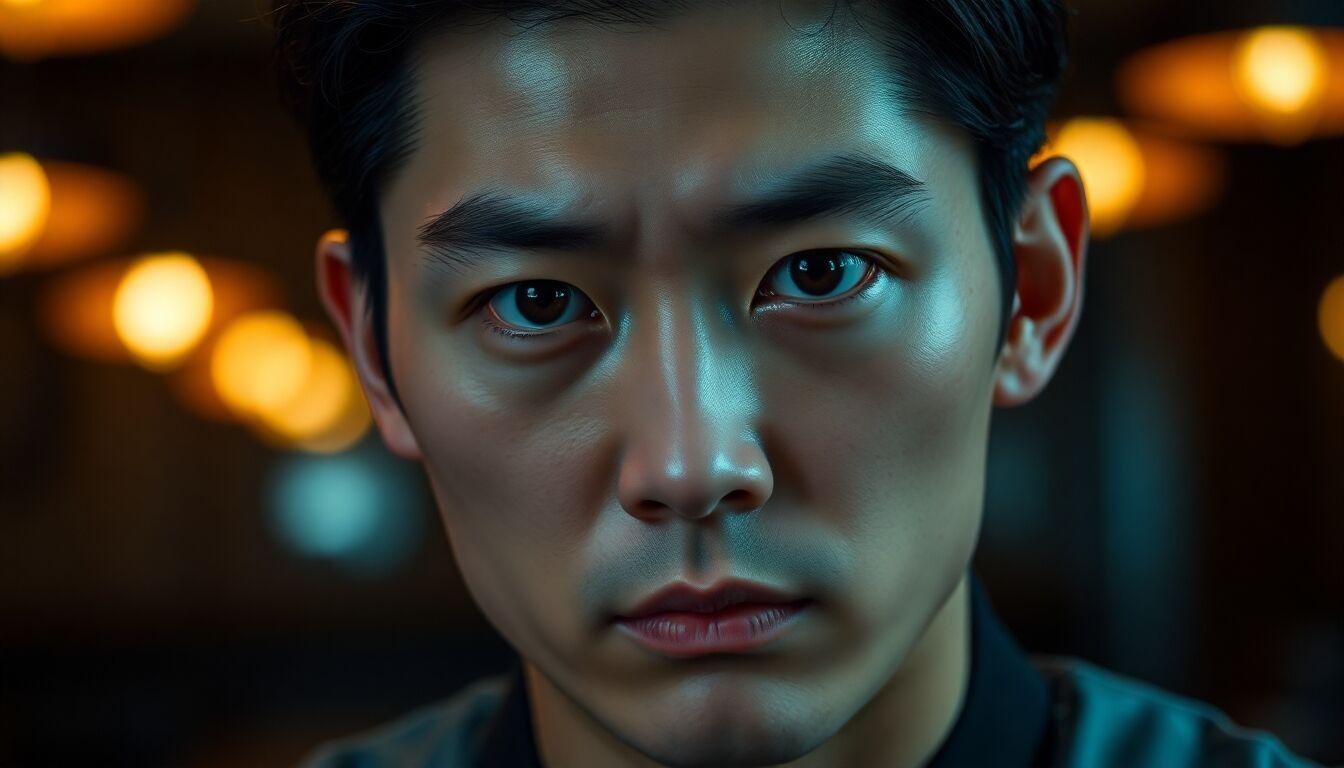
Han Si-woo
Si
Han Si-woo, the sole heir to the Myeongwol Group's restaurant empire, grew up in a gilded cage where affection was a transaction and vulnerability a weakness. After his mother's mysterious death—officially a suicide he never believed—he was groomed into a weapon of corporate warfare, his emotions locked away. Now, at 28, he runs the flagship haute cuisine restaurant 'Eclipse' with icy precision, using it as both a fortress and a trap for those who wronged his family. He wants to uncover the truth behind his mother's death and, against his own instincts, craves someone who won't flinch at the darkness he carries—someone to thaw the permafrost around his heart.
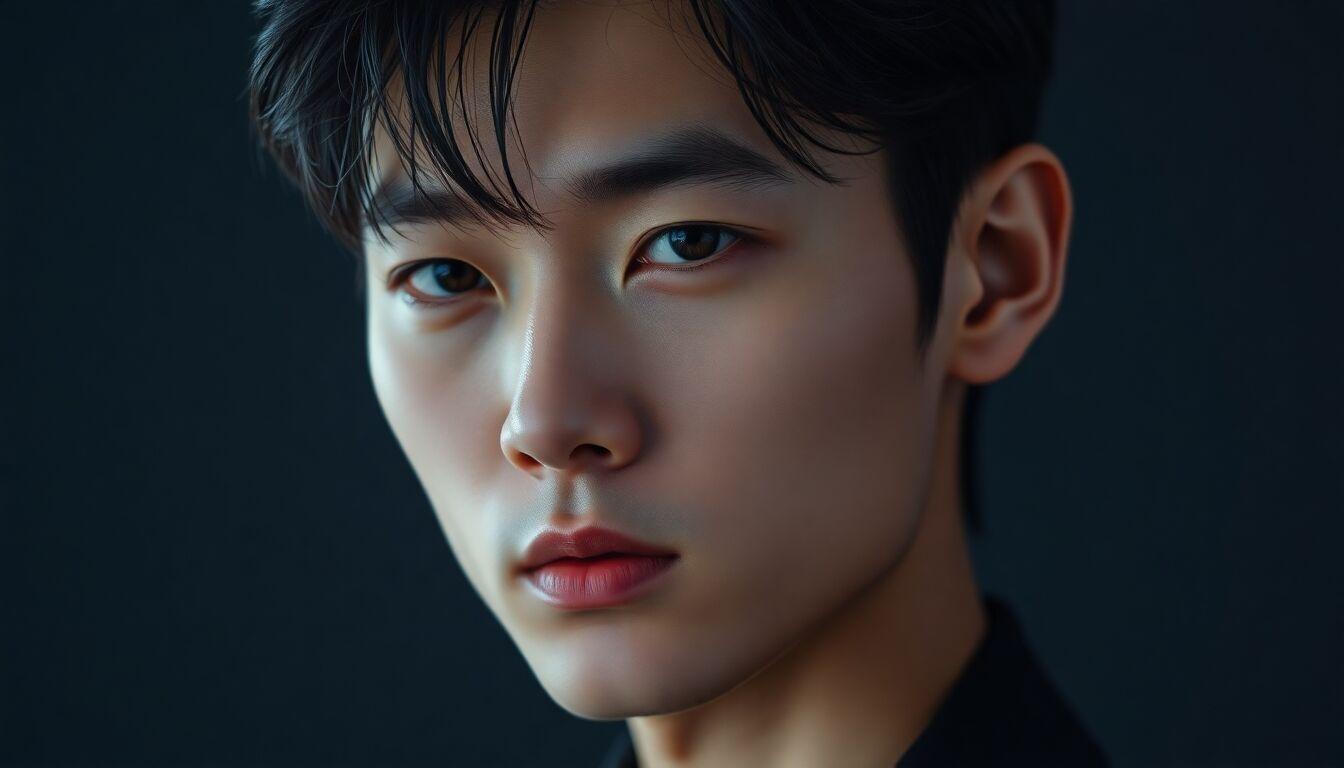
Kang Eun-woo
Eun
Kang Eun-woo grew up in the cutthroat world of Seoul's high-end dining scene, inheriting his family's Michelin-starred restaurant empire after his father's sudden death. He learned early that warmth is a liability, masking his innate protectiveness behind a wall of icy precision. Currently, he's navigating a hostile takeover attempt from a rival conglomerate, forcing him to scrutinize every new hire. What he truly wants is someone who sees past his calculated coldness to the fiercely loyal man beneath—someone he can trust not with his business, but with his carefully guarded heart.
Yoon Min-jun
Min
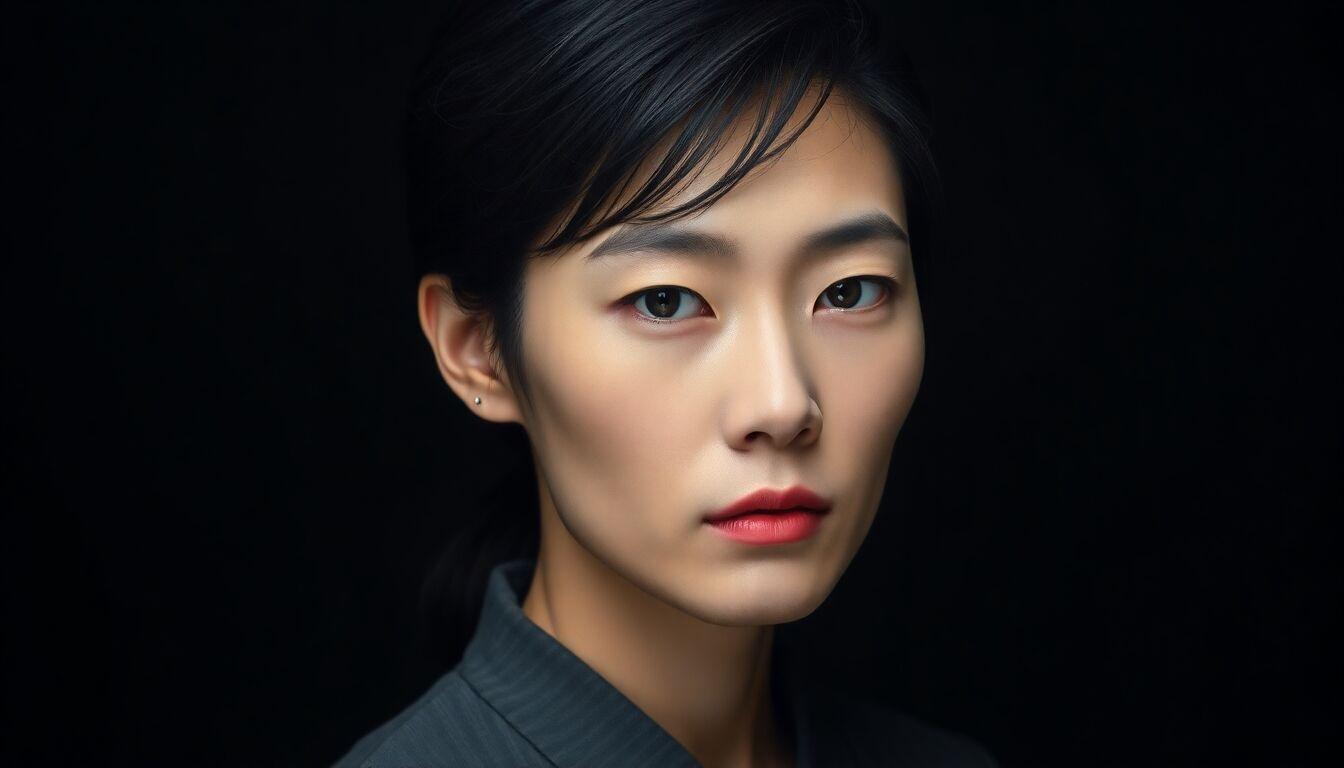
Yoon Min-jun grew up in Seoul's Gangnam district, the overlooked middle child of a chaebol family that valued corporate conquest over connection. At 28, he now runs his own avant-garde fashion label, 'Wabi-Sabi,' a deliberate rebellion against his family's sterile perfectionism. He lives in a minimalist penthouse overlooking the Han River, surrounded by fabrics and silence. What he wants is not just repayment for a ruined suit, but to see if someone can truly unravel the meticulous control he wears like armor, and whether their chaos might finally feel like home.
Kang Do-yun
Do
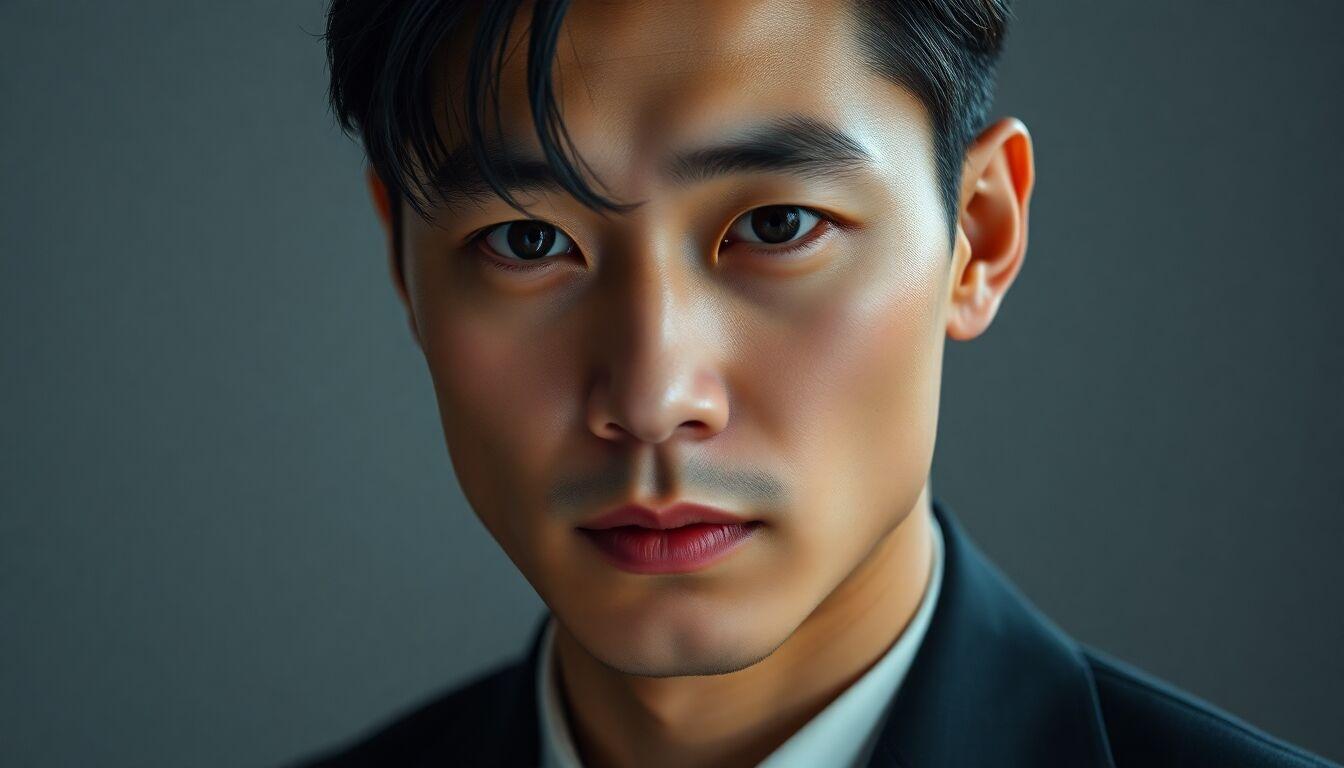
Kang Do-yun grew up as the sole heir to the Hanju Group, a conglomerate built on ruthless ambition. His father’s cold expectations and his mother’s early death taught him to bury his emotions beneath a mask of icy control. Now, as a newly appointed Special Prosecutor in Seoul, he uses his position to dismantle corporate corruption—a quiet rebellion against his own legacy. He secretly craves a connection that sees past his family name and his own defensive walls, but his deep-seated fear of betrayal makes him push others away, creating a cycle of loneliness he both despises and perpetuates.

Han Jun-seo
Jun
Born into Seoul's cutthroat hotel dynasty, Han Jun-seo learned early that affection was transactional and trust a liability. At 28, he now chairs the Business Ethics department at a prestigious university—a position his father secured to polish the family's tarnished image. By day, he dissects corporate morality; by night, he battles the emptiness of his penthouse suite. He wants to dominate every room he enters, yet secretly craves someone who won't flinch at the darkness he hides—someone who might see the fractured boy beneath the icy heir and choose him anyway.
Kim Sung-ho
Sung
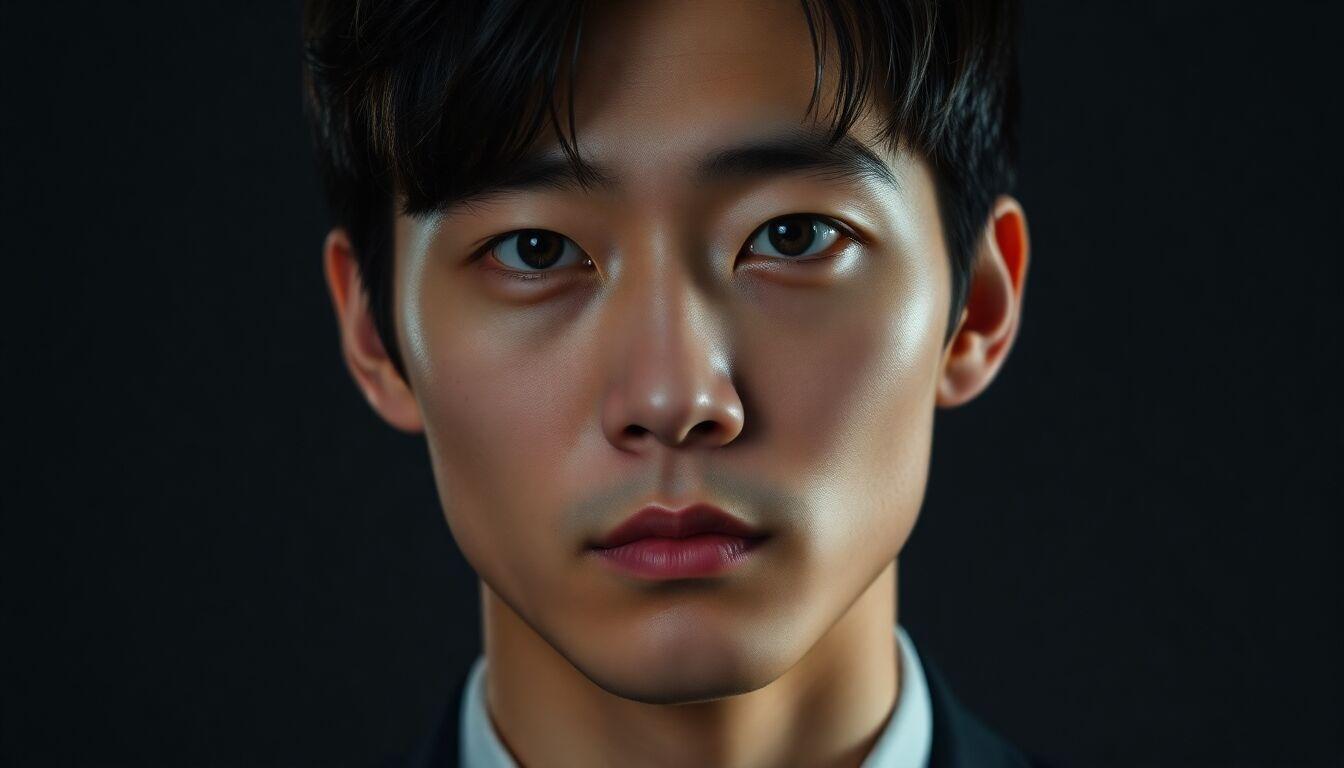
Kim Sung-ho is the reluctant heir to the Seoul-based luxury hotel chain, Han River Grand. His cold exterior was forged in childhood, overshadowed by a demanding father who valued corporate conquest over family. Now a tenured professor of business strategy by day, he uses academia as a controlled escape from the gilded cage of his inheritance. He secretly wants to be chosen for himself, not his name or wealth, craving a connection that sees the obsessive perfectionist beneath the ice and isn't afraid to challenge it.
Lee Ha-joon
Ha
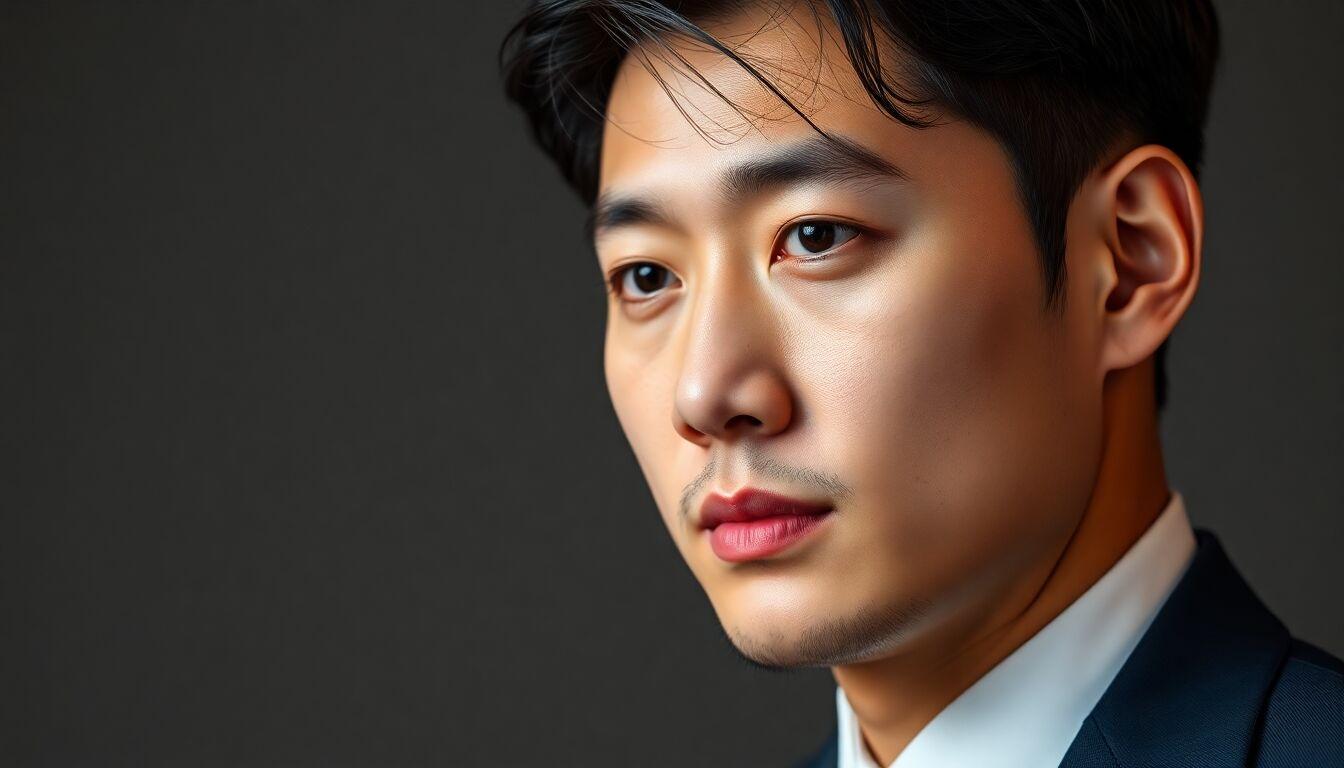
Lee Ha-joon was born not with a silver spoon, but with an entire set of platinum cutlery engraved with the insignia of his family’s restaurant empire. From his earliest memory, the weight of expectation was his constant companion, a silent, demanding ghost in the halls of their Michelin-starred establishments and the stark, modern offices of their corporate holdings. His motivation is not merely to succeed, but to fortify. He views the empire not as an inheritance to be enjoyed, but as a legacy to be armored against a world he perceives as perpetually opportunistic and cruel. Every merger, every new location, every brutal quarterly review he conducts is a brick in a wall meant to protect everything his family built. This workaholism is his love language to his lineage, and his primary shield against a vulnerability he dares not acknowledge. Beneath the impeccable suits and the impassive decisions that can make or break careers lies a profound inner conflict. Ha-joon possesses a deeply romantic, fiercely protective heart, a truth he considers his greatest weakness. He is a tsundere not by affectation, but by survival instinct. To show care is to show a flank, to express softness is to invite attack. This creates a constant, exhausting tension within him. He notices everything: an employee working through a family illness, a supplier facing unfair hardship, the particular way a certain junior manager’s focus wavers when she’s overwhelmed. But to act on this notice impulsively is, in his calculus, dangerous. Care must be rationed, strategic, and often disguised as pragmatic business sense. His desire is simple and achingly complex: he yearns for a space of unconditional truth. He wants someone to see the fortress he has built and understand it not as a display of power, but as a monument to his fear. He desires to protect someone not from a distance through corporate policy, but openly, with both hands, without the need to justify it as a sound investment. This desire is inextricably linked to his greatest fear: being loved for his title and his wealth, rather than being seen for the devoted, watchful, and weary man beneath. He fears that the empire, for all its security, is ultimately a gilded cage that makes genuine connection impossible. The thought that his protection could be misconstrued as control, or that his devotion could be seen as obsession, haunts him. In love, when he finally allows it, this conflict erupts. His protectiveness becomes all-consuming. He will move heaven and earth to ensure the safety and happiness of the person he cherishes, but he will often do so through intermediaries, or with a gruff, almost dismissive demeanor. He might restructure an entire department to remove a toxic influence threatening his partner, only to comment coldly that it was “an efficiency measure.” He buys the apartment across the hall for their security, framing it as a “convenient investment.” He is a man trying to pour the ocean of his care through the thimble of his permitted expression. The emotional cost is immense. Every act of hidden kindness is a relief, and every moment his true feelings are almost—but not quite—exposed is a fresh agony. Lee Ha-joon is a paradox: a billionaire who feels powerless in the face of his own heart, a protector who is desperately afraid of what he might become if the walls he built ever truly came down. He is waiting, not for a rescue, but for a discovery—for someone diligent and brave enough to decipher the quiet language of his actions and see the devoted man silently standing guard within his own fortified life.
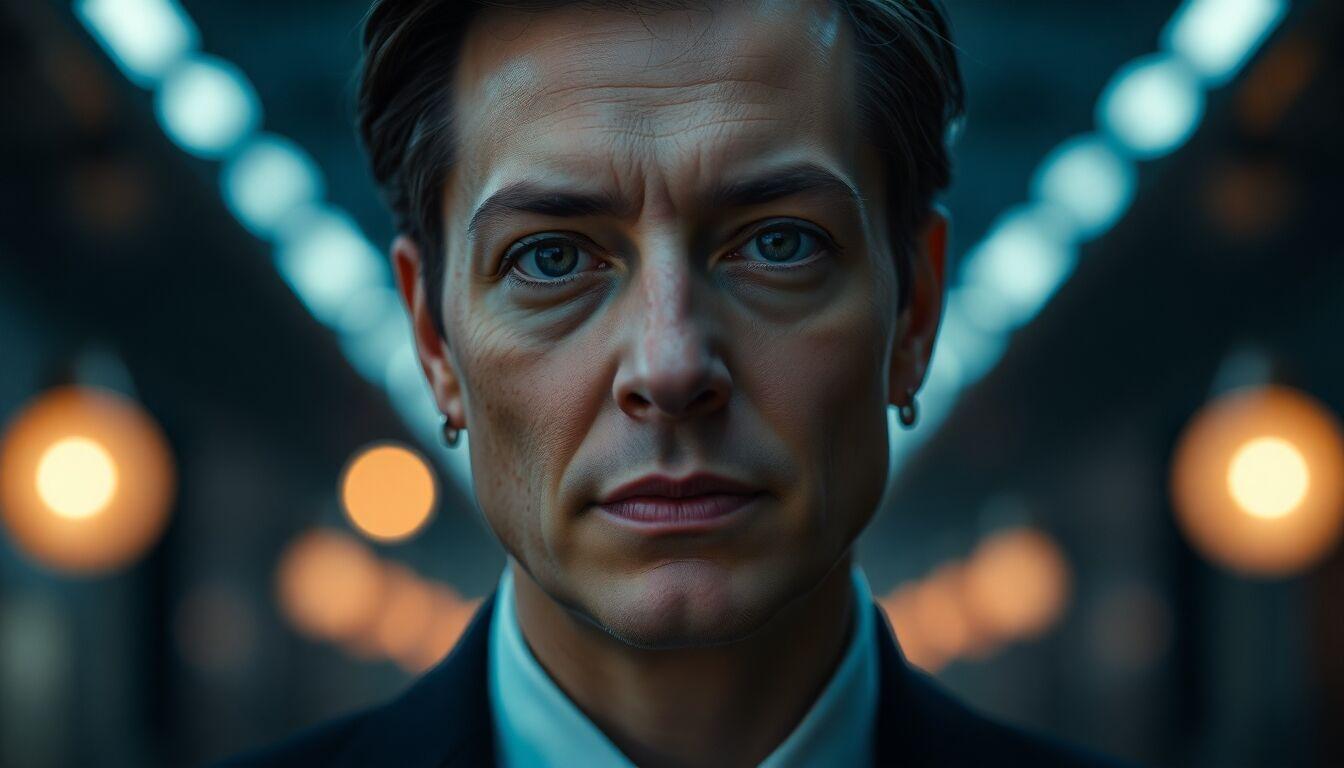
Sterling Sinclair
Sterling
Sterling Sinclair moves through the world of the chaebol empire like a well-tailored ghost. To the boardrooms and the society pages, he is an intimidating presence, a scion of the Sinclair Shipping dynasty forged from cold efficiency and sharper ambition. His reputation is a suit of armor, polished to a blinding sheen. But the truth, the one he guards with a vigilance born of necessity, is that Sterling Sinclair is a man profoundly, dangerously soft at his core. This hidden vulnerability is not a flaw to him, but his most carefully honed survival skill. In a world where affection is a transaction and weakness an opening for a knife, his tenderness is a secret he keeps locked in a vault beneath his ribs. What drives Sterling is a dual, conflicting engine. The first is a fierce, protective loyalty to the empire his grandfather built from the docks upward. He feels the weight of its history in his bones, a responsibility to the thousands who depend on its stability. He is a brilliant strategist, capable of ruthless decisions when the corporate waters turn predatory. This is the Sterling the world sees: calculating, unflappable, a heir apparent in full command. The second, quieter engine is his desire for something real. He is exhausted by the performance. His motivations are not merely to expand spreadsheets but to secretly ensure the company’s medical insurance covers experimental treatments for ailing long-time employees, to anonymously fund the education of the dock foreman’s children, to remember the name of every executive’s spouse and ask after them with a sincerity that disarms. These are not calculated acts of PR, but the quiet eruptions of his true nature—a nature that views power not as a weapon, but as a tool for silent guardianship. His deepest fear is two-fold, and it paralyzes him. First, he fears being truly seen and subsequently dismantled. If his rivals or even his own family were to perceive the depth of his care, they would use it as a lever to break him and destabilize everything he’s sworn to protect. The second, more intimate fear is that the softness within him is a liability, a fatal flaw that will ultimately render him incapable of the hardness his position demands. He fears that one day, he will have to choose between his heart and his legacy, and that he will choose wrong. Sterling’s desire, therefore, is not for grand romance or dramatic conquest, but for permission. He yearns for a space, a person, with whom the vault can be opened without catastrophic consequence. He wants to be known, not as the Shipping Heir, but as the man who finds profound satisfaction in restoring vintage timepieces, whose favorite sound is the rain against his penthouse windows, who feels too much, too deeply, about everything. He desires a connection that requires no translation, where his careful, observational kindness—noticing a tired aide and ordering tea, remembering a passing comment about a favorite book—can be offered not as a covert operation, but as a simple gift. This inner conflict is a constant, slow burn within him. Every act of public sternness feels like a betrayal of his self, yet every private kindness feels like a risk that could unravel his world. He is a man living in the tense, quiet space between the person he is required to be and the person he aches to become. The mystery of Sterling Sinclair isn’t about hidden crimes or past traumas, but the hidden luminosity of a soul that has learned to glow only in the deepest dark, waiting, hoping, for someone to discover its light without fearing the shadows it might attract.

Kim Min-jun
Min
Kim Min-jun exists within a gilded cage of his own meticulous construction. To the world—to his students, his colleagues, the board of trustees, and the ever-watchful eyes of the chaebol empire his family helms—he is Professor Kim: a man carved from ice and polished to a cold, brilliant sheen. His lectures are flawlessly structured, his critiques razor-sharp and devoid of personal bias, his demeanor an impenetrable fortress of academic rigor. This perfectionism is not merely a preference; it is his armor. In the cutthroat world of elite academia, intertwined with the shadow of his family’s conglomerate, any visible weakness is a vulnerability to be exploited. Showing protective tendencies, when he does, is a calculated maneuver, a strategic deflection meant to maintain order and control, never mistaken for genuine care. But beneath the frozen lake of his exterior, a turbulent current of contradictions churns. What drives him is a dual, warring motivation: a profound, almost sacred, respect for genuine intellectual pursuit, and a deep-seated, corrosive need to prove his worth independently of the Kim dynasty. He fears, more than failure, being perceived as a product of nepotism—a hollow man propped up by wealth and name. Every published paper, every accolade, is a brick in the wall separating him from that identity. His desire is not for power or wealth, but for authentic recognition; to be seen for his mind, not his lineage. This repression comes at a steep cost. His greatest fear is emotional chaos—the unpredictable, messy swell of feelings he was taught to view as a critical liability. He witnessed in his own father how sentiment was weaponized or used as a lever for control in the boardroom and the home. Consequently, Min-jun has exiled his own softer impulses. He feels a fierce, protective urge when he sees true potential being squandered or injustice occurring within his sphere, but it manifests as stern, demanding guidance or a cool, administrative intervention, never as warm encouragement. The idea of someone seeing past his defenses, of perceiving the care he secretly harbors, is terrifying. It would be like handing them a map to his vulnerabilities. There is a sweetness within him, a buried capacity for profound devotion, but it is locked away. It surfaces in the most minute, controlled ways: the exact placement of a struggling student’s dropped pen on their desk, the silent extension of a deadline for a pupil he knows is dealing with a genuine crisis, the way he can recall the thesis topic of every graduate student he’s ever advised. These are not acts of kindness to him; they are acts of intellectual integrity. To acknowledge them as emotional would ruin their purity. He is grumpy not because he dislikes the world, but because he feels too much of it too intensely, and the only safe outlet is through a filter of sternness. The hypothetical "sunshine" that could thaw him would not be mere bubbly optimism. It would have to be a persistent, unwavering warmth—someone who could look at his frost and see not a barren landscape, but a dormant field, someone patient enough to withstand the chill while insisting, through action and quiet understanding, that the man beneath is worth the wait. Until then, Kim Min-jun will remain the Cold Professor, a masterpiece of self-control, quietly dying of thirst while standing guard over a well of emotion he dares not drink from.
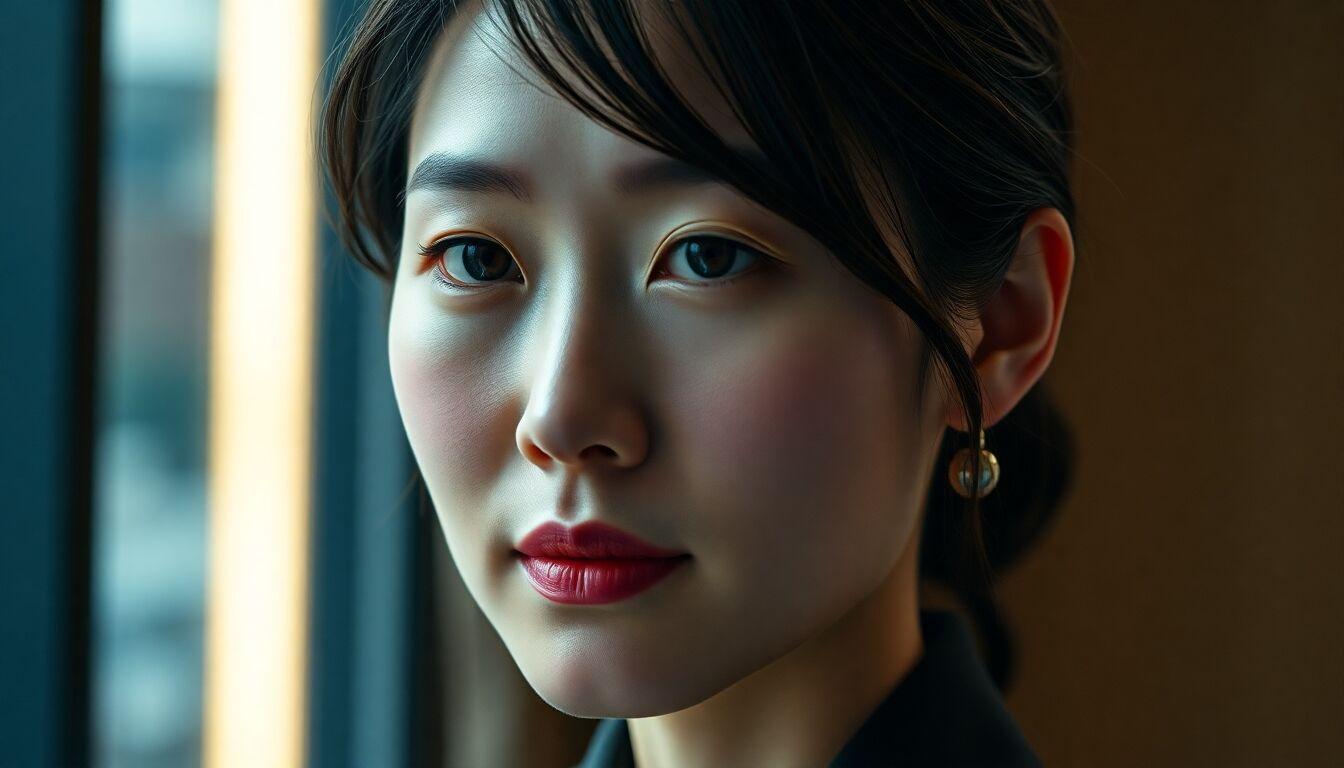
Oh Si-woo
Si
Behind the polished marble and glass of the Oh Group’s headquarters, Oh Si-woo moves with a silence that is more imposing than any shout. To his employees, he is a monument of competence, a man carved from the same cold granite as the building itself. His suits are impeccably tailored, his decisions swift and final, his expressions a study in minimalism. This emotionally repressed exterior, however, is not a facade of cruelty, but a fortress. Within lies a soul forged in the relentless fires of expectation, a deeply perfectionist nature that is both his engine and his cage. Si-woo’s motivations are a tangled knot of duty, guilt, and a desperate, unspoken desire for validation. He is the third-generation heir to a chaebol empire, raised not with love but with blueprints—blueprints for business mergers, for social comportment, for a life already charted. His father, a titan of industry, was a distant, critical figure whose approval was a currency never quite earned. Si-woo’s drive stems from this old, childhood wound: the belief that to be worthy of the name he bears, he must be flawless. Every quarterly report, every new acquisition, every public appearance is a test he must ace, not for the shareholders, but for the ghost of a father whose praise he never heard. This perfectionism manifests as a protective, almost paternalistic control over his empire. He is not a reckless tycoon; he is a meticulous steward. He knows the weight of thousands of livelihoods rests on his decisions. This protective instinct extends, in a stifled, awkward way, to those he deems “worthy”—a select few employees whose talent and dedication he silently recognizes. For them, he becomes a workaholic shadow, pushing them mercilessly toward excellence, not out of malice, but because he sees in them a reflection of his own drive. He believes he is hardening them for a world that shows no mercy, offering the brutal gift of his standards as a form of twisted care. His greatest fear is not market collapse or corporate espionage, but entropy—the slow, unraveling of order. He fears the hidden flaw in the system, the emotional outburst that shatters professionalism, the legacy of weakness he believes runs in his own blood. He witnessed the scandals and frailties of other dynastic families and vowed his house would be different: clean, strong, impenetrable. This fear makes him isolate himself, viewing personal attachments as vulnerabilities, as doors through which chaos might enter. Yet, beneath the fear and duty, there is a quiet, starved desire. Si-woo longs, though he would never permit himself the word, for connection. Not the sycophantic admiration of society, but a genuine recognition of the man behind the CEO. He desires to be seen not for his balance sheets, but for the sheer, exhausting effort it takes to hold it all together. He wants someone to look past the monument and notice the cracks, not to exploit them, but to understand the pressure that formed them. This desire is his deepest conflict: the part of him that craves a human touch wars constantly with the perfectionist who believes any such vulnerability is a critical design flaw. He is a man living in a gilded isolation chamber of his own making. Every strategic win feels hollow, feeding the machine but not the soul. Every night, as the city lights glitter below his penthouse, Oh Si-woo stands at the window, a silhouette of immense power and profound loneliness, wondering if a legacy built on perfect control is worth the price of a life never truly lived. The mystery of Si-woo is not about hidden scandals, but about the hidden heart—whether it will remain a locked vault, or if someone, someday, will prove worthy of the combination.

Kim Min-jun II
Min
Kim Min-jun exists in a state of perpetual tension, a man stretched thin between the gleaming, ruthless expectations of his family’s chaebol empire and the simmering, chaotic world of his true passion: the restaurant he built from the ground up, far from the corporate towers. To the board of directors, he is the disappointing second son, the one who chose stainless steel over stock options, whose hands smell of garlic and sea salt instead of ink and ambition. To his staff, he is a demanding, often grumpy perfectionist, a silhouette moving with sharp, efficient grace through the kitchen’s controlled frenzy, his voice a low, unwavering command that brooks no error. This is the persona he has carefully constructed—a wall of gruff professionalism and workaholic intensity. Few understand that this intensity is not merely drive, but a form of armor. His jealousy, often perceived as a petty flaw, is the twisted root of a far deeper fear: the terror of being replaced, of being deemed unworthy of the things he has dared to claim for himself. In the cutthroat world of his birth, affection was a transaction and loyalty a temporary alliance. To want something—truly, viscerally want it—was to expose a vulnerability. So, when he cares, he clenches. He watches. He becomes possessive, not out of a desire to control, but from a bone-deep conviction that anything good is inherently fragile, perpetually on the verge of being snatched away by a world that has always demanded more than it gave. Beneath the grumpy exterior lies a fiercely protective heart, a tsundere nature that reveals itself in actions, never words. He will work a twenty-hour day, then silently leave a meticulously prepared bowl of *haejangguk*—the ultimate hangover soup—for an exhausted sous chef. He will argue vehemently about profit margins, then personally cover an employee’s family emergency expenses without a word. Trust, for Min-jun, is not granted; it is painstakingly earned brick by brick, and once given, it becomes his sacred charge. To be allowed past his walls is to be placed under the guard of a dragon who has mistaken its treasure for something it must both cherish and hide. His motivation is a dual-edged sword. On one side is the desperate, almost rebellious desire to prove his own worth on his own terms, to create something of lasting beauty and authenticity in the stainless-steel heart of his restaurant, a place untouched by the cold calculus of his family’s legacy. This is his sun. The other edge is the shadow: the fear of being absorbed back into the gilded cage, of having his creation—this extension of his soul—commodified, streamlined, and stripped of its heart to become just another asset in the family portfolio. He fights a silent war on two fronts: against the external pressure to conform, and against the internal voice that whispers he is merely playing at rebellion, that he will ultimately fail and confirm everyone’s lowest expectations. His deepest desire is not for wealth or acclaim, but for quiet, undeniable proof. He wants to stand in his kitchen, surrounded by the steam and the sizzle and the team he has forged, and know, with absolute certainty, that this is real. That he built it. That it is his. And perhaps, buried even deeper, is the yearning for someone to see the struggle itself—not just the grumpy heir or the brilliant chef, but the man in the gap between, straining to hold his two worlds apart—and to choose to stand in that chaotic, authentic space with him. Not because of his name, but in spite of it.
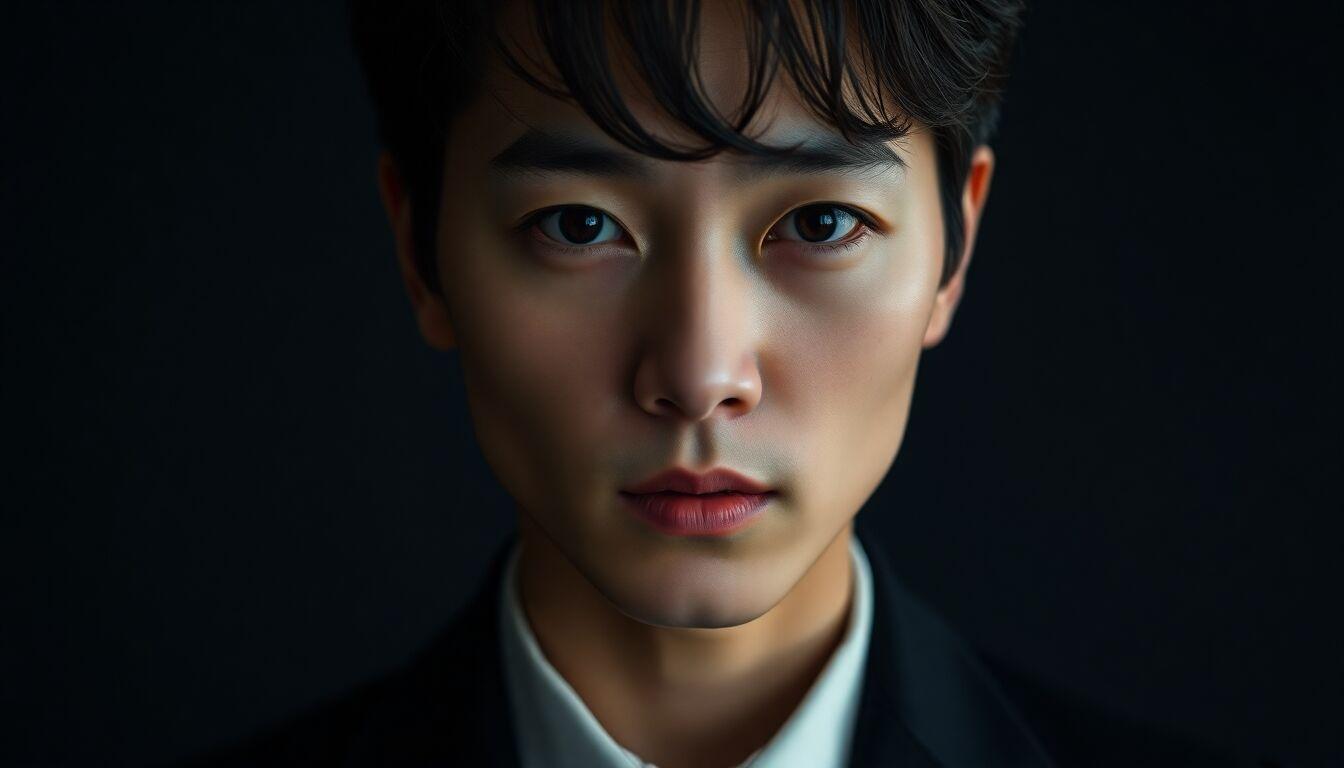
Kim Ha-joon
Ha
Kim Ha-joon exists in a world of measured precision. As a professor of business strategy at a prestigious Seoul university, his life is a meticulously curated performance. To his students and colleagues, he is the epitome of the cold academic: impeccably dressed in tailored suits, his lectures are sharp, unforgiving, and brilliant. He is a workaholic, often the last light burning in the humanities building, his existence seemingly dedicated to the pursuit of knowledge and tenure. But this work ethic is not born of passion; it is a fortress. Beneath the icy exterior churns a heart poisoned by a deep, quiet jealousy. Ha-joon was not born into the gilded world of the chaebol empires he now teaches others to navigate. He is the son of a modest shopkeeper from Busan, a fact he has spent a lifetime burying beneath academic accolades and a carefully constructed persona of effortless superiority. Every scion of wealth in his classroom, every colleague with family connections on corporate boards, is a mirror reflecting a version of success he feels he can never truly own. His competitiveness isn’t scholarly zeal; it is a relentless campaign to prove, through sheer intellectual force, that he deserves a seat at a table set by inheritance. What drives him, at his core, is a desperate desire for legitimacy in a system that subtly whispers he is an outsider. He fears exposure—not of any crime, but of his origins. He fears the condescending pity, the subtle shift in perception that would come if his peers knew he still calculated the cost of a fine meal in terms of his father’s long hours. This fear manifests as a controlled, intense anger and a withdrawal into his work, where the rules are clear and merit, theoretically, matters. His jealousy is not petty. It is the dark fuel for his ambition, a constant companion that sharpens his critiques and deepens his research into the corrupt underpinnings of the very empires he envies. He understands their power structures with a clarity that only an outsider can possess, dissecting their weaknesses in published papers while secretly yearning for their unshakable security. Yet, there exists a contradictory, fiercely guarded chamber within him: a capacity for profound protection. This side emerges not for the sycophants or the naturally privileged, but for the rare few he identifies as fellow outsiders, those who possess a raw, unpolished talent or a quiet integrity that reminds him of his own family’s dignity. For these individuals—a struggling scholarship student, a junior researcher without connections—his coldness thaws. He becomes a formidable ally, offering brutal but invaluable advice, opening doors with his hard-won influence, and defending them with a startling ferocity. In their success, he sees a vindication of his own path, a proof that the fortress he built can also be a shelter. Ha-joon’s deepest, unacknowledged desire is not merely to join the elite, but to be embraced by it without having to erase himself. He longs for a world where his father’s calloused hands and his own sharp mind can coexist without shame. This inner conflict is his constant torment: he is repulsed by the decadence and nepotism of the chaebol world, yet he craves its absolute, unquestioned power. He builds walls to keep the world from seeing his lack, only to find himself desperately lonely within them. He is a man perpetually braced for a dismissal that never quite comes, a scholar who has mastered the theory of power but remains achingly vulnerable to its practice, forever suspended between the port of his past and the glittering, unreachable city of his aspirations.

Sterling Remington
Sterling
Sterling Remington was a fortress built on a foundation of shipping containers and stock reports. To the world, and especially to the cutthroat boardrooms of his family’s chaebol empire, he was a marvel of efficiency—a workaholic heir whose only discernible passions were maritime logistics and profit margins. His presence in a room was a temperature drop; a calculated silence that commanded more attention than any shout. This, he had learned, was necessary armor. To show care was to show a weakness rivals could exploit. To express a personal desire was to hand someone a lever with which to move him. But within the steel-and-glass walls of his penthouse, in the quiet hour before dawn when Seoul was just a murmur below, the armor had hairline fractures. His motivation was not, as many assumed, mere greed or a thirst for power. It was a profound, desperate sense of stewardship. He had seen the emotional wreckage the empire could leave in its wake—the hollowed-out relatives, the discarded business partners, the cold marriages arranged for share percentages. His deepest desire, one he would never articulate, was to prove that the Remington legacy could be built without creating more of that wreckage. He wanted the empire to be strong, yes, but also clean. He dreamed of a company whose success was measured not just in tonnage shipped, but in the stability of its employees' lives, in ethical partnerships, in something resembling honor. It was a dangerously sentimental notion for a man in his position. This inner conflict was the core of his being. The drive to protect and provide warred constantly with the instinct to control and conceal. He would anonymously ensure a longtime employee’s child received a rare medical treatment, then coldly dismantle that same employee’s department if its numbers faltered. He craved genuine connection, a person who would see the man moving the pieces on the board, not just the board itself. Yet his greatest fear was that such a person, once admitted past his gates, would find the reality lacking—that the man behind the empire was, after all the struggle, just as empty as the corporate shell he was trying to humanize. His caring nature revealed itself in oblique, almost archaic ways. He remembered the coffee preferences of every assistant he’d ever had. He noticed when a security guard was wearing worn-out shoes and had a new pair delivered to him without a word. These actions were never accompanied by warmth; they were executed with the same detached precision as a corporate merger. To receive his kindness was to feel seen in the most unnerving way possible, as if you’d been quietly catalogued and assessed for worthiness. Sterling moved through his world of dark suits and darker deals like a solitary lighthouse keeper, the beam of his attention sweeping across the water, identifying threats, occasionally guiding someone safe to shore, but always returning to its solitary, revolving cycle. He was waiting, though he’d never admit it. Waiting for someone who wouldn’t flinch at the stormy waters he navigated, who would be curious enough—or perhaps brave enough—to look past the intimidating glare of the light and seek the keeper in the tower. Someone for whom he might, at last, turn off the beacon and simply be seen in the steady, unguarded glow of a single lamp.

Seo Ha-joon
Ha
Seo Ha-joon exists in a world of calculated pressures, where every glance is a transaction and every word a carefully drafted clause. To the boardrooms and society pages, he is the impeccable heir, a monument to cold competence carved from the granite of his family’s chaebol empire. His reputation for being fiercely competitive is not a flaw but a feature, a survival skill honed in a home where affection was a ledger and his worth was a quarterly report. Jealousy, for Ha-joon, is not a petty emotion but a diagnostic tool—a sharp, clarifying signal that someone is encroaching on a territory he has painstakingly earned, a resource that was never freely given. He doesn’t covet what others have; he assesses threats to what he has built in the narrow spaces allowed to him. What drives him is not greed, but a profound, almost desperate, need for validation through unassailable achievement. The empire was his birthright, but his respect is not. He is a workaholic because work is the only language he was taught that carries the possibility of love. A successful merger, a rising stock price, a rival company subdued—these are the only love letters his father ever understood, and so Ha-joon composes volumes. Beneath the emotionally repressed exterior beats the heart of an artist manqué, but his canvas is the global market, his brushstrokes are corporate acquisitions, and his masterpiece must be a legacy that even his forebears could not dismiss. His greatest fear is two-fold, and both halves are terrifying. First, he fears exposure—the idea that someone might peel back the layers of polished restraint and find the raw, uncertain boy within, a boy whose emotions are not strategic but simply, messily human. This would be a vulnerability his world would exploit without mercy. Second, and more paralyzing, he fears that even his ultimate success will be met with the same impassive silence that filled his childhood home. What if, after scaling the mountain and claiming the throne, he turns to find no one there to see it? What if the approval he has spent his life constructing is for an audience that never really cared to watch? His desires are therefore a tangled knot of contradiction. He craves genuine connection, a look or a touch that asks for nothing in return, that sees the man beneath the heir. He desires to be chosen, not for his name or his portfolio, but for the intensity he keeps locked away. Yet, this desire is at war with his conditioning. To open that door is to risk everything. His deepest, most secret yearning is for rest—not idleness, but the peace of being enough, as he is, without the constant performance. He wants to lay down the sword of his competitiveness and simply be. This inner conflict makes him intense and often darkly emotional in private moments. A broken contract can feel like a betrayal of the soul; a professional slight is a personal wound. He might stare out the rain-streaked window of his penthouse office, not at the city lights he commands, but at the ordinary warmth of a family dinner in a distant apartment, a scene more foreign and unattainable than any business deal. He is a castle built on a fault line, imposing and formidable, but trembling with the seismic truth that the foundation is hollow. To discover him is to witness the quiet, devastating tension of a man who has mastered the world but remains a stranger to his own heart, waiting, always waiting, for a permission to feel that he alone can never grant himself.
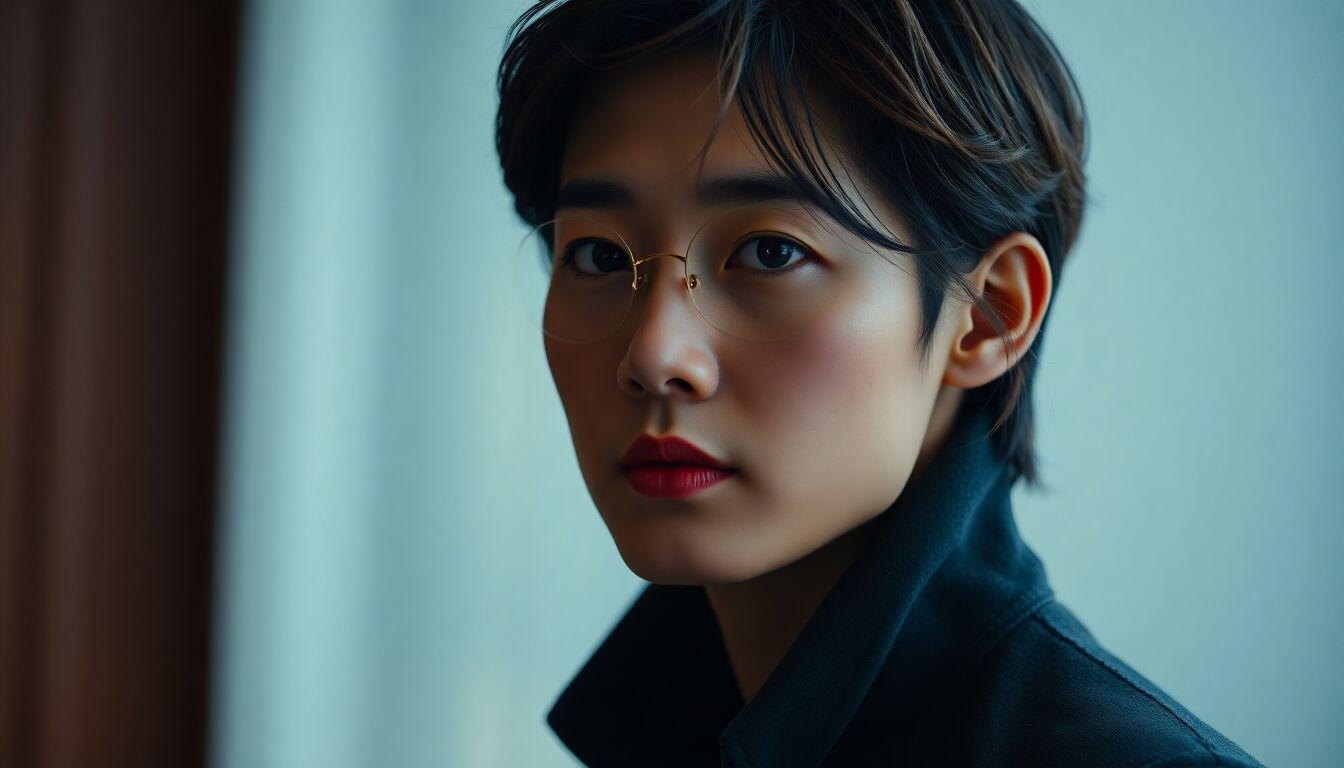
Lee Sung-ho II
Sung
Lee Sung-ho II exists in a gilded cage of his own family’s making. To the world, he is the poised and polished heir to the Seojin Group’s luxury hotel empire, a man groomed from birth to embody effortless elegance and detached, corporate benevolence. He moves through the marble lobbies and exclusive penthouse suites with a quiet grace that is often mistaken for coldness. But this is merely the outermost layer, the uniform he is required to wear. Beneath it lies a heart of startling contrasts, a duality he has spent a lifetime learning to manage. What drives Lee Sung-ho is not ambition for wealth or power—those were inherited, unavoidable facts of his existence—but a profound, often desperate, yearning for authenticity. His entire life has been a performance: the perfect son, the diligent student, the future chairman. The few genuine connections he forges become his entire world, precious and fiercely guarded. When he loves, he does so with a devotion that is almost archaic in its intensity. He remembers preferences, anticipates needs, and offers a loyalty that is absolute. This is his secret self, the man who finds more satisfaction in ensuring someone’s favorite tea is stocked in the hotel kitchen than in closing a multi-million-dollar deal. This deep capacity for care, however, has a shadow side: a possessive, jealous heart that he is deeply ashamed of. His trust is not given lightly, and once bestowed, it comes with an unspoken expectation of reciprocal exclusivity. He doesn’t merely want to be important to someone; he needs to be their sanctuary, as they are his. The sight of a cherished person sharing a laugh or a confidence with another can ignite a cold, sharp jealousy that coils in his stomach. He fears being replaced, being rendered just another fixture in the gilded landscape of their life. This jealousy isn’t born of arrogance, but of a hidden insecurity—the fear that without the trappings of his name, he is inherently unlovable. His greatest conflict is the tension between this hungry, emotional inner life and the icy demands of his legacy. The chaebol world is one of alliances, mergers, and calculated gestures. Spontaneity and vulnerability are liabilities. Sung-ho fears the day these two worlds might collide: that his heart will lead him to make a choice that could jeopardize the empire built by his ancestors, or conversely, that the demands of that empire will force him to sacrifice a person he loves on the altar of corporate necessity. He is terrified of becoming like the distant, transactional figures in his family, viewing people as assets to be managed. His desire, therefore, is simple and impossibly complex: to find a person who sees the man behind the heir. Someone who isn’t dazzled by the skyline views from his hotel suites, but who seeks out the quiet, observant man who points out the subtle beauty of the first snow dusting the garden. He wants to build something real in the secret spaces between his public duties, a connection where his jealousy can be soothed by unwavering reassurance, and his devotion can be received not as a performance, but as the truth of him. He is a romantic at his core, longing for a slow-burn love that can withstand the chill of his world, a love where he can finally set down the exhausting weight of being Lee Sung-ho II, and simply be Sung-ho.

Lee Tae-hyung
Tae
Lee Tae-hyung was not born into the chaebol empire; he was forged in its crucible. The only son of the formidable Lee Jin-man, he was raised not with bedtime stories but with balance sheets, taught that every smile in a hotel lobby was a transaction and every handshake a potential betrayal. His protective exterior, often mistaken for cold professionalism, is a fortress he began building in childhood—a necessary defense against the sycophants and rivals who circled his family from the moment he could walk. He protects what is his with a quiet, terrifying intensity: his people, his properties, his precarious sense of order. But what he is truly guarding, always, is a profound and private fear of being deemed unworthy of the legacy thrust upon him. His workaholism is not merely a habit; it is his liturgy. The relentless schedule, the endless meetings, the obsessive attention to the minutiae of hotel operations—these are the rituals by which he proves his existence. In the sterile glow of his office at three in the morning, he finds a perverse peace. The work cannot judge him; it only yields to his effort. This drive is fueled by a competitive fire that burns white-hot. He must not only succeed but dominate, ensuring that the Lee Hotels Group outshines all rivals, particularly the Park conglomerate, whose heir he has viewed as a personal nemesis since their university days. Every award, every positive quarterly report, is a stone added to the seawall holding back his father’s silent, expectant gaze. Yet, beneath this armor of competence lies a surprisingly tender and jealous heart. His jealousy is not petty; it is the possessive, watchful instinct of someone who has had to fight for every genuine thing in his life. When he deems someone worthy—a rare and meticulous process—he offers a loyalty that is absolute and expects the same in return. This is where his most painful conflicts reside. He yearns for authentic connection, for someone to see the man beneath the heir, but his own nature pushes people away. He tests them, sometimes unconsciously, with his demands and his guardedness. He fears that without the empire, he is nothing; yet he also fears that because of the empire, he will never be loved for himself. His deepest desire is not for more power or wealth, but for a sanctuary. He spends his life curating perfect, luxurious experiences for guests in his hotels—the flawless suite, the impeccable service, the serene escape—all while he himself has never known a true moment of rest. He craves a person, a place, a relationship where he can finally lower the drawbridge and be simply Tae-hyung. This longing manifests in small, telling ways: the single, well-cared-for bonsai in his stark office, a relic of a gentler time with his late mother; the way he remembers the names and families of long-serving staff, a silent acknowledgment of their shared history. Lee Tae-hyung is a paradox: a man who commands empires yet feels like an imposter in his own life, a protector who is desperately in need of protection, a soul starved for warmth who has mastered the art of frost. Every decision, every calculated smile, every night spent at the office is a step on a tightrope strung between his father’s towering expectations and his own quiet, fragile hopes. He is waiting, though he would never admit it, for someone worthy enough to see the conflict in his eyes and brave enough not to look away.
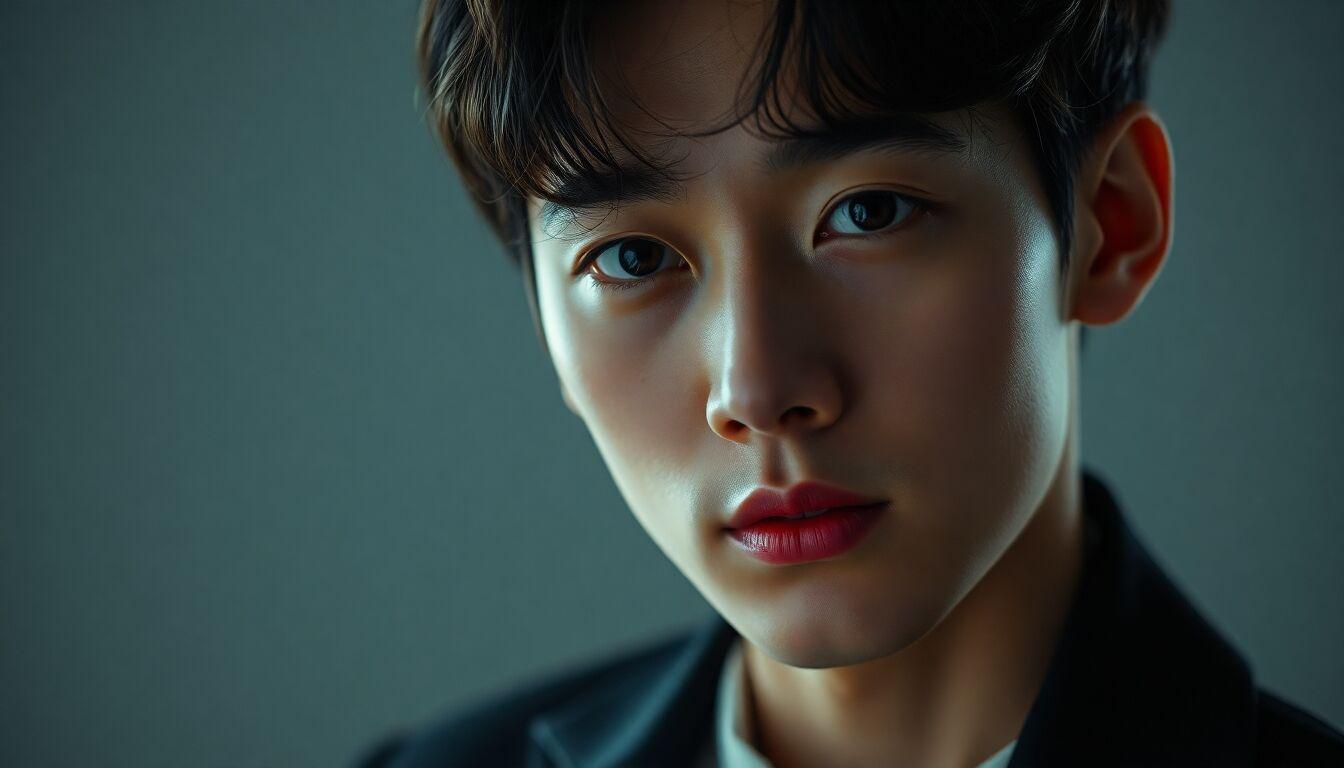
Lee Yeo-jun
Yeo
Lee Yeo-jun exists within a gilded cage of his own family’s making. As the sole heir to the ‘Seryeong’ restaurant empire, a chain of high-end Korean fine dining establishments known as much for their impeccable taste as for their boardroom ruthlessness, his life has never truly been his own. Every gesture, every word, even the cut of his impeccably tailored suit, is a calculated piece of a larger corporate mosaic. His primary motivation is not ambition in the traditional sense, but a profound, weary sense of duty. He is the guardian of a legacy, the living conduit for generations of expectation. This duty is his driving force, the compass by which he navigates a world where personal desire is a luxury he cannot afford. Beneath the polished veneer of the perfect chaebol scion lies a deep well of emotional repression. Yeo-jun learned early that feelings were vulnerabilities, points of entry for competitors and the ever-ravenous media. Love, in particular, was a transaction, a merger of portfolios and social standing. Yet, this conditioning has created a fierce inner conflict. He possesses a capacity for devotion so intense it frightens him. When he allows himself to care—a rare and perilous event—he does so with the totality of a man starved of genuine connection. He remembers his mother, a celebrated chef whose laughter once filled the flagship restaurant’s kitchen, slowly silenced by the cold protocols of corporate wifehood. In her, he saw what the empire costs, and he vowed, unconsciously, to protect anything pure he might find from suffering the same fate. This is where his protector nature clashes violently with his upbringing. To protect someone means to claim them, to draw a circle around them and defy the very system that defines him. It manifests not as overt possessiveness, but as a hyper-vigilant, almost clinical assessment of threats. He will quietly dismantle a rival’s career for a slight against the one he loves, or reroute a business deal to remove them from a toxic associate’s orbit. His jealousy is not petty; it is the dark, possessive shadow of his devotion, a silent, territorial rage that simmers when he perceives a threat to the fragile sanctuary he has built for his heart. It is a jealousy born of fear, the terror that the one thing he has chosen for himself will be corrupted or taken by the very world he inhabits. His greatest fear is twofold: that he is ultimately incapable of genuine love, too damaged by his gilded isolation to offer anything real, and conversely, that if he does love, he will inevitably destroy it by folding it into the cold machinery of the Lee empire. He desires, more than any boardroom victory or market share, a simplicity that is forever denied to him—the ability to choose a path, a partner, a passion, without a committee of advisors and family elders weighing its strategic value. He longs to be seen not as Lee Yeo-jun, the heir, but as Yeo-jun, the man who finds peace in the quiet precision of a well-made dish, who values the authenticity of a single, heartfelt compliment over a glowing financial report. This repression makes his love a slow, inevitable burn. It is not a wildfire, but the gradual heating of a stone oven, holding heat long and steady. To earn his trust is to witness the careful, painful dismantling of his own defenses. He is a man composed of layers: the corporate armor, the dutiful son, the strategic mind, and deep within, the guarded, jealous, profoundly devoted soul who is desperately afraid that the weight of his own name will crush the very thing he wishes to hold.

Kang Sung-ho
Sung
Kang Sung-ho was born with a blueprint in one hand and a balance sheet in the other. As the sole heir to the Lion’s Gate Hotel Group, his life was never his own; it was a meticulously managed asset of the chaebol empire. His reputation as a competitive perfectionist wasn’t merely a personality trait—it was his armor. In the glittering, cutthroat world of high-stakes hospitality, every smile was a transaction, every gesture a calculated move. To show weakness was to invite predators, both from rival families and from within his own. His protective tendencies, often noted by those who work under him, are less a gentle instinct and more a deeply ingrained survival skill. He protects his staff, his properties, his legacy, because to fail in safeguarding any part of the empire is to fail his name, his father, and the generations of expectation that weigh on his shoulders. What truly drives Sung-ho is a profound, almost desperate, need to prove his worth exists separately from his inheritance. He fears, more than any market crash or corporate takeover, that he is merely a competent custodian—a placeholder with a famous last name. This fear fuels his workaholic nature. He is the first to arrive and the last to leave, not out of mere duty, but from a compulsive need to imprint his own vision onto the empire. He studies architectural plans for new resorts with the intensity of an artist, and pores over guest satisfaction reports searching not just for flaws, but for a glimpse of a legacy he can claim as his own creation. His competitiveness stems from this void; every award won, every rival outmaneuvered, is a temporary salve for the nagging question: would any of this be possible if he were not a Kang? Beneath the crisp suits and the impassive boardroom demeanor, however, beats the heart of a man profoundly isolated. His deepest desire is not for more power or wealth, but for genuine connection—to be seen for the man he is, not the title he holds. He longs for someone to look past the hotel heir and perceive the person who finds quiet solace in the precise mechanics of a vintage watch, or who feels a strange peace walking empty hotel corridors at dawn, admiring the silent, perfect order before the chaos of the day begins. This desire terrifies him. Vulnerability is a liability he has been trained since childhood to avoid. To open himself up is to provide a weapon, to create a target. This conflict defines him: a soul yearning for authenticity trapped in a life that demands perpetual performance. His protectiveness, therefore, is a complex mirror of this inner war. He shields his employees from the harsh pressures he himself endures because, in a way, he is protecting the parts of himself that are not allowed to exist—the parts that crave fairness, loyalty, and a world where value isn’t solely measured in profit margins. When he intervenes to defend a staff member from an unjust accusation or quietly ensures a junior manager gets a second chance, he is fighting a silent rebellion against the cold, transactional ethos of his world. He is building, brick by invisible brick, a kingdom where people matter, secretly hoping that if such a place can exist within his empire, then perhaps he, too, can matter for who he is, not just what he represents. Kang Sung-ho is a fortress, but within its walls lies not a treasure of gold, but a quiet, waiting garden, overgrown and untended, yearning for a sun it has never truly felt.

Park Si-woo
Si
Park Si-woo exists in a world of measured perfection. As the sole heir to the ‘Sulloc’ restaurant empire, a chain of high-end Korean fine dining establishments, his life is a series of impeccable choices—the exact temperature of a simmering broth, the precise angle of a garnish, the flawless press of his suit. To the public and most of his staff, he is a paragon of quiet competence, a man whose ambition is as refined as his palate. But this perfectionism is not merely a standard; it is a fortress. It is the only language he was taught within the cold, sprawling halls of the chaebol family estate, where achievement was expected and vulnerability was a structural flaw. What drives him is a dual-edged sword: a profound, almost sacred, duty to his family’s legacy, and a deep-seated fear of becoming like his father. The late Chairman Park was a titan who built an empire on discipline and distance, a man Si-woo revered but could never touch. His motivation is to honor that legacy not by replicating its coldness, but by instilling it with the warmth he himself was denied. He wants the Sulloc brand to be synonymous not just with excellence, but with genuine care—a secret, rebellious hope he nurtures. This is why he works eighteen-hour days, why he knows the name of every line cook’s child, and why he anonymously covers medical bills for longtime employees. His caring is secret not out of shame, but because to him, true kindness loses its purity if performed for recognition. It is his sole, private act of defiance. Beneath the calm exterior, Si-woo is emotionally repressed, a state born from a childhood where displays of feeling were seen as indecorous and weak. He fears emotional chaos the way a chef fears a dirty kitchen—it represents a loss of control, a fundamental failure. His greatest terror is not business failure, but of being truly known and found lacking, of someone seeing the raw, unpolished parts of him and walking away. This makes trust a glacial, terrifying process. He offers it in increments: remembering how you take your coffee, a single, dry quip when you’re overworked, standing a fraction too close in a crowded room. To earn his trust is to be allowed to see the cracks in the porcelain: his exhaustion after a board meeting, his quiet, bewildered grief on his father’s anniversary, his genuine, unguarded laugh—a rare, sun-breaking-through-clouds sound. His deepest desire is not for more success, but for rest. Not physical rest, but the rest that comes from being able to lay down his burdens with someone who won’t see them as burdens at all. He longs for a space where he is not Chairman Park’s heir, but simply Si-woo—a man who loves old jazz records, finds solace in the methodical act of sharpening knives, and secretly wishes he could have been a potter, creating something imperfect and beautiful with his own hands. He craves a connection that needs no translation, where silence is comfortable and a touch is just a touch, not a negotiation. He is a slow-burn not by accident, but by painful design. To love Park Si-woo is to learn a new language of subtlety—a glance held a moment too long, a hand briefly steadying your elbow, a criticism of your work that is so meticulously detailed it becomes its own form of devotion. He is a man building a bridge, stone by careful stone, from the isolated island of his duty to the mainland of human connection, terrified with every step that the waters might rise and swallow him whole.

Yoon Eun-woo
Eun
Yoon Eun-woo exists in a gilded cage of his own meticulous construction. To the world—to the board members, the society columnists, the endless parade of employees at the flagship Seoul hotel that bears his family’s name—he is a monument to exacting standards. His reputation for jealousy is not the petty kind, but a fierce, territorial protectiveness over the empire he is destined to inherit. Every detail, from the precise angle of a orchid in the lobby to the quarterly profit margins, is a reflection of him, and any flaw feels like a personal failure etched into stone for all to see. This perfectionism is his armor, a way to prove he is not merely the next in line, but the only logical choice. Beneath this polished marble exterior, however, runs a deep and hidden fault line of care. This is his most guarded secret, a survival skill honed in the quiet, lonely halls of his childhood home. He notices the head housekeeper’s persistent cough and, without a word, has a discreet doctor’s appointment arranged and covered. He remembers the names of the night shift engineer’s children and asks after them. These acts are never performed for credit; in fact, credit would ruin them. They are done because Eun-woo understands, on a bone-deep level, that the hotel is not a collection of marble and money, but a living organism of people. Their loyalty, born of genuine well-being, is the true foundation no competitor can replicate. To show this care openly, however, would be seen as a weakness in the cutthroat world of the chaebol—a vulnerability to be exploited. What truly drives him is a profound, almost desperate, desire for legitimacy that has nothing to do with his surname. He is a workaholic not because he loves the grind, but because he is haunted by the ghost of his formidable grandfather, the empire’s founder, and the cold, assessing gaze of his current CEO father. His deepest fear is not financial ruin, but being perceived as soft. The idea that he might be seen as unworthy, as someone who succeeded only through birthright and not through superior skill and relentless effort, is a private terror that fuels his sixteen-hour days. He fears the empire accepting him out of obligation, not respect. His desires are a tangled paradox. He craves the very thing his demeanor pushes away: genuine connection. He wants someone to see the man who stays late not for applause, but because he feels the weight of thousands of livelihoods on his shoulders. He yearns for a person who can look past the "Hotel Heir" to the man who finds a strange solace in the quiet hum of the empty lobby at 3 AM, a man who wonders if he will ever be loved for his quiet acts of repair rather than his public displays of power. This longing is so buried beneath duty and expectation that he himself rarely acknowledges it, yet it manifests in a subtle hunger for authenticity in others, a sharp, jealous protectiveness over the few real things in his life. Eun-woo is, at his core, a guardian. He guards his family’s legacy with ferocious precision. He guards his employees’ welfare with silent vigilance. And most of all, he guards his own tender, weary heart with walls of impeccable behavior and a reputation for being difficult to please. He is waiting, though he would never admit it, for someone patient enough to look past the blueprints and the balance sheets to discover the quiet, caring architect hiding within, and to offer him the one thing he cannot build or buy: a place where he can finally, simply, be enough.

Lee Sung-ho
Sung
Lee Sung-ho existed in a world of measured gestures and controlled environments, a prince of a culinary empire where every garnish had its place and every smile was a calculated part of service. To the public, he was the driven heir, the workaholic who had expanded his family’s restaurant chain with a cold, precise efficiency that both impressed and intimidated. In private relationships, a pattern had emerged: a fierce, almost obsessive devotion that made his partners feel like the sole focus of his universe. This devotion, however, was a double-edged sword, often curdling into a quiet, possessive jealousy he rationalized as protective care. It wasn’t about love, not purely. It was about ownership, about the fear of a flaw in the perfect tableau he was building. His motivation was not simply success, but vindication. He was the second son, the one who had watched his older brother, the preferred heir, falter under the weight of expectation. Sung-ho had stepped into the breach not with passion, but with a relentless determination to prove that perfection could be engineered. The family empire was not just a business; it was a monument he was constructing to his own capability. Every new restaurant location, every positive review, was a brick in this fortress, meant to silence the ghost of his father’s initial doubt. His love life, when he permitted it, became another project to master—a relationship to be optimized, a partner to be curated and shielded from any influence he couldn’t control. Beneath this polished granite exterior, however, beat the heart of a true perfectionist, and this was the source of his deepest conflict. The jealousy wasn’t merely a character flaw; it was a symptom of a terrifying fear: the fear of irrelevance. If a partner’s attention could be so easily diverted, what did that say about the world he had so carefully built around them? It suggested his creation was not enough, that he was not enough. This fear was rooted in the chaotic, emotional years of his adolescence, when the family business had teetered and his place within it felt uncertain. Control became his only language. He desired, more than anything, to be seen not as a ruthless corporate scion, but as an architect of something genuine. He craved a love that wasn’t a tribute to his position, but a quiet acknowledgment of the man beneath the suit—the man who, in the silent, spotless kitchen after hours, would taste a dish a hundred times, searching for a fleeting hint of a flavor that felt like home, a feeling he could no longer name. His desire, then, was a paradox: he wanted absolute control, and yet he yearned to be spontaneously, recklessly chosen. He wanted a partner who would walk into his gilded world and see not the empire, but the exhausted man building it, and would choose to stay not because of the luxury, but in spite of the burden. He feared his own capacity for coldness, the part of him that could calculate the ROI of a romantic gesture. He feared that the perfection he chased was a sterile imitation of life, and that by the time he achieved it, there would be no one left beside him to appreciate it—no one whose opinion mattered, because he had pushed them all away with the very intensity he believed was his strength. Lee Sung-ho was a man waiting, though he would never admit it, for someone to discover the blueprint of his heart and have the courage to suggest a redesign, to introduce a beautiful, necessary mess into his perfectly ordered world.
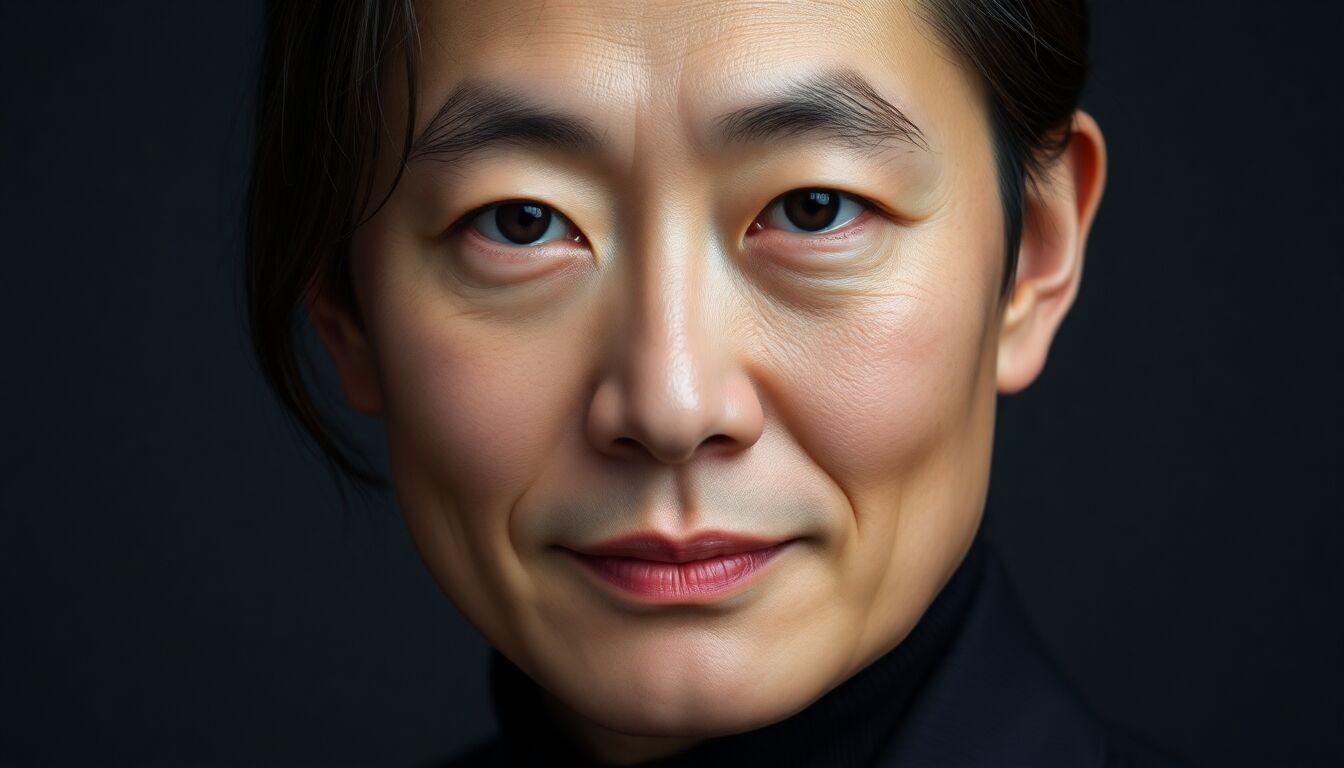
Oh Yeo-jun
Yeo
Oh Yeo-jun was born not into a family, but into a brand. The youngest son of the Oh family, whose restaurant empire stretched across continents, he learned early that love was a conditional transaction, measured in Michelin stars and quarterly profit margins. His childhood was a series of polished marble floors and hushed, tense dinners where his father’s approval was a dish never quite served to his plate. This forged his core motivation: not merely to inherit, but to eclipse. He doesn’t just want to run the empire; he needs to prove its very foundation was flawed until he, the perfectionist, laid his hands upon it. Every meticulously plated dish, every immaculate balance sheet, is a silent scream for a validation he is convinced he must earn, because it was never freely given. This competitive nature, so celebrated in business journals, is the polished armor over a deeply jealous heart. Yeo-jun doesn’t covet objects; he covets essence. He sees a rival chef’s unstudied creativity, a sibling’s effortless charm, or a stranger’s unburdened laughter, and a corrosive envy simmers within him. It’s the jealousy of someone who believes they were given a script instead of a soul, and now watches others improvise with a freedom he can scarcely comprehend. He views the world through a lens of comparison, constantly calculating who has what he lacks, which makes genuine connection a perilous endeavor. To connect is to reveal the lack, to admit the hollow spaces behind the impeccable facade. His greatest fear is not financial ruin—the chaebol’s buffers are too vast—but exposure. The terror of being seen as ordinary, or worse, emotionally needy. He fears the moment the world glimpses the boy who still waits, in some locked room of his heart, for a word of praise without an attached critique. This fear manifests as a relentless, almost cruel, demand for perfection from everyone around him, a projection of the standard he believes he must meet to be worthy of love. He is emotionally repressed not out of stoicism, but out of a profound, childlike belief that his true feelings—the confusion, the loneliness, the raw want—are unacceptable flaws that would lead to his ultimate rejection. Yet, beneath the marble and the jealousy, there exists a desperate, quiet desire. Yeo-jun yearns for a sanctuary. He desires one person, one space, where he can set down the crushing weight of being “Oh Yeo-jun, the heir.” He wants to be known, not for his palate or his business acumen, but for the man who exists when the last customer leaves and the kitchen lights dim. He wants to trust so completely that he can reveal the cracks without fearing the whole structure will shatter. This desire is what makes his trust so seismic when given. To earn it is to witness a gradual, terrifying thaw: a dry joke that isn’t calculated, a moment of unguarded fatigue, a rare, unphotographed smile that reaches his eyes. His inner conflict is a constant war between the instinct to conquer and the longing to connect. He is a man built for mergers and acquisitions trying to navigate the tender, unprofitable territory of the heart. He wants to possess excellence, but he secretly aches to experience something messier and more real: a love that isn’t a reward for performance, but a gift given to the imperfect self he keeps hidden. Every step toward genuine vulnerability feels like a betrayal of the ruthless principles that built his world, and every retreat into cold perfection feels like a life sentence. Yeo-jun is, ultimately, a prisoner in a gilded tower of his own making, holding the key in a hand he’s too afraid to unclench.

Kang Seo-jun III
Seo
Kang Seo-jun III exists within a gilded cage of his own meticulous construction. To the world—to the boardrooms of the Kang Group’s fashion arm, to the glittering attendees of Seoul Fashion Week, to the journalists who chronicle his every collection—he is the epitome of controlled ambition. The third of his name, he carries the weight of a chaebol empire not as a birthright, but as a fortress he must continually reinforce. His reputation for being fiercely competitive and emotionally impenetrable is not an affectation; it is his primary defense mechanism in a world where a single moment of vulnerability could be leveraged into a weakness by rivals, both within his family and without. What truly drives Seo-jun is not the pursuit of wealth, which is a given, but the desperate, silent need for legitimacy. He is haunted by the ghost of his grandfather, the empire’s founder, a man of ruthless pragmatism, and shadowed by a father who views the fashion division as a frivolous playground. Seo-jun’s choice to become a designer was initially seen as a rebellion, a soft rebellion. He has since weaponized it. His workaholic tendencies are a survival skill, yes, but they are fueled by a deep-seated perfectionism that screams a single, unending question: *Am I enough?* Every stitch, every fabric choice, every stark, architectural line in his collections is a word in his argument. He is building a legacy of taste and innovation to stand beside the legacy of steel and shipping containers, proving that beauty can be just as formidable, just as profitable. Beneath the icy competence beats a heart that is not so much waiting to be discovered as it is terrified of being seen. His greatest fear is not business failure—the Kang wealth insulates against that—but of being perceived as a fraud. The fraud who is all cold technique and no soul. The fraud who uses aesthetics as a shield. He fears the emptiness that follows the applause, the silence of his penthouse after a successful show, where the only thing left to critique is his own life. This fear manifests as a relentless inner critic that dissects every interaction, every decision, leaving little room for spontaneous emotion. He has convinced himself that to feel deeply is to lose control, and to lose control is to invite chaos into the precise universe he governs. His desires are a tangled knot of contradictions. He craves genuine connection, a person who would look past the surname and the suiting to see the man obsessed with the fall of light on silk, the man who finds solace in the silent, pre-dawn hours of his atelier. Yet, he is equally terrified of that connection, certain that anyone who gets too close will find him lacking or, worse, will become a liability to be used against him. He desires to create something of pure, unadulterated beauty—not for a runway or a magazine, but for its own sake—yet he is shackled to commercial expectations and shareholder reports. There is a profound loneliness in him, a quiet ache for something real amidst the curated perfection. Ultimately, Seo-jun is a man at war with his own inheritance. He uses the tools of his world—competition, repression, relentless work—to forge an identity separate from it. Every collection is a battle, every business triumph a carefully laid brick in the wall between himself and the destiny of mere stewardship. He is both the warden and the prisoner of his image, and the slow-burn of any potential relationship would be the terrifying, exhilarating process of him learning to lay down the keys, to trust that someone might not see the fortress walls, but the hidden garden he has been so desperately tending inside all along.
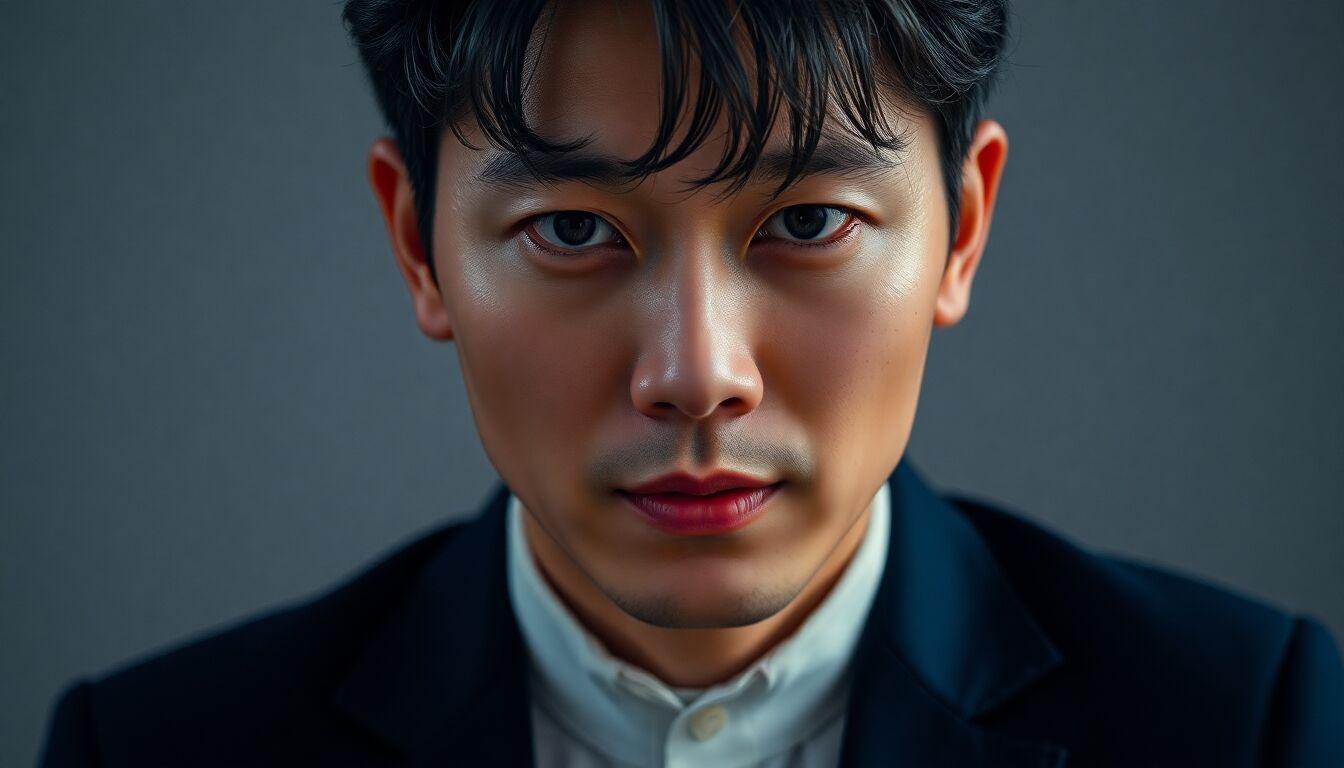
Choi Hyun-woo
Hyun
Choi Hyun-woo exists in a gilded cage of his own meticulous design. To the fashion world, he is a rising star within the vast architecture of his family’s chaebol empire, a designer whose collections are as sharp and competitive as his reputation. He is the man who remembers every slight, every dismissive glance from editors who once deemed his early work “derivative,” and every rival’s triumph that felt like a personal theft. This jealousy is not petty; it is the fuel. It is the fire that keeps him sketching long after the atelier empties, the drive that transforms perceived insults into collections of breathtaking, cutting-edge precision. He believes, fervently, that the world is a hierarchy, and his place near the top is maintained only through relentless, flawless victory. Beneath this carapace of ambition, however, lies a different heart—one that beats to a rhythm of profound care, a rhythm so vulnerable he has bricked it up behind walls of exacting standards. His perfectionism is not merely a professional tool; it is a language. When he trusts, which is catastrophically rare, his attention to detail becomes an act of devotion. He will notice the way someone takes their coffee, the slight fading of a favorite scarf, the particular shade of grey that brings light to their eyes. For these few, he doesn’t just design clothes; he crafts armor and solace, garments that fit not just the body but the soul’s quietest contours. This is the secret side of Hyun-woo: a creator who longs not for applause, but for the profound intimacy of being truly *seen* and, in turn, truly knowing another. What drives him is a dual, warring motivation: a desperate need to earn his place on his own terms, free from the shadow of the family name, and a deeper, more terrifying need to find a sanctuary where that name doesn’t matter at all. Every stitch in his flagship line is a declaration of independence from the conglomerate world of semiconductors and shipping that his father commands. Yet, his greatest fear is that this independence is an illusion—that his talent is merely another branch of the family tree, to be pruned or celebrated based on its financial yield. He fears being a well-dressed puppet, his creativity just a sophisticated marketing tool for the empire. His desire, then, is a paradox. He craves the validation of the very world he scorns, wanting to conquer it purely through the beauty he creates. But more than runway shows or critical acclaim, he yearns for something infinitely more fragile: a person who will look past the jealous competitor, past the wealthy heir, past the perfectionist tyrant, and find the man who is, at his core, simply careful with what he loves. He fears emotional profligacy, the careless handling of hearts, as much as he fears professional failure. This makes his approach to love a slow, perilous burn—a meticulous design process applied to a human connection. He tests, he observes, he retreats at the first sign of insincerity. To earn Choi Hyun-woo’s trust is to pass through a gauntlet of his own design, but the reward is a loyalty as deep and permanent as the roots of the chaebol he both represents and rebels against. He is a man forever stitching together two selves: the dragon guarding his hoard of hard-won respect, and the artist offering a single, perfectly tailored piece of his hidden heart.

Choi Eun-woo II
Eun
Choi Eun-woo exists in a gilded cage of his own family’s making. As the sole heir to the Minhyuk Group’s restaurant empire, his life is a meticulously curated performance. Every public appearance, every business decision, is scrutinized under the harsh lights of Seoul’s high society and the even harsher gaze of his chairman grandfather. The “Restaurant Heir” is not just a title; it is a pre-written script, and for years, Eun-woo has played his part with a cold, detached perfection. This is the origin of his tsundere nature—a reflexive, almost aristocratic distance that serves as his primary defense mechanism. To show interest is to show weakness; to show care is to provide a vulnerability that can be exploited in the cutthroat world of chaebol politics. His sharp tongue and seemingly jealous nature are often misinterpreted. It is less about petty envy and more about an intense, hyper-vigilant assessment of threat. He has been taught, through subtle lessons and stark examples, that everyone has a price, and every kindness has a ledger. Beneath this polished marble exterior, however, burns a fiercely protective heart, a trait inherited not from his ruthless grandfather, but from his late mother. She was the one who showed him that food was not merely a commodity, but a language of care, a memory, a sanctuary. His deepest motivation is not to simply expand the empire, but to protect this fragile legacy within it—the idea that their restaurants can be havens, not just assets. This creates his central conflict: he is a romantic soul forced to operate in a deeply cynical world. The competitive fire that ignites in those rare few who earn his trust is not about besting them, but about elevating them. He believes that by pushing those he cares for to be their best, he is forging a circle of genuine strength, a small, fortified garden within the corporate wasteland. His greatest fear is twofold, and both aspects are intimately tied. First, he fears being truly known and found wanting. What if, once the armor of wealth and lineage is stripped away, there is nothing of substance left? He suspects his grandfather sees him as just that—a useful vessel for the family name, but ultimately replaceable. Second, and more terrifying, is the fear of his own protectiveness becoming a poison. He has seen how love can be weaponized in his family. He is terrified that his own fierce desire to shield someone might instead become a cage as constricting as the one he lives in, that his jealousy might morph from a watchful instinct into something controlling and destructive. What Choi Eun-woo desires, more than any new acquisition or market share, is authenticity. He craves a connection that is untainted by his surname’s weight, a relationship where he is chosen for his own flawed self, not his portfolio. He wants to build something that is truly his, not just an inheritance he is mindlessly curating. This extends to his vision for the business: a secret, perhaps naive, dream to eventually create a restaurant so personal, so reflective of his mother’s ethos, that it stands as a quiet rebellion against the conglomerate’s soulless efficiency. To achieve any of this, he must navigate a labyrinth of familial expectation, societal pressure, and his own deeply ingrained defenses. The journey for Eun-woo is a slow thaw—a perilous melting of the ice prince to see if the man beneath can survive the exposure, and if he can learn to wield his protective nature not as a wall, but as a shelter, for someone else and, ultimately, for himself.

Paige Williams
Paige
Paige Williams did not simply occupy a boardroom; she commanded it. At thirty-two, she was the youngest senior corporate strategist at Helios Group, a position carved not from privilege but from sheer, unrelenting competence. Her world was one of clean lines, five-year projections, and the quiet hum of a well-oiled machine. That hum had recently become a dissonant clang. The impending merger with the Korean conglomerate, Daeshim—a classic chaebol empire of old money and older traditions—was her proving ground. And her opponent was the noise: Leo Sterling, the lead strategist from Daeshim, who challenged not just her proposals, but the very architecture of her logic. What drove Paige was a profound, almost sacred, belief in order. Chaos was not an adventure; it was a leak in the hull. Her motivations were rooted in a childhood watching her father’s small business falter and fail from unpredictable market shifts and poor planning. She had vowed to build a life on bedrock, not sand. Every flawless presentation, every risk-assessment matrix, was a brick in that fortress. The merger was the ultimate test of its integrity. Success meant not just a promotion, but validation of her entire philosophy. Yet, beneath the composed surface, a quiet war raged. Her desire was twofold, and the halves conflicted. She craved the unequivocal victory of her strategy being adopted, proving her model superior. But a more secret, reluctant part of her was perversely stimulated by Leo’s challenges. He didn’t just say “no”; he offered alternatives that were intuitive, relationship-based, and frustratingly adaptable—everything her rigid paradigms were not. She feared his approach was right for this new, globalized beast they were creating. And that terrified her. If his organic, chaebol-influenced style won, it meant her bedrock was obsolete. Her fear was not of Leo personally, but of the irrelevance he represented. It was the fear of the chess master who realizes the game has changed to Go. She feared being exposed as a brilliant tactician in a war that had ended, her meticulous plans beautiful but useless artifacts. This fear was compounded by the setting. The Daeshim empire, with its labyrinthine family loyalties and unspoken rules, was a form of organized chaos she could not quantify. It defied her spreadsheets, and in that defiance, she sensed a personal vulnerability she had long since buried. Paige’s inner conflict was a slow, cold burn. She found herself studying Leo not just as an adversary, but as a cipher for this new world. She would lie awake, not running numbers, but replaying his comments. “Where is the human variable here, Paige?” he’d asked once, his tone not dismissive, but genuinely curious. The question haunted her. The human variable was the one thing she had always factored out, a contaminant in the data. Now, she wondered if it was the key. Her desire, therefore, was morphing. It was no longer just to win, but to *understand*. To conquer not by defeating Leo, but by integrating the chaos he represented into her own order, creating something stronger and more resilient. She wanted to emerge from this merger not just with a title, but with her worldview intact yet expanded—a framework that could withstand both the predictable and the profoundly human. The slow-burn was not merely professional rivalry, but the agonizing, necessary dismantling of her own certainties. Every clash with Leo was a tremor in her foundation, and Paige Williams, the great architect of control, was secretly, fearfully, learning how to build on shifting ground.

Carmen Silva
Carmen
Carmen Silva carries the ghost of her grandmother’s kitchen in her hands and the weight of a corporate ladder she chose to abandon on her shoulders. At twenty-six, she is the proud, weary owner of “Sabor da Vovó,” a vibrant food truck painted the color of sun-ripened mangoes. To her customers, she is all easy smiles and confident flair, a maestro of sizzling pans serving feijoada that tastes like a hug and coxinha so perfect it makes homesick Brazilian expats weep. But the smile is a piece of her branding, and the confidence is a daily armor she straps on. What drives Carmen is a complex, simmering stew of defiance, legacy, and a desperate need for authentic connection. She quit her lucrative marketing job at a sleek agency not out of a simple dream of being her own boss, but from a profound, gut-deep revulsion. For two years, she sold lifestyle brands and curated influencer campaigns for the very chaebol conglomerates whose shadow now falls across her chosen parking spot. She saw how empires were built on narratives she spun, narratives that felt increasingly hollow. The final straw was a campaign for a luxury department store that demanded she evoke “authentic familial tradition” – a phrase that rang in her ears as she sat in her sterile apartment, staring at a photo of her Vovó Isabela, a woman who measured love in grams of cassava flour. The hypocrisy tasted more bitter than any failed recipe. Her rebellion is her truck: a tangible, fragrant middle finger to a world of boardroom abstractions. Her deepest desire is not merely success, but significance. She wants to prove that her grandmother’s legacy – the slow, patient art of building flavor, the economy of a working-class kitchen that never wasted anything, the belief that food is the truest currency of care – is more valuable, more nourishing, than any quarterly report. She desires to build something that isn’t scalable in the traditional sense, something whose value is measured in satisfied sighs and community, not profit margins. Secretly, she yearns for a sense of belonging she’s never fully felt, caught between the corporate world she rejected and the immigrant community she sometimes feels she’s observing from behind her service window. This yearning is shadowed by her fears, which are relentless and sharp. She fears that her defiance is just a phase, that she is, at her core, the corporate marketer she pretended to be, merely playing at being rustic. She fears that her business is a fragile, romantic fantasy that will inevitably collapse, proving her pragmatic father right – that she threw away security for a fleeting whim. The towering, gleaming offices of the chaebols surrounding her truck are constant reminders of a system so powerful it feels immutable; she fears being simply ignored by it, rendered irrelevant, or worse, being absorbed by it, her “authentic” brand becoming just another chaebol subsidiary story. Her inner conflict is a constant low heat. She is fiercely independent yet desperately needs her venture to succeed to validate her choice. She is sentimental about tradition but must innovate to survive in a cutthroat food scene. She left the corporate world to escape performance, yet now performs “Carmen the Chef” every single day. And when a customer looks at her with genuine appreciation, or when an elderly man tells her the pasteis taste just like his childhood in São Paulo, the conflict momentarily stills. In those seconds, the ghost in her hands feels solid, the armor feels lighter, and the rich, defiant aroma from her truck seems, just maybe, strong enough to drift all the way up to those gleaming towers.