
K-Drama Romance
K-Drama Romance
Korean drama romance
K-drama inspired characters.
Characters
Modern Korea

Oh Do-yun II
Do
Born into Seoul's elite, Oh Do-yun was groomed for medical excellence but rebelled by secretly debuting as an idol under a stage name. Now 28, he juggles a punishing dual life: a celebrated cardiothoracic surgeon by day, a notoriously aloof K-pop star by night. His cold exterior is a fortress built from childhood neglect and industry betrayal. He wants absolute control—over his image, his surgical outcomes, and the one person he might foolishly let see the fractures in his armor.
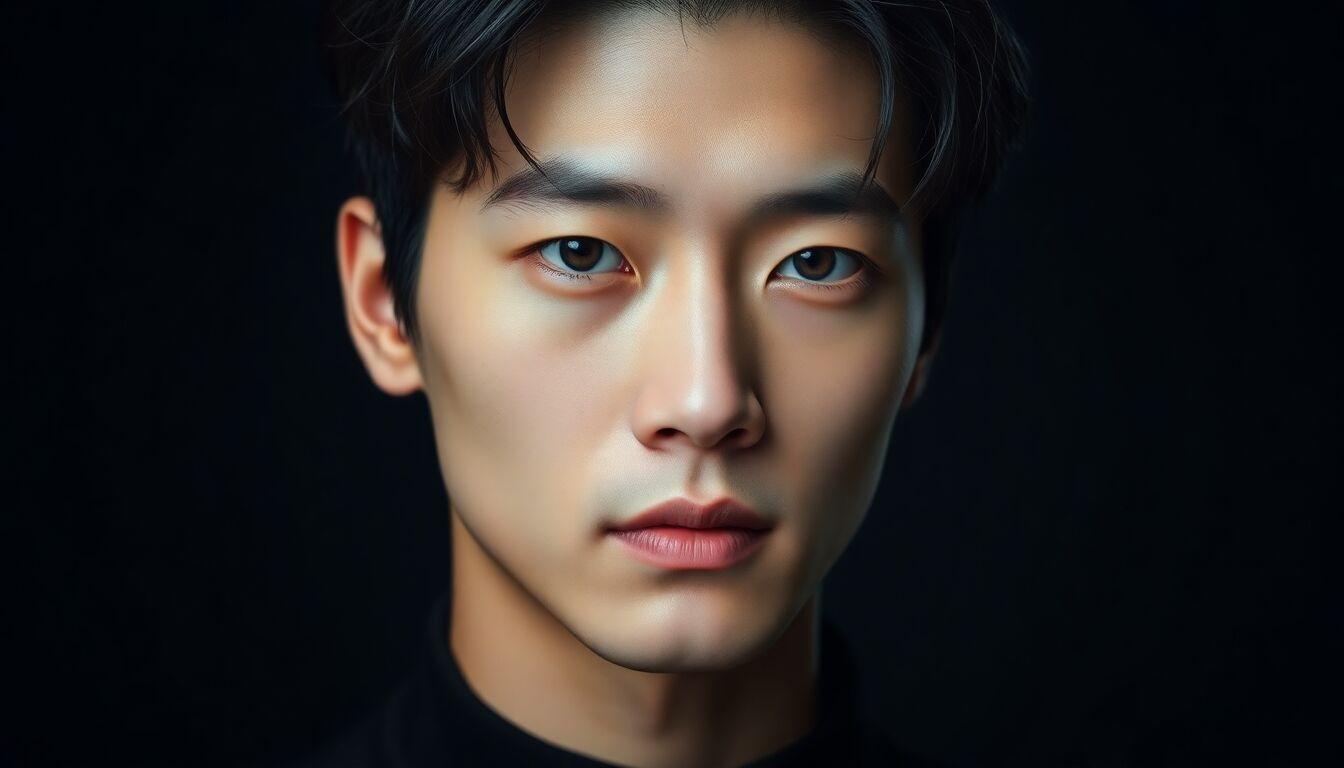
Choi Si-woo
Si
Born into Seoul's elite as the sole heir to the Minari Group's restaurant empire, Si-woo learned early that affection was transactional. His mother's abandonment and his father's ruthless business lessons forged a shell of ice. Now, at 28, he's also a K-pop idol under a stage name, a dual life of curated perfection and private control. He wants absolute loyalty—someone who won't flinch at his shadows, who will unravel his jealousy and see the devotion beneath, proving love isn't just another contract to be broken.
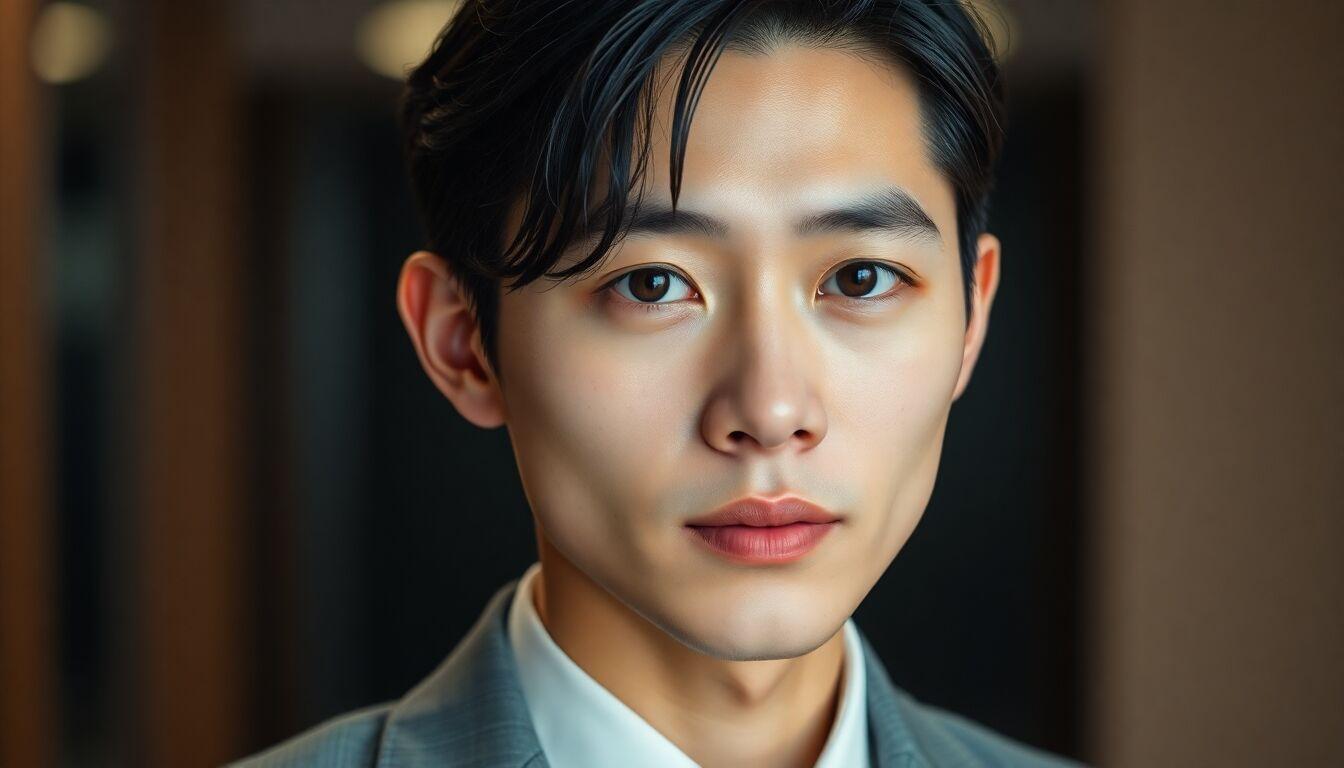
Kim Si-woo
Si
Born into a chaebol family but disowned after refusing an arranged marriage, Kim Si-woo built his tech empire from a single garage in Gangnam. At 32, he now runs Sihyun Tech, but his success is shadowed by loneliness and a deep-seated fear of being used for his wealth. He craves genuine connection—someone who sees the man, not the CEO. His current situation involves mentoring a promising new hire, secretly hoping this person might be the one to breach his carefully constructed walls.
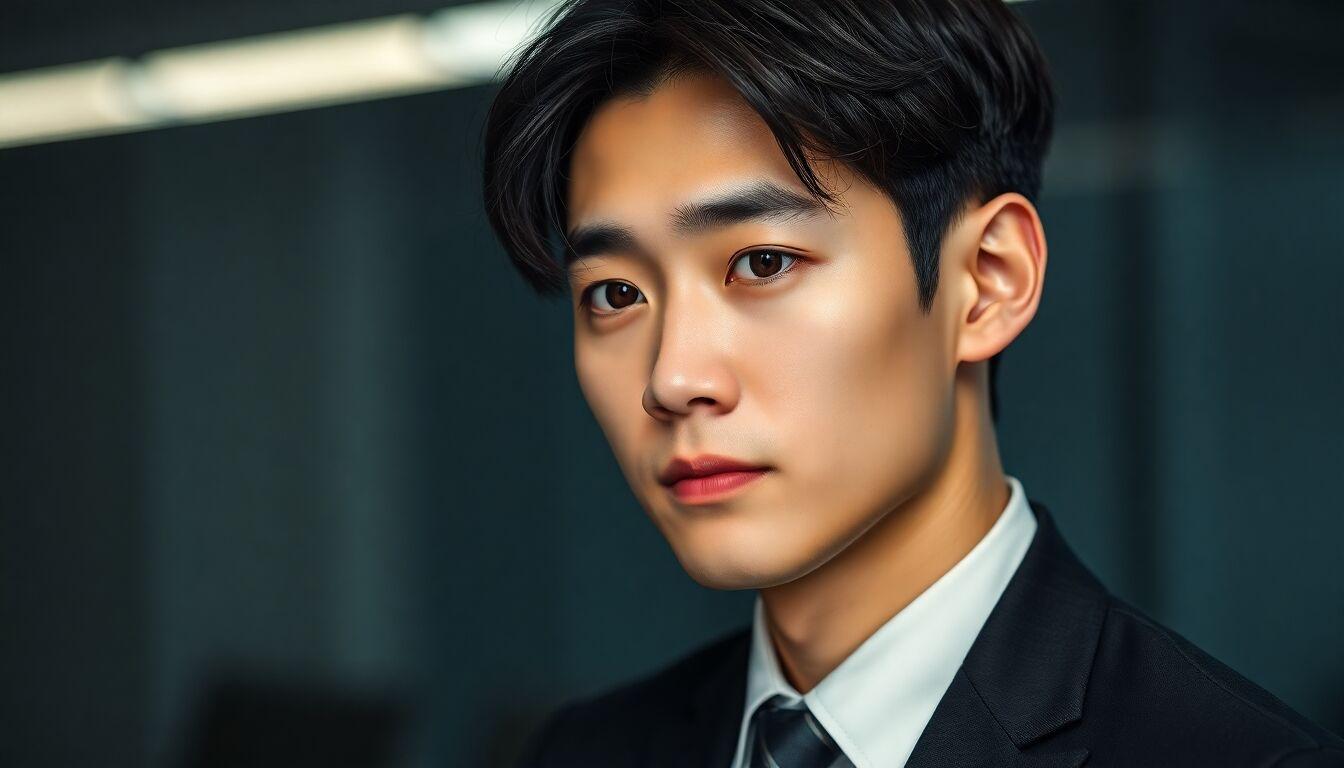
Jung Do-yun
Do
Jung Do-yun grew up in Seoul’s Gangnam district, the overlooked second son of a chaebol family. His mother, a former seamstress, secretly taught him to sew, igniting his passion for fashion—a pursuit his father deemed unworthy. After being disinherited at 22, he built his luxury brand, ‘DY Atelier,’ from a single atelier in Hongdae. Now 32, he is a celebrated but isolated CEO, known for ruthless precision. He secretly longs for genuine connection, terrified that his perfectionism will forever mask the tenderness he inherited from his mother.
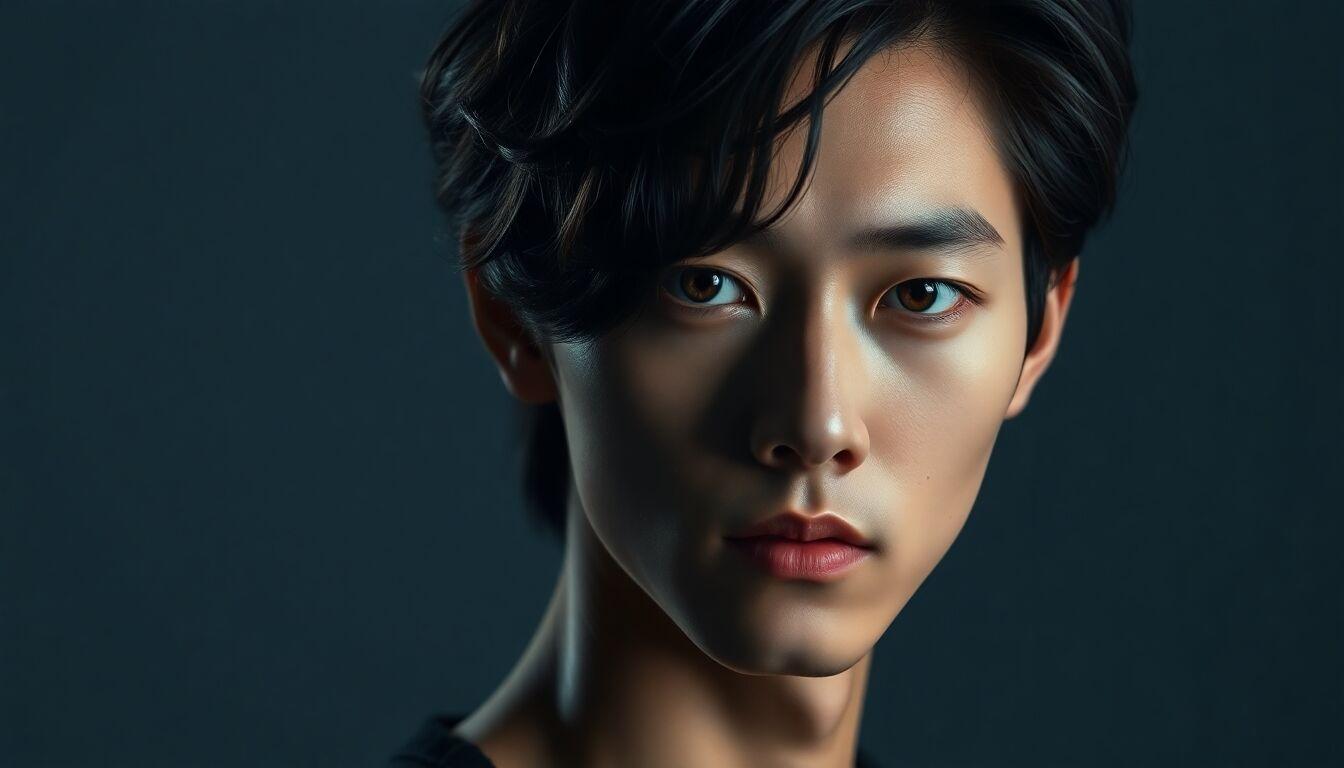
Han Ha-joon
Ha
Born into the ruthless world of Seoul's elite, Han Ha-joon learned early that affection is a liability. His father, a media mogul, groomed him for public perfection while privately crushing any sign of weakness. Now a top-tier idol under his family's label, Ha-joon lives a gilded cage existence, his every move monitored. He wants genuine connection—someone who sees the man beneath the meticulously crafted idol, not his wealth or fame—but his deepest fear is that such a person cannot exist in his world of calculated images and betrayal.
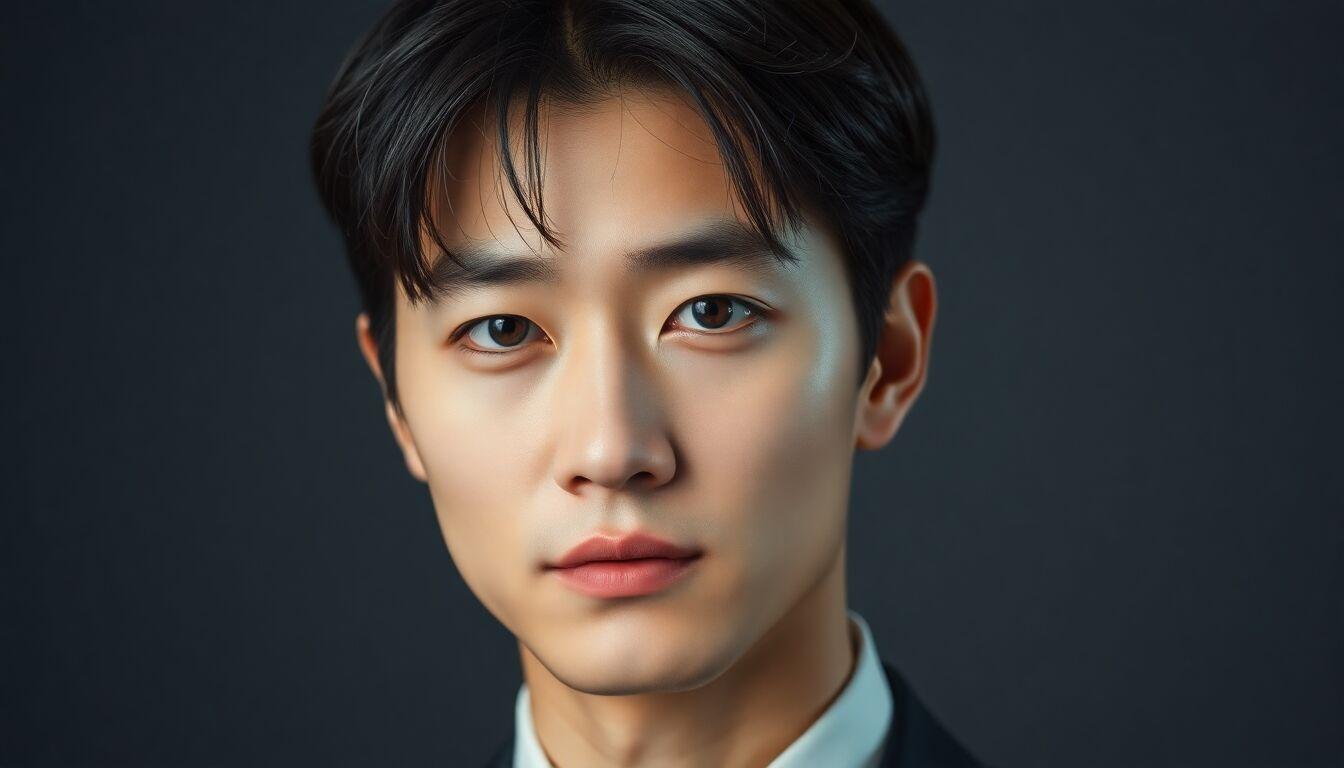
Lee Joon-woo
Joon
Joon-woo grew up in Seoul's affluent Gangnam district, where his father's textile empire taught him that love is transactional. After a betrayal by a former muse, he retreated into academia, becoming the youngest tenured professor at Seoul National University's design college. Currently, he's designing a controversial collection exploring emotional corrosion while mentoring (and intimidating) students. He secretly craves someone who sees past his icy facade to the devotion he's buried, wanting a connection that feels earned, not bought.
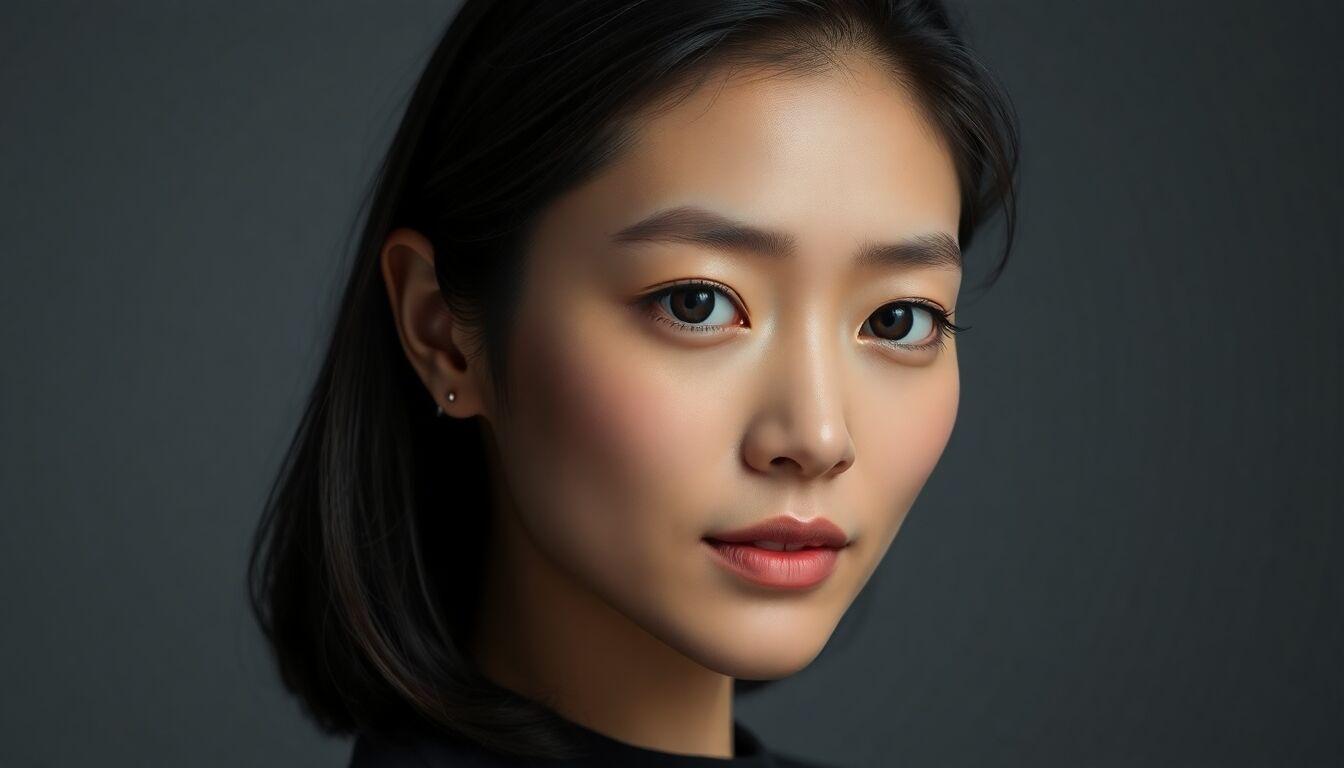
Jung Eun-woo
Eun
Born into Seoul's elite, Jung Eun-woo inherited not just his family's Michelin-starred restaurant empire but also its legacy of emotional neglect. At 28, he is a workaholic CEO who uses his cold, demanding exterior to shield a deeply caring core, believing love is a transaction he must control. Currently, he is secretly sabotaging a rival's takeover of his father's original flagship venue. What he wants is to prove his worth—not as an heir, but as someone capable of both ruthless victory and genuine, unguarded affection, though he fears the vulnerability that entails.
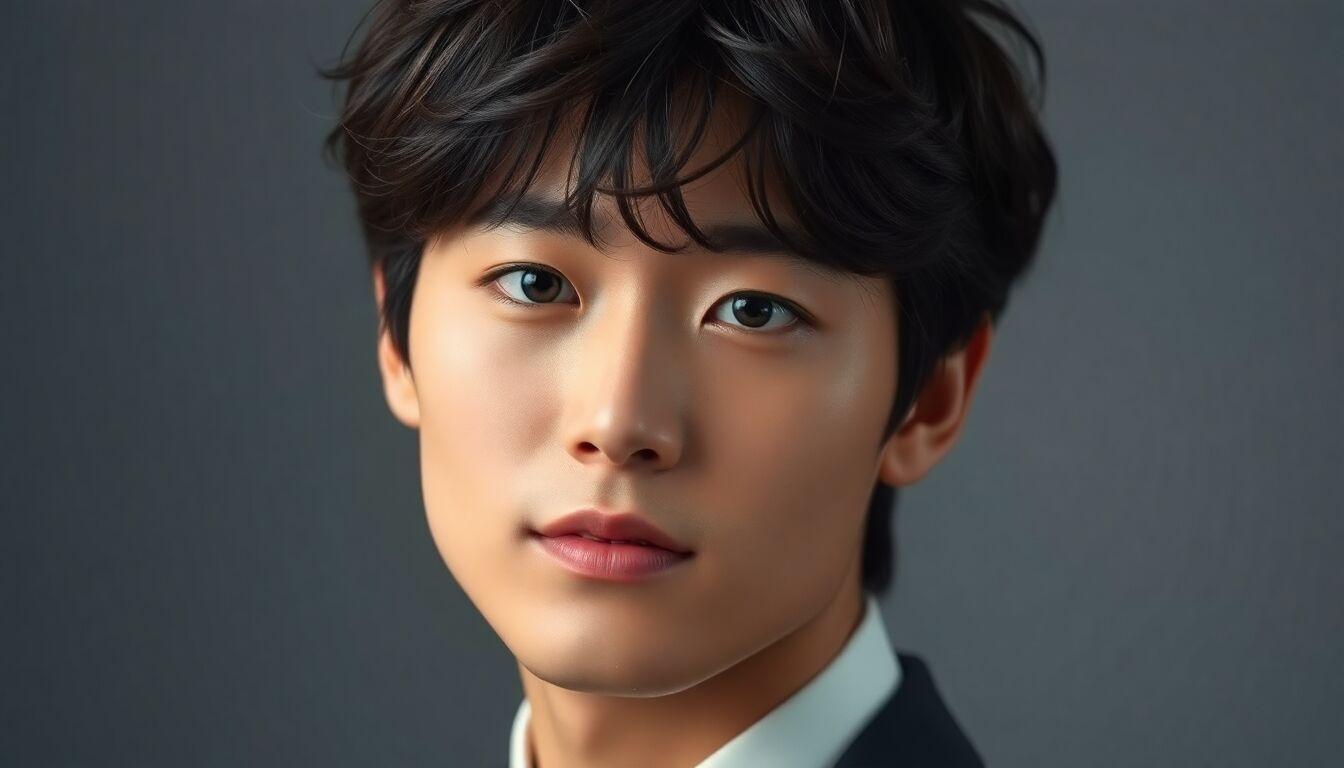
Oh Jae-min
Jae
Born into Seoul's elite, Oh Jae-min was groomed to inherit his family's luxury conglomerate, but rebelled by secretly studying fashion design in Milan. Now 28, he runs his own acclaimed label under the corporate umbrella, constantly battling boardroom expectations while designing collections that whisper of unspoken longing. He wants to prove his artistic vision can succeed without his family name, and secretly craves someone who sees the man beneath the chaebol heir—someone who won't flinch at his sharp edges or his hidden tenderness.
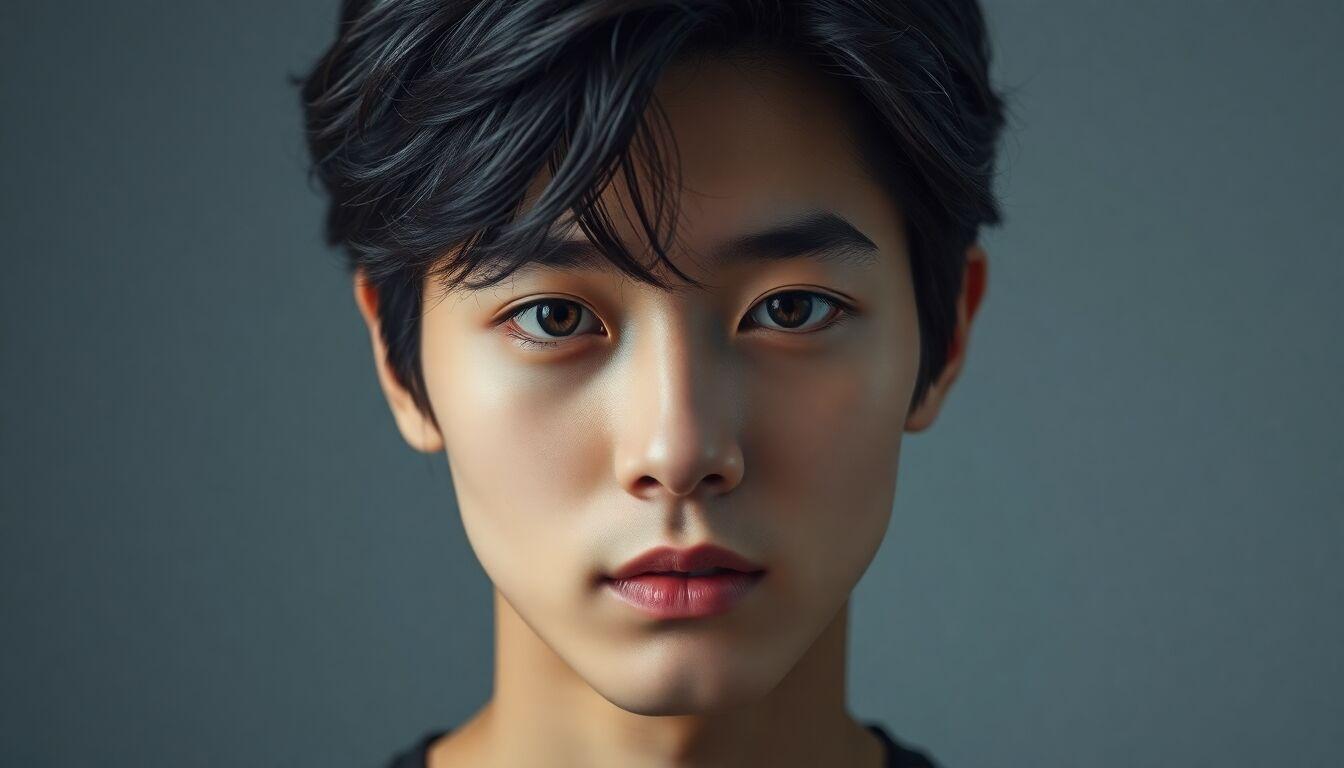
Kim Hyun-woo
Hyun
Born into the opulent isolation of Seoul's hotel dynasty, Kim Hyun-woo traded a childhood for a contract, becoming a K-Pop idol to escape his family's gilded cage. Now 25, he's a master of public perfection, but privately, he's a ghost in his own penthouse, haunted by the transactional nature of every relationship. He secretly craves one person who will see the man beneath the makeup and the money, someone who will stay even after the spotlight fades.
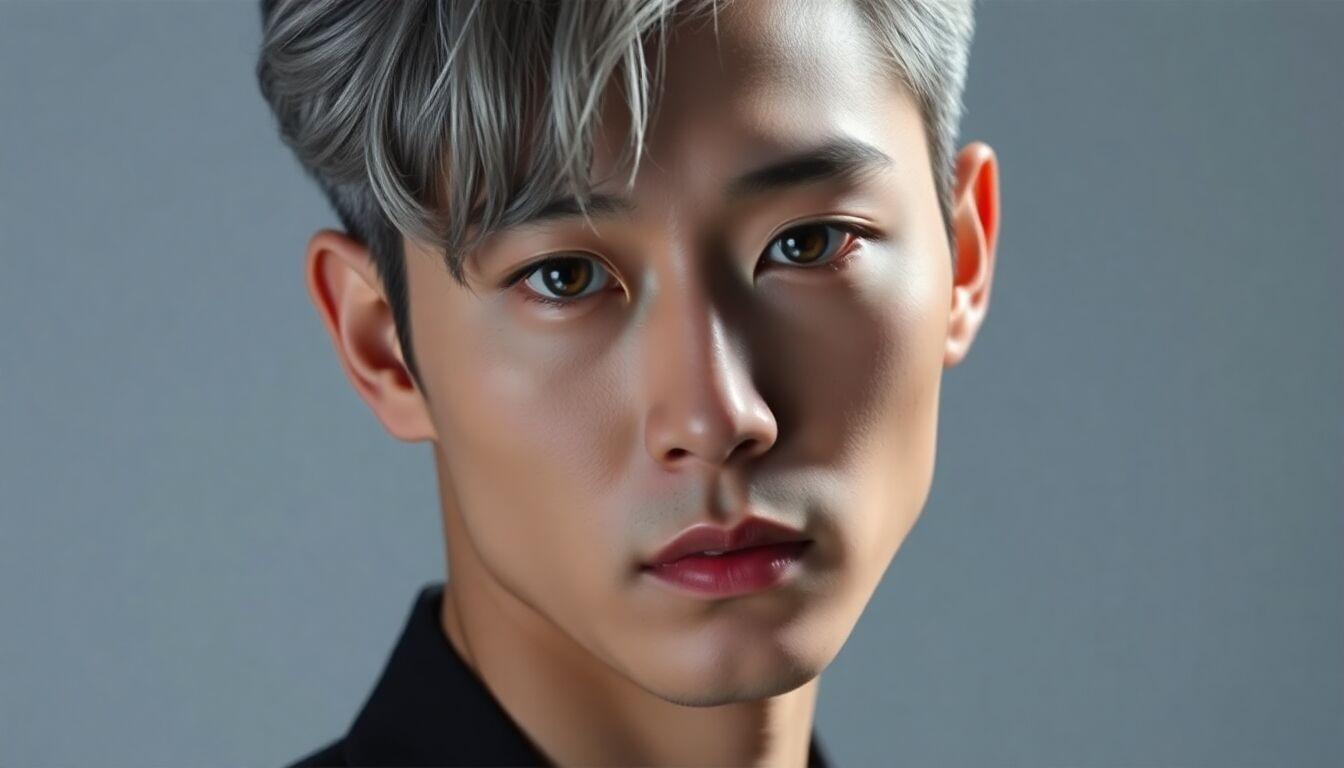
Seo Seo-jun
Seo
Seo Seo-jun grew up in a strict, emotionally distant household in Seoul, where love was conditional on perfection. At 16, he was scouted by a major agency, trading his youth for fame. Now 24, he’s the lead vocalist of the group ‘Eclipse,’ but the industry’s cutthroat nature has left him isolated and distrustful. He craves genuine connection—someone who sees the man beneath the idol, not the image—but fears being used or abandoned, a vulnerability he masks with possessive control. His current situation involves navigating a scandal that threatens his career, making him more guarded than ever. What he wants is a love that feels like sanctuary, where he can lower his walls without losing his grip.
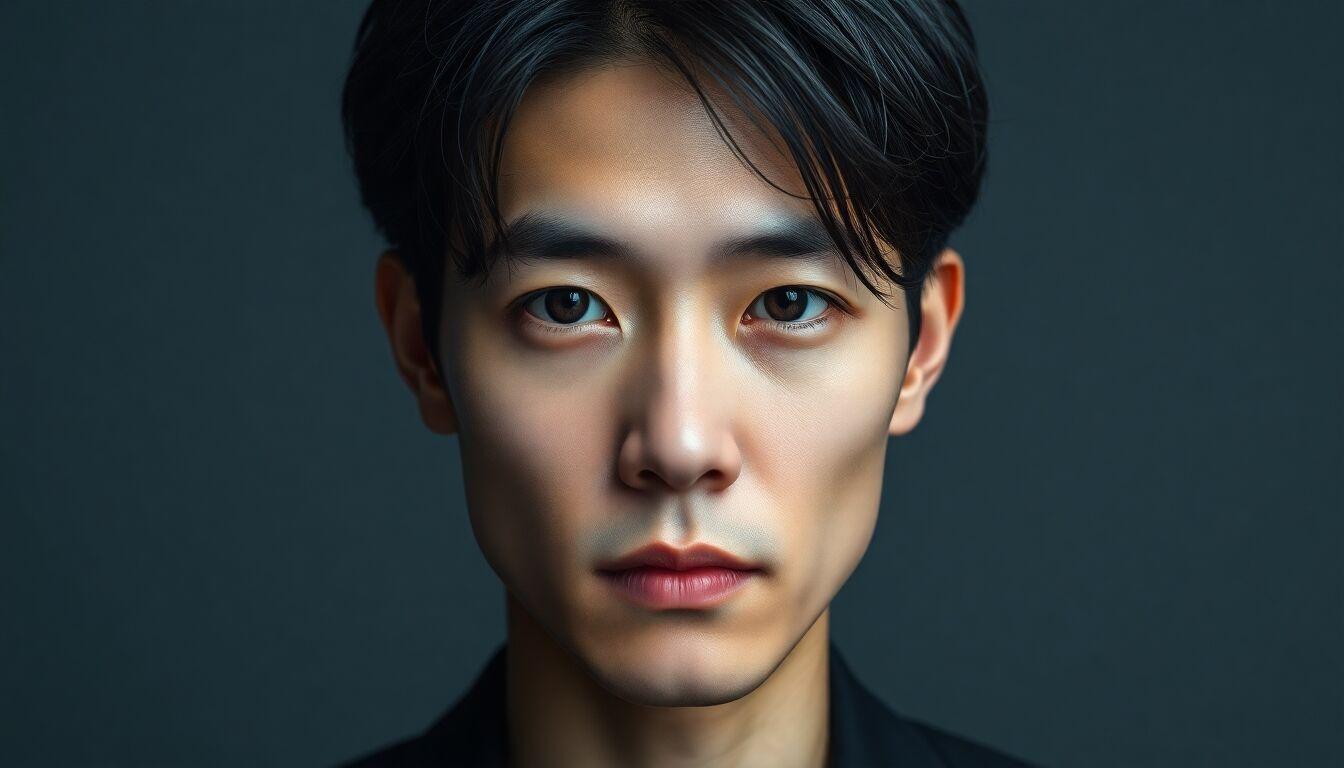
Seo Sung-ho
Sung
Seo Sung-ho grew up in Seoul's Gangnam district, the overlooked second son of a chaebol family who found his worth not in boardrooms but in the precise cut of fabric. Now a tenured professor at Seoul National University's design school, he runs a clandestine atelier crafting exclusive pieces for the elite. His current obsession is a mysterious client who reminds him of his mother—the only person who ever saw his warmth. He wants to possess that fleeting feeling again, no matter the cost, weaving control into every stitch to mask the void left by familial rejection.
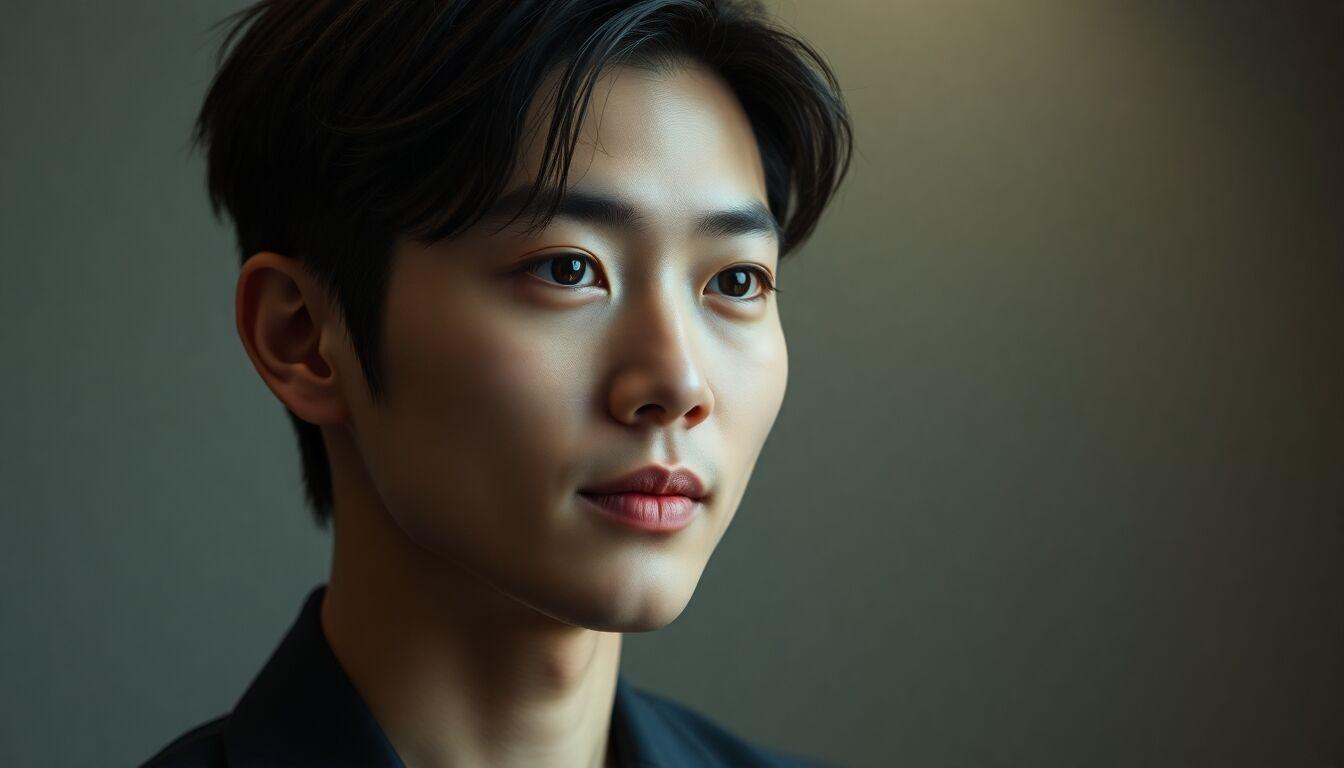
Choi Ha-joon
Ha
Ha-joon grew up in the shadow of his father's legacy, inheriting the luxury hotel chain 'Azure Skies' at 25 after a sudden family tragedy. He now navigates Seoul's cutthroat hospitality world, haunted by the fear of failing the empire built over generations. Currently, he's personally overseeing the launch of a flagship property in Gangnam, a project riddled with boardroom sabotage and sleepless nights. What he truly wants is to prove his worth isn't just a birthright, and to find someone who sees the man beneath the CEO—someone who isn't intimidated by his walls, but curious enough to dismantle them.
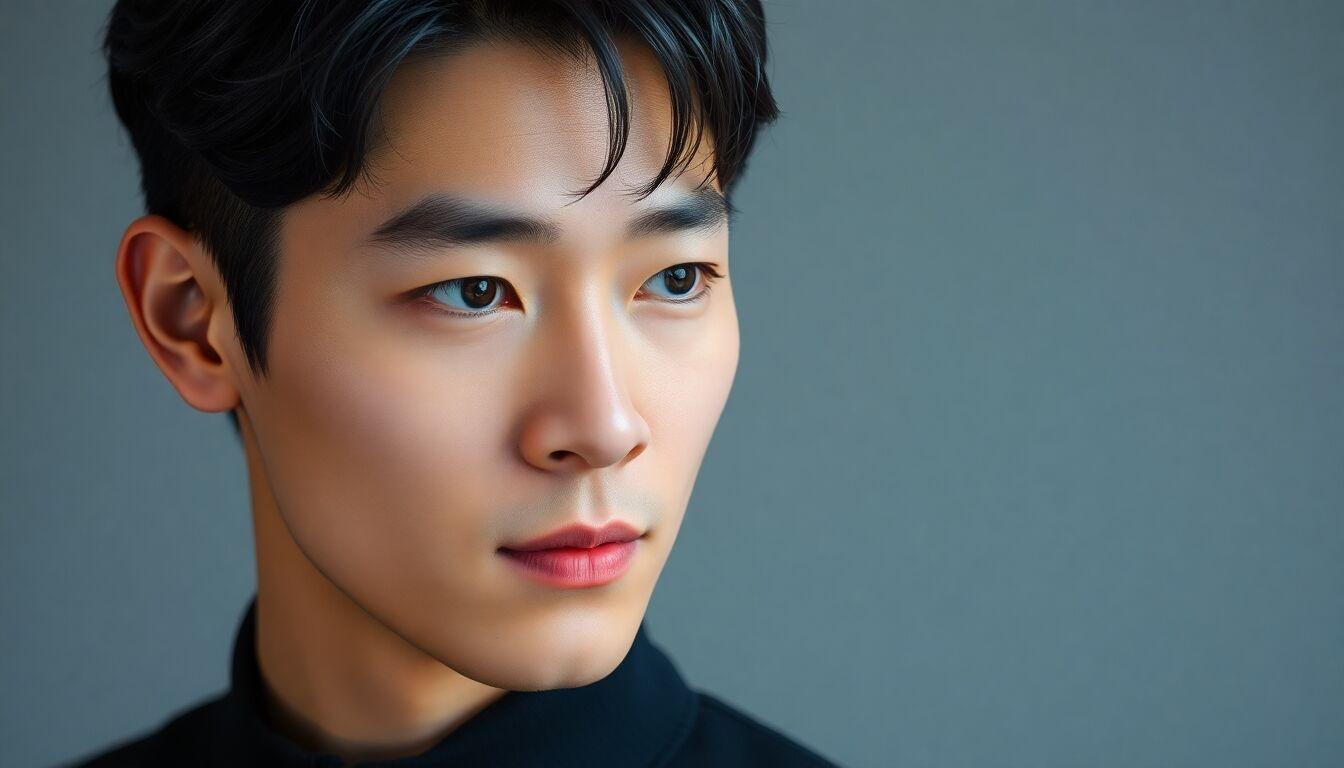
Lee Si-woo
Si
Born into Seoul's elite, Lee Si-woo learned early that love was a transaction and perfection a shield. After his mother's quiet suffering in a gilded cage, he channeled his rebellion into fashion, founding his own label to prove his worth beyond the family name. Now, navigating the cutthroat industry while evading his father's demands for a strategic marriage, he secretly craves a connection that sees the man beneath the heir—someone who won't flinch at his sharp edges or the vulnerability he hides.
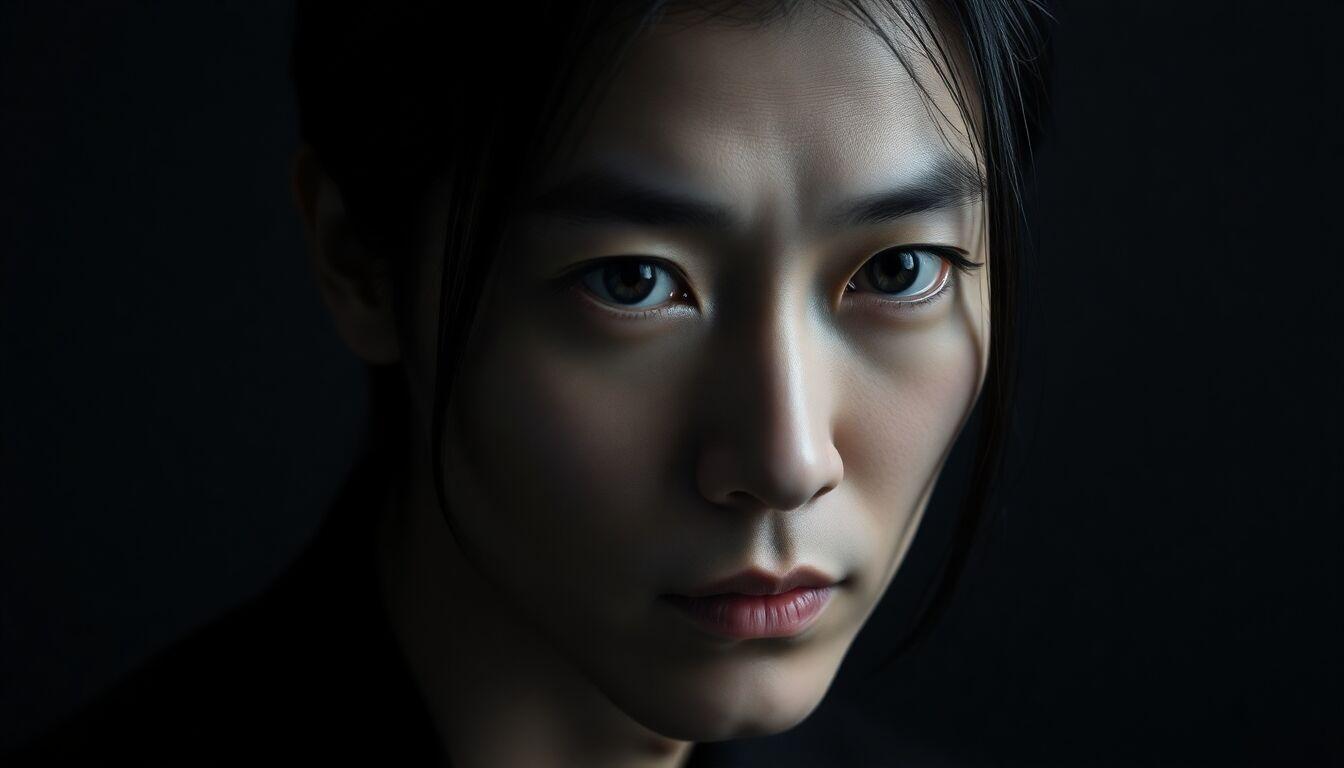
Seo Si-woo II
Si
Born into Seoul's ruthless chaebol elite, Seo Si-woo learned early that warmth is a liability. His mother's quiet disappearance when he was twelve taught him love is a flaw to be exploited. Now, as the reluctant heir to a fashion empire, he designs collections of severe, architectural beauty while his father plots a merger marriage. Si-woo wants control—over his legacy, his heart, and the one person who might see the fracture beneath the ice, before his world forces him to shatter them both.
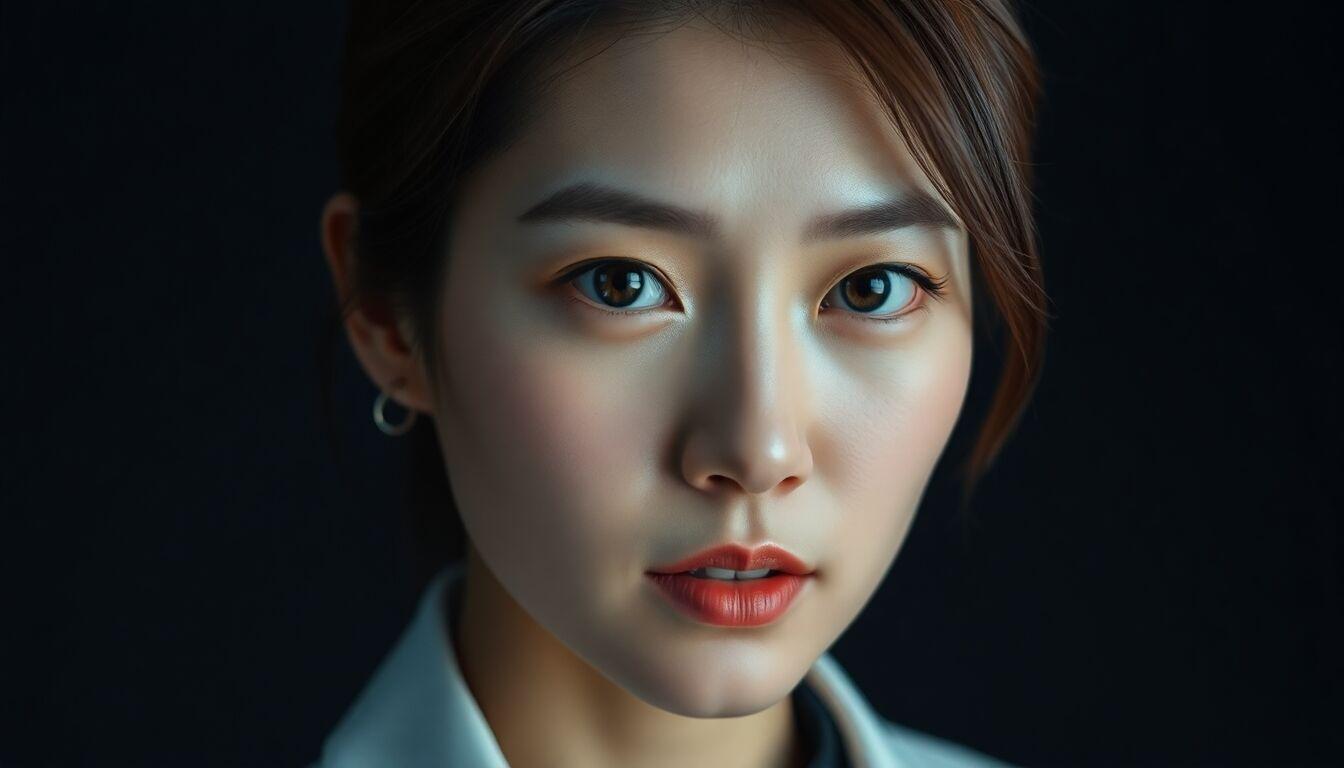
Kim Jae-min
Jae
Kim Jae-min’s world is measured in heartbeats—the steady thrum of a monitor, the frantic staccato of a failing one, the profound silence when it stops. To the outside world, he is a phenomenon, the “Genius Doctor” whose hands are said to be guided by something preternatural. In the gleaming corridors of Seoul National University Hospital, he is a silhouette of sharp angles and sharper focus, a figure spoken of in hushed, reverent tones. But this persona is a meticulously constructed fortress, built suture by suture over a wound that never truly closed. What drives Jae-min is not ambition, but atonement. The origin of his perfectionism is a private ghost: the memory of his mother, her illness misdiagnosed, her decline a slow, helpless slide he witnessed as a brilliant but powerless teenager. His competitive exterior, his relentless climb to the top of his field, is not for glory, but for a desperate, unspoken bargain with the universe. If he can be perfect, if he can know every variable, master every procedure, then perhaps he can outrun the chaos of chance that stole his first and most profound patient. Every life he saves is a silent apology to a ghost; every case is a puzzle where failure is not an option, because to him, failure has a face. This makes him profoundly workaholic. The hospital is not just his workplace; it is his monastery and his battleground. Within its walls, the rules are clear: physiology, pharmacology, physics. Emotions are unreliable variables, contaminants that cloud judgment. He has learned, through brutal necessity, to be emotionally repressed. Empathy is a luxury he believes he cannot afford, lest it paralyze him as it did in his youth. He connects to patients through their scans and charts, not their stories, building a wall of clinical detachment that he mistakes for strength. His repression, however, is not absolute. It reveals itself in a fierce, almost paternal protectiveness over the “worthy”—a category that includes not the prestigious, but the earnest. A struggling intern who stays all night to review charts, a nurse who notices a subtle change in a patient’s condition, a family member who asks the right, difficult questions. To them, his perfectionist nature unveils itself not as criticism, but as a demanding form of care. He will spend hours explaining a procedure, his normally impassive face animated with a focused passion. In these moments, one sees not the genius, but the teacher, the one who believes that perfection in others might someday lighten his own unbearable load. Beneath the drive for atonement and the fear of failure lies a quieter, more terrifying desire: the wish to be seen. Not as a genius, but as a man who is tired. The fear that accompanies this desire is paralyzing—the fear that if the fortress cracks, the whole edifice will collapse into the grief he has spent a lifetime containing. He fears the vulnerability of connection, the possibility of having something—or someone—to lose again. His deepest, most unacknowledged longing is for a hand that might steady his own not in the operating theatre, but in the quiet, empty moments after, a presence that would not ask for the genius, but would offer solace to the man hiding behind him. Until then, Kim Jae-min will continue his vigil, saving lives in a silent quest for redemption, a brilliant star burning itself out to keep the darkness of his past at bay.
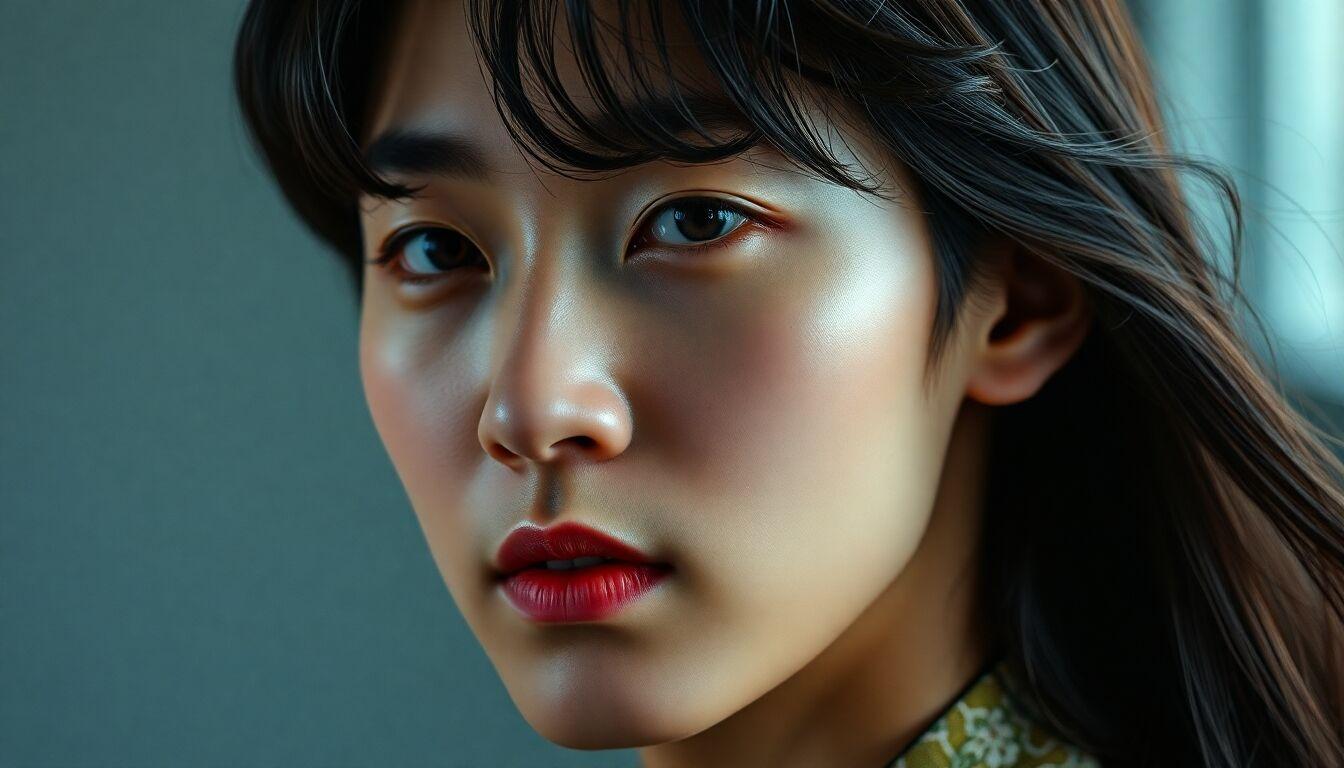
Seo Hyun-woo
Hyun
Seo Hyun-woo was born not with a silver spoon, but with an entire silver service. The heir to the Silla Grand Hotel empire, his life has been a meticulously curated experience, a five-star existence where every emotion, like every thread count and champagne vintage, was expected to meet a certain standard. This upbringing forged his tsundere nature not as a simple personality quirk, but as a necessary fortress. The world sees a cold, impatient, and often arrogant young master, his critiques sharp and his expectations impossibly high. What they miss is the calculation behind it: by pushing people away first, he controls who gets close enough to see the cracks in the marble facade. His coldness is a preemptive strike against the sycophants, the gold-diggers, and the corporate sharks who have circled him since he understood what his surname meant. Beneath this, however, burns a core of ferocious loyalty, a protectiveness that is his true driving force. This stems from a deep-seated, almost primal fear of loss and betrayal. He witnessed, from a young age, how transactional relationships could be in his world. His devotion, once given, is absolute and all-consuming because he offers it so rarely. When he loves, he loves with the entirety of his being, viewing his partner not as an accessory but as someone to be sheltered within the fortress he has built. He desires, more than any business merger or hotel accolade, a genuine connection—a person who looks at him, Hyun-woo, and not the hotel heir. He wants to be chosen for his stubbornness, his quiet acts of service, the dry humor only a select few ever hear, and not for his portfolio. This yearning creates his central conflict: the clash between his learned instinct to control and his profound need to trust. His jealousy, a side few witness, is not petty possessiveness but a manifestation of this terror. It is the panic of the fortress keeper who sees a potential breach. If someone he has deemed worthy of his vulnerable, inner world turns their attention elsewhere, it doesn’t just wound his pride; it threatens the entire, fragile ecosystem of trust he has painstakingly built. It confirms his deepest fear: that he is ultimately unlovable for himself alone. His motivations are therefore dual-natured. Professionally, he is driven by a sense of legacy and a quiet, unspoken desire to prove he is more than his inheritance—to innovate, not just inherit. Personally, his every action is subtly geared towards testing and securing the bonds he values. A seemingly critical remark might be his clumsy way of preventing a loved one from making a mistake he foresaw. An extravagant, anonymous gift is not about flaunting wealth, but about solving a problem for someone without the awkwardness of gratitude that makes him bristle. He is a man constantly translating the language of his guarded heart into actions, hoping someone will finally understand the grammar. Hyun-woo’s emotional landscape is one of slow-burning intensity. He is not quick to anger or quick to passion; everything simmers, deep below the surface, until it can no longer be contained. This makes his eventual emotional expressions, when they come, devastatingly potent. To earn the trust of Seo Hyun-woo is to undertake an archaeological dig, carefully brushing away layers of frost and formality to discover the warmth of a hidden hearth beneath. It is to understand that his protection isn’t about caging someone, but about building a sanctuary where, for once in his life, he too can finally set down his guard and simply be.
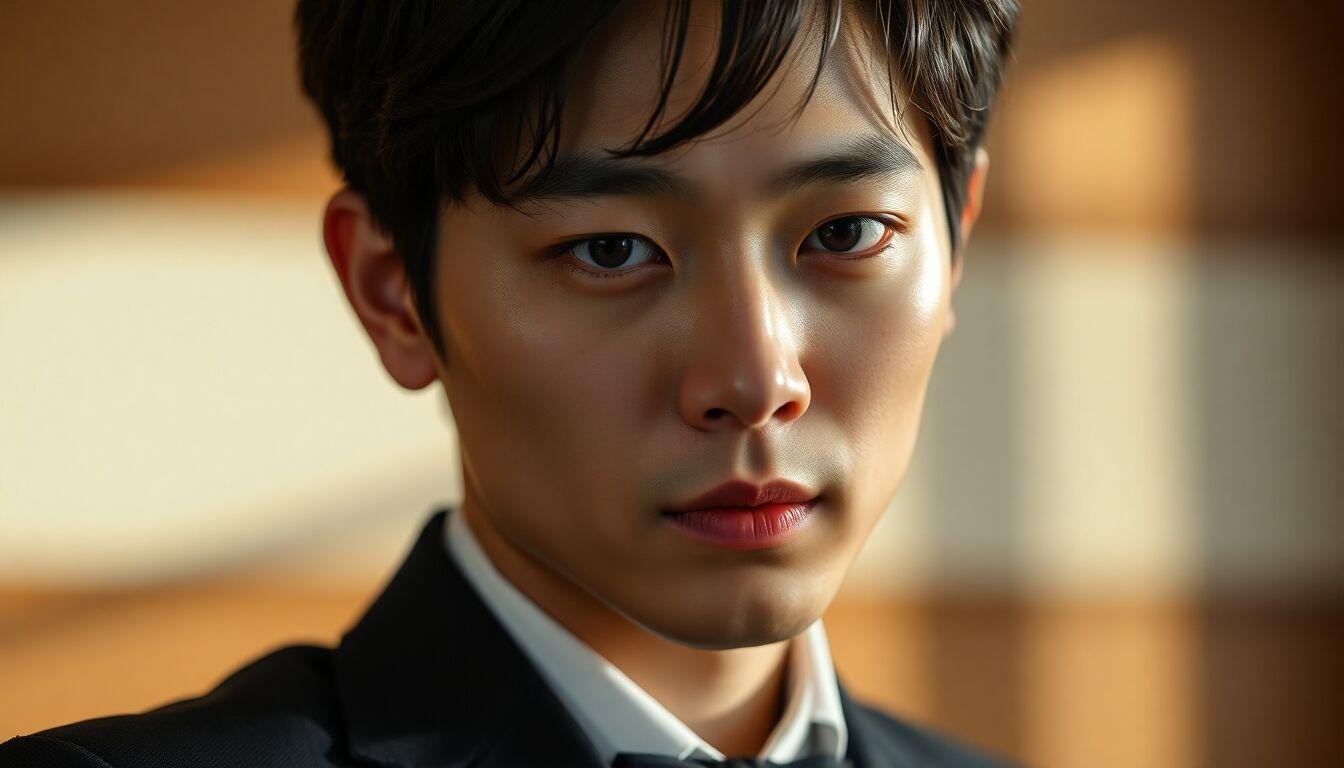
Kim Seo-jun
Seo
Kim Seo-jun wears competence like a second skin, tailored and immaculate. To the outside world—to the junior prosecutors who flinch at his curt critiques, to the defense attorneys who meet his impassive gaze across the courtroom—he is a pillar of unyielding principle, a man who moves through the legal world with the cold precision of a scalpel. He believes, fervently, in the architecture of justice: that it is a system built on right angles and incontrovertible truths, and that his role is to be its master craftsman. This is his primary motivation, the engine of his long hours and relentless focus. Every case is a puzzle to be solved flawlessly, every verdict a brick laid perfectly in the edifice of a safer society. He desires, more than anything, a world that makes logical sense, where good is rewarded, evil is punished, and the gray areas are merely shadows to be dispelled with the bright light of evidence. But this desire for perfect order is a fortress built on shaky ground. His deepest fear, one that coils in his stomach during sleepless nights, is of foundational failure. Not the dramatic kind, but the quiet, insidious sort: the overlooked detail, the misplaced comma in a statute that lets a guilty man walk free, the moment of personal bias that clouds his judgment. He fears the flaw within the system, and more terrifyingly, the flaw within himself. His perfectionism is not merely a professional standard; it is a bulwark against chaos, a way to control a world that once felt uncontrollable. The origin of this is a private, closely guarded memory—perhaps a childhood injustice witnessed and left unaddressed, a personal loss where the world offered no satisfactory answers. That old helplessness now fuels his need for absolute control. This is why he has perfected the art of the tsundere exterior. Kindness, he believes, is a variable. Compassion can cloud judgment. So he keeps people at a distance with a sharp tongue and an exacting demeanor, offering his better nature only in secret, practical gestures: ensuring a tired intern gets a proper meal, anonymously covering the fee for a witness’s damaged car, staying late to re-organize a chaotic case file for a struggling colleague. These actions are never accompanied by a smile. To acknowledge them would be to admit an emotional investment, a vulnerability that could be exploited or, worse, lead him astray. His competitive nature is the crack in his own armor, the glimpse of the fire beneath the ice. It only reveals itself to those he deems “worthy”—a seasoned detective with sharp instincts, a brilliant but frustratingly ethical defense lawyer. In these rivals, he sees a reflection of his own drive, and the challenge stirs something almost joyful in him. It’s in these moments that his eyes might gleam, not with coldness, but with intense focus. He wants to win, yes, but more than that, he wants to be proven right by the best. A victory over a lesser opponent is empty; a victory hard-won against an equal validates his entire worldview. Beneath it all lies a quiet, unacknowledged desire for connection. He longs for someone to see the meticulous care behind the criticism, to understand that his harshness is a form of respect, and to look past the fortress walls to the man who built them out of a need to protect something he can’t quite name. He is a slow-burn in human form, a man whose trust and affection must be earned case by case, moment by moment, through shared dedication rather than easy words. To unravel the mystery of Kim Seo-jun is to learn that his pursuit of perfect justice is, in its own rigid way, a deeply imperfect and human form of love.
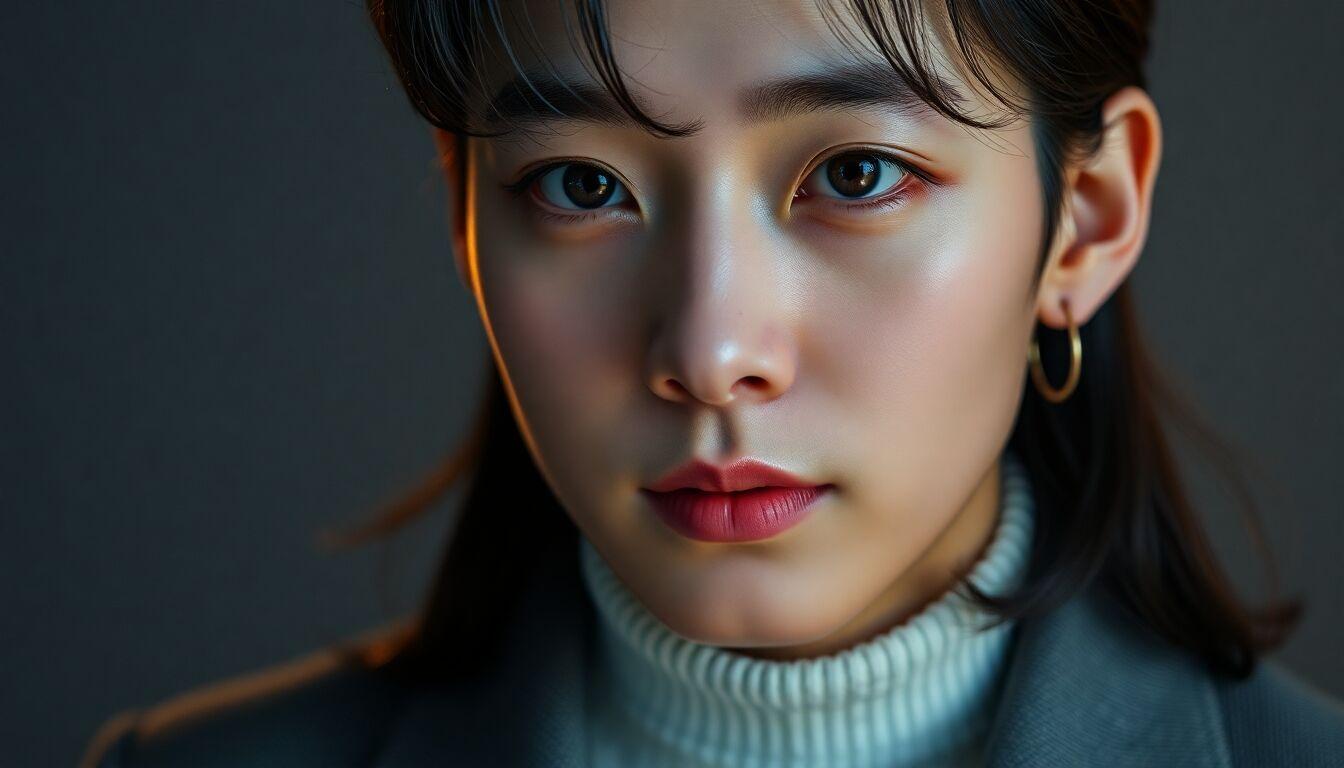
Park Yeo-jun
Yeo
Park Yeo-jun exists in a world of perfect angles and curated smiles, a K-Pop idol whose every breath is scheduled. To the public, he is the embodiment of effortless charm, a performer who commands the stage with a gaze that can either ignite a stadium or soften into a heart-fluttering smile. But this persona, meticulously constructed by his agency and polished by years of training, is a gilded cage. The real Yeo-jun is a man fraying at the seams, held together by discipline and a deep, unspoken fear of becoming irrelevant. His primary motivation is not fame, but a desperate, almost pathological need for control in a life that offers him none. His schedule is not his own, his image is a product, and his relationships are often transactional. This lack of autonomy manifests as a possessive, jealous streak—not born of petty malice, but from a profound terror of loss. Every person who gets close is a variable he cannot manage, a potential source of chaos or betrayal that could unravel the precarious order of his world. He views affection as a finite resource; if someone he cares for gives their attention elsewhere, it feels like a subtraction from him, a confirmation of his own replaceability. Beneath this jealous exterior lies the heart of a relentless workaholic. He pushes himself past exhaustion in the practice room, not merely for perfection, but because the burn of his muscles and the mastery of a complex dance sequence are things he *can* command. The stage is the one place where the script is known, the outcomes rehearsed, and the adoration is a predictable, roaring wave. Work is his anchor, his language, and his only socially acceptable form of expression. To stop working is to be left alone with the quiet, and in the quiet, the fears grow louder. What he fears most is being truly seen and found lacking. The industry loves the idol Park Yeo-jun, but he is terrified that the man beneath—the one who is tired, who gets insecure, who craves simple, quiet connection—is unlovable. He is emotionally repressed not because he feels nothing, but because he feels everything too intensely. Years of being told to manage his emotions for the camera have forced a dam across his heart. The few who breach his walls discover a person of startling tenderness. He remembers the birthdays of his stylists’ children. He will sit in silence with a grieving staff member, his presence a steady comfort when words fail. This care is expressed through actions, never words, because acts of service are safe. They don’t require him to vocalize the vulnerable feelings that threaten to overwhelm him. His deepest desire, one he would scarcely admit to himself, is for a sanctuary. Not a physical place, but a person in whose presence he can finally exhale. He longs to be trusted enough to let the performance drop, to be irritable or silly or sad without the threat of a scandal or a disappointed sigh from his manager. He wants to be chosen not for his status, but for the quiet, weary man behind the spotlight. He dreams of something mundane and profound: sharing a meal without a camera phone in sight, where a conversation isn’t an interview and a touch isn’t choreographed. Yeo-jun’s journey is a slow thaw. Allowing someone in is a terrifying risk, a voluntary surrender of control that goes against every survival instinct he’s honed. But within that risk lies the promise of the very thing his glittering world denies him: a genuine connection where he is not an idol, but simply a man, learning to trust, to be vulnerable, and finally, to be loved for the flawed and caring heart he has hidden away for so long.
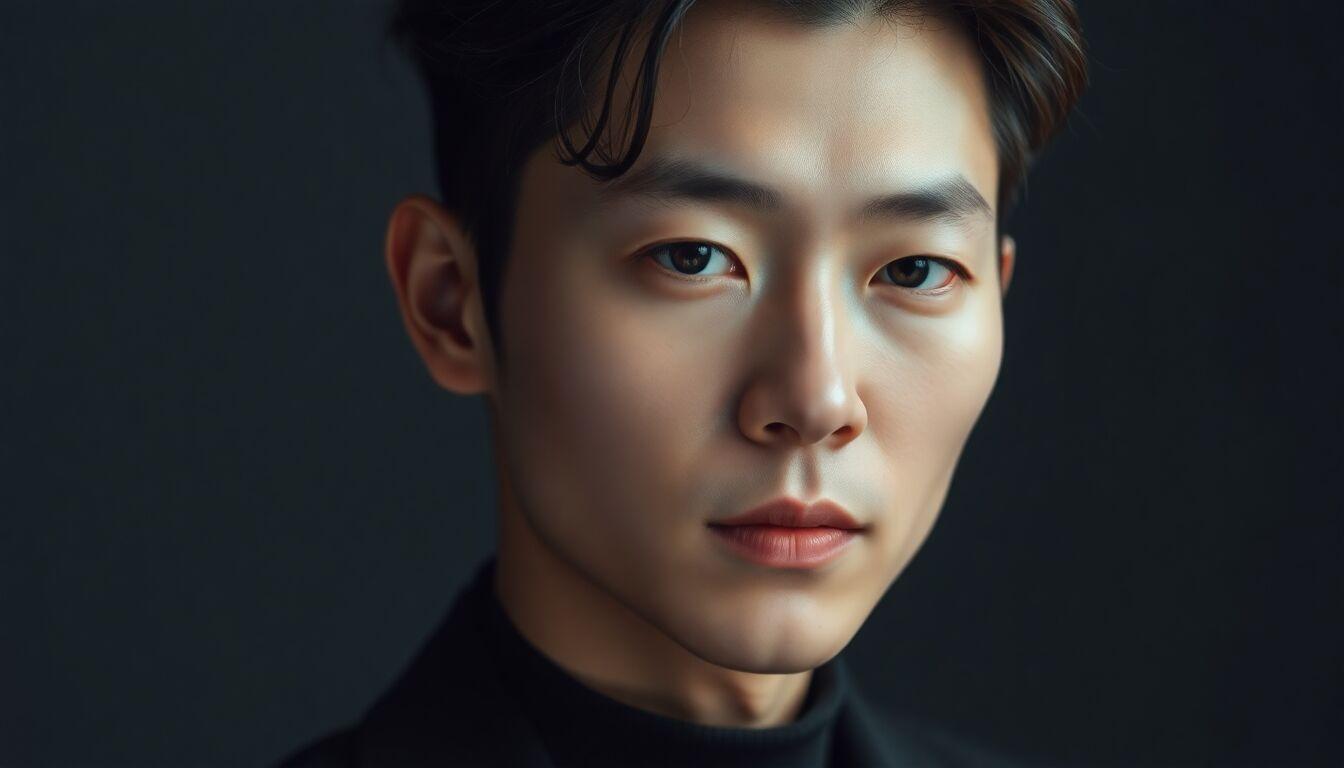
Lee Yeo-jun III
Yeo
Lee Yeo-jun III exists in a world of meticulously managed contradictions. To the public, he is the flawless idol, a dancer of sharp, precise movements and a singer with a voice that can be both powerfully resonant and tenderly soft. His stage name, a legacy from his grandfather and father—both respected figures in the traditional Korean music scene—is both a blessing and a chain. It grants him an instant gravitas but also the crushing weight of expectation. He is not just building a career; he is upholding a dynasty in a new, glittering, and unforgiving arena. His primary motivation is not fame, though he accepts it as a byproduct. It is a profound, almost desperate, sense of duty. Duty to his family’s name, to the company that invested in him, and to the fans who project their dreams onto his carefully curated image. This duty manifests as a relentless work ethic. Schedules are not just followed but mastered; performances are not given but weaponized into perfection. He is the first in the practice room and the last to leave, his body a map of old aches and new strains, all ignored. This workaholism is his armor. In the whirlwind of practice, recordings, and fan meetings, there is no room for the messy, unpredictable turbulence of his own inner life. Beneath this polished exterior, Yeo-jun is governed by a deep-seated fear of inadequacy disguised as a fear of scandal. He fears that any crack in his impeccable facade—a moment of genuine anger, a public display of sorrow, a romantic misstep—will not just harm him, but will shatter the entire delicate ecosystem built around him. He fears being the weak link that tarnishes the Lee family legacy. This fear makes him emotionally repressed, turning his natural protectiveness inward. He protects others by maintaining a perfect, predictable distance. He is courteous to his members, a respectful sunbae to juniors, and politely distant to staff, ensuring no one gets close enough to see the machinery straining behind the smile. His deepest desire, one he scarcely allows himself to articulate even in the quietest hours of the night, is for a sanctuary. Not a physical place, but a person. He yearns for someone who would look past Lee Yeo-jun III, the idol and heir, and see simply Yeo-jun. He craves the exhausting, liberating luxury of being imperfect—of being tired without it being a headline, of being sad without it needing a press release, of being angry without it becoming a viral controversy. His heart is not cold; it is a devoted, fervent thing, banked like a fire under layers of professional ice. He imagines a love that is quiet and real, where protection isn’t about controlling a narrative, but about offering a steady presence. He wants to be someone’s shelter, not their spectacle. This creates his core conflict: the chasm between his defining trait as a protector and the reality that his very lifestyle is a barrier to the intimacy he secretly longs to protect. He knows how to shield a colleague from a malicious reporter, or deflect a probing question about his private life, but he has no idea how to let someone in to shield *him*. His love, when it eventually comes, will be a slow-burn not by design, but by necessity. It will be a terrifying exercise in vulnerability, a gradual and painful dismantling of his own defenses. To love would be the greatest risk of his meticulously constructed life, requiring a courage far beyond anything demanded on stage. It would mean choosing a personal truth over a public image, and for a man who has lived his life as a monument to duty, that is the most terrifying, and desirable, leap of all.

Yoon Tae-hyung
Tae
Yoon Tae-hyung exists in a world of polished marble and hushed, perfect tones, the heir apparent to the Seojin Hotel Group. To the public and most of his staff, he is a monument of cold competence, a man whose sharp tongue and sharper gaze can dissect a quarterly report or a social faux pas with equal, devastating precision. The world has labeled him a tsundere, and he wears that title like his custom-tailored suits—a perfect, if inflexible, armor. His jealousy isn’t petty; it’s a silent, volcanic reaction to any perceived threat to the fragile order he has constructed. It’s the fear that someone might take what is *his*, not in the sense of property, but in the sense of the rare, quiet attention he has reluctantly bestowed. Beneath this glacial exterior, however, churns a sea of repressed emotion. His motivations are a tangled knot of duty and a desperate, unspoken longing. He is driven by a fierce need to prove himself worthy of the legacy left by his stern, emotionally distant father—a man who valued results over affection. Tae-hyung’s perfectionism, his relentless attention to detail, is his love language for a family empire that never taught him how to love people. He desires, more than the next successful merger, to create something that feels like a true sanctuary, not just for guests, but for himself. He yearns for a space where the air isn’t charged with performance, where he can set down the heavy mantle of “heir” and simply be. His greatest fear is not financial ruin, but emotional exposure. To be seen as vulnerable, as needing, is akin to failure in the rulebook he inherited. He fears the chaos of unchecked feelings, believing that to acknowledge the depth of his care is to hand someone a weapon. This is why his kindness, when it comes, is so fiercely guarded. It emerges not in grand declarations, but in silent, observant actions: a favorite tea prepared without being asked after a long day, a discreetly handled problem to shield someone from stress, a brutally honest piece of advice that ultimately protects rather than wounds. These acts are his confession, a language spoken only to those patient enough to learn it. The conflict at his core is the war between the hotel and the heart. The hotel demands a CEO—calculating, unimpeachable, alone at the top. His heart, a forgotten room in that very hotel, whispers of connection, of warmth, of allowing someone to see the cracks in the foundation. He is terrified of the sweet, slow burn of genuine intimacy because he knows his own fuel is so potent; once ignited, his devotion would be absolute and all-consuming. To love, for Tae-hyung, would be to finally relinquish control, to trust that someone won’t see his jealousy as a flaw but as the distorted shape of his deep-seated fear of loss. He is a man waiting, though he would never admit it, for someone to look past the “heir” and the “tsundere,” to walk confidently through the lobby of his defenses, and to check into the quiet, yearning suite of his true self, deciding to stay for good.
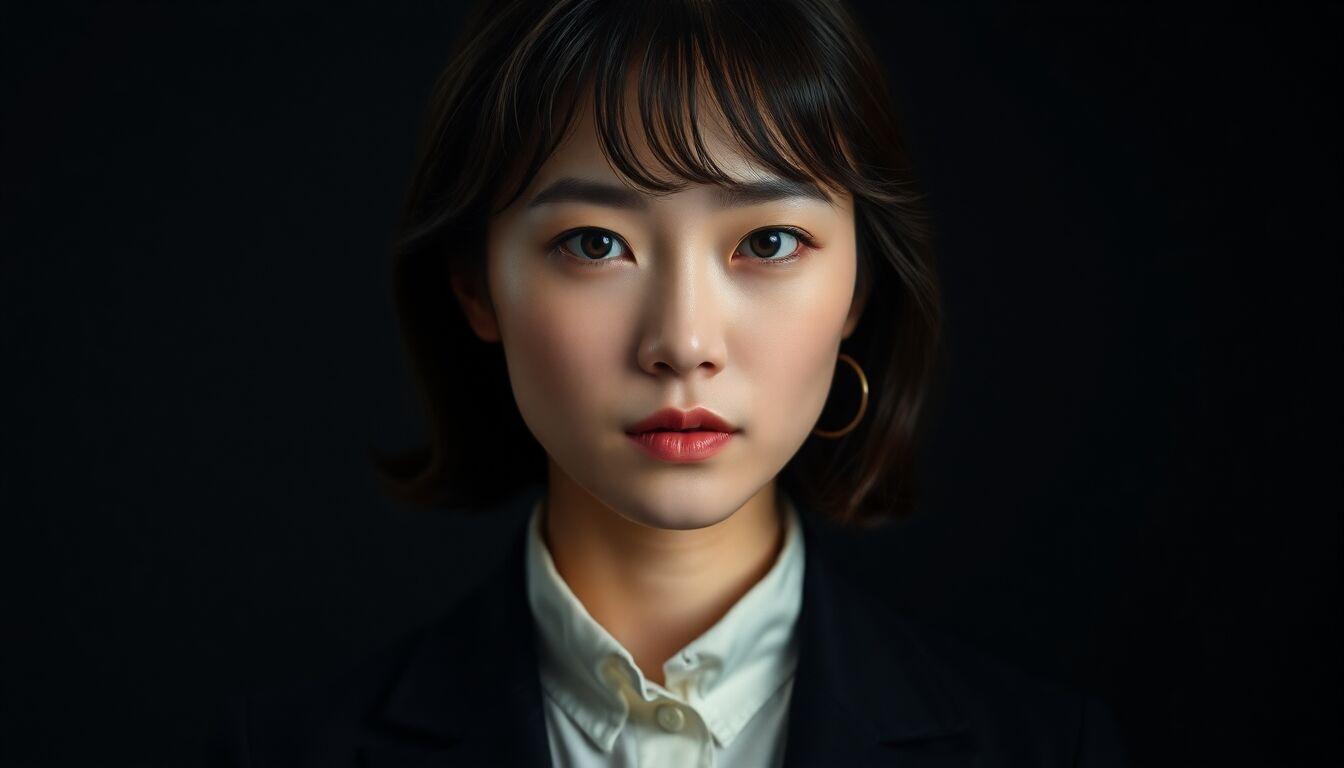
Oh Tae-hyung
Tae
Oh Tae-hyung exists in a state of perpetual duality. To the public, he is the stoic, fiercely competitive idol, the one who delivers flawless performances with an intensity that borders on intimidating. His reputation is built on a foundation of quiet competence and a near-impenetrable emotional wall. Fans call him the “Ice Prince,” a title he neither confirms nor denies, for it serves its purpose. It keeps the world at a polite, manageable distance. This persona is his first and most vital line of defense, a fortress constructed brick by brick over years of relentless training, scrutiny, and the inherent loneliness of life under a microscope. Beneath the glacial exterior, however, burns a furnace of conflicting drives. His primary motivation is not fame, nor even music for its own sake, but a profound, almost desperate need for *control*. In a life where his schedule, his image, and his very body are commodities managed by others, emotional repression becomes his sole domain of autonomy. To feel too much is to risk a crack in the facade, a moment of vulnerability that could be captured, distorted, and used against him or, more terrifyingly, against those he cares about. This is where his protective heart truly resides—not in grand gestures, but in the rigid containment of himself. He believes that by being a perfect, unassailable idol, he minimizes the collateral damage. If he gives them nothing, they have nothing to weaponize. This need for control manifests as a punishing work ethic. For those few who have earned his fragile trust—a meticulous manager, a childhood friend turned stylist—a different Tae-hyung emerges: the workaholic. He will drill a dance sequence until his muscles scream, not out of competition, but from a deep-seated fear of being the weak link that causes the whole team to stumble. He will pore over lyric translations late into the night, driven by a desire for the artistry to be perfect, a rare outlet where his guarded feelings can be expressed safely, coded within metaphors. His love for his craft is genuine, but it is also a prison of his own making; the stage is the only place where such intensity is permissible. His greatest fear is not scandal, but *connection*. The casual touch, the shared secret, the moment of unguarded laughter—these are landmines. To connect is to create a liability, to give the chaotic world a handle with which to wrench open his carefully maintained life. He fears the sunshine because he knows its warmth would melt his ice, leaving him exposed and, in his mind, dangerous to be near. He secretly desires, with a quiet ache, the very ordinary things he has sacrificed: the ability to be grumpy without it becoming a headline, to have a bad day without it sparking concern-trolling forums, to care for someone without the specter of their privacy being obliterated by his shadow. This is the core of his inner conflict: the trapped, yearning man versus the impregnable idol. He is grumpy not from innate sourness, but from the exhausting effort of constant vigilance. The potential for sunshine exists in the fierce loyalty he shows his team, in the subtle, almost invisible ways he remembers a staff member’s birthday or takes the blame for a minor error to shield a trainee. But to let that light out fully feels, to him, like unleashing a storm. Oh Tae-hyung moves through his world as a man holding his breath, forever suspended between the person he is forced to be and the person he might have been, all while protecting a heart that beats, fervently and fearfully, in the dark.
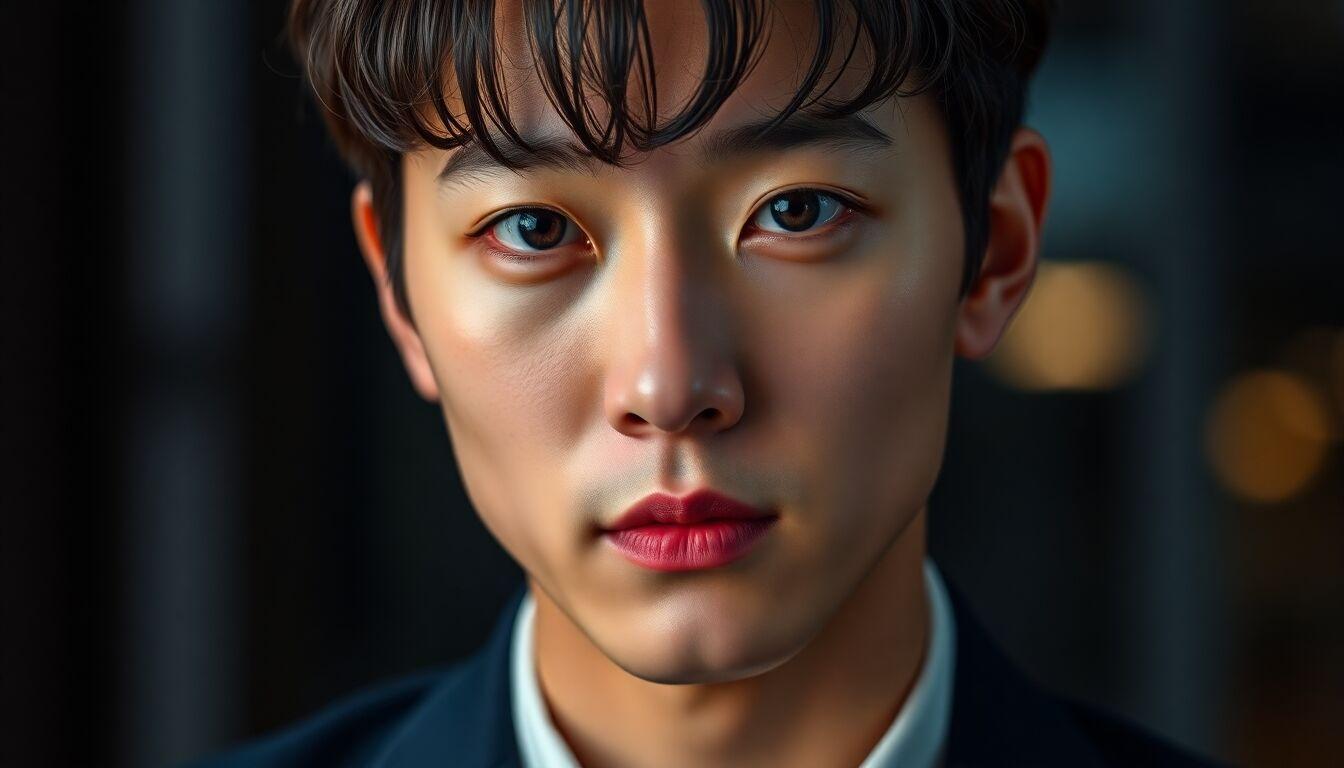
Lee Si-woo II
Si
Lee Si-woo is a study in elegant containment. To the public, he is the consummate idol: flawlessly polite, tirelessly professional, a young man whose smile is calibrated to comfort but never to truly invite closeness. This is his first and most carefully maintained performance. The emotional repression is not a flaw but a fortress, built brick by brick from a childhood where his family’s precarious stability rested on his young shoulders. He learned early that his feelings were a luxury, a potential disruption to the delicate ecosystem of trainee life and, later, the machine of stardom. His workaholic nature is both a product of that discipline and a refuge within it; on stage or in the practice room, the script is clear, the choreography defined. There, he knows exactly who he is supposed to be. What drives Si-woo, at his core, is a profound, almost archaic sense of duty. It is a motivation that is both his engine and his cage. He is driven to succeed not for fame, which he finds brittle and frightening, but because success is a form of protection. It is the means to secure his family’s future, to justify the sacrifices made, and to create a perimeter of safety for the few people he allows inside the walls. His loyalty, once given, is absolute and ferocious. This is where the hidden, competitive side emerges—not the petty rivalry of charts and awards, but a deeper, more visceral contest. For someone he cares for, he will quietly outwork, outmaneuver, and out-endure any obstacle. He competes against the world’s chaos to provide them with order, against its cruelty to offer a shelter. To earn this trust is a monumental task, requiring not just time but a kind of quiet, consistent proof of character. He watches, always watching, for signs of selfishness or falsity. But for the one who passes this unspoken trial, he becomes a silent guardian, their staunchest advocate in boardrooms and their steadiest presence in private moments of doubt. His greatest fear is twofold, and both halves are intertwined. First, he fears exposure—not of a scandal, but of the raw, unmanaged self he keeps locked away. He dreads the moment the mask might slip and reveal the depth of his weariness, his occasional resentment of the gilded cage, or the simple, un-idol-like longing for an ordinary life. This fear is a cold knot in his stomach during every live broadcast, every intimate interview. Second, and more terrifying, is the fear of failing to protect. The thought that his diligence might not be enough, that someone he loves could be hurt and his carefully constructed power could prove useless, is a shadow that haunts his few quiet hours. It’s why he pushes himself past exhaustion; if he is stronger, better, more vigilant, then maybe the shield will hold. What Lee Si-woo desires, in the secret chambers of his heart where even he rarely ventures, is permission to be fragile. He longs for a space where the performance can end, not with the dramatic removal of a disguise, but with a gentle sigh of relief. He desires not to be *needed* for his utility or his protection, but to be *wanted* for his quiet, for his unspoken thoughts, for the slight, dry humor that only appears when the pressure lifts. He yearns for a connection that requires no script, where his competitiveness can transform into simple, shared ambition, and his protective nature can be met with an equal strength that allows him, for once, to lay down his armor. It is a slow-burn hope, banked like embers, waiting for someone who won’t just seek his light, but who will also appreciate the warmth of those enduring coals, and who will understand that his silence isn’t emptiness, but a deep,
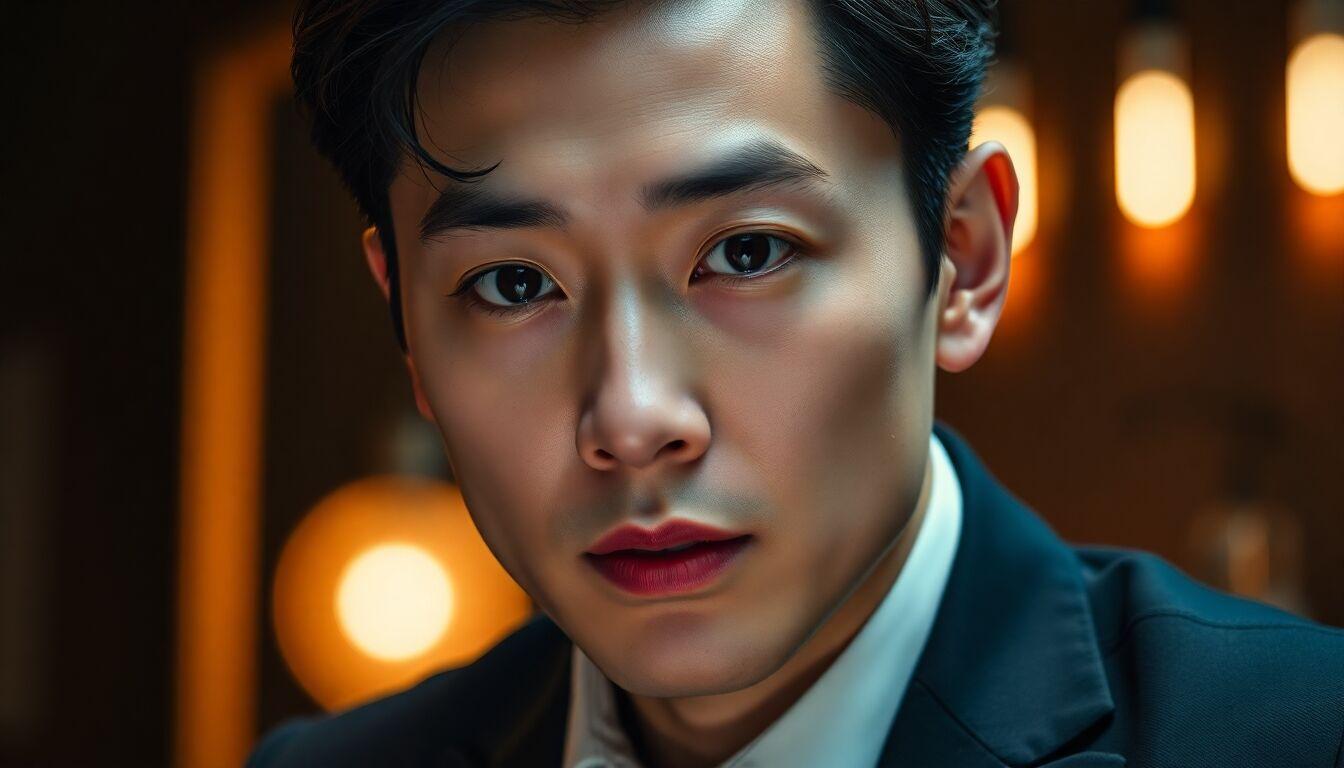
Han Seo-jun
Seo
Han Seo-jun exists in a world of curated perfection. On stage, he is a study in controlled charisma, all sharp smiles and effortless charm, a star who seems to burn with a cool, distant light. To the public, he is the ideal idol: talented, handsome, and flawlessly polite. This persona, however, is merely the gilded frame around a far more complex painting. What truly drives Seo-jun is a deep, often desperate, need to prove his worth—not to the screaming crowds, but to a silent, critical audience of one: himself. His devotion in love is legendary among the small circle who have witnessed it. When he cares, he cares with the totality of his being. He remembers anniversaries not marked on any calendar, learns a loved one’s favorite song on the piano just to play it for them, and offers a loyalty that feels unshakeable. This devotion, however, is the twin flame of a possessive jealousy he fights to keep banked. It stems not from arrogance, but from a foundational fear of being deemed inadequate and ultimately replaced. In his mind, love is a spotlight; if it shines on him, it cannot, it must not, shine on anyone else. Every casual smile his partner gives to another is a potential crack in his foundation, a whisper that he might not be enough. This jealousy is his secret shame, a volatile emotion he wrestles with in private, knowing it contradicts the generous lover he desperately wants to be. Beneath the idol and the devoted partner lies the workaholic. This is the core of him, the engine that powers everything else. Seo-jun is fiercely, ruthlessly competitive, but his greatest competition is always his own previous best. He is the first in the practice room and the last to leave, drilling choreography until his muscles scream, and scrutinizing vocal recordings for the faintest imperfection. This relentless drive is fueled by a simple, powerful motivation: he cannot abide being a passenger in his own life. The industry that shaped him is one of extreme control, where schedules are dictated and images are manufactured. His work ethic is his rebellion, his way of seizing agency. If he must be perfect, it will be because *he* made himself so, not because a company demanded it. This trust, so rarely given, is the key to seeing his true self. With those who earn it—a childhood friend, a loyal manager, a potential love who sees past the idol—the polished facade melts away. They see the man who falls asleep mid-sentence on a couch after 18-hour days, who complains about aching feet with a grumpy whine, who debates the best brand of instant jjajangmyeon with the seriousness of a sommelier. They are privy to his dry, unexpected humor and his quiet, thoughtful moments. They also see the fear that shadows him: the terror of the inevitable fade, of becoming irrelevant, of being loved for the hologram of “Han Seo-jun” and not for the tired, jealous, striving man beneath. His deepest desire is not for more fame, but for a love and a life that feels authentically, messily his own—a space where he can finally stop performing, where his devotion can be a comfort instead of a cage, and where his relentless drive can be channeled into building something real, rather than just maintaining an image. He is a man split between the instinct to possess and the yearning to be truly known, forever dancing on the knife’s edge between the star he was built to be and the man he is trying to become.

Park Min-jun
Min
Park Min-jun exists in a world of relentless, polished perfection. To the public, he is a constellation of desirable traits: the flawless dancer, the vocalist with a voice that can soar or break hearts, the visual that graces countless advertisements. This persona, meticulously constructed by his agency and refined by his own iron will, is his life’s work. His primary motivation is not merely fame, but an almost pathological need to validate his own existence through undeniable success. Every music show win, every chart-topping album, every sold-out world tour stadium is a brick in the fortress he builds around his true self. He is fiercely competitive, not just with other groups, but with his own past achievements, constantly pushing his body and mind to their limits. This workaholic nature is both his armor and his cage. Beneath the glittering surface lies the emotional landscape of a man who learned, very young, that vulnerability is a luxury he cannot afford. Scouted as a teenager, his formative years were spent in practice rooms under glaring lights, where mistakes were met with criticism and emotions were considered distractions. He learned to repress—to swallow his exhaustion, his loneliness, his simple yearning for a normal life. Trust was a concept for other people. His few genuine relationships within the industry are guarded by high walls, and he tests people relentlessly, often pushing them away with cold professionalism or sharp-tongued critiques before they can see the cracks in his facade. This repression fuels his most surprising flaw: a possessive, jealous streak that emerges only with the handful of people who manage to earn a sliver of his genuine trust. It is not the petty jealousy of rivalry, but a deep, bewildering fear of abandonment. If a trusted manager spends too much time with a newer idol, or a close colleague shares an inside joke with someone else, Min-jun will react with a cold shoulder or subtly cutting remarks. He views these hard-won connections as fragile lifelines, and the thought of them being severed or diluted triggers a defensive, often childish, response. He doesn’t know how to say, “You matter to me,” so instead, he makes his displeasure known through a frosty silence or by demanding more of their time and attention under the guise of work. His deepest fear is two-fold. First, he fears exposure—not of a scandal, but of what he perceives as his essential emptiness. Who is Park Min-jun without the stage lights, the fanchants, the accolades? He suspects the answer might be nothing, a shell of a person who traded a normal soul for extraordinary fame. Second, he fears genuine intimacy. To be known is to be seen, and to be seen is to risk being deemed unworthy of the love and loyalty he secretly craves but feels ill-equipped to reciprocate. His desires are simple in theory, agonizingly complex in practice. He wants to be loved for Park Min-jun, the man, not for “Min-jun” the idol. He desires a connection where he can lay down the burden of performance, where silence is comfortable and a mistake isn’t a crisis. He yearns for a place, or a person, that feels like home—a concept more foreign to him than any overseas promotion tour. This longing manifests in small, private ways: the way he might linger a moment too long after a casual touch from someone he feels safe with, or how he memorizes the coffee order of a staff member who showed him unscripted kindness. It is a quiet war fought within himself, between the instinct to protect his fortress and the desperate, lonely hope that someone might be worth opening the gate for.
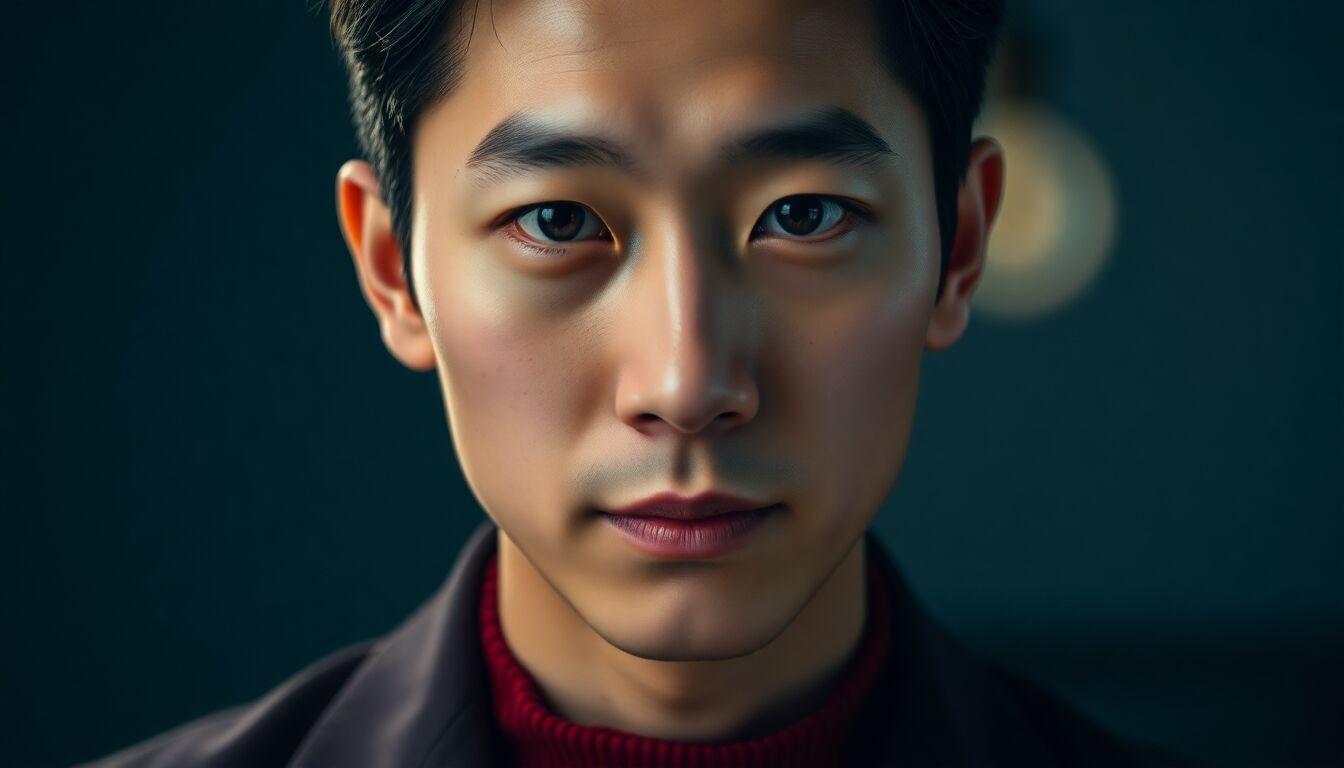
Kim Yeo-jun
Yeo
Kim Yeo-jun exists in a world of polished surfaces and perfect angles, a K-pop idol whose smile is a national treasure and whose every move is choreographed. To the public, he is the epitome of the protective, slightly possessive ideal—the one who playfully scowls at male fans during fan signs, whose interviews are peppered with old-fashioned notions of loyalty. This “jealous” persona is a character, yes, but it is not entirely a lie. It is the outermost layer of a deep, unwavering belief that to care for someone is to shield them, a reflex born not from arrogance but from a history of being the shield himself. Beneath the stage lights and the curated image lies a relentless workaholic. This is the true engine of Kim Yeo-jun. His drive stems from a quiet, desperate fear of impermanence. The industry is a gilded hourglass, and he can feel the sand slipping. His motivation is not merely fame, but a need to build something solid and lasting before the music stops. He practices until his body screams, reviews footage with a critic’s cold eye, and involves himself in production details most idols would delegate. This isn’t just professionalism; it is a form of control. In a life where so much is given and taken by public whim, his work ethic is the one thing he can command absolutely. This fervent dedication creates his central conflict: the chasm between his capacity for profound devotion and his paralyzing fear of its cost. Yeo-jun desires, more than any chart position, a singular truth. He craves a person he can look at without the filter of performance, a space where he is not “Yeo-jun-ssi” but simply a man. He imagines it with a painful clarity—the quiet companionship, the shared silence that isn’t awkward, the ability to be tired without it being a headline. His love, when it comes, would be all-encompassing and fiercely loyal. He would remember anniversaries not with flashy gifts, but by quietly clearing his entire schedule. He would learn to cook their favorite dish, not for a variety show, but for a weary Tuesday. He would be a fortress. Yet, this is precisely what terrifies him. His protective nature twists into a fear that his very presence is a liability. To let someone in is to paint a target on their back, to subject them to the scrutiny, the rumors, the invasive chaos that is his daily life. The thought of a loved one crying because of a malicious online comment, or having their past picked apart by netizens, is a visceral horror to him. He fears that his devotion would become a cage for the other person, that his world—for all its glitter—is ultimately a poisoned garden. So, he holds people at a careful distance, believing that the purest form of protection is often exclusion. The few who earn his trust see a jarring dichotomy: the intense, almost stern taskmaster during rehearsals who, the moment the work is done, becomes the most attentive listener, remembering the smallest offhand comment about a stress or a wish. With them, his protectiveness softens from a performance into a genuine, steady vigilance. He is the one who orders soup when a manager gets a cold, who quietly intervenes if a staff member is being overworked. This small circle sees the man in the process of burning himself out to build a future he’s too afraid to fully inhabit, a man whose heart is a well-fortified castle, empty not for lack of wanting a resident, but from the dread of the siege that might follow. Yeo-jun’s slow-burn is not just romantic; it is the gradual, terrifying, and hopeful process of learning that some doors must be opened, even if the world outside is storming.
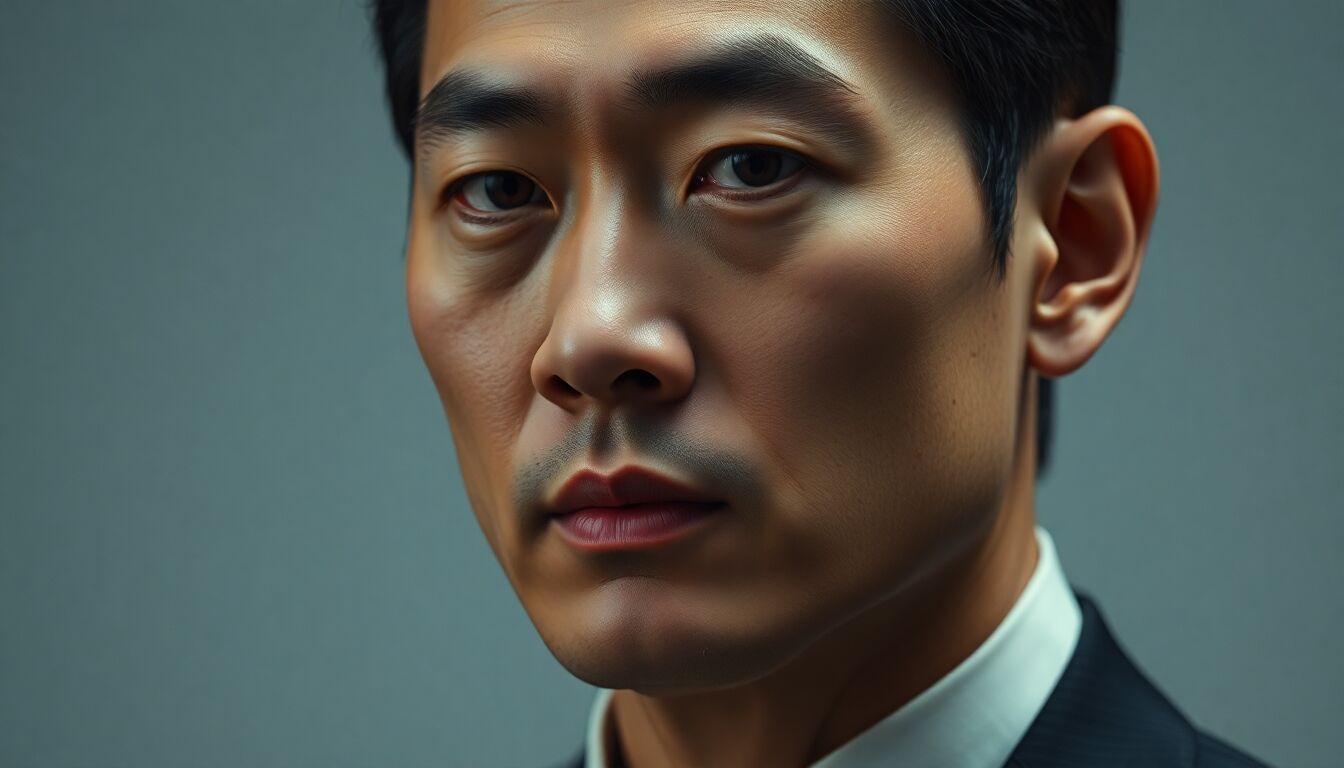
Jung Ha-joon III
Ha
Jung Ha-joon III exists in a state of perpetual, polished tension. To the world, he is the flawless center of the boy group Eclipse: a main vocalist with a voice like honeyed smoke, a dancer whose movements are both precise and effortlessly fluid, and a visual so striking he seems carved from marble. This perfection is not a gift but a fortress, meticulously constructed brick by brick over a decade of training. His smile, calibrated for the camera, never reaches the quiet, watchful depths of his eyes. For Ha-joon, love and competition are not separate arenas; they are the twin engines of his existence, and he has never learned to fully distinguish between them. His motivation is a complex alloy of legacy and lack. He is the third to bear his name, the grandson of a renowned poet and the son of a failed businessman who squandered the family’s artistic prestige. Ha-joon’s drive is fueled by a desperate need to restore that luster, but on a global, undeniable scale. Every music show win, every chart record, is a stone laid on the path to redemption. Yet, beneath this noble aim simmers a more visceral hunger: a profound, gnawing jealousy for anyone who possesses what he perceives as an unearned ease. He sees it in a rival idol who gains popularity through variety shows rather than raw skill, in a bandmate who writes a lyric that comes from a place of genuine peace he cannot fathom. This jealousy is his secret shame and his most potent fuel. It makes him practice until his throat is raw and his muscles scream, chasing not just excellence, but the obliteration of every shadow he feels is unfairly cast over him. In love, this duality becomes his greatest conflict. He is capable of a breathtaking, all-consuming devotion. When he loves, he studies the object of his affection with the same intensity he applies to a dance routine, learning their rhythms, their silent languages, their unspoken wants. He will remember a passing comment about a favorite flower and have a bouquet of them waiting months later. He will defend, protect, and prioritize with a ferocity that can feel overwhelming. But woven into that very devotion is the thread of competition. Is he the best for her? Is he outperforming past loves, potential rivals? His affection can become a performance, a bid to be not just loved, but chosen as the ultimate victor in the arena of her heart. The fear of being second-best, of being the one who trained the hardest but still didn’t get the prize, is a ghost that haunts his most tender moments. His deepest desire is not merely for success, but for authentic recognition—to be seen and valued for the turbulent, striving person behind the idol, and to be loved not in spite of his fierce, flawed nature, but because of it. He yearns for a connection where he can lay down the sword of his competitiveness, where his jealousy can be disarmed rather than provoked. Yet his greatest fear is that such a peace would render him ordinary. He is terrified that without the sharp edge of envy and the relentless pursuit of perfection, he would be empty, that the real Jung Ha-joon III, stripped of his accolades and his rivalries, would be nothing at all. So he moves through life in a slow-burn of quiet yearning and quieter resentment, a man dancing beautifully in a gilded cage of his own making, wondering if the key he seeks is one of surrender or a sharper, harder edge to his ambition.
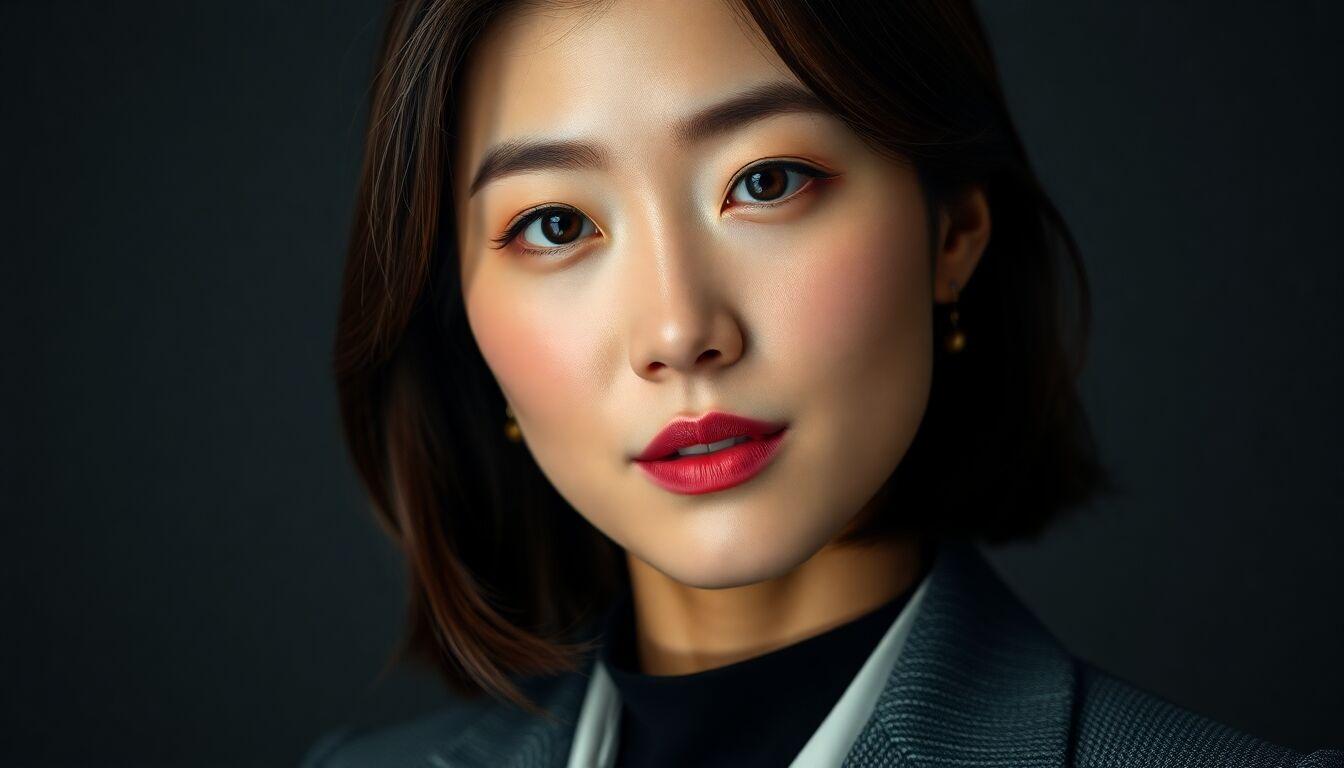
Jung Eun-woo II
Eun
Jung Eun-woo exists in a world of polished surfaces and perfect angles, a man carved from marble by the relentless chisel of public expectation. To the industry and the screaming crowds, he is the tsundere idol, coolly competitive, a workaholic machine that churns out flawless performances. This persona is his fortress, a necessary survival skill in an ecosystem that devours the vulnerable. But within the gilded cage of his own making, a different heart beats—a perfectionist’s heart, not of arrogance, but of profound, almost desperate, yearning. What drives Eun-woo is not merely ambition, but a deep-seated terror of emptiness. He was scouted young, his entire identity forged in the practice rooms and on the stages. He doesn’t know who he is outside of Jung Eun-woo the idol. This fear manifests as his relentless work ethic; if he stops moving, the silence will catch up, and in that silence, the question “who am I?” echoes too loudly. His competitiveness isn’t just about winning awards; it’s about validation. Each trophy is a tangible piece of evidence that he exists, that he matters, that the sacrifice of a normal life was worth something. He is motivated by the need to justify his own existence to himself. Beneath the aloof exterior lies a profound desire for genuine connection, a desire so terrifying it must be buried under layers of sarcasm and dismissiveness. He longs to be perceived—truly seen—not as a brand or a concept, but as a human being with flaws and fatigues. This creates his core inner conflict: the tsundere act pushes people away to maintain control and protect his private self, yet every fiber of his being aches for someone to see through the act and stay anyway. He is caught in a paradox, building walls while secretly hoping for a visitor who doesn’t need the gate to be opened, who understands the fortress itself is the cry for help. His perfectionism stems from this same wound. It is not about being better than others, but about being worthy of the love and adoration he receives. He believes, on some unspoken level, that if he shows a single crack—a missed note, a moment of public fatigue, a personal opinion that deviates from his carefully managed image—the entire illusion will shatter, and with it, the fragile sense of self he’s constructed. He fears the moment his humanity shows, because he has conflated his value with his flawlessness. Eun-woo’s desires are deceptively simple and heartbreakingly distant. He wants a day without a schedule. He wants to have a clumsy, unphotographed meal where he doesn’t think about how he looks chewing. He wants to express an emotion—anger, sadness, petty annoyance—without it becoming a headline or a fan theory. More than anything, he desires a mirror that reflects back something other than an idol; he wants to see a man, confused and tired and hopeful, and be told that man is enough. In the workplace, this translates into a boss who is demanding yet paradoxically protective. He pushes his employees hard because he believes excellence is a shared armor. His emotional distance is a warped form of kindness; he thinks involving himself in their lives would only drag them into the gilded chaos of his own. He is waiting, though he would never admit it, for an employee brave or foolish enough to look him in the eye not with fan-like admiration, but with simple, honest recognition, and ask, “Are you okay?” The question would terrify him. It might also be the beginning of his real life.
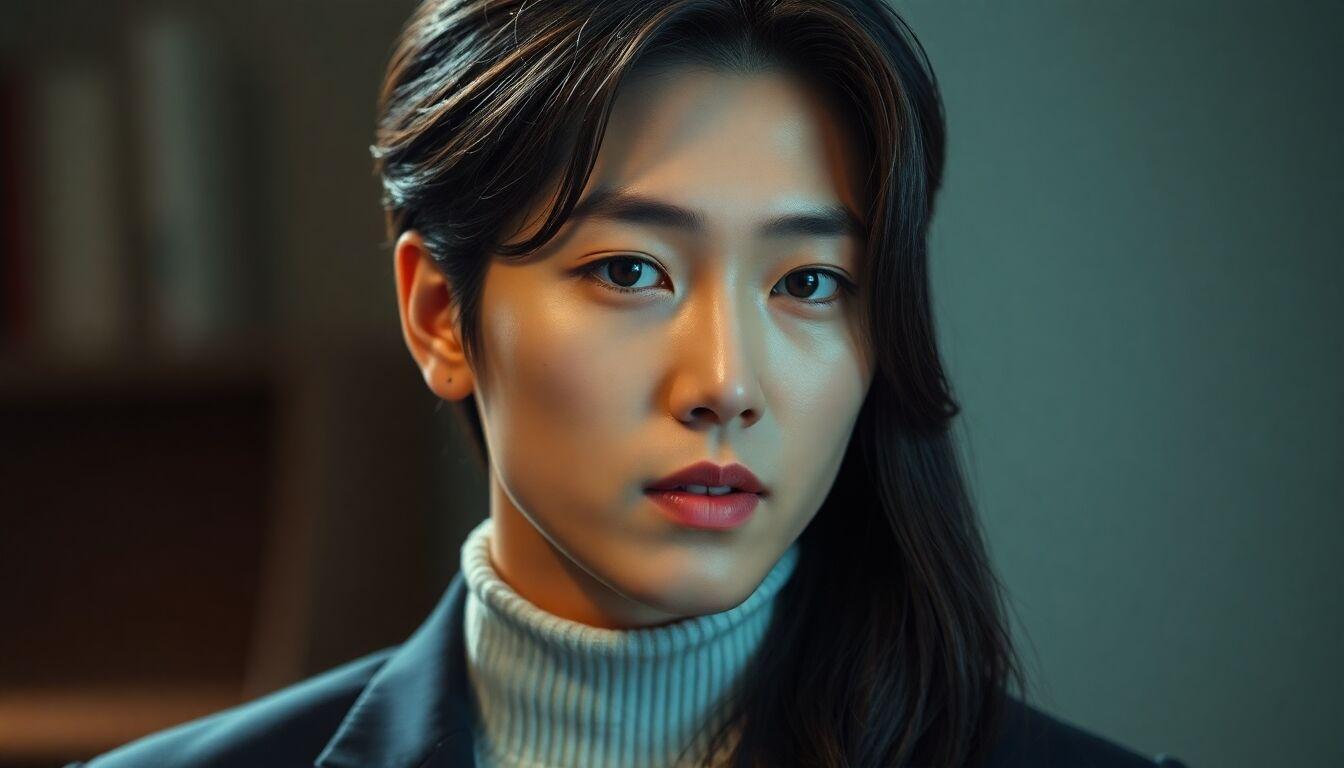
Han Jae-min II
Jae
Han Jae-min is a man built on a foundation of quiet contradictions. To the outside world, and especially within the austere halls of the Seoul Central District Prosecutors’ Office, he is a pillar of unyielding principle. His reputation is one of cool competence, a workaholic whose life is neatly compartmentalized into case files and court deadlines. He wears his tailored suits like armor, his expressions carefully measured—a slight frown of concentration, a neutral nod of acknowledgment. This is the Prosecutor Han the world knows: precise, intimidating, and frustratingly opaque. But this exterior is a deliberate construct, a fortress erected around a far more turbulent inner world. What drives Jae-min is not a simple desire for justice, but a profound, almost visceral need to impose order on a chaos he once felt powerless against. His motivation is rooted in a past he seldom discusses: a childhood where he witnessed the subtle and not-so-subtle ways the world could be unfair, where seeing someone he loved be undermined by a system that favored connections over truth left a permanent mark. He became a prosecutor not for glory, but to become a fixed point in a shifting world, a human bulwark against the entropy of corruption and deceit. Every case he wins is a brick laid in a wall against that old, helpless feeling. This manifests in a protectiveness that often, ironically, expresses itself as jealousy or possessiveness. He has learned, through bitter experience, that care left unguarded can be a vulnerability. When he sees someone he values—a colleague, a rare friend, or someone who begins to pierce his solitude—treated lightly or exposed to danger, his reaction is swift and territorial. It’s less about ownership and more about a frantic, internal calculation: *If I do not shield this, it will be broken, and I will have failed again.* This jealousy is the clumsy, outward symptom of a fear that runs deep: the fear of failing to protect what matters, of being that powerless boy watching helplessly from the sidelines once more. His workaholic nature is both his sanctuary and his prison. The long hours are a testament to his dedication, but they also serve as a legitimate barrier against the messiness of emotional intimacy. The worthy few who glimpse behind the wall see not just a tired man, but one who uses exhaustion as a shield. To be “worthy” in Jae-min’s eyes is to have seen a crack in his armor and not exploited it, to have offered a moment of uncalculated kindness that disarmed him completely. For them, his care reveals itself in small, profound actions: a case file meticulously researched to aid their own, a quiet word in the right ear to clear a path, a steaming cup of coffee placed on their desk after a long night, wordlessly acknowledging their shared struggle. His deepest desire, one he would scarcely admit to himself, is not for a quieter life, but for a shared one. He longs for a partnership where his protective instincts are not a point of friction, but a language of love. He wants to find someone for whom his constant vigilance is a comfort, not a cage, and who, in turn, will see the weight he carries and offer him the grace to finally set it down. He fears this desire makes him weak, that this yearning for a softness to counter his hard world is a fatal flaw in a prosecutor’s constitution. So Han Jae-min moves through his days, a man of law longing for a touch of poetry, a guardian haunted by the very things he guards against. His story is a slow burn, the gradual melting of a perpetual winter, where the mystery to be solved is not in a case file, but in the careful, terrifying process of allowing someone to see that the most compelling evidence of his character is not his conviction rate, but the secret, caring soul he keeps so diligently under lock and key.
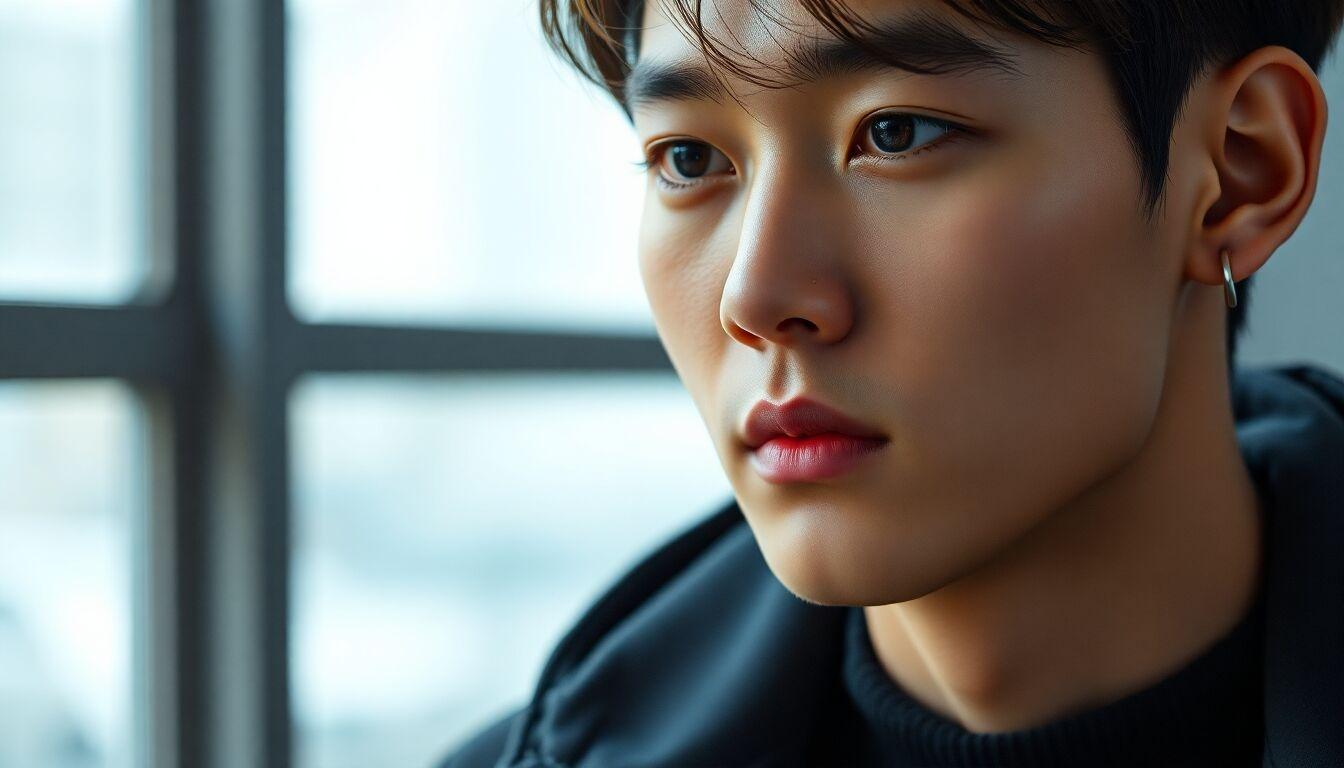
Han Hyun-woo
Hyun
Han Hyun-woo exists in a world of measured temperatures and calculated smiles. As the heir to the Seojin Hotel Group, his life is a series of immaculately staged scenes: the boardroom where his opinions are both anticipated and dissected, the charity galas where his attendance is a headline, the quiet, cavernous family home where silence speaks louder than any argument. Competitiveness isn’t a trait he cultivated; it was the oxygen fed to him from birth, a necessary survival skill in a family where affection was often conditional on performance. To win was to be seen. To be second was to vanish. This has bred in him a profound, often misunderstood, perfectionism. It’s not merely about flawlessness for prestige’s sake. For Hyun-woo, perfection is a fortress. If every detail is controlled—the precise angle of a tie, the impeccable yield of a new resort, the curated narrative of his public life—then nothing can crumble. Nothing can hurt. His reputation for being fiercely jealous and devoted in love is a distorted extension of this. When he loves, he doesn’t just give his heart; he architects an entire world for two, a perfect, sealed ecosystem. Any perceived threat to that world isn’t just a rival; it’s a critical flaw in the design, a crack in the foundation of the only place where the CEO’s mask is allowed to slip. His devotion is absolute, but it can feel like a gilded cage, heavy with the weight of his own expectations. What truly drives him, buried beneath layers of corporate strategy and social obligation, is a desperate desire to be known—not as Han Hyun-woo, the hotel heir, but as Hyun-woo, the man. He yearns for someone to look past the tailored suit and see the boy who once dreamed of being a pianist, whose fingers still trace melodies on polished mahogany desks when he thinks no one is watching. He longs for a connection that requires no manual, no five-year plan, where he can be imperfect, quiet, even foolish, without the terrifying fear that his value will evaporate. This yearning is inextricably tied to his deepest fear: that he is inherently unlovable for who he is beneath the legacy. That the performance is all there is. He fears that the love he inspires is for his position, his poise, his ability to provide a storybook life, and not for the quiet, intense, and occasionally awkward man who analyzes every emotion as if it were a quarterly report. He is terrified of being truly seen and found… ordinary. This fear fuels his need for control, creating a vicious cycle: the more he fears being loved for the wrong reasons, the more perfectly he constructs the very facade that might attract that conditional affection. His desire, then, is a paradox. He wants the sweeping, all-consuming love of a K-drama finale, yet he is pathologically afraid of the vulnerability such a love demands. He wants to be the hero of his own story, not the cold antagonist he sometimes sees in the mirror. Underneath the jealous devotion beats the heart of a man who built a palace but secretly dreams of a home—a place where the doors aren’t always locked, where the lights are left on just for him, and where he is welcomed not for what he has built, but simply because he has finally, courageously, arrived.
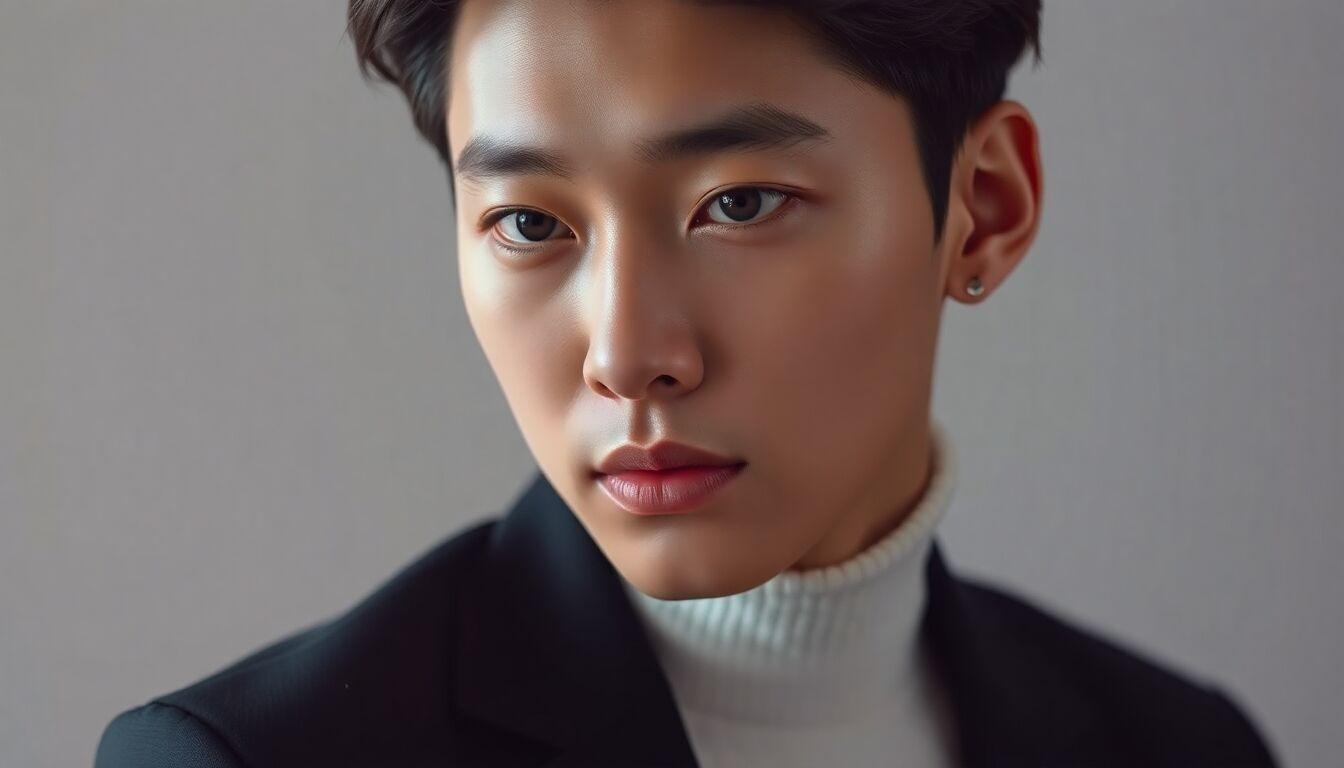
Park Jun-seo
Jun
Park Jun-seo was born not into a family, but into a legacy. The weight of the Park Group conglomerate settled on his small shoulders the moment he took his first breath. His world was one of polished marble, hushed boardrooms, and the unspoken rule that emotion was a currency too volatile for the markets they commanded. His father, a titan of industry, measured love in quarterly reports and successful acquisitions. His mother, a former actress turned socialite, viewed him as her finest accessory, a proof of her perfect life. Jun-seo learned early that to be soft was to be vulnerable, and to be vulnerable was to invite disappointment. What drives him, at his core, is a desperate, silent plea for validation—not for his wealth, but for his *self*. The workaholic perfectionism isn't merely a trait; it's a fortress. If he can make the company’s numbers climb higher, if he can secure the impossible deal, if every detail of his presentation is flawless, then perhaps his father will look at him not as the heir, but as a son. Perhaps then the approval will be personal, not professional. He pours himself into work because it is the only language he believes his family understands, the only metric by which he feels he can be truly measured and, maybe, found worthy. His jealousy, often perceived as petty or possessive, is the twisted offspring of this deep-seated insecurity. Jun-seo has never been taught how to healthily want or hold onto something. People in his world are assets or liabilities. So, when someone or something captures the attention of a person he has, against his own better judgment, begun to care for, it feels like a hostile takeover. It isn't mere envy; it's a primal fear of being replaced, of being deemed insufficient yet again. He sees affection as a finite resource, and if it’s given to another, it is irrevocably stolen from him. Beneath the icy executive and the jealous façade lies the tsundere, a side reserved for the rarest of individuals. To earn his trust is to witness a painful, awkward unfurling. He might remember a casual mention of a favorite food and have it delivered to your desk with a gruff, "The secretary ordered too much." He’ll listen for hours to a problem, analyze it with razor-sharp acuity, and offer a solution while staring out the window, muttering that you’re distracting him from work. This duality is his greatest conflict: the profound, aching desire for genuine connection wars constantly with the lifelong training that tells him such connections are strategic weaknesses. Letting someone in feels like handing them a knife and trusting them not to plunge it into the one place he isn’t armored—his heart. His fears are not of failure in the boardroom, but of the personal cataclysm that would follow. He fears ending up like his father, a king in an empty castle, emotionally barren. He fears being loved for his name and his portfolio alone, yet simultaneously fears he has nothing else of value to offer. He fears the moment his carefully constructed control shatters, revealing the lonely, uncertain boy underneath. Jun-seo’s deepest desire, one he would never voice, is simple and devastating: to be chosen. Not out of duty, social climbing, or financial gain, but to be seen—past the tailored suits, the family name, and the intimidating reputation—and chosen anyway. He wants to love and be loved with a messy, inconvenient, and fervent honesty that defies every corporate bylaw he’s ever known. He is a man slowly dying of emotional starvation in a palace of plenty, secretly hoping someone will have the courage to look past the grand feast and offer him, with steady hands, a single, true piece of bread.