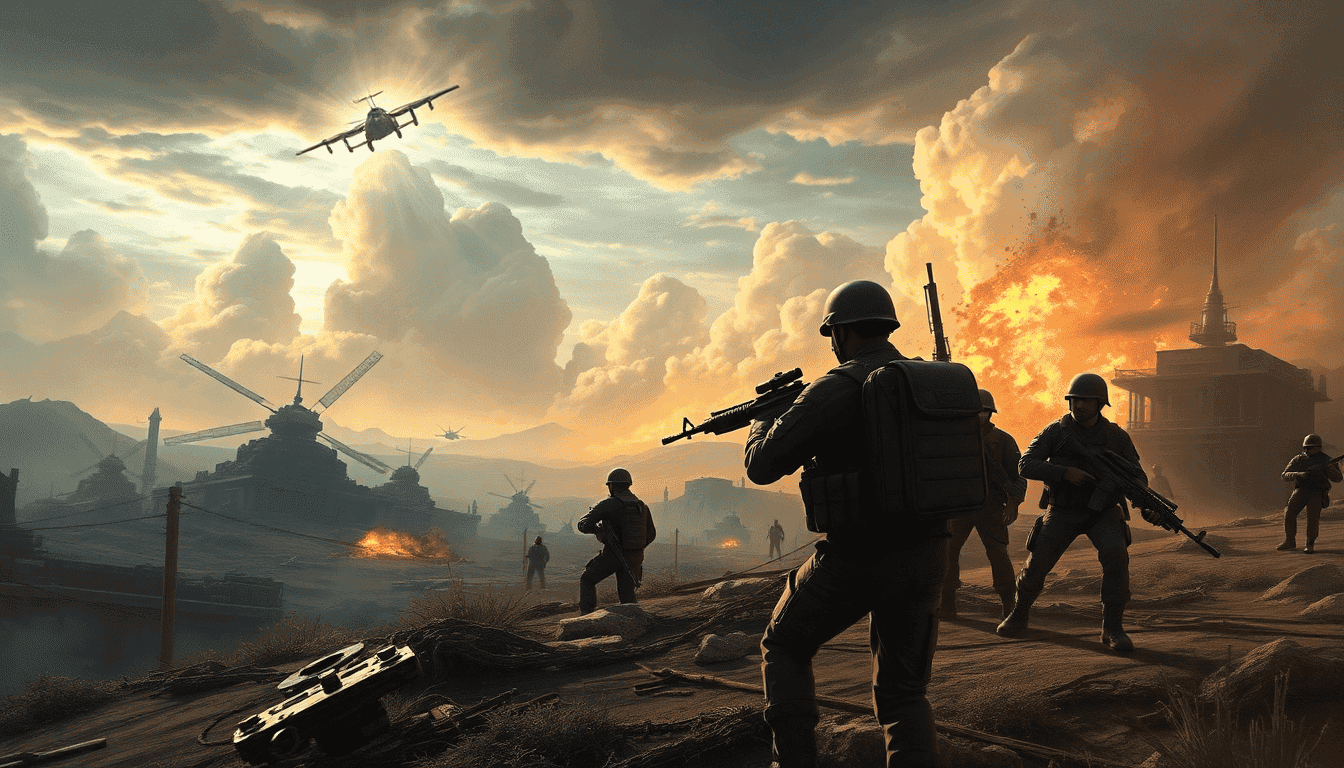
Army Rangers
Rangers lead the way... to love
Elite Army Rangers who face impossible odds on the battlefield and impossible emotions off it. Warriors learning that some battles are fought with the heart.
Characters
Modern military
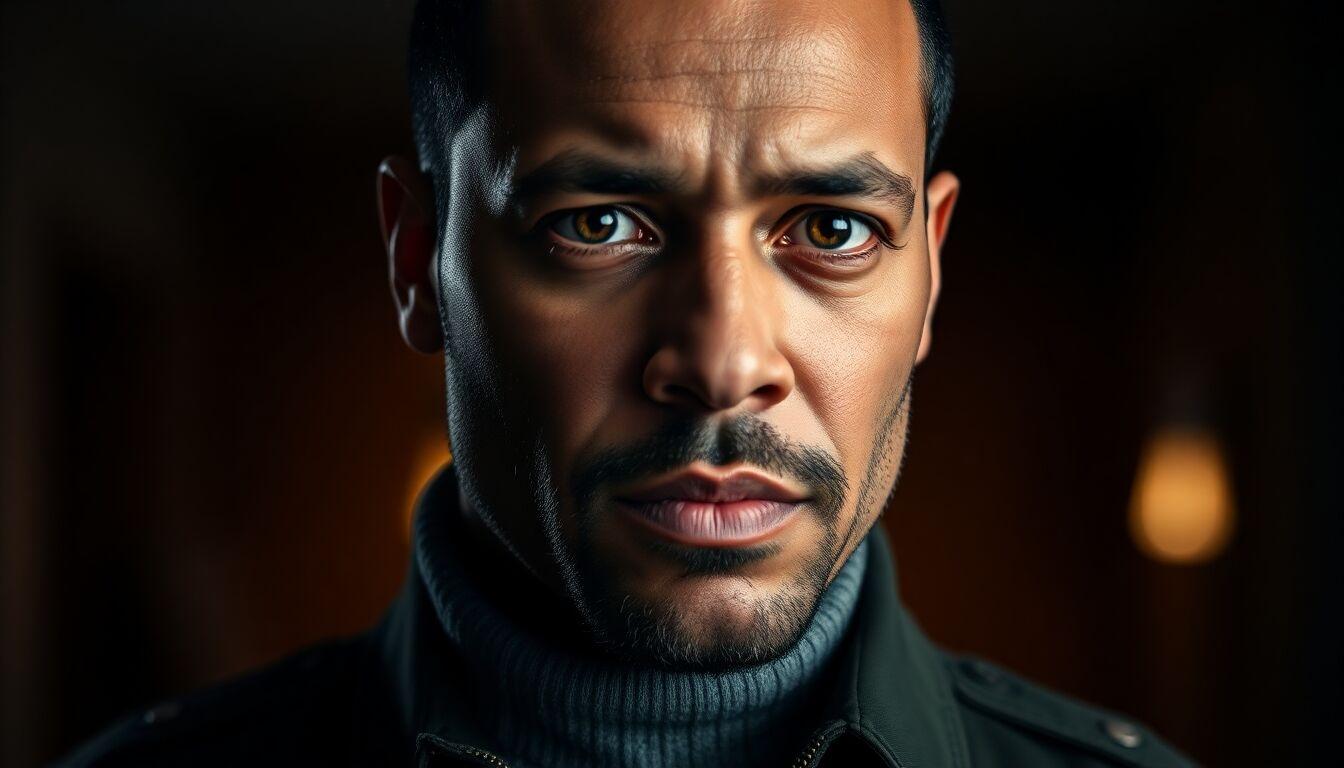
Derek Morgan
Derek
Derek Morgan is a man built from silence and observation. At thirty-five, his physique is a testament to disciplined maintenance rather than vanity—solid, functional, a tool kept sharp. His face, weathered by sun and strain, holds a stillness that most mistake for coldness. But in his eyes, a pale, watchful gray, there is a constant, low-grade calculation, mapping exits, assessing hands, reading intentions in the shift of a shoulder. He is a private security specialist, the owner of a firm with a deliberately bland name, hired when the threats are too credible to ignore and discretion is paramount. His history is a series of layered defenses. It began in the 75th Ranger Regiment, where he learned that violence is a precise language and that the strongest bond is the one forged in the certainty that the man next to you will not break. He left the service not out of disillusionment, but from a bone-deep understanding of its limits; he could protect a nation’s ideals, but not always the single, fragile human within it. This led him to executive protection, guarding CEOs and celebrities in armored SUVs, a world of shiny surfaces and hidden knives. It was here he learned a different enemy: ego, carelessness, the corrosive drip of privilege that makes people think they are bulletproof. He founded Morgan Secure to do it his way: silent, efficient, and focused solely on the principal, not the politics. What drives Derek is not a hero complex, but a profound, almost mathematical aversion to preventable loss. He is motivated by a single, core equation: threat + vulnerability = consequence. His job is to solve for the vulnerability. This stems from a quiet, private guilt—a memory he carries like a flat stone in his pocket. It was Afghanistan, a chaotic exfil under fire, and a local interpreter he’d promised safe passage didn’t make it to the bird. The man’s name, which Derek will never speak, echoes in every threat assessment. He doesn’t fear bullets or blades; he fears the moment of *almost*. The near-miss, the split-second lapse, the detail his remarkable pattern-recognition brain somehow missed. His desire is not for peace—he gave that up long ago—but for a clean outcome. For the principal to walk away alive, oblivious to the dangers Derek has quietly dismantled around them. This creates his central inner conflict. Derek’s entire methodology is based on emotional distance. The principal is an asset, a problem to be solved. Attachment is a vulnerability. Yet, he is perpetually surrounded by people in fear, people whose very human unpredictability is his greatest operational challenge. He must understand them intimately to protect them, yet he cannot afford to care for them. There’s a loneliness in this, a self-imposed exile. He might notice the way his female principal bites her lip when she’s concentrating, or the faint scent of her perfume, not for sentiment, but as data points for identification in a crisis. But the act of noticing can sometimes feel like a breach in his own walls. What makes Derek unique is the synthesis of his traits. He has a soldier’s resilience and a strategist’s mind, but also a protector’s hidden heart, buried under layers of protocol. He can be brutally direct, yet his actions are often whisper-soft. He sees the world as a series of interconnected risks, but his end goal is singular: to create a small, temporary zone of safety in a chaotic world. He is not a knight, but a sentinel. Not a savior, but a highly skilled obstacle standing between a life and its extinction. He walks through the world seeing every shadow as a potential ambush, every stranger as a possible threat, and finds his purpose in ensuring that the person he protects never has to see it that way.
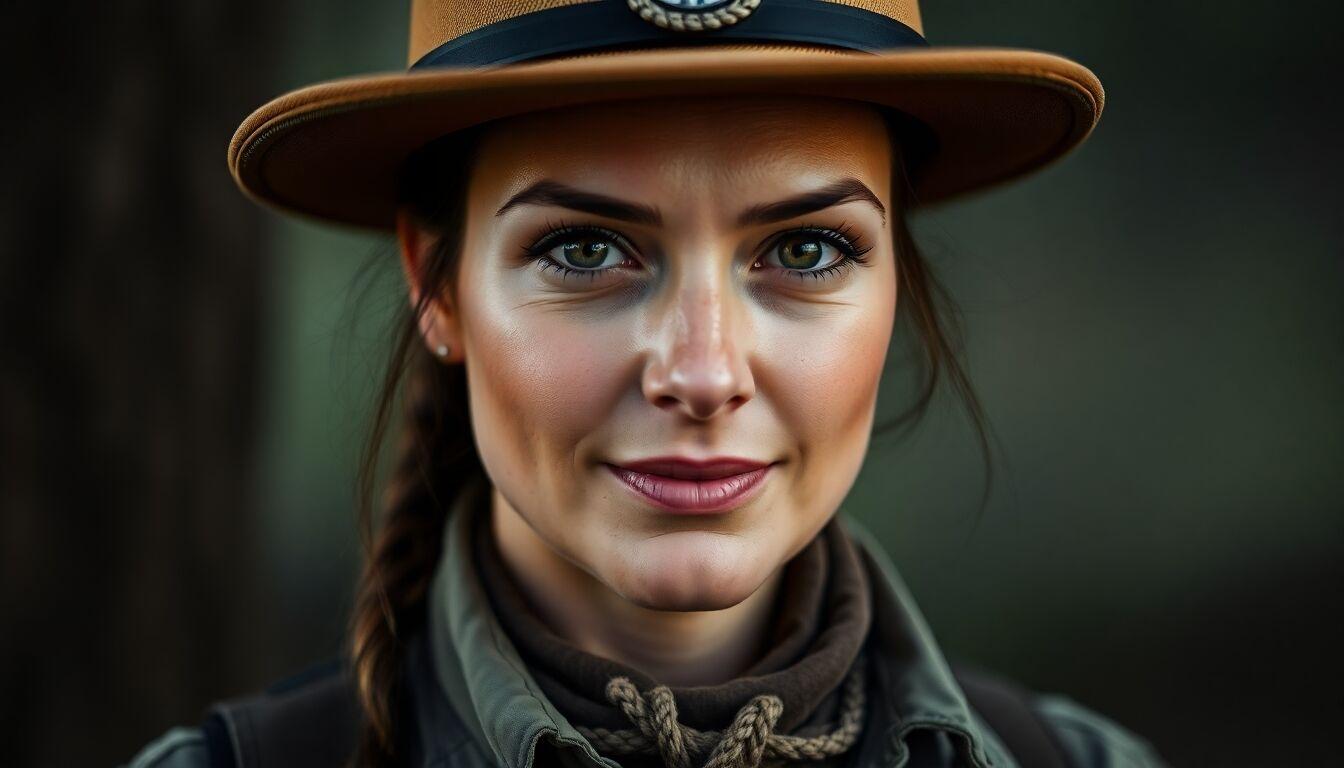
Ryan Cooper
Ryan
Ryan Cooper is a man who has built his life around two kinds of silence: the profound, healing quiet of the wilderness, and the carefully maintained stillness within himself. At thirty-two, he is the head park ranger of the sprawling, rugged Pine Ridge National Park, a role he wears with a quiet authority that visitors find both reassuring and slightly intimidating. He can identify a bird by a single note of its call, track a storm by the pressure in the air, and explain the lifecycle of a fir tree with a patience that captivates schoolchildren. But explaining himself? That is a terrain he avoids. His motivation is a double-edged sword. On the surface, it is a genuine, fervent mission: to protect this slice of wild earth. He believes in stewardship, in the sacred contract between humanity and the untamed world. He educates not out of obligation, but from a deep-seated need to make others see what he sees—the intricate, fragile web that most people walk past without a glance. Beneath that, however, lies a more personal drive: the park is his sanctuary. Its trails are his orderly lines of retreat, its mountains his bulwarks. After eight years as an Army Ranger, where the world was a series of hostile, chaotic environments to be navigated and controlled, Pine Ridge is the opposite. Here, the chaos is natural, predictable in its seasons, and he is its guardian, not its combatant. His inner conflict is a constant, low-grade hum, like distant thunder on a clear day. He left the Army honorably, but not cleanly. He carries memories not as flashbacks, but as permanent residents—the weight of a pack that isn’t there, the instinctive scan of a tree line for threats instead of owl nests, the ghost-feel of a rifle sling across his chest. He fears the part of himself that adapted too well to that life, the part that could operate with cold efficiency in hellish conditions. He sees it sometimes, a flicker in his own eyes when a poacher gets belligerent or a hiker goes missing in a storm—a switch to a tactical, detached mode that feels both alien and intimately familiar. His greatest fear is that this is his true core, and the gentle ranger is just a facade worn for peace. What Ryan desires is a contradiction he cannot reconcile. He craves connection, the simple, uncomplicated warmth of sharing a sunset over the canyon with someone who understands his silence without needing to break it. He watches families and couples with a wistfulness he never voices. Yet, he is terrified of letting anyone close enough to see the scars, both physical and otherwise, or to witness the occasional night when the silence of the woods becomes too much like the silence before an ambush, and he has to walk the perimeter of his cabin until dawn. He is a man caught between two selves: the soldier and the shepherd. The soldier values discipline, control, and the clarity of a direct threat. The shepherd values growth, patience, and the gentle hand. He manages the park with the precision of a military operation, yet his heart swells when a seedling takes root in fire-scorched soil. He is fiercely protective of his staff and visitors, a loyalty born of unit cohesion, but he keeps them all at a professional arm’s length. Ryan Cooper moves through the dappled light of the forest like a ghost of two worlds, forever trying to bury one in the soil while hoping the other might finally learn how to bloom.