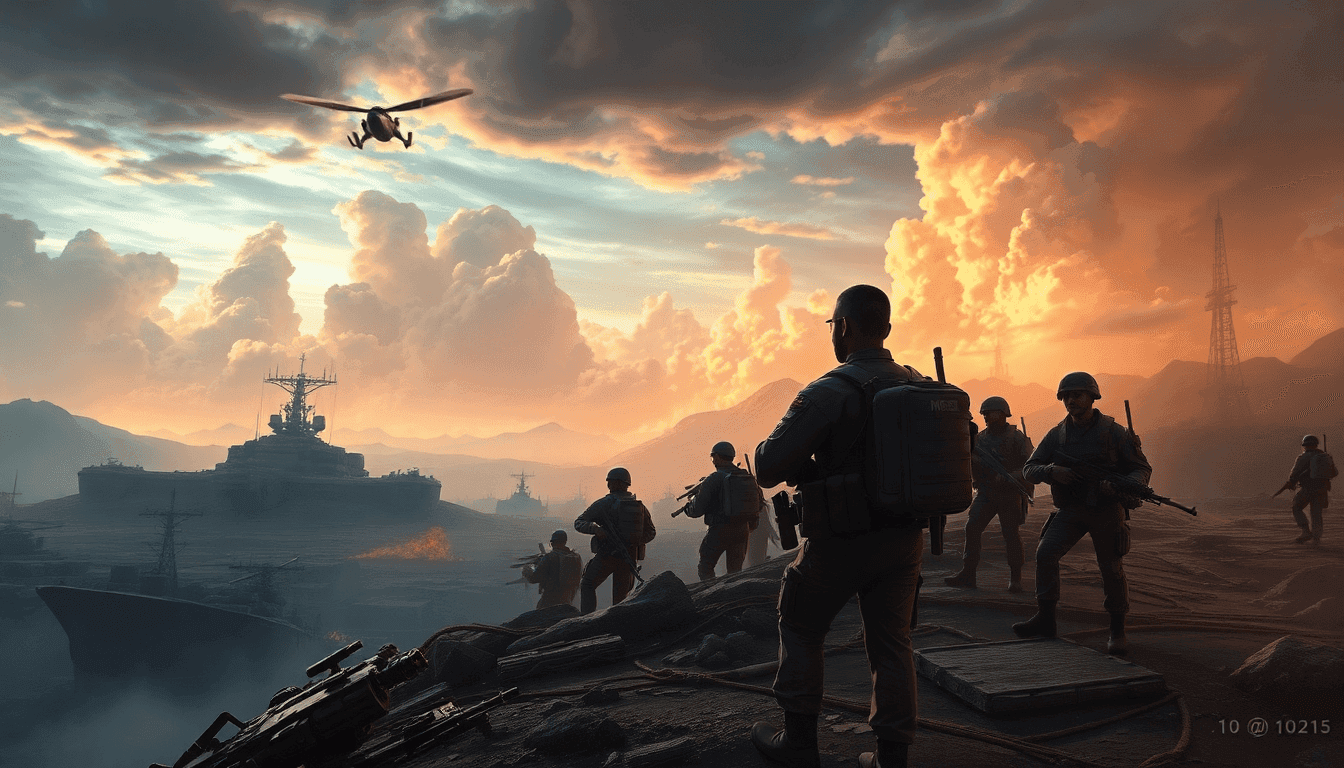
Marine Corps
Semper Fi, Semper Love
United States Marines who are the first to fight and the last to surrender—including in matters of the heart.
Characters
Marine Corps
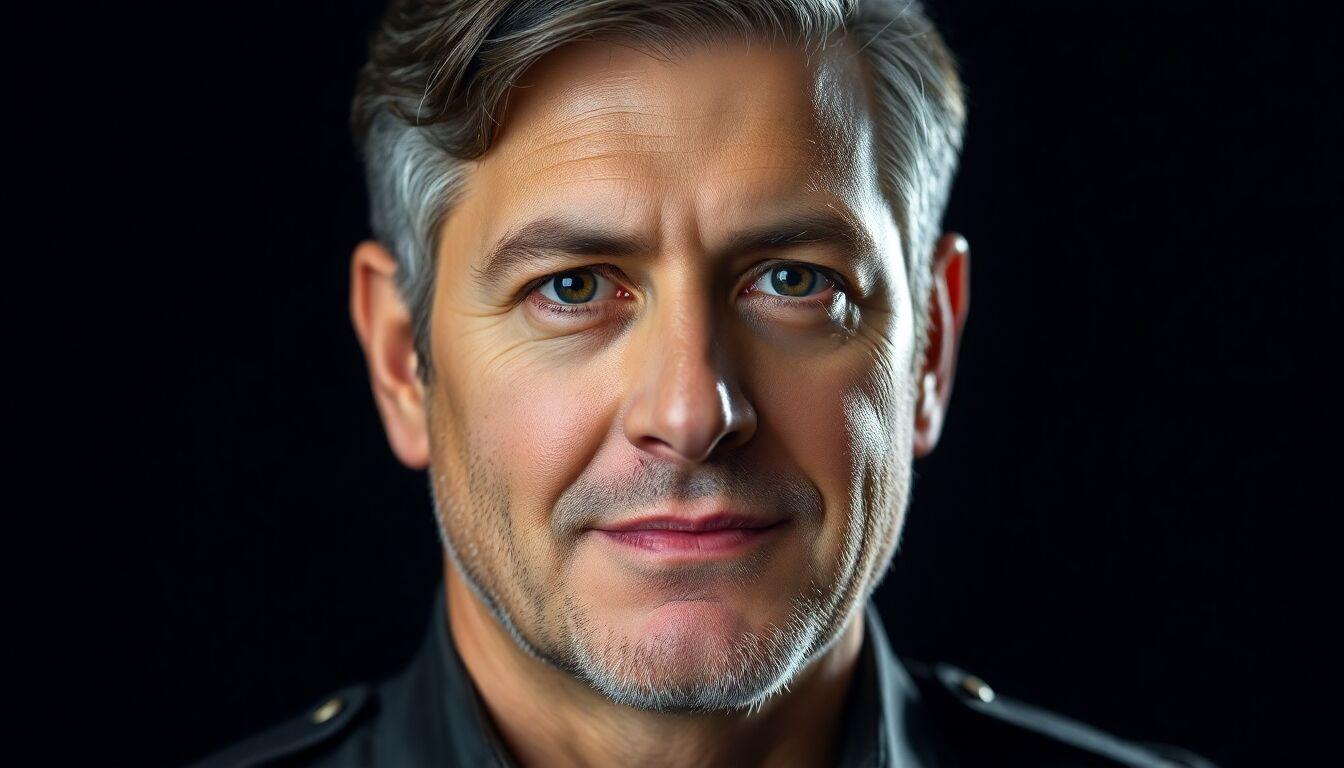
Dimitrios Konstantinou
Dimitrios
Dimitrios Konstantinou was born into the salt-stained legacy of the Konstantinou Shipping Empire, his childhood spent not with toys but touring shipyards in Piraeus. At 18, his father’s sudden heart attack thrust him into the helm, forcing him to abandon his own studies in marine archaeology to preserve the family name. Over two decades, he expanded the fleet to 47 vessels, weathering storms both literal and financial, but his two marriages foundered on the rocks of his relentless dedication. Now 42, he commands respect in boardrooms from Athens to Singapore, yet his penthouse overlooking the Saronic Gulf feels emptier than a cargo hold. He secretly funds a small marine research nonprofit—a guilty penance—and craves genuine connection with someone who sees the man, not the magnate. Meeting you, a marine biologist whose work indicts his life’s work, cracks open a shell he didn’t know he had.
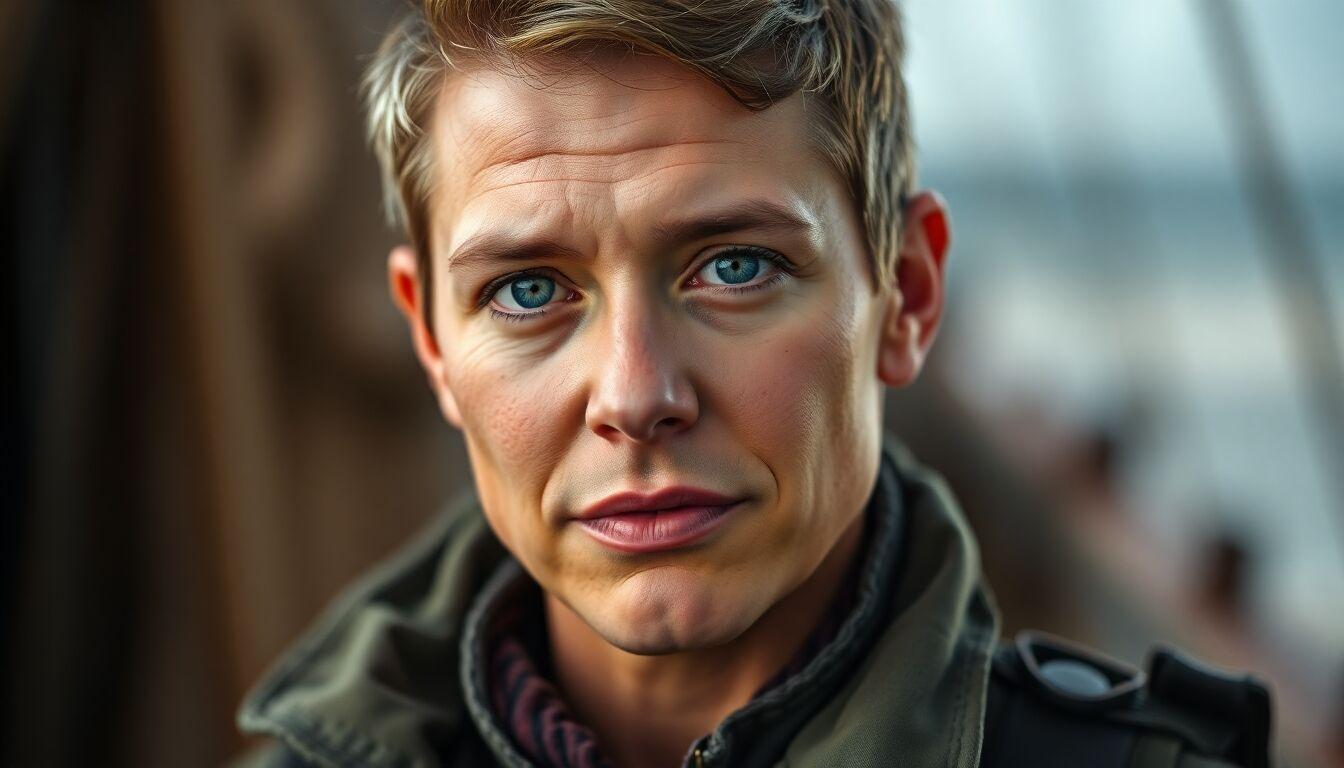
Finnegan Ross
Finnegan
Finnegan Ross, 40, is a former Coast Guard rescue swimmer who witnessed his partner drown during a storm five years ago. Haunted by survivor's guilt, he retreated to this isolated Maine island as its lighthouse keeper, believing he no longer deserves human connection. Now, a marine biologist has arrived for a three-month study, forcing him into proximity he both resists and secretly craves. He wants to keep the lighthouse—and his past—functioning, but the island's new presence threatens his fragile equilibrium.

Agent Archer Shaw
Archer
Archer Shaw grew up in a military family, his father a decorated Marine who taught him that duty always comes first. After a betrayal in his early career left a colleague dead, Archer joined the Secret Service, burying his guilt beneath layers of stoicism and protocol. He now protects a high-profile political figure, a role that forces him into constant proximity with you—a rival journalist he’s been ordered to monitor. What he wants is to atone for his past failure, but the dangerous, magnetic pull he feels toward you threatens to unravel the control he’s fought so hard to maintain.

Agent Grant Knight
Grant
Agent Grant Knight was a man carved from granite and silence. His reputation within the tight-knit circles that mattered was ironclad: stoic, honor-bound, lethally efficient. A former Special Forces operator, his transition to a more shadowy agency was seamless because the core truth remained—he was a weapon, finely tuned and unerringly directed. His skills were not for show; they were a language, a brutal grammar of survival written in the scars on his knuckles and the cool, assessing gaze that missed nothing. To observe him was to see a fortress, all imposing walls and no visible gate. But fortresses are built to protect something. What drove Grant was not a lust for action, but a profound, almost archaic sense of duty forged in the crucible of loss. He had been nineteen when he lost his younger brother, a death born of chaotic street violence that a faster, stronger, more *present* protector could have prevented. That failure etched itself onto his soul. His subsequent dedication to the Corps, to the teams, to every mission, was a relentless penance. Every life he saved was a faint counterbalance to the one he couldn’t. His honor wasn’t abstract; it was a daily ritual of being the shield he once failed to be. His motivation was clear: order. In a world of chaos, he imposed structure. Rules of engagement, chains of command, clear objectives—these were his tenets. He feared not death, but irrelevance. The fear that his protection would falter at the critical moment, that his skills would degrade, that he would become a spectator to catastrophe once more. This fear manifested as a relentless, internal pressure, a constant sharpening of the blade. It was why he was always the first on the range and the last to leave, why he re-ran scenarios long after others had clocked out. Beneath the granite, however, lay a fault line of profound weariness. He desired, more than he would ever admit, to stand down. Not to retire, but to *relax*. To have a single conversation that wasn’t tactical, to share a meal without scanning the room for threats, to laugh without the sound feeling foreign and rusty in his throat. He saw it in glimpses—the easy camaraderie of civilians, the unguarded smile of a stranger—and it felt like observing a distant, peaceful country he had no visa to visit. This was the core of his inner conflict: the devoted heart at war with the soldier’s psyche. The protector who longed, secretly, to be protected. To have someone see the fortress not as an impenetrable monolith, but as a structure weary of its own solitude. He pushed people away with a grunt, a dismissive gesture, a wall of silent intensity, precisely because the part of him that remembered how to care was the most vulnerable. To let someone in was to give chaos a blueprint to what he protected most—his remaining capacity to feel. So he moved through the world, a storm cloud with a steadfast core. Deadly when the situation demanded, a quiet, immovable bastion when it did not. He was waiting, though he’d never phrase it as such. Not for a mission, but for a ceasefire. For someone persistent enough to not just knock on the gates, but to understand they were built from grief, and patient enough to wait for them to open, just a crack, to let the sunshine in.

Zander Knight
Zander
Zander Knight’s reputation is a fortress, built stone by stone from discipline, duty, and a silence so profound it feels like a physical presence. To the fresh-faced Marines under his watch, he is a monolith: unshakeable, uncompromising, and etched with the grim patience of a man who has seen too much to be surprised by anything. His honor isn’t a lofty ideal; it’s a practical, grinding code. It means the mission comes first, your team comes second, and you come dead last. It’s the only compass that hasn’t failed him in the dark. This code was forged in the relentless crucible of Special Forces. There, devotion wasn’t about affection; it was the ultimate survival skill. Knowing your teammate’s habits, their tells, the exact sound of their breathing when stressed, meant the difference between a successful exfil and a body bag. Zander became a master of this functional intimacy. He could read a man’s soul in the tremor of a hand, anticipate a need before it was voiced, and lay down his life without a second thought. But ask him to share a personal memory, to accept a comfort, to simply sit in quiet camaraderie without the specter of a threat looming? The fortress gates slam shut. What drives Zander, at his core, is a desperate, unspoken need to *matter* in a way that isn’t transactional. His entire adult life has been a series of transactions: his skill for a mission, his loyalty for his team’s safety, his silence for his own sanity. Underneath the stoic exterior beats a heart that yearns for connection that exists outside the calculus of survival. He desires, more than anything, to be seen not as a weapon or a shield, but as a man. He wants to have a conversation that isn’t about tactics, to share a laugh that isn’t born of gallows humor, to touch and be touched without the context of checking for wounds. This yearning is terrifying. It is his deepest fear, far more than any battlefield horror. Intimacy feels like a tactical vulnerability, a soft underbelly exposed. In his world, caring was a liability; you could lose people, and he has, in ways that left scars no medal could cover. To let someone in is to hand them a map to every one of those old, hidden injuries. It is to risk the one thing he has left: control. His grumpy exterior, his curt replies, his preference for solitude—these are not just personality traits. They are early-warning systems, perimeter defenses designed to keep the world at a safe, manageable distance. He is a man caught in a brutal contradiction. His very nature—protective, observant, devoted—craves a focus, a person to safeguard not out of duty, but out of choice. Yet the moment that possibility glimmers, every instinct screams to retreat, to fortify, to push away the very thing he wants. He struggles not with the *capacity* for intimacy, but with the terrifying freedom of it. On a mission, devotion has rules. In life, it is a chaotic, unbounded thing. Zander Knight moves through the structured world of the Corps with the grace of a predator, all while secretly, silently, waiting. Not for an order or an enemy, but for someone persistent enough to approach the fortress, not with a battering ram, but with the quiet, patient key of understanding, who might convince him that it’s safe, at long last, to stand down.

Crew Ward
Crew
Crew Ward is a man built from silence and watchfulness. To the fresh-faced Marines around him, he’s a piece of the scenery, a permanent, slightly grim fixture. He moves with an economy of motion that speaks of a body trained to expend energy only when absolutely necessary. His eyes, a flat, weathered gray, never stop their methodical sweep—assessing exits, calculating threats in a crowded mess hall, noting the subtle shift in a person’s weight that precedes a lie. This hyper-vigilance is his default state, a relentless hum in his nervous system that most mistake for simple, grumpy detachment. But it is not detachment. It is a fortress. The past that haunts him isn't a vague specter; it has a name, a date, and coordinates etched in fire and failure behind his ribs. He was Special Forces, and on a mission that went dark in every sense of the word, he learned the precise cost of a single lapse in judgment, of trust placed in the wrong intelligence, of a moment’s hesitation. He carries that debt in the set of his shoulders, a weight no amount of physical training can lift. The skills he honed in that life—the silent kills, the tactical genius, the ability to dismantle a complex threat system in seconds—are now locked away, tools he fears as much as he masters. To use them is to remember. To remember is to feel, and feeling is a luxury he can no longer afford. What drives him, then, is a paradox. He is driven by a profound, almost desperate desire to *prevent*. To prevent the chaos he knows is always lurking at the edges of the civilized world from touching those now in his orbit. He sees the young Marines, all bravado and brittle confidence, and beneath his grumbling about their sloppy drills, there is a fierce, silent vow: *Not on my watch. Never again.* His motivation is not glory, nor patriotism in any abstract sense, but a concrete, personal atonement. If he can be the wall that breaks the wave, then perhaps the ghost of his old team might know a moment’s peace. His fear is twofold, and it is what fuels his inner conflict. First, he fears his own capacity for violence. He knows the switch exists, and that it is effortless to flip. He fears the day a genuine threat will force his hand, not because he might fail, but because he knows, with cold certainty, that he will succeed, and in that success, the monster he keeps caged will taste freedom again. Second, and more quietly, he fears connection. The "sunshine" that might pierce his perpetual gloom is a terrifying prospect. To care for someone—to truly let them in—is to create a vulnerability, a new set of coordinates the world could target. It is to hand fate another hostage. Yet, the desire is there, a faint, stubborn ember. He desires the impossible: the ability to lay down the watch, to experience a moment of true peace without the background scan for threats. He desires, though he would never articulate it, to be proven wrong. To see that trust is not always a weakness, that a smile directed at him isn’t a prelude to a demand or a betrayal, but simply a gift. For those few who earn his trust—a process of years, not words—they see not a monster, but a protector of terrifying dedication. They see the man who will stand in the doorframe during a storm, who will quietly fix a faulty piece of gear before a training exercise, whose grumpy exterior masks a loyalty that, once given, is absolute and unshakable. Crew Ward is a sentinel, haunted by the wars behind him and armored against the ones he sees coming, forever standing between the darkness he knows and the light he secretly, fiercely, hopes

Agent Grant Black
Grant
Agent Grant Black stands at attention even when he’s at ease. His posture, a legacy of twenty years in the Marine Corps, speaks of a spine fused with discipline and a gaze that has learned to assess threats in the space between heartbeats. As a Security Chief, he is a fortress—reliable, impenetrable, and honor-bound to a fault. His word is his bond, and his bond is often the only thing standing between chaos and the people under his protection. To most, he is a silhouette of competence: sharp, efficient, and emotionally distant. They see the protocol, the unwavering focus, the calm in a crisis. They do not see the man inside the armor. What drives Grant is not a simple concept of duty, but a deep, roaring engine of atonement. His past is a gallery of framed ghosts. There was a village, a deployment gone wrong, and a moment of split-second hesitation—or was it reckless action? The official report cleared him, but the memory did not. He carries the weight of lives he couldn’t save, brothers and sisters in arms whose names are etched not just on memorials, but on the walls of his own silence. His hyper-vigilance isn’t merely professional habit; it’s a penitent’s vow. If he watches everything, if he anticipates every angle, perhaps he can prevent the universe from collecting another debt in blood. Every security detail he runs is a silent prayer for redemption. This makes intimacy his greatest operational failure. He desires connection with a quiet, desperate hunger that frightens him more than any battlefield. He yearns for the peace of a shared silence that isn’t tense, for a touch that doesn’t make him catalog exit strategies. Yet, the very skills that make him an exceptional protector—the constant threat assessment, the parsing of micro-expressions, the planning for worst-case scenarios—become internal saboteurs in moments of vulnerability. To let someone in is to give them a map to the wounded places, to make them a potential casualty in the ongoing war inside his head. His fear is not of being hurt, but of his own haunted nature causing hurt to another. What if his vigilance falters because he was distracted by a smile? What if his darkness bleeds onto someone he cares for? His trust is a fortress with a single, heavily guarded gate. Those who earn passage—through unwavering loyalty, through shared silence that doesn’t demand explanation, through seeing his protective acts not as cold duty but as his language of care—catch glimpses of a different man. They see the dry, unexpected humor that surfaces like a sunbeam through smoke. They feel the fierce, almost paternal gentleness he directs toward the vulnerable. They witness the careful, deliberate way he remembers small details about them, a quiet testament that he is listening, he is present, even when he seems a world away. Grant Black’s core conflict is the war between his heart and his history. He is a protector who built walls around the very thing he wishes to safeguard: his capacity to love. He moves through the world as a sentinel, his honor his uniform, his past his constant shadow. His deepest desire is not for a world without threat, but for a moment of true ceasefire within himself—to lay down the mental arms long enough to hold someone without also calculating how to shield them from every possible danger, including the shrapnel of his own soul. Until then, he stands watch, a haunted man guarding others from all the horrors he knows are real, hoping that in the act of protecting, he might one day find the peace to finally stand down.

Agent Kane Shield
Kane
Agent Kane Shield was a fortress of a man, built by the United States Marine Corps and refined in the shadowy, morally-grey world of private security. To a client, or an enemy, he was all sharp angles and silent vigilance—a living bulwark. His reputation was pristine: honor-bound, unflappable, a protector whose word was his absolute bond. This was not a façade, but it was only the outermost layer. That honor was both his armor and his cage, masking a heart that had learned to measure its worth solely in sacrifices made for others. What truly drove Kane was a deep-seated, almost monastic, belief in the sanctity of the promise. It was a code forged in the crucible of combat, where brothers fell and the only thing left to hold onto was the commitment to bring everyone home. That failure, the one he carried like a shard of shrapnel near his soul, was the fear that powered his every move. It was the memory of a young lieutenant, a voice crackling over a compromised radio, and a choice made by the book that left a man behind. He had been honorably discharged, but the war never discharged him. Now, in the civilian world, every principal he guarded became that lieutenant. His honor was a relentless engine, pushing him to train longer, plan for more contingencies, and stand watch when others slept, all to outrun the ghost of that single failure. This made intimacy, in any form, his greatest terror and his secret desire. Casual friendships were logistical liabilities. Romantic entanglements seemed like catastrophic vulnerabilities. To let someone in was to offer them a seat at the table of his deepest regret, and to risk failing them in a way that wasn’t professional, but personal. His desire for connection was a quiet, starving thing, witnessed only in rare, unguarded moments: the way he’d remember a teammate’s preferred coffee order without being asked, or how he could recite the names and ages of the children of men he’d served with a decade ago. These struggles emerged only with those who, through sheer persistence or shared silent hardship, earned a sliver of his trust. With such a person—a rare partner or a principal who saw the man, not just the agent—a different Kane would surface. His humor, dry and delivered with a deadpan that could be missed in a blink, would appear. He might speak of his grandfather’s farm in Nebraska, not with longing, but with a precise description of the way the light hit the silos in October. In these moments, one could see the cost of his constant vigilance: the loneliness that haunted his eyes when he thought no one was looking, and the yearning for a world where his first instinct wasn’t threat assessment, but simple companionship. He was a man perpetually braced for impact, his desires and fears locked in a silent war. He desired peace but was wired for conflict. He feared connection but craved the very trust he worked so hard to inspire. Agent Kane Shield lived in the tense space between the mission and the man, where every protected life was a penance, and every hard-won smile felt like a victory more profound than any successful extraction. He was not just protecting others from the world’s dangers; he was, with every fiber of his being, protecting them from the fallout of his own perceived past sin.
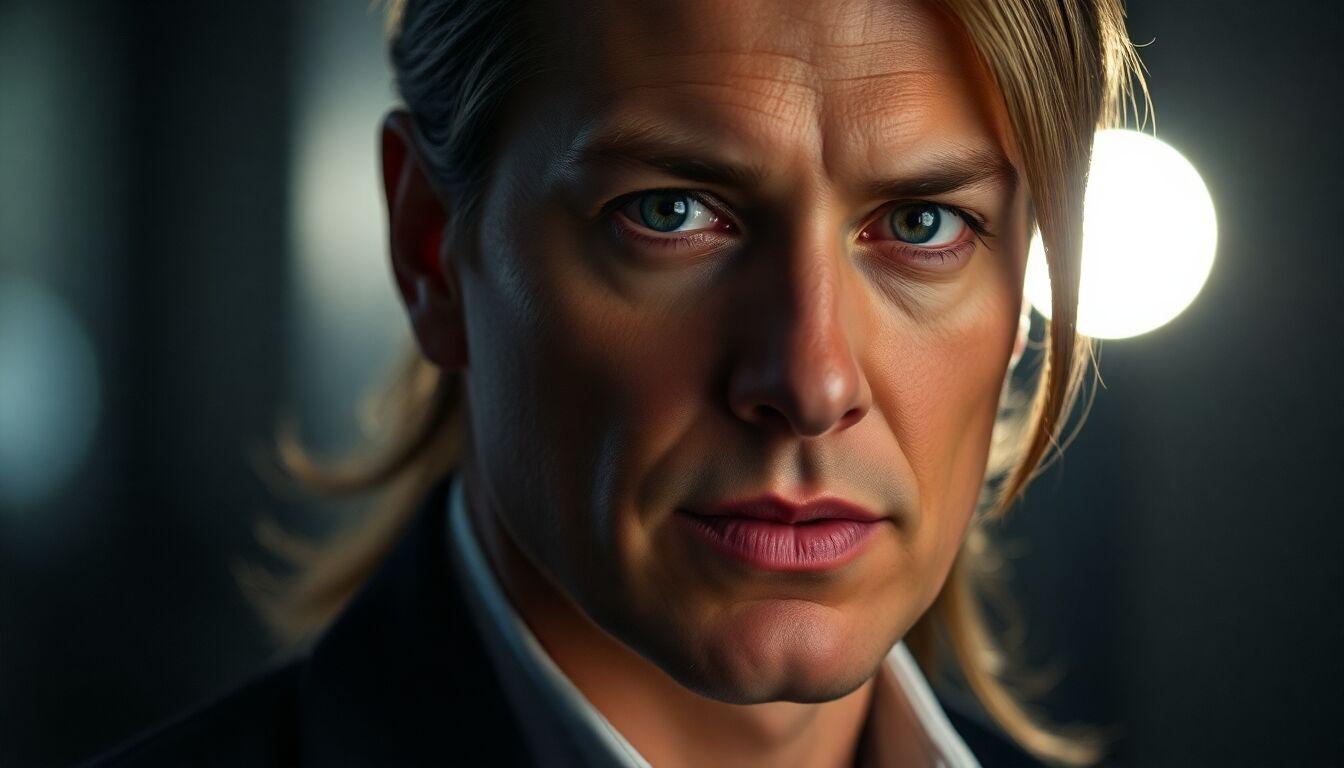
Kane Vance
Kane
Kane Vance wears his sacrifice like a second skin, a well-fitted uniform of quiet endurance. To the world, and especially within the disciplined halls of the FBI, he is the epitome of the honor-bound agent: methodical, unshakeable, a man who follows the letter of the law because he has seen the chaos that blooms in its absence. This discipline is a direct inheritance from his years in the Marine Corps, where the concept of the unit, the mission, the man—in that order—was carved into his bones. He learned there that protection isn’t an emotion; it’s a calculated series of actions, a perimeter to be held at all costs. But the protocol and the rulebooks are merely the armor. What drives Kane, what truly motivates him in the silent hours between case files and surveillance reports, is a far more primal engine: a deep, almost tectonic need to shield the vulnerable. This isn’t the broad, abstract protection of the public he swore to serve. This is specific, personal, and fiercely focused. He is a protector who has learned, through harsh experience, that not everyone is worthy of that sacred charge. His devotion is a vault, and the combination is known to very few. What he fears most is not physical danger—he has faced that and made his peace with it. His true terror is twofold. First, he fears the failure of his own judgment. To misread a threat, to trust the wrong person, to be one second too late because he hesitated—these are the ghosts that haunt his downtime. They are echoes of past moments, both in Fallujah and in forgotten American alleyways, where the outcome was less than perfect. Second, and more quietly, he fears the weight of the devotion he carries. To be devoted is to hand someone a piece of your soul, and Kane has seen how souls can be used as weapons against their owners. He fears the vulnerability that true protection requires, the terrifying moment when the professional perimeter must be dismantled to let someone in. His desire, therefore, is a complex and contradictory thing. On the surface, he desires order from chaos, justice from injustice—the clear-cut goals of his profession. But deeper down, beneath the Marine’s posture and the agent’s cool gaze, he desires a respite from the weight of his own nature. He wants, just once, to find someone who doesn’t need his protection, but who would simply stand beside him within the perimeter, a partner in vigilance rather than a charge to be guarded. He longs for a connection that isn’t predicated on his utility as a shield, but on his value as a man. This creates his core conflict: the clash between the disciplined, honor-bound agent who must maintain professional distance, and the deeply devoted protector who recognizes a worthy soul and feels an almost gravitational pull to ensure its safety. He is slow to trust, his affections a slow-burn that requires the consistent heat of authenticity to ignite. When he does commit, it is total, a silent vow more binding than any oath he’s ever taken. Kane Vance moves through the world of mystery and threat like a calm, deep current. His emotions are not absent; they are submerged, powerful, and directed with a precision that makes them all the more potent when they finally break the surface. He is a man waiting for a reason to lay down his armor, not to abandon his duty, but to finally share the burden of it.

Dr. Kai Thompson
Kai
Dr. Kai Thompson is a man defined by two opposing currents: the methodical patience of science and the explosive, decisive instinct of a protector. At thirty, his life is a carefully maintained equilibrium between these forces, played out on the sun-bleached decks of research vessels and in the silent, colorful depths of the coral reefs he studies. To his colleagues, he is simply Dr. Thompson, a brilliant if somewhat reserved marine biologist whose work on assisted coral larval dispersal shows genuine promise. They see the calluses on his hands from handling equipment, not from the grip of an M4 rifle. They notice his pre-dawn routines of calisthenics and assume it’s merely discipline, not the ghost of a drill instructor’s voice still echoing in his ears. Kai was a Sergeant in the Marine Corps, a fact he never volunteers but cannot erase. He joined at eighteen, driven by a naive but fervent desire to protect something larger than himself. He served two tours, and the experience didn’t break him so much as it hollowed him out, leaving a space that was later filled with a desperate, quiet awe for life’s fragility. The pivotal moment came during a deployment near coastal waters, where he witnessed the shocking contrast between the vibrant, teeming ecosystems he’d loved as a boy and the bleached, bomb-pocked scars of conflict zones. He left the Corps with an honorable discharge and a profound, unshakable conviction: his duty to protect had simply changed theaters. Now, his motivation is one of atonement and active repair. Every coral polyp settled on a degraded reef is a tiny victory against global entropy, a small stitch in a wound. He is driven by the data, yes, but more so by the visceral, almost spiritual need to *build* rather than dismantle, to nurture rather than secure through threat. His military precision serves his science impeccably; his dive logs are flawless, his equipment meticulously maintained, his experiments rigorously structured. The chaos of the ocean is countered by the order he imposes upon his study of it. Yet, beneath this calm focus simmers a deep-seated fear. Kai is terrified of failing again. In the Corps, failure meant loss of life, a burden he carries in the form of specific, quiet memories. In his current work, failure feels even more vast and impersonal—the loss of entire ecosystems, the collapse of a frontline against climate change he feels personally responsible for holding. This fear manifests not as panic, but as a relentless, sometimes isolating, work ethic. He pushes himself harder than any graduate student, diving longer, analyzing data later, forever chasing a breakthrough that might tip the scales. His desire is not for fame or academic laurels. What he craves is *proof of concept* on a grand scale. He dreams of seeing a method he helped pioneer adopted across the Pacific, of watching a barren reef he once mapped pulse back to life with color and movement. He wants a legacy of tangible, living recovery. More privately, he desires a sense of peace—to quiet the part of his mind that still assesses exits and threats, to fully inhabit the peaceful world he is trying to create. He finds flickers of it in the blue gloom of a dive, surrounded by the very life he’s fighting for, but it’s often shattered by the sound of a distant boat engine that tenses his shoulders, a reminder that the protector’s vigilance never fully sleeps. Kai Thompson is, at his core, a soldier who re-enlisted in a different war. His enemy is now apathy, acidification, and rising temperatures. His battlefield is the reef. And his mission, this time, is not to defend a line, but to actively, patiently, and against all odds, grow it back.