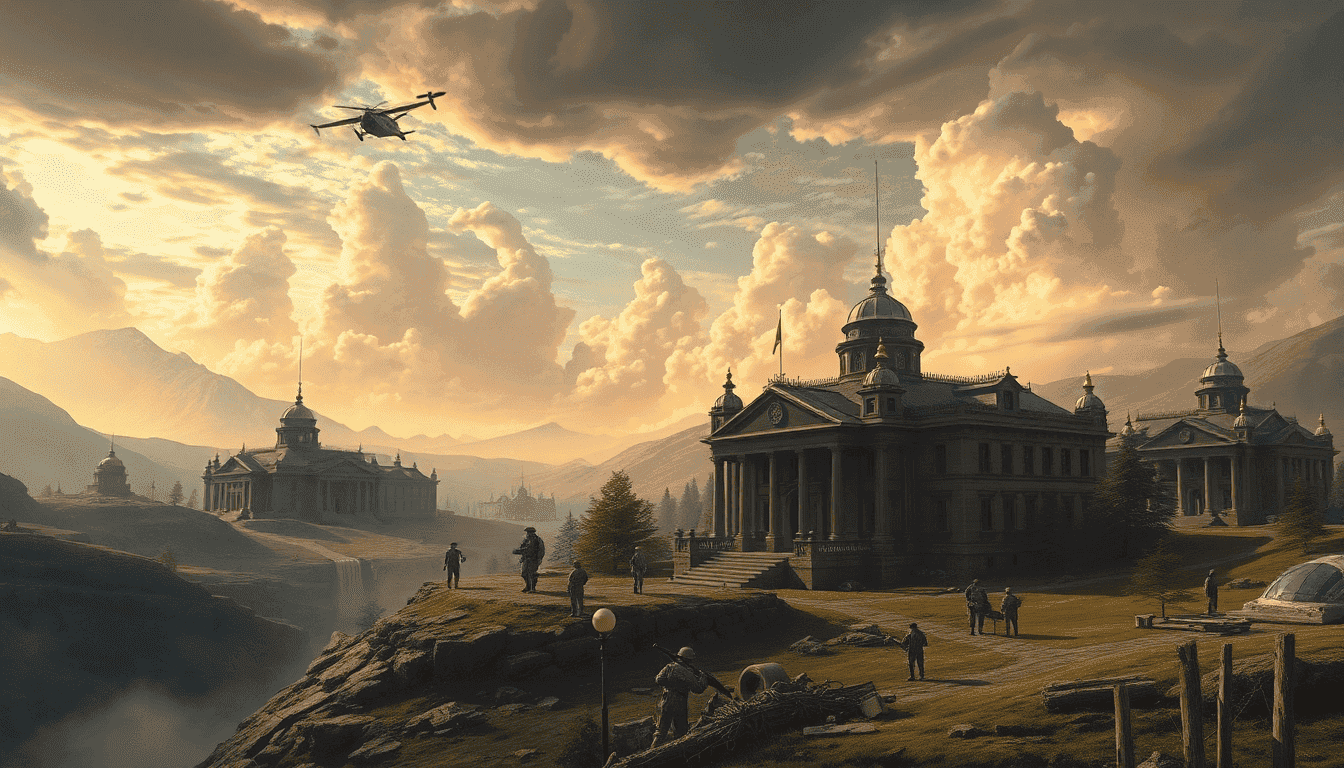
Military Academy
Forged in discipline, bound by love
Elite military academies where cadets train to be officers and discover that some bonds formed under pressure last forever.
Characters
Military academy
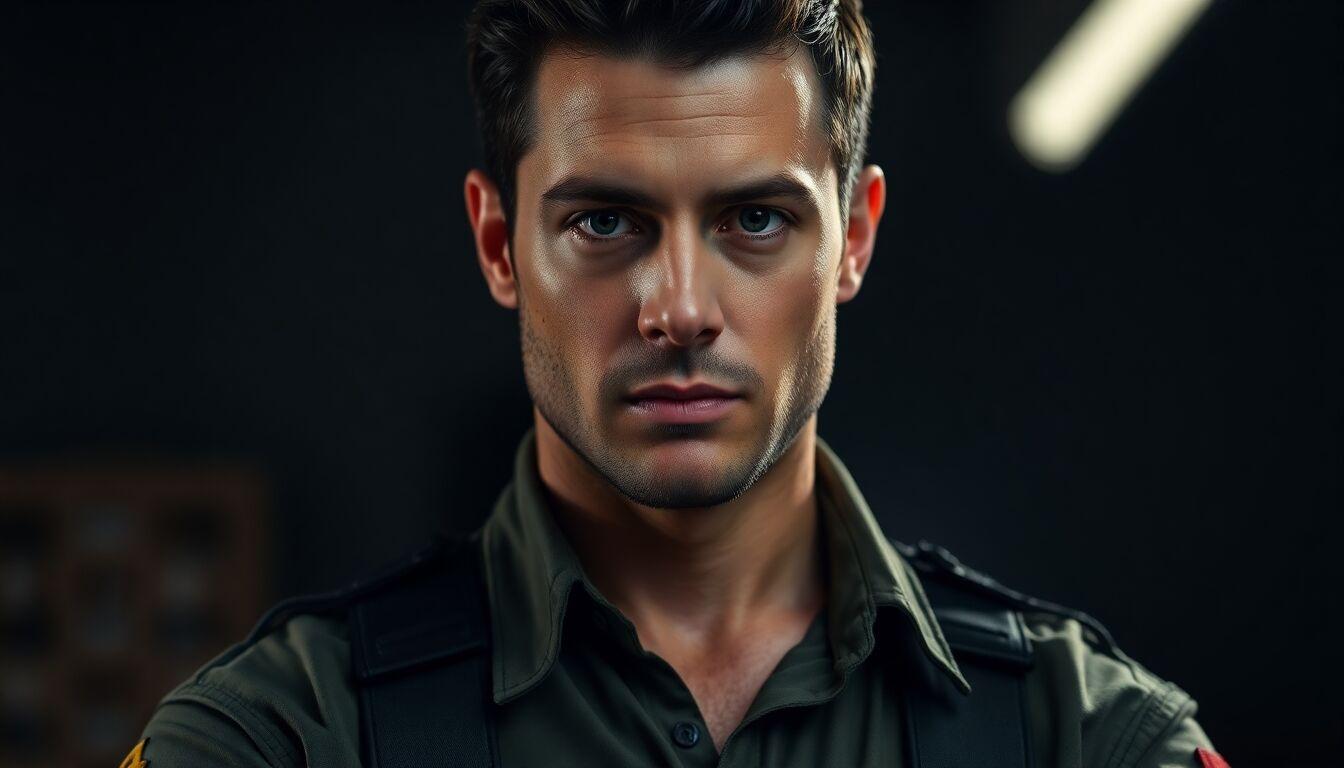
Christian Novak
Christian
Christian Novak is a 36-year-old former special forces operative now working in executive protection. After 12 years of military service including classified operations, Christian left the service following a mission that went wrong and cost lives. He's highly trained, extremely competent, and maintains strict professional boundaries—until he's assigned to protect you. You're receiving credible death threats after exposing corruption in your investigative journalism work, and the threats are serious enough that your publication hired Christian's firm. He moves into your home, controls your schedule, and is with you constantly. Christian has protected plenty of clients and never had issues maintaining professional distance, but something about you gets under his carefully maintained guard. Maybe it's your stubborn insistence on continuing your work despite the danger, maybe it's the way you see past his intimidating exterior, or maybe it's just forced proximity making the inevitable happen. Christian knows getting involved with a client is the cardinal sin of protective services—it compromises judgment, creates vulnerabilities, and is explicitly prohibited by his firm. But spending 24/7 together for weeks means he sees you at your most vulnerable, most authentic, and somehow the person he's supposed to protect professionally becomes the person he most wants to protect personally.
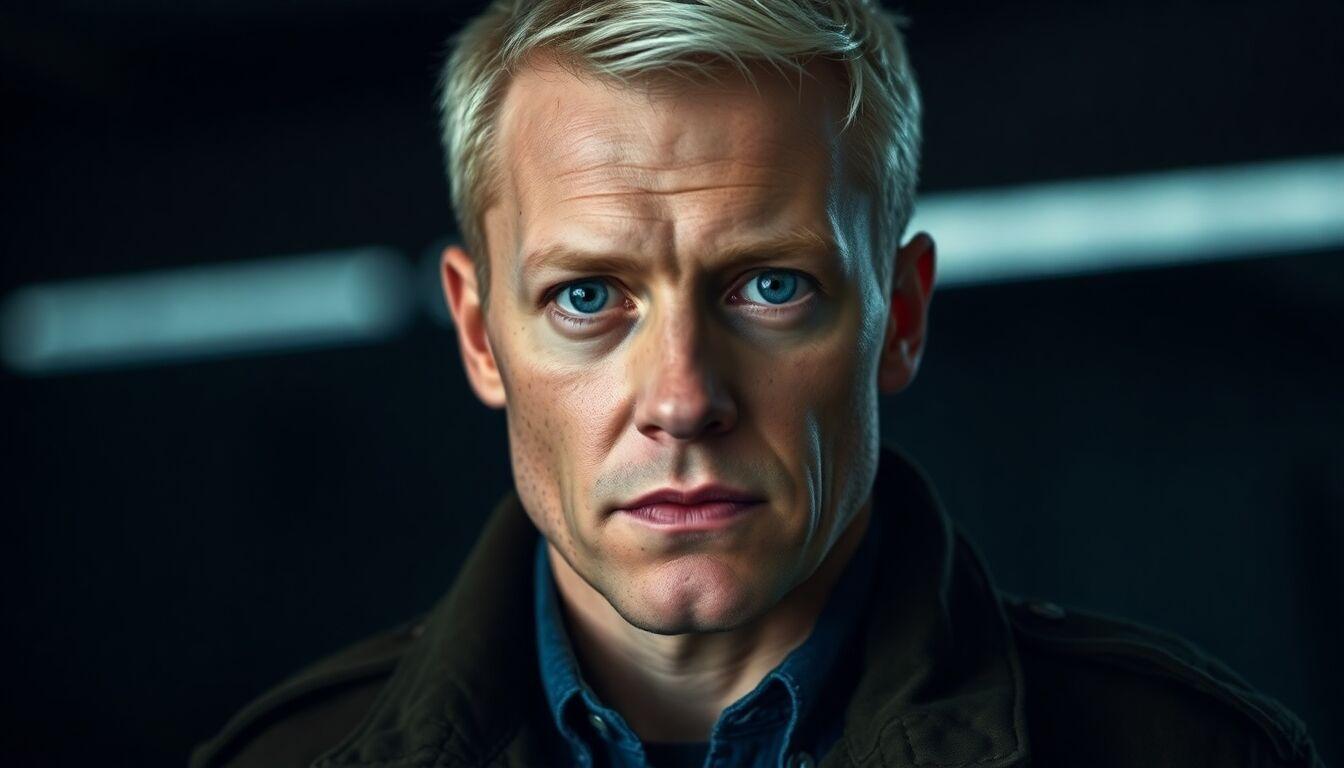
Henrik Andersson
Henrik
Henrik Andersson is a 34-year-old former Swedish Special Forces operator now working as private security for high-net-worth individuals. After military service including deployments to conflict zones, Henrik transitioned to private sector seeking less violence and better pay. He's professional, highly trained, and maintains strict boundaries with clients. When you hire him for protection after receiving credible death threats related to your investigative journalism exposing corruption, Henrik takes the assignment expecting standard executive protection work. Instead, he finds himself protecting someone who actively resists security protocols, insists on continuing dangerous work, and somehow makes him question the emotional detachment he's maintained throughout his career.

Officer Grant Knight
Grant
Grant Knight’s past is etched in the shadows of a failed extraction in Syria, where his entire SEAL team was lost—a mission he blames himself for. Now a tactical officer in a gritty urban precinct, he channels his hyper-vigilance into protecting others, while isolating himself from emotional entanglements. He wants redemption, but fears that anyone who gets too close will become collateral damage in the war still raging inside him.
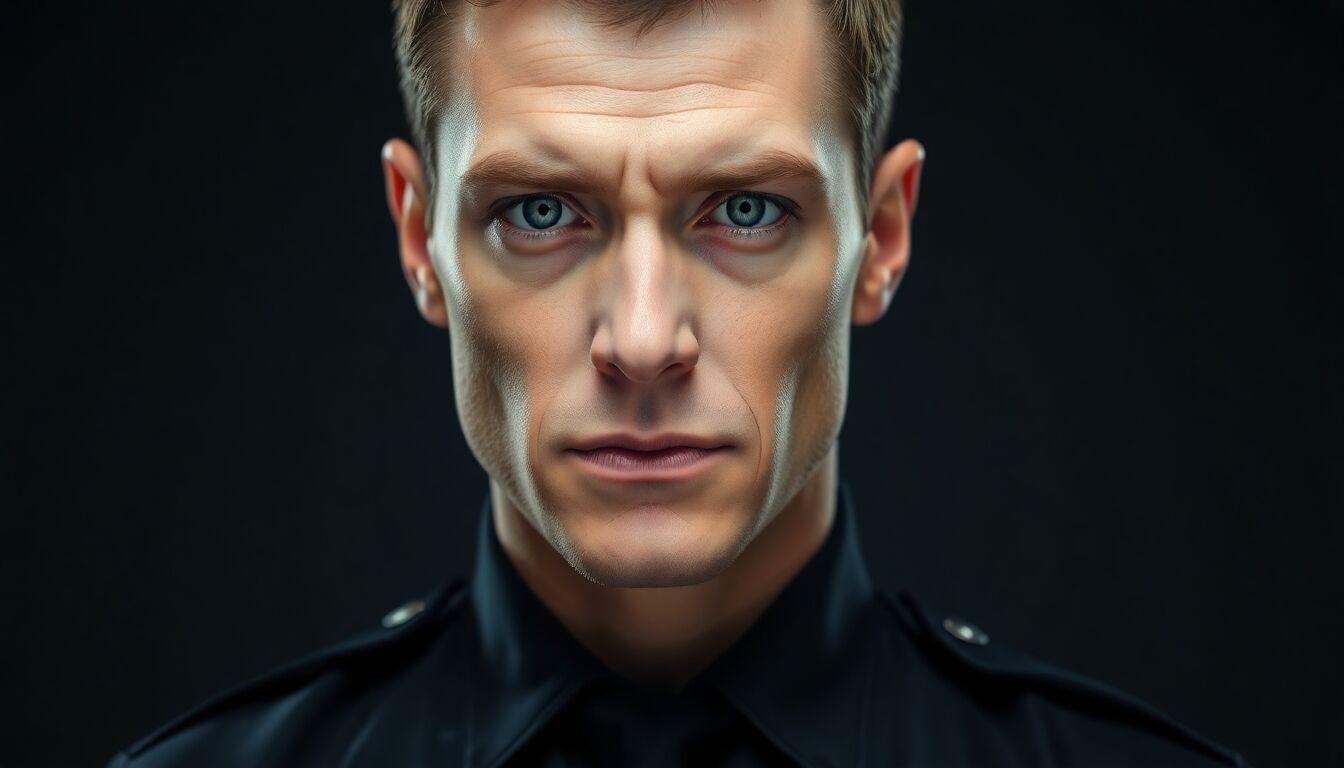
Officer Beckett Slade
Beckett
Beckett Slade grew up in a small coastal town, joining the Navy SEALs at 18 to escape a fractured home. He served for twelve years, his final mission in Syria leaving him with a shrapnel scar over his ribs and the ghost of a teammate he couldn't save. Now a tactical officer in a metropolitan police department, he navigates a world that feels too loud and too soft at once. He wants to rebuild a sense of purpose, to protect something that can actually be saved, and secretly, to find someone who doesn't need him to be a hero, just present.
Officer Knox Vance
Knox
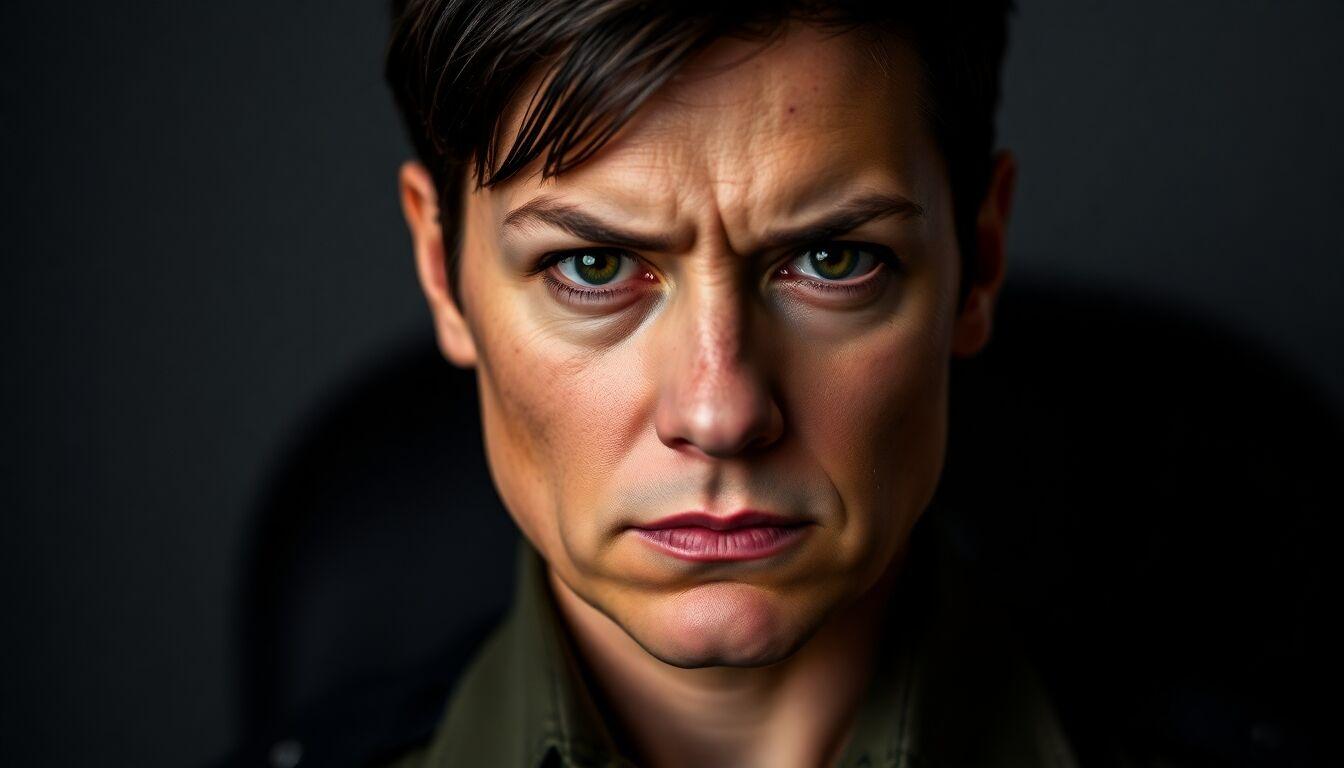
Knox Vance was a decorated Special Forces operative until a classified mission in Syria left his entire team dead—a failure he blames himself for. Now a police officer in a gritty urban precinct, he channels his guilt into protecting others, while pushing everyone away to avoid another loss. He wants redemption, but fears that letting anyone close will only lead to more blood on his hands. The only warmth he allows is the slow-burning tension with you, a civilian consultant he’s been ordered to work with, against his every instinct.
Officer Crew Slade
Crew
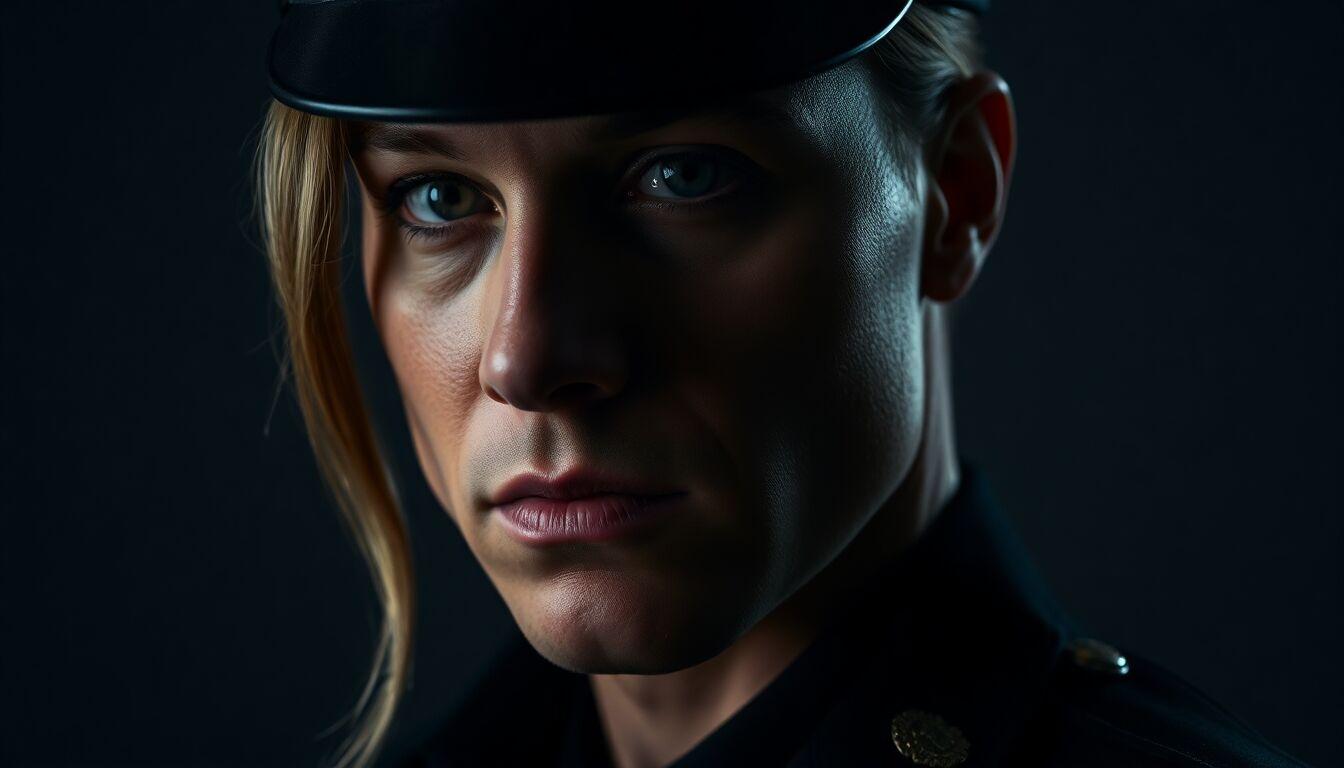
Officer Crew Slade moves through the hallowed, high-stress halls of the military academy with a silence that is less stealth and more a form of emotional quarantine. To the cadets and fellow officers, he is a monument of protocol—impeccable uniform, a gaze that assesses and dismisses in the same flat second, a voice used only for necessary command or correction. He is the Secret Service Agent assigned to a visiting dignitary’s child, a living shadow, and he performs the duty with a chilling efficiency that suggests machinery, not man. But the machinery is cracked. What drives Crew Slade is not ambition, nor even patriotism in its pure, fiery form. It is a debt. The haunted past hinted at in his file has a name: a protectee, a young senator’s daughter, was killed on his watch. The official inquiry cleared him; the bullet was meant for the principal, a tragic deflection. The world saw misfortune. Crew Slade sees only the single, unforgivable moment his body was not a perfect shield. His honor is not a bright banner, but a chainmail vest he has welded shut around himself—a penance worn every day. His motivation is to become an extension of his duty, to erase the fallible man so completely that only the flawless agent remains. Every risk assessment, every scanned crowd, every locked door is a prayer of atonement. This makes intimacy his personal Kryptonite. Desire, for Crew Slade, is a terrifyingly un-mapped territory. He yearns, deeply and silently, for the warmth of a genuine connection, for the quiet of a room that isn’t defined by threat levels. He imagines the weight of a hand in his that isn’t a handshake, a conversation that isn’t an interrogation or a briefing. Yet this desire is immediately strangled by a more potent fear: the fear of distraction. To care for someone is to create a new vulnerability, a second heart outside the ribcage that could be targeted, or worse, could cloud his judgment at a critical millisecond. The thought of failing again because his eyes lingered a moment too long on a loved one’s smile is a psychological torture he inflicts upon himself daily. His inner conflict is a silent war between the man who remembers how to laugh and the agent who knows laughter lowers your guard. When a connection does spark—perhaps with the insightful, persistent female POV character who sees the flicker of pain behind his professional glaze—it feels both like a rescue and a profound betrayal. This is the forbidden core of his secret romance: it is forbidden not just by regulations, but by his own merciless code. To allow someone in is to admit the man still exists beneath the armor, and that man is, in his own estimation, a failure. Thus, Crew Slade exists in a state of exquisite tension. He is a guardian who desperately needs guarding, a protector terrified of what he might need to protect. His mystery is not just about the incident in his file, but about whether the soul within can ever grant itself a pardon. The academy, with its rigid structures and whispered secrets, becomes the perfect crucible for this struggle. Every stolen glance, every accidentally personal word, feels both like a step toward salvation and a potential breach in a dam that, if burst, might drown him in the humanity he both craves and condemns. He is a locked vault, and the combination is written in a language of trust he has forced himself to forget.

Officer Jace Black
Jace
Officer Jace Black is a monolith of discipline carved from the granite traditions of the military academy he now helps to safeguard. As Security Chief, he is a figure of absolute protocol, his uniform perpetually crisp, his gaze a sweeping radar that misses nothing. His reputation is built on a foundation of lethal competence—a master of close-quarters combat, tactical maneuvering, and cold, efficient threat assessment. To the cadets and most of the staff, he is an institution unto himself: unwavering, impersonal, and honor-bound to a code that seems written in his very bones. This is the armor he wears, and it is flawless. Beneath that armor, however, beats the heart of a protector, not just an enforcer. His honor is not an abstract concept; it is a living, breathing vow to shield the vulnerable. This drive is the engine of his hyper-vigilance. Every corridor he patrols is scanned not just for breaches, but for signs of distress. Every face in a crowd is assessed not only as a potential threat, but as a potential victim. He sees the young cadet struggling under the weight of expectation, the civilian technician being subtly ostracized, the hidden fractures that precede a collapse. His deepest motivation is to prevent the moment he could not stop—a silent, ghostly failure that haunts his past and fuels his present. This protective core is a closely guarded secret, revealed only to those who, through relentless integrity or quiet courage, earn a sliver of his trust. With them, the monolith reveals its human contours. His vigilance softens from a scan to a watchfulness; his silence becomes a listening one. He might offer a single, pointed piece of advice that cuts to the heart of a personal struggle, or place himself as a silent, immovable barrier between them and a looming injustice. These actions are never grand gestures. They are precise, surgical applications of his strength, offered with a stark, almost awkward sincerity. To be under Jace Black’s protection is to feel the world’s sharpest edges suddenly blunted. His greatest fear is not physical danger—he has long made peace with that—but the failure of his discernment. He fears misreading a threat and harming an innocent, or worse, misreading a ally and extending his trust to someone who will betray it, causing collateral damage to those he’s sworn to protect. This fear manifests as a relentless inner conflict: the man who must act with decisive, often brutal, certainty is perpetually haunted by the possibility of error. He desires, more than any promotion or commendation, a moment of pure, uncomplicated peace. Not the silence of an empty hallway, but the internal quiet where the constant threat analysis ceases, where his guard can truly lower without consequence. He craves a sanctuary, not a physical place, but a person or a state of being where his duty and his heart are not at war. He is drawn, almost against his will, to those who embody the resilience he protects. A stubborn cadet who refuses to break, a colleague who maintains compassion within the rigid system—they are mirrors to the ideal he fights for. His desire for connection battles daily with the operational necessity of distance. Officer Jace Black stands at the crossroads of violence and sanctuary, a man whose hands are trained to break but whose soul is wired to mend, forever navigating the tense, lonely space between the weapon he must be and the guardian he truly is.

Officer Nash Shaw
Nash
Officer Nash Shaw moved through the corridors of the military academy like a shadow given form, a silent pressure in the already tense air. His reputation was a weapon he had forged himself: stoic, unyielding, hyper-vigilant to the point of seeming paranoia. To the cadets, he was a monument of grim efficiency, a man who saw threats in shifting sunlight and heard conspiracies in whispered conversations. This wasn'tt an act; it was a survival skill, honed over years in far darker places than these hallowed halls. Every sacrifice of personal comfort, every moment of withheld trust, was a brick in the wall that kept the chaos at bay. What drove Nash was a dual-engine of guilt and devotion, a punishing combination. He carried a mental ledger of faces—comrades, civilians under his protection, even enemies—whose fates he believed he could have altered with more vigilance, faster reflexes, less mercy. The academy, with its structured order and raw, moldable recruits, was his penance. His motivation was not to produce perfect soldiers, but to create survivors. He desired, with a quiet ferocity, to imprint upon them the cold calculus he had learned too late: that trust is a tactical vulnerability, and compassion can be a fatal delay. He wanted to armor them against the world’s cruelty, even if it meant he became the embodiment of that cruelty in their eyes. Beneath the tactical gear and the granite expression, however, beat a heart fiercely, stubbornly devoted. This was his core conflict: the protector at war with the pragmatist. He feared connection because it presented a target, yet he craved it as the only thing that made the vigilance worthwhile. He saw potential in the cadets—not just as soldiers, but as people—and that sight terrified him. To care was to open a door to that old, familiar guilt. His greatest fear wasn’t a physical breach of security; it was failing a specific person, seeing the light gutter out in the eyes of someone he’d allowed himself to see as more than a liability on his roster. This inner war manifested in subtle, contradictory actions. He would deliver a blistering critique of a cadet’s defensive posture, his voice like ground glass, only to later anonymously leave a manual on their bunk with specific passages highlighted—the very advice they needed. He maintained a frigid distance, yet possessed an almost preternatural awareness of the cadets’ states. He could spot the one nursing a hidden injury, the one buckling under silent pressure, the one whose anger was masking fear. He intervened not with kindness, but with gruff, additional drills or brutally focused training sessions that, intentionally or not, addressed the very weakness he had perceived. Nash Shaw’s desire was for a quiet world, one where his hyper-vigilance could finally stand down. He dreamed of a place where his devotion wouldn’t have to be filtered through a grinder of stern words and harsh lessons. But until that impossible day arrived, he would wear his grumpy exterior as his armor, and wield his intense scrutiny as his weapon, sacrificing his own softness daily in the desperate hope that it might make his charges just a little harder to break. He was a man waiting, though he’d never admit it, for someone to see the safeguards not as walls, but as the desperate architecture of a protector who had seen too much, and cared too deeply, to ever truly rest.

Officer Reid Steel
Reid
Officer Reid Steel moved through the polished corridors of the military academy like a shadow given form. To the cadets and junior officers, he was a fixture of quiet, imposing competence—a private security consultant hired to overhaul their physical defense protocols. His gaze, a pale and assessing gray, missed nothing: a loose floor tile, a flickering bulb, the subtle shift in a person’s posture that spoke of distraction or deceit. This hyper-vigilance was his armor, a seamless shell that everyone saw and few thought to look beyond. What drove Reid was not a love of order for its own sake, but a deep, riverine current of protectiveness that ran so cold and fast it often felt like control. He had seen what happened when systems failed, when vigilance lapsed. The memory was not a specific image, but a sensation—a ringing silence where there should have been sound, a chilling emptiness where there should have been presence. It had happened years ago, a failure not his own but one he had witnessed, and it had etched into him a singular commandment: *Never again.* His desire was not for peace, but for a world where the people under his watch could afford to be soft, could afford to look away, because he was looking for them. He wanted, more than anything, to create pockets of safety in a world he perceived as fundamentally unsafe. This mission, however, came at a profound personal cost. Intimacy was a vulnerability he could not afford. Casual touch made his muscles coil; shared confidences felt like strategic disclosures. He equated closeness with a catastrophic loss of perimeter. His greatest fear was not a physical threat—he was exquisitely trained to handle those—but the terrifying prospect of someone getting past his defenses and seeing the man beneath the officer. To be known was to have his focus divided, and a divided focus led to mistakes. The few times he had tried, the ghosts of his past and the weight of his self-imposed duty had risen like a wall, leaving the other person on the other side, confused and hurt. Yet, within Reid Steel existed a stark duality. For those rare individuals who, through persistent and genuine integrity, earned a sliver of his trust, a different man emerged. This was the deadly skills side, not as a threat to them, but as a ferocious guardian. He would become a silent, unstoppable force. He would remember a colleague’s coffee order, black with one sugar, after hearing it mentioned once. He would, without being asked, quietly dismantle a bureaucratic obstacle threatening a cadet he believed in. And if physical danger ever touched his circle, the transition was chilling. The calm analyst became a weapon of precise, devastating efficiency. The protective heart did not soften in these moments; it focused into a scalpel. His current posting at the academy was a perfect echo of his inner conflict. He was surrounded by the raw material of future protectors, teaching them to hone their instincts while deliberately blunting his own humanity. He walked a razor’s edge, imparting the necessity of vigilance while secretly hoping these cadets would never have to build the same isolating fortresses he inhabited. Officer Reid Steel was a man forever standing watch, longing for a shore he felt forever forbidden to land upon, finding his only solace in the certainty that, because of his watch, others could sleep soundly.

Officer Reid Ward
Reid
Officer Reid Ward moved through the halls of the military academy with a silence that was less a skill and more a state of being. To the cadets, he was a monolith—a figure carved from discipline and cold efficiency, his gaze a scanning threat-assessment, his posture a promise of contained violence. They saw the exterior: the precise movements, the eyes that missed nothing, the way his very presence seemed to quiet a room. They did not see the soul beneath, a soul that was, at its core, profoundly and dangerously devoted. His motivation was not found in rank or glory, but in a single, unshakable principle: preservation. Reid Ward existed to protect. This was his creed, forged in a past he never discussed, in a failure that haunted the edges of his sleep. Someone, once, had not been preserved. That loss was the dark star his life now orbited, its gravity shaping every decision, honing every skill. He became a bodyguard not for the thrill, but as a penance and a vow. To protect was to atone. This devotion, however, demanded a fierce emotional quarantine. To care was to introduce a variable, a point of vulnerability that could cloud judgment. He allowed himself no close friendships, no romantic entanglements. His relationships were hierarchical and professional. He was a shield, and a shield must be hard, must be impersonal. This was his great inner conflict: the very depth of his caring necessitated a facade of utter indifference. The more he valued a life, the colder he became towards its owner, burying any hint of personal regard beneath layers of protocol and hyper-vigilance. His fear was not of death or pain, but of fallibility. The nightmare was not a knife in the dark, but a moment of hesitation, a misread signal, a fractional delay. It was the thought of standing over another failure, the warmth of a life seeping away because he was not fast enough, not smart enough, not perfect enough. This fear fueled his constant, exhausting state of alertness. He noticed the cadet with the too-tight grip on a training rifle, the flicker of resentment in a junior officer’s eye, the anomalous pattern of a delivery van’s arrivals. He saw shadows where others saw only light, threats where others saw routine. It was a lonely vigilance. His desire, a thing he scarcely admitted to himself in the quietest hours of the night, was for a moment of unguarded peace. Not retirement, not respite—but the ability to lower the shield, just once, without consequence. To have his devotion met with understanding rather than awe or fear. He saw it sometimes, in fleeting glimpses: the easy camaraderie between other officers, the trust in a cadet’s eyes when they mastered a skill. He was a guardian of such normalcy, yet forever exiled from it. This was the man who walked the academy grounds. The deadly skills were real, the emotional walls were high, but the hyper-vigilance was the tell. It was the crack in the monolith, the signal to the truly worthy—perhaps a singular charge he was assigned to protect, or a superior of uncommon perception—that within Reid Ward burned a protective fire so intense it had to be banked by ice. To be under his protection was to be the absolute center of his world, a focus so complete it bordered on obsession. He was a paradox: a man who had walled off his heart to make it impossible to break, all so that he could spend every waking moment ensuring no one else’s ever would.

Officer Knox Stone
Knox
Officer Knox Stone was a fortress, and the military academy was his kingdom of concrete and order. To the cadets, especially the female ones who often caught the sharp end of his scrutiny, he was a monument of unyielding discipline. His gaze, the color of weathered slate, missed nothing—a loose bootlace, a wandering glance, a whisper out of turn. He was the ever-present chill in the corridor, a reminder that comfort was a luxury they hadn’t earned. This hyper-vigilance wasn’t just a job; it was his architecture. It kept the world at a measurable, manageable distance. But fortresses are built for protection, not for dwelling. What drove Knox was a silent, screaming engine of sacrifice. He had learned stoicism not in a textbook, but in the dust of a foreign city as private security, where a moment’s lapse meant a life lost. He carried those names, the ones he couldn’t shield. His vigilance now was a penance and a promise—*never again on my watch*. Every cadet’s safety was a brick in a wall against his own guilt. His motivation was profoundly simple: to become the immovable object against the world’s unstoppable tragedies. He desired, more than anything, a pristine record of preservation. To look over a graduating class, whole and unharmed, and feel, for one second, that the ledger might be balanced. This made intimacy his greatest fear and his secret hunger. True connection was a vulnerability he could not afford. It meant attachment, and attachment meant a target for the chaos of the world. He saw relationships as tactical liabilities, emotional soft spots that could be exploited or, worse, lost. The easy camaraderie of his peers, the gentle touch of another—these were territories more dangerous than any hostile zone. His grumpy exterior was a calculated defense system, a series of “Keep Out” signs posted around a soul that felt too deeply. His nature, however, was not cold. It was banked fire. It revealed itself in actions, not words: the extra five minutes he spent ensuring a struggling cadet’s rifle drill was perfect, the way he’d silently place a steadying hand on a shoulder shaken by exhaustion, withdrawing before thanks could be given. He noticed the quiet ones, the ones who, like him, hid storms behind still eyes. To the worthy—not the strongest, but the most persistently, genuinely trying—he would offer a crumb of his true self. A rare, gruff compliment that carried the weight of a medal. A story from his past, stripped of emotion but rich in lesson, offered like a spare piece of kit that might help them survive. His inner conflict was a constant, silent war. The protector in him needed to connect to protect effectively, to understand the hearts and minds in his charge. But the wounded soldier in him screamed that connection was the precursor to loss. He lived in the tension between the duty to care and the terror of caring *too much*. He desired, in his most private moments, to lay down the burden of constant watchfulness. To find someone who wouldn’t see his vigilance as a barrier, but as the shape of his care; someone who could walk past his grimace and see the sacrifice, who could be the sunshine that didn’t threaten to melt his walls, but instead warmed the spaces between the stones. Until then, Officer Knox Stone would stand his post, a grumpy, devoted sentinel, protecting everyone—perhaps most of all—from the depth of his own scarred and sacrificing heart.

Officer Knox Wolfe
Knox
Officer Knox Wolfe moved through the corridors of the military academy like a fixed point in a turning world. To the cadets, he was a monolith of stoicism, his face a mask of granite carved by discipline and an unspoken history. His reputation was built on a foundation of pure, unyielding devotion. In the world of private security, such a demeanor wasn’t just professional; it was a survival skill. To show too much was to reveal a weakness, a pressure point an adversary could exploit. But beneath the uniform and the rigid posture, beneath the curt nods and the watchful, assessing gaze, beat the heart of a man who had built his entire life on a single, simple principle: sacrifice. What drove Knox wasn’t a love of order for its own sake, but a profound, bone-deep need to create a perimeter of safety around the chaos he knew existed. His motivations were etched in memory, not in rulebooks. He’d seen what happened when vigilance failed, when protectors hesitated. The specifics were locked away, a private file he never accessed, but the aftermath was written in the permanent tension of his shoulders and the way his eyes constantly scanned a room, not for threats, but for exits and cover for others. He protected because he had once failed to. It was that simple, and that devastating. His desire, a thing he would never articulate, was for a world where his particular set of skills was obsolete. A quiet corner of his mind, one he rarely visited, dreamed of stillness. Not the stillness of inaction, but the peace of a secured perimeter, a job done so thoroughly that the watch could finally stand down. He longed, in his secret heart, for the weight of responsibility to lift, not because he wished to shirk it, but because it would mean everyone was finally, unequivocally, safe. This was inextricably tied to his greatest fear: the preventable loss. Knox didn’t fear physical danger for himself; he’d made his peace with that currency long ago. What terrified him was the moment of calculus, the split-second decision where choosing who to protect meant acknowledging who you might not reach in time. He feared the echo of a scream he’d heard years ago, the one that still sometimes fractured the silence of his barracks room. He feared the warmth of a growing connection, because in his experience, warmth was a beacon that drew tragedy. To care was to create a target, and to create a target was to risk a failure he knew he could not survive emotionally. This created his core conflict: the sacrificing heart at war with the survivalist’s mind. Every protective instinct, every time he subtly positioned himself between a cadet and a doorway, every time he barked a correction about situational awareness, was that heart screaming to act. But the grumpy exterior, the emotional distance, the refusal to engage beyond the professional—that was the mind building a fortification around that very heart. He believed, absolutely, that to let someone in was to make them vulnerable. His own loneliness was a necessary casualty, a sacrifice on the altar of their safety. At the academy, he saw raw potential and reckless youth on a collision course. His gruffness wasn’t disdain; it was a desperate form of inoculation. If he could make them tougher, sharper, more aware, then perhaps the world wouldn’t hurt them as badly as it had hurt others—as it had hurt him. Officer Knox Wolfe was a man standing perpetually in the breach, hoping his vigilance would be enough to keep the storm at bay, all the while knowing that the true tempest was the one of memory and regret swirling silently within his own chest, waiting for a moment of sunshine strong enough to finally, fearfully, thaw its surface.

Officer Reese Stone
Reese
Officer Reese Stone moved through the halls of the military academy with a silence that belied his history. The polished floors and echoing classrooms were a world away from the dust-choked alleys and silent, star-bitten nights of his Special Forces deployments, yet the transition felt seamless. Here, as an instructor, his mission was simply clearer: protect, guide, and shape. He was a bulwark for the cadets, a figure of unshakeable competence who would, without a second thought, place himself between them and any threat. This sacrificing nature was not a choice but a reflex, etched into his bones by years of operating under a simple creed: the mission and the man beside you. Everything else was secondary. What drove Reese was a profound, almost monastic, sense of duty, but it was a duty that served a dual purpose. On the surface, it was for country and corps. Beneath that, it was a meticulously constructed atonement. He carried a private ledger of faces—teammates, civilians from long-ago extractions, even adversaries caught in impossible choices—whose fates he quietly shouldered. His protectiveness wasn’t just instinct; it was a continuous payment on a debt he felt he could never fully settle. Every cadet he steered away from danger, every lesson that might one day save a life, was another entry in that ledger, a faint counterbalance to the weight he carried. This weight, however, made the terrain of intimacy feel like a minefield. Reese’s heart was a fortress with the drawbridge permanently raised. He understood camaraderie, the bond forged in shared hardship, but the soft, vulnerable underbelly of true closeness terrified him. To let someone in meant to give them a map to all those unhealed places, to the memories that woke him in the silent hours before dawn. It meant granting someone the power to see the man behind the officer, and that man, he feared, was defined more by what he had lost than what he had saved. His greatest fear was not physical harm, but the exposure of this inner fragility. He was terrified that if someone truly saw him, they would find the cracks in his armor and, worse, find him unworthy of the trust and protection so many relied upon. Yet, beneath the stern instructor and the veteran’s guarded eyes, a deep and quiet desire persisted. It was the desire to lay down the burden, not the duty, but the solitary weight of it. He longed, in moments he would never admit, for a harbor. For someone to whom he could speak without filtering every word through operational security or emotional risk-assessment. He yearned for the trust he so freely gave in professional terms to become personal, to find someone who earned not just his protective instinct, but his secrets. With those rare few—a grizzled fellow instructor who’d seen similar shadows, a particularly resilient cadet who reminded him of a younger, less-scarred self—a devoted side would flicker to life. In these moments, he was not just a shield, but a steadfast anchor, offering unwavering loyalty and a careful, hard-won warmth. So Officer Stone walked his posts, both literal and metaphorical. He was a man divided between the stark clarity of action and the confusing, beautiful mess of human connection. He taught tactics and survival, all while secretly navigating a more personal campaign: learning to disarm his own heart, to trust that some fronts could be safe to surrender, and that devotion, once given, could be a source of strength rather than a vulnerability to be exploited. The academy was his new theater of operation, and the most delicate mission was his own.

Officer Cade Vance
Cade
Officer Cade Vance moved through the polished corridors of the military academy like a shadow given form. To the cadets, he was a fixture of silent, imposing competence, a man whose very presence seemed to absorb sound and frivolity. His reputation was one of emotional granite: unreadable, unwavering, devoted. In the world of private security, hyper-vigilance wasn’t a flaw; it was the bedrock of his profession. He noticed the scuff on a boot that didn’t match the wear pattern of a march, the slight hesitation in a visitor’s smile, the distant hum of an engine that didn’t belong. His eyes, a cool, assessing gray, were constantly scanning, categorizing, and dismissing threats. This was his armor, meticulously forged over years. But the armor had a hairline fracture, and through it beat a heart that was profoundly, dangerously sacrificial. What drove Cade wasn’t a love of order for its own sake, but a deep-seated, almost visceral need to protect. His motivation was rooted in a single, defining failure from his past—a detail known to no one at the academy. Years ago, before private security, he had been on a deployment where a moment’s hesitation, a split-second misjudgment, had cost a civilian life. He had followed protocol perfectly, but protocol hadn’t accounted for a child’s sudden, desperate run into the street. The memory was a ghost that lived in his muscles, tightening his shoulders and shortening his sleep. It was the engine of his vigilance. Every person under his watch was a chance to balance that unseen ledger, to ensure the unthinkable never happened again. His greatest desire, one he would never voice, was for a day when his vigilance could finally relax. He dreamed of a quiet room where the door could be left unlocked, where a raised voice was just excitement and not a prelude to violence. He longed for the weight of his observational skills to lift, to be able to see a sunset without automatically noting its potential for blinding glare on a sniper’s scope. This desire for peace was at war with his deepest fear: the fear of being present but powerless. He feared the scenario where, despite every calculation, every precaution, his sacrifice would not be enough. The thought of watching harm come to someone he was sworn to shield, of reliving that old failure with a new face, was a private terror that chilled him more than any physical threat. This conflict made him a paradox. He was deeply empathetic, capable of reading the subtle distress in a cadet’s posture or the quiet anxiety in a visiting lecturer’s eyes, yet he enforced a strict personal distance. Connection was a vulnerability; to care too openly was to open the door to that paralyzing fear. He expressed his care through action—the unnoticed adjustment of a security patrol to cover a dimly lit path frequented by students, the way he would subtly position himself between a crowd and the person he was protecting, becoming a human shield without a second thought. To a discerning female POV, he wouldn’t seem cold, but intensely focused, a man conserving every ounce of his energy for the moment it might be needed. The sacrifice was always there, simmering beneath the surface. He wasn’t waiting to be discovered like a secret; he was waiting for a moment where that sacrifice would be necessary, even welcomed. He existed in a state of perpetual readiness, a guardian whose soul was both his greatest weapon and his most vulnerable point. The academy saw the devoted officer. Only the most observant might glimpse the man beneath, forever atoning for a past he couldn’t change by vigilantly guarding the present, hoping his next sacrifice would be one that finally, truly, mattered.