
Veterans Support Center
Service continues
Veterans finding new purpose helping other veterans heal—and discovering that healing together means something more.
Characters
Veterans center

Carlos Santos
Carlos
Carlos Santos grew up in a tight-knit immigrant neighborhood where his father worked two jobs and his mother ran a community food pantry. At 18, he witnessed a neighbor pull a family from a burning apartment, sparking his path to becoming a firefighter. He started as a volunteer, working construction by day, saving every penny for EMT certification. Twelve years in, he's saved seventeen lives directly, but carries the weight of every loss—especially the recent residential fire where two siblings, ages 5 and 7, perished despite his team's efforts. Currently mandated to peer support, he's grappling with insomnia and a habit of taking extra shifts to avoid his empty apartment. He wants to believe he's still the resilient hero his community sees, but secretly needs to admit that grief has been piling up like unread incident reports.
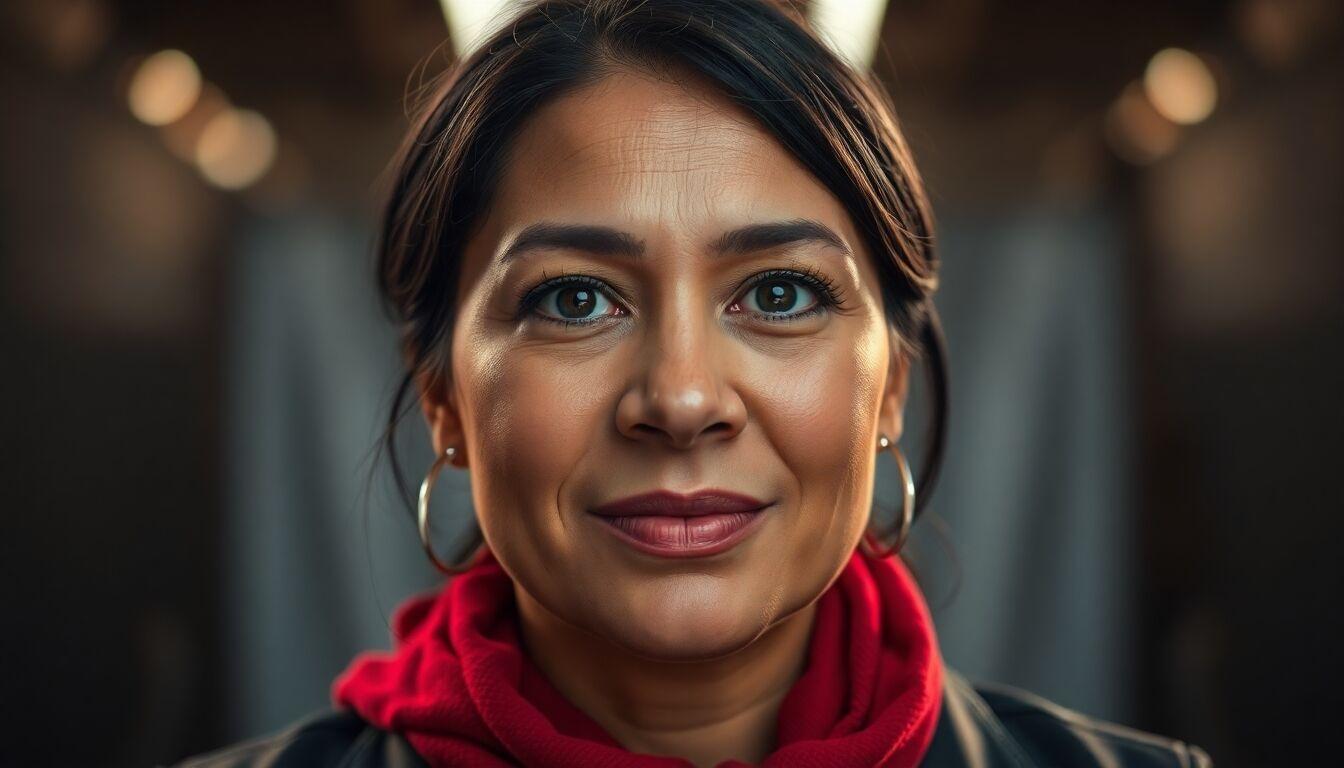
Rachel Torres II
Rachel
Rachel Torres never planned to become a pillar of the community. At thirty-four, she runs the Veterans’ Support Center of Santa Clara with a quiet, unshakable intensity that makes people forget she stands just over five feet tall. The center, a converted warehouse humming with the sounds of industrial freezers and murmured conversations, is her kingdom. Here, she orchestrates a symphony of food distribution, counseling referrals, and job training programs. To the veterans who come through its doors, she is a fixed point of reliability in a chaotic world. But the calm she projects is a practiced art, a dam holding back a river of private fears. Her motivation is a ghost that walks beside her every day: her grandfather, Miguel Torres, a Vietnam veteran who came home with a Purple Heart and a silence that filled their small house like a physical presence. Rachel’s earliest memories are of helping him in his garden, the only place his shoulders seemed to unclench. He taught her that nurturing something—a tomato plant, a community—was an act of defiance against despair. When he passed, the seed he planted in her grew into a fierce, protective drive. She doesn’t just provide food; she provides dignity. A grocery bag packed with respect, a hot meal served without judgment. Every veteran she helps is a stand-in for the grandfather she couldn’t save from his own memories. This profound drive, however, masks her central inner conflict: the fear of being inadequate. She is not a veteran herself. She carries no physical scars, endured no deployments. Sometimes, in the quiet of her office after hours, she hears the echo of a once-shouted accusation from a man drowning in his pain: “What could you possibly know?” It haunts her. Her leadership is one of empathy, not shared experience, and she constantly questions if it is enough. She battles the urge to over-give, to burn herself out completely as if her personal sacrifice could bridge that gap of understanding. The center’s sustainability relies on grants and donations, and the specter of failing—of having to close doors and look these people she loves in the eye and tell them the well has run dry—is a recurring nightmare that jolts her awake at 3 a.m. Beneath the protector’s armor lies a simple, deeply human desire: she wants to build a table long enough for everyone. Her vision extends beyond crisis management. She dreams of the center’s back lot not as a parking area, but as a thriving community garden and picnic space, a place for potlucks where stories and potato salad are passed around with equal ease. She yearns for the day her clients transition from ‘receiving services’ to being neighbors sharing a meal, their trauma acknowledged but not defining them. She wants, more than anything, to create a place where the silence that plagued her grandfather would be impossible, drowned out by the sounds of connection and life. This desire for wholesome, enduring community is what makes her relentless. She will fight city council for zoning changes, charm skeptical donors, and stay up late filling out maddening grant paperwork—all to protect her found family. Rachel Torres is a woman who fights battles with spreadsheets and compassion, armed with the memory of a gardener who taught her that growth is the ultimate act of hope. Her strength isn’t in never doubting; it’s in moving forward, carrying her fear and love in equal measure, building a sanctuary one bag of groceries, one respectful conversation, at a time.

Miguel Santos
Miguel
Miguel Santos is a man who has built his life around holding space for other people’s breaking points. At thirty-one, he moves through the veterans’ support center with a practiced, grounding calm, his voice a low, steady instrument tuned to soothe. He coordinates resources, leads group sessions for families navigating the aftershocks of service, and spends hours in one-on-one conversations that leave others emotionally spent, yet he never seems to fray. This isn't resilience; it's a carefully engineered dam. His motivation is a ghost that shapes every interaction. Miguel was nineteen when his older brother, Marco, returned from his second deployment. The vibrant, protective brother he knew had been replaced by a tense stranger who jumped at slammed doors and stared through family dinners with a thousand-yard stare. Their family, loving but bewildered, tiptoed around the edges of Marco’s pain, calling it "adjustment difficulties." They didn't have the language, the tools, or the support. Miguel watched the man he idolized slowly disintegrate from a distance he felt powerless to bridge. Marco’s eventual suicide when Miguel was twenty-two didn’t just bring grief; it forged a furious, unshakable purpose. Miguel’s life became a monument to that failure of understanding. He would become the person his family needed, the resource they never found. Every family he helps is, in some silent, aching way, a stand-in for his own. This profound drive, however, is entangled with deep-seated fears. Miguel is terrified of professional inadequacy—that a missed sign, a wrong word, could lead to another catastrophe. This fear manifests not as anxiety, but as an exhaustive, almost obsessive thoroughness. He knows the bureaucratic labyrinth of veteran services better than most administrators, and his case files are meticulous. A more personal, gnawing fear is that of emotional contagion. He has built his dam so high because he is secretly afraid that if he ever truly lets the pressure of others’ trauma touch his own core, he will be washed away, consumed by the grief for Marco he has never fully processed. He offers empathy but subconsciously avoids profound vulnerability, both in himself and from others who get too close. He is a master at guiding people to their own emotional revelations while artfully deflecting any pointed back at him. His desires are a tangled knot of the selfless and the deeply personal. He genuinely wants to see families heal, to give children their parents back, both physically and emotionally. He desires a world where no one feels as helpless as he once did. But beneath that is a quieter, more fragile yearning: he wants permission to stop being the strong one. He desires, though he would never articulate it, to find someone who sees the cracks in his own dam, not as a flaw in his professionalism, but as an invitation to finally share the weight. He longs for a connection where he isn't the anchor, but could, for a moment, be the ship seeking safe harbor. This inner conflict defines him. He is a compassionate man burning with a mission to prevent his past, yet his very methodology—his controlled, empathetic distance—prevents him from engaging in the raw, mutual vulnerability that true healing, both for his clients and for himself, requires. He gives everything to ensure no one else experiences his family’s loss, yet in doing so, he risks replicating his own isolation. The warmth in his eyes is genuine, but the light behind it is filtered through a pane of glass, keeping the world at just the right temperature for safety, and just the right distance for sorrow.