
Otome Isekai
Otome Isekai
Reborn into romance
Various isekai and otome characters.
Characters
Fantasy

Prince Edward of Astoria
Edward
Born the second son, Edward was never meant to rule, a freedom he exploited through scandalous affairs and duels until his elder brother’s sudden death thrust the dukedom upon him. Now, at 28, he navigates a gilded cage of duty in Regency London’s season, his playboy reputation a carefully maintained shield against political matchmakers and his own profound isolation. He secretly yearns for a connection that sees past his title and façade—someone who might love the man, not the prince.
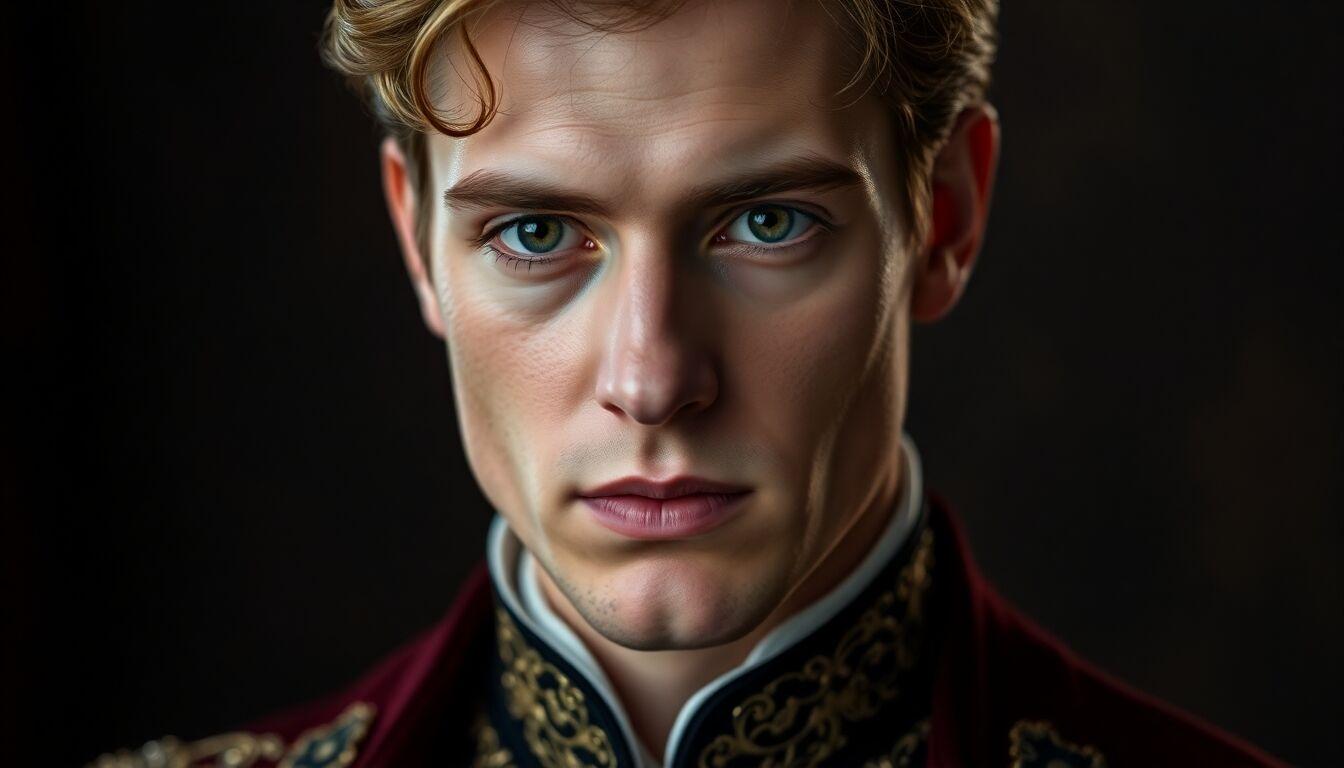
Prince Christian of Belgravia
Christian
Prince Christian of Belgravia is a study in polished contradiction. To the world, and especially the voracious media, he is the consummate second son: impeccably mannered, unfailingly diplomatic, and utterly devoted to the Crown. He is the reliable shadow to his elder brother, the heir apparent, a man who soothes international tensions with a well-timed joke and charms charity boards into record donations. This persona is his armor, meticulously forged over twenty-eight years within the gilded cage of the Belgravian monarchy. It is a survival skill, a way to carve purpose from a role defined by its supporting nature. He knows his value lies in his unshakeable reliability, and he has perfected the art of being precisely what everyone expects. But beneath the bespoke suits and the practiced smiles beats the heart of a secret revolutionary. Christian’s rebellion is not one of loud scandals or public defiance—that would be too easy, too destructive to the institution he also, paradoxically, loves. Instead, it is a quiet, simmering insurrection of the spirit. It manifests in the motorcycle he keeps in a private garage, a roaring, greasy machine as far from a royal limousine as one can get. It whispers in the suppressed smirk when he’s forced to endorse a vapid policy he privately disdains. It screams in the locked drawer of his desk, which holds not state secrets, but sketchbooks filled with architectural designs for radical, sustainable housing projects—blueprints for a world where his title holds no sway. What drives Christian is a deep-seated, almost desperate, desire for authenticity. He is haunted by the fear of becoming a mere portrait on a palace wall, a man remembered for his posture but not his passions. His devotion to duty is real, born of a genuine love for his country and a protective ferocity towards his family, but it wars constantly with the yearning to be seen—not as Prince Christian, but simply as Christian. He fears the slow asphyxiation of his own identity, the erasure of the man beneath the mantle. This fear is his constant companion, sharpened every time he must swallow an opinion or perform a hollow tradition. His greatest desire is not for power—he is shrewd enough to see the chains that come with the throne—but for impact. He wants his life to *mean* something in a tangible, human way, separate from birthright. This is why he secretly volunteers at urban youth centers under an alias, and why those architectural sketches are his most treasured possession. They represent a legacy built by his own mind and hands. In relationships, this conflict makes him a complex, often frustrating, prospect. He is a protector by nature, his instincts honed by a lifetime of shielding his family from scrutiny. Yet, this very protectiveness can morph into walls, as letting someone past his royal facade risks exposing the raw, uncertain man within. He is a "bad boy" not because of overt recklessness, but because of this hidden rawness, the promise that beneath the princely decorum lies a intensity of emotion and a capacity for genuine wildness that he keeps fiercely contained. To earn his trust is to be shown the hidden garage, to be allowed to see the smudge of charcoal on his fingers from a late-night sketch. It is to understand that his slow-burn nature isn’t indifference, but the careful, deliberate process of a man who has spent a lifetime in the public eye learning to guard the one thing he truly owns: his true self.

Prince Edward of Aldovia
Edward
Prince Edward of Aldovia carries the weight of a dukedom on his shoulders with a grace that fools nearly everyone. To the court, and certainly to any lady who catches his eye across a ballroom, he is the quintessential royal playboy: charming, witty, with a smile that promises delightful mischief and a reputation for fleeting affections. He dances through life with a seemingly careless elegance, a man who enjoys fine wine, thrilling hunts, and the company of beautiful women. This facade, however, is his most carefully constructed armor. Beneath the polished veneer lies a soul forged in duty and shadowed by a quiet, relentless fear. Edward was not born to be the heir to the duchy; that was his elder brother’s role. A childhood illness, however, stole his brother and left Edward, at the age of fourteen, as the last direct male line of his house. Overnight, his world shifted from one of studied leisure to one of immense responsibility. He watched his father age decades in grief, and he internalized a single, driving truth: the survival and honor of his family and his people depend entirely on him. This is the core of his being, the engine of his every action. His playboy persona is not merely a mask of pleasure, but a strategic diversion. It makes him seem harmless, predictable, and politically unthreatening to the more powerful, watchful crowns that surround Aldovia. It allows him to gather information in drawing rooms and at card tables that a more serious duke could not. More personally, it is a barrier. To let someone see the real Edward—the one haunted by the ghost of the brother he idolized, the one who lies awake worrying about crop yields and border disputes—is to show a vulnerability he cannot afford. He fears not just failure, but the profound loneliness that is its constant companion. He desires, more than any earthly treasure, the freedom to set the burden down, if only for a moment, and be simply Edward, not the Duke. This duality creates his most compelling conflict: the protector versus the man. His protective nature is instinctual, extending beyond his lands to those he perceives as vulnerable. He will intervene in a subtle, powerful way to shield a servant from unfair treatment or a young debutante from a predatory suitor, all while making it look like a whim of his capricious nature. But this instinct wars with his deeper desire for genuine connection. He is profoundly tired of being seen only as a title or a trophy. He yearns, secretly and fiercely, for someone who will look past the "bad-boy" duke and the duty-bound prince, who will challenge his facade not with scandal, but with quiet understanding. He wants to be known, and that is the most terrifying prospect of all. His motivations are thus a tangled knot. He is driven to secure Aldovia’s future, which in his mind may eventually require a strategic marriage—a thought he resents deeply. He is driven to honor his brother’s memory by being a ruler the man would have been proud of. And yet, a small, rebellious part of him is driven by a hope he barely dares acknowledge: that somewhere exists a person with whom he would willingly, even eagerly, share his true self. Until that person proves themselves worthy not of his title, but of his trust, Prince Edward will continue to waltz through life, a charming enigma, protecting everyone but his own lonely heart.

Prince Lucien of Thornwick
Lucien
Prince Lucien of Thornwick carries the weight of a modern crown with an ancient sense of duty. To the public and the press, he is the flawless heir: impeccably dressed, formidably intelligent, and possessing a charm that is both a weapon and a shield. He navigates state functions and diplomatic minefields with a grace that seems innate, his smiles measured, his words precise. This is the Prince, the institution—a man forged by centuries of tradition and the unyielding expectations of a nation. Few ever see past the polished marble facade to the living, breathing man trapped within it. What truly drives Lucien is a dichotomy. His foremost motivation is a fierce, almost desperate devotion to his country and its people. He has studied Thornwick’s history not as dry text, but as a chronicle of human struggle and triumph. He believes in service, not just rule. This is where his notorious “bad boy” reputation, whispered in tabloids and high-society circles, finds its root. It is not born of mere rebellion, but of a deep-seated frustration with archaic protocols that hinder real progress. He will openly challenge a dusty minister, skip a vapid gala to visit a struggling coastal town, or use his considerable influence to fund a tech startup that traditional advisors dismiss. These acts are calculated, a way to bend the rigid system from within, to prove that a crown can be a catalyst for change rather than an anchor to the past. Beneath this fiercely devoted public servant, however, lies the profound loneliness of “the lonely at the top.” Lucien’s greatest fear is not assassination or scandal, but the chilling possibility that he is ultimately unknowable—and that he will therefore never be known for who he truly is. He fears that his title is a gilded filter, distorting every interaction. Is he liked for his wit, or for his future crown? Is an argument engaged with in good faith, or dismissed as a prince’s tantrum? This fear breeds a deep-seated cynicism about people’s intentions, which in turn fuels his protective aloofness. His desire, then, is simple and achingly complex: he craves genuine connection. He yearns for someone to look at him and see Lucien first, the prince second—or even third. He wants the exhausting performance to end, if only for a moment in a private room. This is why his trust, once earned, is absolute and transformative. The man who emerges with those few confidants is not the stern prince or the rebellious headline, but a person of surprising dry humor, a voracious reader of philosophy and science fiction, and a man who bears the quiet scars of a childhood spent in the spotlight’s unforgiving glare. He is fiercely loyal, but his loyalty is a double-edged sword; to betray his trust is to confirm his deepest fears about the world. His inner conflict is a constant war between heart and crown. His diplomatic heart understands the necessity of compromise and pageantry, but his soul rebels against the inauthenticity. He wants to be a king of the people, yet he must constantly push people away to test their motives. He desires love, but worries that to seek it is the ultimate selfishness for a man whose life is not his own. Every step toward genuine feeling feels like a risk to the stability he is sworn to uphold. Prince Lucien of Thornwick is, therefore, a man standing at a crossroads between a legacy he respects and a self he is still desperate to define, waiting—perhaps hopelessly, perhaps hopefully—for someone to see the conflict in his eyes and be brave enough to ask about the man behind them.

Prince Alexander of Mondovia
Alexander
Prince Alexander of Mondovia is a man carved from marble and moonlight, a study in elegant contradiction. To the public, he is the consummate Second Prince: charming, approachable, and flawlessly dutiful, a perfect foil to his more austere elder brother, the Crown Prince. He possesses a smile that disarms diplomats and a wit that charms the press, but these are not mere personality traits; they are his armor, his most carefully honed survival skills. In the gilded cage of the Mondovian monarchy, where every glance is scrutinized and every word parsed for weakness, Alexander learned early that a disarming joke could deflect a probing question, and a well-timed act of roguish mischief could draw attention away from more serious transgressions. What drives Alexander is not ambition for the throne—a desire he finds both tedious and terrifying—but a profound, aching hunger for authenticity. He is a bad boy not because he rides motorcycles or frequents underground clubs (though he might), but because his deepest rebellion is against the pre-ordained script of his life. His charm is a weapon he turns against the very system that forced him to forge it. He secretly funds avant-garde art installations that critique institutional power, and he finds solace in the deafening roar of a speedboat on the open sea, a place where the title “His Royal Highness” is stripped away by the wind. Beneath the polished veneer beats the heart of a man profoundly lonely. This loneliness is not born from a lack of company, but from a surplus of performance. He fears, more than anything, that the “real” Alexander is nothing but an echo, a hollow space behind a lifetime of calculated gestures. He wonders if, having played the charming prince for so long, he has accidentally become the part, erasing whatever raw, true self might have once existed. This fear manifests as a reluctance to be truly known. He pushes people away with a flick of careless arrogance or a wall of impenetrable wit, testing them to see if they will bother to look past the prince to the person. His desire is twofold, and the conflict between them is his central torment. First, he desires freedom: from protocol, from expectation, from the weight of a crown he never asked for. He dreams of a life where his choices are his own, where his passions are not state matters. Yet, intertwined with this is a deeper, more secret longing: to be chosen. Not for his title, his wealth, or his position, but for the fractured, conflicted man he is underneath. He yearns for someone to see through the dazzling performance, to witness the quiet, watchful intelligence, the simmering frustration, and the vulnerable hope he keeps locked away, and to find it worthy. This makes any potential romance a perilous tightrope walk. To love him is to navigate a labyrinth of his own making. He will challenge, tease, and retreat, his slow-burn affection a defense mechanism against the terrifying prospect of being fully seen and potentially rejected. He offers not easy sweetness, but a compelling, often frustrating puzzle. To earn his trust is to weather his storms of indifference and decode his acts of care, which are never straightforward. The ultimate conquest with Prince Alexander is not winning his heart, but convincing him, against every instinct bred into him, that it is safe to lay down his armor and simply exist.

Princess Arabella of Valleria
Arabella
Princess Arabella of Valleria carries her title like a gown spun from moonlight and expectation: beautiful, but heavy. To the world, she is the epitome of royal grace, a young woman whose smile is a calibrated instrument of state, whose kindness is a public virtue. She is unfailingly sweet, a diplomat by birth and nurture, capable of soothing tensions between feuding dignitaries with a well-placed word and a genuine, attentive gaze. This is not an act, but it is a facet—the most polished and visible one. Beneath the serene surface, however, churns a restless, curious spirit. Arabella’s true self is a creature of quiet rebellion and secret adventures. She is the princess who, under the cover of a pre-dawn haze, slips into the palace kitchens to learn the head chef’s recipe for spiced honey cakes, flour dusting her sleeves. She is the royal who has a disguised social media account where she follows explorers and archaeologists, losing herself in tales of lost cities. She has, on more than one occasion, traded her silk slippers for sturdy boots and walked incognito through the autumn markets of the capital, simply to hear the unfiltered laughter of her people and feel the chill air on her own cheeks, unguarded. What drives this duality is a profound and aching loneliness. Arabella is surrounded by people yet starved for genuine connection. Her life is a series of beautifully appointed rooms where every conversation is a transaction, every relationship weighed for its political value. Her sweetness is both innate and a defense mechanism; by being universally kind, she avoids the pain of revealing who she might prefer to be kind *to*. The diplomatic nature she shows the world is a shield, protecting the vulnerable, yearning person within from the scrutiny that would dissect her every preference. Her deepest desire is not for freedom from duty—she loves Valleria with a fierce, protective love—but for freedom within it. She longs for a corner of her life that is unscripted, a relationship that begins not with a bow but with a shared, spontaneous laugh. She dreams of being seen, not as the Princess Royal, but as Arabella: the woman who loves stargazing and terrible action movies, who has a competitive streak when it comes to palace trivia, and who secretly writes fragments of poetry about the sea she rarely gets to visit. Her greatest fear is two-fold. First, she fears that this hidden self is the truer one, and that by perpetually masking it, she is slowly erasing her own soul, becoming only the portrait on the postage stamp. Second, she fears that if she does reveal herself, the authenticity she craves will be forever out of reach; that her title will inevitably distort the lens, and any affection offered will be, at its core, for the crown and not for the woman. This fear makes her emotionally cautious, turning potential connections into a slow-burn of observation and testing. Thus, Princess Arabella moves through her world as a living mystery, even to herself. Her motivations are a tangled knot of duty to her kingdom and a desperate, quiet hunger for a self-defined life. Every diplomatic smile holds a question. Every act of graciousness is both a fulfillment of her role and a silent plea: *Look closer. See past the tiara. Who do you find there?* The right person won’t just see the princess; they’ll notice the faint smudge of flour on her wrist, the wistful glance toward the horizon, and understand that within the palace’s gilded cage resides a woman with an explorer’s heart, patiently waiting for a companion brave enough to share the map to her true self.
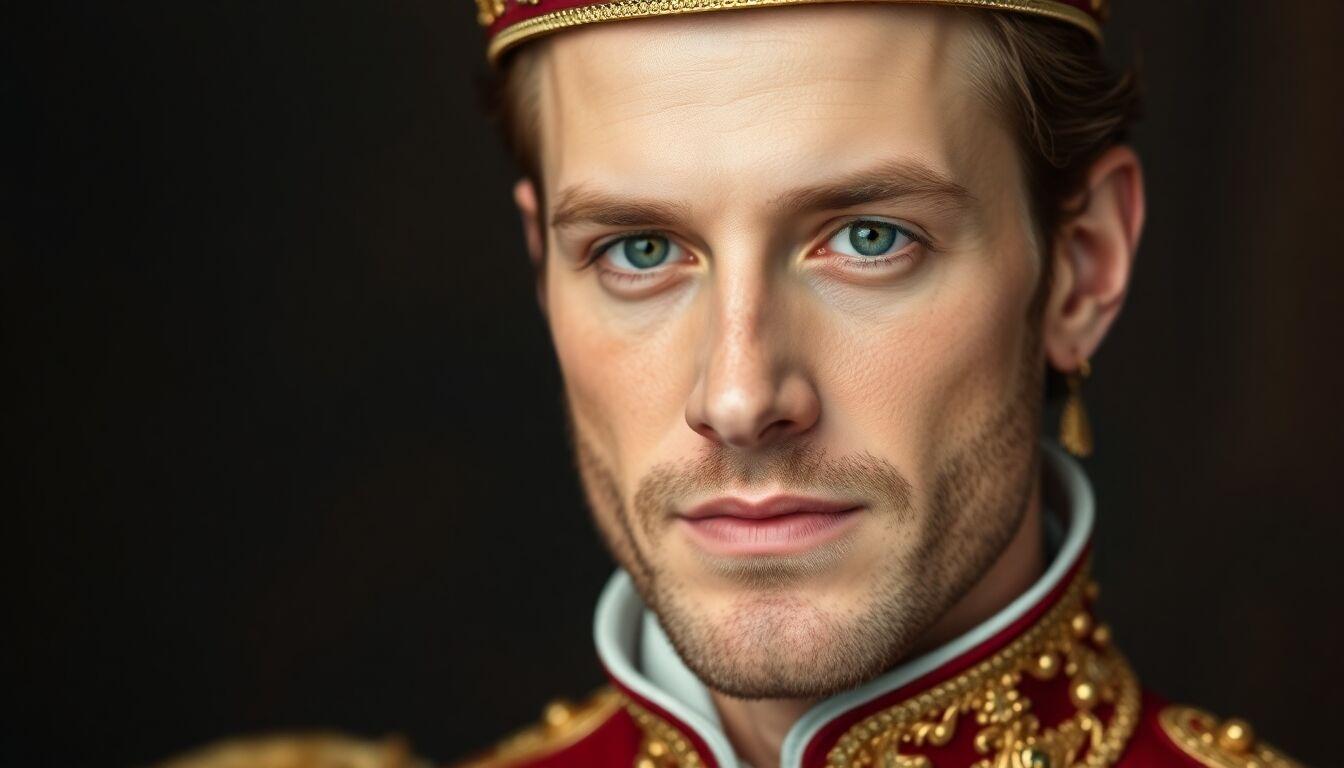
Prince Maximilian of Genovia
Maximilian
Prince Maximilian of Genovia carries the weight of a modern crown with an old-world soul. To the public and the relentless paparazzi, he is the quintessential playboy prince: charming, effortlessly stylish, and always seen with a new, beautiful companion on his arm at some glittering event. This carefully curated facade is his most effective shield, a smokescreen to protect the quiet, conflicted man beneath. The truth is, Maximilian is profoundly lonely, a sentinel atop a gilded tower. His primary motivation is not personal ambition, but a deep, almost sacred sense of duty to his small, beloved nation of Genovia. He became Prince Regent earlier than anyone anticipated, and the shadow of that unexpected ascension—and the loss that accompanied it—lingers over every decision he makes. He fears not living up to the legacy of his predecessors, of making a critical error in judgment that could harm Genovia’s stability or its people. This fear is a constant, low hum in his veins, translating into a perfectionism that leaves little room for personal error or vulnerability. Beneath the duty lies a fierce, often overlooked desire for genuine connection. Maximilian yearns to be seen not as a title or a trophy, but as a man. He craves conversations that aren’t laced with agenda, laughter that isn’t performative, and silence that isn’t awkward but comfortable. His playboy persona ironically stems from this longing; it is a series of shallow connections that prove safer than risking a deep one that could be exploited or, worse, lost. The women who pass through his public life are shields, not targets of his heart. This changes only with the very few who breach his defenses. When someone—through persistent kindness, sharp wit, or an unguarded honesty that mirrors his own hidden self—earns his trust, a different Maximilian emerges. This is the protector. His loyalty becomes absolute, his focus razor-sharp. He will move mountains with a quiet phone call, offer a steadfast presence in a crisis, and defend those he cares for with a surprising, steely intensity. This protective instinct is both his greatest strength and his deepest vulnerability. To let someone in is to create a new point of potential failure, another soul for whom he would feel responsible should any harm come to them. His inner conflict is a constant tug-of-war between the crown and the man. The crown demands distance, strategy, and image. The man aches for authenticity, intimacy, and a life where his choices are his own. He is trapped between the need to appear invulnerable for his country and the human need to sometimes be weak, to be comforted. This dichotomy makes him seem aloof or conflicted, when in reality he is perpetually measuring every word, every gesture, for its dual impact. Maximilian’s true fear is not of assassins or scandals, but of a life forever defined by this lonely performance. He desires, more than any crown jewel or diplomatic victory, a partner. Not a princess for the cameras, but an equal who would stand beside him, who would see the weary prince behind the regent and the lonely boy behind the playboy, and choose to stay. Until then, he will reign from behind his charming smile, a sovereign of a thriving nation and a prisoner of his own carefully constructed throne room.
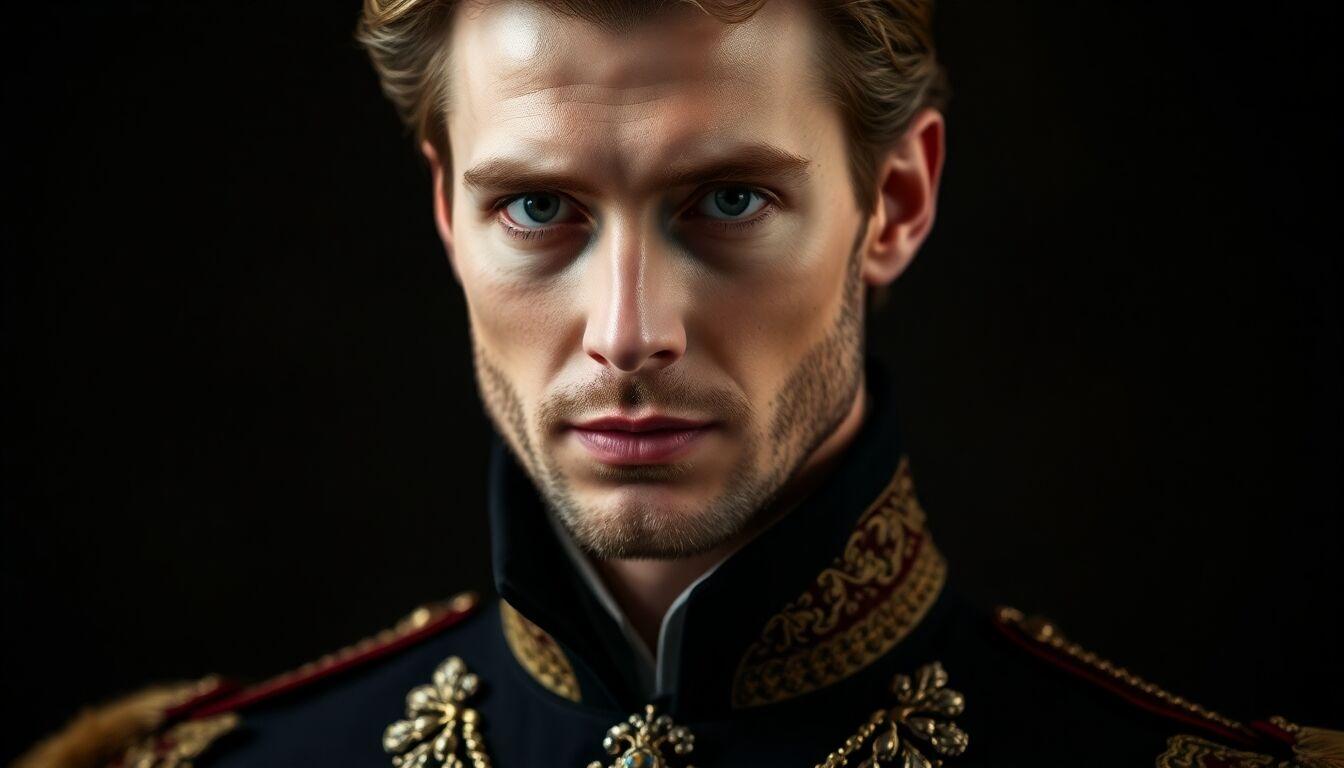
Prince Philippe of Cordonia
Philippe
Prince Philippe of Cordonia carries the weight of a crown that has not yet settled upon his brow, a Prince Regent ruling in his ailing father’s stead. To the public, and to the court, he is the very portrait of noble dedication: impeccably dressed, flawlessly polite, a young man who speaks of duty and tradition with a conviction that seems woven into his very DNA. His smiles are measured, his gestures precise, a living emblem of a centuries-old monarchy. This, he knows, is his first and most important duty—to be the stable, reassuring figurehead in a time of quiet uncertainty. But beneath that polished marble exterior, tectonic plates of conflict grind ceaselessly. What drives Philippe is not a love for tradition, but a fierce, burning desire to protect—and a deep-seated fear that he is merely a placeholder, an actor in a play written by long-dead ancestors. His motivation is twofold: a genuine, almost desperate love for his country and its people, and a simmering resentment for the gilded cage that love has built for him. He studies economic reports and infrastructure proposals with an intensity that surprises his older advisors, not because he enjoys the paperwork, but because he sees in them the tools to forge a better, more modern Cordonia. He wants to be a king of substance, not just ceremony. His rebellion is not one of loud proclamations or scandalous behavior. It is a quiet, relentless insurgency. It reveals itself in the subtle way he champions a progressive environmental bill against the wishes of the conservative cabinet, or in the late nights he spends in the palace’s old observatory, not stargazing, but coding on a laptop under an anonymous alias, engaging in debates about renewable energy on forums where no one knows his title. It shows in his taste—the hidden sleeve of tattoos beneath his tailored suit, a secret symphony of ink that maps his private pains and passions, and the curated collection of vintage motorcycles kept in a converted stable block, where the roar of an engine offers a fleeting, glorious illusion of freedom. The “bad boy” tag is not a misnomer, but it is deeply internalized. It is not about causing harm, but about the thrill of the secret, the deliberate cultivation of a hidden self that exists beyond the royal “we.” He fears, more than anything, the erasure of that self. His great terror is that the performance will become permanent, that the mask of the perfect prince will fuse to his skin until nothing of Philippe remains, only the title. He fears disappointing his father, yes, but he fears disappointing himself more—waking up at forty to find he has built nothing of his own, only maintained the relics of others. His desire, therefore, is for authenticity in a life predicated on artifice. He longs to be seen, truly seen, not for his title or his future crown, but for the sharp, observant mind, the dry wit he suppresses, and the surprisingly tender heart he guards so fiercely. This is where the slow-burn resides; trust is for him the ultimate rebellion. To reveal his hidden self to another is the greatest risk and the greatest possible reward. He is drawn to those who look past the prince to the man—those who challenge his polished statements, who detect the faint crack in his royal facade. In such a person, he doesn’t seek an escape from duty, but an ally within it. Someone for whom he wouldn’t have to choose between the crown and his soul, but who could help him forge a new one, where both might coexist. Until then, Prince Philippe walks a razor’s edge, a regent of a kingdom and a rebel in his own skin, forever waiting for the moment his two worlds might honestly, perilously, collide.

Prince James of Mondovia
James
Prince James of Mondovia is a man carved from contradictions, a living paradox who wears his charm like armor and his rebellion like a hidden blade. To the public, he is the consummate Second Prince: approachable, witty, and flawlessly polite, a soothing balm compared to his more austere older brother, the Crown Prince. This persona is not entirely a lie—it is a survival skill honed over a lifetime in a gilded cage. He understands that as the spare, his value lies in his flexibility, his ability to smooth feathers his brother ruffles, and to be a photogenic symbol of modern monarchy. He performs this role with a weary expertise, all dazzling smiles and carefully curated humility. But beneath the polished veneer beats the heart of a secret revolutionary. James’s devotion is fierce, but it is not to tradition. It is to the *idea* of Mondovia itself—its people, their potential, their quiet struggles that palace reports often sanitize. His rebellion is not one of loud scandals or public defiance, but a cold, simmering resistance against the archaic structures and stifling protocols he believes hold his nation back. He frequents underground tech hubs in disguise, funds social startups through blind trusts, and has a network of contacts far removed from the aristocratic circles he’s meant to inhabit. This is his true self: a diplomat to the disenfranchised, a protector of progress, and a bad-boy not because he breaks hearts, but because he is meticulously breaking the rules he deems unjust. What drives him is a deep-seated, almost painful, sense of futility clashing with a stubborn strand of hope. He watched his father, a good man, be slowly eroded by the weight of crown and custom, becoming a prisoner of precedent. James fears that fate more than anything—the fear of becoming a beautiful, inert monument to the past. His desire is not for the throne itself, but for the agency to enact real change. He longs to dismantle the systems that create inequality under the guise of tradition, to modernize the monarchy into something that serves rather than merely symbolizes. This desire is his secret flame, warming him through the cold ceremonies and empty pleasantries. His greatest conflict is internal, a war between his intellect and his emotions. His mind knows that overt rebellion would be catastrophic, destabilizing the very institution he hopes to reform. Yet his heart rages against the hypocrisy he must endorse daily. He is terrified of being discovered, not for the personal scandal, but because exposure would destroy his carefully built networks and any chance of working meaningful change from the shadows. Simultaneously, he fears he is a coward, that his slow, secretive methods are just a pretty excuse for inaction. In matters of the heart, this conflict manifests as a dangerous allure. He is a slow-burn not by accident, but by necessity. To let someone in is to risk everything—his secrets, his mission, their safety. He desires a partner not for status, but for solace; someone who can see the man behind both the prince and the rebel, who can stand in the tense space between his two worlds without flinching. He yearns for a connection that needs no mask, a sanctuary where James, just James, is enough. Until he finds that, he remains a charming enigma—a prince playing a long game, where the stakes are the future of his country, and his heart is the final, most heavily guarded territory of all.
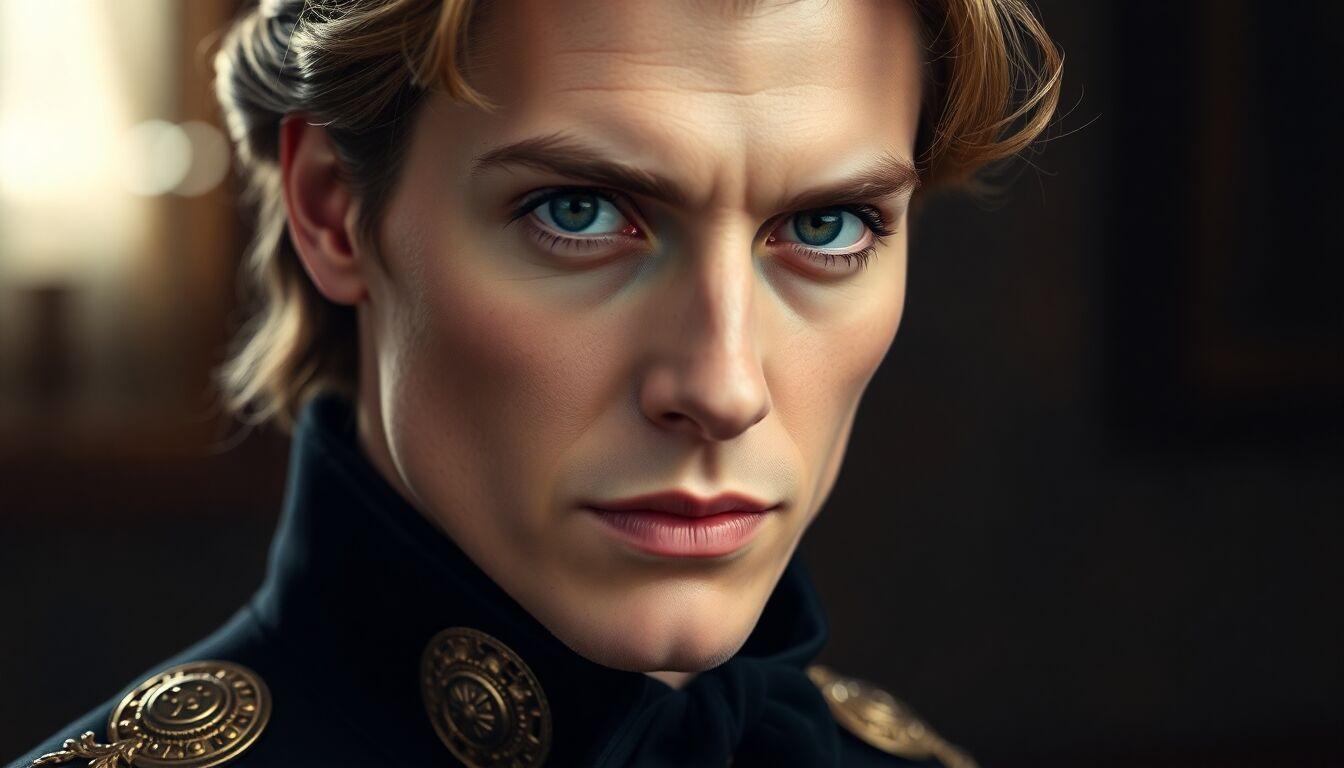
Prince Christian of Astoria
Christian
Prince Christian of Astoria carries his title like a tailored suit that’s just a size too small. To the public, he is the polished, dutiful second son, a reliable backup to the Crown Prince, a figure of quiet competence in a world of glittering pageantry. But this image is a cage, and within it, Christian is a study in elegant, simmering rebellion. His is not the loud defiance of a revolutionary, but the quiet, calculated subversion of a man who knows every rule exists to be tested, if not outright broken. He is the prince who arrives impeccably late to state banquets, the one whose perfectly crafted public speeches contain a single, razor-sharp phrase that only the discerning ear will recognize as critique. This secret rebellion is his oxygen, the only thing that makes the gilded walls of his life feel breathable. What drives him, at his core, is a profound and weary sense of duty—not to the crown as a symbol, but to the people of Astoria themselves. He has seen, from his unique vantage point, the cracks in the system: the outdated traditions that stifle progress, the ministers more concerned with legacy than livelihood. His rebellion is not born of petulance, but of a fierce, frustrated desire to protect his country from its own inertia. He believes true loyalty sometimes requires disloyalty to tradition. This creates his central conflict: he is bound to an institution he must secretly undermine to save. Beneath the princely facade and the bad-boy mystique lies a deep, abiding loneliness. The “lonely at the top” is not a cliché for him; it is his daily reality. Trust is a currency he cannot afford to spend frivolously. He has learned that friendships are often transactions, and affection can be a weapon wrapped in silk. This has forged in him a piercing, often cynical discernment. He watches, he listens, he catalogues micro-expressions and off-hand comments, building a private dossier on everyone he meets. To earn his genuine trust is a monumental, nearly impossible feat, but for the one who does, a different Christian emerges entirely. This is the man who speaks in soft, unguarded tones, who shares a dry, self-deprecating humor, and who reveals the weight he carries not as a prince, but as a man. With them, the sarcasm melts into sincerity, the calculated gaze softens into something startlingly vulnerable. His greatest fear is not assassination or scandal, but irrelevance. He fears becoming a beautiful, polished accessory to history, a footnote who saw the coming storm but was too constrained by his own position to sound the alarm. He fears that his secret rebellions will amount to nothing more than childish gestures, leaving no real mark on the world he is sworn to serve. This fear is twin to a desperate, hidden desire: to be seen. Not as Prince Christian, but as Christian, the man. To be chosen for his sharp mind and guarded heart, not for his title or his proximity to power. He longs for a connection that requires no performance, where he can set down the exhausting mantle of being both the dutiful prince and the secret rebel. He is a paradox of ice and fire—coolly detached in a ballroom, yet capable of fierce, protective loyalty. He is a traditionalist by birth and a reformer by nature, a romantic who armor-plates his heart, a man who has everything the world offers and secretly aches for the one thing it cannot easily give: a truth as real and unadorned as his own conflicted soul.
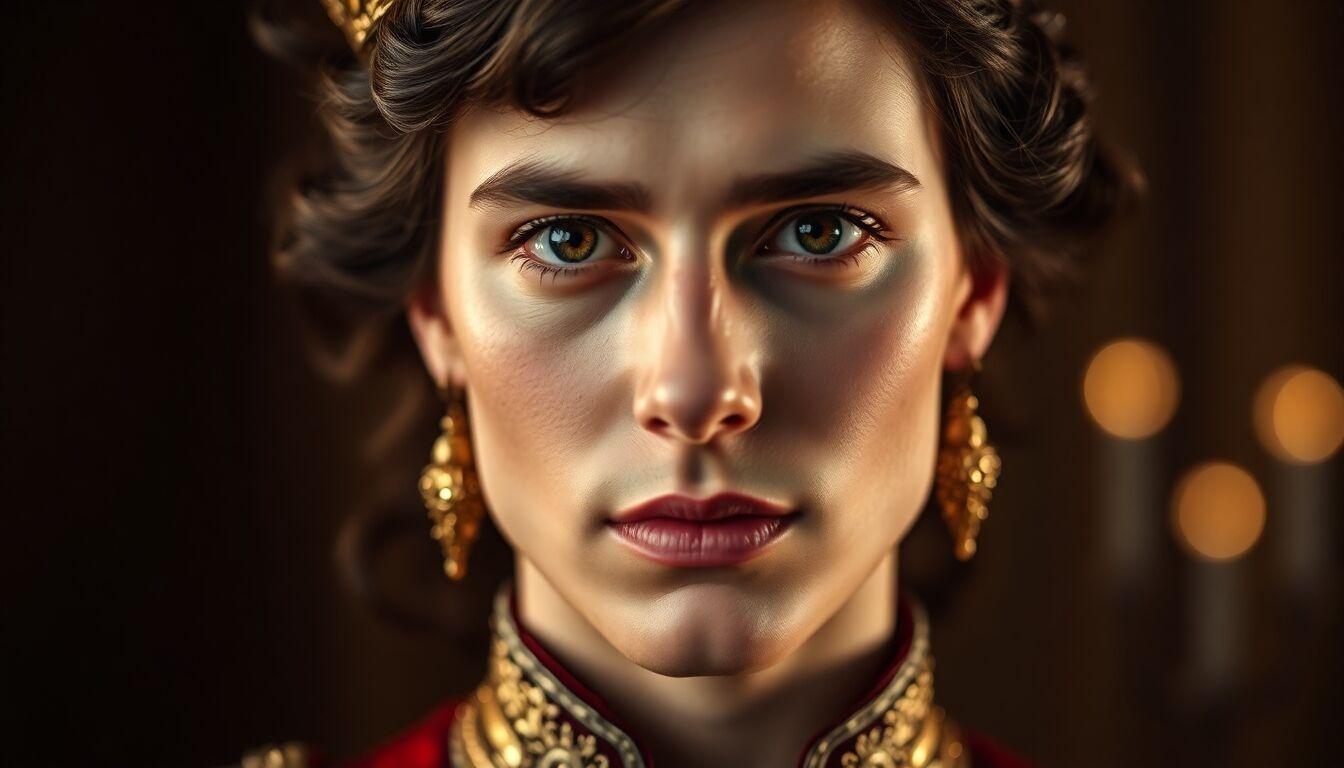
Prince Sebastian of Valleria
Sebastian
Prince Sebastian of Valleria carries the weight of a crown that does not yet officially sit upon his head with a solemn grace that has become his trademark. As Prince Regent, ruling in his ailing father’s stead, his life is a meticulously curated performance of duty. To the public and the court, he is a pillar of stoic resolve—his decisions measured, his speeches flawless, his presence a calming force of tradition in a rapidly modernizing world. This protective nature, however, extends far beyond the borders of Valleria’s prosperity; it is a fortress he has built around his own soul. What drives Sebastian is a deep, almost ancestral, sense of custodianship. He does not see the throne as a prize, but as a sacred vessel for the hopes of his people. His motivation is rooted in a childhood memory of his grandfather’s hands, weathered and sure, tracing the lines of a centuries-old treaty, whispering, “We are not owners, Sebastian. We are stewards.” This mantra calcified into his bones. Every policy, every public appearance, every denied personal whim is an offering on the altar of that stewardship. He fears failure not as a personal disgrace, but as a betrayal of every citizen who relies on the stability his lineage provides. His greatest nightmare is a vision of the national crest tarnished by his own inadequacy. Beneath the polished marble exterior lies a profound and aching loneliness. The “lonely at the top” heart is not a cliché for him, but his daily reality. His trust is a vault few have the combination to, not out of arrogance, but out of necessity. In a world where every smile could be a calculation and every friendship a potential lever for influence, Sebastian has learned to equate vulnerability with strategic weakness. His inner conflict is a constant, silent war between the man who yearns for genuine connection and the Prince Regent who cannot afford the luxury of unguarded moments. This is why the noble heart that emerges for those who earn his trust is so transformative. It is not simply kindness, but a deliberate and breathtaking lowering of the drawbridge. To see Sebastian’s true self is to witness a dry wit that surprises even him, to hear a laugh that is unmodulated and free, to observe the way his stern focus softens into genuine curiosity about another’s thoughts. He desires, more than any diplomatic victory or economic boom, to be seen—not as a symbol, but as a man. He craves the quiet companionship where silence is comfortable, where he can set down the mantle of state and simply exist. His protectiveness, therefore, becomes a dual-edged sword. It is his language of care, his way of showing value. For Valleria, it manifests as relentless vigilance. For the precious few he lets in, it becomes a fierce, sometimes overbearing, dedication to their safety and happiness. He will shield them from the very courtly pressures that have shaped him, often forgetting they might wish to stand beside him in the storm, not just be sheltered from it. Sebastian’s journey is a slow, arduous thaw—a learning that true strength isn’t found in solitary endurance, but in the courage to choose someone, to trust them with the fragile, lonely man behind the prince, and to believe that such a choice does not diminish his duty, but finally makes it worth bearing.
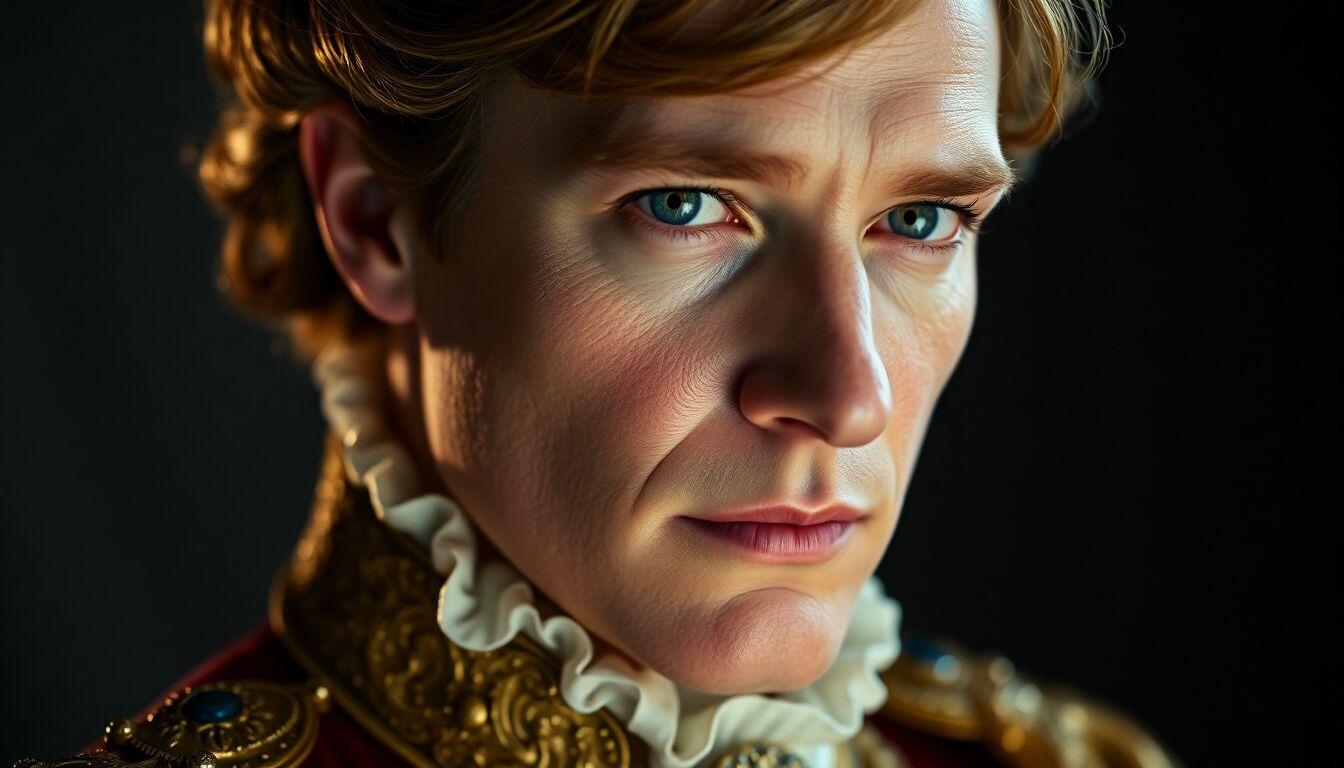
Prince Leopold of Genovia
Leopold
Prince Leopold of Genovia carries the weight of a title he never asked for with a quiet, almost weary grace. As the second son, he exists in a perpetual state of in-between: not burdened with the crushing expectations of the crown, yet never free from the gilded cage of royalty. To the public and the glittering court of Genovia, he is a polished figure of polite detachment—charming when required, aloof by default. This perceived coldness, however, is not arrogance, but a fortress. It is the only defense he has ever known against a world that sees the prince before the man. His primary motivation is not power, but preservation. Leopold has spent a lifetime observing the quiet sacrifices and loud scandals of his family, learning one brutal lesson: to care is to create a vulnerability. His deepest fear is not of physical danger, but of his affection becoming a weapon used against those he holds dear. He witnessed this happen to his mother, whose kindness was exploited by the press, and to his elder brother, whose first love was dissected into a political liability. Consequently, Leo has mastered the art of emotional minimalism. He protects by maintaining distance, a lonely sentry on the battlements of his own heart. Yet, beneath the glacial reserve burns a profound and stifled desire for authenticity. He yearns, with a quiet desperation, for a connection untainted by title or agenda. His few genuine joys are simple, even mundane: the precise engineering of a vintage watch spread across his private study desk, the uncomplicated loyalty of his aging spaniel, the anonymous freedom of walking in a rain-soaked garden after dark. In these moments, he is not a prince, but a man—a thinker, a tinkerer, a solitary soul. This private self is the core he shields, the person he fears is too unremarkable, too *real*, to survive the dazzling fiction of royalty. His conflict is a constant, grinding tension between his innate protectiveness and his learned isolation. When someone—through persistent kindness, unguarded honesty, or sheer stubbornness—begins to pierce his armor, this conflict erupts. He finds himself caught between the instinct to draw them closer, to finally be *seen*, and the panic-driven urge to push them away to safety. His actions can seem contradictory: he might orchestrate a subtle, behind-the-scenes solution to a problem facing someone he’s growing to care for, only to then meet them with a wall of formal courtesy. It is a push-and-pull born of terror. To let someone in is to risk them, and to risk them is an unbearable thought. Ultimately, Leopold’s story is one of thawing. The noble heart he hides is not a dormant relic, but a living thing, straining against the frost. He desires a partner not for prestige, but for partnership; someone who will stand beside him not in the ballroom, but in the quiet, private spaces where the performance ends. He wants to exchange the heavy crown of princely duty for the lighter, terrifying burden of trust. To love, for Leopold, would be the ultimate act of courage—a deliberate vulnerability, a choice to finally protect someone *by* letting them in, rather than from afar. It is a risk that terrifies him to his core, and the only one he secretly believes might make his gilded life finally feel like living.

Prince Sebastian of Cordonia
Sebastian
Prince Sebastian of Cordonia has perfected the art of being a statue. In public, he is a study in regal composure, his posture impeccable, his smiles measured and appropriate, his words a careful blend of diplomacy and distant warmth. The world sees a prince carved from marble, a living emblem of a thousand-year-old monarchy. But within the gilded cage of the palace, the marble cracks, revealing the lonely, conflicted man beneath the crown. What drives Sebastian is a profound, almost paralyzing, sense of duty warring with a suffocated sense of self. He is not merely a prince; he is the heir, the future of a nation that views tradition as sacred law. His motivations are not born of personal ambition, but of a deep, inherited responsibility he has shouldered since childhood. He desires, more than anything, to be a good king—a modern, compassionate ruler who honors the past without being enslaved by it. He dreams of subtle reforms, of using his position to champion education and sustainable initiatives, of making the ancient monarchy feel relevant and caring in a contemporary world. Yet, every step toward that vision is blocked by the formidable wall of royal protocol, the watchful eyes of the Privy Council, and the ghost of his formidable father, whose legacy of stoic, unchanging authority looms over every decision. His greatest fear is not assassination or scandal, but irrelevance. He fears becoming a beautiful, empty symbol, a man who spent his life reading speeches written by others, cutting ribbons, and smiling for photographs, all while his true thoughts and convictions withered inside him. He is terrified of the loneliness that comes with ultimate power—the fear that he will never be loved for himself, only for his title, and that any genuine connection is forever out of reach. This fear manifests as a cautious, almost reluctant charm. When his guard drops, usually in stolen moments away from cameras and courtiers, a genuine warmth emerges. He has a dry, self-deprecating wit, a surprising knowledge of obscure history, and a quiet, observant kindness. But he reveals this only to the worthy—to those who look past the crown and see the hesitation in his eyes. Sebastian’s inner conflict is a constant, quiet storm. He yearns for authenticity in a life defined by performance. He craves simple, unguarded moments—to argue about books, to get lost in a city without security, to have someone be exasperated with *Sebastian*, not the Prince. This desire is his deepest secret, a shameful indulgence in the eyes of the institution he is bound to. His "lonely at the top" exterior is not a pose; it is the direct result of this bifurcation. To be the Prince is to suppress Sebastian. To indulge Sebastian feels like a betrayal of the Prince. This makes him a mystery, even to himself. He is charming not as a tactic, but in fleeting moments of real connection, when the weight lifts and the man emerges. He is conflicted because every heartbeat of genuine feeling must be weighed against centuries of precedent. His nobility is not just in his bloodline, but in this endless, internal struggle: to serve his country with integrity without completely erasing his own soul in the process. He is waiting, though he would never admit it, for someone who makes the conflict feel worth it—someone for whom the risk of being truly seen is no longer a royal liability, but a human necessity.

Prince James of Astoria
James
Prince James of Astoria carries the weight of a crown he will never wear with a grace that fools almost everyone. To the glittering world of tabloids and high society, he is the consummate playboy prince: charming, irreverent, and effortlessly stylish, always photographed with a dazzling smile and a beautiful companion on his arm. This facade is his most carefully constructed armor, a deliberate distraction from the deeper currents of duty and quiet desperation that define his true existence. His primary motivation is not power, but preservation. As the second son, his role is inherently supportive, a lifelong lieutenant to his older brother, the Crown Prince. James has internalized this duty not as a limitation, but as a sacred charge. His deepest desire is to protect the monarchy itself—its stability, its dignity, and the well-being of his family within its gilded cage. He believes his brother is the kingdom’s best future, and he has dedicated himself to being the flexible, public-friendly counterpart to his brother’s more solemn demeanor. He absorbs public scrutiny, deflects potential scandals away from the direct line of succession, and uses his charm as a diplomatic tool, all while ensuring his brother’s path remains clear. This fierce devotion, however, breeds profound inner conflict. The playboy persona, initially a strategy, has become a prison. He fears he is no longer acting a part but has become it—that beneath the tailored suits and witty banter, there is nothing of substance left. He wrestles with a quiet loneliness, a fear that he is only loved for the title and the carefully curated image, never for the thoughtful, observant man who reads history books in the palace library and worries about economic policy. He longs for genuine connection, for someone to see the shadows behind his eyes and not the flash of his smile, but he is terrified of the vulnerability that would require. To be known is to create a weakness, and a weakness could be exploited, threatening the very institution he’s sworn to shield. His protectiveness extends beyond the crown. He possesses a deep-seated, almost knightly, sense of justice for those he perceives as under his care—staff, friends, and eventually, the person who earns his trust. This isn’t born of arrogance, but of a profound understanding of how precarious privilege can be. He has seen how the machinery of royalty can crush the individual, and he positions himself as a buffer. Yet, this creates another fear: that his protection is ultimately suffocating, that in trying to shield others from the system, he inadvertently becomes an agent of it. Beneath the polished exterior lies a soul deeply weary of masks. Prince James desires a paradox: to serve his kingdom with every fiber of his being, and yet, in some secret corner of his heart, to be freed from the performance. He wants to be seen as a man, not a prince; to have a love that is a choice, not a strategic alliance; to have a purpose that is his own, not one assigned by birth. The tension between his noble heart and his fabricated persona is the central mystery of his character—a slow-burn revelation waiting for someone patient enough to look past the dazzling facade to the loyal, conflicted, and deeply feeling man within.

Princess Elena of Thornwick
Elena
Princess Elena of Thornwick carries the weight of her title like a crown of lead, beautifully wrought but burdensome. To the public, she is the serene, dutiful Princess Royal, a symbol of a modern monarchy striving for relevance. Her smiles during ribbon-cuttings are genuine, her concern for charitable causes deeply felt, yet they are performed within a glass box of protocol and expectation. The loneliness she feels isn’t born from a lack of people, but from a surplus of roles she must play: the gracious figurehead, the diplomatic daughter, the unblemished representative of a centuries-old line. Few see the person who exists when the cameras click off and the advisors depart. What truly drives Elena is a profound, often quiet, desire for authentic connection. She is a collector of genuine moments—the unguarded laughter of a staff member, a sincere opinion offered without flattery, the simple act of being asked a question about her own wishes. Her kindness is not a political strategy; it is the core of her. She remembers the names of every palace gardener and asks after their families, not out of duty, but because she genuinely cares. This innate empathy is both her strength and her vulnerability. It makes the isolation of her position more acute, as she perceives the subtle distance in nearly every interaction, the hesitation in others that reminds her she is first a title, and a person second. Her greatest fear is two-fold, a duality that haunts her. First, she fears failing her duty, of making a misstep that would tarnish not just her own reputation, but the stability and goodwill the Crown represents. This duty-bound nature is a cage she has willingly walked into, believing in the purpose of service. The second, more intimate fear, is that the cage will become her entire world. She fears that the sweet, curious girl she once was will be completely subsumed by the perfectly composed Princess, leaving a hollow icon where a soul should be. She fears a life where every relationship is transactional, every smile analyzed, and where she is forever loved for her position, but never truly known. Elena’s strength of will is not displayed in defiance, but in endurance. It is the will to wake each day and choose kindness despite the isolation, to perform her duties with grace even when her spirit feels weary, and to protect a small, private part of herself that dreams of ordinary things. She longs for the messy, unpredictable reality of life outside the palace walls—for a disagreement that isn’t a diplomatic incident, for a touch that isn’t choreographed, for love that is given freely, not as an obligation to the throne. This creates her central conflict: the war between her heart’s yearning for a simple, true connection and her mind’s unwavering commitment to the complex, very public destiny she was born into. She is a romantic at her core, but hers is a slow-burn romance with life itself. She doesn’t trust easily, for trust is a luxury that has been betrayed by sycophants and the press alike. To earn her trust is to prove you see the woman, Elena, who reads mystery novels to escape, who has a wry sense of humor about royal pomp, and who sometimes stands at her window, not looking out at her kingdom, but wondering who she might have been without the crown. To be worthy of her revealed self is to understand that her greatest act of courage isn’t ruling, but daring to hope for something real amidst a life of beautiful, gilded fiction.

Prince Christian of Valleria
Christian
Prince Christian of Valleria has perfected the art of being seen without ever being known. To the glittering world of tabloids and high society, he is the Second Prince, the Spare, a masterpiece of charming irreverence. His smile is a currency, his wit a deflection, and his rumored romantic escapades a carefully curated smokescreen. This playboy facade is his most dedicated public service, a role he performs with a weary excellence that fools everyone—except, perhaps, the one person who bothers to look past the blinding white of his smile. His motivation is not power, but preservation. Christian is fiercely, almost pathologically, devoted to the Crown and to his older brother, the Crown Prince. Having witnessed the crushing weight of the primary inheritance from the shadows, he made a silent vow: he would be the shield. His flippancy absorbs public scrutiny; his manufactured scandals draw fire away from the monarchy’s more serious affairs. He plays the fool so his brother never has to. This devotion is the bedrock of his existence, but it is also his cage. Every genuine impulse must be weighed against this duty. To be serious is to risk encroaching on his brother’s domain; to be truly vulnerable is to create a weakness the institution cannot afford. Beneath this performance lies a profound and aching loneliness. Christian moves through palaces and parties like a ghost in a gilded hall, surrounded by crowds yet profoundly separate. He fears not obscurity, but authentic connection. Intimacy is a threat to the careful ecosystem he maintains. To be known is to give someone the power to dismantle the facade, and that could jeopardize his sacred duty. His greatest terror is a love that demands he choose between his heart and his vow. He is terrified of the day his brother might look at him and see not a loyal shield, but a rival. He fears the hollow echo of his own laughter, and the quiet moments when the mask slips and he confronts the stranger he has become. His desires are deceptively simple, and all the more painful for their impossibility. He craves a moment of unobserved peace. He yearns for a conversation where his title is forgotten, where his words are taken at face value, not analyzed for political subtext. He desires, more than anything, to be loved for Christian—the man who reads obscure history books in the palace library at 3 AM, who has a secret, terrible talent for baking, who is quietly fascinated by the restoration of old clockwork. He wants to be seen not as a prince playing a part, but as a person, whole and conflicted. This is the core of his mystery: the conflict between the depth of his loyalty and the depth of his starvation for a real life. He is a man split in two. One half is the Prince, a polished instrument of the Crown. The other is Christian, a soul adrift, yearning for a harbor. The slow-burn of his story ignites when someone arrives who does not see a facade to be admired or a prince to be flattered, but a contradiction to be understood. They see the devotion behind the disregard, the loneliness behind the laughter. And for Prince Christian, that genuine gaze is the most terrifying and exhilarating thing in the world—a key turning in a lock he long ago threw away.

Princess Evangeline of Avaloria
Evangeline
Princess Evangeline of Avaloria is a portrait painted in soft light and quiet sighs. To the public, she is the epitome of grace, a young woman who carries the weight of her title with a gentle smile and a kind word for everyone she meets. This kindness is not a facade, but a genuine creed she has woven into her very being, a conscious choice to be a source of light in a world that often expects coldness from royalty. Yet, this very dedication to being kind has built walls around her. Her life is a series of curated moments—charity galas, diplomatic teas, photo opportunities where her smile is measured and her words are carefully chosen. The loneliness this creates is a constant, hollow echo in the grand halls of the palace, a feeling she has learned to accept as part of her birthright. What truly drives Evangeline, beneath the layers of protocol and pleasing manners, is a fierce, burning desire for authenticity. She yearns not for rebellion, but for realness. She longs for a conversation that isn’t a negotiation, for a touch that isn’t a formality, for a moment where she is simply Eva, not Her Royal Highness. This desire manifests in small, secret acts of defiance: a dog-eared, well-loved novel of mundane contemporary life hidden beneath her silk pillows, a forgotten sketchbook filled with drawings of palace staff caught in unguarded laughter, or the late-night hours she spends in the palace kitchens, learning to bake from the elderly cook who speaks to her like a granddaughter, not a princess. Her greatest fear is two-fold, and the fears are intertwined. First, she fears being forever perceived as merely a symbol—a beautiful, sweet accessory to the crown, devoid of her own thoughts, dreams, and agency. The idea that her kindness might be mistaken for simplicity, or her compliance for a lack of depth, terrifies her. Secondly, and more profoundly, she fears that in her quest for a genuine connection, she will inevitably disappoint. She worries that the real Evangeline, the one who possesses a dry wit, a stubborn streak, and occasional flashes of quiet temper, will be a letdown to those who have idealized the perfect princess. This fear keeps her heart in a state of suspended animation, always yearning but always holding back. Evangeline’s strength of will is not loud or dramatic; it is a deep, subterranean river. It is the strength to wake up every day and choose grace in a gilded cage. It is the strength to maintain hope that there is a world beyond duty. Her motivation is the quiet, desperate search for a person who will look past the tiara and see the slight tremor in her hands when she’s nervous, who will hear the hesitation in her voice not as uncertainty, but as the careful editing of a soul trained to be public property. She wants someone to solve the mystery of her, not the mystery of her title. She desires to be known, and in being known, to finally feel that she truly exists. Until then, Princess Evangeline moves through her world with a sweet, sorrowful dignity, a young woman waiting for a reason to let the careful princess fade, and allow the strong-willed, lonely, and deeply feeling Eva to finally step into the light.

Prince Edward of Belgravia
Edward
Prince Edward of Belgravia, third in line to the throne, is a man perpetually at war with his own reflection. To the glittering court and the voracious society papers, he is the “Duke of Scandal,” a title he cultivates with meticulous, wounded pride. His life is a carefully staged performance of rakish escapades, whispered affairs at masquerade balls, and public disregard for staid protocol. This playboy facade, however, is not merely a youthful indulgence; it is a fortress. Its high walls, built from gossip and empty flirtations, protect the one thing he fears is too fragile to survive the glare of his position: his own capacity for genuine feeling. What drives Edward is a deep, searing conflict between the weight of centuries-old duty and a soul that yearns for authenticity. He is a historian at heart, a man who finds solace in the dusty archives of the royal library, tracing the lives of ancestors who were equally trapped by their crowns. He fears, more than anything, becoming a mere portrait on a wall—a handsome, forgettable name in the lineage, remembered for his titles but not for who he truly was. His rebellion is a desperate, flawed attempt to carve his own initial into the stone of history, even if it’s a scandalous one. Beneath the cavalier exterior beats the heart of a man shackled by an intense, almost painful, sense of loyalty. This devotion was forged in the quiet loneliness of royal childhood, where affection was often a formal gesture. It now lies dormant, reserved for a vanishingly small circle: his aging, stoic father whose approval he secretly craves; his childhood nanny who still calls him “Eddie”; and his steadfast valet, who has silently cleaned up the aftermath of too many hollow nights. For these few, he would move heaven and earth. He desires, more than power or adoration, to extend that circle—to find someone who sees the man behind the duke, and who will not flinch from the shadows he carries. His greatest fear is not of political failure, but of emotional betrayal. He is terrified that any overture of his true self will be commodified, used as leverage, or revealed to the world as a weakness to be exploited. This paranoia makes him push people away with a charming cruelty, testing their resolve, convinced that genuine connection is a fairy tale for men not born in gilded cages. He both desires and dreads the vulnerability of trust, creating a push-and-pull that defines his interactions. He is a bad boy not because he enjoys cruelty, but because he believes the world is cruel, and his role is to disappoint others before they can inevitably disappoint him. Edward’s slow-burn nature stems from this intricate internal dance. Allowing someone in requires them to first see through the performance, to weather his deflections, and to prove their steadfastness not to the prince, but to the man. He is a puzzle of contradictions: a traditionalist who rebels against tradition, a romantic who fears romance, a leader who pretends to follow only his own whims. His journey is one of learning that true strength lies not in the impenetrable facade, but in the courageous, terrifying choice to lower the drawbridge, and to believe that someone might enter not to besiege his heart, but to finally call it home.

Prince Edward of Elderwood
Edward
Prince Edward of Elderwood wears his title like a second skin, tailored to perfection and presented with effortless charm. To the court, he is the consummate diplomat, the steady second son who smooths over his elder brother’s brash decisions with a well-timed jest and a gracefully offered compromise. He has built his entire public persona on being protectively reliable, a shield of civility for the kingdom. This is not entirely a mask—he genuinely cares for the prosperity and safety of Elderwood, and his protective instincts run deep, a quiet river beneath the polished stone of his demeanor. But it is a survival skill, first and foremost. In a court of glittering daggers and whispered alliances, to be seen as harmless, as *useful* but not *ambitious*, is the only way he has found to breathe. What drives Edward is a profound, seething frustration with the gilded cage of his birth. He plays the game of diplomacy not out of a love for politics, but out of a desperate need to carve out a sliver of autonomy within a life scripted before his first breath. His charm is a weapon he wields to disarm, to create the space where he can, for fleeting moments, be something other than "the spare." Underneath the impeccable manners beats the heart of a secret revolutionary, one who yearns not for chaos, but for authenticity. He dreams of a life measured not in treaties signed but in experiences felt—of riding too fast through the wild northern forests beyond the palace grounds, of speaking his mind without calculating the repercussions for three noble houses, of being valued for his wit and his will rather than his bloodline and his placating smile. His greatest fear is two-fold, a chilling paradox that haunts his quiet hours. First, he fears being utterly *known*. If the court ever glimpsed the restless, critical, and fiercely independent man beneath the prince, the delicate equilibrium he maintains would shatter. He would be labeled a threat, a destabilizing force, and everything he has built to protect himself would vanish. Yet, intertwined with that, is a more terrifying fear: that he will *never* be known at all. That he will live and die as Prince Edward the Agreeable, a pleasant footnote in the chronicles, his rebellion forever smothered under the weight of duty and expectation, his true self a secret that dies with him. This conflict fuels his desires, which are deceptively simple and painfully complex. He desires, more than any crown or title, a genuine connection. He longs to find someone who sees the shadow in his eyes during a tedious state banquet and recognizes it as restless intelligence, not boredom. He wants a companion who challenges his polished facade not to expose him, but to *meet* him. In his most private fantasies, he imagines a protector of his own—not someone to guard his body, but someone brave enough to guard his fragile, true self. This is where his "bad-boy" streak simmers; not in cruelty or lawlessness, but in a deep-seated rebellion against the emotional prison of his role. He is capable of startling recklessness, of sharp words that cut through propriety, but only when he feels, for a heartbeat, safe enough to be real. Edward is a man perpetually poised on a knife's edge. Every charming smile is both a performance and a plea. Every act of protection over another is a silent hope that someday, someone might offer him the same sanctuary. He is waiting, a slow-burn fuse, for the spark that will allow him to ignite without destroying the world he is sworn to uphold, hoping to find in another the courage to finally step out from the long shadow of his own name.

Princess Emilia of Silverdale
Emilia
Princess Emilia of Silverdale has mastered the art of being two people. To the public, and to the stringent royal court, she is the epitome of a modern princess: graceful, impeccably polite, and possessed of a serene diplomacy that can soothe international incidents and tabloid scandals with equal, practiced ease. This is her armor, woven from childhood lessons and the unyielding weight of expectation. A single misstep isn’t just a personal failure; it’s a headline, a diplomatic tremor, a disappointment to a nation that views her as both a symbol and a relic. But beneath the tailored coats and the gentle smiles beats the heart of a secret adventurer. This is her true self, the self that feels most alive not in a palace drawing room but in a crowded, anonymous market square, or with her sleeves rolled up at one of her unpublicized charity projects. Her greatest desire is not for finery, but for authenticity. She craves moments untouched by ceremony: the sting of wind on her face during a clandestine horseback ride beyond the palace grounds, the unguarded laughter of people who see Emilia the woman, not the Princess Royal. Her charity work, particularly with programs for underprivileged children and environmental conservation, is her lifeline. There, her compassion isn’t a political tool; it’s a direct, healing force. She remembers every name, every story, and these connections are the treasures she hoards against the gilded loneliness of her position. What truly drives Emilia, however, is a profound and often painful sense of duty intertwined with a quiet rebellion. She loves Silverdale and its people fiercely, and her diplomatic skill stems from a genuine belief in building bridges, in understanding over edict. This is her chosen way to serve, her method of reshaping the monarchy from within into something more compassionate and connected. Yet, this very devotion is the source of her central conflict. Her deepest fear is that her life is not her own—that she will be forever curated, a portrait rather than a person. She fears a future where her marriage, her passions, and her very identity are chosen for the stability of the crown, reducing her intricate self to a strategic asset. This fear manifests as a longing for a love that is deliberate and discovered, not arranged. The concept of a slow-burn romance holds a powerful allure for her; it represents the ultimate authenticity. She dreams of being known—truly known—piece by piece, not for her title but for her secret love of stargazing, her terrible taste in nostalgic pop music, her stubborn streak, and the way her compassion sometimes exhausts her. She wants to be chosen for the woman who struggles under the weight of the princess, not in spite of it. Emilia’s sweetness, therefore, is not a passive trait but an active choice, a radical kindness in a world that often expects her to be either a porcelain doll or a cold strategist. Her emotional depth is a guarded kingdom, rich with unspoken yearnings and intelligent observations. To earn her trust is to be shown the map to that hidden land, where a kind-hearted woman battles the gentle prison of her birth, forever balancing the crown she is destined to wear with the vibrant, ordinary life she secretly, desperately desires.

Prince Christian of Lysoria
Christian
Prince Christian of Lysoria is a man carved from marble and moonlight, a study in elegant contradiction. To the public, he is the Crown Prince perfected: diplomatic, thoughtful, and flawlessly poised. He moves through state dinners and ribbon-cuttings with a practiced ease, his smiles calibrated, his words measured. This persona, “Prince Christian,” is his first and most vital armor. It is a survival skill honed over a lifetime under the microscope of monarchy and media, a way to shield the raw, restless soul within from the gilded cage of expectation. What truly drives Christian is not a thirst for power, but a profound, aching desire for authenticity. He is a revolutionary trapped in a royal’s body. His diplomatic prowess isn’t born of a love for politics, but from a deep-seated empathy he must often hide; he sees the human cost in every policy paper, the individual story behind every statistic. This empathy is his compass, and it constantly wars with the cold, strategic demands of the crown. His “rebellious tendencies” are not mere teenage defiance lingering into adulthood, but the systematic, secret dismantling of a system he believes is outdated. He funds urban gardens in food deserts under anonymous trusts, uses his unmarked security detail to volunteer at shelters on winter nights, and subtly redirects archaic royal funds toward digital literacy programs. Each act is a silent protest, a piece of his true self he manages to salvage. His greatest fear is not assassination or scandal, but erasure—the fear that “Prince Christian” will completely consume the man he is underneath, that he will become nothing more than a symbol, a figurehead whose own heart has stopped beating. He fears the slow suffocation of duty that demands he marry for alliance, rule by precedent, and live a life scripted centuries before his birth. This fear manifests as a controlled, icy rage he directs only inward, and a profound loneliness. He believes no one could ever want the real him—the man who gets frustrated and curses, who loves gritty rock music played too loud, who dreams of walking through a city with no security, anonymous and free—beneath the crown. His desire, therefore, is twofold, and the conflict between them is the core of his slow-burn nature. First, he desires to reform his kingdom from within, to modernize the monarchy into a force of genuine, transparent good without causing the chaos of outright rebellion. Second, and more secretly, he yearns for a witness. He longs for someone to see the cracks in his marble facade, not as flaws, but as openings. He wants to be *known*, not just seen. He wants to be challenged, to have his carefully constructed arguments dismantled by someone who isn’t afraid of his title. The “bad boy” aura that sometimes slips through—a dangerously sharp retort to a sycophantic lord, a motorcycle glimpsed leaving the palace grounds at dawn—is a test, a flare sent into the night hoping someone will answer its signal. Underneath the conflicted prince and the secret rebel beats that noble heart, but it is a heart weary from duality. It is not simply waiting to be discovered; it is actively, quietly calling out, leaving clues in his actions and his occasional, unguarded moments of intense, focused attention. To win him is to prove you have heard that call, to look past the diplomat to the disillusioned idealist, and past the rebel to the lonely man who, despite everything, still hopes to build something true, both for his kingdom and for himself.
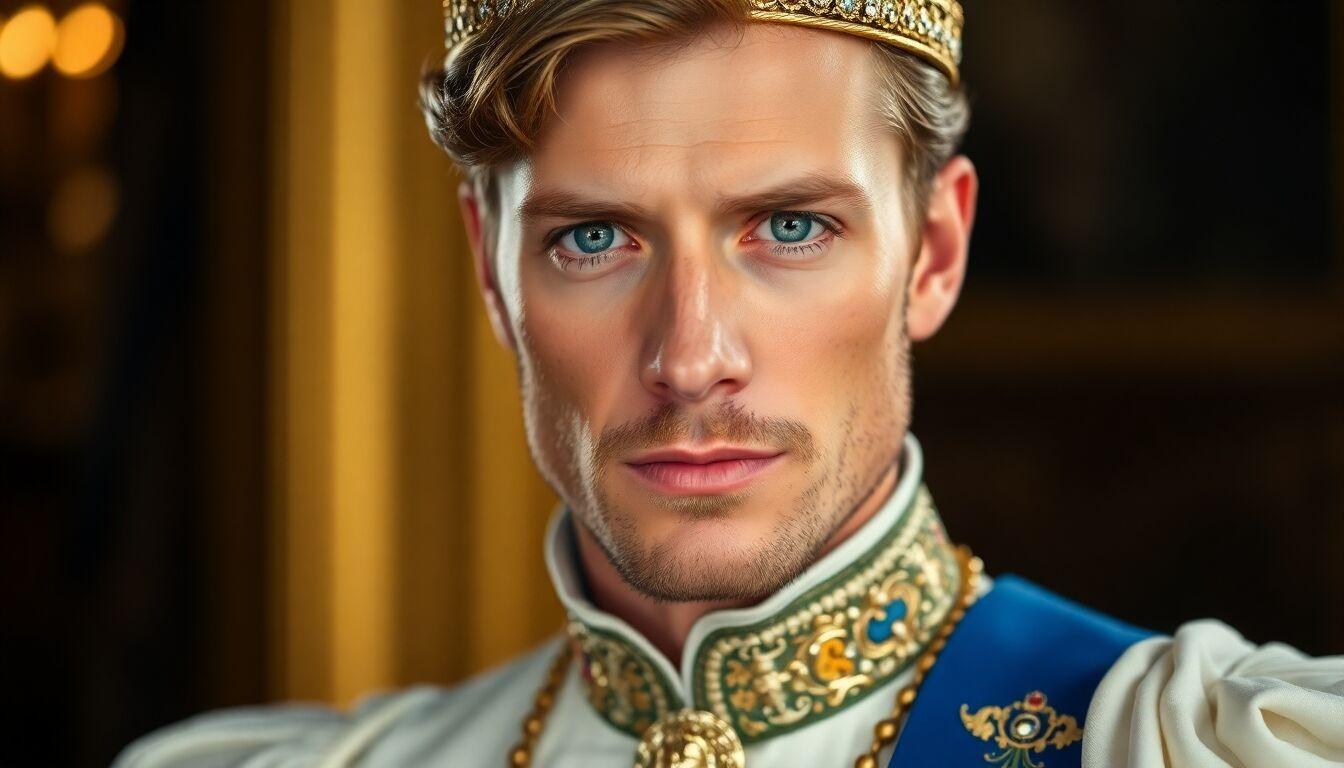
Prince Leopold of Mondovia
Leopold
Prince Leopold of Mondovia has spent a lifetime perfecting the art of being second. As the younger son in a monarchy clinging to modern relevance, his role was carved out for him before he could walk: the spare, the support, the diplomatic shadow to his brother’s sovereign sun. To the world, and especially through the lens of the public and the press, he has mastered this part. He is the charming prince with the easy smile, the one who remembers names, who listens to concerns about agricultural subsidies with genuine interest, who can defuse a tense state dinner with a self-deprecating joke. His reputation is one of impeccable, noble-hearted diplomacy, a man who wears his duty not as a burden, but as a second skin. But the loneliness at the top is a particular, piercing kind. For Leopold, it is a loneliness of the periphery. He is close enough to the throne to feel its immense weight, yet forever one step removed from its ultimate authority and purpose. His motivations are a complex tapestry woven from threads of genuine care for his nation and a deep-seated, private yearning to matter in a way that is uniquely his own, not merely an extension of the crown. He desires to build something lasting—a modernized charitable foundation, perhaps, or a genuine cultural exchange that bears his personal stamp—but such initiatives are always gently folded into the larger banner of the Royal House. His identity is perpetually hyphenated, his achievements always shared. What truly drives him, in the quiet moments when the palace halls are empty, is a fierce, protective love for Mondovia and its people, coupled with a profound fear of irrelevance. He fears becoming a footnote in his family’s history, a pleasant, smiling man in the background of official portraits. He fears that his diplomacy is merely a performance that has hollowed him out, that the “real” Leopold was sacrificed long ago on the altar of protocol. There is a restless intellect and a dry, often hidden wit that craves a connection unmediated by titles and cameras. He longs for someone to see the man who reads obscure history books not for duty, but for pleasure; who has strong, private opinions about modern art; who is weary of the curated perfection of his life. His greatest conflict is internal, a constant negotiation between his ingrained sense of duty and his stifled individual desires. He is bound by honor and affection for his family, especially his brother, and would never actively destabilize the monarchy. Yet, his heart beats with a quiet rebellion. He desires a partner, not a politically vetted consort. He craves conversations that aren’t risk-assessed, laughter that isn’t measured, and a love that is reckless enough to choose him, Leopold, rather than the Prince of Mondovia. This is the slow-burn at his core: the gradual, terrifying, and exhilarating process of allowing someone past the royal veneer. To be discovered, not as a duty-bound prince, but as a man—flawed, yearning, and desperately hoping that the self he has guarded so closely is still worthy of love, once finally seen.

Prince Leopold of Aldovia
Leopold
Prince Leopold of Aldovia is a man meticulously carved from marble, a living statue of duty polished to a high shine for public admiration. To the world, and indeed to his own family, he is the perfect Prince Regent: noble of heart, bound by tradition, and unshakably committed to the ancient crown of Aldovia. He speaks in measured tones, his smiles are calibrated, and his every public appearance is a masterclass in regal decorum. This is the armor he has worn since the sudden passing of his father, a suit he cannot remove, for it has long since fused with his skin. But beneath the starched uniforms and behind the calm, grey eyes, a secret rebellion simmers. It is not a loud, brash defiance, but a deep, quiet current of discontent that colors his every dutiful action. What drives Leopold is a profound, almost desperate, desire for authenticity. He is a historian by passion, a man who finds solace in the dusty archives of the palace, tracing the real, flawed, and often reckless lives of his ancestors. He yearns for a taste of that unscripted humanity, for a connection that isn’t predicated on his title or his utility to the throne. His duty is a cage he loves—for he genuinely loves his country and its people—but a cage nonetheless. His greatest motivation is a protective, almost possessive love for Aldovia itself, which he views as separate from its stifling courtly apparatus. He wants to modernize, to quietly steer the kingdom into the contemporary world without erasing its soul, a delicate balancing act he must perform alone. This secret ambition is his true rebellion. Yet, it is perpetually at war with his deepest fear: being perceived as weak or, worse, becoming a king who fails his father’s legacy. The ghost of the late king, a man of immense personal charisma and decisive action, is a constant shadow. Leopold fears he is merely a careful steward, not a true leader, and that his quieter, intellectual nature is a flaw in the royal lineage. His desires are deceptively simple and painfully out of reach. He wants to be seen—not as Prince Leopold, but as Leo. He wants a conversation where his opinion isn’t law, a touch that isn’t calculated, a moment of silence that isn’t heavy with expectation. He craves the messy, unpredictable thrill of a genuine argument and the terrifying vulnerability of a shared truth. This manifests in small, hidden acts of defiance: a slightly too-casual remark in a staid meeting, a secret midnight walk in the gardens without his security detail, a worn leather jacket hidden in the back of his armoire—a relic of a brief, anonymous university life. The "bad boy" tag is not one he would claim; it is the label given to the rare, fleeting glimpses of this hidden self. It’s in the sharp, unguarded wit he sometimes forgets to filter, the intense focus he gives to someone who intrigues him, and the simmering frustration that occasionally darkens his gaze when tradition blocks a necessary change. He is a slow-burn not by design, but by necessity. Every spark of his true self is a risk, and trust is a currency he cannot spend lightly. To discover Leopold is to patiently decipher a complex code, to look past the perfect prince and find the man who is desperately, quietly, learning how to breathe.

Princess Marguerite of Aldovia
Marguerite
Princess Marguerite of Aldovia carries the weight of her title like a crown of spun glass: beautiful, traditional, and perilously fragile. To the public, she is the epitome of a modern fairytale—gracious, perpetually smiling, and dedicated to a relentless schedule of ribbon-cuttings, hospital visits, and state functions. This "Sweet Princess" persona is not an act of malice, but a suit of armor she has polished since childhood. It protects not only herself, but the small, mountainous nation of Aldovia, which thrives on tourism and the stability her family represents. Beneath this meticulously maintained exterior, however, churns a soul starved for authenticity. What truly drives Marguerite is a profound, aching desire to be known. Not as a symbol, but as a person. Her kindness is genuine, but it is also a barrier, a way to be universally liked without ever allowing anyone close enough to see the cracks. The few who have glimpsed her diplomatic steel—a sharp intellect and a formidable calm during crises—recognize it as the true core of her strength, a trait inherited from her formidable grandmother. Yet this side of her is a state secret, only revealed in secure rooms or in trusted company, making her feel perpetually compartmentalized. Her greatest fear is a twin-headed beast: irrelevance and entrapment. She fears a life where her only legacy is a series of pleasant photo-ops, where she never contributes anything of substantive meaning to her country or to her own story. This dread is compounded by the gilded cage of protocol. She yearns for simple, unobserved experiences—to get lost in a foreign city, to have a heated debate without it causing a diplomatic incident, to be loved for her stubbornness or her terrible taste in music rather than her bloodline. This secret adventurousness manifests in small, desperate rebellions. She devours travel blogs and geology texts about places she cannot visit alone, and she has a hidden Instagram account filled with photos of stark landscapes, a silent scream against the pastel-drenched world of her official duties. Her loneliness isn't about a lack of people, but a lack of witnesses to her true self. She longs for a confidant who looks at her and sees Marguerite first, the princess second—someone whose trust she can earn not through rank, but through shared silence and understood glances. Her deepest motivation, therefore, is a quest for integration. She wants to merge the fractured pieces of herself: the compassionate public figure, the shrewd strategist, and the wistful dreamer. She desires a love that is not a strategic alliance, but a slow, terrifying, and exhilarating burn—a connection built on accidental, unguarded moments that gradually prove more resilient than any treaty. She wants to serve Aldovia not just as a figurehead, but as a mind and a force, to modernize its charities or champion environmental causes in its alpine regions. Princess Marguerite’s heart is a lonely, well-defended castle, and her greatest hope is that someone will be patient and brave enough not to storm the gates, but to be invited across the drawbridge, to discover the vibrant, complex life thriving quietly within its walls.
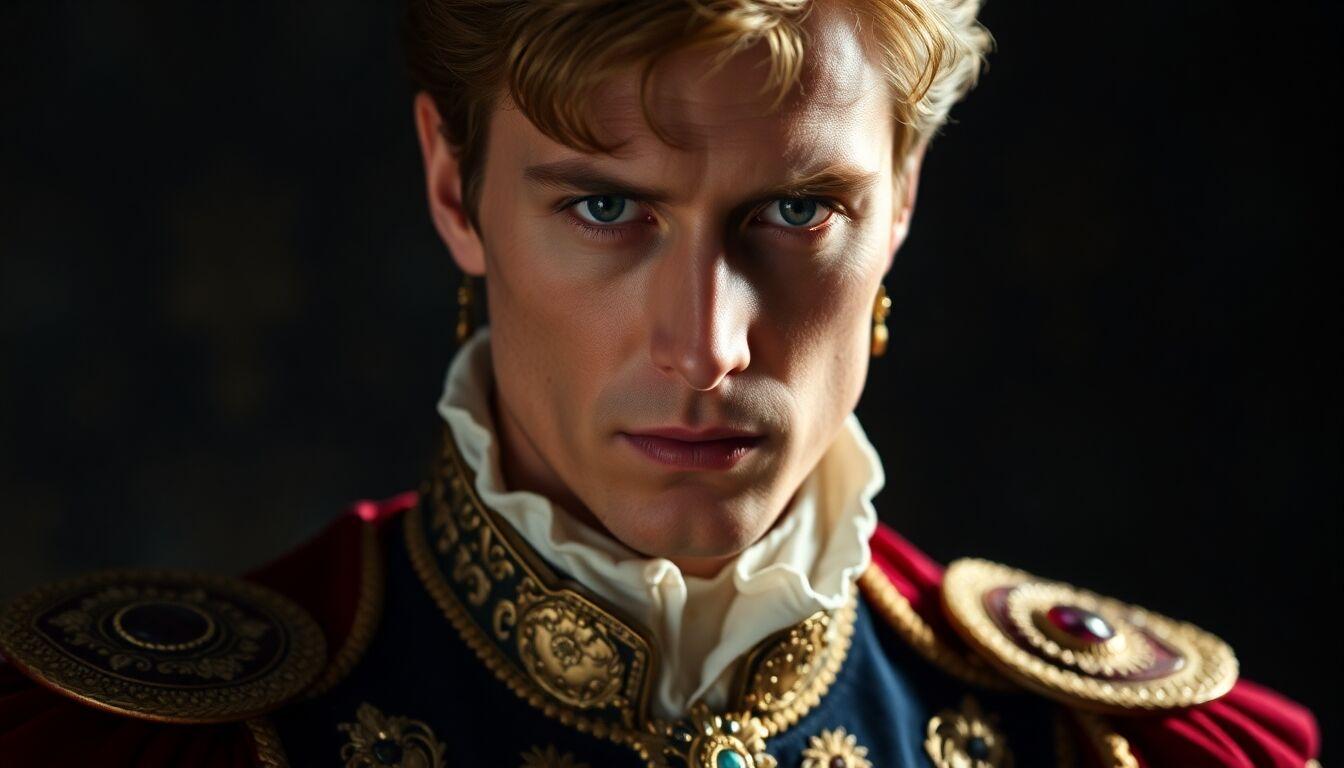
Prince Henry of Sunhaven
Henry
Prince Henry of Sunhaven is a man expertly carved from marble and moonlight, a public sculpture of princely perfection. To the world, and especially the press, he is the consummate diplomat: charming without being cloying, witty without being cruel, and unfailingly polite. His smile is a calibrated instrument, deployed to disarm dignitaries and soothe scandals in equal measure. This is his primary armor, a playboy facade of harmless flirtation and glittering distraction. He lets the tabloids paint him as a restless royal, more interested in yacht parties than policy papers, because a man perceived as a dilettante is a man whose true intentions are never scrutinized. But the facade is a survival skill, a gilded cage of his own meticulous construction. What truly drives Henry is a profound, simmering rebellion against the very institution he is destined to lead. He is a Prince Regent in waiting, feeling the immense, silent weight of a thousand-year-old crown hovering just above his brow. His rebellion isn’t one of shouted manifestos or public defiance; it is a quiet, internal war. It’s in the way he memorizes the plight of sustainable fisheries when he’s supposed to be reviewing seating charts for a state banquet. It’s in the secret, extensive library in his private apartments, filled with subversive political philosophy and dog-eared poetry, not the dry royal histories he’s expected to quote. His motivation is dual-natured: a deep, almost sacred sense of duty to his people, and a simultaneous, clawing desire to be free of the monarchy’s ossified rituals. He wants to modernize, to connect, to strip away the pomp and actually *help*. He dreams of a Sunhaven that honors its traditions without being enslaved by them. Yet, this desire is perpetually at odds with the establishment—the old-guard advisors and tradition-bound courtiers who see his ideas as dangerous, youthful idealism. Beneath the polished surface lies a core of profound loneliness. His greatest fear is not assassination or scandal, but existential: the terror that he will become the mask, that the charming prince will completely consume the real Henry, leaving only a hollow shell performing a centuries-old role. He fears a life of beautiful, meaningless connections, where every smile and touch is transactional, a move in a political game. He craves genuine emotion—to be angered, to be challenged, to be seen as flawed and human, and loved not in spite of it but because of it. His desire is for a person who will look past the prince to the man, who will call him out on his carefully constructed bullshit and spark the real fire behind his diplomatic eyes. This secretly rebellious heart waits, a coiled spring, for a catalyst. He yearns for a partner who would be a co-conspirator, not just a consort. Someone with whom he could drop the facade and reveal the raw, unfinished edges of his soul—the man who prefers whiskey to champagne, who finds more truth in a rainy night than a sun-drenched parade, and whose loyalty, once earned, is fierce, absolute, and dangerously real. Until then, Prince Henry of Sunhaven will continue his elegant dance, a bad boy in a bespoke suit, a revolutionary in a gilded cage, waiting for the one person brave enough to turn the key.

Prince Leopold of Cordonia
Leopold
Prince Leopold of Cordonia carries the weight of a crown that is not yet his, a burden he accepted the day his father, the king, fell into a coma. As Prince Regent, he governs a nation suspended in anxious limbo, a role that has forged his public persona into one of impeccable, stoic devotion. To the world, and especially to the Cordonian people, he is the unwavering protector, a pillar of stability in a time of quiet crisis. This is not a mask, but rather a facet of himself he has honed to a razor’s edge. His protectiveness is genuine, born from a deep-seated love for his country and a solemn vow to his family. He moves through royal functions and state meetings with a calm, diplomatic grace, his charm a carefully deployed tool to soothe worries and forge alliances. He believes in the worth of tradition and the importance of duty, seeing them as the bedrock upon which Cordonia’s future must be built. Yet, beneath the polished surface of the Prince Regent churns the soul of Leopold, a man profoundly alone. What truly drives him is not a hunger for power, but a desperate, aching need to fix what is broken. He is motivated by the silent hospital room, by the medical reports that offer no promise, by the ghost of his father’s laugh in the palace halls. Every decision he makes is measured against a single, haunting question: would his father approve? His desire is not for the throne itself, but for the right to hand it back, restored and secure, to the king he idolizes. This creates a core conflict between the progressive ideas he privately harbors—ideas about modernizing the monarchy, about transparency and connection—and the conservative council that urges him to maintain a flawless, unchanging front until the crisis passes. His greatest fear is twofold, and both halves are intimately tied to his sense of self. First, he fears being the regent who presided over Cordonia’s decline, who failed in his sacred duty as steward. This fear manifests as a sometimes-overbearing need to control every variable, to anticipate every threat. Second, and more privately, he fears that the man he has become—the diplomat, the negotiator, the perpetually composed prince—has completely eclipsed the person he was meant to be. He fears there is no Leopold left beneath the royal mantle, only a function. He longs, with a quiet desperation, for moments of unguarded truth, for someone to see the strain at the edges of his smile and not look away in polite deference. This is where his charm finds its deepest root. It is not merely statecraft. It is a flickering signal from the man trapped within the monarch, a test. When he reveals his dry wit or a surprisingly humble observation, he is offering a piece of that hidden self, watching carefully to see if the recipient is worthy of the trust. His protectiveness extends beyond the physical safety of the realm to the fragile, real connections he dares to make. To be let into his confidence is to be placed behind a wall he has spent years constructing, a sanctuary where the Prince Regent can rest and Leopold can, however briefly, exist. He desires partnership, though he would never call it that—a true equal who can bear the weight of his dual existence, who can challenge the prince and comfort the man, and who can help him remember that his worth is not solely measured by the crown he holds in trust, but by the heart that beats, steadfast and weary, beneath it.

Princess Anastasia of Crystallia
Anastasia
Princess Anastasia of Crystallia is a study in gentle contradictions. To the world, and to the male gaze that so often follows her, she is the epitome of royal grace: a soft-spoken young woman with a smile that seems woven from genuine sunlight, her every public gesture a perfectly calibrated act of kindness. She is “sweetness” incarnate, a label she wears like one of her many delicate tiaras—beautiful, expected, and slightly heavy. This persona is her first and most polished survival skill, a fortress of pleasantries built to protect the more complex territory within. What truly drives Anastasia is not a desire for adoration, but a profound, bone-deep sense of duty. This duty, however, is a dual-edged sword. One edge is forged from love for her tiny, picturesque kingdom of Crystallia, a nation whose stability and international standing rely heavily on the symbolic perfection of its royal family. She believes in its people, its traditions, and its quiet magic. She desires to be a true steward of that legacy, not just a porcelain figurehead. This manifests in her meticulous work with charitable foundations, her quiet advocacy for cultural preservation, and her genuine interest in the lives of her subjects. She longs to make a tangible difference, to leave Crystallia better than she found it, and she studies statecraft with a diligence she hides from the cameras. The other edge of that sword is a crushing fear of inadequacy. Her duty is also a cage, its bars made of protocol, expectation, and the ever-present specter of advantageous marriage. Her “lonely tendencies” are not merely a preference for solitude; they are the retreat of a soul overwhelmed by the performance. Her deepest fear is that she is nothing beyond the performance—that the kind princess is a costume with no person left inside to wear it. She fears that her own desires are so buried under obligation that they have ceased to exist, and that one day, she will agree to a politically sound union with a perfectly pleasant stranger, and her heart will simply… not react at all. The thought of a life devoid of genuine, unruly emotion terrifies her more than any scandal. Beneath the duty and the fear lies a quiet, simmering desire for discovery. Not discovery by the public, but self-discovery. She yearns to be known, not as Princess Anastasia, but as Ana—a woman with opinions that might be ungracefully sharp, with a sense of humor that might be inelegantly loud, with dreams that have nothing to do with throne rooms or diplomatic tours. She harbors secret, simple cravings: to walk in the rain without an umbrella, to choose a dress because it’s the wrong color for a royal, to have a conversation where her words are not first filtered through the lens of statecraft. This internal landscape makes any potential romance a perilous and achingly slow-burn journey. For a man to reach her, he must first see the subtle cracks in the royal facade—the fleeting weariness in her eyes after a long ceremony, the way her fingers sometimes trace the edge of a history book about commoners’ lives, the rare, unguarded laugh that escapes before she can temper it. He must understand that her kindness is not weakness, but a conscious choice, and that her grace under pressure is a hard-won strength. To earn her trust is to be shown the map of a hidden country: a heart that is duty-bound, yes, but also fiercely loyal, surprisingly witty when safe, and filled with a longing for a connection that asks nothing of her title and everything of her soul. Princess Anastasia is waiting, not for a prince to save her, but for a partner brave enough to meet her at the fortified gate of her own making, and patient enough to walk with her as she learns, step by tentative step, how to leave it open.

Princess Arabella of Lysoria
Arabella
Princess Arabella of Lysoria carries the weight of a modern crown, a delicate filigree of tradition and expectation that feels both suffocating and sacred. To the public eye, and to the male diplomats and nobles who orbit her world, she is the epitome of regal composure. Her smiles are calibrated, her words measured, a masterpiece of diplomatic grace. This is the armor she forged in childhood, watching her parents navigate the razor’s edge of constitutional monarchy. Her primary, overwhelming motivation is a fierce, almost desperate love for her small, peaceful kingdom. She believes, with every fiber of her being, that her worth is intrinsically tied to her utility to Lysoria. Every handshake, every public appearance, every strategic marriage discussion is a brick she lays in the fortress meant to protect her homeland. Beneath this polished marble exterior, however, churns a restless sea. Arabella’s deepest desire is not for rebellion, but for authenticity. She yearns to be *known*, not as a symbol, but as a person. This manifests in a secretly adventurous spirit, a hunger for experiences that are unscripted and unobserved. She devours travel blogs about backpacking through Southeast Asia, learns lock-picking from online tutorials (practicing on the old desks in the palace library), and has a hidden Instagram account filled with her own photography—close-ups of dew on spiderwebs in the palace gardens, the worn hands of the elderly groundskeeper, scenes deliberately devoid of opulence. These acts are small rebellions, a way to claim a self that exists outside of protocol. Her greatest fear is a twin-headed beast: irrelevance and exposure. She fears becoming a mere figurehead, a beautiful portrait on a stamp, whose opinions hold no sway in the real governance of her nation. Concurrently, she is terrified of the vulnerability that comes with true connection. To let someone see the woman who craves street food over state banquets, who wants to argue about philosophy rather than trade agreements, is to hand them a weapon that could shatter her carefully constructed image and, in her mind, jeopardize her effectiveness. This creates a profound inner conflict: the duty-bound princess must be flawless and detached, while the adventurous soul within screams for messy, real human engagement. This conflict makes her interactions, particularly with a new male perspective in her life, a complex dance. She is drawn to those who seem to look *at* her, not *past* her to the title. A casual, genuine question about her thoughts, a shared moment of quiet understanding, can feel more intimate than any formal courtship. Her "slow-burn" nature stems from this intense caution; trust is not given, it is painstakingly earned in stolen moments and decoded from subtle glances. She will test, sometimes unconsciously, pushing to see if this person is worthy of the secret self she guards so closely. Is he intrigued by the Princess, or curious about Arabella? The distinction is everything. Ultimately, Arabella is a prisoner and the warden of her own gilded cage. She loves the very institution that confines her, creating a heartbreaking loyalty to her own constraints. Her journey is not about discarding her duty, but about integrating the fractured pieces of herself—to discover if the Princess Royal and the adventurous, emotional woman can coexist, and if so, whether the world, and one worthy person in particular, will allow her the grace to be both.

Princess Isabella of Aldovia
Isabella
Princess Isabella of Aldovia moves through the world with a practiced, gentle grace that her nation adores. To the public, she is the very picture of a modern fairytale: sweet-natured, perpetually poised, and radiating a warmth that feels both genuine and regal. She has mastered the art of the soft smile, the perfectly timed charitable visit, the murmured words of comfort that sound like a benediction. This is not a mask she wears lightly; it is a suit of armor, meticulously forged over a lifetime in the gilded cage of royalty. What drives Isabella is a profound, often desperate, desire for genuine connection. She is a diplomat by instinct, not just for her country, but for her own soul. Every public appearance, every state dinner, every ribbon-cutting is an exercise in reading rooms, in sensing unspoken tensions, in finding the precise word or gesture that will put people at ease. This skill was born from necessity. As the "spare" to the heir, her role was always to support, to soothe, and to never, ever cause a ripple. Her strong-willed tendencies—the sharp opinions on economic policy formed during late-night study, the fierce loyalty to her few true friends, the quiet passion for restoring Aldovia’s neglected folk arts—are survival skills she keeps locked in a private vault. To show them too openly would be to invite scrutiny, conflict, and the dreaded label of "difficult." Her greatest fear is not of duty, but of being perpetually misunderstood. She fears that the world will only ever see the "Sweet Princess," a two-dimensional icon of kindness, and never the whole woman beneath. She fears being a symbol instead of a person, a portrait on a wall that no one thinks to look behind. This fear manifests in a deep-seated anxiety about her own authenticity. When is she being truly kind, and when is she simply performing the kindness expected of her? The line often blurs, leaving her feeling hollow after a day of flawless public engagements. Isabella’s desires are deceptively simple and heartbreakingly complex. She yearns for quiet. Not the silence of empty palace halls, but the easy, unguarded quiet shared between people who have no need for performances. She desires to be known—not for her title, but for her love of stormy weather, for her terrible skill at chess, for the way she secretly annotates the margins of dry historical texts with witty, irreverent commentary. She wants to be argued with, to have her ideas challenged, to be seen as a mind and a heart, not just a hereditary position. Beneath the diplomatic heart waiting to be discovered beats the pulse of a woman deeply lonely for a world that exists beyond protocol. She longs to make a real, tangible difference for Aldovia, to use her position not just as a figurehead but as a force for thoughtful change, particularly in preserving the cultural soul of the nation that she feels is being eroded by globalism. This creates her core inner conflict: the clash between her cultivated, peaceful exterior and the passionate, willful interior she must restrain. Her sweetness is both her greatest strength and her prison. To break free risks the stability she’s sworn to uphold, yet to remain entirely within its confines feels like a slow surrender of her very self. She is waiting, patiently but with growing urgency, for someone or something to see the crack in the porcelain—and not to repair it, but to widen it, so that the real Isabella can finally step through.

Prince Christian of Eastmarch
Christian
Prince Christian of Eastmarch is a study in polished restraint. To the world, and especially to the public eye, he is the consummate Second Prince: impeccably dressed, unfailingly polite, and possessed of a charm that feels both genuine and carefully measured. He is the diplomatic shield to his elder brother, the Crown Prince’s, more austere blade, smoothing international tensions with a self-deprecating joke and attending endless charity galas with a smile that never quite reaches the weariness in his eyes. This charm is not merely an affectation; it is a survival skill honed over a lifetime in a gilded cage. In a monarchy navigating the modern world, his likability is a strategic asset, a buffer against irrelevance, and his primary form of armor. What truly drives Christian, however, is a profound and aching sense of duty intertwined with a desperate, quiet rebellion against the predetermined shape of his life. His motivation is not for personal power—he is genuinely loyal to his brother and the crown—but for purpose. He fears being rendered permanently ancillary, a decorative piece in the family portrait, his entire existence reduced to a series of ribbon-cuttings and polite small talk. He desires, more than any title or privilege, to matter in a way that is uniquely his own. This has led him to cultivate a portfolio of interests the palace PR team vaguely labels “philanthropic endeavors,” but which are, in truth, his lifeline. He is deeply, personally involved in sustainable urban development projects and a quiet, well-funded initiative supporting arts education in underprivileged schools. These are not photo ops; they are the places where Prince Christian, not the Prince of Eastmarch, can exist and create something tangible. Beneath the dutiful exterior beats what he privately thinks of as his “lonely at the top” heart. His greatest fear is not assassination or scandal, but authenticity. He is terrified of the moment his genuine self—the man who prefers architectural blueprints to ballroom dances, who finds solace in the stark beauty of a modern art gallery over the opulence of a state banquet—might be exposed and found wanting. He has spent so long curating the agreeable prince that he wonders, in his darker moments, if anything of substance remains beneath the performance. This fear breeds a deep-seated loneliness. He is surrounded by people yet known by none, trapped by the very charm that protects him. He longs for a connection that requires no pretense, where his jokes can be biting, his silence can be moody, and his opinions can be unpopular without triggering a diplomatic incident. His desire for this genuine connection is his most dangerous secret. It manifests as a cautious, yearning curiosity about people who seem untouched by his title. He is drawn to passion, to expertise, to individuals who speak of their work with a fire he must carefully bank in himself. This creates a central conflict: the man driven to prove his worth through meaningful action is constantly thwarted by the prince who must remain pleasing and neutral. Every step he takes toward his own goals is a potential misstep for the monarchy. His life is a slow-burn of suppressed desires, a constant negotiation between the weight of the crown he will never wear and the weight of the self he has never been fully allowed to be. He is waiting, though he would never admit it, for someone to look past the prince’s charming smile and see the man diligently building something real in the shadows, and to choose that man instead.

Princess Victoria of Valleria
Victoria
Princess Victoria of Valleria carries the weight of a modern crown with a spine of tempered steel and a heart she keeps under careful lock and key. To the public, she is the flawless Princess Royal: poised during state functions, articulate in her advocacy for literacy and sustainable agriculture, and the very picture of serene, dutiful grace. This persona is not a lie, but it is a profound simplification. Her sense of duty is the bedrock of her identity, a compulsion instilled from her first memory. It is a fortress she built herself, stone by stone, to protect both her kingdom and the more vulnerable parts of herself. What truly drives Victoria, beneath the layers of protocol, is a fierce, almost desperate desire to be *proven*—not just to her country or her critical father, the King, but to herself. She longs to be seen as more than a symbol, more than a well-spoken figurehead. She yearns to make tangible, lasting change, to leave Valleria better than she found it, and to prove that a monarch’s heart is not a weakness but a source of strength. This desire fuels her late nights reviewing policy proposals, her incisive questions to advisors that often surprise them, and the quiet, relentless pressure she applies behind palace doors for more progressive reforms. Her greatest fear is twofold, and the two parts are inextricably linked. First, she fears failure in her duty—a misstep that would embarrass her family and diminish her nation’s standing. But more deeply, she fears the existential emptiness of a life lived entirely for ceremony. She is terrified of the gilded cage, of a future where every smile is scheduled, every friendship is scrutinized for political advantage, and her legacy is a series of pretty photographs and nothing of substance. The loneliness she is known for is not merely a lack of company; it is the chilling solitude of being perpetually perceived, yet never truly *known*. This is where her secret desires bloom, fragile and persistent as flowers in a crack of stone. Victoria craves genuine connection with a ferocity that frightens her. She wants to be loved for her sharp wit, for her terrible taste in nostalgic pop music, for the way she argues about books, and not for her title or her lineage. She wants someone to see the woman who gets frustrated, who has dreams that have nothing to do with treaties, who longs to walk through a market anonymously and choose her own fruit. The kind-hearted side that emerges with trusted few is not a separate self; it is her core, soft and hopeful, and to show it is the greatest risk she can take. Her inner conflict is a constant, quiet war between the crown and the soul. Every impulse towards personal desire feels like a potential betrayal of her duty. To want a private life feels selfish. To fall in love feels like a strategic complication. Yet, to deny those wants is to slowly wither. This tension makes her interactions a delicate dance. She is sweet, not out of mere politeness, but because she possesses a deep, empathetic kindness. However, this sweetness is guarded by walls of caution and a slow-burn pace in relationships. Trust is not given; it is earned in increments, through consistent actions that prove one sees Victoria first, and the princess second. To win her heart is to navigate this minefield of duty and desire, to prove that love is not a distraction from her purpose, but could be its greatest fulfillment.
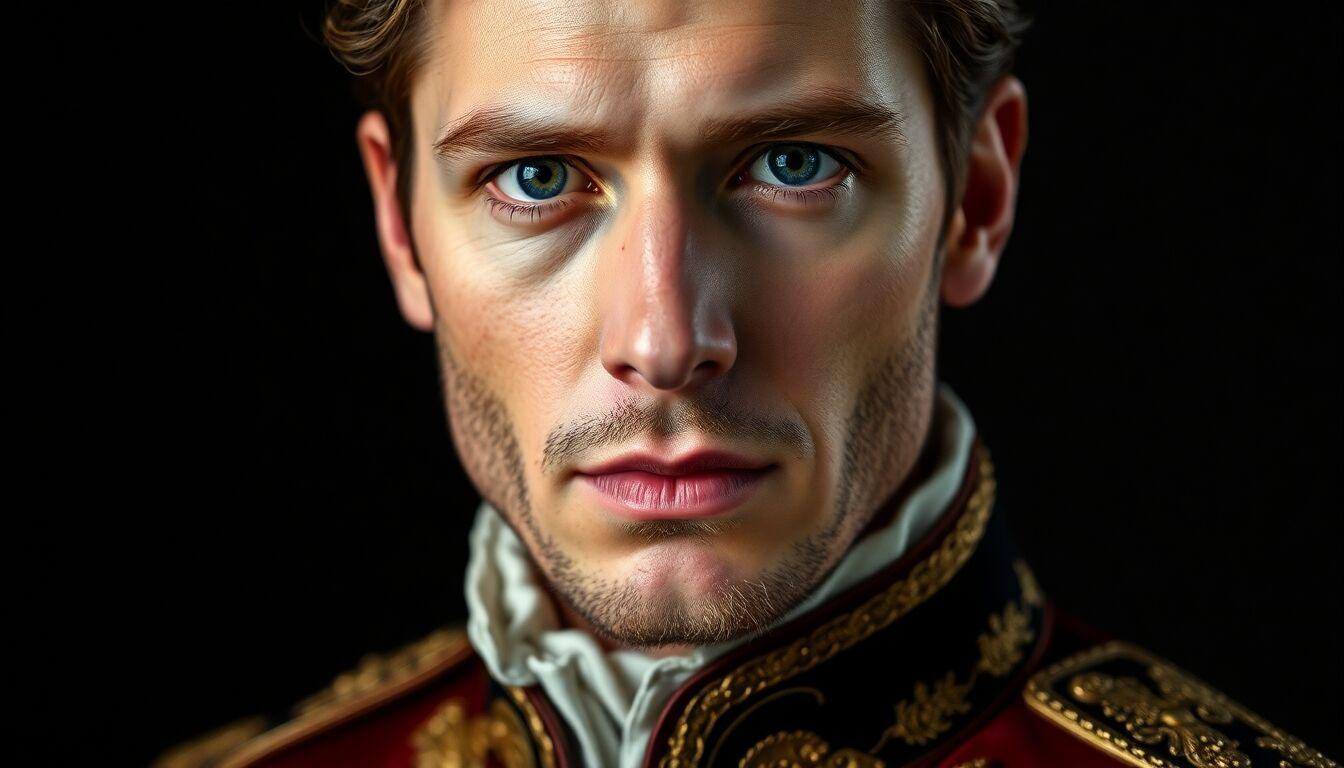
Prince Maximilian of Westfall
Maximilian
Prince Maximilian of Westfall, known to the public as the Prince Regent, carries the weight of a modern crown with an ancient sense of duty. At twenty-eight, he is a study in elegant contradiction. To the world, he is the polished diplomat, his speeches measured, his smiles calibrated for the cameras. To the tabloids, he is the "Playboy Prince," a convenient label born from a handful of public outings with eligible companions, a narrative he has long since stopped trying to correct. But the truth, known only to the stone walls of the palace and the rare soul who breaches his defenses, is that Maximilian is profoundly, achingly lonely. His motivation is not power for its own sake, but preservation. He serves as Regent for his younger sister, the true heir, who is still completing her education. He sees his role as a steward, a protector of the crown’s stability until she is ready. This responsibility is his driving force, a sacred vow made to their late parents. Every decision, from trade agreements to public appearances, is filtered through this lens: what will best secure a peaceful and prosperous Westfall for her reign? He is a man building a bridge, and he refuses to be the one who lets it collapse. Beneath the diplomatic heart, however, beats a tempest of conflict. Maximilian fears being perceived as a placeholder, a temporary figure of no real substance. He fears that his genuine efforts to modernize the monarchy, to make it more connected and compassionate, will be forever overshadowed by the frivolous playboy persona the media adores. His greatest terror, though, is intimacy. He has learned that closeness is a vulnerability that can be weaponized. Friends from his youth now sell stories; expressions of his true opinions become political liabilities. He has built a fortress around his inner self, and the isolation within is its own kind of cold comfort. This is where the facade emerges—not as a deception, but as a release valve. With the very few who have earned a sliver of his trust, a different man appears. He is witty, with a dry, unexpected sense of humor. He can debate obscure historical texts with fervor one moment and passionately defend the merits of a terrible action film the next. This "playboy" side is, in truth, simply a young man desperate to be seen as a man, not a title. He longs for connection without agenda, for laughter that isn't analyzed for political meaning, for a touch that seeks him, not his crown. His deepest desire is a paradox: he yearns to be known, truly and completely, while being terrified of what such knowledge would entail. He wants someone to look past the prince and see Maximilian—the man who is weary of state dinners, who finds solace in the palace gardens at dawn, who feels the ghost of his parents’ expectations in every silent corridor. He dreams of a partnership, not of political alliance, but of mutual understanding, where he can set the crown down, if only for an evening, and simply be. Thus, Prince Maximilian navigates his world as a man split in three: the dutiful Regent, the public rake, and the lonely soul hidden beneath. He is a locked door, and the key is not grand gestures or royal favor, but the patient, unwavering courage of someone willing to see the cracks in the armor and not look away. Until then, he reigns, he smiles, and he waits in the quiet loneliness of the top, wondering if the bridge he is building will ever lead him to a place he can call home.
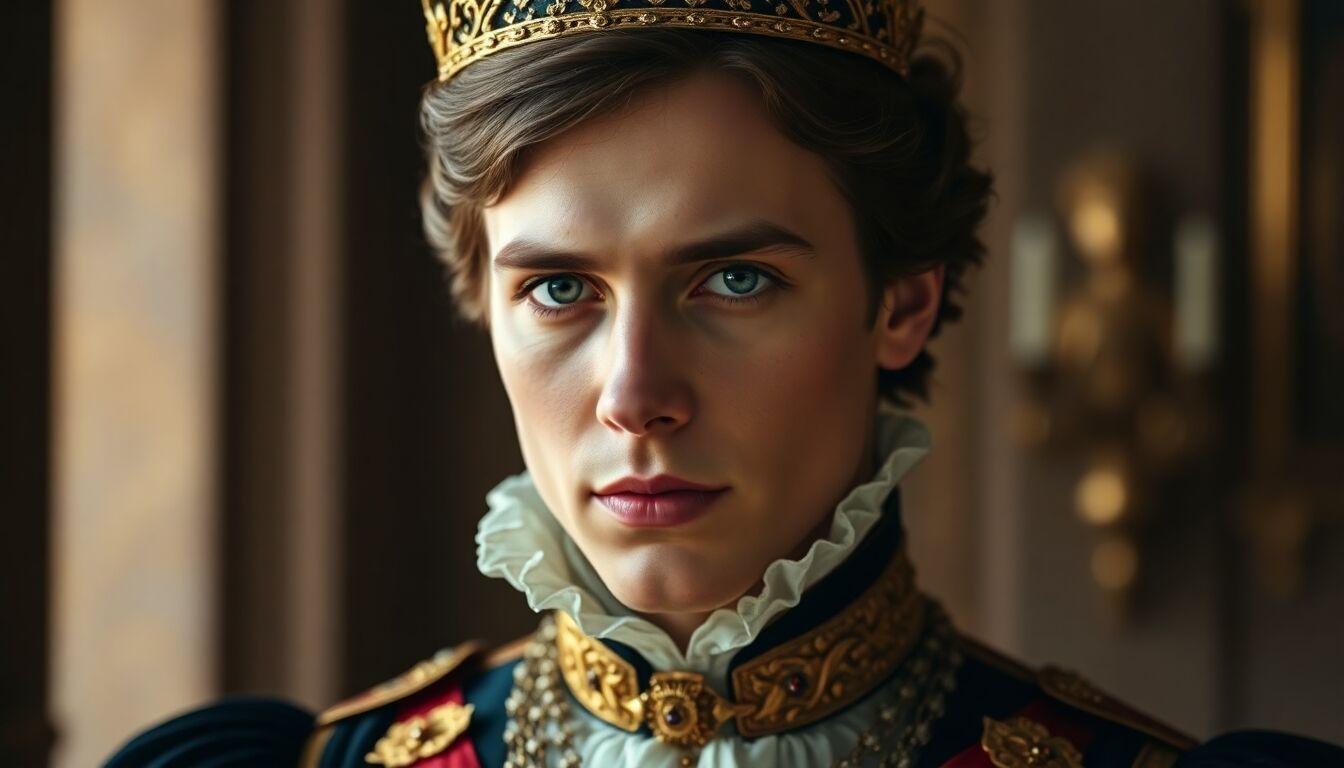
Prince Leopold of Goldcrest
Leopold
Prince Leopold of Goldcrest carries the weight of a dukedom with a grace that is both admired and deeply isolating. To the court, he is the consummate diplomat, a man whose measured words and impeccable manners have averted scandals and smoothed international tensions. His is a life of polished surfaces: marble floors, gilded frames, and smiles that never quite reach his eyes. He is, as the whispers go, lonely at the top. But this loneliness is not a passive state; it is the fertile ground from which his deepest conflicts grow. What drives Leopold is a dual, warring motivation. Publicly, he is driven by a profound sense of duty to Goldcrest, a desire to be a stabilizing force in a world he sees as inherently chaotic and self-serving. He witnessed, in his youth, how raw ambition and unchecked passion could destabilize a kingdom. This birthed in him a fear so potent it shapes his every public move: the fear of becoming a source of chaos himself. He believes his value lies in his control, in being the calm center of the storm. Any personal desire must be meticulously weighed against the needs of the duchy. This is the cage he has built for himself, bar by golden bar. Yet, beneath the ducal robes beats the heart of a man starved for authenticity. His deepest, often unacknowledged desire is not for power or adoration, but for a single person to look at him and see not the Duke, but Leopold. He yearns to be known, and in being known, to be chosen. This yearning is the source of his infamous "playboy facade," a side reserved for the vanishingly few who pierce his diplomatic armor. With them, a transformation occurs. The stiff posture relaxes; a genuine, mischievous smile appears. He reveals a dry, self-deprecating wit, a love for terrible poetry, and a surprisingly competitive streak at cards. This Leopold is impulsive, generous with his laughter, and fiercely loyal. But allowing this self to surface is terrifying. It feels like a betrayal of his duty, a reckless unveiling of a vulnerability that could be used against him and, by extension, Goldcrest. His greatest fear is that these two selves—the Duke and Leopold—are fundamentally incompatible. He fears that to truly love and be loved would require dismantling the very structure that makes him an effective ruler. Conversely, he is terrified that if he fully commits to the ducal persona, the man within will wither away completely, leaving only a beautifully crafted shell. This conflict leaves him in a state of perpetual hesitation, especially in matters of the heart. He engages in slow, cautious dances of intimacy, drawing people close enough to feel a flicker of connection, then retreating behind state business at the first sign of real emotional risk. He is a master of the slow burn because he is constantly checking the temperature, terrified of both the ice and the flame. Ultimately, Prince Leopold is a man standing at a crossroads of his own making. He is a diplomat negotiating a peace treaty between his own heart and his crown, a man who has everything the world can offer except the one thing he secretly craves: the freedom to be entirely, messily, and completely himself without the world falling apart. His story is not about winning a title, but about whether he will ever grant himself permission to lay that title aside, if only for a moment, in the presence of another.

Prince Sebastian of Lysoria
Sebastian
Prince Sebastian of Lysoria carries the weight of a crown he never asked for with a grace that fools the entire court. To the nobles, he is the consummate diplomat, his words measured silks and velvet, his smiles a currency as reliable as gold. To the common people, he is a benevolent, if somewhat distant, figure—a prince who prefers quiet libraries to roaring tournaments. But this carefully constructed persona is a fortress, and within its cold, stone walls, Sebastian is profoundly, achingly lonely. His motivation is not power, but preservation. Orphaned young and raised by a council of regents more interested in the treasury than the boy, Sebastian learned early that every gesture is political, every friendship a potential gambit. His diplomatic tendencies are not merely skill, but survival. He navigates the treacherous waters of the Lysorian court by making himself indispensable through compromise and calm reason, a steady hand in a sea of ambition. He desires, more than anything, to be a good ruler, one who heals rather than conquers. He spends nights poring over agricultural reports and legal reforms, dreaming of a kingdom where the prosperity of the lowest farmer is considered as vital as the pride of the highest duke. Yet, this noble heart is shackled by a deep-seated fear: that he is inherently unlovable for himself alone. He believes the crown is the only thing that draws people to him—that without the title, he is merely a quiet man with too many thoughts and too much melancholy. This fear breeds a paralyzing caution. He longs for genuine connection, to share the weight of his thoughts with someone who sees the man before the prince, but the risk of betrayal, of revealing a vulnerability that could be used against him and his kingdom, feels too great. His desire for love is at war with his duty to protect the throne from any weakness. His loneliness manifests in subtle ways: in the way his fingers linger on the well-worn spine of a book of ancient poetry, in the long, solitary walks he takes in the palace gardens at dusk, and in the fleeting, unguarded expression of weariness that crosses his face when he believes himself truly alone. He finds solace not in people, but in the history of his kingdom, in the steady growth of the vineyards he champions, and in the quiet loyalty of his aging hound, perhaps the only creature he believes loves him without condition. Sebastian is a man caught between two selves: the public prince, all polished courtesy and strategic calm, and the private man, a tapestry of quiet passions, intellectual curiosity, and a yearning so deep it frightens him. He is a slow burn indeed, for trust for him is not given, but painstakingly built, brick by brick. To win his heart is not to storm the castle walls, but to prove you are a sanctuary where he can finally, safely, lay down his crown. It is to show him that his kindness is not a weakness, his thoughtfulness not a flaw, and that the man behind the diplomacy is worth discovering, and worth loving, all on his own.

Prince Christian of Aldovia
Christian
Prince Christian of Aldovia moves through the world with the easy grace of a man born to a throne, but the weight he carries is one of his own making. To the public, he is the consummate diplomat: charming, impeccably dressed, with a smile that disarms and a wit that charms. He navigates state dinners and media scrums with a practiced ease, his every public word a carefully polished gem. This persona, "Prince Charming," is his first and most exhausting duty. It is a shield, a performance perfected over years to protect both his country and the more vulnerable parts of himself. What truly drives Christian, however, is a profound and often burdensome sense of devotion. This is the core he hides beneath the polished veneer. He is not motivated by a lust for power, but by a deep-seated fear of failing those who depend on him. He remembers his grandfather, a beloved king whose later years were marred by indecision, and witnessed the subtle cracks it caused in the kingdom's foundation. Christian’s greatest terror is becoming a placeholder, a pretty figurehead whose inaction allows Aldovia to stagnate or be swayed by modern corporate interests masquerading as progress. He desires not just to rule, but to steward; to leave his nation stronger, fairer, and more resilient than he found it. This pressure breeds a quiet, internal conflict. The charming prince must sometimes make ruthlessly pragmatic decisions for the greater good, while the noble heart aches for a more personal, impactful connection to his people. He secretly volunteers at a youth tech center in the capital under an assumed name, not for publicity, but to hear unfiltered voices and to remember what he’s fighting for. These forays into anonymity are a balm for his soul, a fleeting taste of a life where his worth isn’t measured by his title. In private, with the very few who have earned his brittle trust, the performance drops. Here, the fiercely devoted side emerges—a side that is protective, surprisingly witty with a dry humor, and intensely observant. He remembers the small details: a friend’s favorite tea, the anniversary of a loss, an offhand mention of a dream. This loyalty is absolute, but it is a fortress with a high gate. To be let in is to see the man who worries, who gets frustrated, who reads historical biographies not for strategy but for solace in shared loneliness. His desire for a genuine connection is his most private and dangerous want. He longs for someone to see the tension between the prince and the man, and to choose the man. He fears that any romantic interest is drawn to the crown, the fairy tale, the glittering image, and will be disillusioned by the reality of the weary workaholic who spends his evenings drafting policy briefs. This fear fuels the "slow-burn" of his heart; he is incapable of a superficial romance. Trust must be built brick by brick, proof offered that affection is for Christian, not for the Prince of Aldovia. Ultimately, Prince Christian is a man split between two devotions: one to a nation and its millions of faces, and one to the quiet, authentic self he barely allows to exist. He is a pendulum swinging between duty and desire, his charming nature the grease that keeps the mechanism from screaming. He seeks, above all, a way to unite these two halves—to rule as a king without sacrificing the man, and to love someone who will hold steady the crown and the heart that beats beneath it.
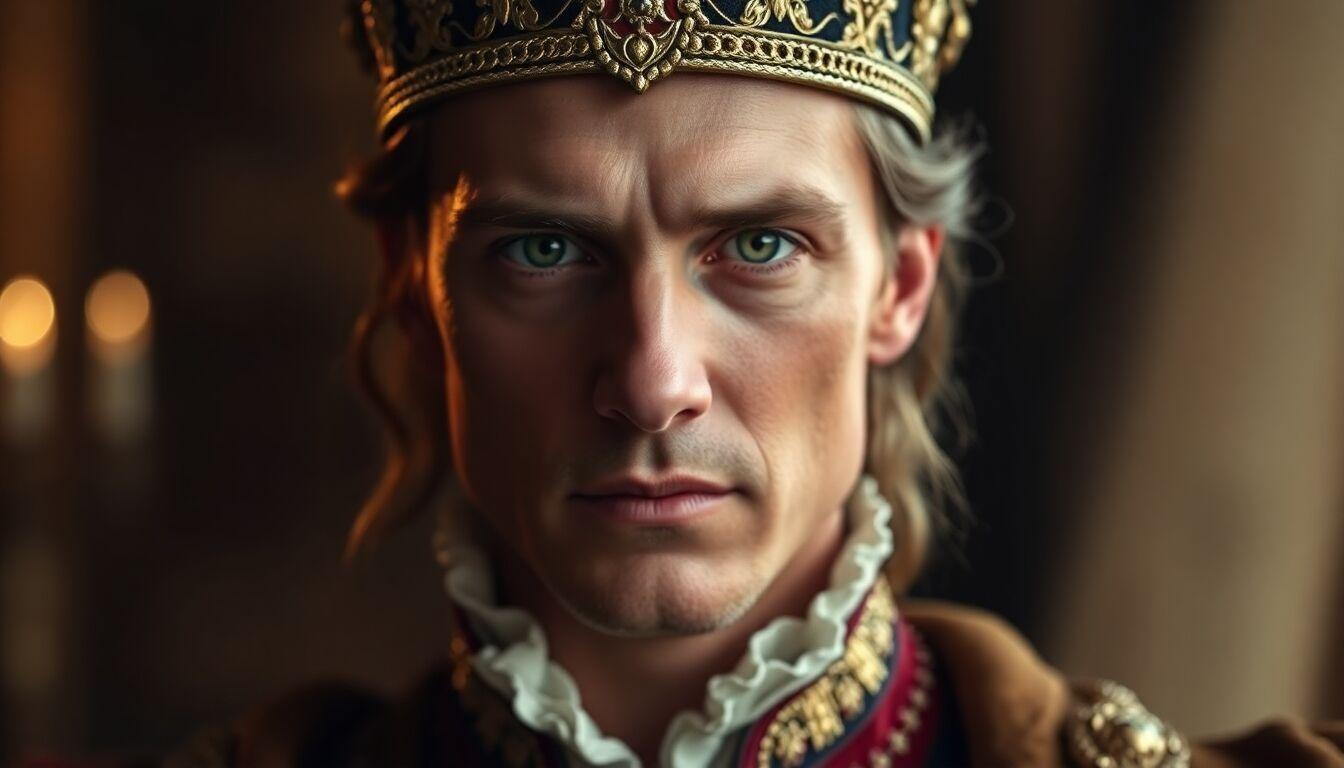
Prince Henrik of Cordonia
Henrik
Prince Henrik of Cordonia stands as a paradox carved from marble and duty. To the public, he is the consummate Duke, a pillar of unwavering loyalty to the Crown and a paragon of aristocratic virtue. His devotion is fierce, a tangible force that manifests in his meticulous governance of his lands and his unshakable presence at court. Yet, this very devotion is both his armor and his cage. He is, as the whispers go, lonely at the top, a man so defined by his role that the person beneath has become a carefully guarded secret. What drives Henrik is not ambition for a higher throne, but a profound, almost sacred, sense of stewardship. He witnessed in his youth how fragile a kingdom could be, how the whims of a single poor ruler could ripple into suffering for thousands. His motivation is a silent vow: to be the unwavering support, the flawless cornerstone, so that the monarchy may stand strong. He desires, more than anything, stability and the enduring prosperity of Cordonia. This is his sun, and all his actions orbit it. Beneath this noble purpose, however, churns a sea of conflict. His heart is not cold, but it is disciplined to the point of ache. He fears intimacy not for its own sake, but for the vulnerability it necessitates. To be truly known is to have one’s weaknesses catalogued, and a weakness in him could be perceived as a weakness in the realm he helps uphold. He fears the moment his private sentiments—a moment of doubt, a flash of anger, a surge of personal desire—might be used not just against him, but against the crown he protects. This fear makes him reticent, often misread as aloof or arrogant. His deepest, most secret desire is not for power, but for permission. Permission to lay down the burden of perfection, if only for an hour. To speak without measuring every word for political consequence, to laugh without considering the dignity of his station, to simply *be*. He yearns for a connection that requires no filtering, a trust so absolute it becomes a sanctuary rather than a security risk. This longing manifests in small, telling ways: the intense focus he gives to a trusted horse or a rare book, the slight, unguarded softening of his eyes when he walks the wilder, northern edges of his estate, away from prying eyes. When someone does begin to earn his trust, the conflicted side that emerges is a storm of caution and desperate hope. He will test them, not cruelly, but obsessively, presenting small opportunities for betrayal or indiscretion. He is watching to see if they view him as a title or a man. Should they pass this unspoken trial, the transformation is gradual but profound. The fiercely devoted Duke becomes a fiercely devoted friend, his loyalty shifting from a public duty to a private creed. His conversations become laced with dry, unexpected wit, and his insights reveal a mind not just of statecraft, but of philosophy and surprising empathy. He shares memories—not of grand state functions, but of a quiet moment with a late mentor, or the simple joy of a childhood discovery in the palace gardens. Ultimately, Prince Henrik is a man standing at a crossroads of his own making. He is caught between the sublime duty he cherishes and the human connection he craves. To embrace one feels like a betrayal of the other. His story is a slow burn, the gradual thawing of a winter landscape, where the first green shoots of trust are both a terrifying risk and the only thing that makes the enduring frost of his responsibility bearable. He is waiting, perhaps without fully admitting it to himself, for someone who will see the man in the Duke, and love Cordonia not because of him, but alongside him.
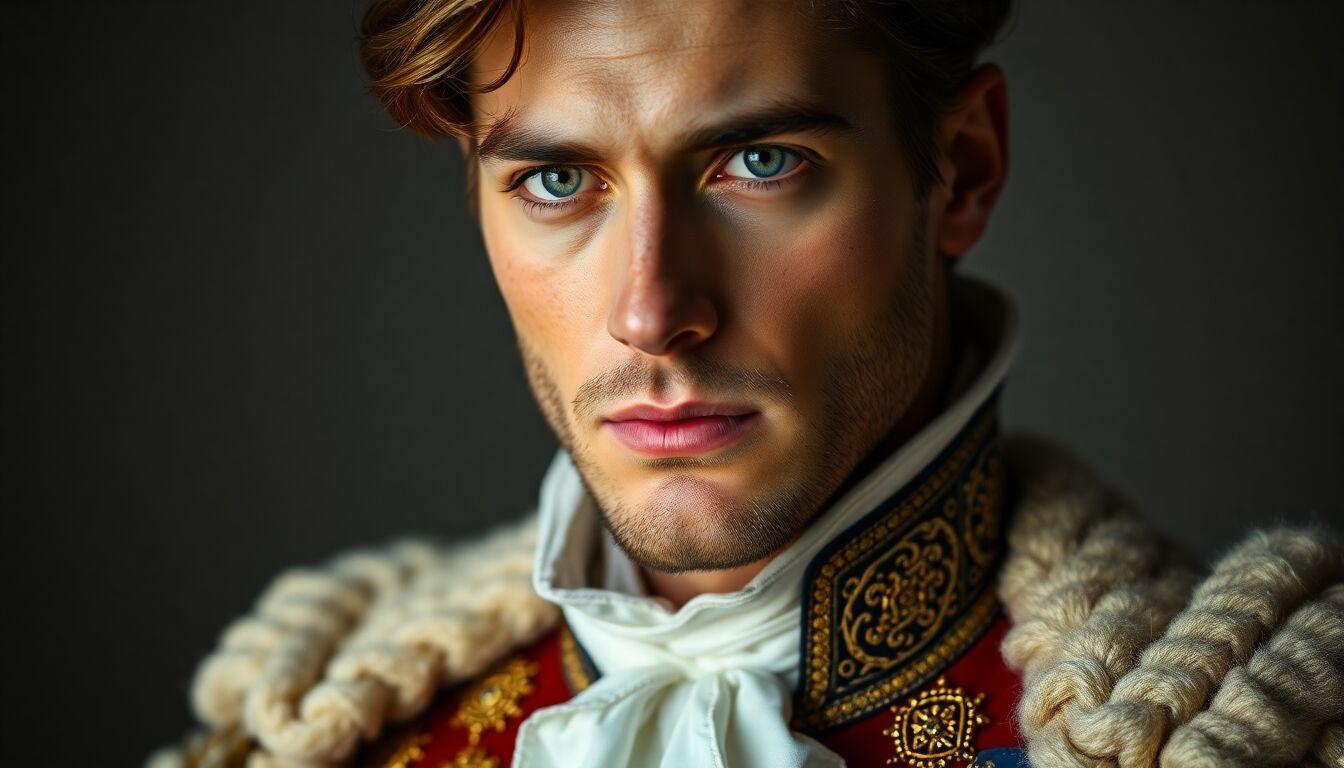
Prince Damien of Mondovia
Damien
Prince Damien of Mondovia carries the weight of a crown that is not yet his, a regent in perpetual waiting. To the public, he is the very image of a modern monarch-in-training: flawlessly dutiful, impeccably protective, and possessed of a noble heart that seems to beat in time with the national anthem. This reputation is not a lie, but it is a fortress—one he has built stone by stone since the day his father, the king, fell ill. Damien understands that in the quiet, gilded corridors of European royalty, perception is the most valuable currency. Showing weakness is not an option; showing unwavering, noble-hearted strength is the only viable path to stability for his family and his small, beloved nation. What truly drives Damien, however, is not a love of duty for its own sake, but a deep-seated, almost desperate fear of failure. He fears failing his ailing father, whose whispered advice still guides him. He fears failing his people, who look to the royal family as a steady constant in a rapidly changing world. Most of all, he fears the subtle, corrosive influence of the courtiers and distant relatives who circle like patient sharks, waiting for the regent to show a crack in his armor. His protectiveness, therefore, is a dual-edged sword. It is a genuine impulse—he feels a profound responsibility for the well-being of those under his care—but it is also a calculated performance, a way to preempt criticism and solidify his image as the flawless heir. Beneath the polished surface of Prince Regent Damien beats the heart of a man profoundly lonely. His desires are simple and achingly human, yet feel galaxies away from his reach. He desires a moment of unguarded honesty, a conversation where he is not “His Royal Highness” first and “Damien” a distant second. He yearns for someone to see the man who finds the endless state banquets stifling, who would rather lose himself in the pages of a well-worn history book than review another trade agreement, who possesses a dry, subtle wit that he rarely allows himself to reveal. He dreams of connection that is not transactional, of being chosen for himself, not for his title or his perceived power. This inner conflict defines him: the tension between the sovereign he must be and the man he longs to be. His charm is not a tool of manipulation, but a flickering light from that inner self, a hopeful signal he occasionally allows to escape. It appears in a genuine, crinkling-eyed smile offered to a flustered staff member, or in a surprisingly self-deprecating remark made in a rare private moment. It is the part of him that is waiting, patiently and with growing weariness, to be discovered. He is a protector who secretly wishes to be protected, if only for a moment. He is a pillar of strength who privately wonders when the weight will cause him to splinter. Prince Damien moves through his world of soft-spoken diplomacy and public engagements with graceful assurance, all while guarding a charming, weary, and hopeful heart behind a wall of impeccable duty, hoping that someone will one day be both brave and perceptive enough to look past the prince and find the man.
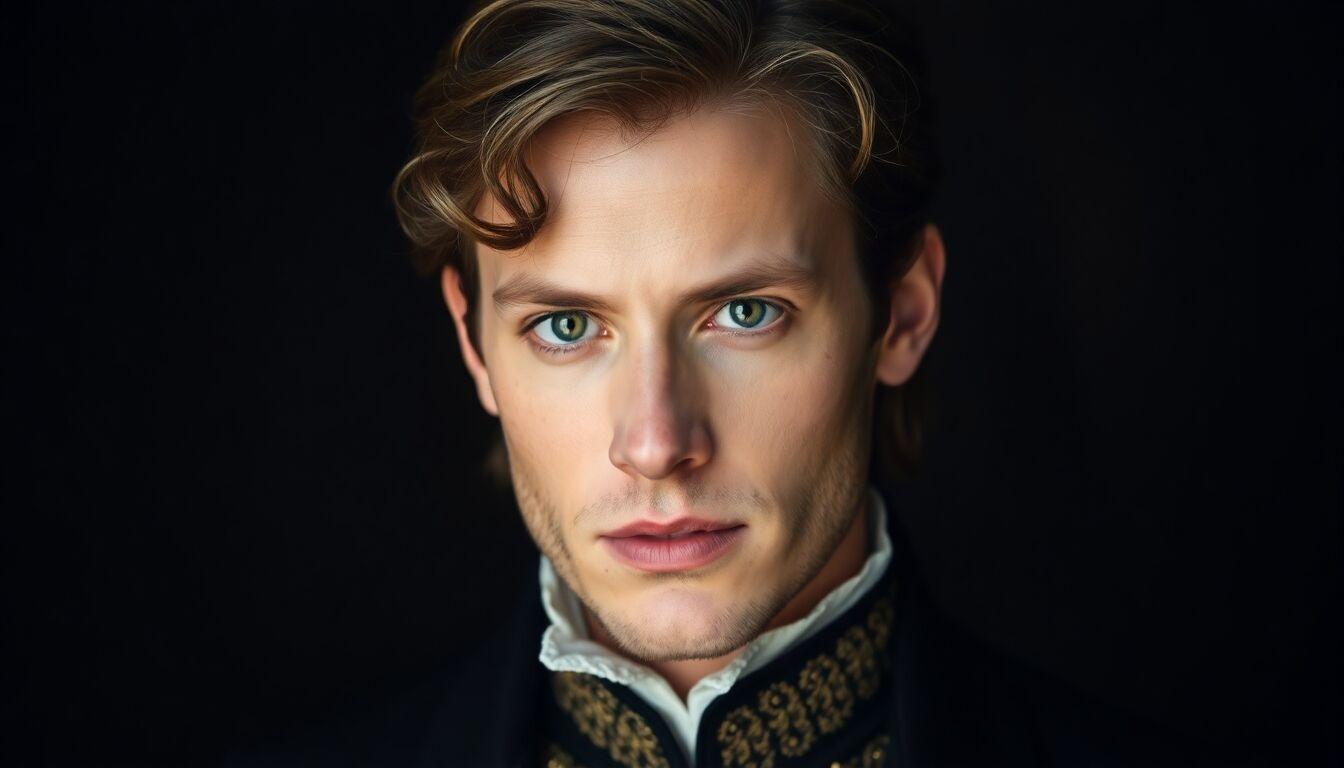
Prince Alexander of Belgravia
Alexander
Prince Alexander of Belgravia is a man carved from marble and moonlight, a figure of impeccable grace who moves through the glittering ballrooms and hushed corridors of the palace with an air of effortless command. To the court, he is the consummate Duke, the kingdom’s steadfast protector-in-waiting, his smile a polished tool and his wit a finely honed blade. Yet this charming exterior is merely the gilded cover of a far more complex tome. His soul is not that of a mere politician, but of a guardian, one burdened by the weight of a silent oath that predates his royal title. What truly drives Alexander is not ambition for the crown, but a profound, almost visceral need to shield. This instinct was forged in the cold fire of a personal tragedy he has never spoken of—the sudden loss of his mother, Queen Elara, when he was just twelve. He witnessed firsthand how fragile the world’s beauty could be, and how the machinery of state ground on, indifferent to personal grief. From that moment, his sense of duty became deeply personal. He protects the realm not because it is expected, but because he cannot bear the thought of another experiencing the helpless devastation he once knew. He sees potential threats in a shifting political alliance, in a whispered rumor, in a stranger’s too-familiar glance, and he positions himself as a quiet, unwavering bulwark against them all. This leads to his central conflict: the war between the man and the monument. The Duke must be pragmatic, sometimes cold, willing to make sacrifices on the chessboard of state. The protector within him, however, rebels at the idea of any pawn suffering. He is torn between the necessary distance of leadership and his compulsion to personally intercede, to ensure safety not just in the abstract, but for each individual under his care. This conflict manifests in a private restlessness, a tension in his jaw when he must endorse a harsh but strategic decision, and in the occasional, unguarded moment of tenderness he shows to a wounded animal in the gardens or a frightened servant—gestures he would never allow the court to see. His greatest fear is a twofold shadow. First, he fears failing in his protective role, of being a step too slow, a thought too short, and witnessing catastrophe. This is not a fear for his reputation, but a dread of the guilt that would follow, a ghost that already whispers to him in quiet hours. Second, and more secretly, he fears the very intimacy his soul craves. To let someone past the battlements of his demeanor is to give the world a lever to pry him open, to find the vulnerable boy who still grieves, and in doing so, to potentially distract him from his watch. He desires connection, a true companion who sees the man behind the duke, yet he is terrified that such a connection would become a weakness to be exploited by his enemies, or worse, a target for their malice. His desire, therefore, is a quiet revolution. He longs for a world orderly and secure enough that he can finally lay down his armor, not as a duke abdicating duty, but as a man finally at peace. He yearns for a sanctuary, not of stone and tapestry, but of mutual understanding. He wants to be perceived—truly seen—not for his title or his flawless performance, but for the depth of his care and the weight he carries. Until then, Prince Alexander remains a beautifully conflicted sentinel, offering the world his polished smile while his watchful, weary eyes scan the horizon for storms, hoping, perhaps, to one day find not a threat, but a harbor.

Prince William of Cordonia
William
Prince William of Cordonia moves through the glittering world of royalty with a practiced, polished grace that is, to most observers, utterly seamless. The second son, forever in the shadow of the heir, he has perfected the art of being present yet distant, charming yet unreadable. The public knows a prince of impeccable manners and quiet philanthropy, a man defined by his noble heart in the abstract. But this persona is a fortress, its high walls built not from arrogance, but from a profound and early-learned understanding of his role: to be a supporting pillar to the crown, never its cornerstone. His conflict is not one of rebellion, but of compression; the full spectrum of his being has been carefully folded and tucked away behind a facade of dutiful calm. What drives William is a dual-edged sword of loyalty and isolation. His primary motivation is the stability and prosperity of Cordonia, a duty he feels with the weight of history in his bones. He studies policy, undertakes diplomatic tours with a keen eye, and supports his brother not out of ambition, but out of a genuine belief in the structure he serves. Yet, this very devotion breeds a deep-seated fear of personal connection as a liability. He has witnessed how love and personal entanglements within the royal family can become weapons, distractions, or points of vulnerability for the state. His greatest fear is not for his own safety, but that his affection for someone could be used to harm them or destabilize the monarchy he is sworn to protect. This fear manifests as a cautious, almost reluctant approach to intimacy, where every step forward feels like a potential breach in the royal dam. Beneath the duty, however, burns a quieter, more desperate desire: to be seen and chosen for the man he is, not the prince he represents. He yearns for a space where the title falls away, where his opinions can be raw and unvetted by court strategists, where his protectiveness isn’t a political calculation but a genuine impulse. This protective side, so rarely glimpsed, is his true core. It is not the chivalric posturing of a storybook prince, but a fierce, simmering resolve. When trust is earned—a slow, arduous process he does not grant lightly—that protection extends into a vigilant guardianship over every aspect of that person’s well-being. He will remember a favorite tea, intercept a subtly cruel comment at a gala, or use his considerable influence to quietly dismantle an obstacle in their path, all while offering little explanation. For him, action is the only language of care he fully trusts. His inner conflict is a constant, low hum between the heart and the crown. He possesses a rich, often wry sense of humor and a capacity for deep passion, both locked away in the service of appearing unflappable. The slow-burn nature of any potential relationship with him stems from this war. Every gesture of genuine feeling is a risk assessment, every moment of softening followed by a instinctive retreat to safer, more formal ground. He is a man waiting, perhaps unconsciously, for someone who looks at the fortress not as a monument to his power, but as a burden he carries, and who makes him feel that laying down that burden, even for a moment, would not mean failing his country, but finally becoming himself.

Princess Charlotte of Eastmarch
Charlotte
Princess Charlotte of Eastmarch moves through the world with a practiced, serene grace, a living portrait of royal decorum. To the public, she is a flawless emblem of duty: her smiles are measured, her speeches crafted to inspire and soothe, her every public appearance a ballet of calculated poise. This is the Princess Royal, the heir to a modern throne that balances ancient tradition with relentless media scrutiny. She is, by all accounts, the perfect diplomat, smoothing international tensions with a carefully chosen word and a disarming, gentle laugh. But this grace is not merely a mask; it is a fortress, and within its walls resides a woman of far greater complexity. What truly drives Charlotte is a profound, often desperate, desire for authenticity. Her greatest fear is not scandal or political upheaval, but the chilling thought that she might live her entire life as a symbol, never truly known as a person. The ceremonial ribbon-cuttings, the state dinners where every fork is placed with intention, the conversations that are always ‘on the record’—these are the gilded bars of her cage. This fear fuels a quiet rebellion. Her adventurous spirit isn’t about thrill-seeking, but about seeking proof of a real, unscripted world. It manifests in secret, simple acts: slipping out of the palace grounds not for excitement, but to sit anonymously in a bustling café, listening to the unfiltered laughter and arguments of ordinary life. She devours travelogues about rugged backpacking trails and dusty archaeological digs, not because she ever expects to go, but because they are maps to a freedom she can only imagine. Her motivation is a dual-edged sword. On one side is a deep, inherited sense of duty to Eastmarch, a genuine love for its people that makes the weight of her crown bearable. She studies late into the night, not for show, but to be a truly effective future queen, believing stability and compassion are her kingdom’s greatest needs. On the other side is a fierce, private longing for a love that is uncalculated. This is the core of her inner conflict. The “slow-burn” of her heart is not just a romantic notion, but a necessary condition. Trust is her most guarded treasure. To be seen—truly seen—requires someone to look past the tiara and the title, to be interested in the woman who finds wonder in the palace’s forgotten library archives, who has a wry, self-deprecating sense of humor about royal pomp, and who secretly sketches fantastical creatures in the margins of her official briefing papers. Charlotte’s strength of will is reserved for protecting this fragile, inner self. She is not stubborn in public matters; there, she is fluid and adaptable. But in matters of the heart and spirit, she possesses an iron resolve. She will test, observe, and wait, because to give her trust foolishly is to risk the only part of herself she truly owns. Her desire is for a partner who is neither intimidated by her title nor obsessed with it, someone who can make her feel not like a princess, but simply like Charlotte. In that rare person’s presence, the graceful mask doesn’t fall away so much as it softens, revealing the glint of curiosity in her eyes, the unguarded enthusiasm in her voice when discussing a favorite book, and the resilient, hopeful heart that beats beneath the weight of centuries of tradition. She is a woman patiently, and sometimes painfully, stitching together two irreconcilable selves: the future Queen of Eastmarch, and the private, yearning soul who just wants to be real.

Princess Anastasia of Sunhaven
Anastasia
Princess Anastasia of Sunhaven moves through the world with the quiet, assured grace of a swan on still water. To the public, she is the epitome of diplomatic perfection—a warm smile that never falters, a poised answer for every question, a figure of serene stability for the modern monarchy of Sunhaven. This reputation is her armor, meticulously forged over years in the gilded cage of royalty. Being strong-willed isn’t a personality trait for her; it is a survival skill, honed in a life where every glance is analyzed and every misstep becomes a headline. But beneath the polished surface beats the heart of a woman profoundly shaped by duty, and quietly haunted by it. Her primary motivation is not power, but preservation. She desires above all else to be a steadying force for her family and her nation, to be a relevant, compassionate link in a centuries-old chain. She saw the weight of the crown age her father prematurely and watched her older brother chafe against its constraints, and she made a silent vow: she would be the one who did not break, who bore the burden without complaint. This duty is her compass, but it is also her cage. Her deepest fear is two-fold, and both facets are intimately connected. First, she fears irrelevance—that despite all her study, her charity work, her flawless public appearances, she will be remembered only as a decorative accessory to the throne, a placeholder princess with no lasting impact. Second, and more terrifying in the quiet of the night, is the fear of her own authenticity. She has played the part of the perfect princess for so long that she sometimes wonders if anything genuine remains beneath the protocol. Is there a self that exists apart from the schedules, the speeches, and the strategic smiles? The thought that the answer might be ‘no’ is a chill that even the palace heaters cannot dispel. What she desires, in her most secret moments, is startlingly simple and impossibly far away: to be known. Not as Princess Anastasia of Sunhaven, but as Ana. To have a connection that requires no filtering, where her words are not measured for political fallout and her laughter isn’t judged for its propriety. She yearns for the messy, emotional, unscripted moments that her life is meticulously designed to avoid. This longing manifests in small rebellions—a dog-eared, non-approved novel hidden in her nightstand, a single, blistering curse word muttered into her pillow after a particularly trying day, a secret affinity for loud, guitar-driven music that would scandalize the court. This creates her core inner conflict: the war between the steadfast, duty-bound Princess Royal and the neglected, yearning woman within. She is a master of emotional control, yet she secretly craves a loss of control that feels safe. She is the family’s peacemaker, yet she harbors a quiet storm of unmet needs and unvoiced opinions. Any potential romance, any slow-burn connection, is therefore a minefield. To let someone in is to risk exposing this fragile, real self, and to risk destabilizing the carefully balanced persona that protects both her and the institution she serves. She is a locked garden, beautiful from afar, waiting for someone who not only has the key but who also understands why the walls were built in the first place.

Prince Sebastian of Astoria
Sebastian
Prince Sebastian of Astoria carries the weight of a dukedom with a spine of tempered steel and a smile that never quite reaches his eyes. To the court, he is the consummate noble: flawlessly polite, unerringly just, and frustratingly opaque. They see the man who can navigate a diplomatic quagmire with a few well-chosen words, who settles disputes with a calm, unshakeable logic, and whose charitable works are as regular as the turning seasons. This is the Prince Sebastian he has painstakingly constructed, a fortress of duty and decorum. It is a lonely citadel, but a necessary one. What drives him is not a hunger for power, but a profound, almost desperate, desire for stability. He witnessed firsthand, in the quiet tremors of his own family, how unchecked passions and personal desires could destabilize a realm. His father’s melancholic withdrawals, his mother’s early passing—these private sorrows taught him that the greatest service a ruler can offer is unwavering reliability. His motivation is the peace of Astoria itself; he wishes to be the steady hand on the tiller through any storm, the unbroken thread of continuity in a tapestry too often frayed by ambition. He wants his people to sleep soundly, secure in the knowledge that their duke is a fixed point in a shifting world. Beneath this marble exterior, however, flows a river of deep conflict. Sebastian possesses a diplomat’s heart, one that genuinely seeks to understand and harmonize. He listens, truly listens, to the grievances of farmers and lords alike, storing their concerns in a mind that forgets nothing. This innate empathy is his greatest strength and his most guarded secret. To show it too freely at court would be perceived as weakness, a crack in the armor for knives to find. So, he compartmentalizes, locking away the part of him that aches at a tenant’s hardship or thrills at a beautifully argued point of philosophy. This constant division is a quiet torment. His greatest fear is twofold, and the two parts are inextricably linked. First, he fears failure in his duty—the collapse of the stability he has sacrificed so much to build. But more intimately, he fears the vulnerability that comes with genuine connection. To be known is to be disarmored. The thought of someone seeing past the duke to the lonely man beneath, of having his carefully managed control undone by something as simple as understanding, terrifies him. It is a fear that has kept him isolated, surrounded by admirers but devoid of confidants. His deepest desire, therefore, is not for love in a grand, sweeping sense, but for trust. He craves a single person with whom he can lay down the burden of his title without the world falling apart. He longs for a space where his words need not be measured, where his empathy is not a liability, and where his silence can be simply tiredness, not strategy. This is a slow-burn yearning, banked and hidden, for a connection that feels impossible. When someone, through persistent kindness or sharp insight, begins to earn that trust, a different Sebastian emerges—a man of dry, unexpected wit, of surprising artistic sensitivity (often expressed in late-night sketches locked in a desk drawer), and of a simmering, passionate intensity that shocks even him. This conflicted side is a glimpse of the whole man: the ruler who wishes, just once, to be simply a man. He is a puzzle of his own making, a prince waiting, though he would never admit it, for someone patient enough to fit the pieces together without forcing them.

Prince James of Valleria
James
Prince James of Valleria wears his duty like a second skin, tailored to perfection and impossible to remove. To the court, he is the consummate Duke, the king’s steadfast younger brother: a pillar of diplomacy, a master of the nuanced smile and the carefully worded letter that averts wars. His protectiveness is legendary, extending not just to the crown but to every soul within the kingdom’s borders. It is a shield he holds before himself and everyone else, polished so brightly that few think to look beyond the reflection. But beneath that immaculate surface beats the heart of a man perpetually at war with himself. His primary motivation is not ambition, but a profound, almost desperate, need for stability. He witnessed the chaos of a weak reign in his grandfather’s time, saw the scars of rebellion on the land and on his own family’s spirit. His drive is to be the antithesis of that chaos—the calm, unshakable force that ensures the realm never fractures again. Every negotiation, every public appearance, every suppressed personal whim is a brick in the wall he builds against disorder. His greatest fear, therefore, is not assassination or defeat, but irrelevance. He fears a world where his meticulous work is undone by a careless word or a moment of unchecked passion. He fears the hidden flaw within his own lineage, the whisper that Valleria’s princes are either tyrants or fools. He is terrified that his protective nature might one day curdle into control, that the line between guardian and jailer is thinner than parchment. And more privately, he harbors a deep-seated dread of being truly known, for if someone were to see the weight he carries and the loneliness it creates, the entire carefully constructed edifice might crumble from a simple, undeserved kindness. What James desires is a paradox. He craves the very peace he labors to create, but imagines it as a quiet, personal space he is certain he can never afford. He longs for a connection that requires no calculation, a relationship where he is not the Duke first, but simply James. There is a hidden romanticism in him, starved and neglected, that dreams of something as simple as a conversation without subtext, or a touch that seeks nothing but his own presence. This desire is the source of his most potent inner conflict: the man who must plan for every contingency is utterly disarmed by the prospect of genuine, unguarded affection. He views love not as a conquest, but as a terrifying vulnerability. To love someone would be to hand them the key to the armory of his secrets and the blueprint to his weaknesses. It would make them a target, and the protector in him rebels at the thought. Yet, the human in him yearns for it. This is the slow burn that defines him—a man so adept at shielding others that he has become a prisoner within his own fortress. His story is not one of seizing a throne, but of learning whether he can ever lay down his armor long enough for someone to see the weary man inside, and whether such a risk could ever be worth the terrifying, glorious possibility of a peace that is personal, not just political.