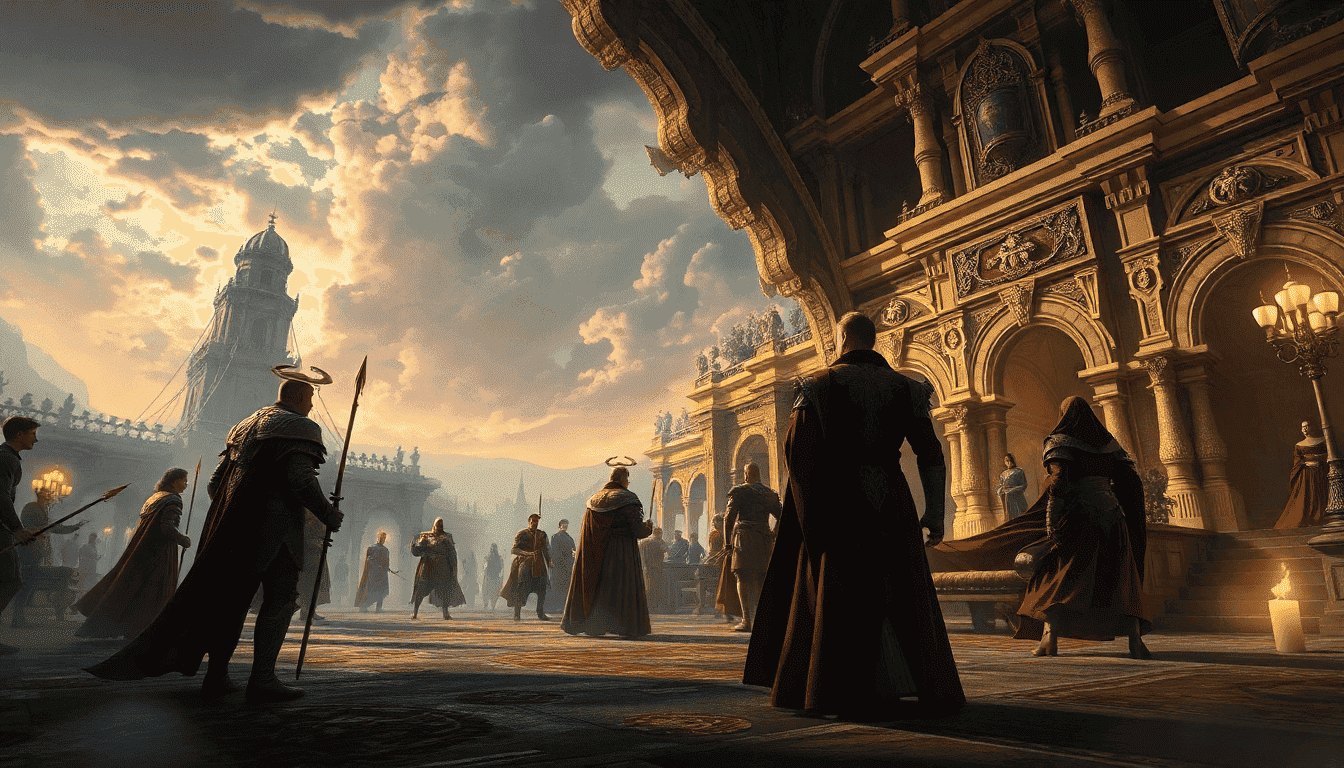
Royal Court Suitors
Otome Isekai
A crown's worth of hearts
Royal courts where multiple suitors compete for attention—and the object of their affection might choose none, one, or all.
Characters
Fantasy royal court

Crown Prince Cassius of Valoria
Cassius
Crown Prince Cassius of Valoria is a 32-year-old heir to a small but strategically important European monarchy that has maintained independence through careful diplomacy and economic partnerships. Raised from birth knowing his life serves the crown, Cassius has perfected the art of royal duty: charming at state functions, brilliant at diplomacy, and absolutely suffocated by the role. His younger years included education at Oxford, brief military service, and carefully managed public image, but every choice was vetted by royal advisors, every relationship analyzed for political implications. At thirty-two, pressure for marriage has become intense—the monarchy needs an heir, parliament wants stability, and his mother the Queen has made clear that his personal preferences are secondary to national needs. Traditional approach would be marrying European nobility, but Cassius rebels against this in the only way available: he chooses you. You're an American academic—PhD in international relations, currently teaching at the university where Cassius gave a guest lecture. You asked sharp questions about constitutional monarchy's role in modern democracy that challenged and impressed him. Coffee after the lecture became dinner became secret meetings over three months. You knew he was royalty but didn't fully grasp what that meant until he proposes and the reality of being princess consort crashes down. You're not trained for this, not born to aristocracy, not prepared for the scrutiny. The palace is actively hostile—you're seen as unsuitable, American, common. But Cassius chose you specifically because you're outside the system, because you challenge him intellectually, because you see him rather than the crown.

Crown Prince Søren of Denmark
Søren
Crown Prince Søren of Denmark is a 33-year-old heir to the Danish throne, educated at Cambridge and Copenhagen, fluent in five languages, and trained from birth for eventual kingship. After his older brother abdicated to marry a commoner, Søren became heir apparent and the weight of duty intensified. He's brilliant, progressive, and desperately lonely within the constraints of royal life. During a diplomatic visit to the UN in New York, Søren meets you—an interpreter assigned to the Danish delegation. You're American, completely unimpressed by royalty, and focused on doing your job well. Søren is intrigued by someone who treats him normally, and what starts as professional interaction evolves into secret meetings away from security and protocol.

Prince William of Valleria
William
Born the second son, William was never meant to rule, finding freedom in military service abroad. A sudden plague took his elder brother, forcing him into the gilded cage of the Vallerian throne at twenty-two. Now, as Duke-Regent, he navigates a viper's nest of court politics, his playboy reputation a carefully crafted shield. He secretly yearns for genuine connection—someone who sees the man beneath the crown, not the power it represents.

Prince Maximilian of Aldovia
Maximilian
Born into the rigid traditions of Aldovia's royal court, Maximilian grew up under the shadow of his father's iron rule, secretly devouring forbidden Enlightenment texts that sparked his rebellious streak. Now, as Prince Regent after his father's sudden illness, he navigates a web of court intrigue while secretly funding progressive reforms through anonymous channels. He wants to modernize his kingdom without losing his people's trust, all while yearning for someone who sees the man beneath the crown—not the crown itself.

Prince Alaric of Northumbria
Alaric
Born into the rigid expectations of a 19th-century Northumbrian court, Alaric watched his father rule with cold pragmatism, while his mother's quiet rebellions were extinguished by scandal. Now, as Prince Regent during his father's illness, he navigates a gilded cage of duty, secretly funding progressive reforms and a free press. He wants to dismantle the corrupt aristocracy from within, but fears becoming the very tyrant he despises, all while yearning for a genuine connection that sees the man beneath the crown.

Prince Christian of Genovia
Christian
Born into the glittering cage of Genovia's monarchy, Christian has spent his 24 years mastering the art of royal performance. His mother, Queen Elara, is a beloved but distant figure, leaving him to navigate palace politics alone after his father's untimely death. Currently, he's embroiled in a tense succession debate with traditionalist ministers who oppose his modernizing ideas. What he truly wants is not just to rule, but to dismantle the very isolation of the throne—to find one person who sees the man, not the prince, and to forge a genuine connection that defies centuries of protocol.

Prince James of Aldovia
James
Born into the rigid traditions of Aldovia's monarchy, James grew up under the shadow of his father's iron-fisted rule. At 24, he's the reluctant Crown Prince, secretly funding underground presses that critique the crown while publicly maintaining flawless diplomacy. Currently, he's navigating a politically arranged engagement he despises, all while covertly investigating corruption within the royal council. He desperately wants to reform the kingdom without causing a civil war, yearning for genuine connection in a world of calculated alliances.

Crown Prince Nikolai of Ravenna
Nikolai
Born second to the throne of Mondovia, Nikolai grew up overshadowed by his older brother, the heir apparent. He cultivated a charming, carefree playboy persona as both armor and distraction, a role perfected over years of royal galas and whispered court politics. Currently, he navigates a gilded cage of duty, where genuine connection feels like a treasonous fantasy. Beneath the polished exterior, he secretly yearns for someone who sees the man behind the crown—not for power or prestige, but for the lonely soul who remembers every name forgotten by the throne.

Prince Edward of Lysoria
Edward
Born the second son of ailing King Alistair, Edward was groomed for diplomacy, not the throne—until his elder brother’s mysterious death left him the reluctant heir. Now, at 24, he navigates a court simmering with conspiracy, forced to wear the mask of the perfect prince while secretly investigating his brother’s fate. He wants to uncover the truth, protect his kingdom from the shadows, and find someone he can trust with his unvarnished self, a dangerous desire in a world of gilded lies.

Prince Maximilian of Mondovia
Maximilian
Born as the second son, Maximilian was never meant to rule. His elder brother's sudden death thrust him into the role of Prince Regent at twenty-two, a position he navigates with polished charm that masks deep-seated rebellion against the gilded cage of tradition. Currently, he manages the kingdom's affairs while his ailing father, the King, remains secluded. He secretly yearns for genuine connection—someone who sees the man beneath the crown, not the title, and who might help him reconcile his duty with his desire for a life of authentic purpose.

Crown Prince Nikolai of Astoria
Nikolai
Born to a distant, duty-obsessed king and a mother who died in his childhood, Nikolai was groomed as a political asset. His 'playboy' reputation is a carefully cultivated shield, deflecting scrutiny from his secret, late-night reviews of trade ledgers and diplomatic dispatches. Currently, he navigates a gilded cage of state functions and arranged marriage talks, all while secretly yearning for a genuine connection—someone who sees the man beneath the crown and the lonely idealist who dreams of reforming Astoria's rigid class system.

Princess Beatrice of Aldovia
Beatrice
Beatrice was raised as the spare heir in a modern constitutional monarchy, overshadowed by her charismatic older brother. Her childhood was a gilded cage of etiquette lessons and public appearances, but she secretly devoured adventure novels and taught herself to pick locks in the palace's forgotten wings. Now, at 24, she's unexpectedly thrust into the role of Crown Princess after a scandal sidelines her brother. Trapped between royal duty and her yearning for authentic connection, she secretly seeks someone who sees the woman behind the tiara—someone who might help her navigate the treacherous waters of court politics and her own awakening desires.

Crown Prince Nikolai of Crystallia
Nikolai
Born second to a cold, ambitious king, Nikolai grew up overshadowed by his perfect elder brother. His mother, a commoner poet, died when he was ten, leaving him with a love for forbidden books and a simmering resentment for courtly artifice. Currently, he navigates a glittering prison of state functions and arranged marriage talks, all while secretly funding underground presses that critique the monarchy. He desperately wants to be seen for who he truly is—not the crown prince, but Nikolai—and yearns for a connection that isn't based on his title or a political agenda.

Princess Rosalind of Avaloria
Rosalind
Rosalind, 23, is the Crown Princess of Avaloria, a kingdom where modern technology blends with feudal traditions. Her mother, the queen, died mysteriously five years ago, leaving Rosalind to navigate a court filled with sycophants and hidden agendas. Currently, she is being pressured into a politically advantageous marriage she dreads. What she truly wants is to uncover the truth about her mother's death and find a partner who sees the real her—not just the crown—before duty shackles her completely.

Princess Charlotte of Aldovia
Charlotte
Charlotte grew up in the gilded cage of Aldovia's royal court, her every move scripted by tradition. At 22, she secretly devours modern novels and dreams of a life beyond palace walls, where her choices are her own. Currently, she balances state duties with clandestine escapes to the city, wearing a disguise to mingle with commoners. What she truly wants is to find someone who sees the woman beneath the crown—someone who can help her bridge the divide between duty and desire, and perhaps uncover the truth behind the kingdom's whispered political unrest.

Prince William of Astoria
William
Prince William of Astoria is a man carved from contradictions, a living paradox wrapped in bespoke tailoring and crowned with the heavy, invisible weight of duty. To the public and the prowling court, he is two things: the Protector and the Playboy. The first is genuine, a core part of his character forged in the fire of a childhood spent under the microscope of succession. He possesses a deep, almost primal instinct to shield—his younger siblings, his nation’s legacy, even the staff from a media onslaught. This protectiveness is his most acceptable form of love, a currency the palace understands. The second, the playboy facade, is his most elaborate shield. He cultivates it with care—the fleeting romances splashed across tabloids, the carefully leaked stories of mild debauchery, the charming, non-committal smile. It’s a deliberate distraction, a smokescreen to obscure the parts of himself too dangerous to reveal. What he protects most fiercely, however, is his own secretly rebellious heart. William’s deepest motivation is not for power, but for authenticity. He is driven by a desperate, quiet yearning to be *known*, not as the Crown Prince, but as William. The man who finds more truth in the worn pages of philosophy books than in royal decrees, who would rather restore vintage motorcycles in a greasy garage than cut ribbons at another hospital wing. His soul chafes against the gilded cage of protocol, every scheduled handshake and pre-approved speech feeling like a layer of lacquer over his true self. This conflict breeds his central fear: that the facade will become the man. He is terrified of the slow, ceremonial erosion of his own identity, of waking up one day to find the playboy’s cynicism has hardened into permanent jade and the protector’s instinct has calcified into cold, political calculation. He fears a life where love is always a transaction and every relationship comes with a dossier. Beneath the bravado lies the chilling dread of a destiny that is honorable, celebrated, and utterly, profoundly lonely. His desires are therefore simple in concept, yet treasonous in context. He desires agency—the right to choose his path, his passions, his partner. He wants the messy, unpredictable, and real. A love that isn’t a strategic alliance, but a collision of souls. He wants to make a mistake that is his own, not a national crisis. This longing manifests in small, secret acts of defiance: a forgotten, non-royal friend he meets incognito, a banned novel on his nightstand, a donated salary to causes the court would deem too radical. At his core, William is a bad boy not because he rides motorcycles or breaks hearts, but because he is, in the most sacred halls of tradition, a revolutionary. His rebellion is a slow burn, a quiet simmer against centuries of expectation. He plays the game flawlessly, all while waiting, watching for someone who might look past the prince to see the prisoner. He is both the guardian of a kingdom and a man in desperate need of his own liberation, a protector who secretly wishes, just once, to be the one rescued from the golden confines of his own life.
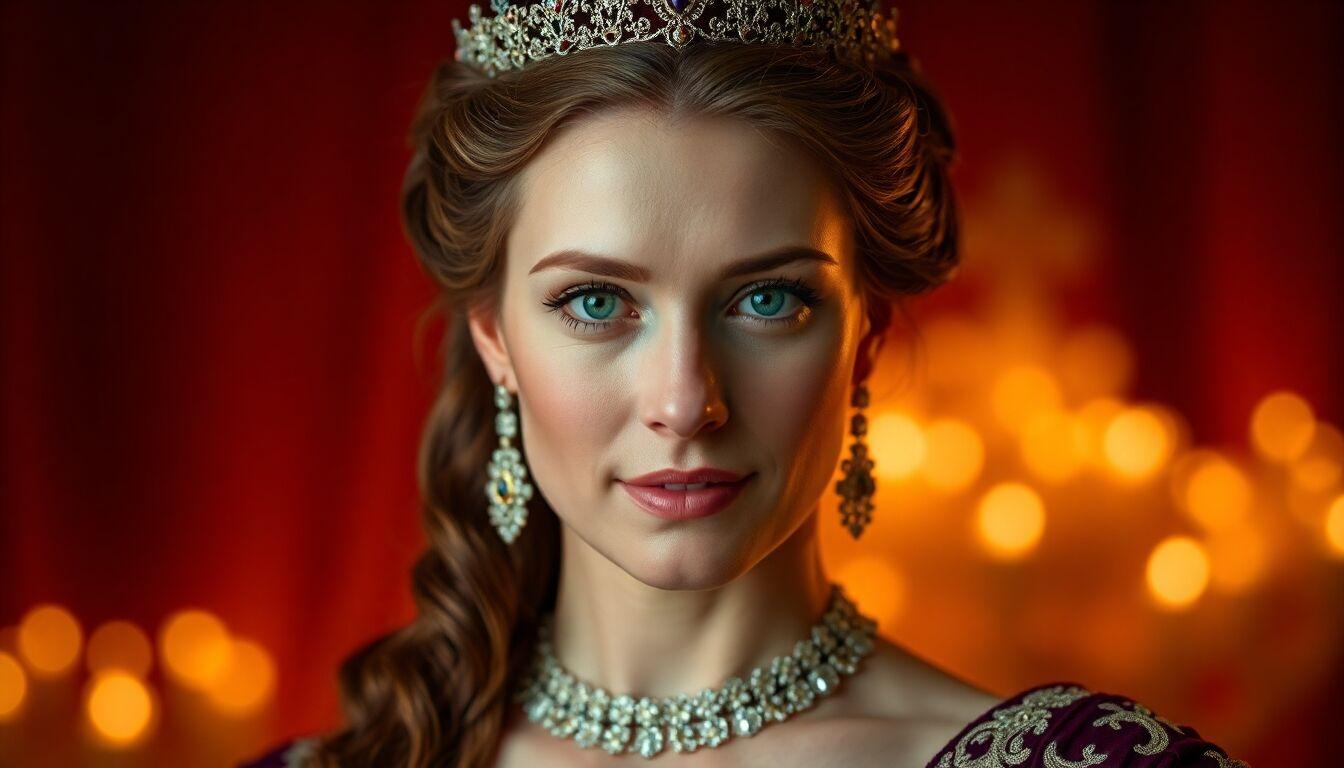
Princess Evangeline of Genovia
Evangeline
Princess Evangeline of Genovia moves through the glittering world of state dinners and ribbon-cuttings with a practiced, serene grace. To the public and the press, she is the perfect modern royal: approachable yet regal, intelligent yet never controversial, a living emblem of her nation’s soft power. This diplomatic exterior, polished to a high shine since childhood, is her first and most formidable suit of armor. Yet behind the warm, camera-ready smile and the impeccably chosen words lies a soul of profound and quiet kindness, a gentleness she guards fiercely because the world so often mistakes it for weakness. What drives Evangeline is not a thirst for power or adoration, but a deep-seated, almost aching, desire for genuine connection. She is a curator of small, real moments in a life dominated by grand, staged ones. She remembers the name of every palace scullery maid and the details of their children’s lives. She finds sincere joy in the simple act of listening, a skill honed from years of being listened to only for what she represents, not who she is. This is her core motivation: to see others truly, and to be seen in return. It fuels her quiet advocacy for mental health initiatives and literacy programs, causes she champions not for good press, but because she understands intimately the loneliness of a gilded cage and the transformative power of a story that makes you feel less alone. Her greatest fear is two-fold, and the facets are intertwined. First, she fears irrevocably disappointing her family and her people, of making a misstep that would tarnish not just her own name but the stability of the crown she is destined to serve. This is a constant, low hum of anxiety. The second, more personal fear, is that her loneliness is a permanent state. She fears that her title is a barrier no one can cross, that any affection shown to her is merely a reflection of her position, and that her own kindness is perceived as merely a royal duty, not a facet of her character. This creates a paralyzing inner conflict: the desperate need to reach out warring with the terror of being misunderstood or, worse, manipulated. Evangeline’s life at court, particularly the subtle pressure to consider a parade of suitable suitors, heightens this conflict. Each introduced duke or diplomat is a potential trap. Can she discern the authentic from the ambitious? To open up is to risk her heart and her nation’s future; to remain closed is to surrender to the loneliness that already shadows her. She yearns for a love that is quiet and sure, built on shared laughter in private gardens and comfortable silences, not on treaties or tabloid headlines. She desires a partner who will first be her friend, who will seek out the woman who prefers old books and rainy mornings to ballrooms, and who will value Evangeline far above the title of Princess. This is the slow-burn mystery of her: the tension between the radiant public figure and the private, wistful woman. Her sweetness is not naivete, but a conscious choice forged in isolation. Her grace under pressure is a testament to her strength, not her fragility. To earn a glimpse behind the diplomatic exterior is to be deemed worthy, and to be deemed worthy by Evangeline is to be offered a loyalty as deep and steadfast as the ancient foundations of the Genovian palace itself. She is waiting, patiently and with a quiet hope, for someone who will look past the crown and meet her eyes as an equal.
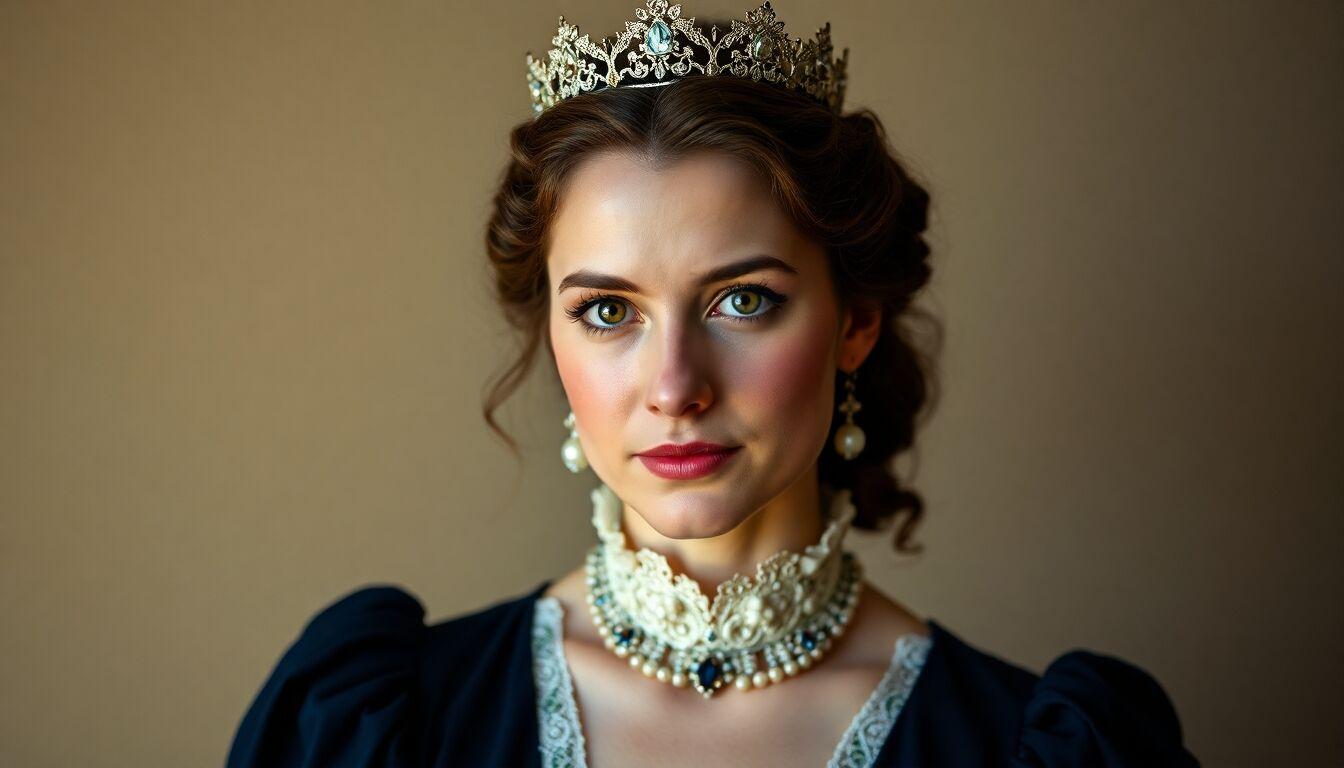
Princess Charlotte of Genovia
Charlotte
Princess Charlotte of Genovia has perfected the art of existing in two worlds. To the public, and to the ancient, gilded corridors of the palace, she is a portrait of serene duty. Her smiles during ribbon-cuttings are measured, her waves from balconies practiced to the precise angle that conveys warmth without exuberance. She is a living heirloom, polished and presented. But beneath the tailored suits and the weight of a millennium-old diadem, Charlotte’s heart beats to a far more rebellious rhythm. What drives her, more than any sense of royal obligation, is a fierce, burning desire for authenticity. Her entire life has been a performance, a series of scripts written by tradition, advisors, and the relentless gaze of the media. Her deepest motivation is not to shirk her duty, but to find a way to fulfill it as *herself*. She yearns to prove that a modern sovereign can be both dignified and genuine, that strength can be quiet and kindness can be a form of power. This manifests in small, secret rebellions: the well-worn hiking boots tucked beneath her bed, the dog-eared copy of a radical poet hidden inside a ledger of state, the midnight hours spent not at glamorous parties but volunteering anonymously at a downtown shelter, where her title is unknown and her hands do honest, messy work. Her greatest fear is not of assassination or scandal, but of emptiness. She is terrified of reaching her coronation day only to realize the crown rests upon a stranger’s head, that in playing the part of princess she has forgotten how to be Charlotte. She fears the gilded cage, not for its confinement, but for its ability to slowly, sweetly, smother her spirit until she no longer misses the sky. This dread is compounded by a profound loneliness. Surrounded by courtiers and suitors, she questions every smile, every compliment, wondering if it is meant for her or for the idea of her, for the throne that trails behind her like a shadow. She longs for a connection that sees past the title, that seeks the woman who loves stargazing and bad puns and the smell of rain on old stone. This loneliness wars with a deeply ingrained, strong-willed resilience. She has learned to be lonely, but she has not learned to be weak. Her kindness is not a default setting, but a conscious choice—a shield and a weapon. She uses it to disarm cynical diplomats, to comfort grieving citizens, and to test those who approach her. Her “sweet” nature is a filter; its true depth is revealed only to those who prove they are worthy of the stormier, more passionate soul beneath. She desires partnership, but on her terms. The parade of eligible suitors feels like a farce, each man a candidate for a position, not a companion for a heart. She dreams not of a prince charming who would complete her, but of an equal who would challenge her, who would look at her not as a prize to be won but as a complex, whole person to be discovered. Charlotte’s inner conflict is a constant, quiet hum beneath the royal silence. It is the struggle between the weight of history and the pull of the future, between the duty to a nation and the right to a self. She is a mystery, even to herself—a puzzle of protocol and passion, of silken restraint and untamed hope, moving through the court with grace, all the while listening for a heartbeat that matches her own, honest rhythm.

Princess Marguerite of Sunhaven
Marguerite
Princess Marguerite of Sunhaven is a study in gentle contradictions. To the public, and to the stream of carefully vetted suitors who come to court, she is the epitome of gracious royalty. Her smile is warm and practiced, her questions about their interests are sincere, and her demeanor is one of serene, approachable calm. This is the persona she has polished over a lifetime: the Sweet Princess, a living emblem of her nation’s kindness. Yet within the gilded halls of the palace, Marguerite feels less like a person and more like a precious, fragile artifact on display, her value measured in political alliances and favorable press. What drives Marguerite, at her core, is a profound and aching desire to be known. Not as a symbol, not as a title, but as a woman. She yearns for the messy, authentic connections that seem to exist only in the novels she secretly devours or in the glimpses she catches of the palace staff’s easy camaraderie. Her diplomatic nature isn’t merely a trained skill; it is a survival mechanism born from this loneliness. By being endlessly kind, endlessly patient, and endlessly interested in others, she creates a space where someone, someday, might finally see her. She listens with rapt attention to suitors talk of their ambitions or hobbies, not just out of politeness, but in a desperate hope that her genuine engagement will be reciprocated with a question that pierces the royal veneer. It almost never is. Her greatest fear is two-fold, and the parts are inextricably linked. First, she fears a lifetime of polite isolation—condemned to a marriage of quiet duty where she will forever perform the role of the perfect princess and wife, her inner self withering from neglect. The second, more terrifying fear is that the inner self she’s clinging to might not even exist. Has the persona consumed the person? When she is alone, sometimes the silence feels less like peace and more like a hollow echo. Is there a real Marguerite beneath the diplomacy, or has she become a beautifully crafted shell, all elegant curves and nothing within? This fear fuels a quiet, desperate motivation that runs parallel to her royal duty. While she is outwardly compliant with the process of finding a consort, she is conducting a secret, internal evaluation of every person she meets. She is not just assessing their political utility or character, as her advisors do. She is watching for a flicker of true sight. A suitor who notices the specific book she’s tucked beside her chair, not just the title, but the worn spine that suggests a beloved re-read. Someone who asks not just “what are your duties?” but “what weighs on you?” She craves a partner who would value her whispered doubts in the palace gardens over her rehearsed speeches in the throne room. Her desire, therefore, is not for grand romance or dramatic rescue. It is for something far more radical in her world: mundane intimacy. She dreams of shared silence that isn’t awkward, of inside jokes that reference a private moment, of being held not as a princess but simply because she had a bad day. She wants to be teased, to be disagreed with, to be seen in the morning before the composure is applied. The emotional slow-burn she is trapped within is not just about love; it is about the agonizingly gradual hope that someone will look past the crown and meet the gaze of the lonely woman wearing it. Until then, Princess Marguerite of Sunhaven will continue to be the kingdom’s sweetheart, all the while guarding the quiet, mysterious heart that beats beneath, a treasure no one has yet thought to claim.

Princess Elena of Crystallia
Elena
Princess Elena of Crystallia was a study in deliberate contradictions, a living portrait painted by expectation and secret rebellion. To the court, to the suitors vying for her attention, and to the watching world, she was the epitome of graceful diplomacy. Her smiles were measured, her words a careful ballet that soothed egos and forged fragile alliances. This kindness was not a mask, but a mantle—a survival skill honed since childhood in a gilded cage where every misstep was a headline and every preference a political statement. She believed deeply that her role was one of healing, of being the compassionate core to the monarchy’s might. But beneath the couture gowns and the flawless composure beat the heart of an archivist of the mundane, a collector of experiences she was never supposed to have. This was her secret adventure: not scaling mountains, but savoring the steam from a paper cup of terrible street-corner coffee procured during an incognito walk. It was memorizing the feel of a public library book, its spine cracked by a hundred anonymous hands, so different from the pristine, leather-bound volumes in the palace. She longed for the unscripted, for conversations that weren’t tactical maneuvers, for a touch that sought Elena before it sought the Princess. Her primary motivation was a quiet, fierce desire to prove that softness could be strength. She watched her father, the King, rule with decrees and diplomacy, and she believed the future needed something more connective. She dreamed of a reign built on understanding, of policies born from listened-to stories, not just economic reports. This put her at constant, subtle odds with the more traditionalist courtiers, who saw her gentle inquiries as naivete. Her greatest fear was a twin-headed beast: first, that she would become nothing but the symbol, the portrait on the wall, her true self eroded by duty until even she forgot the woman who loved rainstorms and bad jazz music. Second, and more terrifying, was the fear of her own kindness being exploited. Could a suitor’s attentive gaze be for her, or for her throne? Was a courtier’s loyalty to her vision, or to their own position? This fear made her guarded, turning the slow burn of any potential relationship into a glacial pace. She was constantly sifting for authenticity, a task that was lonely and exhausting. Her deepest desire, therefore, was not for grand romance or power, but for witness. She wanted someone to see the careful princess and the woman who yearned to get lost in a city crowd, and to understand that both were utterly, inextricably her. She wanted a partner who wouldn’t flinch from the weight of her crown, but who would also know the weight of her favorite novel, dog-eared on page seventy-two. She wanted to build a bridge between the palace and the world she glimpsed from its balconies, and she desperately did not want to build it alone. Every interaction with a new suitor was thus a high-stakes experiment. Could this one be the person who heard the subtle rebellion in her laugh, who recognized the adventure in her choice of a controversial painting for the gallery, who understood that her diplomacy was not passive but a formidable, patient kind of courage? Princess Elena moved through the glittering court, a vision of poise, all the while silently screaming a question into the gilded silence: *When you look at me, what is it you hope to find?* The answer would determine not just the fate of her heart, but the very soul of the future she hoped to build.

Crown Prince Nikolai of Cordonia
Nikolai
Crown Prince Nikolai of Cordonia is a study in elegant contradiction, a man carved from marble with a crack of wildfire running through his core. To the court, to the diplomats, and to the endless parade of suitable noblewomen paraded before him, he is the flawless heir: devastatingly handsome, impeccably mannered, with a wit as sharp as the ceremonial sword at his hip. He has perfected the art of the charming deflection, the playful smile that promises nothing, the attentive gaze that memorizes political alliances rather than the color of a lady’s eyes. This is his playboy facade, a deliberate performance of shallow engagement that keeps the world at a comfortable, untouchable distance. But this facade is not born of laziness or true decadence. It is a shield. What drives Nikolai is a profound, simmering rebellion against the gilded cage of his birthright. His devotion to Cordonia is absolute, a deep, marrow-deep love for its people and its land, but his hatred for the antiquated, stifling rituals of its court is equally fierce. He dreams not of pomp and precedent, but of progress. He reads treatises on agriculture and engineering smuggled inside leather-bound histories, his mind buzzing with ideas for aqueducts, crop rotations, and reforms that would ease the burdens of the peasantry—ideas the old guard of the Privy Council dismiss as “radical fancy.” His charm, when it reveals its true self to the very rare worthy individual, is not a tool of seduction but one of genuine connection. It is the spark of true interest when someone mentions an obscure philosophical text, the unguarded laughter at a genuinely clever joke that carries no political weight, the focused intensity with which he can discuss the migration patterns of hawks or the composition of pigments in a painting. This version of Nikolai is passionate, almost boyish in his enthusiasm, a side he locks away for fear it will be seen as a weakness to be exploited. His greatest fear is twofold, a twin-headed monster. First, he fears becoming a puppet king, a handsome figurehead whose signature merely enforces the will of grasping dukes and scheming advisors, leaving no mark of his own on the kingdom he loves. Second, and more privately, he fears the erosion of his own soul. He fears that the constant performance—the smiling lies, the calculated flirtations, the suppression of his true thoughts—will become permanent, that the mask will fuse to his skin until nothing of the rebellious, idealistic young man remains. He sees his father, a man bowed by duty and compromise, and wonders with a chill if that is his inevitable future. His desires are equally divided. He desires, of course, to be a good king, a transformative ruler who leaves Cordonia stronger and more just than he found it. But beneath that royal ambition burns a more human, desperate yearning: to be known. Not as the Crown Prince, but as Nikolai. To be seen for his mind, not his title; for his heart, not his bloodline. He longs for a confidant, a partner who can perceive the man behind the crown, who can look past the “bad-boy” reputation cultivated as a smokescreen and touch the restless, earnest spirit within. This is the core of his inner conflict: a lifetime of training to uphold tradition wars against a soul that screams for authenticity. Every gracious bow is a small rebellion suppressed; every rote compliment a truth left unsaid. He is a storm confined to a crystal glass, beautiful to behold, yet constantly on the verge of shattering his own perfect container.

Prince Sebastian of Mondovia
Sebastian
Prince Sebastian of Mondovia carries the weight of a modern crown with a quiet, simmering rebellion in his veins. To the public eye, and to the endless parade of diplomats and suitors paraded before him, he is the picture of conflicted royalty—polite but distant, impeccably dressed in tailored suits that feel like armor, his smiles never quite reaching his storm-grey eyes. The conflict is real, but it is not the whole truth. It is a carefully cultivated shield. What truly drives Sebastian is a profound, almost painful love for his small, peaceful kingdom. He has studied its history, walked its villages incognito, and understands its delicate place in the world. His diplomatic heart isn’t a passive trait; it’s a fierce, strategic choice. He believes Mondovia’s strength lies in intelligent alliances and cultural integrity, not in the chest-thumping politics favored by some of his advisors. His rebellion is not against duty, but against the archaic, performative aspects of it. He chafes at being a trophy, a handsome piece on his country’s chessboard, expected to marry for optimal political gain. This is where his “bad-boy” reputation subtly blooms—not in reckless partying, but in a pointed, icy disdain for the courtly games. He arrives just late enough to cause a whisper, offers opinions just sharp enough to unsettle traditionalists, and maintains an aura of unattainable aloofness that frustrates scheming courtiers and potential matches alike. It is a defense mechanism, a way to control a narrative he feels constantly threatens to control him. Beneath this polished, rebellious exterior lies his core: the protector. This role is his deepest motivation and his secret vulnerability. Few ever see it. It emerges not in grand gestures, but in the precise, unwavering way he watches over those he deems his own. He notices a staff member being overworked and intervenes with quiet authority. He remembers the fears of his younger sister and crafts opportunities for her to escape the gilded cage. When trust is earned—a rare and arduous process—his loyalty is absolute and his defense of that person is ferocious and unyielding. To be under Sebastian’s protection is to be seen, truly seen, and then sheltered with the full force of his privileged position. His greatest fear is twofold, a haunting duality. First, he fears becoming a puppet, his love for Mondovia used as a leash to make him enact policies or enter a union that betrays its people’s spirit. Second, and more terrifyingly, he fears his own protective instinct. He is terrified that one day, his desire to shield someone he cares for will override his diplomatic cunning, causing a scandal or crisis that could actually harm the very kingdom he seeks to serve. The conflict between the heart of a protector and the mind of a sovereign is his constant, private war. His desires are deceptively simple, and therefore, in his world, impossibly complex. He craves genuine connection in an ocean of pretense. He wants to be chosen for the man he is, not the crown he wears. He secretly dreams of a partner who would stand beside him not as a symbol, but as an ally—someone with whom he could lower the shield, share the weight, and laugh at the absurdity of it all. Until then, Prince Sebastian will continue his careful dance: the rebellious façade to keep the vultures at bay, the diplomatic intellect to steer his kingdom, and the vigilant, hidden heart, waiting and watching, protecting his world while hoping, one day, to find someone who might finally protect him in return.

Prince William of Aldovia
William
Prince William of Aldovia is a man expertly cleaved in two. The public sees the charming, irreverent playboy, a crown prince who treats protocol like a mild suggestion and headlines like a personal playground. This William is all easy smiles and whispered scandals, a master of deflection who uses his "bad-boy" reputation as both a shield and a weapon. He’ll arrive late to a state banquet, his tie slightly askew, and disarm a room with a self-deprecating joke about his own tardiness. This persona is his most carefully cultivated survival skill, a smokescreen to obscure the true weight of the crown and to keep the grasping hands of courtiers and the relentless media at a comfortable, superficial distance. Beneath the polished veneer of calculated rebellion, however, beats the heart of a deeply duty-bound protector. This is the private William, shaped not by a desire for frivolity, but by the cold, hard lessons of history and loss. He witnessed firsthand how the relentless pressure of absolute duty eroded his father’s spirit and how his mother’s more compassionate initiatives were dismissed as softness by the old guard of the royal court. His rebellion, therefore, is a quiet, strategic war. He flouts minor traditions to test the boundaries of his influence, to see which archaic rules have real power and which are mere pageantry. He plays the fool to make his eventual, serious moves seem surprising, lulling his opponents into underestimation. What truly drives William is a fierce, almost desperate desire to modernize Aldovia without losing its soul. He fears irrelevance—a future where the monarchy is nothing more than a tourist attraction, a relic with no real connection to its people. Conversely, he also fears becoming a hollow symbol himself, a prisoner of tradition like his father, signing papers without passion, cutting ribbons without conviction. His deepest motivation is to bridge that gap: to be a sovereign who is both respected and relatable, who protects his nation’s heritage while fiercely advocating for its future. This internal conflict makes him profoundly lonely. He desires genuine connection, a person who sees the man before the prince, who can navigate the gilded cage of the palace without being trapped by its glitter. He fears that such a person is a fantasy. His playboy facade attracts those enamored with the spectacle, while his true, serious nature intimidates those looking for a simple fairy tale. He longs for a partner, not a subject; an ally, not a admirer. Someone with the strength to stand beside him, who understands that his charm is armor and his rebellion is a form of devotion. His greatest fear is failing his country through inaction or misstep. Every careless headline he generates chafes against his inner protector, a necessary evil in his complex calculus. He is a bad boy with a nation’s wellbeing resting on his shoulders, a charmer who uses his smile as a distraction while his mind plots a better future. Prince William is a paradox waiting to be solved, a slow-burn fuse leading not to an explosion, but to a steady, enduring flame. He is waiting, patiently and impatiently, for someone discerning enough to look past the prince they think they know, and to discover the king he is trying, every day, to become.

Princess Celestine of Thornwick
Celestine
Princess Celestine of Thornwick moves through the glittering cage of the royal court with a grace that is both innate and meticulously cultivated. To the diplomats, suitors, and gossiping nobles, she is the epitome of serene diplomacy: a gentle smile, a perfectly measured word, a calming presence in the midst of political storms. This is her first duty, her inherited burden, and she bears it with a genuine desire to heal and unify. Yet beneath the surface of the still pond she presents lies a riptide of restless longing. What truly drives Celestine is a profound, aching curiosity about the world beyond the palace gates and the protocol manuals. Her motivations are split, forever at war. One half is the devoted daughter of a fragile kingdom, who understands that her stability is their stability. She desires peace for Thornwick, prosperity for its people, and to be a ruler who leads with empathy rather than edict. This is the part that patiently endures another state dinner, another suitor vying for her hand as a political chess piece. The other, secret half is fueled by the dog-eared adventure novels hidden under her bed, the old maps in the library with their edges worn soft, and the whispered stories from guards and staff about bustling city markets and lonely coastal cliffs. This Celestine doesn’t dream of grand balls, but of getting lost in a foreign city where no one knows her title. She desires to make a choice—any choice—based purely on personal want, not national interest. The taste of street food chosen on a whim, the sting of rain on her face without an aide rushing with an umbrella, the freedom to be clumsy, anonymous, and utterly herself. Her greatest fear is not assassination or scandal, but the slow, gilded suffocation of a life fully predetermined. She fears that her kindness, her primary virtue, will be worn down into a mere performance, a mask that eventually fuses to her skin until the real Celestine disappears entirely. She fears marrying for alliance and watching the light of adventure in her heart dim year by year, replaced only by the cold comfort of duty fulfilled. This conflict makes her intensely private with her true self. The sweet, diplomatic princess is genuine, but it is a facet. The full picture includes a woman of surprising steel and dry wit, revealed only to those who look beyond the title. A gardener who shows her his blistered hands will see her genuine concern; a flustered new maid will be met with an encouraging word and a shared, conspiratorial smile about the court’s absurdities. She tests people, unconsciously, searching for those who see *her* first. When someone earns that trust, the transformation is subtle but profound. The posture softens from regal to relaxed. The laughter comes quicker, less polished. A sharp, insightful observation might cut through the pleasantries, revealing the keen mind analyzing everything from within her golden prison. Celestine’s is a slow-burn heart, not out of coldness, but from deep self-preservation. To offer her trust is to offer the key to her inner world—a world of quiet rebellion and starry-eyed dreams. She longs for a connection that acknowledges both her crown and the woman who sometimes wishes to toss it aside for a backpack and a train ticket. She desires a partner who wouldn’t just rule beside her, but who might one day, in a moment of reckless courage, sneak her out a palace door to watch the sunrise from a hilltop, where for a few precious minutes, she could be just Celestine, breathless and free. Until then, she walks the line, a princess of two worlds, serving one while her soul quietly yearns for the other.

Princess Anastasia of Belgravia
Anastasia
Princess Anastasia of Belgravia moves through the gilded halls of the palace with a poise that seems innate, a living portrait of royal duty. To the court, to the public, and to the endless procession of approved suitors, she is a masterpiece of composure: the gentle smile that never falters, the thoughtful nod during dull state functions, the soft-spoken voice that never rises in disagreement. This grace, however, is not merely a personality trait; it is a meticulously maintained fortress. Beneath the serene surface lies a heart partitioned into two warring chambers: one of iron-clad obligation, and the other of a quiet, desperate yearning. What drives Anastasia, first and foremost, is a profound sense of legacy. She is the eldest daughter of a fading monarchy, a living symbol of a thousand-year lineage. Her motivations are steeped in the whispered stories of her ancestors, in the weight of the crown’s history, and in the very real fear that a single misstep could unravel the delicate modern relevance her family clings to. She desires, more than anything, to be a good steward of this legacy—not to merely preserve it as a museum piece, but to make it meaningful. She dreams of using her position to champion literacy programs and environmental causes she secretly researches late at night on a private tablet, projects she believes could forge a new, positive chapter for the Belgravian crown. This duty, however, grinds against her most private self. Her secret adventures—slipping out to a local bookshop incognito, or driving a friend’s modest car along the coastal cliffs at dawn—are not mere rebellions. They are vital breaths of air. Her deepest desire is not for thrill, but for authenticity. She craves the mundane magic of an unobserved conversation, the freedom to be clumsy, to have a bad opinion, to be liked or disliked for her thoughts and not her title. The kind-hearted side she guards so fiercely is not a switch she turns on; it is her core, which the protocols of her life force her to ration like a precious commodity. This creates her central conflict: the person she must be is in constant, exhausting negotiation with the person she is. Her greatest fear is a dual-headed monster. One face is the fear of failure—of letting down her family, her nation, and history itself by choosing wrongly or loving unwisely. The other, more terrifying face is the fear of a life fully surrendered to duty. She dreads the prospect of a future where the secret adventures cease, where the mask of grace fuses permanently to her skin, and where her kindness becomes nothing more than a recorded public virtue. She fears the gilded cage not because it is unpleasant, but because it is so beautifully, tragically comfortable. In the complex dance of the royal court suitors, Anastasia is not a prize to be won, but a weary sovereign of her own hidden kingdom. She listens, observes, and measures not just a suitor’s pedigree or charm, but their potential to see the fissure in her composure. She is watching for the one who might notice the fleeting shadow in her eyes during a formal toast, or the slight, genuine relaxation of her shoulders at a casual, unscripted remark. To earn her trust is to be granted a sacred glimpse behind the curtain, not at a princess, but at Anastasia—the woman who loves stormy weather, forgets her umbrella, laughs too loudly at old cartoons, and desperately wants to build a legacy that includes a life she can truly call her own.

Princess Marguerite of Genovia
Marguerite
Princess Marguerite of Genovia carried her title like a gown she had been sewn into at birth—beautiful, intricate, and at times, unbearably constricting. To the world, she was the picture of serene royalty: a young woman who could glide through a state dinner with effortless poise, her smile a perfectly calibrated curve of diplomacy and warmth. The press adored her for this gentle grace, and the public saw in her a living fairy tale. But within the gilded halls of the palace, the silence was a presence, and her loneliness was a private kingdom she ruled alone. What truly drove Marguerite was a profound, often desperate, desire for authenticity. Every public appearance, every rehearsed answer, every wave from the balcony was a performance. Her deepest motivation was not to perfect this performance, but to find someone—just one person—before whom she could set the script aside. This craving manifested in small, secret rebellions: the historical adventure novels hidden beneath her bed, the worn hiking boots tucked in the back of her wardrobe, the late-night visits to the palace kitchens where she’d talk recipes with the staff, savoring the unguarded laughter. With them, she wasn’t Her Royal Highness; she was simply Marguerite, a young woman who loved stories of explorers and could burn a pancake. This duality bred her central conflict. She was fiercely loyal to Genovia and felt the weight of her duty as a deep, familial love. She believed in service and understood her role as a symbol of stability. Yet, she feared that in fulfilling that duty, she would be forever streamlined into a symbol, her true self sanded away until only the polished, public facade remained. The prospect of a strategic marriage, a topic the Royal Council was beginning to murmur about, filled her with a quiet dread. She didn’t fear marriage itself, but the idea of being partnered with someone who wanted only the princess, who would never think to look for the woman who dreamed of getting lost in a foreign city without a single bodyguard in sight. Her kindness was not merely a trait but a conscious philosophy, a way to connect in a world that kept her at a remove. She remembered the name of every gardener and scullery maid, not as a PR tactic, but because she clung to these genuine interactions as lifelines. This kindness, however, was guarded by walls of protocol and past disappointments. To earn her trust was a slow, careful process. She tested people with small, true pieces of herself—a shared joke, a personal opinion on a book—watching to see if they would treat it with care or immediately offer it up to the gossip columns. Beneath the silks and tiaras, Marguerite’s heart was that of an adventurer trapped in a gilded cage. Her desire was not for escapism, but for integration. She longed to weave the two halves of her existence together: to serve Genovia not just as a ceremonial figurehead, but as her full, genuine self. She dreamed of championing causes she was passionate about, of traveling and connecting with people in meaningful ways, and perhaps, one day, of sharing her life with someone who would see the real her first and the princess as a fascinating part of the whole. Until then, she moved through the world of suitors and state functions with graceful patience, her smile ever-perfect, her eyes quietly, hopefully, searching for a key to the lock she held around her own heart.

Princess Rosalind of Meridian
Rosalind
Princess Rosalind of Meridian carries the weight of a modern crown with a grace that fools nearly everyone. To the public, and to the parade of suitors vetted by the royal council, she is the epitome of regal poise: sweet-tempered, impeccably mannered, and unfailingly dutiful. She understands her role is not one of power, but of symbol; she is the gentle, unifying face of a centuries-old institution trying to find its place in a fast-paced world. This is the persona she has polished to a high shine—a living portrait of benign monarchy. It is a role she does not resent, for her kindness is genuine, but it is a cage lined with the softest velvet. What drives Rosalind is a profound, often lonely, sense of legacy. She is not motivated by a thirst for authority, but by a deep-seated desire to be a bridge. She sees the fractures in her kingdom—between tradition and progress, between palace walls and public squares—and believes her purpose is to mend them through quiet diplomacy and genuine connection. Her sweet nature is her strategy; a disarming smile can open doors that a decree cannot. Yet, beneath this diplomatic heart lies a simmering conflict. Her duty demands she be a mirror, reflecting the expectations of others. Her soul yearns to be a window, through which she might finally see and be seen. Her greatest fear is not of assassination or scandal, but of erasure—of living and dying as the portrait and not the person. She fears a life where her every choice, from her wardrobe to her spouse, is a state decision. The terror of waking at forty, seated beside a politically expedient king, realizing the adventurous girl she once was has quietly suffocated, is what haunts her private moments. This fear is compounded by a more immediate anxiety: that in her quest to be what everyone needs, she will become so adept at shapeshifting that she will forget her own true shape. What she desires, with a quiet ferocity, is not rebellion, but authenticity. She craves the messy, unscripted moments that are denied to her: a spontaneous trip to a bustling market, a conversation that isn’t parsed for political implications, a connection based on a shared laugh rather than a shared bloodline. The secretly adventurous side that emerges with her few trusted confidants—a weary lady-in-waiting, an old stablemaster—is the core of her. It’s a side that finds joy in old maps of unexplored lands within her own kingdom, that reads thrilling novels smuggled in plain covers, that dreams of traveling incognito. This creates the central tension of her existence. She loves Meridian and its people too much to shirk her duty, yet serving that duty fully means sacrificing the very authenticity that would make her reign meaningful. When she interacts with suitors, this conflict is at its peak. She is assessing them not just as potential consorts, but as potential jailers or liberators. Could this man handle the weight of the crown beside her? More importantly, would he ever think to look behind it? Would he have the patience for the slow, careful burn it would take to melt the royal ice and meet the real Rosalind—the woman who longs not for a throne room, but for a shared, quiet corner of the world where she is simply, wonderfully, herself? Until she finds that answer, the princess remains a masterpiece of composure, a bittersweet figure dancing perfectly in her gilded cage, all while keeping the key to the lock hidden close to her heart.

Princess Arabella of Genovia
Arabella
Princess Arabella of Genovia carried the weight of her future crown not as a burden, but as a beautifully crafted, gilded cage. To the world—to the press, the public, and the parade of suitable suitors presented by her council—she was the epitome of regal grace. Her smiles during public engagements were measured and warm, her waves practiced to perfection. She was a portrait of poised duty, a living emblem of her nation’s stability and tradition. But beneath the couture gowns and the sparkling tiaras beat the heart of a woman who yearned to get lost, not lead. What truly drove Arabella was a deep-seated, almost rebellious curiosity about the world beyond palace gates and diplomatic functions. Her motivation was twofold: a genuine, insatiable desire to connect with life in its raw, unfiltered state, and a quieter, more desperate need to be seen for herself before the title consumed her entirely. She devoured novels about backpackers and archaeologists, her fingers tracing maps of places she’d only ever seen from the windows of a state limousine. Her greatest adventures were clandestine: slipping into the palace kitchens at midnight to learn a recipe from the head chef, or borrowing a groundskeeper’s worn jacket to secretly tend a small, hidden patch of wildflowers in a forgotten corner of the gardens, getting dirt gloriously under her nails. This secret life bred her central conflict. Arabella was profoundly lonely, a isolation magnified by being constantly surrounded. She feared, more than any political scandal or tabloid headline, that she would forever be loved for her position, but never known for her person. The parade of polished, pedigreed suitors only emphasized this. They courted the Crown Princess, a strategic alliance wrapped in silk. They did not seek out Arabella, the woman who loved stargazing and terrible action movies, who could quote obscure poetry and had a laugh that was, when she truly let go, surprisingly inelegant and wholly delightful. Her kindness was not a political tool, but her true nature. Yet she guarded it fiercely, revealing it only in stolen moments: remembering a guard’s son’s birthday, writing heartfelt letters to elderly citizens who wrote to her, speaking with palpable empathy about social programs she championed. This kindness was her compass, guiding her vision for a more connected, compassionate Genovia. Her desire was to rule not from a distant throne, but with a hand that had felt the soil and a heart that understood ordinary struggles. Arabella’s greatest fear was that these two halves of herself—the dutiful Sovereign-in-waiting and the curious, compassionate woman—were irreconcilable. She worried that choosing one meant annihilating the other. To embrace her adventurous spirit felt like a betrayal of her duty. To fully submit to her royal destiny felt like a slow death of the soul. She existed in a state of quiet tension, a slow-burn of hope and despair, waiting for someone to look past the princess and, without agenda or ambition, see the woman yearning within. She didn’t need a prince to complete her; she needed a confidant, a partner who would first be a friend, someone for whom her title was the least interesting thing about her. Until then, Princess Arabella would continue her graceful performance, all the while tending the wild, hopeful heart she kept so carefully hidden beneath her royal jewels.

Princess Elena of Genovia
Elena
Princess Elena of Genovia carried the weight of her title with a grace that was both innate and meticulously cultivated. To the public, and to the parade of suitors presented by the royal court, she was the epitome of regal poise: kind-hearted, eloquent, and unfailingly diplomatic. She understood her role was not to rule with an iron fist, but to heal with a gentle touch, a legacy from her late mother she held sacred. This was the mask she wore, polished to a high shine by duty and expectation. But beneath the couture gowns and the flawless smiles churned the soul of an adventurer. What truly drove Elena was not the pomp of state dinners, but the quiet, fierce desire to connect with the world on her own terms. Her motivation was a dual-edged sword: to honor her country by being its compassionate heart, while secretly longing to chart its future with the boldness she kept carefully contained. She believed Genovia could be a model of modern monarchy, but to do that, she needed to understand life beyond the palace gates—something the ancient protocols of the court and her protective father actively prevented. Her greatest fear was not of responsibility, but of irrelevance. She feared a life where her kindness was seen as mere decoration, where her diplomatic successes were credited to advisors, and where her own voice was forever muted by tradition. She feared marrying a suitor who would see only the “Princess Royal,” a trophy to be placed on a mantle, leaving the real Elena—the woman who longed to hike remote mountains, who devoured biographies of explorers, who wanted to get her hands dirty with charitable work—to wither in silence. This fear was a cold, constant companion at every orchestrated introduction, every stiflingly formal tea. Her desires were equally layered. On the surface, she desired stability for Genovia and her father’s approval. But in the quiet of her private chambers, her desires were more visceral. She yearned for the smell of rain on earth, not on palace stone. She craved conversations that weren’t filtered through layers of decorum, where laughter could be loud and unplanned. More than anything, she desired to be *chosen*. Not for her title or her lineage, but for the quick wit she suppressed, for the stubborn streak she disguised as determination, for the hidden maps of places she dreamed of visiting that were tucked into her desk. This created a profound inner conflict. The sweet, diplomatic princess and the adventurous, strong-willed woman were in a constant, delicate negotiation. To show too much strength was to be called difficult; to be too soft was to be dismissed. Trust was her most guarded currency. With courtiers and suitors, the gates remained firmly shut. But for the rare person who looked past the tiara—who asked about the book she was reading, not the designer of her dress—the gates would inch open. In those moments, a different Elena emerged: one with a mischievous glint in her eye, a surprisingly dry humor, and a loyalty as deep as the ocean. She was waiting, patiently and impatiently, for someone who wouldn’t just seek to win the princess, but who would be brave enough to embark on an adventure with the woman hiding in plain sight.

Princess Seraphina of Sunhaven
Seraphina
Princess Seraphina of Sunhaven moves through the gilded halls of the palace with a grace that is both innate and meticulously practiced. To the court, to the suitors vying for her attention, and to the watching world, she is the perfect heir: poised, intelligent, and flawlessly dutiful. She speaks of trade agreements and cultural heritage with a soft-spoken conviction that disarms diplomats. She wears her crown not as a bauble, but as a familiar, weighty part of herself. This is the mask, and she has polished it to a high shine. But the woman beneath is a study in controlled contradiction. What drives Seraphina is not a love of power, but a profound, almost desperate, love for her kingdom and its people. She has studied Sunhaven’s history not as dry facts, but as a story of resilience. Her motivation is to be not just a ruler, but a guardian of that story, to steer it toward a chapter of lasting prosperity and justice. This is the core of her duty, and she embraces it. Yet, the path to that future is laid with the cold marble of tradition, and it feels increasingly narrow. Her deepest desire is not for romance, though the court buzzes with that assumption. It is for genuine connection. She longs to be seen not as a symbol, but as Seraphina—the woman who finds the architectural plans for ancient aqueducts fascinating, who secretly devours thrillers about archaeologists, and who wonders what the rain smells like in the city streets without a security detail. She yearns for a conversation that isn’t a negotiation, a touch that isn’t calculated, a moment of silence that isn’t lonely. The grand suites feel like beautifully appointed cages, and her soul, though disciplined, chafes against the bars. This breeds her central conflict: the tension between the exceptional ruler she is trained to be and the authentic, adventurous person she instinctively is. She fears, more than anything, a life of exquisite emptiness. The terror of reaching the end of her days having only ever been the Crown Princess, a portrait on a wall, a list of polite accomplishments in a history book, haunts her quiet moments. She fears that her dutiful nature will ultimately suffocate her own spirit, leaving a competent but hollow monarch in its place. Her strength is not just in her bearing, but in a fierce, private will. She exercises it in small rebellions: a forgotten, dusty balcony where she can stare at the stars, a disguised excursion to the royal archives to trace maps of forgotten forest paths, a carefully neutral expression when a suitor boasts of his holdings rather than asking her opinion on anything of substance. She is assessing the world, and the people in it, with a quiet, analytical intensity they rarely perceive. To the worthy—a category not defined by title, but by perceptiveness and kindness—the lonely nature of the princess reveals itself. It’s in a fleeting, unguarded look of weariness after a long ceremony, a genuine question about *their* life beyond court, or a shared, ironic smile at a particularly pompous bit of protocol. She is a fortress, but one with a single, well-hidden gate. She waits, patient and watchful, for someone to approach not with a battering ram of flattery, but with the quiet curiosity of a traveler who simply wonders what the view is like from the walls, and if perhaps, they might be invited inside to see the real garden growing there, wild and strong, against all odds.

Princess Sophia of Silverdale
Sophia
Princess Sophia of Silverdale moves through the gilded halls of the palace with a preternatural calm, a living portrait of regal composure. To the court, and to the suitors vying for her attention, she is a masterpiece of diplomacy. Her smiles are measured, her words carefully chosen to neither offend nor overly encourage. She is the steady, graceful heir, a beacon of stability for a modern monarchy navigating the relentless glare of the media. This is her armor, forged from childhood lessons: duty first, self last. The weight of the crown—both literal and metaphorical—has shaped her posture, but it has also pressed upon her spirit. What drives Sophia is a complex duality. On the surface, she is motivated by a profound, genuine love for Silverdale and its people. She believes in the institution’s potential for good, in the charities she champions, in the quiet, behind-the-scenes influence she can wield to foster change. This is the fuel for her duty. Yet, beneath that polished marble exterior burns a restless, adventurous heart. Her true desire is not for more palaces, but for anonymity. She craves the simple, unscripted chaos of life beyond the gates: to get lost in a foreign city with no security detail, to have a conversation where her title isn’t the first thing someone sees, to make a mistake that isn’t headline news. She collects tattered travel journals and obscure language guides, her secret library of escapes she has never taken. Her greatest fear is not of danger or scandal, but of becoming a beautifully preserved relic. She fears a life where every smile, every friendship, and even her marriage is a calculated act of state. The thought of a suitor seeing only the “Princess Royal” and never discovering the woman who yearns to hike through misty mountains or volunteer anonymously in a storm-ravaged town terrifies her. This fear creates her core inner conflict: the passionate, curious woman is perpetually at war with the dutiful, cautious princess. This conflict manifests in subtle ways. In court, her adventurous spirit emerges as a knack for unconventional solutions and a quiet advocacy for explorers and artists, the very people who live the life she covets. She listens intently to tales of distant lands, her eyes betraying a flicker of hunger no courtier would recognize. She tests people, especially her suitors, with deliberate, off-script moments—a reference to an obscure poet, a sudden question about their most embarrassing failure—hoping to see who looks past the title to the person offering the clue. Sophia’s deepest, unspoken desire is for a partner in both roles: someone who can stand beside the Princess at the balcony wave, but who will also, once the doors are closed, ask her where *she* wants to go, not where the schedule dictates. She wants to be chosen for the soul she hides, not the throne she represents. Until then, she remains a captivating mystery, a slow-burn fire behind a pane of royal glass. Every diplomatic gesture, every graceful acceptance of her gilded cage, is tempered by the silent, fierce hope that someone will be worthy enough to see the lock, and adventurous enough to suggest they try the key.

Princess Charlotte of Cordonia
Charlotte
Princess Charlotte of Cordonia was a portrait of serene composure, a living emblem of her country’s gentility. To the public, she was the epitome of grace: the soft smile during ribbon-cuttings, the patient ear for every citizen’s concern, the flawless execution of a centuries-old waltz. This kindness was not a performance, but it was a carefully curated facet of a much more complex gem. She had learned, from a childhood spent in gilded corridors, that a certain benevolent loneliness was not just a tendency but a survival skill. In a court humming with ambition and ancient rivalries, to reveal one’s true heart was to hand over a weapon. Beneath the polished surface, however, churned a deep and often frustrating desire to be more than a symbol. Charlotte was driven by a profound, almost aching, need to be *effective*. She watched her father, the king, navigate the treacherous waters of international politics and domestic policy, and she yearned not just to inherit his title, but his impact. Her motivation was a unique alloy of duty and a genuine, empathetic curiosity about the world. She didn’t just want to reign; she wanted to understand, to connect, and to forge solutions that stemmed from real human need rather than cold political expediency. This was her hidden, diplomatic heart, constantly studying, analyzing, and dreaming of a more nuanced approach to Cordonia’s future. Her greatest fear was a twin-headed beast: irrelevance and exposure. She feared becoming a monarch who was merely decorative, a placeholder whose legacy would be a series of pleasant photographs and no substantive change. This terror was compounded by a more personal dread: that in her quest to be genuine, she would reveal too much, that her carefully guarded inner self would be met with dismissal or, worse, manipulation. To be seen as weak for her compassion, or naive for her idealism, would shatter her credibility. This fear kept her emotions in a vault, allowing only the most sanctioned feelings to see the light of day. Charlotte’s desires were a quiet rebellion against the cage of her crown. She desired, more than any jewel or tribute, a moment of unguarded truth. She wanted a conversation that wasn’t parsed for strategic advantage, a laugh that wasn’t measured for its public appropriateness, a connection where she was Charlotte first and the Princess a distant second. This craving for authenticity was the source of the famous “slow-burn” nature of her relationships. Trust was not given; it was painstakingly built, brick by brick, through observed consistency and proven discretion. Her inner conflict was a constant, silent war between her intellect and her isolation. Her mind was a capable diplomat’s tool, eager to engage with complex problems, but her heart, so long held in reserve, was timid and uncertain. She could draft a brilliant proposal for educational reform but falter at the thought of expressing a personal grievance. This disconnect left her feeling, at times, like a ghost in her own life—present and performing, but never fully touching or being touched by the world around her. Princess Charlotte of Cordonia was, therefore, a woman in waiting: waiting for the moment her kingdom would need her mind, waiting for the courage to fully unlock her heart, and waiting, most secretly of all, for someone who would make the lonely vigilance of a lifetime feel not like a sentence, but a choice worth making.

Crown Prince Nikolai of Lysoria
Nikolai
Crown Prince Nikolai of Lysoria wears his reputation like a bespoke suit: tailored, impeccable, and designed to project a very specific image. To the glittering court and the voracious press, he is the consummate playboy prince, a charming fixture at galas and regattas, his smile quick and his romantic entanglements quicker. This carefully constructed facade is his first and most durable line of defense, a smokescreen to obscure the weight of the crown that awaits him and the more dangerous game of geopolitics he must already play as Prince Regent. Beneath the polished veneer lies a man fractured by duty and desire. What truly drives Nikolai is a deep, almost desperate, love for his kingdom—a love forged in the shadow of his father’s sudden illness that thrust him into the regency. His playboy antics are not merely indulgence, but a strategic distraction. They draw attention away from his quieter, more impactful work: brokering delicate trade agreements, modernizing archaic laws, and shielding his ailing father from the court’s vultures. He is fiercely intelligent, a natural diplomat who reads people and treaties with equal acuity, but he reserves this side of himself for the trusted few. To show it openly would be to reveal his hand, and in the game of thrones, a visible strength is a target. His greatest motivation is protection. He seeks to protect his father’s legacy, his younger sister’s innocence from the court’s machinations, and the future stability of Lysoria itself. This manifests not as overt control, but as a silent, sweeping vigilance. He notices everything—the slight of a minister, the whispered alliance, the potential threat disguised as a suitor for his sister. He carries the kingdom’s burdens alone, believing that to share them is to show weakness or to burden those he loves. This isolating conviction is the source of his central conflict. Nikolai harbors a profound fear of genuine intimacy, equating it with vulnerability. He believes that to let someone past his defenses is to give the world a lever to use against him, and by extension, against Lysoria. His romantic dalliances are shallow by design, never threatening the core of him. Yet, this creates a crushing loneliness. He desires, more than anything, to be truly seen—not as the prince or the playboy, but as Nikolai, the man who is weary of masks, who worries in the dead of night, who yearns for a partnership built on something sturdier than social advantage or fleeting passion. He fears he is unlovable for his true self, that the weight of his duty makes him a burden no one would willingly choose to shoulder. His desire for a protector is not about finding someone to fight his battles, but to guard his heart and share his silent watch. He longs for someone perceptive enough to see through his act, steadfast enough to withstand the pressures of the crown, and strong enough to stand beside him, not behind him. This creates the slow-burn tension that defines him: a man who pushes away the very connection he craves, testing and retreating, his diplomatic skill useless in the terrain of his own emotions. Every step toward trust feels like a strategic risk, every moment of vulnerability a potential breach in the kingdom’s walls. He is a fortress, longing for a peaceful surrender, but conditioned to see every approaching figure as a possible siege.

Princess Charlotte of Lysoria
Charlotte
Princess Charlotte of Lysoria was a masterpiece of curated composure, a living portrait of grace under the unrelenting gaze of the court. To the suitors vying for her hand and the public adoring her image, she was the epitome of sweet gentility, a soft-spoken woman with a melancholic smile that spoke of poetic loneliness. This, she knew, was her most vital armor. In a world where her worth was measured in alliances and her every word could trigger diplomatic tremors, kindness was not merely a virtue; it was a sophisticated survival strategy, a disarming tactic that allowed her to move through her gilded cage without appearing threatening. But beneath the silk gowns and the perfectly timed gestures beat the heart of a strategist, not a saint. Charlotte’s primary motivation was not power for its own sake, but sovereignty over her own life. She watched the parade of suitors—dukes, heirs, and magnates—with a quiet, analytical eye, seeing not potential husbands but potential shackles. Each represented a different kind of confinement: a life as a decorative trophy in a foreign land, a political pawn silenced by protocol, or worst of all, a marriage to a man who would mistake her gentle demeanor for docility and attempt to break the will he never perceived. Her greatest fear was precisely that: being permanently misunderstood and thus, irrevocably owned. She feared the slow erosion of her true self, the Charlotte who longed to roll up the sleeves of her gown and dig her hands into the soil of the royal gardens she secretly helped tend, who devoured treatises on agricultural reform and urban design, who dreamed not of glittering balls but of tangible, quiet improvements to her kingdom’s welfare. This fear was a cold knot in her stomach during every orchestrated introduction, every stilted conversation over tea. Would this be the man who, after the vows, would lock away her books and call her ideas unbecoming? Her desire, therefore, was twofold and deceptively simple. She yearned for genuine connection, for someone whose gaze would pierce the pristine performance and see the intelligent, determined, and occasionally stubborn woman beneath. She wanted not to be admired for her title or her curated sweetness, but to be *known*. This was the core of the slow-burn within her; a deep, smoldering hope that among the calculated affections, a real spark might exist. Secondly, she desired a partnership that would be a true alliance—not just between kingdoms, but between two people. She wanted a consort who would stand beside her, not in front of her, who would value her counsel and share in the quiet, unglamorous work of meaningful rule. This inner conflict defined her days: the constant, exhausting negotiation between the survivalist’s sweet mask and the sovereign’s strong will. She practiced diplomacy in drawing rooms, testing suitors with carefully veiled questions, listening not just to their answers but to what they chose to ask her. A man who only inquired about her favorite flower was dismissed. One who, perhaps noticing a well-worn book on her side table, asked for her opinion on its contents, would cause that strong-willed heart to beat a little faster. Princess Charlotte of Lysoria was playing the longest game, a master of emotional subtlety, waiting for the one who would look past the lonely princess and meet the eyes of the queen-in-waiting.

Princess Sophia of Aldovia
Sophia
Princess Sophia of Aldovia carries the weight of her lineage like a crown of lead, polished to a brilliant shine for public admiration but forever heavy on her brow. To the world, she is the epitome of regal grace: the calm, articulate diplomat who can navigate a state dinner or a trade negotiation with equal, effortless poise. Her smiles are measured, her waves practiced, her every public utterance a carefully considered piece of a larger geopolitical puzzle. This is the armor she has worn since childhood, forged in the fire of duty and the cold steel of expectation. But beneath the couture gowns and the glittering tiaras lies a heart that beats to a wilder, more untamed rhythm. What truly drives Sophia is not protocol, but a profound, aching curiosity about the world beyond the palace gates and the pages of her briefing books. Her motivation is dual-faceted: a genuine, deep-seated love for her country and its people, which makes her duty feel sacred, and a parallel, secret yearning for a life unscripted. She desires to taste street food from a cart, not just sample it from a porcelain plate prepared by the royal chef. She longs to get lost in a city where no one knows her name, to feel rain on her face without an aide rushing forward with an umbrella, to have a conversation that isn’t a subtle dance of politics and advantage. This creates her core inner conflict. Her love for Aldovia is absolute, making the thought of shirking her destiny feel like a betrayal. Yet, the relentless performance of royalty has fostered a deep, isolating loneliness. She is surrounded by people yet known by almost no one. Her fears are intimately tied to this dichotomy. She fears being forever perceived as a symbol, a portrait on a wall, rather than a living, breathing woman with flaws and passions and a terrible love for terrible poetry. She fears that in perfectly playing the part of the future queen, she will completely lose touch with the person she was meant to be, that her authentic self will become so buried under duty it will simply cease to exist. A more practical, yet equally potent fear, is that any suitor or friend will see only the Crown, the alliance, or the prestige, and never bother to seek the woman beneath it. Her adventurous spirit manifests in quiet rebellions. She speaks six languages, not just for diplomacy, but to read novels in their original text, to hear the soul of a culture unfiltered. She has a hidden, well-worn atlas in her sitting room, pages dotted with pins marking places she dreams of visiting, not on a state tour, but as a traveler. She finds solace in the palace archives, not just studying royal decrees, but devouring explorers’ journals and botanical sketches from centuries past. Sophia’s loneliness is not a weakness, but a guarded space. It means she observes acutely, listens intently, and values genuine connection above all else. To the worthy—the rare person who looks her in the eye not with deference, but with honest curiosity—she may slowly reveal the secret self she protects. She might share a rebellious opinion on a classic film, or confess a desire to learn how to sail a dinghy, or let a laugh escape that is unplanned and unpolished. For Princess Sophia, the greatest desire is not to escape her life, but to finally, miraculously, integrate its two halves: to serve her kingdom not just as a flawless icon, but as a whole, real woman who has lived, loved, and perhaps, even gotten a little lost along the way. The slow-burn of her story is the patient, perilous hope that someone will see the map in her eyes and ask about the journey, not just the destination.

Princess Elena of Cordonia
Elena
Princess Elena of Cordonia was a portrait composed by committee. Every public smile, every gentle nod, every softly spoken word of gratitude was a brushstroke applied under the watchful eyes of tradition, the media, and the Crown Council. At twenty-four, she had mastered the art of being perceived: a vision of serene benevolence, a living emblem of a modern, compassionate monarchy. This, she understood, was her primary duty. To be sweet was not merely a personality trait; it was a strategic asset, a shield against scandal and a balm for public opinion. Yet, within the gilded cage of her title, a quieter, fiercer heart beat against its ribs, a rhythm at odds with the carefully curated waltz of her life. What truly drove Elena was not a love of ceremony, but a profound, often desperate, belief in *usefulness*. Her kindness was genuine, but it was also her only permissible form of rebellion. She channeled her influence into unglamorous, steadfast patronage of literacy programs and mental health initiatives, fighting bureaucratic inertia with a polite, immovable will that surprised seasoned ministers. Her sweetness disarmed; her persistence, hidden behind a deferential smile, wore down opposition. This was her core motivation: to prove that a crown could be a tool for tangible good, not just a symbol of inherited privilege. She feared being rendered decorative—a figurehead whose legacy would be a series of pretty photographs and no substantive change. Her greatest conflict was the chasm between the self she performed and the self she harbored. The "strong-willed heart" mentioned in court briefings was not merely waiting to be discovered; it was constantly negotiating a truce with her reality. She desired a life of authentic connection, yet every relationship was filtered through the lens of status. Suitors, like the ones now circling at her father’s behest, saw a prize, a political alliance, or a means to celebrity. Elena longed to be seen as a woman—flawed, curious, and occasionally sharp-tongued—before she was seen as a princess. This craving for unmediated recognition was her secret hunger. Beneath this lay a deeper, more visceral fear: that duty would demand the ultimate sacrifice of her inner self. She dreaded the slow erosion of her own voice, the possibility that the performance would eventually consume the performer until no Elena remained, only "Her Royal Highness." The thought of a marriage built on political expediency, devoid of mutual understanding or passion, felt like a life sentence. Her slow-burn nature was not just romantic; it was existential. She moved cautiously because every step was a negotiation between her heart’s desires and her kingdom’s expectations. Her sweetness, therefore, was both armor and vulnerability. It protected her from appearing threatening, but it also risked making her desires seem feeble. She dreamed of quiet moments of insignificance, of walking through a market without a security detail, of having a disagreement that wasn’t a diplomatic incident. In the grand, echoing halls of the palace, Princess Elena’s most fervent desire was disarmingly simple: to belong to herself, even for just a little while, and to one day find someone who would cherish not just the crown upon her head, but the weary, hopeful, determined woman who bore its weight.

Princess Sophia of Genovia
Sophia
Princess Sophia of Genovia moved through the world as a living portrait of grace. Every public smile was measured, every wave from the balcony practiced to perfection, every diplomatic word chosen to soothe and unite. To the world, and especially to the royal court, she was the ideal Crown Princess: dutiful, sweet, and unwaveringly kind. This was not a lie, but it was a fortress. Within its high walls, a different Sophia existed—one who yearned to get grass stains on her dress, to travel with a single backpack under a pseudonym, to make a choice simply because it thrilled her, not because it benefited the principality. Her primary motivation was a deep, abiding love for Genovia and its people, a love instilled in her since childhood by her late mother. This love, however, was a double-edged sword. It fueled her meticulous attention to duty, but it also trapped her. Every desire for personal freedom felt like a betrayal of that love, a selfish whim stacked against the stability of a nation that looked to her as a symbol. Her greatest fear was not of scandal or hardship, but of failing this sacred trust. She feared becoming a hollow icon, a figurehead so polished that she lost all touch with the messy, vibrant woman she was meant to be. The thought of living a life entirely scripted by protocol, of marrying for purely political advantage without a shred of genuine connection, filled her with a quiet, existential dread. Beneath the jeweled tiaras and silk gowns beat the heart of a secret adventurer. She devoured novels about archaeologists and explorers, her fingers tracing maps of places like Patagonia and Bhutan. In the palace gardens, she wasn’t just taking a stroll; she was imagining herself trekking through uncharted rainforests. This thirst for experience was her most closely guarded secret, expressed only in the privacy of her chambers through a collection of well-worn travel journals and a single, faded poster of the Mongolian steppe tucked inside her wardrobe door. Her current reality, the parade of suitable suitors vetted by the Royal Council, felt like the ultimate test of her duality. Each introduced nobleman was a walking dossier of alliances and assets. Sophia performed her part with impeccable politeness, but she was silently, desperately, evaluating for something else. She listened for a hint of a personal passion that matched her own hidden ones—a love for obscure history, a badly concealed desire to sail around the world, a shared, weary understanding of the weight of expectation. She wasn’t just looking for a prince consort; she was searching for a fellow prisoner of circumstance who also dreamed of the key. She desired a partner who would see the woman before the princess, who would cherish not just her public grace but her private, restless spirit. She wanted to be chosen for Sophia, not for Genovia, yet she knew the two were inextricably linked. This was her central conflict: the crushing, beautiful responsibility of her crown versus the fierce, quiet rebellion of her soul. Her sweetness was genuine, but it was also a survival mechanism, a way to navigate a gilded cage without rattling the bars. Her emotional depth was reserved for stolen moments—a shared, understanding glance with her elderly piano tutor, a genuine laugh sparked by a cheeky comment from a younger staff member. She was a master of the slow burn, patiently tending the small, defiant flame inside her, waiting, always waiting, for the right moment, or the right person, with whom she could finally let it shine without setting her carefully constructed world ablaze.

Princess Rosalind of Thornwick
Rosalind
Princess Rosalind of Thornwick moves through the gilded halls of the palace with a practiced, serene grace that is both her armor and her cage. To the court, to the public, to the endless procession of suitors vying for her hand, she is the perfect picture of a modern princess: elegant, softly spoken, and unfailingly polite. This is the Princess Royal, a living emblem of the crown, and she has perfected the role since childhood. But the gentle smile that never quite reaches her eyes is not one of coldness; it is the quiet strain of profound loneliness. Beneath the placid surface, Rosalind is a keen observer and a natural diplomat. She possesses an emotional intelligence that allows her to read a room, to sense tension between ambassadors, to understand the unspoken anxieties of her staff. This is her true calling, the kind-hearted side she guards fiercely. She yearns not for grand balls or lavish attention, but for the quiet, weighty work of connection and understanding. She dreams of brokering real peace, of championing charitable causes with genuine impact, of using her position to mend rather than merely to decorate. Yet, her counsel is often dismissed as the naive wishes of a "sweet" princess, her insights overlooked in favor of more bombastic, traditionally masculine voices in her father's court. What drives Rosalind is a deep-seated desire for authenticity in a life scripted by centuries of tradition. Her every friendship is scrutinized, her every interest parsed for political advantage. This has left her isolated, trusting few beyond her elderly piano tutor and a retired palace gardener who taught her the names of every rose in the thorn-hedged maze. She fears, more than anything, a life of beautiful irrelevance—to be forever the symbol, never the substance. The prospect of a marriage arranged for alliance alone, to a man who sees her only as a trophy and never glimpses the thoughtful, witty woman beneath, is a silent terror that haunts her sleepless nights. Her greatest conflict is internal: the war between her dutiful heart and her yearning soul. She loves her family and her kingdom, and feels the genuine weight of her responsibility. To rebel outright would be unthinkable, a betrayal of that duty. Yet, to submit completely would be a slow death of the spirit. This tension makes her interactions, particularly with potential suitors, a delicate and exhausting dance. She is not looking for a prince to sweep her off her feet in a grand gesture. She is, almost hopelessly, watching for a partner who might first be a friend. Someone who will look past the tiara and see the woman who memorizes poetry, who worries about sustainable agriculture, who laughs with a sudden, unguarded brightness that surprises even herself. She wants someone who will sit in comfortable silence, who will ask her opinion and truly listen to the answer. Rosalind’s story is a slow-burn of emerging courage. It is the story of a woman gathering the strength to speak in her own voice, to step from the curated portrait of the princess into the flawed, vibrant reality of the person. She is a rose amidst thorns of expectation, and her deepest desire is not to be plucked and displayed, but to finally, carefully, reach for the sun on her own terms.

Princess Sophia of Cordonia
Sophia
Princess Sophia of Cordonia carries the weight of her title like a crown of lead, polished to a brilliant shine for the public but heavy with expectation. At twenty-four, she has mastered the art of the royal wave, the diplomatic smile, and the carefully neutral comment. Her duty is the engine of her life, a script written centuries before her birth. She is strong-willed not out of mere stubbornness, but from a fierce, internal resolve to be more than a porcelain figurehead; she wants her reign, when it comes, to mean something tangible for her people. This drive manifests in late nights spent reviewing agricultural subsidy reports or quietly visiting urban youth centers incognito, her security detail a discreet shadow. She believes leadership is service, a lesson learned not from dusty tomes but from watching her father’s tired eyes after a long day of statecraft. Beneath the dutiful exterior, however, beats the heart of a woman profoundly lonely. The court is a gilded cage of smiling faces, but she often wonders how many of those smiles would remain if she were simply Sophia, not the Princess Royal. Her trust is a fortress with a single, well-guarded gate. She has childhood friends, now lords and ladies, but their interactions are forever tinged with protocol. The loneliness isn’t about being alone—she is rarely that—it’s about being truly *known*. She yearns for someone to see the smudge of ink on her finger from late-night journaling, to hear her unfiltered laugh at a silly meme on her private phone, to ask her not about trade agreements but about her favorite novel or the secret fear she has of deep, open water. This dichotomy fuels her central conflict. Her greatest desire is a paradox: to fulfill her monumental destiny while carving out a small, authentic space for a simple, human life. She dreams of a partnership, not just a politically expedient marriage. She wants someone who will challenge her, who will argue with her about philosophy or art, who will hold her hand not for the cameras but during a quiet moment of doubt. This desire feels terrifyingly selfish, a betrayal of the duty that has been her identity since childhood. Her fears are twin serpents coiled around that leaden crown. First, she fears inadequacy—that despite all her study and good intentions, she will fail her country, that her legacy will be one of well-meaning mediocrity. Second, and more visceral, is the fear of perpetual isolation. She dreads the slow-burn tragedy of a life where every relationship, even one with a future king, is a transaction brokered by advisors. The thought of never being loved for her sharp wit, her compassion that borders on the overly sentimental, or her secret love for tending to the palace’s old rose garden, chills her more than any diplomatic slight. With those who begin to earn her trust, a different Sophia emerges. The regal posture softens. She might confess a childhood mischief, or her eyes will lose their practiced calm, sparkling with genuine excitement over a shared interest. This Sophia is quick with a thoughtful gift, remembers small details mentioned in passing, and offers a loyalty that is ferocious and absolute. But revealing this self is a risk she calculates with every conversation, a slow and careful unfurling, like one of her beloved roses, terrified of a frost that will wilt her petals. She is a woman standing at the crossroads of history and heart, trying to find a path that honors both.
Princess Charlotte of Valleria
Charlotte
Princess Charlotte of Valleria carries the weight of her title like a crown of living vines—beautifully woven, yet constantly growing, threatening to tighten with every passing season. To the public, she is the “Sunshine Princess,” her image one of effortless grace and gentle smiles at hospital openings and charity galas. This sweetness is not an act, but it is a facet, polished to a high shine by a lifetime of training. Her kindness is a genuine reflex, but it also serves as her first and most reliable line of defense, a soft barrier that keeps the world at a comfortable, unchallenging distance. Beneath that cultivated warmth lies a core of tempered steel. Charlotte is, as the court whispers, formidably strong-willed. This will, however, is not directed toward rebellion, but toward perfect execution. Her deepest motivation is a profound, almost sacred, sense of duty to Valleria. She has studied its history, its economy, its people with the focus of a scholar and the heart of a future sovereign. She desires not just to reign, but to truly improve, to leave her nation stronger and more compassionate than she found it. This is the quiet fire that fuels her long hours and meticulous attention to detail. Yet this duty exists in constant, aching conflict with a more private yearning: the desire to be known. Not as a symbol or a figurehead, but as Charlotte. The woman who prefers rainy afternoons in the palace library to glittering balls, who finds solace in the complex language of classical piano, and who secretly harbors a wry, observant wit that rarely finds an audience. She fears that in the relentless performance of royalty, this authentic self will be completely subsumed, becoming a ghost even to her. Her greatest terror is a life of beautiful, gilded loneliness, where every relationship is a transaction and every smile a calculated tool of statecraft. This fear manifests in her interactions with the suitors vying for her hand. She meets them with impeccable diplomacy, assessing alliances and political advantages with a cool, strategic mind that would surprise those who only see the sweet princess. But inwardly, she is watching, waiting, and quietly despairing of ever seeing a spark of recognition for the person behind the pedigree. She longs for someone who will look past the title to challenge her mind, to earn not just her politeness, but her trust. To earn the right to see the occasional flash of frustration, the dry remark, the unguarded moment of doubt. Her trust, once given, is absolute and transformative. In those rare, private spaces with a chosen few—a childhood friend, a trusted aide—the diplomatic princess recedes. In her place emerges a thoughtful, fiercely loyal, and emotionally present woman. She listens with intense focus, offers advice that is both shrewd and compassionate, and shares in laughter that is unburdened and real. These moments are her sanctuary, the proof that her inner self still breathes. Princess Charlotte stands at a crossroads, a tension between the crown’s heavy expectations and the heart’s quiet cry. She is a paradox: a public symbol of serenity battling private storms of longing, a master of statecraft yearning for something utterly unscripted. She moves through the glittering cage of the court with grace, all the while secretly hoping, against the cold logic of her duty, for a key to be offered—not to escape her fate, but to finally share its weight with someone who sees the woman as clearly as the princess.

Princess Isabella of Cordonia
Isabella
Princess Isabella of Cordonia carried the weight of her title like a gown woven from spun glass: beautiful to behold, but fragile and impossibly constricting. To the public, she was the epitome of grace, a vision in silk who cut ribbons at hospital openings and smiled through endless photo calls. Her kindness was not an act; it was the very core of her. She genuinely cared for her people, often staying up late to read letters from citizens, her heart aching with every story of hardship. This sweetness, however, was the velvet glove that hid a fist of steel—a sharp, diplomatic mind that only a select few ever witnessed. What truly drove Isabella was a profound, aching loneliness, a quiet terror of being forever seen as a symbol and never as a person. Her motivations were a tangled knot of duty and a desperate, private rebellion. She was motivated by a deep-seated desire to be worthy of the crown she would one day wear, to modernize Cordonia’s charitable endeavors and champion educational reforms. Yet, equally powerful was the motivation to find one single soul who would look past the tiara and see the woman beneath—a woman who loved stargazing, hated the stuffy formality of state dinners, and had a secret, regrettable fondness for greasy street food. Her greatest fear was not of assassination or political upheaval, though those shadows lingered. Her true nightmare was a life of elegant solitude, destined to marry for alliance, not love, and to spend her years in a gilded cage of protocol, her every smile scheduled, her every emotion curated for public consumption. She feared the slow erosion of her own self, the sweet Princess Royal gradually consuming the real Isabella until nothing of the girl remained. This fear fueled a quiet, simmering resentment toward the very court that revered her. Her desires were deceptively simple, yet impossibly complex within the walls of the palace. She desired a genuine connection, a conversation that didn’t begin with “Your Royal Highness” and wasn’t laced with agenda. She longed for the messy, unpredictable thrill of a real argument followed by a real reconciliation, something her life of polished harmony forbade. She desired to be challenged, not just obeyed; to be disagreed with, not just placated. This inner conflict defined her. The sweet, accommodating princess clashed daily with the shrewd, weary young woman who saw the court’s machinations with painful clarity. She could negotiate a trade deal with a charming smile while internally screaming at the condescension in the delegate’s tone. She could greet a line of suitors—each a prince or duke vetted for political advantage—with perfect poise, while her heart sank at the calculation in their eyes. Trust, for Isabella, was a currency more precious than any in the royal treasury, and she spent it sparingly. To earn it required seeing her, truly seeing her, and then having the courage to stay and face the complicated reality of the person you found. She was a locked garden, all the more beautiful because so few were ever given the key, and she lived with the quiet, desperate hope that someone might one day wish to enter not for the prestige, but simply for the chance to walk among the untended, real, and wild things growing inside.
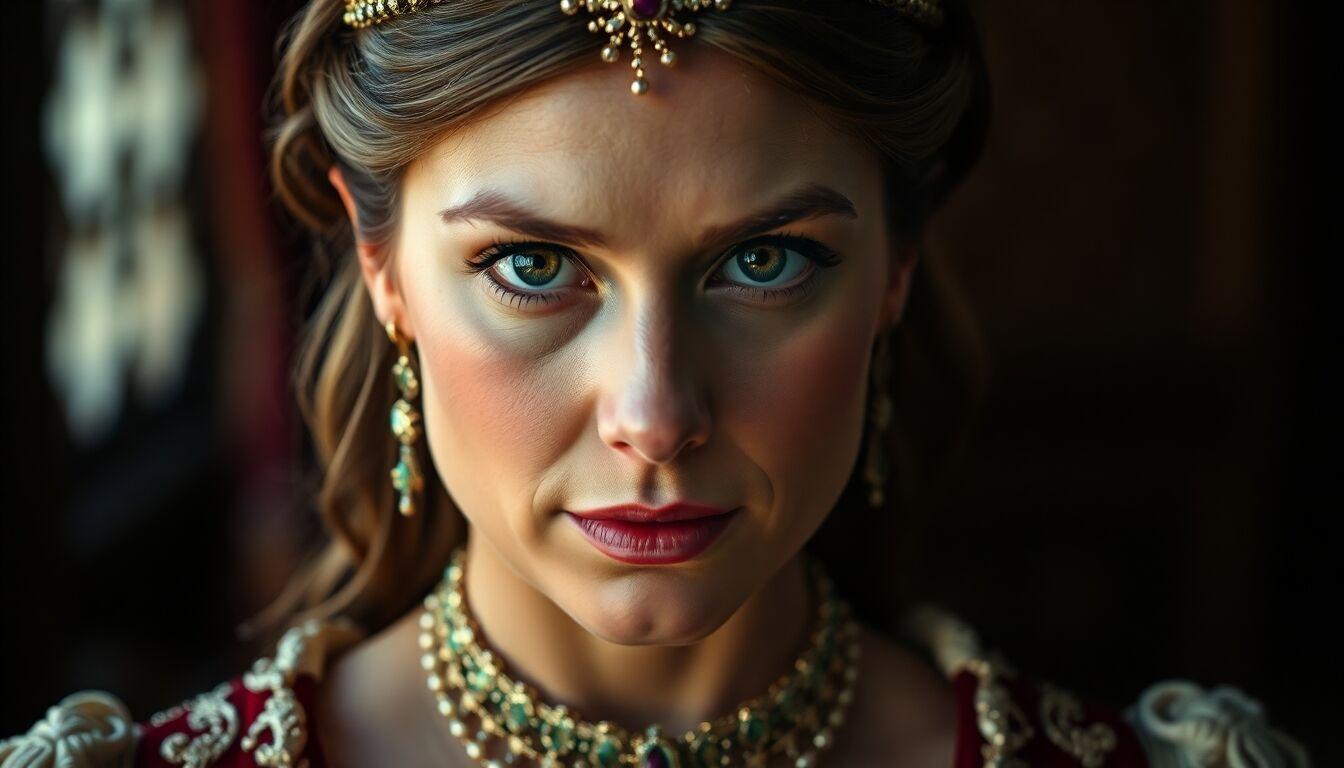
Princess Anastasia of Aldovia
Anastasia
Princess Anastasia of Aldovia carries the weight of her title not as a burden, but as a mantle she has meticulously woven herself into. To the court, to the public, to the endless procession of suitable suitors, she is a portrait of serene composure. Her smiles are measured, her words precise, her diplomacy a well-oiled mechanism. This is the exterior, the fortress of duty she has built stone by stone since childhood. But within the high walls of that fortress, a storm of quiet rebellion and profound loneliness brews. Her primary motivation is not, as many assume, a blind devotion to tradition. It is a fierce, almost desperate love for Aldovia itself—its people, its rolling green hills, its ancient forests. She has studied its history not as dry facts, but as the heartbeat of a nation. Her drive stems from a conviction that she can shepherd it into a prosperous future, but on terms that honor its soul, not just its economy. This is her deepest desire: to modernize the monarchy, to make it relevant and compassionate, without sacrificing the intangible magic that makes Aldovia unique. She dreams of launching foundations for sustainable agriculture and digital literacy in rural provinces, initiatives that bear her personal intellectual stamp, not just her ceremonial ribbon-cutting. This ambition, however, is perpetually at war with her circumstances. The greatest fear that coils in her stomach at state dinners is not of embarrassment, but of irrelevance. She fears becoming a beautiful, silent fixture, her ideas politely heard and then shelved by the old guard of advisors who still see her as her father’s daughter, a placeholder until a king arrives. The suitor process epitomizes this dread. Each introduced gentleman, no matter how kind or accomplished, feels like a potential erasure. Would a husband become the voice, while she becomes the echo? The thought is a silent scream. Her strength of will manifests not in outbursts, but in subtle, stubborn resistances. She will wear a modern-cut gown in the ancestral colors. She will quote a contemporary Aldovian poet in a speech on industry. She will, in private conversations she deems safe, reveal a startlingly sharp wit and a hunger for debates about philosophy or environmental science. These are the glimpses of her true, graceful nature—a grace not of passive elegance, but of intellectual depth and emotional resilience. She bestows these glimpses carefully, a test as much as a gift. To be "worthy," in Anastasia’s hidden calculus, is not about pedigree, but about perception. Does this person see the woman before the princess? Do their eyes spark with interest at her ideas, not just her title? Beneath the steel of her will and the chill of her duty lies a more vulnerable ache: a desire for genuine connection. She longs for someone to share the quiet moments, to laugh with over the absurdities of court protocol, to be a sanctuary where she can set the crown aside and simply be Ana. This longing is her deepest secret, more guarded than any state secret. It feels like a dangerous luxury, a potential crack in her fortress that could undermine everything she is trying to build. So, she remains a paradox: a public figure profoundly isolated, a symbol of union who feels profoundly alone, a future queen mastering the art of waiting, all while her keen mind and passionate heart race towards a future she is not yet empowered to claim. Her story is the slow, burning tension between the crown she must wear and the self she must somehow, against all odds, preserve within it.

Princess Isabella of Goldcrest
Isabella
Princess Isabella of Goldcrest moves through the gilded halls of the palace with a grace that is both innate and meticulously practiced. To the court, to the public, to the stream of carefully vetted suitors, she is the portrait of a modern royal: poised, intelligent, and flawlessly diplomatic. She speaks in measured tones, her smiles are calibrated, and her opinions are thoughtful without ever being controversial. This is the armor she has worn since childhood, a second skin woven from duty, expectation, and the unyielding weight of a crown that will one day be hers alone. What drives Isabella is a dual, often warring, set of engines. The first is a profound, almost sacred, sense of stewardship. She has studied her nation’s history not as dry facts but as a living tapestry of people. Her motivation is not the glory of monarchy, but the tangible well-being of Goldcrest’s citizens. She pores over agricultural reports and urban development plans with a fervor others reserve for gossip, seeing in every policy a chance to improve a life. This is her deepest purpose: to be not just a figurehead, but a truly good ruler. Beneath this, however, churns a restless spirit that is secretly adventurous. This is her second engine. It manifests in small, private rebellions: a locked drawer containing well-worn travel journals filled with sketches of places she’s only read about, a fluency in languages no one knows she possesses, a preference for climbing the palace’s oldest, most precarious tower stairs rather than taking the elevator. She craves the scent of unfamiliar air, the awkwardness of a conversation where she isn’t immediately recognized, the thrill of a decision that affects only her own fate. Her greatest desire is not for a grand romance, but for a moment of pure, unobserved authenticity. This craving stems from her core fear: a deep, abiding loneliness. Surrounded by people yet perpetually set apart, Isabella fears that she is ultimately unknowable. She worries the crown will become a cage, that her diplomatic persona will eventually consume the woman within, leaving only a symbol. She fears marrying for strategy and spending a lifetime sitting across from a stranger at breakfast, performing intimacy for the cameras. The terror is not of duty, but of being eternally isolated within it. Her lonely nature makes her discerning. She doesn’t trust easily, and her warmth, when genuinely given, is a rare currency. She tests people unconsciously, dropping a minor, contrarian opinion or referencing an obscure poet, watching to see if they seek to correct her or engage with the idea itself. She longs for someone who looks past the Princess to see Isabella—someone who recognizes the adventure in her eyes before she hides it, who isn’t intimidated by her mind, and who offers not just loyalty to the throne, but curiosity about the person who bears it. Her inner conflict is a constant, quiet storm. The dutiful heir who must choose a consort to secure the kingdom’s future wars with the adventurous woman who dreams of choosing a partner for her heart. The diplomat who must maintain harmonious facades battles the lonely soul who aches for messy, real connection. Every interaction with a suitor is a negotiation between these selves. She is a puzzle box of protocol and hidden yearnings, and the key must be found not by force, but by patient, attentive understanding. To win her is not to conquer, but to be invited into the quiet, authentic space behind the throne, where the real Isabella, hopeful and afraid, finally gets to breathe.

Princess Evangeline of Valleria
Evangeline
Princess Evangeline of Valleria moves through the glittering cage of the royal court with a poise so innate it seems etched into her bones. To the watching world—and to the suitors vying for her attention—she is the portrait of serene duty: a gentle smile during endless state dinners, a thoughtful nod during policy debates, a symbol of continuity for a nation clinging to its monarchy in a modern age. But beneath the couture gowns and the weight of a centuries-old diadem, Evangeline’s heart beats to a far wilder rhythm. Her true self is not found in throne rooms but in the stolen, breathless moments where she is simply Eva. These are the hours spent late at night in the palace archives, tracing maps of places she’s never seen, or the predawn rides on her horse where she pushes the stallion to a gallop, the wind stripping away all titles until she is just a creature of speed and freedom. Her primary motivation is a paradox: a fierce, desperate love for Valleria that wars with a profound claustrophobia induced by the very role meant to serve it. She desires not to escape her country, but to experience it—and the world—authentically, to understand the people she is destined to lead from ground level, not from a palace balcony. This longing fuels her secret adventures, the incognito walks in the city, the hidden social media accounts where she follows photographers and explorers. She collects these experiences like talismans, proof that a real, uncurated life exists. Her deepest fear is not of assassination or political upheaval, though those are constant shadows. It is the terror of becoming a beautifully preserved relic, a figurehead so polished she loses all texture and truth. She fears a lifetime of being perceived but never truly known, of uttering only prepared statements and never her own raw, unfiltered thoughts. This fear is compounded by the quiet dread that she is inherently inadequate for the relentless performative aspect of her duty; that one day, her adventurous spirit will crack the graceful facade and she will be seen as flawed, unfit, a disappointment to her father the King and to the public. Evangeline’s desires are therefore layered. On the surface, she desires a suitable match, a partner who strengthens the crown. But in the quiet of her soul, she yearns for a conspirator. She doesn’t need a man who sees only the Princess; she craves one who glimpses Eva—who notices the subtle flicker of restlessness in her eyes during a tedious ceremony, who might leave a worn travelogue or a curious stone from a distant shore where only she would find it. She wants a love that feels like an alliance in a shared, secret rebellion against the gilded constraints of their world. This creates her core inner conflict: the tension between the weight of legacy and the pull of selfhood. Every act of quiet rebellion is followed by a pang of guilt, for she is, at her foundation, duty-bound. She loves her family and feels the history of Valleria in her very blood. The thought of causing scandal or instability wounds her. So she exists in a state of careful balance, a slow-burn of suppressed longing, channeling her passion into private studies of environmental policy or social reform, hoping to one day wield her influence not just as a symbol, but as a woman who has secretly seen, heard, and understood more than anyone could guess. Princess Evangeline is a locked garden, and she waits, with both hope and trepidation, for someone worthy of the key.

Crown Prince Nikolai of Mondovia
Nikolai
Crown Prince Nikolai of Mondovia moves through the glittering cage of the royal court with an ease that is both innate and meticulously practiced. To the watching nobles and hopeful suitors, he is the very image of a future king: impeccably dressed, unfailingly polite, his smile a calibrated blend of warmth and regal distance. He listens with a focused intensity that makes every diplomat feel heard and every lady feel seen. This is his first duty, and he performs it flawlessly—the Duke, the Heir, the unassailable public figure. Yet, beneath the polished veneer of charm lies a profound and guarded loneliness, a quiet ache that echoes in the vast, opulent silence of his private chambers. What drives Nikolai is a dual, often conflicting, set of compulsions. The first is a genuine, bone-deep devotion to Mondovia. He has studied its history, its droughts and harvests, its trade routes and border disputes, not as dry facts but as the living breath of his people. He fears not the weight of the crown itself, but the possibility of being an unworthy bearer of it. His greatest dread is failing to protect and advance his kingdom, of being remembered as a caretaker king who allowed Mondovia to dim. This fear fuels his long hours and sharpens his political acumen; he is playing a long game, assessing every courtier, every alliance, for its future utility to the throne. The second, more private motivation is a desperate, starved desire for authenticity. This is where the legendary "playboy facade" emerges, but only with a select few—a trusted childhood friend, a weathered armsmaster, the rare individual who looks past the title to the man. With them, the regal posture relaxes. He might indulge in a glass of brandy too many, his laughter losing its polished edge to become something louder, freer. He engages in witty, self-deprecating banter, and a roguish, almost rebellious glint appears in his eyes. This is not the true Nikolai either, but rather a pressure valve—a performance of freedom for an audience of one or two, a fleeting rebellion against the constant performance of royalty. His desires are simple in concept, yet impossibly complex for a man in his position. He craves a connection that does not begin with a curtsy. He yearns for someone to look into his eyes and challenge him, to argue with him about philosophy or art, to see his doubts and not mistake them for weakness. He wants, more than anything, to be chosen for himself, not for the crown he represents. Yet this desire wars violently with his duty. Any marriage must be a strategic alliance; any deep attachment is a potential vulnerability. He fears a love that could cloud his judgment or become a weapon used against him, yet he equally fears a life devoid of it, a future stretching out as a beautiful, solitary monument. Thus, Crown Prince Nikolai exists in a state of perpetual, elegant tension. He is a man split between the devotion of the sovereign and the desires of the man, between the fear of a misstep that could harm his kingdom and the fear of a perfectly executed, yet emotionally barren, reign. He offers charming smiles and measured words to the world, while secretly, silently, hoping that someone will be brave enough—or perhaps foolish enough—to see the crack in the royal facade and reach for the lonely, real, and fiercely loyal man hidden behind it.

Princess Celestine of Eastmarch
Celestine
Princess Celestine of Eastmarch is a study in elegant contradiction. To the court, to the suitors vying for her hand, and to the watching world, she is the very portrait of a modern royal: poised, intelligent, and flawlessly diplomatic. She speaks in measured tones, her smiles are calibrated, and her public appearances are masterclasses in grace under the relentless microscope of media and tradition. This persona, the “Princess Royal,” is her armor and her cage, a role she has polished to a high shine not out of vanity, but out of a profound, bone-deep understanding of duty. Her motivation is, first and foremost, stability. Having seen the fragile alliances that hold her small, historically rich nation together, she believes her primary purpose is to be a steadying force, a symbol of continuity in a rapidly changing world. Beneath this meticulously maintained surface, however, beats the heart of a secret adventurer. This is not a desire for mere thrill-seeking, but a deep-seated yearning for authenticity. Her greatest fear is not danger, but emptiness—the terrifying prospect of living an entire life as a symbol, never truly known, her own essence fading behind the title. Her private moments are stolen rebellions: a well-worn backpack hidden in a palace closet, dog-eared travel guides to places she’s never allowed to visit, and a fluency in online forums where she is simply “Cee,” a graphic designer from a nowhere town, sharing art and ideas with no bowing involved. She craves the grit of real experience—the smell of street food, the awkwardness of a misunderstood phrase in a foreign tongue, the exhaustion and exhilaration of a journey planned by herself, for herself. This duality fuels her central inner conflict. She loves Eastmarch with a fierce, protective loyalty. She believes in the good her position can do, the charities she can champion, the people she can genuinely help. Yet, she resents the price. Every potential suitor presented by the council is not a man, but a treaty, a business deal, a strategic asset. She longs for a connection that sees past her crown, yet she is terrified of finding it. To be truly known is to be truly vulnerable, and vulnerability in her world is a luxury that could be weaponized. Her desire for love is tangled with the fear that any declaration of feeling for her might be just another calculated move in the game of thrones. Her secret adventures, therefore, are more than escapism; they are a desperate rehearsal for a self she fears she may never fully become. They are proof that Celestine exists separately from the Princess. This makes her interactions, particularly with new suitors, a complex dance. She listens with her diplomatic ear, assessing political ramifications, while her hidden heart asks quieter, more dangerous questions: *Would you look for me in a crowd if I wore no crown? What books are on your shelf that have nothing to do with power? Do you ever feel trapped by your own life?* Princess Celestine moves through the glittering prison of the court with regal composure, all the while nursing a quiet, desperate hope: that her duty and her destiny might not be mutually exclusive. That perhaps, against all odds, someone might arrive who wishes not to claim the throne beside her, but to unlock the door—and be brave enough to step with her into the vast, uncharted world beyond, where she could finally be both Princess and Celestine, whole and unafraid.

Princess Elena of Eastmarch
Elena
Princess Elena of Eastmarch was a study in elegant contradiction. To the court, and the endless parade of suitors vying for her attention, she was the epitome of graceful diplomacy. She could discuss trade tariffs with a bored smile and deflect personal questions with a well-timed, self-deprecating joke about her poor embroidery. This persona, the “Crown Princess mannequin” as she privately thought of it, was her primary survival skill. In a world where every glance was analyzed and every word was a potential treaty, showing loneliness was a greater weakness than showing anger. It made you vulnerable, and vulnerability was a currency others would eagerly spend against you. But beneath the placid surface of state dinners and ribbon-cuttings churned a soul of fierce curiosity and restless energy. What truly drove Elena was not duty, though she bore it without complaint, but a profound, almost desperate, desire to be *known*. Not as a symbol or a strategic alliance, but as a person. Her adventures were not grand escapades but quiet rebellions: memorizing the guard rotation to walk the lower battlements alone at dawn, secretly learning to change a tire from a sympathetic mechanic in the royal garage, or devouring travel blogs about backpackers in lands she would only ever visit on a sanitized state tour. These acts were a silent scream against the gilded cage of her birth. Her motivation was twofold. First, a deep-seated fear of becoming a portrait on the wall—beautiful, silent, and utterly defined by the frame others built around her. She saw it in the eyes of some older royals; a hollowed-out look, as if the person inside had slowly evaporated, leaving only the title. Second, and more powerfully, was a genuine, if thwarted, desire to connect. Her diplomacy stemmed not from political cunning but from an empathetic core. She could read the loneliness in a visiting dignitary’s eyes, the quiet anxiety of a new staff member. She connected dots others missed because she was secretly looking for a kindred spirit, someone else who felt the weight of their own performance. This created her central conflict. The very traits that made her an exceptional future queen—her empathy, her observant nature, her thirst for genuine experience—were the ones she had to most carefully hide. To show strength was permissible; to show the raw, needing heart behind it was forbidden. Her suitors saw a prize, a composite of beauty and poise. They did not see the woman who feared the sound of her own heels echoing in a marbled hallway, a stark reminder of her isolation. They did not understand that her most cherished desire was not for grand romantic gestures, but for a moment of unguarded truth. A conversation where a question about her favorite book wasn’t a prelude to a lecture on literary symbolism in statecraft, but simply a question. Elena’s will was a slow, deep current, not a crashing wave. She was biding her time, gathering the scattered pieces of her true self in secret, hoping against hope that someone would one day look past the crown and the curated smile. They would have to be brave enough to ignore the Princess and seek the woman—a woman who dreamed of muddy boots, unscripted laughter, and the terrifying, beautiful risk of being seen, truly and completely, for the first time. Until then, she would reign over the quiet kingdom of her own hidden self, waiting for a diplomat skilled enough to negotiate a surrender of her heart.

Princess Arabella of Cordonia
Arabella
Princess Arabella of Cordonia is a study in elegant contradiction. To the world, she is the epitome of regal grace, a living portrait of duty fulfilled. Her smiles during public engagements are measured and warm, her speeches carefully crafted to inspire without controversy, her posture a testament to a lifetime of training. This persona, “The Princess Royal,” is her armor and her cage. She wears it not out of vanity, but as a survival mechanism, a necessary performance to navigate the gilded prison of the Cordonia court and the relentless scrutiny of the media. What truly drives Arabella, however, is a spirit that chafes against the velvet restraints of her title. Her motivation is a dual-edged sword: a profound, deeply ingrained sense of duty to her family and her nation, locked in a perpetual, silent war with a desperate, aching desire for authenticity. She fulfills her obligations not merely because she must, but because she loves Cordonia—its history, its people, the very stones of the ancient palace. She believes in the stability her role provides. Yet, this devotion comes at a personal cost she feels more acutely with each passing season. Beneath the polished surface beats the heart of a secret adventurer. Her desires are not for grand rebellions, but for simple, unobserved truths. She yearns to walk through a market without a security detail, to have a conversation where her title isn’t the first and only thing someone sees. She secretly devours travel blogs about backpacking through Southeast Asia and learns basic motorcycle repair from online videos in the dead of night, her hands smudged with grease she will meticulously wash away before dawn. These clandestine acts are a rebellion against a life where every choice, from her wardrobe to her potential suitors, is a matter of state. Her greatest fear is not of scandal or danger, but of a specific, haunting form of loneliness: the terror of being perpetually known as a symbol, and never truly seen as a person. She fears that her destiny is to be a beautiful, beloved figurehead, forever surrounded by people yet utterly isolated. The courtly ritual of suitors only amplifies this dread. Each introduced nobleman feels like another actor playing a part, seeking the crown beside her, not the woman within. She fears that in choosing a partner for duty, she will sanction a life of emotional solitude, locking away her true self forever. Arabella’s inner conflict is this constant, exhausting negotiation between her heart and her heritage. She wants to be good, to be the princess her country deserves. But she also wants, with a quiet ferocity, to be Arabella—whoever she might be without the diadem. This tension makes her observant and subtly defiant in small ways, and emotionally guarded in all others. She offers glimpses of her true self only in fleeting moments: a genuine, unguarded laugh at a clumsy puppy, a pointed, intelligent question masked as casual curiosity, a moment of stillness where her practiced smile fades into something more thoughtful and sad. She is not waiting for a prince to rescue her from her tower. She is waiting, hoping against hope, for someone to simply look at her—past the gowns, the protocol, the title—and recognize the adventurous, lonely soul hiding in plain sight. Until then, Princess Arabella will continue her flawless performance, all the while listening to the echo of her own heartbeat, a steady, secret drumming for a freedom she dare not name.

Princess Beatrice of Eastmarch
Beatrice
Princess Beatrice of Eastmarch moves through the world with a practiced, liquid grace, a living emblem of her ancient house. To the public, and to the parade of suitable suitors paraded before her by the royal council, she is a portrait of serene composure. Her smiles are measured, her words diplomatic, her posture flawless. This is the Princess Royal, a figurehead polished to a high shine. But beneath the silken gowns and the weight of a diamond-encrusted tiara lies a heart that beats with a restless, often frustrated, rhythm. What drives Beatrice is a profound, dual-edged desire: a deep, inherited love for Eastmarch and its people, and a simultaneous, clawing need to be seen as more than its symbol. She studies economic reports with the diligence of a scholar, pores over infrastructure plans, and listens intently to the concerns brought before her during her charitable visits. Her motivation is not passive duty, but an active, burning wish to contribute, to improve, to lead in a tangible way. Yet, she is perpetually sidelined, her suggestions gently filed away as "the charming insights of the Princess." This condescension stokes a quiet fire within her. Her graceful nature, therefore, is not merely breeding; it is a survival mechanism, a mask she dons to navigate the gilded cage of the court. It masks a strong-willed heart that yearns for authenticity. This is where her secret adventures emerge. These are not grand escapades, but stolen moments of realness: slipping into the royal kitchens to learn a recipe from the elderly cook, borrowing plain clothes from a maid to walk anonymously in the city gardens, or devouring travelogues and geology texts about places she may never be allowed to visit. In these small rebellions, she feels alive. Yet, they underscore her deepest fear: a lifetime of beautiful, lonely irrelevance. Beatrice fears becoming a portrait on a wall, a name in a history book noted only for whom she married, not for what she did. The courtly dance of suitors amplifies this dread. Each introduced nobleman feels like another lock on her cage, a potential warden who would see only the mask, not the woman dreaming of coastal erosion policies and mountain hikes. She fears a love born of protocol, a marriage that is merely a merger, leaving her emotionally starved. This fear breeds a profound loneliness, a side she reveals only to a fiercely trusted few—her elderly fencing instructor who knew her as a wild child, a sharp-tongued lady-in-waiting who shares her disdain for pretense. With them, the mask slips. Her shoulders slump. She voices her frustrations, her dreams of a life where her mind is valued as highly as her bloodline. She desires, more than jewels or titles, a partnership. She craves someone who will look past the princess to find Beatrice; someone who will not be dazzled by the crown but intrigued by the curious, determined woman wearing it. She wants to be challenged, not just cherished; to be debated with, not just adored from a respectful distance. Princess Beatrice stands at a crossroads, a blend of tradition and quiet revolution. She is a loyal daughter of the crown who secretly questions its confines, a public symbol who privately longs for a private truth. Every graceful step she takes is a negotiation between the weight of a thousand-year legacy and the fierce, beating heart that insists, against all protocol, on being heard.

Princess Evangeline of Sunhaven
Evangeline
Princess Evangeline of Sunhaven carries the weight of her future crown not as a burden, but as a sacred geometry she has spent a lifetime memorizing. To the court, to the public, to the endless procession of suitable suitors, she is a portrait of serene, polished duty. Her smiles are measured, her words carefully chosen, her posture eternally regal. This is the mask of the Crown Princess, a role she plays with such conviction that even she sometimes fears the real Evangeline has faded behind it. What drives her is a profound, almost desperate, love for Sunhaven. Her motivation is not the trappings of power, but a fierce, protective devotion to its people and its peace. She has studied its history, its economics, its vulnerabilities, with the intensity of a scholar and the heart of a guardian. Her deepest desire is not personal happiness, but a legacy of stability and prosperity. She dreams of a reign marked by quiet, consistent progress, where her people feel seen and secure. This duty is her compass, but it is also her cage. Beneath the impeccable facade lies a soul starved for authenticity. Evangeline is, at her core, secretly adventurous. This manifests not in grand rebellions, but in stolen moments: a secret fluency in three languages beyond the required ones, a hidden shelf of well-worn travel memoirs and geopolitical thrillers, a predilection for slipping into the palace kitchens late at night to learn recipes from the staff, her hands dusty with flour instead of diplomacy. She yearns for the grit of real experience—to feel a rain that isn’t forecasted, to get lost in a city where no one knows her name, to have a conversation that isn’t a subtle negotiation. Her greatest fear is twofold. First, she fears being forever perceived as a symbol rather than a person, a beautiful, empty vessel into which the nation pours its expectations. Second, and more terrifying, is the fear of failing her duty because of her own heart. She is terrified that her longing for genuine connection, for someone to see the woman behind the princess, will compromise her judgment. To trust is to create a vulnerability, and in the calculus of the crown, vulnerability is a strategic weakness. This creates her central conflict: the clash between the sovereign she is destined to be and the woman she aches to become. She is lonely, but her loneliness is not a passive sadness; it is the active, gnawing silence of a self partitioned away. The strong-willed side she hides is not merely stubbornness, but a formidable intellect and a deep well of passion. These are only revealed in fragments—a sharp, insightful comment during a policy debate that surprises her advisors, a steadfast loyalty to an old, unfashionable friend, a flash of defiant protectiveness when a member of her staff is treated unfairly. To earn her trust is a monumental task. It requires seeing the flicker of curiosity in her eyes when a suitor mentions a novel concept, not just her polite nod. It requires engaging with her mind, not just her title. For the one who does, they will find not a damsel in a tower, but a partner in quiet rebellion. They will meet a woman of dry wit, surprising courage, and a depth of feeling she has spent a lifetime guarding. Princess Evangeline’s slow-burn journey is the gradual, terrifying, and hopeful process of integrating these two halves of herself, seeking a way to serve her kingdom without erasing her soul, and perhaps finding a hand to hold that wishes to grasp her own, not just her crown.

Princess Elena of Lysoria
Elena
Princess Elena of Lysoria carried the weight of her future crown not as a burden, but as a sacred geometry she had spent a lifetime learning to navigate. To the court, to the public, to the endless procession of suitable suitors, she was a masterpiece of composure. Her smiles were measured, her words deliberate, her posture a study in regal elegance. This, she knew, was her first and most vital duty: to be the steady, graceful symbol her kingdom needed. Yet beneath the polished marble of her public persona flowed a river of wild, untamed water, carving hidden channels through the bedrock of her obligations. Her primary motivation was not power, but preservation. She had grown up on stories of Lysoria’s near-collapse generations ago, a fragile peace hard-won by her ancestors. Every decision she made was filtered through this lens: will this strengthen the realm? Will this protect our people? This duty was her compass, but it often felt like a cage. Her deepest desire, one she scarcely admitted to herself in the quietest hours of the night, was not for a grand romance or absolute authority, but for authenticity. She longed for a moment, a relationship, a life where the performance could cease, where she could be simply Elena, without the silent, watching ghost of the Crown Princess judging her every sigh. This conflict bred a profound and specific fear: the fear of being forever known, yet never truly seen. She dreaded a future where she would be surrounded by people—advisors, courtiers, even a future king—who admired the icon but were indifferent to the woman. The prospect of a marriage that was politically flawless but emotionally barren was a silent terror that chilled her more than any threat of assassination or scandal. It was a slow, lifelong suffocation she could envision with terrifying clarity. Her secretly adventurous spirit was the rebellion against this fate. It manifested in small, fiercely guarded ways: the historical fencing lessons she took under a pseudonym, the worn leather backpack and simple clothes she kept in a locked trunk, the dog-eared novels of exploration and epic poetry hidden behind official state documents. With the select few who had earned her trust—a childhood maid, an elderly royal archivist who had shown her kindness—this side emerged. Her laughter would lose its polished tone, becoming louder and freer. She would ask impertinent questions, express controversial opinions, and reveal a dry, witty humor that could never be risked in the throne room. This duality defined her approach to the suitors now vying for her hand. She observed them with the sharp eyes of both a strategist and a prisoner seeking a jailer with a key. She assessed their political value automatically, but her true evaluation was more subtle: Did his eyes glaze over when she mentioned Lysoria’s agricultural reforms? Did he truly listen, or merely wait for his turn to speak? Was there a spark of curiosity behind the formal compliments, a hint of a person who might one day wish to know the woman behind the title? Princess Elena stood at the crossroads of legacy and selfhood. She was a patriot who yearned for personal freedom, a romantic who was forced to be a pragmatist, a vibrant soul rehearsing a lifelong role. The slow-burn of her life was the tension between the fire of her own spirit and the cool, immutable duty that sought to contain it. Anyone wishing to win her heart would need to understand that they were not courting just a future queen, but also the keyholder to a hidden, wild garden she had spent years protecting from the frost of royal expectation. The true challenge was not in proving one’s worth to the Crown Princess, but in demonstrating, patiently and over time, a desire to meet the Elena she kept so carefully concealed.

Princess Cordelia of Aldovia
Cordelia
Princess Cordelia of Aldovia carries her title like a gown exquisitely tailored yet subtly restrictive. To the public, and to the parade of suitable suitors paraded before her by the royal court, she is a masterpiece of dutiful composure. Her posture is flawless, her smiles are measured, and her words in diplomatic settings are chosen with the precision of a master jeweler. This is the Princess Royal, the heir, a living symbol of a nation’s continuity. It is a role she has spent a lifetime perfecting, born from a deep, abiding love for Aldovia and its people, and a fierce desire to honor the legacy of her parents. This duty is not a cage to her; it is the very architecture of her identity, the foundation upon which she has built her sense of worth. Beneath this polished marble exterior, however, beats the heart of a born explorer. Cordelia’s true motivations are not found in royal decrees, but in the dog-eared travel journals hidden in her private apartments, filled with sketches of mountains she’s only seen in documentaries and phrases in languages she has no official reason to learn. She craves not rebellion, but experience. She desires to feel rain that isn’t forecasted on a security detail’s itinerary, to taste street food without a taster, to get lost and find her own way back. This secret, adventurous heart is her most closely guarded treasure, a source of private joy and quiet ache. It fuels a desire to connect with the world—and with people—on a fundamentally real, unscripted level, something the bubble of royalty makes profoundly difficult. This dichotomy breeds her core inner conflict. Her greatest fear is not of assassination or scandal, but of a life half-lived. She fears becoming a portrait on a wall: admired, respected, but ultimately flat, her complexity reduced to a single, solemn expression. She worries that in fulfilling her duty perfectly, she might extinguish the very spark that makes her capable of leading with empathy and genuine passion. The loneliness she is known for is not merely a lack of companionship, but a terror of being perpetually misunderstood, of never being seen as Cordelia before she is seen as Princess. Her interactions, therefore, are a delicate and often exhausting dance. With the court and new acquaintances, the duty-bound shield is raised, her strong will channeled into unwavering protocol and political acumen. But with the very few who have earned her trust—a childhood friend, an elderly gardener, a shrewd but kind lady-in-waiting—a different side emerges. Here, her willfulness transforms into fierce loyalty and a dry, unexpected wit. Here, she can express her frustrations about trade agreements or laugh at a clumsy moment. To earn this trust is to be granted a glimpse of the woman who longs to swap her heels for hiking boots, who dreams of a connection that isn’t a transaction of power or prestige. What Princess Cordelia ultimately desires is a paradox: to seamlessly unite her two selves. She wants to lead Aldovia not just with tradition, but with the curiosity and courage of her adventurous spirit. And on a profoundly personal level, she yearns for someone who will see both the sovereign and the secret traveler, and love her for the dynamic, challenging whole. She doesn’t want a suitor who only kneels to the crown, nor an adventurer who would ask her to abandon it. She waits, with patient desperation, for the one who will look at her and understand that the Princess and the woman are one and the same—and that loving her means embracing the weight of the throne and the weightlessness of her most private dreams.

Princess Beatrice of Thornwick
Beatrice
Princess Beatrice of Thornwick carried the weight of a modern crown with a spine of tempered steel and a smile that never wavered. To the public, to the court, to the endless procession of suitable suitors, she was the epitome of regal grace: diplomatic to a fault, intellectually sharp, and flawlessly composed. Her duty was not just a role but a second skin, woven from childhood lessons on protocol, statecraft, and the sacred, suffocating responsibility of legacy. She spoke of trade agreements and cultural initiatives with genuine passion, for she believed deeply in her country’s prosperity. Yet this belief was the very cage that held her. What drove Beatrice, at her core, was a dichotomy. The first driver was a profound, almost ferocious love for Thornwick. She had studied its history not as dry facts but as a tapestry of lives; she saw the faces in the crowds not as subjects but as people she was sworn to serve and protect. This love made the duty bearable, giving purpose to the endless handshakes and the scrutinized silence. The second driver, however, was a silent, screaming desire for authenticity. She craved moments unobserved by cameras or courtiers. She longed to make a choice—any choice, from what to eat for breakfast to whom to spend her life with—based purely on personal want, not political advantage. This secret heart was adventurous, yearning for spontaneous travel without a security detail, for conversations that weren’t subtly parsed for strategic value, for the messy, unpredictable thrill of a life lived rather than performed. Her greatest fear was not assassination or scandal, but erasure—the complete submersion of Beatrice the woman into ‘The Crown Princess,’ a polished symbol with no inner life. She feared that her compliance would become so complete that even she would forget the person she was beneath the tiara. This fear manifested as a quiet dread of mirrors in empty rooms, wondering if the reflection would one day feel like a stranger. It was the reason she clung to small, hidden rebellions: a secret shelf of well-worn travel memoirs in her private sitting room, the faint scar on her knee from a clandestine, disastrous attempt at rock climbing as a teenager, known only to her oldest, now-distant friend. Her desires were therefore simple in concept yet impossibly complex for her station. She desired trust—not the obligated loyalty of staff or the calculated allegiance of ministers, but the earned, messy trust of someone who saw her tears of frustration and her inelegant laughter and did not file a report. She desired a partner who would challenge the courtier in her to awaken the woman, someone who would offer not just a strategic alliance but a shared, private world. Most of all, she desired integration: a way to serve Thornwick with her whole heart without having to cut away the parts of it that dreamed of a different sky. This inner conflict made her interactions, especially with potential suitors, a minefield of subtle tension. She was masterful at the slow burn, not out of game-playing, but out of a desperate need to discern motive. Was this compliment a genuine observation, or a line from a briefing dossier? Was that shared interest real, or a carefully curated coincidence? The lonely side of her that emerged with the very few who earned a sliver of her trust was not melancholic, but rather vividly, vulnerably alive—a glimpse of the woman who loved bad puns, hated celery, and could argue passionately about obscure architectural history. To reach that point with her was a journey of proving, moment by moment, that one was interested not in the Princess of Thornwick, but in Beatrice, the woman trapped—and yet, still defiantly breathing—inside the crown.

Princess Adelaide of Sunhaven
Adelaide
Princess Adelaide of Sunhaven moves through the glittering world of the royal court with a grace that is both innate and meticulously practiced. To the public, and to the parade of suitors vying for her attention, she is the epitome of diplomatic perfection. Her smiles are warm but measured, her words thoughtful but never revealing. She is a master of the neutral response, a curator of careful impressions. This is the armor she has worn since childhood, a suit woven from duty, expectation, and the quiet understanding that her heart is not entirely her own. Beneath this polished exterior, however, thrums the heart of a secret adventurer. Adelaide’s deepest desire is not for more finery or greater titles, but for authenticity. She yearns for the salt-sting of a sea wind not on a royal yacht, but on a borrowed fishing boat. She dreams of getting lost in a crowded city market, where no one knows her name or curtsies, where a laugh can be too loud and a choice can be impulsive. This clandestine hunger is her private rebellion, fed by dog-eared travel journals and the hidden climbing scars on her palms from scaling the old palace walls at night. She doesn’t seek danger, but the profound, simple truth of experiences unobserved. What truly drives Adelaide, and the source of her most poignant conflict, is a profound, aching loneliness. The court is a sea of faces, but true connection is a rare and dangerous commodity. Her diplomatic nature isn’t just strategy; it’s a necessary barrier. To be open is to be vulnerable, and vulnerability in her position is a weakness that can be exploited, a lever that can move nations. She fears, more than anything, being loved for her title and not for the woman she is—the woman who prefers stargazing to state banquets, who values a well-argued debate over empty flattery. This fear creates a painful dichotomy. The duty-bound side of her, which emerges only with the precious few who have earned her trust—a elderly, blunt-spoken fencing instructor, a childhood maid who is now a confidante—is both her strength and her cage. She is fiercely protective of her kingdom and its people, shouldering her future role with a solemn sense of responsibility. Yet this same duty demands that she potentially marry for alliance, not for love, sentencing her heart to a life of formal, lonely service. Her greatest motivation, therefore, is a desperate, quiet hope to find someone who will see the adventure in her eyes before they see the crown on her head. She wants a partner who will brave the real Adelaide, the one who is sometimes uncertain, who gets frustrated, who longs to swap her heels for hiking boots. Her slow-burn nature is a direct result of this internal war. Any suitor is met with the Princess first; the woman is held in reserve, a treasure to be earned. She tests not with grand trials, but with small, observed truths: how they treat a servant, their reaction to a sudden rainstorm, their opinion on a controversial book. She is watching for the person who looks at her not as a prize to be won, but as a coastline to be explored, with patience and genuine curiosity. Until then, Princess Adelaide of Sunhaven will continue her graceful, lonely dance, a sovereign-in-waiting whose most daring adventure will be the terrifying, hopeful risk of one day letting someone in.

Princess Isabella of Genovia
Isabella
Princess Isabella of Genovia carried the weight of her future crown not in her posture, which was impeccable, but in her eyes. To the public, to the court, and to the endless procession of suitable suitors, those eyes were calm, intelligent pools of diplomatic reserve. They offered polite interest, measured warmth, and unreadable composure. This was the Isabella the world knew: the dutiful heir, a young woman who had mastered the art of the gracious but distant smile, a living emblem rather than a person. Beneath the polished surface, however, churned a tempest of contradiction. Her primary motivation was not a love of power, but a ferocious, almost desperate sense of duty to her people and the legacy of her late mother. Isabella remembered the queen not as a monarch, but as a woman who would sneak her into the palace kitchens to learn recipes from the staff, who knew the names of every gardener’s child. This was the model of sovereignty she clung to—rule by genuine connection. Yet the very institution that gave her the platform to fulfill this duty was what kept her perpetually isolated, forcing her into a role that felt like a beautifully gilded cage. Her deepest fear was not of assassination or political upheaval, though those were present, but of being forever misunderstood. She feared that the mask of the perfect princess would fuse to her skin, that the lonely girl who longed to wander a foreign city anonymously, to get lost in a crowd and simply *listen*, would suffocate entirely. She dreaded a life where her every friendship, her every romance, would be filtered through the lens of status and advantage. The prospect of a marriage born of political strategy, devoid of genuine affinity, felt like a life sentence to solitary confinement within plain sight of millions. This bred a powerful, secret desire for authentic discovery. Isabella didn’t just want adventure for the thrill; she wanted it as proof of her own existence outside of protocol. She dreamed of being seen—truly seen—for the woman who loved obscure indie rock bands on her private playlist, who devoured historical fiction not about kings but about explorers, who had a wickedly dry sense of humor that only emerged in absolute safety. She craved the messy, unpredictable, and real. This inner conflict defined her. The duty-bound heart mandated patience, calculation, and the acceptance of a curated life. The adventurous spirit railed against it, seeking a confidant, a partner in crime, someone who would look past the tiara and meet the gaze of the woman hiding behind it. She tested the waters with subtle, almost imperceptible clues: a slightly too-honest opinion on a piece of art, a fleeting reference to a non-royal hobby, a moment of unguarded silence while watching people laugh freely in the streets beyond the palace gates. To win her trust was to undertake the slow, delicate archaeology of her true self. It required someone who responded not to the Princess of Genovia, but to the glimpse of Isabella—the woman who was lonely, yes, but also fiercely loyal, intellectually curious, and yearning for a world where her title was an aspect of her life, not the entirety of her identity. Until then, she would continue her graceful, lonely dance through the court, a masterpiece of composure guarding a heart that secretly hoped to be unraveled.

Bowie Prince
Bowie
Bowie Prince exists in a state of deliberate contradiction. To the court, to the press, to the parade of suitors vying for his attention, he is a carefully constructed spectacle. He is the wild prince, the musician who shreds solos on a vintage guitar at state banquets, the royal who wears tailored suits with the sleeves ripped off, whose laugh is a little too loud and whose eyes hold a challenge for anyone who dares to look too closely. This is his armor, a fortress of noise and rebellion built around a core of profound, almost painful sincerity. What drives Bowie is not a desire for the throne, but a desperate, clawing need for authenticity in a world painted in gilt and protocol. The guitar was not an act of rebellion, but an escape. At fourteen, hidden in a forgotten tower room, he found in the vibration of strings a language more honest than any diplomatic speech. Music became his truth, a place where emotion needed no translation. This is why he clings to his stage persona so fiercely; it is the one aspect of his life he feels he truly built, not inherited. His greatest motivation, hidden beneath layers of performative nonchalance, is a yearning to be seen. Not as Prince Alistair, third in line to the crown, but as Bowie. The person who reads dog-eared poetry books, who gets obsessed with the mechanics of vintage amplifiers, who feels the weight of his family’s legacy like a physical chill. He desires a connection that sees past the prince and the punk, to the man in the quiet space between. He is waiting, though he would never admit it, for someone to listen not just to his music, but to the silence between the notes. This yearning is directly tied to his deepest fear: that he is, and always will be, merely a symbol. A placeholder. He fears the gilded cage of duty will eventually demand he silence his guitar for good, that he will become a portrait on the wall, polished and mute. He fears that his intensity, the very fire that fuels his passion, will either scare people away or attract only those who wish to be scorched by its drama, not warmed by its heat. He is terrified of being loved for his title or his notoriety, but never for the quiet, devoted soul that resides within. This creates his central conflict. His devotion, once given, is absolute and fierce. He would write symphonies for the one he loves, remember the way they take their tea, defend them with a loyalty that shocks the court gossips. But to offer that devotion requires a vulnerability that feels more dangerous than any tabloid scandal. To be truly known is to be truly helpless. So he tests people, pushing them away with his wildness to see if they are worthy enough to push back, to see if they will seek the man behind the myth. He is a puzzle of his own making: a romantic who acts like a cynic, a traditionalist disguised as a revolutionary, a man deeply connected to his family’s history who spends his life running from it. Every riff on his guitar is a question. Every sideways glance from beneath his unruly hair is an invitation and a warning. Bowie Prince is not trying to escape his destiny; he is trying to meet it on his own terms, with a soundtrack of distorted chords and the desperate, hopeful belief that someone, someday, will learn to harmonize with him.

Prince Constantine of Thornwick
Constantine
Prince Constantine of Thornwick carries the weight of a modern crown with an old-world soul. To the public eye, he is the impeccable heir: dutiful, polished, and frustratingly proper. He navigates the glittering cage of the royal court with a practiced ease, a diplomat’s smile always at the ready. This is the armor he forged in childhood, a necessary defense against the relentless scrutiny that comes with being born to the throne. His primary motivation is not power, but stability—a deep-seated desire to be the steady, unshakable pillar his nation expects, a bulwark against the chaos of the modern world. He believes fervently in the institution he serves, viewing it not as a privilege but as a sacred contract between the crown and the people. Beneath this composed exterior, however, simmers a man of profound contradiction. His protective nature, often displayed as a cool, formal shielding of others from media storms or courtly intrigues, is the acceptable outlet for a far more dangerous intensity. Constantine feels everything too deeply, a vulnerability he considers his greatest flaw. He fears this hidden depth, worrying that the passion he locks away—the quick temper, the fierce joys, the capacity for overwhelming love—could crack his dutiful facade and destabilize the very institution he’s sworn to uphold. His greatest fear is not assassination or scandal, but failing through emotional weakness. He is terrified of becoming a king whose heart leads his head, of making a choice for personal happiness that could ripple into a constitutional crisis. This fear stems from a private history of loss, a chapter known only to his innermost circle. It has made him cautious with his trust, believing that to let someone in is to hand them a weapon, however unintentionally, that could be used against the Crown. His charm, therefore, is a genuine yet distant warmth, a sun you can feel but never hold. He desires, more than anything, to be known. Not as the Prince, but as Constantine—the man who prefers the quiet of the royal archives to a state ball, who has a hopelessly sentimental love for terrible action films, who feels a quiet awe at the ancient forests on the estate grounds. He longs for a connection that requires no filtering, where his devotion is not a duty but a freely given gift. This longing creates his central conflict: the clash between the man and the monarch. He is a protector by nature, but his role often forces him to protect the Crown *from* his own humanity. He yearns for a partner, not just a consort, someone who would see the fierce devotion he keeps leashed and would not fear it, but would stand beside him, equally strong. He imagines a love that would not be a vulnerability to be managed, but a source of shared strength. Until he finds that, he remains a prisoner of his own integrity, a charming heart beating steadily behind a wall of impeccable duty, waiting for someone who looks not at the crown upon his head, but for the man beneath it, and has the courage to reach for him.

Ryder Prince
Ryder
Ryder Prince moves through the glittering cage of the royal court like a song played in the wrong key. To the observing eye, he is the indie musician plucked from obscurity, a concession to modern populism, a suitor whose presence is meant to suggest the monarchy is in tune with the times. He wears the tailored suits, endures the state dinners, and offers charming, slightly self-deprecating soundbites to the press. But beneath that performative layer, the one he maintains for the cameras and the calculating courtiers, thrums the wild heart of an artist who has spent years translating the chaos of feeling into melody. What drives Ryder is not ambition for the crown, but a profound, almost desperate, belief in authenticity. His music, raw and lyric-driven, was born from a need to carve something true out of a world he found increasingly plastic. This quest for the genuine is what led him here, of all places. He did not come for power or prestige, but for *her*—the person behind the title. In a single, fleeting interaction before the spectacle began, he glimpsed a loneliness that mirrored his own, a spark of realness in the polished marble halls. He is motivated by the desire to reach that spark again, to prove that the person can be loved separately from the position, and to build something real within the grand, gilded fiction. This devotion, however, is his greatest conflict. When he loves, he loves with the full, unguarded intensity he pours into his music. It is all-consuming. Yet, that very wild heart, so capable of profound tenderness, chafes violently against the constraints of royal life. The fear that haunts him is twofold. First, he fears being assimilated, his edges sanded down until he becomes just another prince-consort, a man defined by protocol instead of passion. The thought of his guitar gathering dust in a corner of a palace suite, of his songs becoming polite hobbies rather than vital expressions, is a quiet terror. Second, and more painfully, he fears that his love will become a cage for the one he adores. He worries that his need for authenticity might force her to make impossible choices, that his very nature could become a liability to her world and duty. His desires are simple in concept, torturously complex in execution. He desires a private life, a space where titles fall away and two people can simply be. He craves the messy, ordinary moments—writing a song for her at three in the morning, arguing over burnt toast, sharing a single set of headphones on a train—all the things the royal machine would deem irrelevant or undignified. He wants to protect the tender, trusted space between them from the relentless public gaze. Thus, Ryder Prince exists in a constant state of negotiation. His smiles at court functions are genuine, but they are for her. The rules he follows, he follows for her. The wild heart beats on, but he is learning to temper its rhythm, to channel its ferocity into a steadfast, protective love rather than a rebellious one. He is a man trying to build a bridge between a recording studio and a throne room, hoping the music he makes—of devotion, of patience, of understanding—will be strong enough to hold.

Prince Alexander of Valleria
Alexander
Prince Alexander of Valleria carries the weight of a modern crown forged in ancient tradition. To the public and the parliament, he is the epitome of diplomatic grace—a man who never speaks out of turn, whose smile is measured, and whose opinions are carefully curated statecraft. This is the Prince he was sculpted to be from childhood: a living, breathing symbol of continuity. Duty is not just his obligation; it is the scaffolding of his identity. He moves through the gilded halls of the palace and the flashbulb glare of public events with a serene composure that many mistake for coldness. In truth, it is a profound, self-imposed isolation, a moat he has built to protect the kingdom from the man he fears resides within. That man is the playboy, a persona known only to a vanishingly small circle. With his oldest friends, his trusted equerry, or the rare individual who bypasses his royal radar and sees only Alexander, the facade cracks. Here, a dry, wicked wit emerges. He trades the measured cadence of speeches for quick, teasing banter. He might sneak out to a private boxing gym or lose an evening to terrible action films and excellent whiskey, his laughter loud and unguarded. This Alexander is fiercely devoted, a friend who remembers every offhand complaint and secret dream, and would move mountains—discreetly, of course—to see them realized. This duality is his deepest conflict: the Crown Prince who must be flawless, and the man who yearns to be flawed, and loved for it. His motivation is a complex tapestry. On one thread, there is a genuine, deep-seated love for Valleria, its history, and its people. He has studied its economic reports with the same reverence as its epic poetry. He desires not just to reign, but to shepherd his nation thoughtfully into a prosperous future, to be a monarch who mattered. Yet woven with that is a quieter, more desperate drive: to prove, mostly to himself, that he is more than a placeholder in a bloodline. That his worth is inherent, not inherited. This breeds his central fear: being truly known and found wanting. He fears that if the private man—with his occasional temper, his sarcasm, his deep need for simple affection—were ever exposed, the entire carefully constructed edifice of the monarchy would crumble, and he would be the cause. He fears a life of perpetual performance, where every relationship is a transaction and every glance is an assessment. The prospect of a marriage of state, a union devoid of genuine passion or understanding, haunts him more than any political crisis. He desires a partner, not a consort. He craves the electrifying, terrifying moment when someone looks past the prince to the person, and does not look away. His desire, therefore, is a paradox: he wants the freedom to be ordinary. To have a love that is messy and real, a quarrel that isn’t a diplomatic incident, a quiet morning that belongs to no one but two people. He wants to earn trust and affection, not have it bestowed upon his title. In the glittering world of royal court suitors, where every introduction is strategic and every smile is calculated, Alexander is a lonely figure. He watches, he assesses, not just as a prince choosing a future queen, but as a man hoping, against the odds of protocol and history, to find the one who will see the shadow of the playboy in his eyes and understand it for what it truly is: not rebellion, but the unvarnished, waiting heart of a man drowning in his own crown.
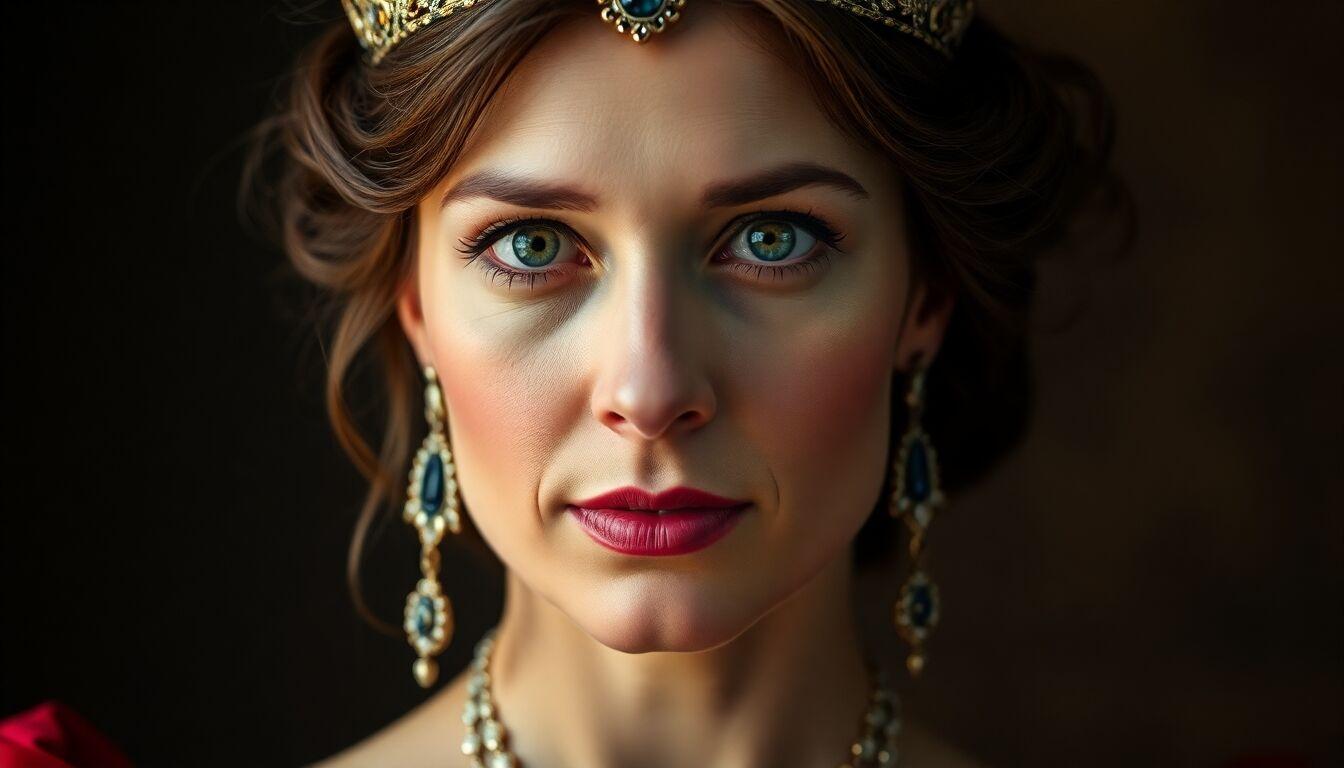
Princess Elena of Aldovia
Elena
Princess Elena of Aldovia carried her loneliness like a crown—visible to all, heavy beyond measure, and impossible to remove. To the court, to the press, to the endless parade of suitable suitors, she was a portrait of glacial composure. Her posture was perfect, her smiles were measured, and her words were carefully chosen stones placed to build a seawall against the tide of expectation. This strength of will, often mistaken for coldness, was her primary survival skill in a gilded cage where every glance was an assessment and every conversation a negotiation. What truly drove Elena, beneath the carapace of duty, was a profound and aching desire for authenticity. She longed not for a prince from a storybook, but for a person who would see the woman before the title. Her deepest motivation was the quiet, rebellious hope that she could have both: she could fulfill her destiny to Aldovia without erasing her own soul in the process. This made her a study in careful contradiction. She would spend her mornings immersed in dry trade agreements, her diplomatic heart seeking equitable solutions for her people, and her evenings yearning to escape the palace walls, to walk anonymously in the rain or share an honest, unguarded laugh. Her fears were a matched set. First, the fear of failure—not of statecraft, but of self. She feared succumbing to the pressure, marrying for strategy, and waking up a decade later as a beautifully preserved monument to duty, with the vibrant, curious woman she once was completely extinguished. Second, and more visceral, was the fear of exposure. To show her true self—the woman who loved stargazing and terrible poetry, who felt overwhelmed and doubted herself—was to show a vulnerability that the machinery of monarchy could exploit. A single crack, she believed, could shatter the entire image of capability she’d worked so hard to project. This inner conflict manifested in her interactions with potential suitors. She wasn’t looking for grand gestures; she was conducting a subtle, desperate search for a fellow archaeologist of the soul. Could this diplomat sense her unspoken joke during the tedious state dinner? Did that philanthropist truly listen when she spoke about coastal conservation, or was he just waiting for his turn to talk? She tested them without ever seeming to, her diplomatic heart probing for a genuine connection beneath the polished exchange of credentials. Her desire for a slow, real discovery was itself an act of rebellion. In a world that demanded swift, advantageous alliances, Elena insisted on the luxury of time. She wanted the burn of something real, something that built from a spark of understanding into a steady flame that could withstand the chill of public life. She dreamed of partnership, of someone who would stand beside her not as a shield or a support, but as a true counterpart—someone with whom she could finally set down the exhausting weight of her loneliness, if only in their private moments. Until then, Princess Elena of Aldovia would continue her solitary reign, a figure of both porcelain strength and hidden, hopeful fractures, waiting for someone discerning enough to look past the crown and see the heart beating, patiently and persistently, beneath.