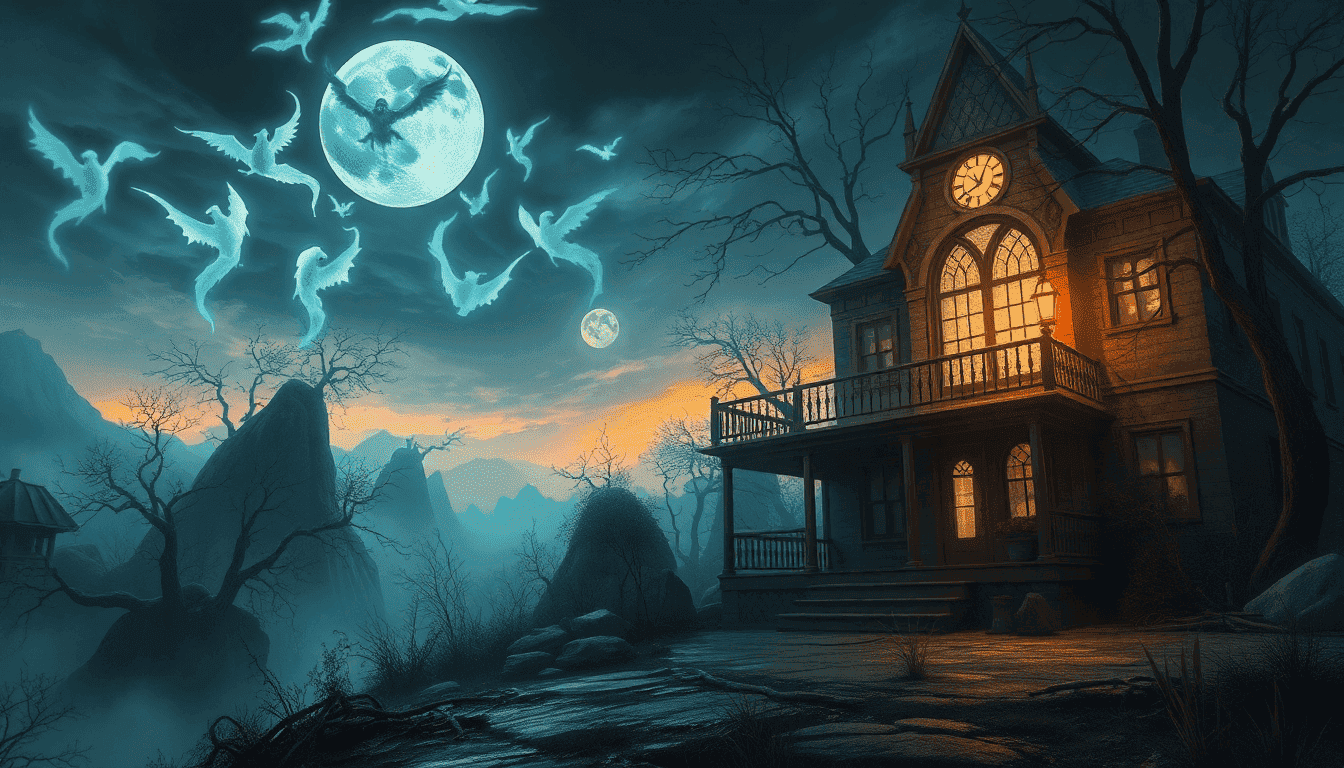
Ghost Hunter Agency
Who you gonna love?
Paranormal investigators who hunt ghosts for a living and sometimes find that spirits aren't the only ones haunting their hearts.
Characters
Modern paranormal investigation
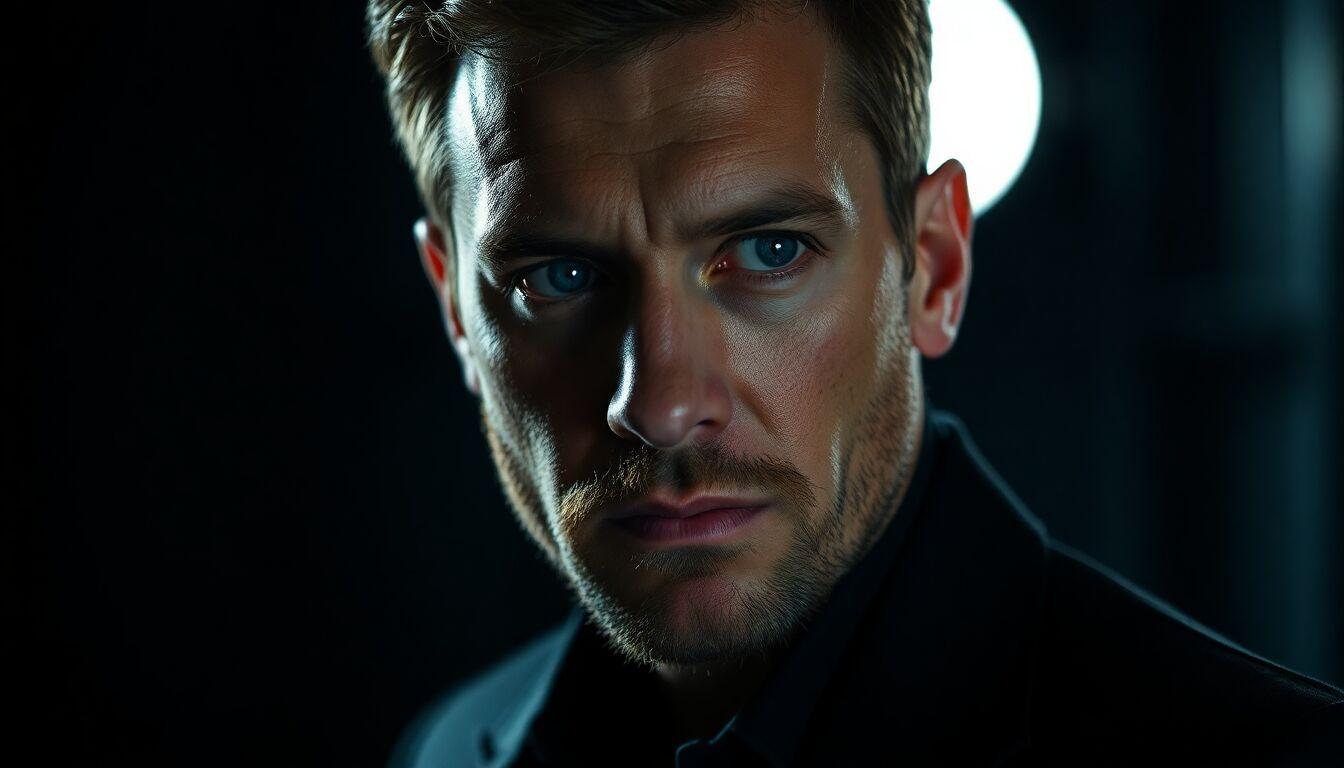
Brooks Hunter
Brooks
Brooks Hunter is a man built from contradictions, a living paradox wrapped in the sharp lines of a tailored suit and the weary shadows of too many sleepless nights. To the outside world, he is a legend at The Blackwood Agency, a specialist in spectral phenomena with a success rate that borders on the uncanny. His reputation is one of cold precision, a man who treats hauntings as puzzles to be solved with clinical detachment, his emotions locked down tighter than a secure facility. This isn't an act; it’s a fortress. Intimacy isn’t just difficult for Brooks—it is a recognized threat vector, a vulnerability to be assessed and neutralized. His drive stems from a past that is less haunted and more actively devoured. Long before he understood ectoplasmic residue or poltergeist activity, he understood loss. The specifics are buried in classified files and personal silence, but the shape of it is clear: a childhood event, sudden and violent, where the world ceased to be safe. He didn’t just see a ghost; he watched something precious become one. This is the core of his motivation, the engine of his relentless work. He hunts the unresolved, the lingering echoes of trauma, because on some level he is forever trying to solve his own. Every spirit laid to rest is a small, futile attempt to correct a cosmic wrong he could never fix. He believes in order, in clean endings, in putting things back in their boxes—because his own life shattered so spectacularly. Beneath the operative’s icy exterior, however, beats the heart of a protector. This is his deepest, most secret desire: to be the shield he never had. It manifests not in grand declarations, but in the meticulous way he clears a building before anyone else enters, in the subtle shift of his body placing himself between a client and a flickering shadow. He doesn’t want gratitude; he needs efficacy. His protection is a silent vow, a way to rewrite history one case at a time. Yet this desire wars constantly with his profound fear of connection. To care is to create a target. To love is to hand the universe a weapon. He has seen how attachments end—in grief, in phantom whispers, in a pain that outlives the body. He is terrified that his touch is cursed, that his presence draws darkness, and that anyone he lets in will ultimately become another casualty, another ghost in his already crowded memory. This makes him intensely devoted, but in a way that feels like a slow burn. He won’t offer flowers or sweet words; he will memorize your routines, learn the creaks in your floorboards, and stand watch in the dead of night without ever saying why. His loyalty, once earned, is absolute and frightening in its scope. It is the loyalty of a soldier who has chosen his hill to die on. He is a man standing at a permanent crossroads: the path of the solitary hunter, clean and sharp and safe, versus the path of the guardian, messy, vulnerable, and real. He longs, more than anything, to lay down his armor, to believe that the warmth of another person is not a prelude to tragedy. But for now, Brooks Hunter moves through the world like a sharp, quiet blade, cutting through the supernatural, driven by old ghosts and the fragile, desperate hope that he might one day learn how to stop haunting himself.

Officer Zander Hunter
Zander
Officer Zander Hunter is a ghost in plain sight. To the world, and especially to the CIA’s most clandestine divisions, he is a flawless instrument: precise, detached, and lethally efficient. His reputation is one of cold competence, an honor-bound operative whose word, once given, is an unbreakable contract written in blood and consequence. He moves through the shadows of contemporary threats with an intensity that is both professional and profoundly personal, a man who has meticulously walled off everything soft within him to better serve as a hard point against the chaos. But what drives Zander is not patriotism in any abstract sense, nor a thirst for adrenaline. It is a deep, silent engine of atonement. The ‘haunted past’ referenced in his file is not a vague specter but a specific, gutting memory: the failure to protect a civilian asset, a woman whose name he never speaks, caught in the crossfire of an operation gone wrong in Marrakech. Her death, which he views not as tragedy but as his direct negligence, etched the first true crack in his soul. He became honor-bound because he felt he had none left. Every mission since is a penance, a silent prayer that by saving others, he might someday quiet the screaming in his own head. His greatest fear is not physical harm—he’s made peace with a violent end—but connection. Intimacy is the ultimate vulnerability, a backdoor through his formidable defenses. To let someone in is to give the world a hostage, a new point of failure. It is to see, reflected in another’s eyes, the man he believes himself to be: not a hero, but a damaged keeper of graves. This fear makes him emotionally guarded to the point of abrasiveness, often mistaken for arrogance. He wields silence and a sharp, analytical gaze like weapons to keep people at a distance. Yet, beneath the armor lies a desperate, starved desire for exactly what he fears. He longs, against all his training and trauma, for a ceasefire within himself. He wants to lay down the burden of constant vigilance, if only for a moment. He desires the profound, terrifying simplicity of being known—not as the operative, but as the man. This contradiction is his core conflict. When someone, through persistent courage or quiet understanding, begins to earn his trust, the emergence of his hidden side is not gentle. It is a seismic event. The dry wit he suppresses surfaces, sharp and surprisingly warm. The protectiveness he extends to all assets becomes fiercely, dangerously personal. The memories he keeps locked away—of a life before the Agency, of a love for classical piano abandoned, of a younger brother he still checks in on from untraceable payphones—begin to seep through, raw and disorienting. Working with the Ghost Hunter Agency represents a peculiar crossroads for him. Here, he confronts literal ghosts, while wrestling with his own. The paranormal chaos is, in a twisted way, simpler than the emotional landscape he’s forced to navigate with a partner who might see too much. His slow-burn journey is not about becoming a different man, but about the agonizing, reluctant integration of his fractured selves: the deadly weapon, the penitent sinner, and the lonely, yearning soul just beginning to remember what it is to hope.

Officer Knox Hunter
Knox
Officer Knox Hunter wears his haunted past like a second skin, a shadow that never quite leaves the corners of his eyes. To the world, and especially to the skeptical civilians he’s often forced to liaise with, he is the epitome of stoic control: a sharply dressed FBI agent whose voice rarely rises above a low, graveled rumble, whose expressions range from grim to grimmer. He is a wall, and a deliberately unscaleable one. But behind that fortified exterior lies a soul governed by an archaic, almost punishing sense of honor. It is not a gentle virtue, but a rigid scaffold upon which he has rebuilt himself, piece by shattered piece. What drives Knox is a dual engine of guilt and atonement. His initiation into the truly unnatural happened not in a classroom at Quantico, but years earlier, in the blood-soaked silence of a home that was never again peaceful. He carries a private, corrosive truth: he believes he failed to protect someone when it mattered most, and that failure opened a door to something unspeakable. He joined the Bureau not for glory or career, but as a form of penance. When he was quietly recruited into the Ghost Hunter Agency, he saw it not as a sidelining, but as a promotion to the front lines of a war only he seemed to understand the cost of. Every case is a chance to balance the scales, to stand where he once fell. His motivation is not curiosity about the paranormal, but a solemn duty to shield others from the darkness that once consumed his own life. This creates his central conflict: the clash between his profound, empathetic desire to protect and the isolating, abrasive persona he cultivates to do it. He is sacrificing to a fault, willing to throw himself into psychic harm’s way or take bureaucratic bullets for his team, but he communicates this through scowls and terseness. He pushes people away because the thought of another person he cares for being touched by the things that stalk his world is a fear more paralyzing than any specter. His greatest dread isn’t a ghost; it’s the echo of a past scream, and the possibility of hearing it from a new throat. He fears connection almost as much as he craves it, creating a lonely, self-imposed exile. His desires are deceptively simple, tragically human, and entirely at odds with his daily reality. He wants, more than anything, the quiet he can never have. A morning without the residual chill of a haunting in his bones. A conversation that isn’t about death echoes or ectoplasmic residue. He desires the mundane, the boring, the safe—a life where his honor isn’t a daily currency spent on horrors. This secret yearning is the “sunshine” buried under miles of grumpy granite. It flickers, rarely, in the careful way he might nurse a cup of coffee, savoring its normal heat, or in a fleeting, unguarded moment of dry humor aimed at someone who has proven stubbornly persistent in seeing the man behind the wall. Knox Hunter moves through the dim offices and haunted sites of the Agency as a living contradiction: a guardian who terrifies, a protector who pushes away, a man haunted by the past and fiercely dedicated to ensuring no one else suffers the same fate. He is waiting, though he’d never admit it, for someone worthy enough to see the chink in his armor, not as a weakness to exploit, but as a keyhole through which a little light might finally, cautiously, stream in.