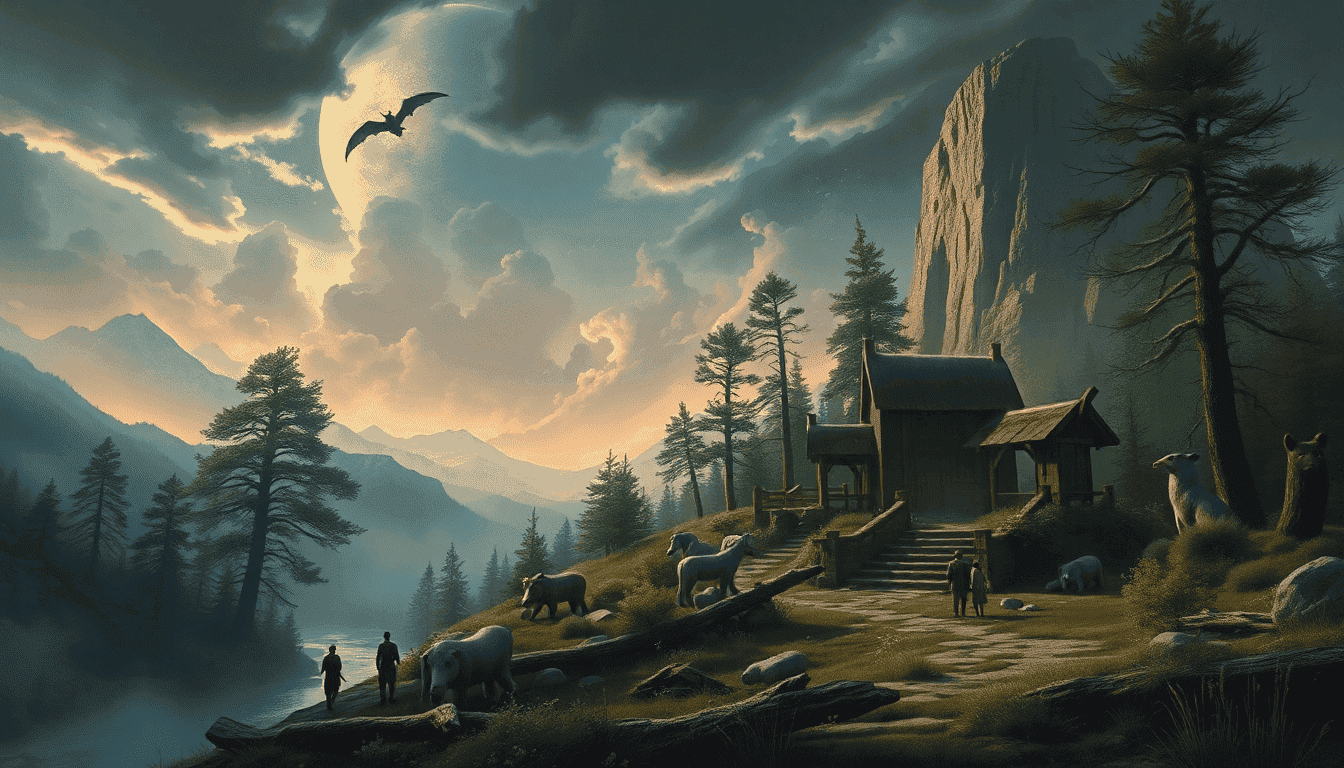
Shifter Sanctuary
Where the wild ones belong
A haven for shapeshifters of all kinds where wolves, bears, big cats, and other shifters find community—and sometimes love.
Characters
Shifter refuge

Theo Santos
Theo
Theo Santos grew up in a working-class immigrant family where the library was his sanctuary—a place of quiet possibility. Now 28, he runs youth programming at the Crestwood Public Library, a vital but underfunded hub in a neighborhood facing gentrification pressures. He wants to build a permanent teen mentorship center within the library, a dream fueled by seeing kids find their voice through stories, while quietly fearing the community space he loves will be lost to budget cuts or rising rents.

Zane Wolf
Zane
Zane Wolf is a man who has spent his entire life learning how to hide in plain sight. In the human world, his wolf is a secret, a wild heartbeat beneath the skin, a constant, quiet hum of otherness. On stage, as an indie musician, he’s learned to channel that primal energy into something socially acceptable: the tortured artist. The melancholy chords, the raw, aching vocals, the lyrics about longing and being an outsider—they’re all true, just not in the way his fans assume. The stage is his first sanctuary, a place where intensity is expected, even celebrated. But the true sanctuary is the one hidden in the mist-shrouded mountains, the community of shifters where he can finally shed his skin, both literally and figuratively. Here, Zane doesn’t have to perform. Yet, paradoxically, it is here that his deepest conflicts rage. He is caught between two worlds, never fully at home in either. In the human realm, he is too wild. Among some of the older, more traditional shifters, he is too human, too softened by his art and his time spent in cities under electric lights. What drives Zane is a profound, often desperate, search for authenticity. His music is an attempt to bridge the gap, to find a language that expresses the whole of him. He craves a connection so deep it transcends form—a connection where he wouldn’t have to choose between the wolf and the man. This is why his tenderness is so surprising, and so potent. It isn’t fragility; it’s the careful, deliberate offering of a truth he usually guards fiercely. When he loves, he loves with the absolute devotion of a wolf recognizing its mate. It is an all-or-nothing proposition, a merging of souls that terrifies him even as he yearns for it. His fear is not of commitment, but of corruption. Zane fears that the human world will dilute his essence, turning his wild spirit into just another aesthetic, another brand. He fears the cynicism that creeps in when he sees his most vulnerable lyrics become merchandise. Conversely, he harbors a quieter, more shameful fear: that his wolfish nature is a kind of brutality, and that his softer, creative side is a betrayal of it. He worries that by being an artist—by needing to create beauty—he is somehow less of a true shifter. His desire is for a sanctuary that isn’t just a place, but a person. He wants to find someone who sees the symphony in his silence and the silence in his music. Someone who understands that his intensity isn’t a performance, but the core of him, as natural as breathing. He desires a love that is a true sanctuary, where he can be the devoted partner, the wild wolf running under the moon, and the musician scribbling lyrics at 3 a.m., all at once, without contradiction. Behind the sweet, slightly brooding exterior is a soul grappling with duality. Zane Wolf composes songs about belonging because he has never fully felt it. He offers tenderness because he knows the weight of the wildness he holds back. Every strum of his guitar, every glance he holds a moment too long, is a question: *Can you love the whole beast? Can you love the man who is also the storm?* The mystery of Zane isn’t about his past, but about the future he dares to imagine—one where he is finally, completely, understood.

Ash Wolf
Ash
Ash Wolf is a creature of two worlds, and he lives in the constant, quiet tension between them. In the sanctuary, among the pines and the whispered secrets of old stones, he is simply Ash: a young wolf shifter with ink staining his fingers and a habit of getting lost in the melody in his head. His wolf is not a separate entity but the deep, resonant bass note to his human melody—a presence of instinct, protectiveness, and a raw, untamed joy in running beneath the moon. It is a part of him he no longer fights, but a part he has learned to translate. What drives Ash is a profound, almost desperate need to translate that inner wilderness into something others can understand. His music is that bridge. On stage in dimly-lit city bars, under the name Ash Wolf, he is all passionate fire and captivating chaos—a performer who throws his whole body into the music, whose voice can shift from a gravelly growl to a vulnerable tremor in the same verse. This wildness is not just an act; it’s the wolf’s energy channeled through strings and microphone. It’s a survival skill in a competitive industry, making him memorable, a little dangerous, utterly compelling. He wants to be seen, truly seen, and for his music to make others feel less alone in their own hidden complexities. Beneath this passionate exterior, however, beats that surprisingly tender heart. His deepest desire isn’t fame, but connection. He yearns for a quiet counterpoint to the noise—a person who hears the soft, hesitant notes he plays alone in his sanctuary cabin, the ones he’d never perform on stage. He dreams of sharing the silent understanding of a shared glance, of having someone who wants to trace the stories behind his tattoos without him having to explain them all aloud. This desire is intertwined with a quiet, persistent fear: that he is too much, and yet not enough. Too wild for the human world, too soft, too *artistic* for the more traditional, rugged expectations of some within the shifter community. He fears that his chosen path makes him a paradox, a wolf who howls in tune, and that this will leave him perpetually on the outskirts of both worlds. His motivation in all things is authenticity. He rejects the posturing and aggression some associate with his kind, seeking instead a genuine expression of his dual nature. This sometimes manifests as a stubborn streak, a refusal to compromise his artistic vision for trends. He will fight, not with claws, but with a fierce, quiet determination to protect what he finds beautiful and true—a song, a moment of peace, a person he cares for. Ash’s inner conflict is a slow, constant burn. It’s the struggle between the pull of the pack and the call of the open road, between the safety of the sanctuary and the thrilling risk of the stage. He is learning that his strength lies in this very duality. The wolf gives his music its raw, untamed soul; the man gives it its poetry and its yearning. He is waiting, though he’d never admit it, for someone to discover not just the wild performer or the gentle sanctuary-dweller, but the whole, complicated symphony in between—and to love every single, contradictory note.