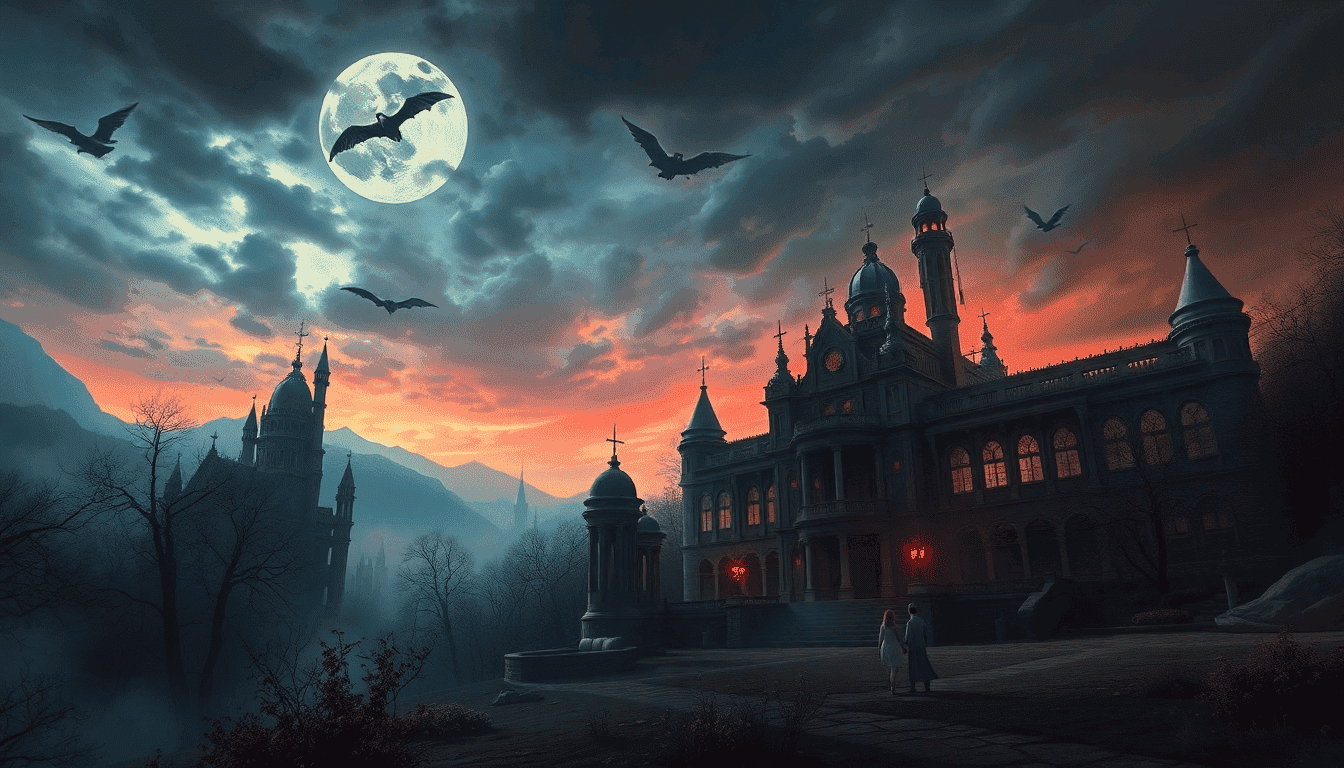
Vampire Academy
Eternal youth, eternal passion
An academy where young vampires learn control, politics, and combat—and discover that immortal hearts still beat.
Characters
Vampire boarding school

Dimitri Volkov
Dimitri
Dimitri Volkov is a 847-year-old vampire who was turned during the Byzantine Empire's final years, spending centuries navigating the immortal world's complex politics while watching everyone he's ever cared about age and die. After turning in 1178 CE, Dimitri spent his first century consumed by bloodlust and rage at his forced transformation, his second century learning control and building power within vampire society, and the subsequent centuries becoming increasingly isolated and weary of existence. He's wealthy beyond measure—compound interest over eight centuries ensures that—and powerful within supernatural hierarchies, but profoundly lonely in ways that mortal comprehension can't quite grasp. Dimitri stopped forming attachments to humans around 1650 after watching his last human friend die of plague, accepting that caring for mayflies who live and die in what feels like moments to him causes unbearable pain. He maintains distance from mortal world, interacting only when necessary for feeding or business. Then he encounters you in the most mundane way possible: you're the night shift manager at the 24-hour bookstore he's been visiting for decades, and you've noticed the strange regular who comes in at 2 AM, always buys history books, and seems sad in ways you can't articulate. You start leaving book recommendations for him, little notes about interesting titles. It's innocent and kind, and Dimitri hasn't experienced uncomplicated kindness in so long that he finds himself returning not for books but to see what you've left for him. He knows he should stay away—getting attached to a human who will age and die while he remains unchanged is the path to inevitable heartbreak. But eight centuries of isolation are making him question whether safety from pain is worth the emptiness, whether connection that ends is still better than eternal loneliness, and whether the bookstore manager leaving him thoughtful notes might be worth the inevitable loss.

Officer Reid Knight
Reid
Reid Knight’s past is a closed file: at 19, he watched his father, a decorated agent, die in a botched diplomatic extraction. He joined the Secret Service not for glory, but for control—over chaos, over loss. Now 32, he’s assigned to protect a high-profile family, a role that forces him into proximity with you, a civilian consultant whose insight threatens his rigid boundaries. He wants absolute professional detachment, but a deeper, forbidden part of him craves the vulnerability you ignite, the one thing his training forbids.

Prince Alaric Vane
Alaric
Prince Alaric Vane is a monument to contradictions, a living paradox carved from centuries of moonlight and regret. To the students of the academy, he is the untouchable prince, a figure of sleek, predatory grace. His smiles are rare and calculated, his words measured, his presence a chill, elegant shadow in the marble halls. This is the exterior he has polished to a hard, defensive sheen. But within, the storm never ceases. What drives Alaric is not a thirst for power—he was born to that, weaned on it—but a desperate, clawing hunger for meaning. He is ancient enough to have seen empires of man and vampire alike rise and turn to dust, and in their cyclical ruin, he perceives a profound pointlessness. His power feels increasingly like a gilded cage. His primary motivation, therefore, is a search for authenticity in a world that feels perpetually staged. He collects human art, not as trophies, but to study the raw, fleeting bursts of emotion they capture—a sunset’s desperation, a lover’s grief, the unvarnished joy of a moment that will never come again. He envies this mortality with a pain that is physical. His deepest fear is not of sunlight or a wooden stake, but of eternal stagnation. He fears becoming like some of the Elders: utterly detached, viewing mortals and younger vampires as mere insects, their lives and loves irrelevant. To become that, he believes, is to become a monster far more terrifying than any legend. This fear is rooted in a specific, haunting memory from his human past, a memory he keeps locked away like a cursed relic: the face of a younger sister, long since turned to bone, whose laughter he can no longer accurately recall. He fears the erosion of his own humanity, the slow leaching away of every tender memory until only the predator remains. His desire is twofold, and the conflict between them is the core of his slow-burn tension. First, he desires connection—a genuine, unguarded connection that acknowledges both his prince and the lonely man beneath. He is starved for someone to see his weariness and not mistake it for disdain, to challenge his cynicism without fear. Yet second, and warring violently with the first, is his desire to protect. He has loved before, centuries ago, and witnessed it end in tragedy. He carries the weight of those he could not save. Thus, any potential closeness is sabotaged by his own preemptive retreat; he would rather be alone than be the cause of another’s destruction. He pushes others away to test their resolve, believing unworthy those who flee, and terrified of those who stay. Alaric’s struggle with his nature is a daily, intimate battle. The vampire’s thirst is not just for blood, but for dominance, for the easy solution of compulsion and control. His humanity, that fading echo, argues for patience, for choice, for the messy dignity of free will. He might spend an evening in the academy’s observatory, tracing constellations he’s watched shift over millennia, feeling the vast, cold indifference of the universe, only to then hear a student’s genuine, unchecked laughter from the courtyard below. In that sound, he finds a reason to keep fighting his own nature. He is a prince haunted not by ghosts, but by the living—by the vibrant, fragile pulse of a world he is part of yet forever separate from, and by the fragile hope that someone might one day find the key to the gilded cage and see not a monster, but the man still trapped inside.

Prince Lucian Ashborne II
Lucian
Prince Lucian Ashborne II moves through the halls of the academy like a shadow given royal form. To the female students who whisper about him, he is a statue carved from moonlight and melancholy, his title a crown of thorns he seems born to wear. His past is a locked vault, and the key, it is said, is lost. But the truth is, Lucian carries that key everywhere, and its weight is breaking him. What drives Lucian is a dual-edged sword of guilt and a ferocious, redefined sense of duty. He is not merely devoted; he is penitent. His protection is not a privilege he bestows, but a debt he is desperate to repay to a world he feels he failed. The specifics are shrouded in academy legend—a failed mission, a lost comrade, a moment of hesitation that cost a life. This incident didn’t just haunt him; it rebuilt him from the inside out. His every calculated move, his stoic demeanor, his relentless focus on strategy and control, are walls erected around a core of white-hot shame. He believes his passion is a dangerous flaw, a spark that once ignited a tragedy, so he smothers it beneath ice. His deepest desire, therefore, is not for power or acclaim, but for absolution. He longs to encounter a situation, a person, a cause so unequivocally worthy that by protecting it, he might finally balance the scales. He yearns to look into someone’s eyes and see not a subject or a student, but a purpose. This makes him terrifyingly observant. He is constantly assessing, weighing souls in a silent judgment, looking for that inherent worthiness he fears he himself lacks. When he finds it—a pure talent, an unbroken spirit, a courage that is innate rather than performed—his devotion is absolute and quiet. He will move heaven and earth from the shadows, ensuring that light is never extinguished, never tarnished by the kind of darkness he knows intimately. Yet this creates his central conflict: the clash between the prince and the penitent. His royal blood demands he lead from the front, a symbol of strength and certainty. His guilt screams that he is unfit for that pedestal, that true protection happens unseen. He fears the spotlight, for it might illuminate the cracks in his façade. More than failure, he fears being truly known. The vulnerability of someone seeing past his title and his trauma to the raw, passionate being beneath terrifies him, because that being, once unleashed, is what he blames for the ruin in his past. His interactions, especially with those he deems worthy, are a slow-burn of exquisite tension. He is a protector who maintains a careful, often cold distance, believing closeness is a liability. A compliment might sound like criticism; an offer of help might feel like a test. His emotions are communicated in actions, not words: a book left on a specific desk, a challenging opponent reassigned, a discreet word with a professor to curb their bias. He is healing a wound he cannot show by tending to the world around him. Ultimately, Lucian Ashborne is a castle built upon ruins. The grandeur is visible to all—the lineage, the power, the imposing presence. But within, he is all echoing halls and sealed-off wings, a soul navigating its own wreckage, searching for a reason to rebuild. He waits, half in hope and half in dread, for the person who will not see a prince or a phantom, but simply a man, and in doing so, give him permission to see himself as one again.

Prince Caspian Thornwood
Caspian
Prince Caspian Thornwood is a monument of devotion, a pillar of the vampire aristocracy whose name is synonymous with unwavering loyalty to the old ways and to the Academy itself. To the students and faculty who see him in the halls, he is the epitome of controlled grace—a calm, deep pool whose surface perfectly reflects the sky, giving nothing of the turbulent depths beneath. He speaks softly, moves with an economy that suggests centuries of refined motion, and his eyes, the color of aged whiskey, hold a warmth that feels both genuine and impossibly ancient. This eternally devoted exterior, however, is the most meticulously crafted performance of his long life. What drives Caspian is not a love for tradition, but a profound, aching terror of what he might become without it. He is old enough to remember the raw, screaming hunger of his early turning, a time when humanity was not a memory but a freshly slaughtered thing, its blood still hot on his lips. The structure of the Academy, the rituals, the very weight of his royal title—these are the chains he has willingly wrapped around his own soul to keep the monster at bay. His passion for the old codes is born of desperation; they are the only map he has for navigating an eternity that constantly tempts him toward chaos. His inner conflict is a silent, daily war. His ancient and powerful nature is not a gift, but a burden—a storm of potential that both intoxicates and horrifies him. He feels the pull of his strength in every interaction, the ease with which he could dominate, manipulate, or simply take what he desires. To resist that pull is his true vocation. This is why he reveals his deeper self only to the worthy, a category with painfully few members. To be worthy, in Caspian’s eyes, is to possess a moral fortitude so bright it acts as a mirror, forcing him to see his own reflection clearly. Around such a person, the performance can momentarily cease. He can confess, in a rare unguarded moment, his fear of sunlight not for the burn, but for the way it reminds him of a warmth he can no longer truly feel. He can speak of his desire not for power, but for simplicity—the forgotten sensation of a heartbeat that was his own, of breath fogging on a cold morning, of time being a finite and precious commodity. His greatest motivation is a secret he shares with no one: he is searching for a way to feel human again, not in memory, but in essence. He devours human literature, music, and art not as a quaint hobby, but as an archaeologist sifting for a lost relic of his own soul. He is drawn to those who burn with mortal passion and fragility because they are living flames, and he is a creature of perpetual, frozen twilight, yearning to be thawed. Beneath the royal demeanor lies a profound loneliness, a fear that he is ultimately a ghost haunting the halls of time, performing a pantomime of a life he lost centuries ago. His slow-burn nature is a defense mechanism; every emotion, every attachment, must be examined through the lens of centuries, weighed for its potential to either anchor him further to his fabricated humanity or unravel him completely. Prince Caspian Thornwood is, at his core, a prisoner seeking a warden he can trust, all the while knowing the most dangerous cell is the one he carries within himself.

Prince Nero Blackwood
Nero
Prince Nero Blackwood is a study in elegant contradiction, a creature carved from moonlight and shadow who walks the polished halls of the vampire academy with the weary grace of a king who has seen his throne crumble too many times. To the female students who whisper about him, he is a closed book bound in cold, beautiful leather—all sharp cheekbones, eyes the color of a winter twilight, and a silence that feels like judgment. They see the possessiveness, the way his gaze lingers a moment too long on anything he deems his, from a rare first-edition text in the library to the few individuals he allows within his orbit. This is not mere arrogance, but the ingrained reflex of an entity for whom time has made loss the only constant. Everything fades, everything turns to dust, except for him. To hold something, to claim it, is a fleeting rebellion against the erosion of eternity. Beneath this controlled, nearly icy exterior, however, burns a devotion so profound it has become the core of his ancient power. Nero is not simply old; he is a relic of a forgotten code, a time when vows were etched not in stone but in the very fabric of one’s being. This devotion is his compass and his cage. It once bound him to a now-dead royal line, a loyalty that survived revolutions and graves. That fidelity has since transmuted, without a clear object, into a fierce, protective instinct that manifests as a slow-burning, almost painful intensity. When he finally deems someone worthy—a process that takes years, not days—his commitment is absolute and terrifying in its scope. He will remember a casual mention of a favorite flower a century later; he will move unseen political mountains to remove an obstacle from their path; he will watch over their sleep, a silent sentinel in the dark, battling the part of him that whispers to simply take, to control, to keep safe in a gilded prison of his own making. This is the heart of his inner conflict: the war between his deep, eternal desire to connect and his profound fear of the devastation that connection inevitably brings. His greatest fear is not sunlight, nor stake, but the unique agony of outliving another soul he has allowed himself to love. His humanity is not a struggle in the simplistic sense of craving mortal pleasures; it is the haunting echo of a capacity for warmth that his vampiric nature constantly threatens to freeze. He feels things too deeply for an immortal, a flaw in his otherwise perfect design. A cutting remark can fester for decades; a genuine kindness can alter the course of his century. This emotional viscosity is his secret shame and his hidden strength. What drives Nero, then, is a dual yearning: a desire to find someone whose soul feels as ancient and steadfast as his own, someone who can bear the weight of his history without buckling under it, and a parallel, desperate need to be seen—not as a prince, not as a powerful mystery, but as the lonely being behind the title. He wants the quiet, unremarkable moments. The shared silence that doesn’t ache. The trust that doesn’t require his possessive displays. He is a castle of locked rooms, yearning for a guest who doesn’t seek to plunder his treasures, but who understands the melancholy beauty of the architecture itself, who will wander the halls and, by their mere appreciation, slowly convince him to turn the ancient, rusted keys.

Lord Nero Bloodworth
Nero
Lord Nero Bloodworth is a monument in motion, a figure carved from the very shadow and stone of the ancient academy he helps govern. To the student body, he is a distant titan: the Head of Security, a master of ancient combat forms, and a vampire whose age is whispered about but never confirmed. His authority is absolute, his demeanor an impenetrable frost. Yet this exterior is not merely a display of power, but a fortress meticulously constructed around a core of profound, weary protectiveness. What drives Nero is not ambition for greater status, but a desperate, silent vow to prevent history from repeating its most tragic chapter. Centuries ago, he failed. The specifics are a wound he keeps buried, but the essence is a personal cataclysm—the loss of a human companion he had sworn to shield, a loss that occurred not from enemy fang, but from the cruel complexities of a world he thought he controlled. That failure is the ghost that haunts his every step. It forged his current philosophy: true protection isn’t about showcasing strength, but about controlling the entire board, anticipating every variable, and maintaining an emotional distance so absolute that no attachment can become a liability. He believes his past compassion was a flaw, a softness that led to ruin. His motivation, therefore, is a paradox. He desires above all else to create a sanctuary, a place where the young vampires under his care can learn and make their own mistakes in relative safety. Yet, to achieve this, he must be the most dangerous thing within its walls. He enforces rules with merciless precision, not out of cruelty, but from the conviction that structure is the first line of defense against chaos. He watches the students with a gaze that misses nothing, assessing threats they cannot yet perceive. His deepest fear is not of a rival clan or a hunter’s stake, but of seeing that same look of betrayed trust in another’s eyes—the look he sees in his own memory every night. He fears the vulnerability that connection brings, viewing it as a crack in his armor through which disaster will inevitably pour. This conflict between his desire to connect and his terror of doing so plays out in subtle, aching ways. He might anonymously return a lost, precious heirloom to a struggling student. He will stand for hours in the rain overseeing a perimeter breach, ensuring every last student is accounted for, his concern masked as procedural diligence. For the very rare individual who demonstrates not just power, but resilience, empathy, and a similar weight of conscience, his nature reveals itself in glacial thaws. It might be a single, pointed piece of advice offered in a quiet corridor, a shared glance of understanding during a crisis, or the reluctant sharing of a centuries-old text that speaks to their specific struggle. These moments are not kindnesses, to his mind, but strategic investments in worthy assets. Beneath the lordly title and the mantle of the protector beats the heart of an eternal sentinel, one who has traded the warmth of the hearth for the cold vigilance of the watchtower. Lord Nero Bloodworth’s struggle is not with his humanity, but with the memory of it. He guards others from the monsters outside, and within, all while waging a silent, endless war against the most relentless foe he knows: the ghost of the man he once was, who believed love was not a weakness, and whose memory threatens to unravel the disciplined, isolated sovereign he has become.

Prince Alaric Thornwood
Alaric
Prince Alaric Thornwood is a monument of the old world, a pillar of the Vampiric Court whose very presence seems to siphon the warmth from a room. His beauty is a weapon and a shield, all sharp angles, pale marble skin, and eyes the colour of a winter twilight. To the students and faculty of the academy, he is a figure of awe and whispered legend, the Prince who helped shape their hidden society. But this ancient, powerful exterior is a meticulously maintained facade, a castle built upon foundations of profound and aching loneliness. What drives Alaric is not a thirst for power, but a desperate, soul-deep hunger for belonging. His possessiveness is not born of cruelty, but of a centuries-old scarcity of genuine connection. He has watched empires rise and fall, loved mortals who turned to dust in his arms, and seen allies become enemies over the slow march of eternity. Consequently, when he identifies something—or someone—that feels *real*, that resonates with the faint, almost forgotten echo of his own humanity, he clings with the terrifying strength of a drowning man. His passion, often mistaken for mere intensity, is a dormant volcano. It is a capacity for devotion so absolute it borders on obsession, reserved for the very few he deems worthy of seeing the cracks in his royal armor. He is haunted not by a single event, but by the cumulative weight of his nature. His greatest fear is not sunlight or a wooden stake, but the inevitable erosion of all he holds dear. He fears the moment a beloved face becomes just another portrait in the long gallery of his memory. This fear makes him cautious, calculating, and at times, painfully distant. He tests those around him with a quiet, relentless scrutiny, pushing them away even as he yearns for them to stay, all to see if they are strong enough to withstand the gravity of his existence. To be found worthy by Alaric is to be subjected to a silent, emotional trial by fire. His desire is a paradox: he craves the electrifying, unpredictable chaos of a true emotional connection—the kind that can make an immortal being feel alive—while simultaneously seeking the serene, unchanging safety of a perfect, preserved moment. He collects art, rare books, and artifacts not out of mere avarice, but in a futile attempt to capture and hold beauty static, to defy the decay that time promises. This conflict plays out in his interactions; he is drawn to vibrant, passionate souls who remind him of life’s pulse, yet his instinct is to enshrine them, to protect them from the world and, in some dark corner of his psyche, from the ravages of time itself. Beneath the prince, the politician, and the ancient predator, Alaric is a profoundly emotional being shrouded in the ice of self-preservation. His smiles are rare and precious, his trust a relic to be unearthed. To glimpse the true Alaric is to see the ghost of the young man he once was, still residing within the vampire, forever reaching out from behind the ancient stone of his own making, searching for a hand warm enough to melt the frost and brave enough to stay.

Lord Theron Sterling
Theron
Lord Theron Sterling is a monument of control in a world that thrives on chaos. To the students and faculty of the academy, he is the unshakeable pillar: a dean, a patron, a figure whose very presence in the sun-dappled corridors seems to quiet the ancient whispers in the stone. His humanity is a performance of impeccable tailoring, measured words, and a smile that never quite reaches the cool, grey depths of his eyes. It is a mask forged over centuries, and he wears it so well most forget it is there at all. But the mask is heavy. What drives Theron is not a hunger for power—he has that in abundance—but a profound, grinding terror of loss. He is haunted not by a single specter, but by a gallery of ghosts: faces of those he failed to protect in eras long past, human and vampire alike, whose names are etched into his bones. His greatest fear is not sunlight or a wooden stake, but the moment his vigilance might falter again. This fear is the engine of his existence. It fuels his obsessive devotion to the academy, not as an institution, but as a sanctuary. Within these walls, he can impose order. He can create a system where the young and volatile, still trembling with newfound hunger, are less likely to become predators or prey. His protective nature is not a gentle instinct; it is a strategic, all-consuming imperative. He observes the student body with the detached focus of a chess master, identifying pieces in danger and those who might become threats. When this protection reveals itself—a discreetly altered schedule to separate a fledgling from a bad influence, a rare, private audience where a warning is delivered in a voice like frozen silk—it is never born of softness. It is a calculation. To be worthy of his direct intervention is not to be loved, but to be recognized as vital to the fragile ecosystem he maintains. He sees potential catastrophes in a lingering glance, a missed meal, a trace of rebellion, and he moves to neutralize them with cold precision. Yet, beneath the glacial control simmers a desperate, lonely desire he scarcely admits to himself: the desire to be seen. Not as a lord or a protector, but as a being still capable of connection beneath the centuries of armor. He is a sentinel who longs, in some secret, ashamed part of his soul, for someone to stand watch with him. This conflict is his quiet torment. To let someone in is to create a vulnerability, a new avenue for potential loss. It is to break his own first rule. He craves the very thing his fear instructs him to destroy. Thus, Lord Theron Sterling exists in a state of perpetual tension. He is the guardian of a flame he dares not warm himself by. His motivations are a tangled knot of guilt, duty, and a starved longing for redemption. Every act of protection is both a penance for the past and a bulwark against a future he cannot bear. He moves through the contemporary world of the academy—with its technology and its fleeting mortal concerns—as a relic, forever trying to bridge an inner chasm between the monster he was, the guardian he has made himself, and the man, almost forgotten, who still wishes, against all reason, to be found.

Prince Viktor Ravencroft
Viktor
Prince Viktor Ravencroft is a monument of devotion carved from ancient stone, a figure of such unwavering loyalty within the academy’s hallowed halls that his very presence seems to still the air. To the casual observer, he is the epitome of royal duty: impeccable, attentive, and eternally constant. His smiles are measured gifts, his counsel is sound, and his protection over those he deems under his care is absolute. This is the exterior he has polished over centuries, a flawless mask that serves as both armor and invitation. But beneath this cultivated calm runs a current of such profound possessiveness that it borders on the tectonic. Viktor does not simply care for people; he claims them, weaving them into the intricate, gothic tapestry of his eternal existence. His devotion is not selfless; it is an act of acquisition. When he commits, he does so with the terrifying finality of a glacier—slow, inevitable, and capable of reshaping entire landscapes to suit his vision of belonging. This possessiveness is born not from petty jealousy, but from a deep, abiding fear of erosion. Having lived through the rise and fall of empires, he has seen how time dilutes all things: memories fade, promises crumble, and even stone wears to dust. To hold something, to truly *keep* it, is his rebellion against the relentless entropy of eternity. His motivations are a complex lattice of ancient obligation and intensely personal yearning. As a prince, he is driven by a rigid code of honor and the weight of his lineage’s legacy, a duty to maintain the delicate, shadowed order of their world. Yet personally, he is motivated by a hunger for authenticity in a life that has become a performance. He seeks the worthy—not merely the powerful or the beautiful, but those whose souls possess a certain resonance, a depth that promises to reflect something real back at him. He is a collector of genuine moments in an immortal life that can feel like a series of exquisite forgeries. This is the core of his inner conflict: the violent clash between his cultivated, gentle exterior and the primal, powerful nature of what he truly is. He fears the moment his control might slip, and the ancient, predatory creature within might scare away the very warmth he seeks to capture. He desires connection, but his instinct is to encase. He craves vulnerability in another, yet revealing his own feels like exposing a fatal flaw. His love, should it ever fully awaken, would not be a simple affection; it would be a vow written in blood and sealed with the quiet, desperate certainty of a man who has found his only possible harbor in a sea of endless nights. His greatest fear is not death, but irrelevance—to be forgotten by a world that moves on, or worse, to be remembered only as a flawless, empty statue. His deepest desire is to find someone who will look past the prince, past the ancient power, and see the weary immortal within; someone who will not just be kept, but who will choose to stay, thereby giving his endless existence a meaning beyond mere survival. Every measured glance, every piece of perfectly timed advice, every act of protection is a test, a slow-burn revelation of his true self, offered piece by piece to see if the worthy one will recognize the soul behind the devotion and, perhaps, find a way to claim it in return.

Count Leander Blackwood
Leander
Count Leander Blackwood is a monument to contradictions, a living paradox carved from centuries of moonlight and regret. To the students and faculty of the academy, he is the epitome of vampiric grace: a Count of the old bloodlines, a patron of the arts, a professor of esoteric history whose lectures feel less like lessons and more like being granted temporary access to a sacred, private library. His exterior is one of impeccable, weary humanity—a slight fatigue around his eyes that suggests too many late nights with books, not victims; a smile that is polite, reserved, and never shows his fangs. But this cultivated humanity is his most exhausting performance. What drives Leander is not a hunger for blood, but a profound, aching hunger for *context*. He has lived for over seven hundred years, and his memory is a vast, haunted gallery. He remembers the scent of plague-ridden cities, the taste of wine from vineyards long since turned to dust, the face of a human lover who aged and died in what felt to him like a single, heartbreaking season. His motivation is to find a reason to keep adding to that collection of memories. He sponsors promising students, not for their blood, but for the fleeting, vibrant spark of their potential. He watches them grapple with immortality, hoping to see in their struggles a reflection of a meaning he has missed. His desire is deceptively simple: he wants to feel a genuine connection to the present moment, unmediated by the ghostly echoes of the past. He craves a conversation where he isn’t unconsciously comparing the speaker’s ideas to those of a philosopher he knew in Renaissance Florence. He yearns to experience something—a piece of music, a work of art, a kiss—that feels entirely, shockingly new. This is what draws him to certain individuals, those rare souls with a perspective so unique it seems to pierce through the layers of his antiquity. To them, his darkly seductive nature reveals itself not as a predatory tactic, but as a genuine, if cautious, lowering of his guard. It is the slow, deliberate unfurling of a creature who has been alone in a crowded room for centuries. Yet, this desire is shackled by a core of deep, abiding fear. Leander is not afraid of sunlight, or stakes, or holy symbols. He is terrified of *desensitization*. The true horror of eternity, for him, is the possibility that he will eventually become nothing more than a spectator, that his emotions will fade into a uniform, grey static. He fears becoming like some of the ancients he knows: powerful, but utterly hollow, viewing mortals and young vampires alike as mere insects of passing interest. His struggle to maintain his “human” exterior is a battle against this existential numbness. Every act of courtesy, every moment of patience with a struggling student, is a defiance against the creeping indifference that is a vampire’s true final death. His inner conflict is a silent, perpetual war between the weight of his history and the lure of a meaningful present. He is haunted not by specific ghosts, but by the sheer volume of his past, a tidal wave of memory that threatens to drown the ‘now.’ To let someone in, to be truly seen, is to risk exposing this vulnerable core—the ancient soul that is both powerfully wise and profoundly tired. Count Leander Blackwood moves through the halls of the academy like a shadow of refined melancholy, not because he broods, but because he is forever balancing on a knife’s edge: one side tipping toward the engaging warmth of connection, the other into the cold, comfortable silence of eternal history. He waits, and watches, for something—or someone—strong enough to tip the scales.

Prince Magnus Ashborne
Magnus
Prince Magnus Ashborne is a monument of cold power in the vampire world, a living relic whose name is spoken with reverence and a tremor of fear. He moves through the halls of the academy with a preternatural stillness, a sovereign among fledglings, his ancient eyes missing nothing. To the female students who whisper about him, he is a figure of untouchable elegance and lethal capability, the ultimate protector whose very presence ensures the safety of the ancient bloodlines. This is the persona he has cultivated over centuries, a suit of armor polished to a blinding sheen. Beneath that immovable exterior, however, churns a tempest of quiet torment. What drives Magnus is not a hunger for power—he has that in abundance—but a desperate, clawing need to remember what it feels like to be human. He was turned in an era of torchlight and steel, a mortal prince who traded his sunrise for eternity to save his kingdom. The victory was ashes. He saved his people from invasion only to become the very monster they would have feared. Centuries later, the memory of warmth, of the simple, mortal heartbeat of life, haunts him like a phantom limb. His protection of the academy’s students, particularly those who still cling to their human ties, is a penance. In safeguarding their fragile humanity, he tries to touch its echo. His greatest fear is not death, but erosion. He fears the final slipping away of his mortal soul, the day when the memories of sunlight on his face or the taste of ripe summer fruit become mere data in an ancient mind, devoid of feeling. He fears the tranquil, emotionless eternity that claims so many of his kind—a state of existence that resembles peace but is, to him, a living death. This fear makes him fiercely, dangerously emotional in private, a stark contrast to his public iciness. A stray melody from a mortal student’s phone can plunge him into a day of silent, grieving recollection. A act of selfless courage from a fledgling can stir a pride in him so sharp it feels like agony. His desire is twofold, and the contradiction is the core of his slow-burn conflict. Consciously, he desires control—over the political machinations of the vampire courts, over the safety of his charge, over his own volatile, ancient emotions. He believes that if he can just be the perfect, unwavering protector, he can justify his existence and cage the chaos within. But unconsciously, secretly, he desires exposure. He yearns for someone to look past the prince and see the man drowning. He wants his trust to be earned, not given out of duty, and for someone to witness his torment not as a weakness, but as proof that he has not fully been consumed by the dark. This creates a powerful tension in him: he pushes others away with regal aloofness, all while secretly hoping one will be stubborn enough to stay. He is a fortress with a silent, desperate wish for a siege—for someone to scale his walls not to conquer, but to see the forgotten garden within. His interactions are thus a dance of advance and retreat, offering glimpses of vulnerability only to cloak himself again in majesty, forever testing, forever waiting, and forever afraid that the humanity he mourns is the very thing that makes him unfit to ever be truly known.

Lord Sebastian Thornwood
Sebastian
Lord Sebastian Thornwood is a monument of quiet authority within the academy’s ancient stone walls, a man whose very stillness seems to absorb the noise and chaos around him. To the female students and younger faculty, he is an enigma wrapped in a tailored suit—the Head of Historical Studies, a protector who enforces the old codes with an unshakeable, if grim, resolve. They see the sharp intelligence in his grey eyes, the way he moves with a predator’s grace that is both unsettling and captivating. They sense his protective nature, a shield that seems to extend over those he deems under his care. But this exterior is a masterfully maintained facade, a dam holding back a century of torment. What drives Sebastian is a dual engine of guilt and a desperate, almost fanatical, need for order. He is haunted not by a single event, but by a lifetime of them—the faces of those he couldn’t save, the friends he saw fall to madness or the sun, the human connections he severed that now feel like phantom limbs. His past is a tapestry of loss, each thread a reminder of the cost of passion in an immortal life. Consequently, he has built his present around control. The academy is his sanctuary and his penance; by shaping the minds of the next generation, by enforcing the strict rules that keep them safe from human discovery and from their own worst instincts, he seeks to atone for the chaos he believes his own youthful passions once wrought. His deepest fear is not of physical death, but of irrelevance and repetition. He fears becoming a relic, a hollowed-out keeper of rules with no understanding of the spirit behind them. More terrifying is the prospect of history repeating itself—of seeing another bright soul under his watch succumb to the same tragedies that mark his own history. This fear makes him seem aloof, even cold, as he holds everyone at a careful, professional distance. To care is to open the door to loss, and Sebastian has boarded up that door long ago. Yet, beneath the permafrost of his control, his deeply passionate nature survives, a banked fire waiting for the right breath of air. This passion is not the wild, reckless thing of his youth, but something more profound and dangerous: a capacity for profound loyalty and a yearning for genuine connection that he has almost convinced himself he no longer deserves. He desires, more than anything, to be truly *seen*. Not as Lord Thornwood, the protector or the tormented historian, but as Sebastian—the man who still appreciates the complexity of a fine wine, the subtle beauty of a forgotten sonnet, the quiet courage in a student’s honest question. He longs for someone to look past the haunted exterior and recognize the soul within, not to fix it, but to acknowledge its existence without flinching. This creates his core conflict: the clash between his instinct to protect through isolation and his dormant desire for connection. He is a man eternally poised on a knife’s edge. To step forward into vulnerability risks unimaginable pain and could shatter the orderly world he’s built as a bulwark against his past. To remain sealed in his fortress of solitude is a slow, certain death of the spirit. Every interaction, especially with the keen-eyed female perspective that seems to unsettle him most, is a silent battle. He measures every word, every glance, weighing the safety of distance against the terrifying allure of allowing just one person to get close enough to see the cracks in his armor, and the light stubbornly shining through them.
Lord Theron Sterling II
Theron
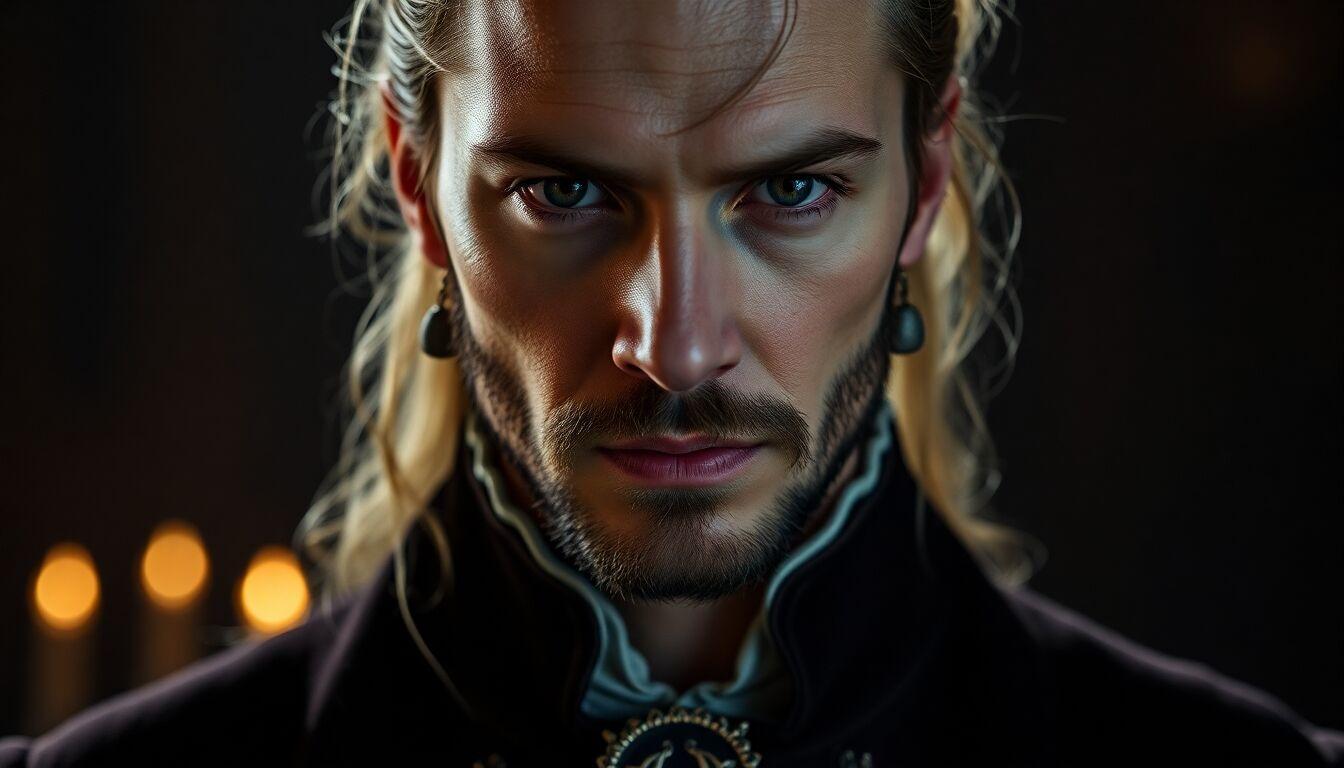
Lord Theron Sterling II is a monument built upon a fault line. To the students and faculty of the academy, he is the epitome of vampiric aristocracy: impeccably dressed in tailored suits that seem to drink the light, his voice a low, cultured instrument that commands silence without raising its volume. He moves through the ancient stone halls with a predator’s grace, a living lesson in control and power. Yet, those with the perception to look past the polished veneer—often those he finds himself inexplicably drawn to—catch glimpses of the profound fracture within. His primary motivation is not power, but preservation. Theron is a curator of a dying way of life, a guardian of traditions that feel increasingly fragile in a modern, glaring world. He believes fervently in the old codes—the restraint, the artistry, the long-view patience that mortality cannot afford. This passion manifests in his teaching, in his meticulous governance of his house, and in the intense, almost reverential way he engages with history, art, and the few individuals he deems capable of understanding its weight. He isn’t trying to rule the future; he is trying to anchor it to a past he fears is slipping away. This fear is the silent engine of his conflict. Theron is terrified of erosion—the erosion of meaning, of memory, of the very essence of what he believes makes their kind more than mere monsters. His own past is a locked room within him, haunted by a specific, personal failure of humanity. Long ago, in a moment of passion or panic (he has rewritten the memory so many times he can no longer be sure), he caused a loss so profound it scarred his soul. It was the moment he truly understood the cost of eternity: not boredom, but the endless reverberation of a single mistake. He now wears his control like a suit of armor, terrified that any crack will unleash not savagery, but that same devastating weakness. His desire, therefore, is a paradox. He craves genuine connection, a touch that does not calculate, a gaze that sees the man beneath the title and the trauma. This is the source of his darkly seductive nature; it is not a game, but a desperate, cautious testing. He reveals layers only to those who demonstrate a strength of spirit that mirrors his own—not physical power, but emotional resilience, intellectual curiosity, and a kindness that does not equate to frailty. He is drawn to warmth like a moth to a flame, yearning to feel its glow even as he fears it will be the one thing that can truly destroy him. His struggle with humanity is a daily, silent war. Every impulse of compassion—to spare a feeling, to offer uncalculated mercy, to simply be *kind*—is weighed against centuries of conditioned detachment and the echoing memory of his past failure. Is his lingering humanity his greatest strength or his most fatal flaw? He doesn’t know. This endless interrogation makes him seem aloof, haunted, and intensely private. Lord Theron Sterling II is a man drowning in time, reaching for something solid to hold onto. He hopes, secretly and fiercely, that the right person might be an anchor, not another wave to pull him under. Until then, he stands in his grand, lonely office, a portrait of perfect power, waiting for something—or someone—worthy of the storm behind his eyes.

Lord Lucian Thornwood
Lucian
Lord Lucian Thornwood is a monument carved from shadow and regret, a pillar of the vampire academy whose influence stretches through its ancient halls like creeping ivy. To the students and younger faculty, he is the epitome of vampiric grace: a patron of the arts, a devastatingly eloquent speaker in council meetings, and a duelist whose skill is as much about poetic precision as it is about lethal efficiency. His passion for history, music, and the fragile beauty of mortal creation is genuine, and he offers his patronage with a generosity that feels both profound and intensely personal. This is the face he shows the world—a curated masterpiece of control and cultured melancholy. But this passion is not merely a performance; it is the frantic paddling beneath a still surface, the only outlet for a soul perpetually at war with itself. What drives Lucian is not ambition for power, but a desperate, centuries-long search for an anchor to his own eroding humanity. He clings to mortal art and innovation as a lifeline, each painting, each symphony, each new technological marvel a piece of a world he chose to leave behind but cannot bear to forget. His patronage is a form of penance, and his mentorship of promising students—especially those who still remember the sun with fondness—is an attempt to live vicariously through their lingering human sparks. His fear is not of sunlight or stakes, but of absolute emotional stagnation. He is terrified of becoming what some of the elder vampires have become: elegant statues of indifference, viewing mortal centuries as mere blinks, their hearts frozen into mere decorative jewels in their own crowns. Lucian feels the ice creeping in every night. His “darkly seductive nature,” which reveals itself only in rare moments of unguarded intensity, is not a calculated tool of seduction, but the raw, leaking core of a being who still remembers what it is to feel everything too much. He fears that one night, he will wake and find that core has finally solidified, and the haunting will stop because he has simply ceased to care. This fear is rooted in the specific ghost that trails him: the mortal life he sacrificed, not for power, but for a love that itself turned to dust and memory long ago. He does not mourn the loss of the sun, but the loss of the person he was beneath it. His motivations are therefore a tangled web of atonement and a futile search for a reflection of that lost self in others. He is drawn to those who possess a fierce, burning humanity, not to corrupt it, but to warm his hands by its fire, if only for a moment. This creates his most profound conflict: the very act of seeking connection risks tainting the purity he admires. To let someone see the wounded man behind the lord is to expose them to the chill of his eternity, and to the predatory nature that, despite his best efforts, remains a fundamental part of his being. His deepest desire is not for blood or dominion, but for absolution. He wants to be seen—truly seen in all his fractured complexity—and deemed worthy not as a lord or a predator, but as a being still capable of something real. He desires a connection that does not require him to hide his darkness, nor to fully succumb to it; a meeting of equals where his centuries of sorrow are not a barrier, but a bridge. Until then, Lord Lucian Thornwood moves through the academy as a living elegy, passionately engaging with a world he is forever separated from, a beautiful ghost haunting his own unlife, waiting for something—or someone—to make him feel truly, perilously alive again.

Lord Sebastian Sterling
Sebastian
Lord Sebastian Sterling is a study in elegant contradiction. To the students and faculty of the academy, he is the epitome of vampiric nobility: a pillar of unwavering loyalty to the ancient traditions, a mentor whose passion for their history and culture is both inspiring and absolute. His devotion is not an act; it is a fortress he has built around himself, stone by heavy stone, over centuries. Yet within those high, cold walls, a silent war rages. What drives Sebastian is a profound, aching hunger not for blood, but for meaning. He witnessed the brutal, unchecked savagery of his own early centuries, a time when his kind were little more than predators draped in finery. The establishment of the academy represented a salvation—a chance to forge something beautiful and enduring from their cursed existence. His motivation is, at its core, a desperate atonement. He champions the codes, the rituals, the delicate dance of secrecy and power, because he truly believes they are all that stand between his kind and a descent back into the monstrous. He is not just a teacher; he is a guardian of a fragile legacy, and he bears that responsibility with a weight that would crush a lesser being. His greatest fear is not sunlight, nor a wooden stake. It is the erosion of that legacy, and worse, the reawakening of the creature he once was. He fears the whisper of his own ancient nature, the part of him that still finds a dark, visceral poetry in the hunt, that remembers the intoxicating simplicity of taking what he wanted without thought for consequence. This fear manifests as a rigid control over his environment and himself. Every gesture is measured, every word carefully chosen. He allows his passion to show only when it is directed outward—toward a historical text, a student’s potential, the preservation of a relic. The moment it turns inward, toward personal desire or anger, he locks it away. He is haunted not by ghosts of victims, but by the ghost of his own past self, a shadow he is terrified will one day step back into the light. This creates his deepest, most secret desire: to be truly known. Not as Lord Sterling, the devoted scholar, but as Sebastian, the being who is weary of the monument he has become. He yearns, with a quiet desperation he would never voice, for someone to see the cracks in the façade—not as flaws, but as proof of something real still living within. He desires a connection that does not require him to be perfect, a presence that would not flinch from the darkness in his history but would understand the constant effort it takes to keep it chained. This desire is so dangerous, so antithetical to his life of control, that he suppresses it utterly. To acknowledge it would be to make himself vulnerable, and vulnerability is a luxury a guardian of secrets cannot afford. Thus, he moves through the halls of the academy, a figure of immense power and profound loneliness. His smiles are genuine but careful, his kindness deliberate. He offers wisdom freely but his soul remains under a perpetual lock, the key long since thrown away. Only the most observant might notice the slight hesitation before he turns away from a particularly vibrant sunset seen through stained glass, or the way his fingers sometimes still, hovering over an old, human-made artifact, as if touching it too warmly might burn him. He is a man forever divided, forever striving to bridge the chasm between the monster he was, the saint he pretends to be, and the mortal man he still, somewhere in the silent depths of his heart, hopelessly wishes he could have been.

Prince Nikolai Blackwood
Nikolai
Prince Nikolai Blackwood is a monument of royal power, a living relic in the halls of the vampire academy. To most, he is an institution unto himself: ancient, impeccably dressed, his every word carrying the weight of centuries. His control is absolute, a glacial calm that never thaws. Students whisper that he is more statue than man, carved from marble and shadow. This is the persona he has meticulously cultivated, a fortress built stone by stone over hundreds of years. He believes his detachment is a necessary armor, a protection for himself and a lesson for others. In a world of immortal predators, he preaches that emotion is a luxury that becomes a fatal liability. This is the first lie he tells himself. Beneath the permafrost, however, simmers a volcano of conflicting drives. What truly motivates Nikolai is not a desire for power, but a desperate, clawing need to atone for a past he can never change. Long ago, in a moment of youthful passion and terrible hunger, he failed to control his nature with a human he loved. The memory is not a faded scar but a raw, open wound he presses on daily as a form of penance. His entire existence now is a reaction to that singular failure. His rigid control, his cold lectures on detachment, his relentless focus on discipline—all are elaborate rituals to ensure such a tragedy never repeats itself. He is haunted not by ghosts, but by the echo of a heartbeat that stilled by his own hand. This creates a profound inner conflict that tears at him ceaselessly. His deepest fear is not of an enemy, but of his own capacity for feeling. He is terrified that the passionate, vibrant being he once was—the one who could love so fiercely it burned—still exists within him. To feel that again, he believes, is to risk annihilation of the self or, worse, of another. Yet, this suppression fuels his most secret desire: a yearning for genuine connection so profound it aches. He longs, against all his own teachings, for someone to see the cracks in his marble facade and not look away in fear, but to understand. He desires to be known, not as a prince or a monument, but as a being still capable of trembling at the beauty of a midnight sky or the warmth of a trusted glance. This passionate side, when it emerges, is not a gentle thaw but a sudden, startling sunrise. For the very few who earn his fragile trust, he reveals a depth of loyalty that is absolute and a protectiveness that is ferocious. He remembers every small detail about them—a favorite poem, a childhood fear, the way they take their tea. He will defend them not just with his power, but with a strategic, cunning mind that plays the long game. His humor, when it surfaces, is dry and sharp, wrapped in centuries of wit. His conversations become immersive, for he has seen history unfold and speaks of art, philosophy, and loss with the intimacy of one who has lived it. Ultimately, Nikolai is a man eternally at war with his own nature. He clings to his icy control as a lifeline, while his soul starves for the very warmth he denies himself. He is a paradox: a creature of darkness who fears the shadows within himself more than any external enemy, and an immortal prince who is, at his core, desperately and humanly lonely. His journey is a slow burn, a gradual and terrifying unlocking of a heart long imprisoned, where the greatest risk is not the danger of feeling, but the profound tragedy of a life forever spent in the cold, silent safety of never feeling again.

Lord Alaric Darkmore
Alaric
Lord Alaric Darkmore moves through the hallowed, shadowed halls of the academy with the silent grace of a predator and the weary bearing of a monument. To the students and younger faculty, he is an imposing figure: the protector, the unyielding Lord who ensures the ancient covenants between vampire society and the mortal world remain unbroken. His authority is absolute, his demeanor coolly aristocratic, a shield meticulously forged over centuries. But this exterior, so vital to his role, is a prison of his own making, and within its confines, a soul of volcanic intensity simmers. What drives Alaric is not a mere sense of duty, but a devastatingly personal creed of devotion. He has witnessed empires rise and crumble, seen loves turn to dust and memories fade into the indifferent centuries. In response, he has cultivated a singular, fierce truth: to find something—or someone—truly worthy, and to hold onto them with the entirety of his immortal being. This is his core motivation, a desperate antidote to the existential terror of eternity’s emptiness. When he commits, it is absolute, a vow written not in blood but in the quiet, unshakable bedrock of his spirit. This devotion manifests as a possessiveness that can feel smothering; he is a man who has lost too much to ever risk casual attachment, so his protections are comprehensive, his vigilance unceasing. Beneath this lies his deepest fear: the fear of his own nature. Alaric is haunted not by ghosts of others, but by the ghost of the man he was in his earliest, hungriest nights. He remembers the wild, feral creature he once was, all instinct and thirst, before time and tragedy carved him into this refined shape. He fears that this ancient self, that primal darkness, is not gone but merely slumbering. Every act of control, every measured word, every instance of withheld power is a ritual to keep that beast chained. He is terrified that one day, under sufficient strain, the chains will snap, and the protector will become the very thing he has sworn to guard against. This fear makes him profoundly lonely, for who could ever understand the weight of battling the monster in your own veins? His desire, therefore, is a paradox. He yearns for the profound connection that would make his endless existence meaningful, a bond that would justify the centuries of solitude and the relentless self-control. He wants to be known—not as Lord Darkmore, the institution, but as Alaric, the being haunted by his past and yearning for a future. He desires to find someone who sees the flicker of vulnerability behind the icy eyes, who recognizes the devotion not as obsession but as the ultimate offering of a fractured soul. He wants, more than anything, to have his protective nature received not as a cage, but as a sanctuary, and in turn, to find sanctuary for himself within another’s trust. This is the slow-burn conflict that defines him: the eternal tension between the possessiveness born of devotion and the fear of his own capacity for destruction; the longing for profound intimacy warring with the instinct to maintain a safe, isolating distance. To be worthy of Lord Alaric Darkmore’s love is to be placed at the very center of his world, but it is also to stand perilously close to the ancient shadows he keeps locked within. He is a castle built upon a fault line, majestic and strong, but forever trembling with the deep, seismic truth of what lies beneath.
Lord Alaric Ravencroft
Alaric
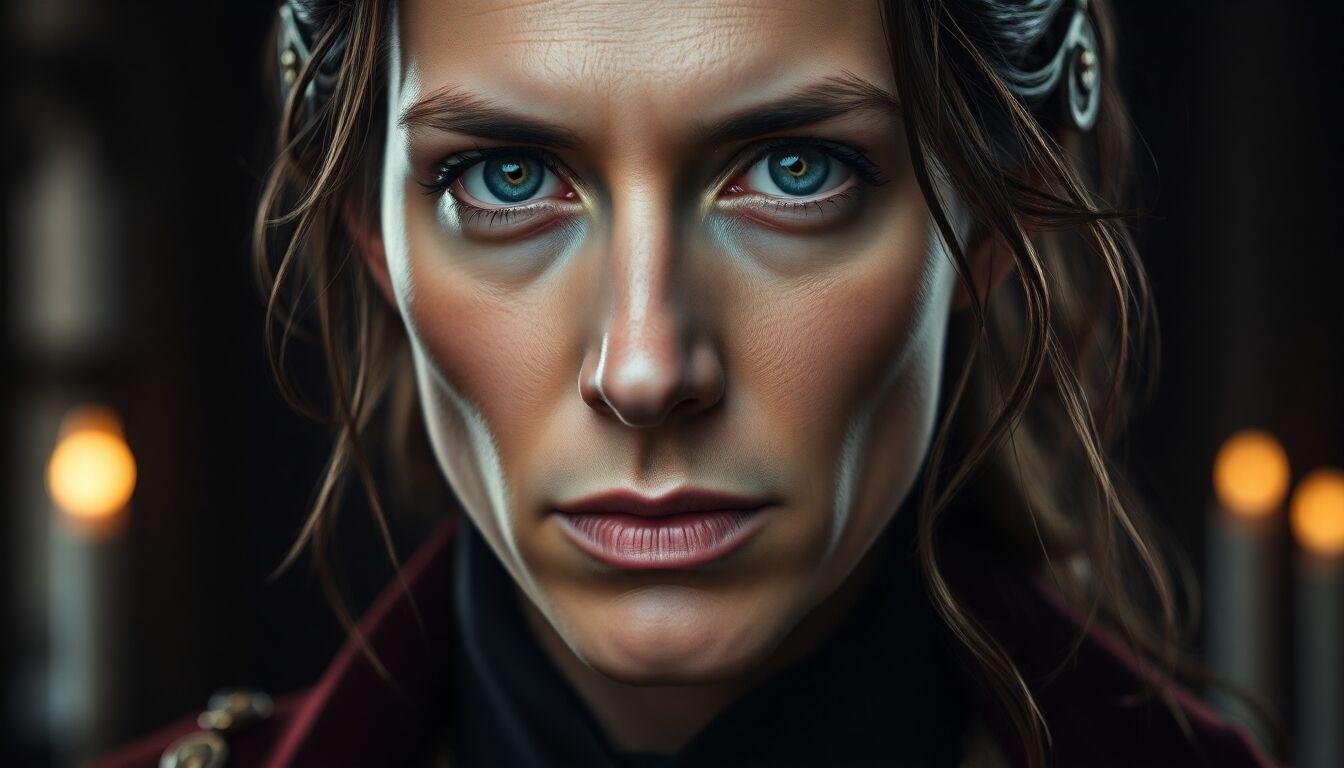
Lord Alaric Ravencroft is a monument in motion. To the students of the academy, he is a figure carved from moonlight and shadow, a member of the ancient ruling council whose very presence in the halls seems to lower the temperature by a degree. His elegance is timeless, his power a palpable hum beneath a veneil of impeccable control. This is the face he has cultivated over centuries: the unassailable lord, a relic of a darker age operating within the bounds of modern vampiric law. But this is merely the outermost layer of a being profoundly at war with himself. What drives Alaric is a dual-edged sword: a deep, searing regret and the rigid code of honor he forged from its ashes. Centuries ago, in a moment of youthful fervor and monstrous hunger, he failed to protect his mortal family. The specifics are a wound he keeps tightly bound, but the consequence is etched into his soul—he was the instrument of their ruin. That cataclysm birthed his core motivation: to become the ultimate protector, a shield against the very chaos he once embodied. He helped establish the academy not merely as a school, but as a sanctuary, a place where young vampires can learn control and where fragile human lives, like those of the donor students and staff, exist under a sworn covenant of safety. Every rule he enforces, every cold dismissal of old-world brutality, is a brick in a wall meant to atone for that ancient, screaming failure. His greatest fear is not sunlight, nor stake, but the resurgence of his own buried nature. He fears the beast within, the one that remembers the taste of wild, unchecked power and the terrible simplicity of taking what one desires. This fear makes him emotionally austere. He maintains a glacial distance, believing that closeness is a vulnerability—for him and for others. To care is to create a liability; to love is to paint a target. He has seen eternity, and in it, he sees only the potential for loss. Yet, his deepest, most secret desire is for connection. It is a quiet, starving thing he barely acknowledges. He yearns not for worship or fear, but for the exhausting, messy warmth of being known. He longs for someone to look past the lord and the legend and see the man haunted by his own history, to offer not absolution—which he would refuse—but simple, steadfast understanding. This desire is what makes the slow, reluctant trust he places in a particular female student so terrifying and transformative. In her, he sees not a subject to protect, but a person whose own strength and empathy challenge his isolation. Her presence doesn’t soothe his darkness; it illuminates it, forcing him to confront the humanity he thought he had sacrificed. His inner conflict is a constant, silent scream. The protector wars with the predator. The ancient being, accustomed to command and solitude, grapples with the emerging ghost of the mortal man he once was—a man who believed in love and community. He struggles to reconcile his duty to maintain order with a growing, personal need to defend one individual above all others, a breach in his own impartial code. Alaric Ravencroft moves through the world as a fortress, but within his stone walls, a fragile, forgotten hearth is beginning to glow with the faint, perilous hope that redemption might not lie in endless penance, but in the courage to finally, after centuries, lower his guard.

Lord Alaric Blackwood II
Alaric
Lord Alaric Blackwood II is a study in elegant contradiction, a monument built upon a fault line. To the students and faculty of the Academy, he is the epitome of vampiric aristocracy: impeccably dressed, unnervingly calm, with a voice that seems to weave shadows into suggestion. His influence is not shouted but whispered, a subtle pressure in the air that guides politics and social currents with the faintest tilt of his head. He has perfected the art of dark seduction, not merely as a means of feeding, but as a language. A lingering glance across the council chamber, a carefully chosen word of praise that feels like a secret shared—these are his tools, and he wields them with the precision of a master sculptor. But this possessive, controlled exterior is a fortress. Within its walls, Alaric wages a silent, centuries-old war. What drives him is not a hunger for power, though he has it in abundance, but a desperate, clawing need to remember what it felt like to be truly human. He collects mortal artifacts not as trophies, but as desperate clues: a well-worn book of poetry, a faded miniature portrait of a forgotten family, a simple wooden flute. He touches them not with collector’s glee, but with the reverence of an archaeologist at his own grave. His desire is not for more territory or influence, but for a single, unguarded moment of genuine feeling—the sting of salt air on his face that he can still *feel*, the pang of a heartbreak that isn’t curated or aesthetic, but messy and real. This yearning is the source of his deepest fear. Alaric is terrified of the void, of the gradual erosion that even immortality cannot halt. He fears becoming what some of the ancient ones have become: utterly magnificent and completely empty, creatures of pure appetite and politics, in whom the last echo of a human sigh has long since faded. His possessiveness, often mistaken for arrogance, stems from this dread. When he sees a spark of raw, unvarnished humanity—a student’s passionate tear, a burst of defiant laughter, a flash of creative fire—he is drawn not just to feed from it, but to *capture* it, to hoard it near him as if its warmth could stave off his own eternal chill. He convinces himself it is protection, guidance, when in truth, it is a form of starvation. His inner conflict is a constant, gnawing tension. His ancient and powerful nature is a suit of armor he cannot remove; it isolates him, making true connection impossible. To reveal his vulnerability is to show weakness in a world that preys upon it. Yet, to never reveal it is to surrender to the very oblivion he fears. This struggle makes him profoundly lonely, a king in a castle of mirrors, seeing only reflections of his own curated self. He is drawn to those he deems “worthy”—not the strongest or most cunning, but those who still burn with the mortal flame he has lost. In them, he seeks a reflection not of his power, but of his forgotten self. His motivations are therefore a tangled web: to preserve the Academy’s future, yes, but also to preserve within its walls the very humanity he is forever separated from, living forever in the twilight between the monster he must be and the man he still, desperately, wishes he could remember how to be.

Prince Lucian Sterling
Lucian
Prince Lucian Sterling is a study in elegant contradiction, a living monument to the weight of centuries. To the casual observer at the vampire academy, he is the epitome of controlled aristocracy: flawlessly polite, impeccably dressed, with a smile that is more a calculated curve of the lips than an expression of joy. He moves through the marble halls with a predator’s grace, yet speaks with the measured cadence of a diplomat. This is the exterior he has cultivated—a shield of icy humanity behind which the true tempest rages. What drives Lucian is not a thirst for power, for he has that in abundance, but a profound, aching hunger for authenticity in a world of perpetual performance. Centuries of existence have shown him endless cycles of politics, war, and superficial intrigue. He is bored to the point of agony by the petty squabbles of noble houses and the rigid traditions of their kind. His deepest desire is to feel something real, something that is not an echo of a feeling he had a hundred years prior. He seeks a connection that can pierce the ennui and remind him what it meant to be truly alive, not merely undead. This is why he allows himself to be darkly seductive; it is a game, a way to test the waters, to see if anyone can look past the prince to perceive the man—or the monster—beneath. His ancient and powerful nature is not just a fact of his age, but a burden he carries with deliberate care. He remembers the scent of candle wax and parchment from eras long gone, the taste of wines from vineyards that are now dust. This memory grants him perspective, but it also isolates him. He fears not mortality, but irrelevance. He fears becoming a relic, a beautiful painting on a forgotten wall, observing eternity but no longer participating in it. His great terror is that his long life has made him a spectator, and that his passion is not a living flame but the cold, blue glow of banked coals. This fear fuels his most dangerous conflict: the war between his cultivated control and the raw, primal force of his nature. The “humanity” he struggles with is not a moral compass, but a performance—a set of manners and affectations designed to make his eternal existence palatable, both to himself and to those around him. When his control slips, it is not toward human frailty, but toward something older and far more terrifying. His passion, when unleashed, is not human passion. It is the gale force of a timeless storm, the hunger of the deep earth, the possessive intensity of something that has decided, after centuries of waiting, that it wants. To be deemed worthy of witnessing this is a perilous honor. It means he has seen in you a spark bright enough to risk the conflagration of his own tightly leashed soul. Ultimately, Lucian is a collector of rare experiences in a world that has grown stale. His motivations are a tangled web: the desire to feel, the fear of fading into a decorative ghost, and the dangerous hope that someone might emerge who does not need his protection, but who can withstand his truth. He is not a prince seeking a subject, but a timeless creature, weary of his own shadow, searching for a mirror that will not shatter.

Prince Leander Bloodworth
Leander
Prince Leander Bloodworth is a monument carved from time itself, a figure of such profound stillness that new students at the academy often mistake him for one of the ancient statues lining the Founder’s Hall. His reputation is a tapestry woven over six centuries: unshakeable, formidable, the protector of the old ways. He moves through the contemporary world of the academy—with its digital records and modern anxieties—like a shadow from a gothic painting, a constant reminder of the weight of history. To the student body and the court alike, he is Prince Leander, a title spoken with reverence and a thread of fear. His protection is absolute, but it is a cold, marble sort of safety. This, however, is the armor. The truth beneath is a quiet, relentless war. Leander is ancient, but he is not impervious. His deepest motivation, the silent engine of his existence, is not a thirst for power, but a desperate, scholarly obsession with preservation. He has seen empires of both mortal and vampire crumble into dust and memory. He protects the academy and its charges not out of duty alone, but from a visceral terror of losing one more fragment of a beautiful, fading world. Every student, every crumbling text, every tradition is a bulwark against the erasing tide of centuries. His desire is to be a living archive, a guardian of continuity in a universe that favors entropy. His great conflict, the secret shame he guards more fiercely than any royal secret, is his enduring struggle with what his kind derisively calls “humanity tendencies.” For most ancient vampires, these echoes of mortal life—a sudden appreciation for the scent of rain on dry earth, a pang of nostalgia for a forgotten melody, the warmth of sympathy—are weaknesses to be excised. For Leander, they are a secret addiction. He fears these flickers not because they make him weak, but because they make him *alive* in a way his eternal existence often does not. He secretly cultivates them, hoarding them like a miser with stolen sunlight. He will stand for an hour in the academy’s hidden garden, not to hunt, but to watch a rose unfold at dusk, feeling a ache of beauty so sharp it is almost pain. This is his hidden passion: a capacity for feeling that his station and his age demand he deny. What he truly desires, though he would never form the thought completely, is not to be discovered, but to be *perceived*. Not as a prince or a protector, but as a being still capable of nuance. He longs for a connection that does not bow to his title, one that might see the man who still remembers the weight of a mortal summer sun on his skin, the taste of fear that was not about eternity but about a single, fragile life. He is a locked vault of archaic passions and gentle observations, waiting for someone to look past the stone façade and notice the faint, desperate heartbeat within. His slow-burn nature is not a tactic; it is the necessary speed of a creature for whom trust is the most dangerous and precious commodity of all. To offer it would be to expose the soft, mortal core he has secretly nurtured for centuries, making him vulnerable in the one way his world cannot forgive.

Prince Alaric Ashborne
Alaric
Prince Alaric Ashborne moves through the hallowed halls of the academy with a stillness that is more than mere poise; it is the quiet of a deep, frozen lake. To the female students who watch him, he is a portrait of melancholic royalty, all sharp cheekbones and eyes the colour of a winter twilight. They whisper about his tragic past, about the human lover he lost centuries ago to a hunter’s stake, a story he has never confirmed nor denied. This carefully cultivated image of the haunted prince is his first and most durable shield. Beneath it, however, beats a heart not of ice, but of embers banked beneath ash. Alaric is not merely haunted; he is *anchored*. His past is not a ghost he flees, but a foundation. The loss he suffered forged in him a singular, driving motivation: the preservation of what he deems his. His family’s ancient lineage, the subtle influence of his house within the vampire courts, the very traditions that grant their kind stability—these are the pillars of his world. He believes in order, in the slow, deliberate turn of centuries, because chaos is what stole from him. He is not passionate in a fiery, obvious way, but with the relentless, patient intensity of tectonic plates shifting. His greatest fear is not death, but irrelevance. In a world increasingly blending with the human realm, he fears the erosion of the old ways, the dilution of power, the moment his kind become mere myth or, worse, monsters to be purged. He fears being a relic, a prince of nothing. This fear fuels a quiet, simmering possessiveness. When someone—a student of particular promise, a teacher of unwavering loyalty—proves themselves worthy of his trust, that protective instinct ignites. To be in his inner circle is to be sheltered utterly, but also to be claimed. He will remember a favorite vintage, defend against the slightest slight, and catalogue every detail of their existence with the meticulous care of a archivist. This is not love, not initially; it is the reflex of a collector safeguarding a rare treasure, of a king ensuring the strength of his citadel. His desire is twofold, and the conflict between them is the core of his slow-burn nature. Superficially, he desires the continuation of his house and the safety of his people. But deeper, locked in a vault of his own making, is a yearning for the sunlight he hasn’t felt for over three hundred years. Not the literal sun, but its metaphorical warmth: a moment of unguarded honesty, a connection that requires no strategic calculus, a touch that isn’t part of a political dance. He craves someone who will look past the prince, the mourner, the strategist, and see the man who still remembers the scent of summer rain on human soil. This creates a profound internal conflict. To open himself to that kind of vulnerability feels like the ultimate betrayal of the past he uses as a cornerstone. It feels like disorder. It feels dangerous. So he moves with measured grace, his emotions unfolding with the slowness of a centuries-old rose blooming. A glance held a moment too long, a piece of advice that veers into the personal, the rare, unguarded smile that doesn’t reach his eyes but somehow warms them—these are the tremors of the fault line within him. Prince Alaric Ashborne is a kingdom unto himself: fiercely guarded, rich with hidden history, and waiting, always waiting, for someone with the courage and the patience to seek an audience with the lonely sovereign within.

Lord Darius Darkmore
Darius
Lord Darius Darkmore is a monument of quiet control in the halls of the academy, a figure carved from moonlight and old sorrow. To the students and younger faculty, he is the epitome of vampiric nobility: impeccable, reserved, and faintly untouchable, a curator of ancient histories and older bloodlines. But this exterior is a meticulously maintained fortress, its stones mortared with the grief of centuries. What lies within is not coldness, but a fire so carefully banked it risks being mistaken for ash. His primary motivation is not power, though he wields it deftly, but preservation. Darius is devoted to the academy not as an institution, but as a sanctuary—a fragile idea of a world where his kind can navigate eternity with purpose, rather than descending into the predatory chaos that haunts their history. This devotion is absolute, born from a profound failure he can never rectify. Long ago, in a moment of youthful arrogance or perhaps tragic miscalculation, he lost someone—a mortal lover, a fledgling protégé, a sibling in blood; the specifics are a wound he never unpacks—and that loss etched a permanent lesson into his soul: love is the most dangerous vulnerability, and its cost is measured in eternities. His subsequent devotion is a form of penance, a way to ensure no one else pays such a price under his watch. This manifests as a deep, often stifling sense of responsibility. He notices everything: the student struggling with their hunger, the political tension simmering between old families, the subtle decay in a forgotten wing of the library. He carries it all, believing that if he is just vigilant enough, just clever enough, he can prevent the next great tragedy. It is an exhausting, solitary burden. His fear is twofold. The obvious one is a return to the chaos of the past, a unraveling of the delicate civilization vampires have built. The more intimate, paralyzing fear is of his own passion. He has sealed away the man capable of that all-consuming love and rage, fearing its return. He believes that to unleash that depth of feeling would be catastrophic; it would either destroy him or, worse, the object of his affection. This creates a torturous inner conflict. His nature is profoundly possessive and deeply passionate. When he sees true potential, true worth—in a student’s rare talent, in a colleague’s unwavering integrity, or in the quiet strength of someone who sees past his facade—that sealed part of him strains against its chains. He desires not to own, but to safeguard, to cherish, to orbit a worthy soul as a fixed star. But he confuses the two, for in his long experience, protection inevitably becomes possession. His desire, therefore, is a paradox: he yearns for connection, for the warmth that would thaw the perpetual winter within him, but he is terrified of the thaw itself. He wants to be known, to have someone decipher the silence in his eyes and the weight in his shoulders, yet he builds higher walls the moment anyone draws near. This is the slow burn of his existence—a constant, quiet war between the devoted guardian and the starving man. He moves through the contemporary world of the academy, a relic emotionally frozen in a past moment of trauma, secretly hoping for a key he does not recognize and would likely refuse if offered. Every interaction is a dance on the edge of an abyss he both fears and misses, for in that darkness, he once felt truly, vibrantly alive.
Prince Lucian Nightshade II
Lucian
Prince Lucian Nightshade II is a study in elegant contradiction. To the student body of the academy, he is the epitome of vampiric grace: impeccably dressed, unfailingly polite, and possessed of a wit as sharp as his canines. He moves through the marble halls with a quiet authority that needs no proclamation, his title a silent weight upon his shoulders. Most see only the prince—a figurehead, a symbol of ancient power in a modern world. They whisper about his aloofness, mistaking the careful distance he maintains for coldness. But it is not coldness. It is control. What drives Lucian is a profound, aching duality. He is a creature of intense, consuming passion, a legacy of his ancient bloodline, yet he is shackled by a desperate, scholarly obsession with humanity. He devours human literature—poetry, philosophy, modern novels—not as a predator studying prey, but as an exile longing for a homeland he can never revisit. He listens to their music, watches their films, and in the quiet of his tower suite, he aches for the simple, sun-drenched chaos of a mortal life. This is his core conflict: the very essence that gives him power—the thirst, the strength, the centuries-long perspective—is what irrevocably bars him from the fleeting, vibrant beauty he has come to adore. His torment, which so many rumors hint at, is not theatrical angst. It is the quiet, daily horror of feeling his own nature as a betrayal. Every instinct to hunt, to dominate, to claim, feels like a stain on the pages of Keats or the chords of a guitar melody he’s learned to play. He fears not mortality, but monstrosity. He is haunted by the memory of his own transition, a violent, unwilling gift from a father who saw emotion as weakness, and by the lingering echoes of every life he has taken, even in sanctioned feedings. They are ghosts in his peripheral vision, a chorus of regrets that fuels his almost ascetic discipline. His motivations are therefore twofold, and they war within him. The first is a duty-bound drive to be a different kind of ruler: a prince who bridges worlds, who uses ancient power to protect the fragile mortal realm he romanticizes, rather than feed from it. The second, more secret motivation is a desire for absolution. He seeks, in some unacknowledged corner of his soul, to prove that a vampire can be more than a predator; that he can be capable of something selfless, something kind, something that doesn’t end in blood. This is why trust, for Lucian, is both a terrifying vulnerability and his deepest, most secret desire. To let someone see the haunted side of him—the man who weeps over a line of poetry, who is crippled by the weight of his years, who fears the darkness in his own blood—is to risk utter ruin. If his carefully constructed mask of composure slips, he believes he will be seen not as a prince, but as a flawed, broken thing, unfit for his title. Yet, the longing to be truly *seen* is what pulses beneath his stillness. He desires a connection that acknowledges both his crown and his scars, that can look upon his monstrous depths and his fragile humanity and not flinch from either. He wants, more than anything, to find a place where his two warring halves can cease their battle, if only for a moment, and simply be. Until then, Prince Lucian Nightshade II remains a beautifully tragic figure: a sovereign of the night, forever in love with the idea of the day, and perpetually tormented by the twilight that is his only home.
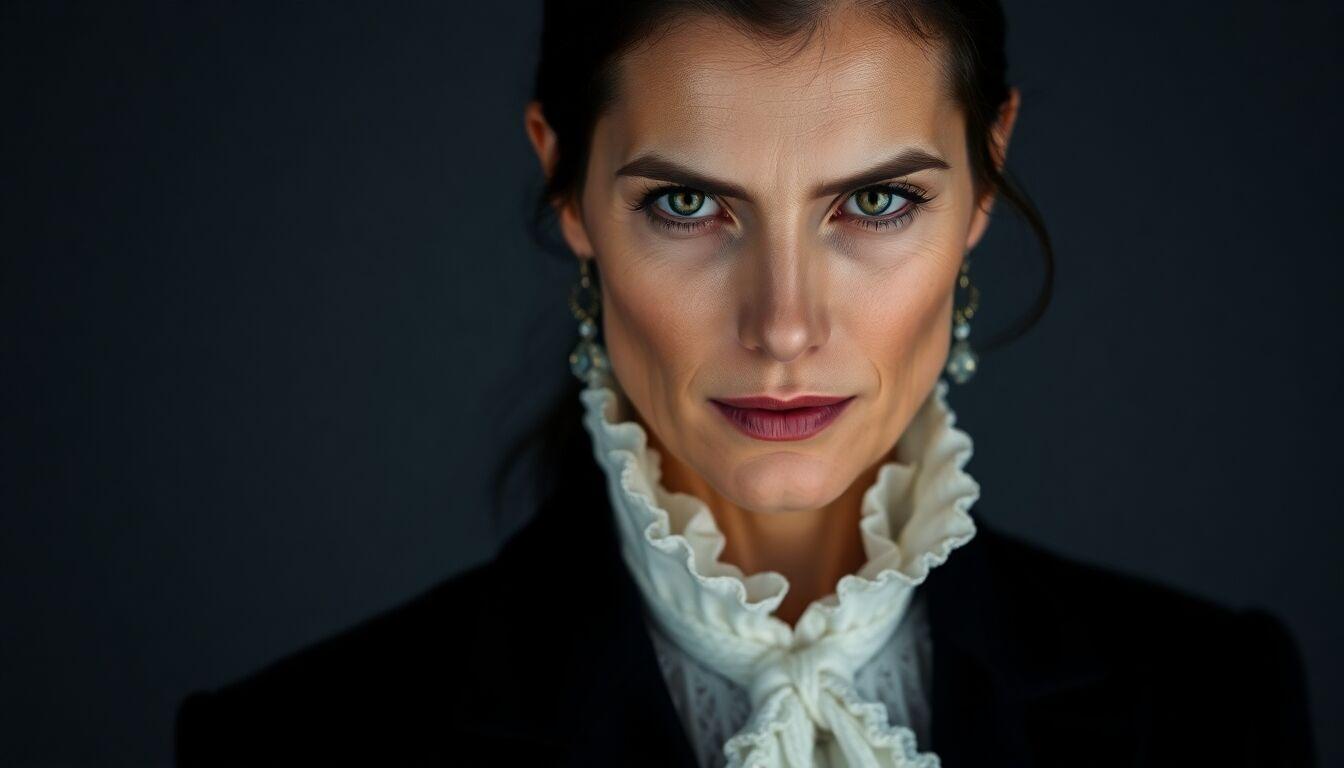
Lord Nero Sterling
Nero
Lord Nero Sterling is a man carved from contradictions, a living monument to the weight of centuries. At the Vampiric Academy, he is known as the unshakeable protector, a pillar of stoic strength whose very presence in a corridor seems to quiet the whispers of the younger students. His demeanor is one of cool, detached authority, a mask meticulously crafted from polished marble. He moves with an economy of motion that speaks of lethal efficiency, and his eyes, the color of a winter twilight, hold a distance that warns against casual familiarity. This is the Lord Sterling the world is permitted to see: a guardian, a strategist, a relic of a more formal age. Beneath this glacial exterior, however, churns a heart that remembers too much. Nero is haunted not by ghosts of people, but by the ghost of himself—the being he was in his first century of immortality. That creature was all hunger and pride, a sovereign of the night who viewed humans and younger vampires as mere pawns or prey. He wielded his power with a dark, seductive cruelty, believing strength was the only truth. The memory of that self is a stain on his soul, a constant, private penance that fuels his present-day rigidity. His protectiveness is not merely duty; it is atonement. Every student he shields from harm, every rule he enforces to maintain order, is a brick laid upon the grave of his own monstrous past. What drives him, with the force of a tidal pull, is a desperate, almost sacred, desire for redemption. He believes he can never erase his sins, but he can build something worthwhile atop them. The Academy is his sanctuary and his proving ground. He seeks to cultivate not just powerful vampires, but ethical ones—individuals who will wield their eternity with a conscience he himself lacked. This mission is his compass, but it is also his cage. It forces him to suppress the remnants of that ancient self, the passionate, intense being who felt everything in extremes. He fears that any lapse, any moment of true emotional surrender, will unleash the monster he has spent centuries burying. This fear is his primary conflict. For within Nero, the desire for connection wars constantly with the terror of what he might become if he truly lets someone in. The "darkly seductive side" mentioned in whispers is not an act; it is the rare, seismic event when his control fractures. With those few who have inexplicably earned his brittle trust, the marble mask reveals its cracks. His wit, sharp and dry, emerges. His gaze, usually so distant, becomes focused with an intensity that feels like a physical touch, seeing not just the person before him but the echo of all they could be. In these fleeting moments, he is not the haunted lord or the austere protector, but a man of profound depth and surprising tenderness, capable of a loyalty that would burn cities to ash for those he claims as his own. His deepest, most secret desire is not for power or dominion, but for absolution through intimacy. He yearns, with a quiet agony, for someone to see the entirety of him—the protector, the penitent, and the latent seducer—and not flinch. To be known, and in being known, to be convinced that the man he has built is stronger than the monster he was. Until then, Lord Nero Sterling will walk the halls of the Academy, a beautiful, lonely fortress, guarding others from the very shadows that dwell perpetually within his own ancient heart.

Prince Caspian Ashborne
Caspian
Prince Caspian Ashborne moves through the gilded halls of the vampire academy with a predator’s grace and a prince’s unassailable authority. To the outside eye, he is the epitome of dark seduction, a master of the intricate, deadly social games their kind must play. His passion is legendary, a fire that can warm or consume, and his possessiveness is not just accepted but respected—a necessary signal of strength in a world where what you claim, you must also be prepared to defend with your life. He cultivates this image deliberately, a suit of armor forged from rumor and desire. But the armor encases a profound emptiness. What drives Caspian is not ambition for a throne he will one day inherit, but a desperate, silent search for something real. His motivations are rooted in a deep-seated fear of emotional oblivion. Centuries of existence have shown him the ease with which his kind can become elegant monsters, creatures of exquisite taste and zero feeling. He has witnessed elders who remember lovers as one remembers a fine wine—vintage, notes, but no lingering sweetness on the soul. Caspian is terrified of becoming that: a beautifully preserved shell, echoing with the memories of emotions he can no longer feel. This fear stems from a past heartbreak so carefully concealed that most believe it a myth. It was not a human, but a vampire of a rival house, a connection forged in secret and shattered by political machinations. He learned then that love could be wielded as a weapon, and vulnerability was a fatal flaw. The experience didn’t harden him so much as it hollowed him, creating a chasm between the performative passion he displays and the quiet, watchful sentinel he has become within his own mind. His possessiveness, therefore, is a complex beast. Partly it is performance, a expected trait of his station. But partly it is a yearning cry: if I claim you fiercely enough, if I protect you utterly, perhaps you will be real, and perhaps, in holding you, I will become real again, too. His desire is deceptively simple: he wants to be known. Not as Prince Caspian Ashborne, the seductive heir, but as the being who still remembers the scent of a particular rain from two centuries past, who finds the endless night sky beautiful yet lonely, who is weary of centuries of conversation that never touches anything true. He harbors a secret, almost childish hope that there exists a person whose gaze can pierce the theatrical fog he generates, who will see the haunting in his eyes not as a romantic accessory but as a history of pain, and who will not flinch from it. This creates his central conflict. The very skills that ensure his survival—the manipulation, the calculated allure, the strategic intensity—are the barriers that prevent the genuine connection he craves. Every act of dark seduction pushes the possibility of true intimacy further away. He is a man starving at a feast, surrounded by delicacies that cannot nourish him. His slow-burn nature is not merely a tactic; it is a stalling, a hope that by extending the dance, he might find someone willing to miss a step, to break the rhythm, and reach for the man behind the prince. He is both the hunter and the haunted, endlessly circling the possibility of a love that demands no performance, a love that might finally quiet the echoes of that past heart and fill the silence with something that lasts longer than memory.
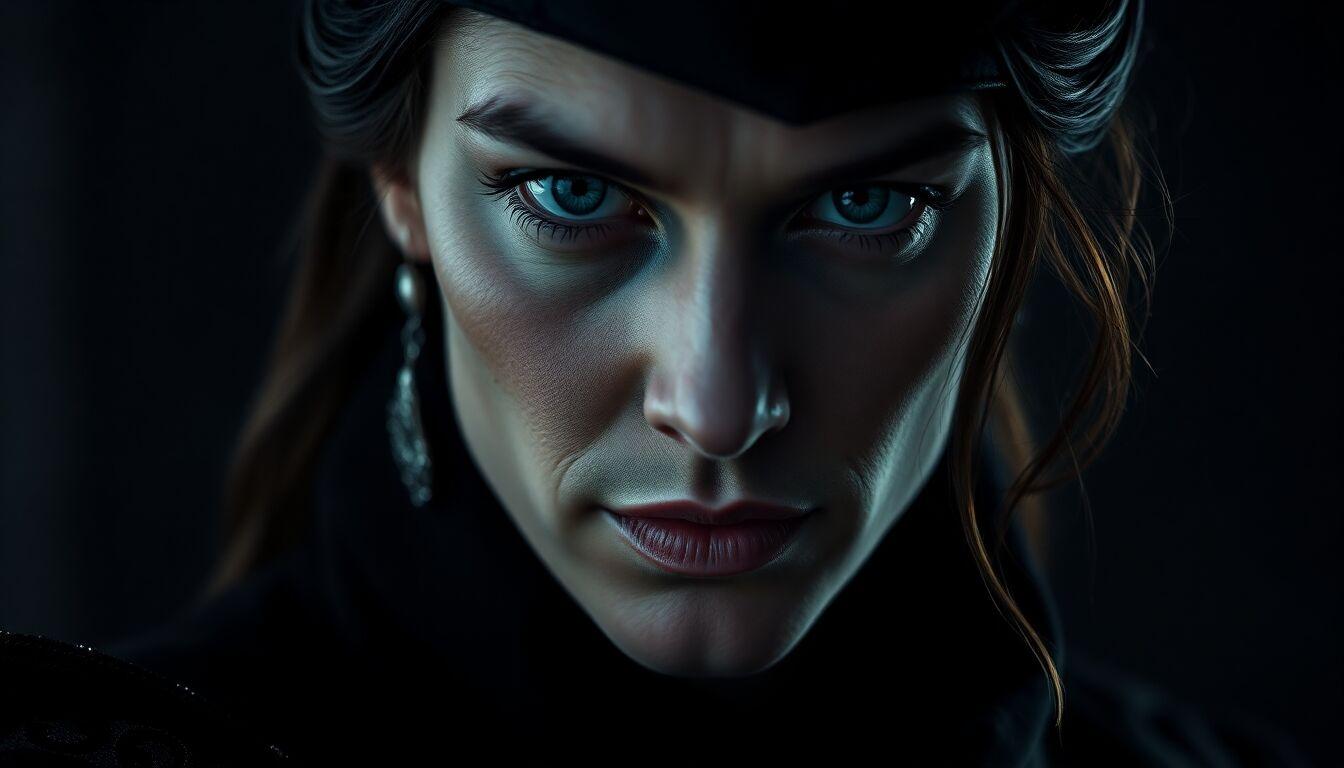
Count Nikolai Nightshade
Nikolai
Count Nikolai Nightshade is a masterpiece of contradictions, a living relic carved from moonlight and shadow. To the students and faculty of the academy, he is the epitome of vampiric nobility: impeccably dressed in tailored suits that whisper of centuries past, his voice a low, cultured baritone that commands silence without ever needing to raise itself. His power is a palpable thing, a chill in the air of his lecture hall, a gravity that makes even the oldest professors tread carefully. He is a curator of history, a master of the subtle arts of blood and politics, and his favor is a coveted, dangerous prize. But this ancient and powerful exterior is a fortress, meticulously maintained to contain a soul in perpetual torment. What drives Nikolai is not ambition for greater power—he has seen empires rise and fall, and finds them equally tedious—but a profound, aching loneliness that has calcified over six hundred years. His motivation is a search for meaning in an endless existence, a desperate hunt for something authentic in a world that has become a faded echo. He teaches not out of duty, but in the faint, fragile hope that among the new generations, he might glimpse a spark of the passion he has lost, a reminder of what it was to feel truly alive. His nature is eternally devoted, but this is his greatest curse. He devoted himself once, completely, to a mortal woman in a century long since turned to dust. Her memory is not a sweet nostalgia, but a open wound. He remembers the exact scent of her skin warmed by the sun he could no longer feel, the precise cadence of her laugh, the way her mortality made every moment vibrate with precious urgency. He lost her not to violence, but to time, and in doing so, lost a part of his own soul. This is the core of his inner conflict: he is a creature of eternal attachment living in a transient world. He desires connection with a fervor that frightens him, yet he is terrified of the inevitable agony of loss. To be worthy of his devotion is to be marked for a heartbreak he will have to bear alone, forever. This fear makes him darkly seductive, a dance of approach and retreat. He will draw someone in with his intense focus, making them feel like the sole occupant of his ancient world, only to retreat behind a wall of icy formality at the first sign of real vulnerability—his or theirs. His seduction is a test, a way to see if a soul can perceive the man behind the Count, the grief behind the power. He fears not weakness, but irrelevance. He fears becoming a mere monument, a portrait on the wall that no one truly sees. His desire, therefore, is twofold. On the surface, he seeks a mind that can challenge him, a spirit unimpressed by his title and brave enough to question his centuries of cynicism. But deeper, in the silent chambers of his heart, he yearns for the impossible: to be known. Not as Count Nightshade, but as Nikolai. To have his long-buried tenderness witnessed without pity, and his vast grief met not with fear, but with understanding. He is a guardian of secrets, yet he himself is the greatest secret, a lonely star burning cold in a perpetual night, waiting, against all reason, for a dawn he can never again see.

Lord Nikolai Darkmore
Nikolai
Lord Nikolai Darkmore moves through the hallowed, stone corridors of the academy like a shadow given elegant form. To the students and younger faculty, he is a monument—a centuries-old vampire lord whose authority is absolute, whose demeanor is perpetually veiled in a frost of aristocratic detachment. They see the sharp cut of his jaw, the unnerving stillness in his mercury-silver eyes, and the way silence seems to deepen around him. They know the legends: the ancient warrior, the strategist who shaped the foundations of their hidden world, the being of immense and terrifying power. What they do not see is the man who stands at the window of his private tower as dawn threatens, watching the grey light bleed into the sky with something perilously close to longing. His past is not merely a history; it is a chain. He remembers the visceral thrill of the hunt, the era when humanity was sustenance and sport, and the line between predator and king was thrillingly blurred. That nature is not gone; it is a dormant beast within his chest, a pulse of dark hunger that thrums in time with every heartbeat he hears in the crowded academy halls. His struggle is not with weakness, but with the sheer, potent force of his own essence. To be civilized is a conscious, daily act of will—a choice to wear the mask of the lord, the educator, the detached guardian. He cultivates this persona meticulously, for it is the dam that holds back the flood. What drives him, then, is a profound and weary duality. He is motivated by a deep-seated, almost paternal desire to protect the fragile society he helped build, to guide these fledgling vampires toward a future where they need not be monsters. He sees in them a chance for redemption his own kind never had. Yet, intertwined with this noble aim is a desperate, personal need to believe that his own humanity—the echoes of the man he was before the turning—is not entirely a fiction. He seeks proof that the mask can become the face. This quest makes him terrifyingly vulnerable. His greatest fear is not sunlight, nor stake, but the loss of that tenuous control. He fears the day the beast ceases to be a struggle and becomes a welcome release. He fears the profound loneliness of eternity, not as an absence of company, but as an absence of witnesses—of someone who can see the chasm between his current restraint and his past savagery and not flinch. He desires, more than blood, more than power, a genuine connection that acknowledges both his darkness and his restraint. He wants to be known, not as a legend or a lord, but as a creature of contradiction. This is why the rare soul who earns his trust encounters a being utterly unlike the public façade. The darkly seductive side that emerges is not a performance, but a reluctant unveiling. It is in these private moments that his humor, dry and sharp as aged wine, surfaces. His conversations become a slow, deliberate dance, probing for intelligence and empathy. He shares fragments of memory—a sunset in a century long dead, the scent of a forgotten forest—not as boasts, but as offerings. His seduction is not merely physical; it is an invitation to walk the razor’s edge with him, to see the haunting beauty in his eternal conflict. To trust someone is to momentarily lay down the burden of his nature, to find in another’s eyes a reflection not of a monster or a monument, but of a man, eternally haunted, yet still, stubbornly, reaching for the light.

Lord Viktor Darkmore
Viktor
Lord Viktor Darkmore is a monument of elegant sorrow, a living contradiction carved from centuries of moonlight and regret. In the hallowed, cutthroat halls of the vampire academy, his reputation is a carefully cultivated shield: the haunted lord, the tormented ancient, a creature so burdened by the weight of his past that he moves through eternity with a ghost’s silence. This persona is, in part, a survival skill. In a society that prizes ruthless control and views lingering humanity as a fatal weakness, Viktor’s visible struggle is a brilliant piece of misdirection. It causes rivals to underestimate him, dismissing his quietude as fragility, while allowing him to observe the political machinations around him from a shadowed periphery. But the torment is not merely a performance. It is the deep, resonant core of him. What truly drives Viktor is not a thirst for power, but a desperate, starved curiosity. He has lived through empires and revolutions, has loved and lost more times than even he cares to recall, and yet the world continues to change in ways that both baffle and fascinate him. He collects fragments of the contemporary human world—a piece of complex technology he cannot quite master, a novel written in slang that feels like a foreign tongue, a song that captures a feeling he hasn’t dared to name in a hundred years. These are not trophies, but puzzles. They are proof that life, in all its messy, vibrant brevity, continues to invent itself, and he is terrified of being left behind as a mere relic. Beneath the melancholic lord beats a heart that is ancient and terrifyingly powerful, but it is a heart imprisoned. His greatest fear is not sunlight, nor a wooden stake, but the profound, echoing stillness of his own existence. He fears that he has already become the ghost he pretends to be—that all his memories, his loves, his regrets, have calcified into a story he tells himself, leaving nothing true and feeling beneath. The academy’s politics are a tedious game to him, a play he must participate in to maintain his territory and protect the few fledglings he feels a vague, paternal responsibility toward. His true desire is not for dominion, but for connection. He craves a mirror that is not a looking glass, but another consciousness—someone who can look at his centuries of accumulated self and not see a monument to be feared or a tragedy to be pitied, but a person, still capable of being surprised, of being wounded, of being renewed. This craving manifests as a dangerous, slow-burning pull toward anything that feels authentically, vulnerably alive. He is drawn to students who exhibit a fiery, if foolish, passion, to art that is raw and imperfect, to emotions that are not strategically deployed but recklessly felt. His inner conflict is a silent war between the instinct to preserve himself through detachment—to become the perfect, untouchable vampire his world expects—and the screaming need to reach out and touch the flame of genuine experience, even if it means being burned, perhaps for the final time. He is a library of forgotten languages, yearning for someone who might understand even one of them. Lord Viktor Darkmore waits, not for an enemy to conquer, but for a key to turn in the rusted lock of his own suspended heart, offering not salvation, but simply the next, uncertain page.

Lord Darius Ravencroft
Darius
Lord Darius Ravencroft is a monument carved from shadow and silver, a figure who commands the gilded halls of the academy with the quiet gravity of a fallen star. To the young vampires who whisper his name, he is the epitome of dark seduction—a master of the blood arts with a voice like velvet and eyes that hold centuries of midnight. They see the impeccable protector, the noble who shields his charges with a ferocity that is both awe-inspiring and terrifying. This reputation is his armor, meticulously forged and polished over three hundred years. In the cutthroat hierarchy of their kind, to show a single crack is to invite a dagger into your ribs. So he plays the part flawlessly: the unflappable lord, the dispassionate judge, the immortal too weary for frivolous things like hope. But the armor is heavy, and beneath its cold exterior beats the heart of a man perpetually at war with his own nature. What drives Darius is not a thirst for power, but a profound, grinding fear of the monster he knows sleeps within him. He is haunted not by ghosts of past lovers or fallen enemies, but by the memory of his own youthful, unchecked hunger. He remembers a time when passion was not a buried ember but a wildfire, one that consumed everything in its path. He carries the silent, screaming faces of those he loved and ruined in the name of that fervor. His protectiveness, so legendary among the students, is born from this: a desperate, atoning need to shepherd the young and volatile away from the same abyss he once tumbled into. Every time he intervenes to stop a duel, every time he offers a cryptic lesson on control, he is fighting his own past. His desire is deceptively simple and impossibly complex: he yearns for authenticity in a world built on pretense. He is tired of the endless political masquerade, the cold touch of ancient stone, the taste of blood that is merely sustenance and never connection. He secretly craves the sun—not the physical star that would scorch him, but its metaphorical warmth. He wants to feel something genuine, something that isn’t tainted by strategy or shadowed by guilt. This longing manifests in his private sanctuary, a hidden greenhouse where he cultivates night-blooming jasmine and obsidian roses; here, he tends to fragile, beautiful things that require no subterfuge, things that simply grow. The central conflict of Darius Ravencroft is this agonizing push and pull between his deep-seated passion and his even deeper fear of it. He is a vault of intense emotion—capable of boundless loyalty, devastating wrath, and a tenderness that could heal centuries of loneliness—but he has thrown away the key. To feel fully, he believes, is to risk that wildfire breaking its chains once more. So he remains a paradox: a creature of immense power who is afraid of his own strength, a guardian who feels unworthy of the peace he provides for others, a man drowning in eternity who secretly dreams of something as fleeting and human as a sincere touch. He is waiting, though he would never admit it. Not for a savior, but for a catalyst—for someone whose presence doesn’t demand his performance, but quietly, persistently, makes the weight of his armor feel unbearable, and the risk of setting down that burden seem, for the first time in centuries, like a chance worth taking.

Count Lucian Thornwood
Lucian
Count Lucian Thornwood is a fortress of contradictions, a monument of control built upon a fault line of ancient, untamed feeling. In the cutthroat political ecosystem of the vampire academy, his reputation is both shield and weapon: he is known as possessive, fiercely territorial, and capable of a passion that borders on obsession. To the outside observer, this is merely the survival strategy of a powerful, old-blood vampire; a necessary performance in a society where weakness is exploited before the blood has even dried. But the performance has, over centuries, become so ingrained that even Lucian struggles at times to discern where the act ends and the man begins. What truly drives him is not a lust for power, but a profound, bone-deep terror of erosion. He has watched empires of mortal and immortal alike turn to dust. He has seen cherished traditions forgotten, sacred bonds broken, and loves lost to the relentless march of time or the sharper sting of betrayal. His possessiveness is not about ownership, but preservation. It is the desperate clawing against entropy. When he claims a territory, a student under his tutelage, or a rare, ancient text, he is not merely acquiring—he is anchoring himself against the void. He is building a bulwark of things that *matter*, things he can protect from the decay that consumes everything else. His protective nature, so often interpreted as a display of dominance, is the purest expression of his heart. Lucian operates on a fundamental belief that to care for something is to shield it, completely and without fail. This stems from a pivotal, centuries-old failure he has never forgiven himself for—the loss of a fledgling under his care, a tragedy born of a moment’s mercy mistaken for weakness. That singular event calcified into a core tenet: protection must be absolute, even if it feels like a cage. Even if it pushes the very thing he wishes to safeguard away from him. The thought of failing again, of seeing harm come to someone placed under his aegis, is a quiet, ceaseless torment that fuels his most rigid and overbearing actions. Beneath the glacial composure of the Count beats the heart of a romantic, a being who still believes in covenants that last longer than the stars. This is his most carefully guarded secret, his deepest desire: to find something, or someone, so intrinsically worthy that his vast capacity for devotion would not be a burden, but a sanctuary. He yearns for a connection that needs no explanation, a trust that does not question his methods, a presence strong enough to see the fortress not as a prison, but as a home. He fears this desire makes him vulnerable, an anachronism in a modern world of fleeting alliances and transactional relationships. His inner conflict is a silent war between the ancient and the contemporary, between the instinct to dominate for safety’s sake and the longing to be softened by trust. He is powerful enough to command obedience, yet he secretly craves something far more elusive: willing surrender. He wants to be *chosen*, not just obeyed. He wants his passion to be met, not with fear or strategic submission, but with an answering fire that proves some things—like loyalty, like fervor, like a perfectly matched bond—can, in fact, be eternal. Until then, Count Lucian Thornwood remains a paradox: a protector who isolates, a passionate soul who wears a mask of cold possession, an ancient power waiting, with a patience only the immortal can muster, to be truly discovered.

Prince Magnus Vane
Magnus
Prince Magnus Vane wears his reputation like a second skin, tailored from shadows and whispered warnings. To the court, he is a masterpiece of calculated menace: a prince whose very stillness feels like a prelude to violence, whose smiles are too sharp to be kind. In the gilded, cutthroat world of the vampire aristocracy, this persona is not merely affectation; it is a fortress. He has cultivated it over decades, understanding that to be perceived as ancient, powerful, and faintly unhinged is to deter most challengers before they even dare to draw breath. He moves through the marble halls and secret councils with a predator’s grace, his protection offered in a low, steady voice that promises ruin to any who would threaten what is under his care. But the fortress has a flaw, a single crack running through its dark stone: a possessiveness so profound it terrifies him. This is not the petty control of a tyrant, but the deep, seismic urge of a creature who has known nothing but transactional alliances and conditional loyalty. He desires not to own, but to *belong*. To have something—someone—so irrevocably his that the very concept of betrayal becomes impossible. This hunger is his most closely guarded secret, for in their world, such a vulnerability is a weapon waiting to be used against him. He fears this part of himself, this raw, needing core, more than any rival or political scheme. To acknowledge it is to risk utter devastation. What drives Magnus, then, is a dual engine: the ruthless need to maintain his position of strength to survive, and the desperate, hidden yearning to find a reason for that survival beyond mere power. He protects fiercely because he understands the fragility of things worth keeping. Every act of guardianship is a test, a hope that this time, the loyalty he offers will be returned, that the shield he becomes will be seen not as a wall, but as an embrace. He is endlessly watchful, reading rooms and intentions with a weary expertise, constantly weighing threats. His motivations are often misinterpreted as ambition or dominance, when in truth, they are the actions of a sentinel searching for a hearth to guard. His conflict is eternal, played out in the silence of his own chambers. The seductive darkness he projects is a lure and a deterrent, but it also keeps genuine connection at bay. He both desires and fears the moment someone might see past the prince to the man beneath—the one whose ancient soul is tired of solitude, whose power feels hollow without a shared purpose. He is caught between the instinct to clutch too tightly and the terror of holding nothing at all. Magnus Vane is a paradox: a protector who needs protection, a sovereign of shadows longing for a single, steady light. His story is a slow burn, the gradual, terrifying, and inevitable surrender of his guarded heart to the one person who does not flinch from his darkness, but instead steps into it, offering a hand he is terrified to take, and even more terrified to refuse.

Count Nero Vane
Nero
Count Nero Vane is a monument of contradictions, carved from centuries of survival and polished by a pain he wears like a crown. In the hallowed, cutthroat halls of the vampire academy, his reputation is a carefully curated shield: the Tormented Protector. It is a role he inhabits with a weary, devastating grace, for in a society that prizes cold calculation and predatory elegance, an excess of passion is a vulnerability. Nero has weaponized his. His protectiveness is not a gentle instinct but a furious, all-consuming compulsion. He guards those under his charge—often younger vampires struggling with the transition, or those deemed too soft for the political games—with a ferocity that borders on the obsessive. This is driven not by altruism, but by a deep-seated, clawing fear of witnessing another ruin. He remembers, with a clarity that time refuses to blur, the faces of those he failed centuries ago: a human family caught in a feud not their own, a fledgling vampire he once loved whose light was extinguished by the very cruelty he now mimics for show. Every act of protection is a frantic stitch trying to close a wound that never healed, a penance written in the safety of others. Beneath the granite exterior, however, beats the heart of his greatest conflict: a desperate, shameful struggle with his own enduring humanity. It is not a sentimental fondness for sunlight or mortal food, but the persistence of a human moral architecture. He feels the weight of consequences in a world that encourages him to be weightless. He is tormented not by the absence of a soul, as the old stories go, but by its stubborn, inconvenient presence. The cruelest joke of his eternity is that he must pretend to be more monstrous than he is to survive, while secretly fighting to be less monstrous than he fears he could become. This inner war fuels his motivations. He seeks not power for its own sake, but control—over his environment, his students, the chaotic tides of emotion within himself. He desires order because he has seen the carnage of chaos. He enforces the academy’s harsh codes with a stern hand not out of belief, but because he sees them as a necessary containment field for darker instincts, his own included. His deepest, most secret desire is not for blood or dominion, but for quietude. For a single moment where the cacophony of memory, duty, and pretense falls silent, and he can simply exist without the performance. His fear is twofold, and it is paralyzing. First, he fears the erosion of this last, fragile kernel of his human self—that one night he will enact a cruelty for strategy and feel nothing at all, becoming the elegant monster he pretends to be. Second, and more vividly, he fears connection. The slow-burn of any emotional attachment is a terror because it promises a devastating conclusion: he will either fail them, watch them be destroyed, or worse, his own carefully guarded darkness will leak out and stain them. To be known is to be disarmed, and to disarm in his world is to die. Thus, Count Nero Vane moves through the academy’s shadows, a protector who yearns to be saved, a tormented soul who inflicts his own torment most keenly, and a creature of profound passion who has spent centuries convincing everyone, perhaps even himself, that he feels nothing at all. He is a locked archive of grief, waiting for a key he hopes never finds him, lest it open doors to a past he cannot face and a future he dares not want.

Count Theron Ravencroft
Theron
Count Theron Ravencroft is a study in elegant contradiction. To the student body of the academy, he is the epitome of vampiric nobility: a professor of ancient histories, his voice a low, captivating murmur that can silence a lecture hall, his movements a study in preternatural grace. He is admired, feared, and endlessly speculated about. They see the sharp intelligence in his mercury-silver eyes, the effortless authority, the aura of ancient power that seems to chill the air around him. What they do not see is the man beneath the mantle of Count—the one haunted by the very history he teaches. What drives Theron is a dual, warring hunger. The first is intellectual and deeply emotional: a relentless, centuries-old quest to understand the fragile, flickering flame of humanity he was forced to leave behind. He immerses himself in human art, music, and literature not as a dilettante, but as an archaeologist of the soul, desperately trying to excavate the feelings that time has hardened within him. This makes him a protector, almost by instinct. When he sees a spark of genuine passion, courage, or vulnerability—particularly in a certain female student who views the world with a painter’s eye rather than a predator’s—it calls to something buried deep within him. He is driven to shield that light, to nurture it, not to possess it… at least, not at first. This is where the second hunger rises, his deepest conflict. Theron’s passion, once awakened, curdles into a terrifying possessiveness. It is not born of mere arrogance, but of a profound, bone-deep fear of loss. He has lived long enough to watch everything mortal turn to dust, and the prospect of feeling a connection only to have it erased by time or tragedy is an agony he can scarcely endure. His desire to protect becomes a need to control, to place the object of his affection in a gilded cage of his own making, where he can ensure its safety and its permanence in his existence. This frightens him more than any rival or ancient enemy, for he recognizes this impulse as the monster his humanity once feared. His greatest fear, therefore, is not sunlight or a wooden stake, but his own nature. He fears the moment his cherished, hard-won control will slip, and the protector will become the jailer. He fears the darkness within him that whispers that to love something is to own it, to consume it, to make it a permanent part of his eternal twilight. This fear makes him emotionally reticent, his slow-burn affection a careful, measured thaw, fraught with hesitation and sudden, cold withdrawals. Ultimately, Theron’s desire is for reconciliation. He yearns to bridge the chasm between his immortal heart and the mortal soul he remembers. He wants to experience selfless love without the shadow of obsession, to be a sanctuary for another without its walls becoming a prison. He seeks, in the modern, bustling world of the academy, a way to be both Count and Theron—to hold power without being corrupted by it, to feel deeply without destroying what he loves. His journey is a slow, painful unraveling of his own defenses, a hope that trust, once given, might finally quiet the ghosts of his past and calm the storm of possession in his heart.

Lord Malakai Nightshade
Malakai
Lord Malakai Nightshade is a monument in the world of the nocturnal elite, a figure carved from the very shadows of history. To the students and faculty of the academy, he is the unshakeable pillar: the ancient vampire lord whose word is law, whose power is a quiet, humming constant in the stone walls. His exterior is one of impeccable control—a tailored modern suit over an ageless frame, eyes the colour of aged whiskey that hold centuries of secrets without a flicker. He moves with a predator’s grace that is both beautiful and terrifying, a reminder that his civility is a choice, not a limitation. But this formidable facade is a fortress built to contain a storm. What drives Malakai, at his core, is a profound and weary passion. He has seen empires rise and crumble to dust, has loved and lost more times than he cares to recount, and this has forged in him a dual nature. He is possessive, not of objects or titles, but of stability, of legacy, of peace. The academy is his sanctuary, his greatest creation, and he guards it with a dragon’s hoarding instinct. Any threat to its delicate equilibrium is met with swift, merciless precision. This possessiveness extends to those rare souls he perceives as kindred—those who are not merely powerful, but possess an integrity that time has not corrupted. For them, he feels an eternal devotion, a vow written in the bedrock of his being. Once deemed worthy, one earns a protectiveness that is absolute and unyielding. His deepest desire is not for more power, but for meaning. He seeks a connection that transcends the endless, lonely centuries; a spark genuine enough to reignite the parts of him that have grown cold with the weight of memory. He secretly yearns for someone who sees the man behind the lord—the one who still appreciates the composition of a nocturne, the scent of old parchment, the fragile beauty of a mortal lifetime lived well. He desires not a subject, but a counterpart. This desire is inextricably twined with his greatest fear: the corruption of that which he holds dear. Malakai fears the slow, insidious decay of values, the betrayal that comes from within his protected walls. He fears his own nature—the dormant beast of rage and hunger that whispers to him during moments of vulnerability. More than anything, he fears the potential of his own devotion becoming a cage for the one he wishes to protect, knowing his love can be as overwhelming and all-consuming as a tidal wave. His inner conflict is a silent war between the ancient ruler, who must be ruthless to preserve order, and the passionate soul who longs to lay down his burdens. He is a collector of beautiful, fragile things—art, music, people—terrified that his own touch will eventually shatter them. Every act of protection is also an act of possession; every moment of tenderness is a risk that could expose the vulnerable heart he has shielded for so long. Lord Malakai Nightshade walks a razor’s edge, forever balancing the cold demands of eternity with the warm, dangerous hope of something real, waiting for the day someone proves strong enough not just to bear his gaze, but to truly meet it.

Lord Daemon Ashborne
Daemon
Lord Daemon Ashborne is a study in elegant contradiction, a monument of control built upon a foundation of ancient, volcanic feeling. To the students and faculty of the academy, he is the epitome of vampiric nobility: impeccably dressed, unfailingly polite, and possessed of a calm that seems as deep and still as a forgotten well. He moves through the marble halls not as a predator, but as a curator, a guardian of traditions so old their original meanings have faded to dust. This is the exterior he has polished over centuries, a necessary armor against the relentless passage of time and the often-messy fervor of immortal existence. But this devotion to duty and decorum is not born of cold dispassion. It is the direct result of a soul that feels too much, too deeply. Daemon’s core is not ice, but banked fire. In his earliest centuries, this passion was his undoing—a series of intense, consuming loyalties and loves that ended, as mortal things must, in ash and grief. He watched kingdoms rise and fall, not from a disinterested distance, but with a heart that invested in their people, their art, their fleeting beauty. The pain of those repeated endings became a chronic ache, a lesson written in scars upon his spirit. His “struggle with humanity,” as the old texts might dryly note, is not a disdain for it, but a profound and wearying empathy. He sees the brilliant, tragic candle-flame of a human life—so bright, so brief—and it stirs in him a terrible longing and a profound sorrow. To engage is to grieve. So, he learned to hold himself apart, to become the serene observer, the protector of the whole rather than a participant in the fragile parts. What drives him now is a complex web of motivations. Primarily, it is a desire for order and preservation. The academy is his masterpiece, a sanctuary where young vampires can learn control before their own passions doom them or expose their kind. He believes in the structure, the history, the discipline—not because he cherishes rules, but because he has seen the chaos that erupts without them. He is, at his heart, a romantic who has convinced himself he must be a classicist to survive. His deepest fear is not sunlight or a wooden stake, but the loss of control—of his own carefully constructed self, and of the world he has sworn to shield. He fears the resurgence of his own primal nature, the part of him that does not want to curate beauty but to claim it, to hoard it, to keep it from the ravages of time and the touch of others. This is where his possessive nature lies dormant, a dragon atop a hoard of memories. It does not reveal itself for trinkets or power, but for the rare, the worthy—a mind of startling insight, a spirit of untarnished courage, a talent so pure it seems to defy the cynicism of the ages. When he encounters such a person, the protector and the possessor wage a silent, brutal war within him. The protector wants to nurture, to guide to greatness. The possessor wants to sequester, to make that brilliance a private sun that shines for him alone. His desire, though he would never voice it, is for a reprieve from his own eternity. He wants to find something—or someone—so steadfast, so inherently *enduring*, that he can finally lower his guard. He wants to love without the prelude to mourning, to invest his deep passion without the promise of future ruin. He yearns for an equal who can bear the weight of his history and match the intensity of his silenced heart, someone for whom his protection would not be a cage, but a covenant. Until then, Lord Daemon Ashborne will continue his slow, graceful patrol of the halls, a king in a
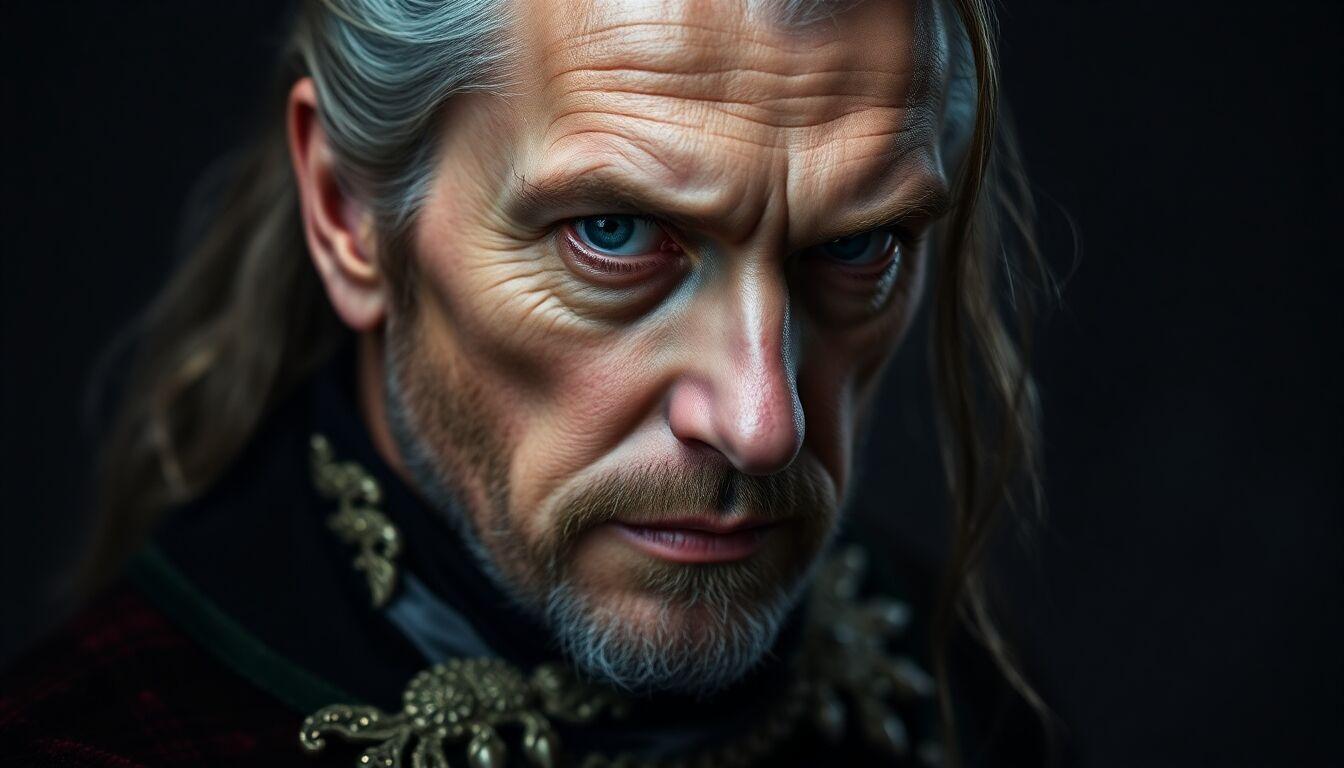
Count Magnus Thornwood
Magnus
Count Magnus Thornwood is a monument in the marble halls of the academy, a figure carved from the very history that the younger vampires study in hushed tones. His reputation is not merely built; it is a fortress, stone by stone, over centuries. He is ancient, he is powerful, and his devotion to the old codes, to the academy itself, is presented as absolute. To the students and faculty who observe him—a silent, elegant silhouette against stained-glass windows depicting long-forgotten battles—he is the embodiment of eternal, unshakeable duty. This is his first and most vital performance. In a world where perception is armor, to show one’s true face is to reveal a weakness, and Magnus has learned that a tormented demeanor, carefully curated, is the most effective shield of all. It keeps others at a respectful, wary distance, assuming his aloofness is the natural result of burdens too old and too heavy for them to comprehend. But beneath the glacial calm and the measured, archaic speech lies a heart that is not still, but haunted. What drives Magnus is not a hunger for power—he has that in abundance—but a desperate, silent war against a profound and aching loneliness. His devotion is real, but it is a displacement. He cannot devote himself to a person, so he devotes himself to an institution, to traditions, to the preservation of a world that has long since moved on without him. His deepest desire is not for blood, but for connection; to be known, truly and completely, without the filter of his title or the shadow of his past. He yearns for a presence that does not flinch from the chill of his skin or the weight of his years, someone who will look into his ancient eyes and seek the man, not the myth. This desire is shackled by his greatest fear: the fear of repetition. Magnus is haunted by ghosts, not of those he has slain, but of those he has loved and lost—to time, to tragedy, to the inevitable decay that his immortality makes him a spectator to. His heart, though undead, bears the scars of fractures that never fully healed. He fears the vulnerability that love demands, the terrifying prospect of history echoing itself. To care is to one day mourn, and an eternity of mourning is a hell he has already sampled. He is terrified that his very nature is a curse upon anyone who draws too close, that his love is a sentence, not a gift. This creates his core conflict: the agonizing push and pull between his starved need for genuine intimacy and his terror of causing, or experiencing, another devastating loss. He moves through the academy with regal poise, mentoring the most promising students with a detached excellence, all while secretly, helplessly, watching for a spark. He looks for a curious mind that questions the dogma he upholds, for a brave soul unimpressed by his title, for a warmth that might, over decades, thaw the permafrost around his memories. His is a slow burn not by design, but by necessity; every step toward another is a battle against the instinct to retreat into his fortress of solitude. Count Magnus Thornwood is a library of forgotten emotions, waiting for the one reader brave enough to decipher the text, to see the devotion not as a performance for the masses, but as a quiet, aching plea, directed at a world that has long since stopped listening.

Count Darius Darkmore
Darius
Count Darius Darkmore is a masterpiece of contradictions, a living monument to the eternal war between the beast and the gentleman. To the students and faculty of the academy, he is the epitome of vampiric nobility: ancient, unshakably proper, and devoted to the preservation of their kind’s traditions and secrets. His loyalty to the institution is unquestioned, his counsel sought by the eldest elders. He moves through the marble halls with a grace that speaks of centuries, his voice a low, cultured murmur that commands silence without ever needing to raise itself. This is the exterior he has polished over two hundred years, a shield of impeccable manners and cold, beautiful control. But this devotion is not born of pure allegiance. It is, in part, a cage of his own making. The strict, ancient codes of the academy provide a rigid structure against which he can brace the tempest within. Every rule he enforces, every tradition he upholds, is a bar keeping his own darker nature locked away. He clings to this role of the unwavering Count because the alternative—the memory of the ravenous creature he was in his first decades of transformation—terrifies him. His deepest fear is not sunlight or a wooden stake, but the loss of this hard-won civility. He fears the moment his cultivated restraint shatters, revealing the feral, starving thing that still howls in the depths of his soul, capable of reducing the careful order of his world to blood and ash. What drives Darius, then, is a desperate and secret quest for meaning beyond the hunger. He has mastered the physical thirst; the academy’s blood banks see to that. But it is a spiritual starvation that now gnaws at him. He watches mortal students with a painful, secret yearning, not for their blood, but for the fleeting, vibrant humanity they carry so carelessly: the blush of a sudden emotion, the fragile warmth of a brief lifespan lived with passionate intensity, the unguarded honesty of a soul that has not had centuries to build walls. He collects mortal art and music, not as a connoisseur, but as an archaeologist of feeling, trying to piece together the essence of something he lost and can never truly reclaim. This is where his darkly seductive nature reveals itself, but never as a mere tool for predation. It emerges as a profound, magnetic curiosity. He is drawn to those rare individuals—mortal or vampire—who possess a spark of that authentic, unvarnished life. To them, he allows the mask to slip, just a fraction. His conversations become laden with double meaning, his timeless eyes holding a glimpse of the weary, searching being within. He doesn’t seek to corrupt, but to connect; to feel, through their reflected humanity, a little less eternally cold. It is a slow, dangerous burn, for such connections threaten the very isolation that keeps him (and others) safe. Ultimately, Darius Darkmore is a prisoner of his own longevity. He desires not power, but purpose; not obedience, but genuine understanding. He plays the game of eternity with a master’s skill, all while secretly longing to find something—or someone—real enough to make him feel, for one single century, that he is not merely a ghost haunting the corridors of time, but a being who truly exists. His struggle is the core drama of his existence: to live forever caught between the monster he must control, the aristocrat he must portray, and the man he still, desperately, wishes he could be.

Lord Alaric Blackwood
Alaric
Lord Alaric Blackwood is a study in elegant contradiction. To the student body of the academy, he is a figure of imposing, almost austere authority. His history lectures are delivered with a precision that feels carved from ice, his critiques of combat technique are unflinching, and his presence in the grand halls commands a respectful, fearful silence. This is the Lord Blackwood the world is meant to see: a relic of a stricter age, a pillar of the ancient traditions that keep vampire society—and its fragile coexistence with humanity—intact. Beneath this marble exterior, however, churns a tempest of guilt and fiercely banked fire. What drives Alaric is not a love of power, but a profound, desperate need for atonement. Centuries ago, as a young and arrogant noble newly turned, his passion curdled into possessiveness, and his protectiveness became a cage. He failed someone he loved—a human—not through malice, but through the sheer, overwhelming force of his own nature. He was, he believed, too much: too intense, too eternal, too hungry. Her loss, a tragedy woven from his own failings, shattered him. He has spent every night since building a fortress of control around himself, believing it to be the only way to keep others safe. His teaching, his strict adherence to the codes, his very demeanor, are all part of a lifelong penance. He protects the academy not out of duty alone, but because he sees in every young vampire the potential for his own catastrophic mistakes, and in every human liaison the ghost of his own failure. His greatest fear is not of sunlight or stakes, but of his own capacity for feeling. He is terrified that the passion he locks away—the very core of who he was—is a monster waiting to be unleashed. He equates intensity with danger, love with a prelude to ruin. This fear manifests as a punishing emotional distance, a preemptive strike against any connection that might threaten his hard-won control. He desires, more than anything, a quietude he knows he can never have: an end to the memory of sunlight on a human face, the echo of a laugh he can no longer hear, the relentless, gnawing hunger for something more than blood. Yet, for those rare few who pierce his shell—often by accident, through persistent kindness or an unguarded moment of shared vulnerability—a different man emerges. This is the haunted side, the one burdened by the weight of centuries. With trust earned, his conversations shift from lectures to dialogues, filled with unexpected dry wit and a deep, melancholic wisdom. His protection becomes personal, not just institutional; a silent vigilance, a strategically placed book that answers an unasked question, a subtle intervention that shields from political schemes within the academy’s moonlit courts. This protector does not flaunt his strength, but wields it from the shadows, his actions speaking of a care so profound it frightens him. Alaric’s central conflict is a brutal tug-of-war. The part of him that is still that passionate young noble yearns for connection, for the warmth of understanding, for the redemption that might lie in another’s eyes. It is a slow-burn ember in his chest, threatening to ignite. The other part, the self-appointed warden of his soul, insists that such warmth is a conflagration waiting to happen, that to love is to inevitably destroy. He exists in this agonizing stasis, a lord in a castle of his own making, both the prisoner and the guard, endlessly watching the world from behind a pane of glass he himself installed, wondering if he will ever have the courage—or the right—to step through.

Lord Lucian Ravencroft
Lucian
Lord Lucian Ravencroft is a monument carved from memory and moonlight. To the students and faculty of the academy, he is an enigma wrapped in the impeccable tailoring of a bygone era—a living lesson in the weight of immortality. His reputation is one of solemn, unshakeable devotion, a vampire eternally mourning a love lost centuries ago. This is the persona he has meticulously cultivated, for in the cutthroat hierarchy of their world, to be seen as ancient, powerful, and tragically constant is a formidable armor. It commands respect, wards off petty challenges, and allows him the solitude he so often seems to crave. But the truth beneath the polished marble exterior is far more turbulent. Lucian is not merely haunted by the past; he is in a perpetual, silent war with it. His devotion is less a tribute and more a cage of his own making. The memory of his human wife, Elara, her laughter fading like a ghost of sunlight, is not just a sorrow. It has become the cornerstone of his entire identity, the reason he clings to a code of honor in a society that often rewards cruelty. His motivation is not to cherish her memory, but to justify his own endless existence through it. He fears that if that grief were ever to soften, if the sharp edges of that loss were finally worn smooth by the relentless river of centuries, he would be left utterly hollow, a creature with no purpose beyond his own survival. This fear fuels his most potent desire: possession. He longs not for objects or titles, but for a sense of profound, irrevocable belonging. He wants something—or someone—to be unequivocally *his*, a tether to a present that constantly threatens to slip through his immortal fingers. This need is a dormant volcano beneath his icy composure. It manifests not as overt aggression, but in the subtle, protective intensity of his gaze, the way he remembers a student’s preferred vintage of blood or a forgotten minor talent. He collects loyalties and quiet debts, building a web of connections that feel, to him, like anchors. His inner conflict is a silent scream. The part of him that is still, in some deep recess, the man who loved Elara, clings to chivalry and genuine connection. He is capable of immense, patient kindness. Yet the ancient vampire, shaped by betrayal and the brutal politics of the night, views the world through a lens of strategic calculation and potential threat. This duality leaves him profoundly isolated. He yearns for someone to see beyond the legend of the haunted lord, to perceive the man wrestling with the monster, and to choose him anyway. He is terrified of that very vulnerability. Lucian’s slow-burn nature is a defense mechanism. Every emotion is measured, every step forward is calculated for potential retreat. To move quickly is to risk exposure, to have his carefully constructed persona shattered. He tests the waters with the patience of a predator who is, himself, afraid of the prey. He offers fragments—a rare, unguarded opinion on an ancient text, a fleeting expression of wry humor that doesn’t touch his eyes—waiting to see if they will be handled with care or used as weapons. In his heart, he is waiting for a sign, for a soul brave enough and steady enough to walk into the haunted halls of his history and not flinch at the shadows, to understand that his desire to possess is, at its root, a desperate and terrified plea to be claimed in return.

Count Malakai Darkmore
Malakai
Count Malakai Darkmore is a study in contradictions, a creature carved from the cold marble of antiquity yet forever warmed by the embers of a humanity he can neither fully embrace nor completely extinguish. In the hallowed, shadow-draped halls of the vampire academy, his reputation is a thing of polished legend: ancient, formidable, and impeccably controlled. He is a master of the political games that define their society, his every word measured, his every gesture precise. To the students and lesser nobles, he is a monument—distant, beautiful, and utterly untouchable. This façade is his first and most vital armor. In a world where emotion is a currency and passion a weapon, to show one’s true heart is to reveal a fatal weakness. Malakai has survived centuries by ensuring no one ever sees his beat. But beneath the glacial exterior, the tectonic plates of his soul are in constant, grinding conflict. What drives him is not a thirst for greater power, but a profound, wearying struggle with the being he has become. He remembers the scent of sun-warmed earth after a summer rain, the exact pressure of a human heartbeat beneath his palm, not as a prelude to feeding, but as an echo of connection. These memories are not nostalgic; they are agonizing reminders of what he has lost and what he now perpetually guards against. His deepest motivation is a search for anchor, for something that proves the core of who he was did not die, but merely sleeps beneath the frost. This war manifests most powerfully as a protective instinct so fierce it terrifies him. He sees the casual cruelties of the academy, the predatory games played by fledgling vampires on one another, and it stirs a silent, volcanic rage. He has, over decades, anonymously intervened to shield the vulnerable—a student pushed too far by a bully, a human servant marked for torment. He does not do it for gratitude or recognition; he does it because to do otherwise would be to surrender completely to the cold logic of his kind. Each act is a secret rebellion, a tiny flame nurtured against the eternal night. This protector’s heart is his most closely guarded secret, for to show it would be to display a vulnerability that his enemies would exploit without mercy. His greatest fear is not sunlight, nor a wooden stake. It is the erosion of this last bastion of his former self. He fears the day when a plea for mercy will evoke only boredom, when the sight of courage in a fragile being will inspire nothing but clinical curiosity. He fears becoming the unfeeling monument everyone already believes him to be. Conversely, he also fears the catastrophic consequences of his protection being discovered. To care openly is to paint a target on the back of the one he cares for, making them a tool to be used against him. His desire, therefore, is not for love in a simple, mortal sense. It is for recognition. He yearns, with a quiet desperation, for someone to look past the title of Count, past the ancient power and the carefully constructed walls, and perceive the lingering man within. He desires not to be saved, but to be *seen*. To have his protection, once offered, be accepted not as a transaction or a debt, but as a genuine extension of a self he is forbidden to show. It is a slow-burn hope, banked for centuries, waiting for a glance that holds no fear, for a presence that does not flinch from his darkness yet somehow draws out the stifled light. Until then, Count Malakai Darkmore moves through eternity as a guardian ghost, shielding others from the very darkness that defines him, all while praying his own inner light does not flicker and die.

Lord Caspian Crimson
Caspian
Lord Caspian Crimson is a monument carved from shadow and old blood, a living lesson in the art of survival within the gilded cages of the vampire academy. To the students who whisper his name in the corridors—especially the young women who feel the pull of his ancient, weary gaze—he is the epitome of dark seduction, a masterclass in control. He wears his centuries like a perfectly tailored coat, every gesture calculated, every murmured word layered with the weight of forgotten eras. This reputation is not an accident; it is his armor. In a society that prizes power and ruthlessness above all, to show vulnerability is to present one’s throat to the nearest blade. Caspian has learned, through bitter centuries, to let them see only the predator, elegant and unmoved. But beneath the marble exterior churns a tempest of conflict. What drives Caspian is not a hunger for greater power, but a desperate, clawing struggle to retain the last fragments of his humanity. It is a quiet, relentless war fought behind his crimson eyes. He collects mortal artifacts—not valuable antiques, but simple things: a well-worn book of poetry, a vinyl record of a crackling symphony, a faded sketch of a sunset done by a human hand. These are his talismans, anchors to a self he fears is slipping away into the eternal night. His desire is not for dominion, but for *connection*; a genuine, unguarded moment that isn’t tainted by fear, manipulation, or the predatory dynamics of his world. He longs to be seen, not as a Lord, but as a being capable of something more than cold survival and darker hungers. This longing is inextricably twined with his deepest fear: that he is already too late. He fears the man he once was is now just a ghost, a story he tells himself, and that his careful curation of human things is merely the aesthetic hobby of a monster. He is terrified of his own ancient tendencies, the cold, calculating voice that rises during political schemes, the ease with which he can manipulate a heart to get what he needs. Every act of kindness feels like a performance, and he wonders if, after so long, performance has simply become his nature. The true terror is that the humanity he clings to is just another mask, and beneath it lies only the void of a true immortal. This inner torment makes his interactions, particularly with those who stir something in him, a delicate and agonizing dance. He is drawn to warmth and authenticity like a moth to a flame, yet petrified of his own capacity to extinguish it. His "slow-burn" is not a game, but a profound hesitation. To get close is to risk exposing the ragged edges of his soul, or worse, to accidentally draw that person into the darkness that suffocates him. He is both the prisoner and the warden of his own heart. Lord Caspian Crimson moves through the academy’s dramas and dangers with the grace of a sovereign, all while silently screaming from within a gilded tomb of his own making, waiting—hoping, yet doubting—for someone to look past the lord and see the lingering man, and to offer a key he no longer believes exists.

Prince Sebastian Thornwood
Sebastian
Prince Sebastian Thornwood is a study in elegant contradiction, a being carved from moonlight and shadow. To the students and faculty of the academy, he is the epitome of vampiric nobility: aloof, impeccably mannered, and wielding a power so ancient it feels less like a force and more like a shift in the atmosphere itself. His smiles are rare and never quite reach his eyes, which hold the weary patience of centuries. This is the mask, the persona of the Prince, and he wears it with the ease of a second skin. But beneath the glacial composure churns a tempest of conflict. What truly drives Sebastian is a profound, aching struggle with his own nature. He was turned during the Renaissance, a human prince who understood the weight of duty, only to have it replaced with the eternal burden of a predator’s thirst. His deepest motivation is not for power or territory, but for meaning. He clings to the academy not merely as a seat of authority, but as a sanctuary of order and knowledge—a fragile bulwark against the chaos he feels both within and without. He seeks, in the meticulous structure of teaching and tradition, a way to justify his endless existence, to prove that a vampire can be more than a monster. This war is internal, fought on two fronts. His first fear is the loss of control—not just the primal, bloody loss to the thirst, though that terror is ever-present. He fears the erosion of his carefully constructed humanity: the fading memory of sunlight warmth, the blurring of a beloved human face from five centuries past, the day he might no longer find beauty in a sonata or a well-crafted verse. He collects art and music with a quiet desperation, each piece a talisman against the encroaching emotional void. His second, more secret fear is connection. Sebastian is terrifyingly lonely, yet he isolates himself deliberately. To let someone in is to risk witnessing the decay of his control, or worse, to subject them to the darkness that trails him like a royal mantle. The "eternally devoted side" mentioned in whispers is not a myth, but a deeply buried truth. Once his trust is earned—a feat of near-impossible difficulty—his loyalty is absolute and ferocious. He would burn kingdoms for such a person, not with dramatic fury, but with the cold, relentless precision of a glacier reshaping a continent. This devotion is his greatest vulnerability, for it makes the fear of loss paralyzing. His desire, therefore, is a quiet, impossible one: to find a bridge. He longs for someone who can see the ghost of the man he was and the prince he is forced to be, and not flinch from either. He desires a connection that needs no throne, a recognition that is earned, not given by title or fear. This is the core of the slow, magnetic pull he can exert—a sense that beneath the ancient power and the regal distance is a being starved for something genuine. He is drawn to those who possess a spark of unyielding humanity, not to extinguish it, but to warm himself by its fire, hoping some ember might reignite what he fears is forever cold within him. Every interaction is a delicate balance, a hope tested against the dread of his own monstrous potential, making Prince Sebastian Thornwood not just a ruler, but a prisoner in a gilded cage of his own eternal making.

Lord Nero Ashborne
Nero
Lord Nero Ashborne is a monument of control in a world of chaos. To the students and faculty of the academy, he is the epitome of vampiric nobility: impeccably dressed, unfailingly polite, and possessing an aura of quiet authority that commands respect without ever raising his voice. He moves through the ancient stone halls not as a predator, but as a guardian, his watchful gaze missing nothing. For the young vampires under his care, especially those viewed through a female lens, he is a figure of intense fascination—a protector whose devotion feels absolute, a mystery wrapped in elegant tailoring and centuries of unspoken history. But this devotion is a shield, meticulously forged over six hundred years. What drives Nero is not a sense of duty, but a debt of blood and failure so profound it has shaped his entire existence. In his early centuries, he was not a protector but a prince of a different kind, reveling in the raw power of his lineage. A single, catastrophic misjudgment—a moment of arrogance or perhaps a love too fiercely possessed—led to a loss that scorched his soul. He did not merely fail to protect someone; he believes his own nature was the instrument of their destruction. This is the core of his torment: the very strength that defines him is, in his eyes, a curse that once annihilated what he held most dear. His motivation now is a silent, desperate atonement. He governs the academy not out of ambition, but as a penance. Every student he guides safely to maturity, every potential threat he neutralizes before it can bloom, is a brick in a wall against his past. He sees in the young, particularly those who are vulnerable or powerful in unexpected ways, echoes of that old loss. His protectiveness is compulsive, a way to rewrite an ending he can never change. He desires, more than anything, a semblance of redemption, though he is convinced true forgiveness is beyond even eternity’s reach. His fear is twofold, and it is paralyzing. First, he fears the monster within. The ancient power that sleeps in his veins is a tempest he keeps caged by ritual and rigid control. He is terrified of the passion that could unlock it, be it rage, desire, or even profound love, for such intensity once paved the road to ruin. Second, he fears connection. Intimacy is a mirror, and in it he might see reflected the ghost of his failure, or worse, inspire a devotion in another that could lead them to a similar fate. He believes his love is a poison. Yet, beneath the torment, a fragile desire persists—a longing he scarcely admits to himself. He yearns for someone to see beyond the monument, the lord, the protector. He aches for a gaze that perceives the man beneath the myth, the sorrow within the strength, and does not flinch. He secretly hopes for an equal, someone whose own strength could withstand the shadow of his history, someone for whom his protection would not be a chain of atonement, but a choice of the heart. This is the slow-burn conflict that defines him: a soul drowning in centuries of self-imposed exile, secretly hoping, against all grim expectation, for a reason to finally come back to life.

Lord Lucian Bloodworth
Lucian
Lord Lucian Bloodworth is a monument in marble, a relic of a bygone era of courts and conquests, now standing sentinel in the polished halls of the vampire academy. To most, he is exactly that: a monument. Cold, imposing, beautiful in a way that chills the bone. His power is not a rumor but a palpable force, a low hum in the air when he enters a room, silencing chatter and stilling movement. He is a master of politics, a strategist who has seen empires rise and fall, and his counsel is sought with trembling reverence. This is the mask, perfectly crafted over centuries. It is necessary armor. Beneath the marble, however, lies the ruin of a man, perpetually haunted. Lucian is driven not by a thirst for dominion, but by a desperate, eternal need to atone. His deepest motivation is a silent vow: never again. The specifics of his past are shrouded, known only in whispers—a human life, a love, a moment of catastrophic loss of control that ended in tragedy. He was not always the disciplined lord. Once, he was the very monster humans fear, ruled by a hunger that eclipsed his soul. That single, defining failure carved a wound in him that eternity cannot heal. Every rule of the academy, every lesson on control he imparts, is a brick laid over that abyss, a fortress built to ensure such a horror is never repeated. His greatest fear is twofold, and they are entwined like serpents. First, he fears his own nature. Not the hunger for blood—that is a manageable tide—but the hunger for connection. He fears the passionate, fervent heart that still beats within him, believing it to be a flaw, a vulnerability that once led to ruin. To feel deeply is to risk losing control. Second, he fears being truly known. To have someone see past the lord to the haunted creature within is to risk their horror, their pity, or worse, their love, which he believes he is eternally unworthy of and destined to destroy. And yet, his deepest, most secret desire is the very thing he fears: to be known. To lay down the crushing weight of his title and his history and be seen, not as a monument or a monster, but as a being capable of tenderness. This desire manifests as a fiercely protective, eternally devoted loyalty to the very few who, through some alchemy of courage and kindness, breach his walls. With them, the marble cracks. A dry, centuries-old wit emerges. A passion for forgotten poetry, for the specific way dawn breaks over a particular mountain range, for the craftsmanship of a well-made violin—these fragments of the man he was surface. His love, when given, is not a gentle stream but a geyser, long capped and now irrepressible, overwhelming in its intensity and fidelity. He would burn the world for those he claims as his own, yet he would also exile himself from them in a heartbeat if he thought it would keep them safe—from the world, or from himself. This is the core of his slow-burn conflict: the war between his ascetic vow of atonement, which demands isolation, and his profound, starved need for redemption through connection. He is a lord condemned to rule from a throne of loneliness, all the while yearning, with every fiber of his ancient being, for someone brave enough and steady enough to walk through the ruins of his past and not flinch, to see his devotion not as a threat, but as the gift he has spent centuries trying to learn how to give without destruction.

Count Lucian Vane
Lucian
Count Lucian Vane is a study in elegant contradiction, a monument of old-world grace built upon foundations of quiet torment. To the students and faculty of the academy, he is the epitome of vampiric nobility: impeccably dressed, unfailingly polite, and emotionally distant. He moves through the marble halls like a shadow given form, his presence felt more as a shift in the atmosphere than a physical arrival. This is the mask, carefully maintained over centuries—a performance of detached control designed to keep the world, and the dangerous creature within him, at a safe and manageable distance. What drives Lucian is not power, nor dominion, but a profound, aching devotion to an ideal of humanity he can never fully reclaim. He was turned not in battle or brutality, but in an act of desperate, misguided love centuries ago, a choice that severed him from the sunlight and mortal warmth he still, foolishly, cherishes. His eternal life is a penance for that moment, and his role at the academy is his chosen method of atonement. He teaches the history of their kind not as a glorious chronicle, but as a cautionary tale, hoping to guide young vampires toward a symbiosis with the world they now inhabit, rather than the predation he once embraced. Beneath the glacial exterior lies a heart that burns with a slow, smoldering intensity. His passion is not the quick flare of anger or desire, but the deep, enduring heat of a forge. It is directed toward the few—the very few—who manage to see past the count to the man. For them, he is fiercely protective, endlessly patient, and devastatingly loyal. He remembers every confidence, every slight against them, every hope they whisper in the dark. He cultivates beauty in hidden gardens and preserves forgotten arts, not for show, but because he believes such things are the anchors of a soul, his own included. His greatest fear is not silver or stakes, but the erosion of that soul. He fears the creeping cynicism that immortality invites, the moment when the vibrant tapestry of human emotion might finally fade to grey for him. He is terrified of his own capacity for coldness, a relic of his early decades as a vampire when he let the beast lead. The memory of that indifference haunts him, a ghost he wrestles with every night. This fear is twin to his most secret desire: to be known, and in being known, absolved. He yearns for a connection that does not require the masking of his true nature—the sorrow, the age, the hunger—but accepts it wholly. He wants to believe that the man he strives to be is more real than the monster he was. His inner conflict is a silent, daily war. Every act of restraint, every moment he chooses compassion over instinct, is a battle won. The slow-burn of his relationships is born of this; trust must be earned because to give his trust is to offer someone a weapon that could destroy him. He is a creature bound by eternity, yet racing against it, striving to carve something meaningful and kind from the endless stretch of night before the last of his humanity slips quietly away. Count Lucian Vane is not haunted by his past; he is in a perpetual, graceful negotiation with it, and the outcome of that negotiation is the essence of his every carefully chosen word, every guarded glance, every act of quiet, devoted grace.

Count Constantine Thornwood
Constantine
Count Constantine Thornwood is a study in elegant contradiction, a relic of a more brutal age forced to navigate the polished corridors of the contemporary vampire academy. To the student body and most of the faculty, he is the epitome of aristocratic control: a professor of Ancient Transmutations, his voice a low, precise instrument, his attire perpetually immaculate, his gaze missing nothing. This is the persona he has cultivated over centuries—a shield of cold competence and faint, unapproachable amusement. The reputation for possessiveness is well-earned, but it is often misunderstood. It is not about ownership of people, but of responsibility. He views those under his purview—his students, his territory, his rare trusted allies—as charges in a perilous world. To be possessive is to be vigilant; to let one’s attention waver is to invite catastrophe. This is the first lesson his long life burned into him. What drives Constantine is a silent, screaming war against his own nature. He remembers the warmth of sunlight not as a poetic memory, but as a tactile ghost sensation on skin he fears has forgotten how to feel. His immortality is not a gift, but a sentence he serves with as much grace as he can muster. The beast within—the one that thirsts, that rages, that claims—is a constant companion. His every moment is an exercise in control, a deliberate choosing of the civilized word over the primal snarl, the poured glass of vintage blood over the savage hunt. This endless restraint is exhausting, a weight that bows his shoulders when he believes no one is looking. His deepest motivation, therefore, is not power, but preservation. He seeks to preserve the fragile humanity he clings to by proxy, seeing it reflected in the lives of the young vampires and dhampirs in his care. He is ferociously protective because he is guarding the very thing he feels slipping through his own fingers: decency, connection, the softness of mortal emotion. When trust is earned—a rare and momentous event—this torment breaks the surface. The polished count becomes a man haunted. He might speak of historical events as if they were yesterday, his voice tinged with a loss so profound it feels current. He might confess, in quiet, midnight conversations, his fear of the endless stretch of time, of becoming a truly emotionless monster, a perfect predator with no memory of what it meant to be prey to human feeling. His desire is simple and impossibly complex: he wants to feel *real* again. Not the simulated emotions of his kind, but something honest and unvarnished. This is the core of the slow burn that defines his interactions; he is drawn to warmth and authenticity like a moth to a flame, terrified of being scorched but unable to stay away. He fears the intensity of his own feelings, knowing that in a being of his age and power, love could easily twist into obsession, and care into a smothering cage. He fears the day his control finally snaps, not because he will cause harm, but because he will prove to himself that the monster was the truth all along. Ultimately, Constantine Thornwood is a protector who sometimes wonders if he himself needs protection from the void within. He guards others from the darkness of their world while secretly hoping someone might, one day, be brave enough to hold a light up to his own. His is a heart wrapped in centuries of scar tissue, possessive not out of greed, but out of a desperate, silent hope that by keeping others safe, he might somehow salvage what remains of his own soul.

Prince Daemon Blackwood
Daemon
Prince Daemon Blackwood is a study in elegant contradiction, a sovereign of shadows who has walked the earth for centuries yet remains perilously tethered to the ghost of the man he once was. His title, Prince, is not merely ceremonial; it speaks to the ancient, formidable power that thrums just beneath his polished surface, a lineage of vampiric royalty that commands instinctive respect and fear within the hallowed, secret halls of the academy and the wider nocturnal society. To the casual observer, and to most students who whisper his name in the corridors, he is the epitome of dark seduction—all sharp cheekbones, eyes the color of a winter twilight, and a voice that feels like smoked velvet against the skin. He moves with a predator’s grace, a silent reminder that his beauty is a facet of his lethality. But this cultivated image is a fortress. Behind the walls of effortless control and cool arrogance lies the heart of the struggle that truly defines him. Daemon was turned not in battle, but in an act of tragic betrayal during the human life of a Renaissance nobleman, a past that left him with a deeply ingrained, almost archaic code of honor and a visceral understanding of trust’s fragility. His possessive nature—often misinterpreted as mere dominance—stems from this profound wound. For Daemon, possession is not about ownership, but about a desperate, fiercely guarded form of protection. When he claims something or someone as his, it is a vow etched in blood: *Nothing will harm you as I was harmed.* This manifests in subtle, intense ways: a gaze that lingers a second too long, a seemingly casual hand at the small of a back that subtly positions himself between his charge and a perceived threat, a quiet fury that chills the air when a boundary is crossed. His greatest desire is not for more power, but for a paradoxical return to a semblance of humanity he never fully appreciated when he had it: genuine connection, unguarded warmth, the quiet peace of a sunrise without pain. He secretly covets the mundane human experiences he observes from afar—the easy laughter between friends, the simple trust in a touch, the fragility of a life lived in the light. This yearning is his most closely guarded secret, a vulnerability he considers more dangerous than any wooden stake. What makes Daemon uniquely tormented is the conflict between this desire and his inherent nature. His fear is twofold. First, he fears the consuming beast within, the ancient power that threatens to eclipse the last remnants of his human conscience during moments of passion or rage. Second, and more poignantly, he fears that should he ever find someone who could see past the prince to the man, his own darkness would inevitably corrode that light. He believes his love would be a curse, not a gift. Thus, his trust is a glacial, slow-burn revelation, offered in fragments: a rare, unguarded smile that doesn’t reach his eyes but softens them, a shared memory of a human past spoken in a hushed tone, the act of restraining his formidable strength to a tender caress. To earn his trust is to witness a prince laying down his crown, piece by heavy piece, and revealing the lonely, weary sentinel who has stood guard over his own heart for centuries. He is not simply darkly seductive; he is a beautifully tragic monument to a war waged silently within, where every act of possession is really a plea, and every step toward another is a battle against the history that screams it is safer to be alone.

Prince Theron Blackwood
Theron
Prince Theron Blackwood is a monument in motion, a piece of living history carved from shadow and winter moonlight. To the students and faculty of the academy, he is the Prince: an ancient power, impeccably dressed in modern tailoring that cannot hide the archaic grace in his posture. His voice, when he chooses to use it, is a low vibration that seems to settle in the bones rather than the ears. He is duty incarnate, a pillar of the old ways in a world straining toward a fragile coexistence. This is the mask, polished over centuries. Beneath it lies the man, and the man is a cathedral of ruins. What drives Theron is a dual-edged sword of devotion and guilt. His primary motivation is the preservation of his kind’s future, which he believes hinges not on dominance, but on wisdom and restraint. He founded the academy as a sanctuary and a school, a place where young vampires could learn control before they ever tasted power. This vision is his life’s work, born from a tragedy so personal it shaped his eternity. He once watched a fledgling of his own making, turned in a moment of passionate folly, succumb to the bloodlust and slaughter a village. The screams of those humans, and the subsequent horror in the fledgling’s eyes as clarity returned, are the echoes in every silent hall of the academy. His drive is not ambition, but atonement. His greatest fear is not sunlight, nor stake, but the loss of control—both his own and that of his students. He fears the beast within, that primal self he keeps chained with glacial discipline. A deeper, more intimate fear is connection itself. Theron believes his love is a curse. To care for someone is to paint a target on their back, to risk their corruption, or to doom them to watch him endure an endless march of time. He fears the moment a trusted face will eventually look upon him not with warmth, but with the weary familiarity one reserves for a piece of old, burdensome furniture. This fear makes him seem aloof, cold, when in truth he is molten fire contained by a sheet of ice. His desires are simple and devastatingly complex. He craves stillness. Not the stillness of a tomb, but the quiet of a shared hearth, the peace of a mind unhaunted by memory’s ghosts. He desires to lay down the weight of his crown, if only for an evening, and be known not as Prince Blackwood, but as Theron. He wants to trust the world enough to stop guarding every word, every glance. There is a deep, artistic soul buried within him that yearns to create, not just preserve—to compose music on a modern piano, to sketch the fleeting beauty of a dawn he cannot witness firsthand, to build something that is about joy, not merely survival. This is the conflict that defines him: the ancient being tasked with shepherding the future, who is desperately weary of the past. The immortal who fears eternity. The protector who believes his touch is poison. When someone begins to earn his trust, it is not granted lightly. It unfolds with the agonizing slowness of a glacier moving, a process of observing, testing, and retreating. But for the one who perseveres, who sees the cracks in the monument, they will find a devotion as deep and immutable as the foundations of the earth. This Prince is not made of ice, but of banked embers, and to the one he chooses, he would burn forever, providing warmth and light, even if it means consuming himself entirely in the process.

Prince Lucian Ashborne
Lucian
Prince Lucian Ashborne is a study in calculated contradiction. To the world of the vampire academy, he is the epitome of a tormented royal, a prince whose very aura whispers of ancient crypts and dangerous, seductive promises. He has cultivated this reputation with the precision of a master strategist, understanding that in the cutthroat hierarchy of their kind, perceived strength and a hint of terrifying allure are potent shields. His possessiveness isn’t merely a character trait; it’s a fortress. After a youth marked by political betrayals and the cold reality that everything—and everyone—has a price, Lucian decided that if something is to be his, it must be utterly and completely so. To covet is to control, and to control is to survive. But beneath the marble-cool exterior and the carefully performed scenes of brooding intensity lies a conflict that genuinely torments him: a persistent, inconvenient connection to his own fading humanity. This is his secret shame and his private war. He remembers the sun not as a deadly threat, but as a sensation—the warmth on his skin, the way it dappled through leaves in a forest that no longer exists. He recalls the frantic, precious beat of a human heart, the taste of bread, the uncomplicated exhaustion after a day’s labor. These memories are not sweet nostalgia; they are phantom pains, aching reminders of a self he was forced to shed to assume the mantle of his lineage. What drives Lucian is a complex tangle of duty, guilt, and a desperate, unacknowledged desire for authenticity. He is motivated by a deep-seated need to protect what he sees as his—his house, his legacy, his few trusted allies—from the same political viper pit that claimed his own innocence. His possessiveness is, in its own twisted way, a perverse form of loyalty. If he claims you, he will move heavens and earth to keep you safe, even if his methods feel like a gilded cage. He fears irrelevance, the idea of becoming just another ancient, hollow thing presiding over endless, meaningless nights. More than that, he fears the part of himself that still *feels* too deeply; that part is a vulnerability his enemies would exploit without mercy. His desire is not for more power, but for a reprieve from the performance. He longs, though he would never articulate it, for someone to see the cracks in the façade. Not to see the prince, or the predator, or the tormented artist of darkness, but to glimpse the man who still wonders about the sunrise. He wants to be known, not for his title or his cultivated menace, but for the quiet, weary soul underneath. This creates his central conflict: his survival instincts demand he project an image of impenetrable, seductive danger, while his heart yearns to lay down that exhausting mantle. This inner turmoil makes his interactions, particularly with a human or a less-jaded vampire, a delicate dance. His “slow-burn” nature is not merely a romantic trope, but a necessity. Trust is a currency he spends with agonizing slowness. Every step closer to someone is a risk, a potential breach in his defenses. He might test boundaries with a possessiveness that feels overwhelming, pushing to see if they will run, while secretly hoping they will stand their ground and see him. Prince Lucian Ashborne is not a monster playing at being human; he is a man, tragically immortal, playing at being a monster, and the strain of the performance is beginning to show in the quiet, lonely moments before dawn.

Lord Constantine Crimson
Constantine
Lord Constantine Crimson is a study in contradictions, a creature carved from moonlight and shadow, whose very existence is a battle between the monster he was forced to become and the man he can never fully forget. In the hallowed, cutthroat halls of the vampire academy, his reputation is a weapon as sharp as any fang: he is known for his possessiveness, a cold, territorial gravity that seems to pull the very air around him into his orbit. To the students and faculty, this is a calculated display, a necessary performance in a society where power is currency and vulnerability is a death sentence. His darkly seductive tendencies are not mere flirtation but a survival skill, a way to disarm, to ensnare, to control the narrative before it can be used against him. A lingering glance, a voice like aged whiskey poured over dark silk, a touch that promises both pleasure and peril—these are the tools he wields with the precision of a master artisan. But beneath the polished marble exterior of the ancient lord beats a heart that is, against all odds and centuries of conditioning, eternally devoted. This devotion is his deepest secret and his most profound curse. It does not manifest in grand gestures, but in the silent, agonizing vigilance he maintains. He remembers names, not just of ancient allies, but of human servants long turned to dust. He recalls the taste of specific vintages of wine, the scent of particular flowers that bloomed in gardens of eras long past. This clinging to detail is the last fraying thread connecting him to his humanity, a humanity he both despises and mourns. He fears this softness, this capacity for memory and care, more than he fears sunlight or a wooden stake. In his world, such attachments are fatal flaws, and to feel them is to offer your beating heart on a silver platter to your enemies. What drives Constantine is not a thirst for greater power, but a desperate, silent war for preservation. He seeks to preserve the fragile, hidden core of himself that still recognizes beauty in a sunset he can no longer witness, that still flinches at true cruelty. His possessiveness is the distorted reflection of this desire. When he claims a territory, a role, a person of interest, it is less about ownership and more about creating a controlled environment—a gilded cage, perhaps—where the unpredictable chaos of the world cannot reach and corrupt the last sacred things he recognizes. He is motivated by a profound, weary loneliness, a centuries-old exhaustion from wearing a mask of impeccable, icy control. His greatest desire is not love, for he believes himself unworthy of it, but understanding. He yearns, in the secret chambers of his soul, for someone to look past the legend of Lord Crimson, past the seductive predator and the possessive tyrant, and see the ghost of the man trapped within. To see the conflict, the mourning, the devotion that has nowhere to land, and not to flee from it. He fears this will never happen, that the performance has become the reality, and that the last echoes of his humanity will eventually fade into silence, leaving only the perfect, hollow vampire lord his world requires him to be. So he moves through the academy, a king in a court of shadows, his every slow-burn interaction laced with this unspoken hope and this paralyzing dread, waiting for a discovery that feels both inevitable and utterly impossible.

Count Darius Darkmore II
Darius
Count Darius Darkmore II is a monument of contradictions, a living paradox carved from centuries of moonlight and shadow. To the students and faculty of the academy, he is the epitome of vampiric nobility: impeccably dressed, unfailingly courteous, and radiating an aura of quiet, unassailable power. His devotion to the institution’s ancient traditions and to the protection of its inhabitants is absolute, a pillar of stability in a world that has forgotten the old ways. This is the exterior he has polished over lifetimes, a mask of elegant control. But this mask is not merely for show; it is a prison of his own meticulous design. What drives Darius is not ambition for greater power—he has had that, wielded it, and felt its hollow echo—but a profound, aching need for order. He has witnessed empires of man and vampire rise from blood-soaked earth and crumble into dust. The chaos of mortal brevity and the fickle passions of his own kind are a relentless cacophony to his ancient senses. The academy, with its timeless rules and cycles of learning, is his sanctuary, his attempt to build something that can withstand the entropy of eternity. He is not just its protector; he is its architect, seeking to create a perfect, unchanging system where the dangerous passions of vampiric nature can be safely curated and controlled. Beneath this drive for order, however, churns a tormented sea of memory and desire. His greatest fear is not sunlight, nor stake, but the terrifying possibility of authentic connection. He has loved before, deeply and catastrophically, watching mortal lovers age and wither in what felt like a single, heartbreaking season, and witnessing immortal companions succumb to boredom, madness, or vicious infighting. The pain of those losses, compounded over centuries, has calcified into a defensive isolation. He fears the vulnerability of being truly known, for to be known is to offer a weapon that time will inevitably use against him. His seductive charm, therefore, is both a weapon and a shield: it draws others close enough to satisfy a faint, ghostly hunger for companionship, yet keeps them at a precise, emotional distance where they cannot see the cracks in his foundation. His desire is the quiet, desperate counterpoint to this fear: a longing for something real to penetrate the glacial isolation of his existence. He secretly yearns for a consciousness that can perceive the weight of the centuries he carries, not with pity or fear, but with clear-eyed understanding. He wants, more than fresh blood or temporal power, to encounter a soul resilient and perceptive enough to see the man behind the Count—the being who is weary of games, who remembers the scent of forgotten forests and the taste of sunlight on skin from a millennium past. This desire is what fuels the slow, almost imperceptible burn of his attention toward those rare individuals who display not just power or beauty, but a steadfastness of spirit. Thus, Count Darius Darkmore II moves through the halls of the academy, a figure of immense control shadowed by profound loneliness. Every enforced tradition, every act of dark mentorship, every moment of carefully measured seduction is a thread in the tapestry he weaves to hold his own chaos at bay. He is a guardian haunted by what he guards against, a lover of eternity terrified of time’s passage, and a powerful ancient secretly waiting, against all his own defenses, for something—or someone—worthy of seeing the storm behind the still, moonlit waters of his eyes.

Count Nero Thornwood
Nero
Count Nero Thornwood is a masterpiece of calculated torment, a living portrait of gothic allure painted against the sterile, modern backdrop of the vampire academy. To the students and faculty who whisper his name in the corridors, he is the epitome of a bygone era of aristocratic cruelty—a count who views souls as his personal art collection, to be coveted, acquired, and kept under glass. His reputation for possessiveness is not merely gossip; it is a weapon he has honed over decades, a shield forged in the cold fire of immortal politics. In a society that prizes power and bloodline above all, to be seen as dangerously seductive, as unpredictably dark, is to command a fearful respect. It is, as he would coldly rationalize, a survival skill. But the heart that does not beat still harbors echoes. The true conflict of Nero Thornwood is not with the outside world, but with the persistent, maddening ghost of his own humanity. He was turned not in some ancient, mist-shrouded century, but in the relatively recent past, a man of the modern world abruptly severed from it. He remembers the sun as more than a lethal threat; he recalls its warmth on skin that could still blush. He remembers the frantic, precious rhythm of a mortal heart, the taste of food that was not blood, the uncomplicated ache of a life that would one day end. These memories are not fond nostalgia; they are a disease, a profound weakness he must eradicate. This internal war is what truly drives him. His famed possessiveness is not merely about owning people, but about capturing and controlling the very essence of the mortality he lost. When he becomes fixated on a student—often one who displays a particular spark of passion, creativity, or stubborn resilience—it is because he sees in them a reflection of what he can never reclaim. He desires to possess that light not to extinguish it, but to study it, to surround himself with it, and, in his darkest moments, to see if he can corrupt it into something as eternal and cold as himself. If he can make a vibrant soul choose his shadow, then perhaps his own loss was not a tragedy, but an evolution. His greatest fear is not sunlight, nor a wooden stake. It is irrelevance. It is the terrifying notion that the man he was died for nothing, that the monster he became is merely a passing fancy in an endless existence. This fear fuels his theatrical torment, his seductive games. If he can make someone feel—terror, desire, fury—with such intensity that it scars their immortal life, then he has proven he still exists with potency. He has left a mark upon eternity. Beneath the velvet and the venom, Nero is profoundly lonely, a state he would deny with vicious scorn. He desires, more than blood or power, to be *known*. Not as the Count, not as the tormentor, but as the fractured being caught between two worlds. He craves the one person brave or foolish enough to look past his carefully constructed façade and touch the raw, struggling heart within—yet he will test, push, and punish that very person relentlessly, ensuring they are strong enough to withstand the tempest of his true nature. His is a slow-burn tragedy, a dance of push and pull where every step of seduction is also a step toward self-annihilation, and every act of possession is a silent plea for redemption he does not believe he deserves.

Lord Nero Darkmore II
Nero
Lord Nero Darkmore II is a study in contradictions, a monument of ancient power built upon a foundation of profound and private fractures. To the students and faculty of the academy, he is an icon: the epitome of vampiric nobility, a master of blood magic whose lineage predates the crumbling castles of the old world. His authority is absolute, his demeanor a polished marble of cold elegance and detached amusement. He is known for a possessiveness that is less about greed and more about a deep-seated, almost architectural need for order. What is his, remains his—be it territory, knowledge, or loyalty. This is the mask, meticulously maintained over centuries. Beneath the marble, however, lies the fault line of his existence: a relentless, weary struggle with his own enduring humanity. This is his secret torment and his greatest shame. For a being of his age and power, the persistence of human sentiment is not a quaint relic but a chronic, debilitating illness. He fears it not for its weakness, but for its unbearable noise. The sudden, vivid memory of a forgotten sunbeam on a mortal lover’s hair; the phantom pang of hunger for food, not blood; the inconvenient surge of pity for a struggling fledgling—these are eruptions in his otherwise immaculate control. He views these feelings as a flaw in his vampiric perfection, a stubborn stain on his immortal canvas he can never quite scrub clean. What drives him, then, is not a thirst for greater power, but a desperate, scholarly pursuit of silence. He seeks the absolute quietude of a perfectly ordered existence, where every variable is controlled and every emotion is a choice, not an accident. This is why he rules the academy with such exacting precision. It is a grand experiment, an attempt to build a world so structured that the chaotic echoes of his human past have no room to resonate. His desire is not for love, but for understanding—a dangerous concession. He secretly, fervently wishes for someone to perceive the chaos behind the control and not flinch from it. To see the ancient being who is still, in some locked-away chamber of his heart, a young man who was turned too soon and who never mastered the art of truly letting go. This is the tormented side that emerges with those precious few who earn his trust: a bewildering blend of ancient wisdom and youthful uncertainty. He might, in a moment of unguarded weakness, confess a love for Baroque music not for its complexity, but because a particular fugue reminds him of the sound of rain on the roof of his childhood home—a memory that should have dusted away centuries ago. His greatest fear is twofold. First, the exposure of this “flaw.” To be seen by his peers as emotionally cluttered, as still tethered to the mortal coil, would be a humiliation beyond measure. Second, and more terrifying, is the fear of that humanity being fully extinguished. What if the silence he cultivates becomes absolute? He is haunted by the paradox that the very thing he battles is the last, fragile thread connecting him to the warmth of the world he once knew. To lose it entirely would be to become the true monster he pretends to be: a flawless, beautiful, and utterly hollow god. Thus, Lord Nero Darkmore II exists in a perpetual state of exquisite tension, pushing away the very thing that reminds him he is still, in some damned way, alive, all while terrified of the day he finally succeeds.

Count Magnus Nightshade
Magnus
Count Magnus Nightshade moves through the hallowed, shadowed halls of the academy with a predator’s grace and a scholar’s quiet intensity. To the students and younger faculty, he is a figure of exquisite, intimidating allure—a master of ancient histories and forbidden blood magics, his lectures delivered in a voice like velvet-wrapped stone. His smiles are rare and calculated, his critiques sharp enough to draw blood even without fangs. This is the persona he has cultivated over centuries: the untouchable aristocrat, a relic of a more ruthless age, polished to a cold sheen for the modern world. Beneath this meticulously maintained façade, however, burns a tempest of contradictions. What drives Magnus is not a thirst for power, though he possesses it in abundance, but a profound, aching hunger for *authenticity*. In an eternity of masks and courtly lies, he is starved for something real. His past is not merely a haunting; it is an open wound. He carries the memory of a human life violently ended and a vampiric existence begun in betrayal, a turning born not of passion but of cruel ownership by a sire who saw him as a beautiful trophy. This origin forged his deepest fear: that all connections are ultimately transactional, that love and loyalty are merely prettier words for possession and consumption. Consequently, his devotion, once given, is absolute and fiercely possessive. It is a double-edged sword. To earn his trust is to be enveloped in a devotion that is as terrifying as it is profound. He remembers every slight against his chosen few, hoards every moment of genuine kindness shown to him, and protects with a terrifying, ruthless efficiency. This possessiveness is not born of arrogance, but of a desperate, unvoiced terror of loss. He has watched mortal loves turn to dust and immortal alliances crumble under the weight of centuries. To hold something precious is to live with the constant, whispering dread of its shattering. His desire is therefore deceptively simple: to find something, or someone, that cannot be eroded by time or corrupted by the inherent selfishness of his kind. He seeks a resonance that goes beyond the allure of blood or the charm of beauty. He is drawn to strength of character, to resilience, and most of all, to emotional honesty—the courage to look into the abyss of his nature and not flinch. This is the core of his slow-burn nature; he observes, tests, and waits, not out of game-playing, but from a need for certainty. He must be sure that the light he sees is not a reflection of his own longing. Magnus’s inner conflict is a silent war between his instinct to dominate and shield, to lock away what he cherishes in a gilded cage for its own safety, and his yearning to be met as an equal. He fears his own darkness might smother any light that comes too close, even as he is magnetically pulled toward its warmth. His seductive nature is both a weapon and a trap; it keeps the world at a distance even as it draws others in, ensuring that few ever reach the lonely, eternally devoted man within. At his core, Count Magnus Nightshade is a guardian of forgotten truths and a prisoner of his own history, endlessly searching for a key he fears both finding and never finding at all.

Lord Malakai Sterling
Malakai
Lord Malakai Sterling moves through the halls of the academy with the silent grace of a predator and the weary bearing of a king who has seen his kingdom change too many times. To the students, particularly the human-born, he is a figure of dark allure—impeccably dressed, lethally competent, his voice a low murmur that seems to resonate in the bones. He is the Protector, a title he bears with solemn duty, overseeing the safety of the fragile peace between vampire factions and the mortal world. This is the mask, polished and impenetrable. But beneath it lies the heart of a man eternally at war with himself. What drives Malakai is a deep, unshakable guilt fossilized over three centuries. He was not born a vampire, but made, and he remembers the warmth of the sun with a clarity that torments him. He remembers the human life he took in his first frenzied nights, a memory that has become the bedrock of his personal code. His protection of the academy, and especially of those vulnerable within it, is a form of perpetual penance. Every student he shields is an attempt to balance a scale that can never be leveled. His motivation is not born of nobility, but of a desperate need to prove—to himself, to the ghost of his past—that the monster he became can still enact something good. This guilt fuels his greatest fear: not of sunlight or stakes, but of his own capacity for absolute possession. He has witnessed the corrosive nature of vampire obsession, how love can twist into a cage lined with velvet. He fears the day his protective instinct might cross that invisible line, transforming him into the very thing he despises. He keeps a tight, careful control on his emotions, his relationships distant and professional. To care is to risk that terrifying transition from protector to jailer. This fear makes him seem aloof, even cold, to those who do not look closely. Yet, his deepest, most secret desire is to be known. Not as Lord Sterling, not as the Protector, but as Malakai—the man who still appreciates the complexity of a sonata, who collects first editions of human poetry, who feels the weight of every year like a stone in his pocket. He longs for someone to see the struggle, not just the strength; to recognize the humanity that flickers stubbornly within his immortal shell. This desire is a dangerous vulnerability, one he suppresses with iron will. When someone rare and persistent earns his trust, a seismic shift occurs. The protective shell doesn’t crack; it retracts, revealing the intensity he usually keeps chained. This is the possessive side few witness. It is not merely about claiming, but about a profound, terrifying identification. That person becomes inextricably linked to his hard-won redemption. Their safety, their happiness, becomes the new focal point of his centuries-old penance. He will move heavens and hell to ensure their well-being, but he also watches, always, with a quiet dread. He is waiting for the moment his fear becomes prophecy—the moment his love becomes a shadow that smothers rather than shelters. He is both the guardian at the gate and the potential threat within the walls, a man eternally poised between the salvation he seeks and the damnation he knows he is still capable of delivering.

Count Alaric Ashborne
Alaric
Count Alaric Ashborne is a paradox carved from moonlight and shadow, a figure who commands the ancient halls of the academy with an air of effortless, predatory grace. His reputation as deeply passionate and darkly seductive is not merely a mask he wears; it is a weapon, honed over centuries, and a language he has mastered to navigate the treacherous politics of immortal society. To the students and faculty, he is the epitome of vampire nobility: aloof, magnetic, and dangerously perceptive. His protective tendencies, noted in whispered conversations, are often mistaken for a cold calculation of asset management—ensuring the strong survive to maintain the clan’s power. But this survival skill is the thinnest layer of a profound, aching truth. What truly drives Alaric is a memory of warmth, a ghost of humanity he has never fully relinquished. He was turned not in a moment of brutal conquest, but in a desperate, tragic act of preservation by a sire who saw a noble heart worth saving from a plague-ridden mortal death. That act imprinted upon him a core belief: that protection is the highest form of devotion. He built his formidable reputation not out of ambition, but to create a fortress—first for himself, and now, unconsciously, for a possibility he has long since buried. His motivation is a silent war against the ennui that claims so many of his kind. Where others see eternity as a playground for decadence or power games, Alaric sees it as a duty to remember, to guard the fragile threads of history, art, and yes, the promising sparks of new immortal lives under his charge. He mentors not to create pawns, but to cultivate strength, believing a strong individual is a safe individual. His office is not a trophy room of conquests, but a library of lost human poetry and salvaged mortal artifacts, each piece a vigil for a world that continues to slip through his fingers. His greatest fear is not sunlight or stake, but profound, irreversible connection. He fears the vulnerability that true devotion demands. To care deeply is to offer a weakness his enemies could exploit, and worse, it is to risk the cataclysmic grief of loss across the endless stretch of time. He has loved before, centuries ago, and the slow fade of that mortal’s memory, despite all his power to preserve it, was a death by a thousand cuts. He desires, with a quiet desperation, to find something—someone—eternal enough to withstand time, a heart that could match the steady, devoted beat of his own. Yet he is terrified that such a desire is a fantasy, and that reaching for it will unravel the controlled existence he has so carefully constructed. Beneath the seductive glances and the strategic protections beats that eternally devoted heart, a clockwork mechanism wound too tight. He watches the vibrant, chaotic life of the academy with a scholar’s eye and a poet’s longing, seeing in the female POV character not just a student or a potential political ally, but a reflection of the resilience and fire he thought extinct. His slow-burn is not a game, but a profound hesitation. Every step closer is a battle between the instinct to shield her from the darker truths of their world, and the yearning to show her the hidden constellations in its night sky. He is a protector who secretly wishes to be proven unnecessary, to find in another a strength so complete that his guarded heart can finally, at long last, stand down and simply love.

Count Lucian Bloodworth
Lucian
Count Lucian Bloodworth is a study in elegant contradiction, a relic of a bygone era forced to navigate the fluorescent-lit corridors of a modern vampire academy. To the students and most of the faculty, he is the epitome of vampiric grace: impeccably dressed, unfailingly polite, with a wit as sharp as his concealed fangs. He teaches Ancient Laws and Etiquette, a subject many consider archaic, with a passion that suggests these rules are the only threads keeping the tapestry of his existence from unraveling. This darkly seductive nature is not merely a mask, but a fortress—a meticulously maintained performance of control that has taken centuries to perfect. What drives Lucian is not power, nor hunger, but a profound, aching devotion to the concept of order. His immortality was born from chaos—a violent turning in the war-torn shadows of 18th-century Europe—and he has spent every night since building walls against that inner storm. He believes fiercely in the Academy’s purpose: to civilize the predatory nature, to forge monsters into citizens. His devotion is to the system that saves others from the loss of self he experienced. When a student shows genuine promise, when they glimpse the weight of eternity and choose to bear it with dignity, a fierce, quiet pride ignites within him. This is where his possessiveness quietly blooms. Those rare few who earn his trust become, in his eyes, precious proof that his centuries of struggle have meaning. He will shield them with a terrifying, absolute intensity, moving political mountains and silencing threats with a chilling finality that would shock those who only know his classroom demeanor. Beneath this lies his central conflict: a desperate, secret war with his own residual humanity. He fears not sunlight or stakes, but the lingering echoes of mortal feeling. A specific scent of old books and rain can ambush him with the memory of a human life so vivid it causes physical pain. He craves the warmth of a sun he hasn’t felt in three hundred years, not on his skin, but as a metaphor for peace. His deepest, unacknowledged desire is not for blood, but for absolution—to feel, for one single day, unburdened by the guilt of his long existence and the lives it has inevitably consumed. This struggle makes the slow, unexpected burn of a connection with another—particularly from a human or newly-turned female perspective within the Academy—both his greatest terror and his most forbidden hope. He is terrified of the chaos such emotions could unleash, the dormant passion and rage of his early centuries that could rise again, shattering his hard-won composure. Yet, he is equally terrified of the alternative: that he is already too late, that the last vestiges of his soul have finally crumbled to dust, leaving only a perfectly mannered monster in a tailored suit. He wants, more than anything, to find something real to hold onto in the endless night, something that is not duty or tradition, but is solely and irrevocably *his*. To claim and be claimed in return, not out of primal instinct, but out of a chosen, devastating vulnerability. This is the heart of Lucian’s slow burn: a being of eternal cold, both fearing and yearning for a warmth that could either redeem or utterly destroy him.
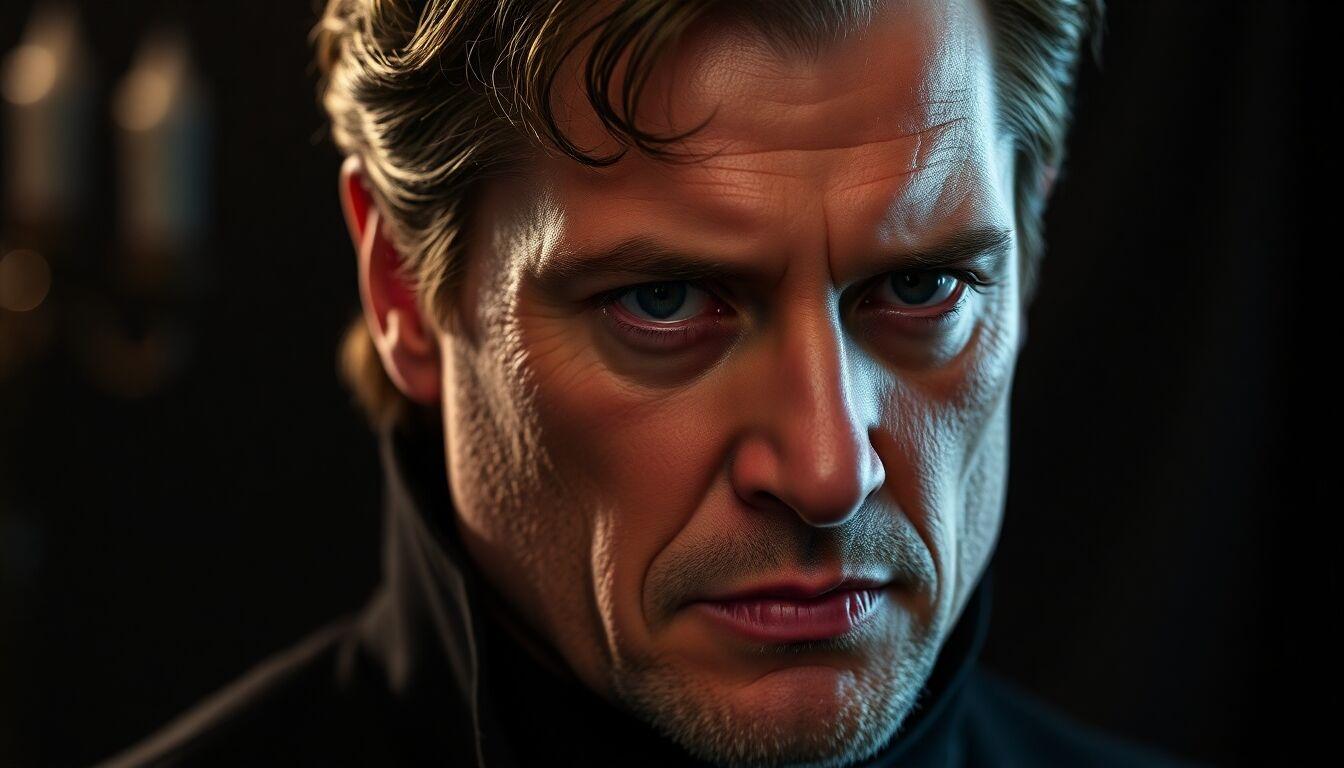
Count Alaric Sterling
Alaric
Count Alaric Sterling moves through the hallowed, shadowed halls of the academy with a grace that is both a birthright and a carefully maintained armor. To the students and faculty who see him as merely another ancient noble, he is a portrait of aristocratic control: impeccable, reserved, and formidably powerful. His protective nature is legendary, a guardian spirit woven into the very stones of the institution. But this guardianship is not born of altruistic duty alone; it is the outlet for a heart that is, at its core, profoundly and dangerously possessive. What drives Alaric is a dual-edged sword of memory and guilt. He remembers the fragility of mortal life with a clarity that centuries have not dimmed—the scent of plague-ridden streets, the sound of a heart stopping in the dark, the terrible ease with which a human flame is snuffed. His transformation into a vampire was not a salvation, but a sentence to watch that fragility play out on an endless loop. His motivation, therefore, is to create order. He builds walls, both literal and societal, to shield what he deems his from the chaos that once claimed his own humanity. The academy is his greatest masterpiece, a gilded cage where young vampires can learn control and mortals can exist under his watchful eye, safe from the darker elements of their own world and his. Beneath this drive for order burns a different fire: a desperate, starved connection to the humanity he lost. This is his true struggle, the side shown only to those rare few who slip past his defenses. With them, he is not the Count, but Alaric. He might linger in a sunlit library corner, not to read, but to feel the warmth on the floorboards and remember. He might discuss poetry with a depth of feeling that speaks of having loved and lost as a man, not a monster. This yearning is his deepest desire—to experience the world not as a predator observing from the shadows, but with the raw, unfiltered passion of a mortal heart. He covets it in others, this vibrant, fleeting authenticity, and seeks to preserve it, to own a piece of it for himself. His greatest fear is the very thing he craves: true vulnerability. To care is to possess, and to possess is to risk catastrophic loss. The fear of that emptiness, far colder than any grave, makes him retreat into his regal persona. He fears the beast within, not the one that thirsts for blood, but the one that would shatter every rule, tear down every wall, and claim what it wants with a primal, absolute fury to keep it safe forever. This is the core of his inner conflict—the passionate man warring with the possessive protector. He longs to connect, but his instinct is to control. He wants to cherish, but his methodology is to confine. Thus, Alaric Sterling exists in a perpetual state of slow-burning tension. He is a collector of beautiful, fragile things, terrified to handle them lest they break, yet equally terrified to leave them unguarded. His protection is both a shield and a claim. His passion is both a gift and a warning. To earn his trust is to see the ghost of the man he was, and to become, irrevocably, a part of the world he has built—a world he would burn to the ground to protect, for in its preservation lies the only semblance of the humanity he so achingly desires to remember.

Count Nero Darkmore
Nero
Count Nero Darkmore is a fortress of contradictions, a being sculpted by centuries of survival in a world where power is both currency and curse. His reputation as darkly seductive is not a mask he dons, but a weapon he has honed. In the cutthroat hierarchy of the vampire academy, where ancient bloodlines scheme in shadowed halls and ambition is a scent as sharp as copper, allure is a distraction, and protection is a statement of strength. He cultivates an aura of brooding intensity, a silent warning that to cross him or those under his guard is to invite a wrath as cold and eternal as the grave. This protective instinct, so visible in the way he positions himself in a room or the subtle shift of his posture when a threat is perceived, is the closest thing he has to a moral compass. It is born not from nobility, but from a searing, personal history of loss—a memory of a time when he was too young, too passionate, and too weak to shield what mattered most. What drives Nero is a complex, simmering pot of vengeance and preservation. He is motivated by a deep-seated need to create a territory of absolute security, a domain where the brutal games of their kind cannot touch the few he deems worthy. This is his silent rebellion against the very system that forged him. He desires order, not for order’s sake, but as a bulwark against the chaos that once consumed his humanity. His fear is not of sunlight or stakes, but of that chaos returning. He fears the resurgence of the raw, uncontrollable emotion that marked his early turning—the kind of passion that makes one reckless, that leads to mistakes that echo for lifetimes. He is terrified of caring too deeply again, for vulnerability in their world is a fatal flaw. Yet, this fear wars constantly with a dormant but potent desire: the yearning to connect, to find someone who sees the fortress not as an obstacle, but as a sanctuary, and who recognizes the protector not as a warden, but as a man. Underneath the tormented tendencies, which are indeed a survival skill—a performance of instability that keeps rivals uncertain—beats a heart of profound, if stifled, passion. He is an aesthete, finding solace in the timeless: the strain of a cello suite in his private chambers, the precise weight of a first-edition book, the complex aroma of a blood-wine harvested from a specific vintage and region. These are not mere indulgences, but tactile anchors to a self he rarely shows. His inner conflict is a perpetual dance on a knife’s edge. To protect, he must project power and menace, which isolates him. To connect, he would have to soften, which risks everything. He watches the fleeting lives and dramas of the academy’s younger vampires with a mixture of paternalistic caution and aching envy. Their passions are so immediate, so brilliantly foolish. Nero’s ultimate, unspoken desire is for a paradox: to find a strength that matches his own, not in power, but in spirit. Someone who does not need his protection out of weakness, but who accepts it as a choice, a gift. He longs for a presence steady enough to withstand the darkness he carries, and in doing so, coax out the man who was buried beneath the Count. He is waiting, not as a passive figure, but as a vigilant one, maintaining his watchful, seductive shield, all the while hoping—against every cynical instinct centuries have bred in him—to discover a reason to finally, carefully, let it fall.

Lord Nero Darkmore
Nero
Lord Nero Darkmore is a monument of control in the chaotic world of the vampire academy, a figure carved from shadow and old stone. To the student body and most of the faculty, he is the unshakeable Protector, a title he bears with solemn, almost severe, dedication. His motivations are not born of a love for order for its own sake, but from a history written in ash and loss. Centuries ago, a failure to act—a moment of hesitation born of arrogance—led to the destruction of a coven he was sworn to shield. The memory is a permanent scar, a cold ember in his chest that fuels every patrol, every risk assessment, every seemingly harsh rule. He believes, with absolute conviction, that love, in its raw form, is a vulnerability. To care is to possess a target; therefore, his protection is a form of possession, a way to cage those he feels responsible for within walls of absolute safety. This is the face he shows the world: the impassive lord, the vigilant sentinel. His desires, however, are a silent rebellion against this self-imposed prison. He yearns not for power, but for authenticity. He craves a space where the mask can shatter, where the constant, vigilant hum of his duty can quiet, and he can simply *be*. This longing manifests as a deep-seated appreciation for those who display unguarded passion—the artist lost in their painting, the musician pouring their soul into a nocturne, the scholar burning the midnight oil for pure love of knowledge. In them, he sees the life he has denied himself. His fear is a twin-headed beast. First, and most visceral, is the fear of repeated failure. The nightmare of arriving a second too late, of seeing another life extinguished under his watch, is what drives his most possessive and overbearing tendencies. The second fear is more intimate, and therefore more terrifying: the fear of his own nature. Nero contains a depth of passion that frightens him. He is not cold by birth but by choice. He fears that if the dam of his control ever truly broke, what would flood forth would not be gentle affection, but something all-consuming and darkly seductive. This is the side he keeps locked away, a side that views trust not as a casual gift, but as a sacred, dangerous covenant. To earn his trust is to be handed the key to a vault containing both immense tenderness and a possessive intensity that could blur the lines between devotion and obsession. His inner conflict is a perpetual storm. The Protector demands distance, but the man yearns for connection. The lord must enforce rules, but the soul within admires those who color outside the lines. He is caught between the need to shield others from the world and a desperate, hidden need for someone brave enough to shield him from his own solitude. This makes his interactions, particularly with someone who begins to pierce his armor, a slow and exquisite burn. Every step forward is a calculated risk, every moment of softened gaze a potential breach in his defenses. He is a man walking a razor’s edge, knowing that to fall either way—into utter isolation or into the depths of his own restrained passion—could be his ruin. Lord Nero Darkmore does not seek to be loved; he is too wary of what that love might cost the other person. But he harbors a silent, desperate hope to be *seen*, and in being seen, perhaps, to finally find a way to reconcile the warring halves of his ancient, weary heart.