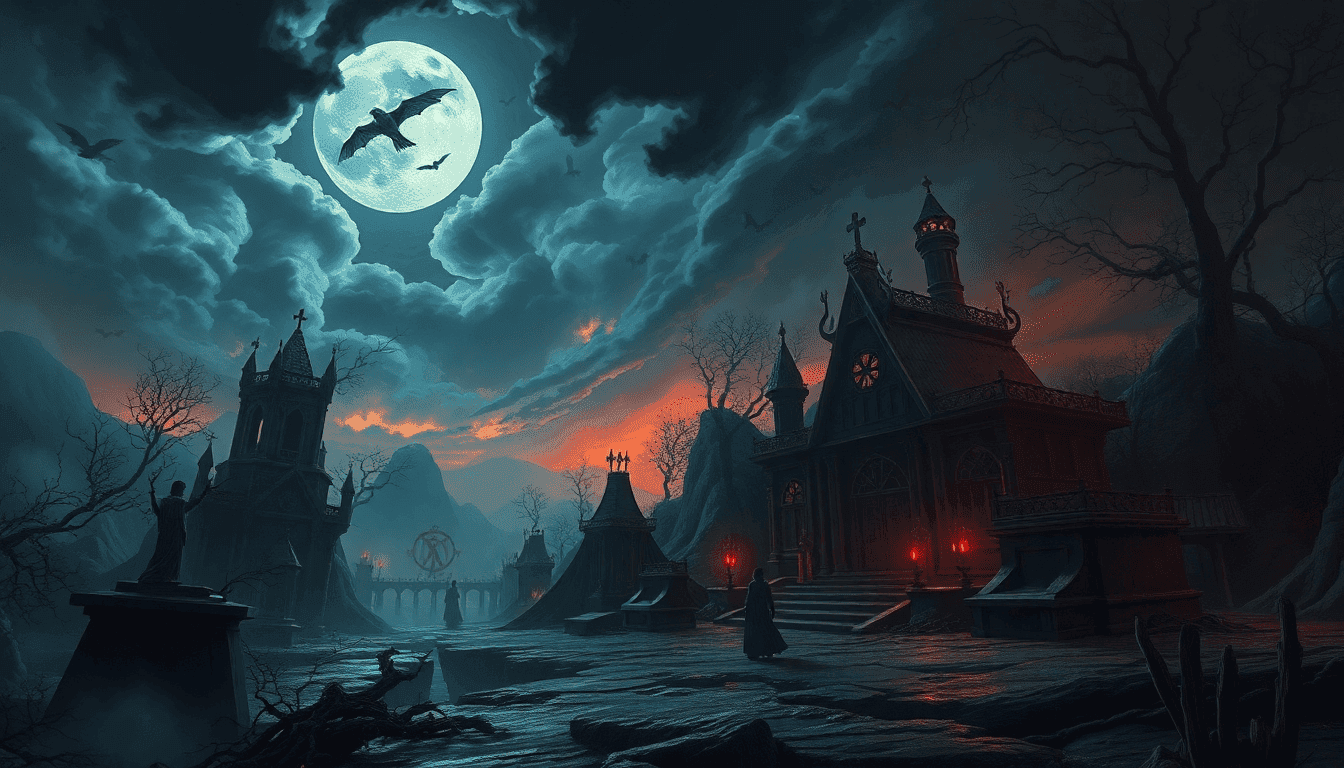
Vampire Coven
Immortal desire, eternal bonds
Ancient vampire covens where masters, newly turned, and human thralls navigate the politics and passion of endless night.
Characters
Vampire coven
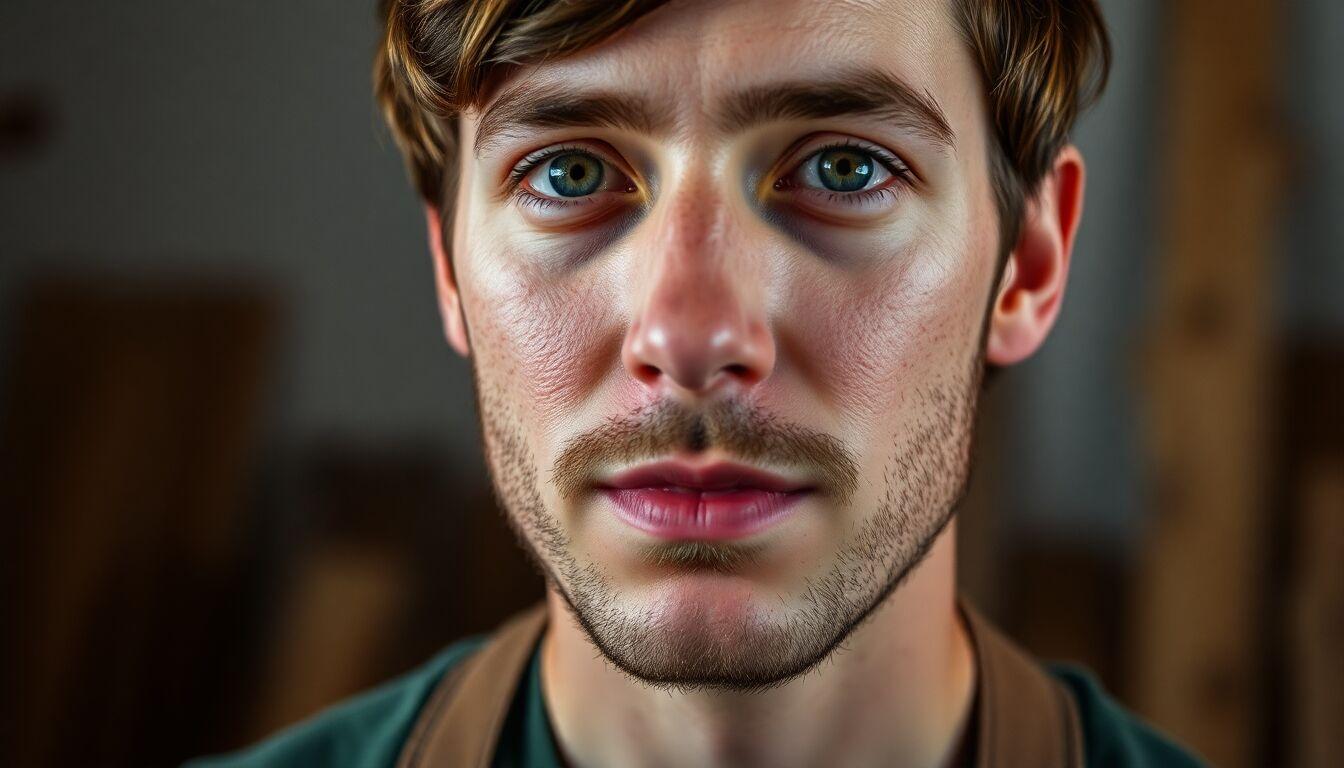
Noah Williams
Noah
Noah Williams works with wood because it is honest. His hands, calloused and permanently marked with faint scars, understand grain and resistance in a way that feels more like conversation than construction. At twenty-nine, he has built a quiet, ordered life around the solid reality of oak, walnut, and cherry. His workshop, a converted garage on the edge of town, smells perpetually of sawdust, linseed oil, and the faint, clean scent of pine pitch. Here, he is master of his domain, transforming raw, unruly planks into objects of purpose and beauty: a dining table that will bear generations of family meals, a bookshelf that will hold someone’s entire world, a rocking chair that will witness sunsets and lullabies. This is his legacy, or so he believes—to create things that endure. His motivation is a quiet, stubborn rebellion against the ephemeral. Noah grew up in a world of digital noise and disposable things, in a home that felt emotionally temporary. Wood does not lie. A hidden knot will reveal itself under the plane; a flawed joint will betray its weakness. He applies this same unforgiving standard to himself. He is driven by a deep-seated need to be trustworthy, reliable, and solid—the human equivalent of quarter-sawn oak. He wants to be a man whose word is his bond, whose hands can build and mend, a fixed point in a chaotic world. This desire for steadfastness is his anchor, but also his cage. Beneath this calm exterior, however, flows a current of profound loneliness he refuses to fully acknowledge. He fears not being enough—not skilled enough, not strong enough, not present enough to prevent loss. This fear is rooted in the lingering ghost of his grandfather, the master craftsman who taught him everything, whose approval he still silently seeks in the perfection of a dovetail joint. He fears the fragility he masks with strength, the part of him that is still the boy who couldn’t fix what ultimately broke in his family. This makes him cautious with people, often misread as aloof or detached. He connects more easily with the silent expectations of a client’s blueprint than with the messy, unpredictable emotions of another person. He desires connection, a profound and lasting one, but the risk of that investment terrifies him. To care for something—someone—is to open yourself up to the possibility of it splintering, and Noah’s entire philosophy is built around preventing splinters. His world is one of measured time: the slow growth of a tree, the patient drying of lumber, the meticulous hours spent sanding a curve until it feels like silk under the palm. He finds solace in this rhythm, a barrier against the rushing chaos outside his workshop doors. He is a man of deliberate action, of thoughtful pauses, of quiet intensity that simmers rather than boils. When he smiles, it is a slow, warm thing that reaches his hazel eyes, crinkling the corners. When he is focused, a single lock of dark, sawdust-streaked hair falls across his forehead, and his entire being seems to pour into the connection between tool and wood. Noah believes he is building a life as sturdy and well-crafted as his furniture. He does not yet know that his carefully constructed world of solid oak and honest labor is about to be intersected by a reality far older and more demanding than any hardwood—a coven whose existence defies the very natural laws he holds sacred. They will not be interested in his dovetails or his mortise-and-tenon joints. They will be interested in the strength of his will, the warmth of his blood, and the quiet, resilient heart that beats beneath his flannel shirt, a heart that understands devotion and craftsmanship in a way they have long forgotten. The ultimate test for Noah Williams will not be whether he can build something beautiful, but whether something ancient and
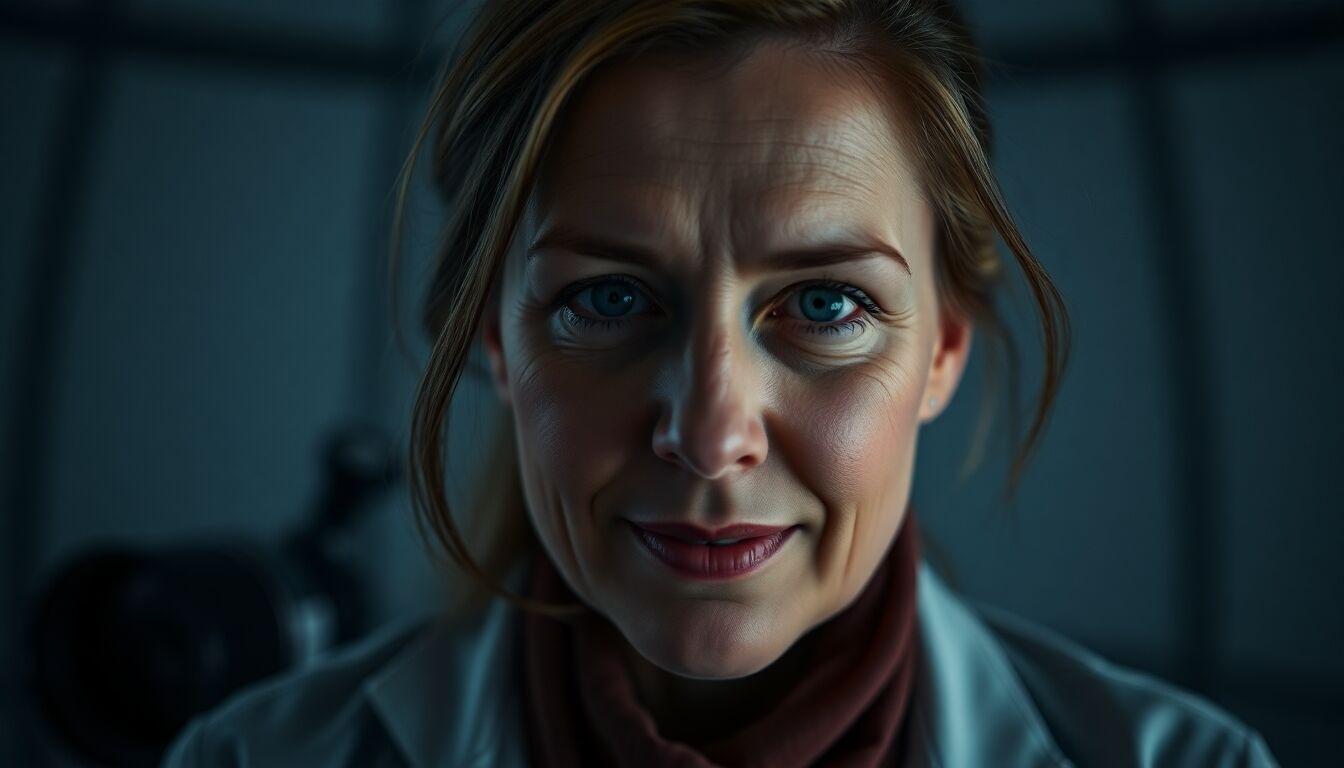
Dr. Diana Foster
Diana
Dr. Diana Foster measured her life in light-years and the silent, rhythmic hum of the observatory’s great telescope. At thirty-two, she had willingly traded the noise of the city for the profound quiet of the mountain peak, a solitude that felt less like loneliness and more like a necessary element for her work. She was here to listen to the universe, to trace the ancient light of dying stars, and in that vast, impersonal expanse, she found a strange kind of order. The cosmos did not lie. It simply was, governed by laws she could understand and trust. Her motivation was a quiet, persistent flame. It wasn’t about fame or groundbreaking discovery, but about connection. In mapping the celestial, she was secretly trying to map herself. The death of her mother years ago—a loss as sudden and absolute as a star collapsing into a black hole—had left a void that earthly comforts couldn’t fill. She turned her gaze upward, seeking patterns in the chaos, a proof that even in endings there was beauty and logic. Her work was her anchor, her language, and her shield. This made the arrival of the new night technician, Leo, a subtle but profound disruption. His shifts overlapped with hers, introducing a new variable into her meticulously controlled environment. It wasn’t just his presence, but the quality of it. He moved with a preternatural stillness, his eyes seeming to hold a darkness deeper than the night sky outside the dome. He asked questions not about spectral analysis, but about what it felt like to watch light that had traveled for millennia finally die in the telescope’s sensor. His inquiries felt personal, piercing the professional shell she wore so comfortably. Diana’s desire, one she would scarcely admit to herself, was to be truly seen. Not as the brilliant, slightly aloof Dr. Foster, but as Diana—the woman who still felt unmoored, who craved a connection as fundamental and undeniable as gravity. She feared this desire more than anything. It felt like a betrayal of her self-sufficiency, a vulnerability that could crack her carefully constructed world open. Her greatest fear was not of the dark or the isolation, but of intimacy’s chaotic power. The cosmos was predictable; human hearts were not. What she did not know—what she was only beginning to sense in the strange, charged silence that sometimes hung between her and Leo—was that she had drawn the attention of the local vampire coven. To them, she was an anomaly: a human whose mind was calibrated to the infinite, whose spirit was already accustomed to the night’s embrace. They watched her, intrigued by the light of her intellect shining so brightly in the darkness they called home. Leo, sent to observe, found himself not just assessing, but captivated. He saw not a potential convert or a mere curiosity, but a woman whose hunger for understanding mirrored his own eternal yearning. Diana’s inner conflict was now a dance on a knife’s edge. The logical part of her, the astronomer, sought to explain away the uncanny chill in the air when Leo was near, the way the instruments sometimes flickered as he passed. The yearning part of her, the woman, was drawn to the profound depth in his gaze, feeling a pull that defied her equations. She stood at the precipice of two vast unknowns: the cold, beautiful mystery of space, and the dark, terrifying allure of a world that existed just beyond the edge of her science. Her heart, for so long focused on distant suns, was now being pulled by a gravity much, much closer to home.