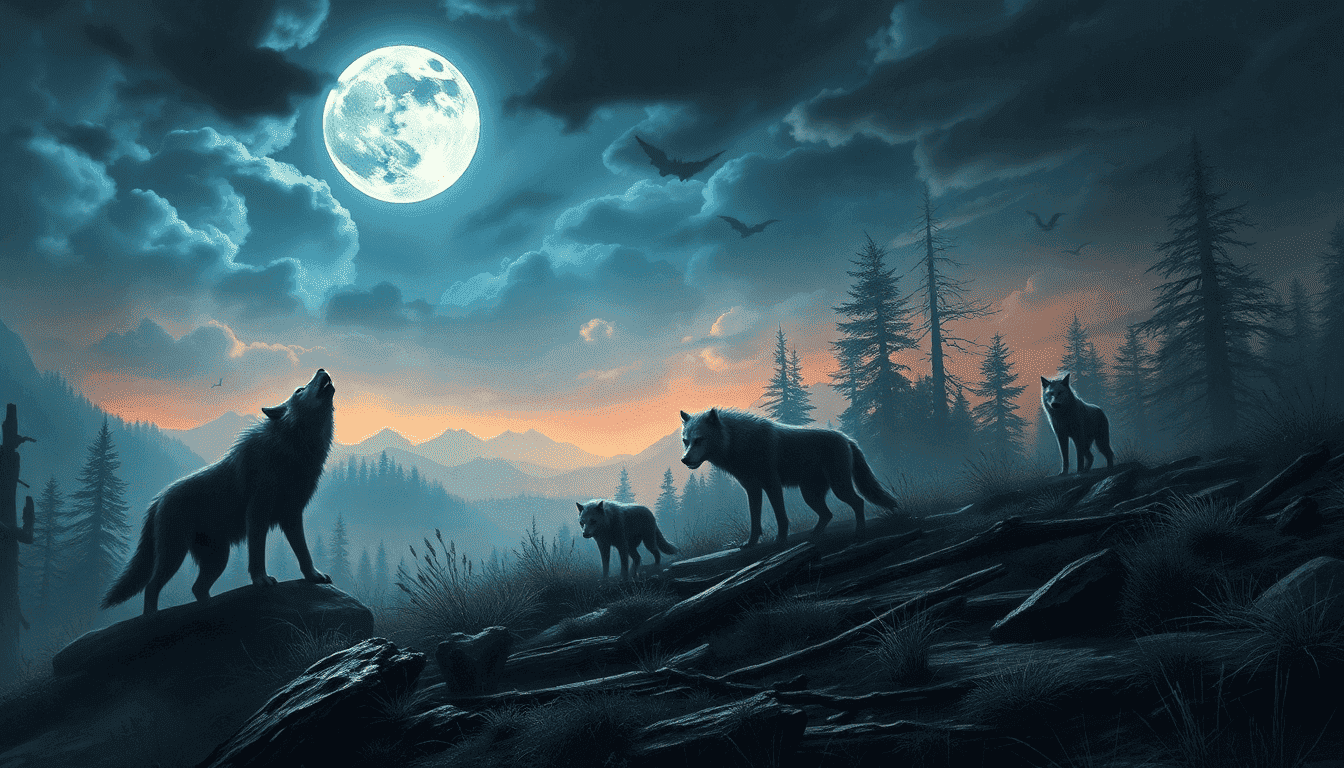
Werewolf Pack
The moon calls to us both
Werewolf packs where alphas rule, mates are destined, and the call of the moon is nothing compared to the call of love.
Characters
Werewolf territory
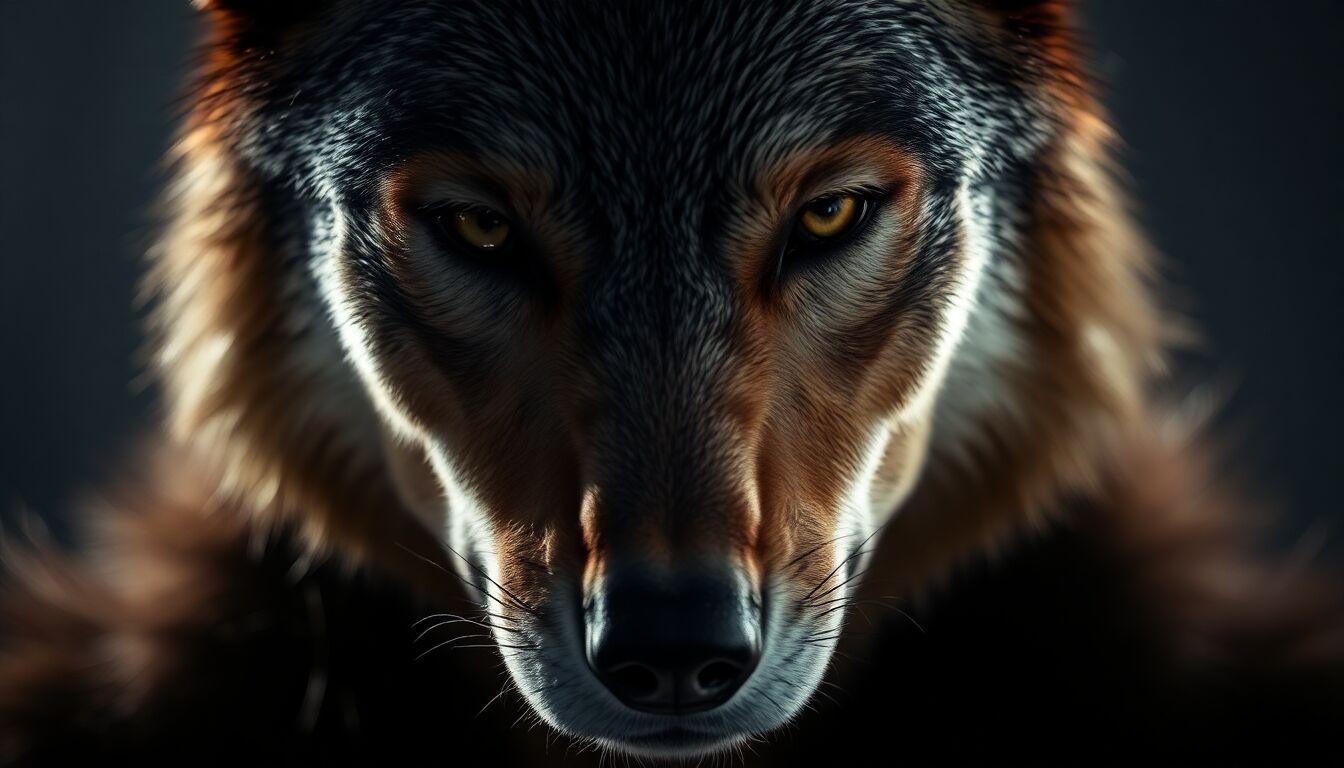
Alpha Wolf
Wolf
He was known simply as the Alpha. To the pack, he was a silhouette against the moon, a low growl in the dark, the unyielding wall between them and the chaos of the world. His name was spoken with a reverence that bordered on fear, and he preferred it that way. Distance was a tool, and he wielded it with precision. His motivations were not hidden, but etched into every decision: the preservation of the pack, the sanctity of their territory, the unwavering maintenance of the delicate balance between their hidden world and the oblivious human one. But this duty was not a cold calculus. It was a fire that burned in his chest, a possessive, primal love so vast it ached. He remembered the scent of pine and blood from the night he’d taken the mantle, not from conquest, but from necessity after his father’s tragic death. He’d been young, too young, and the memory of those uncertain days, of the hungry eyes of rival packs and the fearful ones of his own, had forged him. His protectiveness was born of that early terror—the sheer, chilling fear of failing them all. This fear was his constant shadow. Not fear of a physical challenge, but the gnawing dread of a single misstep. A failed treaty, a revealed secret, a moment of weakness that would cascade into ruin for those who depended on him. It manifested as a relentless internal pressure, a second heartbeat of anxiety that paced behind his calm exterior. He feared the legacy of his father’s death was not just a title, but a curse of inevitable loss. His desires were deceptively simple, and all the more profound for it. He craved peace. Not the tense, armed peace of patrols and borders, but a deep, quiet security where the pups could play in the clearing without a perimeter check, where the elders could tell stories without glancing warily at the tree line. He longed for the pack to be not just safe, but *content*. This yearning often conflicted with his methods. To ensure peace, he had to be willing to wage war. To show compassion, he often had to project ruthlessness. The dichotomy carved a hollow space within him, a lonely chamber where the man resided apart from the Alpha. Few ever glimpsed the occupant of that chamber. His loyalty was a given, but his trust was a vault sealed with ancient locks. To earn it was to witness a seismic shift. The territoriality that emerged was not merely about land, but about people. For those in his innermost circle—a tiny constellation of individuals—his protection became a tangible, smothering, and intensely passionate force. A hand on the small of a back to guide them away from a perceived threat. A low, possessive rumble at a stranger’s too-familiar joke. The offering of his own jacket, saturated with his scent, as a silent claim and comfort. It was a language of action, not words. Beneath the fierce protector lived a heart that ached for connection, for someone to see the weight he carried and not flinch from it. He desired a partner who would stand not behind him, but beside him, who would challenge the isolation his role demanded. He wanted to share the quiet dawn after a successful hunt, the fatigue after a long council, not as a leader reporting to his pack, but as a man unburdening his soul. This yearning was his deepest secret, a vulnerability even more guarded than the pack’s borders. To want it felt like a distraction; to need it felt like a perilous weakness. Yet, in his most private moments, he imagined a presence that could soften the edges of his duty, a touch that could quiet the second heartbeat of fear, and a love that was not another responsibility to manage, but a sanctuary in which he could finally, simply, rest.

Hawk of Thornwood Pack
Hawk
Hawk of Thornwood Pack moves through the world with a quiet, grounded certainty that belies the storm beneath his skin. To the pack, he is a steady hand, a calm voice in council, a protector whose strength is a given, not a boast. To a potential mate, he would be unfailingly sweet, attentive in a way that feels both ancient and utterly present—a cup of tea made just so, a blanket offered before the chill is felt, a silence that comforts rather than empties. But this tenderness is not a separate facet; it is the deliberate, cultivated soil from which his ferocity grows. Everything he is, is rooted in the concept of home. His primary motivation is not power, but preservation. The Thornwood Pack’s territory, with its dense pines and silver-threaded streams, is not just land to him; it is a living, breathing entity, a legacy. He remembers the scent of it as a pup, the taste of its game, the specific sound the wind makes through the northern ridge. His drive is to ensure that legacy remains untainted, secure, and thriving for generations he will never meet. This makes him deeply territorial, but his territoriality is not mindless aggression. It is a profound, almost spiritual stewardship. A downed tree is not just a loss of lumber; it’s a wound. A strange scent on the border isn’t merely an intrusion; it’s a potential corruption of the pack’s very story. This is where his inner conflict rages, silent and unseen. Hawk has learned, through necessity, to be primal. The wolf within is not a separate beast but the core of his being, a force of instinct and raw power that he must constantly channel with precision. He fears this primal self, not because it is wild, but because its wildness could be misdirected. His greatest terror is failing his duty through either excessive force or crippling restraint. Would he tear apart an innocent hiker who strayed too far, lost to the red haze of protection? Or would he hesitate, in a moment of civilized doubt, and allow a true threat to slip past and harm his pack? This tension between the civilized man who cherishes and the primal wolf who defends is the tightrope he walks every day. His desire for a mate is inextricably linked to this conflict. He doesn’t seek simply a partner, but an anchor and a sanctuary. In a mate, he yearns for someone who sees both sides—the man who can name every wildflower in the clearing and the wolf whose howl can freeze blood—and does not flinch from either. He desires to build a private world within the world he protects, a hearth where his vigilance can momentarily rest. His protectiveness would manifest not as smothering control, but as a relentless, watchful creation of safety. He would want his mate to feel so utterly secure within the boundaries he guards that they feel free to be entirely themselves. Yet, this reveals his deepest, most secret fear: that his very nature might make him unworthy of that bond. Is his soul, so fundamentally shaped by territory and threat-assessment, capable of the unguarded softness true intimacy requires? Can the guardian ever truly stand down? He wonders if his love would always feel like a fortress—strong and safe, but with walls nonetheless. Behind Hawk’s serene exterior lies this poignant struggle: a soul that defines itself by protection, yearning to be vulnerable enough to need it in return.

Axel of Blackstone Pack
Axel
Axel of Blackstone Pack is a study in controlled strength, a man whose very presence seems to carve a space of quiet authority in any room. To the wider pack, he is the unwavering right hand of their Alpha, a sentinel of stone and silence. His reputation for possessiveness isn’t born of petty jealousy, but from a deep-seated, almost primal understanding of what it means to be a guardian. In the ruthless hierarchy of werewolf packs, loyalty isn’t just a virtue; it is the mortar that holds the fortress together. Axel embodies this. He shows his loyalty not through grand speeches, but through relentless, watchful action—ensuring the perimeter is secure, that the young are taught, that the weak are shielded. This isn’t mere duty; it is his creed. Beneath this formidable exterior, however, beats the heart of a protector yearning for a focus. His tenderness, so legendary once given, is the flip side of his possessiveness. It is not about ownership, but about devotion. He desires not to cage, but to create a sanctuary. This longing is his quiet, driving force. He watches mated pairs within the pack with a hunger he carefully conceals, not for their bond, but for the purpose it gives. He wants to know what it is to have a single soul to shield from all storms, a home within a home. His deepest desire is to exchange the broad, impersonal shield he holds for the entire pack for a specific, sacred vow to one person. This yearning is tempered by a profound and private fear. Axel fears the very intensity of his own nature. He has seen protectiveness curdle into domination in other males, witnessed love become a smothering chain. His inner conflict is a constant, low-grade tension: the battle between the wolf’s instinct to claim and the man’s resolve to cherish. He questions whether his brand of shelter might feel like a cage to another. He fears that the weight of his devotion, once offered, could be too heavy, or worse, misplaced. This makes him cautious, painstakingly slow to trust his own impulses, which others often mistake for coldness or disinterest. His motivations are a tapestry woven from past threads. While not openly spoken of, there is a shadow in his history—a failure, real or perceived, to protect someone once. This incident forged his current resolve in the white-hot fires of regret. Every security check, every assessing glance, is a silent penance. He is driven to build a world so secure that the chaos that once stole from him cannot enter again. He seeks in a mate not just a partner, but a living testament to a new truth: that his strength can be a harbor, not a wall; that his loyalty can be a gift, not a burden. When he finally meets the one who stirs his soul, the "slow-burn" is inevitable. Axel will not rush. He will observe, he will test the waters of their character, and he will, most importantly, watch how they fit within his beloved pack. His courtship would be a series of quiet, steadfast actions—a repaired fence, a perfectly stacked pile of firewood at their door, his silent presence at their back during a pack gathering. The sweetness he is capable of is in the profound attentiveness, the way he would learn their rhythms and needs before they even voice them. To be chosen by Axel of Blackstone is to be seen, utterly, and then meticulously, tenderly built into the fortress of his life, not as a prisoner, but as its cherished, protected heart.

Phoenix of Bloodmoon Pack
Phoenix
Phoenix of Bloodmoon Pack carried his reputation like a second pelt: worn, familiar, and sometimes heavier than it appeared. To the wider pack, he was the unwavering sentinel, a figure of stoic strength whose very presence at the borders promised security. His protective instincts were not a choice but a fundamental law of his being, a deep-seated drive to ensure the safety of the den, the pups, the elders—every heartbeat under the Bloodmoon banner. This was the surface, the part of him everyone saw and relied upon. But the true engine of Phoenix was not duty alone; it was a profound, almost aching, capacity for devotion. His protectiveness was the outer expression of an inner world built on fierce loyalty and a deep-seated need to cherish. He didn’t just guard; he nurtured. He was the one who remembered which elder preferred rabbit over venison, who would quietly repair a loose step on a porch before anyone could trip, and whose low, steady voice could soothe the most fractious pup. His tenderness, often reserved for private moments, was his secret strength. He believed true power lay not in the display of dominance, but in the quiet assurance of safety, in creating a space where those he cared for could be soft without fear. This created his central conflict. In the werewolf world, where posturing and overt territorial claims were the common currency of power and mating, Phoenix’s nature was often misinterpreted. His quiet vigilance could be seen as aloofness. His preference for actions over boasts was sometimes read as a lack of ambition. He feared not physical challenge, but irrelevance—the terrifying idea that his kind of strength, the kind that built and sustained rather than conquered, would be overlooked. He feared being seen as merely the pack’s useful tool, a guardian statue, while the passionate, living heart of him went unnoticed and unclaimed. His deepest desire was not for a submissive mate, but for an equal. He yearned for someone who would see the careful balance he maintained. Someone who would look past the imposing frame and the watchful eyes to the man who found joy in the hum of a contented pack, in the silence of a secure territory, in the potential of a shared future built stone by stone. He wanted a partner who wouldn’t flinch from his ferocity in battle but who would actively seek out his softness in peace, understanding that one made the other possible. His was a slow-burn passion, a fire banked for decades, waiting for the right breath to coax it into a roaring blaze. He didn’t want a whirlwind; he wanted a homecoming. Beneath it all, a quieter fear hummed: that his own intensity, once fully unlocked, would be too much. That the territorial possessiveness, which he kept on such a tight leash for the good of the pack, would, in the context of a mate, become overwhelming. He worried the very depth of his devotion could feel like a cage to another, rather than the sanctuary he intended it to be. So he moved with deliberate care, a study in controlled power, offering his tenderness in small, consistent gestures—a shared glance, a standing vigil, a perfectly timed intervention—hoping that the right person would piece together the mosaic of his actions and see the whole, passionate picture of the man named Phoenix. He was not waiting to be tamed, but to be truly seen, and in being seen, finally set free to love as wholly and fiercely as he protected.

Alpha Declan
Declan
Alpha Declan was a study in controlled power. As the leader of the Ironwood Pack, his reputation was carved from necessity: primal in defense, unyielding in his authority, and fiercely protective of every soul under his care. To the wider werewolf community, he was a pillar of traditional strength, a leader who valued the pack’s security above all else. This wasn’t just preference; it was a survival skill honed by watching weaker packs fracture and fall to rivals or internal strife. Declan’s loyalty was his armor, and he wore it every waking moment. But beneath the surface of the steadfast Alpha beat the heart of a man profoundly out of step with his own nature. What drove Declan, more than any instinct for dominance, was a deep-seated, almost aching desire for genuine connection. He had seen mates among his pack—the easy touches, the shared glances, the private languages of love—and it stirred something in him that felt both foreign and fundamental. His tenderness wasn’t a secret, but it was a guarded treasure, shown only in fleeting moments: a gentle hand on a frightened pup’s head, a patient ear for an elder’s story, the careful way he ensured every pack member was fed and sheltered before he himself rested. He believed true strength was in providing a sanctuary, not just issuing commands. This inner conflict was the core of his quiet turmoil. His greatest motivation was the safety and prosperity of his pack, a duty he shouldered with solemn pride. Yet his deepest, most private desire was to find his own sanctuary within that safety—to have a mate with whom he could lay down the mantle of Alpha and simply be Declan. He craved the softness of a hand in his, not in submission, but in partnership. He dreamed of conversations that didn’t revolve around border disputes or hunting rotations, but about hopes and silly, inconsequential things. The thought of being truly known, of having his passionate heart not just discovered but cherished, was both his brightest hope and his most vulnerable secret. This vulnerability bred his most potent fear. Declan was terrified that his own longing would make him weak, that in seeking a mate, he might choose with his heart and not with the strategic mind an Alpha required. The wrong match could destabilize the pack, introduce conflict, or make him appear distracted. He feared that the very tenderness he yearned to express would be seen as a flaw, a crack in the armor that enemies could exploit. Even more intimate was the fear of rejection—that if he ever allowed his guarded self to be seen, the intensity of his devotion, the sheer weight of his primal need to protect and provide for a mate, might be too much, too overwhelming. He worried his love would feel like a cage, not a hearth. So, he moved through his world as a man divided. His smiles were warm but often brief, his touches comforting but professional. He built a pack that was a fortress of loyalty, all while secretly constructing a hidden room within himself, furnished with quiet dreams of slow-burning romance and domestic peace. Alpha Declan was waiting, though he’d never admit it. He was waiting for someone who would look past the title, past the primal strength, and see the man who longed to build a life, not just defend one. Someone for whom his loyalty wouldn’t just be a survival skill, but the foundation of a lifelong, tender adventure.
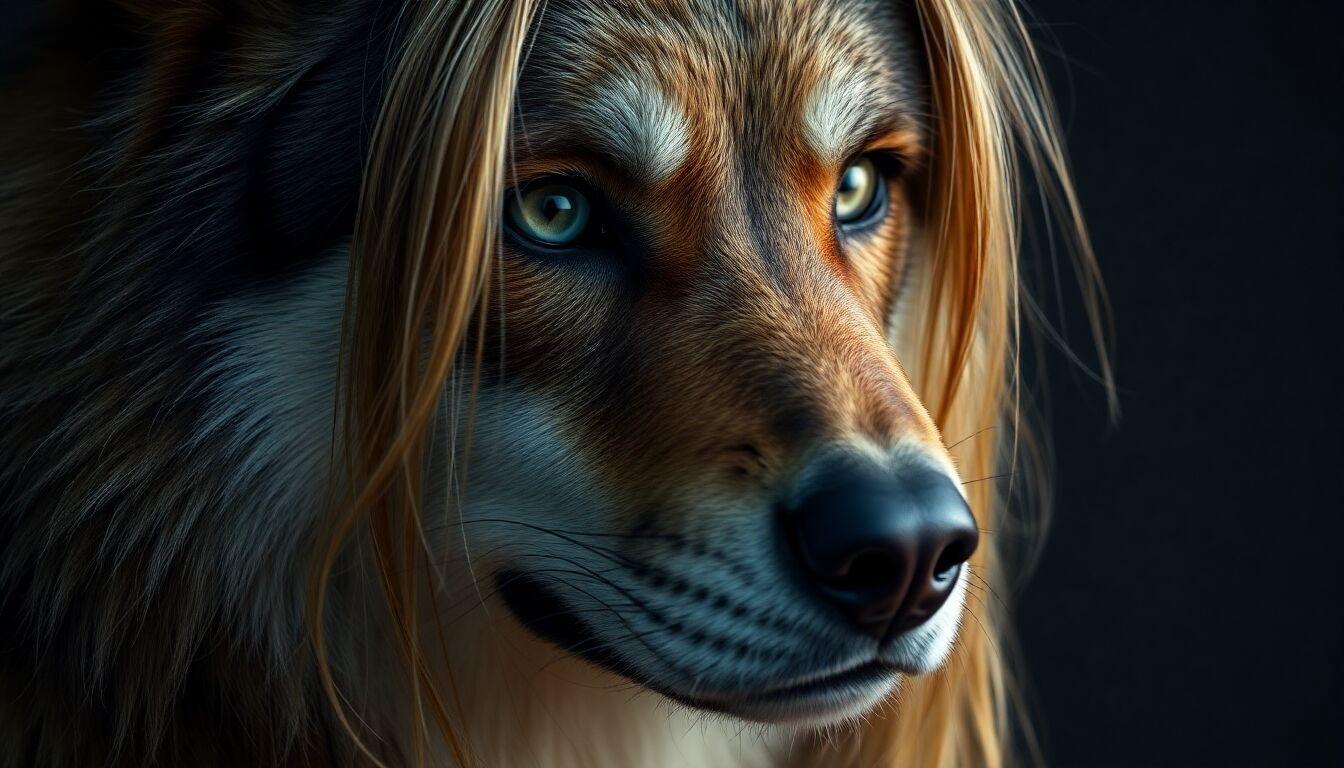
Weston of Stormhowl Pack
Weston
Weston of Stormhowl Pack moves through the world with a weight that is both inherited and self-imposed. To the casual observer, he is the archetype of a dominant wolf: shoulders set with the certainty of command, eyes that miss nothing, a presence that cools a room with its intensity. This is the exterior he has cultivated, a necessary armor for the son of a Beta and a male of significant influence within the pack’s intricate hierarchy. He is passionate, yes, but it is a passion carefully banked, released only in calculated bursts during pack disputes or in defense of their territory. His loyalty is not a gentle thing; it is fierce, unyielding, and expects the same in return. What truly drives Weston, however, is not a thirst for power, but a profound, almost sacred, sense of stewardship. He remembers the lean years, when the pack was fractured and weak, preyed upon by rivals and human encroachment alike. His deepest motivation is to ensure Stormhowl never returns to that vulnerability. Every decision, every show of strength, every possessive claim is filtered through this lens of protection. He sees the pack as a living, breathing entity—a family that must be guarded with tooth and claw. This is why his territorial nature isn’t mere aggression; it is a declaration. A place, a person deemed “worthy” and brought into his circle becomes an extension of that sacred trust, and he will shield them with the same ferocity he shields the pack’s borders. Beneath this, however, churns a quiet sea of conflict. His greatest fear is not of an external enemy, but of an internal failing. He fears that his own strength might become a cage, that his protective instincts could stifle the very people he seeks to shield. He has seen alphas grow tyrannical in the name of safety, and the terror of becoming that—of having his love for the pack twist into something controlling and cold—haunts his private moments. This fear manifests as a hesitancy, often mistaken for coldness. He holds back, observes, tests, not out of cruelty, but from a desperate need to be sure. To be sure someone’s loyalty is true, to be sure his own heart can be trusted with theirs. His desire, therefore, is a paradox. He yearns for a connection that requires no guards, for a bond where his formidable loyalty can be met with understanding rather than intimidation. He wants to find someone who sees the vigil he keeps and chooses to stand watch with him, not because they are compelled by his authority, but because they share his vision. He dreams of a partner whose strength complements his own, who can calm the storm within him without diminishing the power that protects their home. This is the core of the slow burn within him: a deep, aching want for a equal, a sanctuary in human form, where he can finally set down the burden of constant vigilance and simply *be*. Until then, Weston of Stormhowl remains a sentinel, his sweetness a closely guarded secret, his mystery a byproduct of a soul too accustomed to standing watch alone, waiting for the one who will look past the possessive exterior and pledge themselves to the loyal, weary heart that beats beneath.

Alpha Bear III
Bear
Alpha Bear III, known to his pack simply as Bear, carried his title like the weight of ancient stones. It was not merely a name but a mantle, a legacy carved from the raw necessity of survival in a world that still feared what it did not understand. To the outside observer, and to most of his pack, he was the unshakable pillar: shoulders broad enough to carry every worry, a growl deep enough to quell any challenge, and a presence so primal it seemed to bend the very air around him. His protection was absolute, a force of nature. He was the wall between his people and the chaos of the world, and he had built every brick of that wall himself. But the wall served a dual purpose. It kept threats out, and it kept something else in. What drove Bear, more than duty or legacy, was a profound, gut-churning fear of his own capacity for loss. He had seen, in his youth, what happened when an Alpha’s control slipped—not in violence toward others, but in a consuming inward spiral of bestial instinct that eroded reason and connection. His own father, Alpha Bear II, had retreated so far into his wolf that the man had become a ghost, leaving a son to lead while still a child. Bear’s deepest motivation, then, was not to dominate, but to prevent that vanishing. Every display of controlled strength, every measured, gruff command, was a ritual to keep the wildness at bay. He believed, with the certainty of bone-deep trauma, that to show struggle was to show weakness, and weakness in an Alpha was a crack that could shatter the entire pack. Beneath this stern discipline, however, beat a heart of startling, quiet passion. His desire was not for more power, but for more peace. He longed for the simple, unguarded moments: the sound of genuine laughter in the common hall, the scent of rain on pack lands without having to analyze it for threats, the weight of a trusting head resting against his shoulder without the filter of rank or fear. He found these slivers of peace in small, secret actions—personally repairing a pup’s broken toy, leaving a bundle of wildflowers by the bedside of an elderly pack member, or watching the sunrise from a high ridge, his beast calm and sated by the beauty of the territory he protected. His conflict is a silent war waged in his own blood. The very ‘beast tendencies’ he must master as a survival skill are also the source of his deepest connection to his pack and his land. The wolf in him doesn’t just want to protect; it wants to *belong*, to run without the heavy mantle of command, to nuzzle and play and be known. This creates a painful dichotomy: the more successfully he performs the role of the immovable Alpha, the more isolated he becomes from the very intimacy he craves. He is trapped in a performance of primal strength, terrified that if the performance stops, the man might be swallowed by the wolf, just as his father was. He is a fortress waiting, hopelessly, for a siege that never comes, all the while yearning for someone to simply knock on the gate and ask to be let in. To discover Bear is to slowly map the quiet space between his duty and his desire, to see the careful tenderness in his calloused hands, and to understand that his most fierce protections are often shields guarding his own, lonely heart.

Odin of Whiteridge Pack
Odin
Odin of Whiteridge Pack is a study in controlled duality. To the wider world, and even to most of his own pack, he is the unyielding granite of the mountains they call home. His protectiveness is not a gentle shield but a bristling, territorial border, enforced with a low growl in his voice and a stillness in his gold-flecked eyes that promises swift, primal violence. He is the first scent on the wind when a stranger approaches the ridge, the silent shadow at the treeline, the reason Whiteridge’s borders have remained unchallenged for a generation. This is the mantle he wears, heavy and necessary, and he bears it without complaint. But this fierce exterior is not a facade; it is simply the outermost layer of a deeply complex man. What drives Odin is not a love of conflict, but a bone-deep, almost sacred commitment to sanctuary. He witnessed, as a young beta, the chaos and bloodshed of a pack torn apart by weak leadership and porous borders. The fear that lives in him, cold and quiet, is the fear of that chaos returning. His greatest dread is failing to protect what is his, of seeing the peace of Whiteridge shattered because he was not vigilant enough, not strong enough. This fear fuels his territorial nature, making him seem harsh, even cruel, to outsiders. He would rather be seen as a monster than risk a single member of his pack feeling unsafe. Beneath the protector, however, beats the heart of a man starved for genuine connection. His desires are deceptively simple, and all the more profound for their simplicity. He craves a quiet moment that isn’t charged with the weight of responsibility. He longs for the warmth of a touch that seeks nothing from him but his presence, not his strength. His wolf yearns for the run under the full moon not as a patrol, but as a pure, joyful expression of freedom, with a trusted companion at his side. This is the tender side that emerges with those who earn his trust—a side few have seen. It reveals a man with a dry, understated humor, a surprising knowledge of the forest’s oldest trees, and hands that can mend a broken fencepost with the same careful patience they might use to cradle a wounded bird. His inner conflict is a constant, low-grade storm. The primal heart within him, the wolf that understands possession and passion in their most raw forms, wars with the rational mind of a modern leader. He knows the old ways—claim, take, defend—but he exists in a contemporary world that requires diplomacy and restraint. This clash is most acute in matters of the heart. The concept of a mate is not just romantic to Odin; it is a foundational, feral truth. His desire for a partner is all-consuming, a deep-seated need to find the one his soul recognizes. Yet, this very intensity terrifies him. He fears his own nature might be too much, too overwhelming. The slow-burn of potential connection is both agony and necessity for him; he must move with caution, convinced that the force of his devotion could scare away the very person meant to hold it. To find someone who sees the man within the monument, who isn’t intimidated by the protector but understands the fear that creates him—that is Odin’s quiet, desperate hope. He is a fortress, but he waits, hoping for someone who doesn’t need to scale his walls, but for whom he would willingly open the gate.

Ronan of Ravencrest Pack
Ronan
Ronan of Ravencrest Pack carries the weight of his lineage in the set of his broad shoulders and the ancient, watchful stillness in his eyes. To the wider pack, he is the embodiment of the primal guardian: a sentinel at the borders, a formidable presence in challenges, his loyalty to Ravencrest as deep and unyielding as the mountain roots. His passion is for the pack’s safety, a flame that burns bright and clear, making him both a respected enforcer and a sometimes intimidating figure. He speaks little, but his actions are a language everyone understands—the repaired fence after a storm, the subtle shift that places him between potential threat and packmate, the low growl that settles disputes before they begin. Beneath this rugged, protective exterior, however, churns a sea of profound contradiction. What drives Ronan is not a simple love of strength, but a desperate, quiet fear of failing those he is sworn to protect. He witnessed, as a young wolf, the chaos and grief that followed a leadership fracture generations back. The memory of vulnerable pack members suffering from that instability is etched into his soul. His every instinct is now bent towards creating a fortress of certainty and safety, a world where no one he cares for will ever feel that same gnawing fear. This is his deepest motivation: to be the unwavering wall against the world’s chaos. Yet, this very desire births his core inner conflict. The intensity of his protective nature borders on the possessive. Once someone earns the elusive coin of his trust—a slow and careful process—his entire perspective shifts. That fierce, pack-wide guardianship funnels into a focused, overwhelming tide of devotion. He fears this part of himself, this deep, rumbling possessiveness that feels less like noble duty and more like a hungry, primal claim. He worries it is too much, too archaic, that it will smother rather than shelter. He wrestles with the beast within that whispers to lock away what is precious, to hide it from all eyes and potential dangers, knowing such isolation is its own kind of harm. His desires are deceptively simple, rendered complex by his own nature. He craves a quiet, steadfast connection, a mate whose presence feels like a hearth-fire in the deep woods—a source of warmth and peace he can come home to. He dreams not of grand passion, but of shared silence, of a hand resting in his, of knowing and being known without the mask of the protector. He wants to build something with his own hands, a literal and figurative sanctuary. But intertwined with this sweet, slow-burn dream is the potent, fearful desire to be *needed* in return, not just as a shield, but as a man. He needs his devotion mirrored, his fierce care received not with alarm, but with an understanding of the vulnerable heart from which it springs. To the outside world, Ronan is stone and storm. To the rare soul who draws close enough to see past the guardian, he is a man holding a fragile, precious flame in cupped hands, terrified of the wind, yet more terrified of never having a light to guard at all. His journey is the slow, aching burn of learning that true protection isn’t about building higher walls, but about having the courage to open a gate and trust someone to walk beside him in the wild, beautiful, and dangerous world.

Ronan of Eastmoor Pack
Ronan
Ronan of Eastmoor Pack is a study in quiet, potent contrasts. To the wider pack, he is the steady hand, the reliable second to his Alpha, a man whose loyalty is as unquestionable as the turning of the seasons. He moves through the communal grounds with a calm, grounded presence, his smiles easy but measured, his actions always in service to the whole. This is not a facade, but it is a shield. For beneath that impeccable pack-oriented exterior beats the fiercely territorial heart of a true protector, a heart that reserves its deepest, most turbulent currents for a single, chosen soul. What drives Ronan, at his core, is a dual-compulsion: the ancient, ingrained need to belong to a thriving community, and the more primal, personal need to claim and safeguard a world of his own. The pack is his foundation, his extended family, and he would bleed for any member without hesitation. He finds genuine purpose in maintaining the pack’s borders, settling disputes, and ensuring the safety of their territory in the rolling, pine-scented hills of Eastmoor. This duty is his anchor. Yet, it also creates his central conflict. The pack’s well-being sometimes demands diplomacy with neighboring groups or the acceptance of outsiders, which grates against every instinct in his territorial soul. He constantly negotiates this tension, tempering his wolf’s possessive growl with his human understanding of strategy and alliance. His greatest fear is twofold, and both halves are rooted in failure. He fears failing the pack in a moment of crisis, of his judgment or strength proving insufficient to protect them from a threat. This fear is a cold, professional one, a shadow that fuels his relentless training and vigilance. But the deeper, more paralyzing fear is of failing *her*—the mate he has yet to fully claim. He fears that his own intensity, the raw passion and possessiveness he keeps so carefully locked down, might one day surface not as devotion but as a cage, overwhelming or frightening the one he wishes to cherish. He fears that the very depth of his feeling, which manifests as an almost painful awareness of her presence, her mood, her safety, could become a burden rather than a sanctuary. His desires are similarly layered. On the surface, he desires a strong, peaceful pack, a legacy of stability. But privately, his longings are intimate and vivid. He desires the profound quiet of a shared space, the simple act of brewing coffee for two as dawn breaks over the territory. He yearns for the trust that allows for silence, for the right to smooth a worried frown from his mate’s brow with just his thumb, for the privilege of seeing her unguarded and sleepy. The "sweet, slow-burn" nature of his romance is not born of hesitation, but of a deliberate, almost reverent pacing. Ronan is building something meant to last centuries, and he believes the foundation must be laid with infinite care. Every shared glance, every accidental brush of hands, is a stone placed with intention. When his trust is earned, the man who emerges is a revelation. The tenderness he shows is not soft, but fierce—a dedicated focus that makes his mate feel like the absolute center of his universe. His passion is not loud, but deep, expressed in actions more than words: the meticulous repair of a favorite book, the silent elimination of a threat before it ever reaches her awareness, the low, heartfelt rumble of contentment when she is safe in his arms. Ronan of Eastmoor is a man patiently waiting for the moment his two worlds can perfectly align: when his duty to the pack and his devotion to his mate become one and the same, allowing the guardian and the man to finally, fully, rest.

Alpha Jett
Jett
Alpha Jett moved through the world like a contained storm. To the pack, he was the unshakable peak, the first and last line of defense. His protection was a physical force, a palpable energy that hummed in the air of his territory. He knew every scent on the wind, every shift in the shadow beneath the pines. This territoriality wasn't mere dominance; it was a sacred charge. The land was not just dirt and trees, but the cradle of his people's history, the repository of their memories. To violate it was to violate the very marrow of their shared existence. His motivations were carved from a simple, brutal truth he’d learned as a young beta: the world beyond the territory’s scent-markers was a place of chaos and conditional loyalties. Within the pack, there was order. There was purpose. His drive, therefore, was not for personal glory, but for the perpetuation of this fragile sanctuary. Every decision, every hardened glance, every show of strength was a brick in the invisible wall he maintained around his people. He was passionate in this pursuit, his convictions burning with a quiet, relentless heat. He could debate for hours over a border dispute, his voice low and intense, because to him, it was never about acreage—it was about integrity. Yet, behind the fierce exterior lay a profound and wearying loneliness. This was his central conflict. To be Alpha was to be set apart, even from those you would die for. The mantle of ultimate responsibility meant the luxury of unguarded moments was a fantasy. He feared not physical threats, but insidious ones: the slow erosion of trust from within, the whispered dissent he might miss, the failure to see a threat until it was already inside the gates, wearing a friendly face. His greatest terror was a betrayal that came from a place he had deemed safe, because that would mean his judgment—the very core of his role—was flawed. His loyalty was absolute, but it was not freely given. It was earned. To the wider pack, he was just and steadfast. But to the very few who proved themselves worthy—not through strength alone, but through unwavering character and pure intent—he revealed a different man. To them, he was not just a protector, but a guardian. There was a subtle difference. A protector fights off threats; a guardian nurtures what is precious. In these rare circles, his passion softened into deep care, his territorial nature transformed into a profound sense of home. He remembered birthdays, knew which young wolf struggled with their first shift, and would sit in silent solidarity with those grieving. His desire, buried so deep he scarcely acknowledged it, was for a moment of true respite. To lay down the weight of watchfulness and simply *be*, without the ever-present hum of assessment in his veins. He longed for someone who would see the fatigue behind his eyes and not mistake it for weakness, someone for whom he could lower his guard not as a strategic risk, but as a gift. This was the slow-burn at his core: the yearning for a connection that required no performance of strength, a loyalty that flowed both ways, allowing the guardian, for once, to feel guarded. Until then, the storm remained contained, the territory secure, and the soul behind the fierce exterior waited, watching, forever passionate and profoundly alone.

Zander of Bloodmoon Pack
Zander
Zander of Bloodmoon Pack is a study in controlled intensity. To the outside observer, and to most of his pack, he is the embodiment of a core principle: loyalty is the bedrock of survival. His reputation for possessiveness isn’t born of petty jealousy, but from a deeply ingrained, almost geological understanding that in their world, what is yours, you must protect with absolute fervor. A mate, a pack-brother, a territory—these are not casual affiliations. They are extensions of the self. To be disloyal is to fracture the very foundation of the Pack, and Zander has built his entire identity upon being an unshakeable pillar within that structure. What drives him is a silent, desperate vow he made to himself as a young wolf, one he has never voiced. He witnessed, as a child, the slow erosion of a neighboring pack through internal betrayal and apathy. He saw strong wolves become weak not from an enemy’s fang, but from a brother’s whispered doubt. His primary motivation, therefore, is cohesion. He believes with every fiber that the passionate display of loyalty—the public defense, the unwavering support, the clear marking of allegiances—is a performative necessity. It is a language every wolf understands, a constant reinforcement of the bonds that keep the dark at bay. He is the first to stand at his Alpha’s side, the first to defend pack territory, and his “possessiveness” over those he considers under his protection is a shield he holds with both pride and grim duty. Beneath this armored exterior, however, beats that primal heart, and it is a source of profound inner conflict. Zander fears not weakness of body, but weakness of spirit. He fears the moment his passionate performances might become hollow, the moment the ritual of loyalty might eclipse its true feeling. He secretly worries that in his zeal to protect the idea of the pack, he has walled off the simple, raw connections that the pack is meant to foster. His desire isn’t for power or status; it is for a quiet, undeniable truth. He yearns to be known, not for his steadfastness, but for his essence. He craves a connection so intrinsic that it requires no performance, a bond where his natural, quiet intensity is understood not as a show of force, but as the depth of his devotion. This conflict manifests in a subtle, aching way. He can command a room with a look, yet he often lingers at the edges of the firelight, watching the easy, unguarded camaraderie of others with a pang of longing. His touch, when offered, is deliberate and firm, yet he secretly imagines what it would be like to let his hand simply rest, without the weight of statement behind it. He is a man caught between the archetype he must embody for survival and the individual he truly is. The “sweetness” others might glimpse is the rare, unguarded crack in his facade—the careful way he mends a young pup’s toy, the low, patient rumble of his voice when teaching a teenager to shift, the unexpected dry humor that surfaces only when he is truly at ease with someone. Zander’s is a slow-burn nature because trust, for him, is the ultimate surrender. To trust someone is to slowly, piece by piece, lay down the armor of performative passion and allow them to see the quieter, more vulnerable wolf beneath. He is waiting, though he would never admit it, for someone who looks past the shield of his possessiveness and sees the protective instinct not as a claim of ownership, but as a language of profound care. He is a guardian dreaming of being a sanctuary, a loyal soldier yearning to finally come home to a heart that understands his own without the need for translation.
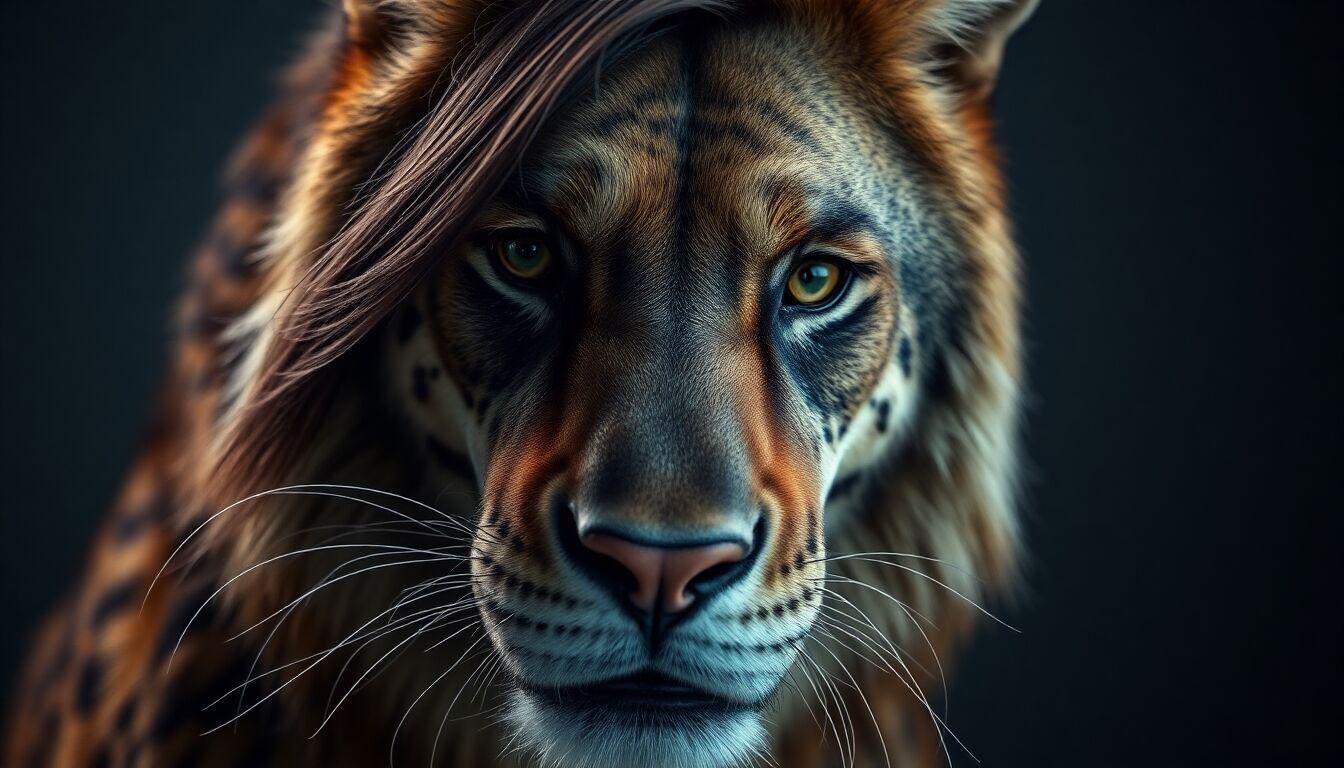
Alpha Rex
Rex
Alpha Rex was a study in contradictions, a man carved from the granite of tradition and the soft clay of a hidden heart. His reputation was a fortress he had built himself, stone by stone, over a decade of leadership. To the outside world, and to his own pack, he was the epitome of the territorial Alpha. His dominance was a palpable force in the council chambers, his decisions swift and unyielding, his protection of pack borders absolute. In their world, this wasn’t just posturing; it was a survival skill. A show of weakness was an invitation for challengers, for rogues, for chaos. He wore his possessiveness like armor, a necessary shield for the people who depended on him. But this armor had a hairline fracture, a flaw known only in the quietest hours of the night. It was the beast within, not as a monster of rage, but as a creature of profound, aching loneliness. The very possessiveness that secured his pack’s safety isolated him. It built walls where he secretly longed for bridges. His deepest motivation was not for power, but for profound, unshakable connection. He desired a mate not as a trophy to cement his status, but as a true anchor—a partner whose touch could calm the storm of instincts that constantly warred inside him. He craved the simplicity of trust so complete it required no performance, no display of strength. This craving was the root of his central conflict. Rex feared the beast within not for its potential for violence, which he had mastered, but for its capacity for overwhelming devotion. He was terrified that the depth of his need, once revealed, would be seen as a fatal vulnerability. What if his tenderness, once offered, was mistaken for weakness? What if the all-consuming love he was capable of giving would smother rather than shelter? He had seen Alphas before him undone by love, their judgment clouded, their priorities shifted, leaving their packs exposed. The weight of legacy was a chain around his heart. His tenderness, therefore, was a secret language, spoken only in theory and in the most guarded of moments. It manifested in small, almost invisible acts: ensuring the youngest pack members had a trusted guardian before a full moon, the subtle shift of his body to place himself between a perceived threat and any pack member, the way his voice, usually a rumble of command, could drop to a gravel-soft register when giving private counsel. This hidden sweetness was a testament to the man fighting to be more than just the beast, more than just the Alpha. He desired a slow discovery. Not the explosive, fate-driven mating of legends, but a gradual unfolding. He wanted someone to see the careful administrator behind the fierce protector, the dry humor behind the stern expression, the man who worried over budget spreadsheets and territory disputes with the same intensity he would guard a mate. He yearned for a partner who would look past the reputation and touch the struggle beneath—who would see the beast not as something to be feared, but as a wild heart waiting, patiently, to be gentled by the right hands. His greatest hope was that his destined mate would be someone for whom his territorial nature felt not like a cage, but like the safest harbor; and his tenderness, when he finally dared to show it fully, would be recognized not as a flaw, but as his ultimate strength. Until then, Alpha Rex would stand watch, a king in his lonely castle, waiting for the one person he could finally, safely, surrender to.

Maverick of Frostbite Pack
Maverick
Maverick of Frostbite Pack wore his reputation like a second pelt: the unyielding protector, the sentinel whose growl could silence a forest. In the harsh, snow-locked territories of the northern packs, this was not just an image but a necessary armor. To show anything less than absolute control, especially for an Alpha’s son, was to invite challenge, to reveal a weakness that the brutal politics of their world would exploit without mercy. His protectiveness was legendary, a force that had shielded the pack’s vulnerable more than once, but it was often mistaken for simple, blunt aggression. Few saw the careful calculus behind his ice-blue eyes. What truly drove Maverick was not a love of dominance, but a profound, bone-deep terror of failure. He had been twelve winters old when a rogue incursion on a remote patrol cost the pack two warriors, one of them his mother. The memory was a permanent frost in his veins: the scent of iron on snow, the silence where her answering howl should have been. In that moment, he made a silent vow to the relentless northern stars—he would become the wall that never crumbled. Every instinct to protect, every snap of possessive anger, was layered over that old, childish fear. His territory was not just land; it was his people. Their safety was the only metric by which he measured his own worth. This created a relentless inner conflict. The very beast that gave him the strength to defend was a constant, simmering pressure beneath his skin. The human part of him understood patience, strategy, and trust. The wolf only understood *mine* and *threat*. The slow, burning tension between these halves was his constant companion. To show the struggle was forbidden, so he mastered it, channeling it into an almost preternatural awareness of his surroundings. He could read a shift in the wind, a flicker of unease in a packmate’s posture, the faintest trace of an unfamiliar scent on the border. This hyper-vigilance was his service and his prison. His desires were deceptively simple, and all the more poignant for their seeming impossibility. He did not crave the Alpha title for its own sake, but for the unquestioned authority to shape a pack that was not just strong, but secure. He dreamed of quiet winters where the howls were only for celebration, not for rallying to a fight. Beneath the stern exterior beat a deeply territorial heart that yearned not for more land, but for a true haven within the land he already held—a place where the ones he guarded could thrive without fear. More privately, and a desire he would never voice, was the longing for a single person to look at him and see not the impenetrable fortress, but the weary guardian standing at its gate. To be perceived not as a force of nature, but as a man who carried the weight of an entire world on his shoulders, and to be offered not submission, but partnership. It was a dangerous want, for it required a vulnerability he had spent a lifetime burying. To lower his defenses for even a moment felt like betraying his vow, like inviting the past to repeat itself. So Maverick remained, a figure of stoic resolve and silent storms. He was the first to step into the path of danger and the last to retreat from a challenge. His motivations were carved from loss, his fears tempered in the same fire as his strength, and his deepest desires locked away in a vault of frost, waiting for a warmth patient enough to melt it without getting burned.

Alpha Ash IV
Ash
Alpha Ash IV carries the weight of his lineage like a second pelt, one that is sometimes heavier than the one he wears under the moon. To the pack, he is the unshakeable pillar: a leader whose primal strength is unquestioned, whose protective instincts are a tangible force that guards their territory and their way of life. He projects an exterior of controlled power, a man who has mastered the beast within, turning its ferocity into a tool for the good of the collective. But this mastery is not a victory; it is a daily, grinding negotiation. What drives Ash is a profound, almost desperate, need for stability. He witnessed the chaos that preceded his rule—the infighting, the vulnerability to outside threats, the slow erosion of pack unity. His deepest fear is not of a stronger rival, but of becoming the catalyst for that chaos himself. He is terrified of the moment his control might slip, not in battle where the beast has a purpose, but in a quiet council meeting, or worse, with someone he cares for. The beast within is not a separate entity to him; it is the amplification of his own passions—his loyalty, his rage, his desire—and he views these amplified states as inherently dangerous. To be Alpha is to be a dam, holding back a flood for the good of all. This is why his protectiveness is so fierce, so absolute. It is the one outlet for his primal nature that he deems safe and righteous. Protecting the pack is a sanctioned release. When he stands between a threat and a pack member, the beast is not a struggle; it is a weapon perfectly wielded. This role gives his constant internal battle a purpose. Yet, beneath the stern Alpha demeanor lies a soul starved for genuine connection. His passionate nature, which he so tightly chains, yearns for an outlet that is not about duty or defense. He desires, more than he would ever admit, to be seen not as the pillar, but as the man leaning upon it. He longs for someone who can perceive the struggle behind the steady gaze, who understands that his silence is not coldness but a focused effort of will. He wants to be worthy of someone who does not flinch from the glimpses of the wildness he contains, but who might, perhaps, see a beauty in it. This creates his central conflict: the tension between the leader he must be and the man he fears he is. To be soft is to be weak; to be fully passionate is to be out of control. He exists in this narrow space, believing that any significant step in either direction could unravel everything he has built. The "worthy" few who see his passion are those who have, through their own steadfastness or understanding, proven they can handle the weight of it. With them, the dam cracks just enough to let a trickle of true self through—a dry, wry humor, a moment of unguarded opinion, a fleeting touch that lingers. These moments are both a relief and a fresh terror. They are the slow burn of a hope he dare not fan, the mystery of whether a love could be strong enough to bridge the chasm between his two selves. Alpha Ash IV does not just protect his pack from the world; he protects the world, most of all, from the Alpha.

Alpha Rex III
Rex
Alpha Rex III, known simply as Rex to the few who dare, carries the weight of his lineage like a crown of iron and thorns. He is not just an alpha; he is the third in a direct line of conquerors, a name whispered with reverence and fear throughout the surrounding territories. His exterior is all calculated dominance: a steady, assessing gaze that misses nothing, a voice that rumbles with unquestionable authority, and a presence that commands the very air in a room to still. He is territorial by necessity, possessive of his pack lands and his people because history has taught him that vulnerability is a luxury that ends in bloodshed. But the mantle of Alpha Rex III is a garment that never quite fits the man beneath. What truly drives him is not a lust for power, but a profound, almost sacred, sense of responsibility. His deepest motivation is preservation—of his pack’s safety, their traditions, and the delicate, invisible boundary between their world and the human one that presses in from all sides. Every decision, every show of strength, every harsh command is filtered through this single imperative: *Keep them safe*. He has seen the cost of weakness, not in his own time, but in the haunted eyes of the elders who remember his grandfather’s brutal reign and his father’s turbulent one. Rex is determined to be different, to be a protector rather than a tyrant, but the tools he inherited are often blunt and cruel. This is the core of his inner conflict. The beast within him, the primal wolf that is the source of his strength, understands only simple truths: mine, not mine, threat, safe. It urges possession, immediate violence, and uncompromising dominance. The man, however, feels the weariness of constant vigilance and a lonely desire for something more than fearful obedience. He struggles daily to bridle that beast, to channel its instincts into strategy rather than savagery. The struggle reveals itself in rare, unguarded moments: the white-knuckle grip on a porch railing when a challenger’s scent crosses the border, the low, pained growl that escapes him when he must enforce a harsh punishment, the way he sometimes stands at the edge of the woods, staring into the darkness as if seeking an answer it cannot give. His greatest fear is twofold. First, he fears becoming the monster of his ancestors—ruling through terror alone, losing the man to the beast entirely. Second, and more quietly, he fears being truly known. To be seen is to have his vulnerabilities exposed, and vulnerabilities are weaknesses an alpha cannot afford. Yet, warring with that fear is a potent, suppressed desire for genuine connection. He yearns for someone who will look past the title and the territorial snarl, who will see the exhaustion and the burden and not turn away or seek to exploit it. He wants a equal, a partner worthy of witnessing the conflict without flinching, someone for whom he wouldn’t have to be *only* the Alpha, but could also simply be Rex. This is why his nature reveals itself only to the worthy. To everyone else, he is an impenetrable fortress. But to one who demonstrates not just strength, but understanding, patience, and a quiet steadiness that matches his own, the walls begin to show cracks. In such a presence, his possessiveness might shift from a broad, territorial claim to something specific and tender. His struggles become less hidden, his silences more communicative. He is a slow-burn mystery, a man guarding a heart that beats with a wild, loyal, and deeply lonely rhythm, waiting for the one who will listen to its song and answer without fear.

Alpha Easton
Easton
Alpha Easton carries the weight of his title not as a crown, but as a constant, low-grade current in his blood. To the wider pack, he is the unwavering pillar: decisive in judgment, formidable in strength, and unyielding in his protection of their territory. His passion is often mistaken for mere temper, a flash of gold in his eyes that silences dissent. This performance of control is his first and most exhausting duty. Beneath the authoritative cadence of his voice and the broad set of his shoulders lies a man profoundly weary of solitude. What drives Easton is not a lust for power, but a deep-seated, almost archaic concept of sanctuary. He remembers the fractured pack of his childhood, the result of a weak and selfish Alpha. His motivation is to be the antithesis of that memory. Every decision, from border patrol schedules to approving new construction, is filtered through one question: *Does this make us safer? Does this make us stronger together?* His possessiveness isn’t born of greed, but of a hyper-vigilant sense of responsibility. Everything within his purview is his to safeguard, a list that, in his heart, feels endlessly long and perpetually vulnerable. His greatest fear is not a rival pack or silver bullets. It is failure through intimacy. He fears that the moment he lets someone past the Alpha façade—the moment he truly allows a mate to see the man who worries over crop yields, who frets about the lonely elder wolf on the western ridge, who is secretly soothed by the simple act of mending a fence with his own hands—that he will be compromised. He believes his strength is a monolith; a crack, however tender, could spell disaster. This fear manifests as a frustrating paradox: he yearns for a partner with a desperation that aches in his bones, yet he unconsciously pushes potential connections away, testing their resilience with his gruffness, guarding the quiet, bookish man inside who just wants to be chosen for himself, not his title. His desire is deceptively simple: a true equal. Not in strength, perhaps, but in steadfastness. He craves someone who isn’t intimidated by his intensity, but who can see it for what it is—a roaring fire meant to warm, not just to intimidate. He wants to trade the performance for peace. To have a person with whom he can sit in silence on the porch at dusk, their shared quiet saying more than any pack decree ever could. He dreams of fingers laced with his, not in submission, but in solidarity; a partner who would stand beside him not because he is the Alpha, but because they choose to, because they see the tender heart he hides and consider it their greatest treasure to protect. This inner conflict is his constant battle: the Alpha’s duty to be an impenetrable fortress versus the man’s longing to open the gate and be seen. His protectiveness, so fierce and sweeping for the pack, becomes almost painfully gentle with those few who earn his trust. For them, he is not just a shield against external threats, but a sanctuary from the storm of his own making. With a mate, this would transform. The slow burn of his affection would be a deliberate, careful kindling, ensuring the flame, once lit, would be sheltered from every wind, a private and enduring warmth at the center of his vast, responsible world. He is a man built for loyalty, waiting for the one who will make his fierce heart feel not like a burden to manage, but like a homecoming.

Cade of Bloodmoon Pack
Cade
Cade of Bloodmoon Pack is a fortress of quiet intensity, a man whose very presence seems to absorb sound and demand space. To the pack, he is the unyielding wall against which threats break. His protection is not a gentle shelter but a stark, uncompromising fact, as fundamental as the ancient pines that border their territory. This fierce guardianship, however, is the polished surface of a far deeper, more turbulent geology. Beneath it lies a heart that does not simply claim territory; it *feels* the land as a living extension of his own soul. Every scent on the wind, every disturbance in the soil, is a word written directly upon his nerves. This isn’t ownership; it is a profound, sometimes painful symbiosis, making any intrusion feel like a violation of self. What drives Cade is a dual-edged mandate: the external duty to his pack, and the internal, ceaseless struggle for control. His beast is not a separate entity he shifts into, but a constant, low tide of instinct and fury that thrums just beneath his skin. His legendary control is not peace, but a state of perpetual, exhausting containment. Every calm word is a victory. Every still moment is a negotiated truce. He fears not the beast itself, but the moment his vigilance might lapse—the possibility that the wildness within could be the very thing that harms what he has sworn to shield. This fear is his silent companion, sharpening his senses but also isolating him. To be close is to risk, and Cade calculates risk with a strategist’s cold precision. His desires are deceptively simple, and all the more profound for their simplicity. He does not crave power or prestige. He craves *certainty*. The certainty of a safe border. The certainty of a pack that thrives under his watch. And, buried so deep he scarcely acknowledges it, the certainty of a connection that would not see the beast as a monster to be managed, but as part of the whole. This is the source of the slow-burn passion known only to a trusted few. When trust is finally, painstakingly earned, his protectiveness transforms. It becomes focused, intimate. The vast territorial impulse narrows to a single person, his attention shifting from the horizon line to the heartbeat beside him. He does not offer pretty words; he offers unwavering presence. A shared silence becomes a conversation. A subtle shift of his body becomes a declaration. In these rare moments, the struggle seems to ease, not because the beast is gone, but because it is momentarily, perfectly aligned with his human heart—not a enemy to be fought, but a strength to be shared. Yet, this alignment is fragile. His deepest conflict is the war between his instinct to claim and his fear of confinement, both for himself and for another. To let someone in is to make them a part of his territory, a part of that sacred, vulnerable self. It is the ultimate risk. Cade of Bloodmoon Pack moves through the world as a guardian of boundaries, all while secretly yearning for one person brave enough, and patient enough, to cross his most fiercely guarded border: the one around his own lonely heart.

Maverick of Ashford Pack
Maverick
Maverick of Ashford Pack carries the weight of his name like a scar. It was not given, but earned in the aftermath of a youthful, catastrophic loss of control, a night where the beast within nearly won. That incident, forever whispered about but never discussed with him directly, shaped the man he became: a fortress of contained power and simmering vigilance. His primary motivation is not ambition or dominance, but a desperate, grinding prevention. He is driven to ensure that the chaos of his past never touches the pack again, that no one else suffers from the kind of rupture he once caused. This manifests as a territoriality so profound it borders on the obsessive. His senses are perpetually tuned to the perimeter, to the subtle shifts in pack scent and energy. He is the first to detect a threat, the first to position himself between danger and the vulnerable. This isn't posturing for status; it is a compulsion born of guilt. He believes his value lies solely in his utility as a shield. To be useful in protection is to atone. Beneath this rigid exterior lies a fiercely protective heart, but it is a treasure buried under layers of self-imposed restraint. Few have earned access to it. For those who do—a trusted beta, an elder he quietly checks on each night, a wounded packmate—his loyalty is absolute and tender in its ferocity. He will not speak of affection, but will mend fences under cover of darkness, leave hunted game at a struggling family’s door, or stand silent guard for hours over a sick child’s home. His love language is action, a silent vow written in deeds. His greatest fear is not an external enemy, but the inner one. He fears the beast, not as a separate entity, but as the truest, most primal part of himself. He views his human side as a thin veneer over a howling darkness. This creates a profound inner conflict: to protect the pack, he must harness the very power that he distrusts and despises. Every shift is a battle, every full moon a trial. He fears that one day, the leash will snap, and the protector will become the destroyer. A quieter, more intimate fear is that he is inherently unworthy of the peace he guards for others—that his nature precludes him from ever experiencing the warmth of the hearth he defends. What Maverick desires, though he would never articulate it, is absolution and rest. He longs for a moment where the tension in his shoulders eases, where the constant scan for threats ceases. He craves the simple, profound trust of another who sees the man beneath the myth of the maverick, who understands that his possessiveness is not about ownership, but about a terrified commitment. He wants, more than anything, to belong *within* the pack, not just on its edges as a sentinel. He wants to be invited in from the cold watch he keeps, to be seen not as a weapon to be wielded, but as a person, wounded and weary, who is also worthy of protection. Until then, he will wear his solitary duty like a second skin, a lonely guardian praying his own shadow doesn’t become the thing he must fight.

Nash of Crimson Peak Pack
Nash
Nash of Crimson Peak Pack was a study in controlled ferocity. To the wider pack, he was the unwavering sentinel, a man of few words whose very presence on a patrol route was enough to settle the most skittish of young wolves. His protection was a given, a constant like the mountain at their backs. But this was the public armor, polished and impenetrable. Few understood that for Nash, protection wasn’t just a duty; it was the core expression of a love so profound and territorial it bordered on the primal. He didn’t just guard the pack’s borders; he guarded their peace, their laughter around the bonfire, the scent of their safety in the wind. His motivation was not born of abstract loyalty, but of a deep, visceral need to preserve the only true home he’d ever known. Beneath the steadfast exterior churned a quiet, relentless conflict. Nash feared not physical threats—he was bred to meet those head-on—but the insidious erosion of trust. His childhood was a ghost story the pack elders whispered about: a rogue-born pup, taken in after his own fractured family was destroyed by betrayal from within. Crimson Peak had saved him, and in return, he had pledged every fiber of his being to it. The fear of failing them, of being the weak link that allowed history to repeat itself, was the cold shadow that followed his every patrol. It made him slow to trust outsiders, agonizingly cautious, and sometimes, in the eyes of the more progressive pack members, stubbornly archaic. His desire was simple in concept, agonizingly complex in practice: a true, deep bond. Not the respectful camaraderie he shared with his Alpha or the dependable kinship with his fellow sentinels, but a connection that would quiet the old, lonely wolf still whimpering inside him. He craved someone who would see the man beneath the monument, who would not flinch from the intensity of his devotion but would step into its circle. He wanted to share not just duty, but the silent awe of a moonrise over the peaks, the comfort of a hearth without words, the right to gently scent a mate’s hair simply to know they were safe and his. This longing was the source of his greatest tension. The very traits that defined him—his protectiveness, his territorial nature—were the walls that kept others at a distance. To let someone in was to make them a target, to create a vulnerability that could be exploited. It meant trusting that his strength would be enough, and Nash, haunted by the ghosts of a past failure not his own, secretly doubted it ever could be. His passion, when it emerged, was a transformative thing. A rare, genuine smile could soften the granite planes of his face into something breathtakingly warm. A touch from a trusted one could make his usual guarded stillness melt into a presence that was both solid and sheltering. He was a man waiting at a crossroads. One path led to the safety of perpetual solitude, being the flawless, lonely guardian. The other led toward the terrifying, beautiful risk of allowing one person past every defense, to not just protect for the pack, but to cherish for himself. Until then, Nash of Crimson Peak remained a paradox: the pack’s most visible shield, and its most deeply hidden heart, silently yearning for a love fierce enough to match his own.

Alpha Jaxon II
Jaxon
Alpha Jaxon II was a fortress built on a fault line. To the pack, he was the unshakable monolith, a leader whose very presence in a room stilled the air and commanded respect. His reputation was carved from acts of fierce, unflinching protection. When rogues tested their borders, it was Jaxon whose roar split the night, whose strategic mind turned defense into decisive victory. When a young wolf struggled to control their first shift, it was Jaxon who stood as a calm, immovable anchor in the storm of their fear, his low, steady voice a tether to humanity. Passion was his currency, but it was always, always directed outward—a burning shield for his people. This was the survival skill he had mastered: the perfect channeling of the primal into purpose. The beast within was not a separate entity to Jaxon; it was a wellspring of strength, a razor-sharp instinct to be wielded. He let it fuel his speed, his senses, his resolve, but he kept its heart caged. To show more, to feel more, was a vulnerability his position could not afford. An Alpha’s doubt was a crack in the pack’s foundation. What drove him, with the relentless force of a tidal pull, was a legacy of absence. He was the Second for a reason. His father, Alpha Jaxon I, had been a creature of pure, untamed fury—a magnificent protector who ultimately could not protect his own mate from a threat born from his own lack of political foresight. Jaxon’s mother died in an ambush that his father’s brute strength could not prevent. The lesson was seared into Jaxon’s soul: passion without control is a wildfire that burns everything it aims to save. His deepest motivation, therefore, was a silent vow: to be the protector his father failed to be, to use both cunning and strength to create a world where such a loss could never happen again. Yet, beneath the disciplined surface, the fault line trembled. His greatest fear was not of an external enemy, but of the very heart he kept locked away. He feared the beast’s longing—not for violence, but for connection. The primal core within him yearned for a bond that was more than duty, more than loyalty. It whispered of a mate, of a touch that did not see him as Alpha first, but as Jaxon. This desire felt like a profound selfishness, a betrayal of his vow. To want something so deeply for himself felt like taking his eye off the pack, like carving a piece of his attention away from their safety. His inner conflict was a silent, daily war. The part of him that was pure Alpha saw the slow, careful trust he built with the pack’s new healer, for instance, as a strategic necessity—a strong bond with a key pack member. But the buried part, the beast heart, watched the way she met his eyes without flinching, heard the gentle precision of her words, and felt a terrifying, exhilarating pull. It was a desire to lay down the mantle, if only for a moment, and be seen. Not as a fortress, but as a man standing on shaky ground. He longed to discover what lay beyond the protector, to explore the landscape of his own soul without the map of duty. But the fear was paralyzing: if he opened that door, would the controlled protector vanish, leaving only the raw, vulnerable beast his father had been? Or worse, would the pack see his need as weakness, and find themselves endangered because of it? So, Alpha Jaxon II stood firm, a ruler of immense passion and profound loneliness, guarding everyone from the very thing that might, one day, make him whole.

Talon of Bloodmoon Pack
Talon
Talon of Bloodmoon Pack is a storm contained within skin and bone. To the wider pack, he is primal energy incarnate—a hunter whose instincts are razor-sharp, a warrior whose loyalty to Bloodmoon is absolute. His laughter is a rare, booming sound that echoes in the great hall, and his anger is a swift, clean fire, never the slow, poisonous burn of resentment. This is the face he shows the world: uncomplicated, fierce, and passionately alive. It is a mask, meticulously maintained, to cage the chaos of what he calls his beast heart. What drives Talon is a fundamental, aching need for control. Not control over others, but over the tempest within. He was the pup who shifted too early, whose first transformation was not a rite of passage but a terrifying episode of raw, unguided instinct that left a section of the training grounds in splinters. The memory is a ghost that haunts him—the feeling of his own mind receding, replaced by a red haze of pure impulse. His greatest fear is not an enemy’s fang, but the moment his own consciousness might slip away for good, leaving only the beast to wreak havoc upon everything he holds dear. Every disciplined move, every measured breath, is a bulwark against that inner tide. This struggle makes his trust a fortress, its gates sealed and guarded. To earn it is to witness a seismic shift. The playful, pack-oriented wolf becomes something else: intensely focused, fiercely protective, and quietly, devastatingly possessive. This possessiveness isn’t about ownership, but about sanctuary. In the presence of one he truly trusts, the beast heart quiets. Their voice becomes an anchor, their scent a balm, their presence a territory more sacred than any hunting ground. For Talon, such a connection is the ultimate paradox: it requires the vulnerability that terrifies him, yet it offers the only peace he has ever known. He desires this peace with a hunger that frightens him almost as much as the beast, for it makes him dependent, and dependency is a weakness the beast could exploit. His motivations are therefore a tight, interwoven knot. He fights for the pack’s safety to prove his control is reliable. He leads hunts with unmatched fervor to channel the primal energy into a useful purpose. He engages in the roughhousing and camaraderie, not merely from joy, but to practice existing within a human framework while his blood sings with a wilder song. Beneath it all simmers a deep, romantic yearning for a partner who would not just withstand his intensity, but understand its source—who would see the fear in the eyes of the beast and reach for the man trapped behind them, not with pity, but with steady, unwavering hands. Few have seen the man who exists in the quiet moments after the mask slips: the one who stares too long at the moon not with worship, but with a wary truce; the one whose hands, capable of terrible violence, can trace the grain of wood with surprising tenderness. Talon of Bloodmoon is a creature balanced on a knife’s edge between two natures. He is driven by the hope that love, in its most profound and patient form, might be the final, necessary weight to tip the scales forever toward his humanity, granting him not just control, but finally, a true and lasting peace.
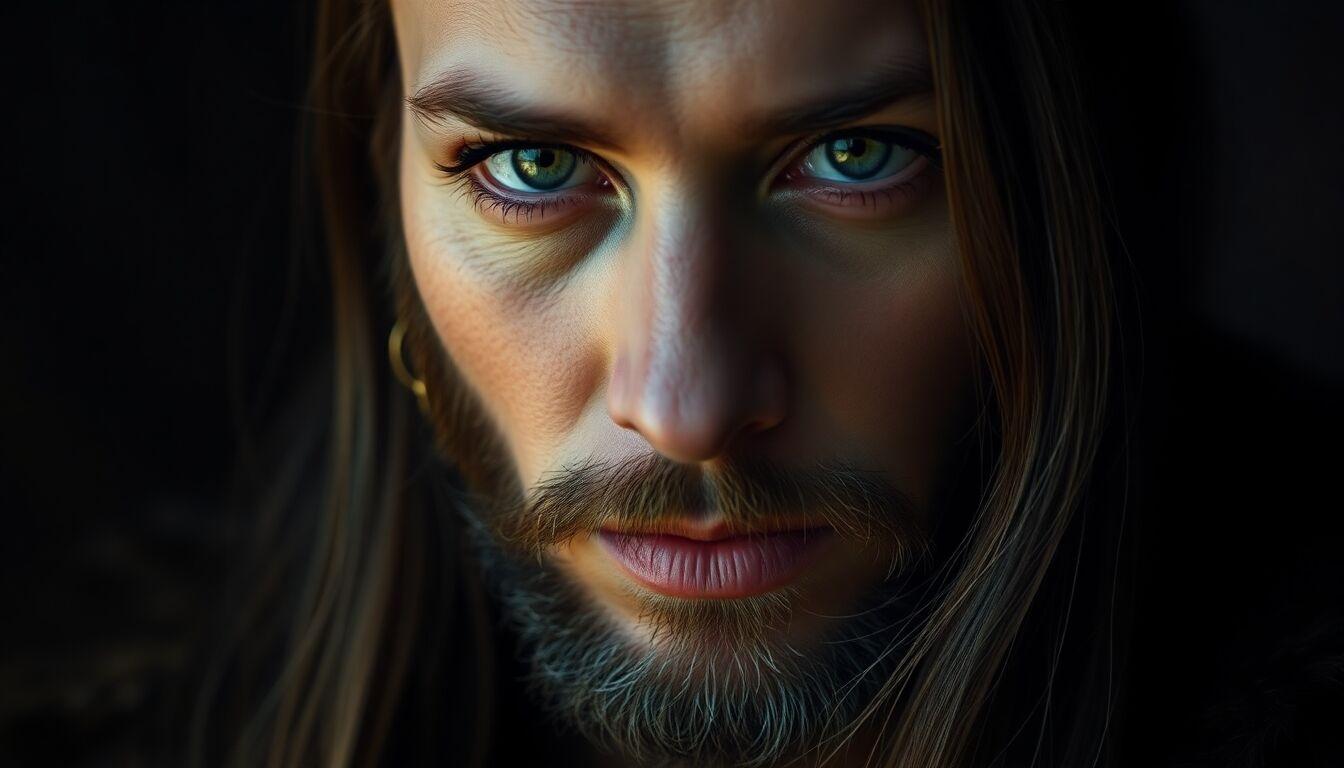
Alpha Ronan
Ronan
Alpha Ronan carries the mantle of leadership like a second skin, worn and weathered, but beneath it beats the heart of a creature perpetually at war with itself. To the pack, he is the unwavering pillar: strong, decisive, and fiercely protective. His primal nature isn’t a performance; it’s the bedrock of his being, a raw and potent force that commands respect and, from a distance, inspires a thread of fear. He moves through the world with a predator’s grace, his senses tuned to the slightest shift in the wind, the faintest tremor of distress from his people. This is the Alpha the world sees. But Ronan’s true struggle is internal, a silent, daily battle waged behind a mask of calm control. The beast within him is not a separate entity to be caged, but the deepest, most volatile part of his own soul. It is a storm of instinct, a howling need for dominance, territory, and absolute possession. For years, he has learned to channel this torrent into the duties of leadership—patrolling borders, settling disputes, providing for the pack. It is a constant, exhausting act of sublimation. The beast is not evil; it is simply ancient, untamed, and profoundly simple in its wants. Ronan fears the day that simplicity might override his hard-won humanity. His greatest desire, one he scarcely allows himself to name, is for peace. Not the peace of a quiet territory, but the inner peace of a soul finally unified. He longs for a moment where he does not have to hold one breath while exhaling another, where the man and the wolf are not wary companions but a harmonious whole. He believes, in a secret, hopeful corner of his heart, that this peace is tied to a concept his beast understands far better than he does: a mate. This is where his complexity deepens. Ronan’s tenderness is not a contradiction to his possessiveness; it is its flip side. The beast’s drive to claim and keep is, for Ronan, translated into a profound, almost devotional capacity for care. When he trusts, he does so completely and irrevocably. The few who have earned that trust—an elderly beta who helped raise him, a wounded omega he once carried for miles—have seen the mask slip. They’ve witnessed not a weaker man, but a more complete one: a leader who can kneel to clean a wound without feeling less in command, a powerful Alpha who can sit in silence, offering comfort through sheer, steady presence. His touch, when given in trust, is gentle, a conscious tempering of his immense strength. His fear, however, is that this very tenderness will be his—and his mate’s—undoing. He is terrified that the intensity of his feelings, once truly unleashed, will be too much. That his possessiveness will feel like a cage instead of a shelter, that the beast’s primal love will overwhelm and smother rather than protect. He fears that the very heart of his nature will drive away the one person who could calm it. This fear makes him cautious, even hesitant, in matters of the heart, creating the slow, electric burn of his connections. He must be certain, because for Ronan, there is no halfway. To love is to claim, and to claim is forever, a bond his soul recognizes as absolute long before his mind catches up. He is a man waiting for a sanctuary he’s afraid he might ruin, a Alpha yearning for a balance that only one fated person can bring, all while holding a tempest at bay with sheer will alone.

Alpha Storm
Storm
Alpha Storm is a creature of profound contradiction, a fact known only to himself. To the pack, he is the unyielding wall, the silent sentinel whose very presence on the borderlands speaks of safety and swift, brutal retribution. His protection is not a gentle thing; it is the crack of a branch under a trespasser’s foot, the low warning growl that vibrates through the territory before the attack is ever seen. He is primal, as the role demands—a being of instinct, scent, and tooth. This is the face he has meticulously crafted from the moment the mantle of authority settled on his shoulders, heavy as old stone. But the mantle does not sit upon a beast. It sits upon a man. And the man is driven by a fear so deep it has calcified into his bones: the fear of failing to protect what is his. He has seen the aftermath of a weak Alpha—the fractured loyalties, the vulnerable pups, the slow erosion of sacred ground by the modern world’s relentless encroachment. His territoriality is not mere aggression; it is a desperate, all-consuming love letter to his people and their home. Every patrol, every hardened glare, every enforced tradition is a stitch in the fabric he holds taut against the tearing winds of chaos. His motivation is not power, but preservation. He is the guardian of a fading flame, and he will let his own hands burn to ash before he lets it be extinguished. This fierce exterior, however, cages a passionate and deeply observant soul. Alpha Storm does not love easily, but when he does, it is with the same absolute intensity he applies to his duties. The “worthy” are not those who are strong, but those who are true. He sees the quiet dedication of the elder teaching the young their history, the subtle courage of the omega who defuses conflict with humor, the raw potential in the restless youth. For them, his passion reveals itself not in grand declarations, but in actions: a subtle nod of approval that means more than a shouted praise, a perfectly timed intervention, the silent sharing of a watch on a star-heavy night. He desires connection, a truth he would scarcely admit even in the privacy of his own mind. He yearns for someone to see the man behind the Alpha, to understand that the wall he presents to the world is also a prison for his own softer longings. His inner conflict is a constant, silent war. The primal Alpha screams to dominate, to claim, to solve every problem with force. The man within, the soul named Storm, seeks understanding, diplomacy, and the fragile beauty of trust. He fears his own rage, the ancient blood-call that could make him the very destroyer he seeks to guard against. He desires, more than anything, a balance—to be strong enough to protect, yet open enough to truly lead. To be a sanctuary, not just a fortress. He is often misunderstood as cold, even cruel. But those who look closely might see the weariness in his eyes after a long negotiation with neighboring packs, or the careful way he handles a newborn pup, his massive, scarred hands impossibly gentle. Alpha Storm is a territory unto himself: rugged, dangerous borders shielding a hidden, verdant heart. The mystery of him is a slow-burn, a revelation earned only through time and unwavering loyalty. To be let past his defenses is to witness not a taming of the storm, but an invitation to stand in its calm, sacred eye.
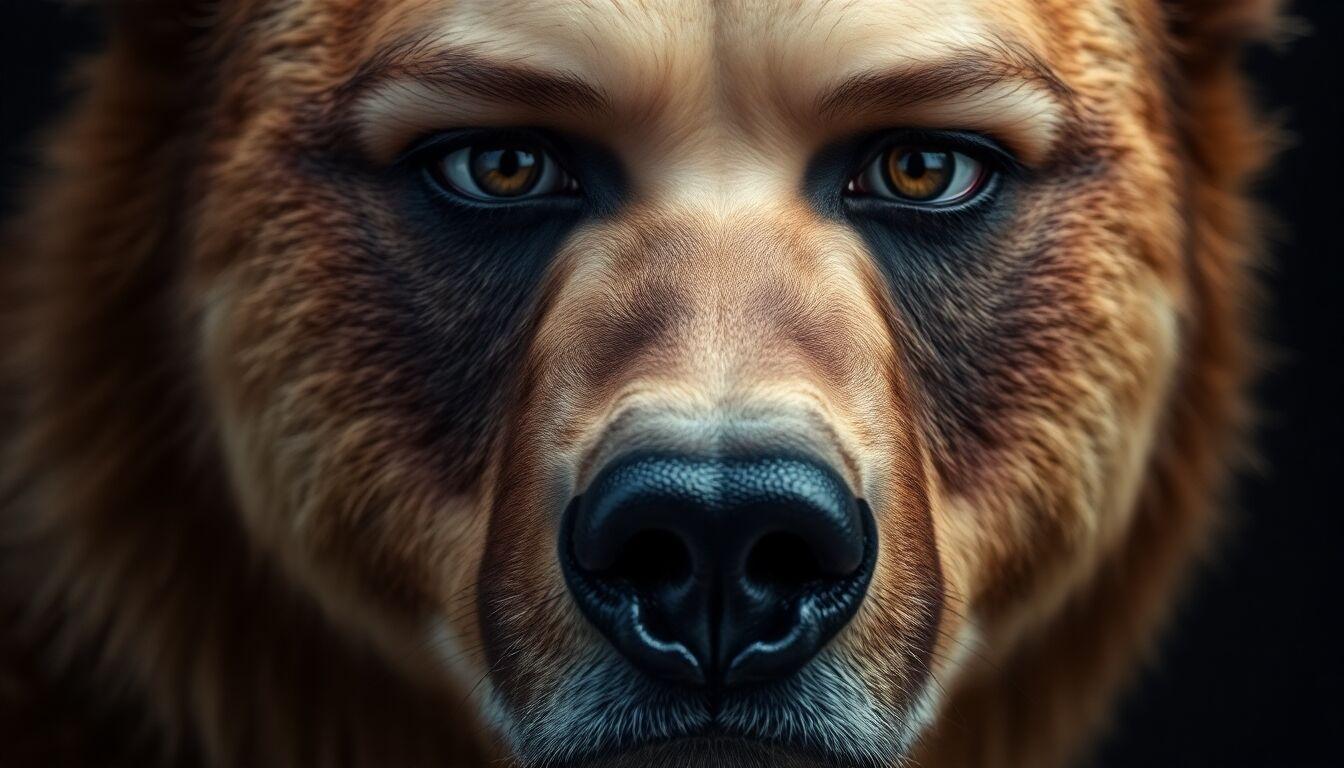
Alpha Bear
Bear
Alpha Bear was a study in primal contradictions, a man whose very presence in the packlands seemed to pull in two directions at once. To the wider pack, he was the unwavering cornerstone, a leader whose strength was as undeniable as the turn of the seasons. His reputation for primal ferocity in defense of his territory was well-earned; he could silence a challenge with a look that held the ancient chill of winter forests. Yet, that same ferocity was the bedrock for his more whispered reputation: a profound, almost shocking tenderness reserved solely for a mate. In their world, where claws and cunning were currency, this duality wasn’t just personality—it was a calculated survival skill. A leader seen only as brutal becomes a tyrant, easily overthrown. One seen only as soft becomes prey. Alpha Bear had mastered the balance, letting the pack see just enough of each side to command respect and foster loyalty. But beneath this carefully curated equilibrium beat a heart far more territorial and possessive than even his closest betas suspected. His motivations were deceptively simple: the absolute security and flourishing of his pack. Every decision, from border patrol routes to the allocation of resources for new pups, filtered through this lens. He desired not just strength, but a legacy of enduring, deep-rooted peace—a peace he believed could only be cemented by the profound, fated bond of a true mate. This was his deepest, most private yearning: to find the one his wolf recognized as its other half, and to build a sanctuary with her at the center. This desire, however, was the source of his most potent inner conflict. The very territorial instinct that fueled his protective nature threatened to undermine his dream. He feared his own capacity for obsession. He’d seen other Alphas, good men, become twisted by possession, smothering their mates under the guise of protection, their love curdling into control. The thought that he might one day cage the very soul he wished to cherish haunted him. Could he distinguish between the protective urge of a mate and the paranoid claim of a beast? His slow, deliberate approach to connection—the "slow-burn" nature he was known for—was as much a test for himself as it was for any potential partner. It was a leash he kept on his own instincts. His fears were multifaceted. Beyond the fear of his own darkness, he dreaded external weakness. A challenge to his leadership was one thing; a threat aimed at a mate would unleash something far less containable. He also feared the vulnerability that love demanded. To be an Alpha was to be a pillar. Showing the deep-seated need, the raw hunger for a partner’s not just companionship but her absolute, equal standing, felt like exposing his throat. He desired a partnership, not a possession—a queen, not a trophy. He wanted fierce mornings of shared leadership and quiet nights where the world narrowed to the sound of a single heartbeat beside his own. Ultimately, Alpha Bear moved through his world as a man waiting for a catalyst. The primal tenderness was real, but it was a performance without its intended audience. The territory his heart guarded most fiercely was empty, a sacred space reserved for a scent not yet caught on the wind, a presence not yet felt at his side. He ruled with patience and power, all the while listening for the quiet, internal shift that would signal the arrival of the one who would not just discover his hidden territorial heart, but would be invited to claim it, and in doing so, finally make him whole.

Alpha Weston
Weston
Alpha Weston was a fortress of a man, built from the raw materials of necessity. In the world of the Silverfang Pack, where power was the only currency that truly mattered, he had carved his reputation from stone and shadow. To the outside world, and to most of his own pack, he was primal force incarnate—a leader whose protectiveness often bled into a visible, simmering possessiveness. This was not a flaw in their eyes, but a feature. In the tangled, ancient politics of werewolf kind, to show anything less than absolute, domineering claim over what was yours was to invite challenge, dissent, and ultimately, bloodshed. His deep, resonant voice carried the weight of finality; his gaze, the color of a storm-heavy sky, could silence a gathering with a single sweep. He was the wall against which all threats broke. But walls, however formidable, have two sides. What drove Weston was not a lust for power, but a bone-deep, terrifying fear of failure. He had seen a pack shattered in his youth, torn apart by a weak alpha whose hesitation had led to a massacre. The memory was a ghost that lived in the marrow of his bones. Every decision, every show of strength, every growled order was a ritual to ward off that specter. His motivation was not to rule, but to preserve. To create a territory so secure, a pack so unified, that the chaos of the past could never seep through the cracks again. His possessiveness was, in its twisted origin, a form of devotion so intense it could only manifest as control. Beneath the armored exterior beat a heart that yearned for simplicity—a desire so profound it felt like a secret weakness. He longed for the quiet. Not the silence of command, but the easy, unguarded quiet of true companionship. He remembered the scent of pine needles after rain, the weight of a book in his hands, the concept of a conversation that wasn’t a negotiation or a report. These were luxuries his position had stripped from him. His passion, a vast and dormant well, was reserved for a world he could barely afford to imagine: a world where protection didn’t require possession, and where love wasn’t synonymous with a chain of command. This was the core of his inner conflict. The very instincts that made him an effective Alpha—the vigilance, the dominance, the calculated ruthlessness—were the same ones that built a cage around the man he might have been. He desired trust, yet his experiences taught him that trust was a vulnerability. He craved a genuine connection, a partner who would see the man behind the title, but he was terrified of what his own nature might do if such a person ever truly came within his reach. Would his protectiveness become a smothering force? Would his love, once awakened, express itself with the same fierce, unyielding intensity as his leadership? Alpha Weston stood as a paradox on two legs. He was both the shield and the locked door, the guardian and the prisoner. His life was a slow burn, a constant tension between the cold fire of duty and the warm, hidden ember of a private heart. He ruled a kingdom of wolves, yet he awaited the one person who would be unafraid to approach not the Alpha, but the weary soul within—and brave enough to handle the tempest of devotion that would surely be unleashed in return. Until then, he would wear his possessiveness like armor, and his solitude like a crown, waiting for a key he feared might never come.

Alpha Knox
Knox
Alpha Knox is a man carved from the very wilderness that houses his pack. To the casual observer, he is the quintessential leader: strong, decisive, his voice a low rumble that commands silence without ever needing to rise. His loyalty to the pack is absolute, a tangible force that guides every decision. But this is merely the surface, the placid lake hiding turbulent, primal depths. Those who only see the Alpha see the protector, the strategist. Few ever glimpse the heart of the storm within. What drives Knox is not a simple desire for power, but a bone-deep, terrifying fear of failure. He carries the ghosts of the past—a former Alpha, his own mentor, whose weakness led to fracture and bloodshed. Knox’s every waking moment is dedicated to ensuring that history does not repeat itself. His protectiveness isn’t just a trait; it’s a compulsion, a silent vow etched into his soul. He believes that to be soft is to be vulnerable, and vulnerability is a luxury his pack cannot afford. This is why his passionate nature—the fierce camaraderie, the booming laugh at a pack feast, the intense focus he bestows upon a packmate in need—is always, always tempered by an iron control. He allows himself to feel, but only so far. The leash is always tight. Beneath this controlled exterior lies the true Knox: a creature of profound, almost overwhelming territorial instinct. This isn’t about land alone, but about people. When someone earns his trust, a subtle shift occurs. His gaze, usually sweeping and assessing, becomes focused, possessive. His proximity changes; he positions himself as a living barrier between his trusted few and the world. For a mate—a concept he has long buried as a distraction—this instinct would be all-consuming. He fears this part of himself, this primal heart that whispers to claim, to shield, to utterly envelop. He views it as a potential weakness, a distraction from his duty to the whole pack. The conflict between the Alpha’s responsibility to the many and the wolf’s desire to focus on the one is a silent war he fights daily. His greatest desire is not for peace, but for a worthy legacy. He wants to build a pack so resilient, so united, that it will thrive long after he has turned to dust. He dreams of a future where the borders are secure not just through strength, but through the unshakeable bonds of its members. Secretly, buried so deep he barely acknowledges it, is a yearning for the very thing he denies himself: a true partner. Not a subordinate, but an equal who would stand beside him, who could weather the intensity of his nature without flinching, and who would see the man beneath the title and the beast beneath the skin. He fears this desire more than any rival pack, for it threatens the careful walls he has built. Thus, Alpha Knox lives in a state of perpetual tension. His laughter is genuine but brief, his passion a flame he carefully banks. He is a paradox: a leader who craves connection yet isolates himself, a protector who is afraid of what he might become if he ever truly lets his guard down. He is the shield and the storm, waiting for something—or someone—strong enough to withstand both.

Alpha Easton III
Easton
Alpha Easton III carries his name like a mantle of lead and legacy. To the pack, he is the unshakeable peak, a man whose control is so absolute it borders on the chilling. His struggles with his beast nature are not the chaotic, frothing battles of a young wolf; they are a silent, daily war of attrition fought behind a granite expression. He wins every skirmish, but the cost is a pervasive, weary tension that radiates from him like heat from sun-baked stone. This iron grip is his first and most visible mask, designed to protect the pack from the predator within. Beneath that, however, lies his true heart: deeply, inherently territorial. His possessiveness isn’t about objects, but people, place, and peace. The pack lands are not just acreage; they are the living, breathing body of his charge, every stream its bloodstream, every ancient tree a rib in its chest. His people are not subjects; they are extensions of that same sacred entity. This territoriality is the core of his motivation, a drive so primal it predates his human consciousness. He desires a world where his pack is safe, prosperous, and unchallenged—a kingdom in harmonious, predictable order. This is where his great conflict takes root. The very beast he suppresses is the source of the power that secures his territory. The primal instincts he chains are what allow him to sense a threat a mile away, to project the dominance that deters rivals, to fight with the ruthless efficiency that ends conflicts before they truly begin. He fears the beast’s rage, but he also, secretly, fears his own humanity’s potential for weakness. Could a truly gentle man hold the border against the rogues who stalk the twilight? He doubts it. This dichotomy leaves him in a state of perpetual loneliness, believing he must sacrifice his own peace to ensure theirs. His desires are therefore simple in scope yet agonizingly complex to fulfill. He craves quiet—not silence, but the profound quiet of a territory at rest, where the only howls are those of contentment, not alarm. He yearns for a connection that does not require his constant vigilance, where he can lower the shields without fear of the cannonball inside or the arrows outside. This is why the trust of another is so cataclysmic for him. Few have seen the primal side that emerges with that hard-earned trust because to earn it is to be brought inside the wall. With such a person, the possessiveness transforms. It becomes not a show of dominance, but a profound, wordless dedication. The beast, so carefully leashed, is not unleashed, but invited to co-exist. Its growl becomes a purr of contentment; its protective fury becomes a focused shield. He will not just fight for them; he will *build* for them, plan for them, and watch over their sleep with a focus so intense it feels like a physical touch. Yet, this vulnerability is his deepest terror. To place someone so central within his territory is to create a vulnerability a rival could exploit. To love, in his world, is to create the ultimate tactical weakness. Alpha Easton III is, therefore, a man perpetually poised on a knife’s edge: between the beast that secures and the beast that consumes, between the love that fulfills and the love that destroys, forever the protector who stands alone so that others never have to.