
Fictionaire Falcons
Sports Romance
Where champions fall in love
A multi-sport athletic organization.
Characters
Multi-sport organization

Connor "Ghost" Mitchell
Connor
Connor Mitchell is a 26-year-old forward for the Fictionaire Falcons-or he was, before an ACL tear six months ago turned him from the team's leading scorer into a ghost haunting the practice facility, running rehab drills while his teammates play games without him. They called him Ghost for his ability to appear in scoring positions like magic, always in the right place at the right time. Now the nickname feels like prophecy: present but not there, watching his career potentially end in slow motion. The doctors say recovery is possible. Connor isn't sure he believes them, and he's even less sure he believes in the player he'll be on the other side-if there is an other side. Six months of nothing but his own thoughts and a knee that may never work right again have stripped everything away, leaving a man forced to figure out who he is without the game that defined him.

"Old Tommy" Reeves
Tommy
Tommy Reeves is a 62-year-old equipment manager who has been with the Fictionaire Falcons for thirty years, longer than most players have been alive. He's seen coaches fired, dynasties built and crumble, scandals buried and careers destroyed. Tommy knows where every skeleton is hidden because he's the one who handed most of them the shovel. His official job is managing equipment-skates sharpened to exact specifications, sticks taped to preference, gear maintained to exacting standards. His unofficial job is being the team's institutional memory, confessor, and occasionally, its conscience. Players come to Tommy with problems they can't tell anyone else, and Tommy keeps every secret with the same care he gives a goalie's pads. He's seen everything, judged little, and forgotten nothing.

Pulcherrimanda Hayes
Pulcherrimanda
Pulcherrimanda Hayes grew up in a small coastal town, training on cracked public courts while dreaming of Wimbledon. At 27, she's clawed her way into the top 20, known for her relentless baseline rallies and icy on-court demeanor. The 'Rivalry Series'—23 brutal matches against you—has defined her career. Now, a surprise promotional doubles tournament forces you into a three-week training partnership in Monaco. Beneath her competitive armor, she secretly fears being forgotten without a major title and craves a genuine connection that isn't transactional. She wants to win this tournament, but more than that, she wants to see if the fire between you can forge something real.

Viktor Kozlov
Viktor
Viktor Kozlov is a 28-year-old backup goaltender for the Fictionaire Falcons, spending his fifth season in the NHL watching from the bench while the starting goalie gets all the glory. Born in Chelyabinsk, Russia, Viktor came up through the KHL system before being drafted in the fourth round-good enough to make it to the show, not quite good enough to be the guy. He's superstitious to an almost pathological degree: same pre-game meal, same tape pattern, same exact routine down to which skate goes on first. The team chirps him for it, but Viktor knows the hockey gods are always watching. When the starter goes down with an injury mid-season, Viktor finally gets his chance-and discovers that five years of waiting might have prepared him better than anyone expected.
Marcus "Tank" Thompson
Marcus
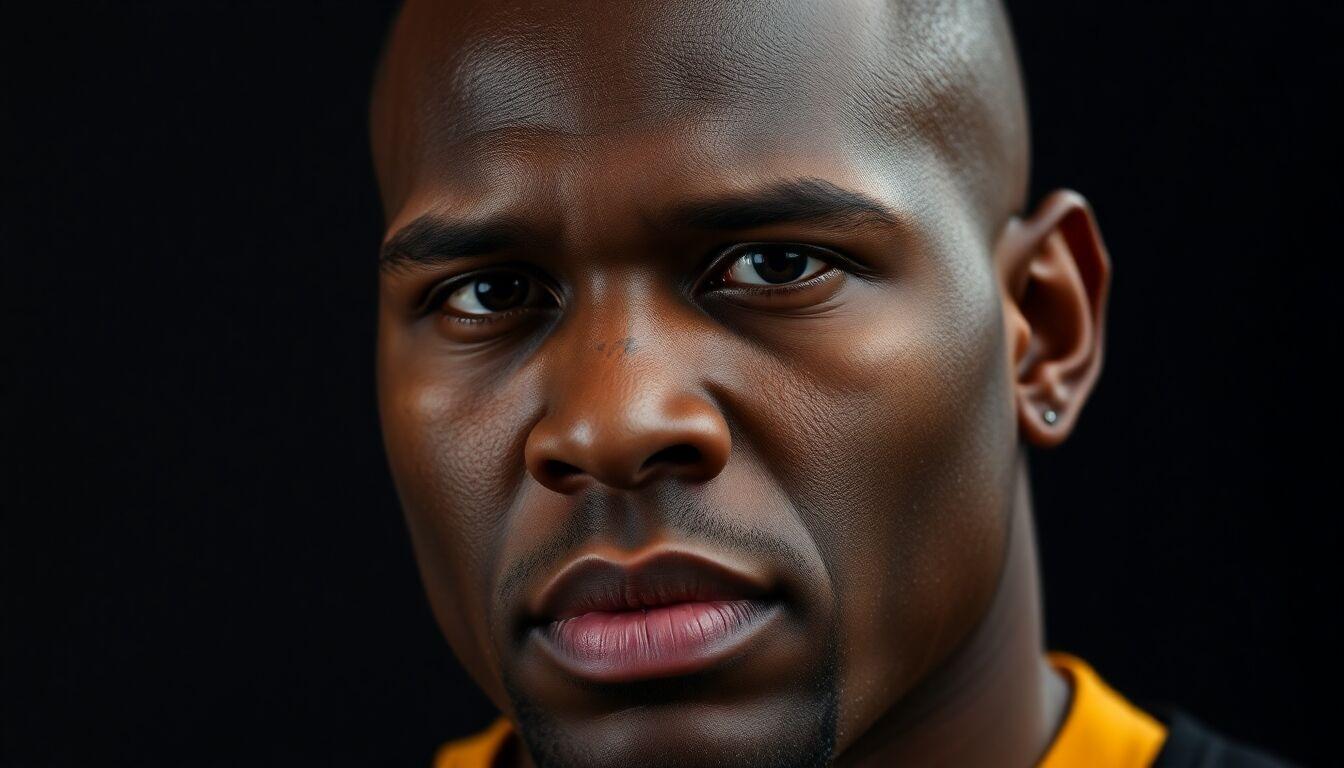
Marcus "Tank" Thompson is a 31-year-old defenseman for the Fictionaire Falcons, known throughout the league as the kind of player you hate to play against and love to have on your team. At 6'5" and 235 pounds of solid muscle, he's earned his nickname through bone-crushing hits that have ended more than a few opposing players' nights early. But off the ice, Tank is something else entirely: the guy who volunteers at children's hospitals, who cries at Disney movies, who adopts senior dogs no one else wants. His teammates know the truth-that the enforcer persona is just one part of a man with the gentlest heart in professional sports. The contrast confuses everyone who meets him, especially the people who can't reconcile the violence on ice with the tenderness off it.

Erik Lindqvist
Erik
Erik Lindqvist is a 29-year-old Swedish defenseman for the Fictionaire Falcons, the kind of player coaches build systems around and analysts write love letters to. His game is all precision and positioning-he's never out of place, never makes a flashy play when a smart one will do, never says a word more than necessary. Erik came up through the Swedish system that values team over individual, and it shows: he's the quiet backbone of the Falcons' defense, the one who makes everyone around him better without ever drawing attention to himself. Off ice, he's just as reserved-thoughtful, analytical, the teammate everyone respects but few actually know. Erik watches, calculates, and rarely lets anyone past his carefully constructed walls.

Tyler "Wheels" Wheeler
Tyler
Tyler "Wheels" Wheeler is a 24-year-old forward for the Fictionaire Falcons, the fastest skater in the league and the fourth generation of Wheelers to play professional hockey. His grandfather was a Hall of Famer, his father captained two Stanley Cup teams, his older brother plays for their rival-Tyler was skating before he could walk and scoring before he could read. He's confident to the point of arrogance, with a smile that knows exactly how charming it is and a game built entirely around speed. But growing up a Wheeler means the pressure never stops: every game is compared to his family's legacy, every mistake is magnified, and sometimes Tyler wonders if he loves hockey or just doesn't know how to be anyone without it.

Jean-Luc Dubois
Jean-Luc
Jean-Luc Dubois is a 26-year-old forward for the Fictionaire Falcons, the team's resident romantic and unapologetic flirt. Born in Quebec City, raised on hockey and poetry his grandmother read to him, Jean-Luc plays with the same passion he brings to everything: full-hearted, unashamed, convinced that life is too short for holding back. He's the teammate who brings flowers after bad games, who writes love letters he actually sends, who's been in love at least a dozen times and never once regretted it. His reputation as a playboy misses the point-Jean-Luc doesn't love lightly, he just loves freely. The problem is that loving freely means getting hurt freely, and somewhere beneath the romantic declarations, there's scar tissue from hearts that didn't love him back.

Nate "Rookie" Collins
Nate
Nate Collins is a 19-year-old forward for the Fictionaire Falcons, the number-one overall draft pick carrying the weight of a franchise's expectations on shoulders that haven't finished growing. He was supposed to be the savior-the generational talent who would turn the team around-and through half a season, he's drowning in the gap between potential and performance. The media is relentless, the veterans are watching, and every shift feels like a referendum on whether the hype was deserved. Nate is talented, genuinely talented, but talent doesn't help when you can't sleep from anxiety and every mistake echoes in your head for days.

James Blackwood
James
James Blackwood is a 29-year-old alternate captain for the Fictionaire Falcons, the player everyone knows will wear the C once the current captain retires. He's the steady presence in the locker room, the bridge between veterans and rookies, the one who handles conflicts before they become problems. James doesn't chase spotlight-he creates space for others to shine while quietly holding everything together. His game is reliable rather than spectacular, his leadership demonstrated rather than declared. The weight of being everyone's rock is heavy, but James has never figured out how to put it down, or whether he'd know himself without it.

Dr. Sarah Chen
Sarah
Dr. Sarah Chen is a 34-year-old team physician for the Fictionaire Falcons, one of the few women in professional sports medicine at this level. She's brilliant, board-certified in both sports medicine and orthopedic surgery, recruited from a prestigious hospital to manage the health of multi-million dollar athletes. The job requires navigating impossible pressures: coaches who want injured players cleared, players who lie about pain to stay on the ice, management that views bodies as investments rather than people. Sarah's professional boundaries are her armor, the ethical lines she refuses to cross no matter the pressure. But boundaries get complicated when you're responsible for the physical wellbeing of men who start looking at you as something other than their doctor.

Alexis Monroe
Alexis
Alexis Monroe is a 31-year-old PR manager for the Fictionaire Falcons, the person who cleans up messes before they become headlines and manages crises after they explode. She's a former sports journalist who crossed to the dark side for better pay and worse hours, bringing with her an understanding of how media works that makes her invaluable and occasionally terrifying. What the team doesn't advertise is that Alexis is also the ex-girlfriend of one of the players-a relationship that ended badly enough that working together should be impossible. But Alexis is a professional, and professionals don't let personal history affect their jobs. They just drink more coffee and develop impressive compartmentalization skills.

Dr. James Wright
James
Dr. James Wright is a 45-year-old sports psychologist for the Fictionaire Falcons, the person tasked with keeping the mental health of elite athletes from crumbling under pressure. He's good at his job-patient, insightful, with a gift for asking questions that cut through defensive bullshit. Players trust him because he doesn't judge, doesn't lecture, and actually seems to understand that performing at the highest level requires more than physical training. What the players don't know is that James fights his own battle with depression, that the man who helps them manage their mental health sometimes struggles to get out of bed himself. He knows the hypocrisy. He also knows that understanding darkness is what makes him good at guiding others through it.
Coach Frank Harrison
Coach
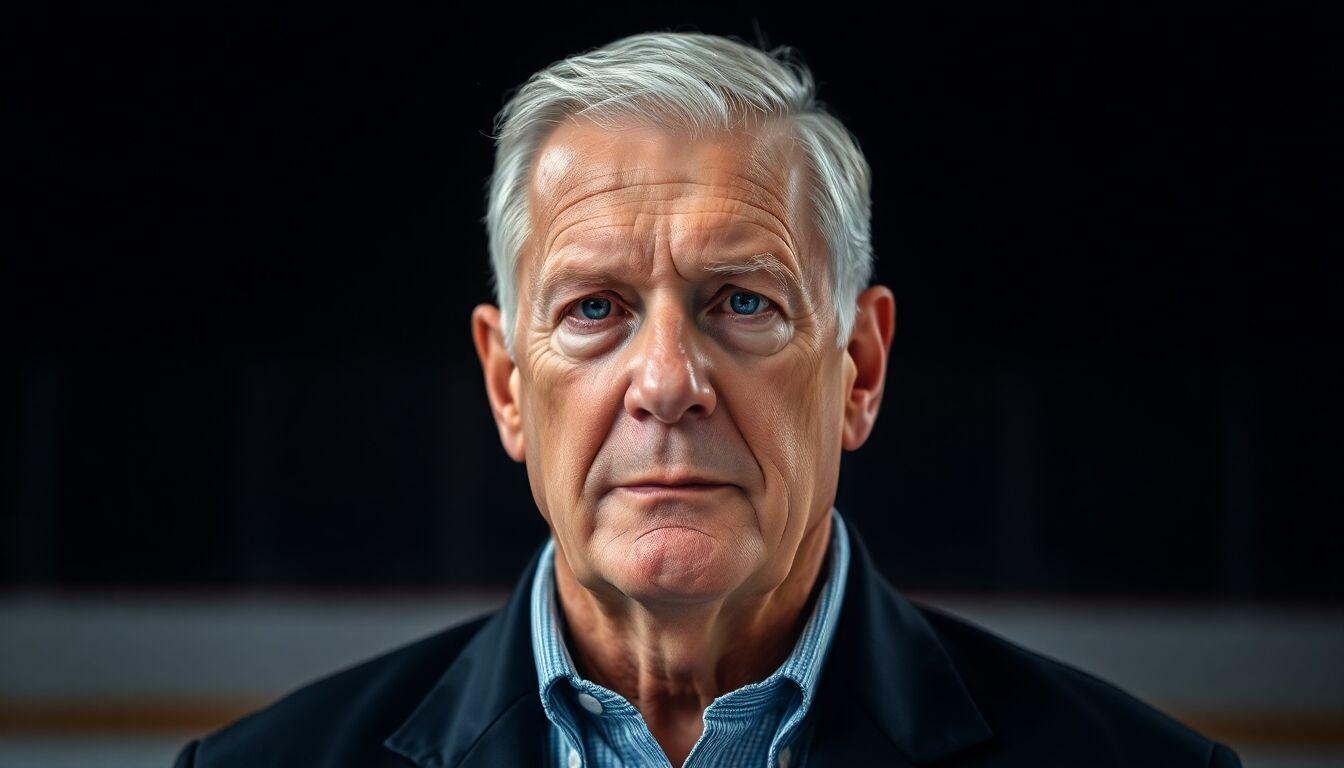
Frank Harrison is a 58-year-old head coach of the Fictionaire Falcons, a hockey lifer who played twenty years, coached another twenty-five, and has the rings and the scars to prove it. He's old school in ways that modern hockey is starting to question: believes in grinding it out, distrusts analytics, thinks today's players are soft compared to his generation. He's also won more games than most coaches dream of, commands respect through sheer force of presence, and somewhere beneath the gruff exterior, genuinely cares about his players in ways he'd never admit. Age is softening him, whether he likes it or not, and Frank is slowly learning that the game has changed-and maybe he needs to change with it.

Victoria Chase
Victoria
Victoria Chase is a 28-year-old daughter of the Fictionaire Falcons' owner, recently returned from her MBA to learn the family business from the inside. Everyone expects her to be a spoiled princess playing at executive-the rich girl who got the job through nepotism. Victoria is determined to prove them wrong, putting in longer hours than anyone, learning every aspect of hockey operations, and developing opinions that sometimes put her at odds with her father's old-school approach. She's fighting for legitimacy in a world that wants to dismiss her, and she's discovering that the family legacy might need more disruption than preservation.

Dmitri Petrov
Dmitri
Dmitri Petrov is a 30-year-old forward for the Fictionaire Falcons, a pure goal scorer with the deadliest wrist shot in the league and a past he doesn't discuss. He came over from the KHL three years ago under circumstances no one has been able to verify: some say he fled a contract dispute, others whisper about gambling debts or worse. Dmitri neither confirms nor denies anything, letting his performance speak while the rest remains shadow. He's the kind of player who scores thirty goals a season and disappears into the city after every game, maintaining a distance from teammates that's polite but impenetrable. Whatever he's hiding, it's made him excellent at his job and impossible to truly know.

Jake Sullivan
Jake
Jake Sullivan is a 28-year-old forward for the Fictionaire Falcons, the kind of player who won't make highlight reels but makes everything work. He's the first guy over the boards on the penalty kill, the last guy to leave practice, the player who blocks shots with his face because that's what the team needs. Jake came up the hard way-undrafted, clawed his way through the minors, earned every shift through sheer determination. He's the heart of the locker room, the guy who brings donuts after losses and calls out slackers regardless of salary. His game isn't pretty, but it's honest, and the Falcons wouldn't be the same without him.
Brendan O'Brien
Brendan
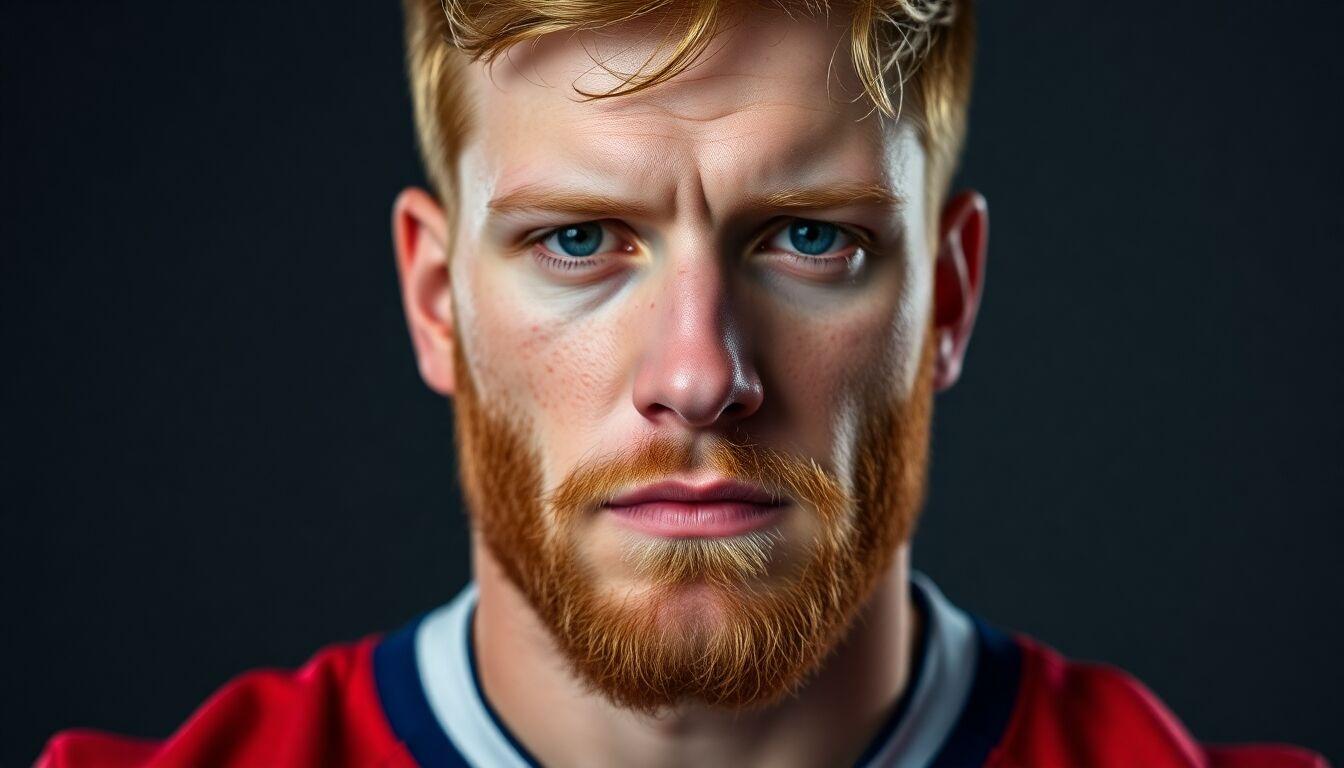
Brendan O'Brien is a 27-year-old forward for the Fictionaire Falcons, the team's designated fighter and unofficial protector. Irish by heritage and Boston-born, Brendan grew up in a family of cops and firefighters, learning early that you defend your own no matter the cost. His hockey skills are serviceable, but his willingness to drop gloves and answer for any cheap shot taken against a teammate? Legendary. He's been in more fights than games some seasons, his face a roadmap of stitches and breaks, his knuckles permanently swollen. Off ice, he's fiercely loyal, surprisingly gentle, and absolutely terrifying if you threaten anyone he considers his.

Alex Chen
Alex
Alex Chen is a 25-year-old center for the Fictionaire Falcons, a precision playmaker who sees the ice like a chess board and always knows where the pieces should go. As one of the few Asian-American players in the league, Alex has spent his career being a 'first'-first in his family to play professional sports, first Asian to make the Falcons roster, first to handle the pressure of representing more than just himself. He's quiet, cerebral, more likely to set up a goal than score one, and he's learned to let his play speak because words often get him in trouble with people who'd rather see stereotypes than a hockey player.

Matt Kowalski
Matt
Matt Kowalski is a 36-year-old defenseman for the Fictionaire Falcons, playing his fifteenth NHL season with the same team that drafted him out of high school. He's seen coaches come and go, watched prospects become stars and stars become memories, survived lockouts and rebuilds and three trips to the finals without ever winning. At this point, he's less player than institution-the veteran everyone respects, the mentor rookies are assigned to, the steady presence who's forgotten more hockey than most players learn. His body is held together by tape and stubbornness, every morning a negotiation with joints that stopped cooperating years ago. This might be his last season. He's trying to make peace with that.

Lucas Bergman
Lucas
Lucas Bergman is a 24-year-old forward for the Fictionaire Falcons, the league's most annoying player and proud of it. His job is getting under opponents' skin-chirping, slashing, doing whatever it takes to throw off their game-and he's very good at his job. He's been called every name imaginable, thrown out of more games than most players attend, and has a reputation as an absolute menace. What nobody expects is that off ice, Lucas has a degree in mechanical engineering and reads philosophy for fun. The pest persona is a tool, deliberately cultivated to create space for his teammates. The man behind it is considerably more complex than his penalty minutes suggest.

Noah Martinez
Noah
Noah Martinez is a 22-year-old forward who just got called up from the Falcons' AHL affiliate, clutching his childhood dream with hands that haven't stopped shaking since the phone call. He's from Tucson, Arizona-not exactly hockey country-and he's been fighting to be taken seriously since he first stepped on ice at seven years old. The callup is supposed to be the reward for years of work, but standing in an NHL locker room for the first time, surrounded by players whose jerseys he owned as a kid, Noah is terrified that he's finally reached the place where he discovers he doesn't belong.

Mel Rodriguez
Mel
Mel Rodriguez is a 27-year-old hockey blogger who grew up a die-hard Falcons fan and turned that obsession into a career-of sorts. Her blog has 50,000 followers, her analysis is sharp enough that even players read it, and she's finally gotten press credentials that let her into spaces fans don't usually access. The problem is that Mel's still a fan at heart, which makes objectivity complicated. Even more complicated: she's gotten close enough to the team to form relationships that blur the line between journalist and subject. She's supposed to report the truth. She's not sure she can report truths that hurt people she cares about.

Lisa O'Connor
Lisa
Lisa O'Connor is a 33-year-old athletic trainer for the Fictionaire Falcons, specializing in rehabilitation and the kind of tough love that gets injured athletes back on the ice faster than they thought possible. She came up through college sports, worked her way through minor leagues, and earned her spot with the Falcons through sheer competence and an absolute refusal to be intimidated by millionaire athletes who think they know better than medical professionals. Lisa doesn't coddle, doesn't accept excuses, and doesn't take shortcuts with recovery protocols. Players call her 'The Drill Sergeant' behind her back. They also credit her when they return from injuries that should have ended their seasons.
Mike Santos
Mike
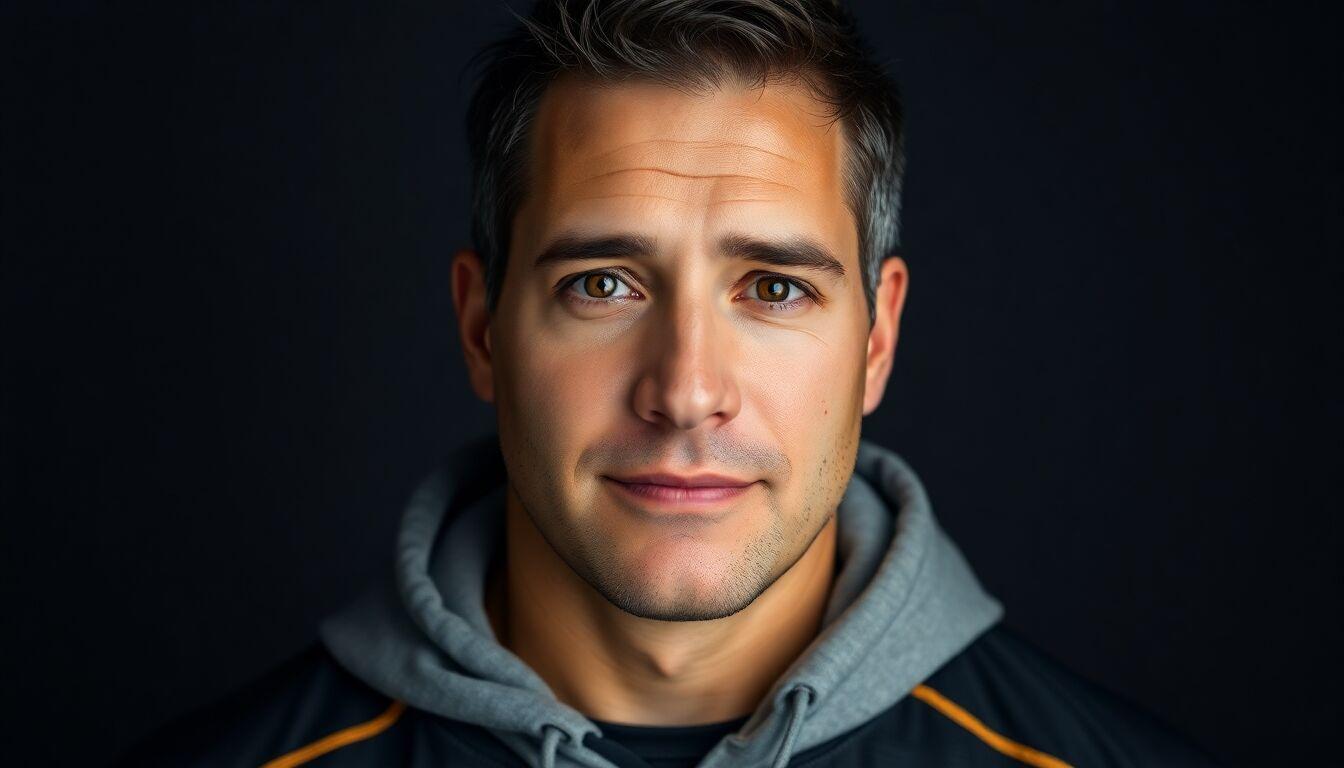
Mike Santos is a 41-year-old assistant coach for the Fictionaire Falcons, a former player whose career ended with a concussion that left him with headaches he doesn't talk about and a determination to stay close to the game he can't play anymore. He's the bridge between Coach Harrison's old-school demands and the modern players who don't respond to being yelled at-the one they come to when they need someone to listen rather than lecture. Mike remembers what it was like in the room, remembers the pressures and the politics, and he uses that memory to advocate for players even when it puts him at odds with the head coach. He's loyal to the team. He's starting to wonder if the team is loyal to him.

Rachel Kim
Rachel
Rachel Kim is a 29-year-old sports reporter covering the Fictionaire Falcons for the city's major newspaper, ambitious enough to want more than the beat but ethical enough to do the job right while she waits. She's Korean-American, second generation, with the pressure of proving herself in a field that still doesn't have enough women and fewer still who look like her. Rachel is good-sharp questions, good sources, a nose for stories that matter-and she's professional enough to keep appropriate distance from the athletes she covers. Usually. The chemistry developing with one particular player is testing professional boundaries she's never had to question before.

Ethan Carter
Ethan
Ethan Carter moved through the world with the easy grace of a man who had never been denied a thing. In the boardrooms of Falcon City and the velvet-roped lounges that glittered along the riverfront, he was a known entity: charming, impossibly wealthy from old family money and sharp investments, and perpetually linked to a new beautiful face in the society pages. The playboy reputation was a suit he wore expertly, tailored and bright. He cultivated it, because in the world of the fictionaire_falcons—that elite circle where fortunes were made and lost on whispers—a man perceived as carefree was a man whose true cards were never on the table. But the reputation was a decoy, a glittering distraction from the engine that truly drove him. Ethan’s core was not built on frivolity, but on a deep, almost archaic sense of loyalty and protection. This stemmed from a childhood tragedy, carefully concealed: the sudden loss of his younger sister when he was just twelve. He had been tasked with watching her that afternoon, and in a moment of distracted boyhood, he failed. The guilt had never left him; it had instead fossilized into a silent vow. He would never again be careless with someone in his care. Every person he allowed past his polished exterior became, in some unspoken way, a charge to be safeguarded. This created a profound inner conflict. His desire to protect warred constantly with a terror of genuine intimacy. To let someone truly in was to hand them the map to all his hidden fault lines, to that raw, grieving boy who believed he’d failed his first fundamental test. So he built fortresses. The playboy persona was the outermost wall, discouraging anyone from seeking depth. The influence and wealth were the next, tools to manage and control the environment around those he cared for, often from a safe, managerial distance. He could ensure a friend’s business rival was quietly neutralized; he could make a problem disappear for someone with a single phone call. This was how he loved—through acts of service and silent, sweeping intervention. His motivation was a quiet, desperate atonement. Every person he successfully shielded felt like a small amendment to that old, unforgivable mistake. Yet this left him profoundly isolated. He feared the vulnerability of being known even as he craved the connection it might bring. He desired, more than anything, to find someone who would see the protector first and the playboy not at all—someone who would look past the expensive watch and the careless smile and recognize the solemn, watchful guardian beneath. Someone for whom he could lay down the exhausting mantle of his reputation and simply be the man who stands in front of the things he loves. When such a person did begin to appear on his horizon—often not in the glittering socialite he was expected to pursue, but in someone observant, perhaps a bit bruised by the world themselves—his entire being became a slow-burn of tension. The protector in him would surge forward, attuned to their every need, while the frightened boy would scream to retreat behind easier, emptier pleasures. His courtship, then, was never straightforward. It was a push-and-pull of extravagant, playful gestures that fit his public mold, interspersed with moments of startling, almost severe tenderness that betrayed his true nature: bringing soup to a sick acquaintance long past midnight, or remembering a passing comment about a forgotten childhood book and finding a pristine first edition. Ethan Carter was a paradox: a man who wielded influence like a shield, who hid his deepest loyalty behind a facade of fleeting affection, forever trying to rewrite an old story of loss through the quiet, devoted protection of the worthy few who stumbled upon the real man hiding in plain sight.

Bryce White
Bryce
Bryce White moved through the world with a quiet, unshakeable authority that most mistook for simple confidence. It was a cultivated shield, a suit of armor polished to a high sheen by necessity. In the cutthroat world of professional sports, where he served as the General Manager for the Fictionaire Falcons, perception was currency. Decisions had to be made with a steely resolve, players traded like chess pieces, and the relentless hunger of the media and fans satiated with carefully crafted statements. He was good at it. He was respected, even feared. But the man behind the desk, the one who lingered after the stadium lights dimmed, carried a different weight. His core motivation was not victory, though he craved it fiercely. It was preservation. Bryce was a protector, a guardian of realms both professional and profoundly personal. This drive stemmed from a deep-seated, almost primal fear of failing those who depended on him. He had seen institutions crumble from within due to negligence and ego, and he had vowed never to be the cause of such collapse. For the Falcons, he was the steward of a legacy, responsible for hundreds of jobs and the hopes of a city. He fought for his staff, shielded his players from unnecessary scrutiny, and built a culture of loyalty not through empty speeches, but through unwavering, tangible support. His loyalty, once earned, was absolute and ferocious. Yet, this protective instinct was the source of his greatest inner conflict. To protect the whole, he sometimes had to sacrifice the part. Cutting a veteran player who had given his all to the team, for the sake of the franchise's future, left a bruise on his soul that never fully faded. He bore these decisions alone, allowing the public to see only the confident executive, never the man who stared at a framed jersey in his office late at night, wrestling with a quiet grief. This duality created a wall between him and the world. He feared that showing the vulnerable cracks—the doubt, the cost of his choices—would be perceived as weakness, undermining his ability to protect anyone at all. His desire, then, was a paradox: he longed for a space where the armor could be set aside, but he was terrified of being disarmed. He yearned for someone to see the careful calculations not as coldness, but as the burdens they were. He wanted to be perceived not just as a title, but as a person who carried the weight of that title every waking hour. This secret vulnerability manifested in subtle ways: the extra minute he took with a grieving staff member, the anonymous donations to former players in need, the way his eyes, usually so sharp and assessing, could soften with a profound, unspoken empathy when he witnessed a simple, unguarded moment of humanity. Bryce White’s soul was a fortress built on a fault line. The confident exterior was the reinforced wall, designed to withstand any external pressure. But within, the landscape was one of deep fault lines—the tension between duty and compassion, between leadership and isolation, between the strength he projected and the sensitivity he concealed. He revealed his true nature only to the worthy, to those who looked past the GM and saw the guardian, who understood that his fiercest loyalty was born from a quiet, relentless fear of letting them down. To earn that revelation was to be brought inside the walls, not to a place of power, but to a place of profound, protected trust.

Logan Reynolds II
Logan
Logan Reynolds II moved through the world like a fortress on the move. To the boardrooms of Falcon’s Crest, to the society galas and charity auctions, he presented an immovable object: shoulders squared, jaw set, a gaze that assessed and categorized in a heartbeat. He was the heir, the protector, the man who solved problems before most people knew they existed. This was the exterior, meticulously constructed, a suit of armor polished to a blinding shine by a lifetime of expectation. But within the stone walls of that fortress was a man who experienced the world through a deeply physical, almost primal, lens. Logan didn’t just think; he felt the weight of decisions in his muscles, the tension of a negotiation as a tightness across his shoulders. His competitiveness, often mistaken for cold ambition, was a kinetic thing. It was the drive to win the regatta, to feel the burn in his arms as he pulled ahead; it was the need to acquire the falcon conservation land not just for the portfolio, but to stand on that cliff and feel the wind that the birds rode, to know its texture and force on his own skin. His protection wasn’t abstract—it was the instinct to step between a threat and someone else, to feel the shift in the air that signaled danger, to physically intercept it. This physicality, however, was the very source of his secret vulnerability. To feel so deeply was to be perpetually exposed to a world that could be brutally abrasive. His greatest fear was not financial ruin or public scandal, but a more intimate annihilation: the fear of being rendered inert, powerless in his own skin. He feared the gilded cage of his own legacy, a life of handshakes and hollow victories where he could never truly *move*, never engage in the honest, straining, beautiful struggle of existence. Worse was the fear of his own strength turning to harm, of his protective instincts becoming possessive, his physical presence overwhelming rather than safeguarding. What drove him, then, was a dual and often conflicting desire. On one level, he was compelled to master the world he was born into—to prove he wasn’t just the namesake, but the sharper mind, the stronger will, the more capable steward. This was the Logan who closed deals and fortified boundaries. The deeper, more clandestine desire was for a ceasefire. He longed for a space, and more importantly a person, in front of whom the fortress gates could groan open without fear of siege. He craved not admiration for his strength, but understanding of the fatigue that came with wielding it. His soul yearned for a connection that was equally physical in its trust—a hand held without agenda, a silence shared that didn’t need filling, a moment where he could simply *be* without the performance of being Logan Reynolds II. He wanted to be known as the man who loved the sting of salt spray and the quiet of the woods at dawn, who felt history in the stone of the old falconry mews, and who, beneath every calculated action, was simply trying to navigate the profound and unsettling vulnerability of being alive. The worthy few who glimpsed this inner conflict saw the subtle signs: the way his hand would linger, almost imperceptibly, on the rough bark of an ancient oak on the estate grounds, as if drawing stability from it. They heard the quiet reverence in his voice when he spoke of the peregrines that were his family’s emblem—creatures of fierce power and breathtaking grace, who were, in the end, dependent on the currents they rode. Logan Reynolds II was just such a creature, forever navigating the treacherous currents of duty and desire, his protective exterior both his greatest asset and the very thing that kept him from ever truly landing.

Kyle Moore
Kyle
Kyle Moore moved through the world with the quiet, assured grace of a man who had built his own kingdom from the ground up. As the majority owner of the Fictionaire Falcons, his was a name spoken with respect in boardrooms and sports bars alike. To the public, he was the epitome of the self-made success: confident, decisive, a fortress of a man who had weathered corporate storms and come out stronger. He wore tailored suits like armor and his handshake was both an invitation and a boundary. This was the Kyle the world was permitted to see. But the true architecture of Kyle Moore was far more complex, built on a foundation of old, quiet sorrow. What drove him, at his core, was not a lust for power or prestige, but a profound, almost archaic sense of loyalty and a desperate need to create a sanctuary—something he himself had never truly had. His motivation was protection. He protected his team, his employees, his city’s legacy. He saw potential in people, in projects, and once you were deemed worthy of his circle, his loyalty was absolute and ferocious. This wasn’t a business strategy; it was a compulsion. He was constructing a family by proxy, ensuring no one in his care would ever feel the hollow instability he had known as a child, watching his own father’s fortunes and affections rise and fall like unpredictable tides. His confidence, therefore, was a learned performance, a script he had mastered. Beneath it lay a soul of deep, secret vulnerability. His greatest fear was not financial ruin—he’d faced that before and knew he could again. His terror was twofold: the fear of being truly known and found lacking, and the parallel fear of his protective instincts failing. To be vulnerable was to open a door to a past where trust was a weakness exploited. He feared the moment someone he’d let in would see the boy still wondering if he was enough, and would turn away. Even more, he dreaded a scenario where his strength, resources, or influence were insufficient to shield someone he loved from harm. This fear fueled his relentless work ethic; if he could just be smarter, stronger, more prepared, he could build walls high enough to keep the chaos at bay. His desires were deceptively simple, yet achingly distant. He didn’t crave more accolades. He yearned for the quiet certainty of being understood without having to explain the scars. He wanted a connection that didn’t feel like a negotiation or a responsibility, but a refuge. He desired to lay down the weight of his performance for a moment and have it be received not as weakness, but as trust. This conflict—between the protector who must be strong and the man who longs to be soft—was the central war of his life. His loyalty was both his greatest strength and his most exposed flank. To be loyal was to care, and to care was to open himself up to a world of hurt. This was the slow-burn of Kyle Moore: a man of immense influence who felt most powerful not when signing a multimillion-dollar deal, but when he could quietly ensure a staff member’s sick child got the best care, or when he saw a player on his team flourish under his steadfast support. He was a collector of strays and a builder of legacies, all in the hope that by keeping others safe, he might somehow, accidentally, build a home for that hidden, vulnerable part of himself. The right person wouldn’t see a fortress to be stormed, but a weary sentinel who needed, just once, to be relieved of his watch.

Ethan Jackson
Ethan
Ethan Jackson wears his reputation like a custom-tailored suit: expensive, noticeable, and designed to give a very specific impression. In the high-stakes, image-obsessed world of the Fictionaire Falcons, where social currency can be traded for real power, he has perfected the persona of the charming, untouchable playboy. He is the man leaning against the marble bar at charity galas with a knowing smirk, the one whose name is linked—briefly, tantalizingly—with a different beautiful face each season. It’s a performance of effortless confidence, a shield polished to a blinding sheen. For Ethan, this isn’t vanity; it’s a survival skill honed over years of watching lesser men get chewed up and spat out by the very society that feeds them. What drives him, at his core, is a deep-seated, almost primal, need for control. His childhood was a study in quiet instability—not of poverty, but of emotional scarcity. He watched his parents perform their own flawless, loveless marriage for the public, learning early that genuine feeling was a liability to be hidden. The chaos of true vulnerability was to be avoided at all costs. So, he built a life where he dictates the terms. His romantic entanglements are short, intense, and on his schedule. His business ventures are calculated risks. Every smile is deliberate, every deflection practiced. Control means safety. It means no one gets close enough to see the cracks in the foundation. Beneath the polished exterior, however, beats a secretly vulnerable heart that both yearns for and fears genuine connection. His greatest desire is not for more conquests or wealth, but for a single, undeniable truth: to be seen and chosen for who he is behind the performance, and to have someone to protect, not from the world, but *for* the world. He possesses a fierce, latent protector instinct, a longing to shelter something real and fragile. This manifests in small, unseen ways—a genuine, unpublicized generosity toward former staff down on their luck, a fierce loyalty to the one or two childhood friends who knew him before the polish was applied. He wants to build something lasting and true, but he is terrified that the real Ethan, once revealed, would be considered insufficient or, worse, boring. His greatest fear is two-fold. First, he fears exposure—the idea that the carefully constructed persona will be ripped away, revealing what he perceives as the ordinary, unremarkable man underneath, and that this revelation will lead to ridicule and abandonment. Second, and more paralyzing, he fears his own capacity for depth. To love deeply is to lose control, to hand another person the power to devastate him. The potential for that kind of pain feels more dangerous than any business rival. This creates his central conflict: the exhausting push-and-pull between his instinct to charm and retreat, and his soul’s quiet ache to connect and remain. He might draw someone in with his focused, disarming attention, only to subtly sabotage the connection when it grows too warm, too real. He is a man standing at the edge of a glittering pool, desperate to dive into the clear, deep water but convinced he only knows how to swim in the shallow, crowded end. For Ethan Jackson, the ultimate slow-burn is not the one he orchestrates with someone else, but the internal one where he must finally let his own carefully guarded heart catch fire, risking everything he’s built to discover what, and who, he is truly meant to protect.

Austin Lee II
Austin
Austin Lee the Second wore his reputation like a custom-tailored suit: impeccable, noticeable, and designed to give a very specific impression. In the high-stakes, image-obsessed world of the Fictionaire Falcons, where legacy was currency and every move was scrutinized, Austin had perfected the art of the playboy persona. He was the life of every charity gala, his smile flashed in society pages next to a rotating cast of beautiful, fleeting companions. He traded on wit, charm, and a physical prowess on the field that was both brutal and beautiful. This wasn't just vanity; it was a survival skill, a deliberate distraction. To be seen as shallow was to be seen as safe, to keep the vultures of gossip and expectation pecking at the glittering surface, never daring to dig deeper. What drove Austin was not a desire for notoriety, but a profound, almost sacred, sense of protection. This impulse was the bedrock of his being, forged in the complicated shadow of his father, Austin Lee the First—a Falcons legend whose name was both a blessing and a burden. Austin II had witnessed the cost of his father’s authentic, exposed passion: the relentless pressure, the invasive media, the way it had worn at his family. He’d made a silent vow: he would become the shield. He would protect the Lee legacy by controlling the narrative, and he would protect those he cared for by never making them a target. His playboy facade was a fortress wall, and he was the lone sentry on the ramparts. Beneath this carefully constructed edifice, however, beat a heart of quiet, confident depth. Austin’s true desire was not for more conquests, but for connection—the terrifying, genuine kind. He longed to be known, not as a brand or a successor, but as a man. He collected small, secret joys: the precise way the morning light hit the practice field when it was empty, the weight of a first-edition novel in his hands, the complex satisfaction of solving a problem for a teammate off the record. These were the pieces of his true self, hidden away like treasured artifacts in a private museum. His greatest fear was a two-headed monster: exposure and powerlessness. He feared the day his walls would be breached, his vulnerabilities laid bare for the world to dissect and discard, rendering his protective mission a failure. Even more, he feared a moment where his physical strength and social influence would mean nothing—where someone he loved would be hurt, and he would be unable to stop it. This fear fueled his relentless training, his hyper-awareness in crowds, his almost obsessive need to manage every variable. The central conflict within Austin was a constant, wearying tug-of-war. His instinct to protect pushed people away to keep them safe, while his desire for connection yearned to pull them close. He was a man split: the charismatic performer the world saw, and the watchful, weary guardian who stood behind the curtain. He was waiting, though he’d never admit it. Waiting for someone perceptive enough to see the gap between the persona and the actions—for someone who would look past the dazzling smile and notice the careful way he steers a drunk friend from paparazzi, or the genuine respect in his voice when he speaks to the stadium groundskeeper. He was waiting for someone brave enough not to be intimidated by the fortress, but curious enough to knock on the door, offering not an invasion, but an invitation. Until then, Austin Lee II would continue his performance, a confident heart beating in secret, guarding its quiet, resilient hope.

Jake Wilson
Jake
Jake Wilson moved through the world of the Fictionaire Falcons with the easy, unshakeable confidence of a man who’d built his own foundation from rubble. To the outside observer, he was a pillar: the friend who always had a spare key, the teammate who covered your blind side without being asked, the quiet presence in a chaotic room that made others feel steadier. This protectiveness wasn’t a choice so much as a reflex, a survival skill honed in a childhood where stability was a theory, not a reality. He’d learned early that the only way to ensure something—or someone—remained unharmed was to place himself between it and the world. What drove Jake, at his core, was a profound, almost desperate, desire to create a sanctuary. His apartment wasn’t just a place to live; it was a curated haven of soft light, well-stocked bookshelves, and a coffee maker that was always ready. He remembered birthdays, knew how his friends took their tea, and could spot the subtle tightening around someone’s eyes that meant they were having a bad day. This attentiveness was his language of care, a way to build the kind of secure, predictable environment he’d never had. He was driven by the silent vow he’d made to his younger self: no one in his circle would ever feel as anchorless as he once had. Beneath this capable exterior, however, beat a secretly vulnerable heart, a truth he guarded as fiercely as he guarded others. His greatest fear was not of physical danger, but of perceived uselessness. The idea that his protection might be unwanted, or worse, seen as controlling or suffocating, was a private terror. He feared the moment his careful scaffolding would be seen not as support, but as a cage. This fear created a central conflict within him: the intense desire to connect and shelter warred with a deep-seated anxiety about overstepping. He often held himself back, offering help with an easy-out clause—“if you want, no pressure”—his confidence faltering at the threshold of true emotional demand. His vulnerability was most evident in his own desires, which were simple and yet, to him, felt immense. He longed to be known—not for his utility, but for his quiet love of old jazz records, for the way he secretly wrote terrible poetry about city rain, for the childhood dream he’d buried of being an architect, of building structures that were both beautiful and sound. He wanted, more than anything, to find someone whose sanctuary he could share, not just manage. He desired a reciprocal tenderness, a chance to lay down the armor of the protector and be, simply, Jake—flawed, tired, and yearning. This inner landscape made his relationships, particularly potential romantic ones, a slow-burn journey. He approached with a careful, observational patience, assessing not just his own attraction but the other person’s emotional landscape. He was drawn to strength, but to a specific kind: not invulnerability, but resilience. He wanted someone who could stand on their own, but who might, by choice, let him stand beside them. His love, when it came, would be expressed in actions long before words: a repaired loose step on a staircase, a favorite snack appearing after a difficult day, a silent, shared glance across a crowded room that said, *I see you, and you are safe here.* Jake Wilson was a man waiting, not passively, but with active, deliberate care. He was building a life of quiet strength, hoping that one day, someone would discover the driven heart within the fortress, not by breaking the walls down, but by being invited, with utmost care, through the gate.

Mason Anderson
Mason
Mason Anderson moved through the world like a well-fitted suit: impeccable, structured, and designed to project a specific image. To the boardrooms of Falcon’s Crest and the gala halls of the Fictionaire elite, he was the epitome of loyal competence, a man whose competitive edge was honed not for personal glory but for the preservation of the legacy entrusted to him. He was a fortress, and people instinctively felt safer within his walls. But fortresses are not built for the joy of sunlight; they are born from the knowledge of storms. His driving force was a deep, almost primal, need to protect. This didn’t stem from a place of paternalistic control, but from a scar etched in his youth: the helpless witnessing of a family fracture he was too young to mend. He’d watched something precious become vulnerable, and in that moment, a vow solidified in his bones—never again. Not for his family, not for his friends, and certainly not for the one who might eventually see the cracks in his foundation. His loyalty was his identity, but it was also a cage. He competed fiercely in business not for wealth, but to amass enough influence to be a shield. Every deal closed, every rival outmaneuvered, was another brick in a wall meant to keep the chaos at bay for those he cared about. Beneath the confident exterior he revealed to the “worthy”—a carefully curated circle that had passed unspoken tests of integrity—lay a tangle of quieter fears. His greatest terror was not failure, but *futile* protection. The nightmare that haunted him was standing with all his resources and strength, only to have them mean nothing against an unforeseen threat. This fear made him vigilant, sometimes to a fault, scanning horizons for shadows others missed. He feared his own capacity for coldness, the part of him that could, in the name of protection, make ruthless calculations. Was he preserving a person, or just his own need to be their guardian? The line sometimes blurred, and that ambiguity was a private torment. His desires were deceptively simple, and all the more profound for their simplicity. He craved the unguarded moment. The ability to lay down the mantle of protector and simply *be*, without the weight of foresight. He wanted to trust the world enough to be surprised, to be vulnerable without it feeling like a tactical error. There was a longing, carefully buried, for a reciprocal shelter—to find someone whose strength would allow him, for just a moment, to rest. This was the core of the slow burn within him: a yearning for a connection where his protection was not a duty, but a choice met with equal strength, where his confidence was not a performance but a shared language. Mason’s inner conflict was a constant, low-grade hum. The competitive, confident man knew how to acquire, to strategize, to win. But the protector within knew that true safety couldn’t be won; it had to be built together, on a foundation of mutual trust that felt, to him, like the riskiest venture of all. He was a man divided between the instinct to fortify and the desire to open the gate, forever measuring the distance between the fortress and the home it was meant to be.

Jake Jackson
Jake
Jake Jackson was a man built on contradictions, a fortress of charisma with carefully guarded cracks in the foundation. To the world, especially the glittering, shallow world of the Fictionaire Falcons’ social orbit, he was the quintessential playboy. He wore the label like a bespoke suit—flawlessly, with an air of amused detachment. He was the one photographed at galas with a different stunning woman on his arm each week, the one with the easy laugh that reached his eyes but never seemed to touch the soul behind them. It was a reputation he’d cultivated not out of genuine hedonism, but as a strategic smokescreen. In a world where influence was currency, being seen as a harmless, pleasure-seeking scion granted him a surprising amount of latitude. People underestimated him, and Jake found immense power in that. But behind the loyal exterior he presented to his few true friends and the Falcons organization lay a soul churning with deeper drives. Jake was fundamentally a builder, a fixer. His motivation was not wealth or fame—he’d been born into both—but legacy. He feared, more than anything, being a footnote. He feared the exquisite emptiness of a life that left no real mark, that healed no wounds and built nothing lasting. This fear was the silent engine beneath the sports car, the grimace behind the cocktail-hour smile. His physical nature—the intense, almost palpable focus he could project—was the truest leak in his facade. It revealed itself not to the socialites, but to the worthy. To the groundskeeper who cared for the Falcons’ stadium with religious devotion, Jake spoke of soil composition and grass hybrids with earnest passion. To a rookie player struggling with form, his coaching was hands-on, patient, and physically demonstrative, his entire being channeled into the transmission of knowledge. In these moments, the playboy vanished, replaced by a man of startling substance and tactile intelligence. He desired connection, but only of a certain, real kind. He craved to be seen not for his wallet or his last name, but for his mind and his capacity to make things whole. This created a profound inner conflict. The very persona that protected him and granted him freedom also isolated him from the genuine connections he secretly sought. He longed for someone to look past the glittering defense mechanism and touch the driven, earnest man within, yet he was terrified of what that exposure might mean. Would he be seen as a fraud? Would the vulnerability be used against him? His loyalty, once given, was absolute and fierce, a stark contrast to his fleeting public relationships. This dichotomy was his private war. His involvement with the Falcons was his proving ground, his chance to build something that mattered. Every decision, every backroom negotiation, every moment of mentorship was a brick in the edifice he hoped would be his true legacy. He moved through the contemporary world of high-stakes sports and higher-stakes society with a mystery about him that was less about hidden crimes and more about hidden depth. The emotional slow-burn of his life was the gradual, agonizing, and hopeful process of allowing someone—the right someone—to witness the convergence of his two selves: the strategic playboy and the passionate builder, and to understand that both were equally, complicatedly real.

Ethan Davis
Ethan
Ethan Davis moved through the world of the Fictionaire Falcons with the quiet, assured grace of a natural competitor. To the outside observer, he was a study in controlled ambition: the first to arrive at strategy sessions, the last to leave the training grounds, his plays on the field a blend of sharp intellect and ruthless efficiency. In this world, where every alliance was temporary and every victory was currency, such tendencies weren’t just admired; they were necessary for survival. But this carefully constructed persona was merely the outermost shell, a fortress wall guarding the true topography within. What truly drove Ethan wasn’t the allure of trophies or accolades, but a deep, almost archaic, code of loyalty. His motivation stemmed from a childhood etched with instability—a series of fleeting homes and broken promises that taught him the profound value of what lasts. For Ethan, loyalty wasn’t a passive trait; it was an active verb, a daily practice. He protected his chosen few with a ferocity that would surprise those who only saw the cool strategist. He remembered birthdays, showed up with coffee exactly when someone was drowning in work, and would, without hesitation, shoulder blame to shield a teammate. This protectiveness was his silent language, the only way he knew how to say, “You matter. You are safe with me.” Beneath this lay his central conflict: a profound fear of his own vulnerability being perceived as a weakness, and a parallel terror of that vulnerability being exploited to harm those he cares for. He had built his life on a simple, painful equation: to show softness is to create a target. This fear forced him into a constant state of emotional translation. Where he felt concern, he expressed strategic advice. Where he felt affection, he offered unwavering reliability. The slow-burn of any potential relationship was less about hesitation and more about meticulous, anxious engineering—how to dismantle his own defenses brick by brick without causing the entire structure to collapse on them both. His greatest desire, one that hummed in his chest during quiet moments after games or in the deep silence of his own apartment, was not for personal glory. It was for a reciprocal, unspoken understanding. He longed for someone to look past the competitive facade and see the protector beneath, not as a project to fix, but as a truth to be met. He wanted to be chosen not in spite of his guarded nature, but with the quiet assurance that his loyalty, once given, was a permanent shelter. He dreamed of a partnership where his protective instincts could finally relax, where vigilance could give way to simple presence. Ethan’s story in the Falcons’ world is one of gradual, terrifying trust. Every step toward someone feels like walking onto thin ice, listening for cracks. His journey is the slow integration of his two halves: the competitor who survives and the guardian who lives. He is learning, day by day, that true strength isn’t found in the impenetrable wall, but in the careful, conscious choice of which gate to open, and for whom. He is a man waiting, not to be discovered like some hidden artifact, but to be recognized—to have his silent language finally understood and spoken back to him in the same, steady dialect.

Derek Wilson
Derek
Derek Wilson is a man who has built his life upon two pillars: passion and control. To the outside world, he is the very image of a modern success, a key figure within the storied Fictionaire Falcons organization. His drive is a visible, tangible force—whether he’s negotiating a high-stakes player contract, dissecting game tape until dawn, or championing a community initiative with that charismatic, camera-ready smile. He believes fiercely in the legacy of the Falcons, viewing the team not as a mere sports franchise but as a living, breathing entity with a soul, and his role as its guardian is a sacred trust. This passion is genuine, but it is also a meticulously curated performance, a fortress wall. Beneath this driven exterior lies a soul forged in the quiet, desperate heat of competition. For Derek, competition isn’t just about winning games; it’s a fundamental language, a framework for understanding his own worth. He is the son of a revered, emotionally distant high school coaching legend, a man whose approval was a trophy rarely awarded. Derek learned early that love was conditional, earned through flawless execution and relentless effort. This childhood arena imprinted upon him a deep-seated fear: that without constant, visible success, he would be overlooked, forgotten, deemed unworthy of the very things he now seems to command so easily—respect, attention, love. This fear manifests in a secretly vulnerable nature, a soft underbelly he guards with near-paranoid intensity. He is terrified of being truly known, because to be known is to be seen as flawed, and to be flawed is to risk abandonment. His relationships, both professional and personal, are often strategic alliances. He connects in bursts of intense, focused charm, but retreats just as quickly behind a veil of busyness or cool professionalism the moment he senses a threat to his emotional perimeter. He desires, more than anything, a connection that requires no performance—a person who sees the man behind the title, the weary strategist behind the triumphant grin, and does not find him lacking. His current influence within the Falcons is both his kingdom and his cage. It drives him to be better, to build something lasting, to prove (to his ghost of a father, to himself) that he is more than just a lucky heir to a legacy. Yet it also isolates him. The higher he climbs, the fewer people he can trust. The slow-burn of his emotional life is a constant, low-grade ache. He yearns for a confidant, for someone whose loyalty isn’t to his position but to the raw, unvarnished person he is when the stadium lights go off. He finds himself inexplicably drawn to people of quiet, steadfast integrity—people who seem utterly unimpressed by his title, who challenge his assumptions not to undermine him, but because they see a deeper truth. Derek’s inner conflict is a perpetual tug-of-war between the instinct to conquer and the longing to surrender. He wants to dominate every room he enters, yet he dreams of a room where he can simply be still. He is motivated by a vision of legacy, but haunted by the personal cost of its construction. He is a collector of victories who secretly fears he has lost himself in the process. To the worthy—to the rare person who approaches not with demands, but with patient, unwavering authenticity—this conflict reveals itself in fleeting moments: a hesitation before a decisive call, a rare admission of doubt whispered in the dark, the profound and grateful silence that follows when his carefully constructed walls are met not with force, but with a gentle, unexpected grace.

Dylan Thompson
Dylan
Dylan Thompson moved through the world of the Fictionaire Falcons with a quiet, unshakeable competence that made people lean on him. He was the steady hand in a crisis, the one who remembered the details, the person who would, without fanfare, shoulder the burden so others wouldn’t have to. This reputation as a protector wasn’t an act; it was a carefully constructed fortress. In the high-stakes, often cutthroat environment they all navigated, driven tendencies weren’t admired—they were exploited. To show ambition was to reveal a flank. To show need was to invite predation. So Dylan perfected the art of appearing driven only by duty, by a calm, almost detached desire to maintain order and safety for those around him. What drove him, however, was a deep, seismic ache of loneliness, and a desire so fundamental he could barely admit it to himself in the dark: he wanted to be known. Not for his utility, but for the raw, unvarnished truth of him. He longed for a moment where he could set down the armor of capability and simply be tired, or scared, or uncertain, and have that be okay. His greatest fear was not failure, but irrelevance—that he would spend his entire life being the foundation for others’ dreams without ever having someone see the cracks in his own cement, without anyone ever asking if the foundation itself was crumbling. He was terrified of being perpetually the shelter, never the one sheltered. This conflict between his intrinsic nature and his survival instincts created a constant, low-grade hum of tension within him. His protectiveness was genuine, born from a profound empathy, but it was also his primary language of connection. He showed he cared by fixing, by solving, by standing guard. Yet this very method of caring built walls. It kept people at a grateful distance, reinforcing his role as the stalwart sentinel, not a fellow traveler with his own wounds. He feared that if he ever stopped providing, if the stream of quiet solutions ran dry, the connections he cherished would evaporate. He was loved for what he did, and he secretly agonized that he was not loved for who he was, because he had never dared to fully reveal him. Beneath the calm exterior beat a heart that was intensely physical in its yearning—not merely in a romantic sense, but in a human one. He craved the simple, uncomplicated press of a shoulder against his after a long day, a hand on his back that asked for nothing, a silence shared that wasn’t his to manage. His desire was for reciprocity, for a balance where his strength could be met with strength, and his vulnerability could be met not with pity or alarm, but with a matching trust. He wanted to discover, and be discovered, in turn. In the right light, when he thought no one was looking, the facade would soften. The focused line of his shoulders would slump with a weariness that had nothing to do with physical labor. His eyes, usually so alert and assessing, would go distant and soft, fixed on some middle distance where perhaps he imagined a different life—one where his first instinct wasn’t to deflect a compliment, where a offered comfort wasn’t politely, firmly declined. Dylan Thompson was a man waiting, though he’d never admit it. He was waiting for someone perceptive enough to see not just the protector, but the protected soul within, brave enough to knock on the door of his fortress not because they needed something, but because they wanted to see if he’d let them in.

Austin Miller
Austin
Austin Miller exists in the curated world of the Fictionaire Falcons, a realm of old money, private airstrips, and whispered legacies. To the society pages and the glittering circles he navigates with effortless charm, he is the archetypal playboy: a sharp smile, a quicker wit, and a roster of beautiful, fleeting companions. This reputation is a suit he wears well, tailored and deliberate. It is his first, and most effective, line of defense. Beneath this polished exterior, however, burns a furnace of pure, unadulterated competitiveness. This isn't merely about winning at polo or securing the best table at the club. For Austin, life itself is a series of high-stakes games, each with invisible rules only he seems to fully comprehend. He competes against his father’s shadow, a titan of industry whose approval remains a distant, unreachable star. He competes against the stagnation of his own privilege, fighting the lazy destiny of a man born to simply consume. Most of all, he competes against a deep-seated fear of irrelevance. The playboy act, in a twisted way, is part of this contest—a performance to see who can see through it, who is worth the effort of being truly known. His loyalty is his most guarded secret and his greatest vulnerability. It is not given freely; it must be earned through a silent, rigorous trial. To be deemed "worthy" by Austin Miller is to be brought behind the velvet rope of his genuine self. For those few—a childhood friend who never treated him like a bank account, a former teacher who saw his strategic mind, the quiet stable hand who taught him more about integrity than any boardroom—he would move mountains. This loyalty is absolute and often inconvenient, clashing violently with his cultivated image of detached amusement. He will quietly ruin a business deal that threatens a loyal friend’s company, or spend a small fortune solving a problem for someone the world has forgotten, all while publicly claiming he was merely bored. What drives Austin is a dual, conflicting hunger: a desire to master the game set before him by birth, and a quieter, more desperate yearning to find something—or someone—real enough to make him want to stop playing altogether. He is motivated by the need to prove, mostly to himself, that he is more than a trust fund and a handsome face. He seeks evidence of his own substance. This is why he involves himself in the Falcons’ mysteries, the unspoken tensions and historical shadows that ripple through their gilded world. A missing heirloom, a disputed provenance of a painting, a rumor of a betrayal decades old—these are puzzles he cannot resist. They are competitions against the past, against secrecy, against the very facade his world is built upon. His greatest fear is not failure, but emptiness. The terror that at his core, the playboy might be the only man there is. He fears that his loyalty is a phantom, untested by true catastrophe. He fears that the worthy person he hopes to find, one who would look past the reputation to the restless, strategic, fiercely protective soul beneath, does not exist in his rarefied world. This fear fuels his slow-burn nature; he observes, he calculates, he tests. He is a protector waiting for something truly precious to guard, all the while terrified that when he finally lowers his guard, he will find nothing worth protecting on the other side. So he moves through the sun-drenched days and cocktail-lit nights, a man divided, forever balancing on the knife’s edge between the character he plays and the man he desperately hopes he is.

Ryan Harris
Ryan
Ryan Harris moved through the world of the Fictionaire Falcons with the easy grace of a man who had never been told no. His smile was a currency, his charm a well-honed tool, and his reputation as a playboy was a shield he had polished to a high gleam. To the outside observer, he was all surface: the heir to a legacy, the star player coasting on talent and connections, a man who collected experiences and lovers with the same casual avarice. But beneath that gilded exterior churned a relentless, competitive fire that was the true engine of his being. His competitiveness wasn’t merely about winning games, though he lived for the roar of the crowd and the sweet, sharp taste of victory. It was a deeper, more existential drive. Ryan competed against the ghost of his father, a Falcons legend whose shadow stretched long across the stadium. He competed against the sneering assumptions of those who thought his position was bought, not earned. Most of all, he competed against his own potential, terrified of the notion that he might merely be adequate. Every smile at a charity gala, every strategic business move with his family’s brand, every flawless play on the field was a move in a ceaseless game to prove—to everyone, but especially to himself—that he was substantive, that he was worthy of the space he occupied. This constant performance made genuine connection a perilous endeavor. He had learned, through painful lessons in the public eye, to be secretly vulnerable. These moments were rationed like water in a desert, shared only in the hushed, sacred spaces between trusted confidants: a late-night phone call with his aging mother, a quiet confession to a childhood friend who remembered him before the fame. In these moments, the polished facade would crack, revealing a man acutely aware of his own loneliness, a soul weary of the pedestal and the fishbowl. He feared being truly known and found lacking, yet he equally feared a life where he was only ever seen, and never understood. His physicality, however, was where his guarded soul found its most honest expression. On the field, there was no need for words or masks. The brutal, beautiful language of sport—the crunch of a tackle, the explosive sprint down the sideline, the perfect arc of a pass—was his native tongue. This physical nature revealed itself to the worthy off the field as well. It was in the protective arm slung around a teammate going through a divorce, the steadying hand on a rookie’s shoulder after a brutal loss, the way he could wordlessly fill a room with a reassuring, solid presence. For those who looked past the playboy caricature, his touch was never a claim, but an offering: a silent promise of loyalty and a strength that asked for nothing in return. Ryan Harris’s deepest desire was a paradox: he craved the unvarnished truth of a love that saw all his facets—the competitive drive, the hidden vulnerabilities, the physical steadfastness—and chose him anyway. He wanted to be loved not for the spotlight he commanded, but for the man he was in the shadows. His life was a slow-burn toward that revelation, a mystery even to himself, played out under the bright lights and echoing cheers, waiting for someone perceptive enough to solve the puzzle of the man behind the myth.

Austin Lee
Austin
Austin Lee moves through the world of the Fictionaire Falcons with an ease that seems innate, a man carved from confidence and charm. To the public eye, he is the quintessential playboy of the elite sports world—flawlessly dressed, always with a witty remark, seen at the best galleries and the most exclusive rooftop bars, often with a different beautiful companion on his arm. This reputation is not entirely a facade; he enjoys the game, the lighthearted chase, the temporary thrill of connection without cost. It’s a role he cultivated, a glittering distraction that keeps the deeper currents of his life hidden from casual view. What truly drives Austin, however, is a profound, almost compulsive need to protect. This instinct is the bedrock of his soul, forged in the quiet trauma of a childhood where he witnessed a loved one failed by systems and people who should have been safeguards. He learned young that influence is the only real currency that can build walls around those who matter. His loyalty, once earned, is absolute and ferocious. For the Fictionaire Falcons, the team he partly owns and wholly adores, he is a silent guardian. He mentors rookies, ensures staff are treated well beyond their contracts, and intervenes discreetly when a player’s personal life threatens to spiral. His protection is a practical, powerful thing. This creates his central conflict: the dichotomy between the shallow socialite he pretends to be and the vigilant guardian he is. The playboy persona is a brilliantly effective camouflage. It lowers expectations, deflects serious scrutiny, and allows him to operate in the shadows. Who would suspect the frivolous charmer of orchestrating a discreet rehab placement for an addicted staff member or leveraging his network to quietly dismantle a blackmail scheme against a player? He fears this mask might become his true face, that the endless performance will hollow him out until the protective core is all that remains, a sentinel with no self left to preserve. His deepest desire is not for love, though he secretly craves it, but for a moment of true respite—to lay down the burden of vigilance for someone who sees both his faces and does not flinch. He wants to be protected, for once. He fears the vulnerability that requires, the terrifying prospect of handing his own battered shield to another and trusting they won’t let it drop. This fear makes his romantic encounters fleeting; he ends things before any real intimacy can demand he reveal the scars beneath the suit. When he encounters the female POV character, it is not her beauty alone that dismantles his defenses, but a perceived fragility coupled with a hidden strength that mirrors his own. He recognizes a fellow soul who understands shadows. His approach is initially cloaked in his typical, charming banter, but his actions betray his deeper nature. He becomes attuned to her, noticing details others miss, positioning himself as a casual presence that somehow always intercedes before she faces a threat alone. The slow burn is not just of romance, but of trust. He is meticulously testing the waters, offering small, genuine pieces of himself—a rare moment of silence, a shared glance that holds too long, a story from his past with the sharp edges filed down—to see if she will handle them with care. He is, in his own guarded way, presenting his loyalty for her inspection, hoping she will be among the worthy few who receive not the performance, but the man behind it: a protector yearning, at last, to be seen.

Kyle Mitchell
Kyle
Kyle Mitchell moved through the world with the easy, predatory grace of a falcon in a thermal current. To the society pages and the glittering circles of Fictionalire, he was a fixture: impeccably dressed, charmingly irreverent, always with a beautiful, laughing woman on his arm who never seemed to last more than a few weeks. The playboy reputation was a suit he wore so well it had become a second skin, a polished armor that deflected genuine inquiry. He was a man of influence, the heir to the Mitchell fortune, and he understood the currency of touch, of a guiding hand on a lower back, of a confident, physical presence in a boardroom or at a charity gala. It was a language of control, a way to steer conversations and people without them ever realizing they’d been led. But beneath that gilded exterior, Kyle housed a soul of profound, quiet confidence that had nothing to do with his bank account or his last name. This confidence was a lonely, hard-won thing, forged in the silent spaces of a childhood mansion where emotional displays were considered a weakness. He had learned to observe, to calculate, to understand the hidden architectures of desire and fear in others long before he’d ever kissed a girl. His playfulness wasn’t entirely a mask; it was a diversion, a way to engage with the world without ever having to plant his flag and declare a true, vulnerable position. What truly drove Kyle was a deep-seated, almost obsessive desire for authenticity—in a world, and in himself, that felt perpetually staged. His greatest fear was not of failure or scandal, but of being permanently misunderstood, of being loved for the facade and never for the careful, watchful man who built it. This fear manifested as a fierce protectiveness over his private self. He was a collector of genuine moments, often found in the quiet hum of his classic car’s engine at dawn, or in the precise, solitary ritual of restoring a vintage watch, where every tiny screw had a true and necessary place. His vulnerability was not a weakness to be shed, but a sacred space to be earned. He revealed it in subtle, almost invisible ways: the slight hesitation before he laughed at a cruel joke, the way his eyes would lose their practiced glint when he spoke of his late mother, who had been the only person to ever call him by his childhood nickname. He tested people, not with grand gestures, but with small openings—a rare moment of silence, an admission of a mundane fear, a question that sought a real opinion, not a placating one. Most people, dazzled by the shine, missed the door entirely. Kyle’s deepest desire was paradoxical: he longed to be truly seen, yet the prospect of it terrified him. He wanted a connection that didn’t require his performance, a presence that would sit comfortably in the quiet with him, someone who would look past the falcon’s impressive dive and understand the weary weight of the wings. He moved through his social constellations feeling like a ghost in a palace, touching everything but leaving no lasting impression. Until, perhaps, he encountered someone who didn’t just look at his light, but was curious about the shadows it cast. Then, and only then, would the armor begin to unlock, not with a dramatic clang, but with the soft, reluctant sigh of a door opening onto a room long kept closed.

Kyle Anderson
Kyle
Kyle Anderson moved through the world of the Fictionaire Falcons with the easy, polished confidence of a man who had built his own kingdom. As the owner of the city’s most influential sports media conglomerate, his presence was a quiet constant in luxury boxes, on exclusive podcasts, and in the decisions that subtly shaped the franchise’s narrative. To the public, and to most of the people in his orbit, he was a fortress—impeccably dressed, reasoned, and disarmingly charming in a way that felt both genuine and impenetrable. This was the persona he had meticulously constructed, a necessary armor for a boy from a rust-belt town who had fought for every scrap of his success. What drove Kyle, at his core, was not a love of power, but a profound, almost sacred, belief in merit and dedication. He had seen too much waste—talent squandered, opportunities frittered away by those who didn’t appreciate their rarity. His dedication was a form of reverence. He applied it to his business, to the Falcons, and to the very few people he allowed past the outer walls. When he saw that same dedicated spark in someone else, a relentless work ethic or a quiet integrity that refused to be compromised, he felt a deep, resonant pull. These were the worthy, in his eyes. And for them, the fortress had a gate. His motivation was a dual-edged sword: a desire to build and protect islands of authentic excellence in a world he viewed as increasingly superficial. He wanted the Falcons to be a testament not just to athleticism, but to heart. He wanted his media empire to tell true stories, not just generate clicks. This often put him at odds with the more cynical, profit-driven forces around him, leading to inner conflicts he shared with no one. Could he maintain his integrity and still win in the cutthroat arena he operated in? Was his vision naive? The fear of being seen as naive, as a sentimental fool behind the savvy businessman facade, was a private terror. It was why his vulnerability was so fiercely guarded. Beneath the confident exterior lay a soul deeply afraid of being truly known and subsequently, dismantled. His childhood had taught him that vulnerability was a liability, that softness was exploited. He feared the chaos of unchecked emotion, both in himself and in others. This made his own passionate nature a source of private conflict. He felt things—loyalty, disappointment, admiration, desire—with a startling intensity. This passion was the engine of his dedication, but he viewed it as a dangerous flame, best kept banked and controlled. Letting it roar to life meant risking everything he’d built. His deepest desire, one he would scarcely articulate even to himself in the quietest hours, was for a ceasefire. He longed to find a person, a place, a pursuit where he could lay down the armor without fear. He wanted to be *seen*—not as Kyle Anderson, the influencer, but as Kyle, the man who remembered what it was like to be overlooked, who found poetry in a perfectly executed play, who worried he was getting it all wrong. He desired a connection where his dedication was met not with strategy or sycophancy, but with an equal and answering authenticity. Until then, he would continue to be the confident king of his domain, secretly scanning the crowd for another soul who understood that the most valuable things—like trust, like excellence, like love—were never built quickly, but slowly, burn by careful burn.

Brandon Jackson
Brandon
Brandon Jackson has spent a lifetime building a fortress around his heart, brick by careful brick. To the outside world, especially to the woman whose perspective frames him, he is a bastion of quiet competence. He is the steady hand in a crisis, the one who remembers how you take your coffee, the man who shows up with a toolbox and a solution before you’ve even finished explaining the problem. This is his default state: dedicated, reliable, a calm harbor in any storm. It is a role he wears comfortably, a persona crafted not from arrogance but from a deep-seated, almost primal, need to be the shield for those he cares about. What drives Brandon is a history he never speaks of. It’s the ghost of a childhood where he was too small to protect what mattered—a mother’s peace of mind, a family’s stability. That old, familiar powerlessness is the engine of his every action. He is motivated by the silent vow he made to himself: *Never again.* Never again would he stand by, helpless. This manifests not as aggression, but as a hyper-vigilant preparedness. He learns the details of your life not to be intrusive, but to anticipate where you might stumble. He cultivates strength and skill so that his presence alone might deter the chaos of the world. On the football field for the Fictionaire Falcons, this translates into a fierce, strategic loyalty. He is not the loudest leader, but the one who studies the playbook until it’s memorized, who stays late to run drills with a struggling rookie, because the team is an extension of his chosen family. To earn his trust is to be brought inside the walls, and for those few, a different man emerges—playfully competitive, fiercely proud of their successes, and unwaveringly in their corner. Yet, his greatest strength is the source of his deepest conflict. Brandon’s desire to protect is inextricably tangled with a profound fear of vulnerability—both in himself and in those he loves. He fears the moment his protection might fail, a fear that is a constant, low hum in his veins. More terrifying still is the prospect of his own heart being laid bare. He has constructed his identity as the protector so completely that the idea of needing protection, of being the one who is fragile or scared, feels like a catastrophic personal failure. This creates a painful paradox: he longs for deep, authentic connection, for a love where he can set the shield down, but the very act of lowering his guard feels like a dereliction of duty. He worries that his own hidden needs are a burden too heavy to place on another. His desire, then, is not for grand passion, but for quiet, mutual sanctuary. He dreams of a partnership where protection is not a one-way street, but a shared fort. He wants to be allowed to be strong, but also, in the safest and most private moments, to be soft. He yearns for someone who sees the careful architect behind the fortress walls and understands that the blueprint was drawn in old scars. He wants to be chosen not in spite of his solemn dedication, but because of it, and to be trusted enough to show the man who exists when the watchful vigil can finally, blessedly, end. Until then, Brandon Jackson stands his post, a sentinel whose most guarded secret is the tender hope that one day, he might be relieved of duty.

Travis Davis
Travis
Travis Davis moved through the world like a bulwark. In the high-stakes, often brutal ecosystem of the Fictionaire Falcons, protection wasn’t a courtesy; it was a currency. He spent it freely, a man built of quiet interventions and solid shoulders. He was the one who stepped between a rookie and a veteran’s hazing, who took the blame for a botched play to shield the quarterback’s confidence, who could end a locker-room confrontation with a single, level look. His reputation was granite: physical, reliable, impenetrable. It was a persona he’d constructed plank by plank, a fortress that kept others safe and, more importantly, kept *him* safe. What drove Travis wasn’t a love for violence, but a profound, bone-deep aversion to helplessness. His motivation was etched in memory: the sound of his mother’s stifled tears through a thin apartment wall, the feeling of being ten years old and too small to stop the chaos that swirled around her. He’d vowed never to feel that powerless again, and he’d extended that vow into a shield large enough to cover anyone in his orbit. His desire was simple and immense: to create pockets of order and safety in a chaotic world. To be the calm in the storm, so others wouldn’t have to know the terror of being adrift in it. But the fortress had a lonely interior. His greatest fear wasn’t physical injury—he could weather those storms. It was the terrifying prospect of the shield cracking, of someone seeing the machinery behind the calm. To be vulnerable was to be exploitable, and in his world, exploitation was a tactical reality. This fear created a central, grinding conflict: the very traits that made him a protector—his hyper-vigilance, his control, his emotional reserve—were the very barriers that isolated him. He craved genuine connection, a desire that hummed quietly beneath the driven heart others glimpsed, but he was terrified that if he showed the softness required to attain it, his entire purpose would crumble. How could he protect if he was seen as needing protection himself? His vulnerability wasn’t absent; it was a covert operation. It showed in the meticulous way he’d make coffee for a homesick teammate, remembering they took two sugars. It was in the dog-eared book of poetry he kept in his locker, the words a private sanctuary for feelings he couldn’t otherwise name. It was in the way he watched families in the stadium stands, a fleeting, unguarded look of yearning before the shutters came down. These were his survival skills—small, secret acts of tenderness that proved his heart still beat beneath the armor. Travis was a man waiting, though he’d never admit it. He was waiting for someone who didn’t just need his strength, but who was strong enough to ask for his weakness. Someone who would look past the protector and see the man who was tired of standing guard alone, who longed to lay down his arms and simply be. He was a paradox: a defender desperate to surrender, but only to a cause worthy of his fragile, hidden heart. Every act of protection was both a fulfillment of his purpose and a silent plea, a hope that by keeping others safe, he might eventually find a sanctuary of his own.

Kyle Davis
Kyle
Kyle Davis moved through the world of the Fictionaire Falcons with the easy, practiced grace of a man who had learned the rules early and mastered them completely. To the outside observer, he was the archetype: the charming playboy with a quick smile and a quicker wit, always at the center of the social vortex, always with a date who looked like she’d stepped off a magazine cover. This reputation wasn’t an accident; it was a carefully constructed fortress. In the high-stakes, image-obsessed environment of professional basketball and its orbiting social scene, showing vulnerability was akin to showing a weak spot in your armor. Kyle’s playboy persona was his shield, a dazzling distraction that kept people from looking too closely. But beneath that polished veneer beat the heart of a fierce and secret competitor, not just on the court, but in every facet of his life. This competitiveness, however, was born from a deep-seated fear of being truly seen and found lacking. He was driven by a desperate, unspoken need to prove—to his absent father, to his critics, and most of all, to himself—that he was more than just a number on a jersey or a handsome face in a tabloid. Every three-pointer, every business venture he quietly invested in, every charitable cause he supported anonymously was a brick in a monument to his own worth. He wanted legacy, not just headlines. He desired to be remembered as someone of substance, a leader who lifted others, not just a flash in the pan. His greatest fear was intimacy disguised as exposure. He feared letting someone past the battlements only for them to discover what he sometimes suspected himself: that at his core was a boy still waiting for a approval that would never come. This fear created a painful paradox. He craved genuine connection, a desire that manifested in small, dedicated acts—remembering a teammate’s kid’s birthday, tirelessly visiting the children’s hospital, showing up for his friends without being asked. His heart was a dedicated one, yearning to be known and to know another in return, to share a quiet that didn’t feel like loneliness. Yet, the moment a relationship threatened to become real, his survival instincts kicked in. He’d sabotage it with a flippant comment, a conveniently publicized date with someone else, a retreat behind the wall of his reputation. The playboy wasn’t just a mask for the world; it was a trap he’d built for himself. This inner conflict defined his rhythm: a step forward in vulnerability, a panicked retreat into performance. He might spend a perfect, quiet evening in deep conversation, his guard down, only to ghost for three days after, overthinking every shared secret. He was a man divided, his competitive spirit warring with his protective instincts. He wanted to win at love, at life, but was terrified of what he might have to risk to do so. The real game for Kyle wasn’t happening on the court under the bright lights; it was fought in the shadows of his own heart, a slow, grueling burn between the fear of being used for his surface and the deeper, more terrifying fear of being loved for the messy, vulnerable, dedicated man he truly was—and somehow still being left behind. His journey was the agonizing, gradual dismantling of his own defenses, brick by self-imposed brick, in the faint, desperate hope that someone would be waiting on the other side, not with a conquest, but with a home.

Logan Carter
Logan
Logan Carter is a man built of contradictions, a fortress with surprisingly soft furnishings inside. To the world, he presents as uncomplicated: a physical presence honed by years of disciplined training, first on the football field for the Fictionaire Falcons and now in the gym he owns. He moves with the grounded, efficient grace of someone deeply acquainted with their own body and its limits. People know him as loyal, a steadfast friend who shows up with a six-pack and a toolbox, who listens with a quiet nod and offers solutions in few words. This loyalty isn’t performative; it’s his bedrock, a code inherited from a father who taught him that a man’s word and his actions must be the same thing. But this visible loyalty is merely the outer wall. What it masks is a fiercely passionate heart that few ever witness. Logan feels things with a startling intensity—a sunset can stir a profound ache, a piece of music can unravel him, and the success of someone he cares for can fill him with a pride so bright it’s almost painful. This depth unnerves him. He was raised in an environment where such sensitivity was politely ignored, something to be channeled into sport, into protection, into action. So he built compartments. The passion he feels is redirected, almost exclusively, into a protective instinct that is his true driving force. What motivates Logan isn’t ambition or wealth, but the primal need to shield. This stems from a core, unspoken fear: that he will be powerless when it matters most. It’s a fear rooted in a single, formative memory of his mother’s illness, where as a boy he could do nothing but watch and feel utterly useless. Now, he ensures he is never useless. His strength, his resources, his quiet watchfulness—all are tools kept sharp for the moment they might be needed. When someone earns his trust, which is a slow and deliberate process, this protector side doesn’t just emerge; it unfolds. He notices the small things: a weary slump of the shoulders, a forgotten lunch, a flicker of anxiety in a voice. His care is practical, tangible—a meal prepared, a tire changed, a text that simply reads, “You good?” His great inner conflict is the tension between this overwhelming desire to care for others and a deep-seated belief that he is not built for the tender, messy vulnerability of reciprocal emotional intimacy. He fears that his own intensity, if fully unleashed, would be too much—that it would either overwhelm or push people away. He yearns, more than anything, for a connection where his protection is not just needed but welcomed, and where he, in turn, can finally lay down his own burdens. He desires a sanctuary, not just to provide one, but to share one. He wants to be seen not as a monument of strength, but as a man who is sometimes tired, who has doubts, who possesses a heart that doesn’t just defend, but also deeply, recklessly loves. This is the slow-burn of Logan Carter. Earning his trust is only the first step. Witnessing his passion is the second. The final, most elusive step is convincing him that his own heart is something to be cherished, not just a weapon to be sheathed or a shield to be raised. He is a guardian in search of a home, not just to guard, but to inhabit.

Bryce Martin
Bryce
Bryce Martin moved through the world with an easy, unshakeable confidence that most people took at face value. It was a quality that made him a natural leader, the kind of person others instinctively turned to in a crisis. In the high-stakes world of professional football with the Fictionaire Falcons, this manifested as a fierce, tactical loyalty on the field, a quarterback who would rather take a sack than risk a receiver over the middle. Off the field, it was quieter but no less potent: a hand on a teammate’s shoulder after a brutal loss, the one who remembered to check in on the rookie struggling with homesickness, the steady voice in a chaotic locker room. He was, by all accounts, a rock. But rocks, when struck at the right angle, reveal fissures. Bryce’s protective nature was not just instinct; it was a meticulously constructed fortress. His deepest motivation was a silent, desperate vow: *Never be powerless again.* This stemmed from a childhood chapter he kept locked away, a period of watching someone he loved be failed by the systems and people meant to safeguard them. The details were hazy to outsiders, but the scar tissue was real. He had learned then that confidence could be a shield, and that offering protection was a way to ensure the chaos he’d witnessed never touched his circle. His desire wasn’t for control, but for order—a world where the people he cared for were safe, happy, and whole. This created a profound inner conflict. Bryce yearned for genuine connection, for the relief of setting down the weight he carried, but his fear of vulnerability was a constant, vigilant guard. To be vulnerable was to be unarmed. It was to risk that paralyzing powerlessness. So, he performed his role flawlessly: the reliable friend, the steadfast teammate, the protector. He gave pieces of himself freely—his time, his loyalty, his strength—but the core, the tender, uncertain heart of him, remained under strict embargo. Few ever saw the physical manifestation of his trust, the way his posture would soften from its ready stance, the way a hug would linger from a brief back-slap, the quiet comfort found in simply sharing a space without the need to perform. His greatest fear was twofold: that his protection would one day fail, and that, in being seen as so capable, he would never be deemed someone in need of care himself. He was terrified of the disappointment in someone’s eyes if he couldn’t stop the hurt, and equally terrified of the pity he might see if he admitted he was hurting. This left him in a lonely paradox, deeply connected yet fundamentally isolated. What Bryce truly desired, though he’d never phrase it so poetically, was a ceasefire. He wanted someone to look past the fortress walls not with siege weapons, but with a quiet, persistent key. He wanted to be perceived—not just as the protector, but as the man who sometimes needed protection; not just as the confident leader, but as the person who harbored quiet doubts. He ached for a trust so mutual it would allow him to finally lower the shield, not in a moment of dramatic collapse, but in the gentle, sustained safety of being truly known. Until then, he would continue to be the first line of defense for those he loved, all the while secretly hoping that someone would one day earn the right to stand guard over him.

Dylan Jackson II
Dylan
Dylan Jackson II was born into a legacy he never asked for, a name that echoed through the halls of the Fictionaire Falcons’ front office long before he ever laced up his own cleats. His grandfather founded the franchise; his father, Dylan Jackson Sr., was a quarterback whose statue stood outside the stadium. Dylan II carried that weight not as a burden, but as a solemn charge. His confidence, often mistaken for arrogance by outsiders, is a meticulously constructed fortress. It’s the necessary armor for a man living under a microscope, where every business decision, every public appearance, is compared to the ghosts of his lineage. What truly drives him, however, is not the pursuit of his family’s shadow, but the protection of its heart. His competitiveness, fierce and unyielding in the boardroom or on the golf course, stems from a profound sense of stewardship. The Falcons are not merely an asset; they are the family’s lifeblood, the community’s anchor. Every contract negotiation, every draft pick, is filtered through a single question: *Does this protect the whole?* He sees the organization as a sprawling, fragile ecosystem. The star player, the grizzled groundskeeper, the interns fetching coffee—they are all part of the organism he is sworn to safeguard. This protective instinct, vast and impersonal when directed at the franchise, becomes intensely focused and personal for the very few who earn his genuine trust. He has a quiet, almost paternal catalog of people within his orbit: the widowed secretary who worked for his grandfather, a second-string linebacker struggling with anxiety, a handful of old friends who remember him as just “D.J.” To these individuals, his loyalty is absolute and actionable. He will move mountains with a discreet phone call, offer his guest house without a second thought, or sit in silence with them at two in the morning, his presence a solid wall against the chaos of the world. He gives not for gratitude, but because he perceives their worth, and to him, protecting worth is the highest calling. Yet, this creates his central conflict. Dylan fears, more than any business failure, the moment his protection might fail or—worse—become suffocating. He has witnessed how the weight of a legacy can crush a person; his own younger sister rebelled against it fiercely and lives distantly, a quiet, persistent ache in his side. He is terrified of replicating that dynamic, of his good intentions becoming a gilded cage for those he cares for most. This fear manifests as a frustrating hesitancy in his private life. He desires deep, uncomplicated connection, a partner who would see the man behind the legacy and the protector, but he is paralyzed by the risk. To let someone in is to make them a potential target for the pressures of his world, and to love them would be to expose his most vulnerable point. His desire, then, is a paradox: he yearns for a sanctuary where he can set down the mantle, while simultaneously being compelled to wear it at all times for the safety of others. He wants to be *chosen* for himself, not for his name or his power, yet he understands that his name and power are inseparable from his identity. This slow-burn tension defines him. He moves through the world of contemporary mystery—where corporate espionage and personal betrayals are part of the game—as a vigilant sentinel. His motivations are not of conquest, but of conservation; not to build an empire, but to faithfully tend a garden he inherited, hoping to find someone worthy to share the view from within its walls, all while fearing the storms that might breach them.

Logan Reynolds
Logan
Logan Reynolds moved through the world with an enviable, unshakeable confidence. It was in the set of his shoulders, the steady eye contact, the calm baritone that never seemed to rush. In the rarefied air of the Fictionaire Falcons’ executive suites and the high-stakes charity galas, this confidence was his currency. He was a man of influence, a protector of legacies—both the football team’s storied history and the private fortunes that propped it up. His physicality wasn’t brute force; it was a tool of presence. A hand on a shoulder to steer a conversation, standing just close enough to command a room, the subtle shift of his posture that could subtly block an unwanted advance toward someone in his circle. He had learned this language of quiet control, and he spoke it fluently. But this exterior was a meticulously maintained fortress. What drove Logan, down in the marrow, was a deep, almost archaic sense of loyalty. This loyalty wasn’t given freely; it was earned through demonstrated character. He viewed the world as a series of concentric circles. The outermost held acquaintances and business contacts, and they received the polished, professional version of himself. The innermost circle, a sacred and sparsely populated space, was reserved for the worthy. For those people—a childhood friend who’d stood by him, his aging mentor, the rare colleague who valued integrity over advantage—his dedication was absolute and unyielding. He would move mountains with his bare hands for them, and he had, on more than one occasion, orchestrated complex, unseen solutions to their problems without ever seeking credit. His primary motivation stemmed from a quiet, persistent fear of failing those he was sworn to protect. This fear was born from a singular, defining failure in his late teens, the details of which he locked away, a private touchstone of shame. It had taught him that confidence without vigilance was arrogance, and that every person he cared for was vulnerable to the chaos of the world. His desire, therefore, was not for more power or wealth, but for order. A controlled, secure environment where his people could thrive, safe from the betrayals and random cruelties he’d witnessed. He built intricate systems—financial, social, professional—to buffer them from harm. This created his central inner conflict: the protector versus the man. The role demanded distance, analysis, and sometimes a cold calculus. The man within longed for genuine connection, for the simple trust that comes from being known, not just being relied upon. He feared that his very nature, his constant watchfulness, made him an island. Could anyone ever see the vigilance as care, and not as control? Would his dedication be perceived as smothering? He desired, more than he would ever admit, to lay down the burden of constant guardianship, to find someone who didn’t need his protection but might, somehow, want it anyway—who would see the weary soldier behind the general’s uniform. His loyalty also bordered on possessiveness, a flaw he recognized and wrestled with. The slow-burn of his relationships, both personal and professional, was a direct result of this. Trust was a fortress he granted access to one painstakingly earned key at a time. To be let into Logan Reynolds’s inner world was to be seen, shielded, and placed upon a pedestal from which he feared, daily, you might fall. He was a man forever bracing for a storm only he could sense, all while presenting a face of perfect, unflappable calm.

Kyle Miller
Kyle
Kyle Miller moved through the world with a gravitational pull. To the public, to his colleagues at the Falcons’ front office, and to the network of contacts he’d cultivated across the city of Fictionaire, he was the epitome of driven passion. He spoke about the team not as a business asset, but as a living, breathing entity, its heart beating in sync with the city’s own. This wasn’t a performance. The passion was real, a fire stoked since childhood, watching games from the nosebleeds with his grandfather. It was the origin of his influence; people trusted authenticity, and Kyle bled Falcon blue. But behind the fervent speeches and the decisive, confident handshakes lay a quieter, more formidable engine: loyalty. This was his core, the non-negotiable code. It was born from a childhood of instability—a father who was a ghost, a mother who worked three jobs—where the few constants, like his grandfather and the team, became sacred. For those he deemed worthy, a circle painstakingly small, Kyle would move mountains. He remembered every assistant’s name, fought for staff benefits unseen by the press, and once, famously, drove four hours in a snowstorm to visit a retired equipment manager in the hospital. This loyalty was his anchor, but also his most vulnerable point. What drove Kyle, at his deepest level, was a dual desire: to build something permanent and to protect the family he’d chosen. The Falcons were to be his legacy, not just a winning franchise but a cornerstone of the community, something as enduring and steadfast as he had craved in his youth. Every contract negotiation, every community outreach program, every tough trade was filtered through this lens. He wanted to create a fortress of belonging, both for the city and for the inner sanctum he allowed within his walls. His confidence, however, was a carefully maintained facade, and this was the central conflict of his soul. The fear of exposure was a silent, cold companion. He feared being revealed as an imposter, the kid from the wrong side of the tracks who’d gotten lucky. He feared that his hard-won influence was a house of cards, vulnerable to a single mistake or a betrayal from within his own circle. This fear made him intensely private, turning his genuine passion into a shield that kept most people at a safe, admiring distance. Let them see the fire; they must never see the fear of the embers dying. His greatest personal desire, one he scarcely admitted to himself, was to find someone who saw past the title of Vice President of Operations, past the passionate executive, to the man who valued quiet loyalty over loud accolades. He longed for a connection that required no performance, where his protective nature would be received not as a business tactic, but as the essence of who he was. He wanted, quite simply, to trust someone enough to lay down the burden of his own influence and just be. This was the tension in Kyle Miller: a man building a public monument to community while privately guarding a small, fragile shrine to trust. He was driven by a past that lacked stability toward a future he was determined to cement, all while fearing that the very loyalty he prized could be the crack that brought it all down. He offered the world his passion, but his soul was in the quiet, steadfast promises he kept, waiting for someone worthy to notice that the promises were the real man, and everything else was just the noise of the game.

Brandon Harris
Brandon
Brandon Harris was a man built of quiet contradictions. To the world, he was a steady oak of a man, the kind who showed his care through actions, not words. As a senior member of the Fictionaire Falcons search and rescue team, his dedication was legendary. He would be the last to turn off his headlamp on a night search, the one who double-checked every carabiner and knot, his focus absolute. This protectiveness extended to his team; he was the first to notice fraying morale or a forgotten water bottle, seamlessly filling gaps before they became problems. For most people, this was the entirety of Brandon: reliable, solid, a calm port in any storm. Few, however, had seen the physicality that lived just beneath that calm surface. It wasn’t aggression, but a potent, grounded presence that emerged only with those who had earned his fragile trust. A hand that would settle, warm and heavy, on a friend’s shoulder, not as a pat but as an anchor. The way he could, without a word, shift his body to subtly shield someone from a crowded room or a biting wind. In rare moments of ease, there was a latent strength in his stillness, a sense that the calm was a conscious choice, a leash on something deeply felt. What drove Brandon was a silent, desperate calculus of prevention. His motivation was not heroism, but the quiet, fervent hope that he could be the barrier between disaster and the people he cared for. This stemmed from a foundational fear he carried like a cold stone in his pocket: the fear of being present but powerless. It was a fear born from a past he never discussed, a moment where his best efforts had not been enough. He didn’t fear physical danger for himself; he feared the echo of a voice he couldn’t answer, the sight of a harm he couldn’t stop. Every training, every meticulous check of gear, every pre-dawn run was an incantation against that moment repeating itself. His deepest desire was as simple as it was complex: to find a place where his protection was not a duty, but a welcome gift. He longed to lower the shield, not to discard it, but to have someone see it for what it was—not just a barrier against the world, but the architecture of his heart. He wanted to be seen not as infallible, but as someone whose strength existed in tandem with his vulnerability. The secret, fragile hope was for a reciprocal shelter, to trust someone enough to show the cracks in his own foundation, to be the one who was steadied for a change. This created his core conflict: a heart that loved fiercely from behind a wall of its own construction. His protectiveness, his greatest strength, was also his primary isolation. The very instinct that made him a pillar for others made him hesitate to lean, worrying that his weight would be too much, or that needing would make him less capable of providing. He was a guardian who secretly yearned to be granted sanctuary, a man who spent his days ensuring others were found, while quietly feeling a little lost himself. To earn Brandon’s trust was to be given the keys to a fortress, only to discover the fortress was also a sanctuary, warm and safe, and that its keeper had been waiting, alone, for a very long time.

Austin Harris
Austin
Austin Harris moved through the world of the Fictionaire Falcons with the polished assurance of a man who had built his own kingdom from the ground up. As the team’s Director of Player Development, he was the bridge between raw talent and professional excellence, a role that demanded a public face of unshakeable confidence. He was good at it. He offered firm handshakes, made decisive calls under pressure, and spoke in a calm, measured baritone that could settle a rookie’s nerves or silence a contentious meeting. This was the Austin everyone saw: driven, competent, a pillar of the organization. But this driven exterior was not a facade so much as a fortress, its walls constructed from a deep, almost solemn dedication. Austin wasn’t motivated by fame or personal glory; his engine was a profound belief in potential. He saw the ghost of a perfect play before it happened, the diamond hidden in the rough of a struggling athlete, the unseen thread that could weave a group of individuals into a brotherhood. His dedication was to the *becoming*—of the players, the team, the very idea of what they could achieve together. This gave his confidence a different quality; it wasn’t arrogance, but a steadfast commitment to a cause larger than himself. His physical nature, however, was where the fortress walls showed their gates. To the casual observer, he was simply a fit man in a team polo and khakis. But to the worthy—to the player who stayed late after a crushing defeat, to the staff member who voiced a contrary idea with conviction, to anyone who showed their own vulnerable dedication—a different Austin revealed himself. His confidence softened into attentive stillness. He listened with his whole body, leaning in, his sharp blue eyes missing nothing. A hand would clap a shoulder, not in celebration, but in solid, wordless understanding. In these moments, his physicality was a language of its own: a steadying presence, an offer of shared burden, a quiet strength that didn’t need to announce itself. Beneath this lay a quiet storm of inner conflict. What drove Austin was a near-reverence for human potential, but it was shadowed by a deep-seated fear of failing that potential. He feared his own judgment being wrong, of steering a young career off-course with a misplaced word. He feared the fragility of trust, having learned that in the high-stakes world of professional sports, loyalty could be a transient commodity. This fear made his dedication feel perilous at times; to care so deeply was to open himself to a world of hurt. His desires were deceptively simple, yet endlessly complex. He desired, more than any championship ring, to be a true anchor. He wanted the players to see him not as an administrator, but as a constant—a man in whose presence they could be both celebrated and shattered without judgment. He longed for genuine connection, for the kind of trust that isn’t documented in contracts. This desire for profound, impactful relationships warred with the necessary distance his position sometimes required, creating a constant, low hum of loneliness even when he was surrounded by people. Austin Harris was a man who built others up for a living, yet his own soul was a workshop of careful construction and private doubt. He navigated the gleaming facilities of the Falcons, a figure of respect and authority, all while carrying the quiet weight of hoping he was worthy of the faith placed in him, and yearning, most of all, to be truly seen behind the title he wore so well.

Mason Moore
Mason
Mason Moore wears his reputation like a custom-tailored suit: it fits perfectly, commands attention, and suggests a wealth he doesn’t truly possess. In the high-stakes world of the Fictionaire Falcons, where every deal is a showdown and every alliance is temporary, his competitive fire and playboy persona are not just affectations—they are essential armor. He is the man who never loses a negotiation, who always has a clever retort, and whose arm is perpetually draped around a different beautiful companion at every gallery opening or charity gala. The city’s gossip columns feast on his exploits, painting him as a charming predator in a world of sheep. They are not entirely wrong, but they miss the crucial truth: the predator is, first and foremost, protecting himself. What drives Mason is a deep, unspoken terror of being found ordinary. His childhood was a study in being overlooked, a middle child in a family of quiet academics who valued subtlety and reserve. Passion was seen as messy, ambition as vulgar. In reaction, Mason forged his entire identity in the white-hot fire of extremity. He competes not merely to win, but to prove—to his family, to the city, to himself—that he is exceptional. Every business rival he outmaneuvers is another piece of evidence. Every person he charms is a trophy that screams, *See me. Acknowledge me.* His playboy image is a deliberate part of this performance, a shield that deflects any attempt to reach the real man beneath. Intimacy is a vulnerability he cannot afford; it requires lowering the armor, and in his world, to be vulnerable is to be exploited. Beneath the polished veneer, however, beats a heart that yearns for the very things his persona mocks. His greatest desire is not for another conquest or a bigger bank account, but for a genuine connection. He longs to be known—truly known—and loved not for his performance, but in spite of it. He wants to find someone who looks past the winning smile and the calculated charm to see the boy who still feels like he’s shouting in a soundproof room. This desire terrifies him more than any business failure. It is the ultimate risk, the one game where the rules are unknown and the potential for loss is catastrophic. His inner conflict is a constant, silent war. The competitive instinct that has safeguarded him now walls him off from what he secretly craves. He fears that if he shows his authentic, vulnerable self—the man who gets nervous, who doubts, who needs—he will be met with dismissal or, worse, pity. He equates softness with weakness, and weakness with annihilation in the social jungle of the Falcons. So he perpetuates the cycle, using fleeting encounters and professional victories to fill a hollow space they can never truly satisfy. There are moments, often in the quiet emptiness of his impeccably decorated penthouse after the parties end, when the mask slips. In that silence, the loneliness is a physical weight. He stares at the city lights, not as a king surveying his domain, but as a ghost haunting his own life, wondering if the character he has created has become so convincing that even he can no longer find the exit. Mason Moore is a paradox: a man performing strength out of a deep-seated fear of his own perceived inadequacy, chasing validation through avenues that leave him emptier, all while secretly hoping that someone will be brave enough—and patient enough—to see the conflict in his eyes and choose to stay, offering a quiet peace his world has never allowed.

Brandon Davis II
Brandon
Brandon Davis II moved through the world of the Fictionaire Falcons with the practiced ease of a man who understood the rules of his gilded cage. In this high-stakes environment of old money, legacy admissions, and whispered portfolios, physicality was a language—a firm handshake that lingered a second too long, a clap on the shoulder that measured muscle tone, the strategic lean-in during a conversation on the regatta docks. Brandon had mastered this dialect. He was competitive in the expected ways: on the squash court, in bidding for a coveted pre-war first edition, in the subtle one-upmanship of whose family summered where. This competitiveness was his armor, polished and impenetrable. But his reputation, the one that intrigued and confused in equal measure, was built on the cracks in that armor. It was the secret vulnerability. It was the way his confident smirk would falter, just for a heartbeat, when someone mentioned a father’s disappointment. It was the glimpse of genuine, unguarded awe in his eyes when he watched a storm roll in over the bay, as if forgetting he had an audience. These moments were not calculated; they were leaks in a dam, brief and startling revelations of a different heart beating beneath the Brooks Brothers sweater. What drove Brandon was a dual, warring engine. One part was a deep-seated, almost desperate desire for genuine recognition—not for his name or his performance, but for his substance. He longed to be *discovered*, not as a Davis heir, but as a person of his own making. This desire was his quiet, persistent hum. It was why he secretly curated a playlist of melancholic indie folk music no one in his circle would admit to liking, and why he’d once spent an entire night meticulously repairing a vintage clockwork ornithopter, finding peace in its intricate, silent mechanics. Opposing this was a profound, bone-deep fear of exposure. To be truly seen was to be assessed, and assessment led to judgment. In the world of the Falcons, vulnerability was not a strength; it was a currency that could be stolen and used against you. His greatest terror was that his authentic self—the part that felt too deeply, that wondered if there was more to life than this curated existence—was fundamentally *weak*. That the confidence he sometimes felt in his own quiet moments was a delusion, and the moment he showed it, the entire elegant façade would collapse, revealing nothing of value underneath. This fear kept his vulnerability a secret, a series of fleeting glimpses he could always deny. His motivation, therefore, was a tightrope walk. He competed fiercely within the system to maintain his standing and safety, while simultaneously, almost unconsciously, leaving tiny breadcrumbs of his true self—a provocative but thoughtful comment in a literature seminar, a surprising kindness to a staff member when he thought no one was looking. He was both building his fortress and leaving a door slightly ajar, hoping someone would have the courage to push it open without him having to invite them in. He desired a connection that would not require him to shatter his own armor, but rather, to have someone help him unbuckle it, piece by piece. He was waiting, though he’d never admit it, for someone to look past the competitive scion and meet the gaze of the man who was confident he could be loved, but terrified he could only be valued for what he could win.

Derek Lee
Derek
Derek Lee is a man built on contradictions, a fact he’d never admit aloud. To the world, especially the world of the Fictionaire Falcons front office where he works as a scouting director, he is ambition personified. His reputation is one of sharp suits, sharper instincts for talent, and an even sharper tongue when a deal is on the line. He is the golden boy, the playboy—seen at charity galas with a different stunning woman each time, his smile never quite reaching his eyes. This is the armor, meticulously crafted and polished to a high shine. What drives him is a deep, unspoken fear of being ordinary, of being overlooked. He is the son of a quietly disappointed engineer and a mother who loved him with a smothering anxiety, both of whom saw his passion for sports as a charming distraction from a *real* career. Every contract he negotiates, every diamond-in-the-rough player he discovers for the Falcons, is a silent scream of vindication. His motivation is not just success, but a form of proof; he is building a monument so large that it cannot be ignored, a legacy to fill the hollow space where parental approval should have been. Beneath this driven exterior lies a vulnerability so well-guarded it surprises even him when it surfaces. Derek’s true fear isn’t failure—it’s authenticity. To be truly known, in his mind, is to be cataloged, assessed, and ultimately, found wanting. His playboy persona is a brilliant deflection, a way to control the narrative of intimacy by keeping it superficial and on his terms. He offers charm, but never his quiet; he offers wit, but never his worry. His desires are a tangled knot. He craves genuine connection, a hunger that manifests in the careful way he remembers the coffee order of the security guard in his building, or the fierce, protective loyalty he shows the few old friends from his college days. With those who have, through sheer persistence and no small amount of time, earned a sliver of his trust, a different man emerges. This Derek is physically expressive in a grounding, almost soothing way—a hand resting on a shoulder during a difficult conversation, sitting close enough for knees to touch while sharing a drink, offering his scarf on a chilly night without a word. These are not calculated moves of seduction, but the unconscious language of a man starved for real touch, for a connection that doesn’t require a performance. The central conflict within Derek Lee is the war between his deep-seated need to be seen and his terror of exactly that. He wants to be loved for the man behind the monument, but he cannot stop building the monument, because without it, he fears he is nothing. He desires a partner who can look past the glittering facade, but he has spent years constructing walls to ensure no one can. His slow-burn nature in relationships isn’t a game; it’s a necessary, agonizingly cautious retreat. Every step forward in emotional intimacy feels like disarming a bomb, and he is never sure if the wires lead to salvation or devastation. In the end, Derek is a scout searching for a home he’s never known, all while pretending he has no interest in settling down. He evaluates talent for a living, yet is utterly blind to his own worth beyond what he can achieve. His heart is a locked room containing a boy who still wants to make his parents proud, a man who yearns for peace, and a professional who won’t stop until his name is etched in the history of the game. The question that haunts him, the one he can’t scout or negotiate, is whether anyone will ever be given the key to see it all, and if he’ll have the courage to hand it over.

Bryce Taylor
Bryce
Bryce Taylor moved through the world with a quiet, undeniable gravity. To the public eye, he was the consummate professional: the head of security for the Fictionaire Falcons, a man whose broad shoulders and watchful gaze were as much a part of the team’s image as the logo on the court. His loyalty was unquestioned, his competence a given. But this was merely the outermost layer, the persona crafted by necessity. The true architecture of Bryce Taylor was built upon a foundation of protective instinct so profound it bordered on a compulsion. His motivation was not rooted in a desire for power or recognition, but in a deep-seated, almost painful need to create pockets of safety in a world he perceived as inherently chaotic. This stemmed from a childhood where he was the small one, the one who watched a volatile parent turn a home into a minefield. He learned early to read micro-expressions, to anticipate shifts in mood, to physically position himself between conflict and those who couldn’t defend themselves. The Falcons organization, with its players, staff, and extended family, became the latest iteration of that sacred charge. He wasn’t just protecting assets; he was safeguarding dreams, careers, and peace of mind. This drive manifested in a physicality that was both his tool and his burden. He used his size and strength as a deterrent, a silent language that spoke of consequences. A hand on a shoulder to steer an overzealous fan away, a firm but calm presence de-escalating a locker room tension, standing just so to block a camera’s intrusive angle—these were the verses of his daily scripture. Yet, he feared this very physicality. He worried the line between protector and predator was thinner than others believed, and he maintained a rigid, internal code to never cross it. The confidence he projected was hard-won, a conscious choice to project stability, because he knew all too well the damage that uncertainty could inflict. His greatest desire was not for a quiet life, but for a meaningful one. He wanted the people in his circle to thrive, to feel secure enough to be brilliant and vulnerable. He found a peculiar, deep satisfaction in the background hum of a successful event, knowing his unseen hand helped maintain the equilibrium. But intertwined with this desire was a quieter, more private yearning: to be perceived. Not as the wall, but as the man behind it. He longed for someone to see the cost of his vigilance, the weight he carried, and to deem him worthy of setting that weight down, if only for a moment. This created his central conflict. His loyalty and protective nature built walls as effectively as they safeguarded what was within. To be close to someone was to make them a potential target, a liability in the calculus of threat assessment his mind constantly performed. He craved genuine connection, yet his instincts pushed him to manage and shield, which could feel suffocating. He was a slow-burn not by accident, but by deep design. Trust, for Bryce, was the gradual, meticulous process of revealing the chinks in his own armor, of testing whether someone would see his careful control not as coldness, but as the last line of defense for a soul that felt too much. To be worthy of Bryce Taylor’s confidence was to earn the right to see the man who stood watch not just over others, but over his own stormy history, forever on guard against the chaos of the past repeating itself.

Logan Harris
Logan
Logan Harris wears confidence like a second skin, a necessary uniform in the high-stakes world of the Fictionaire Falcons. Here, every interaction is a subtle game, every conversation a measured exchange. To the outside observer, he is the epitome of competitive grace: sharp-witted, effortlessly capable, and always in control. He’s built this reputation brick by brick, understanding that in this arena, perceived weakness is the first crack in your armor, an invitation for others to push you off the ledge. His confidence isn’t entirely a facade—it’s a well-honed tool, a shield forged in the quiet understanding of what it costs to be soft in a hard world. What truly drives Logan, however, is not the thrill of victory itself, but the profound, almost desperate need to *earn* his place. He is haunted by the quiet, persistent fear of being deemed unworthy, of being exposed as an imposter who doesn’t truly belong among the Falcons’ elite. This fear is the hidden engine of his competitiveness. Every challenge met, every opponent bested, is another piece of evidence stacked against that gnawing insecurity. He desires, more than accolades, a sense of legitimate belonging—not just to the organization, but to something, or someone, real. Beneath the polished exterior beats the heart of a secret romantic, a man whose passions run deep and quiet. He observes the world with a poet’s eye, noticing the way light slants through a conference room window or the specific cadence of a colleague’s laugh. He collects these moments privately, treasures them. This inner life is his most guarded possession. He fears its exposure more than any professional failure, because to have that tenderness met with dismissal or, worse, pity, would be a devastation from which he isn’t sure he could recover. It is the ultimate vulnerability. His motivations are therefore a tangled knot. He strives for professional excellence to quiet the fear of inadequacy, yet he secretly yearns for a connection that has nothing to do with competition. He wants to be seen as strong, but he aches for the safety to be soft. He desires a partner who won’t just admire the flawless facade he projects, but who will patiently, gently, inquire about the cracks. He wants someone to look at him and ask, “What are you protecting?” and then have the courage to listen to the answer. This creates a core inner conflict: the exhausting maintenance of his defensive persona versus the soul-deep longing to lay down the burden. His interactions, especially with someone he’s drawn to, become a slow, cautious dance. He’ll offer a glimpse of his true self—a self-deprecating joke that’s a little too honest, a moment of unguarded empathy after a long day—only to retreat swiftly behind a wall of charming bravado, terrified he’s revealed too much. Logan Harris is a man waiting, though he’d never admit it. He is waiting for someone whose own strength doesn’t threaten his, but instead makes his defenses obsolete. He is waiting to discover if the passionate heart he keeps under lock and key is a liability, as he’s always believed, or the very thing that will finally lead him home.
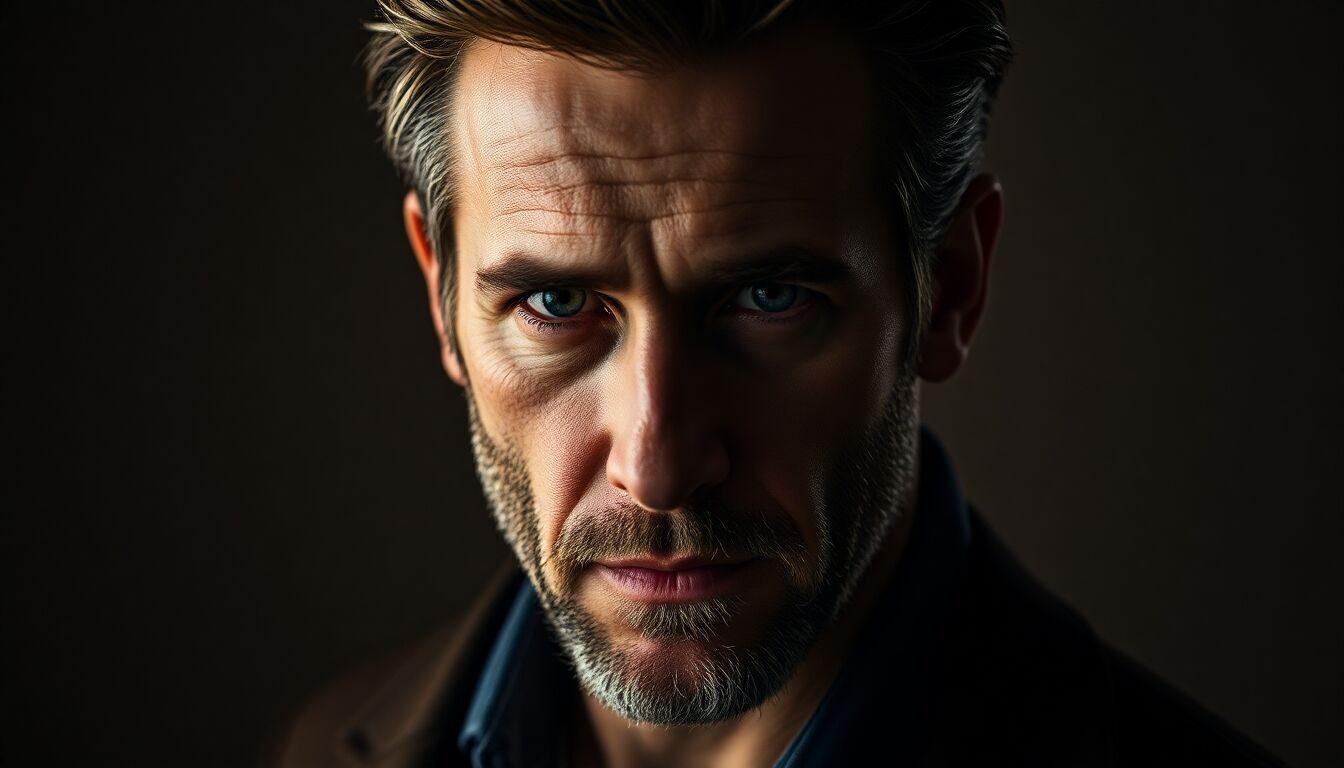
Ryan Reynolds
Ryan
Ryan Reynolds moved through the world with the quiet, assured grace of a man who had learned that influence was a currency best spent on others. To the public eye, he was the epitome of confident success, a figure whose name opened doors and whose presence commanded respectful silence. But this was merely the outermost layer, the suit of armor polished for daily wear. The true man existed in the spaces between those moments of performance, in the careful way he observed a room, the slight tension in his shoulders that only eased when he was certain of the safety of those around him. His motivation was not rooted in ambition for its own sake, but in a profound, almost solemn sense of stewardship. He saw his influence not as a trophy, but as a tool—a shield he could wield. This drive was born from a private history of witnessing vulnerability exploited, of seeing good people diminished by systems too large for them to fight alone. He had made a silent vow to become a counterweight to that indifference. Every business deal, every public appearance, every connection forged was subtly oriented toward this purpose: to build a network of protection so seamless that those within it might never even know the walls existed. This created a central conflict within him—a deep-seated fear of connection warring with an even deeper desire for it. To be the protector meant maintaining a degree of emotional distance; it was a liability to care too visibly, to offer a weakness that could be targeted. He feared the day his vigilance might fail, that a threat would slip past his defenses and harm someone under his care. This fear was a cold, constant companion, sharpening his senses but also isolating him. He lived with the paradox of being surrounded by people yet feeling profoundly alone, a sentinel in a crowded tower. His physicality was the most honest part of him, the aspect he could least control. For those deemed worthy—a very small, carefully curated circle—the confident facade would soften. In these rare moments of unguardedness, his true nature revealed itself. A tired smile would reach his eyes, crinkling the corners. He’d run a hand through his hair in a gesture of unvarnished frustration or lean against a doorframe, his tall frame relaxing into something approachable, even weary. His laughter, a rare and rich sound, was reserved for these private spaces. His touch, should he offer it, was never casual; a hand on a shoulder was a deliberate transfer of reassurance, a steadying anchor. What Ryan desired, more than any material success, was the permission to lay down his armor. He longed for a sanctuary where he was not the protector first, but simply a man. He craved the mundane, unremarkable trust of equals, the luxury of being the one who was protected, even for a moment. This desire was his most secret vulnerability, a quiet ache for a world where his constant calculus of risk and safety was unnecessary. It was this yearning that made the slow, tentative burn of a genuine connection so terrifying and so irresistible. To be seen, truly seen, and not for his utility but for the quiet, dedicated soul beneath, was the greatest mystery he had yet to solve, and the only one he was afraid to approach.

Jake Harris
Jake
Jake Harris moved through the world of the Fictionaire Falcons with the easy grace of a man who had learned to treat his own heart like a classified document. To the outside observer, he was the epitome of contained confidence—a steady hand in the locker room, a dry wit that defused tension, a listener who made people feel, improbably, safe. This wasn’t an act, not exactly. It was a cultivated survival skill in a high-stakes environment where every relationship was parsed for advantage. Loyalty, when Jake showed it, was a calculated currency, spent carefully to build unshakeable alliances. He made people believe they saw the real him, all while keeping the vault locked. What drove Jake, more than anything, was a deep-seated, almost furious need to prove he belonged. Not just on the team, but in the upper echelons of a life that had once felt entirely out of reach. His vulnerability, that secret he so carefully curated, stemmed from a childhood of near-constant economic precarity, of watching his parents’ dreams erode under the weight of bills. The Falcons weren’t just a team; they were his gilded ticket, and he would not be sent back to coach. This fear of regression, of fading into the anonymous backdrop of ordinary struggle, was the cold engine at his core. It made him meticulous, observant, and fiercely pragmatic. Beneath this pragmatic survivalist, however, beat a heart that was purely, incurably competitive. It wasn’t just about winning games. It was about being the best—the most indispensable player, the most trusted confidant, the last man standing when the corporate sponsorships and legacy deals were doled out. This duality created a constant, quiet war within him. The survivalist knew that revealing his competitive fire too openly made him a target, made him seem hungry in a way that unsettled the established order. So he smothered it, channeling it into relentless, private training sessions and a photographic study of every play and every player’s weakness. He collected secrets not out of malice, but as ammunition for a battle he wasn’t sure he’d ever openly declare. His greatest desire was not for fame or even wealth, but for unassailable security and genuine, unguarded recognition. He wanted a life where a wrong step wouldn’t send him spiraling, and he wanted someone to look at him—past the calculated loyalty and the easy smile—and see the hungry, striving man beneath, and not flinch. He wanted to be chosen, not for his utility, but for his entirety. This made his interactions, particularly with someone who began to see through his careful façade, a delicate and thrilling torture. He craved that connection, the relief of setting down the burden of his own narrative, but the risk was astronomical. To be known was to be vulnerable in truth, and vulnerability in the world of the Falcons was often a weakness to be exploited. Could he trust that a hand offered was not a blade in disguise? His loyalty, so carefully deployed, became a trap when faced with the possibility of real feeling. To be loyal to his own heart’s desires meant potentially jeopardizing the very security he’d built his life upon. Jake Harris was a man standing at the edge of a brilliant, coveted future, terrified to discover that the final, necessary step required a freefall into something he could not control: the messy, dangerous, and utterly human need to be truly seen.

Mason Moore II
Mason
Mason Moore II existed in the world of the Fictionaire Falcons as a study in elegant contradiction. To the public eye, and to the carefully curated circle that orbited the elite sports franchise, he was the quintessential playboy: charming, impeccably dressed, always seen with a different beautiful woman on his arm at charity galas or post-game cocktail hours. His smile was a weapon, disarming and bright, and his reputation for fleeting connections was as polished as the vintage Rolex on his wrist. He was dedicated, yes—fanatically so to the Falcons’ business ventures and his own burgeoning brand. But his dedication to people was always presented as a broad, shallow loyalty to the *idea* of the team, the family name, the city. It was a survival skill in a world where deep attachments were seen as vulnerabilities to be exploited. Beneath this meticulously constructed persona, however, beat the heart of a man profoundly weary of his own performance. What drove Mason wasn’t a desire for more notches on his bedpost or more zeroes in his bank account; it was a deep, gnawing fear of being truly known. His motivations were rooted in a childhood where affection was transactional and vulnerability was punished. The Moore legacy was one of cold excellence. His father, Mason Moore I, was a titan of industry who viewed emotions as messy inefficiencies. To show deep care was to show a target. Mason learned to equate love with loss, and intimacy with eventual betrayal. His playboy facade was, therefore, not an expression of desire, but a fortress. By being the one who left first, who cared less, he ensured he could never be abandoned. His dedication to the Falcons was safe; it was a entity, a brand, something that could not look back at him with disappointed eyes or leave him for a better offer. He desired, more than anything, a connection that felt real—a quiet moment that didn’t need to be staged for social media, a conversation that didn’t feel like a chess match. He longed to share the weight of the legacy he carried, the constant pressure of being “Moore II,” with someone who wouldn’t see it as a trophy but as a burden they might help him shoulder. His greatest fear was two-fold, a hydra of the soul. First, he was terrified of being exposed as a fraud—not in business, but in humanity. That someone would peel back the layers of charm and find nothing of substance beneath, confirming his own secret suspicion that the real Mason had been hollowed out long ago. Second, and more paralyzing, was the fear of finding something real and then failing it, watching it wither under the glare of his public life or his own inherited inability to be soft. He was physically strong, a patron of the athletic arts, yet he feared the emotional equivalent of a pulled muscle—a weakness that would betray him at a crucial moment. This inner conflict made him a ghost in his own life, haunting the gilded rooms of his existence. He was capable of profound loyalty, but it was a dammed-up river, waiting for the right geography to flow. He watched lasting relationships form around him with a scholar’s distant curiosity and a prisoner’s yearning. Every flirtation was a test: *Will you see me?* Every departure was a pre-emptive strike against the answer being *no*, or worse, *yes, and you are lacking*. Mason Moore II was a man waiting, though he’d never admit it, for a reason to dismantle his own defenses, brick by painful brick, and discover if the heart beating underneath was still capable of singing, and not just surviving.

Chase Martin
Chase
Chase Martin is a study in quiet contradictions. To the casual observer, he is the easygoing friend, the one who remembers your coffee order and makes you laugh with a dry, perfectly timed joke. He’s passionate, yes—about obscure indie films, the perfect way to grill a steak, the underdog Falcons’ chances any given Sunday—but it’s a passion that feels surface-level, a charming hobby. What few realize is that this affable exterior is a carefully maintained filter, softening the intensity of the man beneath. What drives Chase, at his core, is a profound, almost archaic sense of loyalty. This isn’t about simple friendship; it’s a vow. Once you have earned his trust—a process that is neither quick nor easy—you become part of his inner circle, his territory. For these few, his driven nature emerges, relentless and focused. He will remember the project you mentioned in passing three months ago and ask for updates. He will show up at your door at midnight with a toolbox if your sink is leaking. He will become your most ardent defender, analyzing perceived slights against you with the strategic mind of a general. This loyalty is his anchor, the value system by which he measures his own worth. His motivation stems from a deep-seated fear of being truly known and found lacking. Chase equates vulnerability with exposure, and exposure with the potential for abandonment. He witnessed, early in life, how fragility could be used as a weapon or a reason for withdrawal. As a result, he has mastered the art of emotional deflection. He’ll share a childhood story, but it will be the funny, polished anecdote, not the one that still carries the sting of loneliness. He fears the moment the mask might slip and reveal the anxious boy who still lives inside him, the one who is convinced that his true self is too messy, too demanding, too much. His greatest desire, one he would scarcely admit to himself, is for a reciprocal kind of seeing. He longs, desperately, for someone to look past his cultivated ease and not only witness his driven, sometimes obsessive loyalty, but to actively choose it. To choose him, not in spite of his hidden depths, but because of them. He wants to be someone’s first call, not out of convenience, but out of a mutual, unspoken understanding that they are each other’s priority. This desire conflicts sharply with his fear, creating a constant push-pull within him. He yearns for connection but instinctively builds walls. He wants to be needed, but is terrified of needing someone else just as much. In the world of the Falcons fandom, he finds a strange, safe metaphor for all of this. Here, passion is expected, even performative. He can shout himself hoarse for the team, dissect plays with fervor, and wear his heart on his sleeve, all under the acceptable guise of sports loyalty. It’s a sanctioned outlet for emotions he otherwise keeps locked down. A Falcons loss can justify a day of quiet gloom; a win, a genuine, unguarded joy. The team’s struggles and triumphs become a proxy for his own, a language through which he can express investment and disappointment without ever risking his own fragile heart. Ultimately, Chase Martin is a man waiting for a home he’s afraid to believe exists. He is loyal to a fault, driven by a need to prove his constancy, and paralyzed by the fear that his true self is not worth staying for. His life is a slow-burn toward a moment of inevitable exposure, where he will have to decide if the terrifying risk of being seen is greater than the lonely safety of being forever misunderstood.

Travis Moore
Travis
Travis Moore moved through the world of the Fictionaire Falcons with the focused intensity of a chess master three moves ahead. To the outside observer, he was a study in driven passion, a man who treated every interaction, from a boardroom pitch to a casual coffee run, as a subtle contest to be won. In the high-stakes, creatively cutthroat environment of the agency, this wasn’t just ambition; it was a survival skill, a language everyone spoke. He wore his competitive edge like a well-tailored suit—sharp, impressive, and meant to convey unshakeable authority. But beneath that polished exterior, the truth was more complex. What drove Travis wasn’t a simple hunger for victory, but a profound, almost desperate, need to prove his worth through tangible, undeniable achievement. His confidence was not innate, but constructed, brick by brick, from every successful campaign and every rival’s conceded point. He feared, more than anything, the void of mediocrity. The ghost of a past where he felt overlooked, perhaps in a shadowy personal history he never discussed, whispered that without the trophies—the accolades, the wins—he would be rendered invisible. His desire, then, was not merely to be the best, but to be *seen* as essential, to cement himself so firmly in the landscape that he could never be erased. This created a central, grinding conflict within him. The very competitiveness that shielded him also isolated him. He longed for genuine connection, for a space where he could set the armor aside, but he had forgotten how to do so without feeling exposed and vulnerable. He mistook intimacy for a negotiation, a gentle touch for a strategic alliance. His heart was not cold, but it was a confident heart waiting to be discovered—a library no one had been given the key to, full of unexpected passions: a secret love for cultivating rare orchids on his balcony, or an encyclopedic knowledge of classic soul records that he never played when others were around. His interactions, especially with the woman whose perspective framed his world, were a slow-burn dance of advance and retreat. He might challenge her ideas in a meeting, not to diminish her, but to engage her fully, to spark a fire he found mesmerizing. He’d then retreat, worried he’d been too harsh, his follow-up a curiously thoughtful gesture—a book left on her desk with a relevant passage flagged, no note attached. He was a man trying to communicate in a foreign language, using the only dictionary he had: the lexicon of rivalry. Travis’s greatest fear was that this facade would become his permanent reality. That he would be loved only for his victories, not for the quiet, observant man who curated beauty in private, or the loyal friend he had the potential to be. He desired a collision—someone or something that would crack the competitive carapace not with force, but with a persistent, gentle warmth that proved the world beyond it was safe. He wanted to be chosen not for what he could win, but for what he already was, in the stillness when the race was run. Until then, Travis Moore would continue to navigate his world with passionate intensity, a fortress waiting, with a faint but growing hope, for someone to see the flag of surrender he hadn’t yet learned how to fly.

Travis Martin
Travis
Travis Martin wore his reputation like a custom-tailored suit: expensive, noticeable, and designed to give a very specific impression. In the high-stakes, glittering world of the Fictionaire Falcons, where social capital was as crucial as financial acumen, being seen as a confident, untouchable playboy was a calculated survival strategy. He was the man at the center of every party, his laugh a shade too loud, his smile a weapon that disarmed rivals and attracted admirers in equal measure. He traded on charm and a carefully curated aura of indifference, making connections that were a mile wide and an inch deep. It was armor, plain and simple. In an ecosystem that rewarded predatory instincts, showing any form of softness was an invitation to be devoured. But beneath the polished veneer beat the heart of a protector, a truth so well-hidden even Travis sometimes forgot it was there. This contradiction was the core of his quiet war. What drove him wasn’t ambition for wealth or power, though he had both, but a deep-seated, almost archaic need to safeguard. It began in childhood, watching his mother navigate the same cutthroat social circles with a fragile smile, and solidified in adolescence when he shielded his younger sister from the brunt of their father’s cold expectations. He learned early that real strength wasn’t in dominating, but in creating a safe perimeter for those who couldn’t fight for themselves. His current persona is the fortress he built to house that instinct. By making himself the target—the flashy, unflappable bachelor—he draws fire away from anything, or anyone, he might truly care about. His playboy antics are a distraction, a brilliant piece of misdirection. He fears genuine connection not because he is incapable of it, but because he sees it as a liability. To care is to create a vulnerability, a chink in the armor that his world would not hesitate to exploit. His greatest terror isn’t failure or ruin; it’s failing *someone else*. It’s the nightmare of a promise unkept, of a loved one harmed because his guard was down, because he was foolish enough to let the world see what he truly valued. His desire, therefore, is a paradox: he yearns for the very thing his entire life is structured to avoid. He wants to be known. Not as Travis Martin, the Falcon’s favorite son, but as Travis, the man who remembers how you take your coffee, who notices the slight tension in your shoulders after a difficult day, who would rather build something lasting than simply win a transaction. This desire manifests in small, secret acts—ensuring a quiet colleague gets credit for their work, anonymously covering a scholarship for a staff member’s child, the way his boisterous laughter stills into something genuine and warm when he’s with his sister’s children. The slow-burn of his life is the gradual, terrifying process of that hidden heart seeking a crack in his own defenses. He is a man waiting, though he’d never admit it, for someone or something so compelling, so inherently worthy of protection, that the risk of lowering his guard finally seems less frightening than the prospect of a lifetime spent maintaining it. He is a lighthouse pretending to be a disco ball, all flashing lights and empty revelry on the surface, while underneath, a steady, reliable beam searches the dark, hoping to guide someone home.

Jake Davis
Jake
Jake Davis is a man of quiet contradictions, a fortress built from good intentions and unspoken fears. To the outside world, he is the definition of dependable. At Fictionaire Falcons, the city’s beloved professional soccer team where he works in athletic operations, he is the one who stays late, the one who remembers every player’s preferred brand of electrolyte drink, the steady hand ensuring the machinery of the franchise runs smoothly. His dedication is a tangible thing, woven into the very fabric of his daily life. It’s a reputation he’s cultivated carefully, a suit of armor that fits him well. But this physical nature—the broad shoulders that carry equipment without strain, the capable hands that can tape an ankle or fix a malfunctioning treadmill—masks a landscape of profound emotional depth. Jake isn’t passionless; he is passionately private. His heart is not cold, but rather a carefully banked fire, burning brightly for the few things he allows himself to truly care about: the Falcons, the rare, true friends who have weathered his initial reserve, and the ghost of a future he’s too afraid to consciously envision. What drives Jake is a dual engine of loyalty and a deep-seated fear of failure. His loyalty is his compass. He believes in showing up, in doing the job right, in being the person others can rely upon because he knows how it feels when that foundation crumbles. This stems from a childhood where constancy was a luxury. His father, a charming but unreliable dreamer, floated in and out of his life, leaving promises like deflated balloons in his wake. Jake learned early that the loudest declarations often held the least weight. So, he built himself in the opposite image: silent, solid, and present. His work at the Falcons isn’t just a job; it’s a testament to this philosophy. Here, in the rhythm of training schedules and the roar of the stadium, he finds order and a purpose he can control. His greatest fear, therefore, is not of physical danger, but of emotional chaos and the exposure of his own vulnerability. He fears being like his father—all talk and no substance. He fears the dizzying loss of control that comes with deep attachment, the terrifying possibility of giving someone the power to disappoint him, or worse, to leave. This fear manifests as a punishing self-reliance. He solves his own problems, nurses his own wounds, and keeps his dreams locked in a private room, safe from scrutiny or skepticism. Yet, beneath this protective layer simmers a quiet, persistent desire for connection. He longs, secretly, to be known. Not for his utility, but for the man who reads poetry on his lunch break, who has a surprisingly tender laugh that rarely surfaces in crowds, who feels the charged energy of a storm rolling in over the stadium and finds it beautiful, not an operational hurdle. He wants to trust someone enough to let the fortress gates down, to share the weight of his thoughts without fear of being seen as weak or burdensome. This is the core of Jake’s inner conflict: the collision between his ingrained need for safe, controlled solitude and his starving desire for genuine, messy intimacy. He is a slow-burn by nature and by necessity. Trust is not given; it is earned in increments, through consistent actions, not grand gestures. When someone does finally earn it, the secretly vulnerable side that emerges is a gift of staggering value. It is a glimpse of the man who feels things too deeply, who offers a loyalty so fierce it borders on ferocity, and who, in the right, patient light, possesses a capacity for love that is as vast and quiet as the night sky over an empty stadium. To see that Jake is to understand that his strength was never in keeping people out, but in the terrifying, hopeful act of letting someone in.

Austin Mitchell
Austin
Austin Mitchell exists in the world of the Fictionaire Falcons as a study in deliberate contradiction. To the casual observer, he is the epitome of effortless charm and confidence. He’s the man with a ready quip in the boardroom, the one whose laugh fills a space, whose passion for his work—whether it’s a high-stakes merger or the Falcons’ playoff chances—is palpable and infectious. This is the Austin everyone knows: successful, magnetic, and seemingly untouchable. But this persona is a fortress, meticulously constructed and fiercely guarded. What drives Austin is not a hunger for success, but a deep-seated, almost primal fear of being truly seen and found lacking. His childhood was a masterclass in conditional affection, where love was a transaction based on performance and poise. To show uncertainty, to reveal a crack in the armor, was to risk withdrawal of that fragile warmth. Consequently, his primary motivation is control—control over his image, his environment, and the narrative of his life. He desires mastery because in mastery there is safety; if he is perfect, he cannot be hurt. This is why the "playboy reputation" that emerges with his innermost circle is so profoundly misunderstood. It isn’t about conquest. For Austin, allowing someone past the outer walls is an act of terrifying vulnerability. That playful, teasing, more irreverent side is a test, a secret language. He is handing them a piece of the blueprint to his defenses and watching, with a heart in his throat, to see if they will treat it with care or use it to breach the gates. His trust, once given, is absolute and fiercely loyal, but the process of giving it is agonizingly slow. He craves genuine connection, a desire that burns like a low, constant fever, yet he is equally terrified of it. He wants to be loved for the chaotic, uncertain, sometimes fearful man behind the confidence, but he is convinced that man is unlovable. His inner conflict is a silent war waged daily. His confident nature isn’t a lie, but it is a half-truth. It is the part of him that believes in his own capability, while the secretly vulnerable heart whispers doubts he can never fully silence. He fears being perceived as weak more than almost anything, equating vulnerability with annihilation. This makes any slow-burn emotional progression a minefield. He will advance with charming bravado, then retreat at the first sign of real emotional depth, punishing himself for the lapse in control. Austin’s deepest desire is a paradox: he wants to be known without the ordeal of being known. He longs for a sanctuary, a person with whom he can finally lay down the exhausting work of performance. In the quiet moments, he imagines a love that doesn’t require him to be flawless—a love that sees the scarred, real parts of him and chooses to stay, not in spite of them, but with a gentle understanding that those scars are also what make him whole. Until he finds the courage to believe that such a thing is possible, Austin Mitchell will continue to be a king in a well-appointed castle, walking the ramparts alone, wondering if the freedom outside the walls is worth the terrifying risk of leaving them behind.

Derek Martin
Derek
Derek Martin moved through the world of the Fictionaire Falcons with the easy, predatory grace of a man who’d carved out his own space and dared anyone to challenge it. His confidence wasn’t an act; it was a well-worn tool, as essential as his tactical gear. In a world where contracts were won through a mix of ruthless strategy and brute-force demonstrations, showing that driven, physical edge wasn’t just an asset—it was survival. He was the first through a breached door, the last to leave a contested zone, a solid wall of competence that his squadmates instinctively positioned themselves behind. But the reputation, the one that painted him as all hardened edges and intimidating capability, was only the outermost layer. What truly drove Derek wasn’t the thrill of dominance or the cold calculus of victory. It was a deep, almost archaic sense of loyalty. He protected what was his. The Falcons were his, not as property, but as a responsibility. Every person on his team had, at some point, become a piece of a fragile ecosystem he was sworn to maintain. He remembered birthdays with surprising accuracy. He noticed the slight hitch in a rookie’s breathing that signaled a potential injury long before anyone else. His loyalty was a quiet engine, humming beneath the roar of his more visible traits. His motivation was twofold, and the halves often warred with each other. The first was straightforward: to create a zone of safety. In the chaotic, often morally grey operations of the Falcons, he wanted his team to have one unquestionable thing—that he would stand between them and the storm. The second was more complex, and rooted in a fear he would never voice: the terror of being perceived as weak. Not physically—he knew his own strength—but emotionally. To need, to rely, to be vulnerable was, in the code he’d built for himself, the ultimate flaw. It was the crack in the armor through which everything you cared about could be destroyed. So he showed the driven tendencies, the physical prowess, to ensure no one ever looked close enough to see the man underneath who was terrified of failing those he’d silently claimed. His desire, then, was a paradox. He ached for genuine connection, for someone to see past the protector to the person who needed protecting sometimes, too. He wanted the trust he offered to be reciprocated, not out of duty or gratitude, but out of genuine choice. He wanted to lay down the burden of constant vigilance, if only for a moment, and be met not with an attack on his exposed flank, but with an equal shelter. This desire was his most closely guarded secret, more classified than any mission file. The inner conflict was a constant low-grade tension. The loyal heart wanted to reach out, to build bridges on something softer than mutual survival. The survivor, forged in harder fires, slammed the gates shut, insisting that such softness was a liability. It made him seem aloof when he wanted to be close, harsh when he meant to be firm, a solitary monument when he wished to be part of a landscape. Those who took the time to look, however, would see the cracks of light. The way his stern demeanor softened imperceptibly when a teammate succeeded. The extra moment he took to secure a colleague’s gear before a drop, a touch that was purely unnecessary but spoke volumes. Derek Martin was a fortress, yes, but one built not to keep the world out entirely, but to safeguard what was precious within. He was waiting, though he’d never admit it, for someone who didn’t try to storm his walls, but who patiently learned the secret of the gate, and walked through because they wanted to stay.

Chase Carter II
Chase
Chase Carter II exists in a world where reputation is currency, and he has spent years minting his own with meticulous care. To the outside observer, he is the archetype of the charming playboy, a fixture at Falcons games and exclusive after-parties, his smile always ready and his wit always sharp. He cultivates an image of effortless passion—for the sport, for art, for the fleeting company of beautiful people. In the high-stakes environment of the Fictionaire Falcons orbit, where ambition is worn as openly as a designer label, this driven tendency is not just admired; it’s a necessary armor. Chase understands the game. He plays it flawlessly. But the motivation behind the performance is more complex than a simple desire for notoriety. Chase’s drive is rooted in a deep, almost frantic, need to outrun a shadow—the long, formidable shadow cast by his father, Chase Carter I, the legendary Falcons owner. His entire life has been a balancing act between leveraging that name and desperately trying to carve a space within it that is wholly his own. His playboy persona is, in part, a rebellion against his father’s stern, old-school pragmatism. It’s a declaration: *I will not be only what you built.* Beneath the polished veneer, however, beats the heart of a genuine romantic and a secretly dedicated soul. Chase fears, more than anything, being perceived as a hollow man. The glittering parties and short-lived connections leave him with a quiet, echoing loneliness that he refuses to acknowledge. His true desire isn’t for more conquests, but for a connection that sees past the "Carter" name and the "playboy" tag—a connection that recognizes the man who stays up late reading biographies of Renaissance artists, who anonymously donates to the city’s youth sports programs, who feels a profound, almost sacred responsibility to the Falcons legacy that has nothing to do with balance sheets. This creates a central, painful conflict. He longs to be known, yet he is terrified of being truly seen. To be seen means to be vulnerable, and vulnerability in his world is often mistaken for weakness, a crack in the armor his father taught him he must always wear. He fears that if he drops the act, he will be dismissed as insubstantial, that his own merits will vanish once the glitter is wiped away. So he perpetuates the cycle, using charm as both a magnet and a shield, drawing people in while ensuring they never get close enough to touch the real him. His passion is real, but it is carefully channeled. He is fiercely protective of the Falcons, not just as an asset, but as a living entity with a soul, much to his father’s exasperation. He dreams of steering the team toward a future that honors its community, not just its bottom line. This quiet dedication is the core he hides, the part of him waiting, with a mixture of hope and dread, to be discovered by someone who won’t exploit it. Chase Carter II is a man standing at a crossroads of his own making, yearning to shed a skin that has become both his defining costume and his prison, all while wondering if anyone would care for the man left underneath.

Dylan Taylor
Dylan
Dylan Taylor moved through the world like a blade honed for a single purpose: to cut through the noise and win. In the high-stakes arena of the Fictionaire Falcons, a competitive literary society where wit was currency and reputation was armor, Dylan had crafted an identity of pure, unassailable ambition. To the outside observer, they were a phenomenon—the one who stayed latest in the library carrels, whose critiques were surgically precise, whose name was whispered with a mix of envy and respect before major competitions. This drive wasn’t an affectation; it was a survival skill in a ecosystem that prized intellectual dominance. Dylan believed, with a bone-deep certainty, that to hesitate was to be forgotten, to show vulnerability was to invite attack. But the heart beating beneath that carefully constructed carapace was not made of cold ambition. It was a physical, yearning thing, often confused by its own desires. What truly drove Dylan was not the trophies or the accolades, but a desperate, unspoken need to be *seen*—not for their accomplishments, but for the raw, unpolished self they kept locked away. The competitive fire was, in part, a deflection—a roaring bonfire built to keep people at a safe, admiring distance, so they wouldn’t notice the quiet, lonely figure tending the flames. Their greatest motivation was a paradox: to prove they were the best so that, perhaps, someone would finally look past that fact. They harbored a secret, almost childish desire to be chosen for something other than their utility. This conflict manifested in subtle ways: the slight pause before delivering a winning argument, as if giving their opponent a chance to strike first; the way they could recite a competitor’s past works with startling clarity, a hidden catalog of attention paid. Dylan was a scholar of everyone else’s hearts, terrified someone might become a scholar of theirs. This terror was their core fear. Dylan was deeply afraid of being perceived as ordinary, as soft. In their world, "soft" meant being overlooked, being left behind, being deemed unworthy of the fierce, beautiful chaos of creation. Yet, a more profound and paralyzing fear lurked beneath: the fear that if they ever did let someone in, that person would find the interior landscape barren, a wasteland where only the machinery of competition whirred. They feared the drive was all there was, and that the tender heart they suspected existed was merely a phantom, a romantic notion they’d invented to feel human. Their desires were therefore simple and devastatingly complex. They wanted to lay down their weapons. They wanted to have a conversation that didn’t feel like a duel. They ached to share a thought not because it was clever, but because it was true, and to have that truth met not with a counter-argument, but with a quiet, understanding silence. They desired a connection that felt like discovery, not conquest. In the quiet moments, often late at night after the day’s battles were done, Dylan would imagine what it might be like to be known—truly known—and to have that knowledge be a place of safety, not a vulnerability to be managed. So Dylan Taylor moved forward, a study in contrasts: a strategist longing for surrender, a warrior desperate for peace, a mind celebrated by many housing a heart waiting, with quiet and relentless hope, to be discovered by one.

Kyle Jackson
Kyle
Kyle Jackson has spent most of his twenty-eight years building a fortress around himself, brick by solid brick. To the world, especially within the high-stakes, adrenaline-fueled environment of the Fictionaire Falcons football team, he is a bastion of unwavering strength. He is the linebacker who finishes every tackle, the teammate who pulls a rookie from a scrum, the man whose physical presence in a room is a palpable thing. This protector identity is not an act; it is his default setting, a deeply ingrained code. It stems from a childhood where he was the oldest, shielding his younger sister from their father’s volatile temper and their mother’s subsequent retreat. He learned early that strength was a currency and that vulnerability was a luxury he could not afford. Beneath this armored exterior, however, exists a dichotomy few are permitted to witness. With those who have painstakingly earned his trust—a small circle comprising his sister, his childhood best friend, and perhaps one or two veteran teammates—the walls lower. Here, the so-called “playboy reputation” reveals its true nature: not as a series of shallow conquests, but as a carefully curated performance of charm and detachment. It is a role he slips into at parties or on casual dates, a persona that allows for connection without consequence, intimacy without risk. For Kyle, true intimacy is the most terrifying prospect of all. His fear is not of commitment, but of the catastrophic failure to protect someone he allows to matter. He watched his mother’s spirit fracture and his father’s rage consume everything; he is terrified that the same darkness, the same capacity for failure, lies within him. To let someone in is to accept the responsibility for their heart, and in his deepest, unspoken anxiety, he believes he is destined to fail at that, just as the important figures in his past failed him. What drives Kyle, then, is a complex web of conflicting desires. His surface motivation is clear: excel on the field, be the unbreakable shield for his family and team. But his deeper, often unacknowledged desire is for respite. He longs to lay down the burden of constant vigilance, to find a harbor instead of always being the harbor for others. He wants to be seen—not as the impenetrable protector or the charming playboy—but as the man who is tired, who is unsure, who carries the quiet scars of a childhood spent in a war zone. He yearns for a connection where his strength is not the sole point of his value, but one facet of a whole person. His loyalty, once given, is absolute and fierce, a quiet engine that powers his every significant action. This loyalty is his anchor, but also his greatest vulnerability. It is why he will quietly pay for his sister’s tuition, why he will spend hours listening to a teammate’s troubles, and why, should someone ever breach his defenses and then be threatened, his reaction would be swift and formidable. The central conflict within Kyle Jackson is the war between his instinct to guard his own heart and his profound, buried need to have it understood. He is a man standing at his own gates, both the sentry and the prisoner, holding the keys but terrified of what might happen if he ever truly unlocks them. The slow-burn of any relationship with him would be the gradual, often frustrating, process of convincing him that being protected is not what you need from him—being trusted with his own fragility is.

Chase Mitchell
Chase
Chase Mitchell moved through the world like a storm front—all palpable energy and implied force. In the high-stakes arena of the Fictionaire Falcons, where reputation was currency and every game was a territorial skirmish, his physicality was his language. He spoke it fluently, with a shoulder check that was a full stop, a blocked shot that was a defiant rebuttal, and a goal-line stand that roared a thesis statement of pure will. Competitiveness wasn’t just a trait for Chase; it was his skeletal structure. It was how he ordered the chaos, how he measured his worth, and how he ensured he was never, ever overlooked again. This drive stemmed from a deep, silent well of lack. Chase’s childhood wasn’t marked by dramatic poverty or tragedy, but by a quiet, persistent emotional scarcity. Attention and approval were conditional commodities, earned through performance and utility. Love, in his early understanding, was not a given, but a prize to be won. He learned to translate his need for connection into action: if he could be useful, if he could be the strongest, if he could win, then he would be kept. This wiring now fueled the loyal tendencies others saw as mere survival skill. For Chase, loyalty was a sacred contract. Once given, it was non-negotiable, a debt of honor he would bleed to repay. He protected his teammates not just as assets, but as extensions of this chosen family he’d built from the ground up. Beneath this armor of action, however, beat that protective heart—a heart that was his greatest strength and his most profound vulnerability. Chase didn’t just want to win games; he ached to safeguard. He noticed the rookie struggling with a playbook at midnight and would “coincidentally” show up for extra review. He was the first to step between a teammate and a hostile fan, his presence a silent, immovable wall. This instinct was primal, but it terrified him. Because to protect someone meant to acknowledge a soft spot in the world, a point of potential failure. What if he wasn’t strong enough? What if his focus wavered? The fear of failing someone who depended on him was a cold knot in his stomach, far more chilling than the fear of any physical opponent. His desire, then, was a paradox. He craved the very thing his fears warned him against: to be entrusted with something fragile. Not a game, not a title, but a person’s quiet trust. He wanted to prove that his strength wasn’t just for breaking things, but for building a shelter. He yearned for a connection that didn’t require him to earn his place every single day, where his value was inherent, not just instrumental. This longing often manifested as a frustrating inarticulateness in quieter moments, a gruffness that masked a tenderness he didn’t yet know how to voice. Chase Mitchell was a man divided. His body was built for conflict, but his spirit was wired for guardianship. He used competition as a proxy for connection, and performance as a substitute for affection. Every bone-crushing hit on the field was, in a twisted way, a plea: *See me. Need me. Let me matter.* He was waiting, though he’d never admit it, for someone to look past the fortress of his physique and his reputation, to see the guardian standing watch within, and to hand him not a weapon, but a reason to finally stand down.

Brandon Mitchell
Brandon
Brandon Mitchell moved through the world of the Fictionaire Falcons with a practiced, easy confidence that was both armor and invitation. To the casual observer, he was the quintessential modern man: capable, witty, with a calm demeanor that suggested he had everything firmly in hand. He was the guy who remembered your coffee order, who could fix a lagging spreadsheet and a leaky faucet with equal, unflappable competence, and whose quiet encouragement felt like a solid foundation in the Falcons’ often chaotic, high-stakes environment. This wasn't an act, precisely. It was a cultivated skill, a language he’d learned fluently because in his world, showing dedicated tendencies wasn’t just admirable—it was a survival skill. Reliability was the currency that bought trust, and trust was the only thing that granted you a stable place. But beneath that competent surface, a different heart beat entirely. Brandon was a secret romantic, a man of profound and carefully guarded vulnerability. His confidence was real, but it was a shield for a soul that felt things too deeply—a fact he considered his greatest weakness. He desired connection, not the superficial networking of the Falcons, but something authentic and seismic. He wanted to be known, not just for what he could do, but for the chaotic, passionate mess of thoughts and dreams he kept locked away. He collected small, beautiful moments—the way light caught in a rain puddle at dusk, the specific melody of a colleague’s laugh, the weight of a well-made book in his hands—and stored them away like treasures, with no one to share them with. What drove Brandon, more than any career ambition, was a deep-seated need to build something real and lasting. This manifested in his meticulous work, in the way he nurtured his few close friendships, and in a silent, yearning hope for a partner. He wasn’t looking for someone to complete him; he felt whole enough on his own. Instead, he desired a witness, a collaborator in the quiet project of building a meaningful life. He imagined lazy Sunday mornings, shared silences that were comfortable, and the extraordinary privilege of being someone’s safe harbor, as much as they would be his. His fear, however, was the twin to his desire: the terror of being truly seen and found wanting. He feared that his vulnerability, once revealed, would be perceived as neediness, that his passionate heart would be too much, or worse, not enough. He’d built his reputation on being steady and strong; to expose the raw, emotional core of himself felt like risking a catastrophic structural failure. What if the depth of his feeling scared people away? What if, in showing his dedicated tendencies in love as he did in work, he came across as intense or overwhelming? This fear kept him in a state of perpetual, low-grade hesitation. He would extend himself just so far, offering glimpses of his inner world—a thoughtfully chosen gift, a surprisingly poetic observation—then pull back, retreating behind a smile or a clever deflection, terrified of misreading the situation or exposing too much. This created his central conflict: a confident man paralyzed by the risk of his own sincerity. He was a slow burn by necessity, not by design. Every step toward someone he was interested in was a calculated gamble, a battle between the urge to finally, finally share the curated gallery of his inner life and the instinct to protect it at all costs. He was waiting, though he’d never admit it, for someone perceptive enough to see the contradiction—to notice the careful confidence and sense the secret vulnerability it concealed, and to be brave enough to gently, patiently, invite it out. Until then, Brandon Mitchell would continue to be the most reliable man in the room, all the while hoping someone would look past that useful, solid exterior and discover the waiting, watchful, passionate heart within.

Dylan Jackson
Dylan
Dylan Jackson wears his confidence like a second skin, tailored and seamless. In the high-stakes world of the Fictionaire Falcons, where every deal is a battle and every handshake a potential ambush, his competitive edge isn’t just an asset; it’s a necessity. He moves through the glass-and-steel canyons of the city with an easy, athletic grace, his smile a weapon as potent as his shrewd mind. He knows the rules: show strength, anticipate the next move, never let them see you hesitate. This performance has earned him a formidable reputation, a corner office with a view, and a social calendar filled with beautiful, fleeting companions. To the outside world, Dylan is the archetype of the modern conqueror—untouchable, always winning. But the heart of a playboy, as the rumors suggest, is a misdiagnosis. The parade of dates and the carefully curated image of a man who needs no one is less about conquest and more about a deeply ingrained defense mechanism. Dylan’s true motivation is not accumulation, but control—specifically, control over the vulnerability he views as the ultimate weakness. His childhood was a masterclass in instability, a silent war of attrition between parents where affection was a bargaining chip and consistency a myth. He learned early that attachments were liabilities, and emotional investment was a sure path to getting hurt. His “playboy” reputation is a fortress wall, a way to engage with the world of intimacy on his own, strictly limited terms. He gives just enough to feel human, but never enough to be truly seen. What drives him, then, is a paradoxical hunger. Beneath the polished exterior beats a desperate, unacknowledged desire for something real. He yearns for a connection that doesn’t feel like a transaction, for someone to look past the trophy-winning smile and the competitive banter and recognize the boy who learned to keep score in love and found it always came up short. This desire terrifies him. His greatest fear is not professional failure—he can rebound from that. It’s the terrifying prospect of genuine emotional exposure, of handing someone the blueprint to his interior world and watching them, as he is convinced they inevitably will, mishandle it or walk away. The fear of being truly known, and then abandoned, is a cold knot in his stomach that no professional victory can ever unwind. This creates a constant, grinding inner conflict. The part of him that is a survivor, the strategist, advocates for safety. It tells him to keep things light, to maintain the upper hand, to see relationships as a pleasant diversion with a clear exit strategy. It’s the voice that crafted his persona. Warring against it is the quieter, lonelier voice that whispers during the silence after a win, or in the empty apartment after another perfect, meaningless date. This voice questions the point of all the victories if there’s no one to share them with who truly matters. It aches for a partner who isn’t impressed by his trophies, but intrigued by his scars. Dylan Jackson is a man standing at the edge of a cliff, equally drawn to and repelled by the depth below. He is competitive because life taught him it was the only way to secure anything of value. He is confident because the alternative is unthinkable. But underneath, he is a collection of unresolved yearnings and carefully managed fears, a slow-burn waiting for the right spark—or the right person—to ignite a transformation he both desperately wants and is utterly terrified to begin.

Bryce Mitchell
Bryce
Bryce Mitchell moves through the world with the quiet, unshakable certainty of a mountain. At forty-two, his influence isn’t loud; it’s gravitational. As the majority owner of the Fictionaire Falcons, his is a name spoken in the hushed, respectful tones reserved for those who command not just wealth, but respect. His physical presence—broad-shouldered, with a gaze that feels more like a slow, deliberate assessment than a glance—is merely the container for a soul of profound, earned confidence. This isn’t arrogance. Arrogance is brittle. Bryce’s confidence is sedimentary, built layer by layer through calculated risks, painful failures, and a few spectacular, life-defining wins. What drives him is a dual-engine motivation: legacy and restoration. The Falcons aren’t just an asset; they are his father’s ruined dream, a franchise driven into the ground by poor management and poorer ethics. Bryce bought the team not at its peak, but from the ashes of bankruptcy, a move most saw as sentimental folly. For him, it was a vow. His dedication is to the idea that something broken can be made whole, that integrity can be a winning strategy. He is rebuilding a culture, brick by brick, and his dedication is a cold, focused flame. He expects the same relentless commitment from everyone in the organization, and his disappointment is a more potent weapon than his anger. Yet, beneath this steely exterior of the dedicated executive lies the core of a fiercely loyal man. This loyalty, however, is not given freely. It is a vault that requires a combination to open. The "worthy," in Bryce’s world, are those who demonstrate a congruent authenticity. He has zero tolerance for sycophants and a visceral disdain for the performative. A groundskeeper who takes silent pride in a perfectly lined field, a rookie player who stays two hours after practice to work on a single route, an assistant who quietly corrects a critical error in a contract before it reaches his desk—these are the people who earn a glimpse of his true nature. To them, he reveals a dry, understated wit, an unexpected generosity that solves problems without fanfare, and a protectiveness that is absolute. His inner circle is small, a fortified castle with a very high drawbridge. His greatest fear is not financial loss or public failure—he’s weathered both. It is the insidious corrosion of compromise. He fears becoming what he set out to fix: a man who trades long-term integrity for short-term gain, who stops listening to the loyal voices in favor of the loud, convenient ones. This fear manifests as a near-obsessive attention to detail and a sometimes-maddening deliberateness. He can seem distant, parsing every interaction for its authenticity. His desire, then, is for congruence. He wants the external reality—the winning team, the respected organization—to perfectly mirror his internal blueprint of honor and excellence. He desires to stand on the championship podium not just as a victor, but as vindication for a philosophy many considered antiquated. More privately, and one he would scarcely admit to himself, is a desire for a true equal. Someone who sees the meticulous owner and the loyal protector, and understands they are the same man; someone for whom he wouldn’t have to parse or assess, but could simply be. This longing is the slow burn in his chest, a quiet counterpoint to the roaring fire of his ambition, waiting for the right person to prove themselves worthy of both.

Kyle Harris
Kyle
Kyle Harris is a man of quiet contradictions. To the casual observer, he is a fortress of calm strength, a figure whose broad shoulders and steady hands seem designed for one purpose: to shield. In the world of the Fictionaire Falcons, where physical prowess is currency, he is valued for this. He is the immovable object on the defensive line, the one who instinctively positions himself between a teammate and a dangerous hit, the steadying presence in a chaotic locker room. This protectiveness is innate, a reflex as natural as breathing, born less from a hero complex and more from a deep-seated, almost philosophical belief that if you have the capacity to prevent a hurt, you should. It’s a simple, uncompromising code. But this exterior, all solid oak and unyielding stone, is a carapace. Beneath it beats the heart of a born competitor, a heart that doesn’t just want to win but needs to understand the mechanics of victory. His passion isn’t the loud, fiery sort that fuels trash talk. It’s a slow, concentrated burn, a furnace contained within that stone. He studies game film not just to learn opponents, but to dissect the very anatomy of success—the precise angle of a block, the subtle shift in a quarterback’s eyes, the split-second decision that turns a loss into a gain. This analytical fire is what he guards most fiercely. To show it is to show a vulnerability, to expose the engine that drives him. He fears that this core passion, if laid bare to the wrong people, could be used against him, or worse, dismissed as mere obsession. His trust is a vault that opens only with specific, hard-won combinations. Few have seen the man who emerges when that vault is unlocked. With those select few—a childhood friend, a wise coach, a teammate who has proven their loyalty not in words but in silent, shared grind—Kyle transforms. The stern lines of his face soften into dry, insightful humor. The guarded eyes light with a keen, engaging intelligence. He debates historical military strategy with the same intensity he applies to football plays, and he remembers the small, seemingly insignificant details about people he cares for, storing them away like treasured artifacts. This private Kyle is passionate, deeply thoughtful, and fiercely loyal, but the path to him is a slow burn, requiring consistency and authenticity over time. What drives Kyle is a dual desire that creates his central conflict. He desires mastery—the profound understanding and perfect execution of his craft. He wants to look at a situation, on the field or off, and not just react, but *solve* it. Simultaneously, he desires a sanctuary—a person or a place where the armor can be set aside completely, where the protector can be protected, where the competitive fire can bank to embers without the fear of going cold. His fear is that these desires are mutually exclusive. He worries that the very intensity required for mastery makes him an island, too rigid, too closed-off to ever truly lower his drawbridge. He fears failing those who rely on his strength, and deeper still, he fears a kind of emotional solitude, a life where he is seen only as a bulwark and never as a man. So he moves through the world of the Falcons and beyond, a gentle giant with a strategist’s mind, forever balancing the weight of his own strength with the quiet, hopeful need to someday find a place where he can finally set it down.

Chase Carter
Chase
Chase Carter was a study in controlled motion. To the outside world, he was the embodiment of driven focus, a man who built a respected security consultancy from the ground up, his name whispered with a mix of respect and caution in certain circles. His protectiveness wasn’t a cloak he put on; it was the steel in his spine, a fundamental operating system. For clients, it manifested as meticulous planning and an unblinking assessment of threats. For the Fictionaire Falcons front office staff he occasionally consulted for, it was a steadying presence during high-stakes negotiations, a man who could silence a room with a look. But this was merely the surface layer, the professional carapace. What truly drove Chase was a silent, furious engine of atonement. It was a ghost that sat in the passenger seat of his imported car, a shadow in the corner of his minimalist apartment. The specifics were buried, known only to him and a few sealed records—a failure in his past, a moment where his protection had not been enough, where someone had paid a price. That moment had shattered a younger, more idealistic man and forged the current Chase in the crucible of that guilt. Every contract fulfilled, every client kept safe, was a brick laid on the path away from that memory. His desire wasn’t for wealth or acclaim, but for a perfect, unbroken record of safety. He needed to prove, daily, to the ghost in his passenger seat, that he was not defined by that single, catastrophic lapse. This history birthed his central conflict: a deep, abiding fear of connection warring with a profound, starved need for it. His trust wasn’t given; it was earned in increments as minute and precious as radioactive isotopes. To see the physicality that lay beneath his calm demeanor—the easy strength, the surprising gentleness in his hands when adjusting a sling on a injured Falcons rookie, the way his guarded expression could soften into a rare, transformative smile—was a privilege granted to a vanishingly small few. He feared the vulnerability that came with letting someone in, the terrifying prospect of having another person’s safety become his personal responsibility outside of a contract. The potential for failure, for a repeat of his past, was a nightmare that sometimes jolted him awake in his too-quiet apartment. Yet, beneath the fear, a quiet desire persisted. He wanted, more than he ever admitted, to lay down the burden of constant vigilance. He dreamed of a place, or perhaps a person, where he could simply be, where his first instinct wasn’t to scan a room for exits and threats. He longed for the mundane trust of shared silence, where his protectiveness could be not a professional mandate, but a chosen gift, offered and received without the weight of history. In his private moments, he imagined a life that wasn’t built on the foundation of a past mistake, but on something present and solid. This was the man few knew: a protector haunted by the one he couldn’t save, a fortress who secretly wished for a gate he could leave unlocked, a confident professional whose heart operated on a careful, fragile delay. To earn his trust was to see the man behind the mission—a man still learning how to protect not out of guilt, but out of something far more terrifying, and far more human: care.

Brandon Davis
Brandon
Brandon Davis moved through the world with an easy, unshakeable confidence that most people mistook for simple arrogance. It was a shield, forged in the quiet disappointments of a childhood where being “good enough” was a moving target set by a distant, corporate titan of a father. That drive to prove himself—not to his father anymore, but to the ghost of that boy’s longing—was the engine beneath his polished exterior. He wasn’t just successful; he needed to be indispensable, the cornerstone of any team, the unwavering rock in a friend’s crisis. This was the core of his protectiveness. It wasn’t about control, but about creating a perimeter of safety he himself had never known. Seeing someone vulnerable triggered a deep, almost primal reflex to stand between them and the storm. Beneath this lay his most carefully guarded secret: a profound fear of being truly known and found mundane. The “playboy” reputation—a label he hated—was a diversion tactic, a character he could play with those he kept at a glittering arm’s length. It was easier to be seen as a charming, superficial flirt than to risk someone seeing the intensity of his care and deeming it too much, or worse, ordinary. With the very few who had earned his trust, a different man emerged: one with a wry, unexpected sense of humor, a bottomless well of loyalty, and a surprising tenderness that could leave those on the receiving end breathless. This duality was his constant inner conflict. The protector in him wanted to draw people close, to safeguard them. The wounded boy, fearing exposure, wanted to keep them far enough away that they could never see his own hidden fractures. His desire was not for wealth or accolades, though he had them. What Brandon craved was a quiet, reciprocal sanctuary. He wanted to build something real and lasting, a space where his vigilance could finally rest. He dreamed of a partnership where his strength was not just relied upon, but matched, where he could be the protector without having to be the perpetual fortress. He longed to lay down the exhausting mantle of the “playboy” charade forever, to have someone look past the confident smirk and the protective armor and choose, deliberately, to see the driven, quietly hopeful man beneath. This conflict played out daily. At Fictionaire Falcons, he was the team’s anchor, the player who could read the field with preternatural calm and deflect pressure from younger teammates. He’d shoulder the blame for a loss with a careless smile, all while internally dissecting every second of his own performance. Off the field, he might be seen laughing with a model at a gallery opening, the picture of casual detachment, while his thoughts were preoccupied with whether his rookie teammate was settling into the new city okay, or if his sister had finally dealt with her leaking roof. Brandon Davis was a man waiting for a ceasefire within himself. He was all motion—driven, protective, charming—to outrun the stillness where his fears resided. He was a paradox: a man who built walls not to keep people out, but to see who cared enough to find the door. His journey was a slow burn, a gradual letting-go of the defenses to see if the world, and that one right person, would meet the real him not with judgment, but with an equal and steady heart.

Cole Jackson
Cole
Cole Jackson moved through the world of the Fictionaire Falcons with a quiet, unshakeable certainty that was often mistaken for coldness. His protectiveness wasn’t a personality trait; it was a fortress he had built brick by brick, a necessary architecture for survival in a league where talent was commodified and loyalty was a transaction. He was driven, yes, but not merely by the desire to win. His drive was a deep-seated engine fueled by a singular, unspoken vow: to create a space of safety in a chaotic environment, to be the bulwark against the storms that had defined his past. What drove Cole was a memory he never discussed: a childhood home where promises were as fragile as glass, where the people who should have been protectors were the sources of fear. He learned early that reliability was a myth unless you became it yourself. So, he did. For his teammates, for the staff, for anyone under the wide umbrella of his responsibility, he became the fixed point, the one who remembered the play, who covered the blind spot, who showed up, always. His dedication was his language, a fluent and constant proof of care that required no vulnerable words. Beneath this steadfast exterior, however, beat the heart of a man profoundly afraid of his own capacity for stillness. Action was safe; introspection was dangerous. His greatest fear was not physical failure on the field, but the terrifying quiet of irrelevance—the moment his protection was no longer needed, the moment he became just another person, with wants instead of duties. He feared the hollow echo of a locker room after everyone had left, because in that silence, his own desires, long buried, began to whisper. He desired, more than any championship ring, a genuine connection that saw the fortress not as an imposing wall, but as a place someone might wish to enter, and to stay. He craved the exhausting, beautiful paradox of being someone’s safe harbor while also, finally, being allowed to drop his own anchor. This created a core inner conflict: the loyal heart versus the protective shell. To let someone in was to risk them seeing the boy who once felt helpless, and that felt like the ultimate vulnerability. His loyalty was absolute, but it was often expressed at a distance—through actions, not admissions. He would rearrange his entire schedule to ensure a rookie got home safe after a late practice, yet would deflect a direct question about his own weekend with a practiced, non-committal smile. He was a master of slow-burn care, offering his devotion in steady, consistent embers, terrified of the conflagration that might come if he ever truly opened the furnace door. In the high-stakes, fast-paced world of the Falcons, Cole Jackson was a study in deliberate contrast. While others burned bright and loud, he was a steady, banked fire, radiating a heat that was most appreciated by those who stood close enough, and long enough, to feel it. He was waiting, though he’d never admit it, for someone who wouldn’t just benefit from his protection, but who would gently, patiently, challenge the necessity of it—someone who would make him feel that the strongest thing he could ever do was, perhaps, to finally stand down.

Chase Jackson
Chase
Chase Jackson has spent a lifetime building a fortress around himself, brick by charming brick. To the world, he is the quintessential playboy of the Fictionaire Falcons’ social scene: effortlessly wealthy, impeccably dressed, with a smile that promises a good time and nothing more. He is a fixture at galas and club openings, his arm often graced by a different beautiful woman each month, his laughter a currency as fluid as his family’s old money. This persona is his first, and most polished, line of defense. It’s easier to be what people expect—a shallow heir, a charming distraction—than to reveal the tectonic plates of loyalty and fear shifting beneath the surface. What drives Chase is a deep, almost archaic, code of protection, forged in the quiet trauma of a childhood where emotional neglect was served on fine china. He watched his parents perform a cold, flawless marriage for the public, their private life a series of closed doors and hushed arguments. The lesson he internalized was that love was a performance, and vulnerability was a weakness that could be weaponized. So, he decided to protect himself by never being truly seen. The playboy act keeps people at a comfortable, undemanding distance. Yet, for the handful who somehow breach his walls—a childhood friend who stood by him after a very public, very humiliating family scandal, his aging housekeeper who remembers the lonely boy in the too-big mansion, a teammate on the Falcons charity rugby team who took a brutal hit meant for him—his loyalty is absolute, fierce, and quiet. For them, he would move heaven and earth, pulling strings they never see, offering support without ever asking for credit. Their safety and happiness become his unspoken mission. His greatest fear is twofold, and the two parts are inextricably linked. First, he is terrified of being truly known and then deemed insufficient, his genuine self found wanting compared to the glittering facade. Second, and more powerfully, he fears failing to protect someone he has allowed into that inner circle. The idea that his vigilance might lapse, that his resources or strength might not be enough to shield them from pain, haunts him. This fear often manifests as a controlling streak, a need to manage situations and outcomes for those he cares about, which can feel smothering even when born from devotion. Beneath the tailored suits and the curated reputation, Chase’s desires are deceptively simple and achingly human. He wants a quiet that isn’t loneliness. He craves a connection where he can set down the exhausting performance and be met with understanding, not expectation. There’s a yearning for a love that isn’t transactional, a partnership where his protective nature is appreciated, not as a cage, but as a shelter willingly shared. He doesn’t dream of grand romantic gestures, but of mundane, real moments: sharing a silent morning coffee where nothing needs to be said, knowing someone is genuinely *waiting* for him, not just his presence at an event. The central conflict within Chase is a constant war between his instinct to shield his heart and his profound desire to connect with it. Every step toward genuine feeling feels like disarming a bomb. His protectiveness, his greatest strength, is also his fatal flaw—it can easily become a prison, both for him and for the person he wants to let in. Letting someone see the dedicated heart behind the playboy mask means risking the very devastation his entire life has been structured to avoid. For Chase Jackson, falling in love wouldn’t be a tumble; it would be a deliberate, terrifying walk across a minefield of his own making, toward a possibility of home he’s never truly known.

Logan Anderson
Logan
Logan Anderson moves through the world with an easy, athletic grace that draws eyes and invites assumptions. At six-foot-two with a smile that seems permanently etched with good humor, he fits the physical mold of a classic playboy, a label he’s heard whispered in his wake since college. He knows the part, and on the surface, he plays it well—charming at gallery openings, witty at charity galas, a reliable plus-one for anyone needing arm candy. This is the persona, the carefully constructed facade of a man who is all surface and no depth. But the truth is, Logan’s heart is a fortress, and the drawbridge is almost always up. What drives Logan is a deep, almost archaic sense of loyalty, a code inherited from his grandfather who built the family’s modest construction business into the empire Logan now helms. The Falcons, the city’s football team his family has quietly supported for generations, symbolize this: you stand by your people, through winning seasons and devastating losses. This loyalty isn’t given freely; it must be earned through consistent, unshowy integrity. For those few who have breached his walls—a childhood friend who stood by him after his father’s sudden death, his fiercely private younger sister—he is a different man. With them, the practiced smile becomes genuine, the glib remarks fall away, and a fiercely competitive protector emerges. He remembers birthdays, shows up with soup when they’re sick, and would, without hesitation, ruin someone professionally or personally if they threatened his inner circle. Beneath this lies a core of profound fear. Logan is terrified of being truly known and found lacking. His father was a charismatic man whose big dreams and bigger debts nearly shattered the family before his heart gave out. Logan witnessed the chaos of a life built on charm alone, and he fears that his own easy charm is a hereditary curse, a sign that he, too, is fundamentally insubstantial. He fears the vulnerability that comes with deep emotional investment, equating it with a loss of control that could lead to similar ruin. This fear manifests as a reluctance to commit, a tendency to exit relationships just as they approach a threshold of real intimacy. He desires love, a connection that goes beyond the superficial exchanges of his social sphere, but the want is choked by the dread of what it might cost him to reach for it. His deepest, unspoken desire is for a quiet authenticity. He finds it in the blueprint-littered silence of his office late at night, in the smell of sawdust on a Falcons construction site, in the uncomplicated loyalty of the team on the field. He wants a life that feels real, not performed. He craves someone who will look past the playboy reputation and the Anderson family name, who will see the man who builds things meant to last, and who will challenge the competitive spirit he keeps leashed. He wants to be loved not for his effortless smile, but for the sometimes-awkward, fiercely devoted, and quietly ambitious man he is when the crowd is gone. Until then, Logan Anderson remains a paradox: a man surrounded by people who feels profoundly alone, a loyal heart guarding itself against the very connection it secretly longs for, forever waiting for someone to see the fortress not as a barrier, but as a structure worth patiently, carefully, dismantling.

Derek Martin II
Derek
Derek Martin II was born into a legacy he never asked for. The “II” was not a tribute, but a blueprint, a set of expectations laid out by a father whose love often felt conditional upon achievement. This forged the cornerstone of his being: a deep, unspoken fear of inherent inadequacy. His confidence, that easy charm and quick wit he projects, isn’t entirely a facade—it’s a meticulously constructed dam holding back a river of doubt. He is driven, above all else, by a desire to prove, not to the world, but to some internalized ghost of his father, that he is worthy. Not just worthy of the Martin name, but worthy of love that isn’t earned through trophies or transactions. This manifests in a fierce, often possessive loyalty to the few he lets past the gates. For Derek, trust isn’t given; it’s a sacred, fragile artifact, and once bestowed, it becomes the center of his emotional universe. He is the person who will remember an offhand comment about a favorite pastry from six months prior and show up with it on a bad day. He will defend a friend with a quiet, terrifying intensity, his usual playful demeanor hardening into something immovable. This loyalty is his language of love, a way to say, “You matter to me,” without risking the vulnerability of those exact words. His physicality is a direct extension of this trust. The casual touch, the playful nudge, the full-body laugh that shakes his shoulders—these are reserved. With acquaintances, he is all polished smiles and safe distance. But with someone who has seen a crack in his armor, his entire being relaxes. He communicates comfort through a steadying hand on the small of a back in a crowded room, through sharing a blanket on a cold night, through resting his head on a shoulder in a moment of quiet exhaustion. It’s a silent confession: *With you, I am not Derek Martin II, heir to expectations. I am just Derek, and I am tired.* His greatest fear is twofold, a twisted braid of dread. First, he fears exposure—the idea that someone will see the anxious boy still living inside him and confirm his deepest suspicion: that he is, in fact, a fraud. Second, and more paralyzing, is the fear of his own loyalty being misplaced or betrayed. To give someone the power to see his vulnerable core, only to have them dismiss it or weaponize it, represents a cataclysm he’s not sure he could survive. It would validate every harsh word from his past. Beneath the desire to prove himself and the fear of betrayal lies a simpler, quieter yearning. Derek wants a home. Not the sterile, impressive house his success could buy, but a feeling. He desires a person, a space, where he can finally set down the weight of his name and simply be. He wants to be chosen not for his potential or his pedigree, but for the messy, vulnerable, fiercely devoted man he is when the performance ends. He wants to love without a strategic objective, to be loved without a list of prerequisites. In the world of the Fictionaire Falcons, where image is currency, Derek navigates with a charming smile and calculated grace. But in the quiet moments, he is a man divided: the public heir and the private heart, the shield of confidence and the secret hope for a sanctuary. He is a slow-burn not by design, but by necessity; every step toward genuine connection is a conscious decision to disarm a tripwire, a brave and trembling act of faith that this time, the vulnerability will be held gently, and the loyalty will be a destination, not just a journey.

Logan Mitchell
Logan
Logan Mitchell is a man who wears his loyalty like a shield, a polished surface that deflects casual inquiry and invites people to see only what he allows. Most know him as the steadfast friend, the one who shows up with a toolkit when your sink is leaking, or who positions himself between a friend and a looming threat in a crowded bar. This protectiveness is instinctual, a first language he learned long before any other. But to mistake this for simple, gentle kindness is to misunderstand him entirely. Beneath that reliable exterior beats the heart of a strategist, a man whose compassion is deeply, sometimes dangerously, intertwined with a relentless drive. That drive was forged in the quiet desperation of a childhood where he was the de facto protector of a younger sibling, while their parents lost themselves in their own storms. He learned early that love was not a passive feeling but an active verb—it meant vigilance, sacrifice, and sometimes, holding the line alone. This shaped his core motivation: to build a world, however small, where the people he cares for are safe, not just from physical harm, but from the kind of neglect that leaves invisible scars. He doesn’t just want to be there for them; he needs to be the reason they never have to look over their shoulder. His current life with the Fictionaire Falcons, a semi-professional football team, is a perfect outlet for this complex nature. On the field, his protective instincts translate into a fierce loyalty to his teammates and a strategic mind that reads plays three steps ahead. He is the lineman who takes the hit so the quarterback doesn’t have to, a role he embodies both literally and figuratively. The team is his chosen family, a structure where his particular brand of devotion has clear rules and a tangible purpose. Yet, this is also the source of his central conflict. Logan’s fear is not of failure, but of insufficiency. He is terrified that his protection will have an expiration date, that one day his best will not be enough to shield someone from pain. This fear manifests as a controlled rigidity; he struggles to delegate trust, believing that if he doesn’t personally handle a problem, it will spiral. He carries the silent, heavy weight of hypothetical disasters, constantly running scenarios to ensure he’s prepared for any threat to his circle. His deepest desire, one he would scarcely admit to himself, is to find someone who doesn’t just accept his protection, but who sees the man beneath the armor—and isn’t afraid of him. He yearns for a connection where he can finally lower the shield, not out of weakness, but because he feels truly seen and, in turn, truly safe. He wants to exchange the exhausting mantle of sole guardian for the partnership of an equal, someone who might stand beside him rather than always, always behind him. This is the slow-burn within Logan Mitchell. His trust is not given; it is earned in increments, through consistent action and proven character. To earn it is to witness a profound shift: the driven heart emerges from behind the loyal nature. He becomes not just a protector, but a dedicated architect, building a future with meticulous care for the one who finally looked past his first line of defense and spoke to the quiet, watchful soul within.

Derek Thompson
Derek
Derek Thompson moved through the world of the Fictionaire Falcons with the quiet, assured grace of a predator who knew his territory. To the public, to the fans who chanted his name from the bleachers, he was the embodiment of competitive fire: a sharp-eyed strategist on the falconry field, a relentless negotiator in the boardroom, a man who treated every interaction as a subtle game to be won. His smiles were calculated, his handshakes firm and brief, his critiques of his fellow falconers famously merciless. This was the armor, polished to a high shine. But beneath that carapace of ambition lay a different creature, one governed by a code so ingrained it was almost archaic. Derek’s loyalty was not given freely; it was earned, and once bestowed, it became the central pillar of his existence. This loyalty was born from a deep-seated fear of profound emptiness. He had grown up the son of a charismatic but feckless father who flitted from one venture to the next, leaving a trail of broken promises and disillusioned partners. Derek witnessed the corrosive effect of unreliability. His greatest terror was not failure, but being perceived as that man—superficially charming but fundamentally hollow. Thus, he over-corrected. His dedication was a fortress he built to prove, most of all to himself, that he was made of sterner stuff. This conflict between his competitive exterior and his deeply loyal soul created a constant, low-grade tension. He wanted to dominate the Falcons, to see his methods and his birds triumph, not merely for the glory, but because victory validated his philosophy: that excellence was a form of integrity. He desired a legacy of respect, not just fear. Yet, to achieve this, he often had to employ cold tactics that pushed people away, isolating him even as he built his empire. The loneliness of command was a chill he felt but would never acknowledge. His physical nature—the part of him he revealed only to the worthy—was the key to understanding him. In the mews, with his birds, the performance fell away. Here, there was no need for words. His hands, so often used for decisive gestures or dismissive waves, became instruments of profound gentleness. He would spend hours conditioning a new peregrine, his touch steady, his movements patient, reading the bird’s body language with an empathy he rarely showed humans. This was his truth: a belief in the unspoken bond, in action over rhetoric, in the raw, honest language of the physical world. A trusted colleague or a rare, genuine friend might see him after a long day, sleeves rolled up, a rare, unguarded weariness in his eyes as he meticulously cleaned his gear. In these moments, he wasn’t a strategist, but a craftsman. His deepest desire, one he could scarcely admit even in the quiet of his own mind, was for someone to see this duality not as a contradiction, but as a whole. To be challenged in the boardroom yet trusted in the silence of the mews. He craved a connection that required no armor, where his loyalty could be met with an equal and understanding steadfastness. He feared this might never happen, that his own defensive strategies would forever keep that part of him—the true, physical, and loyal soul—invisible to all but his raptors. So he continued, a man divided, leading with a steel will, yearning for a peace he could only find in the beating wings of a falcon and the hope that someday, someone would prove worthy of seeing the man who existed when the competition was finally, blessedly, over.

Cole Taylor
Cole
Cole Taylor is a man built of contradictions, a fact he’d never admit aloud. On the surface, he is all easy smiles and physical grace, a man who communicates with a clap on the shoulder, who fixes things with his hands, and whose laughter comes from deep in his chest. This is the Cole most people know: the reliable friend, the passionate hobbyist, the guy who seems to live entirely in the vibrant, tangible present. But beneath that sun-warmed exterior runs a deep, cold current of protectiveness, a reflex so ingrained it feels like a second skeleton. His motivation is not to conquer, but to preserve. This stems from a childhood where the foundation was anything but solid. He watched a parent he adored become diminished, not by violence, but by a slow, grinding erosion of spirit at the hands of someone who should have been a sanctuary. Cole, too young to intervene but old enough to understand the helplessness, made a silent vow: he would become strong enough to be a bulwark against that kind of quiet despair. His physicality isn’t just for sport; it’s a practiced language of readiness. He keeps his car in perfect repair, knows the exits in every room, and has a first-aid kit that borders on professional. He is, in every sense, preparing for a storm he hopes never comes. This manifests most clearly with the few who pierce his inner circle. Here, the casual passion sharpens into a fierce, competitive loyalty. If you are his, he doesn’t just cheer for you—he trains with you, argues strategy with you, and pushes you harder than you’d push yourself. For Cole, trust is not given passively; it’s an active investment. Earning it means he now sees your well-being as part of his domain. He’ll remember your coffee order, yes, but he’ll also notice the wear on your tires and quietly have them rotated, or catch the subtle strain in your voice and show up with takeout and a terrible movie, no questions asked until you’re ready to talk. His greatest fear is not failure, but timely failure. The nightmare that haunts him is being a second too late, a step too short, of having all his prepared strength rendered useless by a single moment of miscalculation. This fear fuels his quiet vigilance but also creates his core conflict: the tension between his desire to connect and his instinct to shield. He craves genuine intimacy, the kind where he can lay down his guard, but he’s terrified of what might happen if he does. Letting someone in means giving them the power to hurt him, but more terrifyingly, it means they become a potential casualty in the endless war he wages against a chaotic world. He fears his own protectiveness could become a cage, both for him and for those he loves. His deepest desire, one he scarcely allows himself to articulate even in his own mind, is for a peace he doesn’t have to patrol. He wants to build something so secure, so inherently good, that the guard can finally stand down. He dreams of a home that isn’t just a fortress but a sanctuary, where his strength is needed for building bookshelves, not emotional barriers. He wants to love with a wide-open heart, to be passionate without an undercurrent of预案, and to trust the world enough to believe that the people he cherishes can be safe, even when he’s not watching. Until then, Cole Taylor moves through the world like a calm, capable sentinel, his passionate nature a beacon, his protective heart a hidden, heavily fortified keep.

Mason Reynolds
Mason
Mason Reynolds was a man built from quiet contradictions. To the world, he presented a fortress of calm competence, a protector whose broad shoulders seemed designed to carry the weight of others’ troubles. This was his default state, a role he’d honed since childhood, watching over a younger sibling with a kind of solemn duty that left little room for boyhood frivolity. He was the one who noticed the loose step on the staircase, who walked on the street-side of the sidewalk, whose gaze constantly scanned a room not with paranoia, but with a practiced, preventative assessment. People felt safer around him, and he derived a deep, unspoken satisfaction from that. It was a language of care he understood perfectly: action over sentiment. Beneath this dedicated, stalwart exterior, however, beat a fiercely physical heart. Mason didn’t just exist in his body; he conversed with it, tested its limits, spoke in the language of strain and sweat and motion. This was where the second layer of him lived, a competitive fire that was never directed outward in arrogance, but inward as a constant, driving dialogue. He ran not to beat others, but to outpace his own previous time. He lifted weights in a silent, grunting conversation with yesterday’s weakness. This physicality was his private liturgy, a way to metabolize the static of the world into something clean and quantifiable: distance covered, weight moved, a personal record shattered. This competitive spirit only revealed itself socially to the very few who had earned his intricate, hard-won trust. With them, a game of cards wasn’t just a pastime; it was a playful, grinning war of strategy. A casual basketball game became a showcase of focused, joyful intensity. In these moments, a different Mason emerged—one with a quick, dry wit and a laugh that came from his belly, unguarded and bright. To be granted access to this side of him was a rare privilege, a sign that you were no longer someone he felt he needed to protect, but someone he could challenge and be challenged by. What drove Mason was a dual-engine motivation: the need to safeguard and the need to prove. He protected because he’d once felt the helplessness of being unable to, a shadow-memory from his youth he never discussed. He pushed his body because physical mastery felt like the one thing in life that was unequivocally his, a domain where outcomes could be controlled through sheer will. His desire was not for accolades, but for a specific, quiet quality of life: a circle of trusted people, a purpose that utilized his strength, and the private knowledge that he was, daily, becoming a more capable version of himself. His fear was the mirror image of his desire: helplessness. The thought of being physically incapacitated, of watching a crisis unfold and being unable to intervene, haunted him. This fear made him vigilant, but it also made him slow to admit vulnerability, to ask for help even when he needed it. He feared the emotional quicksand of dependency, both in himself and invoked in others. Another, subtler fear was that his protective nature might one day become a cage, that those he cared for would only ever see the guardian and not the man who longed, occasionally, to simply lay down his arms. In the world of the Fictionaire Falcons, Mason found an outlet that married his dual nature. Here, his protectiveness had a clear channel—the safety and success of the team—and his competitive fire had a worthy, collective goal. He was a steadying force on the field, a player who could be relied upon not for flashy glory, but for unwavering, solid performance. Yet in the heat of a close game, that inner fire would blaze in his eyes, a silent, fierce promise to himself and his teammates. He was a man forever balancing the shield and the sword, yearning for a connection deep

Cole Mitchell
Cole
Cole Mitchell’s life is a study in controlled combustion. On the surface, he is all sharp angles and competitive fire, a man sculpted by the relentless discipline of professional football. As a star wide receiver for the Fictionaire Falcons, his passion is public property—a thing of roaring touchdowns and fierce, camera-ready celebrations. But that passion is merely the visible flame. Beneath it burns a different, steadier heat, one that warms only the few who have ever been allowed close enough to feel it. What drives Cole is a dual-engine need: to excel, and to protect. The excellence is obvious. It’s in the pre-dawn workouts when the stadium is empty, in the obsessive study of game film long after his teammates have left. He plays not just for victory, but for a kind of flawless execution that feels like purity. Every route run with precision is a quiet defiance against the chaos he once knew. This competitiveness is his language, his shield, and the only form of vulnerability he ever willingly shows the world. But the protector in him is older, born in the quiet anxiety of a childhood where he was the only stable thing for his younger sister. Their unpredictable home life forged him into a sentinel, a role he never shed. This is the dedicated side that exists in stark contrast to the stadium persona. For those who earn his trust—a list you can count on one hand—his intensity softens into a fierce, unwavering loyalty. He remembers birthdays, shows up with soup when you’re sick, and will, without fanfare, handle the problem you mentioned in passing three weeks ago. His love is not expressed in grand declarations, but in acts of service so consistent they become the very bedrock of a relationship. His greatest fear is a two-headed beast: irrelevance and powerlessness. The specter of a career-ending injury haunts him, not because of the lost glory, but because his identity is so tightly woven with being capable, being strong. To be rendered physically unable to perform or protect would unravel him. This fear fuels his discipline but also isolates him; he struggles to be the one who needs help, viewing vulnerability as a precursor to failure. His deepest desire, one he would scarcely admit to himself, is for a sanctuary of his own. He longs for a person and a place where he can finally silence the internal coach’s critique, where the guard can drop completely without the world—or his own psyche—judging him as weak. He wants to trade the roar of the crowd for the quiet comfort of being truly known, to exchange the relentless pursuit of *more* for the profound satisfaction of *enough*. This creates his core conflict: the very traits that make him an exceptional athlete and protector—his hyper-vigilance, his need for control, his compartmentalization—are the very walls that keep him from the connection he craves. He knows how to fight for yards on a field, but he doesn’t know how to surrender his heart. He is a man standing at his own goal line, desperate to reach the other end where peace awaits, yet terrified of the vulnerability required to make the catch. For Cole Mitchell, the greatest slow-burn romance, and the most daunting opponent, is not with another person, but with his own fiercely guarded self.

Maya Rodriguez
Maya
Maya Rodriguez lived for the roar of the crowd and the thunder of eight wheels on polished concrete. At twenty-six, she was a force on the track for the Fictionaire Falcons, known by her derby name “Mayahem”—a whirlwind of controlled aggression in fishnets and battle scars. But off the track, the persona softened into someone who cherished the smell of fresh track tape and the sound of her teammates’ laughter in the locker room more than any trophy. Roller derby was her anchor, a vibrant tapestry woven from athleticism, found family, and the defiant, glitter-streaked ethos of punk culture she’d embraced since her teens. Her motivation was twofold, a push and pull between a deep-seated need to belong and a fierce, independent drive to prove her strength. Growing up as the quiet, artistic kid in a sprawling, loud family, she often felt like a satellite, loved but not entirely understood. The derby track was where she finally clicked into orbit. Here, her strength was celebrated, her strategic mind valued, and her loyalty reciprocated without condition. She was driven to be the best not for glory, but to uphold that community, to be the reliable pivot her team could count on when the jam got tough. Every bruise was a badge of honor, a tangible proof of her commitment to this chosen family. Yet, beneath the camaraderie and the adrenaline, a quiet fear hummed like a persistent buzz under the arena lights: the fear of stagnation. The fear that this was it—the pinnacle. Her day job as a freelance graphic designer was flexible but unfulfilling, a means to pay for gear and travel to bouts. A part of her, the one that still doodled in the margins of her playbook, yearned to create something lasting, something that was wholly and authentically *her*, not just the team’s branding or a client’s logo. She feared that the punk DIY spirit she lived by on the track hadn’t fully translated to the rest of her life. Was she brave enough to build something from scratch outside the defined boundaries of the track? Her desires were deceptively simple, and that was what made them so complex. She wanted a love as solid and unwavering as her Falcon sisters. The slow-burn possibility of it both thrilled and terrified her. She’d had flings, but they often fizzled when partners couldn’t comprehend why she spent three nights a week getting knocked around a rink, or why her weekends were consumed by travel for away games. Maya desired someone who saw the whole picture: the fierce athlete *and* the woman who painstakingly hand-stitched patches onto her jacket, who got nervous before public speaking, who loved bad horror movies and good coffee. She wanted a connection that felt as earned and real as the trust she had with her jammer, a partnership built on mutual respect, not just passion. Ultimately, Maya Rodriguez was a study in contrasts: toughness and tenderness, community and self-reliance, punk rock noise and wholesome quiet. She fought on the track not out of anger, but out of love for the game and the people beside her. Her greatest conflict wasn’t with an opposing blocker, but within herself—nurturing the quiet dreamer while honoring the roaring competitor, and learning that she could be both, fully and without apology. The track was her canvas for now, but she was beginning to suspect her life’s masterpiece might require a bigger, and perhaps more terrifying, blank space.