
Small Town Hearts
Sports Romance
Everyone knows your name — and your business
Coffee shops, county fairs, and second chances with the one who never really left your mind.
Characters
Coffee shops, county fairs, and second chances with the one who never really left your mind

Tyler Kim
Tyler
Tyler Kim did not build puzzles to be solved. He built them to be felt. At twenty-six, he was the quiet architect of wonder in a town that often mistook stillness for stagnation. His escape room business, housed in a refurbished brick building on Main Street, was more than a venture; it was a meticulously crafted argument against the ordinary. Each room—from the haunted Victorian library to the cyberpunk hacker’s den—was a testament to his belief that people craved not just distraction, but transformation. A chance to step into a story where their choices mattered, where they could, for one frantic, glorious hour, be the hero. His motivation was a quiet, persistent hum, not a roar. It stemmed from a childhood spent feeling like a ghost in his own life, a Korean-American kid in a homogenous town where he never quite fit the puzzle of his surroundings. He found solace in logic grids and cryptic crosswords, in the elegant click of a mechanism sliding home. He discovered that while he couldn’t control the world outside, he could build smaller, better ones inside. His rooms were love letters to possibility. He desired, more than profit, to see that dawning look on a player’s face when a hidden compartment sprang open—the spark of triumph, of realized cleverness. It was a connection he found easier to foster through layered clues and atmospheric soundscapes than through casual conversation. Beneath this creative drive lay a deep-seated fear of exposure. Tyler was comfortable being the man behind the curtain, the anonymous guide on the walkie-talkie offering cryptic hints. The thought of being the puzzle himself, of having someone pick apart his own locks and compartments, filled him with a cold dread. His past held a few tender bruises—a college relationship that had ended when his partner grew frustrated by his emotional reserve, calling him “a beautiful box with no key.” He had internalized that. He feared that if someone truly saw the inner workings of Tyler Kim, they would find the design flawed, the core narrative empty. So he hid in plain sight, his shy smile and observant eyes a perfect disguise. His inner conflict was a constant, low-grade tension between the artist who screamed for expression and the man who sought safety in silence. He crafted stories of adventure and romance for strangers, yet lived a life of deliberate quiet. He longed for connection, ached for it with a hollow weight in his chest, but the risk of handing someone the key to his own maze seemed insurmountable. This paradox made him a keen, almost poetic observer of others. He could design a puzzle that perfectly challenged a couple on a date, sensing their dynamic from their booking email alone, but would stumble over his words if that same woman smiled at him in the coffee shop. What Tyler desired, though he’d never phrase it so plainly, was a co-author. Not someone to solve him, but someone willing to step into the narrative he lived every day and add their own thread to the tapestry. He wanted the slow, terrifying, exhilarating burn of trust. He wanted to find someone for whom his quiet wasn’t a wall, but a companionable silence; someone who might look at the intricate clockwork of his heart not as a problem to be fixed, but as a fascinating, beautiful design to be understood. Until then, he would keep building his rooms, sending small pieces of his soul out into the world in the form of coded messages and hidden doors, secretly hoping that one day, someone would send a signal back.
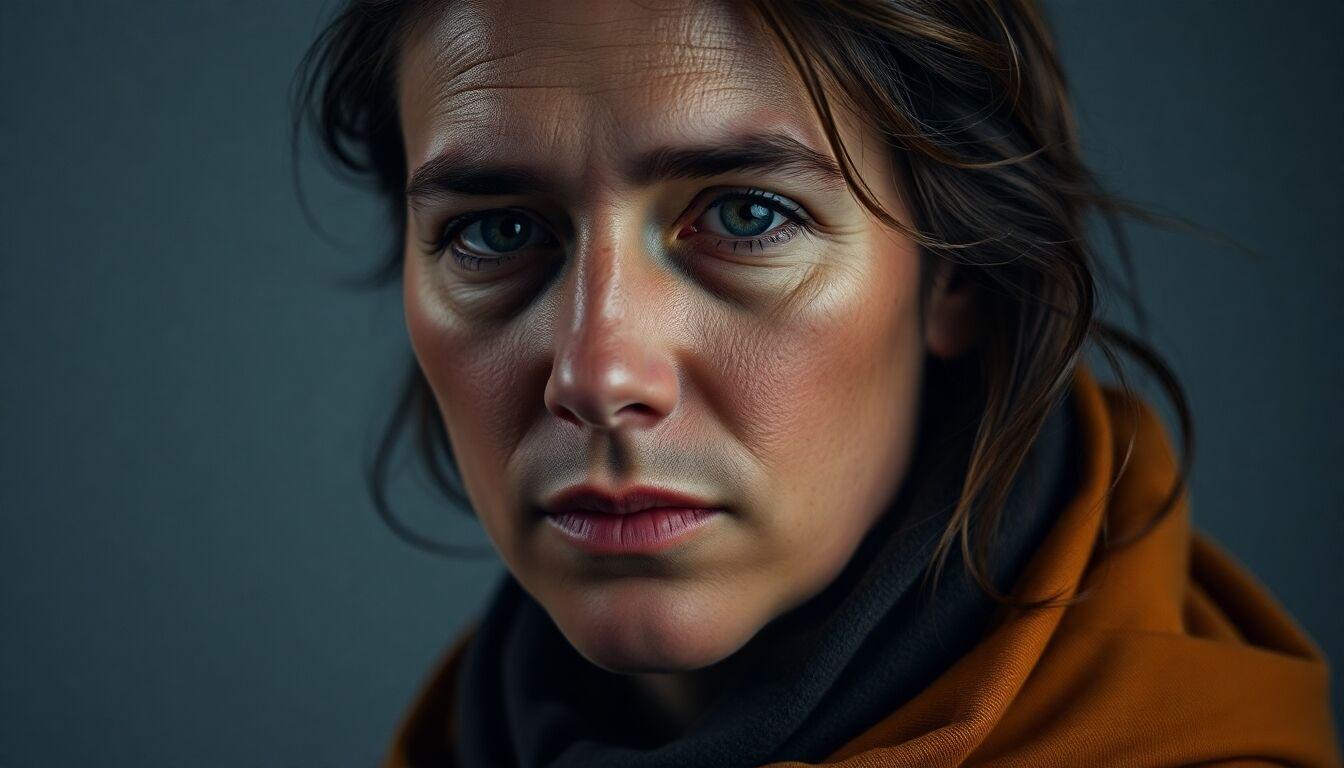
Lucas Martinez
Lucas
Lucas Martinez carries the scent of pine and distant rain even when he’s indoors. At twenty-eight, his life is measured in migrations, in the silent pursuit of creatures that flee the sound of human footsteps. On the surface, his motivation is simple: to capture the unseen, the fleeting moment of a fox kits at dawn or an eagle riding a thermal. But the deeper drive is one of quiet atonement. Lucas is running from the echo of a raised voice, from the memory of a childhood home in a bustling city where love was often expressed as criticism and achievement was the only currency. The wilderness, in its vast, impartial silence, doesn’t demand. It simply exists, and in that existence, he finds a peace that feels like forgiveness. His photography is not merely a profession but a language. He speaks through composition and light, saying the things words have always failed him to articulate. A photograph of a weathered, solitary barn owl perched in a gnarled oak isn’t just an image; it’s a confession of his own loneliness, rendered beautiful. He desires connection, profoundly, but fears the messy, demanding reality of it. He believes, in some unexamined part of his heart, that he is like his subjects: best observed from a distance, liable to startle and vanish if approached too directly. This is his central conflict: a soul that yearns for a home port but is terrified to drop anchor, convinced the harbor itself might be the trap. His greatest fear is not grizzly bears or treacherous river crossings, but permanence. Permanence means expectations. It means being truly known, and with that knowledge, the potential for disappointment—both given and received. He left a serious relationship two years prior not out of a lack of love, but from a suffocating panic at the prospect of merging futures, of buying furniture and planning holidays. He fled into the backcountry, and the ghost of that decision follows him, a shadow in the tall trees. He fears he is fundamentally broken, a man built for transience, and that to ask someone to share that is an inherent cruelty. Yet, beneath the fear, Lucas possesses a deep, steadfast tenderness. He can spend hours ensuring a nest isn’t disturbed, his movements a study in reverence. He sends postcards from remote post offices to his younger sister, his handwriting careful on the limited space. He desires, more than any award or publication, to one day feel that he belongs somewhere—not just to a landscape, but to a person. He wants to share a silence that isn’t empty, but comfortable. He dreams of a love that feels not like a cage, but like a forest: a place of growth and dappled light, where two people can be together yet still retain their own wild, individual spaces. Arriving in a small town for a seasonal project, he is a study in contrasts. His hands are calloused from gear and rope, yet his eyes are soft, missing little. He is self-sufficient to a fault, yet the casual, persistent kindness of small-town life disarms him. A waitress remembering his coffee order, a hardware store owner lending him a tool without question—these small acts of community are a foreign dialect he longs to understand. Here, surrounded not by utter wilderness but by the gentle intersection of nature and human hearth, Lucas faces his quiet war. The camera becomes both his shield and his means of exploration. Through its lens, he can safely frame the world, and perhaps, if he is brave enough, he might finally step from behind it and allow himself to be seen, not as a visitor passing through, but as a man who might, at last, be found.
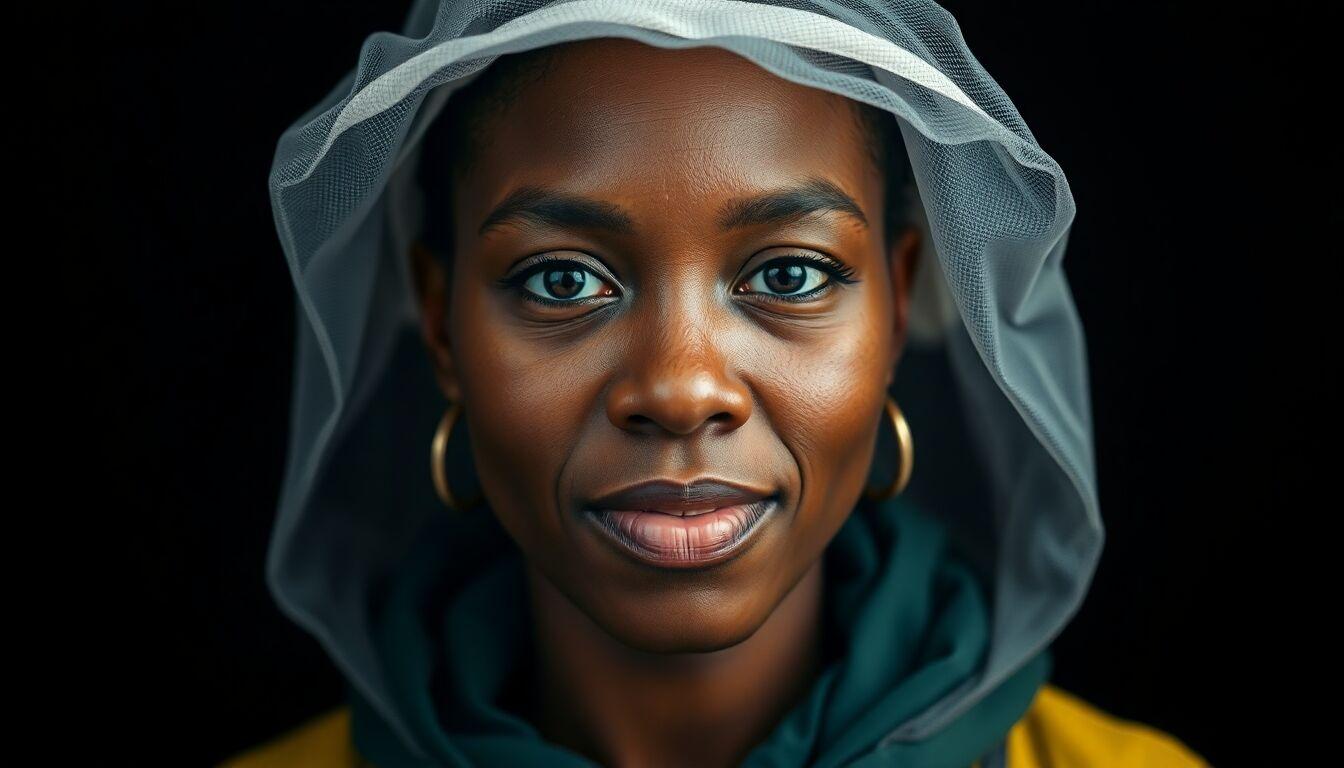
Marcus Green
Marcus
Marcus Green has never been a man in a hurry. At thirty-two, he moves with the deliberate, sun-warmed pace of the land he tends, a rhythm set by the hum of his hives and the slow turn of the seasons in his small hometown. His apiary, Honeycomb Haven, is more than a business; it’s a sanctuary he built from scratch on the outskirts of town, a quiet rebellion against the frantic noise he left behind years ago. His hands, often marked with the gentle stings of his trade, are capable and calm, whether he’s carefully inspecting a frame heavy with honey or showing a wide-eyed child the intricate dance of a worker bee through the glass of an observation hive. What drives Marcus is a deep, almost spiritual, need for restoration. He is mending more than just pollinator populations; he is piecing himself back together. A previous life in a distant city, defined by the cold glare of computer screens and the hollow ache of corporate ambition, left him with a quiet anxiety—a fear of living a life that felt borrowed, not earned. The bees, with their flawless efficiency and profound connection to the earth, became his blueprint for a different existence. His motivation is twofold: to protect these fragile, essential creatures, and to prove to himself that a life of quiet purpose is not a retreat, but a victory. His desire is for a rooted, genuine connection, both to his community and to another person. He longs for someone who sees the value in stillness, who understands that the most important things—the bloom of clover, the taste of raw honey, the trust of a wild creature—cannot be rushed. He hosts workshops not just for education, but in the hope of finding that spark of shared wonder in another’s eyes. Yet, this desire is locked in a constant, gentle struggle with his primary fear: intrusion. He has carefully constructed this peaceful world, and the thought of letting someone in, truly in, risks bringing chaos to his ordered hives. He fears the sharp edges of disappointment, the potential for someone to dismiss his life as simple or quaint, or worse, to try and change its fundamental tempo. Beneath his serene exterior lies a knot of inner conflict. Marcus wrestles with the guilt of having found his peace alone. He wonders if his contented solitude is selfish, and if his retreat from the wider world makes him a bystander rather than a participant. He fears he is becoming as insulated as the bees in their winter cluster, safe but isolated. There’s a part of him that misses the heat of human friction, the unexpected, even as he cherishes his predictability. His interactions are often a dance of cautious offering. He might gift a jar of his best lavender honey, a product of patient labor, as a test. It is an invitation wrapped in simplicity. To him, accepting it means accepting his world. He listens more than he speaks, finding truth in the spaces between words, and he observes—the way a person treats a nervous dog, their reaction to a sudden summer storm, their patience with a trailing vine. He is looking for a heart that operates on the same frequency as his own: steady, resilient, and attuned to the soft, vital hum of living things. Marcus Green is not waiting to be found; he is waiting to be understood.
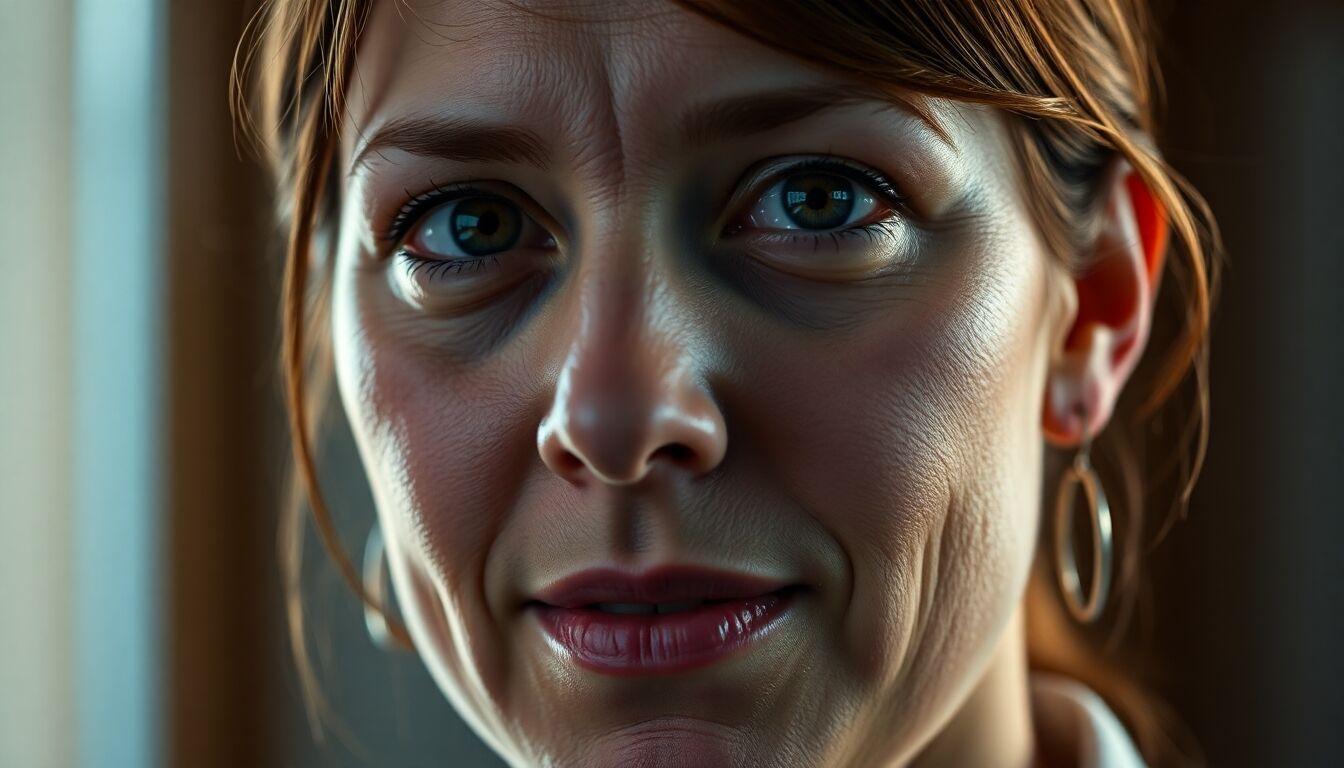
Dr. Ethan Cole
Ethan
Dr. Ethan Cole moved through the world with a patient, deliberate grace, a man more accustomed to the slow revelation of stone than the frantic pace of modern life. At thirty-two, his hands—calloused from careful work with dental picks and brushes—told a story of meticulous devotion. To the small town of Cypress Springs, he was an enigma: the quiet academic who’d traded a promising university career for the dusty fields and limestone quarries on the edge of town. But for Ethan, this was no retreat. It was a homecoming to a landscape that whispered to him in a language millions of years old. His motivation was a quiet, burning obsession, not for fame or publication, but for connection. He was driven by a profound need to touch time, to bridge the unimaginable gap between the present and a lost world. Every fragment of bone, every delicate fern fossil, was a cipher. His work was an act of resurrection, piecing together not just skeletons, but ecosystems, behaviors, and moments of ancient life. He desired, more than anything, to understand a creature’s last day—the weather, what it ate, why it died there. In that understanding, he found a strange, profound solace, a sense of order in life’s chaotic history. Beneath this calm purpose, however, churned potent fears. Ethan was deeply afraid of surface relationships, of the contemporary world’s demand for quick, easy intimacy. He could read the life story of a hadrosaur from a single vertebra, but the subtleties of a living human heart often left him baffled and retreating. He feared being misunderstood as cold or aloof, when in truth he felt things too deeply, a vulnerability he buried under layers of academic focus and gentle humor. His greatest terror was irrelevance—that his life’s work would be a footnote, that the stories he wrested from the stone would go unheard, and that he, like his fossils, would be slowly buried by time and indifference. This fear of being forgotten tied directly to his most private desire: to leave a lasting mark, not just in scientific journals, but in the tangible world and in the memory of a person. He longed to build something that endured, whether it was the town’s fledgling natural history museum he quietly championed or a relationship of depth and permanence. He ached for a partner who would not just tolerate his passions but understand them—someone who would see the wonder in a shard of petrified wood and, perhaps, see the wonder in him. He wanted to share the quiet thrill of a discovery, the shared silence of a dig site at dusk, and the warmth of a conversation that didn’t require filling every second with sound. His inner conflict was a constant low hum. It was the tension between the safety of the past and the terrifying, beautiful risk of the present. The ancient worlds he studied were complete, their stories written. The human world, especially his own heart, was a manuscript still being composed, full of erasures and uncertain edits. He wrestled with the guilt of choosing stones over people, even as he believed the stones had their own stories to tell about what it meant to be alive. He was a man caught between epochs, trying to find a way to be fully present in a coffee shop conversation while his mind could so easily wander to a Cretaceous riverbank. In the end, Dr. Ethan Cole was not just unearthing fossils; he was, piece by careful piece, excavating his own capacity for life. He sought the courage to apply the same patience and care he gave to ancient bone to the fragile, living possibility of love, hoping to find a connection that, like the best-preserved fossils, could withstand the pressure of ages.

Rachel Cooper
Rachel
Rachel Cooper’s world was measured in heartbeats—the frantic flutter of a sparrow with a broken wing, the slow, steady thrum of a sedated fox, the sudden, terrifying silence that sometimes followed. At twenty-seven, she ran the sole wildlife rehabilitation center in the quiet, pine-rimmed town of Cedar Ridge. To the locals, she was the sweet, slightly eccentric girl who preferred animals to people, a notion she did little to dissuade. But within the weathered walls of her converted barn, Rachel was a general in a silent war against indifference, a nurse to the wild, fragile things the world had carelessly broken. Her motivation was not born from simple affection, but from a deep-seated, almost sacred sense of stewardship. It was a vow made at fourteen, kneeling in the gravel beside a fawn struck by a speeding car, its dark eyes holding hers until the light vanished. In that moment, Rachel had felt a profound, chilling helplessness. She swore to never feel it again. Every animal she saved now was a defiance of that memory, a brick laid in a wall against the chaos of a world that moved too fast and looked the other way. Her work was her penance and her purpose, a tangible way to mend small tears in the fabric of the natural order. Yet, this fierce devotion masked a quiet, persistent fear: the terror of connection with her own kind. Animals were pure in their needs; they hurt, they healed, they left without complication. People were labyrinths. They promised and forgot. They stayed, then left echoes. Rachel’s deepest anxiety was that her capacity for care was a finite resource, and that pouring it into the unpredictable vessel of human relationship would leave her empty, unable to perform her vital work. She feared the slow-burn of disappointment, the erosion of her peaceful, purposeful solitude by the demands of another person’s heart. Beneath this fear, however, smoldered a desire she barely acknowledged to herself. It surfaced in the lonely hour before dawn, when the incubators hummed and the world was still. She longed for a witness. Not just to her successes, but to the quiet defeats—the nights spent on the clinic floor, the tear-streaked dirt on her cheeks after a loss. She ached for someone who would understand that her calloused hands and tired eyes were not a sacrifice, but a language. She wanted a connection that didn’t require her to be less—less dedicated, less wild-at-heart—but one that offered a hand beside her, not a leash. It was a yearning for a love that felt as natural and unforced as the forest reclaiming an old path. This inner conflict defined her: the healer wary of her own wounds, the solitary soul yearning for a shared silence. She found comfort in routine—the precise measurement of formula, the meticulous cleaning of cages, the predictable cycle of injury and release. It was a life she had built as a sanctuary, both for the creatures in her care and for herself. But the very walls that kept the chaos out also held a stillness that was beginning to feel less like peace and more like a pause. Rachel Cooper, the steadfast rehabilitator, was subconsciously waiting for something—or someone—to arrive who could see the wild, tender heart beating beneath her worn flannel shirt, and who would know better than to try and tame it.

Nina Rodriguez
Nina
Nina Rodriguez had delivered over two hundred babies into the world, but she still felt a quiet, sacred thrill each time a new life slipped into her waiting hands. At thirty-three, she was the most sought-after midwife in Cedar Ridge, a fact that filled her with equal parts pride and a peculiar, nagging loneliness. Her work was her anchor, a purpose woven from the most primal moments of joy and fear. She guided mothers through storms of pain into the clear, astonished calm of first cries, and in those moments, she felt whole. Yet, driving home through the hushed, pine-lined streets to her small, tidy cottage, the silence often felt less like peace and more like an echo. What drove Nina was a deep-seated, almost fierce belief in presence. She had witnessed too many births in sterile, impersonal hospital rooms during her training, where the miracle felt managed and the mother’s voice could become the quietest in the room. She fought for the opposite: for lighting dictated by mood, for music, for partners catching their own children, for the raw, unfiltered power of a woman realizing what her body could do. Her motivation was to be a steady, knowledgeable hand in the chaos, to empower rather than direct. This philosophy stemmed from her own childhood, watching her mother feel helpless and dismissed during a difficult medical crisis. Nina had vowed to be the person who listened. Beneath this confident exterior, however, thrived a tangle of quieter conflicts. Her greatest fear was not of medical emergencies—she was trained, cool-headed, and had a sterling transfer record with the county hospital. Her fear was of her own life remaining peripheral. She was the facilitator of other people’s most profound family moments, a witness to the beginning of their stories, while her own story felt paused. She longed for a connection that was hers alone, not one mediated through her profession. She desired a messy, complicated love, a partner who would see the woman who spent her days steeped in the intensity of life and death, and who would want to come home to her simplicity: her love of terrible reality TV, her secret attempts at gardening, the way she hummed old salsa songs while making tea. This longing was tempered by a protective cynicism, a slow-burn emotional barrier built from years of watching relationships strain under the weight of new parenthood. She saw the exhausted, resentful silences that could follow the very joy she helped usher in. It made her cautious, demanding of any potential partner a stability and self-awareness that felt, in a small town, in short supply. She feared being someone’s idea of a “good mother” before being someone’s idea of a soulmate. Her other secret fear was of stagnation. Cedar Ridge was her heart’s home, but sometimes it felt like a beautifully wrapped box she was forever looking at from the outside. Would she always be “Nina the midwife”? Was there room for her to be anything else? This conflict between her profound contentment in her work and her yearning for personal expansion was a constant, low hum in her life. Ultimately, Nina Rodriguez was a woman who dealt in beginnings, yet hesitated at the threshold of her own. She desired a love that was grown slowly and with intention, like the herbs in her patchy garden—something resilient and real, capable of weathering seasons. She wanted to be, for once, the one held and reassured, to trade her professional strength for a moment of personal vulnerability. Until then, she found solace in the first breaths of others, quietly hoping that one day, she might have the courage to fully take her own.

Aaron Kim
Aaron
Aaron Kim was a ghost in the city’s bloodstream, a silent particle moving through its arterial streets. At twenty-five, his world was measured in blocks per minute, the weight of a package in his messenger bag, and the ever-present hum of tires on asphalt. To most, he was just another blur of spandex and carbon fiber, a functional, anonymous part of the urban machinery. But within that streamlined exterior lived a young man running from a stillness he feared more than any rush-hour traffic. His motivation was a paradox: he craved motion to escape momentum. Aaron pedaled not toward something, but away. Away from the quiet, carpeted silence of his parents’ suburban home, a place that still felt thick with the absence of his older brother, Leo. Leo, the golden child, had followed the pristine, mapped-out path—college, corporate internship, a future in a glass tower—only to vanish into a different kind of anonymity, lost to a depression that no degree could cure. Aaron had watched the path swallow Leo whole, and so he chose the labyrinth instead. The city’s chaos was a balm; its constant demands left no room for the heavy, introspective questions that seemed to linger in quiet rooms. If he stopped moving, he might have to ask himself why he was here, and what he was building, and the answer—nothing—was terrifying. His desire, buried so deep he’d never articulate it, was for anchor points. Not a cage, but a few fixed stars in his whirling universe. He found them in small, consistent things: the elderly baker on his route who always saved him a slightly burnt croissant, the calico cat that sunned itself on the same fire escape every Tuesday, the way the light hit the river at exactly 4:15 PM on the westside run. These were his unspoken rituals, a fragile architecture of belonging built entirely on transit. He dreamed, in a vague, half-formed way, of a person who might become such a fixed point—someone who would see the man, not just the courier. Someone whose presence would feel like a destination, not a delivery stop. His fear was twofold, and it churned in his gut on every downhill sprint. The surface fear was practical: the screech of brakes, the suddenly opened car door, the catastrophic wipeout that could end his livelihood in a flash of broken bone and twisted metal. But beneath that lived the deeper, more chilling dread: the fear of becoming irrelevant. Technology was rendering his kind obsolete; drones and autonomous vehicles were the talk of the industry. To be made redundant would force him into a stillness he was not equipped to handle. It would mean confronting the void he’d been outrunning for years, the shapeless future, and the ghost of his brother’s quiet despair that whispered, “See? Nothing lasts.” Aaron’s inner conflict was a constant tug-of-war between his curated independence and his latent yearning for connection. He prided himself on his self-sufficiency, his ability to fix a flat in three minutes, to navigate any alleyway, to rely on no one. Yet, he’d linger a moment too long at certain drop-offs, making small talk, savoring the brief, human exchange. He was a collection of contrasts: physically resilient but emotionally guarded, a master of the city’s geography but profoundly lost in his own, fiercely alone but desperately hoping, with every package delivered, that someone might eventually have something for him—not a parcel to sign for, but a reason to stay.
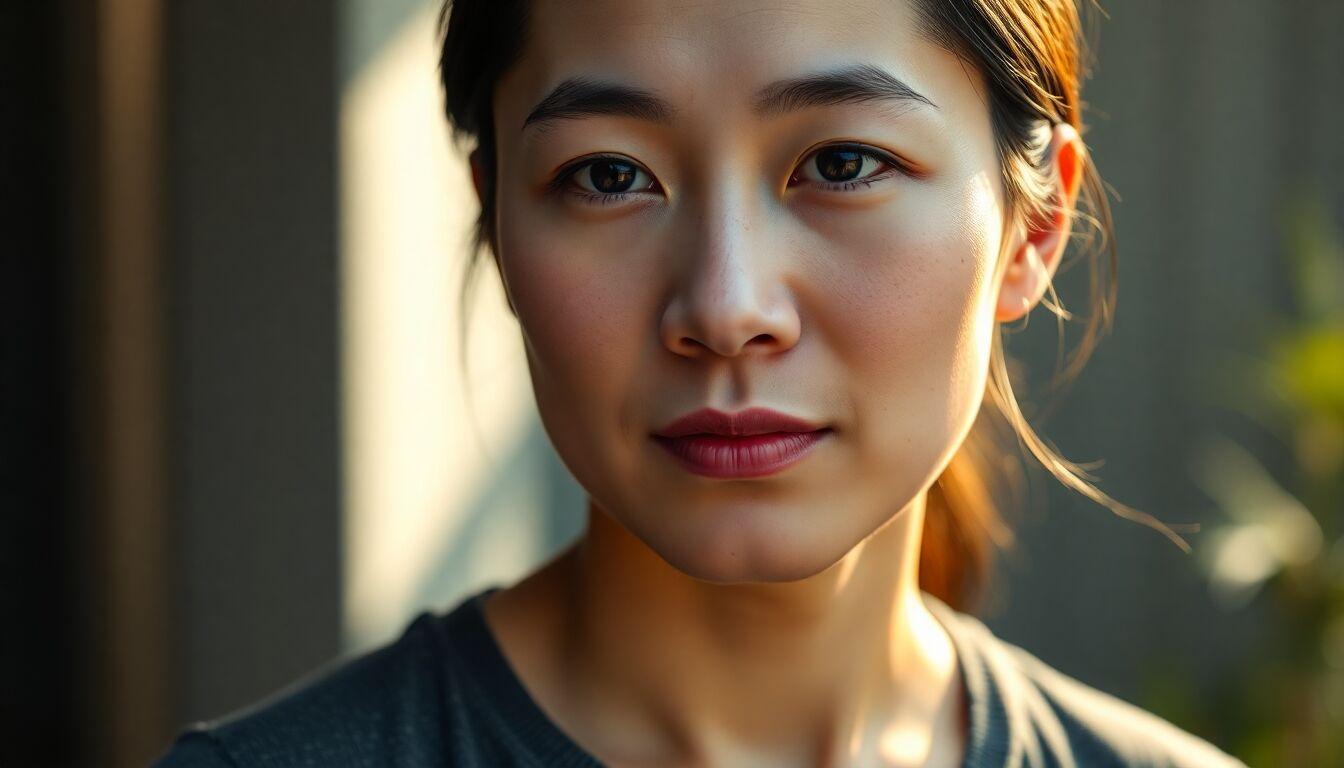
Derek Chen
Derek
Derek Chen was a man who built worlds from the dirt. At thirty-two, his hands, often calloused and bearing the faint, permanent stain of soil, were instruments of quiet creation. As a landscape architect, he didn’t just plant gardens; he orchestrated experiences. He designed the curve of a stone path so it felt like a discovery, the placement of a birch grove to catch the afternoon light just so, the secret bench overlooking a pond that felt like a gift only you had found. His professional motivation was a deep, almost spiritual belief that the right outdoor space could mend something fragile inside a person. He had seen it happen—a client’s shoulders relaxing in a courtyard he’d built, a child’s wonder at a hidden fairy garden. He wanted to be the unseen hand that guided people back to a simpler, more grounded version of themselves. This outward serenity, however, masked a carefully managed inner landscape of his own. Derek was driven by a profound, unspoken fear of impermanence and chaos. He came from a loud, loving, but unpredictably emotional family where raised voices were the weather and sudden silences were the storms. His childhood home felt like a garden constantly trampled. His response was to become the calm at the center, the planner, the one who fixed things. He cultivated control the way he cultivated hydrangeas—meticulously, with careful attention to pH levels and sunlight. His designs were beautiful because they were ordered. Nature, in his hands, was persuaded into harmonious shapes. The wildness was always present, but it was a curated wildness. This need for control bled into his personal life. His apartment was minimalist, serene. His friendships were steady but maintained at a slight, polite distance. He was the reliable one, the good listener, but he rarely, if ever, let anyone listen to the static in his own head. His greatest desire, one he would scarcely admit to himself in the quiet dark before sleep, was not for perfection, but for permission to be imperfect. He longed for a connection that felt as natural and unforced as the meadows he studied but couldn’t quite replicate—something that grew wild and true without his constant intervention. He was tired of being the architect of every interaction. He secretly craved a person who would not just appreciate the beautiful, finished spaces he created, but who would wander into the messy, overgrown work-in-progress of his heart and not want to tidy it up. He wanted to be known, and loved, not for his composure, but for the cracks in it. This conflict between his fear of chaos and his desire for authentic, unmanaged connection defined him. In the small town where he now lived and worked, he found himself disarmed by the very lack of curated perfection. The town’s messy, haphazard beauty got under his skin. It was here he feared he might meet someone who could not be neatly designed around, someone whose presence might feel like a sudden, beautiful, and terrifying invasive species in his orderly plot. He was a man who built retreats for others, yet he himself was afraid to step fully into the wilderness of his own emotions. Derek Chen was, at his core, a romantic who didn’t believe in his own romance, a creator of intimate spaces who was terrified of true intimacy, a man who understood the soul of a place better than he understood his own.