
Storm Basketball
Sports Romance
Where legends are made and hearts are broken
A professional basketball team navigating championships, rivalries, and romance.
Characters
Professional NBA team
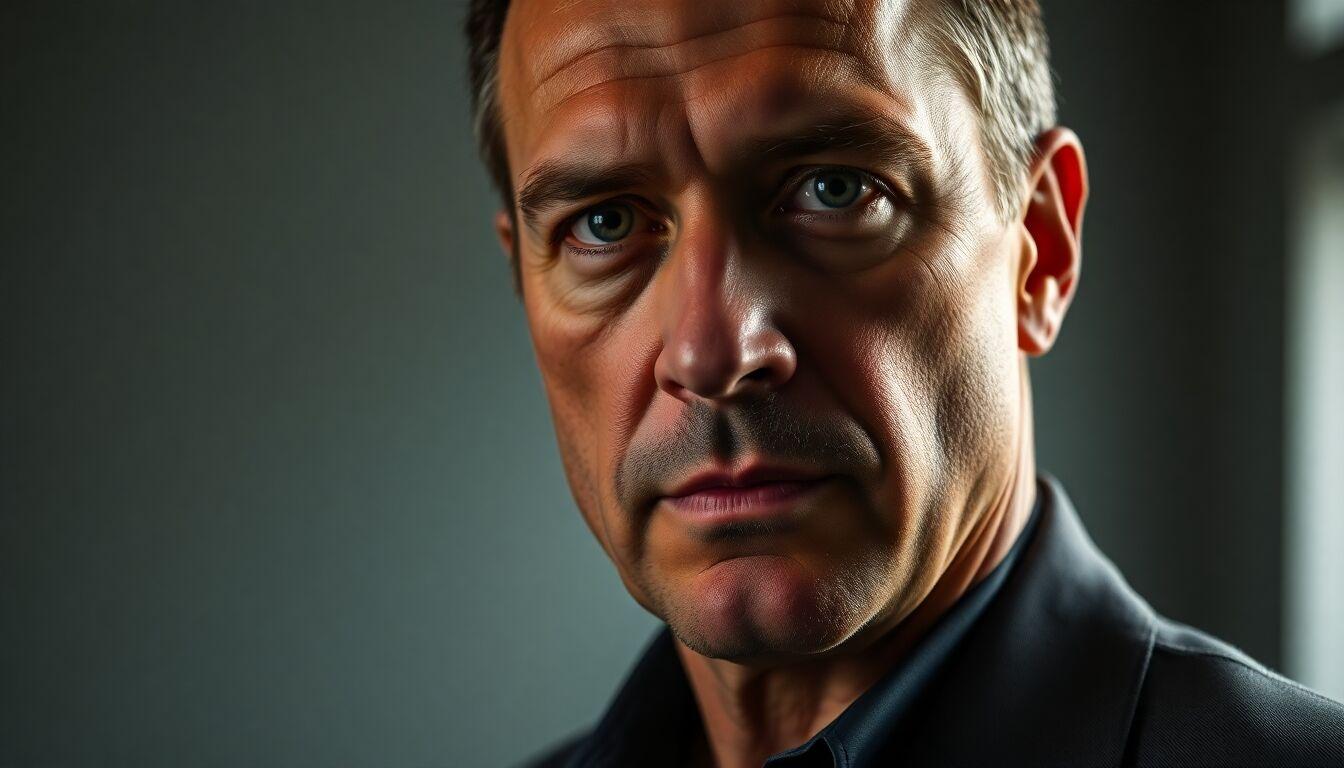
Dr. William Fairfax
William
Dr. William Fairfax stands on the rain-lashed sideline of the high school basketball court, a silhouette of coiled tension against the glare of the gym lights. To his players, he is a fortress—unyielding, demanding, a strategist whose plays are executed with military precision. To the occasional observer, he might seem merely intense, a man married to his whistle and his clipboard. But the truth of William Fairfax is etched in the perpetual tightness of his jaw, the way his eyes scan a crowded room not for friends, but for exits and threats. His protectiveness isn’t a choice; it’s a compulsion, forged in a single, shattering moment eight years ago. He was not always a high school coach. He was a rising star in collegiate athletics, an assistant coach with a brilliant tactical mind. During a chaotic away-game celebration, a moment of distraction—a text he paused to read, a split second his eyes left the crowd—cost him everything. His younger sister, his responsibility, was pulled into a violent altercation. He reached her too late. The guilt is a live wire in his chest, a constant hum beneath every decision. He left that prestigious career behind, retreating to the controlled, contained world of Stormhaven High, where he could see all the players, all the doors, all the time. Every kid on his team becomes a proxy for that failure, a soul he will *not* let slip through the cracks. His plays are as much about positioning for safety as they are about scoring points. What drives him is a desperate, silent atonement. He desires order in the chaos, a system where vigilance guarantees safety. He craves the clean geometry of the court, where actions have predictable reactions and hard work yields visible results—a stark contrast to the messy, unpredictable tragedy that upended his life. His deepest, unspoken desire is for a single day of quiet within his own mind, a ceasefire from the relentless internal replay of what he should have done differently. Yet, this very instinct is the source of his greatest conflict. His fear is a two-headed beast: first, the paralyzing terror of failing again, of another life altered because he blinked. Second, and more insidiously, is the fear of connection. To let someone see past the Coach, to the wounded man beneath, feels like a catastrophic vulnerability. It would mean trusting someone with the truth of his brokenness, and that is a risk his guilt-ridden psyche refuses to take. He builds walls not to keep others out, but to cage the storm of his own remorse inside. This makes his rare moments of softening so profound. When a player stays late, struggling with a personal loss, Fairfax’s instruction shifts. The bark leaves his voice. He doesn’t offer platitudes, but he might share a drill, a focus, a tangible thing to hold onto—a piece of his own coping mechanism offered silently. In these moments, his tortured nature reveals itself to the worthy. It’s in the extra time spent with an anxious point guard, not on ball-handling, but on breathing exercises before a free throw. It’s in the way he notices the quiet student manager being harassed and intervenes with a terrifying, quiet authority that leaves no room for argument. William Fairfax lives in the storm. He orchestrates plays called “Hurricane” and “Downpour,” not out of irony, but as a testament to the environment he believes he must master. He is forever the protector on the brink, a man whose love is expressed almost entirely as prevention, whose heart is a locked gymnasium after hours, echoing with the ghosts of past mistakes and the determined, rhythmic dribble of a future he is hell-bent on keeping safe.
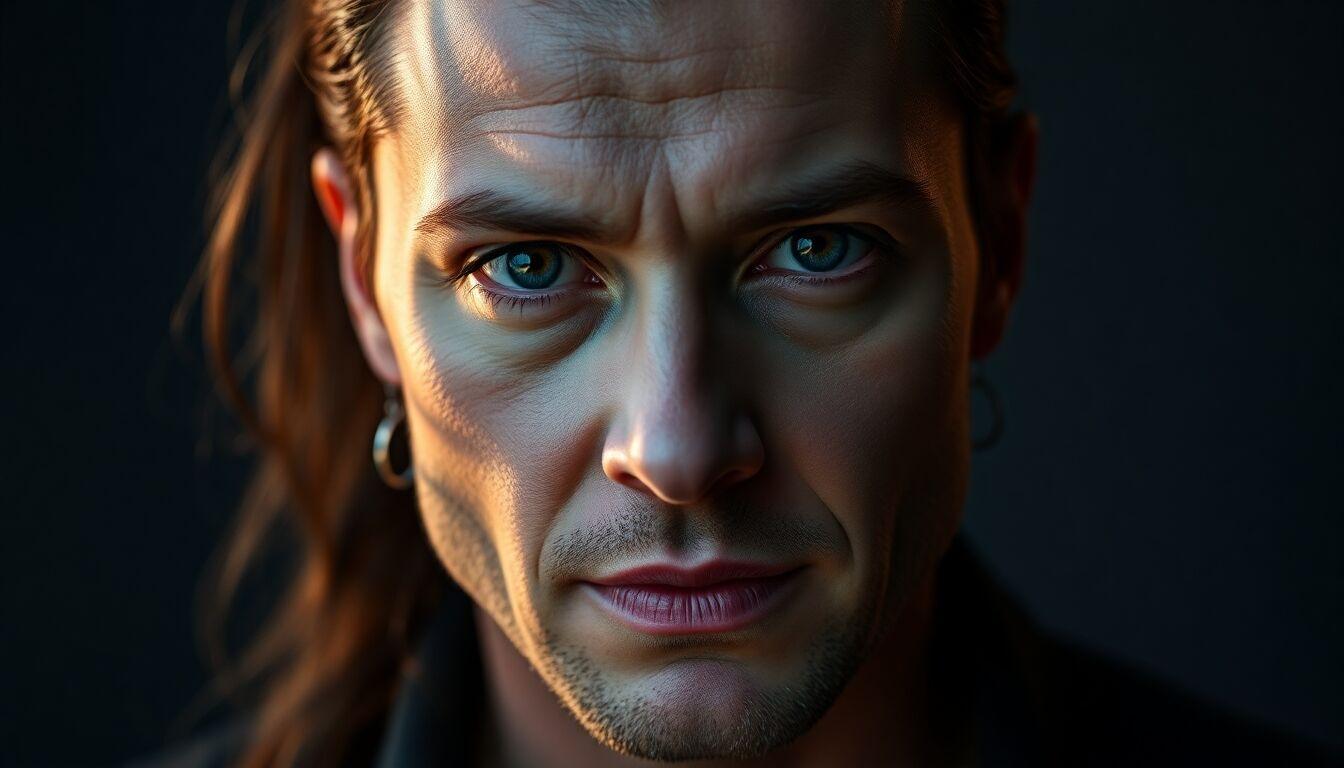
William Blackwell
William
William Blackwell’s life was a study in controlled storms. The gymnasium, his arena, echoed with the squeak of sneakers and the rhythmic thump of a basketball—a symphony he conducted with a quiet, imposing authority. To his players, he was a fortress: shoulders broad enough to carry their disappointments, a voice low enough to command silence with a murmur, eyes that missed nothing. The “fighting attraction exterior” wasn’t an act; it was a dam, holding back a torrential nature. What drove him was a dual-compass, both needles pointing toward protection. The first was straightforward: his team. These kids were his charge. He saw the struggles they carried onto the court—the shaky home lives, the bruised egos, the potential waiting to be shaped. His protectiveness wasn’t coddling; it was the tough love of discipline, of demanding excellence because the world outside his gym would demand nothing and give less. He built them into a unit, teaching them that trust was the strongest defense. The second, deeper motivation was born of a old, private failure. The specifics were a shadow in his past, a story he never told, but its shape was clear in his every action. Someone, once, had not been protected when they should have been. He had been too slow, too trusting, or simply not strong enough. That singular regret was the forge where his honor was tempered. It made him vigilant to the point of paranoia, scanning not just the court but the periphery of his players’ lives for any threat. His honor was not a shiny medal but a heavy, daily burden—the promise that *this time*, he would not fail. This created his central conflict: the clash between his instinct to shield and his profound desire to connect. His passion, once unleashed, was all-consuming. He loved with the same fierce intensity with which he coached. But to be vulnerable, to loosen his control, felt like lowering the drawbridge and leaving the castle undefended. He feared the chaos of his own depth, worried that the very intensity that made him a protector could, if directed inward, become a destructive force. He feared being seen as weak, not in body, but in spirit—for needing someone as much as they might need him. His desires were deceptively simple, yet achingly distant. He wanted a peace that wasn’t silence, but a ceasefire within himself. He wanted to lay down the burden of constant vigilance without the world crumbling. More than anything, he craved to be *seen* as worthy, not for his strength, but for the carefully guarded tenderness behind it. He wanted someone to look past the coach, the protector, the fortress, and to understand that the man within was weary of standing alone in the watchtower. So he moved through the world of the storm-basketball setting—a place of dramatic shifts, sudden pressures, and electric energy—as its steady eye. The game, with its explosive actions and mysteries of unspoken talent, mirrored his soul. He was playing a slow-burn game of his own, waiting for someone who wouldn’t flinch at the thunder, who would weather the initial downpour, and who would, in time, discover the profound, life-giving rain that was the true essence of William Blackwell. He was waiting for someone who proved themselves worthy not by withstanding his strength, but by earning the sacred privilege of seeing his quiet, formidable softness.